Slashdot Mirror
Domain: mit.edu
Stories and comments across the archive that link to mit.edu.
Stories · 1,000
-
Reclaiming the Commons
NeuroManson writes "What do fresh air, medicine, culture, copyright, and government have in common? Perhaps not exactly what you think. Up until recently, I considered the term "commons" as an archaic term from Victorian or Elizabethan times. However, apparently it still exists both as a concept and a philosophy. Despite its almost ancient connotations, it's an eye opener regarding how concepts centuries old hold true even today, but much like freedom, require eternal vigilance to protect, and covers everything from the air you breath through the GNU, HDTV, and copyright issues. Read on." Bollier's article and the responses are superb intellectual reading. If you don't have time today, bookmark it, come back later. -
Reclaiming the Commons
NeuroManson writes "What do fresh air, medicine, culture, copyright, and government have in common? Perhaps not exactly what you think. Up until recently, I considered the term "commons" as an archaic term from Victorian or Elizabethan times. However, apparently it still exists both as a concept and a philosophy. Despite its almost ancient connotations, it's an eye opener regarding how concepts centuries old hold true even today, but much like freedom, require eternal vigilance to protect, and covers everything from the air you breath through the GNU, HDTV, and copyright issues. Read on." Bollier's article and the responses are superb intellectual reading. If you don't have time today, bookmark it, come back later. -
Chip a Playstation, Go to Jail
perogiex writes "A man in Ottawa was convicted of selling and installing mod chips out of his computer store. Sony is overjoyed, man is less than thrilled. This is the first time such a case was tried in Canada." From the article: Garby said he didn't know he was committing a crime and would have never gotten involved in selling mod chips if he had known the law. Update: 07/24 21:53 GMT by M : Headline corrected; it's clearly mod chips for the original Playstation, not the Playstation 2. -
MIT Quantum Computing Conference, Toga Party
An anonymous reader writes: "MIT is hosting a LARGE quantum computing conference on July 22-26, 2002. Should be a lot of fun. Most of the famous scientists in the field will be there. However, I and others are a bit horrified by the high (some might say elitist) entrance fee ($325) which practically precludes students from participating. Too bad there isn't an open-conference advocacy." -
Making Computing More Human-Centered
buzzdecafe writes "Interesting article in InfoWorld about the future of interface technologies, e.g. pointing your finger to move files around, etc. The story focuses on MIT's Project Oxygen, which aims to make computing more anthro-centric. (Check out the Visual Interaction stuff.)" We've written about Project Oxygen before. -
Making Computing More Human-Centered
buzzdecafe writes "Interesting article in InfoWorld about the future of interface technologies, e.g. pointing your finger to move files around, etc. The story focuses on MIT's Project Oxygen, which aims to make computing more anthro-centric. (Check out the Visual Interaction stuff.)" We've written about Project Oxygen before. -
Keeping Secrets in Hardware: Xbox Case Study
BS405397 writes "Here is the just released MIT whitepaper on the security holes in the MS X-Box, and for those who are interested, opens up the X-Box pretty nicely." Update: 06/04 17:13 GMT by M : The server appears to be down at the moment. There is a copy of the paper mirrored here. Reuters and other news outlets have now picked up the story, two days after Slashdot. -
Keeping Secrets in Hardware: Xbox Case Study
BS405397 writes "Here is the just released MIT whitepaper on the security holes in the MS X-Box, and for those who are interested, opens up the X-Box pretty nicely." Update: 06/04 17:13 GMT by M : The server appears to be down at the moment. There is a copy of the paper mirrored here. Reuters and other news outlets have now picked up the story, two days after Slashdot. -
Alphanumeric Phone Keypad - Fastap
seldo writes "The illustrious BBC has a story about a new mobile phone keypad, designed by a company called Digit Wireless, headed by one Mr David Levy, who "was head of ergonomic design at Apple for five years and was influential in the layout of its Powerbook laptops," according to the article. I don't know how it is to use, but it looks really funky. There's a demo on the site (javascript popup, so no link). The sooner I don't have to deal with the stupid 3-letters-per-button interface to send SMS, the better." -
ThinkCycle: Solving World Problems With A Cluster of Brains
eaglemoon writes: "ThinkCycle is an MIT Media Lab project to apply SETI@Home principles to design problems for underserved communities. Only, intead of donating spare cpu cycles, you donate spare 'think cycles.' Their aim is to build a community of designers, inventors and innovators that want to collaborate on developing novel solutions to some what intractable problems like clean water access , cholera treatment and appropriate shelters. Their aim is to encourage an "open source" ethos for tough design and technology challenges." -
Amazon & Used Books II: Bezos Strikes Back
theodp writes: "Last week's call for authors to de-link Amazon from their sites has reportedly prompted Jeff Bezos to fire off a letter to all Amazon Marketplace sellers, asking them to help out by sending e-mail on Amazon's behalf in response to the Guild's call for Amazon to stop placing prominent used book ads on each title's main web entry and soliciting new books purchasers to resell their books through Amazon shortly after purchase. Bezos wants everyone to be 'super-clear' that Amazon.com is supportive of and good for authors, indicating that Amazon's steep discounting of new titles and royalty-less sales of used books are two examples of how Amazon helps the book industry and authors. Good to see Jeff's found a new cause, since it looks like he's done with up patent reform." -
SIGGRAPH 2002 Preprints
eval writes "The papers accepted to SIGGRAPH 2002 have been announced, and are starting to appear online. You can find a list with links to preprints on this page put together by Tim Rowley at Brown (a great service to the community)." -
Can GnuPG Deliver?
jso888 writes "After Network Associates decided to halt further development of PGP, I'm sure that many users like myself who use non-CLI platforms most of the time, wondered "what next?" (PGP Freeware is not an option, since it's tied into the Network Associates product). Salon today has a nice article on GnuPG, the Open PGP/GNU alternative. The article highlights one of the problems with Open Source software today: its "by the geek, for the geek" nature, which by and large places barriers to mass adoption of OSS, especially important capabilities like personal encryption. One of the nice things about NAI PGP was its ease of use and commercial polish. It was easy to install and use, and integrated nicely with Windows software like Eudora and ICQ. GnuPG, admittedly, isn't quite there yet, the article concludes. That's too bad; given the privacy-hostile world we live in, the last thing we need is another barrier to widespread cryptography adoption." -
The Teddy Borg is Alive!
probabilistic writes: "Check out what bored MIT students are up to -- a few of my friends, in their never-ending quest for network connectivity and female companionship, created the Teddy Borg. It might look like an innocent teddy bear, but behind the soft exterior lurks a GigaFast 5-port 10/100 ethernet switch." -
The Teddy Borg is Alive!
probabilistic writes: "Check out what bored MIT students are up to -- a few of my friends, in their never-ending quest for network connectivity and female companionship, created the Teddy Borg. It might look like an innocent teddy bear, but behind the soft exterior lurks a GigaFast 5-port 10/100 ethernet switch." -
Phil Long and Open Courseware
WebWord Usability writes: "The Technology Source is running an interview with Phil Long. It is mainly about open source software and open courseware development at MIT (e.g., Open Knowledge Initiative). If you're interested in this stuff, CREN will be streaming a discussion with Vijay Kumar and Phil Long on Thursday 7-March-2002 at 4PM EST. Still want to know more? Syllabus Magazine ran an article on OpenCourseWare in January 2002." -
MIT's Acrobatic Helicopter
YourHero writes: "MIT has a new toy, a remotely-piloted helicopter that's agile, stable, and in the current public mood, perfect for urban combat and reconnaisance and surveying disaster sites. Oh, and it's also good for aerial photography. It's so good that it even does 360-degree aileron rolls at the flick of a switch. The release gives some basics, videos and other juice are here. This cost $40k, excluding labor, because technically, student labor is "priceless" - so a nod to Kara Sprague, Alex Shterenberg, Ioannis Martinos, Bernard Mettler, and Vlad Gavrilets, who probably provided most of the labor. Stringfellow Hawk has not been reached for comment." -
MIT's Acrobatic Helicopter
YourHero writes: "MIT has a new toy, a remotely-piloted helicopter that's agile, stable, and in the current public mood, perfect for urban combat and reconnaisance and surveying disaster sites. Oh, and it's also good for aerial photography. It's so good that it even does 360-degree aileron rolls at the flick of a switch. The release gives some basics, videos and other juice are here. This cost $40k, excluding labor, because technically, student labor is "priceless" - so a nod to Kara Sprague, Alex Shterenberg, Ioannis Martinos, Bernard Mettler, and Vlad Gavrilets, who probably provided most of the labor. Stringfellow Hawk has not been reached for comment." -
MIT's Acrobatic Helicopter
YourHero writes: "MIT has a new toy, a remotely-piloted helicopter that's agile, stable, and in the current public mood, perfect for urban combat and reconnaisance and surveying disaster sites. Oh, and it's also good for aerial photography. It's so good that it even does 360-degree aileron rolls at the flick of a switch. The release gives some basics, videos and other juice are here. This cost $40k, excluding labor, because technically, student labor is "priceless" - so a nod to Kara Sprague, Alex Shterenberg, Ioannis Martinos, Bernard Mettler, and Vlad Gavrilets, who probably provided most of the labor. Stringfellow Hawk has not been reached for comment." -
MIT Media Lab Tightens Its Belt
Forbes Magazine has this story about the MIT Media Laboratory's current "burn rate" problem. It seems that the Media Lab is feeling the same big draft at its posterior that dot-com companies felt last year after years of go-go growth and seemingly unlimited funding. The Media Lab is particularly sensitive to this downturn due to its heavy reliance on corporate sponsorship, as well as its fondness for unconventional, even eccentric, research. Items that will no longer receive funding according to a January 5th internal E-mail from the Lab's Executive Director Walter Bender: cellular telephones, first-class air travel, food at internal Lab meetings, and furniture. Other more serious cutbacks for the Lab include layoffs for 29 staff members and reduced funding for students, including salaries for "Undergraduate Research Opportunities" (UROP) positions. The Media Lab had previously paid such positions $8.75 and up in order to remain competitive with industry offers that even not-yet-graduated students were receiving. -
MIT Media Lab Tightens Its Belt
Forbes Magazine has this story about the MIT Media Laboratory's current "burn rate" problem. It seems that the Media Lab is feeling the same big draft at its posterior that dot-com companies felt last year after years of go-go growth and seemingly unlimited funding. The Media Lab is particularly sensitive to this downturn due to its heavy reliance on corporate sponsorship, as well as its fondness for unconventional, even eccentric, research. Items that will no longer receive funding according to a January 5th internal E-mail from the Lab's Executive Director Walter Bender: cellular telephones, first-class air travel, food at internal Lab meetings, and furniture. Other more serious cutbacks for the Lab include layoffs for 29 staff members and reduced funding for students, including salaries for "Undergraduate Research Opportunities" (UROP) positions. The Media Lab had previously paid such positions $8.75 and up in order to remain competitive with industry offers that even not-yet-graduated students were receiving. -
The MIT Lightweight Languages Workshop
fxn points to this "article from Dr. Dobbs's Jounal on the recent Lightweight Languages Workshop, held at MIT's AI Lab." This is a nice followup to Simon Cozen's report on the conference, posted here in November. -
802.11b Space Suits
Saint Aardvark writes "The BBC has an article here about WearSat, the new generation of space suits: embedded RISC processor, 802.11b networking, VGA heads-up display, and 1GB microdrive. I want one for my rec room." -
One Ring Rules the MIT Dome
Patiwat Panurach writes "The Great Dome of MIT was overtaken on the morning of Monday the 17th by a great golden ring, inscribed in red Elvish with text that translates to: "One Ring to rule them all, One Ring to find them, One Ring to bring them all, and in the darkness bind them." The hackers were apparently not completely successful, for neither the Great Dome nor Building 10 managed to vanish into the realm of shadows." -
One Ring Rules the MIT Dome
Patiwat Panurach writes "The Great Dome of MIT was overtaken on the morning of Monday the 17th by a great golden ring, inscribed in red Elvish with text that translates to: "One Ring to rule them all, One Ring to find them, One Ring to bring them all, and in the darkness bind them." The hackers were apparently not completely successful, for neither the Great Dome nor Building 10 managed to vanish into the realm of shadows." -
One Ring Rules the MIT Dome
Patiwat Panurach writes "The Great Dome of MIT was overtaken on the morning of Monday the 17th by a great golden ring, inscribed in red Elvish with text that translates to: "One Ring to rule them all, One Ring to find them, One Ring to bring them all, and in the darkness bind them." The hackers were apparently not completely successful, for neither the Great Dome nor Building 10 managed to vanish into the realm of shadows." -
Fed Raids Software Pirates in 27 Cities
akiaki007 was among many who wrote in to say: "Check out this article on the New York Times (free reg, blah blah) site. The Feds have raided 27 cities in 21 states. Raid sites include MIT, UCLA, Purdue, Duke, UofO. Their main target was the group DrinkOrDie. 'This is a new frontier for crime,' Kenneth W. Dam, deputy secretary of the Treasury, said at a news briefing. 'The costs are enormous to both industry and consumers.' I better hide my burned Linux CD's. They might think it's some weird hacking tool." -
It's Beginning to Look a Lot Like Quickies
It's been a long time coming, so lets start off the quickies with some acts of senseless damage. Old Wolf sent us a link to a bunch of pictures of someone Defrosting a Freezer in the best way ever, and an anonymous reader sent in a site that shows what happens if you put a CD in Microwave. Don't use AOL CDs., send them to this lady who collects them (from gr8fulnded). On to the sex! An anonymous reader submitted a story about the Robot Pet Vibrator which is I guess AIBO gone wrong. elkm discovered Computerized Contraception. And with all this digital doin' it going on, its good know that MITs Erotic Computation Group is here to research it (thanks Chris Moon) The world is full of strangeness, but little of it is as scary as MissNachos's link to the Hello Kitty laptop, srini's link to the Single Pixel Webcam, and aneanti's link to a collection of the strangest canned foods you'll ever see. Finally, since it is the holidays, check out mrv's link to LED Christmas Lights which sure beats the hell out of finding the broken bulb. -
Wiring A New House?
jbp123 asks: "I'm building a new house. Once the electrician has run the phone lines I want to run cat5e ethernet cable. I figure two drops to each of the 6 rooms with phone lines. I've never done this but my plan is to run the ethenet cable through the same path that the phone lines follow. I'll use up the rest of the 1000 foot spool by running a third cable to a few of the rooms. Ethernet cable is cheap. I found solid cat5e 1000 foot spools for $60 delivered so the decision to run cat5e cable is a no brainer. The question is should I run fiber? I really don't know how much the cable costs since I don't know what cable to use. It is much easier to run cable before the drywall goes in so I want to make an informed decision now. Ten years from now will I need/want fiber?" -
Strong Hints On Flashing Your Xbox
customsex writes: "bunnie has written a nice one with pictures documenting his adventure flashing his bios on his xbox. check it." His page also points you to the Sony vs. Connectix case regarding reverse engineering of hardware. -
Waste Heat to Electricity?
Darwin_Frog writes: "Recent advances in thermionics at MIT lets waste heat generate electricity, thus pushing entropy one step further down the chain. These devices work at a temperature around 250 deg. C, instead of around 1000, so cars can augment the alternator by using the waste heat in the exhaust system to produce power for onboard electronics and A/C." -
Slashback: HETE, HP, Regression
Slashback with more on cheap satellites, the relative speeds of threads under Linux and two strains of Windows, a skeptical response to the idea that crowds of people are retreating to dial-up access, and some tantalizing hints at products killed along with the HP calculator division. Lies, Damn Lies, Statistics, Benchmarks, Etc. Writing with a followup to the Slashdot post titled, "Who Has Faster Pipes? Linux, Win2000, WinXP Compared" Splinton had this to say: "In this article, Ed Bradford compares semaphores, mutexes and window's critical sections. Pthreads look good, but Win2Ks critical sections are twice as fast again!"The computing equivalent of Area 51? A short while back HP closed its calculator division. Many have thought HP's calculator department was unprofitable. This was not the case. Many have thought they had no innovation. This was not the case. Turns out that management had 4% workforce to kill and they were part of the cut.
This article explains more. It turns out they had designed several Linux based PDA's ready to produce that were killed by management. Sounds interesting? Go check it out.
The biggest expense was the 12 gross of Estes D engines ... Satellite Designer writes: "The topic of low cost satellites having been mooted here recently, I though I'd alert readers to another such project. The HETE-2 satellite recently located a cosmic gamma-ray burst precisely enough that (with a lot of help from friends) an afterglow was detected, identifying its source. HETE-2 cost $26 million, only 1/3 of what a 'small' scientific satellite normally costs.
A lot of commercial 'off the shelf' technology went into HETE. Nothing from Radio Shack, but there are quite a few parts from Digi-Key onboard. You can't save money by using cheap parts (but you *can* save money by using easily obtainable parts), and you can't achieve reliability by using expensive parts (but you *can* help reliability by using the parts best suited for your application). The radical thing about HETE's parts selection was that it considered parts in the application context (as one would do in a normal engineering process), rather than restricting selection to a QPL assembled to meet irrelevant requirements.The real trick to keeping costs down is to do the job with as small a team as possible in the minimum time possible. Rather than employing a large team of specialists, HETE's scientific investigators did much of the engineering and technical work. A small, carefully selected engineering team filled in the knowledge gaps."
Quitting isn't easy, and why bother? dmarsh writes: "This new article from C|Net seems to be a total contradiction to last week's "Dump Broadband, Dig Out Your Modem!" thread's article. I guess the important difference being that this one is backed up by an actual survey by the National Cable and Telecommunications Association."
Goes to show, in a large group of people you can probably find at least some who fit nearly any premise. As always, question the source ;)
-
Kent M. Pitman's Second Wind
Kent M. Pitman has already given you his first 11 answers to the questions you asked him about Lisp, Scheme, the creation of programming standards, and much more -- below are his answers to another eight (starting with answer #12). Thanks again, Kent.12) Good texts for learning Scheme?
by drenehtsralI have recently been working on learning Scheme in my spare time, with the eventual goal of writing a scheme based scripting system to run the guts of a massive adventure game/graphical mud sort of system, everything from environment simulation (predator/prey cycles, etc...) to 3d models (i.e. models will be geometry glued together by scripts so you could have trees that by a random seed and a growth level variable have grown over time and are unique to provide interresting landscape features). Scheme is appealing because it's simple, powerful, and adapts well to the idea of a threaded interpreter.
To further my goal of learning Scheme inside and out, I've been reading "The Little Schemer," as well as "Structure and Interpretation of Computer Programs." Do you have any other recommendations for good Scheme programming texts?
Kent M. Pitman: You can get a list of textbooks from Schemers website. If you can articulate a particular need or preference that you think should help narrow down the many available choices, I'd suggest posting a more specific inquiry to the comp.lang.scheme newsgroup.
13) Overlooked practical aspects of Lisp
by hdingWhy do you think that people so often overlook many of the wonderful things in Common Lisp such as unwind-protect, the whole condition system (which you are of course closely associated with), and so on - things that make it very useful for day-to-day programming, and are there any such things that you'd particularly highlight, or conversely that you wish had become part of the standard but did not.
Incidentally, thank you for all of the insight so generously and regularly poured forth in comp.lang.lisp.
KMP: Well, people program with tools that are familiar to them. Unless Common Lisp is someone's first language, it'd be easy for them to overlook the things it contains that are not like the things they're familiar with. There's a certain irony here because often the reason people will leave a language for another language is that they've reached the limits of what they can do with the first language and they need more power. So you'd expect that they'd aggressively look for features of the new language that were different than the things they've used before. And probably some do. But you're right that others cling to the safety and familiarity of the operators they could just as well have found in the old language they left behind, and so in the process they miss out on what the language can offer them.
Fortunately, unwind-protect is finally (pardon the pun) present in Java. And some hints of the Common Lisp condition system made it into Java as well. So probably people who come to Common Lisp from Java will be inclined to seek out those capabilities. But there's a lot of other stuff there and I hope new users will indulge their curiosity and take the time to explore.
As to what we should have in the language, the main omission of note is some sort of system definition tool (the in-Lisp analog of make). It was a shame that we did a feature-freeze on ANSI Common Lisp in 1988 but didn't get the standard out until 1994, and the suggestion of including such a tool didn't come until the after-freeze period. All vendors offer such a facility, but programs would be more portable if there were a uniform solution.
There are also quite a number of things about Common Lisp that are available in the same or similar forms in nearly all implementations. Multi-tasking, sockets, database access, external function call, windowing, and so on. It wouldn't be bad to have included any of these, but the fact is that they weren't ready for standarization in 1988. At this point, though, I think other mechanisms than standards are the right way to proceed.
The Lisp community used to expect the delivery mechanism for new functionality to be a new language spec. But that requires working through consensus standards bodies. The problem is that, by their nature, standards bodies are synchronization mechanisms. The problem with synchronization mechanisms in a massively parallel world is that they slow things down. The world is not going to wait for us to slow down, so I think we need to evolve mechanisms that will keep up better with a degree of pace that is externally dictated.
I think this is an area where Lisp as a community has been slow to respond. There need to be community mechanisms for sharing the many great commercial and private packages people have been creating in Lisp, so that we can properly reap the cross-product benefits of our community's productivity. I see evidence that this is changing. The Common Lisp Open Code Collection (CLOCC) is one such mechanism that addresses open source code. I'd like to see similar mechanisms arise for the exchange of proprietary products as well.
As to my posts on the comp.lang.lisp newsgroup, thank you. I'm glad you enjoy them. Frankly, I always consider it a victory to hear I haven't bored everyone to death. In background I've been working on putting together several books on Lisp, but one never quite knows if one will finish such things. I regard comp.lang.lisp as a kind of insurance policy, assuring that at least some piece of what I have seen and done in my career gets transferred from individual memory to global group memory.
I think preserving individual experiences for history is quite important. In the future, this will happen naturally due to logs kept by online collaboration tools. But I'm especially worried about the records of what happened between about 1960 (the birth of programming languages) and 1994 (the birth of the web). Most of everything in that time range is recorded on paper and will eventually be lost. Looking back from the future, I expect it to be as confusing to figure out how the information society was born as it is to look back in a telescope to see the birth of the Universe. You'll get very close, but then you'll get to a point where you can see nothing. The informational big bang. I've been working on webbing all of my old hardcopy papers, and I hope others of that era will commit to doing the same.
14) Lisp - Scheme - ML
by Tom7I know a lot of big academic (erstwhile) lisp shops, such as CMU, have transitioned away from lisp to ML [standardml.org] and relatives [inria.fr]. Some of the reasons we might give are:
- Sophisticated type systems, catching most bugs before your program is run, ensuring safety, etc.
- Much more efficient (http://www.bagley.org/~doug/shootout/craps.shtml), partly due to compilation strategies using types
- Increased modularity and abstraction
- Pattern matching, (subjectively) more natural syntax
In fact, I'm one of those people. I've been scoffed at by lisp fans, but most had never used ML. But I have an open mind, so, in the face of more "modern" languages, what advantages do lisp and scheme offer? Do you think that these advantages are fundamentally impossible to achieve in a typed setting?
KMP: First, I assume by "typed" you mean "statically typed." I think of Lisp as "dynamically typed." I think of most machine languages as "untyped." I've heard statically typed languages sometimes called strongly typed, and I sometimes use this terminology myself out of habit, but I've grown to dislike it because it seems to me that the issue of strength ought to refer to whether you check types, not when you do. The terms "static" and "dynamic" seem to me to better get to the heart of the matter.
To quote Abraham Lincoln, admittedly somewhat out of context, "People who like this sort of thing will find this the sort of thing they like." So to somewhat flippantly re-interpret Lincoln's remarks in a modern context, applying perhaps just a bit of obligatory political spin to the result: The fact that functional languages appeal to people who like functional languages is not a proof that functional languages are of general purpose appeal.
I think the real reason that CMU (or any university with a grant-based funding model) changed its direction is good sources of funding in research depend on saying you're doing something "new and different." Such a shift doesn't imply that the thing left behind wasn't "tried and true," but only that "tried and true" is not what gets research dollars. Research must constantly stir the mix, but that doesn't imply obsolescence to what came before. So don't read too much into that.
Answering each of your points in detail might require a whole article, but I'll touch on each in brief:
- Sophisticated type systems, catching most bugs before your
program is run, ensuring safety, etc. Much more efficient partly due to
compilation strategies using types.
Actually, it's funny that you both mention the CMU project and then make this comment. Before moving away from Common Lisp, the CMU crowd was successful in demonstrating to the Lisp community's satisfaction that there were enormous opportunities offered by the Common Lisp language design in terms of type inferencing that still today go untapped by implementations. This is really a market issue, not a language design issue. The fact is that although other languages do a lot more type inferencing, vendors are not getting huge numbers of bug reports saying that better type inferencing is what stands between programmers and the commercial success of their product. Over time, I think you'll see more and more interesting type analysis done, but such work is always balanced against other needs of users, such as CORBA, COM, RMI, and web interfaces, for example, such as UI toolkits and debugging options. When I observe, as I often do, that languages are political parties, this is what I mean. They are each responsive not to the needs of the world, but to the needs of their constituencies. And the Lisp constituency, while it is not oblivious to the value of type inferencing, does not see that issue as its number one priority.
- Increased modularity and abstraction.
This is quite a multidimensional space. I think Lisp provides great opportunities for modularity and abstraction that other languages do not. And yet, there are sometimes things I can't abstract as well as I wish. An example of a minor omission: Common Lisp's CLOS doesn't do protocol abstraction as well as Zetalisp's New Flavors; among other things, one can't declare that certain unimplemented methods are required. But with the use of the macro system and the Meta-Object Protocol (MOP), one can add this kind of thing. Further, the package system is missing certain kinds of inheritance capabilities I've often wished for, but I recently sat down and did the work of writing my own versions of defpackage for my own use, adding the capabilities I wanted in a way that my own tools can use, and I had no difficulty. For the most part, I've found the limitations of Common Lisp's abstraction capabilites to be incidental, and not deep, and I've found its syntactic reorganization capabilities more than capable of making up for it.
-
Pattern matching.
I think you're right that Lisp doesn't do pattern matching. Whether or not that's a good or bad thing is subjective. I think there are people who like pattern matching and people who don't. In fairness to Lisp, though, on the few occasions in my career where I've felt a strong need for pattern matching, I've been able to implement it easily. And, importantly, Lisp's syntactic adaptability has allowed me to make my personal implementation look as natural in the programs I write as if it were natively provided by the language; most other languages don't give me the syntactic control to be able to add new functionality in a way that feels appropriate to the language. So personally, I don't find this a strong negative; rather, I see it as an opportunity for you to create a layered library that supports the needs of yourself and others like you.
-
(Subjectively) more natural syntax.
I don't think you can make the case that much of any language has "natural" syntax. COBOL and HyperTalk gave this the fairest shot and there's a big difference even between them and any natural language. I personally find Lisp syntax remarkably natural in that it focuses on symbols that you could say out loud, marking them minimally to indicate grouping. Other languages contain lots of special-purpose markers like commas, semicolons, asterisks, and braces/brackets/parens that are used in quite nitpicky ways. All this to say that you're right on this one: it's subjective. And as such, I hope I can fairly dismiss this as an even draw.
15) Lisp in Mathematics Programming
by An Anonymous CowardGregory Chaitin has a book called "The Limits of Mathematics." In it he claims that mathematicians should love Lisp because Lisp is basically set theory, and all mathematicians love set theory. I wholeheartedly agree with this, one only needs to look at Chaitin's Lisp programs to realize how quickly and succinctly one can arrive at astonishing incompleteness results in mathematics. So we know Lisp is great for stuff like this, really researching a mathematical subject. Do you see Lisp continuing in this direction, showing and discovering theorems, or will it move into industry? Or has it moved into industry, and we just don't know it? Do the likes of NASA and JPL use Lisp and Scheme religiously? I would bet so.
KMP: Lisp may have started out as a way of addressing abstract topics like math (logic, calculus, prime numbers, etc.) and artificial intelligence, but it long ago made the transition to commercial applications. Both Scheme and Common Lisp have been and continue to be used in real-world applications that might surprise you. These include (but are certainly not limited to) applications in airline scheduling, commercial database manipulation, computer operating systems, bioengineering, web services, document format translation, and, yes, even space exploration. Franz, Inc. has created quite a nice page of Lisp success stories that I think expand on this much better than I could in the space I've allowed myself to answer this question. And speaking of NASA/JPL, they did a comparative study of Lisp vs Java and C++ that some might find interesting.
16) Scheme in CS
by An Anonymous CowardIt seems many of the more popular CS programs in the world use Scheme as a teaching language. A lot of times, students complain about this, saying they'd prefer to learn about C or another language that is considered "apt for industry." I used to be like this too, but have now discovered the error of my thinking. How have you convinced others that while the latest programs might not be written in Scheme, that it is worth a student's time to learn Scheme. Many seem stuck to the point that if they won't use it outside of school, they shouldn't learn it. How can we convince them otherwise, to become scholarly citizens instead of drones?
KMP: I think the thing to explain to a student is that the world is ever changing and that one cannot put ones eggs all in one basket. Furthermore, modern environments are often quite heterogeneous, with different languages and systems being used together cooperatively. Especially for a CS student, who often has the luxury of time that a person in the job world does not, I think it's worth taking time to learn as many different languages as possible. This not only exposes the students to alternate ways of thinking, but it also prepares the student to quickly change modes of thought or languages of expression later. Once on the job, one often can't afford the ramp-up time to learn a new language at the point it becomes necessary to use. Better to already know it and just have to "brush up".
One is much more likely to consider alternative approaches if one has a sense of what is involved in them; it's very easy to fear the unknown, even when the unknown might be of great help. So get to know as many things as you can while you can. Common Lisp and Scheme, which I regard as two very different languages, by the way, should definitely be among the things every student studies. But they should not be the only things the person studies. Like it or not, there is a lot the professional programmer needs to know to be really successful not just tomorrow, but for a lifetime.
As Oliver Wendell Holmes is often quoted as saying, "A mind stretched to a new idea never returns to its original dimensions." In order to stretch a student's mind, I recommend they make a list of "kinds of languages" and then learn as many different kinds as they can. Here are some that come to mind, though I'm sure others with different experience than me might reasonably contribute still others.
- A block-structured language, such as Algol or Pascal or Scheme.
- A line-oriented language, such as Fortran or BASIC.
- A rule-based logic language, such as Prolog or EMYCIN.
- An Englishy language such as HyperTalk or Cobol.
- A "stack" language such as PostScript.
- A "line noise" language (heavy emphasis on one-letter operators) like APL or Teco.
- A dynamic object-oriented language, such as Common Lisp or Smalltalk .
- A strongly-typed, statically analyzed language such as ML or Haskell.
- A dynamically-typed functional programming language, such as Scheme.
- A string or macro processing language, such as Perl or m4 or TeX or Teco.
- A database access language, such as SQL.
- An abstract high-level, assembly language, such as Java.
- A concrete high-level, assembly language, such as C.
- A low-level, traditional assembly language.
- A scripting language, such as Javascript.
- An interface-definition language such as Visual Basic, HyperTalk, or Javascript.
- A document-structuring language such as XSL or TeX.
- A language with a modern error system, such as Common Lisp or Dylan.
- A reflective/introspective language such as Common Lisp or Java.
- A symbolic programming language, such as Common Lisp or Scheme.
- A security-oriented language, such as Java or MOO.
- A language where both programs and data are fully persistent, such as MOO or HyperTalk.
17) A question for Kent
by MarkusQDo you have a maclisp manual I could borrow?
KMP:For those not familiar with Maclisp, it's a defunct dialect of Lisp that predated and strongly influenced the design of Common Lisp.
I've been working on webbing The Revised Maclisp Manual, which I had published on paper back in the early 1980's. It's not quite ready to go out yet, but should finally be ready sometime in the not terribly distant future. Probably a month or two. Watch the site maclisp.info for more information.
18) Open Implementations
by Martin PomijeWhat is your opinion of the idea of Open Implementations from Gregor Kiczales? Do you think that his idea could help Lisp be more widely used?
You can see him giving a lecture about this idea here. [microsoft.com] The video is only available in Windows Media format on this site.
KMP: I hadn't seen Gregor Kiczales's talk on Open Implementations, so I enjoyed watching it. Thanks for the pointer!
The talk made me think back to various related ideas I've seen batted around for a long time, the earliest of which that I can recall is a short paper on something called "Capsules" (an object system where classes were allowed to have multiple implementations) by Richard Zippel back in the late 1970s or early 1980s at MIT. Often, especially in a university environment, people will make up such a concept, bat it around for a bit, and then go on to something else. There are some very interesting ideas there and I'm glad to see that they're being pursued seriously, especially by someone as thoughtful and talented as I know Gregor to be.
As a formalized area of study, this topic of "aspect-oriented programming" is new to me. It reuses some old ideas in new ways, and introduces some new ones along with it. I'm only just barely becoming conversant in the terminology, so I can't really speak to it from a theoretical point of view. But it looks promising. And from a practical point of view, I can note that I'm getting daily on-the-job training in it through my consulting relationship with The Software Smith. They're using Lisp as a vehicle to apply the principles of aspect-oriented programming, and the results they get are quite spectacular.
19) What was up with CLisp's "loop" form?
by JaysonDid you can have anything to do or know who had anything to do with the "loop" form in Common Lisp? Why does it look and feel just like a FOR loop on C (from the Graham book):
(loop for x = 8 then (/x 2)
until (< x 1)
do (princ x))This is one of by biggest minor nags about CLisp and I am very curious what was going through the committee's collective head. Didn't anybody balk at this enough to at least get the syntax cleaned up?
KMP: The example you cite is quite simplistic and if this were the only reason for using LOOP, we wouldn't have it. Lisp has a number of other iteration operators for doing simple loops like this. However, the reason for using LOOP is that it can represent much more complicated arrangements of iteration paths and collection techniques. I used to grumble a lot myself about how "un-Lispy" LOOP seemed, but over time I come to the belief that the benefits outweigh the costs. A loop like this:
(loop for x from 0
for y in some-list
when (good-result? y)
collect (list x y))
is easy to write and maintain, and much easier to explain than the equivalent, but more Lispy:
(do ((x 0 (+ x 1))
(y-list some-list (cdr y-list))
(result '()))
((null y)
(nreverse result))
(let ((y (first y-list)))
(when (good-result? y)
(push (list x y) result))))
The Common Lisp community likes to offer the traditional Lispy notations for places where they enhance readability, but we also offer alternative notations for situations where we've learned there's a call for it. We leave the choice of which style to use up to the individual taste of the programmer. Common Lisp is not a minimalist language offering only one way to do things or rigidly attempting to force people into a single programming paradigm.
By the way, this is a fundamental difference between the ANSI Common Lisp design philosophy and the Scheme design philosophy. The introduction to the Scheme specification states:
Programming languages should be designed not by piling feature on top of feature, but by removing the weaknesses and restrictions that make additional features appear necessary. Scheme demonstrates that a very small number of rules for forming expressions, with no restrictions on how they are composed, suffice to form a practical and efficient programming language that is flexible enough to support most of the major programming paradigms in use today.
By contrast, the charter for X3J13, the group that designed ANSI Common Lisp, stated the following in the X3J13 charter:It will codify existing practice, provide additional features to facilitate portability of code among diverse implementations, and establish normative Common Lisp programming practice. The committee will begin with the language described in Common Lisp: The Language by Guy L. Steele Jr. (Digital Press, 1984), which is the current de facto standard for Common Lisp. Whenever there is a proposal for the standard to differ from Common Lisp: The Language, the committee shall weigh both future costs of adopting (or not adopting) a change and costs of conversion of existing code. Aesthetic criteria shall be a subordinate consideration.
In other words, the Scheme community is a very conservative community that is highly focused on keeping its language specification as highly aesthetic and minimal in size as possible. By contrast, the Common Lisp community is an industrial standard that is concerned with messier issues of compatibility, portability, and commercial need; while the Common Lisp community cares about aesthetics, it does not allow aesthetics to dominate practicality as a design criterion.
The relevance of this here is that the Lisp family of languages is made up of a number of smaller communities who share a few core ideas, but really have some very divergent points of view. Each is worthy of study in its own right. One should not, having looked at Scheme, assume they have good intuitions about Common Lisp, nor vice versa.
-
Pre-1994 Reference to e-Commerce?
pkaral asks: "Does anyone know a reference to ecommerce that predates 1994 (maybe from sci-fi)? I work with a company facing the Bellboy e-Commerce patent claim. It turns out that the patent must be taken seriously, but can be defeated by a pre-1994 description - fiction or not - of an online purchase.""Requirements:
(1) Description of someone buying/ordering something over a computer network,
(2) buyer gets real-time order confirmation (a salient aspect of the patent), and
(3) the text was published before Dec 17, 1993.
I figure some author, maybe William Gibson, may have written something along these lines. If the Slashdot community knows of a specific reference we could rid the world of this ridiculous patent." -
Exokernels Anyone?
shankark asks: "I was doing a paper review on the exokernel, and found some pretty good design ideas in it comparing the work with the monolitic kernel and microkernel architectures. There was also a Slashdot story way back in 1998, but the thread sort of died out. I wanted to know if there is any work being done in trying to incorporate the exokernel design ideas into the mainstream linux kernel. What would be the pros and cons of doing such a thing?" -
A Robot To Follow "Mother" And Another To Block Her
fireflash writes: "Some folks at MIT have had a bit of fun with robots. 'Mr. Mallard' and 'Roboguard' are robots that follow a homing beacon and guard hallways, respectively. Wouldn't you like to be followed around by a mess of wires and boards whilst attempting to pass through a hallway guarded by another? Sounds like the ultimate in home security to me :-)." -
MIT To Release Next-Generation OS "Cesium"
snowphoton writes: "Slant-Six magazine has an article about Cesium, a fascinating (and soon public) operating system from the MIT Laboratory for Computer Science. A virtual machine, an object-oriented database-driven filesystem, and a 3D GUI mean that this isn't your father's operating system." This article doesn't address licensing, except to say that it "is due to be released by the end of the year for free," so it will be interesting to see just what "free" means here. Update: Yep, it's a hoax. Fun! Tricks are neat! -
Microsoft Blames the Messengers
Roger writes: "In an essay published on microsoft.com, Scott Culp, Manager of the Microsoft Security Response Center, calls on security experts to "end information anarchy" and stop releasing sample code that exploits security holes in Windows and other operating systems. "It's high time the security community stopped providing the blueprints for building these weapons," Culp writes in the essay. "And it's high time that computer users insisted that the security community live up to its obligation to protect them." See the story on Cnet News.com." -
Stallman, Torvalds, Sakamura win Takeda Prize
hal_mit writes: "Richard Stallman, Linus Torvalds, and Ken Sakamura have been jointly awarded the first annual Takeda Foundation Prize, for "The origination and the advancement of open development models for system software - open architecture, free software and open source software". This is a major new recognition of the social value of free software and open source." -
Slashback: Equivalence, Toilets, Hundredth
Screenshots of the recently released OpenOffice, another appeal for old Usenet archives, a possibly true account of the One True Conspiracy, and Yes, a way for you to send messages of (sympathy? rage? hope?) to sojourners at MIT while they study for exams. All below in tonight's episode of Slashback.Screenshots to show the boss. Jim Hall writes: "The other day, I downloaded OpenOffice build 628C for Linux and for Windows. I use Red Hat Linux (7.1) at home, and I already use StarOffice (5.2) for my regular office needs. It works great. I think my main complaint with OpenOffice is the silly desktop. Other than that, I consider it a fully functional office suite that can replace my MS Office needs anytime.
I didn't see any cool OpenOffice screenshots, so I made my own of the text document program. I didn't do any (yet?) of the spreadsheet program, or presentation software. These were really captured for the benefit of my brother, but I'm posting them here so that others can see them."
When I was a boy, we didn't have "archives" ... jbrw writes "Occasionally complaints will pop up that the archives at groups.google.com aren't complete enough. Well, here's your chance to help. Google is conducting an archive hunt to find some CDs from the "NetNews CD Series" pre-dating 1995, to help fill out their archive. I'm sure there's a whole heap of useful information hidden away in there, so it would be nice if it was available for all. Google says they will pay a spotter's fee for any of the CDs they don't have yet. I imagine the /. crowd would be more impressed with some sort of custom t-shirt, but there you go..."
We've mentioned this before, but it looks like they're still looking, or at least haven't updated the page.
Pinch your salt well, folks. Sir_Real writes "The RIAA wants to re-establish the CPRM standard. It is also lobbying lawmakers to make the ISP responsible for content shared by the people they provide for. Sound Cards are being targetted also. If Ms. Rosen has her way, "Watermarked" content will not be rippable because of hardware protection implemented in the new cards. The Register has the full story."
My advice would be to take this one more as a thought experiment than anything else, though it would be interesting if some sort of substantiation emerges.
The site named after a game show noise hits a milestone. Zanthrax writes: "ZZZ Online just got their 100th edition out ! You should go see this site if you allready haven't. Lots of cool stuff on the site gets submitted to /. , Like their ornithopter story which was on a lot sooner than here on /."
Just good, clean, vicarious bathroom fun. random-nerds writes: "Following a suggestion from a Slashdot reader, we built and installed a display in our bathroom so all you crazy Int0rnet junkies can send us messages while we're in our bathroom. Now the MIT Bathroom Server is fun for the whole family. Check it out at http://neurosis.mit.edu/foo/"
There's something wrong there.
-
Slashback: Equivalence, Toilets, Hundredth
Screenshots of the recently released OpenOffice, another appeal for old Usenet archives, a possibly true account of the One True Conspiracy, and Yes, a way for you to send messages of (sympathy? rage? hope?) to sojourners at MIT while they study for exams. All below in tonight's episode of Slashback.Screenshots to show the boss. Jim Hall writes: "The other day, I downloaded OpenOffice build 628C for Linux and for Windows. I use Red Hat Linux (7.1) at home, and I already use StarOffice (5.2) for my regular office needs. It works great. I think my main complaint with OpenOffice is the silly desktop. Other than that, I consider it a fully functional office suite that can replace my MS Office needs anytime.
I didn't see any cool OpenOffice screenshots, so I made my own of the text document program. I didn't do any (yet?) of the spreadsheet program, or presentation software. These were really captured for the benefit of my brother, but I'm posting them here so that others can see them."
When I was a boy, we didn't have "archives" ... jbrw writes "Occasionally complaints will pop up that the archives at groups.google.com aren't complete enough. Well, here's your chance to help. Google is conducting an archive hunt to find some CDs from the "NetNews CD Series" pre-dating 1995, to help fill out their archive. I'm sure there's a whole heap of useful information hidden away in there, so it would be nice if it was available for all. Google says they will pay a spotter's fee for any of the CDs they don't have yet. I imagine the /. crowd would be more impressed with some sort of custom t-shirt, but there you go..."
We've mentioned this before, but it looks like they're still looking, or at least haven't updated the page.
Pinch your salt well, folks. Sir_Real writes "The RIAA wants to re-establish the CPRM standard. It is also lobbying lawmakers to make the ISP responsible for content shared by the people they provide for. Sound Cards are being targetted also. If Ms. Rosen has her way, "Watermarked" content will not be rippable because of hardware protection implemented in the new cards. The Register has the full story."
My advice would be to take this one more as a thought experiment than anything else, though it would be interesting if some sort of substantiation emerges.
The site named after a game show noise hits a milestone. Zanthrax writes: "ZZZ Online just got their 100th edition out ! You should go see this site if you allready haven't. Lots of cool stuff on the site gets submitted to /. , Like their ornithopter story which was on a lot sooner than here on /."
Just good, clean, vicarious bathroom fun. random-nerds writes: "Following a suggestion from a Slashdot reader, we built and installed a display in our bathroom so all you crazy Int0rnet junkies can send us messages while we're in our bathroom. Now the MIT Bathroom Server is fun for the whole family. Check it out at http://neurosis.mit.edu/foo/"
There's something wrong there.
-
Ig Nobel Prize Ceremony Tonight
Ellen Spertus writes "The Eleventh First Annual Ig Nobel Prize Ceremony will be held in Cambridge, MA, on Thursday, Oct. 4, to honor scientific achievements that cannot, or should not, be reproduced. The ceremony, which will be webcast live and broadcast later on Science Friday, is sponsored by The Annals of Improbable Research. The accompanying Ig Informal Lectures will be held Saturday, Oct. 6, at MIT." -
Fighting For Privacy With Art and Words
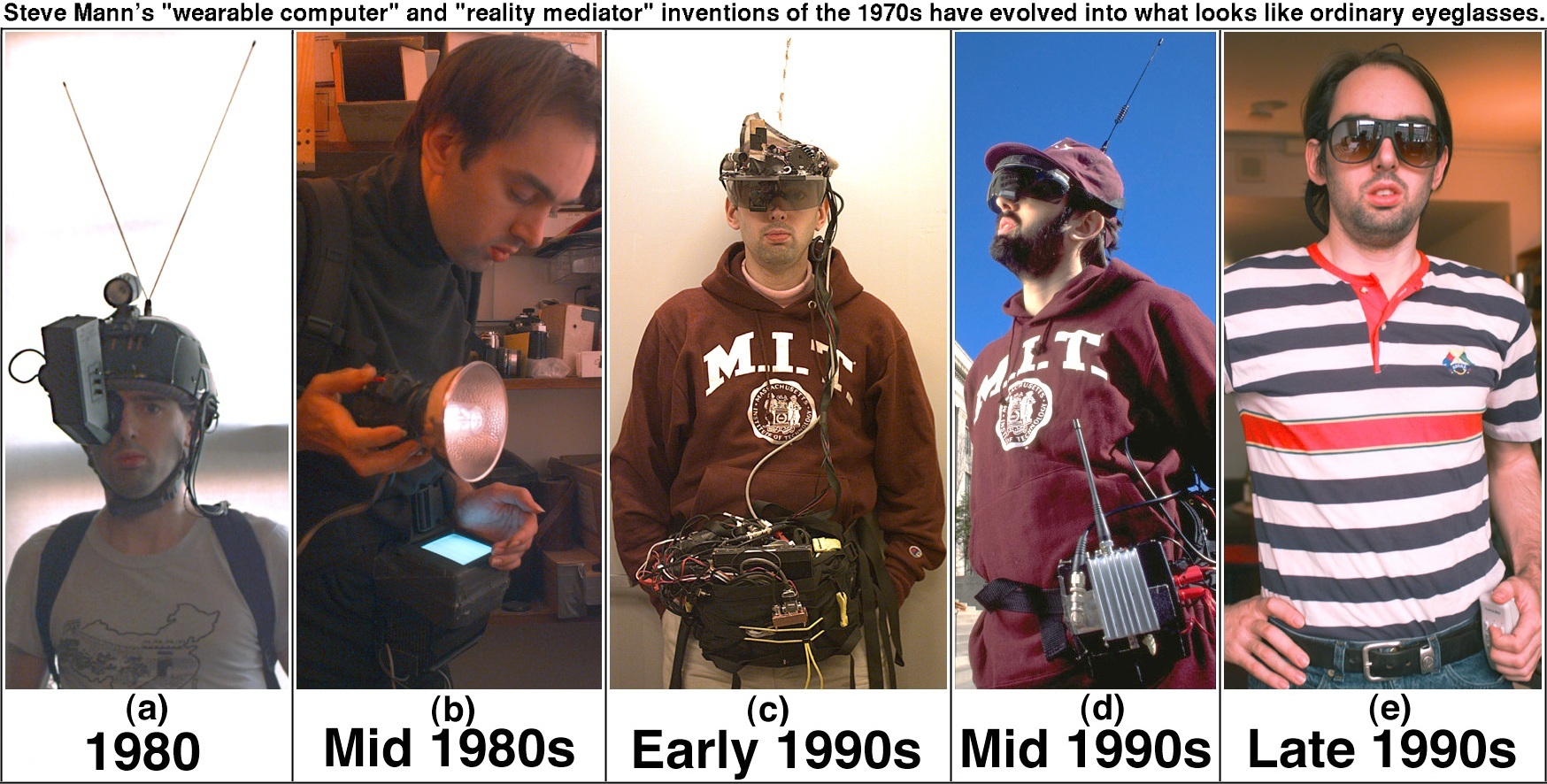
HomeSkillet writes contributes this link to an interesting NYT feature on the recent works of privacy activist, wearables pioneer and artist Steve Mann. Mann has been mentioned here a few times before, but in light of current moves to scan, monitor and track your every move by subtle and unsubtle means, it's never been more relevant. Can anyone suggest a non-registration source for this story? -
Philip Zimmermann and 'Guilt' Over PGP
Philip R. Zimmermann, creator of PGP, was quoted in a recent Washington Post article as saying he has been "overwhelmed with feelings of guilt" about the use of PGP by suspected terrorists. Zimmermann says the story was not entirely accurate, and has written a response to it (below) that he hopes will clear things up. He has also consented to a Slashdot interview, so please post any questions you have for him. As usual, we'll send 10 of the highest-moderated ones to Zimmermann by email, and post his replies verbatim as soon as we get them back.No Regrets About Developing PGP
The Friday September 21st Washington Post carried an article by Ariana Cha that I feel misrepresents my views on the role of PGP encryption software in the September 11th terrorist attacks. She interviewed me on Monday September 17th, and we talked about how I felt about the possibility that the terrorists might have used PGP in planning their attack. The article states that as the inventor of PGP, I was "overwhelmed with feelings of guilt". I never implied that in the interview, and specifically went out of my way to emphasize to her that that was not the case, and made her repeat back to me this point so that she would not get it wrong in the article. This misrepresentation is serious, because it implies that under the duress of terrorism I have changed my principles on the importance of cryptography for protecting privacy and civil liberties in the information age.
Because of the political sensitivity of how my views were to be expressed, Ms. Cha read to me most of the article by phone before she submitted it to her editors, and the article had no such statement or implication when she read it to me. The article that appeared in the Post was significantly shorter than the original, and had the abovementioned crucial change in wording. I can only speculate that her editors must have taken some inappropriate liberties in abbreviating my feelings to such an inaccurate soundbite.
In the interview six days after the attack, we talked about the fact that I had cried over the heartbreaking tragedy, as everyone else did. But the tears were not because of guilt over the fact that I developed PGP, they were over the human tragedy of it all. I also told her about some hate mail I received that blamed me for developing a technology that could be used by terrorists. I told her that I felt bad about the possibility of terrorists using PGP, but that I also felt that this was outweighed by the fact that PGP was a tool for human rights around the world, which was my original intent in developing it ten years ago. It appears that this nuance of reasoning was lost on someone at the Washington Post. I imagine this may be caused by this newspaper's staff being stretched to their limits last week.
In these emotional times, we in the crypto community find ourselves having to defend our technology from well-intentioned but misguided efforts by politicians to impose new regulations on the use of strong cryptography. I do not want to give ammunition to these efforts by appearing to cave in on my principles. I think the article correctly showed that I'm not an ideologue when faced with a tragedy of this magnitude. Did I re-examine my principles in the wake of this tragedy? Of course I did. But the outcome of this re-examination was the same as it was during the years of public debate, that strong cryptography does more good for a democratic society than harm, even if it can be used by terrorists. Read my lips: I have no regrets about developing PGP.
The question of whether strong cryptography should be restricted by the government was debated all through the 1990's. This debate had the participation of the White House, the NSA, the FBI, the courts, the Congress, the computer industry, civilian academia, and the press. This debate fully took into account the question of terrorists using strong crypto, and in fact, that was one of the core issues of the debate. Nonetheless, society's collective decision (over the FBI's objections) was that on the whole, we would be better off with strong crypto, unencumbered with government back doors. The export controls were lifted and no domestic controls were imposed. I feel this was a good decision, because we took the time and had such broad expert participation. Under the present emotional pressure, if we make a rash decision to reverse such a careful decision, it will only lead to terrible mistakes that will not only hurt our democracy, but will also increase the vulnerability of our national information infrastructure.
PGP users should rest assured that I would still not acquiesce to any back doors in PGP.
It is noteworthy that I had only received a single piece of hate mail on this subject. Because of all the press interviews I was dealing with, I did not have time to quietly compose a carefully worded reply to the hate mail, so I did not send a reply at all. After the article appeared, I received hundreds of supportive emails, flooding in at two or three per minute on the day of the article.
I have always enjoyed good relations with the press over the past decade, especially with the Washington Post. I'm sure they will get it right next time.
The article in question appears at http://www.washingtonpost.com/wp-dyn/articles/A1234-2001Sep20.html
-Philip Zimmermann
24 September 2001
(This letter may be widely circulated)
-----BEGIN PGP SIGNATURE-----
Version: PGP 7.0.3iQA/AwUBO69F2sdGNjmy13leEQIn+QCg2DjDeyibtRe61tUSplSAobdzAqEAoOMF ir3lRc4c1D/0Mmmv/JtP/E73 =HmRO
-----END PGP SIGNATURE----- -
ICFP 2001 Contest Results
Phil Bewig writes: "Results of the 2001 ICFP Programming Contest (previously mentioned at SlashDot here and here) have been announced. First place is to a program in Haskell, second place is to a program in Dylan, and the judges' prize is to a program in Erlang. The judges also named third place (ocaml) and fourth place (C) entries that were not awarded prizes. ICFP Programming Contest pages for prior years are available: 2000, 1999, and 1998." -
MIT Sues Sony over digital TV
dfinney wrote to us with a story from The Tech, concerning MIT suing Sony. Basically, MIT claims to have a number of patents, has worked with other folks in the industry, sez they've talked with Sony for a year, no headway, don't want to sue, but have key claims - etc etc. -
MIT's Bathroom Server
An Anonymous Coward writes: "Some of the undergrads wired Random Hall's (an undergraduate dorm) bathroom system up to the net so that you can visit http://bathroom.mit.edu and see which stalls on which floors are vacant, and if they're in use, how long whoever's been in there. It's a pretty good idea-- you can scout your stall from your dorm room, and watch it to make sure nobody's taken a s$#% there recently." -
Fine Structure Time Service
bromoseltzer writes: "Know your universe! Our Fine Structure Time Service keeps you in touch with your atomic underpinnings." -
Sam Lantinga Slings Some Answers
Last week you asked Sam Lantinga , developer of the Simple DirectMedia Layer (SDL) about SDL and other issues related to gaming. He's responded with answers about the SL port to Sony Playstation, game audio, DirectX, his new job at Blizzard, and more. He even drops some hints about some interesting gaming developments to watch out for.Out-of-the-box Linux 3D support?
by phutureboyThis may be more of a question for everyone else than for Sam (but Sam can feel free to answer also :) I'm not a big gamer, but I would play some if it weren't such a bitch to get the proper libraries working under Linux. Last time I tried was about 6 months ago... After following some really complicated directions and compiling umpteen obscure drivers I finally got SDL and hardware-accelerated OpenGL working. I had to disable it and revert to my previous versions, though, because it locked up my system a lot during games and made X pretty unstable. Anyway, my question is this: is multimedia support for Linux getting any easier to install? Is it possible that someday I will be able to install a distribution and have it automagically configure hardware 3D support, install SDL, etc.? Or is Linux multimedia still too much in the toddler stages?
I'm just a lowly PHP coder. I don't understand all this low-level mumbo jumbo. I just want to fire up a game every now and then and blow shit up. Is there hope for me?
Sam Lantinga: Yes, more and more distributions are starting to set up 3D out of the box. 3D on Linux is always a moving target however, so the best bet is for distribution to both include 3D detection and setup, and also to include information on how to upgrade the drivers to the latest versions.
As anecdotal evidence, Mike "Heimdall" Phillips, who up until recently worked as Q/A and technical support at Loki Software, Inc., installed Mandrake 8 on a box containing a Rage 128 video card, and the installation detected and set up 3D acceleration out of the box. He was up and running with most of Loki's 3D titles immediately.
Graphics Hardware Drivers
by m2My question is a bit tainted by my personal opinion in this matter, but I'm sure Sam will be able to provide a different (and surely interesting) point of view.
At the risk of being a tad Linux centric, does the availability or unavailability of hardware specifications and technical documentation on graphics hardware affect a Linux game developer and why? With two concrete cases in mind, on one hand NVIDIA who provides binary drivers and "high level" documentation about their cards, and on the other hand, ATI for which there's source code for the drivers with support for half of the features the hardware offers, but neither openly accessible hardware documentation nor much "high level" docs, how do you think this can affect the future development of games for Linux (proprietary or otherwise)?
SL: From my perspective as a cross-platform game developer, the objective is to write a great game, not to have to read technical documentation on particular graphics hardware. With the improvement of the OpenGL API implementations on the Linux platform, the need for game developers to get their hands dirty with the technical details of the graphics drivers is slowly going away. IMHO, this is a good thing. :)
Now, in reality there is always a need to look at the way the driver interacts with the hardware, either to fix bugs, or to improve graphics performance. For this reason, it's a great thing to have the source code and full graphics hardware specifications available - it allows the developer to make smarter choices about graphic implementation, and results in a better game. This is true of Linux as well as Windows, and interestingly Linux is a richer field than Windows when trying to find out how hardware and drivers really interact.
In the specific case of NVidia, I've been impressed with both the quality of their drivers, and the responsiveness and commitment of the company towards Linux as a whole. While it's true that there is no guarantee that this will continue, it's very refreshing now.
What's your status with Loki?
by Mr TWas your departure good? Daniel Vogel also left. Is Loki in a good position or did you leave because of some problem. What's the deal?
SL: My departure was good. I left because I was very interested in the opportunity to work on original game content at Blizzard Entertainment.
Loki owes me money like all the other employees, but they have stated that they will pay me back, and I am very hopeful that they will do so.
Blizzard Entertainment
by j7953What are you working on at Blizzard? Do you get paid for continuing your work on SDL, or do you have to do that in your spare time?
SL: I am working on an upcoming unannounced title. It's great fun and I can't wait for it to be announced so I can tell people what it is that I'm working on. As for SDL, I'm still working on it in my spare time. There's a rumor of a super-elite crack team of developers working on the next generation SDL API, but I can't substantiate it. :)
Directx 8 and SDL
by drenehtsralFrom playing with it, and noticing what has been conveniently removed from the documentation (but is still in the libraries), it looks like DirectX 8 is trying very hard to do away with directdraw and work purely through the 3d engine. Sprites are just 2d textured polys, etc ...
This leads me to believe that any future enhancements/optimizations/support/testing/etc ... that will happen with directx will be only on the direct3d part, and directdraw is probably going to be unsupported. Do y'all have any plans to deal with that?
SL: The next generation SDL API is leaning towards the concept of a texture manager and a plug-in architecture for operations on those textures. This should for the most part be a natural improvement upon the current design, and will lend itself well to 3D hardware acceleration. This design is for the 2D surface API though. At this point, the plan is to continue to support real 3D through the OpenGL API.
SDL and OpenAL (among others)
by Eugenia LoliSo, I was always wondering if there is going to be a 'real' integration between OpenAL and SDL. Currently, a lot of people are just using SDL_mixer which does a pretty good job for little shareware/oss games, but when it comes to commercial sound, 3D positioning and all these buzzwords, SDL needs OpenAL to break through against the goodies of DirectX has to offer.
Also, what about a wrapper against D3D? There is currently a nice integration with OpenGL, when SDL needs to use 3D acceleration, but under Windows (where a lot of SDL games already exist) most of the coders are using D3D. Also, based on the fact that D3D 8 is not as bloated as previous versions, a wrapper for other OSes could be easily achieved (IMHO).
Last question, again on the spirit of 'SDL Vs DirectX', are there any plans for more support for more input devices, like force feedback wheels etc.
Take care and thank you for all the hard work you have put on SDL the last few years. (and also greatly thank you for the BeOS port! :)
SL: Okay, there are several questions here. First, thanks for the appreciation! It should go to all the developers who have contributed to SDL and to products using it, because without them, it would not have become the great API that it is.
As for integration between SDL and OpenAL... SDL audio is fairly lightweight and designed to have mixer implementations be built on top of it. OpenAL is a heavy-weight 3D audio API. Different applications have different needs, and one audio API may suit a particular use better than another. You can always choose to use SDL for video and OpenAL for audio, or SDL for audio and another API for video, etc., you have many choices in the design of your game.
As an aside, there is support in the Linux implementation of OpenAL for using SDL as a back-end, and in fact this was used at one point to get the Linux implementation working on Windows. However, this isn't generally needed because of great native audio support.
There are no plans for a Direct3D wrapper for SDL. OpenGL works well on Linux, Windows, MacOS, and many other platforms.
Finally, yes, the device support and event model in SDL 1.3 will handle a much wider range of devices. Whether or not force feedback support will be included will depend on the state of the drivers for these devices across the range of platforms that SDL supports.
Gamecube, Xbox?
by evilMoogleWith SDL for PS2, are there any plans to do the same for the other next-gen platforms, the Gamecube and the Xbox?
SL: I don't know of any plans, but I'm sure somebody will do something as an exercise at some point. That's one of the great things about open source software. I'm constantly surprised at what people are doing with SDL.
higher level?
by magicWith X-Box supporting DirectX only (and a special version at that) and PS2 not supporting OpenGL in general, some of the utility of SDL is lost. For example, I can write a SDL & OpenGL game that compiles and runs on OSX, Linux, and Win32. But window, input, thread and audio management are the least of my problems when moving to X-Box or PS2... I have to rewrite my whole graphics pipeline!
There are, of course, some very good commercial 3D API's that will abstract over this problem. One of the strengths of SDL has been that you have abstracted over the low level and have avoided getting into the sticky business of fighting OpenGL and Direct3D for the 3D API. This also limits the utility of SDL, however, because of the lack of a solid, free API for abstracting the 3D API.
Do you see SDL moving higher up the graphics pipeline in the future, or is it your intent to continue to avoid higher level 3D calls?
SL: I like side-stepping the 3D API issue. :)
I don't plan on adding a 3D API abstraction at this point, however I'm open to the idea of getting a single working 3D API that would cover the platforms you mention. My suspicion, with my limited experience with the PS2 hardware, is that it would take longer to write a functional API that could cover the differences in platforms than it would to get a working subset of OpenGL implemented. There's a reason that many PS2 developers write directly to the hardware.
Sony Development Costs
by debrainSony charges stiff fees for Playstation (2) development licenses. Was one of the primary focuses of SDL a way to circumvent these fees, broaden the PS2 platform, broaden the SDL platform, or broaden Linux as a viable game platform?
SL: Mostly the port was done as a fun toy. The intention was to broaden the SDL platform, and possibly allow the average person to write games that would run on the Sony Playstation.
End-user availability?
by DeadMeat (TM)I brought this up before when the port was announced, but nobody knew the exact answer, so maybe I can get it straight from the horse's mouth ...
From what I understand, the PS2 Linux distro uses a proprietary, binary-only driver/library/program to allow programmers to access the PS2's graphics chip. My question is, how will this hinder end users' ability to get their hands on SDL-based PS2 games?
Does this mean they'll have to buy a copy of the $200 Linux development kit? Or are developers allowed to freely redistribute the graphics runtimes? (Or have you found some other way around this, perhaps by accessing the PS2 hardware without the binary runtime?)
I'm just afraid that most PS2 gamers (read: non-geeks) won't find SDL games too attractive if they have to buy a $200 Linux kit to play them.
SL: The SDL port runs on Sony's Public Beta of Linux on the Playstation 2. This public beta is loosely based on a derivative of RedHat Linux, and works just like any other Linux system. It boots from a memory card, but once booted, it can access the network and hard drive like a UNIX workstation. You can download software RPM archives that were built on Linux for the PS2 and install them normally. This is the way I distribute the SDL runtime packages and Maelstrom for the PlayStation 2.
Since the Linux beta is publicly available only in Japan, I'm not sure what would be included in a commercial product that would be released in the U.S..
-
Patent Invention Machines
kryzx writes: "Here's one to tickle your imagination: using genetic programming to come up with new, patentable solutions to problems. Could be happening very soon. Here's an article at MIT Technology Review. This work, being done at Stanford and Genetic Programming Inc. by John Koza and company has already succeeded at reproducing quite a few ideas for existing patents, ranging from old to very recent. It's apparently much easier to compare against existing patents than sift through hundreds of surviving algorithms to determine if they are useful, original, and patentable.) Also, this company is a good target for your tech envy, with their 1,000-node Beowulf-style cluster of Pentium II 350's and 70-node cluster of 533 MHz DEC Alpha's. (There are pix, too. PII cluster on the main page, Alphas here.) Wanna play with the toys? They have job openings for programmers. :-)"