Slashdot Mirror
Domain: mit.edu
Stories and comments across the archive that link to mit.edu.
Comments · 7,673
-
What We Can Learn from BSD
What We Can Learn From BSD
By Chinese Karma Whore, Version 1.0
Everyone knows about BSD's failure and imminent demise. As we pore over the history of BSD, we'll uncover a story of fatal mistakes, poor priorities, and personal rivalry, and we'll learn what mistakes to avoid so as to save Linux from a similarly grisly fate.
Let's not be overly morbid and give BSD credit for its early successes. In the 1970s, Ken Thompson and Bill Joy both made significant contributions to the computing world on the BSD platform. In the 80s, DARPA saw BSD as the premiere open platform, and, after initial successes with the 4.1BSD product, gave the BSD company a 2 year contract.
These early triumphs would soon be forgotten in a series of internal conflicts that would mar BSD's progress. In 1992, AT&T filed suit against Berkeley Software, claiming that proprietary code agreements had been haphazardly violated. In the same year, BSD filed countersuit, reciprocating bad intentions and fueling internal rivalry. While AT&T and Berkeley Software lawyers battled in court, lead developers of various BSD distributions quarreled on Usenet. In 1995, Theo de Raadt, one of the founders of the NetBSD project, formed his own rival distribution, OpenBSD, as the result of a quarrel that he documents on his website. Mr. de Raadt's stubborn arrogance was later seen in his clash with Darren Reed, which resulted in the expulsion of IPF from the OpenBSD distribution.
As personal rivalries took precedence over a quality product, BSD's codebase became worse and worse. As we all know, incompatibilities between each BSD distribution make code sharing an arduous task. Research conducted at MIT found BSD's filesystem implementation to be "very poorly performing." Even BSD's acclaimed TCP/IP stack has lagged behind, according to this study.
Problems with BSD's codebase were compounded by fundamental flaws in the BSD design approach. As argued by Eric Raymond in his watershed essay, The Cathedral and the Bazaar, rapid, decentralized development models are inherently superior to slow, centralized ones in software development. BSD developers never heeded Mr. Raymond's lesson and insisted that centralized models lead to 'cleaner code.' Don't believe their hype - BSD's development model has significantly impaired its progress. Any achievements that BSD managed to make were nullified by the BSD license, which allows corporations and coders alike to reap profits without reciprocating the generous goodwill of open-source. Fortunately, Linux is not prone to this exploitation, as it is licensed under the GPL.
The failure of BSD culminated in the resignation of Jordan Hubbard and Michael Smith from the FreeBSD core team. They both believed that FreeBSD had long lost its earlier vitality. Like an empire in decline, BSD had become bureaucratic and stagnant. As Linux gains market share and as BSD sinks deeper into the mire of decay, their parting addresses will resound as fitting eulogies to BSD's demise. -
Read what Noam has to say.
Yeah they are anti-american in the same way that Noam Chomsky is anti-semitic. They disagree with the group that they are a part of so they are anti-$whatever.
Uh, well, that and the fact that Noam wrote an introduction to a book by an anti-semitic author by the name of Robert Faurisson who denied that the holocaust took place. Noam described Faurisson's holocaust-denial statements as "findings", and said:
"I see no anti-Semitic implication in the denial of the existence in gas chambers or even in the denial of the Holocaust."
Link Here
-
Re:Why can't Linux & BSD co-exist peacefully
What We Can Learn From BSD
Everyone knows about BSD's failure and imminent demise. As we pore over the history of BSD, we'll uncover a story of fatal mistakes, poor priorities, and personal rivalry, and we'll learn what mistakes to avoid so as to save Linux from a similarly grisly fate.
Let's not be overly morbid and give BSD credit for its early successes. In the 1970s, Ken Thompson and Bill Joy both made significant contributions to the computing world on the BSD platform. In the 80s, DARPA saw BSD as the premiere open platform, and, after initial successes with the 4.1BSD product, gave the BSD company a 2 year contract.
These early triumphs would soon be forgotten in a series of internal conflicts that would mar BSD's progress. In 1992, AT&T filed suit against Berkeley Software, claiming that proprietary code agreements had been haphazardly violated. In the same year, BSD filed countersuit, reciprocating bad intentions and fueling internal rivalry. While AT&T and Berkeley Software lawyers battled in court, lead developers of various BSD distributions quarreled on Usenet. In 1995, Theo de Raadt, one of the founders of the NetBSD project, formed his own rival distribution, OpenBSD, as the result of a quarrel that he documents on his website. Mr. de Raadt's stubborn arrogance was later seen in his clash with Darren Reed, which resulted in the expulsion of IPF from the OpenBSD distribution.
As personal rivalries took precedence over a quality product, BSD's codebase became worse and worse. As we all know, incompatibilities between each BSD distribution make code sharing an arduous task. Research conducted at MIT found BSD's filesystem implementation to be "very poorly performing." Even BSD's acclaimed TCP/IP stack has lagged behind, according to this study.
Problems with BSD's codebase were compounded by fundamental flaws in the BSD design approach. As argued by Eric Raymond in his watershed essay, The Cathedral and the Bazaar, rapid, decentralized development models are inherently superior to slow, centralized ones in software development. BSD developers never heeded Mr. Raymond's lesson and insisted that centralized models lead to 'cleaner code.' Don't believe their hype - BSD's development model has significantly impaired its progress. Any achievements that BSD managed to make were nullified by the BSD license, which allows corporations and coders alike to reap profits without reciprocating the goodwill of open-source. Fortunately, Linux is not prone to this exploitation, as it is licensed under the GPL.
The failure of BSD culminated in the resignation of Jordan Hubbard and Michael Smith from the FreeBSD core team. They both believed that FreeBSD had long lost its earlier vitality. Like an empire in decline, BSD had become bureaucratic and stagnant. As Linux gains market share and as BSD sinks deeper into the mire of decay, their parting addresses will resound as fitting eulogies to BSD's demise. -
Re:~/.signature
What We Can Learn from BSD
By Chinese Karma Whore, Version 1.0
Everyone knows about BSD's failure and imminent demise. As we pore over the history of BSD, we'll uncover a story of fatal mistakes, poor priorities, and personal rivalry, and we'll learn what mistakes to avoid so as to save Linux from a similarly grisly fate.
Let's not be overly morbid and give BSD credit for its early successes. In the 1970s, Ken Thompson and Bill Joy both made significant contributions to the computing world on the BSD platform. In the 80s, DARPA saw BSD as the premiere open platform, and, after initial successes with the 4.1BSD product, gave the BSD company a 2 year contract.
These early triumphs would soon be forgotten in a series of internal conflicts that would mar BSD's progress. In 1992, AT&T filed suit against Berkeley Software, claiming that proprietary code agreements had been haphazardly violated. In the same year, BSD filed countersuit, reciprocating bad intentions and fueling internal rivalry. While AT&T and Berkeley Software lawyers battled in court, lead developers of various BSD distributions quarreled on Usenet. In 1995, Theo de Raadt, one of the founders of the NetBSD project, formed his own rival distribution, OpenBSD, as the result of a quarrel that he documents on his website. Mr. de Raadt's stubborn arrogance was later seen in his clash with Darren Reed, which resulted in the expulsion of IPF from the OpenBSD distribution.
As personal rivalries took precedence over a quality product, BSD's codebase became worse and worse. As we all know, incompatibilities between each BSD distribution make code sharing an arduous task. Research conducted at MIT found BSD's filesystem implementation to be "very poorly performing." Even BSD's acclaimed TCP/IP stack has lagged behind, according to this study.
Problems with BSD's codebase were compounded by fundamental flaws in the BSD design approach. As argued by Eric Raymond in his watershed essay, The Cathedral and the Bazaar, rapid, decentralized development models are inherently superior to slow, centralized ones in software development. Foolishly, BSD developers never heeded Mr. Raymond's lesson and insisted that centralized models lead to 'cleaner code.' Don't believe their hype - BSD's development model has significantly impaired its progress. Any achievements that BSD managed to make were nullified by the BSD license, which allows corporations and coders alike to reap profits without reciprocating the goodwill of open-source. Fortunately, Linux is not prone to this exploitation, as it is licensed under the GPL.
The failure of BSD culminated in the resignation of Jordan Hubbard and Michael Smith from the FreeBSD core team. They both believed that FreeBSD had long lost its earlier vitality. Like an empire in decline, BSD had become bureaucratic and stagnant. As Linux gains market share and as BSD sinks deeper into the mire of decay, their parting addresses will resound as fitting eulogies to BSD's demise. -
Re:5.1 is Kludged together
What We Can Learn From BSD
By Chinese Karma Whore, Version 1.0
Everyone knows about BSD's failure and imminent demise. As we pore over the history of BSD, we'll uncover a story of fatal mistakes, poor priorities, and personal rivalry, and we'll learn what mistakes to avoid so as to save Linux from a similarly grisly fate.
Let's not be overly morbid and give BSD credit for its early successes. In the 1970s, Ken Thompson and Bill Joy both made significant contributions to the computing world on the BSD platform. In the 80s, DARPA saw BSD as the premiere open platform, and, after initial successes with the 4.1BSD product, gave the BSD company a 2 year contract.
These early triumphs would soon be forgotten in a series of internal conflicts that would mar BSD's progress. In 1992, AT&T filed suit against Berkeley Software, claiming that proprietary code agreements had been haphazardly violated. In the same year, BSD filed countersuit, reciprocating bad intentions and fueling internal rivalry. While AT&T and Berkeley Software lawyers battled in court, lead developers of various BSD distributions quarreled on Usenet. In 1995, Theo de Raadt, one of the founders of the NetBSD project, formed his own rival distribution, OpenBSD, as the result of a quarrel that he documents on his website. Mr. de Raadt's stubborn arrogance was later seen in his clash with Darren Reed, which resulted in the expulsion of IPF from the OpenBSD distribution.
As personal rivalries took precedence over a quality product, BSD's codebase became worse and worse. As we all know, incompatibilities between each BSD distribution make code sharing an arduous task. Research conducted at MIT found BSD's filesystem implementation to be "very poorly performing." Even BSD's acclaimed TCP/IP stack has lagged behind, according to this study.
Problems with BSD's codebase were compounded by fundamental flaws in the BSD design approach. As argued by Eric Raymond in his watershed essay, The Cathedral and the Bazaar, rapid, decentralized development models are inherently superior to slow, centralized ones in software development. BSD developers never heeded Mr. Raymond's lesson and insisted that centralized models lead to 'cleaner code.' Don't believe their hype - BSD's development model has significantly impaired its progress. Any achievements that BSD managed to make were nullified by the BSD license, which allows corporations and coders alike to reap profits without reciprocating the generous goodwill of open-source. Fortunately, Linux is not prone to this exploitation, as it is licensed under the GPL.
The failure of BSD culminated in the resignation of Jordan Hubbard and Michael Smith from the FreeBSD core team. They both believed that FreeBSD had long lost its earlier vitality. Like an empire in decline, BSD had become bureaucratic and stagnant. As Linux gains market share and as BSD sinks deeper into the mire of decay, their parting addresses will resound as fitting eulogies to BSD's demise. -
What We Can Learn From BSD
What We Can Learn From BSD
By Chinese Karma Whore, Version 1.0
Everyone knows about BSD's failure and imminent demise. As we pore over the history of BSD, we'll uncover a story of fatal mistakes, poor priorities, and personal rivalry, and we'll learn what mistakes to avoid so as to save Linux from a similarly grisly fate.
Let's not be overly morbid and give BSD credit for its early successes. In the 1970s, Ken Thompson and Bill Joy both made significant contributions to the computing world on the BSD platform. In the 80s, DARPA saw BSD as the premiere open platform, and, after initial successes with the 4.1BSD product, gave the BSD company a 2 year contract.
These early triumphs would soon be forgotten in a series of internal conflicts that would mar BSD's progress. In 1992, AT&T filed suit against Berkeley Software, claiming that proprietary code agreements had been haphazardly violated. In the same year, BSD filed countersuit, reciprocating bad intentions and fueling internal rivalry. While AT&T and Berkeley Software lawyers battled in court, lead developers of various BSD distributions quarreled on Usenet. In 1995, Theo de Raadt, one of the founders of the NetBSD project, formed his own rival distribution, OpenBSD, as the result of a quarrel that he documents on his website. Mr. de Raadt's stubborn arrogance was later seen in his clash with Darren Reed, which resulted in the expulsion of IPF from the OpenBSD distribution.
As personal rivalries took precedence over a quality product, BSD's codebase became worse and worse. As we all know, incompatibilities between each BSD distribution make code sharing an arduous task. Research conducted at MIT found BSD's filesystem implementation to be "very poorly performing." Even BSD's acclaimed TCP/IP stack has lagged behind, according to this study.
Problems with BSD's codebase were compounded by fundamental flaws in the BSD design approach. As argued by Eric Raymond in his watershed essay, The Cathedral and the Bazaar, rapid, decentralized development models are inherently superior to slow, centralized ones in software development. BSD developers never heeded Mr. Raymond's lesson and insisted that centralized models lead to 'cleaner code.' Don't believe their hype - BSD's development model has significantly impaired its progress. Any achievements that BSD managed to make were nullified by the BSD license, which allows corporations and coders alike to reap profits without reciprocating the goodwill of open-source. Fortunately, Linux is not prone to this exploitation, as it is licensed under the GPL.
The failure of BSD culminated in the resignation of Jordan Hubbard and Michael Smith from the FreeBSD core team. They both believed that FreeBSD had long lost its earlier vitality. Like an empire in decline, BSD had become bureaucratic and stagnant. As Linux gains market share and as BSD sinks deeper into the mire of decay, their parting addresses will resound as fitting eulogies to BSD's demise. -
CalTech FAST TCP projectSteven Low of CalTech's Netlab gave a talk at MIT yesterday regarding the modified TCP protocol they used to achieve this transfer. Those who are curious about the details can check out the Fast TCP homepage.
Basically they showed that conventional TCP is not very good at scaling to large flows like the ones in the article. He described a typical broadband Internet connection as being able to utilize only about 27 percent of the available bandwidth, while their modified FAST TCP connection reached 95 percent efficiency. He had some nice test results showing how the protocols reacted to having to share bandwidth with other flows, and pointed out how when other flows finished and more bandwidth opened up, conventional TCP was very slow to take advantage of the increased bandwidth.
There's an older Economist article describing the protocol in more detail for those who are interested.
-
What We Can Learn From BSD
What We Can Learn From BSD
By Chinese Karma Whore, Version 1.0
Everyone knows about BSD's failure and imminent demise. As we pore over the history of BSD, we'll uncover a story of fatal mistakes, poor priorities, and personal rivalry, and we'll learn what mistakes to avoid so as to save Linux from a similarly grisly fate.
Let's not be overly morbid and give BSD credit for its early successes. In the 1970s, Ken Thompson and Bill Joy both made significant contributions to the computing world on the BSD platform. In the 80s, DARPA saw BSD as the premiere open platform, and, after initial successes with the 4.1BSD product, gave the BSD company a 2 year contract.
These early triumphs would soon be forgotten in a series of internal conflicts that would mar BSD's progress. In 1992, AT&T filed suit against Berkeley Software, claiming that proprietary code agreements had been haphazardly violated. In the same year, BSD filed countersuit, reciprocating bad intentions and fueling internal rivalry. While AT&T and Berkeley Software lawyers battled in court, lead developers of various BSD distributions quarreled on Usenet. In 1995, Theo de Raadt, one of the founders of the NetBSD project, formed his own rival distribution, OpenBSD, as the result of a quarrel that he documents on his website. Mr. de Raadt's stubborn arrogance was later seen in his clash with Darren Reed, which resulted in the expulsion of IPF from the OpenBSD distribution.
As personal rivalries took precedence over a quality product, BSD's codebase became worse and worse. As we all know, incompatibilities between each BSD distribution make code sharing an arduous task. Research conducted at MIT found BSD's filesystem implementation to be "very poorly performing." Even BSD's acclaimed TCP/IP stack has lagged behind, according to this study.
Problems with BSD's codebase were compounded by fundamental flaws in the BSD design approach. As argued by Eric Raymond in his watershed essay, The Cathedral and the Bazaar, rapid, decentralized development models are inherently superior to slow, centralized ones in software development. BSD developers never heeded Mr. Raymond's lesson and insisted that centralized models lead to 'cleaner code.' Don't believe their hype - BSD's development model has significantly impaired its progress. Any achievements that BSD managed to make were nullified by the BSD license, which allows corporations and coders alike to reap profits without reciprocating the goodwill of open-source. Fortunately, Linux is not prone to this exploitation, as it is licensed under the GPL.
The failure of BSD culminated in the resignation of Jordan Hubbard and Michael Smith from the FreeBSD core team. They both believed that FreeBSD had long lost its earlier vitality. Like an empire in decline, BSD had become bureaucratic and stagnant. As Linux gains market share and as BSD sinks deeper into the mire of decay, their parting addresses will resound as fitting eulogies to BSD's demise. -
What We Can Learn From BSD
What We Can Learn From BSD
By Chinese Karma Whore, Version 1.0
Everyone knows about BSD's failure and imminent demise. As we pore over the history of BSD, we'll uncover a story of fatal mistakes, poor priorities, and personal rivalry, and we'll learn what mistakes to avoid so as to save Linux from a similarly grisly fate.
Let's not be overly morbid and give BSD credit for its early successes. In the 1970s, Ken Thompson and Bill Joy both made significant contributions to the computing world on the BSD platform. In the 80s, DARPA saw BSD as the premiere open platform, and, after initial successes with the 4.1BSD product, gave the BSD company a 2 year contract.
These early triumphs would soon be forgotten in a series of internal conflicts that would mar BSD's progress. In 1992, AT&T filed suit against Berkeley Software, claiming that proprietary code agreements had been haphazardly violated. In the same year, BSD filed countersuit, reciprocating bad intentions and fueling internal rivalry. While AT&T and Berkeley Software lawyers battled in court, lead developers of various BSD distributions quarreled on Usenet. In 1995, Theo de Raadt, one of the founders of the NetBSD project, formed his own rival distribution, OpenBSD, as the result of a quarrel that he documents on his website. Mr. de Raadt's stubborn arrogance was later seen in his clash with Darren Reed, which resulted in the expulsion of IPF from the OpenBSD distribution.
As personal rivalries took precedence over a quality product, BSD's codebase became worse and worse. As we all know, incompatibilities between each BSD distribution make code sharing an arduous task. Research conducted at MIT found BSD's filesystem implementation to be "very poorly performing." Even BSD's acclaimed TCP/IP stack has lagged behind, according to this study.
Problems with BSD's codebase were compounded by fundamental flaws in the BSD design approach. As argued by Eric Raymond in his watershed essay, The Cathedral and the Bazaar, rapid, decentralized development models are inherently superior to slow, centralized ones in software development. BSD developers never heeded Mr. Raymond's lesson and insisted that centralized models lead to 'cleaner code.' Don't believe their hype - BSD's development model has significantly impaired its progress. Any achievements that BSD managed to make were nullified by the BSD license, which allows corporations and coders alike to reap profits without reciprocating the goodwill of open-source. Fortunately, Linux is not prone to this exploitation, as it is licensed under the GPL.
The failure of BSD culminated in the resignation of Jordan Hubbard and Michael Smith from the FreeBSD core team. They both believed that FreeBSD had long lost its earlier vitality. Like an empire in decline, BSD had become bureaucratic and stagnant. As Linux gains market share and as BSD sinks deeper into the mire of decay, their parting addresses will resound as fitting eulogies to BSD's demise. -
Re:Rumor mill run wild.
but without a system in place for fact-checking and followup
Maybe it's just me, but if you don't even want to take the time to look at the site in question, then you shouldn't be posting about it. Ooops forgot the Slashdot motto...
From the site's FAQ
For instance, say a scandal breaks, but the politician in question is later exonerated because of a specific fact. Users can poll the system to see if that fact was logged, and find out who contributed that fact, and when they did, without knowing their real name. They can then rank the credibility of that contributor, and ask the system to notify them if he or she makes further contributions in the future. Thus, they can learn whether they trust or mistrust a contributor, while the contributor still retains anonymity.
A further feature of the site is that any subject of a submission -- whether individual, agency, or organization -- is notified of the submission, and asked to respond. They can confirm or deny the submission. It's important to note that, like an FBI file, submissions are not purged when denied -- the stakes are simply too high to do so. As with such files, subjects of spurious submissions who are nonetheless innocent have nothing to fear from GIA.
-
Re:ValidityFrom one of their "About" pages:
To help ensure credibility, when you submit information about a particular individual or organization they will be contacted, allowing them to confirm or deny the information you submitted. Much like an FBI file, the information remains whether or not it turned out to be true.
So, if something outrageous is posted, there are several possibilities: It's true but denied by the agency, true and confirmed by the agency, or false and refuted by the agency. I would venture that most items of interest would fall into the second category. I.e., the value of the site will be to collect into one place a collection of many such observations. In other words, there are probably all sorts of questionable things going on (none of which are individually denied by any agency involved), but they're happening in small bites here and there and so easy to ignore unless they are all collected into one place.
-
Re:Ugh
Doesn't this mean that anyone can post anything regardless of it being true?
Actually, the FAQ elaborates on this possibility quite well. I've been watching this project for at least a month now, and I'm very excited by the prospects. To quote verbatim from model explanation page:
GIA contains many kinds of information, including data from public sources, images culled automatically in real time, as well as contributions from any individual who cares to help. If you contribute information, you'll do so with a "screen name," which helps to protect your identity, but also ensures that all of your submissions are linked to their source. Others will grow to trust or mistrust your information as it does or does not convince them over time. Likewise, when you are looking at information -- as with any community -- you will have to decide which sources you trust.
To help ensure credibility, when you submit information about a particular individual or organization they will be contacted, allowing them to confirm or deny the information you submitted. Much like an FBI file, the information remains whether or not it turned out to be true.
Basically, it shouldn't be difficult to figure out if there are any troll postings; and they make an insightful connection (if it's true, that is) between FBI files on citizens that retain even proven-wrong data and Open Government files on politicians that retain even denied information.
Moreover, when you submit information you're encouraged to submit a source. So, no, the possibility for abuse isn't out of the question, but I have no doubt that steps will be taken to minimize it.
-
Demo site available at MIT
It is based on a site that Chris Csikszentmihalyi and Ryan McKinley of the Massachusetts Institute of Technology's Media Laboratory set up in July. That site encourages members of the public to post information about organisations, officials and politicians, such as their business links and the source of their campaign donations.
The demo site mentioned above is pretty damn cool, even offers monitoring of C-SPAN/C-SPAN2 as well as a "robot" that watches and records appearances by "people, pundits, or politicians who have recently been entered into our facial database". Hopefully the system looks this polished when it moves to being a P2P network!
Jonah Hex -
Demo site available at MIT
It is based on a site that Chris Csikszentmihalyi and Ryan McKinley of the Massachusetts Institute of Technology's Media Laboratory set up in July. That site encourages members of the public to post information about organisations, officials and politicians, such as their business links and the source of their campaign donations.
The demo site mentioned above is pretty damn cool, even offers monitoring of C-SPAN/C-SPAN2 as well as a "robot" that watches and records appearances by "people, pundits, or politicians who have recently been entered into our facial database". Hopefully the system looks this polished when it moves to being a P2P network!
Jonah Hex -
Demo site available at MIT
It is based on a site that Chris Csikszentmihalyi and Ryan McKinley of the Massachusetts Institute of Technology's Media Laboratory set up in July. That site encourages members of the public to post information about organisations, officials and politicians, such as their business links and the source of their campaign donations.
The demo site mentioned above is pretty damn cool, even offers monitoring of C-SPAN/C-SPAN2 as well as a "robot" that watches and records appearances by "people, pundits, or politicians who have recently been entered into our facial database". Hopefully the system looks this polished when it moves to being a P2P network!
Jonah Hex -
VoIP is so new...
Take a pick... I guess the new thing is that it's the most sneaky P2P developer out there who's doing it as a P2P network. Watch those popups will ya.
-
Hello Niklas Zennstrom....
Welcome to the VoIP club...
-
"What's a good word, little buddy?" "Lumbar."From Sam & Max Hit the Road:
Sam (holding the decapitated head of a mad scientist with a ticking timebomb implanted in the skull): Where should I put this thing so that it doesn't hurt anyone we know or care about?
What a great game! And, even though it's a bit out-of-date, this website offers up some great memories of the canine/lagomorph duo.Max: Out the window, Sam. There's nobody but strangers out there.
Sam throws the bomb out the window. Moments later, there's an explosion outside.
Sam: I hope there was nobody on that bus," said Sam eventually.
Max: Nobody we know, at least.
-
Microwave-powered AircraftThere have been two references in this thread to the SHARP project, in which microwaves were used to power an airplane remotely. So, I decided to dig up an old memory of mine, the microwave-powered helicopter:
1964
"At a 28 October press conference, Raytheon, under contract with RADC, demonstrated an experimental microwave-powered helicopter. The significance of this effort was not merely in the development of the equipment, but in the technological advances, particularly the use of a microwave beam to transfer power. The helicopter subsequently was included in a federal science and engineering exhibit."
(Photo included)
1964 History: Rome Air Development CenterNote that these devices need not use a maser or microwave laser; an ordinary microwave source is sufficient.
"The founding father of modern microwave power transmission gave a presentation and showed videos of the microwave-powered helicopter that he built for the Air Force in the 1970's which was also funded by Raytheon. A Japanese group showed videos of their microwave-powered room size blimp, and a group from University of Alaska showed videos of their progress on a small microwave-powered helicopter. All of these devices are based on some form of "rectenna" which is an antenna array which rectifies the electromagnetic beam impinging on it. Usually, special rectifying diodes are used. Efficiencies are remarkably high: >90% for the antenna and >~65% for the entire system at typical powers of tens of Kilowatts. The greatest loss comes from generating the microwaves in the first place from DC power. JPL, NASA, and other folks talked a lot about their design for the satellite which will collect solar energy and beam it down to earth."
-
Re:Not a laser..When was the last time you saw an invisible laser
Well, if it is invisible, by definition I could not see it...
lasers are in the visible light spectrum
I have an Associate's Degree in Laser Electro-Optic Technology. Any oscillator that produces electromagnetic radiation in the range of infrared or shorter wavelengths by the process of stimulated emission of radiation is considered a laser. In fact, the name has become shorthand for just about anything that produces a beam of anything through quantum triggering (e.g., an "atom laser"). A carbon dioxide laser's primary (strongest) output wavelength is 1.6 microns, which is well within the infrared portion of the spectrum, and completely invisible to the human eye. The Nd:YAG laser also produces its primary wavelength in the infrared range (the beam is often sent through a frequency doubling crystal, which produces green light at half the power of the input beam). CD players use an infrared diode laser (invisible beam). At the other side of the visible spectrum, the eximer laser produces ultraviolet light, at a wavelength that is invisible to the normal human eye. The nitrogen laser also produces a beam that is not directly visible to the unaided human eye, but the beam causes air to fluoresce in a wavelength normally visible to humans.
-
What we can learn from BSD.Everyone knows about BSD's failure and imminent demise. As we pore over the history of BSD, we'll uncover a story of fatal mistakes, poor priorities, and personal rivalry, and we'll learn what mistakes to avoid so as to save Linux from a similarly grisly fate.
Let's not be overly morbid and give BSD credit for its early successes. In the 1970s, Ken Thompson and Bill Joy both made significant contributions to the computing world on the BSD platform. In the 80s, DARPA saw BSD as the premiere open platform, and, after initial successes with the 4.1BSD product, gave the BSD company a 2 year contract.
These early triumphs would soon be forgotten in a series of internal conflicts that would mar BSD's progress. In 1992, AT&T filed suit against Berkeley Software, claiming that proprietary code agreements had been haphazardly violated. In the same year, BSD filed countersuit, reciprocating bad intentions and fueling internal rivalry. While AT&T and Berkeley Software lawyers battled in court, lead developers of various BSD distributions quarreled on Usenet. In 1995, Theo deRaadt, one of the founders of the NetBSD project, formed his own rival distribution, OpenBSD, as the result of a quarrel that he documents on his website. Mr. de Raadt's stubborn arrogance was later seen in his clash with Darren Reed, which resulted in the expulsion of IPF from the OpenBSD distribution.
As personal rivalries took precedence over a quality product, BSD's codebase became worse and worse. As we all know, incompatibilities between each BSD distribution make code sharing an arduous task. Research conducted at MIT found BSD's filesystem implementation to be "very poorly performing." Even BSD's acclaimed TCP/IP stack has lagged behind, according to this study.
Problems with BSD's codebase were compounded by fundamental flaws in the BSD design approach. As argued by Eric Raymond in his watershed essay, The Cathedral and the Bazaar, rapid, decentralized development models are inherently superior to slow, centralized ones in software development. BSD developers never heeded Mr. Raymond's lesson and insisted that centralized models lead to 'cleaner code.' Don't believe their hype - BSD's development model has significantly impaired its progress. Any achievements that BSD managed to make were nullified by the BSD license, which allows corporations and coders alike to reap profits without reciprocating the goodwill of open-source. Fortunately, Linux is not prone to this exploitation, as it is licensed under the GPL.
The failure of BSD culminated in the resignation of Jordan Hubbard and Michael Smith from the FreeBSD core team. They both believed that FreeBSD had long lost its earlier vitality. Like an empire in decline, BSD had become bureacratic and stagnant. As Linux gains market share and as BSD sinks deeper into the mire of decay, their parting addresses will resound as fitting eulogies to BSD's demise.
-
What We Can Learn from BSD
Everyone knows about BSD's failure and imminent demise. As we pore over the history of BSD, we'll uncover a story of fatal mistakes, poor priorities, and personal rivalry, and we'll learn what mistakes to avoid so as to save Linux from a similarly grisly fate.
Let's not be overly morbid and give BSD credit for its early successes. In the 1970s, Ken Thompson and Bill Joy both made significant contributions to the computing world on the BSD platform. In the 80s, DARPA saw BSD as the premiere open platform, and, after initial successes with the 4.1BSD product, gave the BSD company a 2 year contract.
These early triumphs would soon be forgotten in a series of internal conflicts that would mar BSD's progress. In 1992, AT&T filed suit against Berkeley Software, claiming that proprietary code agreements had been haphazardly violated. In the same year, BSD filed countersuit, reciprocating bad intentions and fueling internal rivalry. While AT&T and Berkeley Software lawyers battled in court, lead developers of various BSD distributions quarreled on Usenet. In 1995, Theo de Raadt, one of the founders of the NetBSD project, formed his own rival distribution, OpenBSD, as the result of a quarrel that he documents on his website. Mr. de Raadt's stubborn arrogance was later seen in his clash with Darren Reed, which resulted in the expulsion of IPF from the OpenBSD distribution.
As personal rivalries took precedence over a quality product, BSD's codebase became worse and worse. As we all know, incompatibilities between each BSD distribution make code sharing an arduous task. Research conducted at MIT found BSD's filesystem implementation to be "very poorly performing." Even BSD's acclaimed TCP/IP stack has lagged behind, according to this study.
Problems with BSD's codebase were compounded by fundamental flaws in the BSD design approach. As argued by Eric Raymond in his watershed essay, The Cathedral and the Bazaar, rapid, decentralized development models are inherently superior to slow, centralized ones in software development. BSD developers never heeded Mr. Raymond's lesson and insisted that centralized models lead to 'cleaner code.' Don't believe their hype - BSD's development model has significantly impaired its progress. Any achievements that BSD managed to make were nullified by the BSD license, which allows corporations and coders alike to reap profits without reciprocating the goodwill of open-source. Fortunately, Linux is not prone to this exploitation, as it is licensed under the GPL.
The failure of BSD culminated in the resignation of Jordan Hubbard and Michael Smith from the FreeBSD core team. They both believed that FreeBSD had long lost its earlier vitality. Like an empire in decline, BSD had become bureacratic and stagnant. As Linux gains market share and as BSD sinks deeper into the mire of decay, their parting addresses will resound as fitting eulogies to BSD's demise. -
Easy...
Set up your network using this topology -note that your computers are in bottom-center, with firewall between you and your attackers. To control it all, get a command center inside a facility like this. Of course, you'll need physical security; try using a giant robot. Make sure your pilot isn't a total wuss, though. Oh, and make sure you have large cooling units filled with these.
-
MIT Zephyr projectMany people have mentioned the similarity between Unix talk and this patent, but I think there are enough differences (i.e. character-by-character real-time transmission versus IM-style, message-at-a-time stuff) that one might reasonably argue the two things are fundamentally different.
But the MIT Zephyr project, which has been around at least since I was an undergrad there, has been providing precisely this kind of advance notification (i.e. you get a popup saying "so-and-so is about to send you a message" when so-and-so types "zwrite your_username" on the screen) since at least 1990.
-FP
-
MIT Zephyr projectMany people have mentioned the similarity between Unix talk and this patent, but I think there are enough differences (i.e. character-by-character real-time transmission versus IM-style, message-at-a-time stuff) that one might reasonably argue the two things are fundamentally different.
But the MIT Zephyr project, which has been around at least since I was an undergrad there, has been providing precisely this kind of advance notification (i.e. you get a popup saying "so-and-so is about to send you a message" when so-and-so types "zwrite your_username" on the screen) since at least 1990.
-FP
-
This guy did
This fellow was hired.
Apparantly, he's not an ass, but certainly from a non-traditional background.
-
Smart family
-
Re:Brilliant idea
That works for me.
1. Move to Vancouver
2. Open a bar
3. Don't treat your patrons as criminals
4. Profit
Reminds me of one of Aesop's fables:
The Farmer and the Snake
One winter a Farmer found a Snake stiff and frozen with cold. He had compassion on it, and taking it up, placed it in his bosom. The Snake was quickly revived by the warmth, and resuming its natural instincts, bit its benefactor, inflicting on him a mortal wound. "Oh," cried the Farmer with his last breath, "I am rightly served for pitying a scoundrel."
The greatest kindness will not bind the ungrateful.
-
they will adapt. unless.....
Obviously you need multi-phasic secondary MXs on a rotating modulation...
If that doesn't work, a penis shaped inverse tachyon pulse up their own MX will fix their little red wagon, quicksmart. -
What We Can Learn From BSD
What We Can Learn From BSD
By Chinese Karma Whore, Version 1.0
Everyone knows about BSD's failure and imminent demise. As we pore over the history of BSD, we'll uncover a story of fatal mistakes, poor priorities, and personal rivalry, and we'll learn what mistakes to avoid so as to save Linux from a similarly grisly fate.
Let's not be overly morbid and give BSD credit for its early successes. In the 1970s, Ken Thompson and Bill Joy both made significant contributions to the computing world on the BSD platform. In the 80s, DARPA saw BSD as the premiere open platform, and, after initial successes with the 4.1BSD product, gave the BSD company a 2 year contract.
These early triumphs would soon be forgotten in a series of internal conflicts that would mar BSD's progress. In 1992, AT&T filed suit against Berkeley Software, claiming that proprietary code agreements had been haphazardly violated. In the same year, BSD filed countersuit, reciprocating bad intentions and fueling internal rivalry. While AT&T and Berkeley Software lawyers battled in court, lead developers of various BSD distributions quarreled on Usenet. In 1995, Theo de Raadt, one of the founders of the NetBSD project, formed his own rival distribution, OpenBSD, as the result of a quarrel that he documents on his website. Mr. de Raadt's stubborn arrogance was later seen in his clash with Darren Reed, which resulted in the expulsion of IPF from the OpenBSD distribution.
As personal rivalries took precedence over a quality product, BSD's codebase became worse and worse. As we all know, incompatibilities between each BSD distribution make code sharing an arduous task. Research conducted at MIT found BSD's filesystem implementation to be "very poorly performing." Even BSD's acclaimed TCP/IP stack has lagged behind, according to this study.
Problems with BSD's codebase were compounded by fundamental flaws in the BSD design approach. As argued by Eric Raymond in his watershed essay, The Cathedral and the Bazaar, rapid, decentralized development models are inherently superior to slow, centralized ones in software development. BSD developers never heeded Mr. Raymond's lesson and insisted that centralized models lead to 'cleaner code.' Don't believe their hype - BSD's development model has significantly impaired its progress. Any achievements that BSD managed to make were nullified by the BSD license, which allows corporations and coders alike to reap profits without reciprocating the goodwill of open-source. Fortunately, Linux is not prone to this exploitation, as it is licensed under the GPL.
The failure of BSD culminated in the resignation of Jordan Hubbard and Michael Smith from the FreeBSD core team. They both believed that FreeBSD had long lost its earlier vitality. Like an empire in decline, BSD had become bureaucratic and stagnant. As Linux gains market share and as BSD sinks deeper into the mire of decay, their parting addresses will resound as fitting eulogies to BSD's demise. -
Obligatory Richard Stallman MacArthur mention
RMS was awarded the MacArthur award in 1990 for his contributions to the software field.
This quote is interesting:
"According to The Boston Globe, Stallman supports himself by working for two months a year as a $260-an-hour computer consultant."
this was in 1990! I'd give him an award just for getting that rate! It just goes to show you how much RMS gave up to bring the world Free Software. Most people have no idea. -
Interesting read, but...
I find it interesting that the article fails to mention the research that is going into seeing if this is entirely feasable at all. Not only the work at MIT, but also a host of othe colleges all around like UTA and some others.
http://cms.mit.edu/games/education/
http://www.wired.com/news/games/0,2101,59855,00.ht ml -
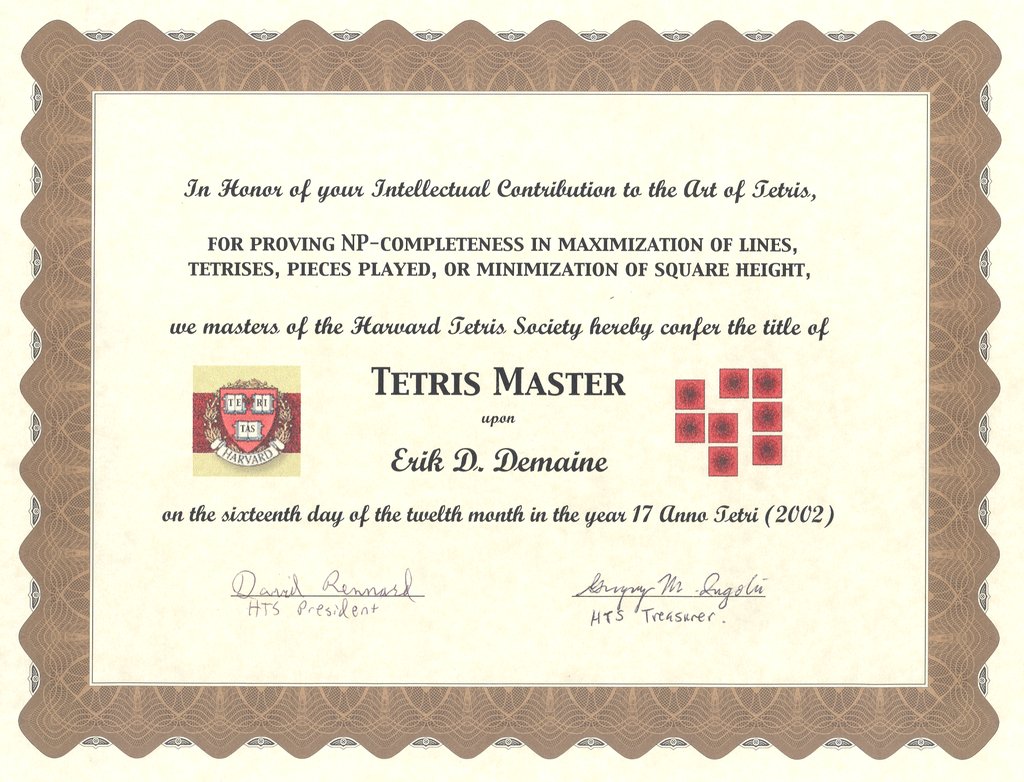
Of course he's getting more action
I mean, the guy has a Tetris Award, for fucks sake--you know how that drives the ladies wild. Plus, his beard is pretty far onto the "eww, gross" side of the facial-hair spectrum; no woman can resist jowl-pubes.
-
Re:DisturbingJudging by his homepage, I don't think you have much to worry about... Then again, I haven't seen your homepage, so maybe I spoke prematurely...
-
What We Can Learn From BSD
What We Can Learn From BSD
By Chinese Karma Whore, Version 1.0
Everyone knows about BSD's failure and imminent demise. As we pore over the history of BSD, we'll uncover a story of fatal mistakes, poor priorities, and personal rivalry, and we'll learn what mistakes to avoid so as to save Linux from a similarly grisly fate.
Let's not be overly morbid and give BSD credit for its early successes. In the 1970s, Ken Thompson and Bill Joy both made significant contributions to the computing world on the BSD platform. In the 80s, DARPA saw BSD as the premiere open platform, and, after initial successes with the 4.1BSD product, gave the BSD company a 2 year contract.
These early triumphs would soon be forgotten in a series of internal conflicts that would mar BSD's progress. In 1992, AT&T filed suit against Berkeley Software, claiming that proprietary code agreements had been haphazardly violated. In the same year, BSD filed countersuit, reciprocating bad intentions and fueling internal rivalry. While AT&T and Berkeley Software lawyers battled in court, lead developers of various BSD distributions quarreled on Usenet. In 1995, Theo de Raadt, one of the founders of the NetBSD project, formed his own rival distribution, OpenBSD, as the result of a quarrel that he documents on his website. Mr. de Raadt's stubborn arrogance was later seen in his clash with Darren Reed, which resulted in the expulsion of IPF from the OpenBSD distribution.
As personal rivalries took precedence over a quality product, BSD's codebase became worse and worse. As we all know, incompatibilities between each BSD distribution make code sharing an arduous task. Research conducted at MIT found BSD's filesystem implementation to be "very poorly performing." Even BSD's acclaimed TCP/IP stack has lagged behind, according to this study.
Problems with BSD's codebase were compounded by fundamental flaws in the BSD design approach. As argued by Eric Raymond in his watershed essay, The Cathedral and the Bazaar, rapid, decentralized development models are inherently superior to slow, centralized ones in software development. BSD developers never heeded Mr. Raymond's lesson and insisted that centralized models lead to 'cleaner code.' Don't believe their hype - BSD's development model has significantly impaired its progress. Any achievements that BSD managed to make were nullified by the BSD license, which allows corporations and coders alike to reap profits without reciprocating the goodwill of open-source. Fortunately, Linux is not prone to this exploitation, as it is licensed under the GPL.
The failure of BSD culminated in the resignation of Jordan Hubbard and Michael Smith from the FreeBSD core team. They both believed that FreeBSD had long lost its earlier vitality. Like an empire in decline, BSD had become bureaucratic and stagnant. As Linux gains market share and as BSD sinks deeper into the mire of decay, their parting addresses will resound as fitting eulogies to BSD's demise. -
Re:This proves it...
What We Can Learn From BSD
By Chinese Karma Whore, Version 1.0
Everyone knows about BSD's failure and imminent demise. As we pore over the history of BSD, we'll uncover a story of fatal mistakes, poor priorities, and personal rivalry, and we'll learn what mistakes to avoid so as to save Linux from a similarly grisly fate.
Let's not be overly morbid and give BSD credit for its early successes. In the 1970s, Ken Thompson and Bill Joy both made significant contributions to the computing world on the BSD platform. In the 80s, DARPA saw BSD as the premiere open platform, and, after initial successes with the 4.1BSD product, gave the BSD company a 2 year contract.
These early triumphs would soon be forgotten in a series of internal conflicts that would mar BSD's progress. In 1992, AT&T filed suit against Berkeley Software, claiming that proprietary code agreements had been haphazardly violated. In the same year, BSD filed countersuit, reciprocating bad intentions and fueling internal rivalry. While AT&T and Berkeley Software lawyers battled in court, lead developers of various BSD distributions quarreled on Usenet. In 1995, Theo de Raadt, one of the founders of the NetBSD project, formed his own rival oddball distribution, OpenBSD, as the result of a quarrel that he documents on his website. Mr. de Raadt's stubborn arrogance was later seen in his clash with Darren Reed, which resulted in the expulsion of IPF from the OpenBSD distribution.
As personal rivalries took precedence over a quality product, BSD's codebase became worse and worse. As we all know, incompatibilities between each BSD distribution make code sharing an arduous task. Research conducted at MIT found BSD's filesystem implementation to be "very poorly performing." Even BSD's acclaimed TCP/IP stack has lagged behind, according to this study.
Problems with BSD's codebase were compounded by fundamental flaws in the BSD design approach. As argued by Eric Raymond in his watershed essay, The Cathedral and the Bazaar, rapid, decentralized development models are inherently superior to slow, centralized ones in software development. BSD developers never heeded Mr. Raymond's lesson and insisted that centralized models lead to 'cleaner code.' Don't believe their hype - BSD's development model has significantly impaired its progress. Any achievements that BSD managed to make were nullified by the BSD license, which allows corporations and coders alike to reap profits without reciprocating the goodwill of open-source. Fortunately, Linux is not prone to this exploitation, as it is licensed under the GPL.
The failure of BSD culminated in the resignation of Jordan Hubbard and Michael Smith from the FreeBSD core team. They both believed that FreeBSD had long lost its earlier vitality. Like an empire in decline, BSD had become bureaucratic and stagnant. As Linux gains market share and as BSD sinks deeper into the mire of decay, their parting addresses will resound as fitting eulogies to BSD's demise. -
Re:This proves it...
What We Can Learn From BSD
By Chinese Karma Whore, Version 1.0
Almost everyone knows about BSD's failure and imminent demise. As we pore over the history of BSD, we'll uncover a story of fatal mistakes, poor priorities, and personal rivalry, and we'll learn what mistakes to avoid so as to save Linux from a similarly grisly fate.
Let's not be overly morbid and give BSD credit for its early successes. In the 1970s, Ken Thompson and Bill Joy both made significant contributions to the computing world on the BSD platform. In the 80s, DARPA saw BSD as the premiere open platform, and, after initial successes with the 4.1BSD product, gave the BSD company a 2 year contract.
These early triumphs would soon be forgotten in a series of internal conflicts that would mar BSD's progress. In 1992, AT&T filed suit against Berkeley Software, claiming that proprietary code agreements had been haphazardly violated. In the same year, BSD filed countersuit, reciprocating bad intentions and fueling internal rivalry. While AT&T and Berkeley Software lawyers battled in court, lead developers of various BSD distributions quarreled on Usenet. In 1995, Theo de Raadt, one of the founders of the NetBSD project, formed his own rival distribution, OpenBSD, as the result of a quarrel that he documents on his website. Mr. de Raadt's stubborn arrogance was later seen in his clash with Darren Reed, which resulted in the expulsion of IPF from the OpenBSD distribution.
As personal rivalries took precedence over a quality product, BSD's codebase became worse and worse. As we all know, incompatibilities between each BSD distribution make code sharing an arduous task. Research conducted at MIT found BSD's filesystem implementation to be "very poorly performing." Even BSD's acclaimed TCP/IP stack has lagged behind, according to this study.
Problems with BSD's codebase were compounded by fundamental flaws in the BSD design approach. As argued by Eric Raymond in his watershed essay, The Cathedral and the Bazaar, rapid, decentralized development models are inherently superior to slow, centralized ones in software development. BSD developers never heeded Mr. Raymond's lesson and insisted that centralized models lead to 'cleaner code.' Don't believe their hype - BSD's development model has significantly impaired its progress. Any achievements that BSD managed to make were nullified by the BSD license, which allows corporations and coders alike to reap profits without reciprocating the goodwill of open-source. Fortunately, Linux is not prone to this exploitation, as it is licensed under the GPL.
The failure of BSD culminated in the resignation of Jordan Hubbard and Michael Smith from the FreeBSD core team. They both believed that FreeBSD had long lost its earlier vitality. Like an empire in decline, BSD has become bureaucratic and stagnant. As Linux gains market share and as BSD sinks deeper into the mire of decay, their parting addresses will resound as fitting eulogies to BSD's demise. -
Re:It's a good time to pre-order your 3.4 CDs
What We Can Learn From BSD
By Chinese Karma Whore, Version 1.0
Everyone knows about BSD's failure and imminent demise. As we pore over the history of BSD, we'll uncover a story of fatal mistakes, poor priorities, and personal rivalry, and we'll learn what mistakes to avoid so as to save Linux from a similarly grisly fate.
Let's not be overly morbid and give BSD credit for its early successes. In the 1970s, Ken Thompson and Bill Joy both made significant contributions to the computing world on the BSD platform. In the 80s, DARPA saw BSD as the premiere open platform, and, after initial successes with the 4.1BSD product, gave the BSD company a 2 year contract.
These early triumphs would soon be forgotten in a series of internal conflicts that would mar BSD's progress. In 1992, AT&T filed suit against Berkeley Software, claiming that proprietary code agreements had been haphazardly violated. In the same year, BSD filed countersuit, reciprocating bad intentions and fueling internal rivalry. While AT&T and Berkeley Software lawyers battled in court, lead developers of various BSD distributions quarreled on Usenet. In 1995, Theo de Raadt, one of the founders of the NetBSD project, formed his own rival distribution, OpenBSD, as the result of a quarrel that he documents on his website. Mr. de Raadt's stubborn arrogance was later seen in his clash with Darren Reed, which resulted in the expulsion of IPF from the OpenBSD distribution.
As personal rivalries took precedence over a quality product, BSD's codebase became worse and worse. As we all know, incompatibilities between each BSD distribution make code sharing an arduous task. Research conducted at MIT found BSD's filesystem implementation to be "very poorly performing." Even BSD's acclaimed TCP/IP stack has lagged behind, according to this study.
Problems with BSD's codebase were compounded by fundamental flaws in the BSD design approach. As argued by Eric Raymond in his watershed essay, The Cathedral and the Bazaar, rapid, decentralized development models are inherently superior to slow, centralized ones in software development. BSD developers never heeded Mr. Raymond's lesson and insisted that centralized models lead to 'cleaner code.' Don't believe their hype - BSD's development model has significantly impaired its progress. Any achievements that BSD managed to make were nullified by the BSD license, which allows corporations and coders alike to reap profits without reciprocating the goodwill of open-source. Fortunately, Linux is not prone to this exploitation, as it is licensed under the GPL.
The failure of BSD culminated in the resignation of Jordan Hubbard and Michael Smith from the FreeBSD core team. They both believed that FreeBSD had long lost its earlier vitality. Like an empire in decline, BSD has become bureaucratic and stagnant. As Linux gains market share and as BSD sinks deeper into the mire of decay, their parting addresses will resound as fitting eulogies to BSD's demise. -
Just the facts, ma'am.
What We Can Learn From BSD
By Chinese Karma Whore, Version 1.0
Everyone knows about BSD's failure and imminent demise. As we pore over the history of BSD, we'll uncover a story of fatal mistakes, poor priorities, and personal rivalry, and we'll learn what mistakes to avoid so as to save Linux from a similarly grisly fate.
Let's not be overly morbid and give BSD credit for its early successes. In the 1970s, Ken Thompson and Bill Joy both made significant contributions to the computing world on the BSD platform. In the 80s, DARPA saw BSD as the premiere open platform, and, after initial successes with the 4.1BSD product, gave the BSD company a 2 year contract.
These early triumphs would soon be forgotten in a series of internal conflicts that would mar BSD's progress. In 1992, AT&T filed suit against Berkeley Software, claiming that proprietary code agreements had been haphazardly violated. In the same year, BSD filed countersuit, reciprocating bad intentions and fueling internal rivalry. While AT&T and Berkeley Software lawyers battled in court, lead developers of various BSD distributions quarreled on Usenet. In 1995, Theo de Raadt, one of the founders of the NetBSD project, formed his own rival distribution, OpenBSD, as the result of a quarrel that he documents on his website. Mr. de Raadt's stubborn arrogance was later seen in his clash with Darren Reed, which resulted in the expulsion of IPF from the OpenBSD distribution.
As personal rivalries took precedence over a quality product, BSD's codebase became worse and worse. As we all know, incompatibilities between each BSD distribution make code sharing an arduous task. Research conducted at MIT found BSD's filesystem implementation to be "very poorly performing." Even BSD's acclaimed TCP/IP stack has lagged behind, according to this study.
Problems with BSD's codebase were compounded by fundamental flaws in the BSD design approach. As argued by Eric Raymond in his watershed essay, The Cathedral and the Bazaar, rapid, decentralized development models are inherently superior to slow, centralized ones in software development. BSD developers never heeded Mr. Raymond's lesson and insisted that centralized models lead to 'cleaner code.' Don't believe their hype - BSD's development model has significantly impaired its progress. Any achievements that BSD managed to make were nullified by the BSD license, which allows corporations and coders alike to reap profits without reciprocating the generous goodwill of open-source. Fortunately, Linux is not prone to this exploitation, as it is licensed under the GPL.
The failure of BSD culminated in the resignation of Jordan Hubbard and Michael Smith from the FreeBSD core team. They both believed that FreeBSD had long lost its earlier vitality. Like an empire in decline, BSD had become bureaucratic and stagnant. As Linux gains market share and as BSD sinks deeper into the mire of decay, their parting addresses will resound as fitting eulogies to BSD's demise. -
Re:What's your point?
What We Can Learn From BSD
By Chinese Karma Whore, Version 1.0
Almost everyone knows about BSD's failure and imminent demise. As we pore over the history of BSD, we'll uncover a story of fatal mistakes, poor priorities, and personal rivalry, and we'll learn what mistakes to avoid so as to save Linux from a similarly grisly fate.
Let's not be overly morbid and give BSD credit for its early successes. In the 1970s, Ken Thompson and Bill Joy both made significant contributions to the computing world on the BSD platform. In the 80s, DARPA saw BSD as the premiere open platform, and, after initial successes with the 4.1BSD product, gave the BSD company a 2 year contract.
These early triumphs would soon be forgotten in a series of internal conflicts that would mar BSD's progress. In 1992, AT&T filed suit against Berkeley Software, claiming that proprietary code agreements had been haphazardly violated. In the same year, BSD filed countersuit, reciprocating bad intentions and fueling internal rivalry. While AT&T and Berkeley Software lawyers battled in court, lead developers of various BSD distributions quarreled on Usenet. In 1995, Theo de Raadt, one of the founders of the NetBSD project, formed his own rival distribution, OpenBSD, as the result of a quarrel that he documents on his website. Mr. de Raadt's stubborn arrogance was later seen in his clash with Darren Reed, which resulted in the expulsion of IPF from the OpenBSD distribution.
As personal rivalries took precedence over a quality product, BSD's codebase became worse and worse. As we all know, incompatibilities between each BSD distribution make code sharing an arduous task. Research conducted at MIT found BSD's filesystem implementation to be "very poorly performing." Even BSD's acclaimed TCP/IP stack has lagged behind, according to this study.
Problems with BSD's codebase were compounded by fundamental flaws in the BSD design approach. As argued by Eric Raymond in his watershed essay, The Cathedral and the Bazaar, rapid, decentralized development models are inherently superior to slow, centralized ones in software development. BSD developers never heeded Mr. Raymond's lesson and insisted that centralized models lead to 'cleaner code.' Don't believe their hype - BSD's development model has significantly impaired its progress. Any achievements that BSD managed to make were nullified by the BSD license, which allows corporations and coders alike to reap profits without reciprocating the goodwill of open-source. Fortunately, Linux is not prone to this exploitation, as it is licensed under the GPL.
The failure of BSD culminated in the resignation of Jordan Hubbard and Michael Smith from the FreeBSD core team. They both believed that FreeBSD had long lost its earlier vitality. Like an empire in decline, BSD had become bureaucratic and stagnant. As Linux gains market share and as BSD sinks deeper into the mire of decay, their parting addresses will resound as fitting eulogies to BSD's demise. -
Re:fucking patents
first off, you're incredibly naive if you believe that george mason is the only university that does this (if you don't believe me, check here for mit's take). every university, (but particularly places like george mason which is a young school with 28,000 odd students between the arlington, fairfax, and manassas campuses) needs sources of revenue. and guess what, that's what intellectual property generates: revenue. it's not like the money is going to some nameless, faceless corporation. in this case, it's going towards defraying the costs of running a huge university which, in turn, translates to more reasonable tuition for students.
secondly, you know nothing about what terms the patent will be licensed under, so to immediately start accusing george mason of being populated by souless, flesh eating, corporate zombies out to rule the world is ridiculous.
grow up. not all patents are bad and not all patent holders are evil.
-
What We Can Learn From BSD
What We Can Learn From BSD
By Chinese Karma Whore, Version 1.0
Everyone knows about BSD's failure and imminent demise. As we pore over the history of BSD, we'll uncover a story of fatal mistakes, poor priorities, and personal rivalry, and we'll learn what mistakes to avoid so as to save Linux from a similarly grisly fate.
Let's not be overly morbid and give BSD credit for its early successes. In the 1970s, Ken Thompson and Bill Joy both made significant contributions to the computing world on the BSD platform. In the 80s, DARPA saw BSD as the premiere open platform, and, after initial successes with the 4.1BSD product, gave the BSD company a 2 year contract.
These early triumphs would soon be forgotten in a series of internal conflicts that would mar BSD's progress. In 1992, AT&T filed suit against Berkeley Software, claiming that proprietary code agreements had been haphazardly violated. In the same year, BSD filed countersuit, reciprocating bad intentions and fueling internal rivalry. While AT&T and Berkeley Software lawyers battled in court, lead developers of various BSD distributions quarreled on Usenet. In 1995, Theo de Raadt, one of the founders of the NetBSD project, formed his own rival distribution, OpenBSD, as the result of a quarrel that he documents on his website. Mr. de Raadt's stubborn arrogance was later seen in his clash with Darren Reed, which resulted in the expulsion of IPF from the OpenBSD distribution.
As personal rivalries took precedence over a quality product, BSD's codebase became worse and worse. As we all know, incompatibilities between each BSD distribution make code sharing an arduous task. Research conducted at MIT found BSD's filesystem implementation to be "very poorly performing." Even BSD's acclaimed TCP/IP stack has lagged behind, according to this study.
Problems with BSD's codebase were compounded by fundamental flaws in the BSD design approach. As argued by Eric Raymond in his watershed essay, The Cathedral and the Bazaar, rapid, decentralized development models are inherently superior to slow, centralized ones in software development. BSD developers never heeded Mr. Raymond's lesson and insisted that centralized models lead to 'cleaner code.' Don't believe their hype - BSD's development model has significantly impaired its progress. Any achievements that BSD managed to make were nullified by the BSD license, which allows corporations and coders alike to reap profits without reciprocating the goodwill of open-source. Fortunately, Linux is not prone to this exploitation, as it is licensed under the GPL.
The failure of BSD culminated in the resignation of Jordan Hubbard and Michael Smith from the FreeBSD core team. They both believed that FreeBSD had long lost its earlier vitality. Like an empire in decline, BSD had become bureaucratic and stagnant. As Linux gains market share and as BSD sinks deeper into the mire of decay, their parting addresses will resound as fitting eulogies to BSD's demise. -
Re:This is research?
about
about
This disease has not been around very long, and is quickly approaching 1 out of every 100 people having it. While some of your points are valid, your seeming callousness is alarming and somewhat disturbing. After all, the post you so articulately derided was only quoting a Saturday Night Live character. I tend to agree with that post's general sentiment that a study on how cookies crumble is somewhat frivolous. Especially when my Grandma has been making sturdy, delicious cookies for 70 years.
Information comes from here, here, and here. -
Wind River Dumps BSD
What We Can Learn From BSD
By Chinese Karma Whore, Version 1.0
Everyone knows about BSD's failure and imminent demise. As we pore over the history of BSD, we'll uncover a story of fatal mistakes, poor priorities, and personal rivalry, and we'll learn what mistakes to avoid so as to save Linux from a similarly grisly fate.
Let's not be overly morbid and give BSD credit for its early successes. In the 1970s, Ken Thompson and Bill Joy both made significant contributions to the computing world on the BSD platform. In the 80s, DARPA saw BSD as the premiere open platform, and, after initial successes with the 4.1BSD product, gave the BSD company a 2 year contract.
These early triumphs would soon be forgotten in a series of internal conflicts that would mar BSD's progress. In 1992, AT&T filed suit against Berkeley Software, claiming that proprietary code agreements had been haphazardly violated. In the same year, BSD filed countersuit, reciprocating bad intentions and fueling internal rivalry. While AT&T and Berkeley Software lawyers battled in court, lead developers of various BSD distributions quarreled on Usenet. In 1995, Theo de Raadt, one of the founders of the NetBSD project, formed his own rival distribution, OpenBSD, as the result of a quarrel that he documents on his website. Mr. de Raadt's stubborn arrogance was later seen in his clash with Darren Reed, which resulted in the expulsion of IPF from the OpenBSD distribution.
As personal rivalries took precedence over a quality product, BSD's codebase became worse and worse. As we all know, incompatibilities between each BSD distribution make code sharing an arduous task. Research conducted at MIT found BSD's filesystem implementation to be "very poorly performing." Even BSD's acclaimed TCP/IP stack has lagged behind, according to this study.
Problems with BSD's codebase were compounded by fundamental flaws in the BSD design approach. As argued by Eric Raymond in his watershed essay, The Cathedral and the Bazaar, rapid, decentralized development models are inherently superior to slow, centralized ones in software development. BSD developers never heeded Mr. Raymond's lesson and insisted that centralized models lead to 'cleaner code.' Don't believe their hype - BSD's development model has significantly impaired its progress. Any achievements that BSD managed to make were nullified by the BSD license, which allows corporations and coders alike to reap profits without reciprocating the goodwill of open-source. Fortunately, Linux is not prone to this exploitation, as it is licensed under the GPL.
The failure of BSD culminated in the resignation of Jordan Hubbard and Michael Smith from the FreeBSD core team. They both believed that FreeBSD had long lost its earlier vitality. Like an empire in decline, BSD had become bureaucratic and stagnant. As Linux gains market share and as BSD sinks deeper into the mire of decay, their parting addresses will resound as fitting eulogies to BSD's demise. -
Re:Why do you morons keep modding the same post
What We Can Learn From BSD
By Chinese Karma Whore, Version 1.0
Everyone knows about BSD's failure and imminent demise. As we pore over the history of BSD, we'll uncover a story of fatal mistakes, poor priorities, and personal rivalry, and we'll learn what mistakes to avoid so as to save Linux from a similarly grisly fate.
Let's not be overly morbid and give BSD credit for its early successes. In the 1970s, Ken Thompson and Bill Joy both made significant contributions to the computing world on the BSD platform. In the 80s, DARPA saw BSD as the premiere open platform, and, after initial successes with the 4.1BSD product, gave the BSD company a 2 year contract.
These early triumphs would soon be forgotten in a series of internal conflicts that would mar BSD's progress. In 1992, AT&T filed suit against Berkeley Software, claiming that proprietary code agreements had been haphazardly violated. In the same year, BSD filed countersuit, reciprocating bad intentions and fueling internal rivalry. While AT&T and Berkeley Software lawyers battled in court, lead developers of various BSD distributions quarreled on Usenet. In 1995, Theo de Raadt, one of the founders of the NetBSD project, formed his own rival distribution, OpenBSD, as the result of a quarrel that he documents on his website. Mr. de Raadt's stubborn arrogance was later seen in his clash with Darren Reed, which resulted in the expulsion of IPF from the OpenBSD distribution.
As personal rivalries took precedence over a quality product, BSD's codebase became worse and worse. As we all know, incompatibilities between each BSD distribution make code sharing an arduous task. Research conducted at MIT found BSD's filesystem implementation to be "very poorly performing." Even BSD's acclaimed TCP/IP stack has lagged behind, according to this study.
Problems with BSD's codebase were compounded by fundamental flaws in the BSD design approach. As argued by Eric Raymond in his watershed essay, The Cathedral and the Bazaar, rapid, decentralized development models are inherently superior to slow, centralized ones in software development. BSD developers never heeded Mr. Raymond's lesson and insisted that centralized models lead to 'cleaner code.' Don't believe their hype - BSD's development model has significantly impaired its progress. Any achievements that BSD managed to make were nullified by the BSD license, which allows corporations and coders alike to reap profits without reciprocating the generous goodwill of open-source. Fortunately, Linux is not prone to this exploitation, as it is licensed under the GPL.
The failure of BSD culminated in the resignation of Jordan Hubbard and Michael Smith from the FreeBSD core team. They both believed that FreeBSD had long lost its earlier vitality. Like an empire in decline, BSD had become bureaucratic and stagnant. As Linux gains market share and as BSD sinks deeper into the mire of decay, their parting addresses will resound as fitting eulogies to BSD's demise. -
What We Can Learn From BSD
What We Can Learn From BSD
By Chinese Karma Whore, Version 1.0
Everyone knows about BSD's failure and imminent demise. As we pore over the history of BSD, we'll uncover a story of fatal mistakes, poor priorities, and personal rivalry, and we'll learn what mistakes to avoid so as to save Linux from a similarly grisly fate.
Let's not be overly morbid and give BSD credit for its early successes. In the 1970s, Ken Thompson and Bill Joy both made significant contributions to the computing world on the BSD platform. In the 80s, DARPA saw BSD as the premiere open platform, and, after initial successes with the 4.1BSD product, gave the BSD company a 2 year contract.
These early triumphs would soon be forgotten in a series of internal conflicts that would mar BSD's progress. In 1992, AT&T filed suit against Berkeley Software, claiming that proprietary code agreements had been haphazardly violated. In the same year, BSD filed countersuit, reciprocating bad intentions and fueling internal rivalry. While AT&T and Berkeley Software lawyers battled in court, lead developers of various BSD distributions quarreled on Usenet. In 1995, Theo de Raadt, one of the founders of the NetBSD project, formed his own rival distribution, OpenBSD, as the result of a quarrel that he documents on his website. Mr. de Raadt's stubborn arrogance was later seen in his clash with Darren Reed, which resulted in the expulsion of IPF from the OpenBSD distribution.
As personal rivalries took precedence over a quality product, BSD's codebase became worse and worse. As we all know, incompatibilities between each BSD distribution make code sharing an arduous task. Research conducted at MIT found BSD's filesystem implementation to be "very poorly performing." Even BSD's acclaimed TCP/IP stack has lagged behind, according to this study.
Problems with BSD's codebase were compounded by fundamental flaws in the BSD design approach. As argued by Eric Raymond in his watershed essay, The Cathedral and the Bazaar, rapid, decentralized development models are inherently superior to slow, centralized ones in software development. BSD developers never heeded Mr. Raymond's lesson and insisted that centralized models lead to 'cleaner code.' Don't believe their hype - BSD's development model has significantly impaired its progress. Any achievements that BSD managed to make were nullified by the BSD license, which allows corporations and coders alike to reap profits without reciprocating the goodwill of open-source. Fortunately, Linux is not prone to this exploitation, as it is licensed under the GPL.
The failure of BSD culminated in the resignation of Jordan Hubbard and Michael Smith from the FreeBSD core team. They both believed that FreeBSD had long lost its earlier vitality. Like an empire in decline, BSD had become bureaucratic and stagnant. As Linux gains market share and as BSD sinks deeper into the mire of decay, their parting addresses will resound as fitting eulogies to BSD's demise. -
What We Can Learn From BSD
What We Can Learn From BSD
By Chinese Karma Whore, Version 1.0
Everyone knows about BSD's failure and imminent demise. As we pore over the history of BSD, we'll uncover a story of fatal mistakes, poor priorities, and personal rivalry, and we'll learn what mistakes to avoid so as to save Linux from a similarly grisly fate.
Let's not be overly morbid and give BSD credit for its early successes. In the 1970s, Ken Thompson and Bill Joy both made significant contributions to the computing world on the BSD platform. In the 80s, DARPA saw BSD as the premiere open platform, and, after initial successes with the 4.1BSD product, gave the BSD company a 2 year contract.
These early triumphs would soon be forgotten in a series of internal conflicts that would mar BSD's progress. In 1992, AT&T filed suit against Berkeley Software, claiming that proprietary code agreements had been haphazardly violated. In the same year, BSD filed countersuit, reciprocating bad intentions and fueling internal rivalry. While AT&T and Berkeley Software lawyers battled in court, lead developers of various BSD distributions quarreled on Usenet. In 1995, Theo de Raadt, one of the founders of the NetBSD project, formed his own rival distribution, OpenBSD, as the result of a quarrel that he documents on his website. Mr. de Raadt's stubborn arrogance was later seen in his clash with Darren Reed, which resulted in the expulsion of IPF from the OpenBSD distribution.
As personal rivalries took precedence over a quality product, BSD's codebase became worse and worse. As we all know, incompatibilities between each BSD distribution make code sharing an arduous task. Research conducted at MIT found BSD's filesystem implementation to be "very poorly performing." Even BSD's acclaimed TCP/IP stack has lagged behind, according to this study.
Problems with BSD's codebase were compounded by fundamental flaws in the BSD design approach. As argued by Eric Raymond in his watershed essay, The Cathedral and the Bazaar, rapid, decentralized development models are inherently superior to slow, centralized ones in software development. BSD developers never heeded Mr. Raymond's lesson and insisted that centralized models lead to 'cleaner code.' Don't believe their hype - BSD's development model has significantly impaired its progress. Any achievements that BSD managed to make were nullified by the BSD license, which allows corporations and coders alike to reap profits without reciprocating the goodwill of open-source. Fortunately, Linux is not prone to this exploitation, as it is licensed under the GPL.
The failure of BSD culminated in the resignation of Jordan Hubbard and Michael Smith from the FreeBSD core team. They both believed that FreeBSD had long lost its earlier vitality. Like an empire in decline, BSD had become bureaucratic and stagnant. As Linux gains market share and as BSD sinks deeper into the mire of decay, their parting addresses will resound as fitting eulogies to BSD's demise. -
history
What We Can Learn From BSD
By Chinese Karma Whore, Version 1.0
Everyone knows about BSD's failure and imminent demise. As we pore over the history of BSD, we'll uncover a story of fatal mistakes, poor priorities, and personal rivalry, and we'll learn what mistakes to avoid so as to save Linux from a similarly grisly fate.
Let's not be overly morbid and give BSD credit for its early successes. In the 1970s, Ken Thompson and Bill Joy both made significant contributions to the computing world on the BSD platform. In the 80s, DARPA saw BSD as the premiere open platform, and, after initial successes with the 4.1BSD product, gave the BSD company a 2 year contract.
These early triumphs would soon be forgotten in a series of internal conflicts that would mar BSD's progress. In 1992, AT&T filed suit against Berkeley Software, claiming that proprietary code agreements had been haphazardly violated. In the same year, BSD filed countersuit, reciprocating bad intentions and fueling internal rivalry. While AT&T and Berkeley Software lawyers battled in court, lead developers of various BSD distributions quarreled on Usenet. In 1995, Theo de Raadt, one of the founders of the NetBSD project, formed his own rival distribution, OpenBSD, as the result of a quarrel that he documents on his website. Mr. de Raadt's stubborn arrogance was later seen in his clash with Darren Reed, which resulted in the expulsion of IPF from the OpenBSD distribution.
As personal rivalries took precedence over a quality product, BSD's codebase became worse and worse. As we all know, incompatibilities between each BSD distribution make code sharing an arduous task. Research conducted at MIT found BSD's filesystem implementation to be "very poorly performing." Even BSD's acclaimed TCP/IP stack has lagged behind, according to this study.
Problems with BSD's codebase were compounded by fundamental flaws in the BSD design approach. As argued by Eric Raymond in his watershed essay, The Cathedral and the Bazaar, rapid, decentralized development models are inherently superior to slow, centralized ones in software development. BSD developers never heeded Mr. Raymond's lesson and insisted that centralized models lead to 'cleaner code.' Don't believe their hype - BSD's development model has significantly impaired its progress. Any achievements that BSD managed to make were nullified by the BSD license, which allows corporations and coders alike to reap profits without reciprocating the goodwill of open-source. Fortunately, Linux is not prone to this exploitation, as it is licensed under the GPL.
The failure of BSD culminated in the resignation of Jordan Hubbard and Michael Smith from the FreeBSD core team. They both believed that FreeBSD had long lost its earlier vitality. Like an empire in decline, BSD had become bureaucratic and stagnant. As Linux gains market share and as BSD sinks deeper into the mire of decay, their parting addresses will resound as fitting eulogies to BSD's demise. -
Re:Looking forward to the Wireless version...
The FAQ addresses the question of Bluetooth.
-
Re:If only
Check out MITs OpenCourseWare if that's your thing.