Slashdot Mirror
Domain: stanford.edu
Stories and comments across the archive that link to stanford.edu.
Comments · 4,853
-
Re:Could this methane be used as a source of energ
Now with all of the methane under the permafrost in Siberia, if an efficient method to capture it can be devised, Russia could become the Saudi Arabia of methane.
which is a truly wonderful plan. Honestly, it is!
If the methane can effective captured it would be good. Methane is 20 tymes more powerful than CO2 as a greenhouse gas but by burning it CO2 will be released. Hydrogen can also be made from methane by reforming it.
But could you answer one small question - what's the technology you're going to use for capture of this methane.
That's the hangup, capturing the methane. Here's some researchers extracting methane from permafrost. I read some tyme ago about a Russian oil company working on a way to capture methane.
I get quizzed on the potential of exploiting methane clathrates almost every time I go off to do my work - drilling oil wells.
This brings up something I don't understand, oil companies burn off methane where they drill and pump, those flares. Is that because it's difficult and or expensive to transport?
look at the tar-sands which are just starting to come on-stream and be significant
Doesn't the tar-sands, at least in Alberta, require a lot of water and energy to heat the water?
coal production is falling through the floor
Though I'd love to see that the US has 100s of years of coal, at least the way we're using today. I don't know how long it will last if it's gasified and used for purposes other than power plants.
Falcon
-
Re:Don't worry about global warming
Ryskin wrote about methane erupting from the ocean like a volcano. Probably there would be very high concentrations of methane in the atmosphere just above the middle of the ocean. At the edges of the ocean, methane would pour out across the land. Somewhere at the front of the methane fog cloud on the land, the methane/air mixture would get to about 5-15%, and be the right conditions for exploding. If the methane levels get over 15%, it won't explode, it'll just burn.
CH4 + 2 O2 => CO2 + 2 H2O. You need twice as much oxygen as methane to get a clean burn. Since the atmosphere is normally about 20% oxygen, anything over 10% methane burning or exploding, is going to cause a localised shortage of oxygen. The methane cloud rolls in, explodes or burns, and suddenly, all the oxygen is gone from that area. Yow. It'll be like the ocean is tossing fuel-air bombs at the land.
And in case you think you can "save the planet" by not burning any more coal, read this carefully: "Upon release of a significant portion of the dissolved methane, the ocean settles down, and the entire sequence of events (i.e., development of anoxia, accumulation of dissolved methane, the metastable state, eruption) begins anew. No external cause is required to bring about a methane-driven eruption--its mechanism is self-contained, and implies that eruptions are likely to occur repeatedly at the same location." Yes that's right, it just happens naturally.
Really fascinating reading in Ryskin's paper. Here's another chunk: "Because methane is isotopically light, its fast release must result in a negative carbon isotope excursion in the geological record. Knowing the magnitude of the excursion, one can estimate the amount of methane that could have produced it. Such calculations (prompted by the methane-hydrate-dissociation model, but equally applicable here) have been performed for several global events in the geological record; the results range from 10^18 to 10^19 grams of released methane (e.g., Katz et al., 1999; Kennedy et al., 2001; de Wit et al., 2002). These are very large amounts: the total carbon content of today's terrestrial biomass is ~ 2 x 10^18 grams. Nevertheless, relatively small regions of the deep ocean could contain such amounts of dissolved methane; e.g., the Black Sea alone (volume ~ 0.4 x 10^-3 of the ocean total; maximum depth only 2.2 km) could hold, at saturation, ~ 0.5 x 10^18 grams. A similar region of the deep ocean could contain much more (the amount grows quadratically with depth). Released in a geological instant (weeks, perhaps), 10^18 to 10^19 grams of methane could destroy the terrestrial life almost entirely. Combustion and explosion of 0.75 x 10^19 grams of methane would liberate energy equivalent to 108 Mt of TNT, 10,000 times greater than the world's stockpile of nuclear weapons, implicated in the nuclear- winter scenario (Turco et al., 1991)."
Many people are very worried about global warming and the effects of carbon dioxide in the atmosphere. Unfortunately, most people don't consider the ocean. The ocean contains much more carbon dioxide than the atmosphere. Many gases transfer very easily from the atmosphere to the ocean, or the other way. The ocean is huge compared to the atmosphere. What happens in the ocean will have a very great effect on human activity. But most people never think about the ocean. Won't somebody please think about the ocean?
This scenario leads to the death of most terrestrial life. It might be time to build some of those giant underwater cities like Jar Jar Binks lives in.
-
Re:Interesting but how useful, really?
I'm curing cancer!
But in all seriousness.. my desktop also acts as a small web server. Not enough traffic to justify a separate box.. but enough that it can`t be down for several hours every day. Additionally I use my computer so frequently (yes I`m a true geek... if I get up in the middle of the night I`ll often check email/see whats happening on IRC.. and I tend to shell in from work frequently) that it just doesn't make sense to shut the thing down. -
Don't worry about global warming
humanity dies from a giant fart. I seriously didn't see it coming.
Actually humanity dies from lighting the fart. Consider what Professor Gregory Ryskin wrote:
"The consequences of a methane-driven oceanic eruption for marine and terrestrial life are likely to be catastrophic. Figuratively speaking, the erupting region "boils over," ejecting a large amount of methane and other gases (e.g., CO2, H2S) into the atmosphere, and flooding large areas of land. Whereas pure methane is lighter than air, methane loaded with water droplets is much heavier, and thus spreads over the land, mixing with air in the process (and losing water as rain). The air-methane mixture is explosive at methane concentrations between 5% and 15%; as such mixtures form in different locations near the ground and are ignited by lightning, explosions and conflagrations destroy most of the terrestrial life, and also produce great amounts of smoke and of carbon dioxide. Firestorms carry smoke and dust into the upper atmosphere, where they may remain for several years; the resulting darkness and global cooling may provide an additional kill mechanism. Conversely, carbon dioxide and the remaining methane create the greenhouse effect, which may lead to global warming. The outcome of the competition between the cooling and the warming tendencies is difficult to predict."
You can see there's no real need to worry about global warming. If the "explosions and conflagrations" don't get you, the smoke and dust might cause global cooling. Or global warming, it could go either way. But the methane explosions are predicted to be the biggest killer.
-
Re:testing is a waste of time
No. Remember Knuth's aphorism
Beware of bugs in the above code; I have only proved it correct, not tried it.
-
Stanford's patent policy.
Here's the patent policy of Stanford University. This has worked out very well for Stanford.
-
Re:Both MS and Intel Will Miss the Next Revolution
First of all, that "crisis" is in your head.
Well, it must also be in the head of computer science professor, Kunle Olukotun, who said recently, "If I were the computer industry, I would be panicked, because it's not obvious what the solution is going to look like and whether we will get there in time for these new machines" (source: CNN Money). Glad to know you already have the answer. The fact remains that the vast majority of programmers have trouble programming parallel computers. And no, most parallel applications are not programmed for GPUs with CUDA and the like. Besides, programming for GPUs is not a common skill, nor is it easy. Ask Tim Sweeny, he'll tell you. The parallel programming approach chosen by the multicore industry for general purpose parallel apps is multithreading and, as everybody in the business knows (except you, apparently), multithreading is a pain in the ass.
-
Re:2 - The Great Flood (Where are all the Unicorns
Not only that, but time - St Augustine in particular. http://plato.stanford.edu/entries/evolution/#1 Evolution is more orthodox and traditional, and a better fit with Christian beliefs than "creationism". Have you noticed that the same people who advocate creationism have also abandoned a lot of other Christian ideas - such as the attitudes to power and wealth expressed by Jesus?
-
Re:2 - The Great Flood (Where are all the Unicorns
Not only that, but time - St Augustine in particular. http://plato.stanford.edu/entries/evolution/#1 Evolution is more orthodox and traditional, and a better fit with Christian beliefs than "creationism". Have you noticed that the same people who advocate creationism have also abandoned a lot of other Christian ideas - such as the attitudes to power and wealth expressed by Jesus?
-
Re:What...?
Offsite backups.
My disk array syncs to a disk array about 2000 miles away, and that one syncs to mine.
I used about 230G last month, and that was the largest part.
The next largest component was torrents of lectures (such as this machine learning class offered by Stanford). -
Re:Chill pill people
More and more collages are putting lectures online.
For example, Stanford has a very interesting looking Machine Learning class which comes in at about 25G for the lecture videos.A few classes like that can eat up a 250G limit rather quickly.
-
Re:It's not for dumb people
And the reality is that procedural languages better match the way the trained programmers mind works.
There, fixed for you.
There's nothing natural in the "change-one-byte-at-a-time" von-Neumann bottleneck languages, other than they're the ones taught in standard programming courses.
Oh, you mean that the human mind keeps track for changes of state in the environment? Sorry to break the news to you, but that can also be done in functional languages.
-
Re:Viewing a lecture requires installing Silverlig
-
Re:Viewing a lecture requires installing Silverlig
-
Re:did anyone notice the levels of the course?
As an actual Stanford student, I can shed some light on this. The official statement from http://www.stanford.edu/dept/registrar/bulletin/4447.htm#main is:
Stanford does not have a standard course catalog numbering system. Courses numbered from 1 through 99 are primarily for freshmen and sophomores. Courses numbered from 100 through 199 are primarily for juniors and seniors; some departments, however, offer courses numbered from 200 through 299 for juniors and seniors. Most courses numbered 200 and above are for graduate students; no graduate career course is numbered below 200, and all courses above 300 are for graduate students. -
Re:Sombody call Al Gore
Sorry, no. And WTF does an anti-AGW statement have to do with a dust-devil on Mars?
http://stephenschneider.stanford.edu/Publications/PDF_Papers/DamonLaut2004.pdf
and
http://environment.newscientist.com/channel/earth/climate-change/dn11650But even if solar forcing in the past was more important than this estimate suggests, as some scientists think, there is no correlation between solar activity and the strong warming during the past 40 years. Claims that this is the case have not stood up to scrutiny (pdf document).
Direct measurements of solar output since 1978 show a steady rise and fall over the 11-year sunspot cycle, but no upwards or downward trend .
Similarly, there is no trend in direct measurements of the Sun's ultraviolet output and in cosmic rays. So for the period for which we have direct, reliable records, the Earth has warmed dramatically even though there has been no corresponding rise in any kind of solar activity.
-
Re:Sombody call Al Gore
Sorry, no. And WTF does an anti-AGW statement have to do with a dust-devil on Mars?
http://stephenschneider.stanford.edu/Publications/PDF_Papers/DamonLaut2004.pdf
and
http://environment.newscientist.com/channel/earth/climate-change/dn11650But even if solar forcing in the past was more important than this estimate suggests, as some scientists think, there is no correlation between solar activity and the strong warming during the past 40 years. Claims that this is the case have not stood up to scrutiny (pdf document).
Direct measurements of solar output since 1978 show a steady rise and fall over the 11-year sunspot cycle, but no upwards or downward trend .
Similarly, there is no trend in direct measurements of the Sun's ultraviolet output and in cosmic rays. So for the period for which we have direct, reliable records, the Earth has warmed dramatically even though there has been no corresponding rise in any kind of solar activity.
-
Re:Apples and Oranges
Integrating SIMD instructions into CPUs seems to have gone off without a hitch, and no world-ending upheavals.
Maybe not the end of the world but if a solution already existed as you seem to imply, Intel, AMD, Microsoft and the others would not be spending tens of millions of dollars a year to find a solution. The parallel programming problem is not just a problem. It is a crisis. Stanford Computer science professor, Kunle Olukotun, said recently, "If I were the computer industry, I would be panicked, because it's not obvious what the solution is going to look like and whether we will get there in time for these new machines" (source: CNN Money).
-
Re:Ignorance vs. the Unknown
Could you cite any (trustable, informed) source that said people knowledgeable with the bomb actually believed that the athmosphere would ignite?
Why can't you do your own Google search? I've heard this fact from reliable sources many times and it took five seconds to find it on Google. Hell, it took you longer to accuse them of being wrong than to check. Here's a link for lazy fools. Slashdot isn't a science paper. You don't have to reference every darn thing. Just because you don't know a well known fact isn't a reason to expect others to look it up for you.
-
Re:Shuts down for the winter?
I've heard somewhere that it was linked to earth tides . Wikipedia's references here and here (pdf). They apparently modify the geometry of the ring slightly..
-
Re:Beware, the robot is teleoperated [video]
http://personalrobotics.stanford.edu/ OK, so it's not autonomous, but it's cool as hell nonetheless.
-
Re:Look into Fluorinert
Cray has since moved on from the stuff for their middle range computers, but their iconic old big cylinder super computers were completely chock full of the stuff. I found something from 2002 that indicates they still use it in their highest end equipment: http://www.cray.com/downloads/crayx1_dhbrown.pdf
It's also used at SLAC for cooling electronics: http://www-conf.slac.stanford.edu/bfactory-decom/Talks/Wisniewski2.pdf
Looks like it's also used to cool industrial equipment that can't be exposed to reactive chemicals, like wafer ion implantation systems: http://multimedia.mmm.com/mws/mediawebserver.dyn?6666660Zjcf6lVs6EVs666YNqCOrrrrQ-
-
Re:Co-evolution of animals and diseases
-
folding at home?
Isn't folding at home well into the Petaflop territory now? http://fah-web.stanford.edu/cgi-bin/main.py?qtype=osstats
-
Re:Not Autonomous? FTNWYWCBED*
They CAN and DO fly by themselves. Out of the lab. In varying weather conditions. Constantly making adjustments for wind gusts, etc., none of which is being controlled by a human.
They fly with the help of multiple cameras on the *ground*, which makes it more of a 3-D Printer -- not an autonomous flying machine. Notice their emphasis on the "air-ground cooperation" of the original web site for their project. That's because directing flying machines from the ground is a known tractable problem. And directing ground robots from the air is also another known very easy problem. But when you remove the benefit of multiple vantage points, then you add many other problems to the mix.
-
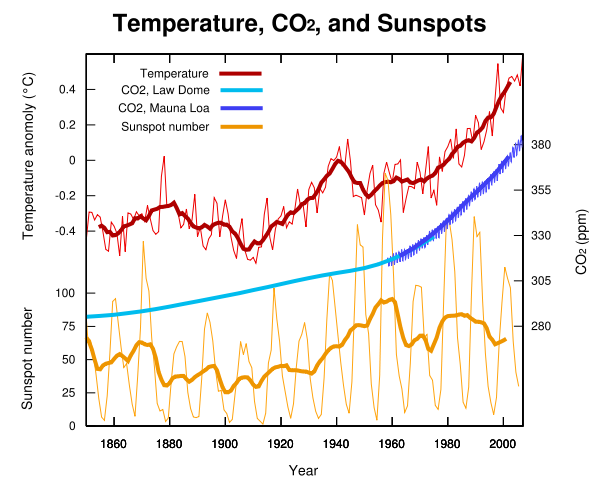
Re:Sunspots down... temperature down?
You're spreading F.U.D.
Please read this article:
http://environment.newscientist.com/channel/earth/climate-change/dn11650
Or at least take a look at this picture:
http://solar-center.stanford.edu/sun-on-earth/600px-Temp-sunspot-co2.svg.png
-
Re:Better infrastructure..
It's always been the latency, see the widely known paper "It's the latency, stupid" from 1996: http://rescomp.stanford.edu/~cheshire/rants/Latency.html
-
Re:Gamma Ray astro at ISU
I used to do work study for some of the folks working with the GLAST project at Iowa State University their website is here and has some more information about Gamma Ray Astrophysics.
Why not link to the official Fermi (GLAST) websites directly www-glast.stanford.edu and http://glast.gsfc.nasa.gov/, instead of linking to an institution who has not contributed significantly to GLAST?
Btw, I used to work with GLAST.
-
Re:Java/C#/C++/C equally fast
There are several instances, many of which have been mentioned many times by Stroustrup et. al.
I guess the case most of referred to is that of sorting. Quoting from a random web page http://theory.stanford.edu/~amitp/rants/c++-vs-c/ (but it has been reproduced a billion times):
" As I expected, STL's sort ran faster than C's qsort, because C++'s templates generate optimized code for a particular data type and a particular comparison function. STL's sort also ran faster than the hand-coded quicksort routine, and it ran faster than the special-case library routine. (However, this may simply be unique to sorting, and may not extend to other algorithms.)
STL's solution exceeds the best solutions (special-case library functions or my hand-written code) in C, in terms of execution speed.
"Another case is the use of expression templates. Most other cases involve compile-time template meta-programming too.
There are many examples of C++ being faster than C. Google is your friend. I actually find it a little bit ridiculous that _I_ have the burden of proof, while you guys can blindly _assume_ that C is always faster or as fast as C++.
Of course, I didn't use any of these techniques in my benchmarks, but there might be different optimizations at play here. Who knows? I tried both gcc/g++, Intel C/C++ and MSVC/C++ when benchmarking.
Try reproducing it yourself. It takes only a few minutes to write such a benchmark. Write a better one if you want to. I have no stock in any of these languages (C++ used to be my main language). I was as suprised as you guys seem to be, to see Java and C# being as fast as they were.
-
Re:Could be better...
That's what Make3D does... http://make3d.stanford.edu/
-
Re:I'm going to wear out the shutter on my camera
You mean like this? (Thanks to Dan Kaminsky's blog for the reference. I highly recommend reading his summary of SIGGRAPH; there's a lot of cool stuff there.)
-
make3d.stanford.edu
I haven't tried it yet, but this has been around for some time.
-
Re:Totally Pointless
Well yes - and by what criteria are these people (their names, really) getting on the list in the first place? If it's a simple name match, no biographical details, no biometric data - what was the point of US-VISIT, the program to collect biometric data from foreign travelers crossing our borders?
According to Stanford's website, Ibrahim was a doctoral candidate in construction engineering, and her resume details her bachelors and masters in architecture. Ibrahim's doctoral thesis was about organizational disorganization - perhaps the very thing DHS is suffering from with the No-Fly list.
Outward indicators show she's a well-educated, upstanding member of society. I mean, if she had some sort of criminal or terroristic background to justify being on No-Fly, wouldn't the government have presented that in their defense of the suit? A quick read of the court's findings show the defense seems to be about jurisdiction and standing.
-
Re:Totally Pointless
Well yes - and by what criteria are these people (their names, really) getting on the list in the first place? If it's a simple name match, no biographical details, no biometric data - what was the point of US-VISIT, the program to collect biometric data from foreign travelers crossing our borders?
According to Stanford's website, Ibrahim was a doctoral candidate in construction engineering, and her resume details her bachelors and masters in architecture. Ibrahim's doctoral thesis was about organizational disorganization - perhaps the very thing DHS is suffering from with the No-Fly list.
Outward indicators show she's a well-educated, upstanding member of society. I mean, if she had some sort of criminal or terroristic background to justify being on No-Fly, wouldn't the government have presented that in their defense of the suit? A quick read of the court's findings show the defense seems to be about jurisdiction and standing.
-
Re:Totally Pointless
Well yes - and by what criteria are these people (their names, really) getting on the list in the first place? If it's a simple name match, no biographical details, no biometric data - what was the point of US-VISIT, the program to collect biometric data from foreign travelers crossing our borders?
According to Stanford's website, Ibrahim was a doctoral candidate in construction engineering, and her resume details her bachelors and masters in architecture. Ibrahim's doctoral thesis was about organizational disorganization - perhaps the very thing DHS is suffering from with the No-Fly list.
Outward indicators show she's a well-educated, upstanding member of society. I mean, if she had some sort of criminal or terroristic background to justify being on No-Fly, wouldn't the government have presented that in their defense of the suit? A quick read of the court's findings show the defense seems to be about jurisdiction and standing.
-
depends on what you mean by people
If you mean "guy on the street who just thought about this five minutes ago", probably, but free will has been a serious topic of philosophical discussion for centuries now. As you might expect, various people have written various things on the subject that you might not think of in a college-dorm philosophy session, which seems to be the extent of philosophical thinking the scientists who are the subject of this article have done.
In particular, a major position on the subject, held by both philosophers (from Hume on down) and scientists-turned-philosophers (notably Daniel Dennett), termed "compatibilism", is that free will and determinism are perfectly compatible. The Stanford Encyclopedia of Philosophy provides a reasonably good summary.
-
Re:Kerberos did that years ago.
I'm constantly surprised at how often I have to explain the Kerberos protocol, and why it works so well for many SSO situations, to otherwise experienced and knowledgeable developers. Especially in the web space, there seems to be approximately zero awareness of Kerberos, which constantly leaves people inventing new authentications mechanisms without the benefit of the strong formal and pragmatic review and hardening Kerberos has received over the years.
Coupled with something like WebAuth or Cosign, it even makes a pretty good website authentication mechanism. Also, sites using Kerberos for user authentication can also use it to protect user data on the backend, by forcing the web server to re-authenticate using delegated user credentials before performing privileged updates on backend databases. (PostgreSQL and Oracle both support Kerberos auth, as do most LDAP directories and many network filesystems.)
-
Re:patheticI think it's just called work without overtime.
Go take a look at what you can make doing research at Stanford with a PhD. $40k at an elite research institution in Palo Alto to work on SLAC or genetically engineer biofuels ain't much, and don't even think about overtime. Making $100k in Silicon Valley is great, go for the overtime, but don't think you're downtrodden.
-
Re:no it does.
By all means, suggest to us a way to encrypt a website that doesn't involve SSL.
If you're only worried about form values, e.g. passwords, and dont mind if it's javascript-only, you can use a javascript implementation of public key encryption. I used this RSA one on our site until we got SSL working.
-
Re:"Computer processing improved the resolution" ?
i'm no expert, but i think by 'processing' they mean the fourier transform that is needed to get a 'usable' image from the hologram.
So, no interpolation, but a kind of signal processing, sort of like what your cell phone/wifi does to make sense a jumble of transmissions.
Check out:
http://www-group.slac.stanford.edu/ais/publicDocs/presentation71.pdf -
So much for lenses
Well, my first thought was "bad news for Nikon"
That, plus the possible development of various "bug eye" type non-lensed photography methods could be bad news for the long-term viability of lens manufacturers. It may be sort of like Kodak in the early 90's- the vast majority of their profits came from film, and it was obvious film was rapidly heading towards obsolescence. The verdict's certainly not in yet on lenses the way it was on film. But what do you do, if you're a giant, successful corporation, but it's clear you're basically a modern-day buggy manufacturer; your primary market and core competency as a company may become obsolete. -
Re:Misunderrtanding the problem set
> Knuth really was a smart guy.
He still *is*.
-> http://www-cs-faculty.stanford.edu/~knuth/ -
Re:Misunderrtanding the problem set
Knuth really was a smart guy.
Is. Knuth is a smart guy. He's still very much alive, and still teaching at Stanford.
-
Re:What is the point of this N-Prize?
But a cellphone cam might just work.
A cell phone CCD will be about 20 grams. But you also need the decoder, the DSP, and the transmitter, and the battery. If you still manage to do all that, then what's the use of a low-res image from 400 km? I understand that it might be cool once or twice, but that's what amateur satellites are for (this includes ham and non-ham ones.) These satellites don't weigh 20 grams - they are larger, but they actually work.
Usually amateur satellites hitch a ride on some other commercial launch, for a fraction of cost. There is no need to invent yer own rocket for $2,000 - use already developed hardware that works for real. Besides, rocketry is not a safe hobby when you deal with enough propellant to lift something to an LEO. When you try to do it on the cheap things only get scarier.
On subject of RC planes: a half a gram RC plane only needs to receive, so its power budget is not as tough as a satellite that has to have a large antenna and/or a powerful transmitter to send its status and data back to Earth. But half a gram RC plane is still an achievement, and it is useful because you can fly it and enjoy its flight. People are free to make a 20g satellite also, but it will be far less useful than a tiny RC plane.
-
What are the chances?The type of data analysis they perform on these radio signals looks pretty similar to what they do with the data from gravitational wave detectors such as LIGO, which also look at both periodic sources and short glitches. In that community, they do an estimation of detection rates based on hard science: number and distribution of stars and expected rates of supernovae etc. Detection rate for last years' science run is on the order of 1 per 10 to 100 years, which should increase to hopefully tens per year with the advanced detectors that should come online in several years. Nothing has been detected yet, but this is more or less understood. If the advanced detectors detect nothing, the taxpayer owes an explanation.
I wonder if similar detection rates have been calculated for SETI (e.g., assume ET having a transmitter of 1 MW, at what distance would you still detect anything? And how many life supporting planets are in that range? ) This will depend a lot on the parameters in your Drake's equations, but they should at least give some order of magnitudes. I remember reading some skeptic article several years ago, which claimed that even with optimistic estimates, the chance of detecting anything would be absolutely zero.
Until that time, I rather waste my computer cycles on the LIGO data (Einstein at home) or one of the various medical applications (e.g. Folding at home), which produce scientific results today.
-
Fascinating
I think this part of the computing timeline is going to be
one that is well remembered. I know I find it fascinating.This is a classic moment when tech takes the branch that
was unexpected. GPGPU computing will soon
reach ubiquity but for right now it's the fledgling that is being
grown in the wild.Of course I'm not earmarking this one particular project
as the start point but this year has gotten 'GPU this' and
'GPGPU that' start up events all over it. Some even said
in 2007, that it would be a buzzword in 08.
And of course there's nothing like new tech to bring out
a naysayer.Folding@home released their second generation
GPU client in April 08. While retiring the GPU1 core in
June of this year.I know I enjoy throwing spare GPU cycles to a distributed
cause and whenever I catch sight of the icon for the GPU
client it brings the back the nostalgia of distributed clients
of the past. [Near the bottom].I think I was with United Devices the longest.
And the Grid.Now we are getting a chance to see GPU supercomputing
installations from IBM and this one from MIT.
Soon those will be littering the Top 500 list.I also look forward most to the peaceful endeavors the new
processing power will be used for... weather analysis,
drug creation, and disease studies.Oh yes, I realize places like the infamous Sandia will be using
the GPU to rev up atom splitting. But maybe if they keep their
bombs IN the GPU it'll lessen the chances of seeing rampant
proliferation again.Ok, well enough of my musings over a GPU.
-AI
-
Fascinating
I think this part of the computing timeline is going to be
one that is well remembered. I know I find it fascinating.This is a classic moment when tech takes the branch that
was unexpected. GPGPU computing will soon
reach ubiquity but for right now it's the fledgling that is being
grown in the wild.Of course I'm not earmarking this one particular project
as the start point but this year has gotten 'GPU this' and
'GPGPU that' start up events all over it. Some even said
in 2007, that it would be a buzzword in 08.
And of course there's nothing like new tech to bring out
a naysayer.Folding@home released their second generation
GPU client in April 08. While retiring the GPU1 core in
June of this year.I know I enjoy throwing spare GPU cycles to a distributed
cause and whenever I catch sight of the icon for the GPU
client it brings the back the nostalgia of distributed clients
of the past. [Near the bottom].I think I was with United Devices the longest.
And the Grid.Now we are getting a chance to see GPU supercomputing
installations from IBM and this one from MIT.
Soon those will be littering the Top 500 list.I also look forward most to the peaceful endeavors the new
processing power will be used for... weather analysis,
drug creation, and disease studies.Oh yes, I realize places like the infamous Sandia will be using
the GPU to rev up atom splitting. But maybe if they keep their
bombs IN the GPU it'll lessen the chances of seeing rampant
proliferation again.Ok, well enough of my musings over a GPU.
-AI
-
Fascinating
I think this part of the computing timeline is going to be
one that is well remembered. I know I find it fascinating.This is a classic moment when tech takes the branch that
was unexpected. GPGPU computing will soon
reach ubiquity but for right now it's the fledgling that is being
grown in the wild.Of course I'm not earmarking this one particular project
as the start point but this year has gotten 'GPU this' and
'GPGPU that' start up events all over it. Some even said
in 2007, that it would be a buzzword in 08.
And of course there's nothing like new tech to bring out
a naysayer.Folding@home released their second generation
GPU client in April 08. While retiring the GPU1 core in
June of this year.I know I enjoy throwing spare GPU cycles to a distributed
cause and whenever I catch sight of the icon for the GPU
client it brings the back the nostalgia of distributed clients
of the past. [Near the bottom].I think I was with United Devices the longest.
And the Grid.Now we are getting a chance to see GPU supercomputing
installations from IBM and this one from MIT.
Soon those will be littering the Top 500 list.I also look forward most to the peaceful endeavors the new
processing power will be used for... weather analysis,
drug creation, and disease studies.Oh yes, I realize places like the infamous Sandia will be using
the GPU to rev up atom splitting. But maybe if they keep their
bombs IN the GPU it'll lessen the chances of seeing rampant
proliferation again.Ok, well enough of my musings over a GPU.
-AI
-
Michigan didn't win the 2007 World Solar ChallengeMichigan did not win the 2007 World Solar Challenge. Team Nuon did so with their Nuna4.
Michigan won the 2005 American Solar Challenge race by about ten minutes over Minnesota.
My team won the 2005 American Solar Challenge for the stock class, edging out Berkeley by 26 minutes.
-
Poor man`s choice
When did