Slashdot Mirror
Domain: stanford.edu
Stories and comments across the archive that link to stanford.edu.
Comments · 4,853
-
Re:Oh No... MORE CO2
I think it is hilarious that all these environmental wacko hippies get all crazy about CO2 being emitted in excess. Do you know that there's something perfectly natural that eats up CO2? They are called p-l-a-n-t-s. That's right, the more CO2 in the air, the better plants grow.
Not necessarily. It helps in some ways and hurts in others. You've got to stop thinking in terms of first-order effects alone.
It almost seems as if this earth were designed in such a way that we couldn't mess it up.
Sorry, I just had to chuckle at that one. I'm just reminded of how if you idiot-proof something, they'll invent a better idiot.
-
Book at SLAC
At SLAC: http://www.slac.stanford.edu/ I saw an interesting book in a Nobel Winner's book shelf:
Quantum Mechanics - Albert Messiah
Can anyone comment on whether or not this book is just a book cover or if it's for real?
-
Re:I had no idea
Are you kidding. Geeks and typography go hand in hand. Knuth even wrote a book about it.
-
Re:On a practical note. . .
I can't tell if your comments are a joke or not...
We are talking about a passenger jet, not a fighter jet, right? You want to take a 747 and turn it upside down? You want to cause enough acceleration that the passengers will be incapacitated? Just how much accel. do you think a 747 can do??? Going from Mach 0.2 to 0.4 is no big deal. Again with the vertical climb, the passenger jet will stall if you were at an angle to make everybody fall to the rear...
The service (not ultimate) G-load limit on a commercial airliner is (FAA regulation) at least 2.5 g's, and could exceed 3.8 g's (the negative load has be at least -1.0 g's).
See: http://adg.stanford.edu/aa241/structures/FAR301.html (scroll down to Sec. 25.337 Limit maneuvering load factors).
By making banking turns the pilot can keep the plane under +2.5 g's almost continually. Alternatively dives and climbs can switch back and forth between +2.5 and -1.0. Either way, the terrorists are not going to be running around in the aisles.
-
Beautiful, Simple, Engineering
This kind of gorgeous tweaking gives me warm feelings inside. Shields has taken a common device used in the field and, through a deep understanding of the physics of its operations, has increased it's functionality without much additional complexity. From the paper he says he cools the device thermo-electrically to -30 deg. C. Thermo-electric cooling is far nicer than cryogenic cooling (typ. using liquid gasses for heat exchange) used in other devices for photon number counting. Further, the method only introduces electronic capacitance subtraction of the photodiode response which is relatively simple compared to other methods (e.g. http://www.stanford.edu/group/fejer/fejerpubs/2005/Langrock_OL_2005.pdf which uses the nonlinear response of a crystal and a massive amount of supporting optics and electronics). This subtraction gives orders of magnitude greater sensitivity and allows the time response of the initial avalanche to be extracted from which photon numbers can be counted. One of those wonderful, "why didn't I think of that", insights. Very nice.
-
Re:But it's okay to shoot robbers in the back therGood luck with the Moral Relativism freshman, it works so well.
I prefer my Popperian cosmology which recognizes that there are physical, subjective and objective worlds and that objective ideas like human rights may indeed triumph over your radical relativism by virtue of your obscurantism. It is deceitful to say we cannot know the moral implications of an act because we lack the nebulous qualities no one but a relativist cares to define of persistent geospatial this and/or cultural presence that. We have not even begun to explore the full implications of recognizing that we as a species are inborn with such rights do not attempt to subvert them through your own ignorance. -
Re:But it's okay to shoot robbers in the back therGood luck with the Moral Relativism freshman, it works so well.
I prefer my Popperian cosmology which recognizes that there are physical, subjective and objective worlds and that objective ideas like human rights may indeed triumph over your radical relativism by virtue of your obscurantism. It is deceitful to say we cannot know the moral implications of an act because we lack the nebulous qualities no one but a relativist cares to define of persistent geospatial this and/or cultural presence that. We have not even begun to explore the full implications of recognizing that we as a species are inborn with such rights do not attempt to subvert them through your own ignorance. -
Re:Why Round? Why not Square or something straight
Just a shot in the dark, but... if you have a sphere, you'd have one contact point with the surface used to measure? Whereas a cube would be a large flat surface... if they are getting this exact tollerance then they may not want friction playing a role in it. Besides, I think they can spin the silicon sphere to be almost completely not touching a surface. (Air streams in a round chamber) that would effectively levitate it while measureing (xray I guess from article) the # of atoms, etc...
But just a guess, so I may be WAY off base. Seriously for once....
BTW, in 2005, Gravity Probe-B project, created the perfect sphere:
Don't know who actually wins, I'm looking for #'s now...
-
How much more round are these...
Than the spheres in the gyros of the GP-B?
-
Re:Correlation is not causation
-
Re:Convert code from Java to something else ...
I've coded low level audio processing algorithms in C, C++ and assembly, and also experimented with coding them in Java and C#. The latter languages did surprisingly well, but they're nowhere near as fast. They're just not designed for that type of thing. It would be just as mad to use those languages for low level stuff as it would be trying to write a large GUI app in something like C++ these days. Every language has its uses, for most purposes you'd never need to go near C or assembly, but sometimes you just have to get as close to the metal as possible.
Having said all that, my experiences are anecdotal, I don't have any hard figures to back them up. Besides, I only mentioned it to get in the joke about pointer arithmetic.
But just for fun, here is a site showing C++ twice as fast as Java, and here's a seriously out of date one showing that Java used to be 10 times slower.
-
Re:Debate?
If you want to do it right, there's actually quite a bit more to it than you're implying. But I do agree that this isn't exactly a show-stopper for ray tracing. Yes, you need a way to plot pixels on the screen, but it's not like that's an unsolved problem. You could probably even do the necessary filtering with a fragment program and give the video card something useful to do between calls to glVertex2f().
-
Run protein folding
Protein folding really helps us biologists A LOT, so please run it. http://folding.stanford.edu/
-
Re:Petard, meet hoist.
To follow your example...the fish generally don't pretend to procreate for pleasure and no one objects when they DO procreate.
There's evidence suggesting that fish do have sex for reasons other than procreation. Whether this be pleasure (fish can feel pain--I submit that if a creature can feel pain they can feel pleasure), or for other social reasons (see the paragraph about bonobos using sex to relieve tension), or to establish dominance (which I would argue the other animals aren't too happy about) the fact remains that human mores about sex appear to run counter to the rest of nature.
-
Re:Linux?
And yet this is still more than twice as fast as the #1 slot.
-
Neuromorphic computing with Bacteriorhodopsin
Some time ago I actually did some minor work in this field, as one of my post-docs. The idea was to emulate a portion of the edge detection/image enhancement features of the retina by trying to assemble a bacteriorhodopsin thin film onto a CCD camera/silicon substrate This is quite old work but I believe there is still some active work in this area. The original reference is in the edition Proceedings of the Pacific Symposium on Biocomputing 1997: http://psb.stanford.edu/psb97/ Some of these proceedings are available on Google Books. I can't seem to find the 1997 one but it may be there. I can send it to you if that is helpful.
-
A few leading groups
This is an area with lots of crackpots, but also lots of really interesting stuff.
How do you tell the good stuff from the crackpot?
The good ones are published in top machine learning, computer vision, robotics, and AI conferences and journal. The crackpot stuff doesn't survive peer review.
Here are a few good examples:
- Geff Hinton (U. Toronto): http://www.cs.toronto.edu/~hinton/
- Yoshua Bengio (U. Montreal: http://www.iro.umontreal.ca/~bengioy/
- Yann LeCun (NYU): http://www.cs.nyu.edu/~yann/index.html
- Andrew Ng (Stanford): http://ai.stanford.edu/~ang/
- Sebastian Seung (MIT): http://hebb.mit.edu/people/seung/
- David Lowe (U British Columbia): http://www.cs.ubc.ca/~lowe/ -
Not the Dymaxion vehicle's fault?
FTA:
The first prototype of the Dymaxion Vehicle had been on the road for just three months when it crashed, near the entrance to the Chicago World's Fair; the driver was killed, and one of the passengers-a British aviation expert-was seriously injured. Eventually, it was revealed that another car was responsible for the accident, but only two more Dymaxion Vehicles were produced before production was halted, in 1934. Although Wikipedia claims "The cause of the accident was not determined, although Buckminster Fuller reported that the accident was due to the actions of another vehicle that had been closely following the Dymaxion."[1][2][1] http://en.wikipedia.org/wiki/Dymaxion_car
[2] http://shl.stanford.edu/Bucky/dymaxion/index.htm -
Re:Distributed computing is the new thing.
Wikipedia says otherwise. While seti@home is impressive, it doesn't come close to folding@home which is at around 2.2 Petaflops.
-
Folding At Home r0ck$0rz its s0ck$0rz
folding@home beats this with just the GPU cards.
-
Re:Seriously, WTF?There is a very limited supply of easily accessable fissable material on earth.
Actually, there is billions of years worth of economically accessible uranium in the earth. That's not even including thorium, which is (literally) as common as lead.
The myth of limited supply of fission fuel has to die. Whether or not you personally support nuclear power, I would expect (and hope) that you are in favor of giving the public accurate facts so that they can intelligently decide. The facts are that nuclear fuel supplies are enormous.
-
Fair Use
Fair use is (1) a legal defence in a copyright violation case, not a right;
From Wiki:
"The doctrine only existed in the U.S. as common law until it was incorporated into the Copyright Act of 1976, 17 U.S.C. 107".From the US Copyright Office:
"Although fair use was not mentioned in the previous copyright law, the doctrine has developed through a substantial number of court decisions over the years. This doctrine has been codified in section 107 of the copyright law."That summarizes section 107. And 107. Limitations on exclusive rights: Fair use. Here's Standford University Library's Copyright and Fair Use section, with court cases.
So long as only a small part of an article is used it is covered by Fair Use. For more here's what Findlaw has to say, including When Copying is Okay.
Falcon -
Re:obvious answer
I used to buy into Wikipedia's stated ethos until I realized that any one person can
Well, trust is not a binary thing. You can trust someone for one thing and not another. And even if you do trust, you can have trust at a wide variety of different levels.
I'm not a big fan of Wikipedia in some ways either, not so much because it lies, but because it doesn't want the truth. If I know something true, and I'm the only person in the world, it doesn't want it. But if I know something false, and I write it up, then it's referenceable, and it becomes closer to something Wikipedia does want. I can understand both of those at some level, but I think Wikipedia should care a lot more than it does about creating new mechanisms to let in real truth (perhaps creating a mechanism by which individual knowledge can be vetted) and keep out falsehoods (perhaps creating mechanisms for peer review of referenced documents). The fact that it doesn't is, of course, why other competitors have come up. I guess on that point, you have to score one for the marketplace for at least creating the idea and allowing competition to crank out alternatives.
But as to what to trust in Wikipedia, their strength is that the things they say are supposed to be things that can be backed up by reference. Where you see a strong claim and no reference, find a way to flag that fact and maybe the person who put it in will add a reference. Where you see a reference, follow the chain back to the original source. That source may ultimately be believable or not, of course. In some sense, by its choice of paradigm, Wikipedia is just a complicated, statically-enumerated set of search engine results. It gets you started, but it isn't the whole of the thing you want.
If I knew more about phenomenology, I'd probably say that's just the nature of the Universe, and that Wikipedia can no more escape it than anyone can escape the Three Laws of Thermodynamics. That is, no one ever really knows anything about the Universe other than what they're told, and what they can work out in terms of internal consistency checks on what they're told. But all I know of that is what I've seen mentioned in Dark Star. So I'll let you do your own research there. Whether to direct you to Wikipedia or the movie though, to study more of phenomenology... I dunno, that's a hard choice. Probably I'd say just see the movie. It's worth more than the 6.5 stars IMDB gives it. One could just imagine what Bomb #20 might have to say on the matter of Wikipedia...
-
Re:High-energy photon detectionSome relevant documents: http://heseweb.nrl.navy.mil/glast/CALPDR/PDR_Summary_Report_16July.pdf http://www-glast.slac.stanford.edu/software/AnaGroup/Atwood-GLASTEnergy-9dec02.ppt According to the preliminary design report, the calorimeter is 8.5 radiation lengths deep, with 1.5 in the tracker. I forget my shower mechanics but 10 rad lengths seems like enough. The design goal is 20% accuracy for a high-energy range, and 10% and 6% at progressively lower energies. This stuff makes me feel lucky that I work with lots of lead glass and PMTs. What is enough in terms of shower containment depend on what you want to do. To detect GeV photons, 10 radiation lengths is plenty enough. For a 100 GeV photon, there will be shower leakage, especially if the photon has a large incident angle. As one can expect, the LAT was optimized to allow detection up to a few hundred GeV.
-
Re:High-energy photon detection
Some relevant documents:
http://heseweb.nrl.navy.mil/glast/CALPDR/PDR_Summary_Report_16July.pdf
http://www-glast.slac.stanford.edu/software/AnaGroup/Atwood-GLASTEnergy-9dec02.ppt
According to the preliminary design report, the calorimeter is 8.5 radiation lengths deep, with 1.5 in the tracker. I forget my shower mechanics but 10 rad lengths seems like enough. The design goal is 20% accuracy for a high-energy range, and 10% and 6% at progressively lower energies.
This stuff makes me feel lucky that I work with lots of lead glass and PMTs. -
Re:I would agree with you if you were rightI'm not saying the shareholders have a right to sue based on this deal alone.
No, you actually implied that it was illegal to resist a buyout.
It's obvious from what we have heard that pride and stubbornness were pretty big factors in the refusal of the MS deal.No, it isn't. That's just what Carl Icahn has said. And that is his "batshit crazy" opinion.
What is best for shareholders is not subjective. What is best for shareholders is money. Always has been, always will be. Once you go public you put aside all aspirations of being unique, true to your roots, nice, etc.You should think really carefully about this opinion. It is uninformed. Yes, people invest to make money, but deciding against a one-time payout in favor of growing the company is a valid position. You can't possibly be saying that accepting a buyout is always the only option for a board of directors of a publicly traded company. That's absurd.
And about this "always has been, always will be" stuff: Public corporations as we know them have been around since 1934. There have been some pretty drastic changes in the philosophy of investing since that time.
This might seem pretty obvious: Yes, it is subjective. Everyone likes money, and people invest to make money, but over what term? There is nothing to back up your claim that companies must destroy themselves if it results in a moderate-sized payday for some investors.
We'd be unlikely to hear of any legal threats. It'll be shareholders Bob and Jim showing up at the office one day (with their buckets and buckets of shares) and having one of them big boy meetings.Eww. I don't want to know what a "big boy meeting" is.
And I do think Yahoo will lose value fairly quickly in a month or so. I don't think Google will buy them out, and once that door is closed, Yahoo is screwed.Why are they screwed if they are not owned by somebody else?
Also, speaking of legal matters, I think that the SEC is probably (if there is any justice) looking into manipulation of Yahoo's price.
This issue alone isn't enough for serious litigation. But the attitudes behind this issue, and Yahoo's countless missed opportunities, imply that there are plenty of things to bitch about in court if some angry shareholders really got motivated to do so.Man... Quit watching so much CNBC. Google is your friend (hah!).
Recent Pro-Defendant Trends in Securities Class Action Litigation
Standford Law School's Securities Class Action Clearinghouse. Some great links to research.
And as for the kind of lawyer who would take up the kind of litigation you advocate:
Mel Weiss -
Re:NASA disaggrees with you
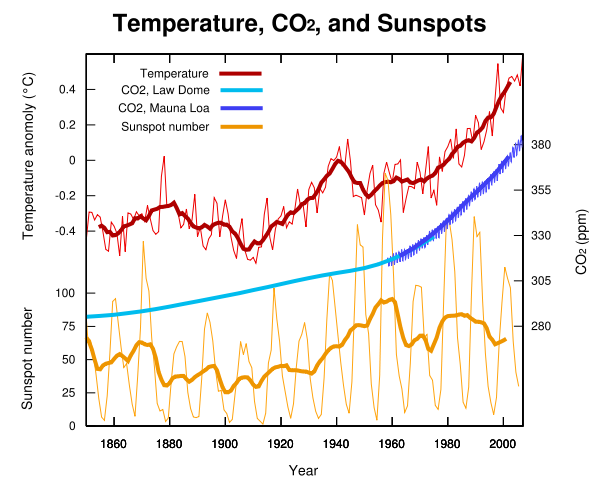
but it almost halves the effect we can blame ourselves for.
Yeah, pity that the sun's output hasn't changing significantly in the last 50 years. You know, the 50 years during which the earth's temperature has significantly spiked. -
Re:read the interviewI think you are misunderstanding what is meant when they talk about 'leaving a generation without free will'. They don't mean that it is a generation that is 'trained to obey without thought' but rather a generation that will always choose the option with the most immediate reward.
Free Will - http://plato.stanford.edu/entries/freewill/
At least consider some of the implications of being addicted to Instant Gratification
Credit - Why wait until you can afford something, when you can buy it now!
Education - Why bother finishing highschool, just get a job flipping burgers and you can start making money now!
Moving Out - Why move out, you can stay at home for free and spend all your money on fun things!
Maybe Video Games aren't to blame or at least not the only ones to blame, but it's not something that should be written off without any further thought.
The study apparently concluded (somehow) that video games were leaving a generation without free will. If that's the case, then there is a very simple solution: parents just need to tell their kids not to play them. Having no free will, they will have no choice but to obey! They certainly won't, oh I don't know, go behind their parents' backs and play them anyway, right?
I don't know why, but I find myself being almost physically disgusted by your response to the column.
(See: Straw Man Argument - http://en.wikipedia.org/wiki/Straw_man)
I hate how often people follow the "It's inconvenient, so it can't be true" or "I don't want to believe it, so it can't be true" line of logic. It's just as ridiculous as the most extreme fundamentalism in religions. -
Old News
This was covered last year, and the Los Alamos website had a few interviews with some people involved on what the uses of Roadrunner are. They had a time-line of what phases are to be done, and as far as memory serves me, they were going with Opterons for the first phase, then performance assessment, then add the Cell processors in the third phase.
From these pictures, it clearly shows they're using IBM Blades (4 chassis in each rack), and IBM already offers BladeQ servers which use Cell processors for HPC applications. The IBM BladeQ servers pack double the CPUs of a PS3.
If you take a look at the Folding@Home project statistics, you can see the performance of PS3 boxes, and almost relate... -
Re:The patent office - retarding development?
Good suggestion. It's a fantastic little book that you can find in any university library. I'd also recommend that anyone interested in this subject read a bit about the various philosophies of mathematics. Wikipedia's article is a good place to begin; Stanford's Encyclopedia of Philosophy is a good (if slightly technical) follow up.
For me, the crux of the matter of patents & math is as follows. Many mathematicians have leanings towards Platonism, the belief that the objects of study are "real" in some ideal sense. We would no sooner try to patent the discovery of a new truth about these objects than a biologist would try to patent the discovery of a new microorganism! Instead, as with the biologist, the flash of discovery brings only a desire to share our new wonder with the world. Are there those who disagree? Certainly. But even for those who do, the notion of patenting a theory or proof is unthinkable, because mathematics, more than any other science, is about "standing on the shoulders of Giants" (Newton). No one's math exists in a vacuum, and attempting to isolate a theory from future research would only ensure its rapid death from disuse. -
SETI
There is also folding at home http://folding.stanford.edu/ that might help someones life more than software ever will.
I am all for open source, but there are some better places to donate some spare cpu cycles -
Umm. It's NOT the only remaining particle labThere is also the Stanford Linear Accellerator Center. I haven't been doing physics for a while, but last I checked they were investigating why there's more matter than antimatter, and not an equal amount of both.
-
EmailAnd in case you were wondering, Fish reassured us that McCain "does know how to use e-mail... and a few other modern conveniences." McCain is more tech-savvy than Don Knuth!
-
"Cloud computing" has other problems
From capacity to "service level agreements" that guarantee little, cloud computing has business problems.
I went to this talk at Stanford by the head of "cloud computing" at Amazon. Technically, Amazon's approach to "cloud computing" is quite impressive. As a business, it works for a special reason - Amazon's load is 4X greater than normal during the buying season before Xmas. Amazon has to size their data centers for the Xmas buying season. For the rest of the year they have vast excess capacity. That's why Amazon's "cloud" is so cheap to use.
So Amazon's "cloud" is a great service, unless you need it during November and December.
-
Re:First-Sale cuts both waysThat doesn't mean a video tape or DVD counts as a "phonorecord" for the purpose of this law. There was an explicit attempt to make video rentals require the copyright holder's permission, but it didn't pass. Do you really think every video store gets permission, or is supposed to get permission, for every single movie they rent out?
Hell, even audiobooks don't count. This page isn't about video rentals, but it explains the limited scope of the rental exception: The Court chose this latter reading after looking to legislative history and policy rationales behind the rental record amendment. Given the context of the legislation and the time the Amendment was passed, the Court concluded that Congress meant to specifically address the rampant piracy in popular musical recordings. Where technology has led to a new class of works needing protection, such as computer software, Congress has amended the statute to exempt these works from the first sale doctrine. Thus, absent explicit Congressional action, the Court construed the statute narrowly to avoid upsetting the traditional balance between rights of copyright owners and personal property rights of individual owners of copies. -
Re:I've got a secret for them
-Hydrogen also makes metal brittle.
-cooling/insulation could not be perfect so 1.7% per day of the hydrogen would leak!
http://www-formal.stanford.edu/jmc/progress/hydrogen.html -
Re:just can't wait
Nah. Just swap him out with Leonard Susskind.
-
Re:Well...First, I am trying to make sense of your reply. Are you trying to tell me what you believe or what Einstein believed? I'm trying approximate to tell what Einstein believed when he talked about Nature and God. How can I know what he believed. I have red some of his letters that have been published long time ago, and I have read many of the same books he red. He quotes Spinoza often when he talks about spiritual stuff, so he is clearly influenced by his philosophy. Here: http://plato.stanford.edu/entries/spinoza/, there is nice chapter named: God or Nature. Einstein is using terms and concepts with similar sense as Spinoza did. Spinoza's fundamental insight in Book One is that Nature is an indivisible, uncaused, substantial whole -- in fact, it is the only substantial whole. Outside of Nature, there is nothing, and everything that exists is a part of Nature and is brought into being by Nature with a deterministic necessity. This unified, unique, productive, necessary being just is what is meant by 'God'. Because of the necessity inherent in Nature, there is no teleology in the universe. Nature does not act for any ends, and things do not exist for any set purposes. There are no "final causes" (to use the common Aristotelian phrase). God does not "do" things for the sake of anything else. The order of things just follows from God's essences with an inviolable determinism. All talk of God's purposes, intentions, goals, preferences or aims is just an anthropomorphizing fiction. All the prejudices I here undertake to expose depend on this one: that men commonly suppose that all natural things act, as men do, on account of an end; indeed, they maintain as certain that God himself directs all things to some certain end, for they say that God has made all things for man, and man that he might worship God. (I, Appendix) God is not some goal-oriented planner who then judges things by how well they conform to his purposes. Things happen only because of Nature and its laws. "Nature has no end set before it
My definition of good is pretty much what Spinoza, and Buddhist think about it. Things are good and bad only in the mind of the person, not in the Nature. If you put aside good and bad, you can act from your heart. Stoics called this kind of acting rationality. Real spirituality is when you stop seeking good for your own self (Buddhist say that there is no self. When you realize this you are free).
-
Re:It's a trap!
Ok, but how can a text editor help?
-
Re:No, martime law is not enoughThere is plenty of criticism of US News rankings. Many contend that they are inaccurate and simply generate income for the magazine without providing useful information:
http://www.stanford.edu/dept/pres-provost/president/speeches/961206gcfallow.html
http://www.library.uiuc.edu/edx/rankoversy.htm
http://www.insidehighered.com/news/2007/06/20/usnews
http://www.uas7.org/content/news/september_2007/uni_rankings_provoke_criticism/index_en.html
In the first paragraph of the UAS7 article,"Just recently the Princeton Review released its newest survey on the state of America's higher education institutes, proving a point many working in education have been trying to make for years: which colleges rank in the top tiers depends solely on the methodology the survey uses."
It all boils down to "Don't believe everything you read".
I have no interest in the University in question-- I'm just tired of seeing US News rankings quoted as gospel by so many people. -
Folding@Home is currently at 2 petaflopsTo develop the model, scientists would need a supercomputer that is 1,000 times more powerful than is available today, the researchers say.
200 petaflops is, in fact, only 100 times what is available today:
http://fah-web.stanford.edu/cgi-bin/main.py?qtype=osstats
To get fast climate modelling, I'd suggest releasing a PS3 client using a backend similar to Folding@Home would be a good start. As more and more PS3s are sold, I don't think it's unreasonable to expect that Folding@Home will get to 5 petaflops in the next couple of years.
-
Re:Well, the idea is to find out the solution
Not quite right. There is a big difference between PPD and actual work produced, scoring varies for cpu, ps3 and gpu results.
-
Umm, this is rosetta@home, not folding@home
This game is an offshoot of the rosetta@home effort to model protein folding. Folding@home is a separate effort.
-
Baker heads up Rosetta
Baker already heads up Rosetta@Home , a BOINC project that has your computer fold proteins in its spare time. He's appreciated for keeping his journal up-to-date and being responsive to participants; Folding@Home is somewhat less responsive (and doesn't provide the BOINC option).
-
Re:Unless they're off the grid it isn't 100%
Well, not quite on the variability in the US at least. Connecting geographically spreadout wind farms yields at least one third of the power as steady and, if I recall, closer to 60% when most of the wind belt is connected. http://news-service.stanford.edu/news/2007/december5/windfarm-120507.html
This lowers the cost of transmission because the largest transmission lines can be used 100% of the time at full capacity. -
Re:Ignores possibility of the Singularity
Heh, this is Nick Bostrom we're talking about, co-founder of the World Transhumanist Association. I think it's safe to assume he isn't ignoring the possibility of the Singularity -- in fact, he was an invited speaker at the Singularity Summit.
-
Re:Consequence of globalization
Here's one.
-
Here are some good reading linksHere are the projects the researcher is talking about in the interview:
http://vhil.stanford.edu/projects/Avatars and Behavioral Modeling
Virtual reality enables us to create a powerful and persuasive stimulus: the virtual self. Using digital photographs, we can create avatars that have a striking resemblance to the self. We can then manipulate the virtual self in myriad ways that would be difficult or even impossible in the real world. The virtual self can modify its appearance or perform a behavior that the real self cannot, thus serving as a novel type of model. According to social cognitive theory, models can be valuable stimuli for encouraging the imitation of particular behaviors. Thus, we are investigating how using self-models and virtually manipulating social cognitive constructs such as identification, self-efficacy, and vicarious reinforcement can influence imitation, particularly in the context of health and consumer behaviors. Is seeing the virtual self engage in a healthful activity more or less effective than a virtual other? When an avatar shows positive benefits of using a product in the third person, does the consumer then go out and buy that product? Can behaviors be encouraged by seeing the virtual self model health-related rewards and punishments such as weight loss, weight gain?
The Proteus Effect
Cyberspace grants us great control over our self-representations. At the click of a button, we can alter our gender, age, attractiveness, and skin tone. But as we choose our avatars online, do our avatars change us in turn? In a series of studies, we've explored how putting people in avatars of different attractiveness or height change how they behave in a virtual environment.
Out of the three links to "research" provided, only one links to an actual published paper (the other two are to research papers not in peer reviewed journals).
So, yeah, in a lab with undergraduate students, some of this stuff may be true. Out in the real world, with real adults working 9 to 5 jobs, with family and kids, maybe not so much.... -
Re:Audio-only
A quick bit of searching online reveals the Stanford Virtual Human Interaction Lab website which contains links to a variety of information on the project. Here's a PDF of the paper in The Chronicle of Higher Education on the topic. And although it has a flash video, here's another Stanford article on the same topic.
-
Re:Audio-only
A quick bit of searching online reveals the Stanford Virtual Human Interaction Lab website which contains links to a variety of information on the project. Here's a PDF of the paper in The Chronicle of Higher Education on the topic. And although it has a flash video, here's another Stanford article on the same topic.