Slashdot Mirror
Domain: techdirt.com
Stories and comments across the archive that link to techdirt.com.
Stories · 530
-
Chinese Professor Sues Google, Yahoo Over Search Exclusion
Techdirt points out that while there have been many lawsuits over someone's Google-rank, a Chinese professor is suing Google and Yahoo for removing all mention of him in China. "Google and Yahoo, of course, have agreed to play by local rules in China, upsetting many. Legally, it would seem like this suit has little chance of success — but I doubt that he cares about the legal result. What this actually does is to call attention to his plight — and on that front, it's clearly a successful strategy." -
Online Reputation Management To Keep Your Nose Clean?
Techdirt is reporting that as a response to all the hoopla about people being able to Google for information on potential employees (or lovers) a new market has opened up in "online reputation management". This seems to be the ultimate realization of those dubious firms who promised to scrub your records clean from a few years back. "From the description in the article, it sounds like this involves a combination of search engine optimization, plus legal bullying of anyone who says something you don't like. If anything, that sounds like a recipe for more trouble, but you can see how it would appeal to those who are unhappy with how they're perceived online. Obviously, it's no fun to have something bad about you exposed online, but efforts to suppress that information have a decent likelihood of backfiring and serving to highlight that information. I wonder if these online reputation managers have malpractice insurance for when that happens?" -
E-Voting Undermines Public Confidence In Elections
Jeremiah Cornelius writes "Techdirt columnist, Timothy Lee, hit the metaphoric nail on the head, claiming that e-Voting undermines the public perception of election fairness - even when there is no evidence of wrongdoing. 'In a well-designed voting system, voters shouldn't have to take anyone's actions on faith. The entire process should be simple and transparent, so that anyone can observe it and verify that it was carried out correctly. The complexity and opacity of e-voting machines makes effective public scrutiny impossible, and so it's a bad idea even in the absence of specific evidence of wrongdoing.' Add to this the possibility technical faults, conflicts of interest and evidence of tampering, how long before the US vote is viewed as an electronic pantomime?" -
Amazon Patents Customized 404 Pages
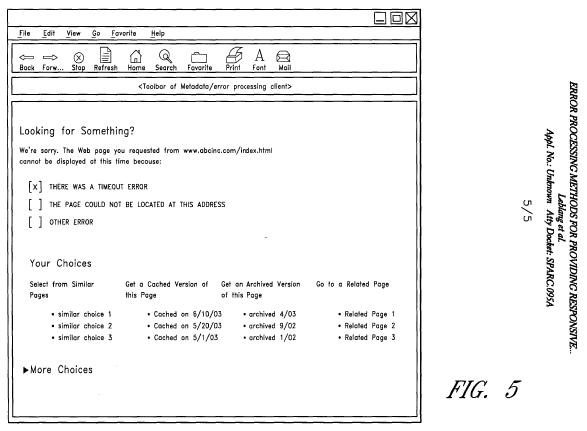
theodp writes "Among the patents awarded to Amazon CEO Jeff Bezos on Tuesday was one for his invention of Error Processing Methods for Providing Responsive Content to a User When a Page Load Error Occurs, which covers displaying alternate web pages in response to HTTP 404 page-not-found errors. So is this the technology that causes Amazon's Home Page to be displayed when Bezos' MIA Patent Reform Page can't be found?" -
Court Says You Can Copyright a Cease-And-Desist Letter
TechDirt has a follow up to a case they covered back in October where a law firm was trying to claim a copyright on the cease-and-desist letters they sent out. Public Citizen poked a number of holes in this claim and invited the lawyers to "try it." Well, unfortunately the lawyers decided to bite and what's more, they actually got a judge to buy it. The news was announced by the victorious lawyer who now claims he can sue anytime someone posts one of his cease-and-desist letters. "The copyrighting of cease-and-desist letters is an easy way for law firms to bully small companies who have committed no wrong, but who have no real recourse to fight back against an attempt to shut them up via legal threat. Until today, many companies who were being unfairly attacked by companies and law firms misusing cease-and-desist letters to prevent opinions from being stated, had a reasonable recourse to such attacks, and could draw attention to law firms that used such bullying tactics to mute any criticism." -
Smartphones Patented — Just About Everyone Sued 1 Minute Later
This week the US Patent and Trademark Office issued a surprisingly (although I guess it shouldn't be) broad patent for a "mobile entertainment and communication device". Upon closer inspection you may notice that it pretty much outlines the ubiquitous smartphone concept. "It's a patent for a mobile phone with removable storage, an internet connection, a camera and the ability to download audio or video files. The patent holding firm who has the rights to this patent wasted no time at all. At 12:01am Tuesday morning, it filed three separate lawsuits against just about everyone you can think of, including Apple, Nokia, RIM, Sprint, ATT, HP, Motorola, Helio, HTC, Sony Ericsson, UTStarcomm, Samsung and a bunch of others. Amusingly, the company actually first filed the lawsuits on Monday, but realized it was jumping the gun and pulled them, only to refile just past the stroke of midnight. " -
Math on iPhones Just Doesn't Add Up?
Tech Dirt is reporting that recently announced numbers by Apple and AT&T suggest that there is a large gap (1.7 million) between the number of iPhones being sold and those being activated. Taking into account factors like the iPhone launching outside the US and a 20% estimate of people buying the iPhone just for the purposes of unlocking, there are still 700,000 iPhones unaccounted for. "[...] suggesting that they're sitting on store shelves, piling up as unsold inventory. That number suggests at least some gap between perceived demand and actual demand -- while also raising questions about how much effort it will take to eat through that inventory." -
Google, Yahoo, Others Sued Over Solitaire Patent
An anonymous reader writes "Back in 2004, Slashdot posted about computer solitaire being patented. It was a ridiculous patent and made it onto the EFF's list of worst patents. However, not much had been heard about that patent until now. It turns out that the patent holder, Sheldon Goldberg, is now using that patent to sue a bunch of different online publications, including Digg, eBaum's World, the NY Times, Cnet and the Washington Post. He's also suing Google, Yahoo and AOL (why not?)." -
EFF Busts Bogus Online Testing Patent
Panaqqa writes "It's taken some time, but the EFF's Patent Busting Project is making progress. In the latest news, the USPTO has now officially rejected one of the 10 awful patents targeted, making the world safe again for administering tests over the Internet. This joins the reexamination of a patent on automated remote access of a computer over a network and the revocation of a patent on recording live performances to CD as notable successes for the EFF." -
USPTO Reaffirms 1-Click Claims 'Old And Obvious'
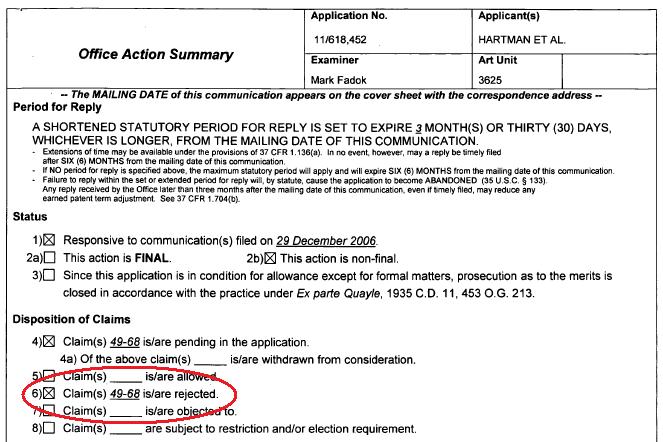
theodp writes "After USPTO Examiner Mark A. Fadok rejected Amazon CEO Jeff Bezos' 1-Click Patent claims as 'old and obvious,' Amazon canceled and refiled its 1-Click claims in a continuation application as it requested an Oral Appeal, a move that smacked of a good old-fashioned stalling tactic. But the move may have backfired, as Fadok has just completed his review of the continuation app and concluded that all of the refiled 1-Click claims should be rejected, providing explanations of why the Board of Patent Appeals was wrong to reverse his earlier decision after listening to Amazon's lawyers in September. In October, USPTO Examiner Matthew C. Graham rejected most of the 1-Click claims as part of the reexam requested by LOTR actor Peter Calveley, a decision that attorneys for Amazon are currently trying to work around with some creative wordsmithing. Can't see how all of this means 'less work for the overworked Patent and Trademark Office.'" -
NCAA Puts Severe Limits On Sport Event Blogging
An anonymous reader writes "You would think that the NCAA would be thrilled to have reporters live blogging events in order to generate more interest and keep passionate fans talking about NCAA sports. Not so. The governing body of the NCAA has released new rules for receiving press credentials and it includes severe limits on live blogging. If you're covering NCAA football, make sure you don't blog more than 3 times in a single quarter. If it's baseball, one post an inning is all you get. If you don't follow the rules expect to get ejected and have your press credentials pulled." -
NCAA Puts Severe Limits On Sport Event Blogging
An anonymous reader writes "You would think that the NCAA would be thrilled to have reporters live blogging events in order to generate more interest and keep passionate fans talking about NCAA sports. Not so. The governing body of the NCAA has released new rules for receiving press credentials and it includes severe limits on live blogging. If you're covering NCAA football, make sure you don't blog more than 3 times in a single quarter. If it's baseball, one post an inning is all you get. If you don't follow the rules expect to get ejected and have your press credentials pulled." -
Non-Competes As the DRM of Human Capital
An anonymous reader writes "Techdirt has an interesting look at how non-compete agreements are like DRM for people, doing just as much damage to innovation as DRM has done to the entertainment industry. It includes links to a lot of research to back up the premise, including some studies showing that Silicon Valley's success as compared to Boston's can be traced in part to the fact that California does not enforce non-compete agreements." -
Space Shifting DVDs to Cost Extra?
Depending on who you listen to Steve Jobs has supposedly been pitching the idea of selling "premium" DVDs that would include an extra fee for the privilege of transferring your legally-purchased DVD to a different device. "The courts have held that "space-shifting" your CDs to a portable music device is a fair use. So you can legally import your CD collection to your iPod, or any other device, without paying a penny. But Steve Jobs apparently wants to charge you $4 for the privilege of doing the same with your DVDs." -
Amazon Patents Bad Service For Bad Customers
mikesd81 writes "Techdirt reports that Amazon has been awarded a patent for Generating Current Order Fulfillment Plans Based on Expected Future Orders. Essentially, if Amazon deems that you won't be a long time customer or ordering again soon, your order will take longer to be expedited." -
FCC Moves To Regulate Cable TV Competition
explosivejared writes "The Federal Communications Commission is likely to impose a new regulation on the largely unregulated cable television industry, the first of what may be more to come. Under a proposed rule circulating at the FCC, cable companies such as Comcast and Time Warner Cable would have to slash the price they charge smaller television programmers to lease access on spare cable channels, a move the FCC says would open up cable viewers to a wider diversity of shows. In addition, the FCC is contemplating a national ownership cap that would prevent one company from having more than 30 percent of all cable subscribers." TechDirt has a jaundiced view of FCC chairman Martin's animus against the cablecos. -
Does Hacking Grades Warrant 20 Years in Jail?
While there have been many students who decided they would rather change their grades than come by them the usual way, the punishments for the most part have been pretty reasonable. However, the latest chapter in this type of behavior finds two culprits facing a $250,000 fine and 20 years in jail based on the number of charges leveled against them. "The guys have been charged with "unauthorized computer access, identity theft, conspiracy, and wire fraud." Obviously, these guys did a bad thing, but it's hard to see how the possible sentence matches with the crime. Of course, it seems unlikely that any judge would give them the maximum sentence, but even hearing that it's possible just for changing your grades seems ridiculous." -
Law Firm Claims Copyright on View of HTML Source
An anonymous reader writes "A law firm with all sorts of interesting views on copyright has decided to go the extra mile. As reported on Tech Dirt, they've decided that viewing the HTML source of their site is a violation of copyright. From the site's EULA: 'We also own all of the code, including the HTML code, and all content. As you may know, you can view the HTML code with a standard browser. We do not permit you to view such code since we consider it to be our intellectual property protected by the copyright laws. You are therefore not authorized to do so.'" -
How Not to Write a Cease-and-Desist Letter
In our overly litigious society it seems that many companies are all too happy to fire off a cease-and-desist letter if they see something they don't like. Many times these letters end up online just causing further embarrassment for the company. One such company has decided to try scaring their targets out of this response by including a copyright notice for their cease-and-desist letter. Public Citizen has fielded one of these dumb letters and has invited them to try to assert their cease-and-desist copyright (which isn't even registered). -
Radiohead Says Name Your Own Price for New Album
TechDirt is reporting that the band Radiohead has apparently chosen the path less traveled when it comes to the release of their new album. They are offering two very unique methods of purchase for their new music, the ability to name your own price for a digital download or the ability to purchase a special "discbox" which will contain the album on CD and vinyl in addition to a horde of goodies. Will be interesting to see how this new model works out for them and what it might do to more traditional methods. -
Supreme Court Continues to Address Patent Concerns
The Supreme Court has taken on another possibly landscape-changing patent case that will determine if patent holders are able to sue everyone up and down the food chain for a patent infringement. "This case, officially between LG and Quanta, really concerns the question of how many times patent holders can get a cut of any component found violating a patent. Currently, patent holders will often sue up and down the food chain. So, if you happen to have a patent on a component within a motor that is used in automobile wipers, you could sue the motor maker, the wiper maker and the auto manufacturer -- and get all three to pay, even though the same product is used throughout the supply chain. This case will look at whether or not it makes sense to allow for that type of double, triple or quadruple dipping." -
Video Professor Sues 100 Anonymous Critics
Techdirt is reporting that the Video Professor Company is suing 100 anonymous critics of their company. The Video Professor is known for their television ads hawking DVDs that teach you various skills like how to use your computer. Most of the complaints center around how their "free" product offering automagically signs you up for a subscription. Instead of addressing the concerns the Video Professor has decided to take the litigious route. -
Diebold Voting Machines Audited by California
Panaqqa writes "Diebold must be wondering what else can go wrong. Considering their arrogance in the past, their comeuppance is truly well deserved. The State of California's source code review [PDF] of the Diebold voting system has been released. Additional reports will be made available as the Secretary of State determines that they do not inadvertently disclose security-sensitive information. One wonders what it will take to convince voting machine manufacturers not to do things like hard coding passwords as '12345678.'" -
Diebold Voting Machines Audited by California
Panaqqa writes "Diebold must be wondering what else can go wrong. Considering their arrogance in the past, their comeuppance is truly well deserved. The State of California's source code review [PDF] of the Diebold voting system has been released. Additional reports will be made available as the Secretary of State determines that they do not inadvertently disclose security-sensitive information. One wonders what it will take to convince voting machine manufacturers not to do things like hard coding passwords as '12345678.'" -
USPTO Sued Over "Unqualified Appointment"
Techdirt is reporting that a small group of patent lawyers and investors are suing the US Secretary of Commerce in order to prevent the appointment of Margaret Peterlin to Under Secretary of Commerce for Intellectual Property and Deputy Director of the US Patent and Trademark Office. "According to the suit, filed Monday in the U.S. District Court for the District of Columbia, Congress amended the Patent Act in 1999 to require that the Director and Deputy Director of the USPTO each have "professional experience and background in patent or trademark law." Peterlin's appointment, announced May 8, violates the statute because she "lacks the requisite professional experience and background," the suit said. [...] They are asking the court to order Gutierrez to dismiss Peterlin immediately and establish rules to assess what qualifies as a professional background and experience in patent or trademark law. They also want the court to order Gutierrez to appoint a replacement for Peterlin who fulfills those requirements." -
Washington Woman Sues RIAA for Attorneys Fees
NewYorkCountryLawyer writes "A Washington woman sued by the RIAA has asked the Court to award her attorneys fees, after the record company plaintiffs (Interscope Records, Capitol Records, SONY BMG, Atlantic Recording, BMG Music, and Virgin Records) dropped their case against her after two years of litigation, in Interscope v. Leadbetter. The brief submitted by her attorneys (pdf) pointed out the similarity between Ms. Leadbetter's case and Capitol v. Foster. In the Leadbetter case, as well as Foster case, the RIAA sued the woman solely because she had paid for an internet access account, and then later in the case attempted to plead 'secondary liability' against her without any factual basis for doing so. This tactic had been repudiated by Judge Lee R. West in Capitol v. Foster as 'marginal' and 'untested' in his initial decision awarding attorneys fees, and in his later decision denying the RIAA's motion for reconsideration." -
Location-Based Search Was Patented In 1999
greenbird writes "Another patent fiasco has begun. Wired reports that a patent on location-based Internet searches was filed in 1996 and granted in 1999 (patent is here). A patent troll company name Geomas acquired the patent and has filed suit against Verizon in none other than Marshall, Texas. They claim this is the first in what will be a long line of lawsuits. Geomas has amassed a $20M war chest in venture capital to use for getting rich off of a clearly obvious idea." -
USPTO Increases Scope Of Amazon's 1-Click Patent
An anonymous reader writes "While the patent office had rejected earlier attempts by Amazon to get a continuation patent on its infamous "1-click" patent, it appears that an impatient USPTO examiner has approved the continuation, apparently because of the failure of BountyQuest to come up with prior art. This continuation adds claims like contacting the recipient of an order via e-mail or a phone call to obtain additional info." -
Netflix Sued Over Fradulently Obtained Patents
An anonymous reader writes "Techdirt has a story about a new class action lawsuit against Netflix, claiming that the patents the company is using to sue Blockbuster were obtained fraudulently. Specifically, the lawsuit claims that Netflix was well aware of prior art, but did not include it in its patent filing, as required by law. The lawsuit also claims that Netflix then used these fraudulently obtained patents to scare others out of the market, in violation of antitrust law. 'Certainly, it makes for an interesting argument. Patents grant a government-backed monopoly -- which should get you around any antitrust violations. However, if that patent is obtained fraudulently, then I can see a pretty compelling claim that you've abused antitrust law. It would be interesting if other such cases start popping up (and, indeed, the lawyer who sent it to us said his firm is looking for additional patents to go after in this manner).'" -
Netflix Sued Over Fradulently Obtained Patents
An anonymous reader writes "Techdirt has a story about a new class action lawsuit against Netflix, claiming that the patents the company is using to sue Blockbuster were obtained fraudulently. Specifically, the lawsuit claims that Netflix was well aware of prior art, but did not include it in its patent filing, as required by law. The lawsuit also claims that Netflix then used these fraudulently obtained patents to scare others out of the market, in violation of antitrust law. 'Certainly, it makes for an interesting argument. Patents grant a government-backed monopoly -- which should get you around any antitrust violations. However, if that patent is obtained fraudulently, then I can see a pretty compelling claim that you've abused antitrust law. It would be interesting if other such cases start popping up (and, indeed, the lawyer who sent it to us said his firm is looking for additional patents to go after in this manner).'" -
Blame Your Mistakes on Technology
Techdirt has an quick look at how it is becoming much more common for people to blame their mistakes on technology. "There are people driving off cliffs and through flooded roads and taking detours that span half of England, apparently at the behest of their navigation units. Things got so bad in one place that authorities even had to put up "ignore your sat nav" signs. Now, a woman's car got hit by a train, and for some reason, she's blaming a GPS navigation unit." -
FCC Admits Mistakes In Measuring Broadband Competition
techdirtfeed writes "For years, plenty of folks (including the Government Accountability Office) have been pointing out that the way the FCC measures broadband competition is very flawed. It simply assumes that if a single household in a zip code is offered broadband by provider A, then every household in that zip code can get broadband from provider A. See the problem? For some reason the FCC still hasn't changed its ways, but at least they're starting to realize the problem. They're now saying they need to change the way they measure competition. Commissioner Michael Copps points out: 'Our statistical methodology seems almost calculated to obscure just how far our country is falling behind many other industrialized nations in broadband availability, adoption, speed and price.'" -
FCC Admits Mistakes In Measuring Broadband Competition
techdirtfeed writes "For years, plenty of folks (including the Government Accountability Office) have been pointing out that the way the FCC measures broadband competition is very flawed. It simply assumes that if a single household in a zip code is offered broadband by provider A, then every household in that zip code can get broadband from provider A. See the problem? For some reason the FCC still hasn't changed its ways, but at least they're starting to realize the problem. They're now saying they need to change the way they measure competition. Commissioner Michael Copps points out: 'Our statistical methodology seems almost calculated to obscure just how far our country is falling behind many other industrialized nations in broadband availability, adoption, speed and price.'" -
Prior Art On Verizon Patents
greenbird sends in word that Techdirt has up information from Daniel Berninger documenting prior art in the Verizon patents being used to destroy Vonage. "...due to the fun way the patent system works, introducing that kind of prior art to the USPTO for it to review the validity of Verizon's VoIP patents will take quite a bit of time and effort — much longer than Vonage has to fight Verizon in court." From Berninger's note: "In particular, the claims in both patents were anticipated by open standards assembled by the VoIP Forum (H.323) in 1996 and published in January 1997 with the participation of members from Cisco Systems, Microsoft, IBM, Nortel, Intel, Motorola, Lucent, and VocalTec Communications, among others... The Eric Voit patent applications reflect, in particular, contributions made by VocalTec Communication to the VoIP Forum during 1996 and formally published at the same time as a separate document." -
Wireless Email Patents Vs. Innovation
Exactly a year ago Slashdot discussed Geoff Goodfellow's early contributions to wireless email and how they were conspicuously absent from the NTP vs. RIM patent fight. Techdirt points us to another early wireless email innovator, Nicholas Fodor, who recently came to the notice of the NY Times. Techdirt uses Fodor's story to highlight the problems with the US patent system that are by now so obvious to this community. -
Jon Stewart, Lorne Michaels Come Out In Favour of YouTube
techdirt writes "Viacom employee Jon Stewart recently announced that he believes his bosses are making a mistake in taking Viacom content off of YouTube. Today, NBC employee and Saturday Night Live creator Lorne Michaels has stated he can't understand NBC's position on YouTube. The interview with Michaels is especially interesting, because it was a Saturday Night Live clip of the infamous 'Lazy Sunday' music video that is often credited with putting YouTube on the map. At the same time, however, almost everyone admitted that it did wonders in revitalizing SNL's reputation (as well as boosting Andy Samberg's reputation to new heights). Yet, NBC's lawyers shot it down, limiting the benefit to SNL. It appears that Michaels understands that, and says he wishes they could put more of the show on YouTube." -
Jon Stewart, Lorne Michaels Come Out In Favour of YouTube
techdirt writes "Viacom employee Jon Stewart recently announced that he believes his bosses are making a mistake in taking Viacom content off of YouTube. Today, NBC employee and Saturday Night Live creator Lorne Michaels has stated he can't understand NBC's position on YouTube. The interview with Michaels is especially interesting, because it was a Saturday Night Live clip of the infamous 'Lazy Sunday' music video that is often credited with putting YouTube on the map. At the same time, however, almost everyone admitted that it did wonders in revitalizing SNL's reputation (as well as boosting Andy Samberg's reputation to new heights). Yet, NBC's lawyers shot it down, limiting the benefit to SNL. It appears that Michaels understands that, and says he wishes they could put more of the show on YouTube." -
Jon Stewart, Lorne Michaels Come Out In Favour of YouTube
techdirt writes "Viacom employee Jon Stewart recently announced that he believes his bosses are making a mistake in taking Viacom content off of YouTube. Today, NBC employee and Saturday Night Live creator Lorne Michaels has stated he can't understand NBC's position on YouTube. The interview with Michaels is especially interesting, because it was a Saturday Night Live clip of the infamous 'Lazy Sunday' music video that is often credited with putting YouTube on the map. At the same time, however, almost everyone admitted that it did wonders in revitalizing SNL's reputation (as well as boosting Andy Samberg's reputation to new heights). Yet, NBC's lawyers shot it down, limiting the benefit to SNL. It appears that Michaels understands that, and says he wishes they could put more of the show on YouTube." -
WTO Again Sides With Antigua Over Online Gambling
TechDirt writes "For some time we've been following the ongoing conflict between the US and the island nation of Antigua surrounding internet gambling. Even before the passage of the most recent anti-gambling law, Antigua had gone to the WTO to complain that the US government's actions against online gambling were de facto protectionist measures, and thus violated international trade law. The WTO ended up siding with Antigua, although, quite predictably, the US did nothing to resolve the issue -- in fact, things have only gotten worse. Now the WTO is speaking out again, slamming the US government for its failure to abide by the decision against it. Once again, it seems likely that the US will ignore the decision, although that would give Antigua the right to retaliate. One possibility that's been thrown out there is that Antigua may turn itself into a haven for free music and software and set up some site like allofmp3.com. Of course, the US put pressure on Russia to crack down on that site, as part of the country's admittance into the WTO, but since Antigua is already part of the organization, the US would have no such leverage. Now, the WTO has spoken out again." -
WTO Again Sides With Antigua Over Online Gambling
TechDirt writes "For some time we've been following the ongoing conflict between the US and the island nation of Antigua surrounding internet gambling. Even before the passage of the most recent anti-gambling law, Antigua had gone to the WTO to complain that the US government's actions against online gambling were de facto protectionist measures, and thus violated international trade law. The WTO ended up siding with Antigua, although, quite predictably, the US did nothing to resolve the issue -- in fact, things have only gotten worse. Now the WTO is speaking out again, slamming the US government for its failure to abide by the decision against it. Once again, it seems likely that the US will ignore the decision, although that would give Antigua the right to retaliate. One possibility that's been thrown out there is that Antigua may turn itself into a haven for free music and software and set up some site like allofmp3.com. Of course, the US put pressure on Russia to crack down on that site, as part of the country's admittance into the WTO, but since Antigua is already part of the organization, the US would have no such leverage. Now, the WTO has spoken out again." -
WTO Again Sides With Antigua Over Online Gambling
TechDirt writes "For some time we've been following the ongoing conflict between the US and the island nation of Antigua surrounding internet gambling. Even before the passage of the most recent anti-gambling law, Antigua had gone to the WTO to complain that the US government's actions against online gambling were de facto protectionist measures, and thus violated international trade law. The WTO ended up siding with Antigua, although, quite predictably, the US did nothing to resolve the issue -- in fact, things have only gotten worse. Now the WTO is speaking out again, slamming the US government for its failure to abide by the decision against it. Once again, it seems likely that the US will ignore the decision, although that would give Antigua the right to retaliate. One possibility that's been thrown out there is that Antigua may turn itself into a haven for free music and software and set up some site like allofmp3.com. Of course, the US put pressure on Russia to crack down on that site, as part of the country's admittance into the WTO, but since Antigua is already part of the organization, the US would have no such leverage. Now, the WTO has spoken out again." -
WTO Again Sides With Antigua Over Online Gambling
TechDirt writes "For some time we've been following the ongoing conflict between the US and the island nation of Antigua surrounding internet gambling. Even before the passage of the most recent anti-gambling law, Antigua had gone to the WTO to complain that the US government's actions against online gambling were de facto protectionist measures, and thus violated international trade law. The WTO ended up siding with Antigua, although, quite predictably, the US did nothing to resolve the issue -- in fact, things have only gotten worse. Now the WTO is speaking out again, slamming the US government for its failure to abide by the decision against it. Once again, it seems likely that the US will ignore the decision, although that would give Antigua the right to retaliate. One possibility that's been thrown out there is that Antigua may turn itself into a haven for free music and software and set up some site like allofmp3.com. Of course, the US put pressure on Russia to crack down on that site, as part of the country's admittance into the WTO, but since Antigua is already part of the organization, the US would have no such leverage. Now, the WTO has spoken out again." -
WTO Again Sides With Antigua Over Online Gambling
TechDirt writes "For some time we've been following the ongoing conflict between the US and the island nation of Antigua surrounding internet gambling. Even before the passage of the most recent anti-gambling law, Antigua had gone to the WTO to complain that the US government's actions against online gambling were de facto protectionist measures, and thus violated international trade law. The WTO ended up siding with Antigua, although, quite predictably, the US did nothing to resolve the issue -- in fact, things have only gotten worse. Now the WTO is speaking out again, slamming the US government for its failure to abide by the decision against it. Once again, it seems likely that the US will ignore the decision, although that would give Antigua the right to retaliate. One possibility that's been thrown out there is that Antigua may turn itself into a haven for free music and software and set up some site like allofmp3.com. Of course, the US put pressure on Russia to crack down on that site, as part of the country's admittance into the WTO, but since Antigua is already part of the organization, the US would have no such leverage. Now, the WTO has spoken out again." -
College Demands RIAA Pay Up For Wasting Its Time
An anonymous reader writes "We've already seen the University of Wisconsin tell the RIAA to go away, but the University of Nebaska has gone one step further: it's asking the RIAA to pay up for wasting its time with the silly demand to push students into paying up. The spokesperson for the University also notes that since they constantly rotate IP addresses and have no need to hang onto that information for very long, they simply cannot help the RIAA. They have no clue who was attached to which IP address at the time the RIAA is complaining about." -
Why DRM Cannot Open Up New Business Models
An anonymous reader writes "Techdirt has a cool post up that doesn't just explain why DRM is bad, but gives a really interesting economic explanation for why DRM cannot create successful new business models. Since the RIAA and MPAA keep insisting that DRM will create new business models, it's useful to see an argument for why that's basically impossible." As the article says, anyone can create a "new" business model. Creating a successful "new" business model is what is so elusive here. -
RIAA Says CDs Should Cost More
EatingSteak writes "The folks over at Techdirt just put up a great story today, with the RIAA claiming the cost of a CD has gone down significantly relative to the consumer price index. The RIAA 'Key Facts' page claims that based on the 1983 price of CDs, the 1996 price should have been $33.86. So naturally, you should feel like you're getting a bargain. Sounds an awful lot like the cable companies saying cable prices are really going down even though they're going up." -
RIAA Says CDs Should Cost More
EatingSteak writes "The folks over at Techdirt just put up a great story today, with the RIAA claiming the cost of a CD has gone down significantly relative to the consumer price index. The RIAA 'Key Facts' page claims that based on the 1983 price of CDs, the 1996 price should have been $33.86. So naturally, you should feel like you're getting a bargain. Sounds an awful lot like the cable companies saying cable prices are really going down even though they're going up." -
The RIAA and French Button-Makers
Alien54 writes "Requiring permission to innovate? Feeling entitled to search others' property? Getting the power to act like law enforcement in order to fine or arrest those who are taking part in activities that challenge your business model? Don't these all sound quite familiar? Centuries from now (hopefully much, much sooner), the actions of the RIAA, MPAA and others that match these of the weavers and button-makers of 17th century France will seem just as ridiculous." -
S Korea & China Mandate Common Chargers, Data Cables
mrbill writes "Seems that South Korea and China have mandated Common Cell Phone chargers and data cables. No proprietary chargers and data cables any more. Must use USB for charging etc. " -
Disconnecting Completely While On Vacation?
vonsneerderhooten asks: "This summer, I took a week-long vacation, left my cell phone at home and enjoyed the liberation of being completely disconnected from the (working) world. Recently, I came upon an article stating that many people don't take vacations longer than a long weekend. Worse still, a majority are worrying about work, calling the office and checking e-mail. How far removed are you when on vacation? To what lengths will you go to make yourself (un)available?"