Slashdot Mirror
Domain: tumblr.com
Stories and comments across the archive that link to tumblr.com.
Stories · 149
-
What's The Correct Way to Pronounce 'GIF'? (thenewstack.io)
"Apparently we're all fighting about how to pronounce 'GIF' again on Twitter," writes technology columnist Mike Melanson: I personally find the argument of web designer Aaron Bazinet, who managed to secure the domain howtoreallypronouncegif.com, rather convincing in its simplicity: "It's the most natural, logical way to pronounce it. That's why when everyone comes across the word for the first time, they use a hard G [as in "gift"]." Bazinet relates the origin of the debate as such:
"The creator of the GIF image format, Steve Wilhite of CompuServe, when deciding on the pronunciation, said he deliberately chose to echo the American peanut butter brand, Jif, and CompuServe employees would often say 'Choosy developers choose GIF(jif)', playing off of Jif's television commercials. If you hear anyone pronounce GIF with a soft G, it's because they know something of this history."
Wilhite attempted to settled the controversy in 2013 when accepting a lifetime achievement award at the 17th annual Webby awards. Using an actual animated .gif for his five-word acceptance speech, he authoritatively announced his preferred pronounciation. However, the chief editor of the Oxford English Dictionary argues that "A coiner effectively loses control of a word once it's out there," adding that "the pronunciation with a hard g is now very widespread and readily understood."
One linguist addressed the topic on Twitter this week, noting studies that found past usage of "gi" in words has been almost evenly split between hard and soft g sounds. Their thread also answers a related question: how will I weaponize a trivial and harmless consonant difference to make other people feel bad and self-conscious about themselves?
Her response? "Maybe just....don't do this." -
Tumblr Will Ban All Adult Content On December 17th (theverge.com)
Tumblr, the underground social media site known for its pornographic content and tight-knit community, will be instituting a major change to its guidelines in a couple of weeks. The company said in a blog post today that it will permanently ban adult content from its platform on December 17th. The company flatly stated that "adult content will no longer be allowed here." The Verge reports: Banned content includes photos, videos, and GIFs of human genitalia, female-presenting nipples, and any media involving sex acts, including illustrations. The exceptions include nude classical statues and political protests that feature nudity. The new guidelines exclude text, so erotica remains permitted. Illustrations and art that feature nudity are still okay -- so long as sex acts aren't depicted -- and so are breastfeeding and after-birth photos.
After December 17th, any explicit posts will be flagged and deleted by algorithms. For now, Tumblr is emailing users who have posted adult content flagged by algorithms and notifying them that their content will soon be hidden from view. Posts with porn content will be set to private, which will prevent them from being reblogged or shared elsewhere in the Tumblr community. "Blogs that have been either self-flagged or flagged by us as 'explicit' per our old policy and before December 17, 2018 will still be overlaid with a content filter when viewing these blogs directly," the blog post reads. "While some of the content on these blogs may now be in violation of our policies and will be actioned accordingly, the blog owners may choose to post content that is within our policies in the future, so we'd like to provide that option..." -
Tumblr Will Ban All Adult Content On December 17th (theverge.com)
Tumblr, the underground social media site known for its pornographic content and tight-knit community, will be instituting a major change to its guidelines in a couple of weeks. The company said in a blog post today that it will permanently ban adult content from its platform on December 17th. The company flatly stated that "adult content will no longer be allowed here." The Verge reports: Banned content includes photos, videos, and GIFs of human genitalia, female-presenting nipples, and any media involving sex acts, including illustrations. The exceptions include nude classical statues and political protests that feature nudity. The new guidelines exclude text, so erotica remains permitted. Illustrations and art that feature nudity are still okay -- so long as sex acts aren't depicted -- and so are breastfeeding and after-birth photos.
After December 17th, any explicit posts will be flagged and deleted by algorithms. For now, Tumblr is emailing users who have posted adult content flagged by algorithms and notifying them that their content will soon be hidden from view. Posts with porn content will be set to private, which will prevent them from being reblogged or shared elsewhere in the Tumblr community. "Blogs that have been either self-flagged or flagged by us as 'explicit' per our old policy and before December 17, 2018 will still be overlaid with a content filter when viewing these blogs directly," the blog post reads. "While some of the content on these blogs may now be in violation of our policies and will be actioned accordingly, the blog owners may choose to post content that is within our policies in the future, so we'd like to provide that option..." -
The Long, Slow Demise of Credit Card Signatures Starts Today (cnet.com)
Last year, all four major U.S. payment providers -- Mastercard, Visa, American Express and Discover -- announced plans to remove the requirement that merchants collect signatures for card transactions. Those plans officially go into effect today, or Saturday in the case of Visa. CNET reports: [D]on't despair if you actually like writing your signature at retail stores, because their ultimate demise will likely take a while. The change is only optional, with merchants, not customers, given the new power to decide whether to get rid of signatures. So, if asked to sign, please don't insist to your next cashier that you no longer need to -- it won't work. Also, plenty of retailers will likely want to keep signatures, particularly if their workers are paid based on a lot of tips, or they sell pricey items. Still, the change marks a clear awareness from payment providers that the signature doesn't really work as a strong protector against fraud.
The change is being handled a little differently by each payment provider. For instance, Mastercard, Discover and American Express said they'll let retailers make every kind of card payment optional for a signature, regardless of whether you've got a new chip card or you still swipe. Visa, meanwhile, isn't changing its requirements for payments using a swipe card, but it did relax its policy for chip card and contactless payments like Apple Pay. Visa noted that over 75 percent of face-to-face transactions using its cards in North America already don't require a signature, thanks to lower-value transactions. -
Do Neural Nets Dream of Electric Sheep? (aiweirdness.com)
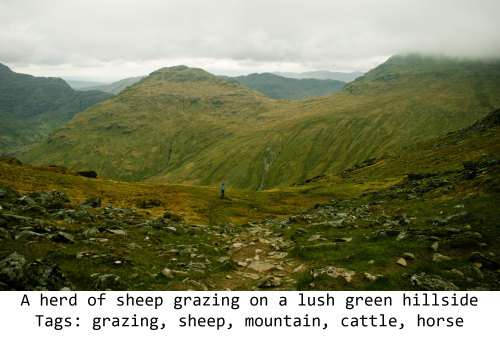
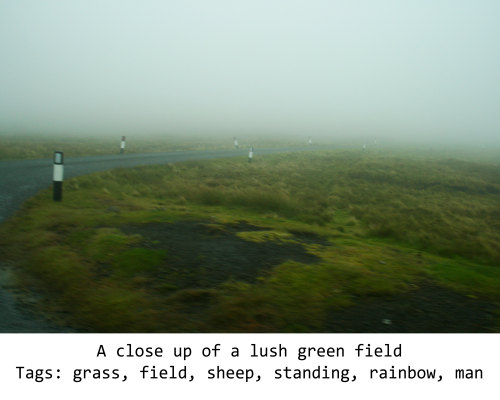
An anonymous reader shares a post: If you've been on the internet today, you've probably interacted with a neural network. They're a type of machine learning algorithm that's used for everything from language translation to finance modeling. One of their specialties is image recognition. Several companies -- including Google, Microsoft, IBM, and Facebook -- have their own algorithms for labeling photos. But image recognition algorithms can make really bizarre mistakes. Microsoft Azure's computer vision API added the above caption and tags. But there are no sheep in the image. None. I zoomed all the way in and inspected every speck. It also tagged sheep in this image. I happen to know there were sheep nearby. But none actually present. Here's one more example. In fact, the neural network hallucinated sheep every time it saw a landscape of this type. What's going on here?
Are neural networks just hyper-vigilant, finding sheep everywhere? No, as it turns out. They only see sheep where they expect to see them. They can find sheep easily in fields and mountainsides, but as soon as sheep start showing up in weird places, it becomes obvious how much the algorithms rely on guessing and probabilities. Bring sheep indoors, and they're labeled as cats. Pick up a sheep (or a goat) in your arms, and they're labeled as dogs. -
Do Neural Nets Dream of Electric Sheep? (aiweirdness.com)
An anonymous reader shares a post: If you've been on the internet today, you've probably interacted with a neural network. They're a type of machine learning algorithm that's used for everything from language translation to finance modeling. One of their specialties is image recognition. Several companies -- including Google, Microsoft, IBM, and Facebook -- have their own algorithms for labeling photos. But image recognition algorithms can make really bizarre mistakes. Microsoft Azure's computer vision API added the above caption and tags. But there are no sheep in the image. None. I zoomed all the way in and inspected every speck. It also tagged sheep in this image. I happen to know there were sheep nearby. But none actually present. Here's one more example. In fact, the neural network hallucinated sheep every time it saw a landscape of this type. What's going on here?
Are neural networks just hyper-vigilant, finding sheep everywhere? No, as it turns out. They only see sheep where they expect to see them. They can find sheep easily in fields and mountainsides, but as soon as sheep start showing up in weird places, it becomes obvious how much the algorithms rely on guessing and probabilities. Bring sheep indoors, and they're labeled as cats. Pick up a sheep (or a goat) in your arms, and they're labeled as dogs. -
Congress Is About To Vote On Expanding the Warrantless Surveillance of Americans (vice.com)
An anonymous reader quotes a report from Motherboard: On Tuesday afternoon, a handful of U.S. Representatives will convene to review an amendment that would reauthorize warrantless foreign surveillance and expand the law so that it could include American citizens. It would, in effect, legalize a surveillance practice abandoned by the NSA in 2017 in order to appease the Foreign Intelligence Surveillance Court, which found the NSA to have abused its collection capacity several times. If it passes Tuesday's review, the bill may be voted on by the U.S. House of Representatives as early as Thursday. Drafted by the House Intelligence Committee last December, the FISA Amendments Reauthorization Act of 2017 is an amendment to Section 702 of the Foreign Intelligence Surveillance Act (FISA). It is one of six different FISA-related bills under consideration by Congress at the moment, but by far the most damaging to the privacy rights of American citizens.
FISA was enacted in 1978, but Section 702, referred to by former FBI Director James Comey as the "crown jewels of the intelligence community," wasn't added until 2008. This section allows intelligence agencies to surveil any foreigner outside the U.S. without a warrant that the agency considers a target. The problem is that this often resulted in the warrantless surveillance of U.S. citizens as well due to two loopholes known as "backdoor searches" and "about collection." Backdoor search refers to a roundabout way of monitoring Americans' communications. Since intelligence agencies are able to designate any foreigner's communications as a target for surveillance, if this foreigner has communicated with an American this means this American's communications are then also considered fair game for surveillance by the agency. -
Why Is Anime Obsessed With Power Lines? (atlasobscura.com)
An anonymous reader shares a report: Why are there so many shots of power lines in Japanese anime cartoons? The Tumblr Power Lines in Anime is dedicated to appreciating the truly lovely and surprisingly ubiquitous depictions of mundane power lines that appear in a large number of Japanese animation series. The blog is run by Tumblr user whitequark, who first started to notice the trend while watching a romantic comedy anime. Anime series can cover any number of genres, including sports, high fantasy, office life, and, of course, science fiction, but no matter what it's about, it seems that if the story is set on modern-day Earth, it will contain some amazingly detailed images of power lines, telephone poles, and other wired infrastructure. While a number of anime series (and cartoons in general), opt for a style of hyper-detailed backgrounds before which relatively simpler characters can interact, power lines stand out for the detail and complexity required to illustrate them. -
Warrantless Surveillance Can Continue Even If Law Expires, Officials Say (theverge.com)
According to a New York Times report citing American officials, the Trump administration has decided that the National Security Agency and the FBI can lawfully keep operating their warrantless surveillance program even if Congress fails to extend the law authorizing it before an expiration date of New Year's Eve. The Verge reports: The White House believes the Patriot Act's surveillance provisions won't expire until four months into 2018. Lawyers point to a one-year certification that was granted on April 26th of last year. If that certification is taken as a legal authorization for the FISA court overall -- as White House lawyers suggest -- then Congress will have another four months to work out the details of reauthorization. There are already several proposals for Patriot Act reauthorization in the Senate, which focus the Section 702 provisions that authorize certain types of NSA surveillance. Some of the proposals would close the backdoor search loophole that allows for warrantless surveillance of U.S. citizens, although a recent House proposal would leave it in place. But with Congress largely focused on tax cuts and the looming debt ceiling fight, it's unlikely the differences could be reconciled before the end of the year. -
When an AI Tries Writing Slashdot Headlines (tumblr.com)
For Slashdot's 20th anniversary, "What could be geekier than celebrating with the help of an open-source neural network?" Neural network hobbyist Janelle Shane has already used machine learning to generate names for paint colors, guinea pigs, heavy metal bands, and even craft beers, she explains on her blog. "Slashdot sent me a list of all the headlines they've ever run, over 162,000 in all, and asked me to train a neural network to try to generate more." Could she distill 20 years of news -- all of humanity's greatest technological advancements -- down to a few quintessential words?
She trained it separately on the first decade of Slashdot headlines -- 1997 through 2007 -- as well as the second decade from 2008 to the present, and then re-ran the entire experiment using the whole collection of every headline from the last 20 years. Among the remarkable machine-generated headlines?- Microsoft To Develop Programming Law
- More Pong Users for Kernel Project
- New Company Revises Super-Things For Problems
- Steve Jobs To Be Good
But that was just the beginning...
Those five headlines were all derived from the first decade, but it's really nice to see that Steve Jobs made it into both decades. When training on the second set of 82,871 headlines from Slashdot's second decade, the neural network began envisioning the co-founder of Apple tackling even greater challenges.- Steve Jobs Allowed To Deal With Solar Power
- Steve Jobs Sues Death of the Future
The neural network "did its best to reflect the new topics of the last decade," Janelle writes, adding "Compared to the late 1990s and early 2000s, some companies and topics disappeared, while the coverage of Apple in particular exploded."
But Sun Microsystems also founds its way into several headlines -- especially when Janelle tried to create the "essential" Slashdot headline using the whole 20-year set.- Sun Sues Open Source Project Content
- Sun Sues New Star Trek To Stop The Math
And as technology continues changing our world, Sun isn't the only company that the neural network saw pushing for new rights in court.
- Sony Sues Apple Server For Seconds Off From SpaceX Project
- Apple Sues Apple To Start The Solar Power Project
Janelle will send you four more pages of machine-generated Slashdot headlines if you subscribe to her blog's announcement list. But after savoring the whole surreal AI-enabled look at the last 20 years, these four headlines were still my favorites:
- Red Hat Releases Linux Games And Moon
- Why Open Source Power Man Sues Java
- Microsoft Releases New Months
- Ask Slashdot: Do We Want To Be the Computers?
-
When an AI Tries Writing Slashdot Headlines (tumblr.com)
For Slashdot's 20th anniversary, "What could be geekier than celebrating with the help of an open-source neural network?" Neural network hobbyist Janelle Shane has already used machine learning to generate names for paint colors, guinea pigs, heavy metal bands, and even craft beers, she explains on her blog. "Slashdot sent me a list of all the headlines they've ever run, over 162,000 in all, and asked me to train a neural network to try to generate more." Could she distill 20 years of news -- all of humanity's greatest technological advancements -- down to a few quintessential words?
She trained it separately on the first decade of Slashdot headlines -- 1997 through 2007 -- as well as the second decade from 2008 to the present, and then re-ran the entire experiment using the whole collection of every headline from the last 20 years. Among the remarkable machine-generated headlines?- Microsoft To Develop Programming Law
- More Pong Users for Kernel Project
- New Company Revises Super-Things For Problems
- Steve Jobs To Be Good
But that was just the beginning...
Those five headlines were all derived from the first decade, but it's really nice to see that Steve Jobs made it into both decades. When training on the second set of 82,871 headlines from Slashdot's second decade, the neural network began envisioning the co-founder of Apple tackling even greater challenges.- Steve Jobs Allowed To Deal With Solar Power
- Steve Jobs Sues Death of the Future
The neural network "did its best to reflect the new topics of the last decade," Janelle writes, adding "Compared to the late 1990s and early 2000s, some companies and topics disappeared, while the coverage of Apple in particular exploded."
But Sun Microsystems also founds its way into several headlines -- especially when Janelle tried to create the "essential" Slashdot headline using the whole 20-year set.- Sun Sues Open Source Project Content
- Sun Sues New Star Trek To Stop The Math
And as technology continues changing our world, Sun isn't the only company that the neural network saw pushing for new rights in court.
- Sony Sues Apple Server For Seconds Off From SpaceX Project
- Apple Sues Apple To Start The Solar Power Project
Janelle will send you four more pages of machine-generated Slashdot headlines if you subscribe to her blog's announcement list. But after savoring the whole surreal AI-enabled look at the last 20 years, these four headlines were still my favorites:
- Red Hat Releases Linux Games And Moon
- Why Open Source Power Man Sues Java
- Microsoft Releases New Months
- Ask Slashdot: Do We Want To Be the Computers?
-
When an AI Tries Writing Slashdot Headlines (tumblr.com)
For Slashdot's 20th anniversary, "What could be geekier than celebrating with the help of an open-source neural network?" Neural network hobbyist Janelle Shane has already used machine learning to generate names for paint colors, guinea pigs, heavy metal bands, and even craft beers, she explains on her blog. "Slashdot sent me a list of all the headlines they've ever run, over 162,000 in all, and asked me to train a neural network to try to generate more." Could she distill 20 years of news -- all of humanity's greatest technological advancements -- down to a few quintessential words?
She trained it separately on the first decade of Slashdot headlines -- 1997 through 2007 -- as well as the second decade from 2008 to the present, and then re-ran the entire experiment using the whole collection of every headline from the last 20 years. Among the remarkable machine-generated headlines?- Microsoft To Develop Programming Law
- More Pong Users for Kernel Project
- New Company Revises Super-Things For Problems
- Steve Jobs To Be Good
But that was just the beginning...
Those five headlines were all derived from the first decade, but it's really nice to see that Steve Jobs made it into both decades. When training on the second set of 82,871 headlines from Slashdot's second decade, the neural network began envisioning the co-founder of Apple tackling even greater challenges.- Steve Jobs Allowed To Deal With Solar Power
- Steve Jobs Sues Death of the Future
The neural network "did its best to reflect the new topics of the last decade," Janelle writes, adding "Compared to the late 1990s and early 2000s, some companies and topics disappeared, while the coverage of Apple in particular exploded."
But Sun Microsystems also founds its way into several headlines -- especially when Janelle tried to create the "essential" Slashdot headline using the whole 20-year set.- Sun Sues Open Source Project Content
- Sun Sues New Star Trek To Stop The Math
And as technology continues changing our world, Sun isn't the only company that the neural network saw pushing for new rights in court.
- Sony Sues Apple Server For Seconds Off From SpaceX Project
- Apple Sues Apple To Start The Solar Power Project
Janelle will send you four more pages of machine-generated Slashdot headlines if you subscribe to her blog's announcement list. But after savoring the whole surreal AI-enabled look at the last 20 years, these four headlines were still my favorites:
- Red Hat Releases Linux Games And Moon
- Why Open Source Power Man Sues Java
- Microsoft Releases New Months
- Ask Slashdot: Do We Want To Be the Computers?
-
When an AI Tries Writing Slashdot Headlines (tumblr.com)
For Slashdot's 20th anniversary, "What could be geekier than celebrating with the help of an open-source neural network?" Neural network hobbyist Janelle Shane has already used machine learning to generate names for paint colors, guinea pigs, heavy metal bands, and even craft beers, she explains on her blog. "Slashdot sent me a list of all the headlines they've ever run, over 162,000 in all, and asked me to train a neural network to try to generate more." Could she distill 20 years of news -- all of humanity's greatest technological advancements -- down to a few quintessential words?
She trained it separately on the first decade of Slashdot headlines -- 1997 through 2007 -- as well as the second decade from 2008 to the present, and then re-ran the entire experiment using the whole collection of every headline from the last 20 years. Among the remarkable machine-generated headlines?- Microsoft To Develop Programming Law
- More Pong Users for Kernel Project
- New Company Revises Super-Things For Problems
- Steve Jobs To Be Good
But that was just the beginning...
Those five headlines were all derived from the first decade, but it's really nice to see that Steve Jobs made it into both decades. When training on the second set of 82,871 headlines from Slashdot's second decade, the neural network began envisioning the co-founder of Apple tackling even greater challenges.- Steve Jobs Allowed To Deal With Solar Power
- Steve Jobs Sues Death of the Future
The neural network "did its best to reflect the new topics of the last decade," Janelle writes, adding "Compared to the late 1990s and early 2000s, some companies and topics disappeared, while the coverage of Apple in particular exploded."
But Sun Microsystems also founds its way into several headlines -- especially when Janelle tried to create the "essential" Slashdot headline using the whole 20-year set.- Sun Sues Open Source Project Content
- Sun Sues New Star Trek To Stop The Math
And as technology continues changing our world, Sun isn't the only company that the neural network saw pushing for new rights in court.
- Sony Sues Apple Server For Seconds Off From SpaceX Project
- Apple Sues Apple To Start The Solar Power Project
Janelle will send you four more pages of machine-generated Slashdot headlines if you subscribe to her blog's announcement list. But after savoring the whole surreal AI-enabled look at the last 20 years, these four headlines were still my favorites:
- Red Hat Releases Linux Games And Moon
- Why Open Source Power Man Sues Java
- Microsoft Releases New Months
- Ask Slashdot: Do We Want To Be the Computers?
-
When an AI Tries Writing Slashdot Headlines (tumblr.com)
For Slashdot's 20th anniversary, "What could be geekier than celebrating with the help of an open-source neural network?" Neural network hobbyist Janelle Shane has already used machine learning to generate names for paint colors, guinea pigs, heavy metal bands, and even craft beers, she explains on her blog. "Slashdot sent me a list of all the headlines they've ever run, over 162,000 in all, and asked me to train a neural network to try to generate more." Could she distill 20 years of news -- all of humanity's greatest technological advancements -- down to a few quintessential words?
She trained it separately on the first decade of Slashdot headlines -- 1997 through 2007 -- as well as the second decade from 2008 to the present, and then re-ran the entire experiment using the whole collection of every headline from the last 20 years. Among the remarkable machine-generated headlines?- Microsoft To Develop Programming Law
- More Pong Users for Kernel Project
- New Company Revises Super-Things For Problems
- Steve Jobs To Be Good
But that was just the beginning...
Those five headlines were all derived from the first decade, but it's really nice to see that Steve Jobs made it into both decades. When training on the second set of 82,871 headlines from Slashdot's second decade, the neural network began envisioning the co-founder of Apple tackling even greater challenges.- Steve Jobs Allowed To Deal With Solar Power
- Steve Jobs Sues Death of the Future
The neural network "did its best to reflect the new topics of the last decade," Janelle writes, adding "Compared to the late 1990s and early 2000s, some companies and topics disappeared, while the coverage of Apple in particular exploded."
But Sun Microsystems also founds its way into several headlines -- especially when Janelle tried to create the "essential" Slashdot headline using the whole 20-year set.- Sun Sues Open Source Project Content
- Sun Sues New Star Trek To Stop The Math
And as technology continues changing our world, Sun isn't the only company that the neural network saw pushing for new rights in court.
- Sony Sues Apple Server For Seconds Off From SpaceX Project
- Apple Sues Apple To Start The Solar Power Project
Janelle will send you four more pages of machine-generated Slashdot headlines if you subscribe to her blog's announcement list. But after savoring the whole surreal AI-enabled look at the last 20 years, these four headlines were still my favorites:
- Red Hat Releases Linux Games And Moon
- Why Open Source Power Man Sues Java
- Microsoft Releases New Months
- Ask Slashdot: Do We Want To Be the Computers?
-
Verizon Is Killing Tumblr's Fight For Net Neutrality (theverge.com)
An anonymous reader quotes a report from The Verge: In 2014, Tumblr was on the front lines of the battle for net neutrality. The company stood alongside Amazon, Kickstarter, Etsy, Vimeo, Reddit, and Netflix during Battle for the Net's day of action. Tumblr CEO David Karp was also part of a group of New York tech CEOs that met with then-FCC chairman Tom Wheeler in Brooklyn that summer, while the FCC was fielding public comment on new Title II rules. President Obama invited Karp to the White House to discuss various issues around public education, and in February 2015 The Wall Street Journal reported that it was the influence of Karp and a small group of liberal tech CEOs that swayed Obama toward a philosophy of internet as public utility. But three years later, as the battle for net neutrality heats up once again, Tumblr has been uncharacteristically silent. The last mention of net neutrality on Tumblr's staff blog -- which frequently posts about political issues from civil rights to climate change to gun control to student loan debt -- was in June 2016. And Tumblr is not listed as a participating tech company for Battle for the Net's next day of action, coming up in three weeks. One reason for Karp and Tumblr's silence? Last week Verizon completed its acquisition of Tumblr parent company Yahoo, kicking off the subsequent merger of Yahoo and AOL to create a new company called Oath. As one of the world's largest ISPs, Verizon is notorious for challenging the principles of net neutrality -- it sued the FCC in an effort to overturn net neutrality rules in 2011, and its general counsel Kathy Grillo published a note this April complimenting new FCC chairman Ajit Pai's plan to weaken telecommunication regulations. -
Verizon Is Killing Tumblr's Fight For Net Neutrality (theverge.com)
An anonymous reader quotes a report from The Verge: In 2014, Tumblr was on the front lines of the battle for net neutrality. The company stood alongside Amazon, Kickstarter, Etsy, Vimeo, Reddit, and Netflix during Battle for the Net's day of action. Tumblr CEO David Karp was also part of a group of New York tech CEOs that met with then-FCC chairman Tom Wheeler in Brooklyn that summer, while the FCC was fielding public comment on new Title II rules. President Obama invited Karp to the White House to discuss various issues around public education, and in February 2015 The Wall Street Journal reported that it was the influence of Karp and a small group of liberal tech CEOs that swayed Obama toward a philosophy of internet as public utility. But three years later, as the battle for net neutrality heats up once again, Tumblr has been uncharacteristically silent. The last mention of net neutrality on Tumblr's staff blog -- which frequently posts about political issues from civil rights to climate change to gun control to student loan debt -- was in June 2016. And Tumblr is not listed as a participating tech company for Battle for the Net's next day of action, coming up in three weeks. One reason for Karp and Tumblr's silence? Last week Verizon completed its acquisition of Tumblr parent company Yahoo, kicking off the subsequent merger of Yahoo and AOL to create a new company called Oath. As one of the world's largest ISPs, Verizon is notorious for challenging the principles of net neutrality -- it sued the FCC in an effort to overturn net neutrality rules in 2011, and its general counsel Kathy Grillo published a note this April complimenting new FCC chairman Ajit Pai's plan to weaken telecommunication regulations. -
Verizon Closes $4.5B Acquisition of Yahoo, Marissa Mayer Resigns (techcrunch.com)
An anonymous reader shares a TechCrunch article: After Yahoo shareholder approval last week, Verizon today announced that it has finally closed its acquisition of Yahoo, which it plans to combine with its AOL assets into a subsidiary called Oath, covering some 50 media brands and 1 billion people globally. It will be led by Tim Armstrong, who was the CEO of AOL before this. As expected, Marissa Mayer, who had been the CEO of Yahoo, has resigned. "Given the inherent changes to Marissa Mayer's role with Yahoo resulting from the closing of the transaction, Mayer has chosen to resign from Yahoo. Verizon wishes Mayer well in her future endeavors," Verizon said in a statement. You can find Marissa in her own words here on Tumblr. It's a long list of the achievements made with her at the helm these last five years, and -- alas -- you will only read of the struggles that Yahoo went through between the lines. The deal, nevertheless, brings to a close the independent life of one of the oldest and most iconic internet brands, arguably the one that led and set the pace for search -- the cornerstone of doing business on the spaghetti-like internet -- at least until Google came along and surpassed Yahoo many times over, and led the company into a number of disastrous and costly attempts to redefine itself, ultimately culminating in the sale we have here today. -
Marissa Mayer Is Giving Yahoo Employees Her Annual Bonus To Make Up For Massive Hacks (theverge.com)
Following two separate security breaches revealed last year that compromised the personal information of more than 1.5 billion users, Yahoo CEO Marissa Mayer announced today via her Tumblr page that she will be redistributing her annual bonus and equity stock grant to Yahoo employees. The Verge reports: Relevant to Mayer's admission here, an independent committee Yahoo brought on to investigate the hacks found the company to be at fault for not sufficiently responding to the security incidents. "While significant additional security measures were implemented in response to those incidents, it appears certain senior executives did not properly comprehend or investigate, and therefore failed to act sufficiently upon, the full extent of knowledge known internally by the company's information security team," reads the committee's findings, which are contained in Yahoo's 10-K report for 2016. As a result of the hacks, Yahoo's top lawyer, Ron Bell, has been fired, Recode reported today. Mayer has accumulated about $162 million during the five years she's spent as the company's CEO in both salary and stock awards, according to CNN. She's also due about $55 million in severance if she decides to leave the company following its acquisition by Verizon. So it's safe to say her bonus would involve a hefty amount of money now going to Yahoo employees who have weathered the storm throughout Mayer's tumultuous tenure. -
PewDiePie Calls Out the 'Old-School Media' For Spiteful Dishonesty
New submitter Shane_Optima writes: After losing his Youtube Red show and his contract with Disney, the owner of the most subscribed channel on Youtube, Felix Arvid Ulf Kjellberg (aka "PewDiePie"), has released a video response to the Wall Street Journal and other mainstream news outlets, who have labeled his comedy videos variously as racist, fascist or anti-semitic. In it, he accuses the mainstream media of deliberately fabricating and misrepresenting the evidence used against him because they are afraid of independent content producers such as himself. In the video, PewDiePie discusses the recent actions of the Wall Street Journal, whose reporters sent nine cherry-picked and edited videos to Disney, which led directly to Disney's decision to terminate their relationship with him. These video clips and others used to "prove" PewDiePie's guilt have been edited (he claims) to remove all context, to the extent of using a pose of him pointing at something as a Nazi salute and using a clip where other players are creating swastikas in a game and editing out the part where he is asking them to stop. The most-cited video in the controversy involves seeing if he can use the site Fiverr to hire someone to create a video containing an over-the-top message for a mere $5. After a couple of laughing males unfurl a sign saying "Death to All Jews," he recoils with widened eyes and sits, apparently dumbfounded, for another thirty seconds before the video ends, without him uttering another word.
PewDiePie's video comes several days after a Tumblr post where he attempted to clarify that the videos were intended to be comedy showing "how crazy the modern world is." He has not yet used the phrase "fake news" in his response to the controversy, but given the current trends surrounding that phrase, it isn't surprising that his supporters are resorting to it frequently. Is this all just another unfortunate instance of collateral damage in the war against far-right political movements, is it a campaign of malicious retaliation by old media that is terrified of new media (as Felix claims), or was J.K. Rowling correct when she called out PewDiePie as a Death Eater? Err, I mean, ...as a fascist?
Update: Apparently, canceling his Youtube Red series was deemed an insufficient response. Youtube has now removed the mirror of PewDiePie's "Death to All Jews" video because it "violates Youtube's policy on hate speech." The original posting of the video had already been marked private by PewDiePie shortly after the controversy erupted. A quick check of Vimeo and Daily Motion came up empty, so you're on your own if you wish to find out for yourself what the controversy was all about. -
Disney, YouTube Cut Ties With PewDiePie, Top YouTube Submitter, Over Anti-Semitic Videos (techcrunch.com)
jo7hs2 writes: Disney's Maker Studios has cut ties PewDiePie, the YouTube submitter with 53 million subscribers, over anti-Semitic clips the submitter released earlier in the year. The clips, three videos published in January, have since been removed from the channel. According to TechCrunch, "They included one skit in which [Felix Kjellberg, PewDiePie's real name] paid a Sri Lanka-based group of men to hold up a sign that read 'Death to All Jews,' while another featured a clip of a man dressed as Jesus saying that 'Hitler did absolutely nothing wrong.' Kjellberg used freelance job finding site Fiverr for both clips. He argued that he wasn't serious with either and instead wanted to show the things people will do for money." A spokesperson for Maker Studios, which was acquired by Disney in 2014, told the Wall Street Journal, "Although Felix has created a following by being provocative and irreverent, he clearly went too far in this case and the resulting videos are inappropriate." Writing on his Tumblr blog, Kjellberg said the purpose of the examples was "to show how crazy the modern world is, specifically some of the services available online." He continued, "I picked something that seemed absurd to me -- That people on Fiverr would say anything for 5 dollars. I think it's important to say something and I want to make one thing clear: I am in no way supporting any kind of hateful attitudes."
UPDATE 2/14/17: YouTube has also cut ties with Kjellberg. A YouTube representative confirmed to Business Insider that the company has canceled its YouTube Red original show starring Kjellberg. Business Insider reports: "Kjellberg's show, 'Scare PewDiePie,' was a YouTube original accessible through the company's subscription service, YouTube Red. The show was about to premiere its second season. YouTube is also removing Kjellberg from Google's preferred advertising program, which helps the platform's most popular personalities attract bigger advertisers." -
Apple Tops Holiday Sales With 44 Percent of All New Device Activations (macrumors.com)
An anonymous reader quotes a report from Mac Rumors: Apple's iPhone and iPad were the most popular mobile devices gifted during the holidays this year, according to new data shared by Yahoo-owned mobile analytics firm Flurry. Flurry examined device activations by manufacturer between 12/19 and 12/25, finding Apple devices to be twice as popular as Samsung devices. 44 percent of all new phone activations were Apple iPhones, while Samsung smartphones accounted for 21 percent of activations. Huawei, LG, Amazon, Oppo, Xiaomi, and Motorola trailed behind with between two and three percent of activations each. Google's Pixel smartphone, which came out in October, did not make Flurry's list. Last year, Flurry released a similar report, and Apple devices made up 49.1 percent of all device activations, while Samsung devices came in at 19.8 percent. Phablets, or smartphones and tablets ranging in size from 5 inches to 6.9 inches, continued to grow in popularity. In 2016, the phablets category, which includes the 5.5-inch iPhone 6 Plus, 6s Plus, and 7 Plus, was responsible for 37 percent of total device activations. Medium-sized phones, like the 4.7-inch iPhone 6, iPhone 6s, and iPhone 7, were responsible for 45 percent of all activations. Activations of full-sized tablets, like the iPad, have continued to wane. From Flurry's report: "While Samsung is slowly growing in popularity throughout the holiday season, up 1% from last year, Apple devices continue to be the gift to give. Holding the third and fourth positions for activations are Huawei and LG; which is remarkable, as both manufacturers do not have an individual device within the top 35 devices activated. Their high rank is likely due to the fact that they have wide variety of devices and affordable options (hundreds of phablet and medium phones) for consumers to choose from." -
Should Journalists Ignore Some Leaked Emails? (backchannel.com)
Tuesday Lawrence Lessig issued a comment about a leaked email which showed complaints about his smugness from a Clinton campaign staffer: "I'm a big believer in leaks for the public interest... But I can't for the life of me see the public good in a leak like this..." Now mirandakatz shares an article by tech journalist Steven Levy arguing that instead, "The press is mining the dirty work of Russian hackers for gossipy inside-beltway accounts." This is perfectly legal. As long as journalists don't do the stealing themselves, they are solidly allowed to publish what thieves expose, especially if, as in this case, the contents are available to all... [But] is the exploitation of stolen personal emails a moral act? By diving into this corpus to expose anything unseemly or embarrassing, reporters may be, however unwillingly, participating in a scheme by a foreign power to mess with our election...
As a 'good' journalist, I know that I'm supposed to cheer on the availability of information... But it's difficult to argue that these discoveries were unearthed by reporters for the sake of public good...
He's sympathetic to the idea that minutiae from campaigns lets journalists "examine the failings of 'business as usual'," but "it would be so much nicer if some disgruntled colleague of Podesta's was providing information to reporters, rather than Vladimir Putin using them as stooges to undermine our democracy." He ultimately asks, "is it moral to amplify anything that's already exposed on the internet, even if the exposers are lawbreakers with an agenda?" -
Yahoo Open Sources a Deep Learning Model For Classifying Pornographic Images (venturebeat.com)
New submitter OWCareers writes: Yahoo today announced its latest open-source release: a model that can figure out if images are specifically pornographic in nature. The system uses a type of artificial intelligence called deep learning, which involves training artificial neural networks on lots of data (like dirty images) and getting them to make inferences about new data. The model that's now available on GitHub under a BSD 2-Clause license comes pre-trained, so users only have to fine-tune it if they so choose. The model works with the widely used Caffe open source deep learning framework. The team trained the model using its now open source CaffeOnSpark system.
The new model could be interesting to look at for developers maintaining applications like Instagram and Pinterest that are keen to minimize smut. Search engine operators like Google and Microsoft might also want to check out what's under the hood here.The tool gives images a score between 0 to 1 on how NSFW the pictures look. The official blog post from Yahoo outlines several examples. -
Hackers Claim To Be Selling NSA Cyberweapons In Online Auction (dailydot.com)
Reader blottsie writes: A group of hackers identifying themselves as theShadow Brokers claims to have hacked the NSA's Equation Group, a team of American hackers that have been described as both "omnipotent" and "the most advanced" threat cyberspace has ever seen. On the Shadow Brokers' website, the group has shared a sample of data that some cybersecurity experts say lends credibility to the breach. The the hackers' asking price for what they claim is a cache of NSA-built cyberweapons. Motherboard's take on this is here. -
Tumblr Is Launching Live Video This Week (theverge.com)
An anonymous reader quotes a report from The Verge: Tumblr plans to compete in the fast-crowding live video space, according to a promotional webpage unearthed by Twitter user David Chartier over this past weekend. The page, livevideo.tumblr.com, features a programming schedule and a launch date of June 21st, though the date may not be set in stone. TechCrunch confirmed today the images are indeed Tumblr advertising material for the new platform. It's unclear how the company's live video ambitions will shape up, and whether it will resemble anything like Facebook Live, Twitter's Periscope, or Amazon-owned Twitch. In April, Facebook rolled out a major live video update allowing anyone to post live streams of themselves to their timeline. -
Yahoo Becomes First Company To Disclose FBI National Security Letters (tumblr.com)
Yahoo has disclosed receipt of three national security letters (FBI requests for data that Yahoo is typically barred from sharing) and published redacted copies of the letters online for anyone to see. The company says that the move "marks the first time any company has publicly acknowledged receiving an NSL following the reforms of the USA Freedom Act." The bill was created last year allowing companies to gag orders relating to National Security Letters. Engadget reports: It takes some doing to get permission to acknowledge the receipt of a letter, too -- Yahoo says that the FBI needs to review if the nondisclosure provision is still necessary for each specific NSL before allowing a company to publish it, and even then certain information needs to be redacted before being made available to the public. Still, when companies do get these gag orders lifted, it allows them to notify the investigated parties that the FBI was looking into their data, and it's a big win for transparency overall. -
Hackers Stole 65 Million Passwords From Tumblr (vice.com)
Lorenzo Franceschi-Bicchierai, reporting for Motherboard: On May 12, Tumblr revealed that it had found out about a 2013 data breach affecting 'a set of users' email addresses and passwords, but the company refused to reveal how many users were affected. As it turns out, that number is 65 million, according to an independent analysis of the data. Troy Hunt, a security researcher who maintains the data breach awareness portal Have I Been Pwned, recently obtained a copy of the stolen data set. Hunt told Motherboard that the data contained 65,469,298 unique emails and passwords. Update: 05/30 16:36 GMT by M : An earlier version of the original report claimed that data of 68 million accounts were compromised. It's 65 million. The original story, and hence, this summary has been updated to reflect the same. -
The NYPD Was Ticketing Legally Parked Cars; Open Data Put an End to It (tumblr.com)
Data analyst Ben Wellington claims that that the NYPD has been systematically ticketing legally parked cars for years. Doing so, he says, helps NYPD collect millions of dollars every year. In a blog post, Wellington notes about a change of law in 2008 (PDF) which allowed one in New York City to park their car in front of a sidewalk pedestrian ramp -- provided it's not connected to a crosswalk. Despite this, the NYPD continues to ticket people. To check how many more people are falling for this, Wellington looked into NYC's Open Data portal, and his findings are startling. In front of 575 Ocean Avenue in Brooklyn, which is in the middle of the block, with no crosswalk, over $48,000 in parking fines were issued in the last 2.5 years. He writes: 1705 Canton Avenue in Brooklyn, 273 Tickets, $45,045: Legal. 270-05 76 Avenue in Queens, 256 Tickets ($42,440) Legal. 143-49 Cherry Ave, Queens, 246 Tickets, ($40,590). Legal. A spot in Battery Park, ranked #16 on my list and the top spot in Manhattan, had 116 tickets ($19,140) and turned out to be legal.Wellington wrote to the NYPD about this, and he got the following response: Mr. Wellington's analysis identified errors the department made in issuing parking summonses. It appears to be a misunderstanding by officers on patrol of a recent, abstruse change in the parking rules. We appreciate Mr. Wellington bringing this anomaly to our attention. The department's internal analysis found that patrol officers who are unfamiliar with the change have observed vehicles parked in front of pedestrian ramps and issued a summons in error. When the rule changed in 2009 to allow for certain pedestrian ramps to be blocked by parked vehicles, the department focused training on traffic agents, who write the majority of summonses. -
FBI Quietly Changes Its Privacy Rules For Accessing NSA Data On Americans (theguardian.com)
An anonymous reader writes: The FBI has quietly revised its privacy rules for searching data involving Americans' international communications that was collected by the NSA, U.S. officials have confirmed to the Guardian. The classified revisions were accepted by the secret U.S. court that governs surveillance, during its annual recertification of the agencies' broad surveillance powers. The new rules affect a set of powers colloquially known as Section 702, the portion of the law that authorizes the NSA's sweeping "Prism" program to collect internet data. Section 702 falls under the Foreign Intelligence Surveillance Act, and is a provision set to expire later this year. A government civil liberties watchdog, the Privacy and Civil Liberties Oversight Board, alluded to the change in its recent overview of ongoing surveillance practices. The PCLOB's new compliance report, released last month, found that the administration has submitted "revised FBI minimization procedures" that address at least some of the group's concerns about "many" FBI agents who use NSA-gathered data. Sharon Bradford Franklin, a spokesperson for the PCLOB, said the rule changes move to enhance privacy. She could not say when the rules actually changed -- that, too, is classified. Last February, a compliance audit alluded to imminent changes to the FBI's freedom to search the data for Americans' identifying information. "FBI's minimization procedures will be updated to more clearly reflect the FBI's standard for conducting U.S. person queries and to require additional supervisory approval to access query results in certain circumstances," the review stated. The reference to "supervisory approval" suggests the FBI may not require court approval for their searches -- unlike the new system Congress enacted last year for NSA or FBI acquisition of U.S. phone metadata in terrorism or espionage cases. -
Yahoo Closes Lab, Among Other Things (venturebeat.com)
mikejuk writes: In its recent earnings call, Yahoo revealed plans to cut its workforce by 15% -- around 1,600 employees by the end of the year. Yahoo Labs is another victim of the cuts as revealed in a Tumblr post by Yoelle Maarek who reports that both Yahoo's Chief Scientist, Ron Brachman, and VP of Research Ricardo Baeza-Yates, will be leaving the company and that going forward: "Our new approach is to integrate research teams directly into our product teams in order to produce innovation that will drive excellence in those product areas. We will also have an independent research team that will work autonomously or in partnership with product partners. The integrated and independent teams, as a whole, will be known as Yahoo Research." Maarek, formerly VP of Research now becomes leader of Yahoo Research. To anyone who has followed the story of research at Yahoo there will be a sense of deja vu. Back in 2012 Yahoo laid off many of its research team, many of whom found a new home with Microsoft. It was Marissa Meyer who in the following year recruited a substantial number of PhDs to Yahoo Labs which initiated some interesting projects.
Meyer clearly thought research would save Yahoo, but now it all seems a bit late and Yahoo can't save its research lab. -
Yahoo Releases Largest Ever Machine Learning Dataset To Researchers (tumblr.com)
An anonymous reader writes: Yahoo Labs has released a record-breaking dataset containing 110 billion interactions from 20 million Yahoo News users in 1.5TB of zipped data. The anonymized data is intended for research initiatives in artificial intelligence, including user-behavior modeling, collaborative filtering techniques and unsupervised learning methods. -
Tech Companies Face Criminal Charges If They Notify Users of UK Government Spying (techspot.com)
An anonymous reader writes: Last week, Yahoo became the latest company promising to alert users who it suspected were being targeted by state-sponsored attacks (excepting Microsoft, who made a similar announcement just today). Twitter, Facebook and Google had previously assured their users that they would be warned of any potential government spying. The UK, it seems, isn't happy about this. They are pushing through a bill that will punish the leaders of any company that warns its users about British snooping with up to two years in prison. Specifically, UK ministers want to make it a criminal offense for tech firms to warn users of requests for access to their communication data made by security organizations such as MI5, MI6 and GCHQ. -
NASA Picks Winners For 3D-Printed Mars Habitat Design Contest (space.com)
schwit1 writes: NASA has picked the three winners in a design contest for 3D-printed habitats that could help future astronauts live on Mars. The $25,000 first prize in NASA's 3D-Printed Habitat Challenge Design Competition went to Team Space Exploration Architecture and Clouds Architecture Office for the 'Mars Ice House' design, which looks like a translucent, smooth-edged pyramid. That pyramid would be built of Martian ice and serve as a radiation shield, protecting the lander habitat and gardens inside it, team members said. The Mars Ice House's ribbed interiors and exteriors glow with diurnally determined hues at various times of sol (Martian day). In one illustration from the team's proposal, the outer shell is washed in Mars’ inky blue sunset, and in another it looks like it was dipped in the tea-tinged pink of the high noon on Mars. -
Yahoo Mail Moves From Passwords To Push Notification Sign-Ins (tumblr.com)
An anonymous reader writes: A revamp of Yahoo Mail includes a new feature which eliminates the password from the sign-in process on mobile platforms, instead relying on the user's phone number as a token of authenticity. Notification-based sign-ins are a network-heavy commitment used with less frequency during some online banking authentication procedures, and by Google and others in specific events such as the need for a password reset. But Yahoo is well-motivated to improve security after a 2014 data breach led to a mass-reset of passwords for affected users. -
After Progressive Insurance's Snapshot Hacked, Manufacturer Has Been, Too
An anonymous reader writes: Progressive Insurance sells a tracking device called Snapshot that is advertised as a "little device [that] turns your safe driving into savings." However Snapshot itself has been hacked, and Xirgo Technologies, which makes Snapshot, is currently hacked due to out-of-date software on their website — and has been that way since at least May 5th of 2015. Given that Chrysler just did a recall of 1.4 million cars, people should really think twice before blindly trusting the safety of their cars to any random company, especially if that company can't even keep their WordPress up-to-date or remove hacked code from their site. -
Taylor Swift: Apple's Disdain For Royalties Is 'Shocking, Disappointing'
Mark Wilson writes to note that Apple Music, yet unlaunched, already faces resistance on several fronts. From the BetaNews article: It's not just smaller, independent labels that are complaining about Apple's refusal to pay artists any royalties during the initial three month free trial period. Taylor Swift has added her voice to the growing number of complainants, writing an open letter to Apple in which she says she will withhold her new album "1989" from the service. In the letter, entitled "To Apple, Love Taylor," the singer says that the company's decision not to make royalty payments is "shocking, disappointing, and completely unlike this historically progressive and generous company." Swift is an artist who could afford to shoulder the cost of three months of not being paid by Apple, but she has chosen to make a stand and stick up for those who are less fortunate. -
Kerbal Space Program 1.0 Released After 4 Years of Development
hampton2600 writes: The beloved space simulator game Kerbal Space Program has just hit version 1.0 after four years in development. It has risen to prominence in public beta, but the full release brings a host of new features: "The flight model has had a complete overhaul, meaning the lift is now calculated correctly to all lift-generating parts, which includes lifting bodies. The drag simulation has also been completely revised, and uses automatically pre-calculated data based on the each part’s geometry, to be finally applied based on not just the orientation of parts in flight, but also taking other parts into consideration. ... A new heating simulation has been implemented together with the improved aerodynamics. Now, not only temperature but also energy flux is considered when making heat calculations, meaning radiative, conductive, and convective heating and cooling are all simulated and all parts have their individual thermal properties. Parts will emit a blackbody radiation glow if they get hot enough." To the mun! -
New Site Mocks Bad Artwork On Ebook Covers
An anonymous reader writes A British newspaper is celebrating "the world's worst ebook artwork", as discovered by the creator of a new Tumblr feed. 'It's the hubris of it that people get a kick out of — the devil-may-care attitude of an author who, with zero arts training, says to themselves: "How hard can it be?" Two different authors simply cut-and-pasted smaller images over a background showing the planets, according to one Kindle blog, which notes that one author actually pasted eyes and lips onto the planets, creating an inadvertently creepy montage. But the site's creator tells the newspaper that it's ultimately meant to be an affectionate tribute to their rejection of the mundane and appreciating each creative and beautiful mess. -
Yahoo Debuts End-To-End Encryption Email Plugin, Password-Free Logins
An anonymous reader writes: Yahoo has released the source code for a plugin that will enable end-to-end encryption for their email service. They're soliciting feedback from the security community to make sure it's built properly. They plan to roll it out to users by the end of the year.
Yahoo also demonstrated a new authentication system that doesn't use permanent passwords. Instead, they allow you to associate your Yahoo account with your phone, and text you a code on demand any time you need to log in. It's basically just the second step of traditional two-step authentication by itself. But Yahoo says they think it's "the first step to eliminating passwords." -
Yahoo Debuts End-To-End Encryption Email Plugin, Password-Free Logins
An anonymous reader writes: Yahoo has released the source code for a plugin that will enable end-to-end encryption for their email service. They're soliciting feedback from the security community to make sure it's built properly. They plan to roll it out to users by the end of the year.
Yahoo also demonstrated a new authentication system that doesn't use permanent passwords. Instead, they allow you to associate your Yahoo account with your phone, and text you a code on demand any time you need to log in. It's basically just the second step of traditional two-step authentication by itself. But Yahoo says they think it's "the first step to eliminating passwords." -
Does Open Data Have a Dark Side?
itwbennett writes A Forbes article last month explored some of the potentially darker sides of open data — from creating a new kind of digital divide to making an argument in favor of privatizing certain government services. But how real are these downsides of open data? The World Wide Web Foundation's Open Data Program Manager Jose Alonso is unconcerned, telling ITworld's Phil Johnson via email that the WWWF "believes there is no substantial evidence yet that the availability of Open Data leads to the marketization of public services or public spending cuts." But Ben Wellington, a professor in the City & Regional Planning program at the Pratt Institute in Brooklyn, New York and author of the popular blog I Quant NY, takes a more cautious stance, acknowledging that there are some real concerns that may call for regulation. But, at least for now, "there's a lot more innovation and positive things coming out than these corner cases," says Wellington. -
Ask Slashdot: What Will It Take To End Mass Surveillance?
Nicola Hahn writes: Both the White House and the U.S. Intelligence Community have recently announced reforms to surveillance programs sanctioned under Section 215 of the Patriot Act and Section 702 of the Foreign Intelligence Surveillance Act. But do these reforms represent significant restructuring or are they just bureaucratic gestures intended to create the perception that officials are responding to public pressure?
The Executive's own Privacy and Civil Liberties Oversight Board has written up an assessment (PDF) of reform measures implemented by the government. For those who want a quick summary the Board published a fact sheet (PDF) which includes a table listing recommendations made by the board almost a year ago and corresponding reforms. The fact sheet reveals that the Board's mandate to "end the NSA's bulk telephone records program" has not been implemented.
In other words, the physical infrastructure of the NSA's global panopticon is still in place. In fact, it's growing larger (PDF). So despite all of the press statements and associated media buzz very little has changed. There are people who view this as an unsettling indication of where society is headed. Ed Snowden claimed that he wanted to "trigger" a debate, but is that really enough? What will it take to tear down Big Brother? -
Twitter CEO: "We Suck" At Dealing With Trolls, Vows To Kick Them Out
AmiMoJo writes "We suck at dealing with abuse and trolls on the platform, and we've sucked at it for years," wrote Twitter CEO Dick Costolo in a leaked internal post. "We lose core user after core user by not addressing simple trolling issues that they face every day." Gamergate is only the latest and loudest example of harassment. Robin Williams' daughter, Zelda Williams, left the service last August because of the disturbing images and attacks she received after her father's suicide. Advocates have offered numerous suggestions for fixing the problem, including improving responsiveness to reports and better blocking tools. -
Anonymous Asks Activists To Fight Pedophiles In 'Operation Deatheaters'
HughPickens.com writes The Independent reports that hacktivist group Anonymous, in a project named Operation DeathEaters, is calling for help in its fight against international pedophile networks, or what it calls the "paedosadist industry" and has issued a video instructing activists on how they can aid in the operation. The Anonymous project is intended to break what it says is a conspiracy of silence among sympathetic politicians, police and mainstream media to downplay the full extent of the online child sex industry. "The premise behind OpDeathEaters is to expose high level complicity, obstruction of justice and cover-up in the paedo-sadist industry in order to show the need for independent inquiries," says Heather Marsh, an online activist who is helping to co-ordinate the operation and describes herself as an "old friend" of Anonymous. The Anonymous database, which will be hosted on the GitHub online repository, promises to collate cases from all around the world, cross-referencing connections within sub-groups including the police, armed forces, schoolteachers, politicians, media, academics and religious organisations. The database's ultimate purpose has yet to be fully determined, but in the first instance the group says it wants to shut down the child-sex industry by "dismantling the power structure which held it there" and by "educating to create a cultural change".
The group is calling on volunteers to help with the ongoing work, which has been divided into three steps. The first is about collecting "all the factual information," second is to "share that information as widely as possible," and the third step is "to set up an independent, internationally linked, inquiry into all the areas which do not appear to have been investigated properly." Activists point to the muted media coverage given to a recent case in Washington DC in which Michael Centanni, a senior Republican fundraiser, was charged with child sex offences after investigators traced transmissions of child pornography to his computers in his basement. The case was not covered by The Washington Post or the New York Times, and was only picked up by a local NBC affiliate state and The Washington Examiner, a small conservative paper in the city. According to the court filings, Centanni was found in possession of 3,000 images, many apparently filmed in his own bedroom, including one showing a man raping a five-year-old girl who cries "no" and "mommy" while the man says "good baby" and "stop crying," according to one filing. -
Lies, Damn Lies, and Tech Diversity Statistics
theodp writes Some of the world's leading Data Scientists are on the payrolls of Microsoft, Google, Facebook, Yahoo, and Apple. So, it'd be interesting to get their take on the infographics the tech giants have passed off as diversity data disclosures. Microsoft, for example, reported its workforce is 29% female, which isn't great, but if one takes the trouble to run the numbers on a linked EEO-1 filing snippet (PDF), some things look even worse. For example, only 23.35% of its reported white U.S. employee workforce is female (Microsoft, like Google, footnotes that "Gender data are global, ethnicity data are US only"). And while Google and Facebook blame their companies' lack of diversity on the demographics of U.S. computer science grads, CS grad and nationality breakouts were not provided as part of their diversity disclosures. Also, the EEOC notes that EEO-1 numbers reflect "any individual on the payroll of an employer who is an employee for purposes of the employers withholding of Social Security taxes," further muddying the disclosures of companies relying on imported talent, like H-1B visa dependent Facebook. So, were the diversity disclosure mea culpas less about providing meaningful data for analysis, and more about deflecting criticism and convincing lawmakers there's a need for education and immigration legislation (aka Microsoft's National Talent Strategy) that's in tech's interest? -
2014 Hour of Code: Do Ends Justify Disney Product Placement Means?
theodp writes "The purpose of product placement/product integration/branded entertainment," explains Disney in a job posting, "is to give a brand exposure outside of their traditional media buy." So, one imagines the folks in Disney Marketing must be thrilled that Disney Frozen princesses Anna and Elsa will be featured in the 'signature tutorial' for CSEdWeek's 2014 Hour of Code, which aims to introduce CS to 100 million schoolkids — including a sizable captive audience — in the weeks before Christmas. "Thanks to Disney Interactive," announced Code.org CEO Hadi Partovi, "Code.org's signature tutorial for the 2014 Hour of Code features Disney Infinity versions of Disney's 'Frozen' heroines Anna and Elsa!." Partovi adds, "The girl-power theme of the tutorial is a continuation of our efforts to expand diversity in computer science and broaden female participation in the field, starting with younger students." In the tutorial, reports the LA Times, "students will learn to write code to help Anna and Elsa draw snowflakes and snowmen, and perform magical 'ice craft.' Disney is also donating $100,000 to support Code.org's efforts to bring computer science education to after-school programs nationwide." -
Mayday PAC Goes 2 For 8
An anonymous reader writes: Lawrence Lessig's Mayday.us project had a bold goal: create a super PAC to end all super PACs. It generated significant support and raised over $10 million, which it spent endorsing a group of candidates for the recent mid-term elections and the primaries beforehand. The results weren't kind. Only two of the eight candidates backed by Mayday won their elections, and both of those candidates were quite likely to win anyway. Lessig was understandably displeased with the results. In a post on the Mayday site, he said, "What 2014 shows most clearly is the power of partisanship in our elections. Whatever else voters wanted, they wanted first their team to win."
Kenneth Vogel, author of Big Money, a recent book on the rise of super PACs, was critical of of Mayday's efforts, saying, "While voters do express high levels of disgust about the state of campaign finance and the level of corruption in Washington, they tend to actually cast votes more on bread-and-butter economic issues." Still, Lessig is hopeful for the future: "We moved voters on the basis of that message. Not enough. Not cheaply enough. But they moved." -
Code.org: Blame Tech Diversity On Education Pipeline, Not Hiring Discrimination
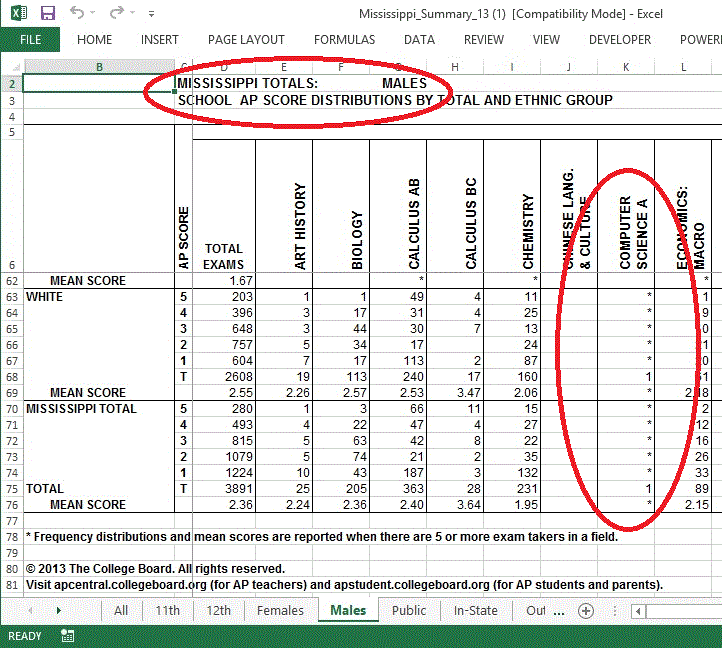
theodp writes: "The biggest reason for a lack of diversity in tech," says Code.org's Hadi Partovi in a featured Re/code story, "isn't discrimination in hiring or retention. It's the education pipeline." (Code.org just disclosed "we have no African Americans or Hispanics on our team of 30.") Supporting his argument, Partovi added: "In 2013, not one female student took the AP computer science exam in Mississippi." (Left unsaid is that only one male student took the exam in Mississippi). Microsoft earlier vilified the CS education pipeline in its U.S. Talent Strategy as it sought "targeted, short-term, high-skilled immigration reforms" from lawmakers. And Facebook COO and "Lean In" author Sheryl Sandberg recently suggested the pipeline is to blame for Facebook's lack of diversity. "Girls are at 18% of computer science college majors," Sandberg told USA Today in August. "We can't go much above 18% in our coders [Facebook has 7,185 total employees] if there's only 18% coming into the workplace." -
Yahoo Shuttering Its Web Directory
An anonymous reader writes You may or may not remember this, but before the advent of reliable search engines, web listings used to be a popular way to organize the web. Yahoo had one of the more popular hierarchical website directories around. On Friday, as part of its on-going streamlining process, Yahoo announced that their 20-year-old web directory will be no more: "While we are still committed to connecting users with the information they're passionate about, our business has evolved and at the end of 2014 (December 31), we will retire the Yahoo Directory." -
Yahoo Stops New Development On YUI
First time accepted submitter dnebin writes Yahoo announced that they will cease new development on their javascript framework YUI, bowing to industry trends towards Node.js, Angular, and others. The announcement reads in part: "The consequence of this evolution in web technologies is that large JavaScript libraries, such as YUI, have been receiving less attention from the community. Many developers today look at large JavaScript libraries as walled gardens they don't want to be locked into. As a result, the number of YUI issues and pull requests we've received in the past couple of years has slowly reduced to a trickle. Most core YUI modules do not have active maintainers, relying instead on a slow stream of occasional patches from external contributors. Few reviewers still have the time to ensure that the patches submitted are reviewed quickly and thoroughly."