Slashdot Mirror
Domain: utah.edu
Stories and comments across the archive that link to utah.edu.
Comments · 688
-
Re:P-hacking
Like weather predictions of 30% chance of rain at 2 pm, did it actually rain 30% of the time?
That sort of research is done all the time. Usually it's on far more specific parts of weather models than the overall model. Weather models are ridiculously complicated, and scientists spend a lot of time on minor components of them like modeling aerosols better since they form the nuclei of clouds and thus rain, or the vertical humidity profile, or boundary layer dynamics. There are so many minor processes that make up weather that most of the research effort goes into things that 99.9% of the population never will even know even exist. In conjunction, all of these things will be what predict rain or temperature at a certain time.
However, once in awhile someone revisits the models as a whole, and you get something like this: http://www.inscc.utah.edu/~pu/...
For hurricanes in particular: http://science.sciencemag.org/...
(If you want the pop journalism coverage of that article: https://www.theatlantic.com/sc...) -
Re:Not asking the right questions
First, there is not much doubt that in the far future humans will drastically modify species including their own
We started that 10,000 years ago when we started selectively breeding for farming.
For example, the ancestor of corn looks absolutely nothing like the plant we farm today. And the plant we farm today can not exist without human intervention (a cob that falls to the ground will produce a ton of offspring right next to each other, and none of them will be able to grow enough to produce another generation.)
So, your framing as "the distant future" is not accurate. The tools changed over the millennia, but that doesn't mean we were not doing it. And no, it is nothing like a "long-term qualitative shift". It utterly alters the plant/animal, to the point where it can not exist without us and its nutritional content is radically different.
And that's not even discussing chemically-driven or radiation-driven natural selection. (The products of which are not legally GMOs, despite "blasting it with gamma rays and see what happens" is modifying the fuck out of the genome)
Once GM food is ubiquitous, maybe animals will be modified next
Again, you're a few millennia too late. Dogs vs wolves/wild canids, Pigs vs boars, Cows vs whatever went extinct after we domesticated cows.
and then humans
We've been doing that too. There's a hell of a lot of human features that do not make sense and are not seen in the "natural world". Like boobs. Human females have them for their entire life after puberty. Chimps and other close relatives only have appreciable breast tissue while breast-feeding. Every other mammal is similar to chimps in this regard. And lifelong boobs are not better at feeding children. So they probably came from artificial selection.
If you combine all those points, especially the third and fifth, then it seems that not being too liberal about GM technology and thinking this through in a bit more detail could be advisable
Your evidence that this "thinking though" did not happen? You not hearing about it isn't evidence. There actually was a good amount of study with test plots and measuring hybridization with wild types before widespread planting.
This experimentation inherently requires participation of the producer of the GMO - they have the seeds. USDA and FDA reviewed the results (in the US).
They also are lobbying very intensively against labelling GM food
So, my problem with this particular piece of the argument is you leave out that "Big Food" is on both sides of the GMO debate. And the fight over labeling exposes that.
A "GMO Free" label is easy to apply. You aren't forcing someone to do what they do not want to do - they're already happily growing without GMOs anyway.
A "GMO Free" label could follow the path used to create the "Organic" label - industry sets up a trade group to come up with standards, growers started following those standards, and pretty quickly the industry standard became a legal standard. Because everyone who was already doing it wanted the label and the extra money that came from it.
So why not do that with a "GMO Free" label? Money. Consumers who are afraid of GMOs can only buy products labeled "Organic" to avoid GMOs. And the profit for Organic is higher than the profit for conventionally-farmed non-GMO crops, but only as long as you give consumers a reason to pay a big premium....like avoidance of GMOs.
Forcing a "Contains GMOs" label created a fight with GMO producers, because they didn't want it. That fight helped amplify fears over GMOs and drive those consumers towards Organic. This fight delayed putting on label on the products that would give the consumers the information the fighters claim to want. The lack of a "GMO Free" label tells you it has
-
Re:what do I know?
It's just a hex viewer, you can already see the instructions if you know their code number.
Reminds me of the The Story of Mel
-
Re:Who knew?
German is completely bonkers with its articles.
-
Re:What kills me...
I'm a long ways from a germophobe but a very significant part of their job is working with people with all sorts of infections and diseases, there could be anything on those things... I'd rather not get a staff infection because a nurse brushed up against me while I was waiting in line for a sandwich at lunch time.
Why worry about that when you can worry about every fourth person around you? Your staff has staph, their staff has staph, the lunch staff has staph...
I know but if scrubs were able to "prevent bugs being passed around" I'd feel a little better standing by these people.
Yes, because "everything must be sterile" has worked so well for public health so far.
-
Re:SighFrom http://learn.genetics.utah.edu/content/basics/patterns/
people observed dominant and recessive inheritance patterns before anyone knew anything about DNA and genes, or how genes code for proteins that specify traits.
The critical point to understand is that there is no universal mechanism by which dominant and recessive alleles act. Dominant alleles do not physically "dominate" or "repress" recessive alleles. Whether an allele is dominant or recessive depends on the particulars of the proteins they code for.
-
Counter-intuitive: telomeres increased?
If you read up on telomeres, e.g. here http://learn.genetics.utah.edu... you learn that telomeres are shortened for every DNA copy (which occurs at every cell division). The report states that the telomeres increased in length while in space. Two completely different thoughts crossed my mind:
1) Staying in space may thus decrease the cancer probability (alternatively increase life expectancy)?? Quite counter-intuitive considering the bombardment of ionizing radiation from space.
2) How on earth (pun intended) can the telomeres GROW? What is the mechanism for that? Do they grow in absolute sense, or didn't they just decrease as much compared to the twin?Either the article is wrong/misinterpreted, or there is a mechanism to be discovered (?) that prolongs the telomers. The latter sounds like an ingredient in the water from the fountain of youth...
-
Re:Some questions
1. Is waterboarding torture?
2. Has waterboarding ever extracted useful information?
3. What great harm does waterboarding do to those performing it? Please provide some factual info, not just your opinion1) Yes
2) No
3) See belowhttp://trauma.blog.yorku.ca/20...
https://www.psychologytoday.co...
https://www.law.utah.edu/effec...
"In 1986, psychiatrist Robert Jay Lifton interviewed Nazi doctors who participated in human experimentation and mass killings. Lifton concluded that after years of exposure, many of the doctors experienced psychological damage similar in intensity to that of their victims. Anxiety, intrusive traumatic memories, and impaired cognitive and social functioning were all common consequences."
-
Re:What's what WOL is for
Here's my implementation, which uses a bit of circuitry to work around the NIC's behavior.
Here's some prior work that I found out about after I'd made mine, which is much simpler because their NIC apparently deasserts the wake output after some time.
-
Re:User data to valuable to opt out
:-) Maybe it only works on Slackware (or just use pkgtool).
-
Re:Denier trolls will spam this article
It was warmer than now during the early parts of this interglacial (source: Marcott et.al 2013).
Bullshit, Marcott says no such thing. Kindly indicate where in this paper you imagine claims that, because nothing there says it exceeded 0.4 +/- 0.1 C over the 1950-1990 baseline, whereas current temperatures are almost 1.0 C past that.
So yeah, there's no evidence that currently-sited coral reefs had to deal with anything like the sort of sustained temperatures we're seeing today, but there's good evidence otherwise. Of course, when temperatures actually were warmer in the long-distant path, coral reefs could easily have existed in higher latitudes - just not where they are today.
-
Re:Very poor example.
Can't have a discussion about the German language without referencing Mark Twain's The Awful German Language: https://www.cs.utah.edu/~gback...
-
Re:20,000 years ago
Marcott et al 2013 - see for yourself. Temperatures rose until about 10,000 years ago, stayed fairly stable for a few thousand years, and have been cooling at increasing rates for the last 7,000 years - up until humans took matters into their own hands.
-
Re:Stupid
I see you still don't actually know what a Fourier transform is.
What is anti-aliasing if not providing data that's not actually there?
http://www.sci.utah.edu/~csche...
When used with the BBM equation, it can do predictive error-correcting. I know this because I am friends with both of the "B"s in BBM.
-
Re:I completely agree.
How about we do one better and look at the data instead?
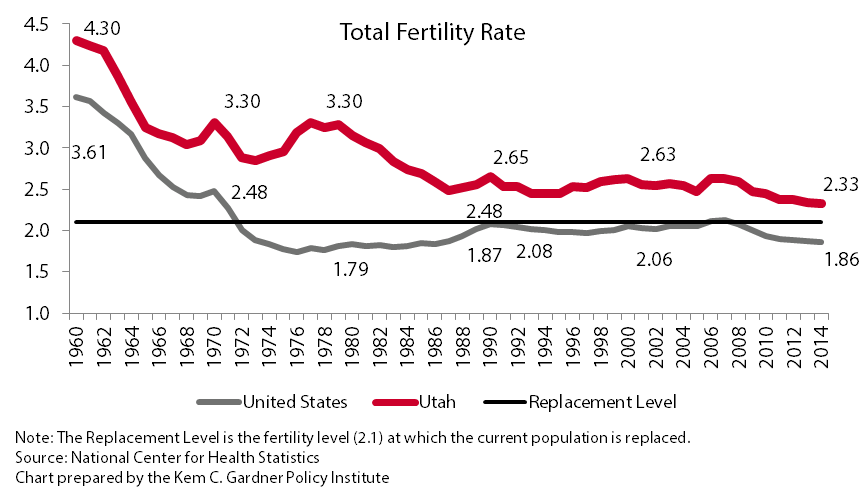
Fertility rate in Utah has dropped from 4.3 children per woman 60 years ago to 2.3 today and still falling.
-
Re:I'd like to...
Some perspective, people; we've had encryption in use for over 40 years, and the actual amount of people using it to escape prosecution is almost none.
Encryption has been around for much longer than 40 years!
"The earliest known text containing components of cryptography originates in the Egyptian town Menet Khufu on the tomb of nobleman Khnumhotep II nearly 4,000 years ago."
-- "Past, Present, and Future Methods of Cryptography ", http://www.eng.utah.edu/~nmcdo... -
Re: Raw data? Methods?
Here, let me get you started... A nice climate archive to start https://www.ncdc.noaa.gov/cdo-... If you want to do some validation checking you can go through all the individual stations and check the data. One place is: https://www.ncdc.noaa.gov/data... Another if you don't trust NOAA and want the absolute rawest data: http://mesowest.utah.edu/ Some of your questions on why certain corrections were made are explained here: https://www.ncdc.noaa.gov/moni... And I find it incredibly sad that you think very little science has been done. That couldn't be further from the truth. Take the time to read some papers and do some of your own independent research.
-
Re:"Jobs was a salesman." -- Seriously?
That's what state-of-the-art of the window systems were in the late 1980's.
http://ftp.math.utah.edu/pub/t...Compared to the early desktop PC's back then, the high-end print workstations that ran PostScript natively in true-color 24-bit mode window display. Hundreds of fonts to choose from of any size and italic slant angle, and in any size. What-You-See-Is-What-You-Get was the rule with a color laser printer. Steve Jobs had attended a talk on display systems and fonts and saw that as the future. Instead of having 50+ different binary files of the same font, each at a different size, a font engine could store a single font, and generate the character bitmaps on the fly only when needed.
Previously, everyone else had to either hand-draw everything or use Letraset catalogs and buy individual fonts at a particular size on transfer sheets, light boxes, stanley knives, scissors, colored filters and any other arts/crafts tool they could find. Early film special effects involved physically editing the film frames on a editing table.
-
Re:GOOD GRIEF!
And yet, the research. Maybe high-fructose corn syrup has more differences than just the fructose/glucose levels?
Yes, let's talk about "the research." I've been following this fairly closely for a decade.
About a decade ago I got into an argument with a friend over the overconsumption of sugar. I, like you, assumed with all the bad press about HCFS (even back then) that it was terrible for you. So, I started looking for reliable, clear studies that proved it.
The problem was: THERE WEREN'T ANY. Since then, there have been a few, but given how many people are shouting about how terrible HFCS is, it seems surprisingly hard to prove it.
Let me summarize the state of current research:
(1) Pure fructose vs. glucose -- there are dozens of studies showing that pure fructose screws up metabolism in rats and humans much worse than glucose.
(2) Pure fructose vs. sucrose -- there are dozens of studies showing that pure fructose screws up metabolism in rates and human much worse than sucrose.
(3) HFCS (~50/50 mixture of fructose and glucose) vs. sucrose -- until about 2010 and that Princeton study, there were basically NO STUDIES that showed a statistically significant difference between consumption of HFCS vs. sucrose (table sugar). To the contrary, there are at least a dozen or so studies out there if you look where they tried looking for a difference and didn't really find one.
This surprised me, given what I had been told about HFCS, but it also makes sense given that HFCS is basically about 50/50 fructose/glucose, which is very close to what sucrose becomes very early in the digestive process.
The vast majority of people who are shouting "HFCS is terrible!" tend to cite the studies in categories (1) and (2). You did precisely that in your quote from the Journal of Clinical Investigation. A number of studies in the past which tried measuring pure fructose and found significant differences found that there were little to no measurable differences when they substituted HFCS for the fructose.
I'm very interested in the studies in category (3). They include your Princeton citation, as well as a more recent study out of the University of Utah. There was also a bit of attention given to recent population-based study which claimed to find a correlation between diabetes and HFCS availability in different countries. (These sorts of population studies are always notoriously difficult to do well statistically, since there are always a ridiculous number of confounding factors, but I mention it because it's one of the few such things out there.)
The problem is that these HFCS studies are fighting an uphill battle -- as I said, prior to 2010 there were studies that measured HFCS vs. sucrose and tended to find no significant differences. Which also leads to the question now about whether the Princeton and Utah studies could be an example of publication bias -- we only tend to see them because those studies show an effect which hadn't been observed previously, but perhaps those effects are due to random chance or unintentional changes in study design. (And since HFCS had been branded as bad long before any rigorous scientific evidence was available, there are probably a lot of groups looking for effects... and yet we only have 2-3 studies.)
Despite what the powerful corn lobby in the US would have you believe, corn is just not all that good for you in large amounts. And with the amount that goes into HFCS, drinking soda pop is getting corn in large amounts.
Absolutely.
To be clear: I think HFCS is terrible, and the whole corn growers industry needs to be rethought, since our agricultural subsidies for corn are distorting the economy and
-
Re:Impossible with #6 or lesser shotgun shot
"The speed at which a projectile must travel to penetrate skin is 163 fps and to break bone is 213 fps."
I can keep this up all day. Vague references to your so-called "hunting experience" don't trump actual data.
-
Re: Passed data with a ton of noise?
Consult the relevant pages from the best book on electronic noise and how to get rid of it.
Noise Reduction Techniques in Electronic Systems by Ott. -
rip oskit
http://www.cs.utah.edu/flux/os...
so cool back in the day, but it didn't really take hold for some reason. too bad.
-
Re:Welcome to Fascist America!
"When we look at the last 6,000 years, the impact of human activity on our climate is unmistakable. There are no major large natural cycles over the last 6,000 years
I have little doubt that it is. So what? It is also INconsistent with even the IPCC's early temperature reconstructions. It also "conveniently" leaves out the MWP and the Little Ice Age...
Good grief. After Jane objected to my statement that "Dr. Hayhoe is presenting mainstream science," I showed that Dr. Hayhoe's statements are consistent with those from the NAS and several peer-reviewed papers. I also showed that Dr. Hayhoe's statements were more accurate than Jane/Lonny's repeated claims about the last 6,000 years.
As usual, in response Jane simply ignores all that and jumps to the next regurgitated contrarian talking point. Jane seems to have abandoned his objection to my statement that Dr. Hayhoe is presenting mainstream science. Now, Jane is claiming mainstream science itself is inconsistent.
Once again, Jane is fractally wrong. Long ago, I shared an IPCC graph of temperature reconstructions. Note that the axes of these temperature reconstructions are labeled with actual numbers. Despite Jane's claims, Marcott et al. 2013 isn't inconsistent with IPCC reconstructions, and both Marcott et al. and the IPCC show the MWP and the Little Ice Age.
Why does Jane dispute this? Asking Jane for a link is unpleasant and unproductive, but Jane seems to be confusing the IPCC 1990 Fig 7.1(c) hand-drawn cartoon with an actual temperature reconstruction. Note that this cartoon cites two papers, both of which are mainly about the climate in Europe, and notes "... it is still not clear whether all the fluctuations indicated were truly global...".
Why is Jane surprised that an actual global temperature reconstruction from 2013 isn't identical to a hand-drawn cartoon from 1990 which appears to be mainly based on temperatures in Europe rather than the globe? Maybe Jane's surprised because he used to cite the "Wegman Report" before he realized they had blatantly misrepresented this cartoon by (accidentally?) adding numbers to the scale and redrawing the curve to make it look less like a cartoon.
But Wegman's (accidental?) "mistakes" don't change the fact that it was a hand-drawn cartoon mainly based on temperatures in Europe rather than the globe, and that its axis wasn't labeled with actual numbers.
It's strange that Jane confused this unlabeled cartoon with an actual temperature reconstruction, because Jane often criticizes graphs with no numbers and no labels on th
-
Re:Typing
The QWERTY layout has been around for 140 years.
So it will be around forever? Like trebuchet's and catapults?
No, it'll be around forever like the lever, button or trigger.
You can make a better crossbow and call it a gun, but the hardware we interact with (e.g., the trigger) will stay the same as long as the hardware we're made of stays the same.When you find the right human-object interface, you stick with it. Computers will be replaced; keyboards will stay the same. If we're lucky, the layout will change when people find an optimally healthy one that balances speed and reduced RSI risk. However, an array of easily-reachable, tactile buttons isn't going to be beat by an array of smooth buttons you have to stare at while using.
And no, we won't see neural interfaces providing faster input than keyboards in the near future because our brains can't think creatively and focus hard enough to constrain our output to some neural HMI at the same time because 98% of People Can't Multitask
-
This isn't new, NVIDIA is working on it too
Googling the JEDEC document number JESD235 from the article found several references with NVIDIA talking about this for 2 years now for their Pascal series of chips after Maxwell.
future-nvidia-pascal-gpus-pack-3d-memory-homegrown-interconnect
http://en.wikipedia.org/wiki/High_Bandwidth_Memory
http://www.cs.utah.edu/thememoryforum -
Re:Remember...
They had computers everywhere too.
http://www.lib.utah.edu/img/ar...
https://design.osu.edu/carlson...There were enough of them to create things like this
http://ursispaltenstein.ch/blo...
And the military was already using computers by the roomful to control even bigger rooms of CNC machines:
-
Re:Current Cloning Problems
At the moment, natural-born animals have fewer complications throughout their lives.
Keeping track of pedigrees is arguably more important now that clones are starting to show up.
Horses are expensive; who wants to lay out $10K (or more) without some assurance that your horse will live a heathly life.See problems with animal cloning:
http://learn.genetics.utah.edu...That's only discussing a single outdated method of cloning.
-
Re:Weak, sentimental, nonsense.
"(i.e., a perfect copy of a previous, 'natural-born' horse)" - it's not that. Not at all. Even if the horse lives, and seems to have a healthy life, and breeds...its children could have problems. Or maybe the clone will just be fine for 5 years, and suddenly have problems.
Your dna
-
Current Cloning Problems
At the moment, natural-born animals have fewer complications throughout their lives.
Keeping track of pedigrees is arguably more important now that clones are starting to show up.
Horses are expensive; who wants to lay out $10K (or more) without some assurance that your horse will live a heathly life.See problems with animal cloning:
http://learn.genetics.utah.edu... -
Re:It probably IS the NSA
To make the current hate-spewing-fad even funnier in its ignorance, Slackware Linux doesn't even use SysV-style init, they use BSD-style.
Last I checked, slackware did use sysvinit for its init process, just without SysV-style init scripts. Let's see, hmm, there is actually support for SysV init scripts, and it sure looks to me like there's a sysvinit package.
And Gentoo doesn't use either.
Uh no. Guess what? OpenRC doesn't replace your init. Gentoo does use sysvinit, with OpenRC.
roflcopter!
I guess what makes the roflcopter go around and around is that you're laughably ignorant, and complaining that others are ignorant about the very things about which you're currently displaying your ignorance.
-
Re:first country to allow?
Unless it is to cure disease...
http://learn.genetics.utah.edu/content/genetherapy/gtsuccess/ -
Re:...and...
-
Re:good question
The situation is really pretty dire. Even back when PocketPC devices were in their 'best case' period for hobbyist tinkering(ie. fairly current, available either new or nice and cheap used), the Linux ports were rough.
The onboard flash was usually eccentric enough that you could only run Linux from CF or SD, some devices you still had to boot to WinCE every time and use a program that did some clever memory twiddling to kick the device over to Linux(something like the DOS Linux loaders that had their uses back in the day, though I'm not nearly qualified to discuss the details; but the concept and use were similar).
Peripheral support(especially graphics) was also generally atrocious, makes today's proprietary-blobs-for-one-antique-android-version mobile GPU situation look like some kind of Stallman Valhalla. With the right witchcraft, some models could at least display stuff on screen, some 'ran linux' in the sense that a linux kernel running on the device could be made to chat over the USB dock or a serial header; but not much else.
Since that time, the sites, documentation, writeups, tools, and projects have substantially rotted. With the hardware supply dwindling and Android devices cheap and common(or expensive and fairly classy, if you prefer) virtually all the developer, tinkerer, power-user, and other useful people have moved on. At best, you might still be able to dig up copies of files and docs that aren't just broken links; but that's about it.
WinCE software (while that has its own limitations, like being WinCE software) is actually likely to be markedly less painful. It's not exactly still on the market; but the value of used/new-old-stock/not-yet-linkrotted/etc. WinCE software is close to zero, so you can probably score some with sufficient scrounging. Plus, while MS certainly doesn't give a damn about supporting you anymore, 2005-2007 wasn't all that long ago, so you can probably get a full WinCE dev environment, exactly as MS would have recommended, with nothing more than a bit of piracy and an XP VM with USB passthrough.
Lest this all seem doom-and-gloom; I do have one useful recommendation: Pocket Putty. Exactly what it sounds like. Everyone's favorite Windows SSH client; but for Pocket PC. There's also a VNC Viewer. Never could find any X11.
At this point, pretty close to useless as standalone devices(and yes, the batteries are probably shot in any case, Li-ion is born to die); but between Putty and VNC you might actually be able to get some nice little 'dashboard' style display screens tethered to a more capable computer(possibly even use them as 'heads' for the routers, NASes, etc. that run Linux properly and have USB ports; but don't have graphics output: even something with no physical graphics hardware can, if it has the RAM, run xvnc, which would allow you to use a pocket PC with VNC client as a 'monitor'. Not something you'd want to do video playback on; but a nice little bandwidth graph, or some alerts or something? Sounds fun.
(Also, you mentioned SIRFStar III GPS units: you didn't say if those were built in, CF/SDIO expansion, or some proprietary 'cradle' thing: in any case those are very, very, well supported by practically everything, common, reasonably well regarded, spit NEMA strings over something that looks like a serial port, sometimes 3.3v, sometimes 5v, sometimes actual RS-232, sometimes USBTTY. Assuming that you can crack them out of their packaging and get the pinout right before you fry something, you should be able to use SIRFStar IIIs with damned near anything, with at most a serial level converter or suitable USB/serial adapter. Even if you have to junk the Pocket PCs, those might be handy to have.) -
Re: Okay, so this has what to do with fracking the
So what this has to do with fracking is that they thought that just pumping fluid back in would hold things up, but clearly that's not true.
That's not at all how it works. The fluid exists to create hydraulic pressure. They put sand or tiny ceramic balls in the water to fill the voids created by the fractures to "hold things up."
And the interesting part is that there are quakes and there are QUAKES.
Not just energy but location. The serious risk of quakes involves some darn
deep structures. Deeper than any well and with vastly greater risk to
life and property.Hydraulic fracturing and pumping waste to include CO2 into deep wells
can be expected to generate measurable seismic events. Some might
be felt without instruments.Recall the coal fire and collapse in Utah generated a 3.9 on the Richter scale.
http://www.seis.utah.edu/Repor...This is a far cry from the New Madrid quakes. http://en.wikipedia.org/wiki/1...
with magnitudes of 7.0 to 8.1.The seismic risk of the central US is not well understood and is not well considered in
building and construction codes. Also no large quake is well considered in disaster
planning. Worse the impact of a large mid-west quake has much larger geographic
reach than a similar quake in Alaska or California.Sadly the fracking fools will take this as a reason to stop fracking at any depth.
Most of the New Madrid seismicity is located between 3 and 15 miles (4.8 and 24.1 km) beneath the Earth's surface.
Most fracking in OK is shallow by comparison (1-2 miles).Some believe that shallow releases of energy is a good thing and minimizes the
size and impact of deeper quakes. I am of the opinion that injecting fluids
does not increase the energy of natural quakes but might alter the
timing and energy dispersal profile. My opinion like most is not supported
by experimental facts and is just that opinion.Hidden in the report is a disclosure of many seismic sensors and
plans to obtain funding for more. More science is good but the
social media and news outlet ignorance is being manipulated by
a plethora of interests one of which is network ratings where facts
are not an issue. -
Re:An obvious pseudoscientific scam
My Google-fu yielded only this: Paul McArthur's patent on a similar device, which makes it slightly more plausible that such a person at least exists. Maybe U of Utah knows more?
-
Re:On that note
Jane Q. Public wrote:
In order for it to be true, the average "microbe" would have to be incredibly smaller than the average human cell
Indeed: human skin cell = 30 um, red blood cell = 8 um, human X chromosome = 7 um, yeast cell = 3x4 um, mitochondria body = 4x0.8 um, E. coli bacterium = 4x0.6 um. (taken from this page found via a rudimentary Google search, zoom down to the micrometer range)
Human cells are pretty large, on average, and microbial cells are much smaller.
That doesn't make the cited factoid any more meaningful, but it is certainly not worthy of doubt based purely on the numbers (that is to say, there are certainly more atoms of calcium in your body than there are human cells, but does that mean that you are, in fact, a lump of chalk?).
-
Re:Shitty code
I don't know about that. Sometimes there is an inherent trade-off between being machine-friendly and human-maintainer-friendly. Tuning for machine performance sometimes gets in the way of high-level abstractions that make porting to a different architecture easier.
Reminds me a bit of the Story of Mel:
-
Re:I farted
I answer calls in my car all the time. Sometimes it's from the wife, sometimes a job. If you can't drive safely while holding a phone to your ear, you don't deserve to be on the road. There are distractions everywhere.
Police car over there, make sure I'm driving ok. Ambulance siren; where is it? Do I have to change lanes? Damn short green arrow, maybe I can floor it and make it through. Hey, I like this song. "Sweeeeet Hoooome Alabama" So, when that girl last night looked at me, I should have said
And on and on.
If you are getting in accidents because you are talking to someone who isn't in the car with you, stop driving.
And, no, none of my accidents have been because I was on a cell phone. Or drunk/high.
The thing is, there have been studies that show that talking on the phone while driving impairs the driver's ability. It's not a hands-free thing, or an I'm-a-great-multitasker thing, it's a brain processing thing. The brain cannot effectively split its attention between holding a conversation and driving attentively.
-
Re:Probably saved more lives with jamming
"There's a long list of reasons that a phone call is different from a passenger."
None of which has been actually shown to distract any more then having a passenger, or kids, or the radio, or a blond in a convertible drive by..Yeah, talking on the phone is only as bad as drunk driving. From the study: "We found that people are as impaired when they drive and talk on a cell phone as they are when they drive intoxicated at the legal blood-alcohol limit”. It doesn't matter if the call is made on the phone or using a hands-free set, having the conversation is the distracting part. From the article:
"The study found that compared with undistracted drivers:
Motorists who talked on either handheld or hands-free cell phones drove slightly slower, were 9 percent slower to hit the brakes, displayed 24 percent more variation in following distance as their attention switched between driving and conversing, were 19 percent slower to resume normal speed after braking and were more likely to crash. Three study participants rear-ended the pace car. All were talking on cell phones. None were drunk."
It is true that there are a lot of things that distract drivers and every time there is a cell phone thread this point is brought up. The world isn't black and white (distracting vs. non-distracting). There are differing levels of distracted driving depending on the activity performed. Tuning the radio is not as distracting as watching TV. Smoking is not as distracting as making icy margaritas. And talking to a passenger is not as distracting as talking on a phone (although talking to a passenger while driving is distracting). When laws are made to restrict driving, legislatures must balance taking away freedom with a compelling public interest. Obviously some states feel that the freedom to use your phone while driving is outweighed by the societal harm from drivers distracted by such activities.
With your sig, I am really surprised that you take this position. Long before Dunning and Kruger wrote their famous paper it was well known that nearly everybody overestimates their skill in driving (c.f George Carlin on "idiots" and "assholes"). Have you considered that maybe you don't drive as well as you think you do when you are talking on the phone?
-
Re:Oh Noes!
But there are third-party FTP servers run by trustworthy organizations that host it I'm sure.
-
Re:Don't delay too long
The real biological reason for women having a biological clock is because they are the ones who are supposed to stick around for 20 years to raise the child, and stick around as grandmothers for another 10. With a life expectancy of 70-78 years, that gives a 40-48 age for menopause. If they can't stick around to raise the child it's simply an exercise in waste and unnecessary pain.(Life tries to avoid such things, and sometimes it decides to enter into coma, and death, rather than drag through the raw cold turkey reality of pain. Most drug abuse is for similar reasons, can't take the relative harshness and reality of life cold turkey.) The males, are the discardable member of the species, do not have a biological clock. On http://en.wikipedia.org/wiki/D... you can read: "the three most significant factors in survival were age, sex, and the size of family group each member traveled with. The survivors were on average 7.5 years younger than those who died; children aged between 6 and 14 had a much higher survival rate than infants and children under the age of 6, of whom 62.5 percent died, including the son born to the Kesebergs on the trail, or adults over the age of 35. No adults over the age of 49 survived. Deaths among males aged between 20 and 39 were "extremely high" at more than 66 percent.[174] Men have been found to metabolize protein faster, and women do not require as high a caloric intake. Women also store more body fat, which delays the effects of physical degradation caused by starvation and overwork. Men also tend to take on more dangerous tasks, and in this particular instance, the men were required before reaching Truckee Lake to clear brush and engage in heavy labor, adding to their physical debilitation. " I got an Easy Home Body Fat Scale, for $15 at Aldi's, Model 91207, aldi-US@supra-elektronik.com. It sends a tiny bit electricity through your legs if you stand on it barefoot to display body fat, muscle mass and water content, the remainder being bone%, but I don't think they use variable frequencies, as ratio in low and high frequency impedances could give more information than the plain pie in the sky formulas, that give you a number, though not necessarily something that has anything to do with reality. You also have to enter if you're an athlete, in which case it uses a different formula, as it cannot properly distinguish between muscle and fat in the formulas, so it makes different assumptions for athletes. To get to the point, in the instructions it says women normally store 10% more fat than men. That extra body fat is what makes them the survivors of the species who can drag it out, and the men the discardable fighters or food/wealth suppliers. There is a baby in a womb or outside the womb, surrounded by the female, as a protective and nourishing shell, who is surrounded by a discardable male protective and nourishing shell, but often the male is not available, and it's okay, but if the female is not available, only in recent times it is OK, as men don't have to fight, and mothers can be druggies, and babies can make it without breastfeeding. At http://home.utah.edu/~msm25/Fu... it says: "A successful man is one who makes more money than his wife can spend. A successful woman is one who can find such a man." There are some other funnies there, too. By the way, keeping your eggs frozen means they can be stolen easily, and even replaced, and then you don't know who's eggs you're giving birth to. In fact even if you go with your own eggs, you never know if they have not all been harvested when you hit puberty, making you infertile, but guaranteed to be lab-bred later depending on how you behave in your life, or, a couple reimplanted back to let you get pregnant, and see what kind of a mother you are. But you never know if the child is really yours, some ancient true-enemy situation, or distant across the globe but genetically close relative, there is all kinds of games
-
Multitasking
The problem lies, in part, with what I guess you could call the aesthetic of multitasking. We love to think that we're good at it, but -- as research has proven over and over [warning: first link is a pdf download] -- we are actually really shitty at it. The same is true of driving. I remember as a kid riding in my dad's car, how he would try to change the channel on the radio, or do something with the A/C, and immediately start veering the car off the road. At stoplights, the minute he stopped thinking about it, his foot came off the brake and the car would roll out into the intersection.
I don't think fixing cars or cell phones is going to get to the root of the problem. The root is that people think they can do more than one thing at a time and not trip over their own damn feet. Since changing the culture seems out of the question, no amount of technological fixes is going to save us from trying to do more than we're cognitively equipped to do. -
Re:Translator?
-
Pi is wrong!
-
Re:Pshaw... it's just weather!
"It's possible that both the AGW deniers and AGW alarmists are wrong. Climate change could be real, but caused by natural factors that are out of our control, the same ones that have caused ice ages and warm periods in the past when carbon outputs were nowhere near as high as they are now."
The problem with this is that it is exactly what many of those so-called AGW "deniers" have been saying all along. [Jane Q. Public]
Exactly what who's been saying all along? Aside from all your short term "cooling/recovery" trends, you've smeared paleoclimate studies while making these uncited claims about the paleoclimate:
NOBODY in their right minds has -- and I certainly have not -- been arguing that the globe has not been getting warmer! That is not the issue and never was. The globe has been trending warmer for the last 6,000 years! The data are clear. Someone would have to be an idiot or totally uninformed to make such a claim. [Jane Q. Public, 2007-10-24]
Not quite 0.74 degrees, but yes it has warmed. So what? The earth has been trending steadily warmer for the last 6,000 years!!! [Jane Q. Public, 2008-06-22]
The trend over 5 or 6 THOUSAND years has been warmer. [Jane Q. Public, 2008-06-22]
I do not disagree that the globe is warming. That would be denying facts... the earth has been trending warmer for over 6,000 years! [Jane Q. Public, 2008-06-22]
Trying to prove to me that the globe is warming was a pretty silly thing to do. I do not dispute that the earth has been getting warmer, and never did! It has been trending warmer for the last 6,000 years! [Jane Q. Public, 2009-04-18]
We know the earth has been warming. It has been doing so for approximately 6,000 years. [Lonny Eachus, 2009-07-02]
Certainly the globe has been warming... it has been trending warmer for thousands of years. [Jane Q. Public, 2010-02-03]
First, people with at least half a brain -- including in the U.S. -- know the climate is getting warmer. It has been trending warmer for roughly 6,000 years, industry or not. [Jane Q. Public, 2011-07-17]
Jane and Lonny Eachus are wrong. According to Marcott et al. 2013 (PDF), the world has actually been cooling for most of the last 6,000 years.
-
Re:On whose planet?
I found the table of contents for that issue. Which article are you referring to?
-
What every programmer should know about undefined:
Everyone who cares about correctness of their C or C++ programs at all, should read carefully all of the following articles:
Dangerous Optimizations and the Loss of Causality (PDF)
Understanding Integer Overflow in C/C++ (PDF)
A Guide to Undefined Behavior in C and C++, Part 1 (blog post)
Finding Undefined Behavior Bugs by Finding Dead Code (blog post)
Then complain to your local compiler manufacturer.
-
Mary Hall at The University of Utah
I wouldn't call her advanced coursework easy, but a resource that belongs on this thread: http://www.cs.utah.edu/~mhall/cs6963s09/
Mary Hall is a professor of Computer Science. Her recent work is related to compilers and parallel programming on GPUs. Her professional web page is something like an on-line open course, or the framework of one. -
Re:Assembly programmer.
Each instruction contained within it the address of the next instruction--they weren't sequential--and "optimal assembly" was the process of calculating how long each instruction would take so that the next instruction could be placed at the right location on the drum that it would be almost under the head when the last instruction had completed. "Optimal assembly" was the memory placement aspect of it.
Please, a Real Programmer wouldn't even bother with a so-called "optimizing" assembler. Too inefficient. "You never know where it's going to put things, so you'd have to use separate constants."
-
Re:More objective would be welcome
What really makes it interesting is that different people can taste different things. In highschool while studying genetics we learned about a chemical that some people perceived as bitter, while other's didn't taste it at all (probably this one). So it's completely probable that a wine that one person might think tastes terrible is actually quite pleasant to others. Even if a wine doesn't have any bitter compounds, it's not unlikely that somebody like a wine taster might have a heightened sense of taste/small, causing them to taste good flavours which aren't perceptible to most people.