Slashdot Mirror
Domain: washington.edu
Stories and comments across the archive that link to washington.edu.
Comments · 1,905
-
Re:Sensationalism at it's finest...
We shouldn't even have ice in the arctic in summer at this point in time according to Mann, Gore and Hansen.
Northern summer sea ice volume has dropped 60% over the past 35 years.
But I wonder if you have misinterpreted projections of Mann and Hansen.
I notice Mann was an author on a paper about the Antarctic Ice Sheet, but I can't find the one about the Arctic Ice that your refer to. Do you have a citation? -
Re:I thought weather was not climate...
So the fuel just built up everywhere and then when something happens to ignite it, be it lightening or a cigarette, the little fires have a greater probability of becoming bigger fires. Time means more fuel, greater risk. Tick tick tick. So then after awhile we get these huge fires. What do those smart intellectuals do? Do they review their suggestions of the past? Take into account the bureaucratic BS that contributed to these fires? No! First, they smoke a bowl and later
Leaving aside your rabid ad hominem remarks about collectivism, your claim that increased fires are due to increased fire load has in fact been studied and discounted . In other words, those of us in the "reality-based community" (i.e. "libtards") are a lot more self-critical than you. Which is why we do science and you do politics.
-
Re:Facts are there
Heh, now you accuse me of not providing links to support the claims I didn't make
But if you like. A couple of studies (of many) predicting increases in wildfires due to climate change:
* Gonzalez et al 2010: Global patterns in the vulnerability of ecosystems to vegetation shifts due to climate change
* Moritz et al 2012: Climate change and disruptions to global fire activity
And a study (one of many) showing that climate is the dominant factor in the size of the wildfires we've been seeing:
* Littell et al 2009 Climate and wildfire area burned in western US ecoprovinces:
We demonstrate that wildfire area burned (WFAB) in the American West was controlled by climate during the 20th century (1916-2003)....For 1977-2003, a few climate variables explain 33-87% (mean = 64%) of WFAB, indicating strong linkages between climate and area burned.
By contrast, Mr Watts' "facts" are also nothing more than unsubstantiated declarations and assumptions, just like yours. A few random examples from your link:
* "This [CO2] percentage increase means nothing. Human CO2 emissions didn’t begin to rise significantly until after 1945": Keyword is 'significantly' - he claims the rise is not significant, but provides no justifications for this assumption, other than that the atmospheric percentage is "about as close to nothing as you can get" (it's a really small-looking number). No citations given.
* "...there is no way that this miniscule amount [of atmospheric CO2] can have any significant effect on climate." Another unsubstantiated declaration in his "facts" list. No citations given for this claim.
* "CO2 also lags short-term warming [historical graph] showing that warming causes rise in CO2, not the other way around if CO2 was the cause." - Incorrectly assumes that CO2 must either be a cause or an effect, but could never be both. No citations given for this "fact", either.
* "...global climate marches in lock step with sun spots, length of the sun spot cycle, and intensity of the solar magnetic field... total solar insolation (TSI) correlates very well with climate". Once more, he just claims this as a fact, with (wait for it) no citations given.
* "HadCRUT4 temperature curve showing that 56% of the warming since 1895 occurred prior to 1945"... according to his arbitrarily-drawn red lines. The HadCRUT4 temperature graph may well be accurate, but (of course) he provides no citation for any peer-reviewed source for his claimed "56% of warming" cut-off point (looks to me like the red line that claims to show this is just drawn to the peak of the biggest short-term fluctuation he can find, without regard to averages or trends or anything).
I could easily go on, but I have work to do. If Watts' unbacked assertions are what you consider "facts", then it's no wonder you usually don't bother to link to them.
-
Photographs of Kildall plaque dedication
Some photographs of Friday's dedication of the Kildall plaque in Pacific Grove CA are here: http://news.cs.washington.edu/...
-
Re:Or you can just use your cell phone
It's not just an "app". It requires an external lens that you stick on the phone's camera.
-
Re:Fad theories of health nuts
plenty of hard clinical studies showing no link whatsoever between free radicals and cancer
Whoa, whoa, slow down there. Free radicals, usually reactive oxygen species, are some of the most reactive molecules known. They can and will destroy any organic material they come across. Especially DNA. Lengthy PDF and a paywall, but hey, its far more studies than you actually cited.
(opinion starts) That said, I'm not going to argue that antioxidants actually will have some significant effect against aging. You can't just flood your body with enough antioxidants to really slow down aging, without causing other harm, such as compromising your immune system.(opinion ends)
-
Re:That needed a judge?
http://dmca.cs.washington.edu/...
When I said my IP address will pin point me, it was if it were a legal situation. I should of been more specific; I didn't RTA, just the headline. A whois of my IP address will always show the wrong city as well as the wrong county, no proxie just my connection.
PDF was a good read, while 6 years old it had this:
"We also attempted to frame two IP addresses for which no machines were associated; these IP addresses were not remotely pingable and we did not receive any complaints for these IP addresses".
Yet another reason to disable Ping.
-
Re:That needed a judge?
-
Re: Well for once I agree with religious crazies
Soil temperature on Mars has been measured at 81F during peak summer.
-
Re:flow = pressure/resistance
There are already numerous water transportation aqueducts all over that region.
And the combined flow rate is? Furthermore, how long are those aqueducts. What is their destination?
Your forgetting this is already being done from other states.
Which other states? The watery paradises of Arizona and Nevada? If there is something like that, I'm sure it's being used with as much care for conservation as Owens Valley.
looking at how it is already done
I never said it couldn't be done - I said it shouldn't be done.
My real mistake was in assuming that (some people in) Oregon would be foolish and short-sighted enough to do this. If nothing else the water could be be used to irrigate Oregon's high "desert" (actually a semi-arid region, about the same as the Sacramento Valley, and wetter than the San Joaquin Valley). But even as far as existing economic activity is concerned, it's best to consider long term issues. From Tree-ring data reveals multiyear droughts unlike any in recent memory:
Extended periods of low flows include a 12-year drought starting in the 1840s, a severe drought in the 1930s, and four periods of low flows in 1775, 1805, 1890 and 1925. The half-century following the Dust Bowl of the 1930s, the period during which most of the dams and operating rules on the rivers were developed, was anomalous for its relative absence of multiyear droughts.
Farmers, hydroelectric power producers, shippers and wildlife managers remember the Columbia River Basin drought of 1992-1993 as a year of misery.
-
There's some ubicomp work on this...
See below:
http://ubicomplab.cs.washingto...
The basic premise before was to detect a camera's CCD (it is retro-reflective), then blind it with a rapidly-changing sequence of bright light from a projector to prevent the camera from compensating. Might not work with modern cameras, and might be in-feasible in your environment, but there's the info.
-
Re:Embedded uses something different anyway
Startup speed is simply not an issue anymore. Your typical server is supposed to be up most of the time, your typical desktop or mobile device is sleeping or suspended when it's not running, and your embedded device only has very few services that it needs to start, to the point where even SysV init is overkill and you're better off with rc.conf or something similar.
That's incorrect.
The big excitement in servers is Elastic Compute. There, you do want servers that can boot up and shut down as quickly as possible, to handle varying demands. It seems that even Linux is considered to take too long, so some Linux kernel maintainers are making their own cloud OS that boots up even faster.
Desktops and mobiles do reboot sometimes. Fast booting was a major selling point for Unix during the age of The UNIX-HATERS Handbook. A bigger benefit for modern PCs is how systemd uses sockets and cgroups to control program state. And I thought the thread was about embedded.
There is more than one type of embedded device. In particular, I am annoyed at how home routers have progressed from, for example, the Netgear WGT624 which took about 15 seconds to boot, to now the Netgear R6300 which takes over a minute to respond to PING, and I'm not sure how much longer until it's fully functional. Sure, once it's configured and running, it's nice, but a typical setup could take several reboots and cause a lot of wasted time.
The R6300 has 128MB of flash and at least 128MB of RAM. That's a lot. Surely it can hold systemd.
-
Re:Seriously?
12 divides evenly by 2,3,4,6 and 60 is divisible by just about every integer in the book. Base 10 just because humans have 10 fingers? That's embarrassingly anthropomorphic. It's as ridiculous as setting your measurement system as a lump of metal instead of an abstract unit. Oops...
-
Re:If they can...
"So you are turning off and removing the battery from your Cell Phone? No?"
Pretty soon, that won't matter either, with MIT developing wireless radios that rely on nothing other than power from the wireless signals floating all around us. That's why I use a Faraday Bag to put my devices in when I am not actively using them.
"And you are worried about your CAR?"
There, FTFY.
It's still my car. If I want my car's exact speed, location, route and destination being sent to anonymous, random strangers sharing the public roadway with me, I'll be the one who authorizes that data being sent outbound, thank you very much.
"They ALREADY can track you, even with out a warrant. It's called a stakeout and tailing somebody. They can watch you in public, any time they wish, no warrant required."
The major difference here, is that we can track them as well, and they aren't allowed to continue to track you, follow you onto private property without a warrant. They're also not allowed to illegally attach GPS devices to your vehicle, but they're doing that anyway too.
See the problem here?
-
not really monopoles!
You should be thanking Alan Guth and the Gods of Inflation they didn't find actual monopoles. Those things are terrifying beasts! They eat protons like it's going out of style!
http://www.npl.washington.edu/... -
Re:People!
It means nothing of the sort.
There was no shortage of protein leading to cannibalism, that myth has been debunked for over 20 years.And Nat Geo never said the cliff dwellers were eaten by the Aztecs. There's not a shred of evidence that the Astecs ever made it as far north as new mexico.
-
Research, Lifestyle changes, and Specialists
There are a plethora of studies out there tying memory and cognitive function to various things, including diet, sleep, type of learning, etc... Being in my 30's I can empathise with the problem, I just don't seem to pick things up as quickly as I did in my teens and 20's. It's not drastic, but it is noticable.
Some foods have been tied to cognitive function. Read up a little bit here and here. Or do some googling for some more stuff. It's interesting that the traditional american diet of burger and fries is actually a hindrance to memory and brain function. Healthy eating is very important to every component of your life, I just wish I new that when I was in my early 20's.
Exercise is another thing that fuels the brain. I find that when I stop biking/running, my mood goes to crap and I have a harder time sleeping. As my exercise level goes up, everything else gets better. Plenty of research here to back it up.
Different people also learn things in different ways. Looking at learning styles may help you figure out what works best for you. One thing I learned in undergrad is you don't really understand something until you can:
- Define what it is
- Defend it's strengths
- Attack its flaws
In that same class, the professor told us that if we knew our stuff, there was no way he could trick us. I've applied that same test to those things I really want to remember, and I've found it works great. Repetition in Math never really stuck with me, but when I was finally able to reason about what the equation was actually doing, and understand the strengths and weaknesses (getting into applied math here), I found it was much easier to comprehend and work with.
You could spin your wheels for days trying to figure what works best for you, or to discover that there may be something else going on that needs treatment (i.e. ADD or something) before you're able to progress. It may be worth talking to your primary care and getting a referral to the appropriate specialist.
-
Re:Condescend much?
And it usually does, except for some of our basic units of measurement, which remain stubbornly stuck in the past. That's why it's an embarassment. The whooshing sound you heard is the point sailing over your head.
Umm, I'm pretty sure scientists have been working on the kilogram problem for some time. Your use of "stubbornly" implies that there's some sort of resistance to a redefinition. But I don't think there's any evidence that that's the case.
Here's a NYT article from 2003 detailing the then-current attempts at redefinition. I'm sure there are older things out there detailing the scientific efforts to work on this problem, too... this was literally one of the top three hits in an internet search.
Anyhow, in 2005, the International Committee for Weights and Measures formally recommended a redefinition. In 2011, the General Conference on Weights and Measures agreed. If you want to see all the proposed revisions, they are nicely summarized in a Wikipedia article here.
It may be somewhat true that the kilogram redefinition lagged a bit behind other units, mostly because the other units had practical applications where the need for increased precision was rising more rapidly. But given that the attempts to provide a standard measurement system are ongoing, and the proposed redefinitions make use of technology that is still being refined to maintain a high-enough level of accuracy to supersede the old standard, there's no reason to call this an "embarrassment" "stubbornly stuck in the past."
Scientists are actively working on the problem -- and have been for quite some time.
-
Re:How long until someone cracks the backdoor key?
According to Dan Shumow and Niels Ferguson's 2007 presentation, finding the private key e corresponds to solving one instance of the elliptic curve discrete log problem, which is believed to be a very hard problem indeed, and probably not even doable for a any current supercomputer.
-
Re:Machine code you fucking witless poser!
Educate yourself. Is it not embarrassing to fling all this poo only to find out you are wrong?
-
Re:Swords and Plowshares
...and they shall beat their swords into plowshares... That's what $14 Billion can buy.
Note that the estimated cost of a single nuclear attack by terrorists is between $250 billion and $1 trillion.
So never mind the electricity by-product; if this program kept nuclear weapons out of the wrong hands, then it was well worth it for that reason alone.
-
Re:But
-
Re:Quick and dirty analysis post.
Why does the created money chase the same goods, when there isn't a production capacity problem?
The Fed returns interest to the Treasury. So the govt borrows at zero cost.
The focus should be on innovation and the advance of knowledge, because that is what is likely to raise survival fitness the most by enabling us to predict and adapt to sudden catastrophic change. As long as we keep innovating, we can create as much money as we want.
In these times of unprecedented communication possibilities made possible by the internet, individuals on a Basic Income (funded with created money) can innovate on their own or in ad hoc collaborations (example). Individuals are better at disruptive innovation, biz is better at incremental innovation. (See http://depts.washington.edu/uwsis/overview/overview.html#background
-
Extremely variable sleeping periods
I wonder how well this accounts for the extremely variable sleeping periods of various animals? See http://faculty.washington.edu/chudler/chasleep.html .
-
Re:It's the future
I think I'll take the CDC as authoritative over wikipedia.
What you did is called lying through statistics, their are entire books and website about how to use statistics to lie like you did. I called you out on it, in fact here are some websites exposing the types of tactics you used.
http://www.amazon.com/How-Lie-Statistics-Darrell-Huff/dp/0393310728
http://cseweb.ucsd.edu/~ricko/CSE3/Lie_with_Statistics.pdf
http://www.stat.columbia.edu/~gelman/bag-of-tricks/chap10.pdf
http://faculty.washington.edu/chudler/stat3.htmlYour personal desire to make revisionist history doesn't actually change anything. You've even attempted revisionist history on my posting where I said the US hasn't bombed civilian centers since WW2. Your either deluded or so full of hate that you couldn't see the truth if it smacked you across the face.
-
Re:Missing the reality of what kids do to insects
Dude they're cockroaches, torture invovles the infliction of pain for gain, you are assuming they even feel pain. Each animal has a very different sense of what causes pain. If I've cut your finger nail it's nothing to you, your dog goes into whimper mode, yet if I grab a hemostat full of ear hair and rip it out you'll scream like your being murdered, but your dog will not even flinch! Also you're assuming we don't do it on people. Transcranial magnetic stimulation (TMS) was attempted by Silvanus P. Thompson back in 1910, and it has evolved into something that can allow a human brain-to-brain interface. Brain pacemakers and are being used more and more.
Hell you could a take a cockroach, cut off it's head and as long as you could jab a feeding tube down it's gullet, it would even die!
-
Re:Cockroach rights?
Don't like the story about the cocroach because you think you'll be next?
Too late, Researcher controls colleague’s motions in 1st human brain-to-brain interface, and you though watching support control your mouse pointer remotely was creepy.
-
Re: Bullshit!
Yes.
Also, ditto on arctic sea ice volume, which is a more meaningful metric
-
The climate conspiracy theorists are out in force.
It looks rather like the "global-warming-is-man-made-sound-the-alarms" people have been cherry picking
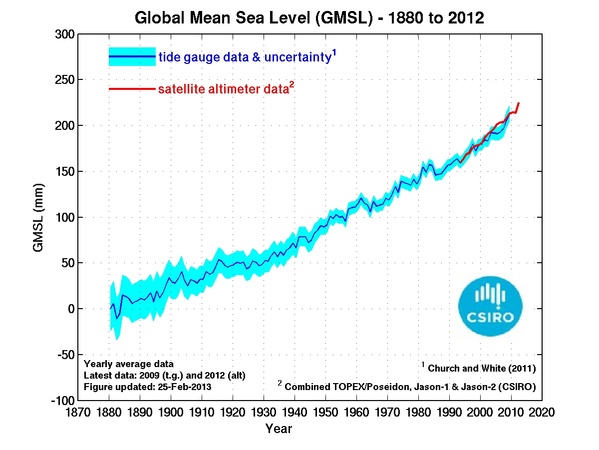
No, this is not cherry-picking. There's not question that the earth is warming due to the enhanced greenhouse effect. The oceans are expanding. The surface temperatures are increasing.
This paper looks at the response in the Antarctic Sea Ice, and has found a possible improvement to its understanding.
No cherry picking involved.Then when the temperatures did not support their theories, it was "well global warming causes extreme weather!".
It was always suspected that global warming would increase extreme weather events because hurricane intensity is highly related to sea surface temperature when they form, and more energy in the atmosphere gives more evaporation so heavier rainfall.
But the theories are thermodynamics, fluid mechanics and optics. They are not challenged if warming is only 0.1C per decade for a decade instead of the long term trend of 0.16C per decade.When THAT got disproven, it was "look-look-look, all the ice is melting!" Now that THAT part of the scam is getting clobbered by the earth itself, what will the GW people predict next?
The northern sea ice is in steep decline. The Antarctic Ice Sheet and Greenland Ice Sheet are in accelerating decline.
How on god's green earth do you manage to get to "THAT part of the scam is getting clobbered by the earth itself" for there?Carbon dioxide is NOT a pollutant. It is stupid to treat it that way.
You've not heard of the greenhouse effect then?
-
Re:We already hae better stoves
Here's a picture of the traditional stove. Truly inefficient, you can see plenty of wasted energy leaving out the sides. ok.
Here's a picture of the new stove they are considering.
The new one does look more efficient, but it looks like it costs 10 times more. Are people really going to buy it?
Ten times more? The first one looks free. Honestly this looks like yet another ivory tower project complete with a budget, interns, and computer aided engineering all to 'invent' something that has been around for ages.
This time it is the free-from-trash Hobo stove. I'll research the idea for half price, only 450k. Hell, I'll even send the Department of Energy a few samples, just let me find my old coffee cans....
-
Re:We already hae better stoves
Here's a picture of the traditional stove. Truly inefficient, you can see plenty of wasted energy leaving out the sides. ok.
Here's a picture of the new stove they are considering.
The new one does look more efficient, but it looks like it costs 10 times more. Are people really going to buy it?
Ten times more? The first one looks free. Honestly this looks like yet another ivory tower project complete with a budget, interns, and computer aided engineering all to 'invent' something that has been around for ages.
This time it is the free-from-trash Hobo stove. I'll research the idea for half price, only 450k. Hell, I'll even send the Department of Energy a few samples, just let me find my old coffee cans....
-
Re:We already hae better stoves
Here's a picture of the traditional stove. Truly inefficient, you can see plenty of wasted energy leaving out the sides. ok.
Here's a picture of the new stove they are considering.
The new one does look more efficient, but it looks like it costs 10 times more. Are people really going to buy it? -
Re:We already hae better stoves
Here's a picture of the traditional stove. Truly inefficient, you can see plenty of wasted energy leaving out the sides. ok.
Here's a picture of the new stove they are considering.
The new one does look more efficient, but it looks like it costs 10 times more. Are people really going to buy it? -
Re:visualizations to put these numbers in context
Arctic sea ice extent is still falling, not increasing. Best to wait until mid-October to be sure it is on the rebound. http://www.ijis.iarc.uaf.edu/en/home/seaice_extent.htm
Arctic sea ice volume may have turned around already. We won't know until the calculations are released around the end of September. http://psc.apl.washington.edu/wordpress/research/projects/arctic-sea-ice-volume-anomaly/
Arctic sea ice average thickness as fallen below the 2012 thickness at the end of August (same link) and could set a record low sometime in November. I'd say you are skating on thin ice when you are not careful how you put things, particularly when you are making absurd insinuations. -
Re:Useless academic is useless.
Been done, the answer is yes:
ftp://ftp.atmos.washington.edu/mantua/PDV/2002_Mantua_Hare_JO.pdf
-
Re:The Technology is Not New
The paper is up and there
Note that the range between 2 nodes (some feet) is comparable to RFID systems.
-
Re:Frequency vs. Distance
Getting and sending mail becomes less convenient. I'm a big USPS fan (clearly...), and the draws are convenience and personal contact, not speed.
Getting mail twice a week would suffice for me, but getting rid of the mailperson -- the one who hand delivers a letter door-to-door anywhere in the States, for under a dollar! -- robs the USPS of its charm.
-
Re:Affine
Possibly not for those particular use cases, but there certainly is already freely available software to do the "structure from motion" reconstruction trick; e.g., vSFM -- an easy(FSVO)-to-use frontend for a couple of tools from different research projects.
-
Re:Makes sense, fluid dynamics and all that...
-
Re:Mini-magnetosphere Plasma Propulsion?
This reminds me of M2P2 that was all the rage on this site a decade or so ago.
Looks like the Dr. Winglee kept up some research, but their page was last updated in 2011.
But, some pretty pictures, movies, and results from actual experiments.http://earthweb.ess.washington.edu/space/M2P2/
If you've never heard of this, the basics are to create a magnetic sail by trapping plasma in a magnetic field around a spacecraft.
Solar wind particles push against the plasma, which is able to expand the range of the magnetic field, and provide force to push the craft.
This is somewhat similar to the concept of solar sails, except the plasma expands outward (increasing surface area exposed to the wind) as the density of the wind decreases. This provides more force than a solar sail the further you are from the sun.Another benefit was the plasma and magnetic field are deflecting solar particles, so it can shield the occupants, much as this article describes.
From memory, didn't it turn out that the drag from the magsail was larger than push from the solar wind? In other words, it was a great technology for slowing down when entering another solar system but, since we don't yet have the tech to send a probe to another solar system, it was not worth pursuing.
-
Mini-magnetosphere Plasma Propulsion?
This reminds me of M2P2 that was all the rage on this site a decade or so ago.
Looks like the Dr. Winglee kept up some research, but their page was last updated in 2011.
But, some pretty pictures, movies, and results from actual experiments.http://earthweb.ess.washington.edu/space/M2P2/
If you've never heard of this, the basics are to create a magnetic sail by trapping plasma in a magnetic field around a spacecraft.
Solar wind particles push against the plasma, which is able to expand the range of the magnetic field, and provide force to push the craft.
This is somewhat similar to the concept of solar sails, except the plasma expands outward (increasing surface area exposed to the wind) as the density of the wind decreases. This provides more force than a solar sail the further you are from the sun.Another benefit was the plasma and magnetic field are deflecting solar particles, so it can shield the occupants, much as this article describes.
-
Re:data sample question
No, he is saying he doesn't know how accurate the measurements are. That doesn't mean they aren't accurate.
The researchers doing the work definitely know how accurate their measurements are.
The readings taken from ice cores are correlated with average global temperatures taken from satellites, ground stations, etc. Fluctuations in the average are reflected in fluctuations in the core samples. Seasonal variations are readily identified. Once that correlation is established, it is used for "hindcasting" where individual core readings are compared with known measured temperatures to prove the validity of the estimating technique.
Greenhouse gas samples trapped in the ice are similarly correlated with overall planetary gas levels. Methane levels measured in ice cores map very accurately to methane levels measured around the globe for the last 35 years. The uncertainty of the methane measurements has been determined to be accurate to within 10 parts per billion. Timeframe accuracy varies based on the age of the sample, but is accurate to within two years for dates since 1805 A.D. And current ice sheet data only goes back less than a million years, although there is an attempt underway to find 1.5 million year old ice.
The ice cores are not the only sources of historical climate data. Geological data reveals ice damage to rocks, the formation of glacial moraines, etc. Dendroclimatology measures the temperature by examining plant growth. Tree rings are often cited because many people are familiar with the concepts, but there are other ways to use plants to measure climate. The geologic record shows the prevalence of the types of plants growing at certain distances from the equator - the historical equivalent of USDA Plant Hardiness Zones. The edge of a range of a certain type of fast-spreading plant will indicate the minimum temperatures at which that plant would survive the winter. The age of the plants can be determined through radiocarbon dating. For samples that are less than 26,000 years old, calibrated radiocarbon dating gives an accuracy of no worse than 163 years. For older samples or fossils, sediment layers are used to identify the age of origin of the sample. These are calibrated by comparing the strata layer with other known events, such as volcanic eruptions, sea level changes, etc.
All these sources of data are correlated to give a bigger picture. Like anything else, it's messier the farther back you go. Certain studies will show wide variations, others will show narrow variations. And even though they don't always agree to within the exact degree, they all show similar consistent broad trends in temperature, gasses, and the effects.
Here are a couple of papers studying the accuracy of gas measurements in ice cores: http://faculty.washington.edu/steig/papers/recent/Steig_Annals_2005.pdf
and http://cdiac.ornl.gov/trends/atm_meth/lawdome_meth.html -
At least use alpine
It deals with UTF and other stuff you get in email nowadays... (I forget when this was added, but the A toggle to toggle between viewing the plain & rich/html parts of the message is handy too.. since I prefer to view the plain text, but sometimes have to view the rich/html part.)
-
A better approach...
I like this approach better. That was posted on Slashdot back in 2008.
-
It's a photogrammetry camera + computer in one?
It does 3D photogrammetry, a now fairly widely-implemented technique? How is this any different from having a decent laptop or desktop computer and a decent camera, and either tethering the two of them together (if you want real-time feedback) or shooting the pictures and plugging the camera or SD card into the computer and running it through the software? This gadget is relatively bulky too. It isn't as portable as having an un-tethered camera to take out in the field in places you wouldn't want to try to take a computer, and then bring the photos back to the lab or the car for processing. I don't know what the price is, but I wouldn't expect this to be an cheaper solution compared to buying a generic camera, computer, and the software to drive them.
I guess making a hand-held, all-in-one turnkey system is innovative. And having the motion capture at the same time is a plus. That might be the real innovation here rather than the static 3D models only.
-
Re:God fucking damnit Slashdot...
Here you go fuckwit! http://homes.cs.washington.edu/~klee/misc/slashdot.html
-
Re:Intractably horrible.
And, yes, we all know that the owner of an IP address is the actual user who is responsible for the copyright infringement. But it is usually very very good evidence.
Yes, that's why those despicable laser printers got accused of copyright infringement.
-
Re:Are sellers willing to make these models?
Recent technologies suggest that building 3d models is going to become easy and automatic very soon--see, for example, Building Rome in a Day. Sellers will just take a few dozen pictures, or better yet, have a rig that will take a few dozen pictures all at once (cameras are cheap), and then plug the photos into software that automatically generates the 3D model.
If that doesn't work, use a Kinect. -
Re:A better question
Google already wants to use it in maps. I personally would prefer if Google Maps worked like Google Earth. Online stores like Amazon tend to show multiple views of products. Why not just provide a 3d model users can rotate themselves? This is especially true for the sites providing models aimed at 3D printing.
Data visualizations use 3D all the time; it's built into most scientific plotting softwares.
Building 3D models of arbitrary scenes from just images is rapidly leaving the research world, as demonstrated by recent 3D reconstruction projects like Building Rome In a Day (A research page, which, by the way could greatly benefit from 3D web). I wouldn't be surprised if artists start uploading their sculptures, or parents start uploading models of their kids' sandcastles.
And these are just the applications I can think of with dumb 3d models, no physics. -
Re:Well if a "scientist" makes a model then
I would think there would be more empathy for a collaborative approach around here. What he is doing is the open-source equivalent of putting an early alpha up on GitHub. Hell, he even offers up the source code.


%20?)