Slashdot Mirror
Domain: wikimedia.org
Stories and comments across the archive that link to wikimedia.org.
Comments · 6,832
-
Re:"Allowing Criminals"
Or allowing law abiding citizens to speak with their relatives in hostile countries without worry of big brother listening.
It's illegal to keep secrets from government, e.g. see RIP which explicitly gives a 2-year prison sentence for having something the government can't read
-
Re:Post the blacklist
Paying or otherwise encouraging others (by say viewing ads on their pages and helping them generate revenue) is also a crime. Leeching off of their FTP servers, I guess is up for debate, but visiting a CP web site is certainly criminal since you're encouraging abuse.
How, pray tell, do you make this leap of logic. Then, by viewing videos of the beating of Rodney King, I am supporting racial violence and murder?
-
Re:Gated Community TLDs
You've clearly been hanging around Him too long sir
-
Re:Oh, that's all right then
Fax: 650-543-4801
Hey, a fax number! These are fun to jam!
-
Q: What's better than a Flag Day?
A: Several confusing postponements, followed by a Flag Day that's actually smeared over several days, followed by several months of "Hey, whenever, dude...".
-
Re:USA Competition!
an american standard exists already link
-
The USA already has a standard connector
We already have a standard charging connector
link -
Re:Expert FAIL
nonsense. Wikipedia is meant to contain fact.
https://secure.wikimedia.org/wikipedia/en/wiki/Wikipedia:Verifiability
"The threshold for inclusion in Wikipedia is verifiability, not truth"
I'm not surprised that the people who whine the most about Wikipedia don't understand what it's meant to do.
-
Re:No surprises here
The answer to both questions is the same.
Stalin's purges resulted in 3 to 6 million killed, and 20 million died in World War II. The USA lost about 500,000 in World War II, so I would say that had a major impact. USSR between 60s and 90s had a pretty good healthcare system.
-
Yay!
-
Re:One way to get more registered voters
They went overwhelmingly for Schumer, Clinton, and Spitzer in the last statewide races. Most Upstate Congressional Districts are held by Democrats. It's definitely false to claim that upstate is "Red as a damn stop sign". Upstate is blue.
Yeah I wonder how that happened.
http://upload.wikimedia.org/wikipedia/commons/6/6e/New_York_District_22_109th_US_Congress.png
Of course, perhaps some people thing that it is natural that my voting district should look something like that. Because a voting district should snake it's way over 100 miles long and nabbing key cities.
-
Re:Actually?
-
Re:Actually?
-
Re:interesting concept
In Berlin the elevated U-Bahn (there's a contradiction in terms) tracks typically run above the median of a street. You can see it eg, here. It's quite pleasant actually, as the area underneath is then a nice covered walking path.
This would be a big problem in space-starved Manhattan, but fine most anywhere else. -
So does this mean..
..that I should pull my CP/M disks (8" DSDD floppies) and IMSAI 8080 out of storage again?
-
Re:The U.S. government is extremely corrupt.
We should draft random people to become politicians.
This was tried before - in a few ancient Greek city-states, notably in Athens. Actually in Athens there were a number of restrictions - age, gender and status-related - but it was by and large a random allotment to administrative roles. The Athenian experiment is educational, and relevant today, even though it happened 2,500 years ago. That Wikipedia page summarises it better than I can.
Rich.
-
Re:Do you know who is paying for this?
I think it's fair to go a little farther and estimate that a 109k household will pay on the order of 2/3 the tax of a 154k household, so we're talking around $8K rather than $13K.
Your estimate is almost exactly right. A couple earning 109K pays 20K in taxes. A couple earning 154K pays 32K in taxes, or 62.6%. 62.6% of 13K is just over 8K. However, since most of the spending is going to be over a two year period, you can reduce that to 4K a year. I think a married couple can make enough cutbacks to get by on 85K instead of 89K after taxes, don't you? Especially if it's only for a couple of years, and it helps the economy recover.
Let's ignore for the moment that this is deficit spending, so no one's taxes will be raised.
Let's not. Where, exactly, do you think it comes from?
Unless you think I'm a moron, it should have been obvious to you that I meant no one's taxes will be raised by the stimulus bill. The GP had said "Someone who makes $109,000 per year is going to have to come up with another $40,000 in taxes", despite the fact that there was no tax increase in the stimulus bill (in fact there are tax cuts). My reply was limited to refuting his claim that people will have to come up with the money to pay for the bill immediately. But if you're worried about the impact of the debt on your taxes, I have news for you. The US government hasn't paid down the debt in over 30 years (with the exception of a very small reduction in the late 90s, paid for by the Social Security surplus). US Politicians, idiots that they are, don't care if the debt grows unchecked. Far down the road, maybe a rational government will come in and start raising taxes to pay down the debt, but by then, most people who benefited from the stimulus will be retired, and no longer earning income. Oh, and they don't print money (your case B) to finance deficit spending either, it is always funded by debt instruments. So there will be no 'hidden tax'.
So complain if you want about the effect of this spending on the next generation, but don't pretend that you will be paying for this bill. -
The end of oil was predicted *exactly*!
In the 70's the big scare was that there was only 15 years worth of (known) oil reserves left. Hey, we didn't run out. When the price went up, that incentivised people to go out and find new sources.
It was not in the 70s and the predicted end wouldn't be in the 90s.
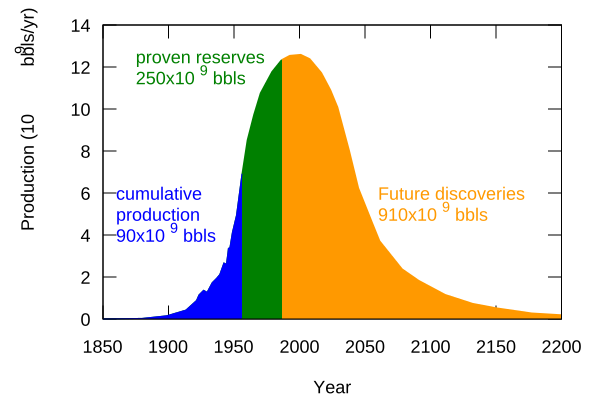
The future oil production was *very* accurately predicted by M. King Hubbert, in the 1950s. Compare this graph plotted in 2004 with this one, which was created in 1956.
Considering all the variations both in consumption and in production, such accuracy in a prediction of 50 years in the future is truly remarkable.
-
The end of oil was predicted *exactly*!
In the 70's the big scare was that there was only 15 years worth of (known) oil reserves left. Hey, we didn't run out. When the price went up, that incentivised people to go out and find new sources.
It was not in the 70s and the predicted end wouldn't be in the 90s.
The future oil production was *very* accurately predicted by M. King Hubbert, in the 1950s. Compare this graph plotted in 2004 with this one, which was created in 1956.
Considering all the variations both in consumption and in production, such accuracy in a prediction of 50 years in the future is truly remarkable.
-
"obtained access"?
Lest anyone thing you need to be a well-connected researcher to "obtain access to Wikipedia edit data", it's actually all public. Although you will need 100GB+ of hard drive space, and some well thought out algorithms, to parse the full-history dumps that contain every revision of every page.
-
Re:not surprising
You, sir, must have some very large rabbits, if they're bigger than, for example this pile. (Yes, this is an actual picture of deer droppings.. if you're somehow offended by that sort of thing, don't click the link.)
And to my knowledge, it's just normal crap.. nothing divine about it.
-
Re:Just Like When He Led Microsoft
That's funny... however he was not complaining about viruses. Malaria is cause by small protozoa (single-celled organisms). Viruses don't have cells.
-
Re:Respect
-
Such audacity....
It takes a lot of balls to travel several light years without a road-side service plan.
-
Re:What about the production?
If you're gonna link scientific literature, try to at least link the full article so people can see who funded their research. I'll do it for you: http://www.geosc.psu.edu/~kkeller/Kraepiel_est_03.pdf
"Tuna sampling and analysis was organized and paid for by the USTF (United States Tuna Foundation)"... They happen to be the guys who's job it is to whine when the FDA does its job by telling women to avoid types of fish which are known to have higher concentrations of methylmercury (like tunas): http://www.cfsan.fda.gov/~acrobat/hgstak58.pdf
"Based on a United States Tuna Foundation (USTF) and National Fisheries Institute (NFI) joint evaluation on methylmercury in fish advisories, we believe it is premature to adopt the Environmental Protection Agencyâ(TM)s (EPA) reference dose (RfD) as a basis for consumer advice".Yeah, they sound like a great source of unbiased scientific funding eh?
Is it any surprise that they chose to do their research off of Hawaii, when "Environments that are known to favor the production of methylmercury include certain types of wetlands, dilute low-pH lakes in Northeast and Northcentral United States, parts of the Florida Everglades, newly flooded reservoirs, and coastal wetlands, particularly along the Gulf of Mexico, Atlantic Ocean, and San Francisco Bay." (http://www.usgs.gov/themes/factsheet/146-00/)
Notice Hawaii wasn't in there. Using exceptions to prove rules isn't usually a sound idea.Sorry, mercury in marine fish does not come from coal fired power plants [cosis.net], or for that matter almost any other human activity (except in special cases like Minimata).
Ice core data disagrees with you: http://upload.wikimedia.org/wikipedia/commons/2/26/Mercury_fremont_ice_core.png
Freshwater contamination by Hg is solely a result of improperly dumped industrial liquid waste.
Any reason you're trying to omit marine considerations when you selected the word "freshwater"? I mean, that is where we get our tuna isn't it? Not to mention most of the other contaminated fish.
-
Re:They did the same thing on Lexx
Would you prefer they brought back Barry Bostwick in the kilt?
-
Re:Most media outlets ignoring this
I don't know why more people are shocked about this, but this goes back to Jan 2002, when Admiral Poindexter was putting together the Information Awareness Office, which ran the Total Information Awareness program. It was going to be a big aggregate database of all electronic data about everyone. Think of it as a big social network with all of your communications, financial records, legal records -- every digital record. The program was supposedly canceled after public outcry. It looks like, in light of recent revelations, the program just went into black ops or whatever you want to call it.
And what did the original seal of the OIA depict? An All-Seeing Eye, on top of a pyramid, with the wording Scientia est Potentia -- "Knowledge is Power". Are we then to conclude that Total Information Awareness means Absolute Power? ( It looks like its gaze falls directly over the United States )
I voted for Obama, but now I am utterly uninterested in having my medical records digitized. -
Re:First post
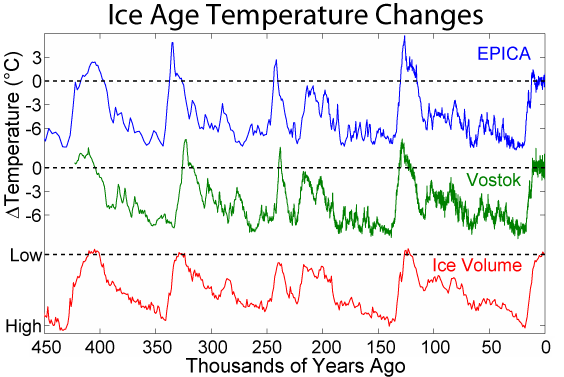
It is impossible to be an intellectual and an ideologue at the same time. Intellectuals are always improving their understanding of the "way things work." Ideologues protect their ideology and are therefore left behind in a fantasy world. Unfortunately fantasy world decisions have real world consequences. Climate studies have come a long way in the past 35 years. Paleo- climatology stems from geology and this anthropogenic theory started in the 1970's. At that time anthropogenics pretty much flew in the face of the Milankovitch theory which attempts to explain and predict large scale climate cycles. That is not to assert that anthropogenic climate effects do not exist but the question at hand is identifying the significant driving force for the larger and demonstrable climate cycles. The debate is on. Unfortunately there is a political component to the debate which attempts to protect the thesis of anthropogenic input being THE significant driving force of climate change. The length to which this ideology is being protected from contrary data is normal if you believe in Kahn's theory of Paradigm Shifts. Politics is a huge change agent. There are even websites run by political lobbying organizations purporting to be neutral and into the dialogue. Bla Bla Bla! Unfortunately for us, it appears as if significant economic decisions may be using poor science as a basis for very radical economic ideas. There is hubris in this because as we all are presently observing the economy is far more sensitive to manipulation than this "Chicken Little" ideology would predict. The fundamentals of economics are stochastic and contain huge multipliers. These relationships are ignored at our own peril. The negative multiplier effect of inefficient allocation of primary resources is being ignored in the rush to effect climate change. Having lost sight of our goal we are redoubling our efforts possibly down a dead end. It is not appropriate to put blinders on. It is a truth that"good" decisions result in good results. The analysis of a result must be across many factors and not self limited by any definition or discipline Anyone who is interested in the climate cycles should be concerned that there is very little discussion by the anthropogenic "first and most" theorists of contrary information. In the 1960's these individuals would be described as being "radicalized", this is the tipping point where the mind is made up and no further contemplation will or can take place. I believe that this graph speaks volumes. It is worth contemplating in light of the various positions in the debate. I don't believe the concept of INSULATION has been appropriately discussed in juxtaposition to the anthropogenic theories. http://commons.wikimedia.org/wiki/File:Vostok_420ky_4curves_insolation.jpg Paradigm shifts are caused by "agents of change". Presently we are experiencing a predictable shift from science to ideology. The resulting decisions during this period will have real world consequences in that the basis is stagnant and therefore the decisions will not be optimized. At some point after experiencing very negative consequences of a poor model's adaptation there may be a very negative political reaction to limited decision making processes that demonstrably cause us harm through poor predictability rather than suggest stochastic models across many disciplines to improve our quality of life.
-
Re:Developing markets
-
Re:Off Schedule I
What do you mean no high potential for abuse?
According to this graph, cannabis is about 2/3 as physically harmful and about 5/6 as dependence-causing as alcohol! And we all know how dangerous that is.
Oh, but I guess this same graph tells us that tobacco should be made illegal before cannabis...
-
some source links and information
hmm not the post I would have chosen for this news... Could have pointed out some of the source post announcements and avoid perpetuating a few misconceptions.
I have heard about Theora is that it is technically inferior to many other video codecs
Hence the need for funding the Thusnelda enhancements. Theora is a pretty solid codec and can be greatly improved with a few enhancements on the encoder side.
I wonder if wouldn't be better to direct effort to Dirac, perhaps putting Dirac into an Ogg container
Dirac is best at high resolution high bitrate video and not so good for standard definition low bitrate video, hence an enhanced theora is the optimal way to hit the low bandwidth target. Enabling theora to be competitive or better than others codecs in the low bitrate range in the intimidate future with relatively small investment.
Furthermore dirac is planed for inclusion and will be explored in the tail end of this grant. (once liboggplay is more solid). Making liboggplay playback library solid will enable Dirac support to be solid as well. Since Dirac already has a maturing decoder/encoder library (Schrodinger) and already been mapped to an ogg container (what liboggplay plays).
It's relatively easy to add in additional free codecs with ogg mappings. if( FLAC, Speex or Dirac) and will not be the primary use of the funding so its not focused in on the announcement or secondary coverage of the announcement.
More info on the announcement here and the above mentioned links. -
Re:And they were probably correct
Actually, I did. The paper fails to take into account the natural temperature buffering capacity of Earth. When you add acid to a heavily buffered solution, you don't see much change in pH, at least until you overcome the buffering capacity, at which point there is a sudden change.
In addition, it doesn't take into account that there is more than one sunspot cycle. The 11 year one is the shortest, while there are other cycles.
In addition, it should be noted that many of the greatest civilizations began when the Earth was 1-2 degrees C warmer than it is today (ref). -
Re:Nothing New
I will make a wager on this.
I wager we ARE producing enough food for 7 billion people.
In 90 days if there are 70 billion surviving people I win.
I am not tying to trivialise suffering here. Simply pointing out that people starving COULD mean we don't have enough for more people, not that we don't have enough food.
You may as well argue that we don't have enough people being born, since every day people day of old age.
There have always been people starving to death, but if the amount of people getting fed is ever increasing, than we can pretty much by definition feed more people than we currently have. Food is not the limiter on human population, it is fucking.
http://upload.wikimedia.org/wikipedia/commons/5/55/Poulation-since-1000AD.jpg
Arguable when the population growth was flatter, there were other limits, but it is pretty clear that for a while our growth has been at least exponential, leading me to believe that there is very little checking it currently.
-
Re:Damage is Already Done. Why Worry? Be Happy!
Not the goddamn short-term hockey-stick again. Go wave about a longer-term climate change graph than a mere 1000 years. Have a look at this one, for example.
-
Must have forgotten a few negative ones there, no?
Considering the evidence that climate has been cyclic with a cycle of approximately 100k years for the last million-odd years, leads me to think that there must also be negative feedback loops involved here. You seem to have missed that. Badly.
Yes, I realize this doesn't mean that there couldn't be a magic global temperature or CO2 concentration at which suddenly this behavior breaks down. But somehow, I don't think we know all that much about all the processes involved.
-
FP to Wikizealots
Hi to Admin sockpuppets of the cult of Jimbo "I fucked rachel Marsden" Wales. Still "doing" it for the Child in Africa? Then why does all the African languages less than 10,000 articles!?! Fuck you all
Raul654, Spacebirdy, RickK, Lucky 6.9, TTN, Betacommand, David Gerad, CometStyles, and all their cocksucking (tacosnotting cronies @ WP:ANI)
Grawp the Haggar! on wheels! The Trollvelution got you to the sixth most poupular site on the internet, now you will see that you DID feed the trolls, and they are rich and are running the encyclopedia!
-
Re:Just because PHP is popular
Outdated. Server roles on wikitech is probably more up-to-date: I count over 70 Squids there at least, and 35 DB servers (although not all are listed as used). That's probably not terrible accurate either, though. Ganglia claims 274 hosts up right now, but clearly lists too few Apaches to be correct. Last I heard, anyway, the Apache count was around 300.
At any rate, Wikipedia is certainly an efficient operation, yes. PHP is an awful language, but its efficiency is not much worse than Python or Perl or whatever. The major costs IMO are in development time:
- More time reimplementing basic functionality, because libraries aren't available reliably. A ton of critical library functions (e.g., the entire mbstring module, which is necessary for dealing with Unicode) aren't available on all installations -- installing a new module typically requires root access. Thus for code to work reliably, you need to write workalikes for all the major functions. Also, where library functions are reliably available, they're often fairly braindead and you have to write sane workalikes anyway, or wrappers that make their functionality more reasonable. I was just spending time working on an implementation of parse_url() that actually works for URL schemes like mailto: and news: that are absolutely conformant to the URL RFC but don't use "://" as a separator, so PHP evidently doesn't care about them.
- Time working around site-specific config settings that can't be changed at runtime. For instance, if magic_quotes_gpc is enabled, you have to write code to strip the quotes yourself, because PHP doesn't provide this. Any app that wants to work across all PHP configurations must implement that from scratch. There are even more horrible settings: mbstring.func_overload is one that's so horrifyingly broken that a sane app has no option but to give up and refuse to run until it's disabled. (It silently replaces all functions like strlen() with UTF-8 versions -- meaning everything that you thought was measuring bytes suddenly measures UTF-8 characters.) MediaWiki actually does this (grep for "func_overload" or "magic_quotes_runtime").
- Time working around bugs caused by PHP language misfeatures. Maybe MediaWiki devs are all just bad at PHP, but there are regular commits to fix bugs caused by the same few language features. For instance, "!$str" to check if a string is empty will fail exactly in the rare (and thus hard-to-track-down) special case that $str is equal to "0". In the same vein, but more uniquely to PHP as far as I know, "random string" will evaluate as equal to zero if compared to an integer, and this periodically causes bugs too. (I would expect them to be unequal if the string can't be cast to an integer, at least, and preferably never equal at all.) These can be solved with discipline, at least, like always using ===.
-
Re:Just because PHP is popular
Outdated. Server roles on wikitech is probably more up-to-date: I count over 70 Squids there at least, and 35 DB servers (although not all are listed as used). That's probably not terrible accurate either, though. Ganglia claims 274 hosts up right now, but clearly lists too few Apaches to be correct. Last I heard, anyway, the Apache count was around 300.
At any rate, Wikipedia is certainly an efficient operation, yes. PHP is an awful language, but its efficiency is not much worse than Python or Perl or whatever. The major costs IMO are in development time:
- More time reimplementing basic functionality, because libraries aren't available reliably. A ton of critical library functions (e.g., the entire mbstring module, which is necessary for dealing with Unicode) aren't available on all installations -- installing a new module typically requires root access. Thus for code to work reliably, you need to write workalikes for all the major functions. Also, where library functions are reliably available, they're often fairly braindead and you have to write sane workalikes anyway, or wrappers that make their functionality more reasonable. I was just spending time working on an implementation of parse_url() that actually works for URL schemes like mailto: and news: that are absolutely conformant to the URL RFC but don't use "://" as a separator, so PHP evidently doesn't care about them.
- Time working around site-specific config settings that can't be changed at runtime. For instance, if magic_quotes_gpc is enabled, you have to write code to strip the quotes yourself, because PHP doesn't provide this. Any app that wants to work across all PHP configurations must implement that from scratch. There are even more horrible settings: mbstring.func_overload is one that's so horrifyingly broken that a sane app has no option but to give up and refuse to run until it's disabled. (It silently replaces all functions like strlen() with UTF-8 versions -- meaning everything that you thought was measuring bytes suddenly measures UTF-8 characters.) MediaWiki actually does this (grep for "func_overload" or "magic_quotes_runtime").
- Time working around bugs caused by PHP language misfeatures. Maybe MediaWiki devs are all just bad at PHP, but there are regular commits to fix bugs caused by the same few language features. For instance, "!$str" to check if a string is empty will fail exactly in the rare (and thus hard-to-track-down) special case that $str is equal to "0". In the same vein, but more uniquely to PHP as far as I know, "random string" will evaluate as equal to zero if compared to an integer, and this periodically causes bugs too. (I would expect them to be unequal if the string can't be cast to an integer, at least, and preferably never equal at all.) These can be solved with discipline, at least, like always using ===.
-
Re:Just because PHP is popular
Outdated. Server roles on wikitech is probably more up-to-date: I count over 70 Squids there at least, and 35 DB servers (although not all are listed as used). That's probably not terrible accurate either, though. Ganglia claims 274 hosts up right now, but clearly lists too few Apaches to be correct. Last I heard, anyway, the Apache count was around 300.
At any rate, Wikipedia is certainly an efficient operation, yes. PHP is an awful language, but its efficiency is not much worse than Python or Perl or whatever. The major costs IMO are in development time:
- More time reimplementing basic functionality, because libraries aren't available reliably. A ton of critical library functions (e.g., the entire mbstring module, which is necessary for dealing with Unicode) aren't available on all installations -- installing a new module typically requires root access. Thus for code to work reliably, you need to write workalikes for all the major functions. Also, where library functions are reliably available, they're often fairly braindead and you have to write sane workalikes anyway, or wrappers that make their functionality more reasonable. I was just spending time working on an implementation of parse_url() that actually works for URL schemes like mailto: and news: that are absolutely conformant to the URL RFC but don't use "://" as a separator, so PHP evidently doesn't care about them.
- Time working around site-specific config settings that can't be changed at runtime. For instance, if magic_quotes_gpc is enabled, you have to write code to strip the quotes yourself, because PHP doesn't provide this. Any app that wants to work across all PHP configurations must implement that from scratch. There are even more horrible settings: mbstring.func_overload is one that's so horrifyingly broken that a sane app has no option but to give up and refuse to run until it's disabled. (It silently replaces all functions like strlen() with UTF-8 versions -- meaning everything that you thought was measuring bytes suddenly measures UTF-8 characters.) MediaWiki actually does this (grep for "func_overload" or "magic_quotes_runtime").
- Time working around bugs caused by PHP language misfeatures. Maybe MediaWiki devs are all just bad at PHP, but there are regular commits to fix bugs caused by the same few language features. For instance, "!$str" to check if a string is empty will fail exactly in the rare (and thus hard-to-track-down) special case that $str is equal to "0". In the same vein, but more uniquely to PHP as far as I know, "random string" will evaluate as equal to zero if compared to an integer, and this periodically causes bugs too. (I would expect them to be unequal if the string can't be cast to an integer, at least, and preferably never equal at all.) These can be solved with discipline, at least, like always using ===.
-
Re:so, to summarize...
The 1984 Macintosh had the same thing, but it was called a "Finder" and was docked at the top. It allowed users to switch between different tasks. So in essence Microsoft was just copying that, but with a few modifications.
MS also copied the trashbin from the Mac. That's blatantly obvious. Of course most of the OSes of the period did the same, even the Commodore 64: http://upload.wikimedia.org/wikipedia/en/e/e2/GeOS_Commodore_64.gif
However what the C=64 did in 1985, for some reason, took Microsoft until 1995. A bit slow.
-
Re:Really?
Now you're on to something...
Under a new BAM-SPAM act, when Joe Jackass opens his packaged delivery, instead of finding his new dildo pump or whatever in the box, he's greeted by a slightly disoriented, but heavily armed, trigger-happy postal copper. -
Re:You still just don't get it
Amusingly, Wikipedia's search feature has the ability to link back to Google: Search Google. Not only that, but you can use any of the special prefixes listed at the Interwiki map, as well as language prefixes for searching non-English Wikipedia editions.
-
Re:Mystery Pits
But once you have Plutonium READY in your hands, you just need just a handful of people to make a working implosion device. It is not as difficult as you are feeling.
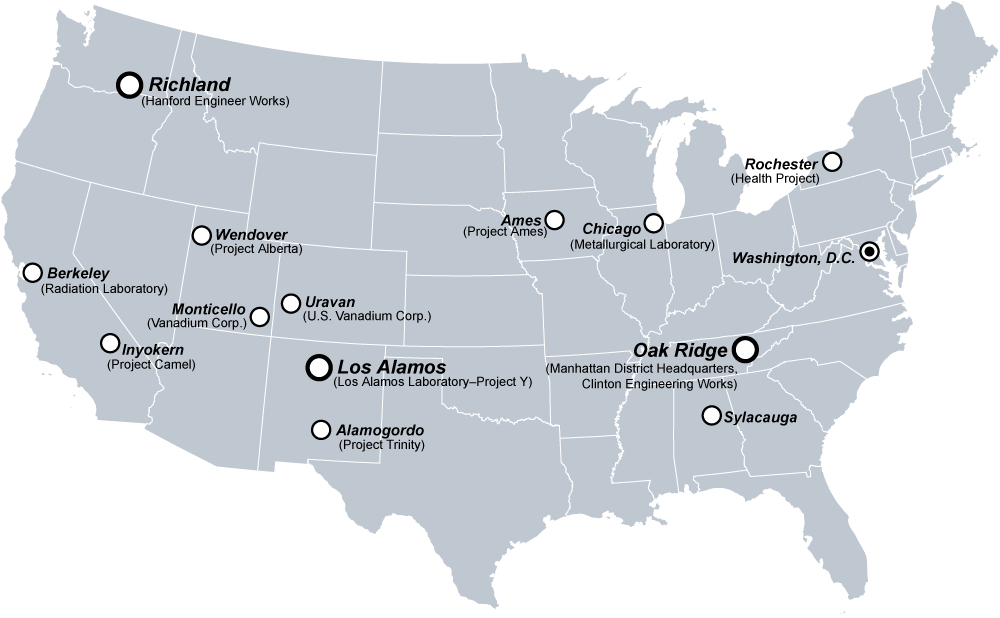
And what do you base this opinion on... what exactly? The casing for implosion devices has to be perfect. That's why easily half the locations for the Manhattan Project were devoted to manufacturing and metal works. In fact, implosion devices had originally been discounted altogether due to the difficulty in constructing one. It was only after the researchers realized that a gun-type plutonium device would not work that Oppenheimer redirected efforts toward an implosion device.
-
Re:when will it
You mean like this guy?
-
Re:Let's get real
-
Re:What environmental cost to build a new car?
"Let old cars die their natural death."
What's wrong with a yearly mandatory test? Fail the test either fix it and get a certificate of compliance or your heap of junk will be taken off the road, as is the case in parts of Europe.
Would improve road safety too.
You mean the US doesn't already have an MOT test?
https://secure.wikimedia.org/wikipedia/en/wiki/MOT_test
Surely that's a fundamental part of road safety? What do they have instead?
-
Re:Too much of a burden on Wikipedia
That's because the author of the article has no idea what he's talking about. Like most people, he's never heard of Wikimedia projects other than Wikipedia, and so assumes that everything about Wikimedia projects as a whole is about Wikipedia. The changes are actually more or less irrelevant to Wikipedia, which needs few videos and no long ones at all. Any long video is almost certainly not fair use, and therefore should be uploaded to Commons if it can be used at all. (The English Wikipedia allows some fair use, while Commons does not.)
-
Re:legitimate need?
-
Re:Too much of a burden on Wikipedia
Wikipedia is not the only Wikimedia Foundation project. In particular, the scope of the Wikimedia Commons is "to provide a media file repository . . . that makes available public domain and freely-licensed educational media content to all . .
-
Re:Too much of a burden on Wikipedia
Wikipedia is not the only Wikimedia Foundation project. In particular, the scope of the Wikimedia Commons is "to provide a media file repository . . . that makes available public domain and freely-licensed educational media content to all . .









.svg)