Slashdot Mirror
Domain: wikimedia.org
Stories and comments across the archive that link to wikimedia.org.
Comments · 6,832
-
Re:Because it's not important to switch
-
Re:Not on the Internet.
Considering that's probably 98% of the machines in use it's a non-issue,
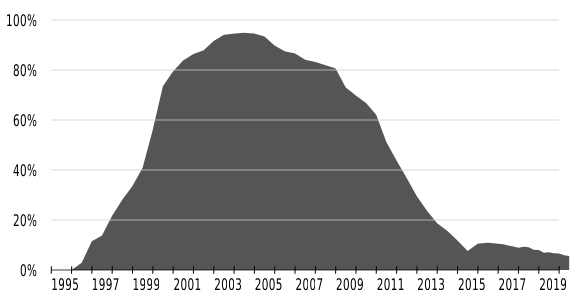
During version 6's heyday, IE had almost that amount of marketshare Browser innovation by Microsoft came to a grinding halt for years. Cool progressive technologies like svg support? Fuggedaboutit. Fast javascript engine? Yeah, right. You wouldn't want to make the browser too powerful right? Might usurp some of the need for, you know, a particular desktop operating system. Fortunately, Firefox got some traction and now we have a very healthy browser market with newer and more advanced capabilities coming down the pike all the time. Why go back to the bad old days of the internet? The argument that, "well, it works on Winders and mcintosh" isn't good enough. It wasn't good enough then and it isn't now.
I think you are confusing the platform with the technology. Ensuring your technology (Silverlight) runs on the two platforms (Win/OSX) that dominate the desktop means virtually everyone will have access to your technology; they few who don't us either platform simply are not worth expending resources to reach. Once a platform reaches critical mass (such tablet OS's) the technology will move to them as well (well, unless the Steve dictates is sucks). While the platform can limit the technologies performance (due to speed, storage, etc) it does not limit innovation, just as having a Linux/Solaris/Chrome/Whatever version ensures a product will be innovative.
The argument that, "well, it works on Winders and mcintosh" is actually good enough because that is where innovative products gain traction and success (on the desktop); and without such a large base products such as Firefox would never gain traction beyond being a neat toy for a small fraction of the user base. Sure, IE6 had the lion share of the market - but as others saw the potential they moved in with more innovative products forcing MS to move forward - and did so in MS' turf, not on some backwater. So, as a result, "well, it works on Winders and mcintosh" is really more than justt good enough; in fact it is sufficient.
-
Re:Not so bad to have different systems.
I find it interesting that you start off stating "a two by four" isn't 2" by 4" and go on to advocate for a different measuring system.
The measuring system isn't the fault in the 2x4 example, and changing it would not magically correct that situation.
I also find it interesting that you compare:
Imperial: arbitrary and inconsistent
Metric:The metric system is based on arbitrary measurements and ratios as well. The size of the earth. The weight of a specific object (originally: the weight of a specific volume of a specific substance). The freezing/boiling point of a specific substance.*
At base, ALL units of measurement are arbitrarily defined. So yes, I acknowledge that you made no statement regarding the arbitrariness of the metric system nor the logic of the imperial system.
* Wikipedia corrects me: The Kelvin scale is the one used by SI, not Celsius.
-
Re:Not on the Internet.
Considering that's probably 98% of the machines in use it's a non-issue,
During version 6's heyday, IE had almost that amount of marketshare Browser innovation by Microsoft came to a grinding halt for years. Cool progressive technologies like svg support? Fuggedaboutit. Fast javascript engine? Yeah, right. You wouldn't want to make the browser too powerful right? Might usurp some of the need for, you know, a particular desktop operating system. Fortunately, Firefox got some traction and now we have a very healthy browser market with newer and more advanced capabilities coming down the pike all the time. Why go back to the bad old days of the internet? The argument that, "well, it works on Winders and mcintosh" isn't good enough. It wasn't good enough then and it isn't now.
Moonlight is there for Linux, and if it doesn't work, well you can just grab the source and fix it yourself.
Moonlight is not Silverlight. If I want to fix Word, it isn't going to help me to get the source code for notepad. And that's about where you stand with moonlight vs silverlight.
-
not only DOJ
<nit-picky>
not only US regulators were involved but also the Bundeskartellamt, pushed by the lobbying efforts of the FSFE (see press release).
</nit-picky>The president of the German agency stated that "in individual cases, the acquisition of patents can also result in significant anticompetitive effects" (source).
OSS came a long way - the decision was not based on some ethical "free software is a value itself" reasons but showed the commercial impact and relevance of open source. Great!
-
Carrier Grade NAT
That sounds like a good description of Carrier Grade NAT. My understanding is that it's the presumptive solution to keep IPv4 alive until IPv6 is fully deployed.
The downside is that it will mean that you've got NATs inside NATs, and that users will be competing for ports, both making for a poor experience for end users. I think it's a mistake to assume that users running servers is unusual -- hosting FPS deathmatches is quite common, for instance.
An upside is that the moderately technically inclined -- those who do want to offer services on the Web, or use peer-to-peer services, will have a practical reason to get IPv6.
-
Re:Trust them as far as you can throw them
See: "Read my lips: no new taxes". It's basically why no presidential candidate will make specific policy promises, or at least any that anyone seriously believes.
-
Re:Wowthat article is full of wrong.
My Nomad has plenty of space, thank you.
-
Re:more examples
North Korea invaded the South to begin with. Period. End of story.
Generally, when a person uses "Period. End of story" you can tell their minds are closed to facts which disagree with their opinions.
you're a shithead parasite who will benefit from the sacrifices of our armed forces, while spitting on their faces.
Talk like this makes listening difficult.
McArthur's invasion of the North was entirely the result of their invading first.
Not factual. A civil war is not necessarily anyone else's concern. During the American Civil War, should Korea have invaded the northern US states which were attacking the southern states? No? Of course not, it's nearly impossible to imagine. Much less justify.
One of the major reasons the US got involved Korea was "protection of Japan." Try wondering what it's like as a Korean during the war. The bombs that are actually killing your family and neighbors are an attempt to prevent a theoretical invasion of Japan. Think that's moral?
-
Re:Whose enemies?
I refuse to believe in any intelligence report where they repeatedly misspell the topic of the report, namely chemical materiel, haha.
A better motto would be: Intelligence Reports for those with sub 80 IQs written by those with sub 80 IQs.
Sub 80 IQ? do you even know what that means? Some how I don't think you do....
https://secure.wikimedia.org/wikipedia/en/wiki/List_of_U.S._chemical_weapons_topics
-
Re:I prefer origins to be mysterious
I'm not sure that's correct; see here for a global Q distribution chart. As one might expect given the cultural and racial diversity of the US, the average IQ is ~100, according to that 2006 data.
-
Re:Why be such morons?
The precise nature of the legal protections for religion varies, of course, so anything either of us says on that front is going to be local. In the UK, a country far more secular than the US, religions have special status within the education system compared to other non-profit community organisations, and some church leaders receive a measure of automatic political power. That goes far, far beyond freedom of speech and belief, and well into government sponsorship of religion, in my opinion.
You're absolutely correct about people being able to say and believe what they like, and that we have no right to 'freedom from speech'; I actually made a clarification to my original post to that effect.
I strongly disagree with your last paragraph, though. All I ask is that religions be held to precisely the same standard as any other community organisation, no more, no less. People's right to religious belief should be protected as much as their right to political belief; again no more, no less. As for removing a person from his job just because of his religion, I'd be absolutely furious if that happened - just because I strongly disagree with someone's belief, doesn't mean I'm so short sighted as to ignore the importance of protecting freedom for everybody. If his religion happened to be interfering with his ability to teach science effectively then that's a quite different matter, and again I'd apply the simple test of "would it be acceptable for non-religious reasons?"; if he's telling people that God holds molecules together with tiny strands of angel hair, or if he's telling them that the four humours explain all of medical science, he should be fired for incompetence. That's not a matter of belief, though, that's a matter of letting one's belief interfere with the satisfactory performance of one's job.
Wrong in 3 ways:
1. The UK is not "more secular than the US". Secular does not mean "count the atheists and agnostics". (It especially doesn't mean "...and count anyone who hasn't been to church a while as an atheist regardless of whether they say they are Christian on a census form, because we know better than they do what their beliefs are" -- which is the tactic usually used to proclaim how secular the UK is.) Secular society does not depend on how many people believe or do not believe. Secular matters are the contrast from Regular matters -- "regular" matters are subject to ecclesiastical law, whereas "secular" matters are not. Brushing your teeth is "secular"; it is not "atheist". It isn't anything to do with whether or not anybody believes in God. So the US, where there is constitutional separation between church and state, is every bit as secular as the UK regardless of how many believers or non-believers there are in either country. Recently there has been a brazen attempt to co-opt the word "secular" for rhetorical reasons: to pretend that the phrase "secular society" means that the country belongs to atheists not to the religious -- after all, everyone supports "secular society" (strictly meaning the government is not subject to church law) so if we can co-opt the word "secular" to be a synonym for "atheist" then people will think they've already signed up to support "atheist society", right?
2. Your complaint about faith schools suggests you couldn't answer "no" to resisting sacking that Muslim teacher. You'd like to shut the whole school! As you should well know if you're from the UK you can set up a non-religious independent school and receive state funding for it -- such as the "city academies" the last government brought in, but independent government-funded secular schools have been around for a very long time. I went to one when I was a chil
-
Re:Why be such morons?
The precise nature of the legal protections for religion varies, of course, so anything either of us says on that front is going to be local. In the UK, a country far more secular than the US, religions have special status within the education system compared to other non-profit community organisations, and some church leaders receive a measure of automatic political power. That goes far, far beyond freedom of speech and belief, and well into government sponsorship of religion, in my opinion.
You're absolutely correct about people being able to say and believe what they like, and that we have no right to 'freedom from speech'; I actually made a clarification to my original post to that effect.
I strongly disagree with your last paragraph, though. All I ask is that religions be held to precisely the same standard as any other community organisation, no more, no less. People's right to religious belief should be protected as much as their right to political belief; again no more, no less. As for removing a person from his job just because of his religion, I'd be absolutely furious if that happened - just because I strongly disagree with someone's belief, doesn't mean I'm so short sighted as to ignore the importance of protecting freedom for everybody. If his religion happened to be interfering with his ability to teach science effectively then that's a quite different matter, and again I'd apply the simple test of "would it be acceptable for non-religious reasons?"; if he's telling people that God holds molecules together with tiny strands of angel hair, or if he's telling them that the four humours explain all of medical science, he should be fired for incompetence. That's not a matter of belief, though, that's a matter of letting one's belief interfere with the satisfactory performance of one's job.
Wrong in 3 ways:
1. The UK is not "more secular than the US". Secular does not mean "count the atheists and agnostics". (It especially doesn't mean "...and count anyone who hasn't been to church a while as an atheist regardless of whether they say they are Christian on a census form, because we know better than they do what their beliefs are" -- which is the tactic usually used to proclaim how secular the UK is.) Secular society does not depend on how many people believe or do not believe. Secular matters are the contrast from Regular matters -- "regular" matters are subject to ecclesiastical law, whereas "secular" matters are not. Brushing your teeth is "secular"; it is not "atheist". It isn't anything to do with whether or not anybody believes in God. So the US, where there is constitutional separation between church and state, is every bit as secular as the UK regardless of how many believers or non-believers there are in either country. Recently there has been a brazen attempt to co-opt the word "secular" for rhetorical reasons: to pretend that the phrase "secular society" means that the country belongs to atheists not to the religious -- after all, everyone supports "secular society" (strictly meaning the government is not subject to church law) so if we can co-opt the word "secular" to be a synonym for "atheist" then people will think they've already signed up to support "atheist society", right?
2. Your complaint about faith schools suggests you couldn't answer "no" to resisting sacking that Muslim teacher. You'd like to shut the whole school! As you should well know if you're from the UK you can set up a non-religious independent school and receive state funding for it -- such as the "city academies" the last government brought in, but independent government-funded secular schools have been around for a very long time. I went to one when I was a chil
-
Re:We live in abundance
Sorry, no matter how you put it, that doesn't look too good for the US.
Relative poverty is a wonderful thing. It allows you to say that a man who own his own home, his own car, a computer, 60" TV, stereo, etc is "poor" if he lives in Eagle Pass TX, but "rich" if he lives three miles farther west in Piedras Negras.
Thanks, but I prefer the old-fashioned notion of absolute poverty.
I barely start discussions on
Yes, absolute poverty has declined in the US:
While it doesn’t look so bad in terms of absolute poverty in international comparisons, the US is still far worse off than the majority of European countries, except for south-European countries like Portugal and Spain. You can dig up the statistics on your own.
There are many other measures of poverty, like e.g. the following one that doesn’t look too good for the US either:
Or, how about food security in the US:
Sadly most people in the US are irrational when it comes to data like this, they just cherry-pick the statistics they like to hear. Apparently people in the US get hammered the message that the US is the greatest and richest country into their brain from early childhood on.
Enough said.
-
Re:Whose enemies?
Hmmm........ I wonder what countries didn't sign that agreement
only a few (and someone should nuke Western Sahara, the only unknown quantitiy in the NPT)
-
Re:Are these people insane?
I'm sure there's at least one Palm PDA that fits the description and predates the iPhone by at least five years.
where i agree that apple should just fuck off with their walled gardens and this bollocks litigation
one of their fan boys will probably mention the Newton
i hereby name all this litigation going on "Sue-age" as it's all innovation stifling SHITE -
Re:Reverse outsourcing? No.
And how much impact did those CE phones have? The Treo was really the first mass market Smartphone in the US. Nokia probably has that title in Europe with one of their phones. But what it all comes down to is Microsoft did not pioneer the smartphone space as the person I was replying to said they did. It was in fact IBM and later others. They didn't pioneer the tablet space. You could say that Gene Roddenberry did, or Alan Kay at Xerox PARC with the DynaBook concept. https://secure.wikimedia.org/wikipedia/en/wiki/Dynabook
Or even GRID systems with the GRIDPad https://secure.wikimedia.org/wikipedia/en/wiki/GRiDPad did. And as for the MP3 market well not even close. https://secure.wikimedia.org/wikipedia/en/wiki/Digital_audio_player#History The on I remember is the RIO but event that wasn't the first it is probably just the first that was popular.
Microsoft outside of Windows. Office, and XBox really does have a really bad history at innovation and bringing new tech to the market. The fact that Apple could walk away with the smart phone market and the Tablet market when Microsoft has been in both those markets for years should say it all. I fear Microsoft lacks passion for anything but market share and because of that they are no excelling at new markets. -
Re:Reverse outsourcing? No.
And how much impact did those CE phones have? The Treo was really the first mass market Smartphone in the US. Nokia probably has that title in Europe with one of their phones. But what it all comes down to is Microsoft did not pioneer the smartphone space as the person I was replying to said they did. It was in fact IBM and later others. They didn't pioneer the tablet space. You could say that Gene Roddenberry did, or Alan Kay at Xerox PARC with the DynaBook concept. https://secure.wikimedia.org/wikipedia/en/wiki/Dynabook
Or even GRID systems with the GRIDPad https://secure.wikimedia.org/wikipedia/en/wiki/GRiDPad did. And as for the MP3 market well not even close. https://secure.wikimedia.org/wikipedia/en/wiki/Digital_audio_player#History The on I remember is the RIO but event that wasn't the first it is probably just the first that was popular.
Microsoft outside of Windows. Office, and XBox really does have a really bad history at innovation and bringing new tech to the market. The fact that Apple could walk away with the smart phone market and the Tablet market when Microsoft has been in both those markets for years should say it all. I fear Microsoft lacks passion for anything but market share and because of that they are no excelling at new markets. -
Re:Reverse outsourcing? No.
And how much impact did those CE phones have? The Treo was really the first mass market Smartphone in the US. Nokia probably has that title in Europe with one of their phones. But what it all comes down to is Microsoft did not pioneer the smartphone space as the person I was replying to said they did. It was in fact IBM and later others. They didn't pioneer the tablet space. You could say that Gene Roddenberry did, or Alan Kay at Xerox PARC with the DynaBook concept. https://secure.wikimedia.org/wikipedia/en/wiki/Dynabook
Or even GRID systems with the GRIDPad https://secure.wikimedia.org/wikipedia/en/wiki/GRiDPad did. And as for the MP3 market well not even close. https://secure.wikimedia.org/wikipedia/en/wiki/Digital_audio_player#History The on I remember is the RIO but event that wasn't the first it is probably just the first that was popular.
Microsoft outside of Windows. Office, and XBox really does have a really bad history at innovation and bringing new tech to the market. The fact that Apple could walk away with the smart phone market and the Tablet market when Microsoft has been in both those markets for years should say it all. I fear Microsoft lacks passion for anything but market share and because of that they are no excelling at new markets. -
Re:Why be such morons?
The precise nature of the legal protections for religion varies, of course, so anything either of us says on that front is going to be local. In the UK, a country far more secular than the US, religions have special status within the education system compared to other non-profit community organisations, and some church leaders receive a measure of automatic political power. That goes far, far beyond freedom of speech and belief, and well into government sponsorship of religion, in my opinion.
You're absolutely correct about people being able to say and believe what they like, and that we have no right to 'freedom from speech'; I actually made a clarification to my original post to that effect.
I strongly disagree with your last paragraph, though. All I ask is that religions be held to precisely the same standard as any other community organisation, no more, no less. People's right to religious belief should be protected as much as their right to political belief; again no more, no less. As for removing a person from his job just because of his religion, I'd be absolutely furious if that happened - just because I strongly disagree with someone's belief, doesn't mean I'm so short sighted as to ignore the importance of protecting freedom for everybody. If his religion happened to be interfering with his ability to teach science effectively then that's a quite different matter, and again I'd apply the simple test of "would it be acceptable for non-religious reasons?"; if he's telling people that God holds molecules together with tiny strands of angel hair, or if he's telling them that the four humours explain all of medical science, he should be fired for incompetence. That's not a matter of belief, though, that's a matter of letting one's belief interfere with the satisfactory performance of one's job.
-
Re:Why be such morons?
The precise nature of the legal protections for religion varies, of course, so anything either of us says on that front is going to be local. In the UK, a country far more secular than the US, religions have special status within the education system compared to other non-profit community organisations, and some church leaders receive a measure of automatic political power. That goes far, far beyond freedom of speech and belief, and well into government sponsorship of religion, in my opinion.
You're absolutely correct about people being able to say and believe what they like, and that we have no right to 'freedom from speech'; I actually made a clarification to my original post to that effect.
I strongly disagree with your last paragraph, though. All I ask is that religions be held to precisely the same standard as any other community organisation, no more, no less. People's right to religious belief should be protected as much as their right to political belief; again no more, no less. As for removing a person from his job just because of his religion, I'd be absolutely furious if that happened - just because I strongly disagree with someone's belief, doesn't mean I'm so short sighted as to ignore the importance of protecting freedom for everybody. If his religion happened to be interfering with his ability to teach science effectively then that's a quite different matter, and again I'd apply the simple test of "would it be acceptable for non-religious reasons?"; if he's telling people that God holds molecules together with tiny strands of angel hair, or if he's telling them that the four humours explain all of medical science, he should be fired for incompetence. That's not a matter of belief, though, that's a matter of letting one's belief interfere with the satisfactory performance of one's job.
-
Re:Let me guess
You'd understand if you were a llama.
-
Really?
The first is that just because some numerical measure is called 'regret' it doesn't mean it has anything to do with the common use of the term.
And here I thought that my defective RAM stick actually caused a baby to die.
-
Re:Then why was that on the UNEP website?
Then why were the pages on the UNEP website?
What I'd like to know is, why's nobody mentioned https://secure.wikimedia.org/wikipedia/en/wiki/Maurice_Strong yet. Even Jesse Ventura devoted a whle program to him.
-
Almost as good as the 'FBI confirms aliens' post
Slashdot now reposts Daily Caller propaganda? It's almost the quality of the 'FBI confirms aliens' post recently. I like this comment in the Daily Caller article; I'm glad
Be sure to leave comments on any website that makes this claim, and link to this and the Asian Correspondent website.
The article is a bit absurd. It looks for the 50 million refugees in the Bahamas, St. Lucia, Seychelles, and Solomon Islands. Safe to say, if you look for 50 million carbon-based humans there, you won't find them.
What is a 'climate refugee' and how many are there? Does this disprove AGW or point to some evil conspiracy? It's surprising to see
Maybe
-
Re:Why go to Barnes & Noble
No! Really, just, no! There is something seriously messed up with your economic model if "robots do everything for free" is a dystopia where everyone starves. Furthermore, there is something messed up with your morals if you think that all else being the same, people doing work is better than people not doing work. In reality, there are jobs that robots will not be doing any time soon. Creation of media is a major category and perhaps the only one that I am absolutely certain will not be taken over by computers any time soon, but there are others. Writing software, perhaps as a broader category of "training" these automation systems will definitely continue to be important. But more importantly, if automation really makes our society so wealthy that we can afford to work fewer hours a week... that sounds great.
-
Re:Not unexpected...
Of course there is such a thing as negative zero. Just check out one's compliment.
-
"The UK newspaper arm of News Corp"
-
"The UK newspaper arm of News Corp"
-
Re: I'm more interested in Xanadudettes...
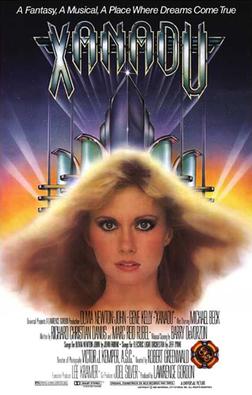
Xanadu (software) sounds like it is a lot like Xanadu (film). They're both stuck in time, somewhere around 1980.
-
Re:Build them so they last, and repairable
BGA? Ball Grid Assembly?
-
Re:I'm sure it's coming eventually
No, it's not high definition, it's Enhanced Definition
-
Re:uh?
at the moment China is constructing 17000 km of high-speed railways; *surely* the beginning of an age of speed.
Except that like the Concorde, those lines aren't profitable, either. Between 30% and 60% of the cost of a passenger's ticket on any high speed railway - in any country - is subsidized at some taxpayer's expense. Commercial failure.
-
Re:it's going to get worse in terms of access to
Sure you could get from Bangkok to New York by train. It's only a question of technology, and as always, the Chinese are on it.
-
Re:Speed is NOT overrated
And those dreams about expected modes of Mars (space, generally) travel, extrapolating (not understanding, generally) rates of early progress, turned out to be wrong. Kinda similar to dreams about flying horses, chairs, carpets, or those airplanes from "our" times (imagined during rapid advances of marine tech; and we can even build them - take a Harrier, remove wings and canopy... still a horrible idea vs. "boring" reality). It's a sign of limited imagination when people want to hear about the grandiose, fabulous, "awesome" style of exploration typical of scifi (works of fiction); when they expect something palatable, nothing too uncomfortable and alien from Earthly experiences. Bonus: it's much easier to write...
Or consider how the "spaceplanes" came to dominate scifi... around the 40s, during rapid advances of airplane tech (I can see a pattern...); how the designers and decision-makers of the Shuttle were undoubtedly raised on those works of fiction. And how they gave us an analogue of Catalina, at best (Spruce Goose, at worst); something which, again, looked very soothing to public already quite accustomed to airliners / Concorde. And which probably robbed as at least of a decade of progress; was obsolete (with automatic rendezvous & docking done in the 60s) before it seriously got onto drawing boards.
Ultimately, people will continue being upset how the space travel will most likely remain fundamentally different from earthly experiences. Afraid to face the absolutely wild realities of existing universe. In the meantime, how many even realize that we can already send people when they are miniaturized and in deep hibernation and that dozens of thousands people on Earth are past the procedure? Heck, give me one medium launcher + few dozen million bucks, and I can transport at least a thousand viable humans practically to anywhere in our system.
Furthermore, crash projects in the style of Apollo turned out to be unsustainable even for the Moon. But do you realize how much work went and still goes into eventual human deep space missions?
(and fuel efficiency determines cruise speeds, not top speed achievable during design stage / the difference in meaningless with other time sinks and considering how much more people modern airliners are able to transport; airlines often adjust the cruising speeds up or down few km/h for fuel efficiency anyway; also, were you ever close to a landing 707? That was the only aircraft I experienced that managed to be really irritatingly loud... in a center of 700k+ city (one approach to the airport at its periphery takes the planes over center, still few hundred m up)) -
uh?
a couple of unrelated decisions are a sign of ending "the age of speed"?
at the moment China is constructing 17000 km of high-speed railways; *surely* the beginning of an age of speed.
sigh, media...
-
Re:bad spelling
Muphry's Law wins!
https://secure.wikimedia.org/wikipedia/en/wiki/Muphry's_law -
Re:Lets Stop Expanding This Rights Nonsense
This is becoming a joke, first people try to claim health care is a right (as if I could just march in a doctor's office and demand my right to a checkup)
In most of the civilized world you can do just that. Do you live in Siberia?
Ha, just kidding. You can even do it in Siberia!
-
Re:Your delusions are now complete
-
Re:I think both sides should call each other out.
Yeah, it doesn't surprise me that China's detention rate is higher than their official data suggests. But the US is still far out of keeping with every civilized country. The US really jumps out at you on this map:
http://upload.wikimedia.org/wikipedia/commons/6/67/Prisoner_population_rate_UN_HDR_2007_2008.PNG
China's relative case may be as weak on incarceration as it is on internet freedom, but at last on incarceration there's a real problem, while the US is pretty damn free on the Internet.
-
Re:Stupid Zuckerberg
Somebody who gets leukemia didn't have a choice. They have a disease. Somebody who's addicted is not in the same boat.
Unfortunately our universe is not that simple. See for example the asian gene's effect on the likelihood of developing alcoholism.
People do not have any choice which genes they get born with.
Obviously bad choice and bad judgement plays a role as well - addiction is a mixture of bad choice and bad luck (bad genes are a form of bad luck).
-
Re:Obligatory car analogy
What? Lamborghini would completely obliterate the F150 offroad
-
Re:Potentially an extinction level event?
The Yellowstone eruption was a little smaller than Toba (2500 km^3 as opposed to 2800 km^3) but you probably don't notice after the first thousand cubic kilometers of ash have landed. There are four other supervolcanos known. Certainly these are extinction-level events - the Year Without A Summer was caused by a tiny volcano in comparison, altering global temperatures a mere 0.4'C, but the levels of famine and disease that resulted were staggering. Scale it up a hundredfold and throw in a continent's worth of ash and you're talking major problems for anything on the surface.
-
Re:Potentially an extinction level event?
The Yellowstone eruption was a little smaller than Toba (2500 km^3 as opposed to 2800 km^3) but you probably don't notice after the first thousand cubic kilometers of ash have landed. There are four other supervolcanos known. Certainly these are extinction-level events - the Year Without A Summer was caused by a tiny volcano in comparison, altering global temperatures a mere 0.4'C, but the levels of famine and disease that resulted were staggering. Scale it up a hundredfold and throw in a continent's worth of ash and you're talking major problems for anything on the surface.
-
Potentially an extinction level event?
-
Re:It's illegal...
Yes... but are we sure he was working for the Secret Service?
I have it on good authority that he was working for SDA6 and has a much better chance of a legal defense under US sexual discrimination guidelines.
-
Re:Strange thing to celebrate...
Well, for the purposes of this discussion, 1961 seems like a reasonable context. At the time, no one in the US was celebrating.
If so, that doesn't speak too well for US, but I find it hard to believe. The Apollo landing was definitely celebrated in USSR (by common folk who were interested in such matters, anyway).
As well, I don't know about 1961, but this dates to 1971.
-
Re:Chinese gov'ts argument: US not perfect
So you're saying you prefer the illusion of having control (ballot box) to being openly denied control (no ballot box)? The ballot box in the US - or any modern democratic country, really - is a sham. We do not have democracies, we have plutocracies.
If you mean, I can't personally chose the President, that's true, and probably a good thing. If you mean, Americans can't or don't chose leaders unpopular with the 'plutocrats', buy a history book or read a newspaper. As I said, it's not perfect, but it's a long way from the CCP.
China's leadership has brought about stellar changes to their country over the last few decades. So much so that even the US feels threatened by China. History will show whether they are doing it right or wrong, but maybe they are doing what is necessary for a nation in their particular position to progress.
To start in 1979 and credit the Chinese Communist Party (CCP) with everything that has gone well since is a more than a little disingenuous. Yes, the country has grown from nothing -- but that's after the CCP reduced it to nothing. I doubt any group of people have done more harm than the CCP from 1949 to 1975. Tens of millions dead, extreme poverty, purposely destroying the institutions society needs to survive advance (read about the Cultural Revolution). They burnt down the house; do they get credit for laying a new foundation from nothing? It's the citizens of China that have built it up, once the CCP took a little weight off the boots on their necks.
-
Re:What's the point?
There are numerous uses for peppers including food, relatively safe weapons (personal defense & crowd control), and as pesticides in farming. Furthermore, medical uses are abundant for capsaicin, including the treatment of wounds, skin disorders, digestive problems, and neuropathy.
So they bred a really hot pepper. Tag as idle and move on, right fellas? I mean it's not about iphones, linux, or obscure physics, so it must not be important.
In fact, this is the very heart of science, and a type of science (plant breeding) that is older, and more important to the long-term survival of the human race, than virtually all others.
Plant breeding is hard, thankless work that most people never even think about (except for the occasional GMO/Non-GMO debate). In some plants, such as trees that take many years to grow and bear fruit, selective breeding programs can take decades just to find one desirable trait for disease resistance. Shawn Mehlenbacher at Oregon State University has spent decades breeding hazelnuts that are resistant to Eastern Filbert Blight so that we don't lose the species of tasty hazelnut that you all enjoy.
This same story is true for virtually all of the food you eat - there is some scientist at some boring agricultural college, at a seed bank, or at a germplasm repository, working his or her life away to make sure that your favorite foods are still available for future generations, and if they have some spare time, breeding them to be bigger, better, and tastier than ever.
-
Re:What's the point?
There are numerous uses for peppers including food, relatively safe weapons (personal defense & crowd control), and as pesticides in farming. Furthermore, medical uses are abundant for capsaicin, including the treatment of wounds, skin disorders, digestive problems, and neuropathy.
So they bred a really hot pepper. Tag as idle and move on, right fellas? I mean it's not about iphones, linux, or obscure physics, so it must not be important.
In fact, this is the very heart of science, and a type of science (plant breeding) that is older, and more important to the long-term survival of the human race, than virtually all others.
Plant breeding is hard, thankless work that most people never even think about (except for the occasional GMO/Non-GMO debate). In some plants, such as trees that take many years to grow and bear fruit, selective breeding programs can take decades just to find one desirable trait for disease resistance. Shawn Mehlenbacher at Oregon State University has spent decades breeding hazelnuts that are resistant to Eastern Filbert Blight so that we don't lose the species of tasty hazelnut that you all enjoy.
This same story is true for virtually all of the food you eat - there is some scientist at some boring agricultural college, at a seed bank, or at a germplasm repository, working his or her life away to make sure that your favorite foods are still available for future generations, and if they have some spare time, breeding them to be bigger, better, and tastier than ever.
.jpg/800px-Chevrolet_Nomad_(Centropolis_Laval_'10).jpg)