Slashdot Mirror
Domain: wordpress.com
Stories and comments across the archive that link to wordpress.com.
Comments · 7,349
-
Re:Slowing isn't enough - with a graph.
Tamino doesn't see evidence of a slowdown:
-
Re:Cure now, Gym later
And furthermore, the problem stems mostly with developing nations [wordpress.com] and not the industrialized ones.
I notice you linked to a graph that stops at 2010 which conveniently ignores the fact that China has stemmed the rise in emissions in 2011 and actually started reducing their emissions.
Thanks for pointing this out. It's funny how you always know they are lying, so you see one lie (the per head of population thing) but miss the other. It seems to be designed to hide the trick. Here's the graph which shows the real story.
All of this leads to your dishonest post being what citizen scientists commonly refer to as a "dick move".
We never know whether he's lying or has been lied to. Even if he was lied to he's clearly not checking the facts, but still, many of them honestly believe the garbage they are fed which is a bigger problem than the lies.
-
Re:Cure now, Gym later
And furthermore, the problem stems mostly with developing nations and not the industrialized ones.
So the average Chinese person emits about a quarter the greenhouse gases that an American person does, and you're saying they are the problem? That's some awesome cognitive dissonance you got going on there bud...
-
Cure now, Gym later
With Trump's planned EPA appointment, by the time they get to trial it will be officially stated there to no such thing as Global Warming, giving them no standing to sue.
Do you have a link for that?
I'm only asking because no one knows who that will be, or what they will do, and any guesses on the matter are partisan bullshit.
He hired Myron Ebell to head the transition, but as yet no one knows who will be appointed to the actual EPA. (There's a difference between heading the transition team and heading the EPA.)
And on that point, Obama didn't really do much of anything to help the environment. We haven't reduced carbon output very much, and the amount we did reduce was mostly due to economics and not any particular vision or plan from the president.
And furthermore, the problem stems mostly with developing nations and not the industrialized ones.
So even if Trump does nothing to help the environment there would be no appreciable change from what the current administration did.
If we're really going to fix the environment, we first have to fix all our other problems. If we can get our economy back on track, fix some of the infrastructure, and get a bit more efficiency in government by reducing corruption, then maybe we will have the time, effort, money, and incentive to fix issues in other countries.
On other words, don't force sick patients to go to the gym. Cure their sickness first, and worry about the gym later.
-
Re:makes sense
Tamino makes a good case that these researchers are mostly wrong.
-
Re: Just those things?
If there are legal protections against using race as a criterion for employment, then how come Abraham Lincoln is portrayed by a black actor 0% of the time?
You have it backwards, the question is, if race was a criterion for employment why would a black presidentbe played by a white man? Since by your allegation (untrue though it is), they've all been white, it must be that they're race blind. Right?
More seriously, if you wanted to actually have a conversation about the the issues of racial bias in movies, we can have one. There's a lot to talk about. From depictions in Tropic Thunder, to the outrage over the remakes of Annie, 12 Angry Men, or Wonder Woman. Or even the idea that Saint Nicholas, the historical antecedent of the popular conception of Santa Claus, resembled the popular depiction of him. You know, a real discussion. Not just a pointless remark that you think is witty and cutting, right?
-
Go audit yourself
Are we supposed to trust Tesla's own results of testing Tesla's product? Seriously? 98% is entirely too low in such circumstances, Saddam Hussein got 100%...
Medicare administrators too, for example, would've liked us to think, the program loses only about 1% of its budget to "fraud, waste, and abuse" (better to claim the government being more efficient than KKKorporations) while the independent audits show figures of at least 6% (or even 10%).
-
Climate History Timelines
-
Re:Short Lived
"Wiping out" an industry would be destructive, in the sense that suddenly destroying hundreds of thousands of jobs would be a shock that created lots of unemployment. Bleeding it out over decades isn't, if it reduces product costs, because jobs move, population changes, and the amount of consumer purchasing power increases as a result.
Now there may be times when tariffs are useful, particularly in response to a foreign country dumping, or where they started throwing tariffs on first,
Actually, if a foreign country is throwing up tariffs, they're hurting their own wealth. If we have an export, we can just keep selling it off to everyone else. It'd be nice to have that cash flow, for sure; however, tariffs in retaliation essentially say, "We're $1/hr poorer, so let's make sure we spend $1 more on everything!", which is compounding the problem.
I did a write-up on this recently. The short version is bringing manufacture back from China will cause a net loss of American jobs if we pay any more than $18/hr (GM line worker makes $21/hr), so we'd have to create the lowest-income jobs we could. All of these jobs come out of the same pool of total income over any unique time period, so we have to eliminate other American jobs--we only create more American jobs by lowering the average American income. You'd see things like a $15 pair of pants costing $50, a $350 cell phone costing $1,100, the $500 TVs costing $1,500, while the amount of income doesn't increase--people becoming poorer.
The dirty secret is I don't feel like doing the analysis right. I did it right for clothing; but TVs and cell phones are made from a lot of Chinese labor, and carry a much smaller domestic share. Shipping cost is higher (maybe 50 times higher--$3.25 instead of 6.5 cents), but the domestic costs to retail are the same. That $14.97 pair of pants had a $6.055 share of labor, a 6.5 cent share of international shipping, and a $8.91 share of domestic shipping and retail. Domestic shipping is paltry; if we overestimate it at 6.5 cents there, then what? That $500 52-inch TV? It's $12.16 of domestic labor, $487.84 of Chinese labor. By my numbers, that's $3,161.40 of American labor at $18/hr (the break-even point, where we lose no jobs), and of course it's a $3,173 TV now.
Think about what that means for TVs, cell phones, computers. You see what it means for clothes: $50 pairs of pants and no more jobs--that pair of pants might cost $25.21, if we pay $8.25/hr minimum wage; and how will these factory workers afford clothes? Well I guess a 68% bump in price isn't that bad for people making $16,500/year.
What about cars?
Seriously. Electronic fuel injection, engine management systems, radios, CD players, anti-lock brake sensors. Might bump the price of a car up a few thousand; fortunately most of the cost is just plain steel, right?
nVidia chips are fabricated in Taiwan, and may go to Korea. They're cheap! Those SOCs cost $25. Similar-complexity Intel chips manufactured in the US cost $150-$200. What happens when your $300 processor also needs a $1,500, 256GB SSD--no, that's stupid, sorry, you're buying an $800, 1TB hard disk (scaling down isn't cheaper). Let's not forget the $100 made-in-China motherboard that's now $550-$600. We're getting into $3,000+ PCs--back to 1992 with you!
People, somehow, think this will create jobs and make them richer.
-
Re:Welcome Global Warming Denier Trolls
http://www.independent.co.uk/e... - they have of course scrubbed their original article which linked to the MET, and they independent has also scrubbed the original article. Just a FYI. Luckily there's some pdf snapshots around. You can start working backwards from that, and all you run into is scrubbed articles, stuff removed from web.archive.org and so on. Oops as they'd say.
-
Water vapour feedback is an emergent property
All the models include a CO2/Water vapor positive feedback coefficient.
Wrong. This is an emergent property in models, not a built-in assumption. It is also confirmed by real world observations today (e.g., here and here).
-
Re:Ban smoking
It has no legitimate redeeming value
Smoking makes you so fucking cool, though.
https://breadandcrows.files.wo... -
Re:They Already Do
Folding an iPhone is also easier in the full-sized Ford Transit, with the odd door pocket that becomes inaccessible when the door is closed: https://thechive.files.wordpress.com/2015/12/some-people-arent-the-brightest-crown-in-the-box-15-gifs-7.gif?w=400
-
Re:How to Lie with Statistics
Got that example of synthetic data producing the hockey stick?
-
Re:do we want smog like china?
I know that's the theory, and simulations tend to bear it out; but real cows aint spherical, and the military issue is rarely factored in.
Actually, what I stated is based on an analysis of history, not model theory. It's part of why things get cheaper over time.
Japan is fairly protectionist, yet has one of the lowest unemployment rates in the world.
They do, at 3.20%. That's quite-low; anything under 2% is critical, and under 4% is usually not stably-maintained. Their labor force participation rate is 60.4%, comparable to the United States labor force participation rate of 62.9%; both of these are considerably-high, which can mean many things. A high LFPR can indicate more single-adult households (and thus less poverty) or it can indicate more dual-income households from poverty situations (and thus more poverty); both of these situations can occur even if the total wealth is higher.
The number of employed/labor-force/population/employed-per-population in the United States has recovered since its low point in January, 2010. In millions, 2010: 129.8/153.5/309.3/41.97%; 2011: 130.9/153.3/311.7/42.00%; 2012: 133.3/154.4/314.1/42.44%; 2013: 135.3/155.7/316.5/42.75%; 2014: 137.6/155.3/318.9/43.15%; 2015: 140.6/157.0/320.1/43.92%. That means the labor force participation rate has gone down while the number employed, the number employed out of the whole population, and employment rate have all gone up. Those LPR/employed-per-population/employment-rate numbers are 2010: 64.8%/41.97%/9.8%; 2011: 64.2%/42.0%/9.2%; 2012: 63.7%/42.44%/8.3%; 2013: 63.6%/42.44/8.0%; 2014: 62.9%/43.15%/6.6%; 2015: 62.9%/43.92%/5.7%.
Those numbers mean the number of jobs have grown faster than population. If we were to assume the same 64.2% labor force participation rate as 2010, the 2015 unemployment rate would be 5.87%; using the peak 67% labor force participation rate, it would be 6.07%. Our peak unemployment rate was 9.8%.
You may argue they have "less stuff" because of that, but it's up to THEM whether jobs are more important than stuff or vice versa.
As of January 2015, the United States has grown by 10.8 million jobs; 2.3 million of these are a result of population growth, and 8.5 million are a result of productivity increase. Free trade has been a large part of that; the other part has been lay-offs as we obsolete your job with better processes (e.g. automation).. My above post, describing the loss of millions of jobs if we "brought jobs back to America", illustrates the free trade component.
So you can go ahead and argue to 8.5 million people that they should be jobless so you don't have to worry about getting laid off some time. You can also argue to 320 million Americans that they should be poor so you can have slightly-better job security. Tell the American People that you want America to decay into a third-world country because you're afraid that one day someone might find a way to do your job without you. I'm sure you can find some bullshit argument they'll buy, and a knife they'll use to slit their own throats at your command.
-
Re:How to Lie with Statistics
And this is the specific follow up with Monte Carlo Red Noise simulations giving back Hockey Sticks with Mann's algorithm.
Hockey sticks, principal components, and spurious significance
That one took me looking up the Wikipedia article on "Hockey Stick Controversy". Seriously, learn to use the internets. -
How to Lie with Statistics
The "hockey stick" is partly the deception windowing down your data to the region in which you want to claim an effect, disregarding other regions with similar magnitudes of change outside of that window. When the hockey stick is placed in the larger context of historical climate change it no longer looks like a hockey stick.
Hockey stick is also inept statistics. Steve McIntyre demonstrated long ago that the statistical methodology in that hockey stick paper generates a hockey stick if fed synthetic climate data having no underlying trend. Mann's methodology has an in-built bias toward producing hockey sticks.
-
Re:Arrrrrrrr
An established sitka spruce here grows at about half a meter a year. So yes, the forests have grown quite a bit since then. And forestry efforts have significantly increased since then. Our largest tree is now 22 meters tall (72 feet). Even in Reykjavík we have some decent ones growing - for example, this is Öskjuhlíð, by Perlan. They're bigger / more extensive right outside of town, in Heiðmörk - althoug the biggest forests are in northeast Iceland (and the biggest trees in the south / southeast, where it's wettest and they grow fastest)
-
Re:When automation is cheaper than people...
Physical labor was optimized, not automated. The former has happened. The latter has never happened. The two are mistakenly equated so much it's laughable.
I have no idea what you are trying to say. If you are trying to say that labor has been optimized and ther ehas never been a fundamental change in the labor, that's simply wrong. Here is a Ford plan in the 1930's http://theoldmotor.com/?p=1546...
Here is a modern assembly line https://telecotowalk.wordpress...
We can play where's Waldo with the people - I count two.
All you really said is the "I've got mine screw you" slogan, oblivious to how close you are to the edge.
That's pretty cryptic. I adapted, and thrived. What I was educated to do I only did a few times in my career. I went back to further my education when needed as the job skillset changed. Screw no one, but if you insist on staying in the same place your entire life, and insist on having the same job doing th esame thing your entire life, a pretty good case can be made that you are screwing yourself.
Fortunately "close" is relative; yes, we're inches away, your job is "exclusive" by the skin of its teeth, but it'll take generations to properly tick the last inch.
Bizarre. My whole post was that times change, and you adapt. Not a thing exclusive about that.
Yes, We'll be fine. You'll die thinking you're well off, even your kids probably will. It's the 10 billion ahead trying to be simultaneous roborepairmen that are fucked.
There is a paradigm that proves very difficult to move away from, and that's the concept of work, and the concept of that work being provided by someone else. TRying to stop progress is like pissing against the tide. Even if you pursuade your country that your country must continue to say use only hand abor for mining - and never forget that all mininig used to be done by hand labor, then pack animals, then conveyor belts and other devices that put people out of work.
Now Anonymous Coward - your decision. Should the automation have been stopped when miners climbed down ladders and teams of people hauled the rock out by hand? Or when pack animals hauled it, or when converyors and lifts came into use, Should w euse the hammer and tap method of drilling holes in the rock to place teh explosive charges, Or should w use the newer Jackleg drill. In fact, should we revert tohundreds of men with pickaxes - lots of employment opportunities there.
So many decisions, and each element of progress opposed by you and your ilk.
-
Re: Why even have elections?
I will be sticking with the Greens until the DNC gets taken back from the billionaires.
So let me clarify: you're worried about DNC being controlled by billionaires from your own country, and to prove that point, you're going to be sticking to the Greens, who are controlled by billionaires from another country?
-
Re:why?
They're not actually building a new browser engine, much less calling it Quantum. This is an internal project name (project, not product!).
If I understand correctly, they've been experimenting with Servo, a browser engine they've built using the Rust programming language. Rust aims for speed, concurrency and safety, which is highly desirable but hard to achieve on modern (multi-cpu/multi-core) devices using conventional programming languages.
Now their plan is to gradually replace bits and pieces of Gecko (the current rendering engine) with parts from Servo. This is a process they already started and which will take some time to complete. Some of the benefits are already present in their nightly browser builds, others at least sound very promising.
If you want to learn more about the project and/or the resulting transition, take a look at these articles (the post at softpedia is quite misleading IMHO):
- https://medium.com/mozilla-tech/a-quantum-leap-for-the-web-a3b7174b3c12#.s4zttcbxe
- https://billmccloskey.wordpress.com/2016/10/27/mozillas-quantum-project/(I hope this helps to clear up some of the confusion)
-
Re:Not just Southern Spain
And glaciers everywhere, just like in 1904. https://weathernewsblog.wordpr...
-
Re:I wish half as muc time and money...
> If you're always being viewed as a sexual predator, hten the problem is with you, not all males.
So NOT true. Just look at the way that many women, the feminist movement especially, and the media talks about men in general.
http://parenting.blogs.nytimes...
-
from Dennis Wingo, thoughts on Elon's Mars plan
Whatever else people may think of the architecture or Elon personally, that is admirable, and it is hopeful, especially for the younger generation that hears no end to the doom and gloom and have to put up with a couple of idiots running for president this year further depressing them.
-
UI chases fads
Part of the problem is that modern UI designers chase fads. (The previous fad was antiskeuomorphism.)
You can see this in the UI "devolution" of Photoshop and others tools:
* The background used to be black on white, aka "light" themes.
* Now "dark" themes are in vogue -- with white on black.Also, True Type / Postscript / Web fonts still don't support color gradients. The classic is the old vertical "Orange-Yellow-White" gradient font used in Raiders of the Lost Ark
Yet back in 1992 this was trivial with bitmap fonts:
* Ultima 7 Main Menu
* Ultima 7 NPC DialogMost UI designers are clueless about the difference print fonts (serif) and screen fonts (sans serif). I don't expect many of them to understand the pixel grid
--
DVD / Blu-Ray Region Locking == Price Fixing. -
Re:These vulnerable IoT devices are here to stay
A secure kernel, running a well written web interface
You may be wishing for a bit much with these little trash devices. You are correct in that they only way to get things to improve would be to hold manufactures responsible for the security of their devices by law but until then we can expect more things like this.
-
Re:City killer every 10K years
It doesn't even need to _hit_ to cause massive damage.
There's quite a bit of evidence that the Younger Dryas period and the sudden extinction of north american megafauna were both caused by a string of large bolides from a broken-up comet passing over the continent and impacting the northern icefields. The hot downdraft theory is supported by what happened at Tunguska.
It's a bit controversial at the moment, but so were Chicxulub and continental drift until quite recently (and the jury is still out on whether Chicxulub was the only cause of the mass extinction 65mya or simply the final straw after the Deccan Traps pushed things to the limit). Check out https://craterhunter.wordpress...
-
Re:But but but
Well its better for the NSA to publicly pretend to not have the emails so that when clinton is president they have something to extort her with.
Wikileaks has now released FIFTEEN tranches of thousands of emails each and there's been absolutely nothing extortion-worthy in any of them.
Conspiracy theories are conspiracy theories. You'd think after 30 years, people would give up making up shit about Hillary Clinton. It just ends up making you look even more stupid. Assange, Wikileaks and the GOP have damaged their own reputations permanently over Hillary and they never seem to learn.
-
Re:having more money
Many studies have indicated that people are happier when they feel well-off compared to others as opposed to being well-off in an absolute sense.
https://sciencehouse.wordpress...
http://www.telegraph.co.uk/new...
http://livingeconomics.org/art...
https://www.quora.com/Is-it-mo...
http://content.time.com/time/h...It's a bit distressing to learn that we get a kick from schadenfreude, but there it is.
-
Re:one in every home?
If the process is 60% efficient, there is instantly 40% loss even before you load the product onto a truck - let alone drive it anywhere.
If used in a heat engine then it's likely to only be about 40% efficient in the energy use there so if used to power cars, there's a total energy efficiency of 24%, and that's if you filled up your car right at the point where the stuff is made without having to deliver the fuel anywhere in a truck - compared to storing the power in a battery where the powerpoint to wheel efficiency for say, a Tesla is about 70%https://matter2energy.wordpress.com/2013/02/22/wells-to-wheels-electric-car-efficiency/
Still a worthwhile technology pursuing though - especially if efficiency can be improved further - and congrats to the team for such a breakthrough. -
Re:Holy flamebait batman!
don't vote to send people with guns to steal the goods produced by taxpayers that choose to spend what they've created on more important things, or however they choose, rather than giving basic income to people who don't need it.
They'd have more money too. Hell, at $158,000/year income, you'd be taking home over $3,000 more spendable money.
-
Re:Holy flamebait batman!
I've already solved that problem.
There's a 15-year grandfathering period on my Universal Social Security. Anyone retiring in that period receives their Social Security Retirement Benefit minus the USS benefit--that is, the same total pile of money. Upon implementation, this requires the retention of a 5.6% OASDI payroll tax, replacing the 12.4% current set of taxes.
After that period, new retirees are left to rely on savings. They should probably save the money they're getting out of USS. Retirement planning and all.
Productivity increases raise the purchasing power of the Universal Social Security benefit. A productivity increase is simply new technology requiring less labor--thus wage--to produce a product. That means the same amount of money per person buys more per person (inflation changes the numbers, but not the proportions). The gap between the two benefits narrows over time, creating a stronger retirement position and reducing the transitional cost (though I usually don't advertise this as a feature).
-
Re:Holy flamebait batman!
End homelessness and hunger in America, reduce taxpayer burden by $1 trillion. Done.
Will that even buy health insurance from the exchange?
The ACA gives it to you for free if you don't have any income.
Is that even a subsistence wage?
It's enough for landlords to profit renting housing. It's enough to sell food, clothing, utilities, and personal care to these people at a profit.
-
Re:Holy flamebait batman!
Unless UBI is essentially the government saying "X% of all production is to be distributed equally to all the population" then it's pointless - so essentially, UBI must be fractional (and a significant fraction at that) nationalization of all productive resources.
Actually, that's how money works--sort of.
My Universal Social Security proposal (which is about a trillion dollars cheaper than the current system) funds itself with a 17% tax on all income (business and individual). The thing about income is it's all money spent on everything bought--which makes it X% of all production.
In the United States, businesses average about 10% profitability (for real).
If a business makes $10 million, pays $4 million in wages, and purchases $5 million from other businesses, then that business sends 40% of its money to wages and keeps $1 million or 10% as profit. Meanwhile, that other $5 million purchases some input factor from another business (really, businesses) who pays $2 million in wages, $2.5 million for stuff from other businesses, and keeps $0.5 million as profits--again, 10% of that is profit, 40% goes to wages.
Each time you go up the supply chain, you get that kind of loss. For most major goods, however, businesses negotiate bulk contracts. GM wants 100 million tonnes of steel per year for 10 years; some steel mills negotiate with them, and negotiate with coal mines (coke) and iron mines (ore) for materials to produce 100 million tonnes of steel per year for 10 years, contingent on landing the GM contract. Normally, the margin on ore and coal is 10%; however, if you're talking about $30 billion of revenue per year, a 1% margin is still $300 million you wouldn't normally have. Now the steel costs 91% as much to make; and the 10% margin on $80 billion of steel (ore, coke, labor) gets pushed to 1%. Now the steel costs 83% as much, and has a low (1.01%) margin on it.
In this case, the business makes $10 million, pays $4 million in wages, and purchases $5 million of supply. The supplier makes $5 million, pays $2.45 million in wages, pays $2.5 million in supplies, and keeps $0.05 million. The eventual loss approaches some 11% (often less).
So, mostly, income goes to wages. Okay.
What about outsourcing?
When a business buys supplies from non-domestic sources, that money vanishes from the income equation. The business gets $10 million of revenue, pays $4 million in wages, keeps $1 million, and sends $5 million to China. That's $5 million of income. This makes sense: the stuff you're importing isn't produced here; it's not part of U.S. productivity. It's not part of the United States's wealth.
Likewise, when a business (Apple, Microsoft, IBM, Intel) exports goods, we sell them to Europe and Canada and Mexico. The money that flows in pays for our work--it's our productivity, and part of our wealth. Our labor has made products, and we're compensated for that labor--that production--with money to exchange for products other than what we made. This means not all of that $10 million revenue came from American worker income (spending), just like not all of it went to American income.
Put these things together and you get our total production.
So let's say you improve productivity. You find a way to produce 1% more shit with the same labor. 1% of the American population loses their jobs, wanders around unemployed for a while, and then eventually gets new jobs. That's a lot of complex economics impacted by span of time that I'd like to not explain in detail again (though, for the interested: the general conclusion is that sudden mass-automation would result in extremely-high unemployment and economic collapse; while mass-automation over a decade or so would result in a minor unemployment increase which would eventually go away again).
Now you have 1% more stuff being bought with 100% o
-
Re:Holy flamebait batman!
Done and done. Universal Social Security. Replaces current welfare system, takes its intake as a 17% flat tax on all income (business profits included). Tax bracket adjustment avoids raising taxes on anyone and ends in $1 trillion less burden on the American taxpayer.
Deployment requires careful transition. The most notable transitional concern is Social Security old-age pensions; the retirement position is better, but not for immediate retirees. To cover this, the paycheck OASDI goes away; the payroll 6.2% OASDI tax gets cut back to 5.6%; and retirements benefits recipients receive only the difference between the Universal Social Security and their original old-age pension as the Social Security old-age pension. Recipients retiring within 15 years of passing receive this benefit. Because of the way the USS grows (its per-recipient purchasing power increases in direct proportion to the GDP-per-capita), the gap narrows over time, and the OASDI payroll tax shrinks.
Other transitions include moving away from HUD and food stamps. Although all recipient households immediately enter a stronger financial position, the change is disruptive. Fortunately, HUD is only around $80 billion total across America, and mostly state-funded. Likewise SNAP, WIC, and other such programs are state programs; and Unemployment is largely state-funded. All of these programs can be diminished immediately; and HUD only actually pays out to 25% of qualified recipients anyway, so the other 75% would immediately receive a financial benefit where the system had given them nothing.
50 million Americans face hunger; 1.6 million face homelessness; and 600,000 homeless cannot find shelters. The Universal Social Security benefit pays enough for food, clothing, personal care, utilities, and housing. The largest challenge and risk is housing: landlords face higher risks renting to lower incomes, and must raise rents to cover for the cost of evictions and empty units. Because the Universal Social Security benefit is not considered income, it isn't taxable, and it can't be taken in bankruptcy or other wage-garnering programs. It can't be lost for any reason. Landlord risk is thus reduced, and the cost of risk is reduced from rents. This makes single-occupancy 244sqft apartments far more feasible; the current Universal Social Security payment would pay approximately $315/month for rent, or $1.29/sqft, compared to a rough median of $1-$1.06/sqft single-bedroom apartment rent in low-income areas all over the United States.
Universal Social Security is a capitalist solution to a free-market problem. It reduces the cost of labor by reducing payroll taxes, thus encouraging employment. It reduces the taxes on income, thus increasing the ratio of take-home dollars to employer labor costs, providing more consumer spending power (and leading to shorter working weeks--probably 28-32 hours). It provides a profit motive for landlords and other businesses to sell to the lowest-income earners--people with no job and no money--and provide for their living. It does all of this through an immense net-reduction in effective taxes equivalent to almost 40% of the current Federal revenue, and with a return of consumer spending power equivalent to 64% of the current Federal revenue.
So maybe people can stop talking about socialism and make America a free market again?
-
Re:Holy flamebait batman!
Done and done. Universal Social Security. Replaces current welfare system, takes its intake as a 17% flat tax on all income (business profits included). Tax bracket adjustment avoids raising taxes on anyone and ends in $1 trillion less burden on the American taxpayer.
Deployment requires careful transition. The most notable transitional concern is Social Security old-age pensions; the retirement position is better, but not for immediate retirees. To cover this, the paycheck OASDI goes away; the payroll 6.2% OASDI tax gets cut back to 5.6%; and retirements benefits recipients receive only the difference between the Universal Social Security and their original old-age pension as the Social Security old-age pension. Recipients retiring within 15 years of passing receive this benefit. Because of the way the USS grows (its per-recipient purchasing power increases in direct proportion to the GDP-per-capita), the gap narrows over time, and the OASDI payroll tax shrinks.
Other transitions include moving away from HUD and food stamps. Although all recipient households immediately enter a stronger financial position, the change is disruptive. Fortunately, HUD is only around $80 billion total across America, and mostly state-funded. Likewise SNAP, WIC, and other such programs are state programs; and Unemployment is largely state-funded. All of these programs can be diminished immediately; and HUD only actually pays out to 25% of qualified recipients anyway, so the other 75% would immediately receive a financial benefit where the system had given them nothing.
50 million Americans face hunger; 1.6 million face homelessness; and 600,000 homeless cannot find shelters. The Universal Social Security benefit pays enough for food, clothing, personal care, utilities, and housing. The largest challenge and risk is housing: landlords face higher risks renting to lower incomes, and must raise rents to cover for the cost of evictions and empty units. Because the Universal Social Security benefit is not considered income, it isn't taxable, and it can't be taken in bankruptcy or other wage-garnering programs. It can't be lost for any reason. Landlord risk is thus reduced, and the cost of risk is reduced from rents. This makes single-occupancy 244sqft apartments far more feasible; the current Universal Social Security payment would pay approximately $315/month for rent, or $1.29/sqft, compared to a rough median of $1-$1.06/sqft single-bedroom apartment rent in low-income areas all over the United States.
Universal Social Security is a capitalist solution to a free-market problem. It reduces the cost of labor by reducing payroll taxes, thus encouraging employment. It reduces the taxes on income, thus increasing the ratio of take-home dollars to employer labor costs, providing more consumer spending power (and leading to shorter working weeks--probably 28-32 hours). It provides a profit motive for landlords and other businesses to sell to the lowest-income earners--people with no job and no money--and provide for their living. It does all of this through an immense net-reduction in effective taxes equivalent to almost 40% of the current Federal revenue, and with a return of consumer spending power equivalent to 64% of the current Federal revenue.
So maybe people can stop talking about socialism and make America a free market again?
-
Re:I for one welcome ...
Poor people are just as intelligent as rich people.
https://brainsize.wordpress.com/2014/05/18/iq-and-income/
https://pumpkinperson.com/2014/11/09/hypocrites-who-deny-linear-iq-income-correlation/Intelligence tends quite well to go along with income. There as also a weaker but positive agreement between wealth and intelligence.
-
Re:GMO
They totally missed the chance for an appropriate cover picture for that story.
-
Re:"Always remain unemployed"
Layoffs eliminate redundancy. They get rid of "dead wood" by pruning branches: your department is no longer necessary, your job role is no longer required. That doesn't mean you aren't damned-good at your job; it means we can't use you. An accounting firm can't make much use of a biochemical engineer, either.
It's good management practice to attempt to retain valuable employees. Layoffs are an unfortunate necessity and, barring a complete sociopath or someone with highly-matured defense mechanisms (yeah, there's a healthy and an unhealthy way to accept the dirty work you have to do), the person in the room who's about to have the worst day the morning the notice goes out is the manager doing the hatchet work. Highly-skilled and effective managers will create profiles of employee skills and competency, and slot them into new positions opening into the company. That usually only captures a small proportion of the staff, but it still lets you retain your most-suitable employees; the ones you let go are a mix of better and worse employees, and all ill-suited for whatever positions you need to fill in the coming months.
Good management practice is hard, though; and many people would have trouble selecting the most-suited employees for upcoming positions and at least retaining them. A lot of people might resort to detachment, temporarily forgetting that these people are human beings, only identifying their relative usefulness, and not letting themselves acknowledge that there aren't just better people who are getting let go for not fitting the few up-and-coming positions you need filled, but also that even the less-skilled workers aren't bad people and don't deserve to be tossed out. Most people simply can't handle it emotionally, and either throw the whole department out so they don't have to look too hard at individual names and faces, or distance themselves.
Most of us engineers get a job in a week. Some of us don't. There are only so many jobs, and someone has to pay salaries; we're all trying to cut someone else's throat and pick someone else's pocket to keep ourselves in the game. I'm not remiss about actively working to improve things to the point that even my own job goes obsolete in the process; I don't worry over who has to sit out and starve because I get to eat and sleep in a real bed.
That doesn't mean I haven't tried to fix it. Unfortunately, most people either talk about the poor and then immediately get mad you didn't hurt the rich, or they have a fantasy about the poor so strong that "you, personally, would have $12,000 more money to spend every year" is responded to with "yeah but only if you can make sure the poor people can't have anything!" The whole job protectionism thing is based on backwards economics, but that I can at least understand--people are scared about their security; they like reaping the benefit of everyone else going through lay-offs and outsourcing, but they're afraid they personally might get hurt one day.
-
Re:Protectionism
Most of those no, but sort of for slavery. Slavery actually is an interesting example: the minimum cost of labor is essentially the cost to keep slaves. Raising a new slave from child is expensive, and poor slave health reduces productivity; thus food, medical care, shelter, and even proper tools are all required to maximize the efficiency of keeping slaves.
It's the same way in a non-slavery system: welfare and income must support the labor force, or else your labor force deteriorates and your economy collapses. Sub-subsistence minimum wage leads to a die-off of the lower levels of labor, or else you pay welfare to cover them. Even if the middle-classes produce enough children to replace population, there's an additional economic cost in having larger families and short lower-class lifespans versus smaller families and longer lower-class lifespans. That is to say: if the poor die when they're 30-40 and get replaced by middle-class fourth-children who didn't make it big, you have to raise a lot of middle-class fourth children through 20 years of non-productive life, whereas poor people living to 60 will provide 20 years of productive life instead (and you can stop at the middle-class third child).
So it turns out free markets, modern welfare systems, minimum wages, and new systems like UBI (e.g. my Universal Social Security proposal, because of course I would) are technologies which replace older systems like serfdom and slavery. A slavery system places the expense of death squarely on the slave-owner; while a non-slavery system allows the business to simply replace the employee, and the expense of death and poverty diffuses through the population. This smooths out the economic fluctuations caused by workforce health defects, and allows centralization of workforce welfare (i.e. government aid).
Slavery is inefficient. By contrast, my Universal Social Security aims to improve employment efficiency directly by lowering payroll taxes (your employer pays fewer dollars per dollar you take home) and increasing consumer take-home in relation to wage paid (you take home a larger percentage of the dollars your employer pays to keep you). That means a toaster costs $40 to produce today might retail for $44 (10% profit) and send the employees involved home with a total $25 (6.2% OASDI, 3.8% benefits, then the employee pays 30% in total taxes); whereas under USS, that toaster costs $38.50 (6.2% OASDI is removed), retails for $42.40 (10% profit), and sends the employees involved home with a total of $30. USS is efficient, to the tune of 62.5% (current) vs 77.9% (USS).
The original goal of my USS was to reduce landlord risk by stabilizing low incomes (you can't lose the USS benefit; it doesn't end, it doesn't cut your hours, and it doesn't fire you). That reduces rental costs at low income levels, allowing landlords to profitably rent housing. That's only covered by half the benefit; the remainder covers food, clothing, personal care, and utilities. There's additional risk margin built in at every level. It turns out ending homelessness and hunger and immediately remediating all of the problems in our welfare system is a hell of a lot more efficient now. This is newly-possible because our economy is wealthier than ever; if we did this in 1950, we'd have leveled most incomes, and then collapsed like the USSR (but probably faster).
So, to recap: Slavery is inefficient and expensive; solving poverty is efficient and cheap. This new economic model is a type of technology which more-efficiently accomplishes the goals of welfare and minimum wage, while stabilizing the economy against recessions, sudden technical progress (e.g. automation), and other damaging factors. I've essentially improved the technology used by Government.
-
Re:OK but misses a larger problem
Oh wow. Snopes calls it "Mostly False" because some of the ancillary details aren't right. Stop the fucking presses! Someone tell the New York Times that snopes is choking on Hillary's dick again!
Also newsworthy, Politifact studiously avoided learning any details of the case that might contradict the headline they assigned to it in advance. Consider this one example:
She is "discussing the crime lab's accidental destruction of DNA evidence that tied (the accused man, Thomas Alfred) Taylor to the crime." Destruction that led the prosecution to seek a plea deal on a lesser charge, according to the article.
Which crime lab destroyed the evidence? Her crime lab destroyed the evidence. The state crime lab had a match already and handed the intact evidence over to the defense, which promptly destroyed it. Then, in a move that only a lawyer could love, the defense asked that the key evidence be thrown out because after destroying it, they were unable to verify the state lab's conclusion.
And did you catch the extreme spin they put on the polygraph statement? Every human on the planet that understands English and is more than about 5 years old understood exactly what she meant. But not snopes! Nope, snopes spun that into a general laugh about the polygraph supporting the defense instead of the prosecution, because Hillary, with her extensive first-case-ever experience "knew" that the polygraph usually helps the prosecutor. That sounds like a good reason to laugh about losing all faith in polygraphs. Right? Right?
Snopes and politifact are Marxist political opinion sites that only pretend to be interested in facts. (We can add Google to that list.) No one but fellow Marxists actually believes them any more. You remember the one where Trump and Sanders both quoted the same figure for black youth unemployment and they scored the Sanders one true and the Trump one false? Classic.
Oh, and mustn't forget NBC. New to this game, but catching up fast.
But good work ignoring the bulk of my post to concentrate on the one tiny part that you imagined you already had a good answer to.
-
Protectionism
Farm jobs, 1790, 90% of the labor force. Manufacturing took all our hard-working farm jobs.
Dock and rail worker jobs, 1920. The shipping pallet cut 4 days work down to 4 hours.
Manufacturing jobs, 1990. Globalization took away all our jobs.
IT jobs, 2015. H1B foreigners are taking our jobs.
Long-term result has been expansion of population, increase in per-capita GDP, increase in the buying power of the middle- and lower-class families, a stronger job market, people spending less on food and clothing and more on entertainment and HEALTHCARE of all things, and the development of things like IT jobs instead of just a bunch of factory workers and shit shovelers. The long-term result has ALSO been the creation of a lot of retail and service (fast food) jobs, and a lot of domestic shipping jobs.
The short-term result has always been a displacement of workers. 40% of the U.S. workforce turns over every year (which is why there's always Help Wanted signs--no, folks, the 5% unemployed aren't lazy drug addicts abusing the welfare system; there are legitimately just not jobs for everyone), and some 1.5%-2% retire and get replaced by new workers (college graduates), which means a skill replacement rate of some 1%-2% is safe. Still, those displaced workers mean the rest of us get richer, and even they benefit in the long run; but 6 months from now is a distant thought when you've just lost your job.
I get it, really. I don't want to lose my job. You don't want to lose your job. I also don't want to live in 1990 forever. You see all these cell phones, high-speed Internet, and all the cheap food? The sheer buying power of the middle-class, the increase in available health care, and the massive amount of shit like video games and tablets and audiobooks we buy? Netflix, the entire IT industry (which only exists because it can sell things like Netflix), the like? That's the result of people losing their jobs for a little while along the way. What brought us from 1990 to 2016 is this kind of shit.
Yes, it's irritating. It's sad. It's unfair. It's ALL unfair. We either kick a few good people out on the street and wait for the economy to cycle around and get them (or a proportional number of others who were facing terminal unemployment) back into new jobs to enjoy the new economy; or we protect their jobs and make *everyone* suffer a stagnant, decaying economy until, 50 years from now, we look like North Korea. Which is fair?
I keep pushing for a Universal Social Security. No tax increase required. Remediates the welfare system completely. Gives everyone an absolute share of technical progress--the savings these steps forward bring us, the new wealth, has a fraction cleaved off and distributed equally to all Americans. The poorest benefit most; the richest aren't taxed anything more for it; everyone else kind of scales.
It's a contemporary fix. If we did it in 1950, everyone from the lower-middle-class up would have to give up nearly *all* their money and receive the standard stipend; the richest of rich would be barely more wealthy than the poorest-of-poor, and we'd collapse like the USSR. Since 2013, it's been doable without cutting the rich down, and without substantially narrowing the income distribution. This creates a firm, stable basis for the poorest-of-poor and, importantly, for the people who lose their jobs to these things.
No, it's not fair. The system I propose is better than today, doesn't cut into anyone, lowers business taxes, reduces the cost of paying employees (read: more jobs, cheaper products), and lessens the financial damage done to an individual who loses his job. It's still not fair, because that guy is still (temporarily) the sacrificial lamb that takes us all into a better future. It's less-bad, and more-optimal. That happens to be important.
Yes, I found a way to at least give the child of Omelas better food without destroying society, even if we still have to keep him locked up in the basement.
-
Re:CHOSEN TO SHOW THE WORLD
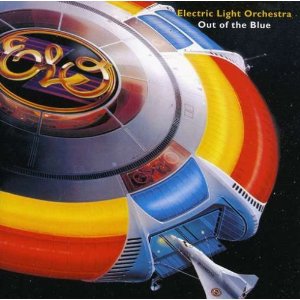
Not sure if he's thinking of ELO, Boston had a lot of UFOs on their album covers, too.
Not as much as Yes' [alien landscapes*, UFO songs]. Even The Carpenters made a UFO song. Those were the days.
(*) Appropriated by the producers of Avatar without credits for Roger Dean. But I digress.
And let's not forget Klaatu. They had UFO/Alien-themed songs across at tleast two of their hard-to-find albums.
"Calling Occupants of Interplanetary Craft" and "Anus from Uranus" (a HILARIOUS song, with lyrics that were recorded BACKWARDS with words phonetically-chose to sound like the words they wanted when played FORWARD). WAY cool! -
Re:CHOSEN TO SHOW THE WORLD
Not sure if he's thinking of ELO, Boston had a lot of UFOs on their album covers, too.
Not as much as Yes' [alien landscapes*, UFO songs]. Even The Carpenters made a UFO song. Those were the days.
(*) Appropriated by the producers of Avatar without credits for Roger Dean. But I digress.
And let's not forget Klaatu. They had UFO/Alien-themed songs across at tleast two of their hard-to-find albums.
"Calling Occupants of Interplanetary Craft" and "Anus from Uranus" (a HILARIOUS song, with lyrics that were recorded BACKWARDS with words phonetically-chose to sound like the words they wanted when played FORWARD). WAY cool! -
Re:CHOSEN TO SHOW THE WORLD
Not sure if he's thinking of ELO, Boston had a lot of UFOs on their album covers, too.
Not as much as Yes' [alien landscapes*, UFO songs]. Even The Carpenters made a UFO song. Those were the days.
(*) Appropriated by the producers of Avatar without credits for Roger Dean. But I digress.
And let's not forget Klaatu. They had UFO/Alien-themed songs across at tleast two of their hard-to-find albums.
"Calling Occupants of Interplanetary Craft" and "Anus from Uranus" (a HILARIOUS song, with lyrics that were recorded BACKWARDS with words phonetically-chose to sound like the words they wanted when played FORWARD). WAY cool! -
Re:CHOSEN TO SHOW THE WORLD
-
Re:CHOSEN TO SHOW THE WORLD
-
Re:CHOSEN TO SHOW THE WORLD
-
CHOSEN TO SHOW THE WORLD
Not sure if he's thinking of ELO, Boston had a lot of UFOs on their album covers, too.
But surely this dude should already know the real truth.
Because teh intarwebs tell me that that the Space People communicate to the great unwashed through the medium of Rock n Roll. David Bowie, Jimi Hendrix and dozens of other examples have met the Space Brothers. -
CHOSEN TO SHOW THE WORLD
Not sure if he's thinking of ELO, Boston had a lot of UFOs on their album covers, too.
But surely this dude should already know the real truth.
Because teh intarwebs tell me that that the Space People communicate to the great unwashed through the medium of Rock n Roll. David Bowie, Jimi Hendrix and dozens of other examples have met the Space Brothers.