Slashdot Mirror
Domain: youtube.com
Stories and comments across the archive that link to youtube.com.
Stories · 2,039
-
Solar Impulse 2 Makes First Flight
schwit1 writes: "The solar-powered experimental airplane Solar Impulse 2 made its maiden flight on Monday. 'The solar-powered aircraft took off at 5:36 AM CET, when the weather around the aerodrome was at its calmest, with pilot Markus Scherdel at the controls. The aircraft flew for two hours and 17 minutes, reaching an altitude of 1,670 m (5,500 ft) and a ground speed of 55.6 km/h (30 kt). According to Solar Impulse, the in-flight data indicates that the aircraft slated to make the first all-solar global circumnavigation flight performed to expectations.' The goal is to use this plane to fly around the world in 2015. Videos of the takeoff and landing are available, as are a series of pictures. The plane gets off the ground very quickly, does not move very fast, and is balanced precariously on a single set of wheels in the center. If you look closely before takeoff, there are two guys literally holding the wings up at each end to balance it. They have to run with the plane for the first few seconds until it gets enough lift to balance on its own. The landing video shows both bicyclists and men racing to meet up with the wings to hold them up once the plane stops." -
Solar Impulse 2 Makes First Flight
schwit1 writes: "The solar-powered experimental airplane Solar Impulse 2 made its maiden flight on Monday. 'The solar-powered aircraft took off at 5:36 AM CET, when the weather around the aerodrome was at its calmest, with pilot Markus Scherdel at the controls. The aircraft flew for two hours and 17 minutes, reaching an altitude of 1,670 m (5,500 ft) and a ground speed of 55.6 km/h (30 kt). According to Solar Impulse, the in-flight data indicates that the aircraft slated to make the first all-solar global circumnavigation flight performed to expectations.' The goal is to use this plane to fly around the world in 2015. Videos of the takeoff and landing are available, as are a series of pictures. The plane gets off the ground very quickly, does not move very fast, and is balanced precariously on a single set of wheels in the center. If you look closely before takeoff, there are two guys literally holding the wings up at each end to balance it. They have to run with the plane for the first few seconds until it gets enough lift to balance on its own. The landing video shows both bicyclists and men racing to meet up with the wings to hold them up once the plane stops." -
HP (Re-)Announces a 14" Android Laptop
PC Mag reports that an upcoming laptop from HP (one that was prematurely announced in April, and now official) has decent-to-good specs — under 4 pounds, battery life more than 8 hours, Tegra processor, and a 1928x1080 touch screen — but an unusual operating system, at least for a laptop. The SlateBook 14 will run Android, rather than Windows (or ChromeOS, for that matter), which helps keep it relatively cheap, at $400. According to the article, Android is "a lot cheaper for HP to implement in a laptop; ChromeOS, in contrast, comes with more stringent system requirements that would cost HP a bit more." Ars Technica's mention in April includes a screenshot taken from a video (note: video itself appears to be disabled) which shows the keyboard layout and which reveals some Android-specific changes. Update: 06/01 19:23 GMT by T : Here's an alternative link to the promotional video. -
Is Google CEO's "Tiny Bubble Car" Yahoo CEO's "Little Bubble Car"?
theodp (442580) writes "Back in 2011, then-Google VP and now-Yahoo CEO Marissa Mayer brainstormed with BMW to sketch out an idea she had for self-driving 'little bubbles' that could ease office commutes. Here's Mayer's pitch from a BMW film short: 'All I really need is a little bubble that drives itself and when it runs into something, it doesn't hurt that much...and...you know, like it doesn't actually take up that much fuel because it's so lightweight and it's good for the environment for that reason.' So, with Google's newly-built, steering wheel-less self-driving car being described as a 'tiny bubble-car', one wonders if Google CEO Larry Page's "Tiny Bubble Car" has its roots in Mayer's 'Little Bubble Car,' especially considering the striking similarity of Mayer's concept car sketch and Google's built vehicle." Seems to me there's been plenty of concept art (as well as actual tiny bubble-like cars, even if they generallly have had steering wheels) for car designers to draw on. -
Ford's Bringing Adaptive Steering To the Masses
cartechboy writes: "Most automakers have made the jump from hydraulic power steering to electronic power steering to help conserve fuel. By using an electric motor instead of a hydraulic system, less energy is drawn from the engine. Many luxury automakers have also introduced adaptive steering with the electronic power steering systems, but now Ford is looking to bring this feature to the masses. Adaptive steering builds on the existing speed-sensitive function of the electronic power steering system by altering the steering ratio and effort based on driver inputs and settings. The system uses a precision-controlled actuator placed inside the steering wheel. It's an electric motor and gearing system that can essentially add or subtract from the driver's steering inputs. This will make the vehicle easier to maneuver at low speeds, and make a vehicle feel more stable at high speeds. The system (video) will be offered on certain Ford vehicles within the next 12 months." -
Google's Rogue Internet Balloon Test Spurred UFO Reports Nationwide
Jason Koebler (3528235) writes "The hardest thing about Google X's Project Loon hasn't been the engineering challenge of beaming high-speed internet down to the far-flung corners of the world: It's trying to control all those freaking balloons. Project lead Rich DeVaul just revealed the 'Falcon 11,' a 120-foot long transparent mylar balloon made in-house at the secret Google X lab that spurred UFO reports nationwide after the company lost track of it: 'We tracked the balloon by outsourcing to the internet UFO community, it drifted all the way across the country,' he said." -
Linux Sucks (Video)
How do we know Linux sucks? Because Bryan Lunduke says so. How did he become a Linux authority? By using Linux, of course. He has also written a kids Linux book, Linux for Hank, and a grown-up Linux book, Linux is Badass. But wait! That's not all! Bryan is also one of the people behind the infamous Bad Voltage podcast.
And now, for something slightly different: In moments of weakness, Bryan admits that maybe Linux suckage isn't total, and Linux may have a good point or two and maybe some of the suckage could be removed. Zounds! Is that possible? Watch our video chat with Bryan (and/or read the transcript) and see. Or watch the entire 44 minute speech he gave at the 2014 LinuxFest Northwest, which was the 5th (or maybe 6th) "Linux Sucks" speech he's given at LFNW. That makes this a tradition, not just a speech. So if you find yourself in or near Bellingham, Washington, in 2039 you might want to pop in and see if Bryan is still updating his "Linux Sucks" speech. He'll be the geezer hobbling to the front of the room with help from his AutoCane, a device sure to be developed between now and then -- which will no doubt run Linux. (Alternate video link) -
Meet Canada's Goosebuster Drone
Hugh Pickens DOT Com writes "Tyler LeBlanc reports that Ottawa has a problem — a goose problem. Every summer the wandering waterfowl return to the beaches that line the Ottawa River leaving high concentrations of geese poop on beaches and in shallow water, which can lead to outbreaks of infection in human populations, particularly children. In the past, the city has tried a number of different methods of ridding their beaches of the geese, but this year, they are going high-tech. Steve Wambolt, the founder of Aerial Perspective, modified a drone with some flashing lights and speakers and took to the skies. 'I took existing land-based anti-pest technology and put it on a helicopter,' says Wambolt. 'When I tested it at the beach a few days later it worked remarkably well.' Using pre-recorded predatory calls (video) from hawks, eagles, owls, ravens and even wolves, Wambolt stalks the beaches of Petrie Island in an attempt to scare the loitering geese away from the area for good." -
Unlock Your Android Phone With Open Source Wearable NFC
coop0030 (263345) writes "Becky Stern at Adafruit has created a guide on how to create an open source NFC ring or other wearable to mod and unlock your Android phone. From the tutorial: 'Unlock your phone by just picking it up! No more pesky password or gesture PIN, just scan an NFC tag! This guide covers creating an NFC ring, putting an NFC tag in your nail polish, modding your Android installation to read tags from the lockscreen, and creating an automation toolchain to unlock the phone when the desired tag is scanned.' There is also a video that demonstrates how it works." -
German Pranksters Spoof Google Nest At Tech Conference
phmadore writes: "Some clever German pranksters managed to put one over on a sect of the intelligentsia just the other day. In this 30-minute presentation (video) at the re:publica 2014 tech conference, activists going under the pseudonyms of Paul von Ribbeck and Gloria Spindle presented four new (and moderately credible) Google products making up the 'Google Nest': Google Trust, Google Hug, Google Bee, and Google Bye. 'We can't really guarantee that we protect your information, but we can do our very best to protect you,' says Spindle about eight minutes in. Google is reportedly rather upset about the whole affair. The conference organizers were in on the joke — the audience were clued in afterward and asked to participate in order to fool the media. For me, the discussion-worthy items here are: data insurance and the value of data." -
German Pranksters Spoof Google Nest At Tech Conference
phmadore writes: "Some clever German pranksters managed to put one over on a sect of the intelligentsia just the other day. In this 30-minute presentation (video) at the re:publica 2014 tech conference, activists going under the pseudonyms of Paul von Ribbeck and Gloria Spindle presented four new (and moderately credible) Google products making up the 'Google Nest': Google Trust, Google Hug, Google Bee, and Google Bye. 'We can't really guarantee that we protect your information, but we can do our very best to protect you,' says Spindle about eight minutes in. Google is reportedly rather upset about the whole affair. The conference organizers were in on the joke — the audience were clued in afterward and asked to participate in order to fool the media. For me, the discussion-worthy items here are: data insurance and the value of data." -
Jon 'maddog' Hall On the Future of Free Software (Video)
You know who maddog is, right? He's one of our favorite speakers on what we might call the Linux/FOSS circuit. So you know, despite the Noel Coward song that says, "Mad Dogs and Englishmen go out in the midday sun," Jon prefers shade much of the time when he's in a tropical climate, based on personal observations at Linux conferences in Florida and Hawaii. But sun or shade, maddog is an eloquent and interesting speaker. We'd like to take you all to hear him in person, but we can't, so this video is the next best thing. (Alternate Video Link) -
Ask Slashdot: Joining a Startup As an Older Programmer?
First time accepted submitter bdrasin (17319) writes "I've had a series of interviews with a late-term startup (approx. 300 employees) and I think there is a good chance they will make me an offer. The technology is great, my skills and interests are a good fit for the position, I think the company has a promising future, and I like they team. Frankly I'm damn excited about it, more so than for any job in my career. However, I'm worried about what could euphemistically be called 'cultural' issues. I'm a few years over 40, with a wife and kids, and all of the engineers at the company seem to be at least 10 years younger than I am. Being at the company's office gives me a distinct old guy at the club feeling. I don't think the overall number of hours the team works is more than I could handle, but the team does a lot of young-single-guy-at-a-startup group activities (rent-a-limo-and-go-clubbing night, weekends in Tahoe, Burning Man, in-office happy hour) that I wouldn't want or be able to participate in; I need to be home with my family for dinner most nights and weekends and so on. I'm wondering if anyone else has had the experience of working at a startup with, or as, an older programmer, and how it worked out?" -
For the First Time Ever, the FAA Is Trying To Fine a Drone Hobbyist
Jason Koebler writes: "For the first time ever, the Federal Aviation Administration is trying to fine a hobby drone operator, a development that threatens to throw the whole hobby into disarray if the agency successfully levies the fine. While the FAA has explicitly said it doesn't want anyone flying drones commercially, it has never issued similar suggestions about hobby flight, which is why it has been just fine for some guy to fly a drone above a tornado, but illegal, in the FAA's eyes, for a journalist to do the same. That has changed, according to the agency. A spokesperson for the FAA told me that the agency 'has proposed a civil penalty against an individual in New York City. The operator, who is a hobbyist, flew a drone carelessly or recklessly and violated air traffic rules as well. He ran the drone into a couple of buildings and it crash-landed 20 feet from a person (video).'" -
SpaceX Looking For Help With "Landing" Video
Maddog Batty (112434) writes "SpaceX recently made the news by managing to soft land at sea the first stage of rocket used to launch its third supply mission to the International Space Station. Telemetry reported that it was able to hover for eight seconds above the sea before running out of fuel and falling horizontal. Unfortunately, due to stormy weather at the time, their support ship wasn't able to get to the "landing" spot at the time and the first stage wasn't recovered and is likely now on the sea bed. Video of the landing was produced and transmitted to an aeroplane but unfortunately it is rather corrupted. SpaceX have attempted to improve it but it isn't much better. They are now looking for help to improve it further." -
SpaceX Looking For Help With "Landing" Video
Maddog Batty (112434) writes "SpaceX recently made the news by managing to soft land at sea the first stage of rocket used to launch its third supply mission to the International Space Station. Telemetry reported that it was able to hover for eight seconds above the sea before running out of fuel and falling horizontal. Unfortunately, due to stormy weather at the time, their support ship wasn't able to get to the "landing" spot at the time and the first stage wasn't recovered and is likely now on the sea bed. Video of the landing was produced and transmitted to an aeroplane but unfortunately it is rather corrupted. SpaceX have attempted to improve it but it isn't much better. They are now looking for help to improve it further." -
Firefox 29: Redesign
An anonymous reader writes "Mozilla today officially launched Firefox 29 for Windows, Mac, Linux, and Android. This is a massive release: Firefox Sync has been revamped and is now powered by Firefox Accounts, there's a new customization mode, and the company's major user interface overhaul Australis has finally arrived. 'The tabs are sleek and smooth to help you navigate the Web faster. It’s easy to see what tab you’re currently visiting and the other tabs fade into the background to be less of a distraction when you’re not using them. The Firefox menu has moved to the right corner of the toolbar and puts all your browser controls in one place. The menu includes a “Customize” tool that transforms Firefox into a powerful customization mode where you can add or move any feature, service or add-on.' Here are the full release notes and a demo video." -
The Koch Brothers Attack On Solar Energy
Hugh Pickens DOT Com (2995471) writes "The NYT writes in an editorial that for the last few months, the Koch brothers and their conservative allies in state government have been spending heavily to fight incentives for renewable energy, by pushing legislatures to impose a surtax on this increasingly popular practice, hoping to make installing solar panels on houses less attractive. 'The coal producers' motivation is clear: They see solar and wind energy as a long-term threat to their businesses. That might seem distant at the moment, when nearly 40 percent of the nation's electricity is still generated by coal, and when less than 1 percent of power customers have solar arrays. But given new regulations on power-plant emissions of mercury and other pollutants, and the urgent need to reduce global warming emissions, the future clearly lies with renewable energy.' For example, the Arizona Public Service Company, the state's largest utility, funneled large sums through a Koch operative to a nonprofit group that ran an ad claiming net metering would hurt older people on fixed incomes (video) by raising electric rates. The ad tried to link the requirement to President Obama. Another Koch ad likens the renewable-energy requirement to health care reform, the ultimate insult in that world. 'Like Obamacare, it's another government mandate we can't afford,' the narrator says. 'That line might appeal to Tea Partiers, but it's deliberately misleading,' concludes the editorial. 'This campaign is really about the profits of Koch Carbon and the utilities, which to its organizers is much more important than clean air and the consequences of climate change.'" -
Finding the Next Generation of Teachers With "Innovative Microsoft Ads"
theodp (442580) writes "Back in 2011, the U.S. Dept. of Education delegated teacher recruitment to Microsoft (RFP, pdf). 'The decision to turn over TEACH to [Microsoft] Partners in Learning serves to expand the already outsized influence Gates and his fortune have on public education,' wrote the Washington Post at the time. So, 'what happens when a public institution in a democracy — the US Department of Education — outsources its goal of recruiting good teachers to a private industry?' Well, in addition to Teach.org and redundant social media efforts on Twitter, Facebook, Tumblr, Instagram, Linkedin, and YouTube, the U.S. is now relying on 'Innovative Microsoft Advertising to Recruit the next Generation of Teachers'. From the press release, 'The Ad Council and TEACH have formed a unique outreach campaign with Microsoft's Advertising team in an effort to recruit the next generation of teachers who will drive innovation and redefine teaching in K-12 classrooms. Microsoft donated over 125 million impressions across Xbox 360, Windows 8, and MSN in order to encourage consumers to rediscover teaching through interactive ad units. This media effort is an extension of the Ad Council and TEACH's public service advertising (PSA) campaign, Make More...Throughout March, consumers were able to engage with TEACH "NUads on Xbox", via gesture, voice or controller on their Xbox 360 consoles...Most recently, Microsoft leveraged their Windows 8 platform to provide a unique experience to consumers, enabling them to navigate through a series of questions to help "discover their true passion," along with the opportunity to play challenging mind and word games, such as a word scramble and tangrams.' Check out the demo of the Windows 8 platform experience [YouTube], in which a person is advised 'You'd Make a Great Science & Tech Teacher,' on the basis of a 'Personality Quiz' consisting of five dragged-and-dropped photos." -
Finding the Next Generation of Teachers With "Innovative Microsoft Ads"
theodp (442580) writes "Back in 2011, the U.S. Dept. of Education delegated teacher recruitment to Microsoft (RFP, pdf). 'The decision to turn over TEACH to [Microsoft] Partners in Learning serves to expand the already outsized influence Gates and his fortune have on public education,' wrote the Washington Post at the time. So, 'what happens when a public institution in a democracy — the US Department of Education — outsources its goal of recruiting good teachers to a private industry?' Well, in addition to Teach.org and redundant social media efforts on Twitter, Facebook, Tumblr, Instagram, Linkedin, and YouTube, the U.S. is now relying on 'Innovative Microsoft Advertising to Recruit the next Generation of Teachers'. From the press release, 'The Ad Council and TEACH have formed a unique outreach campaign with Microsoft's Advertising team in an effort to recruit the next generation of teachers who will drive innovation and redefine teaching in K-12 classrooms. Microsoft donated over 125 million impressions across Xbox 360, Windows 8, and MSN in order to encourage consumers to rediscover teaching through interactive ad units. This media effort is an extension of the Ad Council and TEACH's public service advertising (PSA) campaign, Make More...Throughout March, consumers were able to engage with TEACH "NUads on Xbox", via gesture, voice or controller on their Xbox 360 consoles...Most recently, Microsoft leveraged their Windows 8 platform to provide a unique experience to consumers, enabling them to navigate through a series of questions to help "discover their true passion," along with the opportunity to play challenging mind and word games, such as a word scramble and tangrams.' Check out the demo of the Windows 8 platform experience [YouTube], in which a person is advised 'You'd Make a Great Science & Tech Teacher,' on the basis of a 'Personality Quiz' consisting of five dragged-and-dropped photos." -
DIY Wearable Pi With Near-Eye Video Glasses
coop0030 (263345) writes "Noe & Pedro Ruiz at Adafruit have created a pair of open source near-eye video glasses combined with a Raspberry Pi. Their 3D Printed design turns a pair of 'private display glasses' into a "google glass"-like form factor. It easily clips to your prescription glasses, and can display any kind of device with Composite Video like a Raspberry Pi. They have a video demonstrating the glasses, a tutorial on how to build them, along with the 3d files required to print it out." -
Google Aids Scientology-Linked Group CCHR With Pay-Per-Click Ads
An anonymous reader writes "The Citizens Commission on Human Rights (CCHR), a Scientology front group, has received a 'grant from Google in the amount of $10,000 per month worth of Pay Per Click Advertising to be used in our Orange County anti-psych campaigns.' CCHR believes that ALL psychiatrists are evil. They believe that psychiatrists were behind the holocaust, and these shadow men were never brought to justice. CCHR also believes that psychiatrists were behind the 911 attacks. Scientologists believe that psychiatrists have always been evil, and their treachery goes back 75 million years when the psychiatrists assisted XENU in killing countless alien life forms. Thanks Google! We may be able to stop these evil Psychs once and for all!" -
Born To RUN: Dartmouth Throwing BASIC a 50th B-Day Party
theodp writes: "Still hanging on to a dog-eared copy of BASIC Computer Games? Back issues of Creative Computing? Well then, Bunky, mark your calendar for April 30th, because Dartmouth College is throwing BASIC a 50th birthday party that you won't want to miss! From the 'invite' to BASIC at 50: 'At 4 a.m. on May 1, 1964, in the basement of College Hall, Professor John Kemeny and a student programmer simultaneously typed RUN on neighboring terminals. When they both got back correct answers to their simple programs, time-sharing and BASIC were born. Kemeny, who later became Dartmouth's 13th president, Professor Tom Kurtz, and a number of undergraduate students worked together to revolutionize computing with the introduction of time-sharing and the BASIC programming language. Their innovations made computing accessible to all Dartmouth students and faculty, and soon after, to people across the nation and the world [video — young Bill Gates cameo @2:18]. This year, Dartmouth is celebrating 50 years of BASIC with a day of events on Wednesday, April 30. Please join us as we recognize the enduring impact of BASIC, showcase innovation in computing at Dartmouth today, and imagine what the next 50 years may hold.' Be sure to check out the vintage photos on Flickr to see what real cloud computing looks like, kids!" -
Blender Foundation Video Taken Down On YouTube For Copyright Violation
An anonymous reader writes "As if the automated take downs on Youtube weren't already bad enough, today fans of the popular open source 3D software Blender were greeted by a copyright take down notice for their third open movie, Sintel, despite it being released under a Creative Commons license: 'This video contains content from Sony Pictures Movies & Shows, who has blocked it on copyright grounds.' It is believed that the takedown was a result of Sony Electronics adding Sintel to their official 4k demo pool." -
TCP/IP Might Have Been Secure From the Start If Not For the NSA
chicksdaddy writes: "The pervasiveness of the NSA's spying operation has turned it into a kind of bugaboo — the monster lurking behind every locked networking closet and the invisible hand behind every flawed crypto implementation. Those inclined to don the tinfoil cap won't be reassured by Vint Cerf's offhand observation in a Google Hangout on Wednesday that, back in the mid 1970s, the world's favorite intelligence agency may have also stood in the way of stronger network layer security being a part of the original specification for TCP/IP. (Video with time code.) Researchers at the time were working on just such a lightweight cryptosystem. On Stanford's campus, Cerf noted that Whit Diffie and Martin Hellman had researched and published a paper that described the functioning of a public key cryptography system. But they didn't yet have the algorithms to make it practical. (Ron Rivest, Adi Shamir and Leonard Adleman published the RSA algorithm in 1977). As it turns out, however, Cerf did have access to some really bleeding edge cryptographic technology back then that might have been used to implement strong, protocol-level security into the earliest specifications of TCP/IP. Why weren't they used? The crypto tools were part of a classified NSA project he was working on at Stanford in the mid 1970s to build a secure, classified Internet. 'At the time I couldn't share that with my friends,' Cerf said." -
60 Minutes Dubbed Engines Noise Over Tesla Model S
cartechboy (2660665) writes "Did you watch the Tesla 60 Minutes segment the other night? If you did, you might have ended up on the floor rolling around laughing like I did. Since when does the Tesla Model S electric car make audible engine noises? Or downshift? Turns out, 60 Minutes dubbed engine noises and a downshift over the Model S running footage. The show claims it was an editing error. Call it what you want, it was absolutely hilarious. A little note to TV producers assigned to cover Tesla Motors in the future: Electric cars don't upshift or downshift." At least they didn't fraudulently blow it up! -
Vint Cerf: CS Programs Must Change To Adapt To Internet of Things
chicksdaddy (814965) writes "The Internet of Things has tremendous potential but also poses a tremendous risk if the underlying security of Internet of Things devices is not taken into account, according to Vint Cerf, Google's Internet Evangelist. Cerf, speaking in a public Google Hangout (video) on Wednesday, said that he's tremendously excited about the possibilities of an Internet of billions of connected objects. But Cerf warned that it necessitates big changes in the way that software is written. Securing the data stored on those devices and exchanged between them represents a challenge to the field of computer science – one that the nation's universities need to start addressing. Internet of Things products need to do a better job managing access control and use strong authentication to secure communications between devices." -
eBay Japan Passwords Revealed As Username+123456
mask.of.sanity (1228908) writes "eBay Japan created passwords for accounts based on a combination of a username plus a static salt, allowing anyone with knowledge of it to access any account, a researcher reported. The salt, which should have been random, used was the combination '123456', which was reported as last year's worst password." Complete with visual aids. -
Functional 3D-Printed Tape Measure
First time accepted submitter Trep (366) writes "I thought Slashdot readers might be interested in seeing how my friend is slowly building a 3D printed toolbox. He's created a fully functional tape measure which is 3D printed as a single assembly, to follow up on his 3D printed dial calipers. This is a pretty novel design, with a lot of moving parts that come out of the printer completely assembled!" -
Functional 3D-Printed Tape Measure
First time accepted submitter Trep (366) writes "I thought Slashdot readers might be interested in seeing how my friend is slowly building a 3D printed toolbox. He's created a fully functional tape measure which is 3D printed as a single assembly, to follow up on his 3D printed dial calipers. This is a pretty novel design, with a lot of moving parts that come out of the printer completely assembled!" -
Some Sites That Blue Coat Blocks Under "Pornography"
Bennett Haselton writes this week with a dissection of the effects of one well-known, long-known problem with so-called Internet filters. "The New Braunfels Republican Women, the Weston Community Children's Association, and the Rotary Club of Midland, Ontario are among the sites categorized as 'pornography' by Blue Coat, a California-based Internet blocking software company. While the product may not be much worse than other Internet filtering programs in that regard, it reinforces the point that miscategorization of sites as 'pornographic' is a routine occurrence in the industry, and not just limited to a handful of broken products." Read on below for the rest.On Monday I released a blog post through the Citizen Lab at the University of Toronto, listing some of the sites that we had found to be blocked by Blue Coat's Internet filtering program. Previously we had released a similar report on sites that were miscategorized as "pornography" by Smartfilter. We ran some of the same URL lists through both programs, and found that some unfortunate sites were even blocked as "pornography" by both products, including Barenboim-Said (a youth orchestra featuring musicians from Israel, Palestine, and different Arab nations), and the aforementioned New Braunfels Republican Women.
The full list of sites we said were "miscategorized" is at the end of the Citizen Lab blog post. As far as I know we didn't miss any porn hidden on any of the sites that were in the list. The closest we came was a photo on performancespace.org/ showing what appears to be a model taking one for the team by lying on the floor of a grungy art exhibit. There was also the other borderline case of http://safe-sex.org/, which does include articles on topics like "Safe Sex with Expensive London Escorts." But Blue Coat's own working definition of 'pornography' defines it as "Sites that contain sexually explicit material for the purpose of arousing a sexual or prurient interest," and the articles on Safe-Sex.org do not appear intended to arouse ("The heartwarming fact about having safe sex with expensive London escorts is that they usually present a clean bill of health to clients."), so it gets counted as a miscategorization. The overwhelming majority of miscategorized sites were completely G-rated fare like the Kiddie Kollege Nursery School (which, by the way, would probably have grounds for a lawsuit against Blue Coat, if parents trying to access their website were greeted with a message that it had been blocked for containing "pornography").
Anyone can play the parlor game of examining blocked websites looking for signs of what caused them to be blocked. Is the website of the New Braunfels Republican Women blocked by both Blue Coat and Smartfilter because it has the word "women" in the title? (Tempting to thing so, but unlikely, since there are so many other sites with "women" in the name which were not blocked by either product.) One of the blocked websites, http://www.foundations4betterliving.org/, until recently contained statistics such as "A growing variety of sexual behaviour is being practiced by teens 15- to 19-year-old... 53% admit to masturbating; 49% have participated in oral sex; 11% have had anal sex," all of which you could read on their front page while Bette Midler's 'From A Distance' auto-played in the background. (I was hoping to introduce you to that sublime experience, but unfortunately the domain apparently expired right after the report was published. When you list 150 domain names in a report, that's bound to happen with some of them.) And there's neobit.org/, the homepage of a manufacturer of emulators for dongles. While many Americans probably heard the term for the first time when Amy Poehler asked the Best Buy salesman "Can I use a dongle with this? Does it make you uncomfortable when I use the word 'dongle'?", the eggheads at Blue Coat should know what a dongle actually is. 'Dongle' has never been generally accepted anatomical slang, one rogue entry at the Urban Dictionary notwithstanding.
On the other hand, most websites in the report are not only not pornographic, they don't even seem to contain any content that could have triggered an accidental block. So it's quite possible that Blue Coat simply blocks a certain number of sites as a result of some pseudo-random process, and just by chance, some of those sites happen to contain content which looks like it might have caused the block, but the content actually had nothing to do with it.
Still, that leaves open the question of why so many sites turned up blocked by both Blue Coat and Smartfilter. Out of about 150 sites miscategorized by Smartfilter and about 150 sites miscategorized by Blue Coat, 8 sites showed up on both lists, or about 6%. (That group of 8 is listed in the middle of the blog post, beginning with balticsail.org.) Now if either Smartfilter or Blue Coat were blocking non-pornographic sites completely at random, then the percentage of overlap should be about the same as the percentage of non-pornographic sites that the product blocks generally. (For example: Suppose Blue Coat blocked 1% of non-pornographic sites completely at random. Out of 150 non-pornographic sites blocked by Smartfilter, we would therefore expect 1% of them -- about 1 or 2 sites -- to also be blocked by Blue Coat.) But despite the huge number of errors made by both products, neither of them comes close to blocking 6% of all non-pornographic websites as "pornography"; the percentage of overlap is much higher than we would expect if the blocking were random.
So this suggests that some factor is at work that caused the 8 sites in that list to be more likely than average to be blocked, such that they ended up blocked by both products. Did any of the domain names used to be registered to a porn site? It seems hard to imagine that balticsail.org or barenboimsaidusa.org/ could have ever been in demand as domain names used to advertise porn. moriah.org/ sounds like it possibly could have been (many domain names consisting solely of female first names are registered to porn sites), but according to the Wayback Machine, the a previous owner was a Christian band, before the domain expired and was bought by its present-day owner, a Jewish boarding school. Perhaps the IP addresses of these sites used to be held by porn companies, but then why would the products block the sites by their domain name as well? So I really don't know.
The good news is that, unlike Smartfilter, at least Blue Coat's blacklist doesn't appear to be used by any countries for nationwide Internet censorship. Citizen Lab had previously discovered installations of Blue Coat Internet blocking software in 19 "countries of interest" with poor human rights records, but none of them appeared to be set up to filter Internet traffic in and out of the country. In the one country where the product was being used for statewide Internet filtering, the United Arab Emirates, the Blue Coat software was being used in conjunction with Smartfilter's blacklist, so the sites that are mis-blocked by Blue Coat are not blocked in that country (unless of course they also happen to be mis-blocked by Smartfilter).
For the time being, it is not against U.S. law for a company to sell Internet censoring software to foreign governments, even with the knowledge that the tools are being used to restrict freedom of speech in a manner that would be considered a human rights violation by international standards, so both companies have made it a core part of their business.
What a bunch of dongles.
-
Some Sites That Blue Coat Blocks Under "Pornography"
Bennett Haselton writes this week with a dissection of the effects of one well-known, long-known problem with so-called Internet filters. "The New Braunfels Republican Women, the Weston Community Children's Association, and the Rotary Club of Midland, Ontario are among the sites categorized as 'pornography' by Blue Coat, a California-based Internet blocking software company. While the product may not be much worse than other Internet filtering programs in that regard, it reinforces the point that miscategorization of sites as 'pornographic' is a routine occurrence in the industry, and not just limited to a handful of broken products." Read on below for the rest.On Monday I released a blog post through the Citizen Lab at the University of Toronto, listing some of the sites that we had found to be blocked by Blue Coat's Internet filtering program. Previously we had released a similar report on sites that were miscategorized as "pornography" by Smartfilter. We ran some of the same URL lists through both programs, and found that some unfortunate sites were even blocked as "pornography" by both products, including Barenboim-Said (a youth orchestra featuring musicians from Israel, Palestine, and different Arab nations), and the aforementioned New Braunfels Republican Women.
The full list of sites we said were "miscategorized" is at the end of the Citizen Lab blog post. As far as I know we didn't miss any porn hidden on any of the sites that were in the list. The closest we came was a photo on performancespace.org/ showing what appears to be a model taking one for the team by lying on the floor of a grungy art exhibit. There was also the other borderline case of http://safe-sex.org/, which does include articles on topics like "Safe Sex with Expensive London Escorts." But Blue Coat's own working definition of 'pornography' defines it as "Sites that contain sexually explicit material for the purpose of arousing a sexual or prurient interest," and the articles on Safe-Sex.org do not appear intended to arouse ("The heartwarming fact about having safe sex with expensive London escorts is that they usually present a clean bill of health to clients."), so it gets counted as a miscategorization. The overwhelming majority of miscategorized sites were completely G-rated fare like the Kiddie Kollege Nursery School (which, by the way, would probably have grounds for a lawsuit against Blue Coat, if parents trying to access their website were greeted with a message that it had been blocked for containing "pornography").
Anyone can play the parlor game of examining blocked websites looking for signs of what caused them to be blocked. Is the website of the New Braunfels Republican Women blocked by both Blue Coat and Smartfilter because it has the word "women" in the title? (Tempting to thing so, but unlikely, since there are so many other sites with "women" in the name which were not blocked by either product.) One of the blocked websites, http://www.foundations4betterliving.org/, until recently contained statistics such as "A growing variety of sexual behaviour is being practiced by teens 15- to 19-year-old... 53% admit to masturbating; 49% have participated in oral sex; 11% have had anal sex," all of which you could read on their front page while Bette Midler's 'From A Distance' auto-played in the background. (I was hoping to introduce you to that sublime experience, but unfortunately the domain apparently expired right after the report was published. When you list 150 domain names in a report, that's bound to happen with some of them.) And there's neobit.org/, the homepage of a manufacturer of emulators for dongles. While many Americans probably heard the term for the first time when Amy Poehler asked the Best Buy salesman "Can I use a dongle with this? Does it make you uncomfortable when I use the word 'dongle'?", the eggheads at Blue Coat should know what a dongle actually is. 'Dongle' has never been generally accepted anatomical slang, one rogue entry at the Urban Dictionary notwithstanding.
On the other hand, most websites in the report are not only not pornographic, they don't even seem to contain any content that could have triggered an accidental block. So it's quite possible that Blue Coat simply blocks a certain number of sites as a result of some pseudo-random process, and just by chance, some of those sites happen to contain content which looks like it might have caused the block, but the content actually had nothing to do with it.
Still, that leaves open the question of why so many sites turned up blocked by both Blue Coat and Smartfilter. Out of about 150 sites miscategorized by Smartfilter and about 150 sites miscategorized by Blue Coat, 8 sites showed up on both lists, or about 6%. (That group of 8 is listed in the middle of the blog post, beginning with balticsail.org.) Now if either Smartfilter or Blue Coat were blocking non-pornographic sites completely at random, then the percentage of overlap should be about the same as the percentage of non-pornographic sites that the product blocks generally. (For example: Suppose Blue Coat blocked 1% of non-pornographic sites completely at random. Out of 150 non-pornographic sites blocked by Smartfilter, we would therefore expect 1% of them -- about 1 or 2 sites -- to also be blocked by Blue Coat.) But despite the huge number of errors made by both products, neither of them comes close to blocking 6% of all non-pornographic websites as "pornography"; the percentage of overlap is much higher than we would expect if the blocking were random.
So this suggests that some factor is at work that caused the 8 sites in that list to be more likely than average to be blocked, such that they ended up blocked by both products. Did any of the domain names used to be registered to a porn site? It seems hard to imagine that balticsail.org or barenboimsaidusa.org/ could have ever been in demand as domain names used to advertise porn. moriah.org/ sounds like it possibly could have been (many domain names consisting solely of female first names are registered to porn sites), but according to the Wayback Machine, the a previous owner was a Christian band, before the domain expired and was bought by its present-day owner, a Jewish boarding school. Perhaps the IP addresses of these sites used to be held by porn companies, but then why would the products block the sites by their domain name as well? So I really don't know.
The good news is that, unlike Smartfilter, at least Blue Coat's blacklist doesn't appear to be used by any countries for nationwide Internet censorship. Citizen Lab had previously discovered installations of Blue Coat Internet blocking software in 19 "countries of interest" with poor human rights records, but none of them appeared to be set up to filter Internet traffic in and out of the country. In the one country where the product was being used for statewide Internet filtering, the United Arab Emirates, the Blue Coat software was being used in conjunction with Smartfilter's blacklist, so the sites that are mis-blocked by Blue Coat are not blocked in that country (unless of course they also happen to be mis-blocked by Smartfilter).
For the time being, it is not against U.S. law for a company to sell Internet censoring software to foreign governments, even with the knowledge that the tools are being used to restrict freedom of speech in a manner that would be considered a human rights violation by international standards, so both companies have made it a core part of their business.
What a bunch of dongles.
-
Sons of Anarchy Creator On Google Copyright Anarchy
theodp writes "Over at Slate, Sons of Anarchy creator Kurt Sutter argues that Google's anti-copyright stance is just a way to devalue content, which is bad for artists and bad for consumers. The screed is Sutter's response to an earlier anti-copyright rant in Slate penned by a lawyer who represents Google and is a Fellow at the New America Foundation, a public policy institute chaired by Google Chairman Eric Schmidt that receives funding from Schmidt and Google. 'Everyone is aware that Google has done amazing things to revolutionize our Internet experience,' writes Sutter. 'And I'm sure Mr. and Mrs. Google are very nice people. But the big G doesn't contribute anything to the work of creatives. Not a minute of effort or a dime of financing. Yet Google wants to take our content, devalue it, and make it available for criminals to pirate for profit. Convicted felons like Kim Dotcom generate millions of dollars in illegal revenue off our stolen creative work. People access Kim through Google. And then, when Hollywood tries to impede that thievery, it's presented to the masses as a desperate attempt to hold on to antiquated copyright laws that will kill your digital buzz. It's so absurd that Google is still presenting itself as the lovable geek who's the friend of the young everyman. Don't kid yourself, kids: Google is the establishment. It is a multibillion-dollar information portal that makes dough off of every click on its page and every data byte it streams. Do you really think Google gives a s**t about free speech or your inalienable right to access unfettered content? Nope. You're just another revenue resource Google can access to create more traffic and more data streams. Unfortunately, those streams are now pristine, digital ones of our work, which all flow into a huge watershed of semi-dirty cash. If you want to know more about how this works, just Google the word "parasite."'" -
Happy Pi Day
mikejuk writes to let us know that today is Pi Day — 3/14 in American date notation. He writes, "This year, it feels as though we aren't celebrating alone. For the first time, it looks as if momentum has built up to the point where people have heard about Pi Day. There are even attempts to sell you Pi-related items as if it was a real holiday. But there is always some one to spoil the party so what ever you do to celebrate don't miss Vi Hart's Anti-Pi Rant video." Thus begins the yearly debate over Pi Day vs. Tau Day (June 28). Phil Plait has a post defending Pi Day's honor, and MIT isn't holding back their Pi Day celebrations. Large-scale celebration of Pi Day began in 1988, mostly through the efforts of physicists Larry Shaw and Ron Hipschmann at the San Francisco Exploratorium. The Exploratorium still runs Pi Day events 26 years later, including Pi-themed processions and pie for dessert. In 2009, Pi Day became semi-official through a vote by the House of Representatives. (They did a better job with Pi than did Indiana, who almost legislated it to be 3.2.)
The best way to celebrate Pi Day is to get together with some friends and talk math over a pie. You could even go for a pizza pie, since a pizza with radius 'z' and height 'a' has volume = pi * z * z * a. If you'd care for a game, head over to the Pi Day Challenge, which features a series of pi-related logic puzzles. Or just spend the day learning about pi.
Cool pi facts: Pi is currently known to about 10 billion decimal places. You can calculate pi using the Fibonacci sequence. A few years ago, Steven Rochen mapped the digits of pi to musical notes and turned it into a violin solo (video). Others have made music from pi as well. Mankind didn't know the first hundred digits of pi until the year 1701. How many digits of pi can you recite? The record for memorization currently stands at 67890 digits. The record for reciting pi while juggling three balls is just under 10,000. -
Happy Pi Day
mikejuk writes to let us know that today is Pi Day — 3/14 in American date notation. He writes, "This year, it feels as though we aren't celebrating alone. For the first time, it looks as if momentum has built up to the point where people have heard about Pi Day. There are even attempts to sell you Pi-related items as if it was a real holiday. But there is always some one to spoil the party so what ever you do to celebrate don't miss Vi Hart's Anti-Pi Rant video." Thus begins the yearly debate over Pi Day vs. Tau Day (June 28). Phil Plait has a post defending Pi Day's honor, and MIT isn't holding back their Pi Day celebrations. Large-scale celebration of Pi Day began in 1988, mostly through the efforts of physicists Larry Shaw and Ron Hipschmann at the San Francisco Exploratorium. The Exploratorium still runs Pi Day events 26 years later, including Pi-themed processions and pie for dessert. In 2009, Pi Day became semi-official through a vote by the House of Representatives. (They did a better job with Pi than did Indiana, who almost legislated it to be 3.2.)
The best way to celebrate Pi Day is to get together with some friends and talk math over a pie. You could even go for a pizza pie, since a pizza with radius 'z' and height 'a' has volume = pi * z * z * a. If you'd care for a game, head over to the Pi Day Challenge, which features a series of pi-related logic puzzles. Or just spend the day learning about pi.
Cool pi facts: Pi is currently known to about 10 billion decimal places. You can calculate pi using the Fibonacci sequence. A few years ago, Steven Rochen mapped the digits of pi to musical notes and turned it into a violin solo (video). Others have made music from pi as well. Mankind didn't know the first hundred digits of pi until the year 1701. How many digits of pi can you recite? The record for memorization currently stands at 67890 digits. The record for reciting pi while juggling three balls is just under 10,000. -
Happy Pi Day
mikejuk writes to let us know that today is Pi Day — 3/14 in American date notation. He writes, "This year, it feels as though we aren't celebrating alone. For the first time, it looks as if momentum has built up to the point where people have heard about Pi Day. There are even attempts to sell you Pi-related items as if it was a real holiday. But there is always some one to spoil the party so what ever you do to celebrate don't miss Vi Hart's Anti-Pi Rant video." Thus begins the yearly debate over Pi Day vs. Tau Day (June 28). Phil Plait has a post defending Pi Day's honor, and MIT isn't holding back their Pi Day celebrations. Large-scale celebration of Pi Day began in 1988, mostly through the efforts of physicists Larry Shaw and Ron Hipschmann at the San Francisco Exploratorium. The Exploratorium still runs Pi Day events 26 years later, including Pi-themed processions and pie for dessert. In 2009, Pi Day became semi-official through a vote by the House of Representatives. (They did a better job with Pi than did Indiana, who almost legislated it to be 3.2.)
The best way to celebrate Pi Day is to get together with some friends and talk math over a pie. You could even go for a pizza pie, since a pizza with radius 'z' and height 'a' has volume = pi * z * z * a. If you'd care for a game, head over to the Pi Day Challenge, which features a series of pi-related logic puzzles. Or just spend the day learning about pi.
Cool pi facts: Pi is currently known to about 10 billion decimal places. You can calculate pi using the Fibonacci sequence. A few years ago, Steven Rochen mapped the digits of pi to musical notes and turned it into a violin solo (video). Others have made music from pi as well. Mankind didn't know the first hundred digits of pi until the year 1701. How many digits of pi can you recite? The record for memorization currently stands at 67890 digits. The record for reciting pi while juggling three balls is just under 10,000. -
Ubuntu's Mir Gets Delayed Again
jones_supa writes "Delays keep piling up for the Mir display server on the Ubuntu desktop. After already being postponed multiple times, Mir might not be enabled by default on the Ubuntu Linux desktop until the 16.04 LTS release — in two years time! This was the estimate by Mark Shuttleworth in a virtual Ubuntu Developer Summit. Using Mir, Mark says, will lead to supporting more hardware, obtaining better performance, and 'do some great things' with the technology. He expects some users will start using Mir on the desktop over the next year. Mir is already packaged as an experimental option, along with an experimental Unity 8 desktop session." -
What If the Next Presidential Limo Was a Tesla?
cartechboy writes "The presidential limo is known as "The Beast," and it's getting to be about that time where it's replaced. Currently The Beast is a General Motors creation with a Cadillac badge, but what if the next presidential limo was a Tesla? Stick with me here. The Beast is a massive vehicle, which means there would be plenty of room in the structure to have a long battery pack a la Model S. Plus, it could use the upcoming Model X's all-wheel-drive system. Tesla's air suspension would keep it from encountering high-centering issues. There could even be a charging port on both the front and back so a battery truck could hook up while driving, like in-flight refueling. Obviously the battery pack would need to have extra protection so it wouldn't have any issues with road debris, but that's a minor issue. Tesla is an American company, and that's a requirement for The Beast. So is it that far fetched to think the next presidential limo could be a Tesla?" -
TrustyCon was the 'Rebel Conference' Across the Street From RSA 2014 (Video)
RSA holds big-time annual security conferences. The 2014 U.S. edition had 25,000 attendees, Stephen Colbert as the closing keynote speaker, and a major controversy (and some anger) from potential speakers and attendees over RSA's reputed $10 million contract with NSA to make sure the company's encryption software had back doors the secretive agency could use to spy on people and companies that use RSA software. This is part of a story that might be called The Snowden Revelations if it is made into a movie, but right now it's still controversial, and enough of a bombshell in the IT security industry that F-Secure's Mikko Hyppönen decided not to speak at this year's U.S. RSA conference, followed by Bruce Schneier, DEFCON founder Jeff Moss, Princeton professor Ed Felten, and other security luminaries.
And so, TrustyCon -- the Trustworthy Technology Conference -- was born. It was a sellout, with 400 people attending at $50 a head, and another 300 on a waiting list who couldn't get in. Slashdot's Tim Lord managed to get in, and got to speak briefly with several people there, including one of the TrustyCon organizers, Joel Wallenstrom. These were crude interviews, done on a "catch as catch can" basis, and the sound in them is poor. (Google sent a camera crew and shot over seven hours of the conference speakers, which you can watch on YouTube if you want to view TrustyCon presentations in good HD with great sound.). Will there be another TrustyCon next year? According to The Register, "The conference organizers said that, at this point, the plan is to hold another get-together next year, but that a final decision will be made closer to the time." -
Is the New "Common Core SAT" Bill Gates' Doing?
theodp writes "'I want to explain why Common Core is among the most important education ideas in years,' wrote Bill Gates in a USA Today op-ed last month that challenged the "dangerous misconceptions" of those who oppose the initiative (pretty confident for a guy who conceded there wasn't much to show for his earlier $5B education reform effort!). 'The Gates Foundation helped fund this process,' acknowledged Gates in quite an understatement of his influence. Receiving $6.5M in Gates Grants was Student Achievement Partners, whose founder David Coleman was dubbed the 'Architect of the Common Core.' So it's not too surprising that at last week's SXSWedu, Coleman — now President and CEO of The College Board (no stranger to Gates money itself) — announced a dramatic overhaul of the SAT that includes a new emphasis on evidence-based reading and writing and evidence analysis, which the AJC's Maureen Downey calls 'reflective of the approach of the Common Core State Standards.'" (Read more, below.) "And over at The Atlantic, Lindsey Tepe reports that the Common Core is driving the changes to the SAT. "Neither Coleman nor the national media," writes Tepe, "have really honed in on how the standards are driving the College Board-as well as the ACT-to change their product." In conjunction with the redesigned SAT, The College Board also announced it would exclusively team with Khan Academy (KA) to make comprehensive, best-in-class SAT prep materials open and free in an effort to level the playing field between those who can and can't afford test prep services. In a conversation with KA founder Sal Khan — aka Bill Gates' favorite teacher and a beneficiary of $10+ million in Gates Foundation grants (much earmarked for Common Core) — Coleman stressed that Khan Academy and CollegeBoard will be the only places in the world that students will be able to encounter free materials for the exam that are "focused on the core of the math and literacy that matters most." "There will be no other such partnerships", Coleman reiterated. Game, set, and match, Gates?" -
Amplify Education's New Intel Tablet Begs For Abuse
theodp writes "Bring it on, suggests the video for The Amplify Tablet, an Intel device (specs) developed for Rupert Murdoch's Amplify Education, which shows kids wrestling with, dropping, and even splashing the device. So is a ruggedized 10.1" device, which appears to be Amplify's answer to earlier fragility problems, the future of high-tech education? Or is go-big-or-go-home with a 27" touch screen the way to go, perhaps in some kind of next-gen-flip-top-school-desk? Or — cost be damned — are separate classroom and home devices what are really needed?" -
TrustyCon Session Videos Now Online
The RSA conference counter-conference TrustyCon livestreamed its videos and made the seven hour video available. Al Billings wasn't happy with that, and split the videos into segments for easy viewing. Quoting: "I don't know about you but I like my viewing in smaller chunks. I also tend to listen to talks and presentations, especially when there is no strong visual component, by saving the audio portion of it to my huffduffer account and listening to the resulting feed as a podcast. I took it on myself to do a quick and dirty slice and dice on the seven plus hour video. It isn't perfect (I'm a program manager, not a video editor!) but it works. ... Additionally, I extracted the audio from each of these files and put an audio collection up on the Internet Archive, for people like me who just want to listen to them." The videos are collected into a Youtube playlist. -
TrustyCon Session Videos Now Online
The RSA conference counter-conference TrustyCon livestreamed its videos and made the seven hour video available. Al Billings wasn't happy with that, and split the videos into segments for easy viewing. Quoting: "I don't know about you but I like my viewing in smaller chunks. I also tend to listen to talks and presentations, especially when there is no strong visual component, by saving the audio portion of it to my huffduffer account and listening to the resulting feed as a podcast. I took it on myself to do a quick and dirty slice and dice on the seven plus hour video. It isn't perfect (I'm a program manager, not a video editor!) but it works. ... Additionally, I extracted the audio from each of these files and put an audio collection up on the Internet Archive, for people like me who just want to listen to them." The videos are collected into a Youtube playlist. -
The Other Oscars: White House Hi-Tech Ed Film Winners
theodp writes "Last December, the White House called on kids to film high-tech education. Three months later, the winners of the White House Student Film Festival are in. "They tell the story of exactly why it's so important that we make sure more classrooms have the kind of cutting-edge technology they promote," the White House said. The film festival, NBC reports, showcases the administration's ConnectED campaign to bring next-generation broadband and wireless to 99% of students within 5 years. Since the White House left things at 16 finalists, how about the Slashdot People's Choice Awards — which of the videos selected by the White House do you feel best "highlight the power of technology in schools"? The slickest, no doubt, is Technology in Education: A Future Classroom by young Daniel Nemroff, who gives those Microsoft 'Future Vision' video folks a run for their money." -
The Other Oscars: White House Hi-Tech Ed Film Winners
theodp writes "Last December, the White House called on kids to film high-tech education. Three months later, the winners of the White House Student Film Festival are in. "They tell the story of exactly why it's so important that we make sure more classrooms have the kind of cutting-edge technology they promote," the White House said. The film festival, NBC reports, showcases the administration's ConnectED campaign to bring next-generation broadband and wireless to 99% of students within 5 years. Since the White House left things at 16 finalists, how about the Slashdot People's Choice Awards — which of the videos selected by the White House do you feel best "highlight the power of technology in schools"? The slickest, no doubt, is Technology in Education: A Future Classroom by young Daniel Nemroff, who gives those Microsoft 'Future Vision' video folks a run for their money." -
Walmart Unveils Turbine-Powered WAVE Concept Truck
cartechboy writes "It's no secret that semi trucks use a lot of fuel. Moving that amount of mass along at highway speeds takes a lot of power. But Walmart might have just unveiled the semi truck of the future with its WAVE concept truck. This crazy looking semi features an aerodynamic cab and looks like no other truck on the road. The driver sits in the center of the cab and the steering wheel is flanked by LCD screens instead of conventional gauges. The WAVE concept is powered by a range-extended electric powertrain consisting of a Capstone micro-turbine and an electric motor. To reduce weight the entire truck including the trailer is made of carbon fiber. The 53-foot side panels on the trailer are said to be the first single pieces of carbon fiber that large ever produced. The result? A trailer that weighs around 4,000 pounds less than a conventional one. While Walmart says it has no plans to produce the WAVE concept, one has to wonder if this is a look at what semis of the future will be like." -
"The Fat Man" George Sanger Answers Your Questions About Music and Games
A while ago you had a chance to ask composer George Sanger about making music and sound effects for games, television, and film. Below you'll find "The Fat Man's" answers to those questions. Getting Started
by CanHasDIY
How did you get into the video game music business, and what advice would you have for aspiring artists looking to follow in your footsteps?
FAT: A good question--but do bear in mind: Anybody you ask that of has only gotten into the business approximately once. How's the old saying go? "Ask a man who has caught one fish to teach you to fish, and you will soon realize you would have been better off if he'd given you that fish." Hmmm. It goes on to say, "Do this enough times, or apply the one example to enough different situations, and you might see some patterns, understand something about life, shout 'Ah Ha!' jump up in delight, and fall backwards into a pond full of fish."
The thing I got into in 1983 is not the thing you think of as "the video games business." If you imagine an office building for a company that makes kids' toys along the lines of Barbie or Hot Wheels, and then picture further that the corporate committee decided to set up a separate building for a new line of toys that seemed to be selling well, you'll get a sense of the level of glamour that surrounded the Mattel Intellivision offices. I only went there once. Oh, wait, maybe I only drove past.
In 1983, there were no video game magazines that I know of. No trade organizations, no conferences. People who made games were called "programmers," and they worked by themselves and to be social read Dr. Dobbs Journal, a technical publication, because that was the only place they could find relevant communications from other people. The video game culture was mainly made up of kids and singles who hung out in arcades. This was occasionally portrayed in movies or novelty songs. That's about it, I think. What else? There was no Internet, telephones had cords, answering machines were still a bit of a novelty, bla bla bla, that kind of thing.
My '80's LA eigth-notes power pop new wave band had just broken up, and I was ready for something new, but my music degree and dabblings in other arts and sciences hadn't really prepared me for anything. Besides that, I had decided that games were more exciting, dynamic, and alive than Rock N Roll was. I thought there was more unexplored frontier, more potential. And I liked that they were, like early rock, completely undiscovered or misunderstood by adults, other than the few "cool ones" who ran arcades or repaired machines.
My brother had a college roommate, Dave Warhol. When I found out that he worked for Intellivision, I volunteered to empty trash cans for him, or whatever he wanted, for free. He said, "Weren't you a music major? I need a 10-second tune for an ice-skating penguins game." I was very insecure in my abilities as a composer. I got out my tools--a guitar, 4-track recorder, pencil, manuscript paper, and noodled two tracks of guitar until I had a pretty good oompah tune. Then I transcribed it onto the staff paper and turned it in. Dave, an excellent musician, very much thought that it sounded like ice skating penguins. He wrote code to play the notes and tones. The execs insisted I be paid. I billed for around $1,000, and got it. Billing was done by typewriter and US Mail. I kept a carbon copy, literally, of the bill, bla bla bla that kind of thing. Intellivision went out of business a few weeks later.
So, what can we learn from this and Get a Job?
I had a deep love of arcade games, and Dave W. picked up on that as a way to solve a problem he had, and he was in a position to get me hired. Also, the timing was right. Game programmers had generally worked alone--Dave was on one of the early game development _teams_ at Intellivision, so it was only _slightly_ unheard-of that he should go to somebody else to help out on music; something that a programmer traditionally would have done himself.
I think we can see indications of some things I believe in anyway, from having observed many one-fish wonders:
--Keep track of the things that you love; the ideas in the night that make you sit up in bed and laugh. Make them known. People will pick up on that, and you will be a happier person for it.
--Be aware of the people around you and what they need. I don't think anybody gets a job except for when they are solving a problem for somebody. Be especially ready to notice when somebody needs something that you love to do.
--Love many things. Of course, you can't decide what you love and what you don't love. Or can you?
--Be in the right place at the right time. I don't know what this means, but pay attention nonetheless. It's like pondering the phrase "Be yourself." How can you possibly be other than that? It's the one thing you can't help but be. How can you go about being in the right place at the right time, or NOT being there? Think about it enough, and BOOM! Enlightened.
PS: AH! I just found out that Dave Warhol will be receiving the Lifetime Achievement award for game audio from the Game Audio Network Guild. Congratulations, Dave!
Re:audio production software
by sycodon
What would you consider to be the dream workstation for a composer? Any specific sound cards or other equipment a "must have"?
FAT: Ewwww, I don't like to talk about equipment.
I can start with some crabby dogma, type at you for a while, and see if that gets me to a good, happy place.
Crabby Dogma: There are absolutely no "must haves."
You can compose perfectly well using a piano and a pencil. Get any MIDI sequencer--they all come with enough tones to get you started now--and an Internet connection, and you can compose professionally. Do it in your head. Mozart could get a gig.
Equipment is a troublesome necessity, and sound cards are an excellent illustration of that.
As a musician, I want the pretty noises to get into and out of the computer. Sometimes they do, sometimes they don't. Sometimes there is a hangup or a crash or a fuzzy noise or a time lag. What causes these? Might be the sound card. Should I become an expert and learn all about sound cards?
Answer: No--you are a musician. That is what you love. People will see this love, this focus. You will solve other peoples' problems with this love. See question 1 above.
Other answer: Yes. Oh, crap, you are now a Legendary Game Audio Guru. You will realize that no one person is smart enough to know all about sound cards. You will co-found a think-tank to solve the problems they cause. (projectbarbq.com, since 1996) It will be the place where most of the significant advances in audio on computers happen. You will notice issues in General MIDI that make it fail to work, and will establish a testing lab (Fat Labs) and a working group that will turn General MIDI (that's the MIDI files that, when you play them, the correct instruments play) into a viable standard. And you may ask yourself, "Where does this highway lead to?"
OK, OK, sound cards. I currently use a Presonus Firestudio Mobile because I have learned Presonus' quirks over the years. It is the devil I know, and I prefer it to the devil I don't yet know.
OK, OK, "Must haves" at the low end:
To work professionally as a composer, you "Must Have" at least this:
--Some kind of computer/software, and Internet. An iPad and $100 of software will do. See "Favorite Advancement" below.
--A place where you like to composeor at least a mental state in which you like to compose.
And the more other stuff you have, the harder it is to compose.
"Must haves" at the high end do not apply to composition, they apply to production:
OK, OK, "Must Haves" at the high end:
The dream workstation, like any dream, arises in the mind of the person who needs to dream it. Yours will be different. Listen. Do you hear? It calls you.
The toys that awaken my love, that make me chuckle at night; those that pop into my attention right now, today:
--Nuendo 6 with expansion pack, on a big fat PC. It does everything I need, which is good. And there are features and features and features and features that one could dig into for a lifetime and never master. Which is, actually, bad, because you can again become an expert at something you don't love. BUT, when I imagine something that I need, I can usually find in the many features of Nuendo, buried somewhere, something that will do the job or something close enough, or often something even better than I had imagined.
--A bunch of mics; with one really nice mic. A Neumann 87. I accidentally bought a silver-plated Anniversary Edition one that comes with a white glove, a presentation box, and a certificate. I never need feel embarassed by my mic again. Inspiration flows easily when facing the glowing talent substitute that is my Neumann 87. Do I like having a talent substitute? Some days everybody does--they're fun! Do I need it? Dude.
--UAD card, especially Dreamverb, Neve EQ, Fairchild limiter. These feel like "secret weapons" when I use them. Very little tweaking is required to get beautiful sounds--and they tend to be sounds that other people find beautiful, too.
--A pretty good trumpet and a Cascade "Fat Head" ribbon mic for recording it.
--Lots and lots of guitars. Old. New. Broken. Homemade. Classic. Unique.
--Lots and lots of instruments that I can't really play well YET. Saxes, trombones, cello, accordion. Play 'em one note at a time. Struggle. Explore. Love.
--Analog synths with patch cables. So silly. So fun. So scientific-seeming. They are the embodiment of joy--like a riding lawnmower.
--A nice workroom full of junk that can make sound effects, cables, and a soldering iron.
HAVE HAD, WOULD LIKE AGAIN:
If I'm missing anything myself, I'd say that I'd like a big room on a quiet street that's near a good deli.
And I miss having a lot of friends nearby who can come over and play. That'll take care of itself given time.
HAVE NEVER HAD:
Funny. There's nothing in this category. I don't know why.
Oooh! I'm in my happy place! Thank you, sycodon.
Favorite advancement
by Traksius Egas
Mr. Sanger, If you could point out just one favorite advancement in gaming audio, be it hardware, software, or something else in your experience what would that be?
FAT: Hmmm. Hardware, software, standards and systems again. I’d advise against reading my answers, they will be incomplete, and will bring you no lasting satisfaction in life. On the other hand, one could say the same of reading the Musician’s Friend catalog or going to a good dance. So, what the hell, take a break, and let’s dive into the Hell of Ten Thousand Things.
#1: MIDI and affordable personal computers, as an aid to composing: In school (I graduated in 1979), I was never that good at any one instrument, nor at hearing and writing conventionally notated music. I wasn't sure that I could ever be an effective composer, and this caused me a lot of insecurity and stress. When I finally got my hands on a MIDI composing rig (My friend Mark Hill let me borrow his Dr. T's sequencer, on an Amiga, around 1986), I got the relief and satisfaction of finding out that, yes, if you take away the time pressure of live performance, and let me work as long as I want on a piece, I can make cool music. I've since been able to add plenty of live sounds, conventional and otherwise, to my music, but almost always using MIDI as a skeleton upon which to hang the flesh. Whew. Thank God. Thank Dave Smith (co-invented MIDI). Thanks, Mark.
Some other things worth mentioning:
----MIDI as a medium for sound delivery. You could never be sure it would sound that good when it reached the listener. But it was soooo much nicer than the alternatives; writing things out on manuscript paper, or, worse, typing the music into some programmer's proprietary "this is the format we need the music in, George" system.
------Soundcards that play the same kind of files and mostly work. Before they had the capability of playing "WAV" files, there was a long time when sound cards were all different. Each had a different number of oscillators, different sounding boops and beeps, and so forth, and you had to write different versions of your music and sound effects for each one, never being sure of how things would end up sounding. This changed.
-----IPADS. So many possibilities, sooooo cheap.
I would encourage a new composer on a budget to start with an iPad, and challenge them to fill it up with software using the $5,000-$50,000 they just saved. Go nuts--you'll never exhaust the budget!! I've created sounds that have suited my clients needs very well, using the following iPad apps:
--Cubasis: a pro workstation on you iPad. Are you KIDDING?!?! Amazing.
--Cubase IC Pro: Use the iPad as a control surface for the big, expensive Cubase/Nuendo.
--MorphWiz: No bad tones with this synth by Jordan Rudess. Beautiful interface.
--Korg iMS-20: Analog synth emulator de LUXE. I've gotten 45,000 hits on my YouTube tutorial for it, too!
--iKaoscillator: Can't make a wrong note here. Just touch the screen, get a groove. Korg has such great tones, always.
--Animoog: Yeah, I could have used the _real_ Moog, but this one is different. Tricky interface, LUSH, motion-filled sounds.
--Symphony Pro: Notation software. Beautiful.
I also like to jam with:
--OnSong: Keeps track of my hundreds of jam charts. Thorough, useful software, worth every penny and more. I project the jam charts from the iPad to a big screen, so's everybody can read 'em and see the chords. Invaluable.
--Mugician: For some reason, even as a keyboard-challenged guitar player, I can play riffs on this interface and jam comfortably. The notes are laid out like stacked bass strings. It's related to GeoSynth and Cantor, but this is the one I seem to have the best success with. Buy 'em all. They're cheap, and we need to support these geniuses.
And I have a blast tinkering with:
--Mixtikl: I think I'll be able to use this one to create one of my holy grails: perfect predictable yet ever-evolving ambience for napping.
--GarageBand: Yeah, I'll admit it. I've used the "smart instruments" in a pro production. Once. Is it cheating when it sounds perfect in context? You tell me. I also use it to sketch quick backing tracks for songs I'm writing.
Other:
--Hex OSC full: I invented this hexagonal keyboard layout myself when I was in high school. Dad took me to see a patent lawyer to see if we could make money on it. I never got a chance to fiddle with it 'till this app came out, but they didn't _quite_ get the key touch or tones right. SO I'm still wondering if it makes for a good instrument.
--TouchOSC, MIDI Touch, V-Control
--GuitarAtSight, BetterEars, NailThatNote, etc. Ear training, sight reading apps. A little trip to boot camp never hurt the Fat Man. Maybe I'll get good at this stuff someday.
--I just heard great things about Twisted Wave.
Did I mention that I hate talking about equipment? Did you ever notice that sometimes when somebody tells you who they are, they're really telling you who they _aren't?_ Like when they say, "I'm a really funny guy." or "I'm a great bass player." or "I'm the Fat Man."
My favorite, ever.
by i kan reed
I'm playing some of the Master of Magic soundtrack right now, when this article appeared. I love the sheer range of composition you managed over the course of the 90s.
Anyways, my question is: Has the demand for live instrumentation on soundtracks negatively impacted the flexibility of game composers like yourself? Or were the midi device days harder?
FAT: Thanks for the kind words!
The composer/producer’s flexibility is improved when we widen the range of tones that's available to us. Live instruments definitely move us in the direction of limitless musical expression. Composition for MIDI devices was generally easier (not counting the drudgery of re-arranging the music for several different sound cards), and it was very satisfying--for me, anyway, because I always did as much as I could with the medium, and felt satisfied that there wasn't that much more that could be done. You can spend a thousand lifetimes exploring the entire world, or exploring a single lifeform. Both offer infinite possibilities for accomplishment and learning, but the two infinities are of a slightly different character. I think it’s a trick of the mind, but the latter study would tend less to make a body feel that he’s done an incomplete job, even though, of course, he is.
What does impact our flexibility historically is not a technical thing, it's a creative direction thing.
Now, the following rant does NOT apply to the precious exceptions such as Katamari Damacy and SSX Tricky, nor to the “radio” games like Grand Theft Auto. But it does apply to the majority of the work in what’s called “The Game Industry.”
The idea of a “soundtrack along the lines of John Williams' scores” first came up when we were doing the music for Wing Commander. “Something between Star Wars and Superman: The Movie,” I think, was the request, and, believe it or not, it was a novel and audacious idea at the time. As far as I know, nobody had tried that with a game, so we got to be the first, or at least we got to feel like we were the first, and it was fun--it felt like a creative, outrageous way to advance our medium. Dave Govett, Team Fat member and main composer on that project, was a huge John Williams fan and had had the Wing Commander theme rolling around in his head since high school anyway, it just hadn’t been written down yet. The MT-32 sound module was the first affordable “orchestra in a box,” and it was being considered not only a musician’s tool, but a “computer sound card.” The timing was right, and the soundtrack made a big impact--I got the impression that for a few years after Wing Commander, composers weren't so much asked to do "John Williams-like" scores as "Wing Commander-like" scores.
But, here is where we lose our flexibility: Accelerated by games’ growing ability to make orchestral sounds, and then eventually to play digital linear recordings, it wasn't long before the success of such scores became a formula, and in a way that is somewhat worse than way in which films have become formulaic.
You see, in films, there is at least a pretense and a tradition for being artistic. “Don’t ruin my masterpiece! I want the music to do this and this or you will never work in this town again!” etc. But in games
As our soundtracks became capable of “real sound” (I shudder at the term), composers started getting a whole lot of “Give me some John Williams” and “Throw in some Danny Elfman.” This attitude reveals deep ignorance and disrespect for the varied, sensitive work that these composers actually do to support a film’s intent. John Williams didn’t just do Star Wars, ya know. Jaws. Schindler’s List. Comedy stings for Gilligan’s Island. This might happen in films, too, but it gets worse—
Note how the creativity progressed as the capabilities increased:
--Give us Superman meets Star Wars
--Give us John Williams or Danny Elfman. Which is now code for “Superman meets Star Wars.” Next came
--Give us some Orchestral music. Which became code for the above. And finally, the worst of all of them:
--Give us something Movie-Like.
Entertainment without creativity is exploitation, and each step of the above descent becomes less creative and more imitative—an insecure grasping at a safe way to make entertainment. Making something “that people like” can’t be innovative, because if it is, you can’t know that people like it. As similar as movies sound these days in their attempt at safely appealing to audiences, we in gaming have sunk one step lower in our misguided attempt to succeed by doing what’s been done: Nobody ever gets excited about a movie sounding “movie-like.”
Being expected to sound “movie-like,” with all the baggage and disrespect for artistry that goes with that mindset: That’s where we’ve lost flexibility.
The olden days
by Dan East
Back in the late 80s, computer music was written in 4 channel trackers (Amiga, I'm thinking of you), and you had to try and cram as much "music" into just 4 channels as possible. Now the sky's the limit. I'm curious which you like better. The old days, where hardware limitations were always in your face and you had to use clever tricks and a lot of thought to work around them and keep it all in a few kilobytes of space, or the way things are now, where you have an unlimited number of tracks and instruments available and you just blow out static audio tracks (aka mp3)?
FAT: You have made an accurate summary of the situation.
To answer: I seem to like where I am. I think I liked where I was, but I am almost certainly remembering it inaccurately. And I expect I’ll like where I will be, but of course I can have no idea about that.
Thanks for the opportunity to sound all fancy and wise. It makes me giggle.
Interactive music
by Gibgezr
Have you tried composing interactive music, that dynamically changes according to choices the player makes "on-the-fly"? If so, what technology do you prefer to use when composing for interactive soundtracks?
The first time I remember hearing highly interactive music in a game was "Shogo: Mobile Armor Division", back in 1998; they used a program that was similar to the old Amiga "Bars & Pipes" to help compose that music. All I remember is that the program was part of the DirectX suite at the time.
FAT: My second game, Paul Edelstein’s “Capture the Flag” for Atari 800, used an interactive score. That was 1983 or 1984. The technology is irrelevant to the interactivity The parts were simple, and I had in mind how they would go. Paul implemented the “interactive” part in code—I just gave him the linear bits of music. But just for fun, I will tell you: I used the Atari Music Composer cartridge. Paul hacked into the saved music and used that for his code.
Wing Commander was widely acclaimed for music that reacted on-the-fly to various battle situations—that was 1990. And, not to appear to be less of a genius or anything, but the main battle theme, this great monument to innovative audio in gaming, was written as a linear piece ( see “Combat Full”).
After it was written, Chris Roberts decided on an interactive score. He asked us to chop the battle music into bits, such as “you are chasing a ship” or “a missile is chasing you.” Nothing brilliant was done there, except for Dave Govett’s excellent style of composing. When the game state changed, the music changed, instantaneously and unceremoniously, without regard for beat or measure, and it worked. And again, no special software was needed, but for the record, Dave used Dr. T’s sequencer on an Amiga to create MIDI files that would play on a Roland MT-32. It was a clean, straightforward toolkit, and we were unburdened with unnecessary technical issues.
On the other hand, my buddy (now, not so much then) Marc Schaefgen worked in the coal mines at Origin at the time, and he had the job of converting all that MIDI into code. Poor little fella! Hi, Marc! Look, I’m getting all the glory and you’re doing all the work! Oh, what the heck, I gotta say it Marc’s a real mensch, and he kicks my ass at blues guitar, among many other things.
More recently I did an interactive tune for Cosmic Highway, a racing game for Wii U by Monty Goulet in which the soundtrack changes musical style, depending on which of 6 different racers is in the lead. This was a fun, excellent idea and a delightful challenge. I simply used Nuendo to write the music in one style, then wrote the next version using the previous one as a reference track. Before long, I had six tracks I could pop into “solo” mode at any time to test the transitions.
As far as specific software for creating and experimenting with interactive works; For some reason I have never used FMod--an hour ago I promised a client that I would download it and learn it—and I expect that is what I would be recommending here if I had used it. Failing that, I would recommend Microsoft’s XAct tool, which is part of the DirectX software development kit. I’ve used it to develop and test some interactive audio schemes for slot machines, and it works great. And it’s free. AND if your client/developer doesn’t want to use DirectX to play back the files, he can fairly easily hack together an audio engine that plays the output files from XAct, because they are, to a programmer-type, very readable. Note how I use the phrase “fairly easily” for a task I am not intending to do myself. Ho Ho!
Integrating Game Voice/Sound into Music
by Jonah Hex
I, like so many, was blown away by the soundtrack for 7th Guest and a big part of that was the voice clips integrated directly into the music. Question: What do you think about integrating a games voice acting clips and/or sound effects directly into the music tracks?
FAT: Thanks for being blown away that’s nice of you.
Here’s the soundtrack.
I’m not sure quite how to answer your question: I don’t know that I did integrate voice clips directly into the music. Let me go down a little list of what might be what you mean
I wrote a bunch of in-game music, which had nothing to do with voices or sound effects.
Then again, for each game (7th Guest and 11th Hour), I scored some “cut scenes,” which are also now known as “Cinematics.” (We didn’t have a name for such things at the time, as they were such a new thing, just then appearing in games like Wing Commander and The 7th Guest. So I put forward the suggestion that they be called “FAT’s,” for “Finite Amount of Theater.”) For these I timed things so that the voice-over, if any, would fit into the music. It probably felt like something new to you to hear voice at the same time as music.
The 7th Guest was the first game to use General MIDI, so there was kind of a deep novelty to the way it sounded, which might also be part of what you were impressed by. The way the musical stings would sometimes come up with a yell from Stauf—I bet that’s the bit you liked. It was fun! But I just wrote the music, I didn’t have anything else to do with that.
One thing I did do was to talk the producers into including some “real music” (shudder, meaning “more than MIDI”) with the game, on the CD. This was kind of a special thing, since this was a very early CD-ROM game, and nobody was very sure as to what to do with a CD-ROM, what it was capable of, etc. I remember asking one of the producers, Graeme Devine, “So, this game is going to be on a thing called a ‘CD-ROM?’ Is it kind of like a regular CD? Could I, like, give you guys 20 minutes of extra music to include with the game? So, I could, like have singers and use a violin player and stuff?” His beautiful answer was, “Sure, Fat Man, whatever you say!”
Either way, you ask me what I think of integrating the music and voice, and of course, I’m all for it, whatever it means to you or me or the next person. We’re trying to do something effective and beautiful—we might do well to avail ourselves of all tools available. Let’s make the people smile. Why discriminate? Why separate?
Especially between voice and music—they’re made of the same stuff.
interaction between game designers and soundtrack
by mandginguero
Greetings George, thanks for taking the time to do this. Video games were some of my earliest exposure to types of music that my parents never played and has stayed a consistent influence on the music I create now some 20-30 years later.
I'm curious how much of a back and forth process it is to design music for games. At what stage are you often approached about creating music? Is it when there is a finished product for you to see, or during the early stages are you brought on board to share some sounds to inspire coders? Is there a standard timeline for bringing together visuals and gameplay and sounds, or does it vary from project to project? And if it does vary, has there been a general shift over time in the interaction between gameplay design and music design?
FAT: That’s fun, how people who are serious about their music got started on video game music. Who knew? I wonder if the producers of ‘60’s TV shows are surprised at how often people my age reference them. I admit, I had kinda hoped it would be like that but I had hoped that our “movement” would have had more of the freedom and creative energy that ‘60’s pop music had. I wanted games to be a little more like Woodstock. Which the indie games are getting around to!
The back and forth process in designing music for games is, as you would imagine, as varied as the companies that make games. The general shift over time, to my mind, has been away from “you’re the only guy we’ve ever heard of who can do this,” and more towards “do it like it’s supposed to be done, and if you can’t, move aside and let the 500 other kids outside that door do it for you.” There can be some merit in the latter approach, but it won’t deliver brilliant results, which equal beauty and entertainment, which is what sells and which is why we’re here. For my money the best attitude for a producer to take is something like this: hire somebody you trust to the ends of the earth to do no wrong, tell him what you want (a picture is worth a thousand words) and get out of his way. And make it known that this is your attitude.
You can still have complete control of the direction of the audio, through meetings and feedback loops and all, but with the respect expressed above guiding the relationship, your musician will still support your intent very well, and in addition you will get more, better, faster, better, more, and fantastic, and better music, and happier, and better. Which is, you know. Better.
Favourite piece?
by JigJag
Hello George, I love game soundtracks so much, that I have a folder dedicated to it on my drive, and it's one of my go-to when I do my work. I have played a number of games for which you composed the music, including Loom, Wing Commander II, Might & Magic III: Isles of Terra, Ultima Underworld, etc. and I love them all.
Which one of your work do you look back on with the most feelings? Which is your favourite piece?
FAT: Thanks! Love is good. Excellent question, too.
The project I most look back on with feelings is Putt-Putt Saves the Zoo.
Anyway, Team Fat had established itself in a little house in Leander, Texas, and it was a beautiful scene. We all worked together on that game, and you can hear everybody’s strong points shining through. Dave Govett did his orchestral stuff for the “three gates,” Joe McDermott had the quirky, atmospheric jungle music, Kevin Phelan did the whistling for Baldini’s store, and I got to do the Topiary Creatures song. We had a lot of fun doing the rhyming monkeys, too. It felt like being The Monkees, living like they did on their TV show. Somebody once said about us, “It’s like you guys are playing in the tree house. And Mom and Dad aren’t coming home for a long time, still.”
I think my favorite tune to listen to, though, is The Final Hour from The 11th Hour. It feels free and good—clever but not too clever. I like the lyrics, and I like how the 7th Guest theme comes back in as a countermelody. It was done in Leander, too, and has that fun feel of a bunch of guys doing something cool. All of Team Fat is playing or singing on it, and my brother Dave (7 Grammies with Asleep at the Wheel) is playing drums (Track 6, here).
The Suit
by StefanJ
I used to run into you at trade shows . . . gosh, going on 24 years ago. Do you still have that big red jacket with the gold coins?
Is your comic book a collector's item?
FAT: Hi! I hope you’re well! 24 years ago there weren’t that many of us in the industry, I bet I’d know who you by sight if I saw you.
Something beautiful happened around the red Nudie suit, so I took the hint from the Universe and gave the thing back. But I still have the black Nudie suit, and the blue “Snakes and Stars” suit that Susan Penn hand-embroidered for me (over the course of 3 years!) Those things carry some power.
I don’t know if the coloring books will ever catch on as collectors items. Who would collect such things? They are beautiful things, though, aren’t they? In 1994, Team Fat’s Joe McDermott drew those as an act of love and misguided promotional savvy. They depict the glory days of Team Fat at the Leander “ranch house.” We’re driving around in hot rods, trying to rid the world of General MIDI sound cards that don’t work right. The whole thing is highly symbolic and bizarre, and not so far from true.
I take it you have one. Want to scan it and post it so’s folks can see? We promise only to say nice things about your coloring.
FAT: THANK YOU for reading this, and for caring about game noises.
As good as they are, I feel that the questions asked in this AMA lean more towards the technical and business side of events that happened in a relatively short part of my career. And that career has been such a limitless laugh-riot of random junk that should provide sufficient belly-laugh candy to you, the World’s Greatest Nerds, to last each of you a lifetime. But it was hard to point you to that embarrassment of riches, in the context of these questions. Also, there’s just very little music in this format, and the noises are what it’s about.
So as a little respectful gift to you: I think the best way to expose you smart folks to the “they’ll never fit this in the movies” aspect of The Fat Man and Team Fat (whoever that really is) is to send you to a YouTube search for George Sanger.
Wander through this topiary garden, and see where it takes you. And remember, there’s more where that came from
And please accept my deepest thanks to you all for helping take me to where I am (wherever that really is!)
Love,
George “The Fat Man” Sanger -
"The Fat Man" George Sanger Answers Your Questions About Music and Games
A while ago you had a chance to ask composer George Sanger about making music and sound effects for games, television, and film. Below you'll find "The Fat Man's" answers to those questions. Getting Started
by CanHasDIY
How did you get into the video game music business, and what advice would you have for aspiring artists looking to follow in your footsteps?
FAT: A good question--but do bear in mind: Anybody you ask that of has only gotten into the business approximately once. How's the old saying go? "Ask a man who has caught one fish to teach you to fish, and you will soon realize you would have been better off if he'd given you that fish." Hmmm. It goes on to say, "Do this enough times, or apply the one example to enough different situations, and you might see some patterns, understand something about life, shout 'Ah Ha!' jump up in delight, and fall backwards into a pond full of fish."
The thing I got into in 1983 is not the thing you think of as "the video games business." If you imagine an office building for a company that makes kids' toys along the lines of Barbie or Hot Wheels, and then picture further that the corporate committee decided to set up a separate building for a new line of toys that seemed to be selling well, you'll get a sense of the level of glamour that surrounded the Mattel Intellivision offices. I only went there once. Oh, wait, maybe I only drove past.
In 1983, there were no video game magazines that I know of. No trade organizations, no conferences. People who made games were called "programmers," and they worked by themselves and to be social read Dr. Dobbs Journal, a technical publication, because that was the only place they could find relevant communications from other people. The video game culture was mainly made up of kids and singles who hung out in arcades. This was occasionally portrayed in movies or novelty songs. That's about it, I think. What else? There was no Internet, telephones had cords, answering machines were still a bit of a novelty, bla bla bla, that kind of thing.
My '80's LA eigth-notes power pop new wave band had just broken up, and I was ready for something new, but my music degree and dabblings in other arts and sciences hadn't really prepared me for anything. Besides that, I had decided that games were more exciting, dynamic, and alive than Rock N Roll was. I thought there was more unexplored frontier, more potential. And I liked that they were, like early rock, completely undiscovered or misunderstood by adults, other than the few "cool ones" who ran arcades or repaired machines.
My brother had a college roommate, Dave Warhol. When I found out that he worked for Intellivision, I volunteered to empty trash cans for him, or whatever he wanted, for free. He said, "Weren't you a music major? I need a 10-second tune for an ice-skating penguins game." I was very insecure in my abilities as a composer. I got out my tools--a guitar, 4-track recorder, pencil, manuscript paper, and noodled two tracks of guitar until I had a pretty good oompah tune. Then I transcribed it onto the staff paper and turned it in. Dave, an excellent musician, very much thought that it sounded like ice skating penguins. He wrote code to play the notes and tones. The execs insisted I be paid. I billed for around $1,000, and got it. Billing was done by typewriter and US Mail. I kept a carbon copy, literally, of the bill, bla bla bla that kind of thing. Intellivision went out of business a few weeks later.
So, what can we learn from this and Get a Job?
I had a deep love of arcade games, and Dave W. picked up on that as a way to solve a problem he had, and he was in a position to get me hired. Also, the timing was right. Game programmers had generally worked alone--Dave was on one of the early game development _teams_ at Intellivision, so it was only _slightly_ unheard-of that he should go to somebody else to help out on music; something that a programmer traditionally would have done himself.
I think we can see indications of some things I believe in anyway, from having observed many one-fish wonders:
--Keep track of the things that you love; the ideas in the night that make you sit up in bed and laugh. Make them known. People will pick up on that, and you will be a happier person for it.
--Be aware of the people around you and what they need. I don't think anybody gets a job except for when they are solving a problem for somebody. Be especially ready to notice when somebody needs something that you love to do.
--Love many things. Of course, you can't decide what you love and what you don't love. Or can you?
--Be in the right place at the right time. I don't know what this means, but pay attention nonetheless. It's like pondering the phrase "Be yourself." How can you possibly be other than that? It's the one thing you can't help but be. How can you go about being in the right place at the right time, or NOT being there? Think about it enough, and BOOM! Enlightened.
PS: AH! I just found out that Dave Warhol will be receiving the Lifetime Achievement award for game audio from the Game Audio Network Guild. Congratulations, Dave!
Re:audio production software
by sycodon
What would you consider to be the dream workstation for a composer? Any specific sound cards or other equipment a "must have"?
FAT: Ewwww, I don't like to talk about equipment.
I can start with some crabby dogma, type at you for a while, and see if that gets me to a good, happy place.
Crabby Dogma: There are absolutely no "must haves."
You can compose perfectly well using a piano and a pencil. Get any MIDI sequencer--they all come with enough tones to get you started now--and an Internet connection, and you can compose professionally. Do it in your head. Mozart could get a gig.
Equipment is a troublesome necessity, and sound cards are an excellent illustration of that.
As a musician, I want the pretty noises to get into and out of the computer. Sometimes they do, sometimes they don't. Sometimes there is a hangup or a crash or a fuzzy noise or a time lag. What causes these? Might be the sound card. Should I become an expert and learn all about sound cards?
Answer: No--you are a musician. That is what you love. People will see this love, this focus. You will solve other peoples' problems with this love. See question 1 above.
Other answer: Yes. Oh, crap, you are now a Legendary Game Audio Guru. You will realize that no one person is smart enough to know all about sound cards. You will co-found a think-tank to solve the problems they cause. (projectbarbq.com, since 1996) It will be the place where most of the significant advances in audio on computers happen. You will notice issues in General MIDI that make it fail to work, and will establish a testing lab (Fat Labs) and a working group that will turn General MIDI (that's the MIDI files that, when you play them, the correct instruments play) into a viable standard. And you may ask yourself, "Where does this highway lead to?"
OK, OK, sound cards. I currently use a Presonus Firestudio Mobile because I have learned Presonus' quirks over the years. It is the devil I know, and I prefer it to the devil I don't yet know.
OK, OK, "Must haves" at the low end:
To work professionally as a composer, you "Must Have" at least this:
--Some kind of computer/software, and Internet. An iPad and $100 of software will do. See "Favorite Advancement" below.
--A place where you like to composeor at least a mental state in which you like to compose.
And the more other stuff you have, the harder it is to compose.
"Must haves" at the high end do not apply to composition, they apply to production:
OK, OK, "Must Haves" at the high end:
The dream workstation, like any dream, arises in the mind of the person who needs to dream it. Yours will be different. Listen. Do you hear? It calls you.
The toys that awaken my love, that make me chuckle at night; those that pop into my attention right now, today:
--Nuendo 6 with expansion pack, on a big fat PC. It does everything I need, which is good. And there are features and features and features and features that one could dig into for a lifetime and never master. Which is, actually, bad, because you can again become an expert at something you don't love. BUT, when I imagine something that I need, I can usually find in the many features of Nuendo, buried somewhere, something that will do the job or something close enough, or often something even better than I had imagined.
--A bunch of mics; with one really nice mic. A Neumann 87. I accidentally bought a silver-plated Anniversary Edition one that comes with a white glove, a presentation box, and a certificate. I never need feel embarassed by my mic again. Inspiration flows easily when facing the glowing talent substitute that is my Neumann 87. Do I like having a talent substitute? Some days everybody does--they're fun! Do I need it? Dude.
--UAD card, especially Dreamverb, Neve EQ, Fairchild limiter. These feel like "secret weapons" when I use them. Very little tweaking is required to get beautiful sounds--and they tend to be sounds that other people find beautiful, too.
--A pretty good trumpet and a Cascade "Fat Head" ribbon mic for recording it.
--Lots and lots of guitars. Old. New. Broken. Homemade. Classic. Unique.
--Lots and lots of instruments that I can't really play well YET. Saxes, trombones, cello, accordion. Play 'em one note at a time. Struggle. Explore. Love.
--Analog synths with patch cables. So silly. So fun. So scientific-seeming. They are the embodiment of joy--like a riding lawnmower.
--A nice workroom full of junk that can make sound effects, cables, and a soldering iron.
HAVE HAD, WOULD LIKE AGAIN:
If I'm missing anything myself, I'd say that I'd like a big room on a quiet street that's near a good deli.
And I miss having a lot of friends nearby who can come over and play. That'll take care of itself given time.
HAVE NEVER HAD:
Funny. There's nothing in this category. I don't know why.
Oooh! I'm in my happy place! Thank you, sycodon.
Favorite advancement
by Traksius Egas
Mr. Sanger, If you could point out just one favorite advancement in gaming audio, be it hardware, software, or something else in your experience what would that be?
FAT: Hmmm. Hardware, software, standards and systems again. I’d advise against reading my answers, they will be incomplete, and will bring you no lasting satisfaction in life. On the other hand, one could say the same of reading the Musician’s Friend catalog or going to a good dance. So, what the hell, take a break, and let’s dive into the Hell of Ten Thousand Things.
#1: MIDI and affordable personal computers, as an aid to composing: In school (I graduated in 1979), I was never that good at any one instrument, nor at hearing and writing conventionally notated music. I wasn't sure that I could ever be an effective composer, and this caused me a lot of insecurity and stress. When I finally got my hands on a MIDI composing rig (My friend Mark Hill let me borrow his Dr. T's sequencer, on an Amiga, around 1986), I got the relief and satisfaction of finding out that, yes, if you take away the time pressure of live performance, and let me work as long as I want on a piece, I can make cool music. I've since been able to add plenty of live sounds, conventional and otherwise, to my music, but almost always using MIDI as a skeleton upon which to hang the flesh. Whew. Thank God. Thank Dave Smith (co-invented MIDI). Thanks, Mark.
Some other things worth mentioning:
----MIDI as a medium for sound delivery. You could never be sure it would sound that good when it reached the listener. But it was soooo much nicer than the alternatives; writing things out on manuscript paper, or, worse, typing the music into some programmer's proprietary "this is the format we need the music in, George" system.
------Soundcards that play the same kind of files and mostly work. Before they had the capability of playing "WAV" files, there was a long time when sound cards were all different. Each had a different number of oscillators, different sounding boops and beeps, and so forth, and you had to write different versions of your music and sound effects for each one, never being sure of how things would end up sounding. This changed.
-----IPADS. So many possibilities, sooooo cheap.
I would encourage a new composer on a budget to start with an iPad, and challenge them to fill it up with software using the $5,000-$50,000 they just saved. Go nuts--you'll never exhaust the budget!! I've created sounds that have suited my clients needs very well, using the following iPad apps:
--Cubasis: a pro workstation on you iPad. Are you KIDDING?!?! Amazing.
--Cubase IC Pro: Use the iPad as a control surface for the big, expensive Cubase/Nuendo.
--MorphWiz: No bad tones with this synth by Jordan Rudess. Beautiful interface.
--Korg iMS-20: Analog synth emulator de LUXE. I've gotten 45,000 hits on my YouTube tutorial for it, too!
--iKaoscillator: Can't make a wrong note here. Just touch the screen, get a groove. Korg has such great tones, always.
--Animoog: Yeah, I could have used the _real_ Moog, but this one is different. Tricky interface, LUSH, motion-filled sounds.
--Symphony Pro: Notation software. Beautiful.
I also like to jam with:
--OnSong: Keeps track of my hundreds of jam charts. Thorough, useful software, worth every penny and more. I project the jam charts from the iPad to a big screen, so's everybody can read 'em and see the chords. Invaluable.
--Mugician: For some reason, even as a keyboard-challenged guitar player, I can play riffs on this interface and jam comfortably. The notes are laid out like stacked bass strings. It's related to GeoSynth and Cantor, but this is the one I seem to have the best success with. Buy 'em all. They're cheap, and we need to support these geniuses.
And I have a blast tinkering with:
--Mixtikl: I think I'll be able to use this one to create one of my holy grails: perfect predictable yet ever-evolving ambience for napping.
--GarageBand: Yeah, I'll admit it. I've used the "smart instruments" in a pro production. Once. Is it cheating when it sounds perfect in context? You tell me. I also use it to sketch quick backing tracks for songs I'm writing.
Other:
--Hex OSC full: I invented this hexagonal keyboard layout myself when I was in high school. Dad took me to see a patent lawyer to see if we could make money on it. I never got a chance to fiddle with it 'till this app came out, but they didn't _quite_ get the key touch or tones right. SO I'm still wondering if it makes for a good instrument.
--TouchOSC, MIDI Touch, V-Control
--GuitarAtSight, BetterEars, NailThatNote, etc. Ear training, sight reading apps. A little trip to boot camp never hurt the Fat Man. Maybe I'll get good at this stuff someday.
--I just heard great things about Twisted Wave.
Did I mention that I hate talking about equipment? Did you ever notice that sometimes when somebody tells you who they are, they're really telling you who they _aren't?_ Like when they say, "I'm a really funny guy." or "I'm a great bass player." or "I'm the Fat Man."
My favorite, ever.
by i kan reed
I'm playing some of the Master of Magic soundtrack right now, when this article appeared. I love the sheer range of composition you managed over the course of the 90s.
Anyways, my question is: Has the demand for live instrumentation on soundtracks negatively impacted the flexibility of game composers like yourself? Or were the midi device days harder?
FAT: Thanks for the kind words!
The composer/producer’s flexibility is improved when we widen the range of tones that's available to us. Live instruments definitely move us in the direction of limitless musical expression. Composition for MIDI devices was generally easier (not counting the drudgery of re-arranging the music for several different sound cards), and it was very satisfying--for me, anyway, because I always did as much as I could with the medium, and felt satisfied that there wasn't that much more that could be done. You can spend a thousand lifetimes exploring the entire world, or exploring a single lifeform. Both offer infinite possibilities for accomplishment and learning, but the two infinities are of a slightly different character. I think it’s a trick of the mind, but the latter study would tend less to make a body feel that he’s done an incomplete job, even though, of course, he is.
What does impact our flexibility historically is not a technical thing, it's a creative direction thing.
Now, the following rant does NOT apply to the precious exceptions such as Katamari Damacy and SSX Tricky, nor to the “radio” games like Grand Theft Auto. But it does apply to the majority of the work in what’s called “The Game Industry.”
The idea of a “soundtrack along the lines of John Williams' scores” first came up when we were doing the music for Wing Commander. “Something between Star Wars and Superman: The Movie,” I think, was the request, and, believe it or not, it was a novel and audacious idea at the time. As far as I know, nobody had tried that with a game, so we got to be the first, or at least we got to feel like we were the first, and it was fun--it felt like a creative, outrageous way to advance our medium. Dave Govett, Team Fat member and main composer on that project, was a huge John Williams fan and had had the Wing Commander theme rolling around in his head since high school anyway, it just hadn’t been written down yet. The MT-32 sound module was the first affordable “orchestra in a box,” and it was being considered not only a musician’s tool, but a “computer sound card.” The timing was right, and the soundtrack made a big impact--I got the impression that for a few years after Wing Commander, composers weren't so much asked to do "John Williams-like" scores as "Wing Commander-like" scores.
But, here is where we lose our flexibility: Accelerated by games’ growing ability to make orchestral sounds, and then eventually to play digital linear recordings, it wasn't long before the success of such scores became a formula, and in a way that is somewhat worse than way in which films have become formulaic.
You see, in films, there is at least a pretense and a tradition for being artistic. “Don’t ruin my masterpiece! I want the music to do this and this or you will never work in this town again!” etc. But in games
As our soundtracks became capable of “real sound” (I shudder at the term), composers started getting a whole lot of “Give me some John Williams” and “Throw in some Danny Elfman.” This attitude reveals deep ignorance and disrespect for the varied, sensitive work that these composers actually do to support a film’s intent. John Williams didn’t just do Star Wars, ya know. Jaws. Schindler’s List. Comedy stings for Gilligan’s Island. This might happen in films, too, but it gets worse—
Note how the creativity progressed as the capabilities increased:
--Give us Superman meets Star Wars
--Give us John Williams or Danny Elfman. Which is now code for “Superman meets Star Wars.” Next came
--Give us some Orchestral music. Which became code for the above. And finally, the worst of all of them:
--Give us something Movie-Like.
Entertainment without creativity is exploitation, and each step of the above descent becomes less creative and more imitative—an insecure grasping at a safe way to make entertainment. Making something “that people like” can’t be innovative, because if it is, you can’t know that people like it. As similar as movies sound these days in their attempt at safely appealing to audiences, we in gaming have sunk one step lower in our misguided attempt to succeed by doing what’s been done: Nobody ever gets excited about a movie sounding “movie-like.”
Being expected to sound “movie-like,” with all the baggage and disrespect for artistry that goes with that mindset: That’s where we’ve lost flexibility.
The olden days
by Dan East
Back in the late 80s, computer music was written in 4 channel trackers (Amiga, I'm thinking of you), and you had to try and cram as much "music" into just 4 channels as possible. Now the sky's the limit. I'm curious which you like better. The old days, where hardware limitations were always in your face and you had to use clever tricks and a lot of thought to work around them and keep it all in a few kilobytes of space, or the way things are now, where you have an unlimited number of tracks and instruments available and you just blow out static audio tracks (aka mp3)?
FAT: You have made an accurate summary of the situation.
To answer: I seem to like where I am. I think I liked where I was, but I am almost certainly remembering it inaccurately. And I expect I’ll like where I will be, but of course I can have no idea about that.
Thanks for the opportunity to sound all fancy and wise. It makes me giggle.
Interactive music
by Gibgezr
Have you tried composing interactive music, that dynamically changes according to choices the player makes "on-the-fly"? If so, what technology do you prefer to use when composing for interactive soundtracks?
The first time I remember hearing highly interactive music in a game was "Shogo: Mobile Armor Division", back in 1998; they used a program that was similar to the old Amiga "Bars & Pipes" to help compose that music. All I remember is that the program was part of the DirectX suite at the time.
FAT: My second game, Paul Edelstein’s “Capture the Flag” for Atari 800, used an interactive score. That was 1983 or 1984. The technology is irrelevant to the interactivity The parts were simple, and I had in mind how they would go. Paul implemented the “interactive” part in code—I just gave him the linear bits of music. But just for fun, I will tell you: I used the Atari Music Composer cartridge. Paul hacked into the saved music and used that for his code.
Wing Commander was widely acclaimed for music that reacted on-the-fly to various battle situations—that was 1990. And, not to appear to be less of a genius or anything, but the main battle theme, this great monument to innovative audio in gaming, was written as a linear piece ( see “Combat Full”).
After it was written, Chris Roberts decided on an interactive score. He asked us to chop the battle music into bits, such as “you are chasing a ship” or “a missile is chasing you.” Nothing brilliant was done there, except for Dave Govett’s excellent style of composing. When the game state changed, the music changed, instantaneously and unceremoniously, without regard for beat or measure, and it worked. And again, no special software was needed, but for the record, Dave used Dr. T’s sequencer on an Amiga to create MIDI files that would play on a Roland MT-32. It was a clean, straightforward toolkit, and we were unburdened with unnecessary technical issues.
On the other hand, my buddy (now, not so much then) Marc Schaefgen worked in the coal mines at Origin at the time, and he had the job of converting all that MIDI into code. Poor little fella! Hi, Marc! Look, I’m getting all the glory and you’re doing all the work! Oh, what the heck, I gotta say it Marc’s a real mensch, and he kicks my ass at blues guitar, among many other things.
More recently I did an interactive tune for Cosmic Highway, a racing game for Wii U by Monty Goulet in which the soundtrack changes musical style, depending on which of 6 different racers is in the lead. This was a fun, excellent idea and a delightful challenge. I simply used Nuendo to write the music in one style, then wrote the next version using the previous one as a reference track. Before long, I had six tracks I could pop into “solo” mode at any time to test the transitions.
As far as specific software for creating and experimenting with interactive works; For some reason I have never used FMod--an hour ago I promised a client that I would download it and learn it—and I expect that is what I would be recommending here if I had used it. Failing that, I would recommend Microsoft’s XAct tool, which is part of the DirectX software development kit. I’ve used it to develop and test some interactive audio schemes for slot machines, and it works great. And it’s free. AND if your client/developer doesn’t want to use DirectX to play back the files, he can fairly easily hack together an audio engine that plays the output files from XAct, because they are, to a programmer-type, very readable. Note how I use the phrase “fairly easily” for a task I am not intending to do myself. Ho Ho!
Integrating Game Voice/Sound into Music
by Jonah Hex
I, like so many, was blown away by the soundtrack for 7th Guest and a big part of that was the voice clips integrated directly into the music. Question: What do you think about integrating a games voice acting clips and/or sound effects directly into the music tracks?
FAT: Thanks for being blown away that’s nice of you.
Here’s the soundtrack.
I’m not sure quite how to answer your question: I don’t know that I did integrate voice clips directly into the music. Let me go down a little list of what might be what you mean
I wrote a bunch of in-game music, which had nothing to do with voices or sound effects.
Then again, for each game (7th Guest and 11th Hour), I scored some “cut scenes,” which are also now known as “Cinematics.” (We didn’t have a name for such things at the time, as they were such a new thing, just then appearing in games like Wing Commander and The 7th Guest. So I put forward the suggestion that they be called “FAT’s,” for “Finite Amount of Theater.”) For these I timed things so that the voice-over, if any, would fit into the music. It probably felt like something new to you to hear voice at the same time as music.
The 7th Guest was the first game to use General MIDI, so there was kind of a deep novelty to the way it sounded, which might also be part of what you were impressed by. The way the musical stings would sometimes come up with a yell from Stauf—I bet that’s the bit you liked. It was fun! But I just wrote the music, I didn’t have anything else to do with that.
One thing I did do was to talk the producers into including some “real music” (shudder, meaning “more than MIDI”) with the game, on the CD. This was kind of a special thing, since this was a very early CD-ROM game, and nobody was very sure as to what to do with a CD-ROM, what it was capable of, etc. I remember asking one of the producers, Graeme Devine, “So, this game is going to be on a thing called a ‘CD-ROM?’ Is it kind of like a regular CD? Could I, like, give you guys 20 minutes of extra music to include with the game? So, I could, like have singers and use a violin player and stuff?” His beautiful answer was, “Sure, Fat Man, whatever you say!”
Either way, you ask me what I think of integrating the music and voice, and of course, I’m all for it, whatever it means to you or me or the next person. We’re trying to do something effective and beautiful—we might do well to avail ourselves of all tools available. Let’s make the people smile. Why discriminate? Why separate?
Especially between voice and music—they’re made of the same stuff.
interaction between game designers and soundtrack
by mandginguero
Greetings George, thanks for taking the time to do this. Video games were some of my earliest exposure to types of music that my parents never played and has stayed a consistent influence on the music I create now some 20-30 years later.
I'm curious how much of a back and forth process it is to design music for games. At what stage are you often approached about creating music? Is it when there is a finished product for you to see, or during the early stages are you brought on board to share some sounds to inspire coders? Is there a standard timeline for bringing together visuals and gameplay and sounds, or does it vary from project to project? And if it does vary, has there been a general shift over time in the interaction between gameplay design and music design?
FAT: That’s fun, how people who are serious about their music got started on video game music. Who knew? I wonder if the producers of ‘60’s TV shows are surprised at how often people my age reference them. I admit, I had kinda hoped it would be like that but I had hoped that our “movement” would have had more of the freedom and creative energy that ‘60’s pop music had. I wanted games to be a little more like Woodstock. Which the indie games are getting around to!
The back and forth process in designing music for games is, as you would imagine, as varied as the companies that make games. The general shift over time, to my mind, has been away from “you’re the only guy we’ve ever heard of who can do this,” and more towards “do it like it’s supposed to be done, and if you can’t, move aside and let the 500 other kids outside that door do it for you.” There can be some merit in the latter approach, but it won’t deliver brilliant results, which equal beauty and entertainment, which is what sells and which is why we’re here. For my money the best attitude for a producer to take is something like this: hire somebody you trust to the ends of the earth to do no wrong, tell him what you want (a picture is worth a thousand words) and get out of his way. And make it known that this is your attitude.
You can still have complete control of the direction of the audio, through meetings and feedback loops and all, but with the respect expressed above guiding the relationship, your musician will still support your intent very well, and in addition you will get more, better, faster, better, more, and fantastic, and better music, and happier, and better. Which is, you know. Better.
Favourite piece?
by JigJag
Hello George, I love game soundtracks so much, that I have a folder dedicated to it on my drive, and it's one of my go-to when I do my work. I have played a number of games for which you composed the music, including Loom, Wing Commander II, Might & Magic III: Isles of Terra, Ultima Underworld, etc. and I love them all.
Which one of your work do you look back on with the most feelings? Which is your favourite piece?
FAT: Thanks! Love is good. Excellent question, too.
The project I most look back on with feelings is Putt-Putt Saves the Zoo.
Anyway, Team Fat had established itself in a little house in Leander, Texas, and it was a beautiful scene. We all worked together on that game, and you can hear everybody’s strong points shining through. Dave Govett did his orchestral stuff for the “three gates,” Joe McDermott had the quirky, atmospheric jungle music, Kevin Phelan did the whistling for Baldini’s store, and I got to do the Topiary Creatures song. We had a lot of fun doing the rhyming monkeys, too. It felt like being The Monkees, living like they did on their TV show. Somebody once said about us, “It’s like you guys are playing in the tree house. And Mom and Dad aren’t coming home for a long time, still.”
I think my favorite tune to listen to, though, is The Final Hour from The 11th Hour. It feels free and good—clever but not too clever. I like the lyrics, and I like how the 7th Guest theme comes back in as a countermelody. It was done in Leander, too, and has that fun feel of a bunch of guys doing something cool. All of Team Fat is playing or singing on it, and my brother Dave (7 Grammies with Asleep at the Wheel) is playing drums (Track 6, here).
The Suit
by StefanJ
I used to run into you at trade shows . . . gosh, going on 24 years ago. Do you still have that big red jacket with the gold coins?
Is your comic book a collector's item?
FAT: Hi! I hope you’re well! 24 years ago there weren’t that many of us in the industry, I bet I’d know who you by sight if I saw you.
Something beautiful happened around the red Nudie suit, so I took the hint from the Universe and gave the thing back. But I still have the black Nudie suit, and the blue “Snakes and Stars” suit that Susan Penn hand-embroidered for me (over the course of 3 years!) Those things carry some power.
I don’t know if the coloring books will ever catch on as collectors items. Who would collect such things? They are beautiful things, though, aren’t they? In 1994, Team Fat’s Joe McDermott drew those as an act of love and misguided promotional savvy. They depict the glory days of Team Fat at the Leander “ranch house.” We’re driving around in hot rods, trying to rid the world of General MIDI sound cards that don’t work right. The whole thing is highly symbolic and bizarre, and not so far from true.
I take it you have one. Want to scan it and post it so’s folks can see? We promise only to say nice things about your coloring.
FAT: THANK YOU for reading this, and for caring about game noises.
As good as they are, I feel that the questions asked in this AMA lean more towards the technical and business side of events that happened in a relatively short part of my career. And that career has been such a limitless laugh-riot of random junk that should provide sufficient belly-laugh candy to you, the World’s Greatest Nerds, to last each of you a lifetime. But it was hard to point you to that embarrassment of riches, in the context of these questions. Also, there’s just very little music in this format, and the noises are what it’s about.
So as a little respectful gift to you: I think the best way to expose you smart folks to the “they’ll never fit this in the movies” aspect of The Fat Man and Team Fat (whoever that really is) is to send you to a YouTube search for George Sanger.
Wander through this topiary garden, and see where it takes you. And remember, there’s more where that came from
And please accept my deepest thanks to you all for helping take me to where I am (wherever that really is!)
Love,
George “The Fat Man” Sanger -
Electric Bikes Get More Elegant Every Year (Video)
Tim Lord first saw Faraday Bicycles at CES, where their bikes drew plenty of attention and a fair amount of media interest. The company ran a successful Kickstarter campaign in 2012, and 2014 is when they are starting to ship their pre-ordered bicycles and hope to get new orders for lots more. Tim's travels later took him to San Francisco, where he had a chance to visit the shop where Faraday bikes are made, and to talk with some of the people who are designing and making them. (If you don't see the video below, please use this link.) -
Major Vulnerability In Tinder Dating App Allowed User Tracking
An anonymous reader writes "Include Security unveiled new research showing that users of the popular online dating app Tinder were at significant risk due to a vulnerability they discovered in the geo-location feature of the application. This vulnerability allowed Tinder users to track each another's exact location for much of 2013. Anyone with rudimentary programming skills could query the Tinder API directly and pull down the co-ordinates of any user. This resulted in a privacy violation for the users of the application." Include Security has posted a video that shows how the the flaw could be exploited, before it was fixed last month.
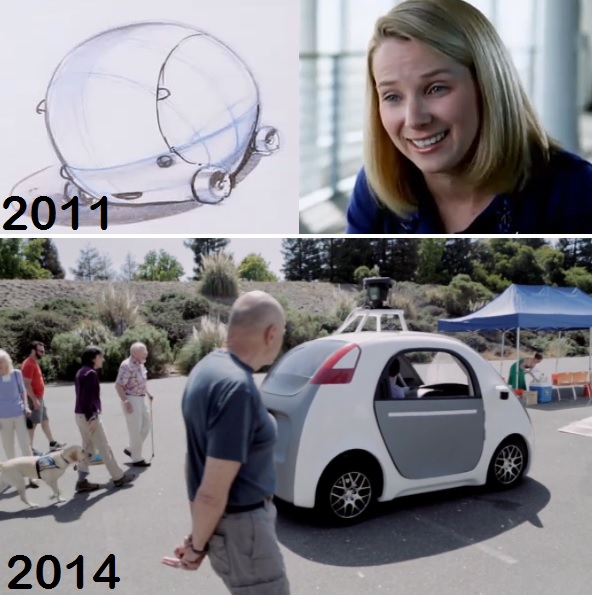
.jpg)