Slashdot Mirror
Domain: zimmers.net
Stories and comments across the archive that link to zimmers.net.
Comments · 46
-
Re: Floppy drive
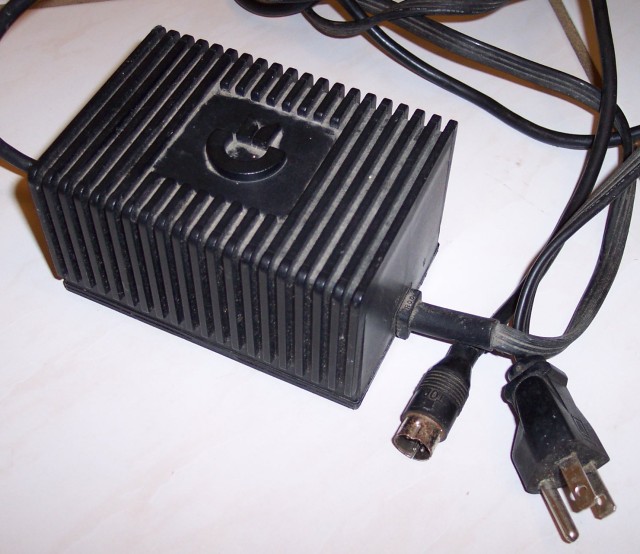
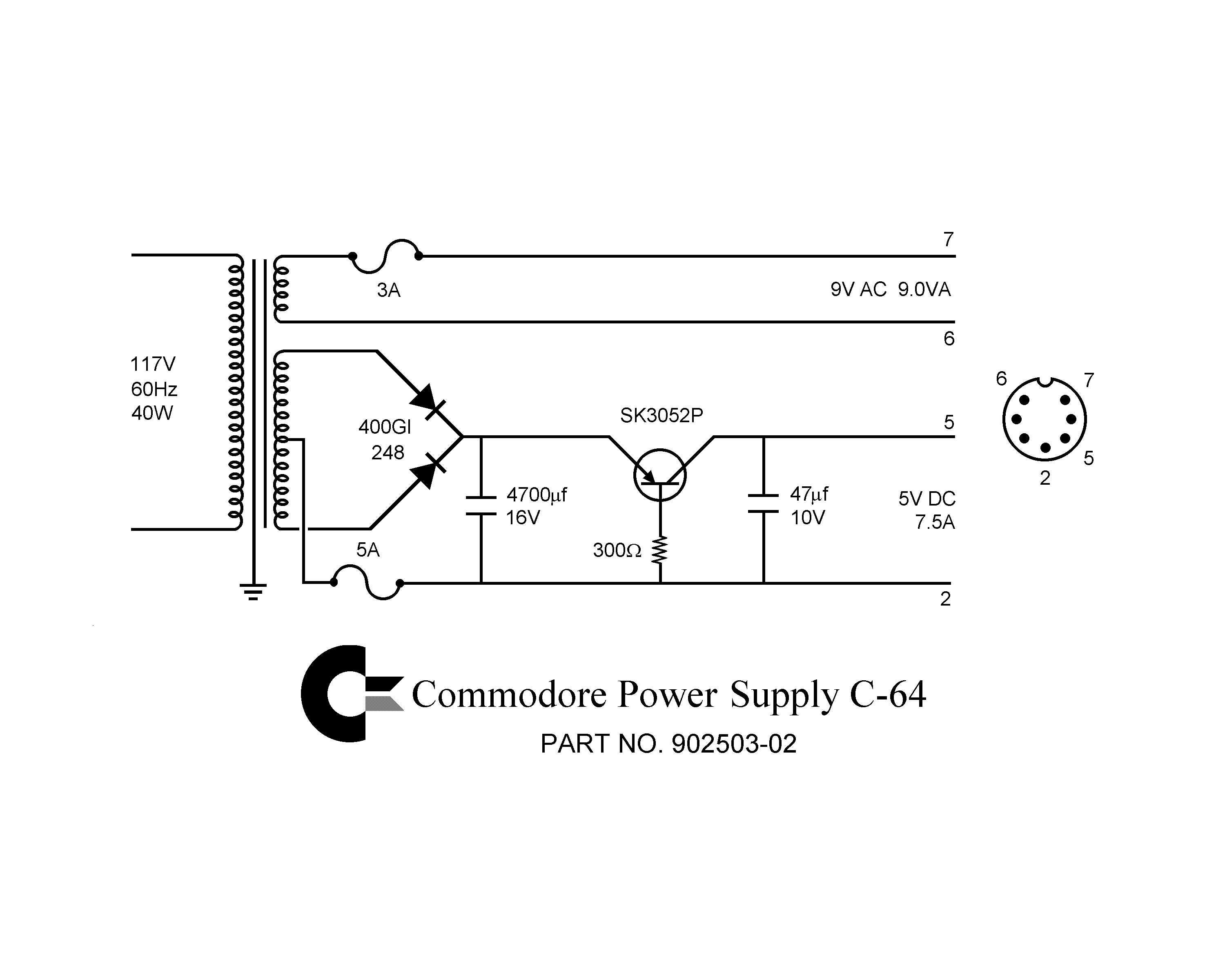
The original C64 black brick PSU was indeed sealed solid with epoxy and it got warm as hell during normal operation.
It's design was also very simple: http://www.zimmers.net/anonftp/pub/cbm/schematics/computers/c64/c64extps.gif.
-
Re:woo
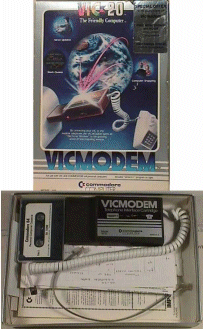
I used to have a Commodore Vic-Modem (300bps) that came with a rotary-dial phone that had the Commodore name printed on the front of it. The phone was actually made by Norhern Telecom, so it wasn't an actual Commodore-manufactured phone.
To use that modem you dialed the number on the telephone and then flipped a switch to engage the modem.
I just now found a picture of that setup here: http://www.zimmers.net/cbmpics...
-
Prior art
-
Re:64-bit?!
From some googling, it looks like Commodore had the A/D conversion in the tape drive and sent it to the computer as a digital stream. So, any method for connecting an audio player would need that A/D conversion. It's been awhile since I messed with it, but I'm pretty sure the Atari interface was not much more than an audio-in with a motor start/stop pin. I remember having some games for Atari 8-bit that actually had voiceover and narration and stuff - pretty neat for a kid and something not matched again until the CD era.
http://www.zimmers.net/anonftp/pub/cbm/documents/projects/interfaces/soundcard2tape.html
-
Re:Just Throw It on the Meme Heap
Actually, there is a software package for Commodore 8-bit systems called GeckOS that includes a TCP/IP stack with serial SLIP support. You could hook a Commodore 8010 acoustic couple modem to your PET and surf at 300 baud.
Not that you'd want to. But you could. -
Re:I think this is the perfect OS for you.
http://www.zimmers.net/geos/GEOSFAQ.html
You'll have incredible speed based on the original purpose and you will also have access to many free applications.
Not quite. The OP is running i386
-
Re:I think this is the perfect OS for you.
http://www.zimmers.net/geos/GEOSFAQ.html
You'll have incredible speed based on the original purpose and you will also have access to many free applications.
Not quite. The OP is running i386
-
I think this is the perfect OS for you.
http://www.zimmers.net/geos/GEOSFAQ.html
You'll have incredible speed based on the original purpose and you will also have access to many free applications.
-
You mean like they did in 1998?
The Commodore 64 WebIt a 486 laptop bottom half with Windows 3.1 and a pre-loaded 64 emulator.
-
Re:NO - DON'T DO IT !!!!
More detail here.
From TFA:
History of 'the killer poke'
When the first PETs (small 9" screen) models came out, the display wasn't all
that fast.The old PETs were slow because the print character ROM routine
waited for the interval between screen scans before updating the screen
memory. This reduced conflicts over the screen RAM which would have resulted
in random pixels (snow) being illuminated on the screen. There was an input
on one of the I/O chips which was hooked up to the video circuitry and told
the routine when to access the video RAM.It wasn't too long before someone learned they could impove the
character display speed via a poke to location 59458; which would set the
video controller to update more readily. It was a noticible improvement of
speed on programs using PRINT often, it was kind of like a free upgrade.
It was mentioned in a few publications and used in many programs that relied
on printing to the screen. I had learned of the poke through Cursor
Magazine, a monthly tape-based publication. They printed the command in one
of the 'newsletter' flyers included with an issue which you could insert
into their game "joust" to make it play faster.Later on, when Commodore released the larger display (14") PETs, they had
improved the display controller which made that POKE unnecessary. An
unfortunate side effect was that the POKE to 59458 affected a different
register which adjusts one of the newer screen display capabilities, which
could result in damaging the PETs video curcuitry when left running. I
discovered it by accident after our school received some large-screen 4016s.
When active, the screen starts to warp after about the third line and the
display stops around the fifth, the keyboard is also unresponsive. When a PET
is in this mode, the only solution is to turn it off, FAST! Fortunately none
of the school's PETs were damaged due to this POKE. Later Cursor Magazine
published a 'fix' that would allow older PETs to use the poke and keep the
large-screen units from frying. Unfortunately there are still many programs
that do not have this fix.Prevention
Make sure to check BASIC programs (especially games) when running them on a
large-screen PET and be ready with the power switch when you first run it.
I have usually found the 'killer poke' statement looking like this:
POKE 59458,PEEK(59458)OR 32. It will always be a POKE to 59458, the
remainder of the POKE may vary. -
Re:TV output?
>>The original C=64 could output to a TV, and most games for the platform anticipated this. They also were optimized for joystick or joystick+partial keyboard control. But unfortunately, few games for Windows anticipate reading input from two USB gamepads and displaying output on a standard-definition TV. Does Commodore plan to revive the development of TV-friendly computer games?
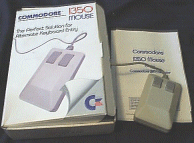
My PC outputs fine to my 32" LCD TV. And my mouse sure works better than the 1350 http://www.zimmers.net/cbmpics/jmice.html .
Of course, when your joystick has 4 directions and one fire button, it's just not the same as todays complex controller with side winding and 20 action buttons.
But if all you want is to make ADWS and space to your non joystick enabled game, there are things such as this;
http://www.allworldsoft.com/software/14-077-total- game-control.htm -
Commodore made x86 machines in the 80s & 90s
In the 80s and 90s, Commodore made a number of 8088/8086, 286, and 386 desktops and laptops!
There's also the bizarre "Commodore 64" Internet Computer.
So this use of the Commodore brand isn't completely ridiculous, just a little bit ridiculous. -
Commodore made x86 machines in the 80s & 90s
In the 80s and 90s, Commodore made a number of 8088/8086, 286, and 386 desktops and laptops!
There's also the bizarre "Commodore 64" Internet Computer.
So this use of the Commodore brand isn't completely ridiculous, just a little bit ridiculous. -
Commodore made x86 machines in the 80s & 90s
In the 80s and 90s, Commodore made a number of 8088/8086, 286, and 386 desktops and laptops!
There's also the bizarre "Commodore 64" Internet Computer.
So this use of the Commodore brand isn't completely ridiculous, just a little bit ridiculous. -
Commodore made x86 machines in the 80s & 90s
In the 80s and 90s, Commodore made a number of 8088/8086, 286, and 386 desktops and laptops!
There's also the bizarre "Commodore 64" Internet Computer.
So this use of the Commodore brand isn't completely ridiculous, just a little bit ridiculous. -
Commodore made x86 machines in the 80s & 90s
In the 80s and 90s, Commodore made a number of 8088/8086, 286, and 386 desktops and laptops!
There's also the bizarre "Commodore 64" Internet Computer.
So this use of the Commodore brand isn't completely ridiculous, just a little bit ridiculous. -
Re:Remember the calculators?
My Dad wrote a program for GEOS that somehow got published and you can still download today. The archive is here. Also, GEOS got my best friend into drawing on a computer, which kickstarted his career in animation, and eventually consulting for Pixar.
It's amazing the roots this thing has. -
Difficult but there are options
Commodore 64 disks are a pain in the rear to read on anything else due to the nature of the 1541 disk drive. There are however a number of ways to transfer data off of Commodore computers. After all, how do you think all those
Once pulling the data off there are a number of great emulators such as Vice to run the software on. Or you could just buy one for less than $50 off of eBay. -
Two, actually
First computer I ever touched and programmed was this Commodore PET
http://www.zimmers.net/cbmpics/cepets.html
I was in the midst of bugging my parents to get a C-64 like "everyone else on the block" but then we walked into an Apple store on a fateful December day in 1984. After seeing a Macintosh 128k demo, I don't think to this day that I've ever been so dumbstruck in my whole life. After the demo was done, during which I completely lost track of time, we asked what time it was and the guy pulls down the Alarm Clock desk accessory from the Apple menu. Brilliant.
I stepped up my parental bugging (I was 12) and next thing I knew we had the first Macintosh on the block (perhaps even the town) for Christmas
OK it totally makes sense that there are 1200 replies to this "story", ya geeks -
Re:In the old days...
It was probably the PET-4064, aka the PET-64, which was essentially a C64 in a PET case, to make it less portable for use in schools.
-
Re:Not Atari
"Of course Commodore also blew it by not making the 64 into a console."
Commodore DID make the 64 into a console; it was a tremendous flop.
http://www.zimmers.net/cbmpics/c64gs.html
"The 5200, XE, and 7800 where all attempts to fix that problem."
not entirely; the 2600 became old, other companies had more powerful machines out or coming out. The 2600 couldn't compete with the colecovision, intellivision, etc...Atari needed something new! -
It wasn't Commodore
It was Berkeley Softworks
You can verify this spelling of KERNAL on a GEOS page. Feel free to Google for other pages relevant to "GEOS 1.3" or "GEOS 2.0".
Of interest to note is that the Amiga Kickstart OS numbering followed the GEOS pattern. After 1.3 we recieved 2.0x. -
Never fear!
There isn't a copy-protection scheme around that Fast Hack'em can't defeat![1]
[1] These Sandisk cards come in 5 1/4" format, right? -
Re:The only thing you can't bring back...
QuantumLink/QLink was one of their products, dedicated to Commodore64/128 users. America Online was the blending of two of their other platform specific products: PCLink and AppleLink, which had already been re-christened by the time it was available for IBM-compatibles. AppleLink for Apple II-series machines and Macs was renamed AOL in '89 I believe, and the character-based PC-DOS interface for PCLink was dumped in favor of a Geoworks shell for the PC version of AOL in 1991. As the Commodore micros lapsed into quaintness in the late 80's and early 90's, QuantumLink was unceremoniously taken behind the barn and shot, with a Free Ad for the new America Online service mailed to you in your last billing statement.
I started with the Qlink disk that came with my oh so wonderful Commodore 1660 modem - 300 bps, no indicators whatsoever, and you had to hook the C64/128's SID (sound) chip output to it via an RCA splitter so that the computer could generate DTMF tones for dialing. One of my first ever homebrew electronics projects was a breakout box with LED's for off-hook, carrier detect, Tx and Rx that I soldered to my C64's "user port" via a ribbon cable. It was just so I could tell whether or not my QLink session was hung (again), or if I was just waiting on something to trickle down that slow connection. Oh the days of MagicTerm with built-in bluebox codes.
-
Bring back the Commodore Colt series!That was one decent PC, the Commodore Colt. Too bad they discontinued it after only using an 8088 and 80286. I think rarely did they have a 386 Commodore PC.
It was pathetic, but it was a PC Clone. Other Commodore PCs were called the PC-XXX but basically were just like the Commodore Colt.
Commodore made PC Laptops too!.
Commodore's last attempts at the PC Market.
Too bad they were not enough to save a company that was bleeding millions.
-
Bring back the Commodore Colt series!That was one decent PC, the Commodore Colt. Too bad they discontinued it after only using an 8088 and 80286. I think rarely did they have a 386 Commodore PC.
It was pathetic, but it was a PC Clone. Other Commodore PCs were called the PC-XXX but basically were just like the Commodore Colt.
Commodore made PC Laptops too!.
Commodore's last attempts at the PC Market.
Too bad they were not enough to save a company that was bleeding millions.
-
Re:Think again
Okay, well, I argued about GbEthernet simply because I hear enough Mac users who have no need for it ("It'll speed up my internet connection" type users) pretend it's some sort of feature from the gods. Hint: It isn't. And it's totally pointless (IMHO) for your desktop PC to have a network connection faster than your hard drive. Perhaps its useful to abuse a fast server as a memory cache for these computers?
AppleTalk was out and about after Arcnet, which actually *was* better, in a lot of ways. I love Arcnet, and have never seen anything that nears it's robustness (and now cheapness) in a long time. 20,000 ft and still strong. After working with it I wondered why the hell Ethernet took off (Hubs? Switches? Network Jams? 3-4-5 rules? BARF!). Oh well, beggars can't be choosers.
I'm not bashing postscript, but it's useless for the consumer as long as it's confined to $500+ laser printers. Unbelieveable that in this day and age you have to go out and buy a used printer to get one with postscript that doesn't break the bank.
DVI -- You're right, sorry, I meant whatever that wacky Apple VGA connector was. My bad. I always get confused as to what's on the other end of that dongle with the VGA port and dip switches. Still not sure what it's called, but I do know it caused me all sorts of hell (probably from unlabelled dipswitches on cheap Chinese imports).
I'll throw you a curve ball on the mouse argument. The PC didn't put two buttons on it. In fact, I'm somewhat thinking commodore did in January, 1985. Although I hear the PC Jr. may have beaten them to the punch. But, back then, my interest in mice was zilch.
As far as Portrait Displays go, I do recall the Mac commercials portraying it as the new way for an average consumer to enjoy using a computer. Something about using a monitor like you read a page or something. I never saw the commercial more than once or twice in my life, the only thing sticking with me being "Who the hell thought that up?" Having used a portrait display on an NCD Xterm, though, it isn't a half bad idea, but it is still a little half baked, IMHO.
You'd be surprised about the keyboards/soft power thing. I do recall being on a field trip, getting my first experience with a mac. The entire class, having been "raised" on Tandy 1000s spent the better part of 10 minutes wondering how the hell to get the things to turn on. One more hint for apple: |> does not mean "ON" in North America. (|), strangely enough, does.
Hey, I went lightly on ya, though... how about pioneering Black and White computing! -
WTF. . .
Is up with this pic?
-
Blast from the PastI grew up with the Commodore Vic-20 and 64 so I have strong nostalgic memories of the Commodore BBS scene. Luckily, that scene isn't dead. There are a bunch of C= boards you can access over the Internet. You can find a partial list here. I know what you're thinking. Accessing C= boards via telnet is well and good but without the colour graphics, it's boring. You're right. That's why you need CGTerm or CBMTerm which will give you the full-on experience.
Oh, and if all this BBS talk has stirred up the sysop in you and you want to put up a BBS, go for it! You can get BBS software here and instructions on how to connect your 64 or 128 to the Internet here.
Remember, if the present ain't working for you, do what I do. Live in the past!
-
C64, baby!
Ahh, how could I forget my C64, with its amazing games, video, sound... no, really, it took the PC industry years to catch up.
And as for Windows, that literally took a decade to catch up--we had GEOS, which was technically superior in every way until perhaps Windows 3.0 came out. (and even then, it was still far smaller and more efficient) -
Re:Ah, the dialup days...
Hehe, I remember doing the same thing on a 300bps vicmodem. Except you got maybe 4 colors at a 320x200 resolution. I cut my teeth on that stuff. I also remember saving all my babysitting money so I could upgrade to 1200bps, and I also remember the amazement when I was able to dial up from my C64 to my friend's 8088 machine. Good times, good times.
-
Re:Ah, the dialup days...
Hehe, I remember doing the same thing on a 300bps vicmodem. Except you got maybe 4 colors at a 320x200 resolution. I cut my teeth on that stuff. I also remember saving all my babysitting money so I could upgrade to 1200bps, and I also remember the amazement when I was able to dial up from my C64 to my friend's 8088 machine. Good times, good times.
-
1350
This was my first mouse. Currently enjoying a Logitech dual optical though.
-
Great milestone!
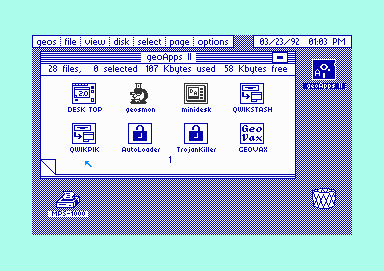
It also led to GEOS on the Commodore 64!
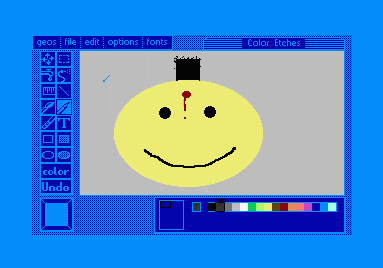
Some screenshots
And, let's not forget a TRUE genius and pioneer, Doug Englebart. He predated the Alto. This guy is what engineering and technology is all about. Not the bunch of clueless kids (and women!) that are sucked into the indoctrination of universities these days....
Ah, my kingdom for a time machine to travel back to the 1960s. Men were men, electrical engineers actually liked electronics way before they went to school and there was no fooling around! -
Re:Contiki Links
* GEOS [zimmers.net] from 1986 probably is the most well-known graphical operating system for the C64. It is still sold commercially by CMDKEY.com
They better be careful... the trashcan icon in this screenshot looks alot like Apple's patented icon! -
Contiki LinksContiki Links
URL: http://dunkels.com/adam/contiki/links.html
System information and emulators
Commodore 64/128
The Commodore 64 is based on the 6510 CPU, which is a 6502-derived 8-bit CPU. It has 64k of RAM and 16k ROM which includes a BASIC interpreter and some basic I/O services. Graphics is provided by the VIC chip which has 16 colors and a maximum resolution of 320x200 in hi-res mode. It provides a 40x25 raster of characters in character mode. The three voices of digital sound is produced by the SID chip.
The Commodore 128 is an extended version of the Commodore 64 that contains a 8510 CPU which is capable of 2 MHz operation and can address 128k RAM (hence the name Commodore 128). It also has a Commodore 64 compatibility mode which is extremely similar to a regular C64 but with a few minor differences.
SuperCPUThe SuperCPU is a 20 MHz 16-bit 65816-based computer that is plugged into the back of the Commodore 64 or 128. It uses the C64 keyboard and joysticks for input and the VIC and SID chips for audiovisual output. The SuperCPU is capable of addressing several megabytes of memory and is usually used together with a 16 megabytes RAM expansion board.
There are no SuperCPU emulators avaliable.
Links- The VICE emulator
is capable of emulating a large number of Commodore machines. It
emulates the C64, the C128, the VIC20, most of the PET models, and the
CBM-II. VICE runs under Windows, Linux, FreeBSD, and a number of other
host systems.
- Joakim Eriksson's Web
C64 emulator, written in Java, runs as an applet within a web
browser.
- Per Håkan Sundell's CCS64 emulator works
under Windows and DOS.
- The ec64
emulator is developed for Linux and was originally written entirely in
x86 assembler.
- An article by Simon
N Goodwin about C64 emulators.
- The Commodore
emulators category in the Dmoz has more links.
Commodore 64/128
There are plenty of alternative operating systems for the C64, mostly written in 6502 assembler. Some of them are far from complete, however, and only appear as dark shadows on a few web pages - MagerValp's SMOS and my own osT are among those.
- GEOS from 1986 probably
is the most well-known graphical operating system for the C64. It is
still sold commercially by CMDKEY.com.
- LUnix NG is an open-source multi-tasking operating system with TCP/IP/PPP-support, a *nix-like command shell, and a number of *nix-like utilities such as ls and cp.
- Craig Bruce's ACE is a
text-based single-tasking operating system for the 64 and the 128. It
provides a *nix-like command shell, a text-editor, a terminal program
for the SwiftLink RS232 interface, as well as device drivers for a
lot of devices
- GeckOS/A65 is a
multi-tasking operating system with TCP/IP support and a *nix-like
command shell.
- Wheels is a version of GEOS that requires RAM expansion to run.
With its 20 MHz and megabytes of memory, the SuperCPU is powerful enough to run fully-fledged graphical operating systems that rival early Machintosh or Microsoft Windows systems.
- Wings is a TCP/IP-enabled graphical operating system for the SuperCPU. It includes a MOD music player, JPEG viewer, web page download utility, etc.
- JOS is an older version
of Wings.
TCP/IP and PPP connectivity
To surf the web, send or read email, etc., the first step is to actually get in touch with the Internet. This requires both physical access to an ISP, either via a modem and a phone-line or an Ethernet broadband connection, and the TCP/IP software running on the C64.
There are a number of programs that make it possible to reach the Internet with a C64/C128.
- LUnix NG contains a
TCP/IP stack and a PPP implementation which makes it possible to reach
the Internet using a modem and a dial-up ISP.
- GeckOS/A65 also
contains a TCP/IP stack, but no PPP dialer.
- My own uIP TCP/IP stack
has been used for some time to run a web server on a Commodore 64. uIP
currently does not include a PPP dialer.
- Novaterm 10
contains a PPP dialer and enough TCP/IP code to be able to run telnet
over the Internet.
SuperCPU
All of the above mentioned SuperCPU operating systems have TCP/IP support.
- The
Wave is a web browser for the SuperCPU (and not for the Commodore
64/128 as the web page claims) that runs under the Wheels operating
systems. Here
is another page with information about The Wave (that also falsely
claims that The Wave is for the Commodore 64/128). The latter page
also includes screenshots of The Wave in action.
Small graphical user-interfaces (GUIs)
User interfaces for embedded systems range from the simple buttons on the front of a washing machine to those of fully fledged web browser type interfaces on information stations. The underlying technology varies from simple electronic circuits to full-scale PC compatibles.
- PicoGUI is a GUI architecture
designed for embedded systems to desktop machines. It does not require
any supporting GUI system and can be used on anything from graphical
screens to text based systems. Their smallest target system are
handheld terminals and the compiled object code size is on the order
of hundreds of kilobytes.
- Microwindows/NanoGUI is
a graphical user interface system designed to run without support from
an underlying system. On 16-bit systems Microwindows is about 64k
large.
The smallest web browsers are usually specially designed for the limitations of embedded systems and other specialized computers such as car navigation systems, set-top boxes and medical equipment. There are also a few small web browsers for old DOS PCs available.
- Interniche's NicheView Portable
Embedded Web Browser is probably the smallest full-featured web
browser around with its 35 kilobytes code footprint. There is also an
additional JavaScript module available.
- AU-systems' AU Mobile
Internet Browser supports both HTML/TCP/IP and WML/WAP as well as
SSL. It occupies 340 kilobytes of code (plus an additional 190
kilobytes for the protocol stacks) and uses 5 kilobytes of RAM when
idle (plus 8 kilobytes used by the protocol stacks). Extra RAM is used
when downloading web pages.
- The Fusion
WebPilot Embedded Micro-Browser supports much of the features
found in modern web browsers including frames, authentication, and
JavaScript. The web page does not specify memory footprint.
- MicroDigial's Graphical
MicroBrowser supports tables, frames, images as well as FTP as
uses 260 kilobytes of code memory and requires a minimum of 210
kilobytes of RAM apart from that. A demo version is available.
- The 2net Alice Web
Browser is intended for handheld computers and PC based
architectures and requires 400 kilobyte of free RAM and 200 kilobytes
of code memory. It includes a TCP/IP stack.
- WebBoy is a
fully-fledged browser with SSL support intended for 386 DOS boxes with
more than 4 megabytes of memory. Includes a TCP/IP stack.
- The Arachne web browser
runs under MS-DOS or Linux and requires at least 1 megabyte of
memory. Does not include a TCP/IP/PPP stack.
- Lynx is probably the most
well-known text-based web browser around. It is ported to many
different operating systems and architectures including MS-DOS.
- The Off by One Web Browser
has been labeled as the smallest web browser ever, but is quite large
in comparison with other small web browsers. It is 1.1 megabytes large
and requires support from an underlying Windows operating system.
- Mirko Sobe's BOSS-X
HTML browser for 8-bit Ataris is not a full web browser, but an
off-line HTML viewer with hyperlinking abilities written in three
days.
- The pre-alpha v0.3 GEMWeb browser
supports 640x480x16 VGA.
- The Atari
Phoenix Web Browser is a non-existant vapor-ware web browser
project intended for the 8-bit Ataris.
- The VICE emulator
is capable of emulating a large number of Commodore machines. It
emulates the C64, the C128, the VIC20, most of the PET models, and the
CBM-II. VICE runs under Windows, Linux, FreeBSD, and a number of other
host systems.
-
I've always been waiting for this!
All right! It's finally here! Screw Windows 2000 and Linux, I'm going back to using GEOS!!!
-
Re:Old BBS door
I think it was on C64 and I think it was a game mod for the Color 64 BBS.
-
Re:My first computer...My first computer was a Commodore PET 2001.
I believe it was the 4k model. My uncle gave it to me sometime in the mid eighties, and I mostly just did stupid things with it until it broke. I didn't really learn to code in BASIC until I got my 32k PET a couple of years later.
Hey, I was born in 1983. Do the math.
-
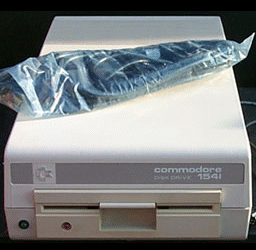
Re:My 1541 drive was a speaker too!A little known fact about 1541: it was actually labeled 154l, or 154I, not 1541!
If you have a close look at the label (see here or here: sorry, couldn't find larger pictures), the last character is slightly different from the first (it does not have the oblique little dash like the first, so it is not a ``1'' digit).
OTOH, all the Commodore user documentation reported it as 1541...
-
Re:My 1541 drive was a speaker too!A little known fact about 1541: it was actually labeled 154l, or 154I, not 1541!
If you have a close look at the label (see here or here: sorry, couldn't find larger pictures), the last character is slightly different from the first (it does not have the oblique little dash like the first, so it is not a ``1'' digit).
OTOH, all the Commodore user documentation reported it as 1541...
-
Re:Hmmm.
Commodore built 8088/8086 based PC-Compatibles Not just the beloved C=64
-
Commodore made Intel PC's as well
They had several 8088-based PC's before they went under.
'Course his movies would be playing at about 1-fph (one frame per hour)... Worse torture than anything the Taliban ever came up with! -
Re:Awesome!
My friend Spankey will be there as well. My friend Spankey will be watching for any announcments about the new version of Geos. Yes, my friend Spankey is a silly man.
-A Friend of Spankey -
Monkeys & My Friend Spankey
My friend Spankey has a funny monkey story. When my friend Spankey was a wee little lad, my friend Spankey's brother had a pet monkey. One day my friend Spankey's brother's monkey was humping my friend Spankey's leg. My friend Spankey thinks that is funny because the monkey was an avid Geos user. My friend Spankey is a silly man.
-A Friend of Spankey -
Re:This is really nothing new
Geos Info!!!
-A Friend of Spankey