Slashdot Mirror
Domain: aol.com
Stories and comments across the archive that link to aol.com.
Stories · 794
-
OLPC Announces Buy-2-Get-1 XO Laptop Sale
theodp writes "Starting November 12, The One Laptop Per Child Project will sell its affordable XO laptop to Americans for a brief period of time, but there's a slight catch: U.S. buyers must purchase two computers — one for their own child and one for a child in the developing world — for a total cost of $399. 'Staff members of the laptop project were concerned that American children might try the pared-down machines and find them lacking compared to their Apple, Hewlett-Packard or Dell laptops. Then, in this era of immediate global communications, they might post their criticisms on Web sites and blogs read around the world, damaging the reputation of the XO Laptop, the project staff worried. So the laptop project sponsored focus-group research with American children, ages 7 to 11, at the end of August. The results were reassuringly positive.'" -
MIT's SAT Math Error
theodp writes "The Wall Street Journal reports that for years now, MIT wasn't properly calculating the average freshmen SAT scores (reg.) used to determine U.S. News & World Report's influential annual rankings. In response to an inquiry made by The Tech regarding the school's recent drop in the rankings, MIT revealed that in past years it had excluded the test scores of foreign students as well as those who fared better on the ACT than the SAT, both violations of the U.S. News rules. MIT's reported first-quartile SAT verbal and math scores for the 2006 incoming class totaled 1380, a drop of 50 points from 2005." -
Crazy Stevie's iPhone Prices are Insaaane!
theodp writes "Slate takes a look at the alarming lesson of the iPhone price cut and ponders the long-term effects of a Fire-Sale Nation mentality, especially when companies go all Crazy Eddie slashing prices on products like homes and cars that have active secondary markets. 'High-profile price-chopping tends to occur whenever companies freak out about the vicious combination of a slowing consumer economy and the prospect of getting stuck with big inventories of unsold goods. The tactic often works in the short term. The hype over insanely low prices functions as a form of free advertising, and the lower prices tend to attract buyers. Apple announced on Sept. 10 that it had sold its 1 millionth iPhone.'" -
How Computers Transformed Baby Boomers
theodp writes "Newsweek's Steven Levy takes a look at how the baby boomer generation formed our tech landscape. Many of the realities boomers grew up with are today's metaphors, including cut-and-paste, the origin of which the 56-year-old Levy had to explain to 20-something Google employees. Levy cites two texts as crucial in pushing the boomers' vision toward power-to-the-people computing — Ted Nelson's Computer Lib/Dream Machines, which inspired Mitch Kapor, and the January 1975 Popular Electronics, which got Bill Gates jazzed. You kids might want to check out Dad's bookshelf — used copies of Computer Lib are going for $130-$225 at Amazon." -
Microsoft Seeks Another OS-Level Adware Patent
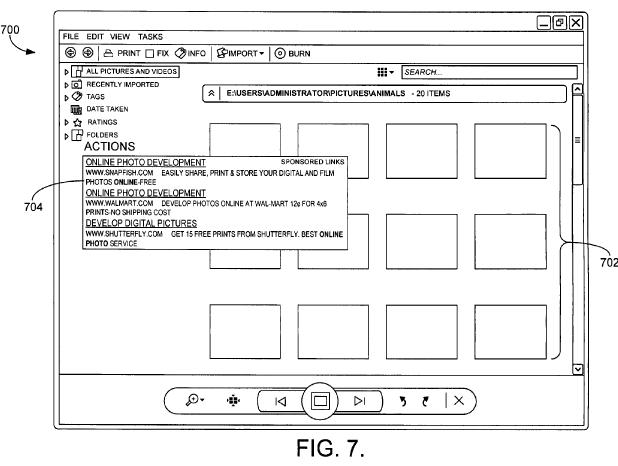
theodp writes "Microsoft has just published a patent application for advertising triggered by sequences of user actions, which describes how to interrupt game playing, music listening, and photo viewing with pop-up ads ('the components may be integrated directly into the operating system'). So will this ad technology get a free pass from Windows Defender?" -
Microsoft's Consent-or-Die Patent
theodp writes "Maybe you shouldn't get too attached to those new Windows Live services. On Tuesday, the USPTO granted Microsoft a patent for privacy policy change notification, which describes how to threaten users with the loss of their accounts and access to web sites and services should they refuse to consent to changes in a privacy policy. This includes the case where a user might object to allowing personal information, collected earlier with a promise of confidentiality, to be shared in the future with third parties. Also described is a 'Never Notify Me' option so you won't have to 'worry' over privacy policy changes." -
USPTO Imposes 'Undue Hardship' On 1-Click Lawyers
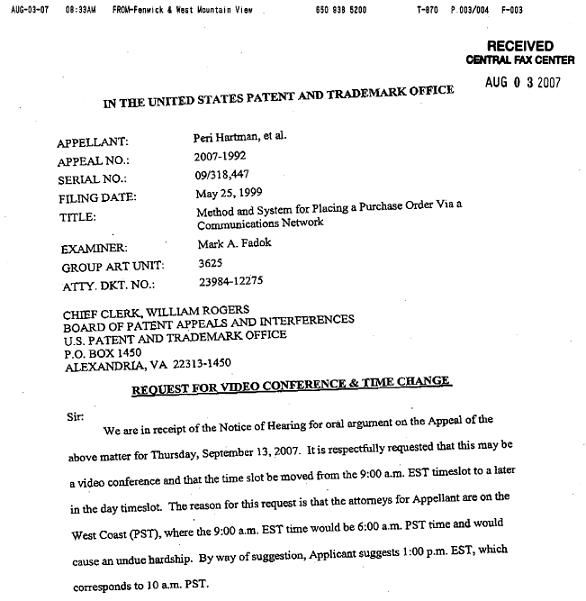
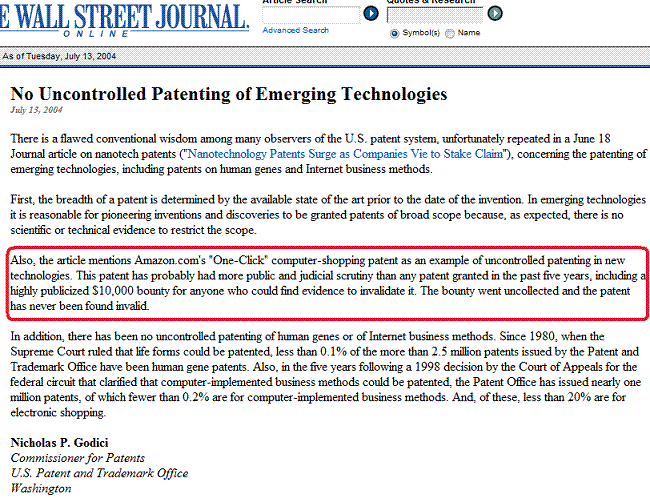
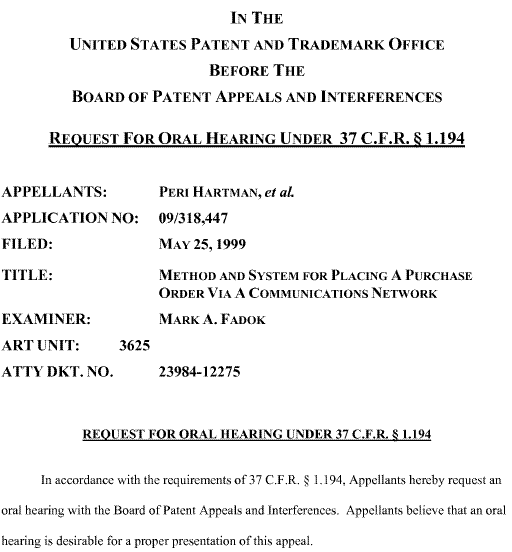
theodp writes "Looks like Amazon's high-priced Silicon Valley attorneys will have to endure the 'undue hardship' of awakening early next Thursday morning to defend CEO Jeff Bezos' 1-Click patent in a Video Hearing before the Board of Patent Appeals and Interferences. The attorneys' plea for a 1 p.m. ET start time drew a be-there-at-9-or-be-square response from the USPTO. The 1-Click patent has fallen into disfavor lately with USPTO Examiners, who no longer have the same boss who once sent a 1-Click love letter to the WSJ arguing that the merits of Amazon's patent were proven by a contest run by a Jeff Bezos-financed company, an argument that was later rejected by Congress." -
Separation of Church and Microsoft
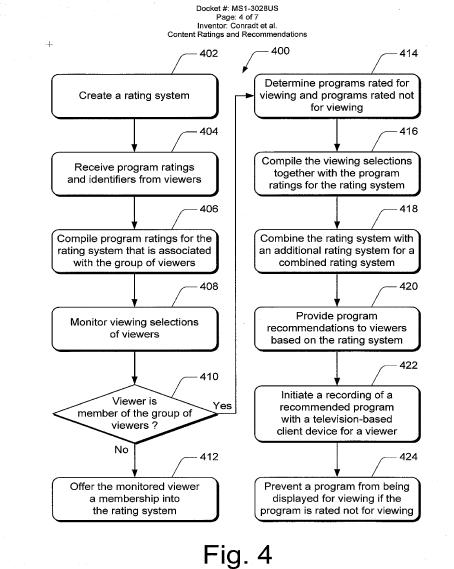
theodp writes "Last week, the USPTO published a rather odd Microsoft patent application for Content Ratings and Recommendations, which describes how religious-based communities and other 'subcultures' can use the patent-pending process to prevent their members from viewing undesirable television programs and movies." -
Will the Pope Declare Google Evil?
theodp writes "In the next few days, Pope Benedict XVI plans to issue his second encyclical, in which he is expected to denounce the use of tax havens as socially unjust and immoral in that they cheat the greater well-being of society. He is also expected to argue that the globalized economic world needs to be regulated. Prime technology companies playing the offshore 'profit laundering' game include Dell, Google, Microsoft, and Sun, who set up subsidiaries in Ireland, where the corporate tax rate is a low 12.5% and no taxes are charged on royalties (e.g. from patents)." -
Eolas vs. Microsoft Lawsuit Settled and Sealed
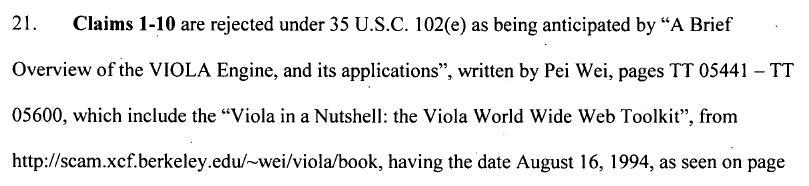
theodp writes "The Seattle P-I's Todd Bishop reports that Microsoft has settled its 8-year-old web browser plug-in patent dispute with Eolas. The spat begat the click-to-activate Web after Microsoft was slapped with a $500+ million patent infringement judgement. Neither Eolas nor Microsoft will be disclosing terms of the deal, although Eolas told investors to expect a dividend (PDF). Microsoft didn't say whether or how the settlement would affect its approach to the underlying technology in IE or other programs. Just last month, the USPTO issued a non-final rejection of the patent's claims, citing the work of Pei-Yuan Wei as prior art." -
The Mindset of the Class of 2029
theodp writes "In response to Beloit College's 10th Annual Mindset List, which takes a stab at describing the worldview of the incoming Class of 2011 (grew up with bottled water; have always had the World Wide Web), Valleywag's Nick Douglas presages The Mindset of the Class of 2029 (have always been able to use a cell phone on a plane; 'Lord of the Rings' looks fake and the effects are laughable)." -
MS Seeks Patent On Virtual Fuzzy Dice
theodp writes "Microsoft just published a patent application for an adaptive heads-up user interface for automobiles. It covers, among other things, virtual fuzzy dice that appear to move with automobile movements." -
Pay-For-Visit Advertising
theodp writes "US patent office documents released Thursday show that a startup named Pelago is seeking a patent covering Pay-For-Visit Advertising, which uses GPS, Bluetooth, or RFID on your mobile devices to track your travels to see if you wander into a place of business that appeared in an ad shown earlier on your cellphone, PDA, or laptop. To maximize ad revenue, phone calls are also tracked to see if you dial a number associated with an ad, and financial transactions are examined to see if you make a purchase from an advertiser. The application goes on to note that the system may be of interest to government agencies. Pelago just raised $7.4M from the likes of KPCB and Jeff Bezos." -
Indiana University Dumps Google for ChaCha
theodp writes "Come Monday, no more Indiana University searches will be powered by computer-driven Google. Only by people-powered ChaCha. The move was announced by new IU President Michael McRobbie, who until recently sat on ChaCha's Board of Directors (5-29 SEC filing, PDF). IU will draft hundreds of librarians and IT employees to be ChaCha Guides for the university's websites, although a FAQ accompanying IU's press release tells librarians not to expect any checks for their efforts from ChaCha, which IU notes is backed by Amazon's Jeff Bezos and Compaq founder Rod Canion." -
Digitized Apollo Flight Films Available Online
Pooua writes "SpaceRef reports that NASA and Arizona State University have teamed up to offer all of NASA's Apollo lunar films online at no charge. The images are scanned from the original films at high resolution, then offered as 16-bit TIFF or 8-bit PNG or ISIS files. The project is expected to take 3 years, but some images are already available. The ASU-NASA website is located at the Arizona State University Apollo Image Archive." -
Which Google Should Congress Believe?
theodp writes "In Congressional testimony last month, Google's VP of People Operations told the House Judiciary Subcommittee on Immigration that, due to limits on the number of H-1B visas, Google is regularly unable to pursue highly qualified candidates. But as Google stock tumbled in after hours trading Wednesday, Google's CEO blamed disappointing profits on a hiring binge and promised Wall Street analysts that the company would keep a careful eye on headcount in the future. So which Google should Congress believe?" -
Will Microsoft Put The Colonel in the Kernel?
theodp writes "The kernel meets The Colonel in a just-published Microsoft patent application for an Advertising Services Architecture, which delivers targeted advertising as 'part of the OS.' Microsoft, who once teamed with law enforcement to protect consumers from unwanted advertising, goes on to boast that the invention can 'take steps to verify ad consumption,' be used to block ads from competitors, and even sneak a peek at 'user document files, user e-mail files, user music files, downloaded podcasts, computer settings, [and] computer status messages' to deliver more tightly targeted ads." -
Verizon Copper Cutoff Traps Customers
theodp writes with more mainstream attention to an issue discussed here a month back: "As it hooks up homes and businesses to its FiOS fiber-optic network service, Verizon has been routinely disconnecting the copper infrastructure that it was required to lease to other phone companies, locking customers into higher broadband bills, eliminating power outage safeguards, and hampering rivals. A Verizon spokesman argues customers are being given adequate notice of the copper cutoff, which includes this read-between-the-lines fine print: 'Current Verizon High Speed Internet customers who move to FiOS Internet service will have their Verizon High Speed Internet permanently disabled after their FiOS conversion.'" Customers are supposed to be informed by both the sales person and the installer that their first-mile copper will be cut, and this is not happening. -
Sprint Drops Customers Over Excessive Inquiries
theodp writes "The WSJ confirms earlier reports that Sprint Nextel is terminating the contracts of subscribers who call customer service too much (registration required). The 1,000 or so terminated subscribers called an average of 25 times a month — 40x times higher than average — according to a company spokeswoman, who also noted that a large number of calls from these customers were related to billing issues." -
Amazon S3 is Patent-Pending
theodp writes "If your startup is counting on a copycat service to emerge for Amazon S3 disaster recovery, you might want to start thinking about a Plan C. On Thursday, the USPTO disclosed that Amazon wants a patent for its Distributed storage system with web services client interface invention, aka Amazon Simple Storage Service." -
Explosives Camp
theodp writes "How about a summer camp where you get in trouble for not blowing things up? Students with a passion for all things explosive and proof of US citizenship pay a $450 fee to attend Summer Explosives Camp, 'We try to give them an absolute smorgasbord of explosives,' quipped a professor at the University of Missouri-Rolla, which offers a minor in explosives engineering. Here's the brochure (PDF), kids!" -
School's Out Forever at SV High Tech High
theodp writes "Touted as a model of successful education by the likes of Bill Gates, Silicon Valley's High Tech High just held its first — and last — commencement ceremony, graduating only 21 students in its brief history. Despite the financial support of the world's richest man, the charter school cited money woes as it voted to shut its doors. Adding insult to the poor HTH kids' injury, the local public H.S. district plunked down $8.6M to snatch up their abandoned school and will turn it over to a brand new crop of kids in the fall." -
How-Not-to-Hire-U.S.-Workers Law Firm Fires Back
theodp writes "Congress is now calling for a Dept. of Labor investigation into a Pittsburgh law firm after a video showing its attorneys advising employers how to game the immigration system was posted on YouTube. Cohen & Grigsby, the firm in question, issued a statement insisting their statements were commandeered and misused, but would not allow CBS to view the original video in its entirety. Cohen & Grigsby has also been advising employers since 2002 that they have nothing to fear if they keep employees in the dark about the existence of DOL-required H-1B Public Access Files." -
Microsoft's Acoustic Caller ID Patent
theodp writes "A new patent granted to Microsoft Tuesday for automatic identification of telephone callers based on voice characteristics covers constructing acoustic models for telephone callers by identifying words or subject matter commonly used by callers and capturing the acoustic properties of any utterance. Not only that, it's done 'without alerting the caller during the call that the caller is being identified,' boasts Microsoft in the patent claims." -
What Happens If You Don't Pay for Goodmail?
Bennett Haselton has written in with his latest report. He starts "Goodmail has announced partnerships with four new ISPs who will charge for "reliable" delivery of your e-mail messages if you want to bypass their spam filters. The news will probably generate another round of editorials like the ones written a year ago about AOL's plan to use Goodmail, including this one from Esther Dyson (for it) and this one from the EFF (against it)." Follow the magical clicky clicker below to read the rest of this story.If I could ask one serious question of anyone who was defending pay-per-email, or sitting on the fence about it, this would be it: Suppose you sent an extremely urgent e-mail to your doctor or your lawyer, who for the sake of argument you're not able to reach by phone. The recipient's ISP owner happens to see the message before the user retrieves it, and realizes how urgently you need to get it through. So he moves it to the recipient's "spam" folder, and then calls you up and says: pay me $1,000 to move it to the recipient's inbox, or they'll never see it.
Does the ISP have the right to do that? If not, why not?
Perhaps you'd say that Goodmail's 1/4-penny-per-message is reasonable, but $1,000 for one message is too much. But then who decides what is "too much"? The marketplace? Then isn't the ISP admin just another player in the market, and $1,000 is what they want to charge? If you don't like it, you can go somewh... oh, wait, you can't, because there's no other way to get through to the recipient. If you ever get through to your doctor or lawyer, they might switch ISPs after they hear what happened, but should that be your only recourse?
The problem with the ISP charging $1,000 to deliver your message is not that $1,000 is "too much", but that they're charging for a service that has already been paid for. If your doctor or lawyer pays for an e-mail address, they're doing so with the understanding that their ISP will make a reasonable effort to deliver the non-spam e-mails that people try to send them. If their ISP then turns around and asks you for $1,000 to deliver the e-mail, then they're trying to double-bill for the same service, and if they block the message because you don't pay the $1,000, then the ISP is cheating the recipient out of a service that they've already purchased. And it's not just the recipient being cheated; if the recipient has an arrangement with you, as your doctor or lawyer would, then the ISP is interfering in their business relationship with you.
Now, if an ISP using Goodmail offers to let you bypass their filters by paying 1/4 penny per message, how is that different from the doctor example? Well, on the face of it, it's different in at least two ways: first, because the ISP is charging "only" 1/4 penny per message instead of $1,000, and second, they're not saying that your mail will be blocked if you don't pay, only that it might be. But are these qualitative differences, or just differences in degree?
Take the cost-per-message. I have a (verified opt-in) mailing list of about 50,000 people that I send mail to twice a week. In the aggregate, it is just important for me to get mail out to those subscribers, as it is for some people to get a single mail through to their doctor or lawyer. Also, in the aggregate, it would cost me about $1,000 per month if the ISPs collectively asked for 1/4 penny per message and threatened to block them otherwise. So is there any real difference between requesting $1,000 to unblock 50,000 e-mails, and requesting $1,000 to unblock a single e-mail, if you're just doing it because you know the sender urgently needs to get them through? (It's not a reflection of the ISP's costs -- downloading and storing 50,000 messages at 3 K each, costs almost nothing, certainly not anything close to $1,000. And again, I would argue it's a moot point anyway, because those services have already been paid for.)
And how much difference is there, really, between saying that a message (or a group of messages) might be blocked, and saying that a message definitely will be blocked? If it's bad for your doctor's ISP to call you up and say, "Give me $1,000 or there's a 100% chance that your message doesn't get through," what if they say, "Give me $1,000 or there's a 50% chance that your message doesn't get through," isn't that at least 50% as bad? You could say that in my doctor example, the blocking was deliberate, but in the case of the spam filter, it's accidental. But if an ISP chooses not to fix problems with its spam filter, then in a way it's still deliberately creating a certain percentage of cases where the spam filter will block legitimate mail, even if those cases occur at random.
There is one more difference between Goodmail and the scenarios I've described, which is that Goodmail not only lets you bypass an ISP's spam filters, it also certifies that you are trusted and not a phisher. If an ISP like AOL controls the user-interface that a user uses to check their mail, it can display the blue-ribbon "CertifiedEmail" icon next to a Goodmail-certified message. In this case, an ISP can plausibly claim that they're letting all legitimate e-mail get through, but they're still offering a benefit to Goodmail senders. The problem with this is that since phishing only works on users who are gullible to begin with, a phish could just as easily display the CertifiedEmail icon in the body of the message to try and gain a user's trust. It's all very well to say that a user should know that the CertifiedEmail icon only "counts" when it's displayed in the inbox, not in the message itself. But a user who knows that, would probably also know that their bank's Web page is not 209.211.253.169. And besides, most users of Comcast, Cox, RoadRunner and Verizon will be using their own mail clients like Eudora which won't display the "CertifiedEmail" icon anyway.
So it seems pretty clear that the main benefit of using Goodmail will be deliverability. And that's the basic Catch-22: If an ISP gives the same deliverability to non-Goodmail-certified messages, then who's going to use it? On the other hand, if an ISP gives better deliverability to Goodmail-certified messages than to other messages (much more likely), then they are to some extent misrepresenting the services they sell to their users, since users expect an ISP to make the best effort to deliver all legitimate e-mails, not just the ones from paying senders.
Goodmail likens their service to FedEx or UPS for "enhanced delivery" of paper mail as a way of getting the recipient's attention. But the difference is that if you're trying to reach your lawyer, then the office complex where he works (or the city that maintains the streets to his house) is providing the service that he expects and has paid for, namely, allowing different companies to deliver stuff to him there -- and because you have different choices, that means FedEx, UPS and the USPS have to compete with each other, and that keeps the delivery prices down. On the other hand, if an ISP blocks you from mailing their customer unless you pay their fee, then the ISP is going against what the customer expects them to do, and it is precisely that betrayal of trust that gives the ISP a monopoly on your ability to reach the customer -- which leads to them charging monopoly-style prices, like $1,000 to receive and store a few tens of thousands of messages.
There is a lot of debate about whether "the market" would fix problems of legitimate e-mail being lost. Esther Dyson's editorial was a classic libertarian defense of the free market as the arbiter of systems like Goodmail: "If it's a good model, it will succeed and improve over time. If it's a bad model, it will fail. Why not let the customers decide?" Actually I don't think the free market does fix most e-mail deliverability problems -- I've been involved in a few business that sent bulk e-mail (to subscribers who requested it and confirmed their subscriptions), and have had conversations with dozens of others, and we've all had problems sending to Hotmail, AOL, and Yahoo, and I've never, ever heard anyone say that their deliverability problems were solved by "the market". (Usually the problems just come and go, and nobody knows why.) But in a way this is all beside the point. Even if the market would stop more egregious abuses, what gives ISPs the right to charge senders for e-mail services that their customers have already paid for?
I actually met Richard Gingras, the CEO of Goodmail, and Charles Stiles, the postmaster of AOL, at a conference in Seattle last year where they were on a panel defending against the Goodmail controversy. They seemed like nice guys who were genuinely blindsided by the criticism that Goodmail had been receiving. It's easy to see the point of view of Goodmail's defenders -- if Bob wants to pay Alice to "certify" Bob, why would it be anybody else's business? It isn't, until it leads ISPs to steer people towards a system where if you want to be treated like a non-spammer, you have to pay -- even if, strictly speaking, the recipient is already paying to receive your mail.
As for the much-vaunted free whitelisting privileges that non-Goodmail senders will continue to enjoy, in the pre-Goodmail era I once found that AOL was blocking some of my mail to their users, so I called their postmaster department and learned the following facts:
- The first person I talked to, said that he checked the logs and our mail was being blocked because we didn't have reverse DNS set up. I thought this was odd because we did have it configured, but I thanked him and hung up.
- Then, I called back and got someone different. I asked them the same question and they said that according to his logs, our mail was being blocked because someone else at our ISP was sending spam. I asked him why they were blocking our IP address, if it was different from the IP of the alleged spammer; he paused and said, "Is there anything else I can help you with?", and this repeated several times as I thought my phone or his headset wasn't working, before I realized he was just being a dork.
- Then, I called back and got yet another person, and this person said that he could see our mail was being blocked because it contained banned content. I was pretty sure that was wrong, because you get a different-looking bounce if you're sending mail that contains a banned string, but I took a note of that anyway.
- Then, I called back and got a fourth person, who said that our mail was being blocked because some of their users had flagged mail from our IP address as spam. He paused for a brief conversation in the background, then came back and added, "This has already been explained to you, sir." I said that since I had gotten four different explanations in four different phone calls, I figured I could just keep calling and tallying the votes that I got for each explanation, until one of them emerged as the winner.
Much later I found out from someone else about the AOL whitelisting program, which I'm currently trying to see if it prevents us from getting blocked. But if none of the people answering the phone at the postmaster department knew or told me about it (and I confirmed that it did exist at the time), how many other organizations or businesses don't know?
ISPs adopting Goodmail say that while Goodmail senders can bypass their spam filters, non-Goodmail senders will continue to enjoy the same deliverability rates that they have in the past. That's what I'm afraid of.
-
The Final Days of Google
theodp writes "Robert X. Cringely speculates about The Final Days of Google, making a compelling case that when the end comes, it is going to be an inside job. To find the founders of a Google-beating start-up, Cringely suggests looking no further than the thousands of entrepreneurial geniuses currently working for Google, who will inevitably be driven to leave the company to realize the dreams of their rejected ideas. 'The real money is in taking existing ideas and twisting the idea just far enough to make it work in a fantastic new way. Think Google vs. AltaVista; Apple vs. all previously existing laptops and mp3 players; YouTube vs. all previously existing video sites, etc. In addition to ideas, you need creativity, resources, connections, and luck -- none of which appear to be in short supply among Google worker bees. Much of the next influx of ideas to Sand Hill Road will come not just from former Google employees, but also from groups of former Google employees who are planning their future companies over free sushi and Diet Coke late at night in Google cafeterias.'" -
HP Skates Away From SEC Charges
theodp writes "The SEC has dropping charges against HP, in return for some small concessions. The company was originally charged with improperly depriving investors of important information, violating the public reporting requirements of the Securities Exchange Act, and failing to disclose the full impact of an out-of-control press leak investigation. In return for the dropped charges, the computer maker simply agreed to cease and desist from doing similar acts in the future, without admitting or denying having done so in the past. 'HP acted in what it believed to be a proper manner,' said the company in a press release." -
Texting Teens Generating OMG Phone Bills
theodp writes "Last month, Washington high school junior Sofia Rubenstein used 6,807 text messages, which, at a rate of 15 cents apiece for most of them, pushed her family's Verizon Wireless bill over $1,100. She and other teens are finding themselves in hot water after their families get blindsided with huge phone bills thanks to hefty a la carte text messaging charges." Use of SMS in the US doubled from 2005 to 2006. -
The HP Way 2.0
theodp writes "How do you replace your Chief Pretexting Officer? HP CEO Mark Hurd announced that Joel Hyatt, an individual of 'exceptional judgment and outstanding character,' has joined HP's Board of Directors, filling one of the seats vacated during last year's boardroom scandal. Hyatt, who drew the ire of a judge over the illegal, Philadelphia-like treatment of an attorney at Hyatt's namesake law firm who was diagnosed with AIDS, was also appointed to HP's HR and Compensation Committee. Presumably, the HP womenfolk won't hold it against Hyatt that he reportedly once advocated keeping alma mater Dartmouth female-free. Hyatt acknowledged making mistakes that he's learned from, but said he was not eager to share them." -
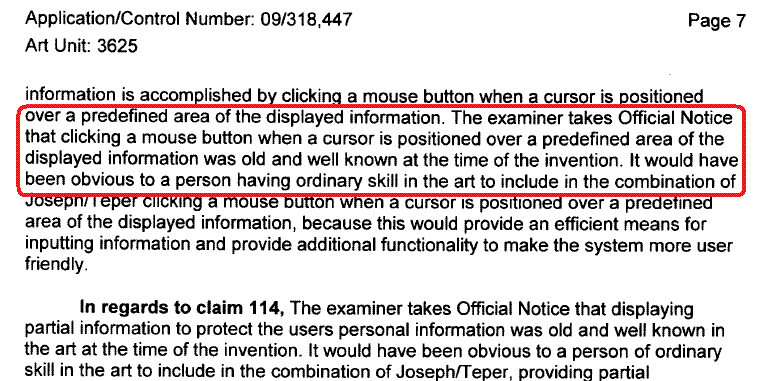
USPTO Examiner Rejected 1-Click Claims As "Obvious"
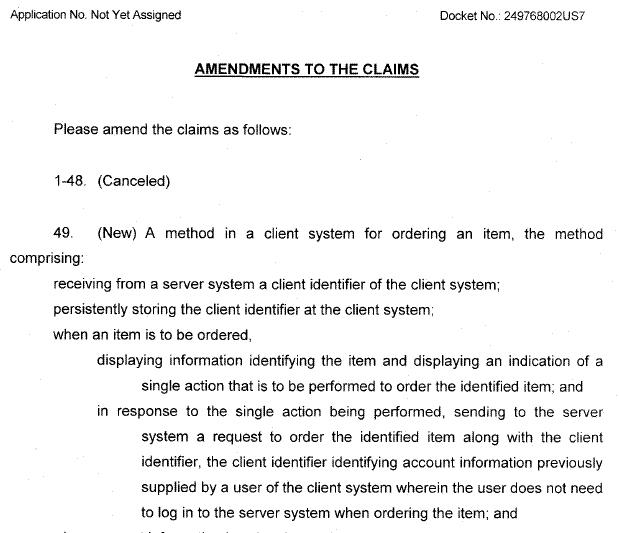
theodp writes "Faced with a duly unimpressed USPTO examiner who rejected its new 1-Click patent claims as 'obvious' and 'old and well known,' Amazon has taken the unusual step of requesting an Oral Appeal to plead its case. And in what might be interpreted by some as an old-fashioned stalling tactic, the e-tailer has also canceled and refiled its 1-Click claims in a continuation application. As it touted the novelty of 1-Click to Congress last spring, Amazon kept the examiner's rejection under its hat, insisting that 'still no [1-Click] prior art has surfaced.' The Judiciary Committee hearing this testimony included Rick Boucher (VA) and Howard Berman (CA), both recipients of campaign contributions from a PAC funded by 1-Click inventor Jeff Bezos, other Amazon execs, and their families." -
Tech Billionaire Boot Camp
theodp writes "Forget the Summer of Code. If you've got a hot idea for a start-up, Newsweek says Y-Combinator, the boot camp where Silicon Valley meets 'American Idol', is the place you should be. 'Some critics scoff that Y Combinator's investment is peanuts for that amount of equity. But the opportunity is unparalleled -- total immersion into Silicon Valley start-up culture, advice from Graham and a fast track to the top angel investors and venture-capital funds. When Graham calls the winners, the founders have only five minutes to accept. "If people turn us down," he says, "as far as we're concerned they've failed an IQ test."'" We've previously discussed the program on the site, just over a year ago. -
IBM Says 'Couldn't Fire 150K US Workers If We Wanted To'
theodp writes "In an e-mail worthy of the Dilbert Hall of Fame, IBM execs responded to Robert X. Cringely's Project LEAN layoff rumors, reassuring employees by pointing out that they've already wiped out too many U.S. jobs to be able to lay off another 150,000. Big Blue's employment peaked around 1985, when it had about 405,000 workers who were acclimated to a long tradition of lifetime employment. IBM puts its current global workforce at 355,766, with a 'regular U.S. population' of less than 130,000." -
Amazon Cries 'Uncle' to End IBM Patent Feud
theodp writes "Amazon will pay an undisclosed amount to IBM to settle a long-running patent feud, and the two companies have agreed to a long-term patent cross-licensing agreement. Information Week wonders if an insurance dispute prompted Amazon's settlement, noting that Atlantic Mutual sued Amazon back in March to escape any obligation to reimburse the e-tailer should it lose the case brought by IBM. Amazon had relied on Atlantic Mutual's backing in an earlier legal battle it waged against tiny InTouch. 'Amazon, whose chief executive, Jeff Bezos, is a vocal advocate of patent reform, has had numerous patent issues in the past. In 2005, the technology used in its 1-Click checkout system came under scrutiny as potentially infringing upon a similar product made by a small Virginia-based company called IPXL Holdings. Meanwhile, the US patent system itself is experiencing growing pains as Congress continues to explore the possibility of updating it to better serve the needs of the 21st-century business world.'" -
CNET Reporters Intend to Sue HP Over Surveillance
theodp writes "The NY Times reports that three CNET journalists whose records, as well as those of their relatives, were scrutinized by pretexting investigators working for HP intend to sue the company for invasion of privacy. HP, who paid $14.5M to settle a lawsuit filed by the CA attorney general in connection with the spying, reportedly offered each reporter $10,000, roughly enough to cover legal bills. The CNET reporters have been banned from covering HP or its see-no-evil CEO, who BTW was rewarded with $20.33M in 2006 despite skipping his reading assignments." -
eBay's Ill-Timed Lifetime Achievement Webby
theodp writes "eBay CEO Meg Whitman will accept a special Webby Lifetime Achievement Award next month on behalf of the eBay Community, which has 'permanently changed the way people connect, discover and interact with each other.' Perhaps by then, people will have forgotten how eBay enabled buyer 'Blazers5505' to hook up with sellers like 'oneclickshooting' just weeks before the worst mass shooting in modern US history, prompting eBay to issue a gun-parts-don't-kill-students-guns-and-ammo-do statement that showed little evidence of its celebrated commitment to social consciousness. CEO Whitman, who received $11.1M last year for her leadership efforts, has kept a low profile since tooting eBay's trust-and-safety horn for Wall Street analysts two days after the Va. Tech rampage." -
Developer Conferences for the Summer?
modi123 asks: "It's getting close to the middle of the year and I am looking for a developer conference or two, so that I can fill my educational quota. TechEd in Orlando is out (I was the last yell 'not it' and I have to remain behind to man the system), my boss won't allow me to travel to TechEd Euro in Barcelona, and I am at a loss on where to go. My areas of expertise are VB.NET, MSSQL, and application development, while I dabble in AI, info sec, and GUI development. Do you have any suggestions where I can go? Side note, I keep hearing about this 'defcon' thing — would that benefit an app developer, or is that mainly an overblown info sec experience?" -
Dell Offers Virtual Saplings For Earth Day
theodp writes "The expansion of Dell's Plant a Tree for Me program into Second Life has the Silicon Valley Sleuth wondering if this represents a new low in Earth Day marketing tie-ins. You may wonder, too, after reading Dell's invitation to its Earth Day Party at Dell Island in SL ('get your own tree sapling to plant in Second Life!')." -
Amazon Sues Alexaholic
theodp writes "ZDNet reports that as Jeff Bezos tap-danced out of a cringe moment at Web 2.0 Expo prompted by Tim O'Reilly's questioning of why Amazon couldn't get along with Alexaholic (now Statsaholic), Amazon had already filed a lawsuit to legally spank the tiny company into oblivion." -
Amazon Goes Web 2.0 Wild to Defend 1-Click Patent
theodp writes "Six years ago, Jeff Bezos and Tim O'Reilly urged the masses to give-patent-reform-a-chance as Richard Stallman called for an Amazon boycott. On Monday, the pair will reunite to kick off O'Reilly's new Amazon-sponsored Web 2.0 Expo with A Conversation with Jeff Bezos. Be interesting if the conversation turned to Amazon's ongoing battle against an actor's effort to topple Bezos' 1-Click patent, which The Register notes included dumping 58 lbs. of paperwork on the patent examiner, including dozens of articles from the oh-so-Web-2.0 Wikipedia, which the USPTO had already deemed an un acceptable source of information ('From a legal point of view, a Wiki citation is toilet paper,' quipped patent expert Greg Aharonian)." -
Amazon's Lawyers Jerking USPTO Around?
theodp writes "Reacting to an actor's do-it-yourself legal effort that triggered a reexam of Amazon.com's 1-Click patent, attorneys for Amazon have fired back, deluging the USPTO with documents to review, including Wikipedia articles. With the latest batch, Amazon's high-priced law firm even requested that USTPO examiners review an archived page of Norm Quotes (yes, Norm from Cheers) and rule that it does not invalidate CEO Jeff Bezos' 1-Click patent." -
Dealing With Venom on the Web
theodp writes "In a world where nastiness online can erupt and go global overnight, BusinessWeek finds Corporate America woefully unprepared and offers suggestions for how to cope, including shelling out $10,000 to companies like ReputationDefender.com to promote the info you want and suppress the news you don't. And in what must be a sign of the Apocalypse, BW holds Slashdot's moderation system up as a model for maintaining civility in message boards." -
Study Finds Cost Major Factor In Outsourcing Positions
theodp writes "Debunking claims to the contrary, a new study from Duke University asserts that it is purely cost savings, and not the education of Indian and Chinese workers, or a shortage of American engineers that has caused offshore outsourcing. 'The key advantage of hiring Chinese entry-level engineers was cost savings, whereas a few respondents cited strong education or training and a willingness to work long hours. Similarly, cost savings were cited as a major advantage of hiring Indian entry-level engineers, whereas other advantages were technical knowledge, English language skills, strong education or training, ability to learn quickly, and a strong work ethic.' The article goes on to point out that despite this, outsourcing will continue to be a problem for US workers in coming decades; new elements of traditional corporations like R&D may in fact be next on the outsourcing chopping block." -
Censorware Not Good, Just Better Than COPA
Slashdot contributor Bennett Haselton writes in with with an essay that starts "On March 22nd, District Court Judge Lowell Reed ruled that the Child Online Protection Act was unconstitutional, partly because the judge called it 'vague and overbroad,' and partly because less restrictive means existed, such as Internet blocking software. I'll leave others to comment on the legal issues, but blocking software is something that I've studied, and it's important to make sure this decision is not seen as some kind of vindication for the 'censorware' industry." Tap that link below to read the rest of his story.The thrust of the judge's findings about blocking software was that it blocks a high proportion of pornography, blocks a low proportion of non-pornographic Web sites, and that it is difficult for most kids get around. I think that these conclusions are correct for the purpose of the decision he was making -- in other words, blocking software blocks a high proportion of pornography compared to the law in question, and is difficult to get around compared to the law in question. But let's not get carried away -- blocking software is not that accurate, and not that hard to defeat.
Consider first the accuracy rates cited by the judge. Citing expert witness reports, he wrote, "I find that filters generally block about 95% of sexually explicit material", and then quoted several different rates for overblocking provided by expert witness reports, ranging from about 4% to 11%. I wrote earlier about the different ways to interpret overblocking error rates -- the gist was that if you care about the constitutional issues with filter use, then you look at the percentage of blocked sites that are non-pornographic (i.e. for every porn site that gets blocked, how many research sites get canned along with it), and that number tends to be high. On the other hand, if you simply care about the effectiveness of blocking software in a home setting where there is no constitutional issue raised, then you look at the percentage of non-pornographic sites that are blocked, and that number tends to be low.
For example, suppose for the sake of argument that 1% of Web sites in a given sample are sexually explicit, or 100 Web sites out of 10,000. To use Judge Reed's numbers, suppose that 95% of those porn sites, or exactly 95 in this sample, are blocked, whereas of the other 9,900 sites, 5%, or exactly 495 of them, are not blocked. Then the percentage of non-porn sites that are blocked is only 5%, but the percentage of blocked sites that are non-porn is actually 83% (495 blocked non-porn sites, out of a total of 495+95=590 blocked sites). One of our past studies of blocking software did indeed sometimes find error rates of about 80%, due to errors caused by IP address blocking and filters being tripped up by keywords (even when "keyword blocking" features were supposedly turned off -- because in that case the program still blocked sites on its master blacklist, and those blacklists are frequently built by scanning the Web for keywords).
Another portion of the judge's ruling dealt with the difficulty of getting around blocking software:
Filtering companies actively take steps to make sure that children are not able to come up with ways to circumvent their filters. Filtering companies monitor the Web to identify any methods for circumventing filters, and when such methods are found, the filtering companies respond by putting in extra protections in an attempt to make sure that those methods do not succeed with their products... It is difficult for children to circumvent filters because of the technical ability and expertise necessary to do so by disabling the product on the actual computer or by accessing the Web through a proxy or intermediary computer and successfully avoiding a filter on the minor's computer... Accessing the Web through a proxy or intermediary computer will not enable a minor to avoid a filtering product that analyzes the content of the Web page requested, in addition to where the page is coming from. Any product that contains a real-time, dynamic filtering component cannot be avoided by use of a proxy, whether the filter is located on the network or on the user's computer.
After the ruling came out, I tried some of the best-known blocking software programs to see how easily they could be defeated: Net Nanny, SurfControl, CyberSitter, and AOL Parental Controls. Net Nanny and SurfControl apparently could not block https:// sites at all, so I was able to get to https://www.StupidCensorship.com/ and access anything I wanted from there, despite the fact that that site had been public for over a year. Apparently I do have the "technical ability and expertise necessary" to "access the Web through a proxy", but then again I'm not a minor, so, kids, don't hurt yourself trying that.CyberSitter did intercept the https:// request so it did block StupidCensorship.com, but it didn't know about some of the other proxy sites that we had mailed out to our users recently. One of those did however get blocked because the word "hacking" appeared on the page -- as in,
This site is a tool for circumventing Internet censorship to promote free speech. It does not enable any hacking, cracking or any illegal activities (since it doesn't let you to access any sites that you couldn't access from home anyway).
so it's probably safe to say that if the CyberSitter filter is that paranoid, it would result in a good deal of overblocking as well. AOL Parental Controls also did not block the latest proxies, although it wouldn't let me load sites like Playboy through the proxy, presumably because it recognized the contents of the page and blocked it (so on that point, Judge Reed was right).But none of the products could stop the doomsday weapon, which is to burn an Ubuntu Linux CD and boot from that, bypassing any security software installed under Windows. I can see your eyes glazing over at the thought of kids attempting to do that, but it's merely an unfamiliar process to most people, not actually difficult. (I've been saying for years, that with the greater difficulty of using Linux over Windows, there's nothing cool or clever about running it just for its own sake so you can feel badass, and the only time you need it is if you want to do something that only Linux lets you do. Well, here's something!)
But in spite of everything, I think the judge's conclusions about blocking software were still broadly correct, because he was comparing the merits of blocking software against the merits of a law that would have prohibited commercial pornography from being published on the Web in the United States. In talking about the "effectiveness" of such a law, the judge and lawyers cited the fact that as many as 75% of adult sites were hosted overseas anyway. But even that high number understates the situation, because hypothetically if all the porn on the Web in the U.S. did get outlawed, it would be easy for anyone to spend all their time looking at porn from outside the country. When you're talking about a supply of content that is so large that nobody could finish looking at it all if they spent the rest of their life trying, it doesn't really matter if 25% or 50% or 75% is located within your legal jurisdiction. I never stop hoping that a judge will say, "Look, pictures of naked people don't hurt anyone, no, not even people under 18. Shoot, when I was 13 and president of Future Lawyers of America, my friend gave me a copy of Playboy as a down payment for my unsuccessful attempts to defend him on curfew-breaking charges in Foot v. Ass, and look how I turned out." But even a judge who firmly believed that people under 18 were harmed by pornographic images, would have found little reason to uphold this law.
-
Amazon Patents Humans Assisting Computers
theodp writes "Amazon's latest patent, the Hybrid Machine/Human Computing Arrangement, reads like scary sci-fi, with claims covering the use of humans 'of college educated, at most high school educated, at most elementary school educated, and not formally educated' to perform subtasks dispatched by a computer. From the patent: 'For examples, the task on hand requires French speaking humans, and Task Server has requested that each subtask be performed by at least 10 humans with a past accuracy record of at least 90%.' Yikes." -
French Train Breaks Speed Record
Josh Fink writes "A French train on the TGV line has broken the wheeled train speed record - again. At a speed of 350 miles per hour, they came close to breaking the all time record of 361 miles per hour, held by a Japanese maglev train. It was last broken back in 1990. From the article: 'The TGV, short for "train a grande vitesse," as France's bullet trains are called, is made up of three double-decker cars between two engines. It has been equipped with larger wheels than the usual TGV to cover more ground with each rotation and a stronger, 25,000-horsepower engine, said Alain Cuccaroni, in charge of the technical aspects of testing.'" -
Yahoo to Offer Unlimited Email Storage
Josh Fink writes to tell us that Yahoo has announced that they will be offering unlimited email storage starting this coming May. The launch is all a part of Yahoo's ten year anniversary. While not all users will see their storage caps disappear right away Yahoo is promising that this feature will eventually reach their entire population. -
Ze End of The Show
theodp writes "Before YouTube caught on, there was Ze Frank. Slate mourns the loss of The Show, which came to an end last week after a 365-day run. Sorry, Sports Racers. 'The result was a new kind of improvised conversation/performance art. Ze beamed himself out to a worldwide audience and gathered them into a universe of his own devising. A wiki sprung up, with fans completing a transcript of every episode. Ze also gave out missions, such as creating the ugliest MySpace page and building an "Earth sandwich," which consisted of placing pieces of bread on exact opposite points of the globe. It was this "live" element that made the project not-televison, not-boring, and ultimately fleeting.'" -
Borders Closes the Books on Amazon
theodp writes "Borders said Thursday that it was severing ties with Amazon and will compete directly against the e-tailer with its own website. The loss of Borders could cost Amazon $80-$160 million in annual revenue, according to one estimate. 'Amazon could gain market share in book selling over time because it will have an advantage over Borders, which now will charge a sales tax for all books sold. Companies have to charge a sales tax for Internet sales if they have a physical presence in states that collect sales taxes, [Stifel, Nicolaus & Co analyst Scott] Devitt said. Amazon collects sales taxes only on books sold in Washington, North Dakota, Kentucky and Kansas. Borders would collect sales taxes in all 50 states, the company said." -
Google's Second-Class Citizens
theodp writes "Valleywag reports on a new caste system at Google, which will mean compulsory lunch breaks, two additional unpaid 15-minute breaks, limited OT, and e-clock punching for those reclassified as hourly workers starting April 1. Could be worse, though. Google also offers gigs through WorkforceLogic (the company that helped Microsoft deal with its pesky permatemps), which come with a guarantee of unemployment after one year. Guess that's what passes for the Best Employer in the US these days." -
Halliburton Moving HQ To Dubai
theodp writes "Much-maligned defense contractor Halliburton is moving its corporate headquarters from Houston to Dubai in the United Arab Emirates. Dubai's friendly tax laws will add to Halliburton's bottom line. Last year the company earned $2.3B in profits. Sen. Patrick Leahy called the company's move 'corporate greed at its worst.' Halliburton, once headed by VP Dick Cheney, has been awarded contracts valued at an estimated $25.7B for its work in Iraq."