Slashdot Mirror
Domain: arstechnica.com
Stories and comments across the archive that link to arstechnica.com.
Stories · 4,420
-
Michael Mann Defamation Suit Against National Review Writer to Proceed
From Ars Technica comes this update in the defamation case filed by climate researcher Michael Mann against political commentator Mark Steyn of National Review magazine, who rhetorically compared Mann to Penn State coach Jerry Sandusky and accused him of publishing intentionally misleading research results. "The defendants tried to get it dismissed under the District of Columbia's Strategic Lawsuit Against Public Participation (SLAPP) statute, which attempts to keep people from being silenced by frivolous lawsuits. The judge hearing the case denied the attempt and then promptly retired; Mann next amended his complaint, leading an appeals court to send the whole thing back to a new trial judge. Now the new judge has denied the SLAPP attempt yet again. In a decision released late last week (and hosted by defendant Mark Steyn), the judge recognizes that the comparison to a child molester is part of the "opinions and rhetorical hyperbole" that are protected speech when used against public figures like Mann. However, the accompanying accusations of fraud are not exempt:" -
RNC Calls For Halt To Unconstitutional Surveillance
Bob9113 writes "According to an article on Ars Technica, the Republican National Committee (RNC) has passed a resolution that "encourages Republican lawmakers to immediately take action to halt current unconstitutional surveillance programs and provide a full public accounting of the NSA's data collection programs." The resolution, according to Time, was approved by an overwhelming majority voice vote at the Republican National Committee's Winter Meeting General Session, going on this week in Washington, DC." -
Surveillance Watchdog Concludes Metadata Program Is Illegal, "Should End"
An anonymous reader writes "Three out of five PCLOB board members are in agreement: The NSA spy programs are illegal.. Unfortunately, these lawyers are not in a position to act or make any changes, only to advise congress and the president. Could this be the start of change to come? 'According to leaked copies of a forthcoming report by the Privacy and Civil Liberties Oversight Board (PCLOB), the government's metadata collection program "lacks a viable legal foundation under Section 215, implicates constitutional concerns under the First and Fourth Amendments, raises serious threats to privacy and civil liberties as a policy matter, and has shown only limited value As a result, the board recommends that the government end the program.'" Not surprisingly, the Obama administration disagrees. -
Protesters Show Up At the Doorstep of Google Self-driving Car Engineer
mpicpp sends this report from Ars Technica: "Protests against tech giants and their impact on the San Francisco Bay Area economy just got personal. According to an anonymous submission on local news site Indybay, an unknown group of protesters targeted a Google engineer best known for helping to develop the company's self-driving car. ... The protest against Levandowski came the same day that the San Francisco Municipal Transit Authority (SFMTA) voted for the first time to take action regulating Google, Facebook, Apple, and a number of other large tech companies that shuttle workers in private, Wi-Fi-enabled buses from the Bay Area to points south in Silicon Valley." -
Scientists Detect Two Dozen Computers Trying To Sabotage Tor Privacy Network
New submitter fynbar writes "Computer scientists have identified almost two dozen computers that were actively working to sabotage the Tor privacy network by carrying out attacks that can degrade encrypted connections between end users and the websites or servers they visit (PDF). 'Two of the 25 servers appeared to redirect traffic when end users attempted to visit pornography sites, leading the researchers to suspect they were carrying out censorship regimes required by the countries in which they operated. A third server suffered from what researchers said was a configuration error in the OpenDNS server. The remainder carried out so-called man-in-the-middle (MitM) attacks designed to degrade encrypted Web or SSH traffic to plaintext traffic. The servers did this by using the well-known sslstrip attack designed by researcher Moxie Marlinspike or another common MitM technique that converts unreadable HTTPS traffic into plaintext HTTP.'" -
Microsoft Paying for Positive Xbox One Coverage on YouTube
An anonymous reader writes "Microsoft, partnered with Machinima, has put forth a promotion for YouTube personalities: make a video about the Xbox One and get money for it. Problematically, they also require the reviewer not to disclose that they're getting paid (or mention anything negative), which breaks FTC disclosure rules (PDF). Microsoft has a well-known history of astroturfing, but is this the first proof of them doing it illegally?" -
Adware Vendors Buying Chrome Extensions, Injecting Ads
An anonymous reader writes "Ars reports that the developers of moderately popular Chrome extensions are being contacted and offered thousands of dollars to sell ownership of those extensions. The buyers are then adding adware and malware to the extensions and letting the auto-update roll it out to end users. The article says, 'When Tweet This Page started spewing ads and malware into my browser, the only initial sign was that ads on the Internet had suddenly become much more intrusive, and many auto-played sound. The extension only started injecting ads a few days after it was installed in an attempt to make it more difficult to detect. After a while, Google search became useless, because every link would redirect to some other webpage. My initial thought was to take an inventory of every program I had installed recently—I never suspected an update would bring in malware. I ran a ton of malware/virus scanners, and they all found nothing. I was only clued into the fact that Chrome was the culprit because the same thing started happening on my Chromebook—if I didn't notice that, the next step would have probably been a full wipe of my computer.'" -
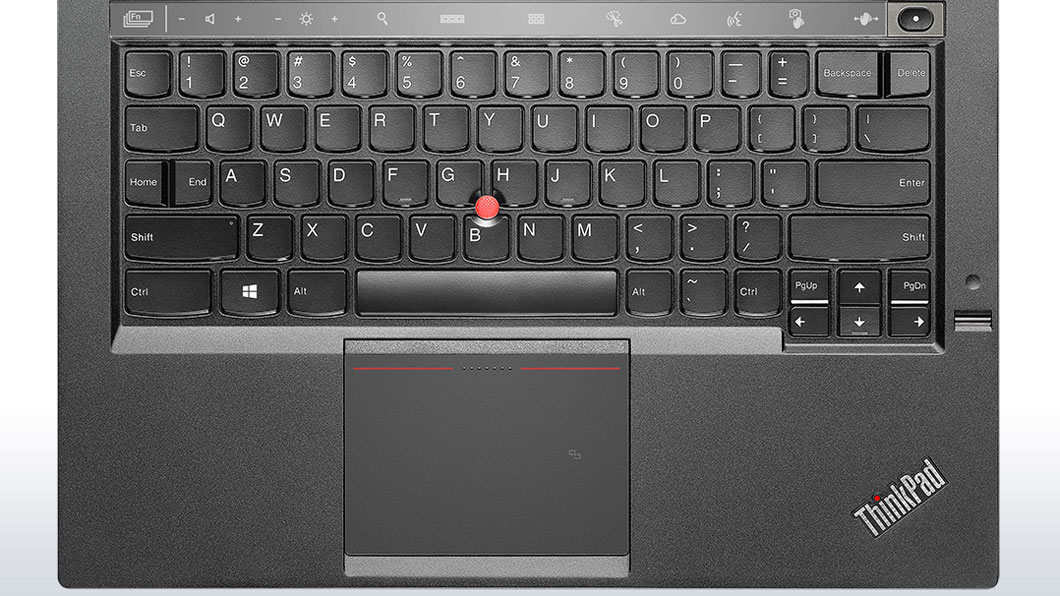
Stop Trying To 'Innovate' Keyboards, You're Just Making Them Worse
FuzzNugget writes "Peter Bright brings the hammer down on the increasing absurdities of laptop keyboard design, from the frustrating to the downright asinine, like the 'adaptive keyboard' of the new Lenovo X1 Carbon. He says, 'The X1's Adaptive Keyboard may have a superior layout to a regular keyboard (I don't think that it does, but for the sake of argument, let's pretend that it does), but that doesn't matter. As long as I have to use regular keyboard layouts too, the Adaptive Keyboard will be at a huge disadvantage. Every time I use another computer, I'll have to switch to the conventional layout. The standard layout has tremendous momentum behind it, and unless purveyors of new designs are able to engineer widespread industry support—as Microsoft did with the Windows keys, for example—then their innovations are doomed to being annoyances rather than improvements.' When will laptop manufacturers focus on perfecting a standardized design rather than trying to reinvent the wheel with every new generation?" -
Notorious Patent Troll Sues Federal Trade Commission
Fnord666 writes with news that the notorious scanner patent troll MPHJ Technology caught the eye of the FTC, and decided to file a preemptive lawsuit (PDF) against the Federal government. From the article: As the debate over so-called "patent trolls" has flared up in Congress, MPHJ became the go-to example for politicians and attorneys general trying to show that patent abuse has spun out of control. ... The FTC was going to sue under Section 5 of the FTC Act, which bars deceptive trade practices. MPHJ says that the FTC is greatly overstepping its bounds. The patent-licensing behavior doesn't even amount to 'commerce' by the standards of the FTC Act, because the letters are not 'the offer of a good or sale for service,' argues MPHJ. Furthermore, MPHJ has a First Amendment right to notify companies that it believes its patents are being infringed." -
Incandescent Bulbs Get a Reprieve
An anonymous reader writes "A new budget deal reached today by the U.S. Congress walks back the energy efficiency standards that would have forced the phase out of incandescent bulbs. 'These ideas were first enacted during the Bush administration, via the Energy Independence and Security Act of 2007. Incandescent bulbs were unable to meet the standards, so they would eventually be forced off the market in favor of LEDs and compact fluorescent bulbs. But Republicans have since soured on the bill, viewing it as an intrusion on the market and attempting to identify it with President Obama. Recent Congresses have tried many times to repeal the standards, but these have all been blocked. However, U.S. budgets are often used as a vehicle to get policies enacted that couldn't pass otherwise, since having an actual budget is considered too valuable to hold up over relatively minor disputes. The repeal of these standards got attached to the budget and will be passed into law with it.'" -
New Treatment Kills Metastatic Cancer Cells
robert2cane points out a promising study from Cornell University about controlling the spread of cancer. There are many treatments for an isolated tumor, but once cancer cells reach the bloodstream and start spreading through the body, it's much more difficult to control. The new research (PDF), led by Michael King, developed a compound that is able to target and eliminate cancer cells in the blood of mice. "When attempting to develop a treatment for metastases, King faced two problems: targeting moving cancer cells and ensuring cell death could be activated once they were located. To handle both issues, he built fat-based nanoparticles that were one thousand times smaller than a human hair and attached two proteins to them. One is E-selectin, which selectively binds to white blood cells, and the other is TRAIL. He chose to stick the nanoparticles to white blood cells because it would keep the body from excreting them easily. This means the nanoparticles, made from fat molecules, remain in the blood longer and thus have a greater chance of bumping into freely moving cancer cells. There is an added advantage. Red blood cells tend to travel in the center of a blood vessel, and white blood cells stick to the edges. This is because red blood cells are lower density and can be easily deformed to slide around obstacles. Cancer cells have a similar density to white blood cells and remain close to the walls, too. As a result, these nanoparticles are more likely to bump into cancer cells and bind their TRAIL receptors." -
Steam Controller Hands-on
Ars Technica has posted their impressions from a hands-on session with Valve's new Steam Controller. The controller notably departs from standard practice of relying on two thumbsticks for precise movement, instead replacing them with concave touchpads. From the article: "When used as a kind of virtual trackball, as most games did with the right pad, it was a revelation. When used as a virtual d-pad, as it was on the left pad, it was an exercise in frustration. Let's focus on the right pad first. There's definitely a learning curve to using this side of the pad properly; years of muscle memory had me trying to use it like an analog stick (minus the stick) at first. It only really began to click when I started swiping my thumb over the pad, as I've seen in previous videos (there was no one on hand to really explain the controller to me, so I was left figuring it out on my own, just like a new Steam Machine owner). When I say it "started to click," I mean that literally. The subtle clicking in your hands as you swipe along the pad is an incredible tactile experience, as if there was an actual weighted ball inside the controller that's rolling in the direction you swipe. And like a trackball slowly losing its inertia, the clicking slows its pace after you lift your thumb off the pad, giving important contextual information for the momentum imparted by your swipe." More write-ups are available about the controller from Gamespot, Gizmodo, and Joystiq. -
Should Facebook 'Likes' Count As Commercial Endorsements?
Slashdot contributor Bennett Haselton writes: "Facebook settled out of court over displaying ads that told you which of your friends had 'liked' a product or service, and another lawsuit is currently pending over the use of minors' pictures specifically in similar ads. (Not to be confused with another recently filed lawsuit alleging that Facebook converts private messages into public 'likes'.) Google+ tried to limit its liability by only showing the faces of users over 18 when showing which friends 'like' a page. I'm all for more privacy for social networking users, and if it's true that Facebook has been silently marking users as publicly 'liking' a page because they mentioned the page in a private message, the plaintiff's lawyers ought to clean them out for that one. But in cases where you willingly and knowingly 'liked' a page, Facebook and Google+ ought to be able to tell that to your friends in advertisements, without being sued for it." Read on for the rest of Bennett's thoughts.The rationale for the case against the Facebook 'your-friends-have-liked-this' ads, seems to be that Facebook is violating laws and social norms against using someone's image in a commercial endorsement without their permission. But I can only think of two reasons for why those laws and social norms exist, and neither of those reasons would seem to apply to Facebook 'likes.' The two main reasons that come to mind are (1) loss of control over one's image, and (2) the creation of the false impression that the company has paid for a product endorsement.
Consider first the issue of the loss of control over your image. You would probably be annoyed if a company took a picture of your face and started featuring it prominently in their advertisements without your permission. (If you had taken the photo yourself, then the company would of course also be on the hook for copyright infringement, but let's assume that the company had one of their photographers take the photo so that they owned the copyright, and the only issue is the unfair use of your likeness.) At that point, you have no control over the dissemination of the picture. Even assuming that you like the way you look in the picture, you might find it creepy to think of thousands of strangers looking at the photo of you (or your kids). That would be an argument in favor of requiring companies to get people's permission before using their likenesses in advertisements.
But that argument would not apply to an ad in your Facebook feed which shows you the profile pictures of friends who have 'liked' a page. Those profile pictures were uploaded by those users expressly so that their Facebook friends could see them. At any time, they can select a different 'profile picture', or remove any profile pictures that they no longer wish to be visible to friends. (Facebook took a lot of well-deserved criticism for exposing users' profiles and pictures to non-friends, as well, even for users who have disabled that setting — but that's a separate issue. The "ads" in question only display your pictures to your friends.)
Second, consider the issue of creating the false impression of a paid product endorsement. With traditional advertisements, it might seem strange that people respond to ads featuring a nice, attractive-but-not-in-your-face-attractive person using a product, even if the photo doesn't seem to directly convey any information about the product itself. What the photo really conveys is that the company behind the product has resources — to hire models, photographers, lighting crews, photo editors, and of course to buy the space to display the ad. This ostentatious display of "resources" might reassure a customer that the company similarly has the resources to test their product thoroughly, to replace a product that breaks, or to honor their returns policy. But it only works if the user believes that the company actually did spend money on all of those things to create the ad.
This is even more true of ads featuring paid celebrities. Steven Landsburg, in a passage from his book The Armchair Economist, writes:
"[I]t is also common to see products endorsed by celebrities who have no particular expertise, and who are obviously being paid for their testimony. Well-known actresses endorse health clubs; ex-politicians endorse luggage; in Massachusetts recently, a Nobel prize-winning economist endorsed automobile tires. People respond to these ads, and sales increase. What useful information can there be in knowing that the manufacturer of your overnight bag paid a six-figure fee to feature a famous person in a television commercial? How can it be rational to choose your luggage on this basis?
Let me suggest an answer. [...] Hiring a celebrity to endorse your product is like posting a bond. The firm makes a substantial investment up front and reaps returns over a long period of time. A firm that expects to disappear in a year won't make such an investment. When I see a celebrity endorsement, I know that the firm has enough confidence in the quality of its product to expect to be around awhile.(The full argument is in the text of The Armchair Economist on Scribd, although you've probably got the idea.)
However, none of this applies to your friend's profile picture appearing in an ad in your Facebook feed. No rational person would think that meant that the friend had been paid for the endorsement, so the ad doesn't falsely convey anything about the company's "resources." (All you really know is that the company paid some money to buy the ad — but, unlike a print ad that appears in a national magazine, you have no idea how much they spent to promote their brand on Facebook just because you happen to be seeing the promotion.) The valuable information conveyed in the ad is just what it seems — at least one of your friends thought the company or product was cool enough to 'like' it.
(This argument does leave an interesting case uncovered. What if a real recognizable celebrity 'liked' a page on Facebook, and that company paid for a flurry of ads in people's Facebook feeds prominently featuring the celebrity's likeness, truthfully claiming that the celebrity liked their product, but without paying the celebrity? I don't happen to know of any real-life case where a company found out that a celebrity actually used their product, and then started advertising the fact that their product was used by that celebrity without actually paying the celebrity, using the defense that all they were doing was stating a true fact. (Tell me in the comments if you know if that's happened.) However, Facebook seems to have ducked that issue for now, because virtually no actual celebrities have regular user profiles on Facebook; they have official fan pages, clearly demarcating the line between "them" and "us." So the sponsored ads are not likely to include a real celebrity's likeness any time soon.)
Fundamentally, if an 'ad' appears in your Facebook feed telling you that some of your friends 'liked' a page, all that ad is doing is stating a true fact, something that Facebook ought to be allowed to do under the First Amendment. I don't agree with Mitt Romney that "corporations are people too, my friend," but they do have First Amendment rights, which I would argue should include the right to tell you if friends of yours have publicly indicated that they like a product or service.
One currently pending lawsuit against Facebook makes much of the fact that Facebook's ads were displaying the profile pictures of minors, and that California law requires the permission of a minor's parents to use their likeness in an ad. But when that law was drafted, the authors probably had in mind the kind of traditional advertisements that raise the two concerns above — where (1) the minor and their family lose control over the dissemination of their image, and (2) the use of the likeness creates the false impression of a paid advertisement. It's not obvious that they would have considered the law to apply to a note in your Facebook feed telling you that your friend had liked a page. To the extent that the law could be interpreted to prohibit those kinds of notifications, that's arguably a violation of Facebook's First Amendment rights.
Of course, I've made this argument by assuming that the two reasons listed at the top are the only reasons that a company should be required to get people's permission before using their likeness in advertisements, and that if those reasons don't apply to Facebook 'likes,' then the permission requirement should not apply. But there may be other reasons besides those two, reasons that would also apply to ads listing Facebook 'likes,' and then that would invalidate the argument. But in the meantime, even though I don't use Facebook, if I did, I'd tentatively be fine with Facebook showing my profile picture in 'ads' to friends listing me as one of a group of people who had 'liked' a particular page.
On the other hand, if Facebook is really scanning your private messages for mentions of a particular page, and then automatically indicating on your profile that you 'like' that page, then yes, that means that any 'likes' acquired in that manner were not intended by the user to be public, and yes, that changes everything.
-
Should Facebook 'Likes' Count As Commercial Endorsements?
Slashdot contributor Bennett Haselton writes: "Facebook settled out of court over displaying ads that told you which of your friends had 'liked' a product or service, and another lawsuit is currently pending over the use of minors' pictures specifically in similar ads. (Not to be confused with another recently filed lawsuit alleging that Facebook converts private messages into public 'likes'.) Google+ tried to limit its liability by only showing the faces of users over 18 when showing which friends 'like' a page. I'm all for more privacy for social networking users, and if it's true that Facebook has been silently marking users as publicly 'liking' a page because they mentioned the page in a private message, the plaintiff's lawyers ought to clean them out for that one. But in cases where you willingly and knowingly 'liked' a page, Facebook and Google+ ought to be able to tell that to your friends in advertisements, without being sued for it." Read on for the rest of Bennett's thoughts.The rationale for the case against the Facebook 'your-friends-have-liked-this' ads, seems to be that Facebook is violating laws and social norms against using someone's image in a commercial endorsement without their permission. But I can only think of two reasons for why those laws and social norms exist, and neither of those reasons would seem to apply to Facebook 'likes.' The two main reasons that come to mind are (1) loss of control over one's image, and (2) the creation of the false impression that the company has paid for a product endorsement.
Consider first the issue of the loss of control over your image. You would probably be annoyed if a company took a picture of your face and started featuring it prominently in their advertisements without your permission. (If you had taken the photo yourself, then the company would of course also be on the hook for copyright infringement, but let's assume that the company had one of their photographers take the photo so that they owned the copyright, and the only issue is the unfair use of your likeness.) At that point, you have no control over the dissemination of the picture. Even assuming that you like the way you look in the picture, you might find it creepy to think of thousands of strangers looking at the photo of you (or your kids). That would be an argument in favor of requiring companies to get people's permission before using their likenesses in advertisements.
But that argument would not apply to an ad in your Facebook feed which shows you the profile pictures of friends who have 'liked' a page. Those profile pictures were uploaded by those users expressly so that their Facebook friends could see them. At any time, they can select a different 'profile picture', or remove any profile pictures that they no longer wish to be visible to friends. (Facebook took a lot of well-deserved criticism for exposing users' profiles and pictures to non-friends, as well, even for users who have disabled that setting — but that's a separate issue. The "ads" in question only display your pictures to your friends.)
Second, consider the issue of creating the false impression of a paid product endorsement. With traditional advertisements, it might seem strange that people respond to ads featuring a nice, attractive-but-not-in-your-face-attractive person using a product, even if the photo doesn't seem to directly convey any information about the product itself. What the photo really conveys is that the company behind the product has resources — to hire models, photographers, lighting crews, photo editors, and of course to buy the space to display the ad. This ostentatious display of "resources" might reassure a customer that the company similarly has the resources to test their product thoroughly, to replace a product that breaks, or to honor their returns policy. But it only works if the user believes that the company actually did spend money on all of those things to create the ad.
This is even more true of ads featuring paid celebrities. Steven Landsburg, in a passage from his book The Armchair Economist, writes:
"[I]t is also common to see products endorsed by celebrities who have no particular expertise, and who are obviously being paid for their testimony. Well-known actresses endorse health clubs; ex-politicians endorse luggage; in Massachusetts recently, a Nobel prize-winning economist endorsed automobile tires. People respond to these ads, and sales increase. What useful information can there be in knowing that the manufacturer of your overnight bag paid a six-figure fee to feature a famous person in a television commercial? How can it be rational to choose your luggage on this basis?
Let me suggest an answer. [...] Hiring a celebrity to endorse your product is like posting a bond. The firm makes a substantial investment up front and reaps returns over a long period of time. A firm that expects to disappear in a year won't make such an investment. When I see a celebrity endorsement, I know that the firm has enough confidence in the quality of its product to expect to be around awhile.(The full argument is in the text of The Armchair Economist on Scribd, although you've probably got the idea.)
However, none of this applies to your friend's profile picture appearing in an ad in your Facebook feed. No rational person would think that meant that the friend had been paid for the endorsement, so the ad doesn't falsely convey anything about the company's "resources." (All you really know is that the company paid some money to buy the ad — but, unlike a print ad that appears in a national magazine, you have no idea how much they spent to promote their brand on Facebook just because you happen to be seeing the promotion.) The valuable information conveyed in the ad is just what it seems — at least one of your friends thought the company or product was cool enough to 'like' it.
(This argument does leave an interesting case uncovered. What if a real recognizable celebrity 'liked' a page on Facebook, and that company paid for a flurry of ads in people's Facebook feeds prominently featuring the celebrity's likeness, truthfully claiming that the celebrity liked their product, but without paying the celebrity? I don't happen to know of any real-life case where a company found out that a celebrity actually used their product, and then started advertising the fact that their product was used by that celebrity without actually paying the celebrity, using the defense that all they were doing was stating a true fact. (Tell me in the comments if you know if that's happened.) However, Facebook seems to have ducked that issue for now, because virtually no actual celebrities have regular user profiles on Facebook; they have official fan pages, clearly demarcating the line between "them" and "us." So the sponsored ads are not likely to include a real celebrity's likeness any time soon.)
Fundamentally, if an 'ad' appears in your Facebook feed telling you that some of your friends 'liked' a page, all that ad is doing is stating a true fact, something that Facebook ought to be allowed to do under the First Amendment. I don't agree with Mitt Romney that "corporations are people too, my friend," but they do have First Amendment rights, which I would argue should include the right to tell you if friends of yours have publicly indicated that they like a product or service.
One currently pending lawsuit against Facebook makes much of the fact that Facebook's ads were displaying the profile pictures of minors, and that California law requires the permission of a minor's parents to use their likeness in an ad. But when that law was drafted, the authors probably had in mind the kind of traditional advertisements that raise the two concerns above — where (1) the minor and their family lose control over the dissemination of their image, and (2) the use of the likeness creates the false impression of a paid advertisement. It's not obvious that they would have considered the law to apply to a note in your Facebook feed telling you that your friend had liked a page. To the extent that the law could be interpreted to prohibit those kinds of notifications, that's arguably a violation of Facebook's First Amendment rights.
Of course, I've made this argument by assuming that the two reasons listed at the top are the only reasons that a company should be required to get people's permission before using their likeness in advertisements, and that if those reasons don't apply to Facebook 'likes,' then the permission requirement should not apply. But there may be other reasons besides those two, reasons that would also apply to ads listing Facebook 'likes,' and then that would invalidate the argument. But in the meantime, even though I don't use Facebook, if I did, I'd tentatively be fine with Facebook showing my profile picture in 'ads' to friends listing me as one of a group of people who had 'liked' a particular page.
On the other hand, if Facebook is really scanning your private messages for mentions of a particular page, and then automatically indicating on your profile that you 'like' that page, then yes, that means that any 'likes' acquired in that manner were not intended by the user to be public, and yes, that changes everything.
-
Linksys Resurrects WRT54G In a New Router
jones_supa writes "A year after purchasing the Linksys home networking division from Cisco, Belkin today brought back the design of what it called 'the best-selling router of all time' but with the latest wireless technology. We are talking about the classic WRT54G, the router in blue/black livery, first released in December 2002. Back in July 2003, a Slashdot post noted that Linksys had 'caved to community pressure' after speculation that it was violating the GPL free software license, and it released open source code for the WRT54G. The router received a cult following and today the model number of the refreshed model will be WRT1900AC. The radio is updated to support 802.11ac (with four antennas), the CPU is a more powerful 1.2GHz dual core, and there are ports for eSATA and USB mass storage devices. Linksys is also providing early hardware along with SDKs and APIs to the developers of OpenWRT, with plans to have support available when the router becomes commercially available. The WRT1900AC is also the first Linksys router to include a Network Map feature designed to provide a simpler way of managing settings of each device connected to the network. Announced at Consumer Electronics Show, the device is planned to be available this spring for an MSRP of $299.99." -
Rap Genius Returns To Google Search Rankings
theodp writes "After being punished by Google for manipulative SEO tactics, a contrite Rap Genius says it's back in Google's good graces. 'It takes a few days for things to return to normal, but we're officially back!' reads a post by the Rap Genius founders. 'First of all, we owe a big thanks to Google for being fair and transparent and allowing us back onto their results pages. We overstepped, and we deserved to get smacked.' Rap Genius credits some clever trackback scraping programming for its quick redemption, but a skeptic might suggest it probably didn't hurt that Rap Genius' biggest investor, Andreessen Horowitz, is tight with Google." -
Development To Begin Soon On New Star Control Game
In 1990, a development studio called Toys for Bob created a game called Star Control, a fun little space combat game with a bit of strategy added in. In 1992, they released Star Control 2, a full-blown space adventure RPG, which became one of the seminal works of early PC gaming. (Later open-sourced and released for modern systems.) After that, creators Fred Ford and Paul Reiche III lost control of the franchise to Accolade, who botched Star Control 3 and eventually abandoned the series. Last July, Stardock, the studio behind Sins of a Solar Empire, acquired the rights, and they're now discussing their plans to resurrect the classic series. They'll be using Star Control 2 as a template and an inspiration for all aspects of the game, though they won't be using any of the IP from Star Control I & II. They've also contacted Ford and Reiche and will try to hold true to their creative intentions. (The two currently run an Activision game studio, so they won't be involved with the new game.) Production will begin this winter. -
Development To Begin Soon On New Star Control Game
In 1990, a development studio called Toys for Bob created a game called Star Control, a fun little space combat game with a bit of strategy added in. In 1992, they released Star Control 2, a full-blown space adventure RPG, which became one of the seminal works of early PC gaming. (Later open-sourced and released for modern systems.) After that, creators Fred Ford and Paul Reiche III lost control of the franchise to Accolade, who botched Star Control 3 and eventually abandoned the series. Last July, Stardock, the studio behind Sins of a Solar Empire, acquired the rights, and they're now discussing their plans to resurrect the classic series. They'll be using Star Control 2 as a template and an inspiration for all aspects of the game, though they won't be using any of the IP from Star Control I & II. They've also contacted Ford and Reiche and will try to hold true to their creative intentions. (The two currently run an Activision game studio, so they won't be involved with the new game.) Production will begin this winter. -
Backdoor Discovered In Netgear and Linkys Routers
An anonymous reader writes "A hacker has found a backdoor in the Linksys WAG200G router, that gives access to the admin panel without authentication. Further research shows that these devices are made by Sercomm, meaning that Cisco, Watchguard, Belkin and various others maybe affected as well. From the article: 'The backdoor requires that the attacker be on the local network, so this isn’t something that could be used to remotely attack DSL users. However, it could be used to commandeer a wireless access point and allow an attacker to get unfettered access to local network resources.'" -
Do Non-Technical Managers Add Value?
New submitter Kimomaru writes "Ars Technica asks, 'How does a non-technical manager add value to a team of self-motivated software developers?' IT Managers have come some way in the past decade (for some). Often derided as being, at best, unnecessary and, at worst, a complete waste of budgetary resources, managers in technology today can add significant value by shielding developers and systems engineers from political nonsense and red tape. From the article: 'Don't underestimate the amount of interaction your manager does with other departments. They handle budgets, training plans, HR paperwork. They protect the developers from getting sucked into meetings with other departments and provide a unified front for your group.'" Has that been your experience? -
Reducing Climate Change Uncertainty By Figuring Out Clouds
Most climate scientists agree that the Earth's climate is getting warmer, but models predicting the severity of the temperature rise span a (relatively) broad range. One big reason for this is the difficulty in modeling things like cloud cover and how different air masses mix and move around each other. "Specifically, they have differences in how water-rich air at the bottom of the atmosphere gets mixed with the layers immediately above it. In some cases, this mixing increases rapidly as the temperature rises, effectively drying out the lower atmosphere and suppressing cloud formation there. This in turn would enhance the warming effect. In others, the increase in mixing is more gradual, limiting the impact of warming on clouds. The former produces a higher climate sensitivity; the latter a lower one. ... So, the authors turned to the atmosphere, using data to determine the relative importance of these processes (abstract). In the end, they find that the models that dry out the lower atmosphere more quickly are likely to get the process right. And, in these models, the mixing increases the drying rate in the lower atmosphere by about five to seven percent for each Kelvin the Earth's temperature increases. In contrast, the rate of evaporation, which adds moisture to the lower atmosphere, only increases by two percent for each Kelvin. Thus, the lower atmosphere dries out, cloud formation there is suppressed, and the planet warms even further. How much more will it warm? Quite a bit." -
Internet Commenting Growing Away From Anonymity
An article from the Associated Press makes the case that internet commenting is slowly but surely transitioning away from widespread anonymity. More and more sites are finding that the prevalence of vitriolic comments is driving away new readers, not to mention other, more reasonable commenters. Sites like YouTube and the Huffington Post are leading the charge, requiring users to log in via Google+ and Facebook respectively in order to establish a real-world identity. The Post's managing editor, Jimmy Soni, said, 'We are reaching a place where the Internet is growing up. These changes represent a maturing (online) environment.' "Nearly three-quarters of teens and young adults think people are more likely to use discriminatory language online or in text messages than in face to face conversations, according to a recent poll ... Newspapers are also turning toward regulated comments. Of the largest 137 U.S. newspapers — those with daily circulation above 50,000 — nearly 49 percent ban anonymous commenting, according to Arthur Santana, assistant communications professor at the University of Houston. Nearly 42 percent allow anonymity, while 9 percent do not have comments at all. -
US Internet Service In 2014: Net Neutrality Challenges and High-Speed Build-Outs
Ars Technica takes a look at two sides of the world of internet service, as it's available to customers in the U.S., and especially at changes that are in the works for the next year. Thanks to Google, AT&T and other providers (including municipal networks), the number of Americans with access to very high speed household connections is rising dramatically — good news, for those in range of fiber-to-the-home rollouts, and this means at least some pressure on competitors. But as Ars writer Jon Brodkin points out, there are also developments that may dismay many customers, specifically the possibility that the Federal Communication Commission's 2010 Open Internet Order ("a network neutrality law that forbids ISPs from blocking services or charging content providers for access to their networks") may be overturned or weakened. That could come about either through lawsuit (Verizon's suit is mentioned), or through a more market-oriented approach from the FCC. Writes Brodkin: "If the law were overturned, ISPs could more easily steer customers to their own services and away from those of their rivals. They could charge companies like Netflix for the right to have their videos prioritized over other types of Internet traffic, perhaps indirectly raising the price consumers pay for streaming video and making it more difficult for startups to compete against established players who can afford the 'Internet fast lane' fees." -
Whatever Happened To Sanford "Spamford" Wallace?
Tackhead writes "People of a certain age — the age before email filters were effective, may remember a few mid-90s buzzwords like 'bulletproof hosting' and 'double opt-in.' People may remember that Hormel itself conceded that although 'SPAM' referred to their potted meat product, the term 'spam' could refer to unsolicited commercial email. People may also remember AGIS, Cyberpromo, Sanford 'Spam King' Wallace, and Walt Rines. Ten years after a 2003 retrospective on Rines and Wallace, Ars Technica reminds us that the more things change, the more they stay the same." -
Ulbricht Admits Seized Bitcoins Are His and Wants Them Back
An anonymous reader writes with the latest news about the aftermath of the Silk Road shutdown "From the article: 'Ulbricht ... said in a notarised December 11 statement that he believes the virtual currency should be returned to him because Bitcoins are "not subject to seizure" by federal law. Ulbricht, 29, now admits the Bitcoin fortune is his — even though he's previously denied any wrongdoing regarding Silk Road and claimed through his lawyer that the feds arrested the wrong guy.' So not only has he now confirmed his link to the site, and confirmed the money is his, but also means that a few precedents will be set. Is it seizable? Is it just 'copying data?'" Relatedly, three alleged moderators of Silk Road were indicted on Friday. -
Spacesuit Problems Delay ISS Repair Spacewalk
Ars Technica reports that the next planned spacewalk in the continuing repairs of the International Space Station's ammonia pump has been delayed, because of problems with the spacesuit worn by astronaut Rick Mastracchio. From the article: "According to Deutsche Welle, the problem is with how the sublimator (a cooling unit) in Mastracchio's suit operated when entering ISS airlock. NASA said the question is whether water entered the sublimator at that time. 'During repressurization of the station's airlock following the spacewalk, a spacesuit configuration issue put the suit Mastracchio was wearing in question for the next excursion,' NASA said in a statement. Delaying the next steps of the valve replacement from Monday until Tuesday will give NASA time to address the issue. Mastracchio is scheduled to wear a backup suit and needs this time to have it resized." -
Smooth, 6.5 Hour Spacewalk To Fix ISS Ammonia Pump
The ISS crew can breathe a little easier now; the NY Times reports that the ammonia pump repair that the station has needed has now been partly completed, and in less time than expected. More work is scheduled, but, says The Times: "The astronauts, Col. Michael S. Hopkins of the Air Force and Richard A. Mastracchio, were far ahead of schedule throughout the spacewalk as they detached tubing and electrical connectors from the pump. They were able to remove the 780-pound module and move it to a temporary storage location, a task that had been scheduled for a second spacewalk on Monday. ... Colonel Hopkins and Mr. Mastracchio stepped out of an airlock at 7:01 a.m. Eastern time, and even though they accomplished more than they had set out to do, they were able to return at 12:29 p.m., an hour earlier than had been scheduled. The two encountered few complications." Ars Technica has video, too. -
Red Light Camera Use Declined In 2013 For the First Time
SonicSpike writes "2013 may be a turning point for red-light cameras across the United States. According to the Insurance Institute for Highway Safety (IIHS), a non-profit largely funded by auto insurance companies, this year is the first time in nearly two decades that the number of American cities with red-light cameras has fallen — the systems were installed in 509 communities as of November 2013. While a single-year drop may not ultimately mean much, legislators across the country are increasingly agitated about the cameras. Bills are also pending in Florida and Ohio that would ban the devices entirely. A state representative in Iowa has also twice introduced legislation to ban RLCs (he was not successful). Part of this backlash has to do with the (sometimes accurate) perception that RLCs are a moneymaking scheme, pure and simple." -
Exponential Algorithm In Windows Update Slowing XP Machines
jones_supa writes "An interesting bug regarding update dependency calculation has been found in Windows XP. By design, machines using Windows Update retrieve patch information from Microsoft's update servers (or possibly WSUS in a company setting). That patch information contains information about each patch: what software it applies to and, critically, what historic patch or patches the current patch supersedes. Unfortunately, the Windows Update client components used an algorithm with exponential scaling when processing these lists. Each additional superseded patch would double the time taken to process the list. With the operating system now very old, those lists have grown long, sometimes to 40 or more items. On a new machine, that processing appeared to be almost instantaneous. It is now very slow. After starting the system, svchost.exe is chewing up the entire processor, sometimes for an hour or more at a time. Wait long enough after booting and the machine will eventually return to normalcy. Microsoft thought that it had this problem fixed in November's Patch Tuesday update after it culled the supersedence lists. That update didn't appear to fix the problem. The company thought that its December update would also provide a solution, with even more aggressive culling. That didn't seem to help either. For one reason or another, Microsoft's test scenarios for the patches didn't reflect the experience of real Windows XP machines." -
Boston Police Stop Scanning Registration Plates, For Now
Ars Technica reports that after journalists gained access to a database readout showing a sample of the data gathered by the 14 registration plate scanners that had been in use by the Boston police and analyzed some of that data with embarrassing results, the police force has announced it will suspend use of the scanners indefinitely. Among other things, the data dump (which was not quite as thoroughly scrubbed as the police department had intended it to be) showed that a stolen motorcycle was detected by the cameras 59 times and red-flagged, but evidently no action was taken to recover it. -
FreeBSD Developers Will Not Trust Chip-Based Encryption
New submitter srobert writes "An article at Ars Technica explains how, following stories of NSA leaks, FreeBSD developers will not rely solely on Intel's or Via's chip-based random number generators for /dev/random values. The values will first be seeded through another randomization algorithm known as 'Yarrow.' The changes are effective with the upcoming FreeBSD 10.0 (for which the first of three planned release candidates became available last week)." -
Tech Companies Set To Appeal 2012 Oracle Vs. Google Ruling
sl4shd0rk writes "In 2012, Oracle took Google to court over Java. In the balance hung the legalities of writing code to mimic the functionality of copyrighted software. The trial was set to determine how all future software would be written (and by whom). Oracle's entire case boiled down to an inadvertent 9 lines of code; an argument over a simple and basic comparison of a range of numbers. The presiding judge (who had some background in writing software) didn't buy it stating he had 'written blocks of code like rangeCheck a hundred times before.' A victory for more than just Google. This week, however, Microsoft, EMC, Oracle and Netapp have filed for appeal and seek to reverse the ruling. It's not looking good as the new bevy of judges Indicating they may side with Oracle on the issue." -
FCC Chair: It's Ok For ISPs To Discriminate Traffic
sl4shd0rk writes "Remember when the ex-cable lobbyist Tom Wheeler was appointed to the FCC chair back in May of 2013? Turns out he's currently gunning for Internet Service Providers to be able to 'favor some traffic over other traffic.' It would set a dangerous precedent, considering the Open Internet Order in 2010 forbade such action if it fell under unreasonable discrimination. The bendy interpretation of the 2010 order is apparently aimed somewhat at Netflix, as Wheeler stated: 'Netflix might say, "I'll pay in order to make sure that my subscriber might receive the best possible transmission of this movie."'" -
EV Owner Arrested Over 5 Cents Worth of Electricity From School's Outlet
sl4shd0rk writes "It seems you can be arrested in Georgia for drawing 5 cents of electricity from a school's outdoor receptacle. Kaveh Kamooneh was charged with theft for plugging his Nissan Leaf into a Chamblee Middle School 110V outlet; the same outlet one could use to charge a laptop or cellphone. The Leaf draws 1KW/hour while charging which works out to under $0.10 of electricity per hour. Mr Kamooneh charged his Leaf for less than 30 minutes, which works out to about a nickel. Sgt. Ernesto Ford, the arresting officer, pointed out, 'theft is a theft,' which was his argument for arresting Mr. Kamooneh. Considering the cost of the infraction, it does not seem a reasonable decision when considering how much this will cost the state in legal funds. Does this mean anyone charging a laptop or cell phone will be charged with theft as well?" -
Hotfile Settles With MPAA, Drops Countersuit Against Warner Bros
After winning the right to use the term perjury in regards to Warner Bros abuse of the DMCA takedown procedure, and successfully blocking the MPAA from using the term "piracy" at their trial, Hotfile settled out of court with the MPAA today (mere days before the trial was scheduled to begin). As part of the deal, they are dropping their countersuit against Warner Bros, paying $80 million, and halting all operations immediately. The Hotfile website has been replaced by an MPAA message. From Torrent Freak: "The settlement deal was rubber stamped by the U.S. District Court for the Southern District of Florida, ... The MPAA is happy with the outcome which it says will help to protect the rights of copyright holders on the Internet. 'This judgment by the court is another important step toward protecting an Internet that works for everyone,' MPAA boss Chris Dodd says." -
How Much of ISON Survived Its Closest Approach To the Sun?
SternisheFan writes "This Ars Technica article examines what may be left of ISON and contains a detailed animated GIF from the NASA STEREO Ahead spacecraft. 'It looks like comet ISON, or most of it, did not survive its encounter with the Sun yesterday, when it made a close approach at just 1.2 million kms from that fiery surface. This distance may seem large, but it is close enough to have subjected the comet to temperatures of around 2,700C. To survive such a close shave with the Sun may sound unlikely, but a few other sungrazing comets have managed the feat during even closer passes. So some people hoped ISON would perform a death-defying stunt and emerge intact. ISON did not leave us without a final serving of mystery though. Soon after reaching its nearest point to the Sun (known as perihelion), there was no sign of it emerging afterwards. Twitter and news agencies were alight, lamenting its loss and assuming it disintegrated—RIP ISON. But then, moments later, new images emerged showing a hint of something appearing on the other side of the Sun. Was this still a diminished comet ISON or a ghostly version of its former self? Well, even comet experts are not sure.'" -
Siberia's Methane Release Larger Than Previously Thought
An anonymous reader writes "New research suggests that the amount of methane being released from Siberian permafrost is much larger than previously thought. From the article: 'Thawing permafrost gets a lot of attention as a positive feedback that could amplify global warming by releasing carbon dioxide and methane, both of which are greenhouse gases. Because of this, a lot of effort goes into studying Arctic permafrost. An international group of researchers led by Natalia Shakhova at the University of Alaska Fairbanks has been plying the remote waters of the Siberian Shelf for about a decade to find out how much methane was coming up from the thawing permafrost. They didn't expect to find it bubbling.'" -
Intelligence Officials Fear Snowden's 'Doomsday' Cache
Dega704 writes with news that Edward Snowden is believed to have a collection of highly sensitive classified documents that will be released in the event he is detained, hurt, or killed. According to Reuters, "The data is protected with sophisticated encryption, and multiple passwords are needed to open it, said two of the sources, who like the others spoke on condition of anonymity to discuss intelligence matters. The passwords are in the possession of at least three different people and are valid for only a brief time window each day, they said. The identities of persons who might have the passwords are unknown." These details have caused several security experts to express skepticism, but multiple sources, including Glenn Greenwald, believe Snowden has not released all of the documents he appropriated. "U.S. officials and other sources said only a small proportion of the classified material Snowden downloaded during stints as a contract systems administrator for NSA has been made public. Some Obama Administration officials have said privately that Snowden downloaded enough material to fuel two more years of news stories." Whether or not it's true, U.S. and U.K. officials clearly believe it, which can only serve to protect Snowden. -
Jury Finds Newegg Infringed Patent, Owes $2.3 Million
Jah-Wren Ryel sends this quote from Ars: "Newegg, an online retailer that has made a name for itself fighting the non-practicing patent holders sometimes called 'patent trolls,' sits on the losing end of a lawsuit tonight. An eight-person jury came back shortly after 7:00pm and found that the company infringed all four asserted claims of a patent owned by TQP Development, a company owned by patent enforcement expert Erich Spangenberg. The jury also found that the patent was valid, apparently rejecting arguments by famed cryptographer Whitfield Diffie. Diffie took the stand on Friday to argue on behalf of Newegg and against the patent. In total, the jury ordered Newegg to pay $2.3 million, a bit less than half of the $5.1 million TQP's damage expert suggested. ... TQP's single patent is tied to a failed modem business run by Michael Jones, formerly president of Telequip. TQP has acquired more than $45 million in patent licensing fees by getting settlements from a total of 139 companies since TQP argues that its patent covers SSL or TLS combined with the RC4 cipher, a common Internet security system used by retailers like Newegg." -
Jury Finds Newegg Infringed Patent, Owes $2.3 Million
Jah-Wren Ryel sends this quote from Ars: "Newegg, an online retailer that has made a name for itself fighting the non-practicing patent holders sometimes called 'patent trolls,' sits on the losing end of a lawsuit tonight. An eight-person jury came back shortly after 7:00pm and found that the company infringed all four asserted claims of a patent owned by TQP Development, a company owned by patent enforcement expert Erich Spangenberg. The jury also found that the patent was valid, apparently rejecting arguments by famed cryptographer Whitfield Diffie. Diffie took the stand on Friday to argue on behalf of Newegg and against the patent. In total, the jury ordered Newegg to pay $2.3 million, a bit less than half of the $5.1 million TQP's damage expert suggested. ... TQP's single patent is tied to a failed modem business run by Michael Jones, formerly president of Telequip. TQP has acquired more than $45 million in patent licensing fees by getting settlements from a total of 139 companies since TQP argues that its patent covers SSL or TLS combined with the RC4 cipher, a common Internet security system used by retailers like Newegg." -
Winamp Shutting Down On December 20
New submitter Cid Highwind writes "If you want to download the latest version of Winamp, you'd better do it soon. According to a new banner on the download page, AOL will be pulling the plug on the iconic llama-whipping music player in a month. 'Winamp.com and associated web services will no longer be available past December 20, 2013. Additionally, Winamp Media players will no longer be available for download. Please download the latest version before that date. See release notes for latest improvements to this last release. Thanks for supporting the Winamp community for over 15 years.' Ars Technica ran an article last year detailing how the music player lost its dominance." -
Wikimedia Sends Cease and Desist Letter To Firm Providing Paid Editing Services
Hugh Pickens DOT Com writes "For months, Wikipedia has been battling a company called 'Wiki-PR,' which purportedly sells paid editing services on Wikipedia and in October announced it had blocked or banned hundreds of Wiki-PR's sockpuppet accounts in response. Now Cyrus Farivar reports at Ars Technica that the Wikimedia Foundation (which runs Wikipedia) is escalating its game, issuing a cease and desist letter to Wiki-PR, demanding that the company immediately halt editing Wikipedia 'unless and until [Wiki-PR has] fully complied with the terms and conditions outlined by the Wikimedia Community.' The attorney representing the Wikimedia Foundation, Patrick Gunn, wrote that 'you admitted that Wiki-PR has continued to actively market paid advocacy editing services despite the ban — consistent with evidence that we have discovered independently. ... Should you fail to comply with the terms of this cease and desist letter, Wikimedia Foundation is prepared to take any necessary legal action to protect its rights.'" -
Mir Won't Ship Even In Ubuntu 14.04
jones_supa writes "As can be recalled, Mir didn't make it to the Ubuntu 13.10 release to replace X.org as the display server. Back then it suffered of problems in multi-monitor support, along with other issues. Now it turns out that Canonical's product will not make it even into the next LTS version (14.04) of the Ubuntu desktop. Mir itself would be ready for showtime in the schedule, but there are problems with XMir, which is the X11 compatibility layer that ensures Mir can work with applications built for X. The comments came at the Ubuntu Developer Summit: in an online event Mark Shuttleworth stressed that the 14.04 desktop has to be rock-solid for customers with large-scale deployments, such as educational institutions. In the meantime, you can already try out Mir in your Ubuntu system." -
Mir Won't Ship Even In Ubuntu 14.04
jones_supa writes "As can be recalled, Mir didn't make it to the Ubuntu 13.10 release to replace X.org as the display server. Back then it suffered of problems in multi-monitor support, along with other issues. Now it turns out that Canonical's product will not make it even into the next LTS version (14.04) of the Ubuntu desktop. Mir itself would be ready for showtime in the schedule, but there are problems with XMir, which is the X11 compatibility layer that ensures Mir can work with applications built for X. The comments came at the Ubuntu Developer Summit: in an online event Mark Shuttleworth stressed that the 14.04 desktop has to be rock-solid for customers with large-scale deployments, such as educational institutions. In the meantime, you can already try out Mir in your Ubuntu system." -
Boston Cops Outraged Over Plans to Watch Their Movements Using GPS
Hugh Pickens DOT Com writes "The Boston Globe reports that the pending use of GPS tracking devices, slated to be installed in Boston police cruisers, has many officers worried that commanders will monitor their every move. Boston police administrators say the system gives dispatchers the ability to see where officers are, rather than wait for a radio response and supervisors insist the system will improve their response to emergencies. Using GPS, they say, accelerates their response to a call for a shooting or an armed robbery. 'We'll be moving forward as quickly as possible,' says former police commissioner Edward F. Davis. 'There are an enormous amount of benefits. . . . This is clearly an important enhancement and should lead to further reductions in crime.' But some officers said they worry that under such a system they will have to explain their every move and possibly compromise their ability to court street sources. 'No one likes it. Who wants to be followed all over the place?' said one officer who spoke anonymously because department rules forbid police from speaking to the media without authorization. 'If I take my cruiser and I meet [reluctant witnesses] to talk, eventually they can follow me and say why were you in a back dark street for 45 minutes? It's going to open up a can of worms that can't be closed.' Meanwhile civil libertarians are relishing the rank and file's own backlash. 'The irony of police objecting to GPS technology for privacy reasons is hard to miss in the aftermath of United States v. Jones,' says Woodrow Hartzog. 'But the officers' concerns about privacy illustrate just how revealing GPS technology can be. Departments are going to have to confront the chilling effect this surveillance might have on police behavior.'" -
Boston Cops Outraged Over Plans to Watch Their Movements Using GPS
Hugh Pickens DOT Com writes "The Boston Globe reports that the pending use of GPS tracking devices, slated to be installed in Boston police cruisers, has many officers worried that commanders will monitor their every move. Boston police administrators say the system gives dispatchers the ability to see where officers are, rather than wait for a radio response and supervisors insist the system will improve their response to emergencies. Using GPS, they say, accelerates their response to a call for a shooting or an armed robbery. 'We'll be moving forward as quickly as possible,' says former police commissioner Edward F. Davis. 'There are an enormous amount of benefits. . . . This is clearly an important enhancement and should lead to further reductions in crime.' But some officers said they worry that under such a system they will have to explain their every move and possibly compromise their ability to court street sources. 'No one likes it. Who wants to be followed all over the place?' said one officer who spoke anonymously because department rules forbid police from speaking to the media without authorization. 'If I take my cruiser and I meet [reluctant witnesses] to talk, eventually they can follow me and say why were you in a back dark street for 45 minutes? It's going to open up a can of worms that can't be closed.' Meanwhile civil libertarians are relishing the rank and file's own backlash. 'The irony of police objecting to GPS technology for privacy reasons is hard to miss in the aftermath of United States v. Jones,' says Woodrow Hartzog. 'But the officers' concerns about privacy illustrate just how revealing GPS technology can be. Departments are going to have to confront the chilling effect this surveillance might have on police behavior.'" -
Ars Checks Out CyanogenMod's New Installer
Ars Technica runs through the pretty and simple (but Windows-only) installer that is one of the first big fruits of the newly commercialized CyanogenMod project, and finds it very worthwhile. However, and despite being far easier for ordinary mortals than the error-prone process of the old way to put on CyanogenMod, it's not perfect: reviewer Ron Amadeo ran into troubles using it on his Nexus 4, and cautions: "If CyanogenMod Inc. really wants to lower the barrier to entry, they next thing they need is a way for users to just as easily go back to the setup they had before installing CyanogenMod. Currently, the installer is a one-way street. If the user decides CyanogenMod isn't for them and wants to go back, they're stuck. Even worse, they could run into the situation I did, where CyanogenMod installs but everything is broken. I've done this enough that I know how to go back to stock, but for a novice, they would have been abandoned with a broken phone." -
PlayStation 4 Released
Today marks the launch of the latest entrant to the next-gen console race: Sony's PlayStation 4. A number of reviews for the system have already gone up, but many outlets are waiting for next Friday's Xbox One launch before passing final judgment. With regard to the PS4's hardware and UI, Digital Foundry praises the DualShock 4 controller design and the improvements to background downloading, while worrying about fan noise in warmer environments. iFixit provides a step-by-step teardown of the device, giving it an 8/10 repairability score. Ars has many good things to say, but many bad things as well: "The PlayStation 4 has an excellent controller, decently powerful hardware, some intriguing, well-executed new features, and an interface that shows belated acknowledgment of some of Sony's most user-unfriendly past designs. It also has a lot of features that are half-assed, missing, or downright bewildering at this point." Polygon's review is more visually oriented, filled with pictures, videos, and drawings. They conclude, "[T]he PlayStation 4's focus on gaming — and only gaming — is undermined by a distinct lack of compelling software. That failing is sure to improve — better games and more of them will appear on the PlayStation 4 — but right now, this is a game console without a game to recommend it." Eurogamer's coverage includes has a round-up of launch title reviews and gameplay videos. IGN has coverage of the roughly 0.4% of PS4s that arrive broken out of the box, and Kotaku explains how they fixed theirs. -
Legislation Would Prohibit ISPs From Throttling Online Video Services
Dega704 sends this story from Ars: "A Senate bill called the 'Consumer Choice in Online Video Act' (PDF) takes aim at many of the tactics Internet service providers can use to overcharge customers and degrade the quality of rival online video services. Submitted yesterday by U.S. Sen. Jay Rockefeller (D-WV), the 63-page bill provides a comprehensive look at the potential ways in which ISPs can limit consumer choice, and it boots the Federal Communications Commission's power to prevent bad outcomes. 'It shall be unlawful for a designated Internet service provider to engage in unfair methods of competition or unfair or deceptive acts or practices, the purpose or effect of which are to hinder significantly or to prevent an online video distributor from providing video programming to a consumer,' the bill states. A little more specifically, it would be illegal to 'block, degrade, or otherwise impair any content provided by an online video distributor' or 'provide benefits in the transmission of the video content of any company affiliated with the Internet service provider through specialized services or other means.' Those provisions overlap a bit with the FCC's authority under its own net neutrality law, the Open Internet Order, which already prevents the blockage of websites and services. However, Verizon is in court attempting to kill that law, and there is a real possibility that it could be limited in some way. The Consumer Choice in Online Video Act could provide a hedge against that possible outcome." -
1.21 PetaFLOPS (RPeak) Supercomputer Created With EC2
An anonymous reader writes "In honor of Doc Brown, Great Scott! Ars has an interesting article about a 1.21 PetaFLOPS (RPeak) supercomputer created on Amazon EC2 Spot Instances. From HPC software company Cycle Computing's blog, it ran Professor Mark Thompson's research to find new, more efficient materials for solar cells. As Professor Thompson puts it: 'If the 20th century was the century of silicon materials, the 21st will be all organic. The question is how to find the right material without spending the entire 21st century looking for it.' El Reg points out this 'virty super's low cost.' Will cloud democratize access to HPC for research?"