Slashdot Mirror
Domain: arstechnica.net
Stories and comments across the archive that link to arstechnica.net.
Comments · 98
-
Re:Hypocrites
Would you care to provide some links to support your claim? I mean what I assume is your claim that Microsoft wrote an amicus brief supporting Oracle in the lawsuit. There is no such thing as being 'an amicus'.
I can find many supports showing Microsoft in support of an appeal of the case, including a posted story right here on Slashdot
http://developers.slashdot.org...I can find zero stories about them being in support of Oracle.
Yes.
http://cdn.arstechnica.net/wp-...
And amicus is the correct term.
-
Re:File manager without file, edit, view..
en GNOME apps are terribad
"terribad" isn't an english word, quit hanging out with geeks who have ESL, "chan" people, and other dudebro types.
I think this would have been a better way of stating it:
" If you want to run some other window manager, like blackbox or xfe, then GNOME apps have terrible usability issues."
See, saying it that way doesn't make you sound like you look like this guy:
-
Re:Ugly as it can be?
-
Re:The flat thing needs to go away
I know, I know, Apple did it so it must be cool right?
Actually Apple was the last one to this "flat look" game with it's new fischer price look after seeing Google and Microsoft go that way with their user interfaces.
If you are on a low spec phone, tablet or PC, or just don't like effects, you should be able to turn them off.
You can.
Why can't we have that option again?
We do, you can customize them individually through the visual effects in the performance pane or use the "Turn off all unnecessary animations" from the Accessibility part of the Control Panel.
-
Re:Start menu usage dropped in lieu of what?
6. Allow the UI scaling to go BELOW 100%. Who was the idiot that decided the UI text scaling choices should only be 100%, 125%, and 150% ??
Maybe you missed that "Set custom text size (DPI)" on the left of this screen. I know it's some decently obfuscated UI design, I spent several minutes to find it the last time I used a Windows 7 box, but it is there.
-
Re:Start menu usage dropped in lieu of what?
> how 90% of the Windows desktop real estate could be put to better use.
That's easy
1. Stop having a window title bar take the FULL width. The window title bar should be a slidable tab as in BeOS.
2. The window border should be (user customizable) allowed to be ZERO pixels like it was in Windows XP. The window border in Windows 8 are FAT and UGLY. I used to use a 1 pixel border on WinXP -- it was fantastic.
3. The window border should let the user decide if they auto-hide or not. Most of the time you don't resize a window -- why does the window border clutter up the screen?
4. The 'X' close button, should be on the OTHER side away from the '_' Minimize button, and the '[]' Maximize button.
5. There should be an option to have a global menu bar instead of EACH app wasting yet another row for its menu bar.
6. Allow the UI scaling to go BELOW 100%. Who was the idiot that decided the UI text scaling choices should only be 100%, 125%, and 150% ??
Microsoft doesn't understand the first thing about UI design: Signal-to-Noise.
Disclaimer: I am an OpenGL + UI + graphics expert. I am biased.
-
Re:Shut up and take my money
I don't think you'll need to fund it. If you haven't read the PDF of his complaint, the listing of facts is surprisingly strong.
Seriously, it is short, just read the few pages in the middle. Complaint in PDF.
The claims include that there are written documents (probably email) between the mayor and the chief of police, where the mayor tells the cops to do something, the police chief says there is no legal basis, and the mayor tells him to do it anyway. Then the claims include that the cops made written statements (again, probably email) that show officers were ordered to arrest him, they balked saying there was no legal basis, but the police chief ordered it anyway. If he has those emails, that is rather damning.
The list of claims continues by citing court records, where the police filed an empty form citing no probable cause even though the law requires proper documentation. Granting a warrant based on a blank probable cause statement is also pretty damning for those involved.
If he actually has those papers, city officials and court officials declaring that they knew it was illegal but did it anyway, that is going to be hard for the individuals to deny.
A few of them are likely just CYA papers, but if accurate, the exchange boils down to this: "Do this illegal thing." "Sorry boss, it is against the law." "I know it is against the law, do it anyway." If the allegations can be substantiated (and since the suit says those are all public official records, it should be easy to validate) then this case will be a quick settlement.
A quick settlement is not the correct course of action. I don't want quick, I want heads to roll for this kind of shit.
Otherwise, it does nothing to prevent it from happening again, and when the law has deeper political pockets, it won't be so easy to dismiss illegal activity, no matter how damning the evidence.
Just ask those who are "too big to fail" If you think that shit won't happen again due to the utter lack of punishment, your ignorance is immeasurable.
-
Re:Shut up and take my money
I don't think you'll need to fund it. If you haven't read the PDF of his complaint, the listing of facts is surprisingly strong.
Seriously, it is short, just read the few pages in the middle. Complaint in PDF.
The claims include that there are written documents (probably email) between the mayor and the chief of police, where the mayor tells the cops to do something, the police chief says there is no legal basis, and the mayor tells him to do it anyway. Then the claims include that the cops made written statements (again, probably email) that show officers were ordered to arrest him, they balked saying there was no legal basis, but the police chief ordered it anyway. If he has those emails, that is rather damning.
The list of claims continues by citing court records, where the police filed an empty form citing no probable cause even though the law requires proper documentation. Granting a warrant based on a blank probable cause statement is also pretty damning for those involved.
If he actually has those papers, city officials and court officials declaring that they knew it was illegal but did it anyway, that is going to be hard for the individuals to deny.
A few of them are likely just CYA papers, but if accurate, the exchange boils down to this: "Do this illegal thing." "Sorry boss, it is against the law." "I know it is against the law, do it anyway." If the allegations can be substantiated (and since the suit says those are all public official records, it should be easy to validate) then this case will be a quick settlement.
-
Re:Our patent system is totally broken
Take a look at Fig. 1 of the patent. Don't you think elements 119, 121, 131, 133 seem different from what's typically described in your lighting book?
-
Re:Reality Check. The sky is not falling.I am tired of people downplaying the severity of this bug.
Can you please tell me where the passwords are in this memory dump
Have you ever seen a real exploited piece of data?
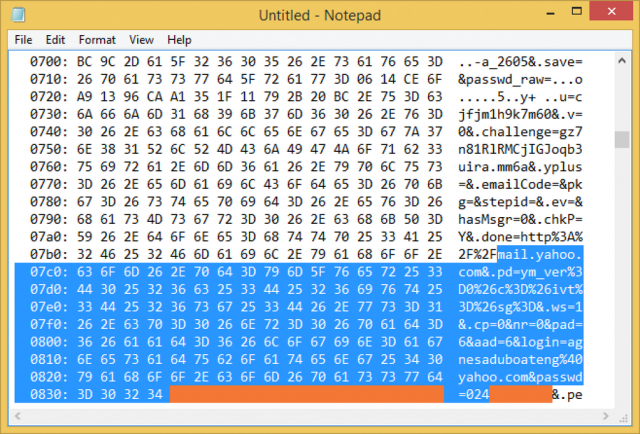
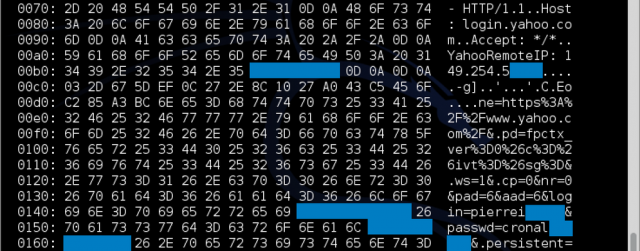
These are taken from Yahoo production servers, a day or two ago:http://cdn.arstechnica.net/wp-...
http://cdn.arstechnica.net/wp-...Can you guess where the password is, now? (And those didn't even take that many tries)
I have not seen actual SSL private keys floating around just yet, but given that the original researchers said they managed to get private keys from their own servers, I think it is reasonable to assume that some production servers must have already leaked them.
-
Re:Reality Check. The sky is not falling.I am tired of people downplaying the severity of this bug.
Can you please tell me where the passwords are in this memory dump
Have you ever seen a real exploited piece of data?
These are taken from Yahoo production servers, a day or two ago:http://cdn.arstechnica.net/wp-...
http://cdn.arstechnica.net/wp-...Can you guess where the password is, now? (And those didn't even take that many tries)
I have not seen actual SSL private keys floating around just yet, but given that the original researchers said they managed to get private keys from their own servers, I think it is reasonable to assume that some production servers must have already leaked them.
-
Re:We know, sfcrazy already submitted that 2mos ag
"[...] in January [...] showed the developers there a very rough mockup image for the new controller. Today, the company released a much more detailed photo of the new design, shown above, [...]"
So, yes, as you write, it's about the new image.
-
Re:Duh
...arrest of a rich kid with poor self discipline.
-
Re:How about no?
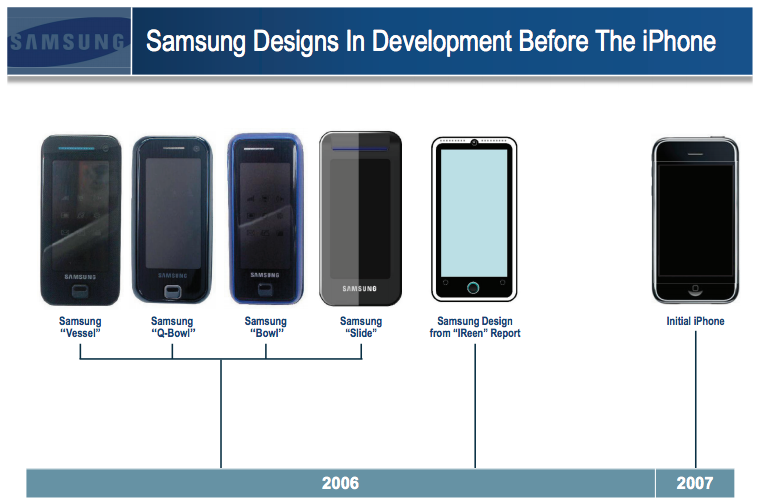
This particular judge disallowed Samsung from showing the jury its prior art (phones that it had in the design pipeline before the iPhone was announced) because the Samsung lawyers missed a filing deadline. She let the letter of the law (a filing deadline) override the intent of the law (to get to the truth of the matter).
So you advocate letting Samsung drag out the whole affair by simply claiming to need a few more months to put together evidence they had from day one? Yeah, figures.
-
Re:How about no?
This particular judge disallowed Samsung from showing the jury its prior art (phones that it had in the design pipeline before the iPhone was announced) because the Samsung lawyers missed a filing deadline. She let the letter of the law (a filing deadline) override the intent of the law (to get to the truth of the matter).
A deadline that Samsung knew about 6 months in advance, with designs that, as you note, Samsung knew about for years. It's not like they suddenly found these designs - they sat on them in secret and did not put them in their evidence lists, so that Apple and it's expert witnesses couldn't prepare. Contrary to Hollywood's presentation of the legal system, you don't actually get to call in surprise witnesses or bring up new evidence on the eve of trial. And preventing wins through trickery and last-minute maneuvers is both the letter and the intent of the law.
-
Re:How about no?
This particular judge disallowed Samsung from showing the jury its prior art (phones that it had in the design pipeline before the iPhone was announced) because the Samsung lawyers missed a filing deadline. She let the letter of the law (a filing deadline) override the intent of the law (to get to the truth of the matter).
Apple's tablet infringement claims were thrown out because of the copious amounts of prior art which the jury saw. The $1 billion judgement likely would've been thrown out too if they'd seen Samsung was working on iPhone-like designs before anyone outside Apple even knew what an iPhone was. In this particular case, the prejudice is in the jury, not the general public which got to see the documents the judge disallowed because of a technicality. -
Re:Same power source
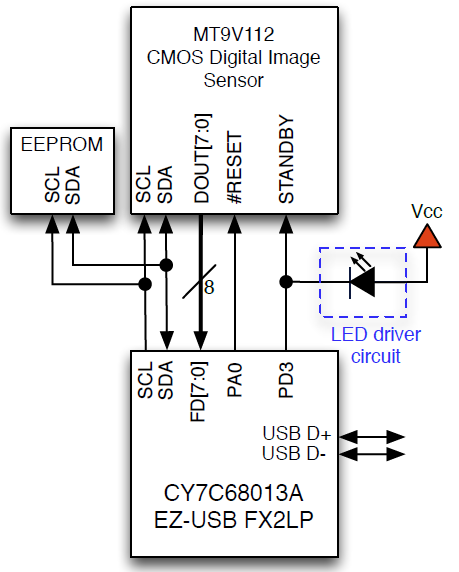
It's right there in the paper referenced in the summary. Figure 2 (also available here) shows you the diagram for 2008 and earlier models, where the LED is connected to the STANDBY line, which normally gives you what you expect but can be disabled in software, which is what they did.
-
bad BIOS saga continues - 12/2013
Scientist-developed malware prototype covertly jumps air gaps using inaudible sound
---
Malware communicates at a distance of 65 feet using built-in mics and speakers.by Dan Goodin - Dec 2, 2013 7:29 pm UTC
http://arstechnica.com/author/dan-goodin
https://twitter.com/dangoodin001"Dan is the IT Security Editor at Ars Technica, which he joined in 2012 after working for The Register, the Associated Press, Bloomberg News, and other publications."
---
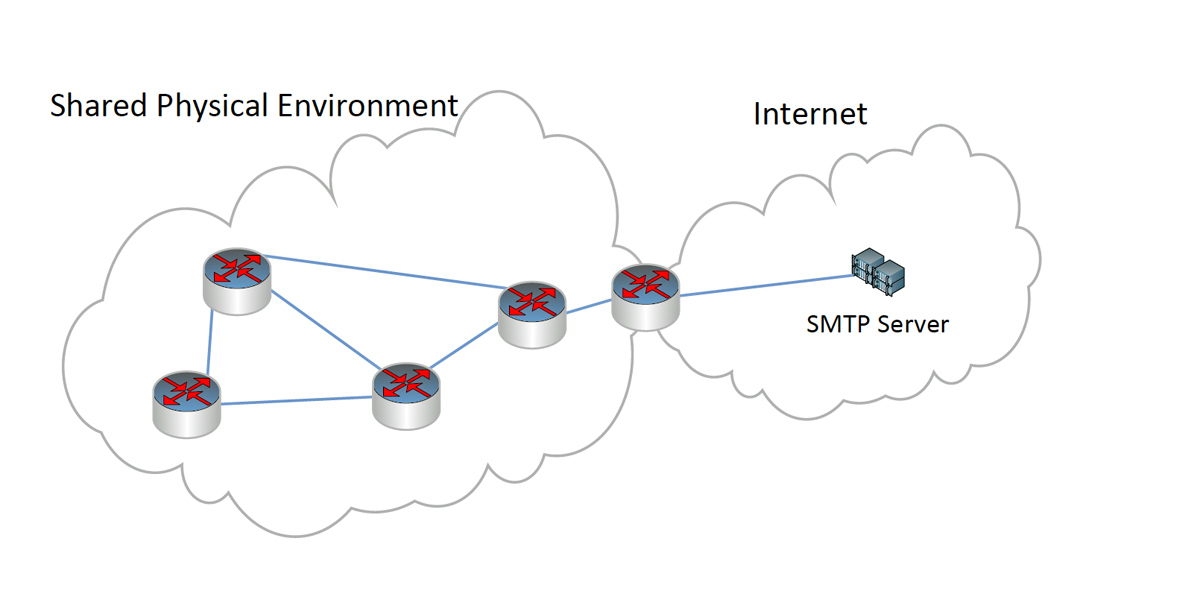
Topology of a covert mesh network that connects air-gapped computers to the Internet:http://cdn.arstechnica.net/wp-content/uploads/2013/12/acoustical-mesh-network.jpg
http://www.jocm.us/index.php?m=content&c=index&a=show&catid=124&id=600
----"Computer scientists have proposed a malware prototype that uses inaudible audio signals to communicate, a capability that allows the malware to covertly transmit keystrokes and other sensitive data even when infected machines have no network connection.
The proof-of-concept software-or malicious trojans that adopt the same high-frequency communication methods-could prove especially adept in penetrating highly sensitive environments that routinely place an "air gap" between computers and the outside world. Using nothing more than the built-in microphones and speakers of standard computers, the researchers were able to transmit passwords and other small amounts of data from distances of almost 65 feet. The software can transfer data at much greater distances by employing an acoustical mesh network made up of attacker-controlled devices that repeat the audio signals.
The researchers, from Germany's Fraunhofer Institute for Communication, Information Processing, and Ergonomics[1], recently disclosed their findings in a paper published in the Journal of Communications[2]. It came a few weeks after a security researcher said his computers were infected with a mysterious piece of malware that used high-frequency transmissions to jump air gaps[3]. The new research neither confirms nor disproves Dragos Ruiu's claims of the so-called badBIOS infections, but it does show that high-frequency networking is easily within the grasp of today's malware."
[1] http://www.fkie.fraunhofer.de/en.html
[2] http://www.jocm.us/index.php?m=content&c=index&a=show&catid=124&id=600
[3] http://arstechnica.com/security/2013/10/meet-badbios-the-mysterious-mac-and-pc-malware-that-jumps-airgaps/""In our article, we describe how the complete concept of air gaps can be considered obsolete as commonly available laptops can communicate over their internal speakers and microphones and even form a covert acoustical mesh network," one of the authors, Michael Hanspach, wrote in an e-mail. "Over this covert network, information can travel over multiple hops of infected nodes, connecting completely isolated computing systems and networks (e.g. the internet) to each other. We also propose some countermeasures against participation in a covert network."
The researchers developed several ways to use inaudible sounds to transmit data between two Lenovo T400 laptops using only their built-in microphones and speakers. The most effective technique relied
-
bad BIOS saga continues - 12/13
Scientist-developed malware prototype covertly jumps air gaps using inaudible sound
-
Malware communicates at a distance of 65 feet using built-in mics and speakers.by Dan Goodin - Dec 2, 2013 7:29 pm UTC
http://arstechnica.com/author/dan-goodin
https://twitter.com/dangoodin001"Dan is the IT Security Editor at Ars Technica, which he joined in 2012 after working for The Register, the Associated Press, Bloomberg News, and other publications."
-
Topology of a covert mesh network that connects air-gapped computers to the Internet:http://cdn.arstechnica.net/wp-content/uploads/2013/12/acoustical-mesh-network.jpg
http://www.jocm.us/index.php?m=content&c=index&a=show&catid=124&id=600
-"Computer scientists have proposed a malware prototype that uses inaudible audio signals to communicate, a capability that allows the malware to covertly transmit keystrokes and other sensitive data even when infected machines have no network connection.
The proof-of-concept software-or malicious trojans that adopt the same high-frequency communication methods-could prove especially adept in penetrating highly sensitive environments that routinely place an "air gap" between computers and the outside world. Using nothing more than the built-in microphones and speakers of standard computers, the researchers were able to transmit passwords and other small amounts of data from distances of almost 65 feet. The software can transfer data at much greater distances by employing an acoustical mesh network made up of attacker-controlled devices that repeat the audio signals.
The researchers, from Germany's Fraunhofer Institute for Communication, Information Processing, and Ergonomics[1], recently disclosed their findings in a paper published in the Journal of Communications[2]. It came a few weeks after a security researcher said his computers were infected with a mysterious piece of malware that used high-frequency transmissions to jump air gaps[3]. The new research neither confirms nor disproves Dragos Ruiu's claims of the so-called badBIOS infections, but it does show that high-frequency networking is easily within the grasp of today's malware."
[1] http://www.fkie.fraunhofer.de/en.html
[2] http://www.jocm.us/index.php?m=content&c=index&a=show&catid=124&id=600
[3] http://arstechnica.com/security/2013/10/meet-badbios-the-mysterious-mac-and-pc-malware-that-jumps-airgaps/""In our article, we describe how the complete concept of air gaps can be considered obsolete as commonly available laptops can communicate over their internal speakers and microphones and even form a covert acoustical mesh network," one of the authors, Michael Hanspach, wrote in an e-mail. "Over this covert network, information can travel over multiple hops of infected nodes, connecting completely isolated computing systems and networks (e.g. the internet) to each other. We also propose some countermeasures against participation in a covert network."
The researchers developed several ways to use inaudible sounds to transmit data between two Lenovo T400 laptops
-
bad BIOS saga continues - 12/13
Scientist-developed malware prototype covertly jumps air gaps using inaudible sound
-
Malware communicates at a distance of 65 feet using built-in mics and speakers.by Dan Goodin - Dec 2, 2013 7:29 pm UTC
http://arstechnica.com/author/dan-goodin
https://twitter.com/dangoodin001"Dan is the IT Security Editor at Ars Technica, which he joined in 2012 after working for The Register, the Associated Press, Bloomberg News, and other publications."
-
Topology of a covert mesh network that connects air-gapped computers to the Internet:http://cdn.arstechnica.net/wp-content/uploads/2013/12/acoustical-mesh-network.jpg
http://www.jocm.us/index.php?m=content&c=index&a=show&catid=124&id=600
-"Computer scientists have proposed a malware prototype that uses inaudible audio signals to communicate, a capability that allows the malware to covertly transmit keystrokes and other sensitive data even when infected machines have no network connection.
The proof-of-concept software-or malicious trojans that adopt the same high-frequency communication methods-could prove especially adept in penetrating highly sensitive environments that routinely place an "air gap" between computers and the outside world. Using nothing more than the built-in microphones and speakers of standard computers, the researchers were able to transmit passwords and other small amounts of data from distances of almost 65 feet. The software can transfer data at much greater distances by employing an acoustical mesh network made up of attacker-controlled devices that repeat the audio signals.
The researchers, from Germany's Fraunhofer Institute for Communication, Information Processing, and Ergonomics[1], recently disclosed their findings in a paper published in the Journal of Communications[2]. It came a few weeks after a security researcher said his computers were infected with a mysterious piece of malware that used high-frequency transmissions to jump air gaps[3]. The new research neither confirms nor disproves Dragos Ruiu's claims of the so-called badBIOS infections, but it does show that high-frequency networking is easily within the grasp of today's malware."
[1] http://www.fkie.fraunhofer.de/en.html
[2] http://www.jocm.us/index.php?m=content&c=index&a=show&catid=124&id=600
[3] http://arstechnica.com/security/2013/10/meet-badbios-the-mysterious-mac-and-pc-malware-that-jumps-airgaps/""In our article, we describe how the complete concept of air gaps can be considered obsolete as commonly available laptops can communicate over their internal speakers and microphones and even form a covert acoustical mesh network," one of the authors, Michael Hanspach, wrote in an e-mail. "Over this covert network, information can travel over multiple hops of infected nodes, connecting completely isolated computing systems and networks (e.g. the internet) to each other. We also propose some countermeasures against participation in a covert network."
The researchers developed several ways to use inaudible sounds to transmit data between two Lenovo T400 laptops using only their built-in microphones and speakers. The most effective technique
-
bad BIOS saga continues - 12/13
bad BIOS saga continues - 12/13
-
Scientist-developed malware prototype covertly jumps air gaps using inaudible sound
-
Malware communicates at a distance of 65 feet using built-in mics and speakers.by Dan Goodin - Dec 2, 2013 7:29 pm UTC
http://arstechnica.com/author/dan-goodin
https://twitter.com/dangoodin001"Dan is the IT Security Editor at Ars Technica, which he joined in 2012 after working for The Register, the Associated Press, Bloomberg News, and other publications."
-
Topology of a covert mesh network that connects air-gapped computers to the Internet:http://cdn.arstechnica.net/wp-content/uploads/2013/12/acoustical-mesh-network.jpg
http://www.jocm.us/index.php?m=content&c=index&a=show&catid=124&id=600
-"Computer scientists have proposed a malware prototype that uses inaudible audio signals to communicate, a capability that allows the malware to covertly transmit keystrokes and other sensitive data even when infected machines have no network connection.
The proof-of-concept software-or malicious trojans that adopt the same high-frequency communication methods-could prove especially adept in penetrating highly sensitive environments that routinely place an "air gap" between computers and the outside world. Using nothing more than the built-in microphones and speakers of standard computers, the researchers were able to transmit passwords and other small amounts of data from distances of almost 65 feet. The software can transfer data at much greater distances by employing an acoustical mesh network made up of attacker-controlled devices that repeat the audio signals.
The researchers, from Germany's Fraunhofer Institute for Communication, Information Processing, and Ergonomics[1], recently disclosed their findings in a paper published in the Journal of Communications[2]. It came a few weeks after a security researcher said his computers were infected with a mysterious piece of malware that used high-frequency transmissions to jump air gaps[3]. The new research neither confirms nor disproves Dragos Ruiu's claims of the so-called badBIOS infections, but it does show that high-frequency networking is easily within the grasp of today's malware."
[1] http://www.fkie.fraunhofer.de/en.html
[2] http://www.jocm.us/index.php?m=content&c=index&a=show&catid=124&id=600
[3] http://arstechnica.com/security/2013/10/meet-badbios-the-mysterious-mac-and-pc-malware-that-jumps-airgaps/""In our article, we describe how the complete concept of air gaps can be considered obsolete as commonly available laptops can communicate over their internal speakers and microphones and even form a covert acoustical mesh network," one of the authors, Michael Hanspach, wrote in an e-mail. "Over this covert network, information can travel over multiple hops of infected nodes, connecting completely isolated computing systems and networks (e.g. the internet) to each other. We also propose some countermeasures against participation in a covert network."
The researchers developed several ways to use inaudible sounds to transmit data between two Lenovo T400 laptops using only their built-in microphones and speakers. Th
-
Re:What cause for appeal?
Here is the appeal: http://cdn.arstechnica.net/wp-content/uploads/2013/02/Oracle.Appeal.Brief_.pdf
1) Oracle's theory of the technical error is that congress does not want to allow copying that technically avoids the statute so the statue needs to be read broadly it was read narrowly by the original court.
2) Method of operation is copyrightable under a broad reading. They give examples of paraphrases of books being copyrightable. They have a good argument here.
3) Interoperability is not a concern of copyright law and thus the court can't argue that this plays a role. This is key because Google's defense argued that Sun had waived some of their protections.
I just think copyright law is too ambiguous and this needs to be kicked to congress.
-
bad BIOS saga continues - 12/13
Scientist-developed malware prototype covertly jumps air gaps using inaudible sound
-
Malware communicates at a distance of 65 feet using built-in mics and speakers.by Dan Goodin - Dec 2, 2013 7:29 pm UTC
http://arstechnica.com/author/dan-goodin
https://twitter.com/dangoodin001"Dan is the IT Security Editor at Ars Technica, which he joined in 2012 after working for The Register, the Associated Press, Bloomberg News, and other publications."
-
Topology of a covert mesh network that connects air-gapped computers to the Internet:http://cdn.arstechnica.net/wp-content/uploads/2013/12/acoustical-mesh-network.jpg
http://www.jocm.us/index.php?m=content&c=index&a=show&catid=124&id=600
-"Computer scientists have proposed a malware prototype that uses inaudible audio signals to communicate, a capability that allows the malware to covertly transmit keystrokes and other sensitive data even when infected machines have no network connection.
The proof-of-concept software-or malicious trojans that adopt the same high-frequency communication methods-could prove especially adept in penetrating highly sensitive environments that routinely place an "air gap" between computers and the outside world. Using nothing more than the built-in microphones and speakers of standard computers, the researchers were able to transmit passwords and other small amounts of data from distances of almost 65 feet. The software can transfer data at much greater distances by employing an acoustical mesh network made up of attacker-controlled devices that repeat the audio signals.
The researchers, from Germany's Fraunhofer Institute for Communication, Information Processing, and Ergonomics[1], recently disclosed their findings in a paper published in the Journal of Communications[2]. It came a few weeks after a security researcher said his computers were infected with a mysterious piece of malware that used high-frequency transmissions to jump air gaps[3]. The new research neither confirms nor disproves Dragos Ruiu's claims of the so-called badBIOS infections, but it does show that high-frequency networking is easily within the grasp of today's malware."
[1] http://www.fkie.fraunhofer.de/en.html
[2] http://www.jocm.us/index.php?m=content&c=index&a=show&catid=124&id=600
[3] http://arstechnica.com/security/2013/10/meet-badbios-the-mysterious-mac-and-pc-malware-that-jumps-airgaps/""In our article, we describe how the complete concept of air gaps can be considered obsolete as commonly available laptops can communicate over their internal speakers and microphones and even form a covert acoustical mesh network," one of the authors, Michael Hanspach, wrote in an e-mail. "Over this covert network, information can travel over multiple hops of infected nodes, connecting completely isolated computing systems and networks (e.g. the internet) to each other. We also propose some countermeasures against participation in a covert network."
The researchers developed several ways to use inaudible sounds to transmit data between two Lenovo T400 laptops using only their built-in microphones and speakers. The most effective technique relied
-
bad BIOS saga continues - 12/13
Scientist-developed malware prototype covertly jumps air gaps using inaudible sound
-
Malware communicates at a distance of 65 feet using built-in mics and speakers.by Dan Goodin - Dec 2, 2013 7:29 pm UTC
http://arstechnica.com/author/dan-goodin
https://twitter.com/dangoodin001"Dan is the IT Security Editor at Ars Technica, which he joined in 2012 after working for The Register, the Associated Press, Bloomberg News, and other publications."
-
Topology of a covert mesh network that connects air-gapped computers to the Internet:http://cdn.arstechnica.net/wp-content/uploads/2013/12/acoustical-mesh-network.jpg
http://www.jocm.us/index.php?m=content&c=index&a=show&catid=124&id=600
-"Computer scientists have proposed a malware prototype that uses inaudible audio signals to communicate, a capability that allows the malware to covertly transmit keystrokes and other sensitive data even when infected machines have no network connection.
The proof-of-concept software-or malicious trojans that adopt the same high-frequency communication methods-could prove especially adept in penetrating highly sensitive environments that routinely place an "air gap" between computers and the outside world. Using nothing more than the built-in microphones and speakers of standard computers, the researchers were able to transmit passwords and other small amounts of data from distances of almost 65 feet. The software can transfer data at much greater distances by employing an acoustical mesh network made up of attacker-controlled devices that repeat the audio signals.
The researchers, from Germany's Fraunhofer Institute for Communication, Information Processing, and Ergonomics[1], recently disclosed their findings in a paper published in the Journal of Communications[2]. It came a few weeks after a security researcher said his computers were infected with a mysterious piece of malware that used high-frequency transmissions to jump air gaps[3]. The new research neither confirms nor disproves Dragos Ruiu's claims of the so-called badBIOS infections, but it does show that high-frequency networking is easily within the grasp of today's malware."
[1] http://www.fkie.fraunhofer.de/en.html
[2] http://www.jocm.us/index.php?m=content&c=index&a=show&catid=124&id=600
[3] http://arstechnica.com/security/2013/10/meet-badbios-the-mysterious-mac-and-pc-malware-that-jumps-airgaps/""In our article, we describe how the complete concept of air gaps can be considered obsolete as commonly available laptops can communicate over their internal speakers and microphones and even form a covert acoustical mesh network," one of the authors, Michael Hanspach, wrote in an e-mail. "Over this covert network, information can travel over multiple hops of infected nodes, connecting completely isolated computing systems and networks (e.g. the internet) to each other. We also propose some countermeasures against participation in a covert network."
The researchers developed several ways to use inaudible sounds to transmit data between two Lenovo T400 laptops using only their built-in microphones and speakers. The most effective technique relied
-
bad BIOS saga continues - 12/13
Scientist-developed malware prototype covertly jumps air gaps using inaudible sound
-
Malware communicates at a distance of 65 feet using built-in mics and speakers.by Dan Goodin - Dec 2, 2013 7:29 pm UTC
http://arstechnica.com/author/dan-goodin
https://twitter.com/dangoodin001"Dan is the IT Security Editor at Ars Technica, which he joined in 2012 after working for The Register, the Associated Press, Bloomberg News, and other publications."
-
Topology of a covert mesh network that connects air-gapped computers to the Internet:http://cdn.arstechnica.net/wp-content/uploads/2013/12/acoustical-mesh-network.jpg
http://www.jocm.us/index.php?m=content&c=index&a=show&catid=124&id=600
-"Computer scientists have proposed a malware prototype that uses inaudible audio signals to communicate, a capability that allows the malware to covertly transmit keystrokes and other sensitive data even when infected machines have no network connection.
The proof-of-concept software-or malicious trojans that adopt the same high-frequency communication methods-could prove especially adept in penetrating highly sensitive environments that routinely place an "air gap" between computers and the outside world. Using nothing more than the built-in microphones and speakers of standard computers, the researchers were able to transmit passwords and other small amounts of data from distances of almost 65 feet. The software can transfer data at much greater distances by employing an acoustical mesh network made up of attacker-controlled devices that repeat the audio signals.
The researchers, from Germany's Fraunhofer Institute for Communication, Information Processing, and Ergonomics[1], recently disclosed their findings in a paper published in the Journal of Communications[2]. It came a few weeks after a security researcher said his computers were infected with a mysterious piece of malware that used high-frequency transmissions to jump air gaps[3]. The new research neither confirms nor disproves Dragos Ruiu's claims of the so-called badBIOS infections, but it does show that high-frequency networking is easily within the grasp of today's malware."
[1] http://www.fkie.fraunhofer.de/en.html
[2] http://www.jocm.us/index.php?m=content&c=index&a=show&catid=124&id=600
[3] http://arstechnica.com/security/2013/10/meet-badbios-the-mysterious-mac-and-pc-malware-that-jumps-airgaps/""In our article, we describe how the complete concept of air gaps can be considered obsolete as commonly available laptops can communicate over their internal speakers and microphones and even form a covert acoustical mesh network," one of the authors, Michael Hanspach, wrote in an e-mail. "Over this covert network, information can travel over multiple hops of infected nodes, connecting completely isolated computing systems and networks (e.g. the internet) to each other. We also propose some countermeasures against participation in a covert network."
The researchers developed several ways to use inaudible sounds to transmit data between two Lenovo T400 laptops using only their built-in microphones and speakers. The most effective technique relied on sof
-
Re:Fair Use?
As an aside, the screenshot shows that the disclaimer is probably new, and the page used to include an Ubuntu logo, too.
-
Re:"promised big changes"
Totally untrue. Look at the unity 8 screen cap here:
http://cdn.arstechnica.net/wp-content/uploads/2013/10/unity8screen.pngThis makes it clear that it's not changes for changes' sake, it blatant "we want to look like apple" changes.
Seriously, am I the only one who would think it's ios7 if it wasn't for the top bar and background pattern?
-
Re:You see this in small businesses
Unfortunately Microsoft hasn't grasped what exactly that is - they make a PC in a slightly smaller form factor than a laptop, and a tablet that has no software to run on it. (I exaggerate for effect before any MS marketeer comes along to tell me how many hundreds of thousands of apps they are).
So they have neither the benefit of their existing market - people buy an ultrabook to do real content-producing work (which is cheaper than the surface pro with its accessories) or an iPad that does all the content consuming you could want for less money (or an Android tablet that does just as well for considerably less).
It beats me why anyone would still want to buy either of Microsoft's offerings, they had no differentiation before and now they have
So you see why even the Microsoftie demonstrating the things looks so glum
-
Re:Jesus H. Christ Luvs Microsoft
OK, simple enough: http://cdn.arstechnica.net/wp-content/uploads/2013/08/os-2013-07.png. If you want the article that this came from it is here: http://arstechnica.com/information-technology/2013/08/windows-8-passes-vista-at-last-as-ie10-growth-slows/. These numbers were reported August 2nd, 2013 - and show Linux desktop share at 1.28%.
-
Re:HTML 5 number still experimental
Less than 50% is HTML5 capable ?
Really, let's look at where you linked.
First of all Net Market Share is the statistics source which are most skewed in IE's favor, always has been. Fine.
The first graph in the article is this one:
http://cdn.arstechnica.net/wp-content/uploads/2013/08/combined-2013-07.pngWhich shows us, IE doesn't even have 50% of the browser market. OK, certain older browsers other than IE might not support HTML5, but a large part of the IE versions do support HTML5.
IE9 has a HTML5-parser, so it clearly supports HTML5.
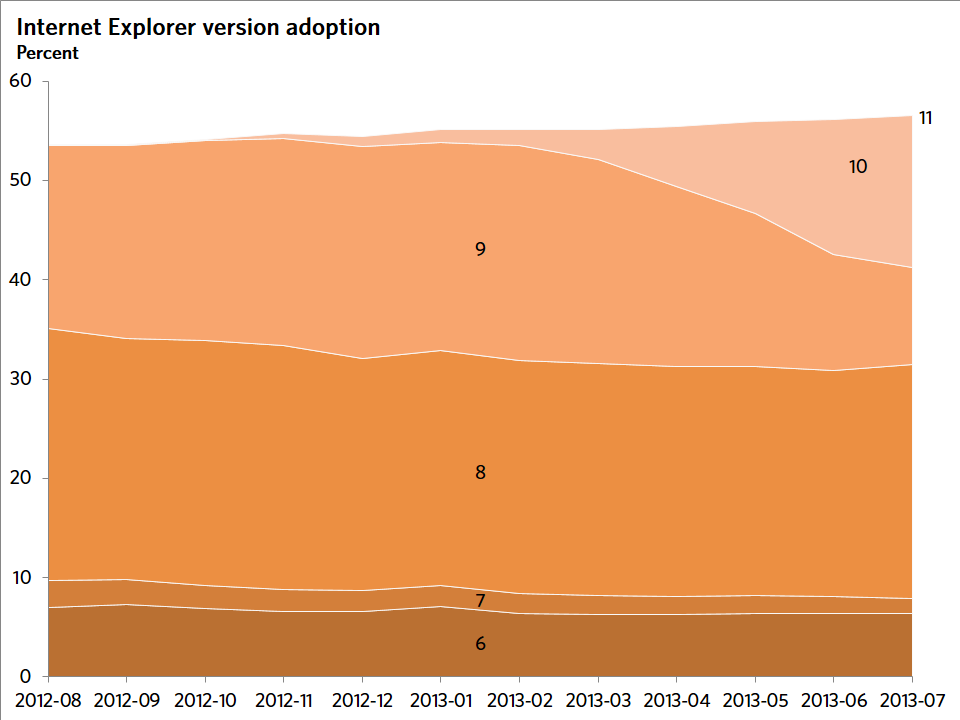
IE9 and newer are fairly close and getting closer to a 50% of the total IE-share:
http://cdn.arstechnica.net/wp-content/uploads/2013/08/ie-2013-07.pngSo why you say why IE6, IE7, IE8 has a majority I don't know. 50% of 50% rounded isn't a majority.
-
Re:HTML 5 number still experimental
Less than 50% is HTML5 capable ?
Really, let's look at where you linked.
First of all Net Market Share is the statistics source which are most skewed in IE's favor, always has been. Fine.
The first graph in the article is this one:
http://cdn.arstechnica.net/wp-content/uploads/2013/08/combined-2013-07.pngWhich shows us, IE doesn't even have 50% of the browser market. OK, certain older browsers other than IE might not support HTML5, but a large part of the IE versions do support HTML5.
IE9 has a HTML5-parser, so it clearly supports HTML5.
IE9 and newer are fairly close and getting closer to a 50% of the total IE-share:
http://cdn.arstechnica.net/wp-content/uploads/2013/08/ie-2013-07.pngSo why you say why IE6, IE7, IE8 has a majority I don't know. 50% of 50% rounded isn't a majority.
-
Telex Machines...
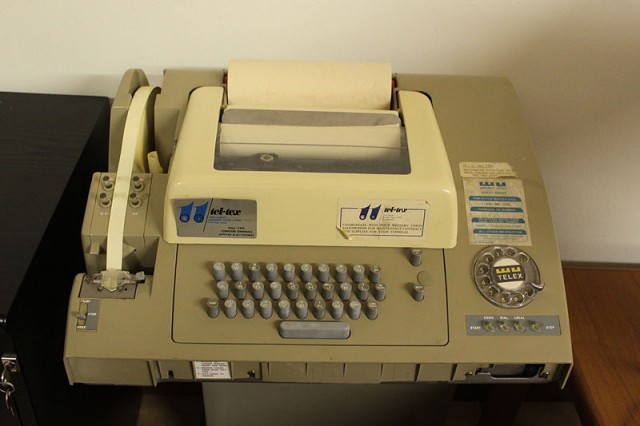
A century ago telegrams were sent using morse, but in the last 80 years or so, a 'telegram' doesn't / didn't mean 'morse code.'
When Roger O. Thornhill sends a telegram in North by Northwest it would have gone by telex machine. The 'Congratulations!' telegrams we sent and received in my youth were sent by telex.
http://cdn.arstechnica.net/wp-content/uploads/2013/06/800px-Telex_machine_ASR-32-640x426.jpg -
Re:What the hellBasically, this feminist can't take a joke... Her tweet
She gets the guy fired, and gets fired herself for her troubles.
Nobody wins, because feminism is in of itself, sexism at it's finest. Poor pitiful females that can't defend themselves. Bullshit. They have carved themselves a niche in popular culture that they are untouchable, and because of that they have adopted and invincible attitude, until they feel they have been somehow wronged, and then they turn on the tear-jerking water works about how defenseless they are. Comedian Bill Burr has it right...
People need to learn how to take a joke. HR departments need to be wiped out, because in this age, they have long since outlived their usefulness. They had their time, but it has since passed.
If women want equal rights, then there should be no feminists.
-
Re:It's honestly slightly astonishing...
This library has a 3945.
Somebody at Cisco must have made quite a bonus...
The 3945 is also used to heat the building in the winter.
-
It's honestly slightly astonishing...
This library has a 3945.
Somebody at Cisco must have made quite a bonus...
-
Headed for the "Google Graveyard"?
Sorry, but I fail to see how this is so different from all those other messy "graphing" methodologies and so-called analytical tools that have laboriously forced themselves into my workspace only to writhe around awhile and die because they have overly-specialized utility, and waste more screen space than Outlook 2013 i.e. mindmaps, flowcharts, music maps, radar graphs, bubble diagrams, et al, not to mention the hundreds of failed graphical programming languages.
Call me skeptical, but I think it will end up in the Google Graveyard Of Flops.
-
Re:Jury wasn't the problem
They never saw the most damning piece of prior art - Samsung's internal documents showing their iPhone-like prototypes in the design phase before anyone outside of Apple had ever laid eyes on the iPhone. That was the evidence Judge Koh disallowed from the trial because Samsung missed a filing deadline.
I said at the time that this was a huge judicial error. That she was ignoring the spirit of the law to follow the letter of the law. The reason for having filing deadlines is to prevent one side from dragging out a trial for so long that the cost of the trial exceeds any award amount, thus making justice uneconomical. But in this case the potential outcome was worth billions of dollars, while a few days extension would've cost at most a few tens of thousands. So clearly the spirit of the law would not have been violated by allowing the evidence, with perhaps a stern reprimand to Samsung's lawyers for missing the deadline. But she disallowed it, and now we're most likely gonna have to waste millions of dollars on a new trial because of her decision. -
Re:Perhaps Horsepower No Longer Equals Next Gen?
The other possibility is that the consoles experience diminishing returns past the horsepower the modern systems are at for most of the game developer's needs. After enjoying the Wii, the XBox 360 and the Playstation 3, I'm more concerned about the media type they select for the discs as swapping three DVDs to play one game on the XBox 360 is unacceptable when it fits on one PS3 disc. For the love of Zelda, I suspect that popping an SSD into an XBox 360 and running everything from that and forgetting the optical drive would make everything faster (and, yes, I know you then would only be able to do that with downloaded games linked to your profile and not the installed discs that require a disc in the drive to run).
I don't see the console gaming industry going back to cartridges. They've had many generations enjoying absurdly cheap production costs on optical media.
Nintendo may have propped up a relatively weak CPU with considerably more GPU horsepower.
Like the reader comment on that Ars Technica article notes, raw CPU speed hasn't always equaled winning in the console department.
While true, the reality is that they're already behind the curve. How many games will be able to be ported from the other competing next generation systems without major refactoring and potentially reduced in features? Did Nintendo even tell their premiere 3rd party developers what to expect, or did they make them buy dev kits to find out how underpowered it is only after they took their money? The fact that these specs haven't been released until today tells me, no, since they would have definitely leaked before launch.
I guess one could argue that you don't want a bunch of ports on your system, but most people can't afford to buy all the consoles and will choose whichever they can expect to get most of the games they want to play. This will, once again, turn into "and then there's the Nintendo port" that's a radically different game, since at that point it's cheaper to start fresh than adapt. And a lot of studios won't even bother, I suspect, leaving yet another Nintendo generation filled with shovelware and crap kid games that are dirt cheap to make because they're so bad.
And, frankly, I'm a little disappointed that Sony, Nintendo or Microsoft haven't done a little innovating and created their own technology like SLI/Crossfire to connect several cheap GPUs for their heavy graphics lifting on their machines. I mean their CPU/GPU pairs make it look like we should really start addressing these things with a different name just like RAM started being called cache when it was fast and nestled up against or integrated with the CPU. I guess I'm not really a hardware guy but I feel like we've actually moved toward less inventive ideas for consoles. While that's been good for some aspects (I was able to flash the security sector of a HDD and install it myself on my XBox 360 to add storage) it seems like the architecture has gotten lazy and inbred to just do whatever desktops are doing.
SLI and Crossfire makes sense for computers which are mostly open platforms. They're designed to be upgradeable and expandable. Game consoles certainly aren't, and the only point to playing on a console instead of a PC is that you have a standard core of hardware available to you. You don't have to test your software on a variety of hardware, just that given platform.
-
Perhaps Horsepower No Longer Equals Next Gen?
Early, off-the-record comments from game developers indicated that the Nintendo's Wii U console horsepower was on par with, or a bit behind the Xbox 360 and PS3, which raised questions about just how 'next-generation' the Wii U would be.
The other possibility is that the consoles experience diminishing returns past the horsepower the modern systems are at for most of the game developer's needs. After enjoying the Wii, the XBox 360 and the Playstation 3, I'm more concerned about the media type they select for the discs as swapping three DVDs to play one game on the XBox 360 is unacceptable when it fits on one PS3 disc. For the love of Zelda, I suspect that popping an SSD into an XBox 360 and running everything from that and forgetting the optical drive would make everything faster (and, yes, I know you then would only be able to do that with downloaded games linked to your profile and not the installed discs that require a disc in the drive to run).
Nintendo may have propped up a relatively weak CPU with considerably more GPU horsepower.
Like the reader comment on that Ars Technica article notes, raw CPU speed hasn't always equaled winning in the console department.
And, frankly, I'm a little disappointed that Sony, Nintendo or Microsoft haven't done a little innovating and created their own technology like SLI/Crossfire to connect several cheap GPUs for their heavy graphics lifting on their machines. I mean their CPU/GPU pairs make it look like we should really start addressing these things with a different name just like RAM started being called cache when it was fast and nestled up against or integrated with the CPU. I guess I'm not really a hardware guy but I feel like we've actually moved toward less inventive ideas for consoles. While that's been good for some aspects (I was able to flash the security sector of a HDD and install it myself on my XBox 360 to add storage) it seems like the architecture has gotten lazy and inbred to just do whatever desktops are doing. -
Re:Damning Evidence in the Ars Article
Okay Apple wanna nitpick, lets nitpick.... going from the bottom of TFA.
SMS Icon
Apple = Comic strip SMS word cloud
Samsung = Wait that's the email icon
Similarity = Green, Different shades.Clock
Apple = well okay, its a fuckin clock
Samsung = a fuckin clock again
Similarity = CLOCK!Browser
Apple = Safari icon
Samsung = World icon
Similarity = Blue, a little bit of prior artIPod
Apple = IPod outline
Samsung = Wait, that's the calculator icon.
Similarity = Orange.I'd also note the px rounded edges are different on each phone, again making them different. The one thing I'll give Apple is the bottom row, that's functionality ripping but that's it as i can see.
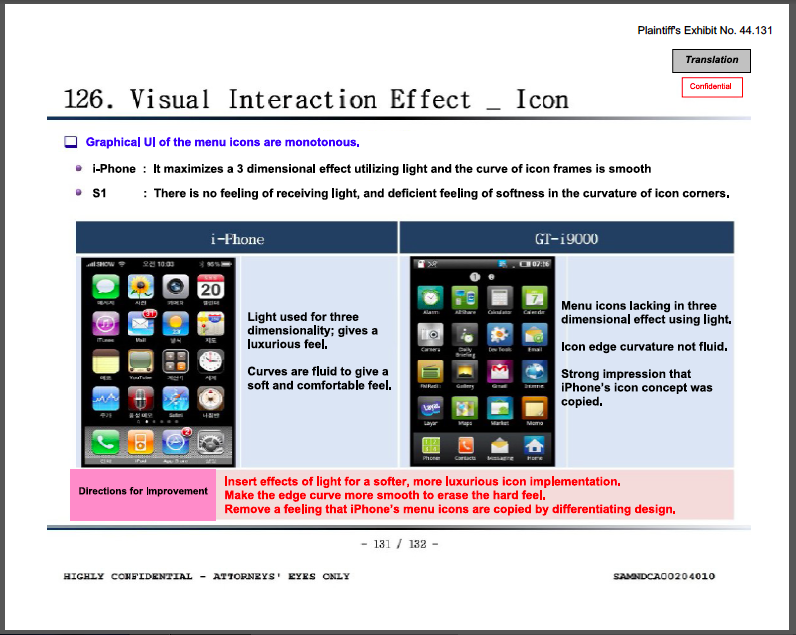
http://cdn.arstechnica.net/wp-content/uploads/2012/08/samsung-icon-concept.png
http://cdn.arstechnica.net/wp-content/uploads/2012/08/samsung-feels-awkward.png
http://cdn.arstechnica.net/wp-content/uploads/2012/08/samsung-tablets.png
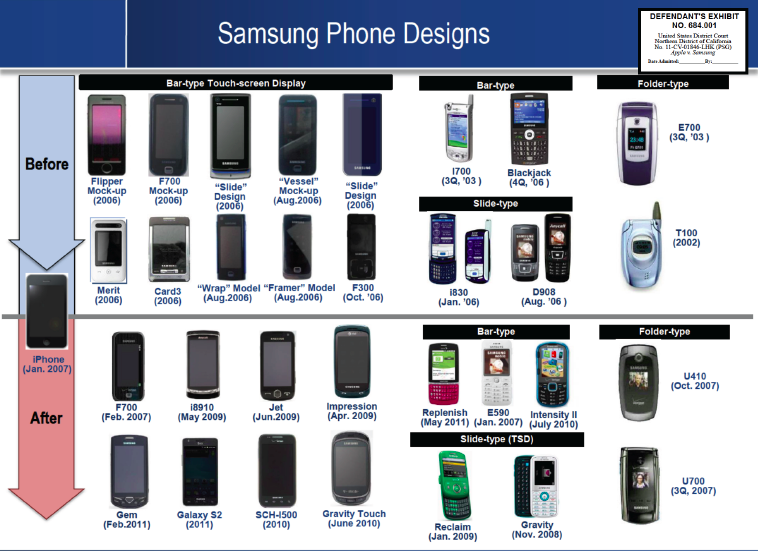
http://cdn.arstechnica.net/wp-content/uploads/2012/08/samsung-pre-iphone-designs.png
-
Re:Damning Evidence in the Ars Article
Okay Apple wanna nitpick, lets nitpick.... going from the bottom of TFA.
SMS Icon
Apple = Comic strip SMS word cloud
Samsung = Wait that's the email icon
Similarity = Green, Different shades.Clock
Apple = well okay, its a fuckin clock
Samsung = a fuckin clock again
Similarity = CLOCK!Browser
Apple = Safari icon
Samsung = World icon
Similarity = Blue, a little bit of prior artIPod
Apple = IPod outline
Samsung = Wait, that's the calculator icon.
Similarity = Orange.I'd also note the px rounded edges are different on each phone, again making them different. The one thing I'll give Apple is the bottom row, that's functionality ripping but that's it as i can see.
http://cdn.arstechnica.net/wp-content/uploads/2012/08/samsung-icon-concept.png
http://cdn.arstechnica.net/wp-content/uploads/2012/08/samsung-feels-awkward.png
http://cdn.arstechnica.net/wp-content/uploads/2012/08/samsung-tablets.png
http://cdn.arstechnica.net/wp-content/uploads/2012/08/samsung-pre-iphone-designs.png
-
Re:Damning Evidence in the Ars Article
Okay Apple wanna nitpick, lets nitpick.... going from the bottom of TFA.
SMS Icon
Apple = Comic strip SMS word cloud
Samsung = Wait that's the email icon
Similarity = Green, Different shades.Clock
Apple = well okay, its a fuckin clock
Samsung = a fuckin clock again
Similarity = CLOCK!Browser
Apple = Safari icon
Samsung = World icon
Similarity = Blue, a little bit of prior artIPod
Apple = IPod outline
Samsung = Wait, that's the calculator icon.
Similarity = Orange.I'd also note the px rounded edges are different on each phone, again making them different. The one thing I'll give Apple is the bottom row, that's functionality ripping but that's it as i can see.
http://cdn.arstechnica.net/wp-content/uploads/2012/08/samsung-icon-concept.png
http://cdn.arstechnica.net/wp-content/uploads/2012/08/samsung-feels-awkward.png
http://cdn.arstechnica.net/wp-content/uploads/2012/08/samsung-tablets.png
http://cdn.arstechnica.net/wp-content/uploads/2012/08/samsung-pre-iphone-designs.png
-
Re:Damning Evidence in the Ars Article
Okay Apple wanna nitpick, lets nitpick.... going from the bottom of TFA.
SMS Icon
Apple = Comic strip SMS word cloud
Samsung = Wait that's the email icon
Similarity = Green, Different shades.Clock
Apple = well okay, its a fuckin clock
Samsung = a fuckin clock again
Similarity = CLOCK!Browser
Apple = Safari icon
Samsung = World icon
Similarity = Blue, a little bit of prior artIPod
Apple = IPod outline
Samsung = Wait, that's the calculator icon.
Similarity = Orange.I'd also note the px rounded edges are different on each phone, again making them different. The one thing I'll give Apple is the bottom row, that's functionality ripping but that's it as i can see.
http://cdn.arstechnica.net/wp-content/uploads/2012/08/samsung-icon-concept.png
http://cdn.arstechnica.net/wp-content/uploads/2012/08/samsung-feels-awkward.png
http://cdn.arstechnica.net/wp-content/uploads/2012/08/samsung-tablets.png
http://cdn.arstechnica.net/wp-content/uploads/2012/08/samsung-pre-iphone-designs.png
-
Re:backlash?
There's a great pic of about 15 Polish legislators, holding paper Guy Fawkes masks over their faces - as the vote is tallied.
http://static.arstechnica.net/2012/01/30/polish-mask-4f26f00-intro.jpg -
Re:iPad vs. all Android tablets
AJ I'm not sure where you are getting this from.
http://static.arstechnica.net/2011/10/18/apple_4q11_results_006-4e9e18f-intro.png
http://static6.businessinsider.com/image/4e25f4d049e2aee37d070000/chart-of-the-day-apple-revenue-by-product-july-2011.jpgTo pick two example graphs from reputable sources of revenue graphs.
As for your estimates of profit. Apple gives 70% of the revenue from the app store to developer and somewhere between 65-75% of revenue from music sales to the labels. So right off the bat their base profit couldn't be much higher than 30%. Then there is management costs for the app store and for music they run a lot of specials and advertising promotions. 20, 25% maybe.
Apple's gross profits on iPhones are under 70%. Now there are expenses like warranty that come out of that. But no they are way over the 30-40% you were worried about.
For iPad's the gross margin is pretty low (around 20%) for units sold through retailers like Best Buy (about 1/2 of them), and just under 50% for units sold direct to consumers (the other 1/2).
-
Re:PICTURES!
Here you go.
http://static.arstechnica.net/assets/2011/01/max-splosion-man-mash-thumb-640xauto-18966.jpg
They pretty much ripped off everything. Even the name is similar.
-
OMG NOOOooooo!
http://static.arstechnica.net/tetris-fear.jpg
The BLOCKS are FALLING AGAIN!!
MAKE IT STOPE! MAKE IT STOPPP!
-
Check those links....
The link to Arstechnica (http://arstechnica.net/) is not really to the correct site, Arstechnica...
Instead, you'll get a parked domain rife with popups.