Slashdot Mirror
Domain: gnu.org
Stories and comments across the archive that link to gnu.org.
Comments · 13,360
-
What source of revenue for labor toward free SW?
if you're going to use my work in a commercial product, I fully expect to be paid.
Consider a case in which your work will be distributed as free software and/or free cultural works. By these definitions, downstream reusers of free software and free cultural works have the right to distribute copies for a fee. From what initial source of revenue should your payment come?
-
You never win with proprietary software.
Plus I host my own IMAP server and don't feel like giving all my personal info to Google/M$/Yahoo/Apple.
You're running Thunderbird (a free software program; a program that respects it's user's freedoms to run, inspect, share, and modify the software) on top of non-free Microsoft Windows (proprietary, user-subjugating software). Microsoft has all the power they need to get your IMAP credentials. If you have Google, Apple, or other proprietary software running on the same system they likely can read your stored credentials or read your keystrokes, mouse clicks, and screen grab whatever they want too. So you've likely already given those credentials away without realizing it.
Windows users have already been through many instances of Microsoft asserting its control over the user: tricking users into switching from Windows 7 to Windows 10, ignoring the so-called privacy settings thus rendering them irrelevant even if set to ostensibly maximize a user's privacy, and so much more. There's simply no sound argument for believing that running any program on Windows or changing any Windows settings in any way will result in making Windows respect a user's choices when they conflict with what Microsoft wants. As with all proprietary software, ultimately the proprietor controls how the software behaves and therefore users only get as much control as the proprietor allows.
If you want to be in more full control over your computing (as one might surmise from the unusual choice to run your own IMAP server), you really should consider switching to a fully-free software OS such as a GNU/Linux system where you install only free software on top of that.
-
You never win with proprietary software.
Plus I host my own IMAP server and don't feel like giving all my personal info to Google/M$/Yahoo/Apple.
You're running Thunderbird (a free software program; a program that respects it's user's freedoms to run, inspect, share, and modify the software) on top of non-free Microsoft Windows (proprietary, user-subjugating software). Microsoft has all the power they need to get your IMAP credentials. If you have Google, Apple, or other proprietary software running on the same system they likely can read your stored credentials or read your keystrokes, mouse clicks, and screen grab whatever they want too. So you've likely already given those credentials away without realizing it.
Windows users have already been through many instances of Microsoft asserting its control over the user: tricking users into switching from Windows 7 to Windows 10, ignoring the so-called privacy settings thus rendering them irrelevant even if set to ostensibly maximize a user's privacy, and so much more. There's simply no sound argument for believing that running any program on Windows or changing any Windows settings in any way will result in making Windows respect a user's choices when they conflict with what Microsoft wants. As with all proprietary software, ultimately the proprietor controls how the software behaves and therefore users only get as much control as the proprietor allows.
If you want to be in more full control over your computing (as one might surmise from the unusual choice to run your own IMAP server), you really should consider switching to a fully-free software OS such as a GNU/Linux system where you install only free software on top of that.
-
"Ditching" freedom for dependency is never wise.
If Firefox 60 is released officially without the functionality to manage individual cookies, then users have a good reason to be angry. Let's wait and see what happens before ditching Firefox.
It would be sadly ironic to "ditch Firefox" by switching to a non-free (proprietary, user-subjugating) browser in response to the lack of user control Firefox didn't give you in this build. If there's one thing we can say with certainty about proprietary software: users only get as much control as the proprietors want to give. There are a lot of examples showing how proprietary software is often malware. Technically less capable free software is a better choice than technically more capable proprietary software because of software freedom (the freedom to run, inspect, share, and modify published software)—that freedom is the means by which technical issues can be resolved. One can make less capable software more capable by leveraging one's software freedom. One cannot add software freedom to proprietary software.
-
Re:Paging Richard Stallman...
The IT world needs your commentary, Mr. Stallman.
Give him some time. He needs to wait for his cron job to finish. He surfs the internet as follows:
"I usually fetch web pages from other sites by sending mail to a program (see https://git.savannah.gnu.org/g...) that fetches them, much like wget, and then mails them back to me. Then I look at them using a web browser, unless it is easy to see the text in the HTML page directly. I usually try lynx first, then a graphical browser if the page needs it (using konqueror, which won't fetch from other sites in such a situation)."
-
It's a class issue: power over the users is unjust
The lesson is you and your son have been had, taken advantage of by a system intent on deceiving you.
The chief underlying problem here is proprietary (non-free, user-subjugating) software. Software you're not allowed to run, inspect, modify, or share (also known as 'software freedom'). Proprietary software is licensed and distributed to keep you from running the program despite doing normal maintenance, software meant to keep you from treating your friends as friends by sharing a copy, inspecting the program to see what it does, and distributed to prevent you from modifying your copy the program should you wish to for any reason.
I experienced something quite similar with the Commodore 64: A video game called Elite on the C-64 had an anti-copying scheme so clumsy and prone to problems it drove me to understand what was really going on. Today we'd properly call this DRM—digital restrictions management (expanded that way because I take the side of the user class, not the publisher class) which was only visited upon those who obtained their copy of the program in a way the publisher found acceptable. Typically this meant buying a copy, but I later came to understand some copies were distributed gratis. The packaged game came with media, a manual, and a flat plastic device with a see-through window. The device could be bent so it resembled a table like an inverted letter "U". On starting the game, the user was shown some blocky image that looked incomprehensible. When the plastic device was folded, placed on the monitor at the proper distance (via the "legs" of the device), and peered through one could see the blocky image turn into something readable. If I recall correctly, the readable image was a page number reference in the manual one was expected to look up and type in the proper word to get past this stage of the loading program.
After I did this a couple of times it dawned on me that those who engage in filesharing and treating friends like friends (sometimes propagandistically called "pirates") never have to put up with this. Only the people who used the publisher-distributed copy did. And most of those users had paid for this treatment.
Those who shared copies were doing us all a favor: they let us try programs before buying a copy, they let us run copies that didn't have what we now call DRM; the anti-copying code had been stripped away. They let us have copies that one could copy in an ordinary fashion, no need for special copiers (such as "nibblers", or any copier that knew how to get past the errors which were deliberately added to the disk to defeat the standard file and disk copiers). There was no need to work around the issue by using audio tapes instead of disks (since audio tapes didn't have copy-prevention added to the media). These so-called "pirates" were doing us a service, a service I might have paid for if offered the opportunity to pay a publisher for a headache-free copy of the program.
Later I obtained a memory snapshotting cartridge called "Isepic" which let me make my own copy of the RAM-resident portion of the game. Isepic produced a copy which loaded faster, never prompted me for the manual lookup, and played identically to the other copy loaded from the distributor's media (no surprise there, it was the same code being loaded into memory). I never loaded the distributor's media again. But this got me to thinking about all the other programs (not just games) that treated the users this way across all the computers I had used. And I began to realize that this was a scam perpetrated on the people who treated the publishers the best. We were literally exchanging our money for being treated badly. And this harm pushed on the users was indiscriminate, just like the flight simulator company did here.
There was one more issue to wrestle with: proprietary software. This was an issue even the filesha
-
It's a class issue: power over the users is unjust
The lesson is you and your son have been had, taken advantage of by a system intent on deceiving you.
The chief underlying problem here is proprietary (non-free, user-subjugating) software. Software you're not allowed to run, inspect, modify, or share (also known as 'software freedom'). Proprietary software is licensed and distributed to keep you from running the program despite doing normal maintenance, software meant to keep you from treating your friends as friends by sharing a copy, inspecting the program to see what it does, and distributed to prevent you from modifying your copy the program should you wish to for any reason.
I experienced something quite similar with the Commodore 64: A video game called Elite on the C-64 had an anti-copying scheme so clumsy and prone to problems it drove me to understand what was really going on. Today we'd properly call this DRM—digital restrictions management (expanded that way because I take the side of the user class, not the publisher class) which was only visited upon those who obtained their copy of the program in a way the publisher found acceptable. Typically this meant buying a copy, but I later came to understand some copies were distributed gratis. The packaged game came with media, a manual, and a flat plastic device with a see-through window. The device could be bent so it resembled a table like an inverted letter "U". On starting the game, the user was shown some blocky image that looked incomprehensible. When the plastic device was folded, placed on the monitor at the proper distance (via the "legs" of the device), and peered through one could see the blocky image turn into something readable. If I recall correctly, the readable image was a page number reference in the manual one was expected to look up and type in the proper word to get past this stage of the loading program.
After I did this a couple of times it dawned on me that those who engage in filesharing and treating friends like friends (sometimes propagandistically called "pirates") never have to put up with this. Only the people who used the publisher-distributed copy did. And most of those users had paid for this treatment.
Those who shared copies were doing us all a favor: they let us try programs before buying a copy, they let us run copies that didn't have what we now call DRM; the anti-copying code had been stripped away. They let us have copies that one could copy in an ordinary fashion, no need for special copiers (such as "nibblers", or any copier that knew how to get past the errors which were deliberately added to the disk to defeat the standard file and disk copiers). There was no need to work around the issue by using audio tapes instead of disks (since audio tapes didn't have copy-prevention added to the media). These so-called "pirates" were doing us a service, a service I might have paid for if offered the opportunity to pay a publisher for a headache-free copy of the program.
Later I obtained a memory snapshotting cartridge called "Isepic" which let me make my own copy of the RAM-resident portion of the game. Isepic produced a copy which loaded faster, never prompted me for the manual lookup, and played identically to the other copy loaded from the distributor's media (no surprise there, it was the same code being loaded into memory). I never loaded the distributor's media again. But this got me to thinking about all the other programs (not just games) that treated the users this way across all the computers I had used. And I began to realize that this was a scam perpetrated on the people who treated the publishers the best. We were literally exchanging our money for being treated badly. And this harm pushed on the users was indiscriminate, just like the flight simulator company did here.
There was one more issue to wrestle with: proprietary software. This was an issue even the filesha
-
Cygwin == Cygnus GNU/Windows
In the deliberate lack of an official definition of "GNU/", I have been defining "GNU/" as GNU Coreutils combined with two of GCC, Bash, Emacs, and shared glibc.
If you call a machine with a Linux kernel and GNU userspace utilities "GNU/Linux" does that mean a Windows machine with cygwin is a "GNU\Windows"?
Correct. That in fact is what "gwin" in Cygwin and "GW" in MinGW stand for. Likewise, a complete installation of DJGPP (with the compiler, Binutils, Coreutils, Make, and Bash) is GNU/MS-DOS or GNU/FreeDOS.
And a Mac with a bunch of GNU packages installed from home brew is running "GNU/macOS/BSD"?
Probably not, unless the user has replaced the Darwin counterpart to Coreutils with GNU Coreutils.
-
Wikipedia teaches the controversy
Facts: Linus never named his kernel "linux kernel", the kernel's name is linux, as in Mach, NT, e.t.c., there's no such thing as Linux, a family of operating systems, because Linux refers to a kernel and is a registered trademark as "Linux".
Wikipedia's policy of a neutral point of view causes editors to use the name most commonly used by third-party reliable sources and teach the controversy, as in the "GNU/Linux naming controversy" article.
My own writing style is to use "GNU/Linux" for typical desktop and server distributions to distinguish them from Android, BusyBox-based small distributions, and other specialized operating environments built around Linux that contain little or no code from the GNU project. I have found "GNU/Linux" or "X11/Linux" the most succinct way to satisfy fans of Richard Stallman while ducking some Slashdot users' insinuation that a tablet running Android with a paired keyboard or a laptop running Chrome OS can adequately substitute for a laptop running Ubuntu. But because this writing style happens not to match that of the scholarly and mainstream media that Wikipedia relies on, Wikipedia does not use it.
-
Ob
High School/Jr. High
10 PRINT "HELLO WORLD"
20 ENDFirst year in College
program Hello(input, output)
begin
writeln('Hello World')
end.And so on
-
Anti-script hardliners; outdated browsers
Who needs an app to a website?
Mostly three people:
- Anti-script hardliners who don't want web pages to be interactive at all beyond link navigation and form submission because they believe a web browser ought to be a viewer for static documents, not an application platform. They prefer native applications that they can vet before installation.
- Free software purists who refuse to run proprietary script, as described in the article "The JavaScript Trap" by Richard M. Stallman. They prefer to use or write a free native application that talks to the same web service that the site's proprietary script talks to.
- People stuck on a browser with incomplete support for recent web standards, such as users of Safari for iOS or Edge for Windows 10 S.
-
Re:They did ask...
It's a shame I bet the files stored on my SSDs likely wouldn't share data and if I dual installed [the same Steam game for multiple operating systems,] I'd have to pick between.
That depends on how an application's depots are configured. Each depot is a package that can be for one or many operating systems, one or many architectures, one or many languages, and either the base game or a particular add-on. A well-packaged Steam game would come as three depots:
- Program: Specific to one combination of architecture and operating system but shared across all languages
- Non-program localization: Those parts shared across all architectures and operating systems that pertain to one language, mostly strings, fonts, and pre-rendered signboard textures
- Non-program, non-culture: Shared across all architectures, operating systems, and languages
(Many developers refer to non-program depots as "assets", but others claim that the term "assets" devalues non-program works.)
Thus you'd end up with a program depot per OS and non-program depots shared among OSes.
-
We don't need conveniences, we need education.
And the means to implement privacy-respecting software: software freedom—the freedom to run, inspect, share, and modify published computer software.
You can't have proprietary software protect your privacy because proprietary software is inherently untrustworthy. Users are not allowed to know what it does, fix or improve the software, share copies (either verbatim copies or modified copies) to help their community, and sometimes the software is so restrictive it will refuse to let the user run or access the data the program controls access to (such as DRM schemes are designed to implement). We can have better computing that serves the public's needs but we'll have to fight for it and code for that future. We'll also have to teach people to understand what software freedom is and value software freedom for its own sake. Virtually every story on repeater sites like
-
How dare people control the computers they own!
What you point out is a part of a larger and more significant problem that gets into another
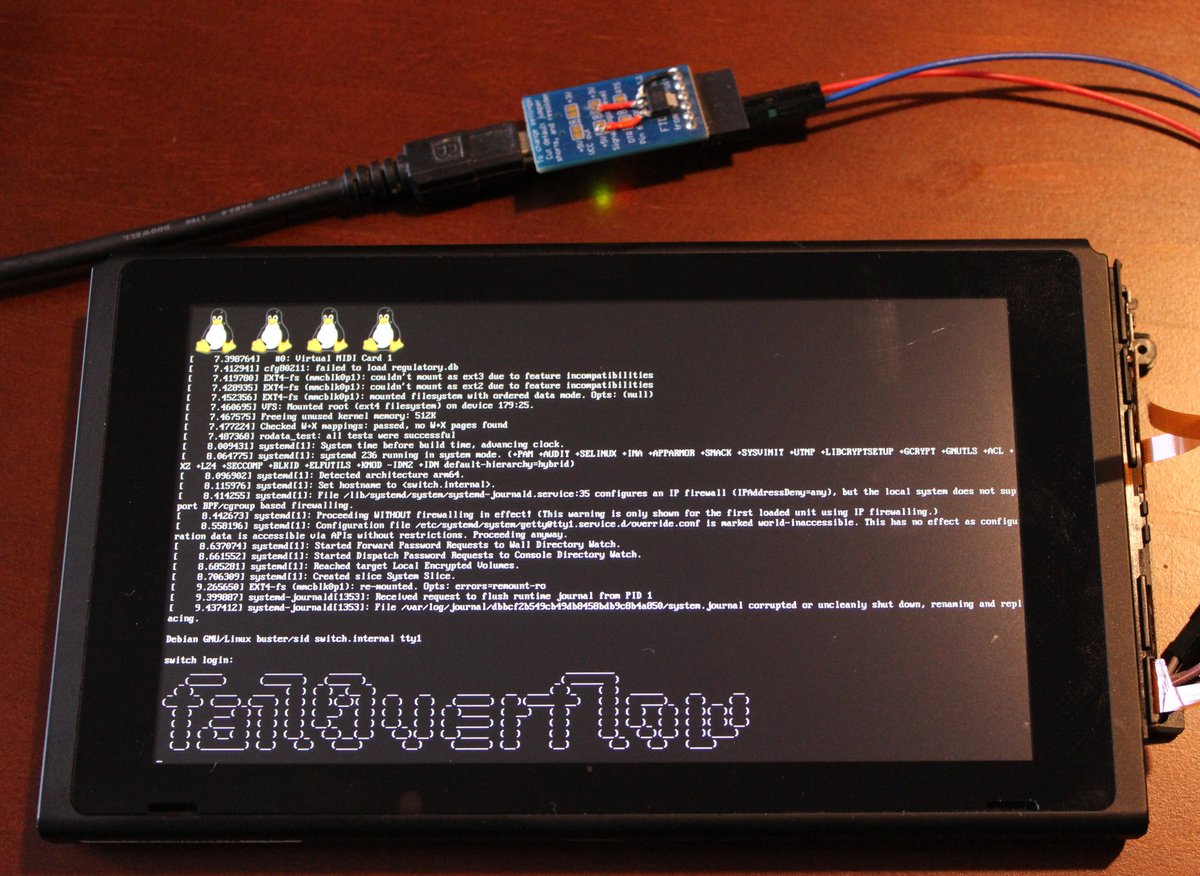
Since people want this (the phrase "jailbreaking" is a testament to this; we wouldn't need this term if people enjoyed having their devices "jailed") the corporate proprietor-friendly media (and repeater sites) remind us when covering a story like this in multiple ways: from eschewing any reminder of the freedom to run, inspect, share, and modify published computer software like calling the installed OS "Linux" even when Debian calls their system GNU/Linux and the proper name is on the screenshot (just above the "fail0verflow" textual graphic), to using propagandistic language. There's also suggestion that the code is to be seen as "potential[ly] weak" instead of a means of allowing owners to control their own computers, and blaming fail0verflow should they choose to publish the means by which they installed Debian GNU/Linux on the Nintendo Switch for enabling "homebrew apps and (of course) software piracy". Ridiculous unchallenged and undefended anti-user views throughout which is par for the course in corporate media.
-
How dare people control the computers they own!
What you point out is a part of a larger and more significant problem that gets into another
Since people want this (the phrase "jailbreaking" is a testament to this; we wouldn't need this term if people enjoyed having their devices "jailed") the corporate proprietor-friendly media (and repeater sites) remind us when covering a story like this in multiple ways: from eschewing any reminder of the freedom to run, inspect, share, and modify published computer software like calling the installed OS "Linux" even when Debian calls their system GNU/Linux and the proper name is on the screenshot (just above the "fail0verflow" textual graphic), to using propagandistic language. There's also suggestion that the code is to be seen as "potential[ly] weak" instead of a means of allowing owners to control their own computers, and blaming fail0verflow should they choose to publish the means by which they installed Debian GNU/Linux on the Nintendo Switch for enabling "homebrew apps and (of course) software piracy". Ridiculous unchallenged and undefended anti-user views throughout which is par for the course in corporate media.
-
OSI: Doing as well as it was designed to do.
The OSI website also used to call mentioning software freedom "ideological tub-thumping". Hardly the kind of language one would use if one wants to seek a respectful difference with the older free software movement (which predates the OSI by over a decade), and there's also the suggestion about open source being "pragmatic" as if free software wasn't pragmatic. If software freedom wasn't pragmatic there would be no need for a proprietor-friendly reaction to challenge it and push for advocating for almost the same software minus the software freedom.
Instead, cozying up to proprietors puts the OSI in a jam when they send out their speakers to make nice with free software activists because the speakers have to avoid explaining away the points the GNU Project brings up far more insightfully in its two main essays (older essay, newer essay) on the topic.
The name "open source" is apparently used by proprietors to put a shine on endorsing proprietary software. Take the recent
-
OSI: Doing as well as it was designed to do.
The OSI website also used to call mentioning software freedom "ideological tub-thumping". Hardly the kind of language one would use if one wants to seek a respectful difference with the older free software movement (which predates the OSI by over a decade), and there's also the suggestion about open source being "pragmatic" as if free software wasn't pragmatic. If software freedom wasn't pragmatic there would be no need for a proprietor-friendly reaction to challenge it and push for advocating for almost the same software minus the software freedom.
Instead, cozying up to proprietors puts the OSI in a jam when they send out their speakers to make nice with free software activists because the speakers have to avoid explaining away the points the GNU Project brings up far more insightfully in its two main essays (older essay, newer essay) on the topic.
The name "open source" is apparently used by proprietors to put a shine on endorsing proprietary software. Take the recent
-
Pot meet kettle: censorship for all
Oh, the irony of a site that has outsourced its censorship to its audience (like
[1] Where posts have scores, low-scoring posts are hidden by default, users who score aren't allowed to explain a score because they can't post and score in the same thread, and where scores become arbitrary but are effectively used to keep corporate-friendly talking points ahead of critical or dissenting views.
-
Open source sells software non-freedom. Again.
Sometimes people don't want to see how the older free software movement (a social movement which advocates for the freedom to run, inspect, share, and modify published computer software) and the younger open source development methodology are philosophically different (1, 2) and that philosophical difference leads to radical differences on the ground. Objections to raising this difference tend to take the form of trying to make it look like any reminder of software freedom (which open source enthusiasts don't like because their philosophy was founded to reject software freedom) is being somehow rude. But time after time we see this difference in action and this article promoting Skype is no different.
Here a proprietary (non-free, user subjugating) program—Skype—is being advertised for use on what might be a free software system (unfairly referred to as a "Linux" system). No reminder of anything to do with software freedom except in a place where the proprietor thinks they can benefit from the conflation the open source philosophy was designed to achieve: "While Microsoft has long been viewed as an enemy of the Linux community -- and it still is by some -- the company has actually transformed into an open source champion." tries to get you to think of "open source" but not to the extent that one would wonder if even that group's weaker philosophy is going to be available to Skype's users by running Skype. No mention of GNU as in a GNU/Linux operating system; any mention of GNU is far too strong a reminder of the software freedom you're not getting with Skype. Better to stick to distracting technocratic details that are irrelevant compared with the profound problems of running Skype, details like the software's packaging. And to reinforce the notion that open source advocates will often abandon their own developmental philosophy if it gets in the way of a powerful proprietor, we get a quote from Canonical, an open source supporting company, further encouraging users to install the non-free communications software.
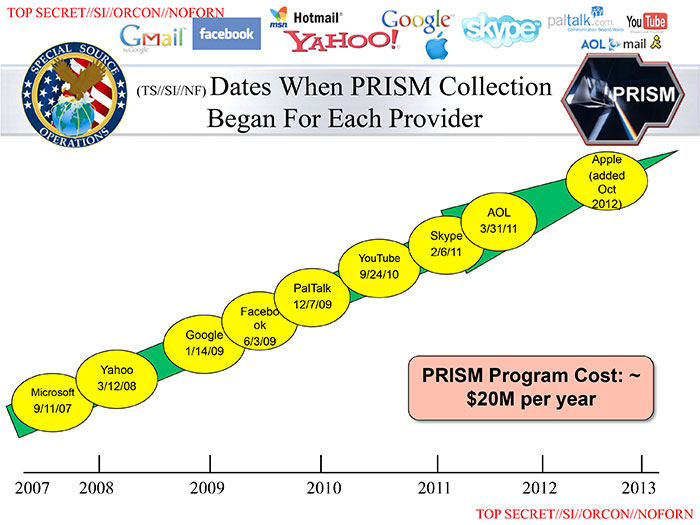
Nowhere will you find a reminder that not only is Skype non-free software (and that this alone carries horrible implications) but Microsoft is an NSA partner, and Microsoft changed Skype specifically for spying. Apparently the "seamless user experience" Canonical championed and the "high quality experience" Microsoft talked about doesn't include respecting a user's software freedom, their privacy, or the security of their computer.
-
Open source sells software non-freedom. Again.
Sometimes people don't want to see how the older free software movement (a social movement which advocates for the freedom to run, inspect, share, and modify published computer software) and the younger open source development methodology are philosophically different (1, 2) and that philosophical difference leads to radical differences on the ground. Objections to raising this difference tend to take the form of trying to make it look like any reminder of software freedom (which open source enthusiasts don't like because their philosophy was founded to reject software freedom) is being somehow rude. But time after time we see this difference in action and this article promoting Skype is no different.
Here a proprietary (non-free, user subjugating) program—Skype—is being advertised for use on what might be a free software system (unfairly referred to as a "Linux" system). No reminder of anything to do with software freedom except in a place where the proprietor thinks they can benefit from the conflation the open source philosophy was designed to achieve: "While Microsoft has long been viewed as an enemy of the Linux community -- and it still is by some -- the company has actually transformed into an open source champion." tries to get you to think of "open source" but not to the extent that one would wonder if even that group's weaker philosophy is going to be available to Skype's users by running Skype. No mention of GNU as in a GNU/Linux operating system; any mention of GNU is far too strong a reminder of the software freedom you're not getting with Skype. Better to stick to distracting technocratic details that are irrelevant compared with the profound problems of running Skype, details like the software's packaging. And to reinforce the notion that open source advocates will often abandon their own developmental philosophy if it gets in the way of a powerful proprietor, we get a quote from Canonical, an open source supporting company, further encouraging users to install the non-free communications software.
Nowhere will you find a reminder that not only is Skype non-free software (and that this alone carries horrible implications) but Microsoft is an NSA partner, and Microsoft changed Skype specifically for spying. Apparently the "seamless user experience" Canonical championed and the "high quality experience" Microsoft talked about doesn't include respecting a user's software freedom, their privacy, or the security of their computer.
-
Open source sells software non-freedom. Again.
Sometimes people don't want to see how the older free software movement (a social movement which advocates for the freedom to run, inspect, share, and modify published computer software) and the younger open source development methodology are philosophically different (1, 2) and that philosophical difference leads to radical differences on the ground. Objections to raising this difference tend to take the form of trying to make it look like any reminder of software freedom (which open source enthusiasts don't like because their philosophy was founded to reject software freedom) is being somehow rude. But time after time we see this difference in action and this article promoting Skype is no different.
Here a proprietary (non-free, user subjugating) program—Skype—is being advertised for use on what might be a free software system (unfairly referred to as a "Linux" system). No reminder of anything to do with software freedom except in a place where the proprietor thinks they can benefit from the conflation the open source philosophy was designed to achieve: "While Microsoft has long been viewed as an enemy of the Linux community -- and it still is by some -- the company has actually transformed into an open source champion." tries to get you to think of "open source" but not to the extent that one would wonder if even that group's weaker philosophy is going to be available to Skype's users by running Skype. No mention of GNU as in a GNU/Linux operating system; any mention of GNU is far too strong a reminder of the software freedom you're not getting with Skype. Better to stick to distracting technocratic details that are irrelevant compared with the profound problems of running Skype, details like the software's packaging. And to reinforce the notion that open source advocates will often abandon their own developmental philosophy if it gets in the way of a powerful proprietor, we get a quote from Canonical, an open source supporting company, further encouraging users to install the non-free communications software.
Nowhere will you find a reminder that not only is Skype non-free software (and that this alone carries horrible implications) but Microsoft is an NSA partner, and Microsoft changed Skype specifically for spying. Apparently the "seamless user experience" Canonical championed and the "high quality experience" Microsoft talked about doesn't include respecting a user's software freedom, their privacy, or the security of their computer.
-
This is the reason FOSS was invented.
I'm a little surprised this is even an article on
It was exactly this kind of scenario and thought processed that caused the creation of the GNU foundation and FOSS licensing model. Doesn't most everyone here know that? -
Re:There Is Another
As Yoda would tell you - there is another.
That Another is Congress. You know, the guys who are supposed to make laws?
You are correct, but there is absolutely no faith by anyone that Congress will do anything. They are quite happy to sit on their hands while receiving money from the monopoly ISPs.
It is a perfect storm, all bought and paid for. The municipalities have granted monopoly status locally, Ajit Pai rolled back consumer protections, and Congress just has to do nothing and access to the Internet becomes the golden goose that keeps on giving... to a select few.
The dystopian sci-fi future is being built right now. "Right to Read" https://www.gnu.org/philosophy... indeed.
-
Re:Interest-based advertising
So what? You'd give up banking sites and travel sites with a bone fide revenue model because they're well crafted with javascript?
I myself am not an anti-script hardliner, but I have tried to understand their position that ad-supported sites have poisoned the well. Some members of Slashdot and SoylentNews (at least claim to) choose a bank or a travel provider based on how well the company's website works with script turned off or with only identifiably free scripts turned on. Some of them claim to be willing to fall back to doing business with these companies by mail, over the telephone, or in person, as it was before JavaScript existed.
-
Re:Poorly worded
Repeal the 17th Amendment TODAY! Also Please Read http://www.gnu.org/philosophy/...
Have never seen anyone else who was with me on this one. Glad to learn there is at least one.
-
Re:Needs updating
gcc has __builtin_clz().[1] So does clang.
Why do you think that's something that should be part of the Standard [sic] C?
-
Games don't interoperate
Granted, not as many
There's the rub. If the particular titles that your friends desire to play with you are unsupported, then Linux has no important games. Unlike non-game applications, most* games don't implement a common protocol to interoperate with other games by other publishers.
* The exception is computer ports of pre-1923 tabletop games, such as GNU XBoard that interoperates with other Chess software that speaks CECP 2.
-
Games don't interoperate
Granted, not as many
There's the rub. If the particular titles that your friends desire to play with you are unsupported, then Linux has no important games. Unlike non-game applications, most* games don't implement a common protocol to interoperate with other games by other publishers.
* The exception is computer ports of pre-1923 tabletop games, such as GNU XBoard that interoperates with other Chess software that speaks CECP 2.
-
Re: Promoting?
Two things you need to understand about the Free Software Foundation is the definition of free software and the fact that they encourage everybody to profit by selling free software.
BSD takes issue with how restrictive a the FSF GNU license is.
-
Re: Promoting?
Two things you need to understand about the Free Software Foundation is the definition of free software and the fact that they encourage everybody to profit by selling free software.
BSD takes issue with how restrictive a the FSF GNU license is.
-
Re:ethically pure, pragmatically limited.
Sure you can, but you won't get FSF approval as a "free" distribution if you make it possible run non-free software on users' systems.
From the FSF's free systems guidelines page:
A free system distribution must not steer users towards obtaining any nonfree information for practical use, or encourage them to do so. The system should have no repositories for nonfree software and no specific recipes for installation of particular nonfree programs. Nor should the distribution refer to third-party repositories that are not committed to only including free software; even if they only have free software today, that may not be true tomorrow. Programs in the system should not suggest installing nonfree plugins, documentation, and so on.
So would including Wine in the PureOS repository violate those guidelines since the purpose of Wine is to ostensibly allow Linux users to run on their systems Windows programs which the vast majority are non-free.
-
Re: Promoting?
Two things you need to understand about the Free Software Foundation is the definition of free software and the fact that they encourage everybody to profit by selling free software.
-
Re: Promoting?
Two things you need to understand about the Free Software Foundation is the definition of free software and the fact that they encourage everybody to profit by selling free software.
-
How will non-technical users self-host PWAs?
The world is moving to PWAs
APIs used by Progressive Web Apps require HTTPS. Say a home user downloads a copy of a PWA to run on a web server on his home LAN, be it an otherwise unused desktop PC or a Raspberry Pi SBC. Will he have to buy his own domain in order to qualify for a certificate from Let's Encrypt?
PWAs also require the ability to listen for and accept connections from users' browsers. But in the era of IPv4 scarcity, a lot of home broadband Internet access plans don't allow incoming connections on (say) port 443, such as if the ISP uses carrier-grade network address translation (CGNAT) to put hundreds of subscribers on one public IPv4 address. If a home user downloads a copy of a PWA to run on a server on his home LAN, how will he be able to access it from his phone thorugh a second cellular ISP or his tablet through restaurant Wi-Fi. Or should users also lease hosting for their PWAs from Amazon or another VPS provider?
And if you're recommending use of PWAs hosted exclusively on the server of a publisher who collects usage statistics to sell to advertisers, please see the article "Who Does That Server Really Serve?".
-
HDCP toothless without anti-teeing measures
If the studio requiring HDCP on the output of a PC running a free operating system expects HDCP to be effective, the video will need to be decoded by a non-free executable on the video card in order to keep free software from seeing (and teeing) the cleartext decoded RGB or YCbCr output of the decoder. This is acceptable to some operating system distributors (Debian, Fedora, and the like), because all the non-free stuff happens out of the CPU's address space, but not in any distribution recommended by the GNU project.
-
Richard Stallman wants you to be poor
"Won't programmers starve?"
I could answer that nobody is forced to be a programmer. Most of us cannot manage to get any money for standing on the street and making faces. But we are not, as a result, condemned to spend our lives standing on the street making faces, and starving. We do something else.
Starving in a gutter in Silicon Valley? Do something else! But never stop coding for free.
Probably programming will not be as lucrative on the new basis as it is now. But that is not an argument against the change. It is not considered an injustice that sales clerks make the salaries that they now do. If programmers made the same, that would not be an injustice either.
Living in poverty in Silicon Valley? Get a retail job! But never stop coding for free.
"Programmers need to make a living somehow."
All sorts of development can be funded with a Software Tax:
Suppose everyone who buys a computer has to pay x percent of the price as a software tax. The government gives this to an agency like the NSF to spend on software development.
Can't make a living in Silicon Valley? Live on government welfare! But never stop coding for free.
In the long run, making programs free is a step toward the postscarcity world, where nobody will have to work very hard just to make a living. People will be free to devote themselves to activities that are fun, such as programming, after spending the necessary ten hours a week on required tasks such as legislation, family counseling, robot repair and asteroid prospecting. There will be no need to be able to make a living from programming.
You read the GNU Manifesto and you believed it? Too bad! Richard Matthew Stallman is a raving communist sci-fi nutjob.
Never stop coding for free.
Believe in GNU.
Die poor. -
Re:Do you think they care?
Ha, you got me, I'm a Slashdotter. And now I see the whole section of the article on exactly that topic
Tanenbaum seems to be using a curious line of reasoning there, though.
secretive use of Free Software inside what Tanenbaum himself calls a “spy engine”, can also be said to explicitly contradict the intent of the author of the Free Software. As Tanenbaum writes: “I certainly wouldn’t have cooperated [...]” One might therefore expect that it would have been costly for Intel to buy Tanenbaum’s cooperation for secret distribution of Minix 3, had it been at all possible.
Except of course for Freedom 0. Neither the GPL nor BSD-style licences put any stock in the author's distaste for potential applications of their work. If they did, they wouldn't qualify as Free Software licences.
I don't see why we should care about how much Intel would have had to have paid Tanenbaum to get him onboard. Their mistake was 'only' in failing to attribute, not in failing to hire him as a consultant.
the amount of damages that can be argued for, is remarkable
They can argue whatever they like, but there's no precedent here as far as I'm aware.
-
Because it doesn't respect your SW freedom.
The Russiagate narrative aims at distracting you away from assigning Hillary Clinton full responsibility for her own campaign, restarting a cold war with Russia, and it's all based on stories that fall flat on inspection. Kaspersky's software is part of the anti-Russia hysteria and is properly dismissed out of hand not for being from Russia but for being nonfree (proprietary, user-subjugating).
Consider what they're telling you in the article: "This allows independent experts to verify that our software has no hidden functionality, that it doesn't send your files to third parties, doesn't spy on you and fully complies with the end-user agreement". These "independent experts" do not include the users, no matter how willing or technically astute Kaspersky's users are. Furthermore these alleged experts are unknown to you, subject to change (not at your choice), and even they don't get their software freedom respected with the software. Also, it's quite easy to bamboozle anyone who doesn't get free software.
There's no reason to trust that one nonfree program will somehow "protect" you from the problems of malware. This has nothing to do with who wrote the software, what country the authors come from, or what they claim "experts" will vet. Proprietary software is often malware.
-
Shouldn't have the ipad to start
Your kid has an ipad and a kindle. Two drm enforcing devices to keep him compliant with the patent/copyright monopolies. That's a bad start.
Tell him to read this: Right to read.
Change his life as much as possible to free devices. When he start taking access to culture for granted it will be easier to properly explain copyright. -
Re:Start with the US Constitution
Then follow up with The Right to Read by Richard Stallman for how it's evolving.
-
Conflating Open Source with Free Software
Please do not conflate Free Software with a subset known as Open Source. Neither the original article, nor the summary mentions free software.
A program is free software if the program's users have the four essential freedoms:
The freedom to run the program as you wish, for any purpose (freedom 0).
The freedom to study how the program works, and change it so it does your computing as you wish (freedom 1). Access to the source code is a precondition for this.
The freedom to redistribute copies so you can help your neighbor (freedom 2).
The freedom to distribute copies of your modified versions to others (freedom 3). By doing this you can give the whole community a chance to benefit from your changes. Access to the source code is a precondition for this.By your own definition, you mention only freedom 1. While many open source licenses provide this benefit (BSD, MPL), they also allow for the source code to be rolled into proprietary products (such as OsX). By guaranteeing freedom to downstream users, GPL maintains these four freedoms for all and forever.
None of this, by the way, has anything to do with monetizing the work.
-
But do the customers deserve freedom? No.
We greatly regret this error and we apologize to all Mac users, both for releasing with this vulnerability and for the concern it has caused. Our customers deserve better...
But don't be fooled: one thing Apple remains firm on—Apple's customers don't deserve software freedom. Apple will continue to pursue its walled garden, ever restrictive practices built around DRM, proprietary software, app store censorship, and so on (see more about how Apple's malware adversely affects its users). The latest insecurity should not be taken as a sign that Apple's users deserve to fully own their computers. Apple will remain firmly in control over their users no matter how capable or willing they may be to want to run, inspect, modify the software, or share improvements to help make things better for their fellow Apple users. I'd like to be able to say to users: pay more for Apple because they sell you software freedom and that deserves extra money to help keep them in business treating you, the prospective computer owner, right. But I can't say that about Apple, so I recommend that you take your business elsewhere and do business with other distributors.
-
But do the customers deserve freedom? No.
We greatly regret this error and we apologize to all Mac users, both for releasing with this vulnerability and for the concern it has caused. Our customers deserve better...
But don't be fooled: one thing Apple remains firm on—Apple's customers don't deserve software freedom. Apple will continue to pursue its walled garden, ever restrictive practices built around DRM, proprietary software, app store censorship, and so on (see more about how Apple's malware adversely affects its users). The latest insecurity should not be taken as a sign that Apple's users deserve to fully own their computers. Apple will remain firmly in control over their users no matter how capable or willing they may be to want to run, inspect, modify the software, or share improvements to help make things better for their fellow Apple users. I'd like to be able to say to users: pay more for Apple because they sell you software freedom and that deserves extra money to help keep them in business treating you, the prospective computer owner, right. But I can't say that about Apple, so I recommend that you take your business elsewhere and do business with other distributors.
-
Software freedom is better than 'hoping'
The good news is much like Charlie Rose gets embarrassed off the national stage, hopefully companies that don't take security seriously will be forced into bankruptcy.
Hoping for some unaccountable process to help users is no substitute for software freedom. Hoping is apparently flatly incapable of addressing purposeful choices to not fix remotely-exploitable problems (whether bugs put there by accident or weakening something on purpose like Microsoft did with the Skype protocol to make it easier to spy on Skype users).
Proprietary software is often malware and there are plenty of instances where the proprietor goes unpunished despite years of anti-user aggression (Apple's iTunes being vulnerable for years allowed spying, Microsoft Windows ignored user privacy settings, Google admitted it tracked user location data even when the tracking setting was turned off). Each of these problems and many more could have been fixed for virtually everyone by sufficiently skilled and motivated users if the software involved were free software, but users were not allowed to inspect the software, improve the software, or distribute improved variants to others.
There are no guarantees of program security so a useful perspective focuses on how users can improve the chances they'll get software that does what they want. Hoping for something better is foolish, passive, and completely unnecessary.
-
"Consumer": one who doesn't or can't create
If you think there's some negative connotation attached to consumer, that's on you.
I'm not the only one who sees "consumer" as connoting one who views works of authorship created by others and does not create works. From the GNU project's list of loaded words:
In addition, describing the users of software as “consumers” refers to a framing in which people are limited to selecting between whatever “products” are available in the “market.” There is no room in this framing for the idea that users can directly exercise control over what a program does.
To describe people who are not limited to passive use of works, we suggest terms such as “individuals” and “citizens,” rather than “consumers.”
I guess describing users of Apple iOS and Android as "consumers" is correlated with the unsuitability of a flat sheet of glass for creating works longer than a paragraph.
-
Don't give Amazon carte blanche to your home.
The $250 fee is for the customer to buy one of the smart locks. One of the benefits of the smart lock is you can give certain people control over the lock so they can open it with their phone. A spouse for example. In this scenario, Amazon is an entity that the customer is allowing to open the door. Amazon doesn't control the lock. The customer controls the lock.
The customer controls something using software provided by Amazon. The customers don't retain exclusive access to the lock because the software is probably proprietary (never trust proprietary software) and network-controlled (a tracker conveys signals to open/close the lock) which means Amazon can open/close the lock too. You should learn more about the dangers of proprietary software, particularly proprietary network software (which is often malware) and stop trusting whatever proprietors tell you.
What? What does one have to do with the other?
If someone is breaking into your home you're better off making them have to do something that leaves clear evidence of a break-in such as a brick going through a window. The risks Amazon's system enables is indistinguishable from someone a client allowed in to do something the client wanted done.
I'm sorry. I didn't realize that Ethan Hunt from the IMF was doing fucking smash and grabs now. Are you serious?
If you think only the most sophisticated people or skills are required to pull that off, you have a lot to learn.
-
Air conditioning
The electricity cost is negligible too.
The price of electric power depends on where you live. And in a lot of places, people have to pay twice for electric power: once to run the computer and once to run the air conditioner that moves the heat generated by the computer to the outside.
nevermind that [viewers] got their cut when they consumed the content on the site
Why do people keep referring to viewing works created by others as "consuming" them? A work isn't "consumed", or used up, in the act of viewing it.
-
/. poses no threat to power. On purpose.
Slashdot has long been merely a corporate repeater. Look at the stories it picks to point to, the views expressed here (including the editorializing by way of direct comment, iconography, and one-liner comments just underneath the headline): they're all no threat to power. That's what makes sites like
If established power wants to posit that Kodi == "piracy" and in so doing stand against software freedom (how dare people run, inspect, share, and modify Kodi software to suit their needs!), who is
-
We disagree on definition of "free software"
last I checked [slashdot.org], your application wasn't free software either for fear of malicious forks.
My software is 100% free no cost
Your application is available without charge; I'm not disputing this. I'm disputing that it's "free" in one sense commonly used on Slashdot over the past 20 years. As you wrote in #55453837:
NO FORKS OF MY APP DONE BY OTHERS AS MALICIOUS DOPPLEGANGERS EXIST!
This attitude toward forks contradicts how the GNU project and the Debian project define "free software". See "What is free software?" and "Debian Free Software Guidelines".
RaspberryPI's & Linux boxes COST MONEY
So does a Windows license for running your application. Or do you consider Wine a fully supported platform?
-
Not software freedom? Not advised to use.
If they do that, then that's absolutely great and reason alone to switch to Kaspersky. Everybody should welcome this.
No, in fact the continued lack of software freedom for users is precisely the reason users should reject Kaspersky's, Microsoft's, Norton's, McAfee's, and so many other nonfree anti-malware software.
Closed-source Antivirus and other security products (encryption, voting machines, credit card processing, etc.) tend to be fairly insecure for lack of external auditing. Companies go at great length to claim how careful they are etc., but the sad truth is that without any external auditing they will allow all kinds of blunders, fix vulnerabilities late and secretly, etc. This has been proven again and again.
"Closed source" is the tell here—that term is a reference to the open source development methodology. And here we see why free software is better than open source: open source enthusiasts are fine with proprietary software so long as some people get to "review" the source code. In this case that set of people are described as "a broad cross-section of computer security experts and government officials"—an unknown set of people who, for all we know, are not interested in looking out for security issues users would find problematic, or bugs that might harm users. Such an arrangement is no better than what Kaspersky is offering now; any proprietor can offer an NDA-laden "review" that does not respect a users' software freedom. It's no accident that the open source group takes this view. Open source was defined to reject software freedom in its pitch to businesses. Ultimately we find time after time that open source enthusiasts are ready to abandon their own development methodology if it would make a business happier to work in secrecy. Software freedom activists, on the other hand, won't settle for less than software freedom: the freedom to run, inspect, share, and modify published computer software—users included.
In fact what we're seeing in your post is precisely what a later revision of the aforementioned essay talks about. In "Why Open Source Misses the Point of Free Software" we can find:
The idea of open source is that allowing users to change and redistribute the software will make it more powerful and reliable. But this is not guaranteed. Developers of proprietary software are not necessarily incompetent. Sometimes they produce a program that is powerful and reliable, even though it does not respect the users' freedom. Free software activists and open source enthusiasts will react very differently to that.
A pure open source enthusiast, one that is not at all influenced by the ideals of free software, will say, "I am surprised you were able to make the program work so well without using our development model, but you did. How can I get a copy?" This attitude will reward schemes that take away our freedom, leading to its loss.
The free software activist will say, "Your program is very attractive, but I value my freedom more. So I reject your program. I will get my work done some other way, and support a project to develop a free replacement." If we value our freedom, we can act to maintain and defend it.