Slashdot Mirror
Domain: hexus.net
Stories and comments across the archive that link to hexus.net.
Comments · 190
-
Re:Man...I hate those fake ad links...
Oh, and BTW, here is a better link - printer version.
You still get the damn inline ads, but at least you don't have to click through 7 pages. -
printer-friendly layout
-
A Much Better Article Here...
Can I interest you in an article from someone who knows WTF they are talking about?
AnandTech
I don't know what the Hexus kid was on - but I feel safe trusting my reviews to people who have trouble writing big words!
From Page 2: Being LGA775 CPUs, the new processors all look the same. Being press samples that I get the privilege of testing, they're also unmarked with any meaningful information bar the slightly exciting Intel Confidential. So I draw on them. Not quite the Mona Lisa in miniature, mind you, rather an idea of what it is. Any retail example you purchase will be umblemished with my scriblings. -
Re:Kloss?
I find the name quite apt.
In Swedish, "kloss" == block. -
Re:Meh...
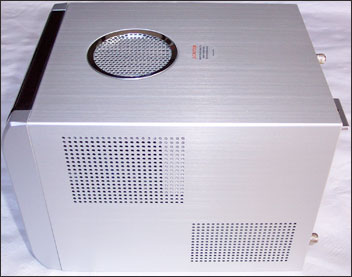
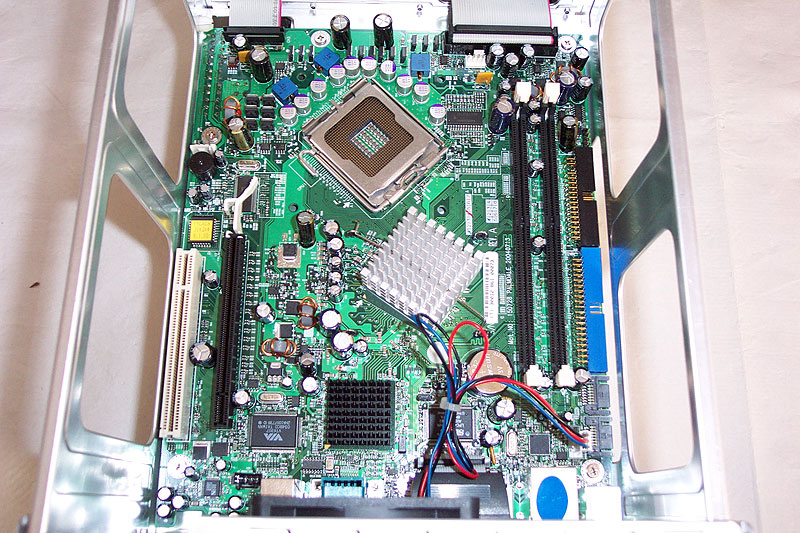
> One PCI slot for expansion. No AGP or PCI-X.
No, you must be confusing it with the Mac mini, which doesn't actually have a PCI slot
Ok, this one doesn't have an AGP or PCI-X slot, but it clearly has both PCI and PCI-Express slots (which is not the same thing as PCI-X) -
Other outlets for coverage
Here are some more sites covering it... all about the same content, really:
viperlair.com
hardocp.com
techreport.com
thetechzone.com
tweaktown.com
thetechzone.com
hothardware.com
hexus.net
pcper.com
legionhardware.com
thetechlounge.com
bigbruin.com -
Re:What about chipsets for AMD?
With the cross-licensing agreements with Intel, will VIA be prohibited from transitioning these technologies into their chipsets for the AMD platform?
I'm no expert, but the nForce4 chipset seems to give AMD owners just about everything they need anyway.
I could be missing something of course. The VIA article was so full of abbreviations and marketing diagrams I had problems concentrating on what the real news were. -
Re:It seems that the only productive answer...
You know, i think the same. I had high hopes for the S3 DeltaChrome GPU line, which is DX9+ capable and has some very interesting features, like being able to process video in realtime using GPU horsepower and HDTV support. All of this at a very friendly price and using relatively simple cooling solutions, as S3 focuses on bundled / onboard solutions.
Yet, the reviews for it basically conclude it's a promising technology with poor drivers, which on GPU-land can make or kill a product. I still have hopes for them to release OSS drivers for it; over time, i think it could gain a good deal of acceptance among Linux/BSD users. Matrox did it, and sold a lot of cards to OSS users, but the 3D performance of their hardware was a bit lacking.
For some reason, i always liked S3 (even while bitching about those damn ViRGEs). Please, if someone at S3 is reading, we love you. Do it, and we'll root for the underdog! -
If I read the article right
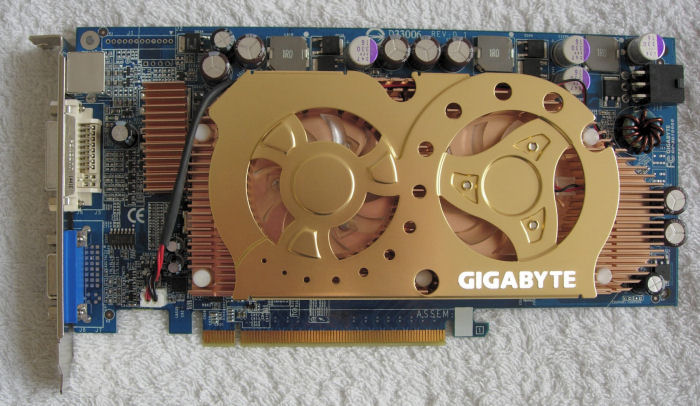
It's basically the a little less than performance of the 6800 at the cost of the 6800, but with more heat than the 6800. Didn't the multiple 6600s perform better than this at a lower cost?
Am I missing something here?
And what's this all about? Putting a video card on the carpet? Or a towel? Static electricity kills, people! -
Related Links
-
Related Links
-
Re:More reviews
No, I'm just stating that "isn't all that much slower" matters to someone who wants 1GB of video RAM on their card. They want as fast as possible.
Yes, so this card and this performance bracket simply isn't for him. He's calling for 512/1GB cards, which aren't even out yet in the consumer market, and the first ones to come out will cost 6-8 times what these TC cards go for.
Words like 'a little' and 'a lot' are very subjective...we're talking nanoseconds here, which are still pretty damn small regardless. What seems a lot to me could seem to be a little to someone else.
We're mainly talking about compromises for low cost. And TC looks like a rather intelligent compromise if you go by these HalfLife 2 benches at Hexus, where they pitch the 6200TC against the regular 6200 with 128MB of onboard RAM - which costs 30$ more. -
A much better review
Since the review posted in the blurb is about as informative as an NVIDIA press release, check out the review at Hexus. It's not Beyond3D, but it will do.
-
Better link
..to their more comfortable print version.
-
Better Link
-
summaryHere's the quick summary:
It's disgustingly well engineered and it works incredibly well.
Here's a link to a single page that you don't have to click through.
-
More Reviews
stolen from Anandtech
HardOCP
Ascully
DriverHeaven
TrustedReviews
K-Hardware
Hardware Analysis
Hexus
The Tech Report
Beyond3D
Neoseeker
ExtremeTech
Gamers Depot
Lost Circuits
Firing Squad
Tom's Hardware
Bjorn3D
Hot Hardware
Your comment has too few characters per line (currently 10.9). Your comment has too few characters per line (currently 12.3). Your comment has too few characters per line (currently 14.9). Your comment has too few characters per line (currently 17.4). -
Other Reviews
As covered by arstechnica, there are also reviews at [H]ardOCP, Hexus, HotHardware.com, Sudhian, and The Tech Report. AMD's official announcement is here.
-
Sandal Platform
I'm still far more interested in the Sandal Platform(1/2 way down page) and what convergence can do for me. I still dont see 64 bit applications (real applications, not just games) catching on for a while...
-
More Reviews
Tech-Report Prescott Review
accelenation Prescott Review
Ace's Hardware Prescott Review
Gamers Depot Prescott Review
HardTecs4U
Hexus
K-Hardware Prescott Review,
Legit Reviews Prescott Review
LostCircuits
MBReview Prescott Review
VR-Zone
X-bit labs Prescott Review
XtremeSystems Prescott Review
Extreme-tech Prescott Review -
'finally good performance'?
The shuttle sff range have been up with the big boys since they got an AGP slot.
-
THG also recommends...
-
Re:Contact them =)
The only 1Ghz VIA based motherboard i know of is the Epia M10000.. (as reviewed by Hexus, DansData and IANAG). Anyway heres the specs lifted from via's site...
Processor - VIA C3/EDEN EBGA Processor
Chipset - VIA CLE266 North Bridge - VT8235 South Bridge
System Memory - 1 DDR266 DIMM socket - Up to 1GB memory size
Graphics - Integrated VIA Unichrome AGP Graphics with MPEG-2 decoder
Expansion Slots - 1 PCI
Onboard IDE - 2 X UltraDMA 133/100/66 Connector
Onboard Floppy - 1 x FDD Connector
Onboard LAN - VIA VT6103 10/100 Base-T Ethernet PHY
Onboard Audio - VIA VT1616 6 channel AC'97 Codec
Onboard TV Out - VIA VT1622 TV out
Onboard 1394 - VIA VT6307S IEEE 1394 Firewire
hope this helps -
Hush-Technologies
Hush Tech makes a far better tiny computer that is also completely silent (except when using the DVD/CD drive). It looks allot nicer too, when used as a set-top box. The thing is powerful enough to be a DIVX/MP3 player, but it can also double as a TiVo or emulation based console gaming system.
-
And it is brown!
HEXUS reckons a 200MHz front side bus can't hurt. here. There's a picture of a brown semiconductor, also known as the "brains of a computer".
TOM'S HARDWARE has a controversial conclusion about the 3200+ and describes it as a "spineless paper tiger". It thinks the 3200+ is "much too aggressive" and it should be an XP2800+.
SUDHIAN Some crazy looking geek at Sudhian (hi Joel), reckons that AMD is being a little coy with clock speeds while its PR speeds have rocketed skywards.
FIRING SQUAD says AMD's odyssey for the performance crown has been a little more treacherous than Her Indoors, but welcomes the introduction of the 3200+ and the 400MHz bus.
TECH REPORT says there's not much new to report about the 2.2GHz chip apart from the fact that it runs on a 400MHz front side bus. But it reckons that the release is timely. There's a picture of a brown semiconductor which appears to resemble the brains of a computer.
LOST CIRCUITS contrasts the real brown brains of a computer with the hypothetical 3200+ brains of a computer it previewed a month or two ago.
BIT-TECH reckons that AMD's finally released the processor that the 3000+ should have been, denies the site's too pro-Intel, and puts it through its paces. There's a picture of a brown chip which appears to be the brains of a computer.
I stop whoring now, more to be found at amdzone -
Re:Excellent for homebrew PVR
...and moments later I eat my words.
Looking at the picture of the back of the case, it looks as though you CAN add an extra card. (The card is seated parallel to the motherboard, not perpendicular as I had initially expected.) -
I love a good phrase
From one of my comments to the other GP32 article:
The Matrix would be a blur, but most TV shows look good.
From the review:
This is more than enough for TV episodes, cartoons, anime, etc - but The Matrix is something of a blur. -
Re:Via processor
-
Full Text of ArticleReview Title: Seagate ST380023AS Hard Drive
Reviewer: Simon Maltby
Date of Review: 30th December 2002
Sample Provided by Seagate
Introduction to SATASeagate UK kindly have supplied us with one of their new Serial ATA hard drives. We take a look at the new SATA format and attempt to determine what the new format means in real life. Will SATA produce any real improvement in performance?
Before we begin looking at the physical drive it is worth reading a little about the SATA format. The following extract from Seagate's web site provides us with an insight into the serial ATA standard and more importantly it's expected development path.
About the Serial ATA (SATA) format
Most desktop storage systems today use a parallel bus interface referred to as Ultra ATA/100. The parallel ATA interface has been in use on desktop systems as the mainstream internal storage inter-connect, since the 1980\'s (over 15 years!). Today\'s PCs demand higher speeds, more robust data integrity and flexibility for innovative smaller designs. Physically and electrically, the current parallel bus has run into limitations that will prevent this bus from providing higher speeds of data transfers. The move to a new technology is inevitable in the eyes of industry leaders such as Intel, Dell, Seagate, Maxtor and APT.
These same leaders formed the SerialATA.org and are highly dedicated to bringing this new technology to the forefront of today\'s PCs. Serial ATA is designed to overcome the limitations of parallel ATA while providing scalability for years to come. Setting the goal to be compatible and at cost parity with current parallel ATA drives when in volume, the SerialATA organization is promoting the adoption of Serial ATA in all systems where ATA drives are being used today.
Serial ATA... the future?What is Serial ATA?
Serial ATA is a \"serial\" architecture as opposed to today\'s \"parallel\" ATA internal disc drive bus. Serial ATA wraps many bits of data into a packet and then at a higher speed (up to 50% higher) than parallel, transfers the packet of data down the wire to or from the host. Today Cyclic Redundancy Checking (CRC) is performed on the data being transmitted back and forth but not on the commands. Serial ATA integrates CRC on the command and data packet level for enhanced bus reliability. Cyclic redundancy code detects all single and double-bit errors and ensures detection of 99.998% of all possible errors. A Serial ATA drive can transfer data at 150MB/sec on the bus to the host system with extremely reliable accuracy and the Serial ATA interface will continue to allow scalability for a very long time.
Generation 1Generation 2Generation 3 Approximate Data Rate150mb/sec300mb/sec600mb/sec Approximate Bus Speed1.5gb/sec4gb/sec6gb/sec Approximate IntroductionFall of \'02Mid \'04Mid \'07
Additional Benefits
In addition to a faster, more reliable bus, Serial ATA improves cabling and connectors for a robust yet simpler integration. Gone are the days of bent pins and clumsy cabling and needless returned hard drives. Serial ATA cables are thinner and longer for improved system airflow and innovative system designs such as small form factor and consumer electronic boxes. Connectors are easier to snap into place without any pins but rather a blind-mate type of connection. Without the wide cables, system integrators can easily route the longer data cables (1 meter) within the system for simplicity or innovative designs.
Seagate Technology, A Native in Serial ATA Still in its early market entry stage, Serial ATA provides immediate benefits to desktop users. Serial ATA, an innovative new interface, allows continued performance growth, enhanced data reliability, and overall improved system dynamics above and beyond what Parallel can efficiently continue to provide.
A true \"Native\" Serial ATA solution offers customers the \"Real McCoy\" in Serial ATA technology. By implementing Serial ATA technology, not only on the physical layer of the drive, but also in the ATA controller link and transport layers, Seagate drives can communicate from the drive to the host directly up to the full 150MB/sec speed on the bus. In addition, the native solution incorporates command queuing, which can be a big performance boost in operating systems that can take advantage of that type of function. Some drive manufacturers may not immediately offer these \"native\" Serial ATA features on their 1st generation Serial ATA drives due to the difficulty of this integration.
The Test Drive IThe drive it\'s self looks just like any other computer hard disk drive. Consistent with other Seagate barracuda drives this one is very well built, solid and as attractive as a rectangular box of metal and plastic can be. The label clearly identifies the drive and provides setup information.
Review ModelSeagate ST380023AS Size80gb Speed7,200rpm Seek Time (Average)9ms InterfaceSerial ATA
Here is the description of the drive from Seagate\'s web site...
Seagate\'s Barracuda ATA V with Serial ATA Interface leverages the mechanics of the industry\'s quietest 7200 rpm desktop drive. The Barracuda ATA V offers 80GB and 120GB capacities with an 8MB cache for mainstream, high performance PCs, and entry-level servers. The product features all FDB motors, superior reliability and the next generation interface - Serial ATA. The SATA Barracuda includes Seagate\'s exclusive 3D Defense System and a one-year limited warranty.
FeaturesBenefits 7,200 RPM desktop performanceImproves overall PC performance 350 Gs nonoperating shockProtects drive from shock and vibration 3D Defense SystemIndustry\'s most comprehensive drive and data protection system DiscWizard softwareWorld\'s best disc installation software utility SoftSonic(TM) FDB motorQuietest acoustics on any desktop drive 8-Mbyte cache bufferImproved performance Serial ATA interfaceFastest data transfer rates
The Test Drive IISATA drives can not be connected to your computer with the standard IDE and Molex power connectors as becomes clear when viewing the back of the drive. Two new interfaces are need to use the drive. If you have a motherboard with serial ATA support you will have probably been supplied with an SATA data cable as shown below. However you will also need a Molex to SATA power conversion lead which is not supplied with either the motherboard or hard drive. I can foresee this power lead becoming a source of frustration for many people ordering SATA drives, hopefully when the drives hit the retail market the cable will be supplied with the hard drive.
Connecting the drive is very easy indeed. The SATA connectors are very well designed and will only fit the correct way round. There are no pins to bend or break as the fittings are more like USB than IDE.
Currently motherboards with SATA connectors run via the PCI bus. Some have connection via a SATA RAID controller, but our test board used a single SATA connector which is linked to a stand alone SATA controller chip. Once installed and booted the drive was displayed in the Bios taking the place of the primary IDE device. Windows XP located the drive as new hardware and the drive was fully visible. The Seagate drive is fully SMART enabled. This gives access to drive monitoring information including temperature.
Benchmarks ITest Setup
- DFI NB80-EA Granite Bay motherboard
- P4 2.66Mhz CPU, 512MB DDR3500 RAM
- Seagate 80GB SATA150 Hard Disk Drive
- Maxtor 120GB 8MB ATA133 Cache Hard Drive on IDE
- Maxtor 60GB 2MB ATA100 Cache Hard Drive
- 2 Weston Digital 80GB 8MB Cache drives on Promise Raid Controller on Raid0
- Speedfan utility for SMART monitoring including hard drive temperature
HD Tech - Read Results Graph
The HD Tech benchmark is recognised as the most comprehensive hard drive test available. The benchmark evaluates the Hard drives performance across the whole drive regardless of how the drive is partitioned. It is common for performance to drop the further into the drive the test goes. This is due to the sectors at the end of the disk being physically further from the drives starting point.
Seagate SATA ATA150
Maxtor ATA133
The graphs above show two interesting trends. Although the computer was able to read information from the Maxtor drive faster than the Seagate drive, the opposite is true when it comes to writing data. The Seagate drive shows a consistent write speed with a few downward troughs, where as the Maxtor drive shows a few peaks in performance. Secondly although both drives show the expected reduction in read speed the further into the drive the test goes, the Seagate drive shows a slower decline dropping from circa 40k to 25k. The Maxtor drops more steeply from 50k down to 25k.
The graphs below show the results of all the HD Tech tests carried out during the review. As the benchmark requires unpartitioned drives to test writing speeds only two drives were able to be tested, the Seagate SATA and the Maxtor 120GB 8MB Cache.
Read speed average results
Write speed average results
The Seagate SATA drive did not perform as well as we had hoped in the read tests. Performance was lower than the other 8MB Cache drives whether in a raid configuration or straight forward IDE. The drive is far from being slow, but with the same 8MB Cache and the equivalent of ATA150 transfer speeds we hoped for more. Despite the average scores showing lower the Seagate drive did display better consistency across the drive as a whole and also proved significantly better in the write tests, some 30% better than the Maxtor.
Benchmarks IISandra Benchmark
The Sandra benchmark is less reliable than the HD Tech because it tests a partition rather than the whole drive and as we have seen performance changes depending on where on the drive the partition is located. When testing for the review we ensured that all the test drives had the same sized partition and that it was at the start of the physical disk.
The results show the same story as HD tech, although we are unable to break down the Sandra scores to establish where the Seagate drive falls down.
General UsageHot Swapping
An interesting attribute associated with SATA devices is that they should be \'Hot Swappable\', that means that you should be able to move devices around while your operating system is running. On the face of it this would be very useful. Care must be taken when moving hard disks around because while the internal discs are spinning damage can be caused easily. With the SATA drive installed as a non system disk we were able to disconnect the drive with windows XP running. Unlike USB device when removed, windows did not realise that the drive was no longer connected and it remained visible!
Noise
Seagate have produced a very well built drive in the ST380023AS. The casing is very solid and the mechanism well balanced. As a result it is most defiantly the quietest hard disk drive I have ever used. If you are looking for an ultra quiet drive then this one should be on your shopping list.
Reliability
The test drive was run continually for a week cycling the Sandra benchmark. Although the drive can get quite hot, rising to 45c under very heavy load, it performed without fault. SMART monitoring did not detect any problems during our testing. It should be remembered that a weeks hard testing does not give any real indication of the drives long term reliability, but we can take a great deal of comfort from the fact that the IDE Barracuda drives have proven to be one of the most reliable in the market thus far.
Price
Although SATA drives have not hit the retail market place in the UK yet The 80GB Seagate drive is expected to retail for circa £115 including VAT. This puts a small premium on the SATA format.
ConclusionThe read performance of the Seagate ST380023AS was not as good as we had hoped for. On the other hand write performance was better than we hoped for. In summary one fact is clear, the SATA interface works differently to the IDE interface and when you consider that this is a first generation SATA drive, linked to a motherboard that has the SATA interface located on the PCI bus, limiting it's potential, the overall performance is very good indeed.
The benefits of ultra fast data writing would make this drive ideal for write hungry tasks like video rendering or data backup. The Seagate drive itself is very well made and seems to be very robust. Its quiet operation makes it ideal for inclusion in a system where quietness is of benefit.
Serial ATA is in its infancy. Seagate have produced an excellent hard disk drive at the high quality end of the market place which should be very well received. I for one will be very sorry to have to part with this drive when Seagate ask for it back.
Pros
- Very Quiet
- Robust
- Very fast write performance
- Simple SATA data cable connection
Cons
- Needs power adapter (Not supplied)
- Slower read performance than expected
- SATA comes at a price premium
-
Conclusion of articleSince the site is already
Page originally available at: hexus.net
ConclusionThe read performance of the Seagate ST380023AS was not as good as we had hoped for. On the other hand write performance was better than we hoped for. In summary one fact is clear, the SATA interface works differently to the IDE interface and when you consider that this is a first generation SATA drive, linked to a motherboard that has the SATA interface located on the PCI bus, limiting it's potential, the overall performance is very good indeed.
The benefits of ultra fast data writing would make this drive ideal for write hungry tasks like video rendering or data backup. The Seagate drive itself is very well made and seems to be very robust. Its quiet operation makes it ideal for inclusion in a system where quietness is of benefit.
Serial ATA is in its infancy. Seagate have produced an excellent hard disk drive at the high quality end of the market place which should be very well received. I for one will be very sorry to have to part with this drive when Seagate ask for it back.
Pros- Very Quiet
- Robust
- Very fast write performance
- Simple SATA data cable connection
- Needs power adapter (Not supplied)
- Slower read performance than expected
- SATA comes at a price premium
-
More reviewsEven more than from my post in the last story...
- [H]ard|OCP Intel Pentium 4 @ 2.80GHz : Intel is breaking out the big guns with their sights set directly on the competition. Will the 2.80GHz Northwood be enough for Intel to hold onto the performance crown?
- Anandtech Intel's Pentium 4 2.80GHz - Moving to the Head of the Class
- Tom's Hardware Speed Isn't Everything: P4/2800 Meets Athlon XP 2600+
- Ace's Hardware Faster Still: The 2.8 GHz Pentium 4
- FiringSquad Intel Pentium 4 2.8GHz Review
- Hexus.net Intel Pentium 4 2.8GHz Review
- SimHQ.com
Intel "Northwood" 2.80GHz Pentium 4 Processor using
- Tech Report Intel's Pentium 4 2.8GHz processor - Two billion eight-hundred thousand hertz
- Hot Hardware The Pentium 4 2.8GHz Processor - Intel ups the anti once again
- xbit labs Intel Pentium 4 2.8GHz against Athlon XP 2600+
- VR Zone Intel Fastest Pentium 4 2.8Ghz Review
- HardcoreWare A Thorn in AMD's Hide
- Lost Circuits Pentium4 2.8 GHz - Another Hit And Run
-
More reviewsHow does Slashdot decide which of these hard-working sites gets loads of free traffic?
- [H]ard|OCP Intel Pentium 4 @ 2.80GHz : Intel is breaking out the big guns with their sights set directly on the competition. Will the 2.80GHz Northwood be enough for Intel to hold onto the performance crown?
- Anandtech Intel's Pentium 4 2.80GHz - Moving to the Head of the Class
- Tom's Hardware Speed Isn't Everything: P4/2800 Meets Athlon XP 2600+
- Ace's Hardware Faster Still: The 2.8 GHz Pentium 4
- FiringSquad Intel Pentium 4 2.8GHz Review
- Hexus.net Intel Pentium 4 2.8GHz Review
- SimHQ.com
Intel "Northwood" 2.80GHz Pentium 4 Processor using
- Tech Report Intel's Pentium 4 2.8GHz processor - Two billion eight-hundred thousand hertz
- Hot Hardware The Pentium 4 2.8GHz Processor - Intel ups the anti once again
- xbit labs Intel Pentium 4 2.8GHz against Athlon XP 2600+
-
several more 2600+ reviews
There are several more 2600+ reviews, and these are much better too.
AMDZone.com
Hot Hardware
Tech-Report
Overclockers.com.au
Ace's Hardware
Firing Squad
Hexus
xbit
Anandtech
Van's Hardware
VIA Hardware
The Inquirer -
Coolmaster case
I would buy the Coolmaster case if I had the money. There is a good review here..
www.hexus.net
This is the case I wanna get, its about £170. I'll put in a 200Gig HD, DVD etc. Lan connection back to my ADSL. -
The Case
One thing that I was interested in after reading the description was the case they are using... Since the article is
I believe they are referring to the Cooler Master ATC-600 Series. That site doesn't mention anything about it being available in black though.
There is a review and pictures of it at http://www.hexus.net/review.php?review=281 -
Re:There's no comparison
"... lifespan of your agerage SCSI drive
Any ideas what this lifespan is? What about for (E)IDE drives?
I've got 2 - 3 GB drives still working after 8 yrs full-time use. I've had more IDE drives (IBM, Western Digital) die in the past 2 years that were purchased w/in the last 4 years than I can count.
The drives keep getting bigger, and for those of us who only want 10GB to run a server, it seems like a good idea to steer clear of 250 TB IBM EIDE drives at Fry's, especially when they're not recommended for fulltime use. I'd imagine other people have made this observation. -
Karma whoring off
from Voodoo Extreme:
Intel 2.4 GHz Pentium 4 CPU
Intel 2.4 GHz Pentium 4 CPU
Intel 2.4 GHz Pentium 4 CPU
Intel 2.4 GHz Pentium 4 CPU
Intel 2.4 GHz Pentium 4 CPU
Intel 2.4 GHz Pentium 4 CPU
Intel 2.4 GHz Pentium 4 CPU
Intel 2.4 GHz Pentium 4 CPU
Intel 2.4 GHz Pentium 4 CPU
Intel 2.4 GHz Pentium 4 CPU
Intel 2.4 GHz Pentium 4 CPU
Intel 2.4 GHz Pentium 4 CPU
-
Early benchmark:
Here are some early benches of the Morgan based Duron:
http://www.hexus.net/review.php?review=211
It seems that the new core and its new extensions puts it far ahead of the Spitfire core and nearly up to par with the current Thunderbirds. It will be interesting seeing durons compared to P4s in the near future -
My quiet case project : it's an answer ... sort of
Well, it seem these days, most of the power user just care to get something like 200fps in Quake III. Why ? Beat's me ! I'm not on a quest to get the ultimate frame rate, I just want my box to be quiet as possibly can be.
To help you understand my take on the subject, here is the background
My PC has the following components :- A OEM case
- A 235W OEM power supply
- ASUS P3B-F
- Intel Pentium II rated 400Mhz @ 400Mhz
- A cheap OEM SECC2 Heat-Sink made of aluminum
- A 128MB CAS2 no-name DIMM
- Two 32MB CAS3 Samsung DIMM slowing down my memory timing, but preventing the appearance of the all mighty evil SwaP
- A ATI All-In-Wonder Rage128 16MB
- A Creative SoundBlaster Live! Value
- A Realtek 8139 Ethernet NIC
- My beloved USR 56Kbps ISA Real Modem. Sorry but to me a component that uses CPU power to do it's processing instead of taking the load off is not worthy of being in my computer. Not to mention the M$ Win part...
- A Creative 48x CD-ROM drive. It's the loudest damned thing in my computer when it's spinning
- A Quantum Fireball AS PLUS 40GB (7200RPM) in a removable tray
- A Quantum Fireball CX1 10GB (5400RPM) mounted inside the case
- Of course the stupid old 1.44 MB floppy drive only used for booting Tomsbrt in case of emergency
Soon to be
- A Adaptec 2940UW
- A Diamond Monster 3D II for Glide games
It turn out that the Quantum Fireball AS makes less noise than the Quantum Fireball CX1. I still have to figure it out
I use my PC for
- Running Linux and learning as much as time allows me (Jez I had so much time when I was a student... Think of all the time I wasted in High-School running the evil W monster)
- Doing some gaming i.e. : Diablo II, Unreal, UT, Undying (Although that thing is going to cost me a new box)
- Spending numerous nights filling my brain @ Slashdot, Tomshardware, Anandtech, Arstechnica, StorageReview, Developper.Intel.com, and most importantly, hounding the web for all the case manufacturers and their take at a quiet box.
As I'm writing this post, that is probably going to be the base documentation for my Silent Case Project, you're guessing that my sleepless night of browsing have not yielded the desired result.
I've check out many options such as water cooling, moving the PC to the closet, returning to the forest where a PC is pretty far from your everyday quest for survival. None of them suits me.
The objective of my project is to build a case that meets the following criteria
- A silent as possible
- Accessible
- Provides sufficient ventilation to maintain all the components running within thermal specs
- Be light enough to be easily transportable (Let's not forget the Lan parties
To attain those goals I have to
- Read all I can about noise, sound, aerodynamics, PC specs
- Find suitable materials : A case is not just a protection against unwanted fingers and dust ; it must provide EMI shielding, proper grounding, resist to impacts, and fit into my conception of the king of object you want in your bedroom (If you were thinking about plywood and a box of rusted leftover nails, forget it)
- Find the tools or the companies or individuals with the means to work the materials I choose to build the casing
For the sound isolation I was thinking about some kind of foam. Mineral lint would be affective but that takes too much space and it's not the kind of thing I want beside my bed. Form the casing itself, metal is almost inevitable if you want EMI shielding and grounding. And as for you who wonder why I have not mentioned water cooling yet, the greatest source of noise is not my CPU cooler and your just moving the problem out of the case (Nice ; you have water heating up but unless your reservoir is like a bathtub or something you will have to transfer the heat for the water to the air).
That about as far as I am. If you have any idea that might help me, please fell free to send me some bits forming ASCII characters at Prozzaks@operamail.com
To finish up, here is a list of thing that might help people wanting to achieve similar goals
- http://www.formfactors.org/ You should be able to find all the documents regarding the ATX form factor and thermal design guides. A must if you want to build a quiet PC.
- http://developer.intel.com/ Intel has contributed a great deal to the ATX definition ; here you will find many relevant documents including thermal design guides for all Intel processors.
- Etract from my favorite's :
Hardware\cases PC CASE
Fong Kai
PowerOn
Enlight Corporation
dir.yahoo Enclosures Manufacturers
procase
YY Computer
Psi
IN WIN
Amtrade
American Suntek
Addtronics
A-Top Technology, Inc
Nikao
Palo Alto Products
Antec
Lian-Li
amaquest
Koolance
Quietpc
PC Power & Cooling
Hardware\Heat Sinks ALPHA
Cooler Master
AVC
ekl
GlobalWIN
globefan
RDJD
Foxconn
Spring Spread
Sanyo Denki
TITAN
TaiSol
ChipCoolers
Orb a
ElanVital
Hardware\Info\Form Factor Platform Development Support
SSI
WTX
Hardware\Info\Standards Fibre Channel Industry Association
PCI SIG
RAB
serialata
SPEC
Hardware\Info\Storage RAID.edu
Hardware\Info\Cours CS 252 - Graduate Computer Architecture
Hardware\Info The PC Guide!
Hardware Bible
FullOn3D
developer.intel.com
HwB The Hardware Book
United Overclockers
Ars Technica
Tech-Junkie
HardwarePub
Webopedia
Illustrated Guide to the PC Hardware
SysOpt
2CPU
Ace's Hardware
Technical Support - RaidHelp v1.0 - Free RAID Technology Guide
Computer Architecture
OPENCORES.ORG
TechFest
MidWest Micro Support
Hardware\Resalers GeekTek!
Micro-Bytes
ALCO
ABC Micro
2CoolTek
Plycon Computers
TCWO
ABC Micro - Lprix
Case Outlet
The Chip Merchant, Inc
Cimsys
OrdiGros
ALIENWARE
SHENTECH
FireStorm
Hyper Microsystems
TWEAKBOX
Hardware\Reviews Tom's Hardware Guide
Sharky Extreme
StorageReview
HardOCP
AnandTech
SystemLogic
x-bit labs
Active-Hardware
FiringSquad
SocketA
Overclockers Australia
HEXUS
dansdata
SysReview
Hardware\Manufacturers AMD
ASUS
Belkin
MassMultiples
Promise
StarTech
VIA Technologies, Inc
ABIT Computer Corp
Comcase
Micron Semiconductor
ECS
Hardware Freeboxen
-
Re:Solve cooling problems?
Nothing beats this cooling http://www.hexus.net/wc2.shtml Seriously Manic guys.