Slashdot Mirror
Domain: man.ac.uk
Stories and comments across the archive that link to man.ac.uk.
Comments · 323
-
In old school vein...
Here are a couple of vids of the renovated Hartree Difference Analyser in action. (A pre-war analog computer built from Meccano.)
Nerd Potter's Wheel.(For those of an archo-nerdish persuasion. the narrator of the first video is Charles Lindsey - author of "An Informal Introduction to Algol 68".)
-
Re:600 light years from us
I assume Betelgeuse is on a slightly different orbital trajectory around the galactic center. So, if Betelgeuse is going to explode in about 100,000 years, won't its distance to Sol have changed by then?
According to circumstellar CO observations, Betelgeuse is nearly stationary with respect to the local standard of rest. No matter if it blows tomorrow or 100k years from now, it will still be ~200 parsecs away.
-
Re:Great. Low-quality evolutionary "solutions"
-
Re:Opportunity missed
-
Re:AI and chess
I have thought similarly. I don't see how we can make true use of robots if they don't understand us. To understand us, to predict or anticipate what we need, I think they have to have some common experience otherwise it would take forever to explain what you want precisely enough. Without understanding they would be very annoying in the same way that it is when you try to work with people whose culture is greatly at odds with yours so that you can never quite interpret what they mean.
This kind of thing might eventually help:
http://apt.cs.man.ac.uk/projects/SpiNNaker/ -
Re:Interesting.
Freshmeat record: http://freecode.com/projects/balsaasync
Site: http://apt.cs.manchester.ac.uk/projects/tools/balsa/
Also useful: http://apt.cs.man.ac.uk/projects/tools/lard/ -
Re:ars article
http://www.cs.man.ac.uk/~banach/COMP39112.Info/index.html A course at University of Manchester on Quantum Computing. The lecture notes are all there. It's a course I took myself as an undergraduate.
-
I'm fairly sure...
...multi-tasking hardware has been around for a while. Hell, I started off on one such device (the PET 3032 with 4040 disk drive was multi-tasking as the 4040 had an independent CPU, ROM and RAM, so you could feed it an instruction and it would independently go away to do stuff without tying up the main CPU). I see nothing particularly new or innovative in the concept.
I dunno if the Amulet CPU can multi-task at the hardware level (versus OS multi-tasking in software) but the modular nature of it means I would not be at all surprised.
-
Re:The number of nodes is meaningless
Yes we do have a clue, several in fact. we even have an incredibly simple model(few neurons).
We don't need to understand something to simulate it. It certainly helps. People in a factory can assemble a plane the works perfectly well, but never even have heard of bernoulli's principle.
This sort of work is need so we can define 'cognitive' with more accuracy.
We know a hell of a lot more then you imply in your post. The parent clearly doesn't know what he is talking about and did even bother to read the story, much less the pdf.
-
Re:In what way is this better ...
Big and hard to maintain.
For those interested in stats, here's the facts and figures for the telescope. If you're not interested in clicking through, the numbers that matter are that the dish is 76.2 meters in diameter and weighs 3,200 metric tonnes. It's also the third-largest steerable dish. The Chinese proposal isn't truly a steerable telescope - you can do the maths to work out how heavy a 500 meter steerable monster would be - but would be able to see outside the strict limit of vertically above since it will be distortable.
However, for precisely the same reason Jodrell Bank's telescope needed resurfacing, the distortions in the Chinese telescope have to be very carefully controlled and the quality of every mirror needs to be amazing. Imperfections will result in the telescope being useless at shorter frequencies which is where it wants to be.
-
Re:In what way is this better ...
Big and hard to maintain.
For those interested in stats, here's the facts and figures for the telescope. If you're not interested in clicking through, the numbers that matter are that the dish is 76.2 meters in diameter and weighs 3,200 metric tonnes. It's also the third-largest steerable dish. The Chinese proposal isn't truly a steerable telescope - you can do the maths to work out how heavy a 500 meter steerable monster would be - but would be able to see outside the strict limit of vertically above since it will be distortable.
However, for precisely the same reason Jodrell Bank's telescope needed resurfacing, the distortions in the Chinese telescope have to be very carefully controlled and the quality of every mirror needs to be amazing. Imperfections will result in the telescope being useless at shorter frequencies which is where it wants to be.
-
Re:In what way is this better ...
Big and hard to maintain.
For those interested in stats, here's the facts and figures for the telescope. If you're not interested in clicking through, the numbers that matter are that the dish is 76.2 meters in diameter and weighs 3,200 metric tonnes. It's also the third-largest steerable dish. The Chinese proposal isn't truly a steerable telescope - you can do the maths to work out how heavy a 500 meter steerable monster would be - but would be able to see outside the strict limit of vertically above since it will be distortable.
However, for precisely the same reason Jodrell Bank's telescope needed resurfacing, the distortions in the Chinese telescope have to be very carefully controlled and the quality of every mirror needs to be amazing. Imperfections will result in the telescope being useless at shorter frequencies which is where it wants to be.
-
Re:In what way is this better ...
Big and hard to maintain.
For those interested in stats, here's the facts and figures for the telescope. If you're not interested in clicking through, the numbers that matter are that the dish is 76.2 meters in diameter and weighs 3,200 metric tonnes. It's also the third-largest steerable dish. The Chinese proposal isn't truly a steerable telescope - you can do the maths to work out how heavy a 500 meter steerable monster would be - but would be able to see outside the strict limit of vertically above since it will be distortable.
However, for precisely the same reason Jodrell Bank's telescope needed resurfacing, the distortions in the Chinese telescope have to be very carefully controlled and the quality of every mirror needs to be amazing. Imperfections will result in the telescope being useless at shorter frequencies which is where it wants to be.
-
Bluudy Blogs
- Hardware design tools
- Transactional Memory
- TERAFLUX: Exploiting Dataflow Parallelism in Teradevice Computing
- SpiNNaker - A Universal Spiking Neural Network Architecture
- The Balsa Asynchronous Synthesis System
I've left out links to some projects, by request, but everything can be found on their homepage anyway. Anyways, it is this combination that is important, NOT one component alone.
-
Bluudy Blogs
- Hardware design tools
- Transactional Memory
- TERAFLUX: Exploiting Dataflow Parallelism in Teradevice Computing
- SpiNNaker - A Universal Spiking Neural Network Architecture
- The Balsa Asynchronous Synthesis System
I've left out links to some projects, by request, but everything can be found on their homepage anyway. Anyways, it is this combination that is important, NOT one component alone.
-
Bluudy Blogs
- Hardware design tools
- Transactional Memory
- TERAFLUX: Exploiting Dataflow Parallelism in Teradevice Computing
- SpiNNaker - A Universal Spiking Neural Network Architecture
- The Balsa Asynchronous Synthesis System
I've left out links to some projects, by request, but everything can be found on their homepage anyway. Anyways, it is this combination that is important, NOT one component alone.
-
Bluudy Blogs
- Hardware design tools
- Transactional Memory
- TERAFLUX: Exploiting Dataflow Parallelism in Teradevice Computing
- SpiNNaker - A Universal Spiking Neural Network Architecture
- The Balsa Asynchronous Synthesis System
I've left out links to some projects, by request, but everything can be found on their homepage anyway. Anyways, it is this combination that is important, NOT one component alone.
-
Re:it's modulated
They could hear that and think there is a pulsar in the neighborhood. They rotate at quite regular rates and generate a tremendous magnetic field.
Some of the sounds of pulsars can be heard here;
http://www.jb.man.ac.uk/~pulsar/Education/Sounds/sounds.html
Power grids do transfer a tremendous amount of electro-magnetic energy into our planetary environment and with some effort I bet you could receive them from the moon and the nearby planets. Receiving a signal from well outside of our solar system would be complicated by the natural processes of our planets. "Sferics in our own atmosphere, the constant noise of Jupiter and Venus, the noise from our own star all are incredibly noisy at the lower frequencies.
Unless someone was specifically listening to our star system, across the entire RF spectrum from 50 Hz up to around 300 GHz they would probably overlook any noises we are making now. To get tremendous gain factors out of antennas we make parabolic dishes large and this reduces the beam-width that you can send or listen to. Even with an array of moon based radio telescopes it would take an incredible amount of time to listen to our entire stellar neighborhood on a star-by-star basis.
For a better understanding of signal losses with distance, look at the description on Wikipedia;
http://en.wikipedia.org/wiki/Free-space_path_loss
For an understanding of antenna gain and beamwidth (directivity) look at this description in Wikipedia;
-
Another project
http://intranet.cs.man.ac.uk/apt/projects/SpiNNaker/
It seems that for quite a lot of folks toying with topology and interconnects is a promising approach.
-
Reminds the Spinnaker projectFrom TFA: "The simulation, which runs 100 times slower than an actual cat's brain,"
This reminds me of the Spinnaker project, that pretended to simulate a brain (ok, a smaller one, say a fly's brain) in real time. According to their calculations, the processing power of each neuron is very small, so a simple ARM core could handle some 1000 (correct me, this is what I remember) neurons in real time. The complex point was the interconnections between neurons. Obviously, this is much more powerful, despite the 100x slowdown: A much larger brain, and not using specific hardware.
-
Re:Antique computer
How about the 50th anniversary replica of the Manchester Mk1 'Baby' ?
-
Re:Video IS simple
*plays Devil's Advocate*
Can that Debian box play DRM'd WMV's? All QuickTime files? (Even QuicktimeVR?) How about the audio track of this file: http://aig.cs.man.ac.uk/research/daedalus/movies/SIGGRAPH08v3_30.mov ?
*removes DA hat*
In seriousness, mplayer+ffmpeg+a recent mplayer codec pack plays 99% of what I run into. Of the things that won't play, 99% are probably malware-spreading WMV files.
Also, my hat's off to you for telling me about smplayer, it's *EXTREMELY* boss!
My gripes:
* It should do some magic to detect playback of DVD ISO files and apply my favorite deinterlacer.
* It should give me a little more information about the deinterlacing schemes... Are these already ordered in a descending "best" to "worst" order? (Say, for DVD playback?) I wouldn't be surprised if this ordering is a pretty hard thing to do. -
Less like "gas" but more like "milk powder"?
And so MS is doing just like the gas companies: make the world addict to their product, brignin' the price VERY high, and when everybody is thinking about alternatives, lower the price or, in the case of MS, paying people to use the product.
I would have thought it's more like when Nestle pushed milk powder in Africa. (see second item) and here.
-
Website
erm... the Jodcast is the _podcast_ from Jodrell Bank, not the website. Try http://www.jb.man.ac.uk/ for the actual website for Jodrell Bank.
But the Jodcast is well worth a listen to anyway.
-
Re:Minor correction...
Note that the MIT license is permissive, which wouldn't require Microsoft to actually share the source upon distribution (also note that Microsoft used to include a BSD licensed networking stack).
However while looking at the exceptions noted on that licensing page it looks like Paint.NET's license isn't compatible with Section 6 from the Open Source definition.
* Exception 3: Although the Paint.NET source code distribution includes the GPC source code, use of the GPC code in any other commercial application is not permitted without a GPC Commercial Use Licence from The University of Manchester. For more information, please refer to the GPC website at: http://www.cs.man.ac.uk/~toby/alan/software/
You'd have to replace the GPC library it includes.
-
Re:Minor correction...
Note that the MIT license is permissive, which wouldn't require Microsoft to actually share the source upon distribution (also note that Microsoft used to include a BSD licensed networking stack).
However while looking at the exceptions noted on that licensing page it looks like Paint.NET's license isn't compatible with Section 6 from the Open Source definition.
* Exception 3: Although the Paint.NET source code distribution includes the GPC source code, use of the GPC code in any other commercial application is not permitted without a GPC Commercial Use Licence from The University of Manchester. For more information, please refer to the GPC website at: http://www.cs.man.ac.uk/~toby/alan/software/
You'd have to replace the GPC library it includes.
-
Re:The benefits of not ordering with Windows
See these:
Venezuela's National Strike
Venezuela Kubuntu -- must read
The Venezuelan Educational System
Venezuela Embraces Linux and Open Source Software, but Faces Challenges
Venezuela - Stepping Forward With Debian
Enterprise Unix Roundup: Oracle's Open World
Trollparty in Caracas during World Social Forum
Free software liberates Venezuela
Free Software: Technological Democratization?
No More Microsoft blood in the veins of the Venezuela
Free Software Developers program continues successfully
Open standard Venezuelan law definition -
UK-oriented reading list
Many of the comments in this thread look as if they come from the US perspective, so might be hard to apply to the UK situation. There are major differences in what people understand by Masters-level in the two places. Being neither an astronomer nor a mathematician I have no way to fully assess the advice, but Jodrell Bank has a sane looking reading list for people doing a UK M.Sc similar to the one you are taking. ( reading list at: http://www.jb.man.ac.uk/postgrad_course/readls.html) Roughly speaking, US undergraduate degrees are less specialized than British ones, so Masters degrees usually have at least two years of course work, and must cover a lot of ground. That's why several of the commenters can't imagine how a Masters degree could be squeezed into just one year. At the same time, the final year of a UK undergraduate degree is often just as intense and focused as a US graduate program, so the jump up in level may be less than some commenters are assumng.
-
Seems a lot like what we did in Manchester...
...two years ago.
I'm fairly sure it's not the first time pulsars have been used to show Einstein was right.
-
Re:Potentially crazy suggestion:
Also has the added advantage that passing ner-do-wells dont start wondering why that old isolated cottage has a big dish outside it.
That's not a big dish, this is a big dish!
(I mean, if your house is a listed building and you're not allowed to attach a satellite dish to it, why not build a parabolic antenna in your garden that also becomes a listed building? Bwuhahaha!) -
Re:If it's on windows, then nsa and others can lis
-
Re:Power consumption?
Here's the paper (PDF). I don't see anything about power consumption, but I only skimmed through.
-
Graphene for sale
A friend of mine works for Prof Andre Geim in the Mesoscopic Physics Group at University Manchester and was one of the people to first prepare graphene crystals. They have a spin off that is selling graphene flakes to some interested industry altho the demand is not huge at the moment. If you want to play with graphene flakes of your own you can check them out here.
It is interesting stuff - I saw Prof Geim speak about it and it seems to me one of these areas where quantum theory and experiment intersect, such as with Bose-Einstein Condensates. It's not really my field but the preparation of them is interesting. M -
Re:User Annihilation Control
An new use for the HCFoperand! ^_^
-
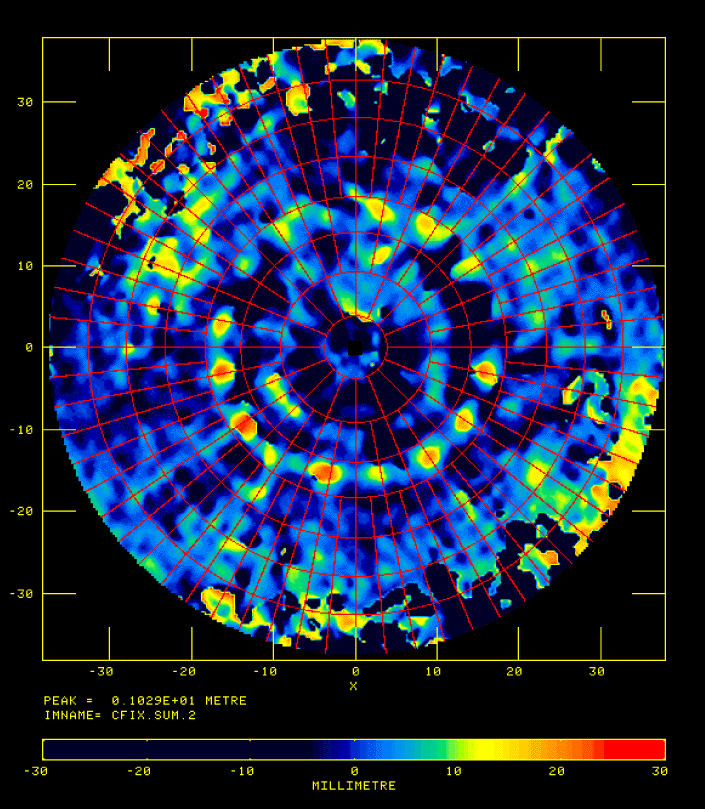
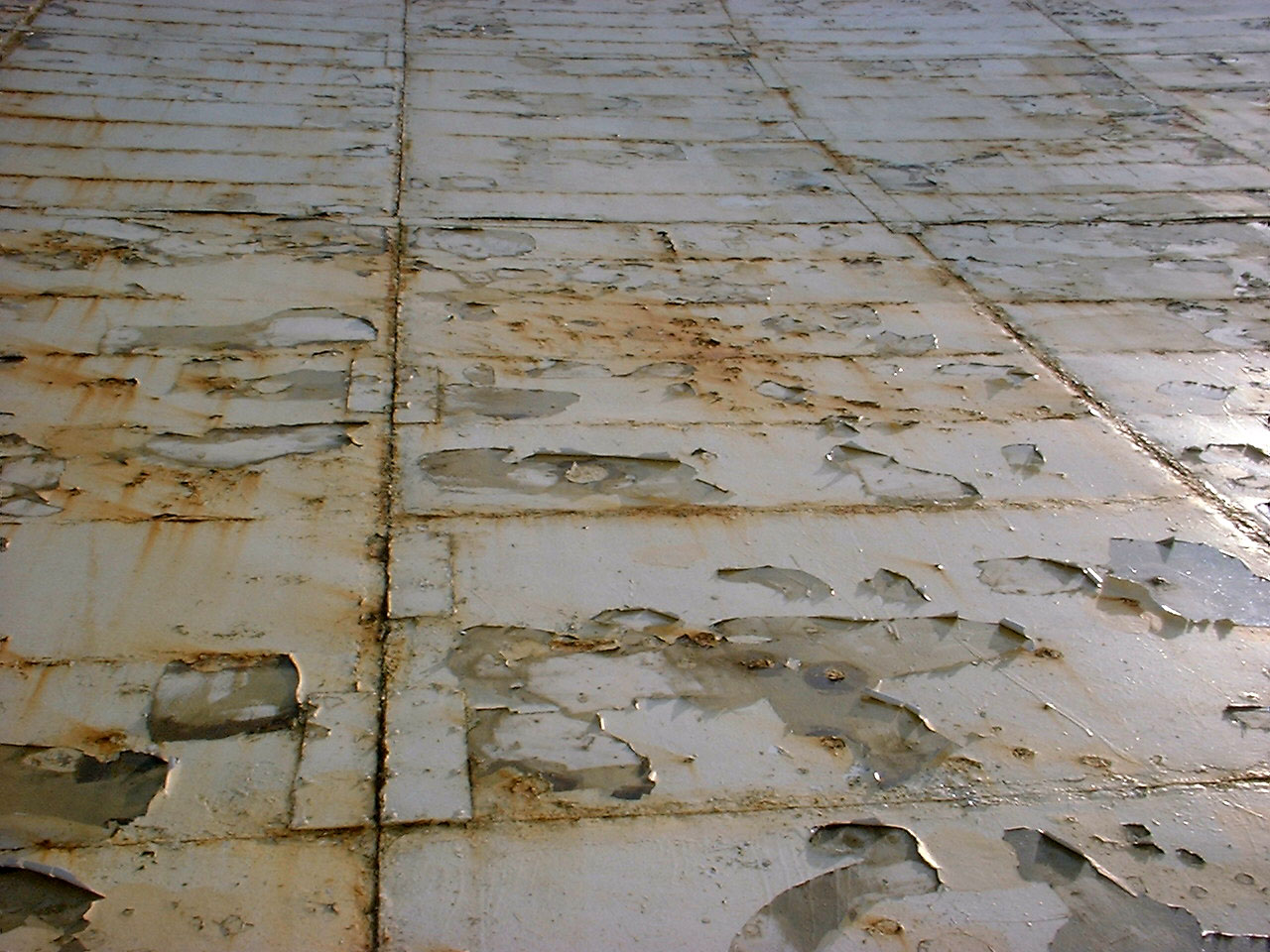
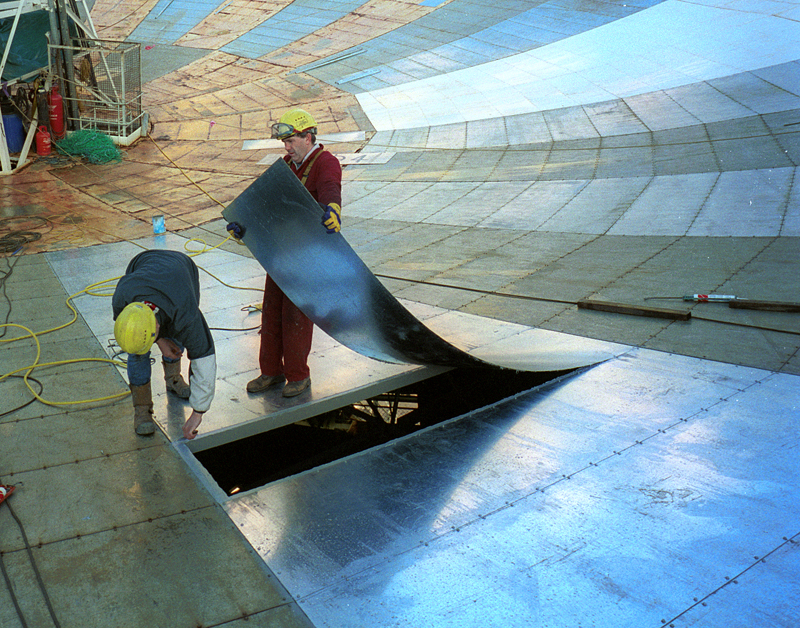
Jodrell BankWas, for a very long time, the world's largest steerable single-dish radio telescope. In fact, for a long time, it was the largest radio telescope. The dish is amazingly precise. Even before an upgrade in 2001, large parts of the surface had defects averaging a millimeter or less. A photo of some of the worst-hit areas show what the weather will do. Although they don't show the defects on the current dish, they do show what the new panels look like in-situ.
But the big dish isn't the only thing at the Jodrel Bank facility. Their homepage mentions that the Square Kilometer Array Programme Development Office is located there. This is an international project of enormous significance. (Imagine being able to see an Earth-sized planet, orbiting at 1 AU from its sun, 100 light-years away, and have enough data to take measurements of what gasses are in the atmosphere.)
Jodrell Bank also has cultural significance and references pepper the British conciousness. Had he not pursued music, Brian May would have been the one slamming the UK Government's move from the offices of Jodrell Bank.
Then there's the research exchange program with Europe. European countries trade time and access at a facility in one country for access to another facility somewhere else, for free. Closing Jodrell Bank will mean British radio astronomers have nothing to trade and will need to pay to access telescopes elsewhere in the world. Access other countries will still get for free. This means research grants will be worth less to someone from Britain than to someone in another country. This will worsen the "brain drain" - nobody wants to live in a country where they can't afford to hold a job. You will have noticed that British scientists are doing far less high-energy physics since they shut the nuclear structure facility in Daresbury (home of Lewis Carrol, interestingly). It's because they can't afford the prices they now have to pay. From free to thousands of dollars an hour, without a single penny more in grant money to cover it.
Finally, there's the secondary impact. It'll likely cause several departments at the University of Manchester to shut their doors forever. Cheshire is a largely agricultural, impoverished region, so the loss of jobs in the community will be severe. Jodrell Bank is also a major tourist icon, which means there's a significant risk tourism will crash in the area - another major source of money. You can only split time on existing telescopes so far, putting astronomers out of work. This is not a degree you can really use to get a job elsewhere. Many existing projects rely on Jodrell Bank as part of a network of telescopes. Losing it will create a lot of ill-will and possibly cost a lot of projects a lot of money in a bid to fill in the data gaps as best they can.
But, then, why should a White Hall mandarin care about such petty details?
-
Jodrell BankWas, for a very long time, the world's largest steerable single-dish radio telescope. In fact, for a long time, it was the largest radio telescope. The dish is amazingly precise. Even before an upgrade in 2001, large parts of the surface had defects averaging a millimeter or less. A photo of some of the worst-hit areas show what the weather will do. Although they don't show the defects on the current dish, they do show what the new panels look like in-situ.
But the big dish isn't the only thing at the Jodrel Bank facility. Their homepage mentions that the Square Kilometer Array Programme Development Office is located there. This is an international project of enormous significance. (Imagine being able to see an Earth-sized planet, orbiting at 1 AU from its sun, 100 light-years away, and have enough data to take measurements of what gasses are in the atmosphere.)
Jodrell Bank also has cultural significance and references pepper the British conciousness. Had he not pursued music, Brian May would have been the one slamming the UK Government's move from the offices of Jodrell Bank.
Then there's the research exchange program with Europe. European countries trade time and access at a facility in one country for access to another facility somewhere else, for free. Closing Jodrell Bank will mean British radio astronomers have nothing to trade and will need to pay to access telescopes elsewhere in the world. Access other countries will still get for free. This means research grants will be worth less to someone from Britain than to someone in another country. This will worsen the "brain drain" - nobody wants to live in a country where they can't afford to hold a job. You will have noticed that British scientists are doing far less high-energy physics since they shut the nuclear structure facility in Daresbury (home of Lewis Carrol, interestingly). It's because they can't afford the prices they now have to pay. From free to thousands of dollars an hour, without a single penny more in grant money to cover it.
Finally, there's the secondary impact. It'll likely cause several departments at the University of Manchester to shut their doors forever. Cheshire is a largely agricultural, impoverished region, so the loss of jobs in the community will be severe. Jodrell Bank is also a major tourist icon, which means there's a significant risk tourism will crash in the area - another major source of money. You can only split time on existing telescopes so far, putting astronomers out of work. This is not a degree you can really use to get a job elsewhere. Many existing projects rely on Jodrell Bank as part of a network of telescopes. Losing it will create a lot of ill-will and possibly cost a lot of projects a lot of money in a bid to fill in the data gaps as best they can.
But, then, why should a White Hall mandarin care about such petty details?
-
Jodrell BankWas, for a very long time, the world's largest steerable single-dish radio telescope. In fact, for a long time, it was the largest radio telescope. The dish is amazingly precise. Even before an upgrade in 2001, large parts of the surface had defects averaging a millimeter or less. A photo of some of the worst-hit areas show what the weather will do. Although they don't show the defects on the current dish, they do show what the new panels look like in-situ.
But the big dish isn't the only thing at the Jodrel Bank facility. Their homepage mentions that the Square Kilometer Array Programme Development Office is located there. This is an international project of enormous significance. (Imagine being able to see an Earth-sized planet, orbiting at 1 AU from its sun, 100 light-years away, and have enough data to take measurements of what gasses are in the atmosphere.)
Jodrell Bank also has cultural significance and references pepper the British conciousness. Had he not pursued music, Brian May would have been the one slamming the UK Government's move from the offices of Jodrell Bank.
Then there's the research exchange program with Europe. European countries trade time and access at a facility in one country for access to another facility somewhere else, for free. Closing Jodrell Bank will mean British radio astronomers have nothing to trade and will need to pay to access telescopes elsewhere in the world. Access other countries will still get for free. This means research grants will be worth less to someone from Britain than to someone in another country. This will worsen the "brain drain" - nobody wants to live in a country where they can't afford to hold a job. You will have noticed that British scientists are doing far less high-energy physics since they shut the nuclear structure facility in Daresbury (home of Lewis Carrol, interestingly). It's because they can't afford the prices they now have to pay. From free to thousands of dollars an hour, without a single penny more in grant money to cover it.
Finally, there's the secondary impact. It'll likely cause several departments at the University of Manchester to shut their doors forever. Cheshire is a largely agricultural, impoverished region, so the loss of jobs in the community will be severe. Jodrell Bank is also a major tourist icon, which means there's a significant risk tourism will crash in the area - another major source of money. You can only split time on existing telescopes so far, putting astronomers out of work. This is not a degree you can really use to get a job elsewhere. Many existing projects rely on Jodrell Bank as part of a network of telescopes. Losing it will create a lot of ill-will and possibly cost a lot of projects a lot of money in a bid to fill in the data gaps as best they can.
But, then, why should a White Hall mandarin care about such petty details?
-
Jodrell BankWas, for a very long time, the world's largest steerable single-dish radio telescope. In fact, for a long time, it was the largest radio telescope. The dish is amazingly precise. Even before an upgrade in 2001, large parts of the surface had defects averaging a millimeter or less. A photo of some of the worst-hit areas show what the weather will do. Although they don't show the defects on the current dish, they do show what the new panels look like in-situ.
But the big dish isn't the only thing at the Jodrel Bank facility. Their homepage mentions that the Square Kilometer Array Programme Development Office is located there. This is an international project of enormous significance. (Imagine being able to see an Earth-sized planet, orbiting at 1 AU from its sun, 100 light-years away, and have enough data to take measurements of what gasses are in the atmosphere.)
Jodrell Bank also has cultural significance and references pepper the British conciousness. Had he not pursued music, Brian May would have been the one slamming the UK Government's move from the offices of Jodrell Bank.
Then there's the research exchange program with Europe. European countries trade time and access at a facility in one country for access to another facility somewhere else, for free. Closing Jodrell Bank will mean British radio astronomers have nothing to trade and will need to pay to access telescopes elsewhere in the world. Access other countries will still get for free. This means research grants will be worth less to someone from Britain than to someone in another country. This will worsen the "brain drain" - nobody wants to live in a country where they can't afford to hold a job. You will have noticed that British scientists are doing far less high-energy physics since they shut the nuclear structure facility in Daresbury (home of Lewis Carrol, interestingly). It's because they can't afford the prices they now have to pay. From free to thousands of dollars an hour, without a single penny more in grant money to cover it.
Finally, there's the secondary impact. It'll likely cause several departments at the University of Manchester to shut their doors forever. Cheshire is a largely agricultural, impoverished region, so the loss of jobs in the community will be severe. Jodrell Bank is also a major tourist icon, which means there's a significant risk tourism will crash in the area - another major source of money. You can only split time on existing telescopes so far, putting astronomers out of work. This is not a degree you can really use to get a job elsewhere. Many existing projects rely on Jodrell Bank as part of a network of telescopes. Losing it will create a lot of ill-will and possibly cost a lot of projects a lot of money in a bid to fill in the data gaps as best they can.
But, then, why should a White Hall mandarin care about such petty details?
-
Henry Spencer said it - (and he was right)
-
And don't forget ...
RSN!
-
Re:Actually
Its the cosmic constant, not relativity - (See http://www.jb.man.ac.uk/~jpl/cosmo/blunder.html) And with the discovery of an exanding universe it seems it wasnt a blunder but he was right.
-
Re:the source of all internet stupidity
Have you ever seen a more naive assumption? Tim must have been about the dumbest person ever to be able to program a computer.
Back in that time, the only people using LAN technology were corporate, academic and military networks, since a network card cost something around one grand. The rest of the world had to make do with telnet sessions over dial-up modems or ISDN (paying per kilobyte).
In order for Windows NT to compete against UNIX, Microsoft took the TCP/IP protocol stack and bundled it with Windows NT and Windows 95 (as many developers had to write their own interfaces for their applications - both commercial applications and games). The introduction of other protocols such as SLIP and PPP allowed TCP/IP to run over modem lines, enabling ISP's including AOL to provided end user access.
Don't blame Tim, blame (or thank?) Microsoft. Microsoft could well have tried to invent their own proprietary protocol stack rather than choose to use TCP/IP or any of the other industry equivalents as seen on the Network Protocols Poster) -
Warren Ellis - Shoot
Warren Ellis did an issue of Hellblazer about school shootings (which DC then didn't publish). You can find the pages available here. I highly, highly recommend reading it - I feel it has serious insight into at least one aspect of why these things happen.
The scan is a bit blurry, and the server is having some trouble right now (404's - just hit refresh and it'll fix itself). If anyone can mirror it on a better server it would be appreciated. -
Re:Telescopes invented 400 years ago?
Actually I do (and why I got modded troll, I have no idea). When you say "telescope", I think about huge things like this - not something someone from 400 years ago could have built. And when you say "Galileo" I think "the guy who claimed earth was not the center of the universe along with Copernicus", not "the guy who invented the telescope".
-
Re:Please explain
There are theories that the universe has shape, and is finite. There are theories that the universe has shape, and is infinite. There are theories that the universe goes on and on, forever and ever. There are theories that the universe goes on and on, and that we'll never know for how far. There are theories that the universe goes on and on, and that we'll one day know "how far," because we'll (in theory) know the shape. There are many theories. Presently, there are many tests, and it's very likely that we will huck a number of these theories within 10 years, and focus more on the remaining theories.
You are right; It is possible that we have reached the end of physics, as we know it. -
Re:Please explain
Ah!
Yes; I understand what you're saying.
The thing is, we didn't "explode out" from a point. Rather, the big bang happened "everywhere." (support)
The raisin bread analogy of expansion works better, for understanding this.
Imagine that the distance between the walls of your bedroom, and all the objects in your bedroom, are expanding. Next year, everything is twice as big, and twice as far apart. But the objects themselves stay the same size. (Due to various gravitational, electromagnetic, whatever effects.) This is basically what it's like in the universe. The "big bang" is that a bunch of space appeared between things, very quickly. But we don't know that the universe doesn't go on forever. There is stuff out beyond your apartment, you have neighbors and so on, entire cities.
New space has been appearing, and we are seeing light from "far away." It is plausible (likely?) that the entire observable universe that we see right now, occupied a space, at the time of the big bang, filled a space smaller than a centimeter, perhaps even just a plank length (smallest meaningful distance.) It doesn't mean that that was the size of the entire universe.
We'd be seeing this light from the other end of the centimeter only now, because a lot of new space appeared, and continues to appear, between one end of that centimeter, and the other end of the centimeter. (Don't take this "centimeter" figure too literally, though; I'm just pulling that out of the air. I just mean "a very small distance.")
We do not and cannot observe the big bang from our own position in space. We just assume that people N billion light years away (50-something?) see the light that was at our particular spot, 13.7 billion light years ago. "Wait, how can someone 50+ billion light years away see light that came from here 13.7 billion years ago? Did it travel faster than light?" No; The difference is because new space has appeared before and behind the light, as it was traveling. Sort of like if I drove what for me was 100 miles by the car's count, but then we found that the road had grown to 200 miles by the time I arrived at my destination.
Does this help explain?
The main thing is that the big bang wasn't just a point; It happened everywhere. When we see the big bang in the Cosmic Background Microwave Radiation, we are seeing the light of the big bang as it happened in other places. Granted, we were all scooched together a bit more at the beginning, than we are right now. But the fact remains, the light traveled from somewhere else, and it was somewhere else, back then, too. -
Re:Please explain
(shakes head)
No, here; Check this out, and check this out.
We know that the observable universe almost certainly came out of a volume roughly the size of a point, but we have no reason to believe (as far as I understand) that the entire universe came out of a single point, that a single point is all there was, and so on. It could be that there are "adjacent points," and next to them, more adjacent points, and so on, and that the points are a continuum, not discrete points.
It does not help that when astrophysicists say "universe," they almost always mean "observable universe."
If a scientist says, "The universe was a point," you don't know (without further conversation) whether they mean the entire universe or just the observable universe. We're pretty clear that the observable universe was pretty much point-like. Think like, Planck length, or perhaps whole centimeters, but definitely not light years. But scientists rarely conjecture beyond the observable universe. "We don't know" is the usual response.
This is, to me, really amazing. I only learned these things recently, after playing around with Mitaka, and then combining that with studies over Wikipedia and the Internet, and then asking some scientist friends, "Do you guys really believe that?!" It's all very different than the understanding I was given in the early 1990's, studying in school. I just was taught, learned, and assumed that the universe was closed, looped back around on itself, and was a few billion light years across, all exploding out from a point.
I now understand that that's an outdated view of things.
What I understand now, and what I see in Mitaka, makes it fairly clear to me that the universe is unknowably large. It's still possible that the universe "loops back," and there are groups of scientists researching that, looking for evidence, to see if it's true. But the sense I have, and the sense I have of what most astrophysicists have, is that it's much much larger than what we can observe, and very plausibly infinitely so. -
Re:Please explain
I'm not so sure... (link)
We have good reason to believe that all of the galaxies in the visible universe were extremely close to one another- think, "a point," or something extremely small, perhaps even planck length small.
Looking backwards, what is now the visible universe occupies less and less space.
But, we think the universe is likely much larger than the visible universe. There may have been "neighboring points," no? In fact, the space that the big bang occurred in may well have gone infinitely, in all directions, with the big bang occurring everywhere; a universe of infinite plasma in infinite space. It may be that if you travel along, today, forever, you just see more and more galaxies, without limit. -
Uranium, ores, and bacteria
First, wow, not to be rude but "Is uranium naturally radioactive" is a grade 6 science fact. You might want to look into brushing up a bit on your Science 101, if only so you can be more confident of choices you make based on science (and recognizing when things aren't based on such.)
Next, there are, well really were, natural reactors. Wikipidia has a short entry on this, a great webpage on it from the US Dept. of Energy, here's also a picture from Astronomy Picture of the Day showing what it looks like in a mine today. The article that first brought this to wide attention is "A Natural Fission Reactor" by George A. Cowan in Scientific American, July 1976. (Pages 36 - 47) (apparently not available online, visit your local library to read this fascinating article for free.)
Uranium ores are found all over the planet. Australia has 40% of known Uranium ores and is the largest exporter, the US West has 7 active mines, and Canada has 3 very large mines for both domestic use and export. Uranium ores are not always deep in the ground, surface mines are common, indeed there are places, including in the US, where rocks & soil sufficiently "hot" (in terms of emitted radiation, they're generally not warm enough to discern by touch) to harm folks in long term exposure can be found laying around on the surface.
However rocks are a rare, purely local danger, radioactively contaminated water is much more common & dangerous, and also Radon gas. Indeed there are parts of the US, for example Massachusetts, where radon gas detectors are routinely recommended for residential basements.
Finally, the University of Manchester has been doing research* on using bacteria to bioremediate radioactive materials, in short to use biological processes to convert dangerous radioactive compounds into less dangerous (but still radioactive) ones. These biochemical processes can't convert elements, no lead-to-gold, but they can "lock up" materials into less chemically active, or insoluble, forms. Doubtless discovery of bacteria already evolved to take advantage of highly radioactive environments will be of great advantage to their research.
* This is to an archived version of the University of Manchester website, the current website doesn't seem to have as widely informative a page.
-
Wavelet Transforms
Interesting technique. I used things called Active Shape Models in my MSc thesis which do pretty much the same kind of thing if I understand the article correctly. I've since lost touch with the academic research. Can anyone who still works in the area give me a quick run down of the differences and pros/cons?
Bob