 Slashdot Mirror
Domain: monash.edu.au
Stories and comments across the archive that link to monash.edu.au.
Comments · 279
-
Sample code
For those of you like me and have never worked with this language, some sample code is here
I think I would have been driven nuts trying to find the unmatched ' in my code. -
For a moment there I thought we had a story...
...about computer science but no, it's just a story about venture capitalists. The Y combinator is fun to play with.
-
Re:I'll Believe it When I See it
I thought the eye controlled gun sounded a bit stupid (because I remember seeing a TV program about a weapons system in an F14 or something a few years ago), so I looked up what the Apache Longbow uses (page I found this on is http://www.csse.monash.edu.au/~carlo/archive/PAPE
R S/AA/longbow-aa.html): "The weapon was targeted using the very new Martin Marietta AAQ-11 Target Acquisition and Designation System (TADS), a nose mounted and helmet steered turret combining a thermal imager, direct magnification telescope, a television camera and a laser rangefinder/designator. The pilot was provided with a helmet steered thermal imager. Both pilot and gunner were provided with the IHADSS collimated helmet mounted CRT projectors, designed to deliver raster scan camera imagery and calligraphic flight, weapon aiming and systems symbology directly into the right eye." So the aiming actually just tracks which direction the helmet is looking it, which is much simpler than tracking the eye. There is a mini projector projecting directly into the right eye. But yes also I'm sure there is technology to track eye movement, which combined with the helmet tracking, could give some very accurate aiming.. though also with shooting you probably have to track the target properly and aim ahead of them, so you'd be just as well doing the tracking etc with a computer and just use user input to fire, though that's not as fun -
Re:Times have changed.
Revisionist bullshit. Computers were not all ugly off-white boxes "back in the day", and Apple has made some damn ugly hardware over the years.
First, I am not an Apple fan and most especially I am not a Steve Jobs fan. Not only did I program for the original Mac back in the early eighties, I had the deep joy of administering some NeXT boxes in the nineties. They were always, at least from a software point of view, a triumph of surface gloss over good engineering. I've never spent my own money on an Apple box, and I've never advised a customer to do so.
But.
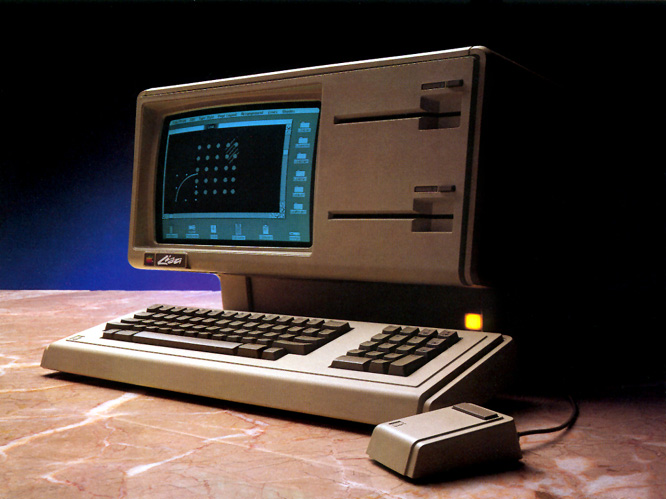
OK, it's true that there have been very occasional ugly Apples. OK, it's true that there have been very occasional attractive case designs by other makers (I particularly like some of the mid 90s Silicon Graphics case designs, and, of course, the NeXT cubes were fantastically good to look at). But - and I say this with a very expensive designer PC case sitting under my desk - I've never seen a PC case design that didn't look awful, whereas by contrast some of the Apple case designs (Lisa; PowerMac G4 and G4 cube; Mac Mini) have been really excellent.
So no. Steve Jobs has excellent visual taste, has a history of employing good industrial designers, and generally of producing better looking products (and often better physically engineered products) than anyone else in the consumer computer industry.
It's just a shame about the software engineering.
-
Re:15 minutes?
It wasn't the Wright Brothers who were first to manage flight:
http://www.ctie.monash.edu.au/hargrave/pearse1.htm l -
Re:Perl?
"If anything, it's the opposite: they ought to stay away from it, and learn a language with a halfway sane syntax and semantics, as opposed to a warmed-over Unixy shell scripting language that went through a brief period of overuse during the dotcom bubble."
Them are fightin words.
Whether you enjoy Perl or not, Perl is interesting because it was developed by a linguist and modelled after human languages, rather than by a Math geek modelled after a strict theoretical model. It's fairly unique in that perspective.
Even more, you can actually configure Perl to be an interpretted Latin:
http://www.csse.monash.edu.au/~damian/papers/HTML/ Perligata.html -
Re:Remember Hotmail?
In response to that article:
http://www.csse.monash.edu.au/~lloyd/tildeMisc/200 1/2001-MS-BSD.html -
Re:Sounds like a lot of crap...It's flamebait because when Microsoft bought Hotmail, it was running BSD. They had to put in 10x the number of servers to get it to run under Windows, and even then, they had problems.
Even Microsoft acknowledged that BSD was superior to Windows http://www.csse.monash.edu.au/~lloyd/tildeMisc/20
0 1/2001-MS-BSD.htmlWhen Microsoft moved to buy Hotmail in 1997, it was already running on FreeBSD, and continued to do so for several years, a source of some embarrassment to Microsoft. The company had earlier said, though, that it removed all FreeBSD from Hotmail last summer, and even has a lengthy technical paper on its Web site describing the transition.
But Friday, Microsoft conceded FreeBSD was still being used at Hotmail on machines that track advertising and that run a crucial Internet function known as "DNS hosting." A Microsoft spokesman said he couldn't explain why Microsoft had given out incorrect information on the topic.
The spokesman said FreeBSD was still in use simply because the company had yet to switch the machines over to Windows. But one employee of the Redmond, Wash., company said Microsoft has deliberately kept FreeBSD in parts of Hotmail because of its technical superiority over Windows in important functions and furthermore had decided to actually increase its reliance on FreeBSD. Many of the company's Web sites went down much of a day in January, and this person said FreeBSD was judged to be better than Windows at helping to prevent a recurrence of the problem.
So, while Microsoft has been adding "improvements", BSD hasn't stood still. Its STILL better than anything Microsoft has.
-
Re:Movie-plot threat
threats in other contexts that are multiple orders of magnitude more likely:
- We've been broadcasting our location clearly to the universe since Marconi first threw the switch, if not earlier.
- Any sufficiently hostile, technologically capable civilization could wipe us out with a large, well-aimed ROCK.
- If they wanted to make it nearly un-interceptable they'd accelerate it to a high fraction of c.
- If they REALLY were ticked off (say, they watched Gilligan's Island or something) they'd lob a small singularity at us, or heck, into our sun.
All of these things assume that an alien race is able to physically reach us. Now start from the assumption that they're 5000 light years away, and c really is the absolute limit of speed for any travel within the universe. They don't even know that we're here yet, but they have a pretty good idea that somebody might be. A broadcast signal is the only available means such a civilisation has to attack us[1].
Of course, while an alien signal may be a carrier for an attack, the vector used will almost certainly not be the one suggested in the article, which is basically the same sort of vector used by worms like Code Red and MSBlast. A much more likely scenario is a social engineering attack of some kind, as these are likely to be much less dependent on
Amusingly, the guy's web site mentions a book, A for Andromeda by Fred Hoyle and John Elliot, which describes just such an attack vector. He's read about the likely way such an attack may occur, and discarded it in favour of discussin a much more unlikely one.
[1]: Why they would want to is an interesting question, but there are answers to it that at least vaguely make sense. If you were the right kind of alien intelligence they may make a lot of sense. One is that they want to convert all intelligent races in the universe to follow their own model of civilisation, and that's a model that we don't want. -
This isn't a movie plot - it's a 1961 TV plot!
Fred Hoyle & John Elliot's "A for Andromeda" (IMDB link)
(be warned, contains spoilers...)
And let me say, it was *better* than most sci-fi you get on TV nowadays! -
Re:China...
-
Re:freedom?
Hey, we gave them powered flight. That's enough.
Er... no, you didn't (assuming you're not a New Zealander). And saying you did often enough will not make it true. -
Re:Perl's place in todays world?
To you and your like minded responders: from the point of view of someone who stays current with perl, your question certainly seems like a troll.
Perl continues to be a one of the most advanced languages in existance (slashdot jokes about how horribly bad one can shoot oneself in the foot with it notwithstanding). There is every reason to start a new project in Perl today. I'm really not even going to try to run down a list of reasons why here, they're just too numerous. If you haven't given serious professional development in Perl a shot, you're missing out. Perl really doesn't have any equals. Python comes close to being an alternative to Perl where the rules are more strictly enforced (which removes a lot of interesting possibilities), whitespace matters syntactically (and that's just insane in a modern language), and the majority of CPAN is missing.
Take any paradigm, and method or way of developing, and unique and interesting feature of some other language, and it all can, will, and probably has been done in Perl. It is on some ways the ultimate metalanguage. You want OO? You have your choice of a wide array of completely different styles of OO (both in terms of internals and interfaces), whatever suits your needs. Are you a fan of functional programming ala Haskell? Try Language::Functional ( http://search.cpan.org/~lbrocard/Language-Function al-0.03/Functional.pm ). TheDamian even wrote a module that allows one to write perl code as correct sentences and paragraphs in proper Latin, even given Latin's lack of defined rules about word ordering. (see: http://search.cpan.org/~dconway/Lingua-Romana-Perl igata-0.50/lib/Lingua/Romana/Perligata.pm for the module, and http://www.csse.monash.edu.au/~damian/papers/HTML/ Perligata.html for the academic explanation)
Perl 6 + Parrot I suspect will be even stronger than Perl 5, but only time will tell. Perl 5 will of course be around virtually forever, even with what deficiencies it has.
BTW, there is recently a great new Perl book out called "Perl Best Practices", which goes about the business of telling you how to not write spaghetti unmaintainable broken perl code (of course, they way you do that isn't much different than how you do it in any other language, which just goes to show that the problem isn't neccesarily that Perl invites good programmers to program badly - the problem is that perl is so accessible and easy that it invites bad programmers to program at all). -
bill sux
Since nobody else has mentioned it yet, there is always this one
-
Lingua::Romana::Perligata
As you are talking about parsing Latin, I *must* report this:
http://www.csse.monash.edu.au/~damian/papers/HTML/ Perligata.html
That's what I call a "proper language"...
--federico -
Another example
... is a flatworm living in ants and cows. To move from ant to cow, it makes the ant climb a grass stem and wait there to be eaten by a cow.
Here's a link I found:
http://psyche.cs.monash.edu.au/v5/psyche-5-33-scot t.html
From the site:
"As a striking example of how intricate complicit phenomena can be, the authors cite a parasitic flatworm that spends part of its life inside an ant, while its reproductive stage is inside a cow. The technique that nature has evolved to allow the worm to transfer from one animal to the other is described as follows.
The parasite infects the ant, and presses on a particular part of its brain. This interferes with the normal behavior of the brain, which causes the ant to climb a grass stem, grasp it with its jaws, and hang there, permanently attached. So when a cow comes along and eats the grass, the parasite enters the cow. " -
First Powered Flight
Im sorry , but just because the Smithsonian was PAID to never reveal that the Write Brothers were not the first to fly in a powered plane, it simply is NOT TRUE: See the following link: http://www.ctie.monash.edu.au/hargrave/pearse1.ht
m l -
Re:Cool...
This was the best link I could find quickly.
I'll quote from a discussion that was linked to from a recent post on
The Unix programmer will create a command-line or text-driven core and occasionally, as an afterthought, build a GUI which drives that core. This way the main operations of the application will be available to other programmers who can invoke the program on the command line and read the results as text. The Windows programmer will tend to start with a GUI, and occasionally, as an afterthought, add a scripting language which can automate the operation of the GUI interface. -
Re:Culture is for Bacteria.
We are as of yet not sure they are the biggest part of it , it is assumed and with dammed good grounds that they are . Though we are not yet even able to assert assuredness
Don't get me wrong , I am a rather Hefty cynic . I do however always keep an open mind till conclusive proof is available either way.
If the quantum nature of consciousness could be established as factual then a new era of neuroscience and medical treatment could be reached, which would be truly amazing(of course any establishment of the nature of consciousness would be amazing)
http://www.quantumconsciousness.org/
http://psyche.cs.monash.edu.au/v2/psyche-2-21-glob us.html
If your into that type of thing it can make interesting reading. Many more examples to be found on google -
Re:Sound?
No problem
-
Re:It's a very historic place.
Both!
This paper describes a Perl module -- Lingua::Romana::Perligata -- that makes it possible to write Perl programs in Latin:
http://www.csse.monash.edu.au/~damian/papers/HTML/ Perligata.html/
-
Re:Coding style in Esperanto!
Programi en Esperanto estus facila, krom neniaj programlingvoj uzas la internacia lingvon! Ecx la latinaj parolantoj havas ilian programlingvon!
-
Oka links
Well... www.oka.com.au seems a bit, kinda... obvious? (-:
This guy seems to like them, and ironically enough also links to Land Rover. Go figure. The Dual Cab seems to be most popular here in Oz, the Multi Cab (into which you can crush 12 people with some configurations!) is not much less popular, and fitted to carry 12 would be nice. -
Re:rawr
Where is your argument?
You can progam Perl in it, for example... -
Re:Usefulness
It's been available for years for people who know latin.
-
Re:Not true
And the first use of the term "hacker" in common circles was in the 1993 movie Jurassic Park . (Okay, maybe not really, but it's a funny piece of worthless information anyway):
"I am not a computer nerd. I prefer to be called a hacker!"
And who can forget:
"This is a Unix system. I know this!"
-
Programming in ENGLISH and Latin
But, the rules are so inconsistant that trying to program a computer with english is maddening.
Not that programming a computer with Latin would be easy, mind you.
-
Re:Thanks for the advice so far, some more points.
There's not much help I can give you, except this useful website:
http://www.csse.monash.edu.au/~jwb/wwwjdic.html
Regards
elFarto -
A 44-year-old idea
-
Re:More practically..I find the latter to be more informative and useful than meaningless mnemonics.
Found it on the web (at least some of them) here .
I think Henshall's method is much better, especially since the kanji were originally developed in ways that have innate mnemonics in them. Eg. sun and moon together are bright, woman and child together mean 'like', as a women likes a child, prostitute is woman and dazzling, etc.
For anybody that doesn't know Japanese (or Chinese), you might want to check out this elementary kanji page and see some of the basic Kanji. They're actually pretty interesting to learn about, and you can easily learn the first twenty or so pretty quickly. You will probably even recognize some of these characters next time you happen across a Chinese or Japanese newspaper or website.
-
Poor understanding.
It appears large amounts of discussion here are happening with people not understanding anything at hand. I will attempt to clarify some things to the best of my ability. Please excuse me if this is not as great as it could be, as my source here is my memory augmented by google.
The atmosphere is a very complex thing in both composition and behavior. For purposes of this slashdot discussion, though, about the only important thing about its behavior is that different gases exist in different compositions in different parts of the atmosphere, and these different gases block and reflect different frequencies of radiation. (Most of these gases exist in a cycle, where they are emitted out of the earth, usually by volcanic sources, then slowly fall out of the atmosphere, and are subducted back into the earth, where they're eventually re-emitted.) There are two specific important aspects to this. The first is a layer of ozone which blocks certain higher frequencies of incoming radiation from the sun. The second is a layer of "greenhouse gases" which block a lower frequency. This lower frequency of radiation is not so much important coming from the sun; however, it is important because when radiation hits the earth, it is absorbed and re-emitted as "longwave radiation"-- and this radiation has a frequency such that it is partially blocked by the greenhouse gases, keeping it inside the earth. All of this is very convenient for the forms of life currently common on earth, since the higher frequencies the ozone keeps out are harmful to this life and the lower frequencies the greenhouse gases keep in provide useful heat, keeping the earth from just being a big ball of ice like mars is. Perhaps if the atmosphere were different, life would have evolved differently and less or more heat, or more high-frequency radiation, would not be a bother. But it is the forms of life that live on earth right now we care about, specifically humans.
The ozone layer is the important thing as far as this article goes. The problem is that the ozone layer has been depleting in recent years, starting around World War II, and accelerating in the 60s and 70s. In recent decades the problem has become so bad that the ozone layer actually is developing holes in it, around the north and south poles, mainly the south. This depletion has corresponded with increased levels of chlorofluorocarbons in the atmosphere. Chlorofluorocarbons, or CFCs, come from a number of sources. For example volcanoes put out CFCs in great quantity every time they erupt. When placed in the vicinity of certain gases-- specifically the gases found in the ozone layer of the atmosphere-- these CFCs catalyze chemical reactions which destroy ozone, converting it to oxygen. An individual CFC molecule, when it gets into the ozone layer, will thus cause this process pretty much continuously, until like all gases it falls out of the atmosphere. There isn't particularly any question about this, as these processes are easily experimentally reproduced. The other thing that isn't particularly a question is that the increased CFC levels from WWII on were a result of human industrial processes. CFC outputs by human industry after its first uses dwarfed the natural sources of same, leading to a continuous and steady increase in cfc levels far beyond what atmospheric processes are accustomed to. By 1987 it became clear that this human CFC output was having a negative impact on the ozone layer, leading to the adopting of the Montreal Protocol, a treaty which drastically reduced human CFC output with the goal of eliminating human CFC production entirely worldwide by 2010. The impact on CFC levels of the montreal protocol was dramatic and immediate; you can see here yourself that as soon as the significant human CFC sources stopped at the end of the 80s, the steady increase in CFC levels flattened out and became constant. (I am afraid this graph comes from a -
Re:Sin(Sqrt(comments_in_percent)) ???
Maybe I'm doing something wrong... but I get:
gnuplot> plot [x=0:1] sin(sqrt(2.4*x))
Which is clearly not what you're describing... -
Re:astounding hubris
"The fact that Perl is useful in practice (I use it all the time) because it has lots of libraries and ports doesn't change the fact that its foundations are poorly thought out."
I think that it's useful in practice because it makes the job easier on the programmer. It also allows the programmer to bend it to his style. I can put the "if"s wherever they make sense, rather than having every statement look the same.
In fact, I can even ust use the latin language instead of writing Perl. Remember, Perl was developed by a linguist, not a computer scientist. Larry is an expert in how people think and communicate, and thus his language reflects that quite well. -
Re:Writing in Japanese
Same here. When I get a bunch of results for a single word translation in Jim Breen's excellent WWWJDIC, I go to Google to check out which one of the alternatives is most common (and therefore most "correct" or understandable). Google is an invaluable way to gauge a word's usage.
-
my guess...
My guess is that they're expanding the compressed JPEG co-efficients (which are entropy encoded using huffman - sometimes using pre-calculated huffman tables - see the standard) and re-compressing them with an optimized algorithm - something proprietary and tweaked extensively for standard jpeg images.
Sort of like saving space by converting gzip files to bzip2 files - except their compression scheme isn't documented or open. -
Re:Boooooring
Just a point in fact, the first powered flight was made by Richard Pearse in Timaru, New Zealand.
-
Re:Computers and education
Ughh. What's the hardest thing about learning Japanese? Kanji. Try looking up 1 character a sentence while reading and see how quickly you become "lazy". Here are some recomendations: Some version of supermemo to help them memorize/study kanji and vocab. Or Stackz, KingKanji, learnAlphabets, etc. Use a version on a PDA and they can/will study on the train, on line at the bank, etc. Get a Japanese model so it'll have handwriting recognition, and you have a character dictionary that'll beat Halpern &/or Nelson hands down. There's a thread on this at Jim Breen's site. And, lastly, for intermediate learning, get them reading news with my own rikai, or better yet, finish the moji/rikai plugin for mozilla!
-
Useful for reading
Computers are most useful for learning how to read Japanese. Not so useful for speaking or listening of course, you need real instructors for that.
Very useful: IM software which can handle Japanese. For a difficult written language like Japanese, this is handy for learning to read quickly. Also the students will learn how to use Japanese input methods, which will be useful for them in the future. Yahoo Messenger is pretty good, and there are Japan chat rooms where the studnets could go looking for real Japanese people to type with. Very useful. However note that only the MacOSX and Windows versions of Yahoo messenger can handle multi-language input, the Linux version doesn't seem to work. Other IM software like Gaim may be an option if you wish to run Linux.
Some dictionary software such as EDICT, an open-source English/Japanese dictionary. This is nice for quick lookups and searches, but it's just a nice supplement to a real dictionary. -
Jurassic ParkDon't forget SGI's big moment in Jurassic Park!
"This is a Unix system. I know this." - Lex.
http://www.csse.monash.edu.au/~lloyd/tildeImages/
F ilm/JPark/ -
The writing is on the wall methinks
The IT market in Australia is dying already, and never recovered after 9/11 and the dot.com crash. My faculty at Monash university, are downsizing and may even sack senior staff.
So 50% of nothing ain't so bad. I can't even manage to get a job at a help desk. Wages here are dropping too - it looks like we'll be worse off than shop assisants and waiters soon.
I know graduates here with High Distinction averages who can't even get an interview for entry level positions. I don't know about America, but our government couldn't give a flying fuck about Science and Technology. -
Re:People think in their languages.
English speakers (at least the grammatical ones) are familiar with a handful of verb inflections -- singular vs. plural; present or past tense -- but Old English actually inflected the nouns of a sentence as well, to indicate the subject and the predicate. You could say either "Dick hit Jane" or "Jane hit Dick" and the noun inflection, not the word order, determined who actually got hit. I'm no linguist, but I believe there are contemporary languages with similar features.
Such as Perl, for example? -
Re:I wonder...
Er, the X-15 was the last in a series of supersonic aircraft going back to machines like the X-1. It was not built in isolation.
So are Burt Rutan's planes; he built several highly unusual and innovative aircraft before spaceship one... Even when the Wright brothers built their flyer there was the experience of Otto Lilienthal and Clément Ader (whose Avion - yuk! - gave the french language the word for airplane).The X-15 had pilots wear suits developed from spacesuits and had no room for passengers.
Er, spacesuits were developped FROM the X-15 pressure-suits... And so were the attitude thrusters used on the Mercury capsules (and many other subsystems). In fact, the X-15 also served as a test-bed for many things used in the U.S. space program.SpaceShipOne has no need for spacesuits and takes passengers.
Not me, thank-you very mich...The X-15 could also not go up into space and then fall back down again safely.
??? Er ??? Like the X-15, it doesn't take-off by itself (the X-15 was hauled by a B-52, spaceship one by a special - and just as wierd - aircraft)
SpaceShipOne can do this.So when you sid "same capabilities" you meant "not a lot like it" right?
Well, they're pretty similar in terms of flight profile (but I understand that the X-15 didn't go as high, but it went faster, though). So it seems that a comparing the two is not an unreasonable thing to do, given their similar flight profiles... -
Re:I wonder...
Er, the X-15 was the last in a series of supersonic aircraft going back to machines like the X-1. It was not built in isolation.
So are Burt Rutan's planes; he built several highly unusual and innovative aircraft before spaceship one... Even when the Wright brothers built their flyer there was the experience of Otto Lilienthal and Clément Ader (whose Avion - yuk! - gave the french language the word for airplane).The X-15 had pilots wear suits developed from spacesuits and had no room for passengers.
Er, spacesuits were developped FROM the X-15 pressure-suits... And so were the attitude thrusters used on the Mercury capsules (and many other subsystems). In fact, the X-15 also served as a test-bed for many things used in the U.S. space program.SpaceShipOne has no need for spacesuits and takes passengers.
Not me, thank-you very mich...The X-15 could also not go up into space and then fall back down again safely.
??? Er ??? Like the X-15, it doesn't take-off by itself (the X-15 was hauled by a B-52, spaceship one by a special - and just as wierd - aircraft)
SpaceShipOne can do this.So when you sid "same capabilities" you meant "not a lot like it" right?
Well, they're pretty similar in terms of flight profile (but I understand that the X-15 didn't go as high, but it went faster, though). So it seems that a comparing the two is not an unreasonable thing to do, given their similar flight profiles... -
Occam's Razor
To those who are unconvinced or willing to entertain the notion that this was the result of a forest fire or some other magnificent coincidence I quote the book/movie Contact on Occams Razor.
Ellie Arroway: "Occam's Razor, the basic scientific principle. And it says... all things being equal, the simplest explanation tends to be the right one."
More info about Occam's razor than you could ever want...
Google: Occam's Razor
I have to think that it will come out in the near future that this cloud was indeed the result of a nuclear test and that is highly disturbing to me. What is more disturbing is the lack of information the media has and will likley have in the coming weeks/months regarding this test.
Pray to 'em if you got 'em folks...
*kneels* Please lord, Cowboy Neal, help us all in our time of need. -
... and here is a proof of its unprovability
-
Software errors also cost livesMy old Samsung SCH-3500 had a similar problem but the folks at SprintPCS could never locate the problem nor would they offer a replacement.
One of the most serious software problems involved the Therac 25 computerized radiation therapy device. Several patients received exterme overdoses of X-rays due to a programming bug. It's a well-known case covered in some computer ethics classes. Unfortunately, most software is exempt from product liability claims.
-
Damian Conway
For those that don't know of Damian Conway, he is one hell of way out programmer (had to be an Aussie!):
Lingua::Romana::Perligata -- Perl for the XXI-imum Century
-
It's a small world after all.
Argentine ants,
which threaten horned lizards in Southern California,
are found in Melborne Australia.
I guess it makes sense that Monash U is involved ("Monash is Australia's most internationalised university.") -
Re:yes...
There definately are human errors, but there are also deahts resulting from computer failures.
-
Re:Stop playing solitaire on my dialysis machine
Actually, there were a string of deaths due to an OS crash in a radiation therapy machine -- patients, already weak from chemo, were given several times the radiation dosage that they were prescribed. Unsurprisingly, some of them died
So, yes, these machines -- and, specifically, radiation therapy machines that crash -- can kill.




![gnuplot> plot [x=0:1] sin(sqrt(2.4*x))](http://www-personal.monash.edu.au/~allwynf/sin_sqrt_2.4_x__.png)
