Slashdot Mirror
Domain: nature.com
Stories and comments across the archive that link to nature.com.
Comments · 2,953
-
Re:nope
Ok, here's a trend: look a the line through the curve. Please show me the warming "trend". If you see one your monitor is upside down.
http://www.nature.com/nclimate...
http://www.nature.com/nclimate... -
Re:nope
Ok, here's a trend: look a the line through the curve. Please show me the warming "trend". If you see one your monitor is upside down.
http://www.nature.com/nclimate...
http://www.nature.com/nclimate... -
Re:As we've always said
" temperatures are higher than we've seen in hundreds of years"
False.
-
Re:Not prudent != Not a problem
The earth is warming? Really?
http://rs79.vrx.net/opinions/i...
http://upload.wikimedia.org/wi...
http://www.nature.com/nclimate...
http://news.ku.dk/all_news/201...
Can you please explain these then?
-
Re:NIMBY
For those who are interested into the true state of the scientific kowledge, this seems to be a good review from Nature Reviews Cancer:
http://www.nature.com/nrc/jour...
It discusses various aspects and acknowledges that there might be non-linear effects and low doses which are not yet completely understood. However, I want to give two quotes that make clear that the LNT is the currently accepted standard:
From the introduction:
"The current generally accepted pragmatic approach to low-dose risk estimation recommended for the regulation of radiation exposures and endorsed by the Biological effects of ionizing radiations (BEIR) VII report of the US National Academy of Sciences 12 and the International Commission on Radiological Protection (ICRP) 13 is that a linear non-threshold (LNT) extrapolation of cancer risk from high-dose data is most appropriate (FIG. 1) . The LNT model implies that there is an increase in risk to health proportionate to the radiation dose received down to the very lowest levels. The model indicates that there is no safe level of exposure -- that is, there is no threshold dose below which no increase in risk to health is posed."And from the conclusion:
"However, there remains a lack of understanding regarding how the cellular- and tissue-level responses to radiation, be they linear or nonlinear, in aggregate affect cancer risk. Without this knowledge, uncertainty will remain in the cancer risk estimates for low-dose radiation. Nonetheless, the results discussed in this article do not provide compelling evidence to abandon the LNT approach adopted for radiation protection."
-
one word for snow
Given a choice, I would far rather people be scientifically literate than English-literate.
This isn't about English literacy, either, unless you think that most people regard "debt" and "deficit" as abstract coinages passed down from Cleopatra's personal mentat.
Here's how the lizard brain encodes language in people with an aspy deficit:
jackpot = pussy
debt/deficit = no pussy
astronomy/astrology = preoccupations of pointy hats who get no pussyThere's simply no need in this model to discriminate words from the second cluster. Here's a truly horrible capsule summary of what we're up against:
Secret Formula For Persuasive Writing Techniques
This is designed to influence exactly the kind of person who fails to conceptually discriminate astronomy from astrology. Advertising is not a universal technique. It's merely a universal technique for the shaking the trees most easily shaken: small cognition, big lizard.
The core element is the appeal which answers "What's in it for me?" and the answer either needs to be "more pussy" or something from the first list of things regarded as being directly associated with more pussy, or the proximity of more pussy, or the vain fantasy of the proximity of more pussy.
The bottom brain works on a system of warm, warmer, warmest. I know of a person who has made at least three trips to China thinking he's going to score himself a docile second wife; he has no clue whatsoever that these Chinese women he meets can decode his demeanour as an OCD control freak by the second interaction—if, in fact, there was any legitimacy to their desire to score a comfortable N.A. lifestyle in the first place. In his own culture, most women decode his personality style in a single glace. In his mind all these women have be ruined by a culture which turns them into snooty princesses. Who knows how much money this guy has poured in this project, where 60 seconds of input from a properly functioning top brain could have informed him that "warmer" amounts to a snowball's chance in hell on day where hell's barometer is falling.
Judging from how long he's had his top brain stored in the garage under a dusty tarpaulin, he long ago gave up on welcoming any input from this part of his brain. Either the input is faulty (unlikely), or it conflicts with his cherished lizard-brain fantasy self-image (likely). He's plenty functional in an ordered environment where he has far fewer options to make his own choices.
The problem with this study is that a large slice of the population—in one or more major spheres of living—fails to curate their "beliefs" into consistent/inconsistent, but merely partitions into warmer and colder, using an internal vocabulary where there's only a single word for snow.
These scientists who conducted this study without comprehension of this are living in a similarly tiny mental closet. s/pussy/p-value This is the lizard brain of successful careers built upon bad science.
Scientific method: Statistical errors
I guess it accords with a cherished lizard-brain fantasy of someday scoring tenure. For three decades, at least, tenure has become practically synonymous with barometer rising. Engaging in this kind of research project is an awfully indirect way to confront their own delusions.
-
Oldest star to date, but likely came from another
According to TFA this star itself was likely born from the death of a genuinely primordial star (which would have started with almost nothing by hydrogen and helium). One of the upshots of this work is that some primordial stars may have produced much less iron than some models have suggested which could explain some discrepancies in the observed isotopic ratios in some old stars. According to the actual article (http://www.nature.com/nature/journal/vaop/ncurrent/full/nature12990.html which may be behind a paywall) this star has an apparent visual magnitude of 14.7. This puts this star just in the limits of amateur observations. Charon has an apparent magnitude of around 15.5 http://en.wikipedia.org/wiki/Charon_(moon) and that's been successfully imaged by amateurs (larger apparent magnitude means dimmer because astronomers are silly) http://www.universetoday.com/20351/charon-imaged-by-amateur-astronomers/ , so this star could be looked at by a dedicated amateur in the southern hemisphere.
-
The "Brains are Different" canard
http://www.nature.com/scitable...
Turns out that telling women that STEM is just one of those things that men are better at tends to dissuade women from getting into STEM.
So the next time you're thinking of casually throwing around the whole "Oh, men are just better/more interested in this" argument
Remember you're part of the problem.
-
Re:I am reminded of pigs and engineers here
When people think "fossils" they generally think dinosaurs or other large animals. (Note that when I say "large animals" I am including the smallest mouse.) It is extraordinarily rare for a large animal to leave a fossil record, and the fossil record of large animals is extremely random and extremely spotty.
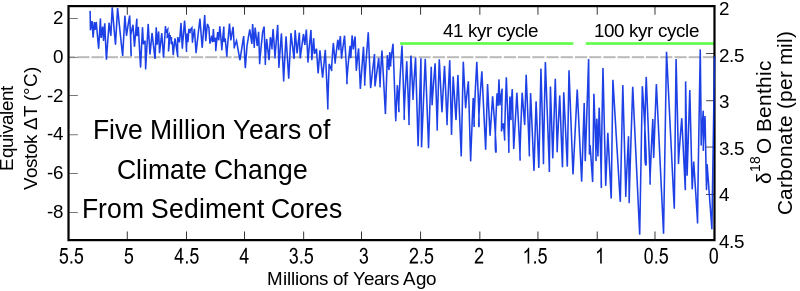
Large animal fossils are extremely glamorous, but often overlooked the largest proportion of fossils we have. The small animal fossils. Animals roughly the size of a grain of sand, such as Forams (phylum foraminifera). Forams are tiny animals that live in the ocean.... trillions of them. Every day vast numbers of forams die and settle down to the deep dark cold sea floor, in the slowly accumulating sediment. Forams have often elaborate mineral "skeletons" called tests. Every day vast numbers of these tests become ideal fossils in the undisturbed see floor sediment. Sediment that very slowly builds up in virtually perfect layers.
Back in the 1970's oil companies developed technology for deep sea oil exploration and started bringing up long exploratory drill cores from the deep seabed. Each drill core was filled with tens of thousands tests. An effectively limitless supply of ideal perfectly layered fossils.
We have a continuous and complete fossil record spanning tens of millions of years for a large chunk of phylum foraminifera. Not merely a continuous and complete record of each transitional species, but a continuous and complete record of all the transitional forms along each species-to-species transition. A continuous and complete record tracing diverse foram species back to a common ancestor.
(Note: The group "forams" is roughly equivalent to the group "mammals". There are herbivores and carnivores and even forams that grow internal algae farms. So when I say "diverse species of forams" traced back to a common ancestor, it's roughly comparable to tracing cows and lions back to a common ancestor.)
But animals the size of a grain of sand aren't glamorous. The fossils look like tiny specks unless you look at them through a low-power microscope. Almost no one has ever heard of "forams". Forams are a type of plankton, and while many people have heard of plankton almost no one knows or cares about it.
So the elephant in the room is that we *do* have a continuous and complete fossil record for a significant chunk of the tree of life. The best possible record a scientist would wish for documenting the fact of evolution in extraordinary detail. And virtually no one has heard of it because it's an incredibly obscure and otherwise unremarkable branch of almost microscopic animals.
The glorious fossil record 19 November 1998:
The fossil record may not be complete for all groups at all times and in all places. But, argues Dr Paul Pearson, when we have reason to believe that it is, the dates that can be assigned to fossils are invaluable for unravelling the paths of evolution.PAUL PEARSON
In The Origin of Species, Charles Darwin lamented that the imperfection of the fossil record detracts from the glory of geology. Fossilization is such a rare and capricious event, our collections are so poor, and sedimentary formations are so full of gaps, that Darwin could not point to a single example where fossils in successive geological strata showed evolution from one species to another.Unknown to Darwin, uninterrupted sedimentation does occur in the open ocean, especially on aseismic ridges and plateaux. These areas experience a continuous rain of particles to the sea bed, and are among the most geologically quiescent places on Earth. A steady build-up of sediment is the result.
Now, after thirty years of systematic ocean drilling, many of these sites can be studied. Piston coring generally allows hundreds of meters of sediment to be fully recovered, spanning millions of years of deposition. Where gaps occur, they can easily be identified.
A co
-
Re:Quantum Cash!
Sure it's just like your other computers. minus all the silicone and transistors.
Let me just repeat this, there is *no* semiconductor in the box, and *no* transistors on the chip.
And yes this is all out in the open and can be read up in Nature, MIT mirror
-
Hawking just said there are no black holes...
Or rather; there are no objects that have exactly the properties, of what we have been calling black holes.
Remember the article in Nature? : according to Hawking's paper : Notion of an 'event horizon', from which nothing can escape, is incompatible with quantum theory, physicist claims.
“There is no escape from a black hole in classical theory,” Hawking told Nature. Quantum theory, however, “enables energy and information to escape from a black hole”. A full explanation of the process, the physicist admits, would require a theory that successfully merges gravity with the other fundamental forces of nature. But that is a goal that has eluded physicists for nearly a century. “The correct treatment,” Hawking says, “remains a mystery.”
-
Re:Contradicts current theory?
They actually coaxed a BEC into "simulating" a magnetic monopole. http://www.nature.com/news/qua...
-
Re:here we go again
It's an estimate with order of magnitude error right there in time and another significant error in CO2 quantity (with a ceiling of 2 PgC incidentally rather than the 1 PgC claimed in the article).
The quote from that review paper is a summary of references 54-56 which are Payne et al. 2010, Wignall 2011 and Shen et al. 2011. The quantities of carbon come from Fig. 3 in Payne et al. 2010, but the 20kyr timespan comes from Shen et al. 2011 where it only refers to the second carbon isotope excursion. The PgC/year range is a summary of all those references' PgC/year estimates, but with each using their own quantities and their own timespans to avoid mixing apples and oranges.
We also don't have a good idea what else was released, which might have been more lethal than the CO2 (for example, sulfates or fluorides).
A few sentences down in Honisch et al. 2012:
"Knoll et al.(59) inferred the preferential survival of taxa with anatomical and physiological features that should confer resilience to reduced carbonate saturation state and hypercapnia (high CO2 in blood) and preferential extinction of taxa that lacked these traits, such as reef builders (32)."
To be consistent with the fossil evidence in Knoll et al. 2007 (PDF), your "more lethal" extinction mechanism would have to have the same marine extinction pattern as that expected from a massive release of CO2. Also, the PETM doesn't have an obvious volcanic culprit but does have a carbon isotope excursion, rapid warming, and a similar (albeit smaller) marine extinction pattern.
Finally, it's worth noting that even if your assertion is complete and accurate, it would take at minimum a millennium for current rates of CO2 production and 13,000 PgC (the lower bound) to put enough CO2 in the atmosphere to match the impact of this extinction event. The upper bound increases that to over four millennia. We should be able to figure things out long before that happens.
Species adapt to climate change by migration and/or evolution, both of which have rate limits past which extinctions become more likely. In light of this, why should the total be more important than the rate?
What is the hurry? Sure, we don't want to run the situation out for a few millennia until we end up in a huge global extinction event. But we can figure things out in far less time than that.
Just suppose the national academies are right to say that we should try to limit global warming to "only" 2C. All else being equal, warming is proportional to cumulative CO2 emissions. Here are three different ways to achieve that. Notice that the longer we wait to address the CO2 problem, the steeper our emissions cuts will have to be.
-
Re: Amp hours per kilogram
According to the description on figure 4, the battery provides 0.5 volts:
EFCs are powered by 500âmM methanol, 7.2% wt/v glucose or 15% wt/v maltodextrin or dehydrated fuels at a voltage of 0.5âV.
Additionally, supplementary table S3 (PDF, page 11 of 14 or PNG) also lists the voltage at 0.5 volts.
-
Re: Amp hours per kilogram
According to the description on figure 4, the battery provides 0.5 volts:
EFCs are powered by 500âmM methanol, 7.2% wt/v glucose or 15% wt/v maltodextrin or dehydrated fuels at a voltage of 0.5âV.
Additionally, supplementary table S3 (PDF, page 11 of 14 or PNG) also lists the voltage at 0.5 volts.
-
Re:Food from mains power: Electrosth of maltodextr
I saw no mention of the usual platinum catalyst, and the summary specifically disclaims the use of such in this method.
Look at the right edge of the diagram. You'll see an oval labeled Pt on the surface of the cathode, serving as the site of a reaction where hydrogen leaving the cell is reacted with atmospheric oxygen to form atmospheric water vapor - achieving the necessary hydrogen gradient to pump the electricity generation. (Alternatively, with the charging current pumping protons IN, the same catalyst would be cracking atmospheric water vapor to provide more, to feed the catalyst's hydrogen affinity and thus the cell, leaving the oxygen to fly away.)
Note that the platinum is not involved in the internal reactions, which are entirely mediated by the 13 enzymes. It's just a handy way to provide a hydrogen source/sink at a roughly fixed concentration, to dump protons during discharge and provide them for charge.
Now even if it IS reversable, perhaps the atmospheric concentration of CO2 and/or water vapor might be a limit on charging rate, leading to the preferred method of "recharge" being injecting the cell with more pure maltodextrin solution of the appropriate strength and running it as a primary fuel cell rather than a rechargable fuel-cell-battery system. But if it makes it past the "valley of death" into production we should know in a few years.
-
Food from mains power: Electrosth of maltodextrin
The reaction is not internally reversible. Once all the accessible sugar has been oxidized, you need new sugar to refuel it. It doesn't recharge.
Where do you get that?
Though the detaied description of the reaction in The Fine Summary of the paper is in terms of the maltodextrin + oxygen -> water + carbon dioxide direction, there's no inherent reason that it can't be run backward with a power input, and the descriptive article speaks as if it can.
I've checked one part: The two enzymes at the start - which convert maltodextrin to glucose 6-phosphate (one stage of the cycle) are both reversable. If the other 11 are, also, you have a complete bidirectional system.
Drive power into the electrodes and you pump in hydrogen cracked from atmospheric water by the platinum catlyist on the atmospheric side of the dilectric membrane - the same catylist that disposes of the hydrogen by burning it with atmospheric oxygen to make water vapor when discharging. Also admit carbon dioxide by the same semi-permiable membrane that you use to dispose of it during discharging. Result: The enzymes synthesize maltodextrin solution from electricity and atmospheric carbon dioxide and water vapor, releasing atmospheric oxygen. It's much like a plant, with the chlorophyl replaced by a membrane, two electrodes, and a platinum catylist.
This brings up an interesting possibility: Electrosynthesys of food, to replace plants. If you can extract the maltodextrin solution without unacceptable loss of the enzymes you have a handy energy input for, say, bio-engineered bacterial synthesys of everything else you need - including replacements for the eventual loss or degredation of the 13 enzymes. Result: Complete drive of a working life support system from any source of electricity.
I can see the "plant rightist" movement already, taking the verse from Leslie Fish's "Fisher's Chant" literally:
And you who feed on nothing but plants
Don't hold your pride so high
For plants are living, and just might feel
And they take so long to die. -
Re:Energy density.
Here is another example of battery tech leaping forward. It won't be tomorrow, but in ten to twenty years we just might have a battery to replace gasoline/petrol. I wouldn't start holding my breath just yet, but to play the "show me" game now and scoff is a bit niaive. Kind of like someone in the 1940s scoffing about a plane going faster than the speed of sound. Just cuz it isn't here today doesn't mean it won't happen ever.
-
Re:Not Just Bees
The cigarette butts at least appears to be because the nicotine repels parasitic mites:
-
Re:Better idea
Mosquitoes are irradiated, not genetically modified.
New experiments that painstakingly injected male mosquito embryos are simply too expensive to use in the field. Surgically injecting a mosquito or a rat does not scale.
In short, they aren't "breeding" sterile males, they have to make them one by one in a laboratory.
Further nobody has ever demonstrated this in a mammal. Further your statement:
The male offspring cannot reproduce, but still compete with the males that can, which provides a slow generational decline (which is important) in population, until the only female mice still in the area are all carrying the dominant gene,
is chock full of magical thinking.
Where did all these female carrier "mice" come from? (The story is about rats, not mice). Were they the *cough* nonexistent offspring of sterile males perhaps?
Nobody has developed any dominant sterility mechanism, because there is this little contradiction in terms that seems to always get in the way. As someone else in the thread said "sterility doesn't breed true", quite simply because it doesn't breed at all. In a free ranging population like rats, even magically sterilizing an entire male population, or some how converting all females to carriers, would simply breed resistant rats as infiltrating non-treated rats would be king of the heap in no time.
Rat control is food source control. Pure and simple.
-
Re:Proof the religion is the true evil.
No offense intended, but most non-native English speakers I know appreciate corrections to their English. The word "movie" explicitly refers to a "feature film." "Video" is the word you are looking for. Other than that, thank you for the informative post.
Hmmm.. Thank you for the correction but your prior is in error.
-
Legalization debate will probably be irrelevant
One thing missed in all of this is that we are close (relatively speaking)[1][2][3] to being able to grow a number of organs. It's entirely likely that this entire debate will a be a footnote in a future wikipedia article.
By the time infrastructure to support organ sales, the associated legislation, and oversight could be put in place, we would probably be well on the way to therapeutic use of many these advances. In the meantime, it could detract from funding and research efforts if there were an inexpensive (in a strictly financial sense) alternative to synthetic organs, which will likely be expensive initially.
1. http://www.npr.org/blogs/health/2013/07/04/198110553/scientists-grow-simple-human-liver-in-a-petri-dish
2. http://www.nature.com/news/2006/060403/full/news060403-3.html
3. http://www.popsci.com/science/article/2013-08/scientists-engineer-lab-grown-heart-tissue-beats-its-own -
Re:Selection bias?
2 more things they need -- luck and money.
Ehrlich summed up the requirements for success in research with the four G’s: Glück (luck), Geduld (patience), Geschick (skill), and Geld (money) (Ehrlich, 1913).
http://www.nature.com/jid/journal/v132/n3-2/full/jid2011475a.html -
Re:Not the sun
Of course, Kool Aid drinkers such as yourself will first have a problem with the link because of the site and completely ignore the linked material, a sign of a partisan and sophomoric imbecile. Once you finally do figure out it's a link to Nature, where one of the Holy Gods of the Church of Global Warming admits to the pause, you will start blathering about unsupported and unreviewed theories, completely reversing previous insistence on peer reviewed material only.
Then why don't you link to the actual Nature article, instead of Watts' cherry-picked sound bite? For that matter, why doesn't Watts link to it himself? The only real information in the Watts post is a graphic of the masthead showing the volume and issue, so it's reasonably easy to track down the article, which is open-access
-
Re:Not a cell
Blame the university's press department, as always. There's quite a jump in hyperbole between the Ange and Nature Chem's comments, versus the press release. Why do journalists even read university press releases any more? You know they're going to be misleading.
-
Re:Real article behind paywall
The fantastic article links to the orginal paper. Maybe you should get another cup yourself.
-
Re:Landmark cancer studies cannot be replicated
Here is the actual article in Nature (because the linked story doesn't actually provide it):
http://www.nature.com/nature/journal/v483/n7391/full/483531a.html
-
Re:More like a reversible fuel cell
Actually there is a 'cathode reactant' tank and an 'anode reactant' tank. Within each tank, charged and discharged versions of the reactant are mixed. (This is shown in figure 1a of the paper: http://www.nature.com/nature/journal/v505/n7482/full/nature12909.html but that link will be pay-walled for most people.)
-
Re:Cancer isn't one disease
Uh plants aren't a good argument. Since plant stuff is a lot more independent and decentralized. One branch in one part of the tree doesn't really need a leaf/branch in another part. You could chop off a branch, stick it into the ground, add water and there's a chance it could survive. You could often stick the branch onto a different (but related) tree and have it grow.
An argument would be blue whales: http://www.nature.com/news/massive-animals-may-hold-secrets-of-cancer-suppression-1.12258
Cells do eventually wear down and cause cancer. But given the huge sizes of whales and their lifespans, they have so many more cells than we do and thus they can't be getting cancer at the same rates (per cell divide) we do.As for not wearing at all, I don't think anyone in their right mind would think we'd ever stop stuff from wearing out. Everything wears out, including the universe. So you'd eventually want to die anyway.
-
Re:More accurate headline
That's a slight bit of a strawman argument. Or whatever it is when you pick the dumbest arguments made by the dumbest, loudest people one one side and write off the entire side. GMOs aren't "unhealthy," you're right. But a lot of people who are concerned about GMO are concerned first about the transgenes spreading. Resistance to glyphosphate is spreading to pests, and transgenes have contaminated other crops. Normal pollution can be cleaned up and doesn't multiply. Polluting the gene pool is much more problematic and should require MUCH higher standards.
A lot of opposition to GMO also has more to do with economics than with health issues. Specifically, I don't want anyone to have a monopoly on food. Monsanto especially, given their past behavior. GMO has a huge advantage over non-GMO, and monsanto is a dominant (if not THE dominant) player in GMO. My fear is that they're going to get us to a monoculture with major foodstocks, changing legislation around the world to fortify their position. As mentioned in the previous links, glyphosphate resistance already exists and is spreading. So we need to buy the next version from Monsanto at increased cost and decreased quality of life for farmers and everyone else.
Your last bit about "once other countries start making their own versions" is flawed I think. Monsanto has been aggressive with their patenting. Other countries aren't going to reinvent the wheel to avoid monsantos patents and still make a product which is competitive.
TLDR, I think you dislike a subset of stupid anti-GMO activists who are, sure, very annoying, but there are still important objections to GMO. -
Re:GMOs feed over a billion people
And yet, no one would say the same of breeding for higher yield or disease resistance, but suddenly when you use technology, it is wrong.
Not "wrong". Untested, unproven, with insufficient research on safety. Also, GM crops have thus far failed to deliver on the higher yield claims: http://www.ucsusa.org/food_and_agriculture/our-failing-food-system/genetic-engineering/failure-to-yield.html
And the farmers, and the people, and the environment.
Well, let's see. Your first link leads to a German academic paper that would cost me 40 bucks in PDF to debunk. But the summary provides a few bar graphs which immediately give the lie to the text -- at best, pesticide use is only *slightly* reduced on Bt cotton.
The third link is an advertisement, full of lies, damned lies, statistics, and weasel language. Its authors, Graham Brookes and Peter Barfoot of
PG Economics Ltd., Dorchester, UK, trace back to here -- http://www.pgeconomics.co.uk/who-we-are.php -- where it says things like: "PG Economics Limited is a specialist provider of advisory and consultancy services to agriculture and other natural resource-based industries. Our specific areas of specialisation are plant biotechnology, agricultural production systems, agricultural markets and policy." and "...on-going management consultancy and advice in the following core areas: Commercialisation of new technology/biotechnology". Translation, in case you didn't catch it: they're selling something.The advertisement's premise is that chemical use is reduced because of herbicide-tolerant GM crops. Sounds great. Except, well... it's bullshit. A quick Google search kicks out 14 million results for "pesticide use up", this one from Reuters at the top: Pesticide use ramping up as GMO crop technology backfires: study The chemical companies are selling more herbicide than ever, because farmers didn't used to spray herbicide on crops because it would fucking kill them! Topping that off, the weeds are developing herbicide resistance... so... now what?
Things look pretty grim when you ignore a lot of facts.
Try harder next time; I've got plenty more ammo.
-
Re:GMOs feed over a billion people
You are basically saying that if the problems of the world were to go away we wouldn't need solutions. That's a pretty vacuous statement.
GMO is a non-solution to a problem that we could much more easily prevent.
And yet, no one would say the same of breeding for higher yield or disease resistance, but suddenly when you use technology, it is wrong.
The only winner in GMO is the patent holder who collects the royalties.
And the farmers, and the people, and the environment. Things look pretty grim when you ignore a lot of facts.
-
Re:The uses of schizophrenia diagnosis ..
I have it. It's brutal. At the same time, there's this strange epicness to it. You see The Order as it was Written for better for worse. It's as if your ego is dispersed everywhere, and everywhere is providing you clues as to who You are. It could be self-produced DMT from the pineal gland. It could be dynamic real-time DNA plasticity (think of this as a psycho-spiritual "reboot" the person undergoes).
This is a one in one hundred disease. The folks who get the disease rarely reproduce. Darwinism would say that it should have bred itself out by now, yet it persists across all cultures with the same genetic lottery ratio.
Want to know what I think it is? Think about primitive cultures and the deity worship similarities between them (The Incas were the people of the Sun in South America, the Egyptians had Ra).
I think psychosis is a physiological human conscious response to electro-magnetic solar phenomenon. The craziest thing, is that there's already evidence that this theory might have legs.
It's like trying to download a much more advanced quantum consciousness into a limited RAM, standard binary human brain.
This is perhaps why some psychotics declare themselves to be Gods or Prophets or Angels.
As one guy in a nuthouse told me a long time ago, "Man, ain't nobody shown me any evidence--any scientific PROOF--that I ain't no angel after all."
Epic.
-
Re:Bad call
Korea also has creationist issues.
Go figure.
http://www.nature.com/news/south-korea-surrenders-to-creationist-demands-1.10773
-
Re:Wait, 3-year ban?
Dream on. In reality no one cares about quality of research these days, its all quantity at this point. Nothing has been done about the 90% of junk (some fake) in vitro cancer studies
-
Re:Erase all button
Something to do with how memory is recalled and then re-remembered
You're probably thinking of the propranolol trial. There has also been promising results with MDMA, also thought to be blocking the re-encoding of bad memories.
aside: submitters - this is Slashdot - you don't have to relate every bit of science to some tangentially related Hollywood movie plot.
-
Re:Technolog
I'm not surprised. It's science, you keep looking and you keep finding new and interesting things. It's not possible to know everything instantly and Greenland is a remote and expensive place to study.
This water is in the firn which occurs down to a depth of around 50 meters before the weight of snow above compresses it to glacial ice which can't hold water like firn. The top of the water table is generally less than 25 meters under the surface (see Figure 2) and can't be deeper than about 50. These aquifers were found in the far south of Greenland near the coast, one of the warmer areas of Greenland. It's unknown as yet if they exist elsewhere but now they know to look for them. I imagine the further north you get the more difficult it would be for them to form.
So you wouldn't likely see this except possibly at the very top of a 2,000 meter+ ice core. Most of those ice cores are drilled from far higher elevations and further north where it doesn't melt much even in summer so there is little water to begin with and in any case the colder temperatures probably cause water that forms to refreeze near the surface. In order for this water/firn mixture to coexist the temperature has to be just right and it wouldn't take much to tip the balance one way or another. If it tipped to warmer I imagine it could lead to rapid collapse of the snow field but we'll just have to wait and see what happens.
-
Polynesians DIDN'T invent binary
http://www.nature.com/news/polynesian-people-used-binary-numbers-600-years-ago-1.14380
>>Cognitive scientist Rafael Nuñez at the University of California, San Diego, points out that the idea of binary systems is actually older than Mangarevan culture. “It can be traced back to at least ancient China, around the 9th century bc”, he says, and it can be found in the I Ching, a millennia-old Chinese text that inspired Leibniz. Nuñez adds that “other ancient groups, such as the Maya, used sophisticated combinations of binary and decimal systems to keep track of time and astronomical phenomena. Thus, the cognitive advantages underlying the Mangarevan counting system may not be unique.” -
Re:They're not being assholes!
-
Re:Holy Biased Presentation Batman!
Cats are an non-native species. The animals native to North America haven't had the time to adapt to predation by cats. And cats have had a huge impact on the bird life on the North American continent. Just because you think it's "an animal" and thus "natural", doesn't mean it actually is.
-
Re:Load of BS as usual about autism.
Environmental bacteria might not be the only factor, bit I think gut bacteria is indeed worth looking into. I remembered an article I read a few weeks ago about infants possibly suppressing their immune systems to let in "good" gut bacteria. Well, what if they also let in some not so good gut bacteria that leads to Autism? Doesn't Autism usually start to show during very early childhood?
-
Check out the detail on the t-shirt!
I don't know about the 3-D aspect, but the level of detail these guys can get back is crazy: http://www.nature.com/news/stealth-camera-takes-pictures-virtually-in-the-dark-1.14260 Compare the t-shirt text in the first and last images. It's almost like those shitty scenes in CSI where information seems to come from nowhere.
-
Re:Healthcare
What you're ignoring is that with our for-profit health care, we also lead development of medical treatments, largely because of the profit incentive. See Nature, April 2007, Price controls seen as key to Europe's drug innovation lag
For those hoping that Europe might be redressing the imbalance in R&D innovation compared with the United States, two recent reports make gloomy reading. According to a competitiveness report published in November 2006 by the European Commission's high-level Pharmaceutical Forum, the US has established itself firmly as the key innovator in pharmaceuticals since 2000.
Also see the New York Times, Poor U.S. Scores in Health Care Don’t Measure Nobels and Innovation.
Advocates of national health insurance cite an apparently devastating fact: the United States spends more of its gross domestic product on medical care than any nation in the world, yet Americans do not live longer than Western Europeans or Japanese. More Americans lack insurance coverage as well. It is no wonder that so many people demand reform.
But the American health care system may be performing better than it seems at first glance. When it comes to medical innovation, the United States is the world leader. In the last 10 years, for instance, 12 Nobel Prizes in medicine have gone to American-born scientists working in the United States, 3 have gone to foreign-born scientists working in the United States, and just 7 have gone to researchers outside the country.
-
Re:'no definitive conclusions can be reached'
Where are the scientific objections to this work
-
Re:'no definitive conclusions can be reached'
Yes, such numbers aren't great for high-statistical-confidence results; but the conclusion should be "more expanded study is needed" rather than "SHUT UP SHUT UP!" whenever an experiment contradicts Monsanto's agenda.
You may be feeling people say that to you a lot, but it's because you are unscientific. Look at the Nature report (linked to earlier), it clearly explains why it was such a bad study. Or do you think Nature is controlled by Monsanto?
If you think that, you would make me smile. -
Re:'no definitive conclusions can be reached'
And, they generally use sample sizes similar to the numbers used in this study under question --- the 200 rats studied was a moderately "ordinary" number by industry standards.
I don't know where you are getting your numbers. Nature reports 20 total rats were used. The Nature article illustrates a number of other problems with the study, please at least become aware of them before further commenting.
-
Re:seems a bit strange
http://www.nature.com/news/rat-study-sparks-gm-furore-1.11471 According to this, the conclusions are unobtainable because of 1) small sample size, 2) inappropriate subjects (cancer prone rats), 3) unusually long study on inappropriate subjects (apparently the rats in question suffer higher than 50% cancer rates after a year) 4) inappropriate experiment methods (grown crops should be tested in a way to predict dosages more accurately)... From the nature article: The authors concede that Sprague-Dawley rats may not be the best model for such long-term studies... They admit the study is flawed. Instead of arguing to keep flawed conclusions they should do the study again with better subjects and methods. As it is, this seems like the flawed and misleading studies of saccharine in the 70s which took 20 years for California to withdraw. http://www.google.com/url?sa=t&rct=j&q=&esrc=s&source=web&cd=10&ved=0CGcQFjAJ&url=http%3A%2F%2Fcancerres.aacrjournals.org%2Fcontent%2F33%2F11%2F2768.full.pdf&ei=edSYUseBG4jooASo-YCwCg&usg=AFQjCNH4Bo7SBZqLpEPwJ8kmBTzQ-sxckg&sig2=sdNk2Isqa6aryZapEUdVnQ&bvm=bv.57155469,d.cGU&cad=rja
-
Rats!
When does ambition or the will to believe begin to look more like fraud?
The biggest criticism from both reviews is that Seralini and his team used only ten rats of each sex in their treatment groups. That is a similar number of rats per group to that used in most previous toxicity tests of GM foods, including Missouri-based Monsanto's own tests of NK603 maize. Such regulatory tests monitor rats for 90 days, and guidelines from the Organization for Economic Co-operation and Development (OECD) state that ten rats of each sex per group over that time span is sufficient because the rats are relatively young. But Seralini's study was over two years --- almost a rat's lifespan --- and for tests of this duration, the OECD recommends at least 20 rats of each sex per group for chemical-toxicity studies, and at least 50 for carcinogenicity studies.
Moreover, the study used Sprague-Dawley rats, which both reviews note are prone to developing spontaneous tumors. Data provided to Nature by Harlan Laboratories, which supplied the rats in the study, show that only one-third of males, and less than one-half of females, live to 104 weeks. By comparison, its Han Wistar rats have greater than 70% survival at 104 weeks, and fewer tumors. OECD guidelines state that for two-year experiments, rats should have a survival rate of at least 50% at 104 weeks. If they do not, each treatment group should include even more animals --- 65 or more of each sex.
''There is a high probability that the findings in relation to the tumor incidence are due to chance, given the low number of animals and the spontaneous occurrence of tumors in Sprague-Dawley rats,'' concludes the EFSA report. In response to the EFSA's assessment, the European Federation of Biotechnology --- an umbrella body in Barcelona, Spain, that represents biotech researchers, institutes and companies across Europe --- called for the study to be retracted, describing its publication as a ''dangerous case of failure of the peer-review system.."
Yet Seralini has promoted the cancer results as the study's major finding, through a tightly orchestrated media offensive that began last month and included the release of a book and a film about the work. Only a select group of journalists (not including Nature) was given access to the embargoed paper, and each writer was required to sign a highly unusual confidentiality agreement, seen by Nature, which prevented them from discussing the paper with other scientists before the embargo expired.
Hyped GM maize study faces growing scrutiny [Oct 2012]
-
Faking stuff may have been a habit
Take a look at the Prof Sanna's ratings as a teacher: sounds like a real asset to the faculty, right?
Now notice when most of the flattering reviews were posted.
Now look at when Sanna resigned.
-
Re:Further proof that anti-GMO is all about the mo
The whole anti-GMO "movement" is funded in large part by the organic food industry. Finding themselves unable to win the race for consumer's hard-earned money by being better than their competition, the organic food industry is trying to win by tripping the other runners.
No: it has been found that the yield of GMO crops is not better then that of classical crops. Unfortunately, the original article is behind a pay wall.