Slashdot Mirror
Domain: nature.com
Stories and comments across the archive that link to nature.com.
Stories · 1,757
-
Research Shows How Deaf Cats' Brains Re-Purpose Auditory Centers
An anonymous reader writes "Deaf or blind people often report enhanced abilities in their remaining senses, but up until now, no one has explained how and why that could be. Researchers at the University of Western Ontario, led by Stephen Lomber of The Centre for Brain and Mind, have discovered there is a causal link between enhanced visual abilities and reorganization of the part of the brain that usually handles auditory input in congenitally deaf cats. The findings, published online in Nature Neuroscience, provide insight into the plasticity that may occur in the brains of deaf people." -
Why Geim Never Patented Graphene
gbrumfiel writes "As we discussed on Tuesday, Andre Geim won this year's Nobel prize in physics for graphene, but he never patented it. In an interview with Nature News, he explains why: 'We considered patenting; we prepared a patent and it was nearly filed. Then I had an interaction with a big, multinational electronics company. I approached a guy at a conference and said, "We've got this patent coming up, would you be interested in sponsoring it over the years?" It's quite expensive to keep a patent alive for 20 years. The guy told me, "We are looking at graphene, and it might have a future in the long term. If after ten years we find it's really as good as it promises, we will put a hundred patent lawyers on it to write a hundred patents a day, and you will spend the rest of your life, and the gross domestic product of your little island, suing us." That's a direct quote.'" -
Two Research Groups Create 'Electric Skin'
Flash Modin writes "Two separate teams, one from UC Berkeley and the other from Stanford, have created distinct types of artificial skin that could find uses in prosthetics or artificial intelligence (Data in First Contact, anyone?). The first team coupled organic electronics with an elastic polymer to make electric skin that could sense a butterfly landing on it (abstract). The second team put a flexible material over a conductive rubber compound which had transistors implanted in it. The device can sense touch when the rubber is compressed, changing the electrical resistance (abstract)." -
Two Research Groups Create 'Electric Skin'
Flash Modin writes "Two separate teams, one from UC Berkeley and the other from Stanford, have created distinct types of artificial skin that could find uses in prosthetics or artificial intelligence (Data in First Contact, anyone?). The first team coupled organic electronics with an elastic polymer to make electric skin that could sense a butterfly landing on it (abstract). The second team put a flexible material over a conductive rubber compound which had transistors implanted in it. The device can sense touch when the rubber is compressed, changing the electrical resistance (abstract)." -
Hackers Eavesdrop On Quantum Crypto With Lasers
Martin Hellman writes "According to an article in Nature magazine, quantum hackers have performed the first 'invisible' attack on two commercial quantum cryptographic systems. By using lasers on the systems — which use quantum states of light to encrypt information for transmission —' they have fully cracked their encryption keys, yet left no trace of the hack.'" -
Tool Use By Humans Pushed Back By 800,000 Years
gpronger writes "The journal Nature reports that newly discovered tool marks on bones indicates that we were using tools at minimum 800,000 years earlier than previously thought. This places the start of tool use at 3.4 million years ago or earlier. The most likely ancestor in this time frame would be Australopithecus afarensis. The researchers, led by palaeoanthropologist Zeresenay Alemseged of the California Academy of Science, San Francisco,and Shannon McPherron, (an archaeologist at the Max Planck Institute for Evolutionary Anthropology in Leipzig, Germany) state that cut marks on the bones of an impala-sized creature and another closer in size to a buffalo, indicate butchering of the animals by our distant ancestors. However, they do not believe that they were in fact hunters, more likely scavenging the remains left behind by large predators." -
Highly Directional Terahertz Laser Demonstrated
eldavojohn writes "A new paper published this week in the journal Nature Materials announces a successful demonstration of highly directional terahertz semiconductor lasers. You might not think it's a big deal that some Harvard and University of Leeds researchers (funded partially by the US Air Force) figured out how to better direct lasers; but this means the ability to see what's in someone's pockets and clothing, at a distance of possibly hundreds of meters, or farther. The big benefit is that they are lower in energy than X-Rays and are less invasive, since they cannot pass through water or metal. Coming soon to an airport near you or buzzing around on board a drone in civilian airspace?" -
Stanford's New Solar Tech Harnesses Heat, Light
An anonymous reader writes with this excerpt from a Stanford news release: "Stanford engineers have figured out how to simultaneously use the light and heat of the sun to generate electricity in a way that could make solar power production more than twice as efficient as existing methods and potentially cheap enough to compete with oil. Unlike photovoltaic technology currently used in solar panels — which becomes less efficient as the temperature rises — the new process excels at higher temperatures. ... 'This is really a conceptual breakthrough, a new energy conversion process, not just a new material or a slightly different tweak,' said Nick Melosh, an assistant professor of materials science and engineering, who led the research group. 'It is actually something fundamentally different about how you can harvest energy.' And the materials needed to build a device to make the process work are cheap and easily available, meaning the power that comes from it will be affordable." The abstract for the researchers' paper is available at Nature. -
Rat Lung Successfully Regenerated and Transplanted
Dr. Eggman writes "Nature Medicine brings us news of the latest success in the regeneration of the gas exchanging tissues [abstract is free; the full paper requires subscription or payment] of the lungs of a rat. Led by Harald C. Ott, researchers from Massachusetts General Hospital and Harvard Medical School in Boston used decellularization to produce a cellular scaffolding to serve as the basis of the transplant lungs. You may recall the previous achievements in use of this cellular scaffolding technique by Yale University. This latest announcement comes with the excellent news that the rat's airway and respiratory muscles performed the necessary ventilation (as a normal rat's would), and that they provided gas exchange for up to 6 hours after extubation, up from the previous 2 hours. They eventually failed due to capillary leakage resulting in the accumulation of fluids in the lungs. Although there's much work to be done, as not all the cell types found in the lung were regenerated, Ott and his team remain optimistic and estimated we might see regenerated organs for use in human patients within 5 to 10 years." PhysOrg has videos of the lungs doing their thing. -
The Hobby of Energy Secretary Steven Chu
quanminoan writes "Nobel Laureate and US Secretary of Energy Steven Chu has continued to publish even while in federal office. While previous research topics include gravitational redshift, Chu has coauthored a paper entitled 'Subnanometre single-molecule localization registration and distance measurements' which discusses a way to optically image objects as small as 0.5 nm — a major step down from the previous limit of 10 nm. Chu does this in his free time, claiming 'I just consider it my equivalent of ... vegging out in front of the TV.'" -
Black Hole Emits a 1,000-Light-Year-Wide Gas Bubble
PhrostyMcByte writes "12 million light-years away, in the outer spiral of galaxy NGC 7793, a bubble of hot gas approximately 1,000 light-years in diameter can be found shooting out of a black hole — one of the most powerful jets of energy ever seen. (Abstract available at Nature.) The bubble has been growing for approximately 200,000 years, and is expanding at around 1,000,000 kilometers per hour." -
The Proton Just Got Smaller
inflame writes "A new paper published in Nature has said that the proton may be smaller than we previously thought. The article states 'The difference is so infinitesimal that it might defy belief that anyone, even physicists, would care. But the new measurements could mean that there is a gap in existing theories of quantum mechanics. "It's a very serious discrepancy," says Ingo Sick, a physicist at the University of Basel in Switzerland, who has tried to reconcile the finding with four decades of previous measurements. "There is really something seriously wrong someplace."' Would this indicate new physics if proven?" -
Kepler Mission Finds 752 Extrasolar Planet Candidates
An anonymous reader lets us know about the initial release of data from the Kepler spacecraft, launched in the spring of 2009, which has been hunting extrasolar planets. The instrument has found 752 candidates to examine in its first 43 days of operation. This is exciting news, because even if only half of the possibilities pan out as exoplanets (as the Kepler team expects) the results would still almost double the count of known planets. And some of the new ones could be Earth-sized, or not too much larger. Controversy has erupted however because NASA has decided to allow the Kepler team to withhold 400 of the best candidates for its own examination, releasing about 350 others to the worldwide community. The reasons for this are complicated and the New York Times does a good job of digging into the issue of proprietary vs. public data. Nature.com first reported two months ago on the decision to hold back some of the data. -
ITER Fusion Reactor Enters Existential Crisis
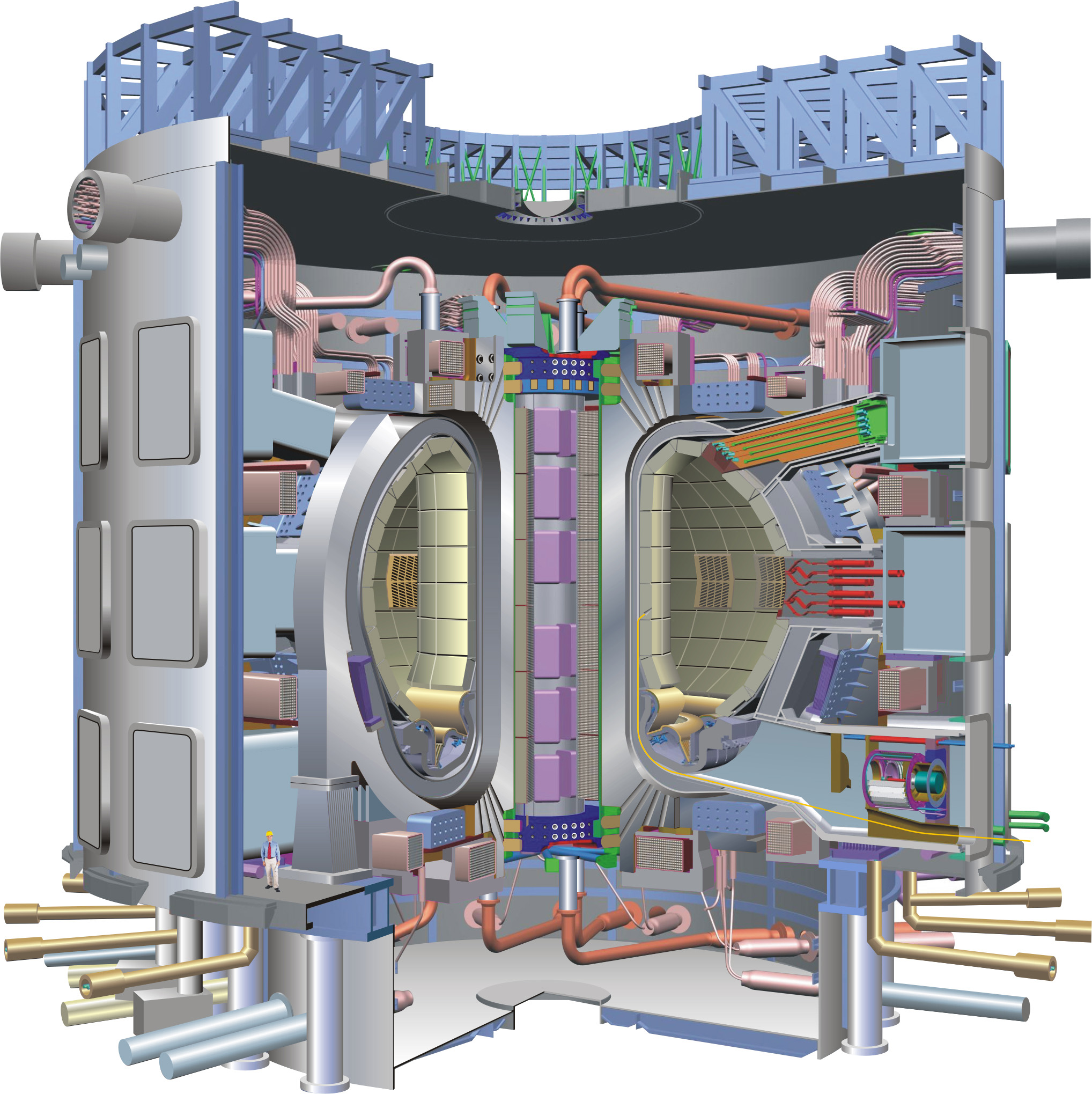
deglr6328 writes "The long beleaguered experimental magnetic confinement fusion reactor ITER is currently in what some are calling the worst crisis of its 25 year history. Still existing only on the paper of thousands of proposed design documents, the latest cost estimates for the superconducting behemoth are soaring to nearly 20 billion USD — roughly twice the estimates from as recently as a few years ago. Anti-nuclear environmentalist organizations have seized upon the moment as an opportunity to use the current global economic crisis as a means to push for permanently killing the project. If ITER is not built, the prospect of magnetic confinement fusion as a technique to reach thermonuclear breakeven and ignition in the laboratory would be in serious question. Meanwhile, the largest laser-driven inertial confinement fusion project, the National Ignition Facility, has demonstrated the ability to use self-generated plasma optical gratings to control capsule implosion symmetry with high finesse, and is on schedule to achieve ignition and potentially high gain before the end of the year." -
The Men Who Stare At Airline Passengers, Coming To the UK
An anonymous reader writes, "The Economist's Gulliver reports on a story in Nature that questions the current airport security regimen," excerpting: "Over the past four years, some 3,000 officers in America's Transportation Security Administration (TSA) have been specially trained to spot potential terrorists at airports. The programme, known as SPOT, for Screening Passengers by Observation Technique, is intended to allow airport security officers to use tiny facial cues to identify people who are acting suspiciously. The British government is currently launching a new screening regime modelled on the Americans' SPOT. There's just one problem with all this: there's no evidence that SPOT is actually effective. The whole thing is mostly based on pseudoscience, Sharon Weinberger reports in Nature." Happily, Nature's original article is available in full, rather than paywalled. -
Possible Breakthrough In Hydrogen Energy
destinyland writes "MIT researchers have developed a method of splitting a water molecule by emulating the way blue-green algae separates oxygen from hydrogen. One chemistry professor called it 'an extremely clever piece of work' that addresses 'the nanoscale organization of the components.' Using sunlight rather than electricity to make hydrogen from water could greatly improve the efficiency of the process. The hydrogen can be stored for generating electricity or burned as fuel for cars. The project is being led by the winner of a 2004 MacArthur Foundation genius grant, who uses genetically engineered viruses as templates for nanoscale electronic components. 'Suddenly, I wondered, what if we could assemble materials like the abalone does — but not be limited to one element?'" Here is the press release from MIT; the research paper is available only to subscribers of Nature Nanotechnology (or those willing to part with $18). -
UK University Researchers Must Make Data Available
Sara Chan writes "In a landmark ruling, the UK's Information Commissioner's Office has decided that researchers at a university must make all their data available to the public. The decision follows from a three-year battle by mathematician Douglas J. Keenan, who wants the data to do his own analysis on it. The university researchers have had the data for many years, and have published several papers using the data, but had refused to make the data available. The data in this case pertains to global warming, but the decision is believed to apply to any field: scientists at universities, which are all public in the UK, can now not claim data from publicly-funded research as their private property." There's more at the BBC, at Nature Climate Feedback, and at Keenan's site. -
The Fruit Fly Drosophila Gets a New Name
G3ckoG33k writes "The name of the fruit fly Drosophila melanogaster will change to Sophophora melangaster. The reason is that scientists have by now discovered some 2,000 species of the genus and it is becoming unmanageably large. Unfortunately, the 'type species' (the reference point of the genus), Drosophila funebris, is rather unrelated to the D. melanogaster, and ends up in a distant part of the relationship tree. However, geneticists have, according to Google Scholar, more than 300,000 scientific articles describing innumerable aspects of the species, and will have to learn the new name as well as remember the old. As expected, the name change has created an emotional (and practical) stir all over media. While name changes are frequent in science, as they describe new knowledge about relationships between species, these changes rarely hit economically relevant species, and when they do, people get upset." -
Long-Running Underwater Robot Lost At Sea
this_boat_is_real writes "Somewhere off the coast of Chile a pioneering underwater robot named Abe lies in a watery grave today. The Autonomous Benthic Explorer was one of the first truly independent research submersibles, being both unmanned and un-tethered to its launching ship. While on its 222nd research dive on Friday all contact with the craft was lost, the Woods Hole Oceanographic Institution has announced." -
Pharma Marketing Faces a Character-Count Conundrum
this_boat_is_real writes "There's growing concern over how pharmaceutical companies use social media and the Internet to market their products. Last November, the US Food and Drug Administration held a hearing on the topic, and many were worried over how marketing mediums such as Twitter — which has a 140-character limit on text — can sufficiently disclose drug risks." Here's the FDA's announcement about last year's hearings, which includes links to an archive of presentations as well as a video record of the meeting. -
MIT Scientists Make a Polyethylene Heatsink
arcticstoat calls our attention to MIT research that has produced a version of polyethylene that can conduct heat away from computer chips. Polyethylene is the most widely used plastic. It's not clear how practical this research is for industrial-scale use, involving as it does an atomic-force microscope. The work is detailed in a paper published in Nature Nanotechnology this month. "The new process causes the polymer to conduct heat very efficiently in just one direction, unlike metals, which conduct equally well in all directions. ... The key to the transformation was getting all the polymer molecules to line up the same way, rather than forming a chaotic tangled mass, as they normally do. The team did that by slowly drawing a polyethylene fiber out of a solution, using the finely controllable cantilever of an atomic-force microscope, which they also used to measure the properties of the resulting fiber. This fiber was about 300 times more thermally conductive than normal polyethylene along the direction of the individual fibers, says the team’s leader..." -
Half-Male, Half-Female Fowl Explain Birds' Sex Determination
Kanan excerpts from a BBC report out of Scotland: "A study of sexually scrambled chickens suggests that sex in birds is determined in a radically different way from that in mammals. Researchers studied three chickens that appeared to be literally half-male and half-female, and found that nearly every cell in their bodies — from wattle to toe — has an inherent sex identity. This cell-by-cell sex orientation contrasts sharply with the situation in mammals, in which organism-wide sex identity is established through hormones." Kanan also supplies this link to some pictures of the mixed-cell birds. -
US Government Poisoned Alcohol During Prohibition
Hugh Pickens writes "Pulitzer Prize-winning science journalist Deborah Blum has an article in Slate about the US government's mostly forgotten policy in the 1920s and 1930s of poisoning industrial alcohols manufactured in the US to scare people into giving up illicit drinking during Prohibition. Known as the 'chemist's war of Prohibition,' the federal poisoning program, by some estimates, killed at least 10,000 people between 1926 and 1933. The story begins with ratification of the 18th Amendment in 1919, which banned sale and consumption of alcoholic beverages in the US. By the mid-1920s, when the government saw that its 'noble experiment' was in danger of failing, it decided that the problem was that readily available methyl (industrial) alcohol — itself a poison — didn't taste nasty enough. The government put its chemists to work designing ever more unpalatable toxins — adding such chemicals as kerosene, brucine (a plant alkaloid closely related to strychnine), gasoline, benzene, cadmium, iodine, zinc, mercury salts, nicotine, ether, formaldehyde, chloroform, camphor, carbolic acid, quinine, and acetone. In 1926, in New York City, 1,200 were sickened by poisonous alcohol; 400 died. The following year, deaths climbed to 700. These numbers were repeated in cities around the country as public-health officials nationwide joined in the angry clamor to stop the poisoning program. But an official sense of higher purpose kept it in place, while lawmakers opposed to the plan were accused of being in cahoots with criminals and bootleggers. The chief medical examiner of New York City during the 1920s, one of the poisoning program's most outspoken opponents, liked to call it 'our national experiment in extermination.'" -
Falcon 9 Prepares For High Stakes Launch
happylunarnewyear writes "The first new rocket to be launched from the Cape since 2002 is assembled and upright on Launch Complex 40. Falcon 9 will undergo fueling testing and live firing tests before the launch occurs as soon as next month. The stakes couldn't be higher, either. The much politicized proposal for a change in direction for NASA, which includes scrapping the Constellation program in toto in favor of privatization and a new heavy lift vehicle, veritably rides on this rocket. If the launch goes well, the plan for increased reliance on privatized cargo missions and eventually privatized manned missions will soar with it. However if something goes wrong, those plans will come crashing to Earth along with Falcon 9. Given the stakes, this launch is one of the most important in recent history. From the article, 'President Obama's proposal to shift transport of US astronauts to the space station from government launchers to privatized ones could suffer politically if there's a high-profile problem with the first mission of the Falcon 9, by far the most talked-about newcomer vying for the opportunity.'" Reader FleaPlus contributes related news about NASA's proposed funding for scientific payloads on commercial space flights, which would be a huge boon to researchers. -
High-Speed Video Free With High-Def Photography
bugzappy notes a development out of the University of Oxford, where scientists have developed a technology capable of capturing a high-resolution still image alongside very high-speed video. The researchers started out trying to capture images of biological processes, such as the behavior of heart tissue under various circumstances. They combined off-the-shelf technologies found in standard cameras and digital movie projectors. What's new is that the picture and the video are captured at the same time on the same sensor. This is done by allowing the camera's pixels to act as if they were part of tens, or even hundreds, of individual cameras taking pictures in rapid succession during a single normal exposure. The trick is that the pattern of pixel exposures keeps the high-resolution content of the overall image, which can then be used as-is, to form a regular high-res picture, or be decoded into a high-speed movie. The research is detailed in the journal Nature Methods (abstract only without subscription). -
"Normal" Prions May Protect Myelin
thomst writes "Nature Neuroscience just published an online article about the function of 'normal' prions in protecting myelin, the substance that sheathes and protects sensory and motor nerves. The international study (which has 11 authors) concluded that 'normal' (i.e., not mis-folded) prions may form a protective coat around myelin. The researchers found that Prnp -/- mice (mice with the gene for prions knocked out) consistently developed progressive demyelination, inevitably leading to persistent polyneuropathy by 60 weeks of age. Their data suggest that damage to myelin sheaths cause normal prions to cleave, and the resulting prion fragments activate Schwann cells, which are known to play a part in myelin repair. This research might eventually lead to possible treatments for progressive polyneuropathies in humans, including those mediated by Creutzfeldt-Jakob disease, multiple sclerosis, Alzheimer's, and even diabetes." -
Insurgent Attacks Follow Mathematical Pattern
Hugh Pickens writes "Nature reports that data collected on the timing of attacks and number of casualties from more than 54,000 events across nine insurgent wars, including those fought in Iraq between 2003 and 2008 and in Sierra Leone between 1994 and 2003, suggest that insurgencies have a common underlying pattern that may allow the timing of attacks and the number of casualties to be predicted. By plotting the distribution of the frequency and size of events, the team found that insurgent wars follow an approximate power law, in which the frequency of attacks decreases with increasing attack size to the power of 2.5. This means that for any insurgent war, an attack with 10 casualties is 316 times more likely to occur than one with 100 casualties (316 is 10 to the power of 2.5). 'We found that the way in which humans do insurgent wars — that is, the number of casualties and the timing of events — is universal,' says team leader Neil Johnson, a physicist at the University of Miami in Florida. 'This changes the way we think insurgency works.' To explain what was driving this common pattern, the researchers created a mathematical model which assumes that insurgent groups form and fragment when they sense danger, and strike in well-timed bursts to maximize their media exposure. Johnson is now working to predict how the insurgency in Afghanistan might respond to the influx of foreign troops recently announced by US President Barack Obama. 'We do observe a complicated pattern that has to do with the way humans do violence in some collective way,' adds Johnson." -
Insurgent Attacks Follow Mathematical Pattern
Hugh Pickens writes "Nature reports that data collected on the timing of attacks and number of casualties from more than 54,000 events across nine insurgent wars, including those fought in Iraq between 2003 and 2008 and in Sierra Leone between 1994 and 2003, suggest that insurgencies have a common underlying pattern that may allow the timing of attacks and the number of casualties to be predicted. By plotting the distribution of the frequency and size of events, the team found that insurgent wars follow an approximate power law, in which the frequency of attacks decreases with increasing attack size to the power of 2.5. This means that for any insurgent war, an attack with 10 casualties is 316 times more likely to occur than one with 100 casualties (316 is 10 to the power of 2.5). 'We found that the way in which humans do insurgent wars — that is, the number of casualties and the timing of events — is universal,' says team leader Neil Johnson, a physicist at the University of Miami in Florida. 'This changes the way we think insurgency works.' To explain what was driving this common pattern, the researchers created a mathematical model which assumes that insurgent groups form and fragment when they sense danger, and strike in well-timed bursts to maximize their media exposure. Johnson is now working to predict how the insurgency in Afghanistan might respond to the influx of foreign troops recently announced by US President Barack Obama. 'We do observe a complicated pattern that has to do with the way humans do violence in some collective way,' adds Johnson." -
Scientific Journal Nature Finds Nothing Notable In CRU Leak
eldavojohn writes with an update to the CRU email leak story we've been following for the past two weeks. The peer-reviewed scientific journal Nature has published an article saying the emails do not demonstrate any sort of "scientific conspiracy," and that the journal doesn't intend to investigate earlier papers from CRU researchers without "substantive reasons for concern." The article notes, "Whatever the e-mail authors may have said to one another in (supposed) privacy, however, what matters is how they acted. And the fact is that, in the end, neither they nor the IPCC suppressed anything: when the assessment report was published in 2007 it referenced and discussed both papers." Reader lacaprup points out related news that a global warming skeptic plans to sue NASA under the Freedom of Information Act for failing to deliver climate data and correspondence of their own, which he thinks will be "highly damaging." Meanwhile, a United Nations panel will be conducting its own investigation of the CRU emails. -
Hunt For Earth-Like Planets Delayed
An anonymous reader sends along this excerpt from Nature News: "Kepler, NASA's mission to search for planets around other stars, will not be able to spot an Earth-sized planet until 2011, according to the mission's team. The delays are caused by noisy amplifiers in the telescope's electronics. ... The problem is caused by amplifiers that boost the signals from the charge-coupled devices that form the heart of the 0.95-metre telescope's 95-million-pixel photometer, which detects the light emitted from the distant stars. Three of the amplifiers are creating noise that compromises Kepler's view. The noise affects only a small portion of the data, Borucki says, but the team has to fix the software — it would be 'too cumbersome' to remove the bad data manually — so that it accounts for the noise automatically. He says that the fix should be in place by 2011." Mindful of Halloween's approach, NASA has put up a piece looking at some of the already-known exoplanets that wouldn't be very friendly to human life. -
Observing Evolution Over 40,000 Generations
Last year we discussed the work of Richard Lenski, who has been breeding E. coli for 21 years in a laboratory in Michigan. Then, the news was that Lenski's lab had caught direct, reproducible evidence of a genetic mutation with functional consequences for an organism. Now Lenski's lab has published in Nature a major study comparing adaptive and random genetic changes in 40,000 generations of E. coli (abstract here). "Early changes in the bacteria appeared to be largely adaptive, helping them be more successful in their environment. 'The genome was evolving along at a surprisingly constant rate, even as the adaptation of the bacteria slowed down,' [Lenski] noted. 'But then suddenly the mutation rate jumped way up, and a new dynamic relationship was established.' By generation 20,000, for example, the group found that some 45 genetic mutations had occurred, but 6,000 generations later a genetic mutation in the metabolism arose and sparked a rapid increase in the number of mutations so that by generation 40,000, some 653 mutations had occurred. Unlike the earlier changes, many of these later mutations appeared to be more random and neutral. The long-awaited findings show that calculating rates and types of evolutionary change may be even more difficult to do without a rich data set." -
Scientists Use Quake 2 To Study the Brains of Mice
An anonymous reader writes "In this week's issue of Nature, scientists from Princeton University trained mice to navigate around a virtual environment using a setup that resembles a combination of a giant trackball and a mini-iMax theater displaying a virtual world rendered using a modified version of the Quake 2 open source game engine. (Here's the academic paper, subscription required.) They hold the mouse's head still atop a giant trackball, which the mouse turns by running. The scientists use the rotations to move the mouse around in the virtual environment, and when he reaches certain places, he gets a reward. Because they are able to hold the head still, they can stick microscopic glass electrodes into individual neurons in the hippocampus of this mouse as it 'navigates.' They find the neural activity that resembles activity during real life navigation, and learned new things about the inputs and computations that are going on inside these neurons, which weren't known before. No word as of yet whether the scientists plan on giving the mice control of the gun. Wonder whether John Carmack ever envisioned this when he opened up the Quake code?" -
Melting Memory Chips In Mass Production
chill writes "Nature is reporting that 'South Korean manufacturer Samsung Electronics announced this week that it has begun mass production of a new kind of memory chip that stores information by melting and freezing tiny crystals. Known as phase-change memory (PCM), the idea was first proposed by physicists in the 1960s.' With transistor-equivalent cells only 20 nm wide, switching time is around 16 ns. The first target market is cell phones, but the companies behind the technology see applications in PCs, servers, and other devices as well." -
Vegetative Patients Can Still Learn
enigma48 writes to mention that a collaborative study between the Universities of Buenos Aires and Cambridge have demonstrated that individuals in a vegetative state can still learn and demonstrate at least a partial consciousness. Their findings are reported in a recent online edition of Nature Neuroscience. "It is the first time that scientists have tested whether patients in vegetative and minimally conscious states can learn. By establishing that they can, it is believed that this simple test will enable practitioners to assess the patient's consciousness without the need of imaging. The abstract is also available in the advance issue of Nature." -
Paraplegic Rats Enabled To "Walk" Again
eldavojohn notes a paper released in Nature Neuroscience today describing work in which paraplegic rats were enabled to walk again as early as a week after injury and treatment. The process involves a serotonin-influencing drug and electrical stimulation of the spine, along with an incentive to the paralyzed back legs to move — namely, being placed on a treadmill. Soon a poorly understood spinal mechanism called the "central pattern generator" kicks in and the rats' legs move under the stimulus of a rhythmic signal from the spine (the brain is not involved). Eurekalert reports, "Daily treadmill training over several weeks eventually enabled the rats to regain full weight-bearing walking, including backwards, sideways and at running speed. However, the injury still interrupted the brain's connection to the spinal cord-based rhythmic walking circuitry, leaving the rats unable to walk of their own accord." -
Liposuction Leftovers Make Easy Stem Cells
uuddlrlrab sends along this quote from a report in Nature: "The Stanford researchers used liposuction to extract a couple liters of fat from the bellies of four overweight individuals aged 40 to 65. They then treated the tissue to remove all the gooey, globular fat, leaving behind a collection of fat tissue stem cells. Unlike standard techniques, which require about a month to culture skin biopsies to populations large enough for the reprogramming process, the fat tissue was ready to go after two days of pretreatment. What's more, the cellular reprogramming took only two more weeks and was 20-times more efficient than when converting fibroblasts using the same technique. 'We basically shave off six to eight weeks compared to what the other guys are doing with fibroblasts,' says [Stanford's Joseph Wu], who is now working to find safer ways to reprogram fat without using viruses." -
"Overwhelming" Evidence For Magnetic Monopoles
Thorfinn.au sends along big physics news: magnetic monopoles have been detected at low temperatures in "Dirac strings" within a single crystal of Dysprosium Titanate. Two papers are being published today in the journal Science and two more on arXiv.org, as yet unpublished, provide further evidence. "Theoretical work had shown that monopoles probably exist, and they have been measured indirectly. But the Science papers are the first direct experiments to record the monopole's effects on the spin-ice material. The papers use neutrons to detect atoms in the crystal aligned into long daisy chains. These daisy chains tie each north and south monopole together. Known as 'Dirac strings,' the chains, as well as the existence of monopoles, were predicted in the 1930s by the British theoretical physicist Paul Dirac. Heat measurements in one paper also support the monopole argument. The two, as yet unpublished, papers on arXiv add to the evidence. The first provides additional observations, and the second uses a new technique to determine the magnetic charge of each monopole to be 4.6x10⁻¹³ joules per tesla metre. All together, the evidence for magnetic monopoles 'is now overwhelming,' says Steve Bramwell, a materials scientist at University College London and author on one of the Science papers and one of the arXiv papers." -
IBM Scientists Build Computer Chips From DNA
snydeq writes "Scientists at IBM are experimenting with using DNA molecules as a way to create tiny circuits that could form the basis of smaller, more powerful computer chips. The technique builds on work done by Cal Tech's Paul Rothemund, who found that DNA molecules can be made to 'self-assemble' into tiny forms [PDF] such as triangles, squares and stars. 'To make a chip, the scientists first create lithographic templates using traditional chip making techniques. After, they pour a DNA solution over the surface of the silicon and the tiny triangles and squares — what the scientists call DNA origami — line themselves up to the patterns etched out using lithography.' DNA-based chips may sound like crackpot tech, but those involved believe the methodology could lead to a new way of fabricating features on the surface of chips that allows semiconductors to be made even smaller, faster and more power-efficient than they are today." -
Neuron Path Discovery May Change Our Conception of Itching
Hugh Pickens writes "Historically, many scientists have regarded itching as just a less intense version of pain, though decades spent searching for itch-specific nerve cells have been unfruitful. Now, Nature reports that neuroscientist Zhou-Feng Chen and his colleagues at Washington University in St. Louis, Missouri have found the first behavioral evidence that there are separate circuits of nerve cells to convey itchiness and pain, and their studies suggest that itch and pain signals are transmitted along different pathways in the spinal cord. 'Most people accept that there are specific, highly specialized neurons for sensations like taste,' says Chen. 'But for pain and itch this is much more controversial.'" (Continues below.) "Two years ago, Chen's group discovered that a cell-surface protein called the gastrin-releasing peptide receptor (GRPR) is important for sensing itchiness but not pain in mice. When Chen and his colleagues destroyed GRPR-bearing neurons by means of a cell toxin, the mice reacted to painful stimuli just like normal mice, licking themselves and flinching or jumping in response to heat, highly irritant chemicals and mechanical pressure. But when the researchers injected the animals with chemicals that normally cause scratching, such as histamine, they barely responded, and the greater the number of GRPR-expressing neurons destroyed, the more subdued was the scratching response." -
US Military Blocks Data On Incoming Meteors
Hugh Pickens writes "Nature reports that the US military has abruptly ended an informal arrangement that allowed scientists access to data on incoming meteors from classified surveillance satellites, dealing a blow to the astronomers and planetary scientists who used the information to track space rocks. 'These systems are extremely useful,' says astronomer Peter Brown, at the University of Western Ontario. 'I think the scientific community benefited enormously.' Meteor data came from the Defense Support Program (DSP) satellite network consisting of infrared satellites in geosynchronous orbit to monitor the globe for missile launches or atmospheric nuclear blasts, forming the principal component of the United States' ballistic missile early-warning system. The satellites' effectiveness was demonstrated during Desert Storm, when DSP detected the launch of Iraqi Scud missiles and provided warning to civilian populations and coalition forces in Israel and Saudi Arabia. As a side benefit, the satellites could also precisely detect the time, position, altitude and brightness of meteors as they entered Earth's atmosphere, information the military didn't consider particularly useful, or classified. 'It was being dropped on the floor,' says former Air Force captain Brian Weeden. Although the reason for ending the arrangement remains unclear, Weeden notes that it coincides with the launch of a new generation of surveillance satellites and speculates that the Pentagon may not want details of the new satellites' capabilities to be made public, or it may simply lack the expensive software needed to handle classified and declassified data simultaneously. 'The decision may have been made that it was perhaps too difficult to disclose just these data.'" -
French Fusion Experiment Delayed Until 2025 or Beyond
An anonymous reader writes "The old joke is that fusion is the power of the future and always will be. But it's not looking so funny for ITER, an EU10 billion fusion experiment in France. According to Nature News, ITER will not conduct energy-producing experiments until at least 2025 — five years later than what had been previously agreed to. The article adds that the reactor will cost even more than the seven parties in the project first thought:'...Construction costs are likely to double from the 5-billion (US$7-billion) estimate provided by the project in 2006, as a result of rises in the price of raw materials, gaps in the original design, and an unanticipated increase in staffing to manage procurement. The cost of ITER's operations phase, another 5 billion over 20 years, may also rise.'" -
"DNA Origami" Could Allow For Controlled Drug Delivery
esinclair writes "As reported in Nature News, researchers have designed a method which allows DNA strands to be formed into cubes and other designs by oligonucleotides. The uses of this DNA origami are still being developed. One possibility for them is to be used as a drug-delivery system. The fact that scientists have also come up with a method to lock these structures and use 'keys' to unlock them would conceivably allow for a controlled delivery system." -
Scientists Build World's Fastest Camera
Hugh Pickens writes "Researchers have developed a camera that snaps images less than a half a billionth of a second long and can capture over six million images in a second continuously. Dubbed Serial Time-Encoded Amplified imaging, or Steam, the technique depends on carefully manipulating so-called 'supercontinuum' laser pulses. While other cameras used in scientific research can capture shorter-lived images, they can only capture about eight images, and have to be triggered to do so for a given event. The Steam camera, by contrast, can capture images continuously, making it ideal for random events that cannot be triggered. Keisuke Gode, lead author of the study, and his colleagues used their camera to image minute spheres flowing along a thin tube of water in a microfluidic device." (More below.) High Pickens continues: "Using the STEAM camera they were able to image the spheres at a frame rate of 6.1 megahertz — in other words, the camera took a picture once every 163 nanoseconds. The camera could be used for studies of combustion, laser cutting and any system that changes quickly and unpredictably. One important application would be analyzing flowing blood samples. Because the imaging of individual cells in a volume of blood is impossible for current cameras, a small random sample is taken and those few cells are imaged manually with a microscope. 'But, what if you needed to detect the presence of very rare cells that, although few in number, signify early stages of a disease?,' asks Gode, citing circulating tumor cells as a perfect example of such a target. The team is working to extend the technique to 3-D imaging with the same time resolution, and to increase the effective number of pixels in a given image from 2,500 to 100,000." -
Steps Toward a Universal Flu Vaccine
Plasmoid writes "The NYTimes is reporting that scientists have starting developing what could turn out to be a 'universal' flu vaccine. They created antibody proteins that can neutralize different strains of the influenza virus, including the deadly H5N1 bird flu, the virus behind the 1918 epidemic, and common seasonal strains. These new antibodies target part of the virus that is shared between different strains and thus appear to be broadly effective. However, some experts question whether a universal vaccine of this kind is even possible, since the human body has been unable to come up with an antibody solution. An article on nature.com describes the work further." -
Graphene Sheets Get Easier To Manufacture
grunaura writes "South Korean researchers have devised a way to create graphene sheets one centimeter square using a hydrocarbon vapor on heated nickel. It's touted as being more efficient than the current process where graphene sheets are pressed, and there is evidence that 'the quality of graphene grown by chemical vapour deposition is as high as mechanically cleaved graphene.' Graphene is relatively new, but not to Slashdot. This round of news highlighting the technology focuses on the bendable nature of graphene sheets, as opposed to the memory applications or capacitive properties discussed here previously. These films are the closest we have come to superconductors at room temperature." -
Mars Phoenix Lander's Ovens Were Destined To Fail
RobertB-DC writes "The Phoenix mission to Mars' frigid polar regions was going to be tricky from the start, with only a few weeks to perform as much science as possible. Success depended on everything working right. But one of the mission's most frustrating glitches — the stuck doors on the TEGA ovens — could have been prevented with basic quality control on Earth. Nature is reporting that bad brackets were replaced by the manufacturer ... with identically bad brackets. The Planetary Society blog sums it up succinctly: 'Ouch. Ouch ouch ouch.'" -
Dark Matter Discovered Near Solar System?
gpronger writes "The ATIC (Advanced Thin Ionization Calorimeter) has potentially discovered the presence of dark matter close (only 3000 light-years) to our solar system. The system detected a large-amount of high energy cosmic rays which match the theoretical signature of dark matter annihilating itself. The universe is believed to be composed of about 25% dark matter, but there has been little evidence of it. This discovery, if correct, would be the first." The paper was published in Nature , but it requires a subscription to see beyond the abstract. -
First Whole Cancer Genome Sequenced
dooling writes "A paper detailing the sequencing of the first human cancer genome will be published in the 6 November 2008 issue of Nature. This is not only the first cancer genome published, it is the first female genome as well. You can read the paper's abstract, DNA sequencing of a cytogenetically normal acute myeloid leukaemia genome, or the story in Science News. This issue of Nature also has articles on the sequencing of the first African and Asian genomes. The sequencing in all three articles was done using the Illumina Genome Analyzer, one of the massively parallel, next-generation genome sequencing platforms." -
First Whole Cancer Genome Sequenced
dooling writes "A paper detailing the sequencing of the first human cancer genome will be published in the 6 November 2008 issue of Nature. This is not only the first cancer genome published, it is the first female genome as well. You can read the paper's abstract, DNA sequencing of a cytogenetically normal acute myeloid leukaemia genome, or the story in Science News. This issue of Nature also has articles on the sequencing of the first African and Asian genomes. The sequencing in all three articles was done using the Illumina Genome Analyzer, one of the massively parallel, next-generation genome sequencing platforms." -
Odd Planet Confuses Scientists
eldavojohn writes "While there's been a lot of debate about what is a planet, there is a recent discovery that has scientists even more confused. COROT (COnvection ROtation and planetary Transits) spotted an object that appears to be the size of Jupiter yet is 21.6 times more massive ... and orbits its star in a mere four days and six hours. Now, the other piece of the puzzle is that the star it orbits is more massive and only slightly larger than our Sun. But they can't describe this thing orbiting it. So far they think it is more likely to be a 'failed star' but have settled with 'member of a new-found family of very massive planets that encircle stars more massive than the sun' to describe it accurately."