Slashdot Mirror
Domain: oldcomputers.net
Stories and comments across the archive that link to oldcomputers.net.
Comments · 266
-
Re:Exactly Correct - Business Usage
The designers of the Amiga had initially started on the game console market. Jay Miner, the chief designer, had basically worked on the Atari 400/800 8-bit personal computer line.
http://www.oldcomputers.net/at...The Amiga sold several million computers which had the time was highly successful. Its main issue was lack of sales in North America. Basically Commodore had stiffed its retail store retailers in the C64 days with a lot of unsold inventory. The Amiga 1000 was sold was a "professional" machine in specialty computer stores and it found a hard time competing like that. When the cut down versions like the A500 came 2 years later in 1987, instead of selling them on plain regular retail stores, together with game consoles and the like, they never did.
The Amiga wouldn't have been available in 1983 to begin with. At that time people used mostly 8-bit micros back then. Commodore already had the C64/C128 in that niche. The 68000 processor would have been a lot more expensive. One could argue that both Commodore and Apple lost the personal computer market to the IBM PC in part because they did not make their 16-bit computers backwards compatible with the 8-bit computers like the IBM PC did.
-
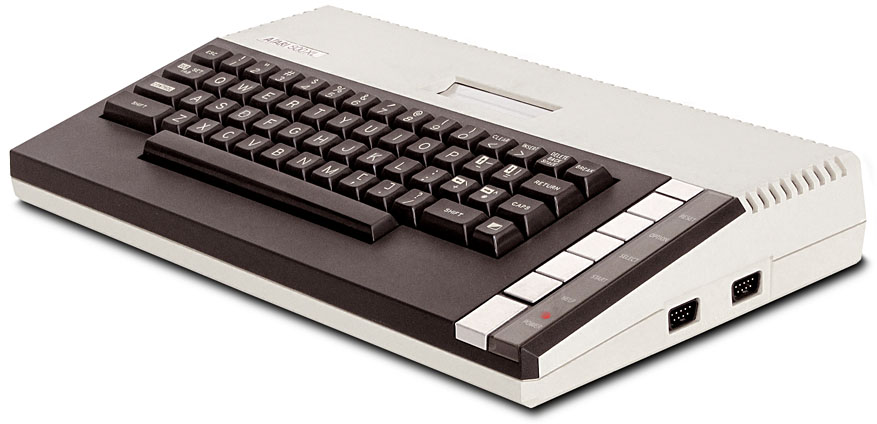
Atari 400
This reminds me of the Atari 400, which had only a touch keyboard.
Well, most Mac users I know don't touch-type anyway, so it's probably just the same to them.
-
Re:Dust is the least problem
I cut my teeth on this one. I even still have one in a box.
-
Re:Dust is the least problem
I have to agree strongly with this! At an impressionable young age I was typing on this dang thing. No measuring what damage that did to me (I am still suspicious of "island" style keyboards!), even at the time I knew this was a terrible keyboard. Inputting those cool computer game programs in BASIC was just torture.
Actually, that thing might make a person grateful for any keyboard that is not that one.. -
Re:9-1971
Starting in the 60's was harder, and is an actuarial question now. By the time of the early 70's, the PDP-8/e was on desktops and probably somewhat common. So was dial-up or even direct-connected terminals. (Both were available in high schools in central PA, which was NOT a high-tech area).
This https://en.wikipedia.org/wiki/... was "on desktops"
I don't think so.Perhaps you are thinking of the PDP-8, which was still not a desktop compter, but the CPU (taken out of the rack) could fit on top of a desk. http://images.computerhistory.... You'll still need peripheral devices (paper tape, maybe a disk drive) and of course a user interface (typically an ASR-33 http://physicsmuseum.uq.edu.au...).
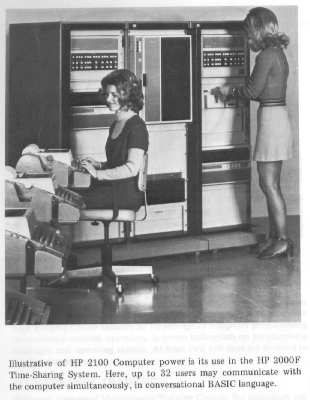
By the mid 1970s our school district had HP 2000 (that is HP 2100 series) minicomputers for timesharing (https://en.wikipedia.org/wiki/HP_Time-Shared_BASIC) and they were similar (in size and everything else) to the PDP-11 pictured above. http://www.decodesystems.com/h...
We had ASR-33s, ADM-3A CRTs. then later HP 2640 https://en.wikipedia.org/wiki/... "smart" CRT terminals.
When these HP 2000 TSB systems first came in, our school district, the richest one in the USA, was the only one outside of Cupertino (home of HP) to have this. These were very popular and by the late 70s there were a number of school districts in the country with similar setups.A sightly smaller system of the era you're talking about would be the HP 1000 series, but it is still not a "desktop" computer! http://www.memoires-informatiq...
The first desktop computer I saw was when I started programming in 1972: the Datapoint 2200 https://en.wikipedia.org/wiki/.... But I only used it as a smart terminal to submit virtual punch-card decks to the IBM/370. Well, and playing 3-D Tic-Tac-Toe (graphics!) on it, but no development environment was available to us.
The first real desktop computer I saw (and used) in those days was a few years later, in 1975, and it cost $20,000. That was the IBM 5100 https://en.wikipedia.org/wiki/.... I did APL programming on it (although mostly we worked on the mainframes, which were IBM/370 and Amdahl/470s).
The early-mid 1970s was the era of microcomputer kits (8080, Z80, 6502, 6800, etc.) and those would fit in a box on a desk. Typically with a television set on top. Keyboard separate, and probably some more boxes for periperhals (cassette tape player, floppy drives) etc. The Apple and TRS-80 complete computers all came much later.
As for tiny PDP-11 type systems...
The Heathkit H-11 https://en.wikipedia.org/wiki/... was a PDP-11 dekstop computer available in 1978 but was soon discontinued because it was too expensive for anyone to buy. (No market at that price point.) I also recall an advertisement in BYTE around 1979 for some kit that also used the LSI-11 and I am sure could fit on a tabletop by then. It might even be much slimmer than an Altair/OSI kind of box.
Of course the most beautiful desktop computer from the late 1970s was the Sol 20 http://oldcomputers.net/sol-20... . A friend of mine had one of those.
I've been programming since 1972. In the 1970s I was programming on IBM mainframes, Honeywell 6000 mainframes, HP 2000 minicomputers, PDP-10 mini-mainframes, a little microcomputer work. (A few years later I would be light years ahead, developing Lisp Machine wo
-
Re:Leveraging stupidity
-
Ampro Little Board
I put together an Ampro Little Board with 64K of RAM. It ran CP/M and mounted directly on a surplus 5-1/4 inch floppy. I added a second floppy to double the storage and used a surplus HP dumb terminal that had a thermal printer built in and a 300 baud acoustic modem for I/O. It was good enough to run Turbo Pascal and got me through a college CS degree back in the '80's. http://oldcomputers.net/ampro-... I still have the hardware but haven't booted it in over 30 years, so the drives probably won't fire up any more.
-
Re:Phill Schill
That brings back memories!
-
Re:Notebook
Indeed. I used to use one of the as a hand-down...
http://www.oldcomputers.net/ib...
Compared to that, a notebook is something very different.
-
Re:Prior Art Time
Sure, but it was Texas Instruments that really pushed this design to its full potential.
-
Re:LOL ...
That price sounds a bit off. In 1982 I won a college scholarship that included an IBM PC with dual FDD, CGA adapter and display, printer, and 128KB of RAM (64K on the motherboard and 64K on an ISA expansion card). It wasn't worth anywhere near $16,000. I believe they told us it was worth about $5,000 with the bundled software.
This site seems to agree: http://www.oldcomputers.net/ib... -
We used cassettes for more than audio
We used cassette tapes for other purposes too... http://www.oldcomputers.net/hp... We'd save off a program to cassette for storage, and it usually worked the next time you tried to load the program. Follow the link and check out the three people in the picture, ready to get to work!
The first time I found ample access to a computer (HP 9830A desktop calculator) was at Texas A&M in '76-'77. Its hard to believe that I spent entire nights from dusk to dawn in the math building on campus, learning BASIC, including a Star Trek game. There's no telling how much thermal paper I ran through the printer. -
Wheatstone bridgeIgnoring stuff like a fountain pen and a mechanical watch (both of which I use daily) we had an old Wheatstone bridge in one of the PChem labs I taught a number of years ago. It was pre-WWII, mid-1930s and still worked fine.
If you want computer tech, I've used Fortran 4G on some ancient IBM mainframe back in college to run some analysis on research results, and we had an HP-85 running an HPLC in a lab a while back. The HP85 had the worst case of screen burn in I've ever seen- the main HPLC control screen could be seen clearly even when the computer was turned off
-
Maybe this will give some context.
I've seen a lot of pro and con posts about Microsoft's place in computer history. Maybe this post will help people see it more clearly.
- Microsoft didn't invent BASIC. BASIC was around since 1964. http://en.wikipedia.org/wiki/B....
- Microsoft didn't invent DOS. They bought something called QDOS and rebranded it DOS. http://en.wikipedia.org/wiki/8...
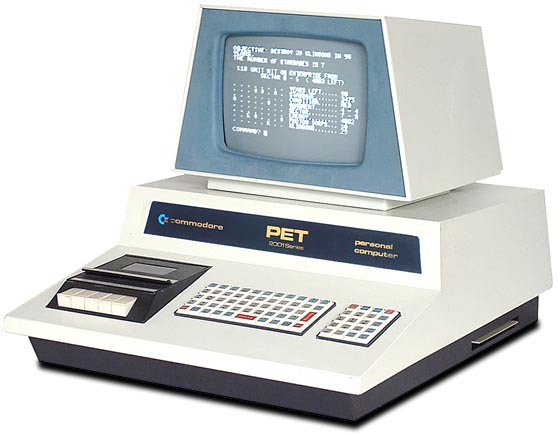
- Microsoft didn't invent ubiquitous computing. IBM created a personal computer based on the Intel 8086. But long before that there was the TRS 80, the Commodore Pet, Apple II, and for those people who preferred to roll their own hardware, there were Heathkit parts (http://en.wikipedia.org/wiki/Heathkit_H8, and http://oldcomputers.net/heathk...) to build one's own computers.
- Before there was DOS there was CP/M which could run on Intel 8080, Zilog Z80, Motorola 6502 (it was available as a card for Apple II's). There was even a version for 8086. (http://en.wikipedia.org/wiki/CP/M)
- The PC industry began not with Microsoft, but with Compaq who made the first IBM PC clones. You may be too young to remember, but PCs used to be called IBM PCs. http://en.wikipedia.org/wiki/C...
- Others have already pointed out that GUIs began with Xerox PARC, and the mouse itself goes back to 1968 (http://en.wikipedia.org/wiki/The_Mother_of_All_Demos)
So what exactly did Microsoft invent? Reference: http://en.wikipedia.org/wiki/C...
- A method of ensuring an operating system monopoly by preventing other operating systems from being preinstalled on OEM equipment.
- A method of ensuring that OEMs cooperated by giving them a kickback if they cooperated with Microsoft's strategies.
- A EULA (End User Licensing Agreement) making it difficult, if not impossible, for an individual to decline the license, return the software, and receive a refund for the Microsoft software they didn't want to use.
I don't believe it's immoral or wrong for folks to make their livelihood using Microsoft products, but I do think it's unwise to do business with Microsoft while being ignorant of their long history. I also think it's dishonest not to admit that the Microsoft Corporation has a long history of doing shady things to software partners (http://en.wikipedia.org/wiki/Spyglass,_Inc.#Browser_wars and http://www.justice.gov/atr/cas... for example) , OEM vendors, Standards Boards (http://en.wikipedia.org/wiki/Standardization_of_Office_Open_XML) and lastly to customers (http://www.ecis.eu/documents/Finalversion_Consumerchoicepaper.pdf)
-
Although we have laptops, Cuba has
these portable computers. Their programmers should be able to help you with your R:Base project.
-
Submarine
*shrug* I wrote several programs for my Tandy PC-2* inside a nuclear submarine (mumble) feet beneath your keel. I also diddled around with BASIC on the IBM-PC clone that Squadron bought and provided to the boats.
* Obtained from my housemate in exchange for paying up his share of the rent. J. actually one of the best housemates I ever had other than his habit of occasionally blowing his paycheck on some new shiny.
-
Re:Atari 800
I really find this hard to believe. I had an Atari 800XL: sure the metal shielding had some weight, but several pounds?
And once we moved to a warmer climate those they didn't last at all. Must have gone through four of 'em
Atari 800 http://oldcomputers.net/pics/a...
=/=
Atari 800XL http://oldcomputers.net/pics/a...
-
Re:Atari 800
I really find this hard to believe. I had an Atari 800XL: sure the metal shielding had some weight, but several pounds?
And once we moved to a warmer climate those they didn't last at all. Must have gone through four of 'em
Atari 800 http://oldcomputers.net/pics/a...
=/=
Atari 800XL http://oldcomputers.net/pics/a...
-
Lenovo did not always make the Thinkad
Troll much?
Lenovo has ALWAYS made the Thinkpad, even when it was called the IBM Thinkpad.
Revisionist history much? While Lenovo did manufacture the Thinkpad line for some years before buying the brand, they were not ALWAYS the manufacturer used for IBM's Thinkpad line.
When the Thinkpad laptops were introduced in 1992, the lower-end Thinkpad 300 series were manufactured by Zenith Data Systems. http://oldcomputers.net/ibm-thinkpad.html. I can't find documentation, but my recollection is that the 700 series introduced that same year were manufactured at the IBM facility in Raleigh, NC.
-
Re:Fond memories
A 12 year old that didn't know better sure enjoyed his PCJr
My parents bought a PC/AT when I was 14 or 15. It had a 1.2 meg floppy and a 20 meg harddrive. I learned a lot on that machine and was very happy with it because I just didn't know better. I lost my innocence in 1988 or 1989, when I saw the (discontinued by then) Amiga 1000 in person for the first time.
It is still hard for me to believe that the first Amiga came out only 18 months after the PC Jr.
-
Re:Not as bad as the reviews made it seem
The keyboard was horrible, yes, but that was fixed within months (I think people could swap the keyboards for free?).
As proof that computer companies have always blindly followed in the footsteps of other computer companies and repeated their UI mistakes, the following computers preceded PCjr's bad keyboard design:
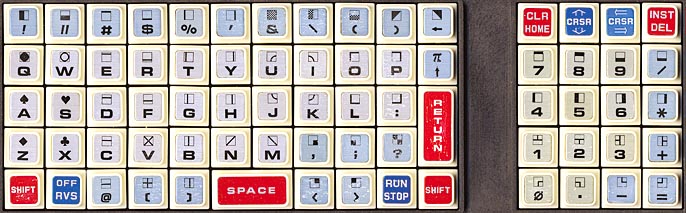
- Commodore Pet's "chicklet" keyboard.
- Atari 400's you want fries with that? keyboard
- The Timex/Sinclair 1000 seven dwarfs keyboard.
When the PC/jr came out, the Commodore 64, Commodore Vic 20, Apple II series, Texas Instruments and Mac computers all had decent keyboards but IBM decided to reinvent keyboards again.
-
Apple hardware only
So you're saying that it won't be free for my Franklin Ace?
-
Re:Hmmm ...
Then maybe I'll send my old mac portable! http://oldcomputers.net/macportable.html
-
Re:Look at when PCs were invented
This claim of ageism is highly skewed. I was 10 in 1981, when the first home computer came out in the UK (ZX81).
The ZX80 sold 50000 home computers a year earlier than that. http://oldcomputers.net/zx80.html
-
Re:OMG what a great idea
This one? Not many of those out there, Compaq was struggling by then.
Compaq does not get a lot of love for it's machines from the '80s, but those of us that used them have a certain fondness.
-
I had a boss...
In 1984 I was working between stints in college at a lab that was instrumenting buildings to find out how people used energy. (The local electric utility was trying to figure out if it was cheaper to build new dams or buy people energy-efficient appliances.)
My boss came into my office one day with an HP 100 'laptop' and told me that he wanted me to program it to get real-time readings from one of our data loggers. "But I don't know how to program, Bill." He didn't blink. "That's ok. You're smart. You're cheap. You'll learn." He put the computer on my desk, walked out, and shut the door behind him.
I went to the library. Eventually I had the computer sending ASCII control signals and reading responses through the serial port in interpreted BASIC.
-
Re:What about the display?
Maybe it's a modded Osborne 1?
-
Re:Is this really news?
AV on a phone does sound stupid, but a smart phone isn't really a phone—it's a pocket computer with a modem in it.
-
Re:Apple ][ !
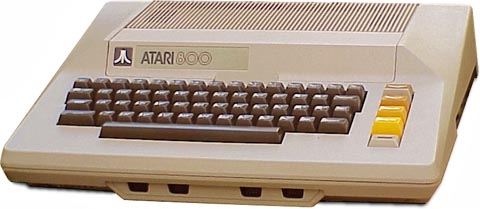
ATARI 800 could use quad linked disk drives, and also had modems, thank you very much Mr wannabe troll
http://oldcomputers.net/atari800.html -
I miss my old Palm Pilot Pro
I was always really into the idea of portable "palmtop" computing. Back in the 1980's, I coveted the Radio Shack pocket computers. The thought of being able to carry around a device in my pocket that I could program on the fly was thrilling to me. In the 90's, HP came out with the HP 200LX which gave you a full MS-DOS computer in your pocket. Wow! Of course, this was the age of Windows, so if you wanted a GUI, HP had the Omnigo which was my personal favorite (it ran Geoworks GEOS on it). But, none of these really caught on with the general public. The HP200LX did have a strong cult following, but it's high price precluded wider adoption. A used one still costs over $250 on eBay, not much less than its original retail price. One thing was sure, though. Palmtops were the wave of the future, and Palm jumped in at just the right time. Their units were exceedingly popular, and I desperately wanted one, but I couldn't justify the cost for me.
Then, one day, an unexpected package arrived in my office. The unabomber had not been caught, yet, so I was a little suspicious, so I opened it. Inside was a brand new Palm Pilot Pro! A few months earlier, I had put card into a drawing for one of these at a conference, and I promptly forgot about it. After all, no one wins those contests, right? apparently, I defied history and won the contest. I immediately got the Palm III upgrade card (with an IR beam so strong, you could use it as a universal remote), and fashioned a screen protector out of an old transparency projector sheet I had lying around. I used that thing until it was worn thin. The development kit was rather sparse, but it got better, and there were other tools that became popular, like Pocket C. It's biggest limitation was the measly amount of RAM--only 2 MB. The biggest complaint I had about the unit was the battery--not the battery life, which would last weeks, but the whole power "system". It didn't have a backup battery when changing the alkaline triple A batteries. It merely had a capacitor that held the power for about a minute while changing them. Well, that capacitor went bad quickly, and I always had to resync after changing the batteries. Eventually, I soldered in a new one. The sync cradle made even less sense. Ideally, you'd have the Palm sitting next your desk as an extra calendar "window". But, you couldn't do that with the old Palms. Not only would the sync cable not power the palm in the cradle, it actually DRAINED the battery if you left it in there for any length of time! Nuts!
Still, I miss the simplicity of that little palmtop. It worked well and was quite reliable. I eventually traded it in to get $50 off a color model, which I still have, but it's not the same. It's sad how Palm just kind of disappeared. There's tons of software still floating around somewhere that is unusable. There's such little interest in the platform, that no one has even bothered to develop an emulator for Android or iPhone, which surprises me. It's almost as ig the palmtop revolution of the 90's never actually happened at all. It's certainly been mostly forgotten, even though many benefited from the technology.
-
Re:First step is to agree on a definition
I travel in Europe occasionally and some of the commercial billboards I have seen in airports would be considered pornography in the US...
Well, this would be considered pornography on
-
The TRS-80 had this problem too
The original TRS-80 was a wideband RF jammer. Cheap PCB design, plastic (unshielded) case, lots of ribbon cable external interconnects operating at megahertz frequencies.
One of the better ways to see whether the machine was frozen or just processing a long-running (but productive) internal loop was turn on an AM radio in the same room. Within about 3 feet, the RF noise would override all but the strongest stations and allow you to monitor the CPU's execution by the hums and burbles of the RF noise.
It's why the original TRS-80 became the Model I, rapidly superseded by the all-in-one Model III (with lots of internal shielding).
-
Re:WTFGA
You can probably find these ultra-wide-screen laptop computers on eBay. The future is here today!
-
Re:A few items
How about the 2" floppies used by Zenith and Sharp for their mini XT class laptops in the early 90's?
http://oldcomputers.net/zenith-minisport.htmlI had two of those laptops, I really hated that special floppy design.
-
Re:The new weakness of App Stores?
The IOS and Mac OS X set of products I have are the most useful tool I have ever owned. if I have to pay a little more and tolerate some annoyances that's still true. Do I wish some things were different? Of course. But in many small ways it just makes my life a little easier and a little more pleasant. I've been programming computers since 1979, and this era feels like a whole new world.
-
that's MR. TRASH-80, to you, sonny!
AFAIK no PC used an 8 inch disk (please correct me if I'm wrong)
h8ers gonna hate
-
Re:Read Error
The Tandy/Radio Shack Model II, with one built-in 8-inch drive (mounted vertically) started shipping in October '79.
http://oldcomputers.net/trs80ii.htmlOn my own and other's machines, later on, it was not uncommon to get a 3.5" diskette to read by pulling aside the slide and blowing dust off the floppy - even if that dust or lint had come from the drive itself.
-
Re:Read Error
AFAIK no PC used an 8 inch disk (please correct me if I'm wrong)
It depends upon your definition of "PC". The Heathkit H-89 used an 8-inch floppy.
-
Re:Depressing times
So what is it that these devices cannot do, but that PCs magically can do?
Do everything. At once. For 8 hours. My phone (android) will lice in standby for about a week, or die in about an hour with GPS on. I used a http://oldcomputers.net/compaqi.html long ago. Heavy, slow, heavy, and mostly impractical. Imagine making a computer like that now. Fold-up LCD laptop-like, but a little larger to use desktop parts, high power, no battery, plug in portable with full desktop power in a small form factor and easily transportable/rugged-ish. It's things like that which aren't done anymore. Not just "mini" but all-in-one portable. A laptop without a battery, but with all the performance of a full desktop.
Where are the insane cheap computers running water cooling and overclocked to medium/high performance? I've put 4 MB of ram onto an ISA (or EISA) card and ran a battery-backed RAM drive from it. In floppy days. Copy your floppy to ram, and run it. For $1000 you could make a 64 GB SSD out of battery-backed RAM. Who needs the slow SSD drives with write limits, when you can use DDR3 for your SSD?
Sure, not all that is practical, or has other problems. Thats' why PC makers hire all the mechanical and electrical engineers and have massive R&D budgets. Right? Where's HP putting out HP/UX/2013 Linux to the desktop and undercutting identical hardware by $100 for avoiding the Windows tax? Where's the innovation? I could go on all day with hundreds of "interesting" ideas that are likely not practical that would have at least one gem" inside them to make millions from.
Sadly, I'm not rich enough to be rich. The last job I quit was sold after (I quit because I knew they were going under), but if I had $5,000,000, I'd have bought it. It was mismanaged. I predicted that 5 years later, I'd have been able to sell it for about 10x as much. But, by the time I had lined up some interest in investing, they were already sold out for parts and closed. I wanted to be 5 years from retirement. But success in business is too much the who you know part, and not what you know and what you can do. And I suck with people. But making others millions, I've done plenty of. -
Re:Apple Copies
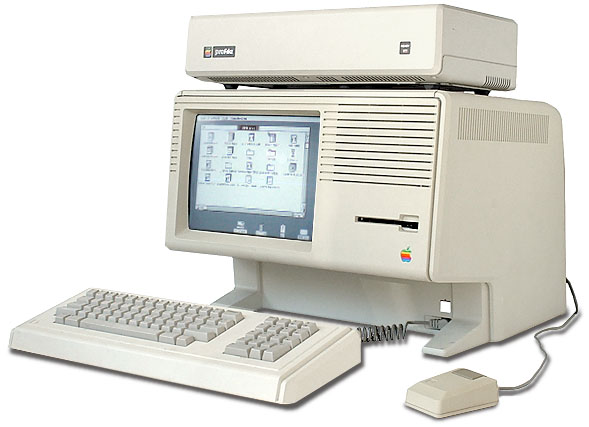
http://www.pophistorydig.com/wp-content/uploads/2010/05/1970s-xerox-alto-280.jpg This is a picture of the xerox alto, released in 1973. http://oldcomputers.net/pics/lisa2.jpg This is a picture of an apple lisa, released in 1983, 10 years later. I know, 10 years brought a LOT of progress, huh? You're such a clueless fanboy.
-
Takes me back.
Had a GRiDcase III plus once upon a time, bought new in 1985 for $8,150, cash --- should've bought stock instead. Oh well, easy come, easy go. It and the NeXT Cube I had later were the nicest machines I ever used.
Other things to look forward to:
- anniversary of the ThinkPad announcement --- everyone should get and read _ThinkPad: A Different Shade of Blue_ by Deborah A. Dell --- fascinating insight into the creation of the ThinkPad
- anniversary of the NCR-3125 --- the first successful (for low values of ``success'') pen computer --- _Startup: A Silicon Valley Adventure_ by Jerry Kaplan covers this well.
We seem to've missed the TRS-80 PC-1 25th anniversary though.... http://oldcomputers.net/trs80pc1.html
William
-
You make this 30-something geek weep...
Pure black and white with perfect contrast? No visible pixel matrix? LCD screens didn't look like that in the 80s. They looked liked this.
Now if you're talking about the 90s, the iPhone probably would've looked something like this.
It makes me wonder if this anachronistic retro hipster who drew this "80s iPhone" art was even alive in the 80s,
-
Full size keyboard...
...and, bonus, not one, but two floppy drives!
-
Re:Good luck with that
Just show them the history of computers in the form of magazine adverts. Seeing the human models with the fashions of those times are a plus.
-
Re:Not (primarily) about round-rects
...and the iPhone from the PDAs that came before it, like this [typepad.com].
Or maybe, this. Oh, wait, that was made by Apple, so I guess they're allowed to copy it.
-
Re:patent pending?
If such a direct inspiration doesn't count as prior art I don't know what else would be.
I'm sure they have patents covering the distinctive features of their particular connector - that doesn't mean that they have a patent on the idea of a multi-pin accessory connector.
I think latter-day electronic gizmos such as the Sharp Zaurus 5500 - I have one and it uses a wide, thin edge-connector type thingy for docking - are rather more obvious prior art than some superficial similarity to the flash connector on a camera.
Of course, the Zaurus, along with most modern PDAs and phones, owes a little something to this - which in turn may have been somewhat inspired by this little muse from Xerox PARC.
What would have happened if Xerox had actually got round to commercializing the wonders that they dreamed up in their PARC labs (the GUI, Smalltalk, Laser Printers, Ethernet...)? Superficially, it looks like they could have owned personal computing.
-
Re:Playing favorites
Not who, what.
-
Re:MORE BULK!
Seriously? You thought I was being serious? PS: The iPad may be lightweight and thin, but it certainly is not of "poor quality construction".
The iPad lightweight? Maybe compared to this. I think it's quite heavy.
Which tablet did you recommend again? I didn't realize the iPad was such a bulky tablet.
-
Re:MORE BULK!
Seriously? You thought I was being serious? PS: The iPad may be lightweight and thin, but it certainly is not of "poor quality construction".
The iPad lightweight? Maybe compared to this. I think it's quite heavy.
-
Re:Sneaker (or sandal) net
I used to have to drag one of these around for work. And I was mightily envied by the other geeks of the time.