Slashdot Mirror
Domain: planetary.org
Stories and comments across the archive that link to planetary.org.
Comments · 418
-
Re:Seems counterintuitive...
That photo of Pluto had a lot of pixels, but we really only need 1 to determine if there's anything there.
Besides, we saw Ultima Thule didn't we? It would have to be a lot dimmer than even that before it's indistinguishable from noise.
-
Not much respect
Perhaps the "Science Guy" should learn a little bit about Mars before talking about it.
He's the CEO of The Planetary Society which is concerned with among other things this very topic. I'm certain he's better informed about the topic than you are.
I'm not actually that much of a Mars advocate, and think the simplicity of using water there is overplayed (people talk about it like it's some sort of pure snow that you just pick up and melt, but it's (mostly) a rock-hard toxic brine mixed with sand and clay) - but come on, if you're going to talk about something, learn the basics.
Who is arguing it is simple? The argument is that it is necessary and possible if you want a manned Mars mission. Shipping water from Earth is simply unrealistic in any sort of large scale. There are a host of very serious technical problems in gathering and utilizing any resource on Mars and water is no exception.
-
Re:Except Europa
It could be very interesting to focus the Hubble Space Telescope on it to look for such structures. But how visible would they be from Earth orbit, even with the best optics?
Barely visible. You need to know the concept of *angular resolution*.
Maybe this helps.
-
Hexagon has been recreated in the lab
The origin of the hexagon is no real mystery. It was recreated in a laboratory tank 8 years ago. (Link includes a video showing a hexagon forming in the tank). It forms when the spin rates between the inner and outer fluid hit a certain ratio. Normally the speed differential creates a chaotic interface at the boundary layer. But at certain ratios it creates a standing wave which forms a hexagon (well, not really standing since it moves, but in a certain rotational frame it's a standing wave).
It's impressive that the hexagon is that tall, since that implies the wind speeds are consistent through that height. -
Re:Traveling Organics?
Highly unlikely. The Viking and Curiosity landing sites are on opposite sides of the planet, http://www.planetary.org/multi...
-
Re:OK - so the darkness isn't really relevant.
From the last storm, even at 4.7 tau (a little under 1%, although that's ignoring scattered light) the rover was generating a small amount of power, but not enough to run the 60W heaters for an extended period of time.
Based on https://planetary.s3.amazonaws.com/image/Horizon_Survey_1205B_1235B.jpg it seems like 4.7 is not pitch dark, but 10.8 very well might be.
But yeah, length of the storm and the temperatures is going to be a big factor.
-
Re:Author is biased
Everyone's comparing apples to oranges here.
For the ULA price quoted, we're talking about a cost estimate done by the Air Force for national security launches in 2020. And apparently, that's an estimate of the maximum price, not the average. ULA has since published more information:
Launch cost over the whole ELC duration of 78 missions averages to $225M a pop with Delta IV Heavy at ~$400M and Atlas starting at ~$164M.
SpaceX have published a price of $65M for a basic commercial launch. That's a much lower price than e.g. NASA is paying for its Commercial Resupply missions to the ISS: the CRS-1 missions cost around $180M each. That does include a Dragon spacecraft, but I doubt that alone costs $120M.
Apparently there are a lot of optional extras you can specify on your SpaceX launch, and SpaceX hasn't published any of those prices. USAF launches will be closer to NASA prices than 'basic commercial' launches. -
Re:We went to the moon in under 8 years
Yes. Yes it is. It's as adorable as his jerky handshake. As adorable as his proposed fix to immigration of "building a wall". And that Mexico will pay for it. As adorable as his one-page budget plan. As his prospect of reforming obamacare. As his prospect of making a trade deal with Germany and only after 13 tries accepting that he has to make a trade deal with the EU. And it's adorable that the fucking German chancellor had to explain that to him.
And in case English isn't your first language or you're really tone deaf, "Adorable" in this case is being used sarcastically to imply his plans are small, childish, and hopeless. As if made by a child.
And yes, it's adorable that he thinks he'll get a second term.
As with anything politics it is always about money. So, I think we both can agree that if somehow he pulled money from his ass (whether that was negotiation on budget increase for NASA either directly or by cutting elsewhere or through other means ) that we could get to Mars in 4-8. 4 being a stretch and not likely (though possible) but 8 at "the worst case" is definitely in the realm of possibility aside from the politics of funding.
Yes I agree. Hurzzah for common ground.
So do you think he's going to pay for it? Because at this point it'll have to start with the 2019 budget, because it's not in his 2018 budget request. Do you really think NASA can get a human on Mars in one year?
His proposed budget for NASA has it escaping cuts, which is nice, but the 0.4% increase it's NOWHERE NEAR the boost needed to get our ass to Mars. Woo, keeping up with inflation.
So far Trump isn't hostile to space. That's good. I like that. But from everything else I've seen of the man, I imagine it's simply because he hasn't thought too much about it. It's definitely a line-item in the budget, so it's certainly nice to see he hasn't axed it flat-out. Once he realizes that it won't get him a hotel on Mars during his term, I worry that he'll just fire everyone.
Just like healthcare reform, the middle-east, and getting better trade deals, what do you think he's going to do once he finds out it's a lot harder than he imagined? (But hey, props to him for getting China to take action against N. Korea, let's hope it turns out alright).
-
Re:Missing theory
A view Russian probes got lost while flying over HAARP, I think Phobos Grunt was the most recent one. The theory is that their electronics was grilled by these high-power transmitters. This one actually makes sense though.
This was obfuscation on the part of the Russians. According to the failure report issued by Roscosmos there were other reasons, including use of non-space-qualified components that were susceptible to radiation damage, and insufficient ground testing.
-
Re:There is still a way to get science out of this
Well, you've lost all your internet points. Hopefully that teaches you to stop making things up without googling. The landing area is the same as Opportunity's landing area, and Opportunity even attempted to image the landing: http://www.planetary.org/blogs...
-
Re:There is still a way to get science out of this
Here's an update from the Opportunity team:
-
Re:Wat
This is not correct. Juno is planned to do some limited observation/a> of the Galilean moons. It's a side mission, not central to it's focus (and Juno is anything but optimized for it), but it's one of those cases where, if you're there and you have the hardware...
Concerning Europa (remember that this was before the recent news):
...for Juno to do Europa... This science goal just may not be possible with the large distances from Juno to Europa...the image spatial scale would need to be better than 70 kilometers, at a relatively high phase angle...To achieve resolutions better than 70 kilometers per pixel...JunoCam [needs to be within], 100,000 kilometers...There are just four orbits that have Europa flybys that are closer than 300,000 km...
The information you posted confirms how difficult it would be for Juno to make any meaningful observations of Europa's plumes. Why jeopardize the science Juno was designed for in mid-mission to look for water water on Europa, which was confirmed years ago, on the remote chance it might provide a piece of data that could allow a far-off future mission to confirm extraterrestrial life? Sorry, but only people with heads in a fictional sci-fi fantasy world willing to gamble everything for a childish dream of meeting E.T. would think that's a good idea.
-
Re:Wat
This is not correct. Juno is planned to do some limited observation/a> of the Galilean moons. It's a side mission, not central to it's focus (and Juno is anything but optimized for it), but it's one of those cases where, if you're there and you have the hardware...
Concerning Europa (remember that this was before the recent news):
The most significant opportunity for Juno to do Europa science would be to follow up on the plumes possibly detected by Hubble Space Telescope. Confirming Hubble's detection would be very scientifically valuable. Any information on the source location would be valuable. This science goal just may not be possible with the large distances from Juno to Europa, but we will look.
JunoCam or ASC can only detect plumes if they contain fine particles. The Hubble discovery (if real) only shows the presence of water vapor. We can predict by analogy to Enceladus that water vapor plumes will also contain particles. However, it is important to remember that the Hubble discovery was of gas, not particles. If the putative Europa plumes are Enceladus-like and do contain particles, they would not be as tall as Enceladus', because of Europa's higher gravity. Scaling for Europa’s gravity gives a maximum plume height of under 140 kilometers. To detect plumes, we need at least two pixels, so the image spatial scale would need to be better than 70 kilometers, at a relatively high phase angle where the particles would forward-scatter light to JunoCam and ASC.
To achieve resolutions better than 70 kilometers per pixel, UVS needs to be within 40,000 kilometers of Europa; JunoCam, 100,000 kilometers; and ASC, 170,000 kilometers. For the cameras, given the low expected height of the plumes, there is not much flexibility.
There are just four orbits that have Europa flybys that are closer than 300,000 km. Juno reaches the best available geometry in September 2017 as the rotation of the line of apsides brings Juno’s orbit close to Europa’s orbit:
2017-03-08 253,118 km
2017-09-19 264,043 km
2017-10-03 92,267 km
2017-10-17 204,654 km -
Re:Overall a disappointing mission
It wasn't a thruster failure.
Correcting myself before somebody else does. There was, in fact, a thruster failure, but they knew about it before landing and gave the lander a go anyway.
-
Re:It only fails if you turn it on
The problem is more complicated than that sentence makes it sound. Over time (Curiosity's been there for ~4 years now) the wheels accumulate damage when they drive over rocks. This accumulation is faster than they'd predicted based on years of experience with Spirit and Opportunity, because of the larger size and weight of Opportunity and because it's being driven over much rockier terrain than the earlier rovers.
Based on the accumulation of damage after 1-2 years they had to alter the mission plan somewhat, changing the route to more sandy places.
The problem is the weight of the wheels is highly constrained. They were already close to the maximum possible mission weight so there was very little scope for improvement. Making the wheels heavier would have had knock-on effects. The rover was stowed in a folded state and had to unfold just before landing. That unfolding involved dropping the wheels through an arc without any damping. Making the wheels any heavier would have made that drop induce more force on the attachment points than they could handle.With the benefit of hindsight, they could have built more resilient wheels. But that would have meant redesigning half the rover. Deep space exploration is just that, exploration. You will come across circumstances you could not have predicted. Live with it.
-
Re:Delayed due audit?!?!How do you kill a program that is already has budget troubles? Shut it down and do an audit. It's the bureaucratic way to eliminate something while pretending to be responsible.
And how often have over budget military programs been halted because of money? It has happened, but it's very rare. Meanwhile, we got the B-2 at over $1 billion per copy and the F-35 which is "Three years behind schedule and some $200 billion over its original budget". The original projected cost was about half what has already been spent.
So how does NASA's trouble compare to that? NASA's entire 2015 budget was $18.01 billion. So who is worse when it comes to being "responsible" about managing technical risk? Did anyone suggest shutting down the F-35 program while they decided what to do about escalating costs and slipping schedules?
-
Re:Thought he retired...
He is the CEO of the Planetary Society, a non-profit group that advocates for planetary science. The organization was formed in 1980 by Carl Sagan and others.
He and the organization actively advocate to Congress, the President, and NASA to help raise funding for science. That gives him a lot of cache in my book.
-
Re:Somebody's gonna get dead...
Not even 'Lil Kim is that stupid. After all, this is rocket science. And rapid unscheduled disassembly is part and parcel of rocket science.
"If it doesn't blow, it doesn't go'.
-
Linking back to Slashdot
One thing that kind of grinds my gears is stories that link back to previous Slashdot stories. A good example is this one. Near the end it says "SpaceX successfully landed its Falcon 9 rocket at Cape Canaveral in December." I would expect to be able to follow that link to a relevant news site, not a Slashdot discussion. (Obviously, if the line went "As we discussed here, SpaceX successfully landed its Falcon 9 rocket at Cape Canaveral in December.", that would be a different story.)
Perhaps if the links in the story were post-fixed with the sites in square brackets the same way that they are in the comments... -
The Problem is Special Relativistic Time Dilation
Any ship embarking on interstellar travel in the near future using any of the first two methods (a generation ship using conventional propulsion or a hyper speed ship using fuel, thrust or time improvements) is likely to be beaten to the destination by a explorers leaving earth hundreds of years later using superior interstellar travel technology.
Although a generation ship carrying massive amounts of fuel and a gigantic solar sail could boost up to speeds of hundreds of km/s, it could still be thousands of years before such a ship reached even the nearest star system... and then it would have to expend vast amounts of stored fuel to slow down, slip into a suitable orbit around the local sun and commence a search for potentially habitable planetary bodies, with no hope of ever being able to generate sufficient thrust to move on to a further star system, should the first prove to have no suitable planets to settle on.
Consider the rate of communications, propulsion, etc. advancement that would have taken place in the intervening 5000- odd years between the departure of interstellar explorers leaving earth over the next 100 years and those leaving earth, say, 2-3000 years from today. How would our present day explorers even communicate with earth using 5000 year old communication technology - heck, it would be tough to communicate with just 100 year old technology, let alone 5000 year old relics. And suppose the mission was successful... later and technologically more advanced departures travelling in the same direction would have to make first contact decisions not too dissimilar to the ones we make today about isolated peoples such as isolated tribes in the Amazon rain forest - only it would be more similar to travelling back 5000 years to the bronze age - round about the time when Stonehenge was built and Papyrus invented.
Future propulsion technologies, would not fare much better. The more efficient the propulsion technology, the faster the rate of travel. This might appear to be the answer, except that special relativity would mean that while time slowed down for the travelling explorers, hundreds or even thousands of years could pass here on Earth for a few years of time for our hyper-speed interstellar travellers. So, while interstellar travellers travelling at hyper-speed could reach their destination in a single life time, they too could be beaten to the punch by a later departure hundreds of years later (or just a months days later in time passed aboard the interstellar ship).
That special relativistic time dilation thingamajig can be a bitch!
Just my thoughts and observation
-
Re:But can we explain
Because he posts the single most interesting stories on the site?
I don't know whether to (+1, Ironically Funny), or (-1, Fuck off Ethan), but you made me laugh either way.
We've known it's density waves for years. Decades, arguably. If Ethan's blogspam is new and revelatory to you, you haven't been paying attention. If you want a pop-science focus, http://www.astrobio.net/ is decent, as is Phil Plait's Bad Astronomer. If you want mission updates, http://spaceflightnow.com/ has good (and in some cases, live) coverage. If you want well-sourced articles on a wide range of topics, any of the blogs on the Planetary Society will do; these authors have been working in the field for decades.
Literally anything is better than Forbes/Medium blogspam. All the guy does is take a few pretty images that show up first on a Google Image Search for whatever it is he's cutting and pasting about, then tells you how amazing it is that space. And time. Are, like, the same thing. Like a gravity and a bowling ball and a rubber sheet. Here's that
-
As for why...
... all of this trouble happened, the Planetary Society blog had a nice detailed writeup a while back. The "short" of it? Akatsuki has a new type of primary thruster based on ceramics to withstand the heat rather than exotic materials like dicilicide-lined niobium as are normally used on these sorts of small hypergolic thrusters; they wanted to prove the new technology. You generally run thrusters a bit fuel-rich and inject it in such a manner as to try limit combustion near the chamber and nozzle walls to keep the temperature down. Well, the pressurant valve to the fuel tank didn't open all the way (they think it corroded) but the oxidizer pressure valve opened all the way. So the burn kept getting more and more oxidizer rich, meaning hotter chamber and nozzle walls way past the design limits, until they cracked and the nozzle simply flew off.
The only reason they were able to salvage this was because another unusual choice they did: to save mass, they implemented a more complicated hydrazine (fuel) feed system, allowing them to use the same hydrazine suppy for the main engine as for the small monopropellant RCS thrusters (tiny, low-efficiency maneuvering thrusters). Because they did this, they were able to take the fuel that was planned for the main engine and route it instead to the RCS engines. While they're less efficient and much lower thrust, they had enough excess fuel to pull off the maneuver (after first making the craft lighter by dumping the now-unneeded oxidizer, of course!)
-
Re:And the age of the sun is?
This Planetary Society blog entry by their Senior Editor does a pretty good job of explaining how the chemistry of a primordial rock can tell you the conditions under which it condensed, and zircon U-Pb dating can give you a pretty good idea of the age. This gives astronomers a clear picture of what the primordial system was like.
-
Re:NASA please upgrade your stuff
New Horizons' communication channel is very slow. About 1 killobit (not kilobyte) per second. My guess is they don't really have more data to "release" yet.
-
Re:Downlink
In these 10 years since launch, they could have precomputed every possible picture, hash them, and then the probe could have simply sent the hashes instead of the full size pictures.
Just for fun, let's see what it would take for them to pull this off. The LORRI image sensor is 1024x1024 pixels with 12 bits per pixel.
So the number of distinct images divided by the timespan available gives 2^(12*20) / (10 years) = about 5.6 * 10^63 hashes per second.
Let's say you had a CPU capable of computing one such image hash per nanosecond (very optimistic), you'd need 2^(12*20) / (10 years) / (1 nanosecond) = about 5.6 * 10^54 CPUs to pull this off.
For comparison that's an order of magnitude or so more than the number of nucleons in our earth.
If those CPUs consumed 50W of power computing these hashes (again very optimistic), the entire project would consume 2^(12*20) / (1 nanosecond) * (50 watt) = 8.8 * 10^64 joules.
For reference that's two orders of magnitude more than the total mass-energy (including dark matter) of the Virgo supercluster, the supercluster which contains our Milky Way galaxy.
Unless I messed up the calculations that is...
-
Re:Downlink
Downlink speed is limited to 1 kbps (bits, not bytes). 2 kbps if they use a trick involving shutting down power to instruments to boost transmit power.
That's actually a dual polarization mode - this is the first spacecraft with a dual-polarization data transmit capability. (And, yes, it does require more power, and so won't be used until they are well past Pluto and can put things on standby.) Even with that, it will take 16 months to get all of the data back.
-
Downlink
Downlink speed is limited to 1 kbps (bits, not bytes). 2 kbps if they use a trick involving shutting down power to instruments to boost transmit power.
Reminds me of the early 1990s when JPEG images first started showing up. Full-color 640x480 GIF photo scans were a couple hundred kB and could take 10+ minutes to download over my 2400 baud modem. I was astounded that a 30-40 kB JPEG could look just as good to the eye. Course the JPEG took over half a minute to decode and display back then, but combined with download time it was still faster. (Yes computers and network speeds used to be that slow - it's why the early web made extensive use of thumbnail pics.) -
Re:Then what?By using up about 35% of its remaining fuel budget, New Horizons will be able to visit a Kuiper Belt Object. Interestingly, that potential object was spotted just a few weeks after New Horizons launched.
Anticipated arrival date: January 2019. Be patient...
-
Re:July 1?
Heh, relax. It's been traveling for over nine years to get here, and it's going to take well over a year before we get the full data set from the flyby a couple of days from now, as the transmission bitrate is ridiculously low from that distance. What's a week or two?
On September 14, New Horizons will begin downlinking a "browse" version of the entire Pluto data set, in which all images will be lossily compressed. It will take about 10 weeks to get that data set to the ground. There will be compression artifacts, but we'll see the entire data set. Then, around November 16, New Horizons will begin to downlink the entire science data set losslessly compressed. It will take a year to complete that process.
-
UPDATE: NASA issued a statement - it's good.
UPDATE: NASA issued a statement at about 19:30 PT / 22:30 ET July 5 / 02:30 UT July 6 saying that the cause of the safe mode is understood, and that New Horizons will resume science operations on July 7:
NASA’s New Horizons mission is returning to normal science operations after a July 4 anomaly and remains on track for its July 14 flyby of Pluto.
The investigation into the anomaly that caused New Horizons to enter “safe mode” on July 4 has concluded that no hardware or software fault occurred on the spacecraft. The underlying cause of the incident was a hard-to-detect timing flaw in the spacecraft command sequence that occurred during an operation to prepare for the close flyby. No similar operations are planned for the remainder of the Pluto encounter.
“I’m pleased that our mission team quickly identified the problem and assured the health of the spacecraft,” said Jim Green, NASA’s Director of Planetary Science. “Now – with Pluto in our sights – we’re on the verge of returning to normal operations and going for the gold.”
-
Re:Oh, PLEASE no...
The article is too scant. Here's a better one.
-
From Unmannedspaceflight.com
Steve5304: Rumors that Contact with new horizons has been lost again or was never regained. Unconfirmed
Alan Stern: Such rumors are untrue. The bird is communicating nominally.
Alan Stern is the director of the New Horizons mission. So no worries.
This was a really minor glitch and will have no impact on the mission as a whole. There weren't even any significant observations planned for today.
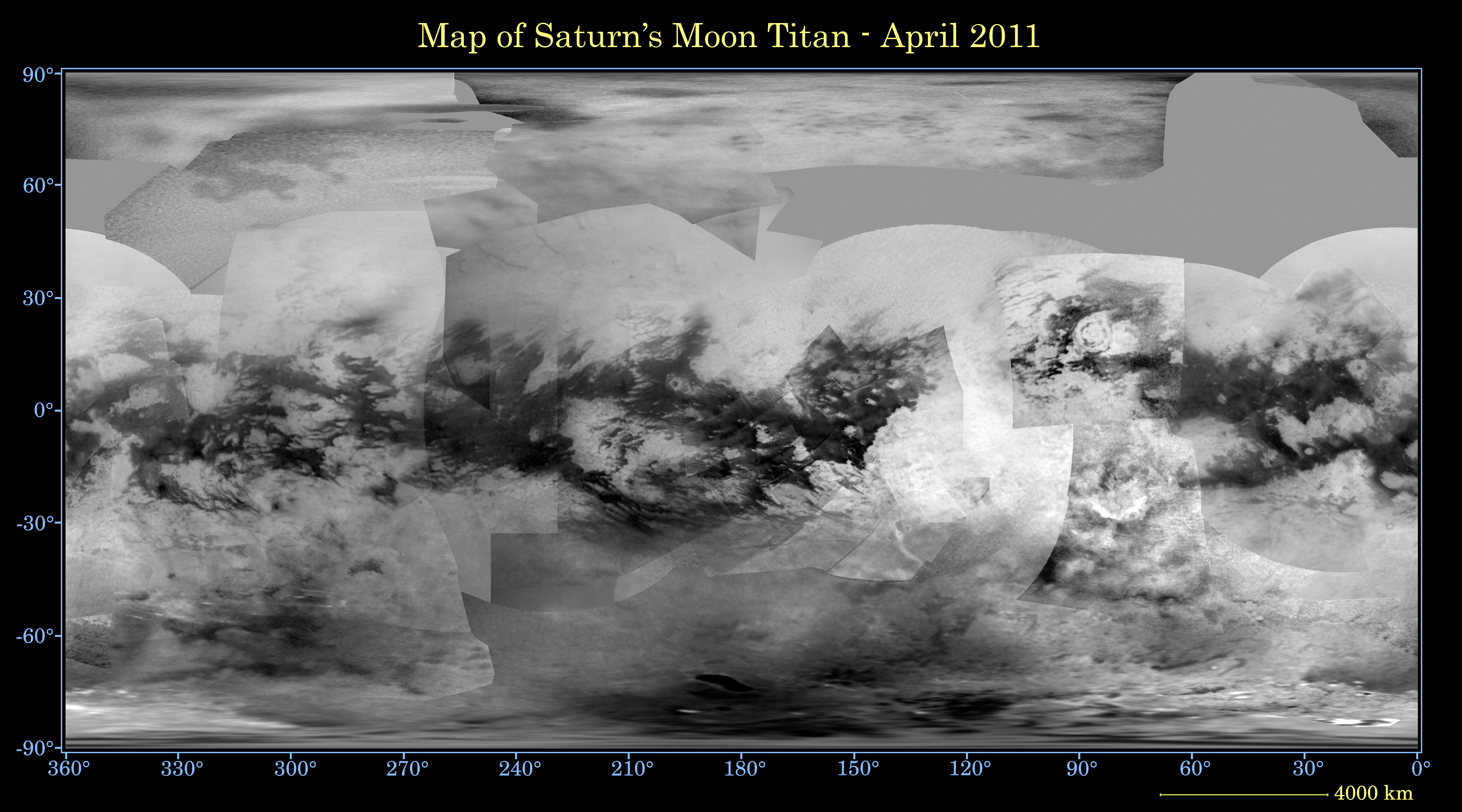
(As a side note, the closer we get to Pluto and the more we see of it (dark band at the bottom is around the equator), the more it's starting to remind me of an airless Titan
-
Re:speaking as a backer...
That's not just "certainly an improvement", that's the very thing that I think almost all of us here want to see. And this is the chief executive officer of the Planetary Society speaking. So...?
The "investment" he is talking about is public funding for private launch capabilities, not private space exploration. In the end, their policy ideas seem to be largely "give NASA more funding, just change a little what they do":
http://www.planetary.org/press...
http://www.planetary.org/press...
Whatever Tyson said (Tyson just being a board member),
Nonprofits select board members that reflect their ideals. And the Planetary Society behaves consistent with what Tyson is saying.
Commercial Crew
Take it from NASA:
NASA's Commercial Crew Program is a partnership between the agency and aerospace industry to develop and fly human space transportation systems.
That is just NASA giving money and resources to aerospace companies so that those companies can then develop overpriced launch capabilities and enrich themselves at taxpayer expense. That has nothing to do with "private space exploration" and everything with crony capitalism. It's just more business as usual, and it's what got NASA into trouble in the first place.
you're letting that ruin your view of the Planetary Society as a whole?
No, what "ruined" my view of the planetary society is what they are doing and what they are advocating.
-
Re:speaking as a backer...
That's not just "certainly an improvement", that's the very thing that I think almost all of us here want to see. And this is the chief executive officer of the Planetary Society speaking. So...?
The "investment" he is talking about is public funding for private launch capabilities, not private space exploration. In the end, their policy ideas seem to be largely "give NASA more funding, just change a little what they do":
http://www.planetary.org/press...
http://www.planetary.org/press...
Whatever Tyson said (Tyson just being a board member),
Nonprofits select board members that reflect their ideals. And the Planetary Society behaves consistent with what Tyson is saying.
Commercial Crew
Take it from NASA:
NASA's Commercial Crew Program is a partnership between the agency and aerospace industry to develop and fly human space transportation systems.
That is just NASA giving money and resources to aerospace companies so that those companies can then develop overpriced launch capabilities and enrich themselves at taxpayer expense. That has nothing to do with "private space exploration" and everything with crony capitalism. It's just more business as usual, and it's what got NASA into trouble in the first place.
you're letting that ruin your view of the Planetary Society as a whole?
No, what "ruined" my view of the planetary society is what they are doing and what they are advocating.
-
Re:speaking as a backer...
What are you talking about? The Planetary Society has been opposing cuts to the Commercial Crew, which is the program that helped get the Ares 1 cancelled. "Commercial Crew" can be seen as the "NASA, Get The Heck Out Of The Launch Business" program. By contrast, in all of their posts about the new budget the Planetary Society has not once said anything positive about the increase in the budget for the SLS.
The Planetary Society just wants to see space exploration and the advances in technology that make it possible. They really don't give a rat's arse who does it, although they're enough realists to recognize that NASA does, and will for the forseeable future, do the lion's share of it. And they want to see as large of a share of NASA's budget as possible go toward actual science. They're in love with missions like Galileo, Cassini, the MERs, MSL, Messenger, New Horizons, Rosetta, and on and on. Giant super-expensive rockets to launch craft to carry people around to make a big show for the cameras? Not so much.
-
Re:This should be a major embarrassment
Yes it has: http://www.planetary.org/blogs...
-
crowdfunding and publicity campaign
The LightSail kickstarter crowdfunding campaign is still active. Moneys donated at this point will help fund a publicity campaign.
Jason Davis' blog has mission updates:
http://www.planetary.org/blogs/jason-davis/
This is a test mission. Still a historic achievement for solar sailing, though. The real LightSail mission will launch in 2016.
-
Re:Seriously?
Their current plan is to wait charged particles to affect electronics so that it forces a reboot.
Spacecraft are susceptible to charged particles zipping through deep space, many of which get trapped inside Earth’s magnetic field. If one of these particles strikes an electronics component in just the right way, it can cause a reboot. This is not an uncommon occurrence for CubeSats, or even larger spacecraft, for that matter. Cal Poly’s experience with CubeSats suggest most experience a reboot in the first three weeks; I spoke with another CubeSat team that rebooted after six.
-
First Launch
The first test launch is actually just a few days away on May 20. You can watch it live at http://sail.planetary.org/miss....
-
Re:usually the complaints are for too much politic
That might be true if this was some sort of dispassionate commentary on the bill. But it's not, it's a ringing endorsement of a highly partisan bill. Surely you see the difference.
For those who are serious, here's the Planetary Society's commentary, with a link to an indepth but nonpartisan analysis at SpacePolicyOnline. The Planetary Society is very happy with the planetary science numbers, not happy with the earth science numbers, and couldn't seem to care less about the funding for SLS/Orion.
-
Re:Can it dodge?
Emily Lakdawalla's blog has quite a bit of good information about what's going on. With pretty pictures.
More problematic than jets coming from the comet (which are pretty diffuse and low speed in reality) is that twice passing comet particles have come close enough to be mistaken for the stars that the spacecraft use to orient themselves. Since it's moving past so fast the spacecraft assumes that something is wrong and puts everything in Safe mode.
-
Pretty amazing
Ceres gravity is 0.27 m/s2 (Earth's is 9.8, Luna is a hefty 1.6)
So 'going into orbit' of something so vanishingly weak is really an amazing accomplishment, discussed in their blog at http://www.planetary.org/blogs....
(Amusing point of reference, with 3 ion engines, Dawn's 0-60 speed is 11 days. Take that, Jeremy Clarkson!)
Congrats all.
-
Update on Curiosity
Topics: mission status, Mars, Curiosity (Mars Science Laboratory) http://www.planetary.org/blogs...
-
More Medium linkspam
NASA got a budget increase larger than they asked for this year.
Cool it with the clickbait.
-
Awesome news
Planetary science lost hundreds of millions in the past few years, so this is welcome news IMHO.
The Planetary Society has some commentary on this news here. They're not exactly impartial observers when it comes to planetary science and they've long advocated for $1.5b/year of spending. This budget brings the funding up to $1.437b, so we're very close to what the advocates are asking for.
It's really good to see congress listening to the space science people and recognizing the tremendous value-for-dollar they get out of their robotic spacecraft. The US is the clear world leader when it comes to space telescopes and planetary science missions, and we're in a golden age for that kind of science right now. This money will hopefully keep up the pace that's been set for the past while.
One especailly exciting detail of this new funding: a chunk of it is earmarked for a mission to Europa. Quoting the Planetary Society again,
Europa gets its own special mention, though its increase is contained in the $1.437 billion for planetary science. Why? Because once again the actual law, not just the committee report language, directs NASA to spend money on Europa. This mission does not officially exist, though the Presidentâ(TM)s budget did request $15 million this year to study low-cost concepts (a step in the right direction). But $100 million is a considerable increase, and piles on top of last yearâ(TM)s $85 million provided for the same effort. The accompanying committee report directs another $18 million in technology development for Europa as well. NASA would be crazy not to use this funding to start a real mission, but that decision likely lies with the Office of Management and Budget, which approves their funding requests. Letâ(TM)s hope they get the message in time to request a new start in 2016.
-
the dire equations
From Valerie Lommatsch, an engineer at the Lander Control Center at DLR in Germany
"It is very unlikely right now. We have 1.5 hours [of sunlight] at less than 1 watt, and 20 minutes of 3 or 4 watts. The lander needs 5 watts to boot....In order to charge the secondary battery, we have to heat it to 0 degrees Celsius. We need about 50-60 watt-hours a day in order to reach 0 degrees and still have daylight left to charge the battery. So it doesn't look that great. What we could hope for is if we are closer to perihelion, near 1 AU, maybe we could have enough energy on our one solar panel, maybe every once in a while"
So, they need 50 watt hours, and they are maybe getting 2. Now, this was before the 30 degree rotation, but I don't think that's going to get them a factor of 20 improvement. Maybe that, plus doing through perihelion, can do it.
I wonder if they couldn't get Rosetta near Philae, and use the reaction jets on Rosetta to move it (i.e., by blowing on it). Philae only weighs about as much as ping-pong ball; it wouldn't take much to move it away from where it is.
-
Planetary Society
The Planetary Society's LightSail project is apparently still on track, so Clarke (and we) shouldn't despair just yet.
-
Re:NASA/ESA Astronomy News Sites?
The Planetary Society also has decent in-depth coverage of (usually unmanned) spaceflight.
-
Geologists running the show at NASA
All you need to do is look at what they're doing to Curiosity's mission planning (they're still not at Mt. Sharp yet because of detours) to see how well the Mars 2020 mission is going to accomplish its primary science objectives. Igneous rock is going to be a tall order for a rover to investigate because it is A) harder than steel (the drill on Curiosity would have a tough time even scratching it) and B) sharper too (Curiosity's wheels are easily damaged by sharp rocks).
To top all this off there really really isn't much mass budget or volume leeway for improvements based on what we learned from Curiosity.
-
Re:What's been the hold up????
Based on recent actions, if Congress gave NASA the money, NASA would divert it to manned space pork. Congress want planetary science to continue at NASA, but NASA and the Administration seemed determined to kill it. The whole reason Carl Sagan and Bruce Murray started the Planetary Society was to stop the poaching of funds from planetary science (such as a Europa mission) to fuel manned spaceflights. Sagan must be rolling in his grave now: http://www.planetary.org/blogs...