Slashdot Mirror
Domain: reason.com
Stories and comments across the archive that link to reason.com.
Stories · 71
-
Chicago To Shutdown Composting Business Because Regulations Don't Cover Worms (blockclubchicago.org)
schwit1 shared an article from Reason's "Volokh Conspiracy" blog: Nature's Little Recyclers is a father-son business that does composting on empty residential lots, transforming organic waste into nutrient-rich soil. Last year, the business's worms processed 10 tons of banana peels and cups from the Chicago Marathon that would otherwise have gone to a landfill. But Chicago officials are going to shut the business down -- and not because the city doesn't think composting is a good thing (the city's sustainability website directs people to Nature's Little Recyclers). Rather, the city's business and zoning regulations weren't designed to accommodate small and innovative operations like Nature's Little Recyclers.
"None of these operations met the criteria for garden composting or an on-site organic waste composting operation," said Anel Ruiz, spokesperson for the Department of Public Health, in a statement to Block Club Chicago, adding "Further, these sites are not properly zoned for commercial composting."
But another perspective was shared by lawyer Amy Hermalik, associate director of the Institute for Justice Clinic on Entrepreneurship at the University of Chicago. "The city will unofficially imply there's wiggle room, saying it only enforces certain ordinances against 'bad operators,' but that leaves businesses subject to shifting political winds or personal whims, Hermalik said. 'They [the city] have an incredible amount of power to do as they please.'" -
Twitter Might Punish Users Who Tweet 'Learn To Code' At Laid-Off Journalists (reason.com)
According to a report from Reason magazine, Twitter users who comment the "learn to code" advice at journalists who just lost their jobs might be treated as "abusive behavior," which is a violation of the social media site's terms of service. The rumor comes from Jon Levine, Media Editor at The Wrap. From the report: The Wrap's Jon Levine said representatives for the social media company had backed away from the position they related to him earlier, which was that the phrase "learn to code" itself constituted abusive behavior. The new position seems to be that "learn to code" is not de facto harassment, but could be considered harassment if tweeted aggressively as part of campaign to intimidate a specific user, in accordance with Twitter's somewhat vague abusive behavior policy. In an email to Reason, a Twitter spokesperson said: "Twitter is responding to a targeted harassment campaign against specific individuals -- a policy that's long been against the Twitter Rules."
Last week, journalists from BuzzFeed, HuffPost, Yahoo, AOL, and others, were let go. BuzzFeed founder and CEO, Jonah Peretti, said the company "would reduce headcount by 15%, or about 250 jobs, to around 1,100 employees globally," reports The Guardian. "At the same time, Verizon said it would trim 7% of headcount, about 800 people, from its media unit, which includes HuffPost, Yahoo and AOL. The job losses followed sales or cuts at Mic, Refinery29 and elsewhere." -
Tim May, Father of 'Crypto Anarchy,' Is Dead At 67 (reason.com)
Tim May, co-founder of the influential Cypherpunks mailing list and a significant influence on both bitcoin and WikiLeaks, passed away in mid-December at his home in Corralitos, California. The news was announced last Saturday on a Facebook post written by his friend Lucky Green. Long-time Slashdot reader SonicSpike quotes Reason: In his influential 1988 essay, "The Crypto Anarchist Manifesto," May predicted that advances in computer technology would eventually allow "individuals and groups to communicate and interact with each other" anonymously and without government intrusion. "These developments will alter completely the nature of government regulation [and] the ability to tax and control economic interactions," he wrote... Running 497 words, it was his most influential piece of writing... May became convinced that public-key cryptography combined with networked computing would break apart social power structures...
In September 1992, May and his friends Eric Hughes and Hugh Daniels came up with the idea of setting up an online mailing list to discuss their ideas. Within a few days of its launch, a hundred people had signed up for the Cypherpunks mailing list. (The group's name was coined by Hughes' girlfriend as a play on the "cyberpunk" genre of fiction.) By 1997, it averaged 30 messages daily with about 2,000 subscribers. May was its most prolific contributor. May and Hughes, along with free speech activist John Gilmore, wore masks on the cover of the second issue of Wired magazine accompanying a profile by journalist Steven Levy, who described the Cypherpunks as "more a gathering of those who share a predilection for codes, a passion for privacy, and the gumption to do something about it...."
WikiLeaks founder Julian Assange was an active reader and participant on the list, contributing his first posts in 1995 under the name "Proff."
The article notes that May "recently expressed disgust with the current state of the cryptocurrency community, citing its overpriced conferences and the advent of 'bitcoin exchanges that have draconian rules about KYC, AML, passports, freezes on accounts and laws about reporting 'suspicious activity' to the local secret police.'"
In his last published interview he told CoinDesk "I think Satoshi would barf." -
Facebook Now Faces a Massive Backlash. But Will Anything Change? (fortune.com)
Slate argues that Facebook "is a normal sleazy company now," saying the company "obscured its problems and fought dirty against its critics" -- but that now its failings are being publicly aired. And Reason provides yet another example: The Times also reveals that Facebook chose to support FOSTA (and its Senate counterpart, SESTA) -- legislation that guts a fundamental protection for digital publishers and platforms, and makes prostitution advertising a federal crime -- not as a matter of principle but as a political tactic to tar opponents and cozy up to Congressional critics.
Even Steve Wozniak has joined the critics, saying this week that Facebook should "stop putting money before morals," adding later that "I haven't seen them do one real thing." Woz also suggested that Facebook should allow users to export their data so they could upload it onto competing social networks.
Now long-time Slashdot reader pcjunky reports that the same scammy ad has been running on Facebook for a full two months after it was reported. But maybe they're just understaffed? Engadget reports that over the last six months Facebook has discoverd and eliminated 1.5 billion different fake accounts -- which is 200 million more than the 1.3 billion accounts it removed in the previous six months. On the Blind app, one Facebook employee reportedly asked the ultimate question: "Why does our company suck at having a moral compass?"
So where will it all lead? According to Fortune, Senators Chris Coons and Bob Corker "warned Friday that Congress would impose new regulations to rein in Facebook unless the social-media company addresses concerns about privacy and the spread of misinformation on its platform."
But will anything change? -
Cody Wilson, 3D-Printed Gun Pioneer, Arrested In Taiwan (reason.com)
Cody Wilson, maker of the first 3D-printed plastic gun, has been arrested in Taiwan. Long-time Slashdot reader SonicSpike quotes Reason: Earlier this week, Texas police issued a warrant for his arrest. Wilson, they claimed, found a woman on sugardaddymeet.com, a website that requires all users to assert they are 18 or over, then met her and paid for sex with her. Police say the woman was actually 16, which made that act a violation of Texas penal code 22.011 (A)(2)(a), regarding sex with a minor, which is legally considered sexual assault regardless of consent or payment.
While Taiwan has no formal extradition treaty with the U.S., and Wilson was not said to have been doing anything directly criminal in Taiwan, the press there reports that he was arrested without incident because the U.S. had revoked his passport, making his mere presence in Taiwan illegal. (The U.S. government has the power to revoke the passports of people facing felony arrest warrants.) Wilson was then, according to The New York Times, "delivered...to the National Immigration Agency" in Taiwan. It is expected to deport him to the U.S. to face those charges, which carry a potential 2 to 20 years in prison and $10,000 fine.
A reporter for Ars Technica visited Wilson's home weapons printing company, and was told that "A management restructuring is coming." But they also contacted Adam Bhala Lough, who directed and wrote a documentary film about Wilson. Prior to Wilson's arrest, Lough argued that "Without Cody, it can't last. It's like Tesla and Elon Musk, you can't separate the two.
"If he comes home and faces the music, there is a chance Defense Distributed will survive because it is a totally independent company without a board or any regulatory body. And the buyers of these products -- not to generalize, but at least the ones I met while doing the documentary -- they won't care about buying a product from an [accused] pedophile. In fact they may be even more emboldened by the idea that Cody was 'set-up' or that it is a 'deep-state conspiracy' against him, even if (or when) he admits to it." -
US Appeals Court Rules Border Agents Need Suspicion To Search Cellphones (reason.com)
On Thursday, a federal appeals court ruled that U.S. border agents need some sort of reason to believe a traveler has committed a crime before searching their cellphone. Slashdot reader Wrath0fb0b shares an analysis via Reason, written by Fourth Amendment scholar Orin Kerr: Traditionally, searches at the border don't require any suspicion on the theory that the government has a strong sovereign interest in regulating what enters and exits the country. But there is caselaw indicating that some border searches are so invasive that they do require some kind of suspicion. In the new case, Kolsuz (PDF), the Fourth Circuit agrees with the Ninth Circuit that at least some suspicion is required for a forensic search of a cell phone seized at the border. This is important for three reasons. First, the Fourth Circuit requires suspicion for forensic searches of cell phones seized at the border. Second, it clarifies significantly the forensic/manual distinction, which has always been pretty uncertain to me. Third, it leaves open that some suspicion may be required for manual searches, too.
But wait, that's not all. In fact, I don't think it's the most important part of the opinion. The most important part of the opinion comes in a different section, where the Fourth Circuit adds what seems to be a new and important limit on the border search exception: a case-by-case nexus requirement to the government interests that justify the border search exception. Maybe I'm misreading this passage, but it strikes me as doing something quite new and significant. It scrutinizes the border search that occurred to see if the government's cause for searching in this particular case satisfied "a 'nexus' requirement" of showing sufficient connection between the search and "the rationale for the border search exception," requiring a link between the "predicate for the search and the rationale for the border exception." In other words, the Fourth Circuit appears to be requiring the government to identify the border-search-related interest justifying that particular search in order to rely on the border search exception. "The analysis is interesting throughout, and it would be a fairly large limitation on digital searches conducted at the border, both in requiring some articulable suspicion for digital searches and in the requirement to justify the relationship between the search and the border inspection," writes Wrath0fb0b. -
Court Throws Out Grsecurity Libel Lawsuit Against Bruce Perens (reason.com)
Long-time Slashdot reader SlaveToTheGrind writes: As previously discussed on Slashdot, Grsecurity developer Open Source Security sued Bruce Perens for allegedly defamatory statements about Grsecurity's licensing policies. Thursday, Magistrate Judge Laurel Beeler of the District Court for the Northern District of California dismissed the lawsuit, holding that Perens's statements were not libelous:
"Mr. Perens counters, and the court agrees, that the blog posts are opinions about a disputed legal issue, are not false assertions of fact, and thus are not actionable libel. . . . Mr. Perens -- who is not a lawyer — voiced an opinion about whether the Grsecurity Access Agreement violated the General Public License. No court has addressed the legal issue. Thus, his "opinion" is not a "fact" that can be proven provably false and thus is not actionable as defamation."
While Open Source Security technically has the ability to amend its complaint to allege a new legal theory, Judge Beeler said any amendment likely would fall under California's anti-SLAPP statute: "Mr. Perens's statements were made in a public forum and concern issues of public interest, and the plaintiffs have not shown a probability of prevailing on their claims." -
Drupal Developers Still Rebelling Against Drupal Leadership
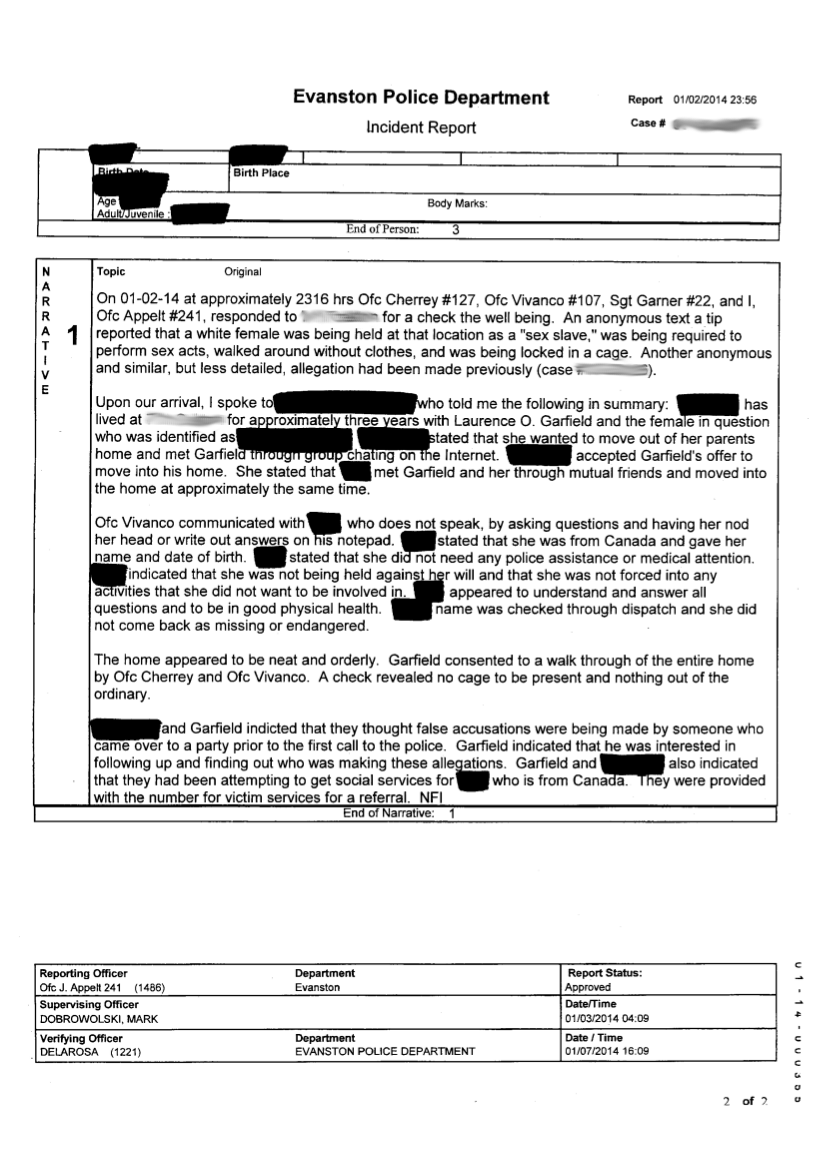
New submitter cornholed writes: In an update to previous posts on Slashdot, prominent Drupal and PHP Developer Larry Garfield is still defending his reputation against allegations by Drupal leadership against sexual misconduct. As previously reported by a variety of news organizations, Larry was exiled from the Drupal project for adherence to the Gor sci-fi lifestyle.
In the latest round of allegations, Garfield was reportedly asked to resign because an autistic "woman who attended Drupal community events ... was allowed to contribute by him". While some have accused Dries Buytart and the Drupal Association of "Autism Shaming", the leader of the Drupal project claims "this person could be vulnerable and may have been subject to exploitation", hence raising the risk of legal damage to the Drupal project. Larry refutes these allegations, saying these claims are post-hoc and has shared police reports purporting his innocence.
There is still much debate in the Drupal community around why Larry was ejected from his leadership positions. While there's much speculation over Larry's ouster, there is one thing for certain: become a leader in the OSS community and a dossier on your public statements just might be made about you. -
We Could Have Had Cellphones Four Decades Earlier (reason.com)
_Sharp'r_ writes: Professor Thomas Hazlett of Clemson University analyzed the history of wireless spectrum and concluded the technology was known and available for cellphones in the 40s, but there was no spectrum available. Based on assumptions cellphones would always be luxury goods without mass appeal, significant spectrum for divisible cellular networks wasn't legally usable until the early 80s. Instead, the unused spectrum was reserved for the future expansion of broadcast TV to channels 70-83. Here's an excerpt from the report: "When AT&T wanted to start developing cellular in 1947, the FCC rejected the idea, believing that spectrum could be best used by other services that were not 'in the nature of convenience or luxury.' This view -- that this would be a niche service for a tiny user base -- persisted well into the 1980s. 'Land mobile,' the generic category that covered cellular, was far down on the FCC's list of priorities. In 1949, it was assigned just 4.7 percent of the spectrum in the relevant range. Broadcast TV was allotted 59.2 percent, and government uses got one-quarter." -
John McAfee Denied Libertarian Party Nomination For President (reason.com)
SonicSpike quotes an article at Reason: In a decisive rout for pragmatism over purity, the Libertarian Party has nominated former New Mexico Republican Governor and 2012 nominee Gary Johnson for president. Johnson came within an eyelash of winning on the first ballot, pulling 49.5 percent of the vote, just short of the required majority. (Libertarian activist Austin Petersen and software magnate John McAfee came in second and third, respectively, with 21.3 percent and 14.1 percent.) With sixth-place finisher Kevin McCormick (and his 0.973 percent of the vote) booted from the second ballot, Johnson sailed through with 55.8 percent.
John Mcafee answered questions here on Slashdot in 2013. Reason's article includes a video of their interview this weekend with the party's official nominee Gary Johnson, who hopes to qualify for the nationally-televised presidential debates by drawing 15% of the support in national opinion polls. -
Reason Excoriates Paper On "Glaciers, Gender, and Science" (reason.com)
An anonymous reader writes: Reason.com's Robby Soave criticizes an article published in the journal Progress in Human Geography, for being "utterly incomprehensible," and "the least essential paper ever written." Entitled Glaciers, Gender, and Science--A feminist glaciology framework for global environmental climate change, the article is authored by researchers at the University of Oregon and funded by a grant from the National Science Foundation. Despite being filled with "buzzwords -- colonialism, marginalization, masculinist discourses, etc. -- with such frequency that the entire thing comes off like a joke," the article is accompanied by an enthusiastic press release from the University of Oregon, stating that "glacier research has been intertwined with gender relations, masculine cultures of exploration, geopolitics, and individual and institutional power. That, in turn, led to glacier-related academic and governmental jobs being predominantly filled by men. ... Melting glaciers are today considered a national security risk for numerous countries,' [one of the researchers] said. 'Power and colonialism have shaped the science.' That message is detailed extensively in the paper." -
Edward Snowden To Keynote This Weekend's Free State Project Liberty Forum (reason.com)
cold fjord writes: Nick Gillespie at Reason is heading to The Free State Project's annual Liberty Forum being held this weekend in Manchester, New Hampshire. One of the highlights and a big draw this year is the keynote address by Edward Snowden via the Internet. Nick Gillespie will be interviewing Edward Snowden. Snowden is also scheduled to answer questions from participants submitted ahead of time. There are already reported to be 2,000 Free State Project members in the state, and reports from Brian Doherty indicate they are already effecting change: "Over 1,900 Free Staters already are there and we've reported here at Reason on some of what they're already accomplished, from getting 15 of their brethren in the state House, challenging anti-ridehail laws, fighting in court for outre religious liberty, winning legal battles over taping cops, being mocked by Colbert for heroically paying off people's parking meters, hosting cool anything goes festivals for libertarians, nullifying pot juries, and inducing occasional pants-wetting absurd paranoia in local statists." -
Edward Snowden To Keynote This Weekend's Free State Project Liberty Forum (reason.com)
cold fjord writes: Nick Gillespie at Reason is heading to The Free State Project's annual Liberty Forum being held this weekend in Manchester, New Hampshire. One of the highlights and a big draw this year is the keynote address by Edward Snowden via the Internet. Nick Gillespie will be interviewing Edward Snowden. Snowden is also scheduled to answer questions from participants submitted ahead of time. There are already reported to be 2,000 Free State Project members in the state, and reports from Brian Doherty indicate they are already effecting change: "Over 1,900 Free Staters already are there and we've reported here at Reason on some of what they're already accomplished, from getting 15 of their brethren in the state House, challenging anti-ridehail laws, fighting in court for outre religious liberty, winning legal battles over taping cops, being mocked by Colbert for heroically paying off people's parking meters, hosting cool anything goes festivals for libertarians, nullifying pot juries, and inducing occasional pants-wetting absurd paranoia in local statists." -
Interviews: Ask Attorney and Author Mike Godwin a Question
Mike Godwin worked as the first staff counsel of the EFF and served as general counsel for the Wikimedia Foundation. He has been a contributing editor of Reason magazine and was elected to the Open Source Initiative board in 2011. Mike is probably best known however for coining the internet adage Godwin's Law. He is currently general counsel and director of innovation policy at the R Street Institute. Mike has given us some of his time to answer any questions you may have. As usual, ask as many as you'd like, but please, one question (and one comparison involving Nazis or Hitler) per post. -
15,000 Hoverboards Seized As Unsafe In United Kingdom (nationaltradingstandards.uk)
puddingebola writes: National Trading Standards and trading standards services in Scotland have released figures that 15,000 of 17,000 hoverboards have been seized at ports of entry in the UK because of safety concerns. The boards were seized "due to a range of concerns, such as safety issues with the plug, cabling, charger, battery or the cut-off switch within the board, which often fails." Are we pushing hoverboard technology too far too quickly, or are there just a group of criminal sociopaths manufacturing unsafe devices at Christmastime and pumping them into the market? Mashable has a story summary with links to video of a man in Alabama with his hoverboard on fire. The government of New York City isn't so hot on hoverboards, either. -
US No-Fly List Uses 'Predictive Judgement' Instead of Hard Evidence
HughPickens.com writes: The Guardian reports that in a little-noticed filing before an Oregon federal judge, the US Justice Department and the FBI conceded that stopping U.S. and other citizens from traveling on airplanes is a matter of "predictive assessments about potential threats." "By its very nature, identifying individuals who 'may be a threat to civil aviation or national security' is a predictive judgment intended to prevent future acts of terrorism in an uncertain context," Justice Department officials Benjamin C Mizer and Anthony J Coppolino told the court. It is believed to be the government's most direct acknowledgment to date that people are not allowed to fly because of what the government believes they might do and not what they have already done. The ACLU has asked Judge Anna Brown to conduct her own review of the error rate in the government's predictions modeling – a process the ACLU likens to the "pre-crime" of Philip K Dick's science fiction. "It has been nearly five years since plaintiffs on the no-fly list filed this case seeking a fair process by which to clear their names and regain a right that most other Americans take for granted," say ACLU lawyers.
The Obama administration is seeking to block the release of further information about how the predictions are made, as damaging to national security. "If the Government were required to provide full notice of its reasons for placing an individual on the No Fly List and to turn over all evidence (both incriminating and exculpatory) supporting the No Fly determination, the No Fly redress process would place highly sensitive national security information directly in the hands of terrorist organizations and other adversaries," says the assistant director of the FBI's counterterrorism division, Michael Steinbach. -
Editor of 'Reason' Discusses Federal Subpoena To Unmask Commenters
mi points out an article from Nick Gillespie, editor of libertarian website Reason, who was recently asked by the federal government to provide identifying information on anonymous commenters from one of the site's blog posts. Not only was Reason issued a subpoena for the commenters's identities, but they were also placed under a gag order, preventing them from even mentioning it to somebody who wasn't their lawyer. Gillespie says the comments in question were "hyperbolic, in questionable taste–and fully within the norms of Internet commentary." He continues: To the extent that the feds actually thought these were serious plans to do real harm, why the hell would they respond with a slow-moving subpoena whose deadline was days away? By spending five minutes doing the laziest, George Jetson-style online "research" (read: Google and site searches), they would have found publicly available info on some of the commenters. I'm talking things like websites and Google+ pages. One of the commenters had literally posted thousands of comments at Reason.com, from which it is clear that he (assuming it is a he) is not exactly a threat to anyone other than common decency." -
Feds Want To Unmask Internet Commenters Writing About the Silk Road Trial Judge
An anonymous reader writes: A grand jury subpoena, obtained by Ken White of the law blog Popehat, demands that libertarian news magazine Reason hand over "any and all identifying information" about certain commenters posting on an article published May 31st, "Silk Road Trial: Read Ross Ulbricht's Haunting Sentencing Letter to Judge." The subpoena cites a law against "interstate threats" as the reason for demanding the information, which the Supreme Court very recently decided must include real intent.
As White points out, the comments — repugnant as they are — may very well not constitute a true threat, as they aren't directed at the judge and don't detail any real plans for violence. The kicker: although it's possible to fight the subpoena, precedent suggests the U.S. Attorney's office may have the power to obtain the information anyway. However the situation shakes out, this isn't nearly the first fight over commenter anonymity and the First Amendment, and certainly won't be the last. -
Reason: How To Break the Internet (in a Bad Way)
Widespread public sentiment favors the FCC's move to impose rules intended to establish "net neutrality"; an anonymous reader writes with a skeptical viewpoint: "No decent person," write Geoffrey Manne and Ben Sperry in a special issue of Reason, "should be *for* net neutrality." Across the board, the authors write, letting the FCC dictate ISP business practices will result in everything they say they're trying to avoid. For instance, one of the best ways to route around a big firm's brand recognition is to buy special treatment in the form of promotions, product placement and the like (payola, after all, is how rock and roll circumvented major label contempt for the genre). That will almost certainly be forbidden under the FCC's version of neutrality. -
Wikipedia Entries On NYPD Violence Get Some Edits From Headquarters
First reported by Capital, and picked up by Reason, it seems that "Computers operating on the New York Police Department’s computer network at its 1 Police Plaza headquarters have been used to alter Wikipedia pages containing details of alleged police brutality." Computer users identified by Capital as working on the NYPD headquarters' network have edited and attempted to delete Wikipedia entries for several well-known victims of police altercations, including entries for Eric Garner, Sean Bell, and Amadou Diallo. Capital identified 85 NYPD addresses that have edited Wikipedia, although it is unclear how many users were involved, as computers on the NYPD network can operate on the department’s range of IP addresses. Besides edits to entries about specific instances of misconduct, edits from the same NYPD IP blocks were discovered in Wikipedia entries about the city's stop-and-frisk program and about NYPD misconduct more generally. -
An Algorithm To Prevent Twitter Hashtag Degeneration
Bennett Haselton writes The corruption of the #Ferguson and #Gamergate hashtags demonstrates how vulnerable the hashtag system is to being swamped by an "angry mob". An alternative algorithm could be created that would allow users to post tweets and browse the ones that had been rated "thoughtful" by other users participating in the same discussion. This would still allow anyone to contribute, even average users lacking a large follower base, while keeping the most stupid and offensive tweets out of most people's feeds. Keep reading to see what Bennett has to say.As demonstrations and looting took place in Ferguson, some friends of mine and many public commentators expressed disgust with some of the most prejudiced comments tweeted with the #ferguson hashtag. A few high-profile cases led to incidents such as security concerns at one high school and a teacher being fired from another, but most of my friends paying attention said it was more about the steady drumbeat of subtly racist, ignorant, or epically point-missing tweets limping past, often larded with passive-aggressive sarcasm. (Typical example that I just pulled from #ferguson, courtesy of "Wayne Dupree Show": "Liberal Logic 101: Blacks don't commit crimes, Police are just racist. It's sad but that's the narrative being pushed #ferguson #ericgarner". But on the other side, hashtag names like "#BlackLivesMatter" are pretty passive-aggressive too.)
It reminded me of the corruption of the original #GamerGate tag, which today is infamously known for crude sexist trolling, but in its original incarnation (as coined by actor Alec Baldwin), the hashtag apparently referred to some somewhat reasonable questions being raised about ethics in gaming journalism and the statements of one (female) indie game developer. Regardless of what you think of the original arguments or the people making them -- even if you accept, for the sake of argument, that everything they were saying was wrong -- they didn't deserve for the hashtag to be associated with sexist piggishness that became synonymous with #GamerGate, to the exclusion of any discussion of the original points.
Whether a hashtag is corrupted by opponents (#ferguson) or by Neanderthals who nominally claim to be supporting you (#GamerGate), in either case it's possible for a sufficiently large mob to effectively ruin the discussion for many of the participants. In the case of #GamerGate, the point of the original discussion was drowned out completely; in the case of #ferguson, a high proportion of tweets are still aligned with the original point, but a reader is still going to quit reading if each victim-blaming tweet depresses them so much that the next 10 decent tweets won't make up for it.
So, what can you do? You could follow only the people you trust to say something thoughtful (or, at least, not proudly ignorant), and filter their posts for the #ferguson hashtag, but then you'd miss the overwhelming majority of other people's tweets on the subject, even the good ones. You can follow all posts with the hashtag and block the most egregious repeat "offenders", but that won't help much when the problematic messages come from so many different accounts.
What Twitter could do, on the other hand, would be to set up a system for browsing tweets under a given hashtag that would reward the tweets that are given the highest rating by other users following the same hashtag. That would not replace the current Twitter default of strict reverse chronological order for tweets, which hardcore Twitter fans consider sacrosanct. But it could be an alternative model for browsing the tweets grouped under a given hashtag.
Similar to the system I suggested for Twitter to adjudicate abuse reports, a tweet under a given hashtag could initially be shown to a random subset of, say, 100 users who are following that hashtag, and rated as to whether the tweet is funny, informative, interesting, etc. (sound familiar)? Then if the average rating is high enough, the tweet would be shown to users who are browsing the "highest rated" tweets on a given topic.
(The simpler and more obvious solution would be to display tweets as "highest rated" if they had been favorited or retweeted by lots of people. However, this is problematic because it allows a person to game the system by having all of their friends -- or sockpuppet accounts -- "like" a tweet in order to drive it to the top of the pile. By having the ratings come from a random subset of users, this resists attempts to game the system, because there's no way for a user to ensure that their friends will be among the random subset that is selected to rate the tweet.)
This is, essentially, the same algorithm that I've recommended for many other similar problems, even including, say, ways to identify the best new songs in a given genre (so that trance fans can rate the best new trance songs, country fans can rate the best new country songs, and in both cases, the new songs with the highest average rating get the widest promotion to all self-declared fans of that genre). However, there's a signficant twist in the case of rating tweets under a political hashtag. Fans of trance music can be reasonably sure that country music fans are not going to sign up to rate trance songs and given upvotes to the stupidest trance music. But on the other hand, if you create the #ferguson hashtag to discuss reforms to the justice system, there's a good chance that plenty of trolls will sign up to follow the #ferguson hashtag if it gives them the opportunity to upvote racist and victim-blaming tweets that defeat the purpose of the original discussion. Even if you assume that the racists and victim-blamers constitute a minority of users following the hashtag, it might also be the case that they will have a higher response rate whenever they happen to part of a random sample which is asked to "rate" a given tweet to determine whether that tweet is promoted to a wider audience. The trolls might end up constituting a majority of votes cast, which would defeat the purpose.
So perhaps a modified version of the algorithm could work better. As before, new tweets under a given hashtag would be rated by a random subset of users following that hashtag. However, for some random subset of those tweets, the tweets would also be rated by a random subset of all Twitter users. (How to solicit ratings from the general population of Twitter users is a good question. If you simply displayed those tweets to random Twitter users in a sidebar and asked, "Please rate this tweet, even though it's for a hashtag that you're not following," the response rate would likely be very low. But whatever the low rate was, if you display the tweet and the rating request to enough users, eventually you will get a sample of ratings that is statistically significant.) If the system determines that, in many cases, the rating of the tweet's quality from average Twitter users is significantly far apart from the rating from users following that hashtag, then that hashtag can be considered "compromised" (i.e., the majority of people following tweets on that hashtag are probably trolls, or at the least, voting far differently from how average Twitter users vote). And then, perhaps, the highest-rated tweets under that hashtag could be displayed with a disclaimer saying that the ratings have probably been manipulated and are not reliable (but here are the highest-rated tweets anyway, in case you want to read them).
This does raise a philosophical question: What if some subset of Twitter users -- whether skinheads, or communists, or Beliebers -- want to engage in a discussion where posts are rated according to their appeal to members of that in-group, without regard for those posts' appeal to the rest of the user base? Isn't that a perfectly valid form of discussion? My sympathies lie against that point of view. Apart from the fact that the group obviously has the legal right to engage in whatever in-group discussion they want to have, I don't think it's healthy to engage only with like-minded people whose mindset is radically different from almost everyone else's. (In any case, the system could still display the highest-rated tweets, just with the ever-present reminder that those ratings are wildly different from the average ratings given by users who are not following the hashtag. Unfortunately that might just embolden members of the in-group who take pride in the fact that their philosophy sets them apart from most of the rest of the world.)
Unfortunately a "deference to the majority" also means that the protocol wouldn't do much good in cases where the majority really is wrong. If Twitter had existed 60 years ago and had implemented something like what I'm describing, then Twitter discussions of homosexuality or interracial marriage might never have gotten off the ground, because the majority probably would have downvoted anything advocating or even tolerating those lifestyle options. (What year would you guess was the first year in which surveys showed that a majority of Americans supported interracial marriage? 1997.) Peer review, even in the random-sample, non-gameable fashion that I'm talking about, doesn't do much good to advance the discussion when we are the trolls, oblivious to the things we're bigoted and ignorant about that we'll look back and shake our heads at in another fifty years.
-
An Algorithm To Prevent Twitter Hashtag Degeneration
Bennett Haselton writes The corruption of the #Ferguson and #Gamergate hashtags demonstrates how vulnerable the hashtag system is to being swamped by an "angry mob". An alternative algorithm could be created that would allow users to post tweets and browse the ones that had been rated "thoughtful" by other users participating in the same discussion. This would still allow anyone to contribute, even average users lacking a large follower base, while keeping the most stupid and offensive tweets out of most people's feeds. Keep reading to see what Bennett has to say.As demonstrations and looting took place in Ferguson, some friends of mine and many public commentators expressed disgust with some of the most prejudiced comments tweeted with the #ferguson hashtag. A few high-profile cases led to incidents such as security concerns at one high school and a teacher being fired from another, but most of my friends paying attention said it was more about the steady drumbeat of subtly racist, ignorant, or epically point-missing tweets limping past, often larded with passive-aggressive sarcasm. (Typical example that I just pulled from #ferguson, courtesy of "Wayne Dupree Show": "Liberal Logic 101: Blacks don't commit crimes, Police are just racist. It's sad but that's the narrative being pushed #ferguson #ericgarner". But on the other side, hashtag names like "#BlackLivesMatter" are pretty passive-aggressive too.)
It reminded me of the corruption of the original #GamerGate tag, which today is infamously known for crude sexist trolling, but in its original incarnation (as coined by actor Alec Baldwin), the hashtag apparently referred to some somewhat reasonable questions being raised about ethics in gaming journalism and the statements of one (female) indie game developer. Regardless of what you think of the original arguments or the people making them -- even if you accept, for the sake of argument, that everything they were saying was wrong -- they didn't deserve for the hashtag to be associated with sexist piggishness that became synonymous with #GamerGate, to the exclusion of any discussion of the original points.
Whether a hashtag is corrupted by opponents (#ferguson) or by Neanderthals who nominally claim to be supporting you (#GamerGate), in either case it's possible for a sufficiently large mob to effectively ruin the discussion for many of the participants. In the case of #GamerGate, the point of the original discussion was drowned out completely; in the case of #ferguson, a high proportion of tweets are still aligned with the original point, but a reader is still going to quit reading if each victim-blaming tweet depresses them so much that the next 10 decent tweets won't make up for it.
So, what can you do? You could follow only the people you trust to say something thoughtful (or, at least, not proudly ignorant), and filter their posts for the #ferguson hashtag, but then you'd miss the overwhelming majority of other people's tweets on the subject, even the good ones. You can follow all posts with the hashtag and block the most egregious repeat "offenders", but that won't help much when the problematic messages come from so many different accounts.
What Twitter could do, on the other hand, would be to set up a system for browsing tweets under a given hashtag that would reward the tweets that are given the highest rating by other users following the same hashtag. That would not replace the current Twitter default of strict reverse chronological order for tweets, which hardcore Twitter fans consider sacrosanct. But it could be an alternative model for browsing the tweets grouped under a given hashtag.
Similar to the system I suggested for Twitter to adjudicate abuse reports, a tweet under a given hashtag could initially be shown to a random subset of, say, 100 users who are following that hashtag, and rated as to whether the tweet is funny, informative, interesting, etc. (sound familiar)? Then if the average rating is high enough, the tweet would be shown to users who are browsing the "highest rated" tweets on a given topic.
(The simpler and more obvious solution would be to display tweets as "highest rated" if they had been favorited or retweeted by lots of people. However, this is problematic because it allows a person to game the system by having all of their friends -- or sockpuppet accounts -- "like" a tweet in order to drive it to the top of the pile. By having the ratings come from a random subset of users, this resists attempts to game the system, because there's no way for a user to ensure that their friends will be among the random subset that is selected to rate the tweet.)
This is, essentially, the same algorithm that I've recommended for many other similar problems, even including, say, ways to identify the best new songs in a given genre (so that trance fans can rate the best new trance songs, country fans can rate the best new country songs, and in both cases, the new songs with the highest average rating get the widest promotion to all self-declared fans of that genre). However, there's a signficant twist in the case of rating tweets under a political hashtag. Fans of trance music can be reasonably sure that country music fans are not going to sign up to rate trance songs and given upvotes to the stupidest trance music. But on the other hand, if you create the #ferguson hashtag to discuss reforms to the justice system, there's a good chance that plenty of trolls will sign up to follow the #ferguson hashtag if it gives them the opportunity to upvote racist and victim-blaming tweets that defeat the purpose of the original discussion. Even if you assume that the racists and victim-blamers constitute a minority of users following the hashtag, it might also be the case that they will have a higher response rate whenever they happen to part of a random sample which is asked to "rate" a given tweet to determine whether that tweet is promoted to a wider audience. The trolls might end up constituting a majority of votes cast, which would defeat the purpose.
So perhaps a modified version of the algorithm could work better. As before, new tweets under a given hashtag would be rated by a random subset of users following that hashtag. However, for some random subset of those tweets, the tweets would also be rated by a random subset of all Twitter users. (How to solicit ratings from the general population of Twitter users is a good question. If you simply displayed those tweets to random Twitter users in a sidebar and asked, "Please rate this tweet, even though it's for a hashtag that you're not following," the response rate would likely be very low. But whatever the low rate was, if you display the tweet and the rating request to enough users, eventually you will get a sample of ratings that is statistically significant.) If the system determines that, in many cases, the rating of the tweet's quality from average Twitter users is significantly far apart from the rating from users following that hashtag, then that hashtag can be considered "compromised" (i.e., the majority of people following tweets on that hashtag are probably trolls, or at the least, voting far differently from how average Twitter users vote). And then, perhaps, the highest-rated tweets under that hashtag could be displayed with a disclaimer saying that the ratings have probably been manipulated and are not reliable (but here are the highest-rated tweets anyway, in case you want to read them).
This does raise a philosophical question: What if some subset of Twitter users -- whether skinheads, or communists, or Beliebers -- want to engage in a discussion where posts are rated according to their appeal to members of that in-group, without regard for those posts' appeal to the rest of the user base? Isn't that a perfectly valid form of discussion? My sympathies lie against that point of view. Apart from the fact that the group obviously has the legal right to engage in whatever in-group discussion they want to have, I don't think it's healthy to engage only with like-minded people whose mindset is radically different from almost everyone else's. (In any case, the system could still display the highest-rated tweets, just with the ever-present reminder that those ratings are wildly different from the average ratings given by users who are not following the hashtag. Unfortunately that might just embolden members of the in-group who take pride in the fact that their philosophy sets them apart from most of the rest of the world.)
Unfortunately a "deference to the majority" also means that the protocol wouldn't do much good in cases where the majority really is wrong. If Twitter had existed 60 years ago and had implemented something like what I'm describing, then Twitter discussions of homosexuality or interracial marriage might never have gotten off the ground, because the majority probably would have downvoted anything advocating or even tolerating those lifestyle options. (What year would you guess was the first year in which surveys showed that a majority of Americans supported interracial marriage? 1997.) Peer review, even in the random-sample, non-gameable fashion that I'm talking about, doesn't do much good to advance the discussion when we are the trolls, oblivious to the things we're bigoted and ignorant about that we'll look back and shake our heads at in another fifty years.
-
Online Payment Firm Stripe Boots 3D Gun Designer Cody Wilson's Companies
SonicSpike writes with this news from Reason magazine: Cody Wilson, famous for making the first usable fully plastic 3D printed handgun and for his new project "Ghost Gunner" which mills metal lower receivers (the milling machine itself is of course not a weapon, and what it makes is not itself legally a weapon) for AR-15s, [informed me Monday] that his online payment processor Stripe has decided that his companies, all of them, qualify as forbidden "weapons and munitions; gunpowder and other explosives" services. This includes the Ghost Gunner and Defense Distributed. -
Reason Suggests DoJ Closing Porn Stars' Bank Accounts
MouseTheLuckyDog (2752443) writes "In a recent story on reason.com it was reported that the DoJ is closing down the bank accounts of porn stars. Not knowing the site I googled around and found another site, the Guardian. The story does not end there. It turns out that this is part of a larger scheme (ironically) called Operation Choke Point. Also reported in a Washington Post article that downplays the practice. According to Cryptocoin news. There are thirty industries the DoJ is now targeteting: Ammunition Sales; Cable Box De-scramblers; Coin Dealers; Credit Card Schemes; Credit Repair Services; Dating Services; Debt Consolidation Scams; Drug Paraphernalia; Escort Services; Firearms Sales; Fireworks Sales; Get Rich Products; Government Grants; Home-Based Charities; Life-Time Guarantees; Life-Time Memberships; Lottery Sales; Mailing Lists/Personal Info; Money Transfer Networks; On-line Gambling; PayDay Loans; Pharmaceutical Sales; Ponzi Schemes; Pornography; Pyramid-Type Sales; Racist Materials; Surveillance Equipment; Telemarketing; Tobacco Sales; and Travel Clubs. But more can be added. (I notice alcohol sales is not on the list)." The Reason article stops short of saying that Choke Point is proven to be the reason for the account closures, but it seems very plausible. -
Cody Wilson Interview at Reason: Happiness Is a 3D Printed Gun
An anonymous reader writes "Cody Wilson details his conflict with the State Department over 3-D printable guns in this new interview with ReasonTV. In this video, he discusses how 3-D printing will render gun control laws obsolete and unenforceable; why Dark Wallet, his new crypto-currency, is much more subversive than Bitcoin; his legal defense, headed by Alan Gura (attorney in District of Columbia v. Heller and McDonald v. Chicago); and his forthcoming book about anarchy and the future." -
Peoria Mayor Sends Police To Track Down Twitter Parodist
New submitter rotorbudd (1242864) writes with an article at Reason about Jim Ardis, mayor of Peoria, Illinois, who ordered police to track down whoever was responsible for a parody Twitter account mocking him."Guess the good Mayor has never heard of the Streisand Effect. 'The original Twitter account had a total of 50 followers. The new account has over 200.'" -
The 3D Economy — What Happens When Everyone Prints Their Own Shoes?
cold fjord writes: "According to Reason, 'Last May, Cody Wilson produced an ingeniously brief but nuanced manifesto about individual liberty in the age of the ever-encroaching techno-state-a single shot fired by a plastic pistol fabricated on a leased 3D printer. While Wilson dubbed his gun The Liberator, his interests and concerns are broader than merely protecting the Second Amendment. ... Wilson is ultimately aiming for the 'transcendence of the state.' And yet because of the nature of his invention, many observers reacted to his message as reductively as can be: 'OMG, guns!'... But if armies of Davids really want to transcend the state, there are even stronger weapons at their disposal: toothbrush holders, wall vases, bottle openers, shower caddies, and tape dispensers. ... In many ways, it's even harder to imagine a city of, say, 50,000 without big-box retailers than it is to imagine it without a daily newspaper. So perhaps 3D printing won't alter our old habits that substantially. We'll demand locally made kitchen mops, but we'll still get them at Target. We'll acquire a taste for craft automobile tires, but we'll obtain them from some third party that specializes in their production. Commercial transactions will still occur. But if history is any guide, more and more of us will soon be engaging in all sorts of other behaviors too. Making our own goods. Sharing, swapping, and engaging in peer-to-peer commerce. Appropriating the ideas and designs of others and applying them to our own ends.'" -
Bitcoin Token Maker Suspends Operation After Hearing From Federal Gov't
First time accepted submitter Austrian Anarchy writes with this story via Reason (and based on a report at Wired) about a maker of physical Bitcoin tokens. Quoting from Reason's take: "Mike Caldwell ran a business called Casascius that printed physical tokens with a bitcoin digital key on it, key hidden behind a tamper proof strip. He'd charge $50 worth of bitcoin to print a bitcoin key you sent him via computer on this token. Cool stuff--a good friend of mine found one sitting unnoticed in her tip jar from an event at which she sold her artisan lamps from 2011 and was naturally delighted given the nearly 1000x increase in value of a bitcoin since then. So, you're making something fun, useful, interesting, harmless--naturally the federal government is very concerned and wants to hobble you. 'Just before Thanksgiving, [Caldwell] received a letter from the Financial Crimes Enforcement Network, or FINCEN, the arm of the Treasury Department that dictates how the nation’s anti-money-laundering and financial crime regulations are interpreted. According to FINCEN, Caldwell needs to rethink his business. "They considered my activity to be money transmitting," Caldwell says. And if you want to transmit money, you must first jump through a lot of state and federal regulatory hoops Caldwell hasn't jumped through.'" -
Driver Arrested In Ohio For Secret Car Compartment Full of Nothing
schwit1 writes about the hazards of driving through Ohio in a car with a secret compartment in the trunk. From the article: "Norman Gurley, 30, is facing drug-related charges in Lorain County, Ohio, despite the fact that state troopers did not actually find any drugs in his possession. Ohio passed a law in 2012 making it a felony to alter a vehicle to add a secret compartment with the 'intent' of using it to conceal drugs for trafficking." This is the first person arrested under the strange law. -
Are Shuttered Gov't Sites Actually Saving Money?
Lots of U.S. government agencies' websites are partly or fully shut down, many of them with messages like this one, from the front page of the National Radio Astronomy Observatory: "Effective 7 p.m. EDT, Friday, 4 October 2013, the National Radio Astronomy Observatory (NRAO) temporarily suspended all US operations because of the US Federal government shutdown. All NRAO facilities and buildings are closed; NRAO personnel, other than a skeleton crew, are on furlough and cannot respond to emails or phone calls." Brian Doherty argues at Reason that many of these shutterings don't actually seem to make any financial sense, and that the sites are down more as a public statement than out of fiscal prudence. If you're involved with running an organizational web site (government-funded or not), do you agree? -
The Little Bomb-Detecting Device That Couldn't
theodp writes "Widely deployed in Iraq and promoted by military leaders, BusinessWeek reports the ADE 651 bomb-detecting device had one little problem: it wouldn't detect explosives (earlier Slashdot story). 'The ADE 651,' reports Adam Higginbotham, 'was modeled on a novelty trinket conceived decades before by a former used-car salesman from South Carolina, which was purported to detect golf balls. It wasn't even good at that.' One thing the ADE 651 did excel at, however, was making money — estimates suggest that the authorities in Baghdad bought more than 6,000 useless bomb detectors, at a cost of at least $38 million. Even though ADE 651 manufacturer James McCormick was found guilty of three counts of fraud and sentenced to 10 years in prison in May, the ADE 651 is still being used at thousands of checkpoints across Baghdad. Elsewhere, authorities have never stopped believing in the detectors. Why? According to Sandia Labs' Dale Murray, the ideomotor effect is so persuasive that for anyone who wants or needs to believe in it, even conclusive scientific evidence undermining the technology it exploits has little power." -
The Free State Project, One Decade Later
Okian Warrior writes "About a decade ago Slashdot ran an article about the Free State Project: an attempt to get 20,000 liberty-minded activists to move to one state (they chose NH) and change the political landscape. Eleven years on, the project is still growing and having an effect on statewide politics. NPR recently ran a program discussing the movement, its list of successes, and plans for the future. The FSP has a noticeable effect on politics right now — still 6,000 short of their 20,000 goal, and long before the members are scheduled to move to NH." -
Of 1000 Americans Polled, Most Would Ban Home Printing of Guns
An anonymous reader writes "In results that may signal some discomfort with the enormous DIY promise of 3D printing and similar home-manufacturing technologies, a new Reason-Rupe poll finds that an otherwise gun control-weary American public thinks owners of 3D printers ought not be allowed to make their own guns or gun parts. Of course, implementing such a restrictive policy might be tad more difficult than measuring popular preferences." This poll is of only 1000 people, though; your mileage may vary. -
NYC Police Comm'r: Privacy Is 'Off the Table' After Boston Bombs
An anonymous reader writes "New York City Police Commissioner Ray Kelly thinks that now is a great time to install even more surveillance cameras hither and yon around the Big Apple. After the Boston Marathon bombing, the Tsarnaev brothers were famously captured on security camera footage and thereby identified. That just may soften up Americans to the idea of the all-seeing glass eye. 'I think the privacy issue has really been taken off the table,' Kelly gloats." -
Leaked: Obama's Rules For Assassinating American Citizens
cathyreisenwitz writes "For over a year now journalists, civil liberties advocates, and members of Congress have been asking the Obama administration to release internal memoranda from the Office of Legal Counsel justifying Obama's targeted killing program. While the White House continues to deny that such memos exist, NBC is reporting that it has acquired the next best thing: A secretish 16-page white paper from the Department of Justice that was provided to select members of the Senate last June." Spencer Ackerman at Wired says the leaked rules "[trump] traditional Constitutional protections American citizens enjoy from being killed by their government without due process" by redefining the concept of "imminence." -
Leaked: Obama's Rules For Assassinating American Citizens
cathyreisenwitz writes "For over a year now journalists, civil liberties advocates, and members of Congress have been asking the Obama administration to release internal memoranda from the Office of Legal Counsel justifying Obama's targeted killing program. While the White House continues to deny that such memos exist, NBC is reporting that it has acquired the next best thing: A secretish 16-page white paper from the Department of Justice that was provided to select members of the Senate last June." Spencer Ackerman at Wired says the leaked rules "[trump] traditional Constitutional protections American citizens enjoy from being killed by their government without due process" by redefining the concept of "imminence." -
Reason On How and Why 38 Studios Went Bust
cathyreisenwitz writes "The 2012 bankruptcy of Rhode Island-based video-game developer 38 Studios isn't just a sad tale of a start-up tech company falling victim to the vagaries of a rough economy. It is a completely predictable story of crony capitalism, featuring star-struck legislators and the hubris of a larger-than-life athlete completely unprepared to compete in business." Reason makes no bones about its view of this kind of public-private "partnership." -
Reason On How and Why 38 Studios Went Bust
cathyreisenwitz writes "The 2012 bankruptcy of Rhode Island-based video-game developer 38 Studios isn't just a sad tale of a start-up tech company falling victim to the vagaries of a rough economy. It is a completely predictable story of crony capitalism, featuring star-struck legislators and the hubris of a larger-than-life athlete completely unprepared to compete in business." Reason makes no bones about its view of this kind of public-private "partnership." -
Additive Manufacturing (3D Printing), Gun Control, and Patent Law
retroworks writes "J.D. Tuccille of the conservative think tank Reason Foundation discusses last week's news about the first working 3D-printed gun. According to the original article, the partly plastic '.22-caliber pistol, formed from a 3D-printed AR-15 (M16) lower receiver, and a normal, commercial upper' fired 200 rounds without any sign of wear and tear. Tuccille takes the discovery in the direction of politically topical gun control. '...the development makes it clear that a wide range of bans, restrictions and prohibitions are becoming increasingly unenforcable.' But in my mind, this example of additive-manufacturing technology raises even more questions about patent law enforcement. Will 3D printing be to the Anti-gray-market-alliance what online porn became to neighborhood blue laws?" -
Kids Still Playing Pokemon Like It's 1999
theodp writes "In 1999, TIME's cover warned readers to Beware of Pokemon ('For many kids it's now an addiction: cards, video games, toys, a new movie. Is it bad for them?'). But Pokemon wasn't as easily felled as Lehman or Bear Stearns. Thirteen years later, 16-year-old Manoj Sunny has his eye on a Pokemon world title, having earned the chance to travel to The Big Island with 35 fellow Americans for the 2012 Pokemon Video Game World Championships, which will be held Aug. 10-12. Sunny, who also captains his school's chess team, credits his success to a good memory, intuition, daily practice, the use of an online simulator, and a competitive attitude ('I hate losing. Once I lost, I needed to get better.')" -
What Is an Astronaut's Life Worth?
An anonymous reader writes "Dr. Robert Zubrin has some interesting ideas about what it costs to have an astronaut on the payroll. He says if you’re going to 'give up four billion dollars to avoid a one in seven chance of killing an astronaut, you’re basically saying an astronaut’s life is worth twenty-eight billion dollars.' He wrote about the same subject earlier this year for Reason magazine, saying, 'Keeping astronauts safe merits significant expenditure. But how much? There is a potentially unlimited set of testing procedures, precursor missions, technological improvements, and other protective measures that could be implemented before allowing human beings to once again try flying to other worlds. Were we to adopt all of them, we would wind up with a human spaceflight program of infinite cost and zero accomplishment. In recent years, the trend has moved in precisely that direction, with NASA’s manned spaceflight effort spending more and more to accomplish less and less. If we are to achieve anything going forward, we have to find some way to strike a balance between human life and mission accomplishment.'" -
Feds Helped Coordinate Occupy X Crackdowns
Lawrence_Bird writes "The Feds helped break up the Occupy protests by providing advice and assistance from the FBI and DHS. From the article: 'Oakland Mayor Jean Quan said on Monday that her city and others across the country coordinated their crackdowns of Occupy Wall Street camps. Rick Ellis, a Minneapolis-based journalist for Examiner.com, reports that these cities also had the help of the Department of Homeland Security and the Federal Bureau of Investigation." In related conspiracy news, apcullen wrote in with a story by Time Magazine guest columnist Naomi Wolf who claims: "Instead of imminent safety issues, the timing of the crackdown was far more likely to do with the fact that the Occupy movement was planning something media-savvy at last: a 'carnival' on Wall Street on Thursday in which protesters would telegenically tell their individual stories of hardship, job loss and disenfranchisement. It is that event that posed a 'safety risk' — to the efforts of Wall Street and the Bloomberg administration to manage the narrative." -
Why Apple's DUI Checkpoint App Ban Is Stupid
hookskat writes "Reason.tv Editor in Chief Nick Gillespie reacts to Apple's decision to ban DUI Checkpoint Apps from the App Store, writing: 'Let me add something even more damning of this latest development in corporate cave-ins to legally protected free speech and I'm gonna bold it for emphasis: Some police departments actually supply the data used in such apps because they reduce the number of drunk drivers on the roads! Somehow, I'm thinking that Steve Jobs circa 1984...would have told U.S. senators sending threatening letters about computer-based info sharing to take a hike. Or at least to spend time on, I don't know, creating a freaking budget for the country rather than worrying about regulating something that helps reduce impaired driving.' Last month, after RIM caved on the same question, Reason.tv released this video on the subject of banning DUI checkpoint apps." -
Police Stop Journalists From Photographing Metrorail System
schwit1 writes with this excerpt from Reason.com: "Carlos Miller, who runs the Photography Is Not a Crime blog, and veteran photojournalist Stretch Leford decided to test the photography rules in Miami-Dade's metrorail system. Before embarking on their test, they obtained written assurance from Metro Safety and Security Chief Eric Muntan that there's no law against non-commercial photography on the system. The two didn't make it past the first station before they were stopped. Employees of 50 State Security, the private firm contracted to provide the metro's security, stopped the pair first. They then called in local police. The private firm and the police then threatened the two with arrest, demanded their identification (to check them against a terrorist watch list), demanded multiple times that they stop filming, and eventually 'banned' Miller and Ledford from the metro system 'for life' (though it's doubtful they had the authority to do so)." -
Stand and Deliver Teacher Jaime Escalante Dies
DesScorp writes "Jaime Escalante, the math teacher portrayed in the hit '80s movie Stand and Deliver, has died of cancer at age 79. Escalante is legendary for creating the advanced math 'pipeline' program at Garfield High in East Los Angeles in the '70s and '80s, an area populated mostly by poorer Hispanic families. Escalante's students eventually outpaced even richer schools in advanced placement tests for calculus. Escalante refused to accept excuses from his students or community about why they couldn't succeed, and demanded a standard of excellence from them, defying the notion that poor Hispanic kids just weren't capable of advanced work. While Escalante became a celebrity because of the hit movie about his efforts, jealousy from other teachers ... as well as red tape from teacher's unions and the public school bureaucracy, resulted in Escalante and his hand-picked teachers leaving Garfield. Since his departure, Garfield has never replicated Escalante's success with math students, and Reason Magazine reported on the shameful way in which others tore down what Escalante and his teachers worked so hard to build." -
DC Sues AT&T For Unclaimed Phone Minutes
Suki I submits news that Washington, D.C.'s attorney general has filed suit (District of Columbia vs. AT&T Corp, Superior Court of the District of Columbia), claiming the city has the right, through laws applying to unclaimed property, to unused calling-card balances held in the name of D.C. residents. "The suit claims that AT&T should turn over unused balances on the calling cards of consumers whose last known address was in Washington, D.C. and have not used the calling card for three years. 'AT&T's prepaid calling cards must be treated as unclaimed property under district law,' the attorney general's office said in a statement. ... [That sum] represents some 5 to 20 percent of the total balances purchased by consumers who use the calling cards. States and municipalities have often similarly used unclaimed property laws, known as escheat laws, to claim ownership of unused retail gift card balances." Suki I links also to Reason Magazine's coverage. -
The Mathletes and the Miley Photoshop
Frequent Slashdot contributor Bennett Haselton's essay this week is about "A Tennessee man is arrested for possessing a picture of Miley Cyrus's face superimposed on a nude woman's body. In a survey that I posted on the Web, a majority of respondents said the man violated the law -- except for respondents who say they were good at math in school, who as a group answered the survey differently from everyone else." Continue on to see how.On June 24, a Tennessee man was arrested for possessing photos that showed the faces of three underage girls, including Miley Cyrus, superimposed onto the nude bodies of adult women. Assistant District Attorney Dave Denny said of the arrest, "When you have the face of a small child affixed to a nude body of a mature woman, it's going to be the state's position that this is for sexual gratification and that this is simulated sexual activity." The phrase "simulated sexual activity" apparently refers to a Tennessee sex crimes law which states in part: "It is unlawful for any person to knowingly possess material that includes a minor engaged in simulated sexual activity that is patently offensive."
Assuming this is the crime that the D.A. plans to charge him with, to me it seems obvious that the defendant didn't violate the law as written. For one thing, if the nude women in the pictures were just standing there (and neither the article nor the D.A.'s statement suggests otherwise), then there was no "sexual activity" in the photos of any kind, real or simulated. But even if the nude adult women in the photos had been engaged in sexual activity (even just striking a mildly sexy pose), the law still would not apply, because the law requires an actual minor to actually be engaged in something, even if that "something" is simulated sexual activity. So if a video showed a real minor that appeared to be masturbating or having sex with someone in a manner that was "patently offensive", that could violate the law. (Hopefully the "patently offensive" clause would exclude artistic movies like The Tin Drum, although that defense has not always worked.) But if the girls' faces were simply cut and pasted onto the bodies of the women in the photos, then the minors in question were not "engaged in" anything. The D.A. appears to have confused "material that includes a minor engaged in simulated sexual activity" with "material that simulates a minor engaged in sexual activity". And the D.A.'s statement that "this is for sexual gratification and that this is simulated sexual activity" — clearly implying that the pictures are for sexual gratification and therefore this is "simulated sexual activity" — is ridiculous. The defendant probably used pictures of Miley with her clothes on for "sexual gratification" — does that make the photos "simulated sexual activity"? (Dave Denny's office did not respond to my request for comment.)
But I was more interested in a different question: What would people in a survey think about whether the defendant violated the law? And, would people who are good at math, answer the question differently from everyone else? And would those people answer the question differently from people who are good at, say, English composition?
That might seem like an odd twist to put on it. But if you can show that a certain answer correlates with mathematical ability, that indicates something special about that answer. And if you can show that that answer appeals to people with math skills, but not to people with English/writing/composition skills, then that indicates something interesting not just about that answer, but about mathematical ability as well, as opposed to writing ability. Whether that answer is "right" or "wrong" (or whether you think those terms are even meaningful for a legal opinion), it is a fact, not an opinion, that people with self-reported higher math skills are more likely to pick that as the correct choice.
By contrast, when the D.A. makes a public statement about the criminality of the defendant's actions, the implication is that we should give some weight to his statements because of his qualifications, such as being a member of the bar. But if we were to ask other bar members to decide independently of each other whether the defendant committed a crime, would they converge on the same answer? If not, then why should we listen to him, as opposed to someone else with the same credentials? When an expert cites their credentials in support of an opinion, if it's not true that other experts with the same credentials would back them up on that opinion, I don't think people realize the extent to which there is no there there.
So in the survey, I described the man's alleged actions and the Tennessee statute, and asked people if they thought he had violated the law. I also asked respondents to rate their math skills as "Excellent"/"Very good"/"Good"/"Fair"/"Poor" and to rate their English/composition skills as "Excellent"/"Very good"/"Good"/"Fair"/"Poor". The survey was posted on the Amazon Mechanical Turk site, where you can post "tasks" for people to complete in exchange for small payments of, say, 25 cents apiece. Some companies use this for grunt work (like hiring people to review user-submitted profile photos to make sure they don't contain nudity), but I use the site mainly to conduct surveys.
I think it's unlikely that the Mechanical Turk users are a representative cross-section of the population, but I use it more to find significant relative differences between demographic groups. If 60% of women on the site answer a question one way and 80% of men answer it the other way, that probably suggests that in a real cross-sectional survey of the population, men and women would largely disagree on the answer as well. (The alternative would be that the kind of men and women who use Mechanical Turk are predisposed to answer the question differently along gender lines in a way that average men and women are not, but that seems unlikely.)
For this survey, I offered users 25 cents apiece for completing this survey and collected 127 responses. The results in a nutshell:
- About two-thirds of all respondents (85 out of 127) said that the man did violate the law.
- However, among the respondents who rated their own math skills as "Excellent", only 44% (12 out of 27) said he violated the law, and 56% (15 out of 27) said that he did not. Out of all ten ability groupings (five different ability groupings for math, from "Excellent" to "Poor", and five for English), this was the only group where a majority said that the defendant didn't violate the statute.
- Respondents who self-rated their English/composition skills as "Excellent", were also more likely than average to vote that the man did not violate the law, but a majority of them still voted that he did.
These results are significant at the 99% level, which you can check using an online statistical significance calculator. In other words, despite the modest sample size, the answers given by the respondents with self-rated "excellent" math skills are so starkly different from everyone else's, that there's less than a 1 in 100 chance that the difference is due to coincidence. Almost certainly, something about mathematical ability is correlated with a person's likelihood of giving the "not guilty" answer. (At this point I'm going to give in to my bias and hereinafter refer to that as the "right answer.")
Furthermore, while respondents with "excellent" English/composition skills were also more likely than average to get the right answer (a difference that is also significant at the 99% level, given the collected data), they were considerably less likely to do so, than the users with self-reported "excellent" math skills (again, significant at the 99% level). I tabulated all the responses.
If I could afford to pay a larger sample, I would investigate whether the effect of "excellent" English/composition skills disappears entirely when you control for math skills. In other words, it's possible that the people with excellent English/composition skills were more likely than average to get the right answer, but only insofar as their English/composition skills were correlated with excellent math ability — and maybe people with "excellent" English/composition skills, but only average math ability, score no better than the average respondents.
One thing that jumps out at me: Even though 44% of the 27 people with "excellent" math skills said the man did violate the law, when you look at the 58 people who self-reported "very good" math skills, 74% of them said he violated the law. This would appear to confound my original hypothesis that good math skills lead people to converge on the correct answer. But I suspect that many people with self-reported "very good" math grades were probably just good students who studied hard and did the practice problems and got good grades in math, but without necessarily having the insight that makes someone an "excellent" math student. Without that insight, there was no reason to expect them to be better than average at answering a question that has no resemblance to their textbook's practice problems.
In fact, I suspect that many of the people who self-reported their math skills as "excellent", and who still answered "yes" to the question of whether the man violated the law, probably fell into that studious-but-not-insightful category as well. It would be interesting to test whether if you required respondents to actually answer a math question — not a standard textbook question, but a tricky question that required people to demonstrate an understanding of what is actually going on — if the correlation between correctly answering that question, and "correctly" answering the legal question, is even stronger.
But what I think is even more important than the correlation of the correct answer with "excellent" math ability, was the significantly lower correlation of the correct answer with "excellent" English skills. I've been saying for years that you can use excellent prose to defend an illogical idea, or you can use poorly crafted prose to defend a good idea, and so if you care about the quality of an idea and its impact on the real world, you have to look at the substance of an argument, not the style. Economics professor Steven Landsburg writes in his forthcoming philosophy book The Big Questions,
The bane of a college professor's existence is the student who has been taught in a writing course that there is such a thing as good writing, independent of having something to say. Students turn in well-organized grammatically correct prose, with the occasional stylistic flourish in lieu of any logical argument, and don't understand why they've earned grades of zero.
I call such people "vocabulemics", who seem to think the purpose of a discussion is to vomit up as many SAT vocab prep words as possible, rather than to form a coherent point. I've tried, and I can't think of any coherent point that could be made in order to argue that the Miley photoshopper really did violate the Tennessee law.
If you're still unconvinced by the results of a survey of mathletes, consider that they do match up well with the comments provided to me by Mark Rasch, a lawyer and computer security specialist with Secure IT Experts and the former head of the Department of Justice Computer Crimes Unit:
First, an image of a minor engaged in simulated sexual activity is not the same as a simulated minor engaged in sexual activity... In other words, if you posed actual minors, nude, and made it look like they were having sex, it would be a crime, even though there was no "actual" sexual activity. In most other contexts, when the legislature says "simulated sexual activity" they mean real people engaged in what appears to be sex. The government is trying to apply this theory to real sex but simulated minors. I don't think that passes statutory muster.. its not what the statute prohibits... Under that rationale, if you had, for example, a picture of two dogs mating, and glued pictures of kids on the dogs faces, this would be "simulated sexual activity" but would not be prosecutable. Where do you draw the line? Under federal law, you typically draw the line at the use and posing of real kids.
Depending on how you look at it, you may think that this opinion from credentialed expert Mr. Rasch, vindicates the opinion of the math aficionados who voted that the defendant did not violate the law. I think it's the other way around — the fact that this answer was correlated in the survey responses with mathematical ability, vindicates the opinion of Mr. Rasch.
-
Dvorak Layout Claimed Not Superior To QWERTY
Michael Pyne sends in an article published at Reason Online 13 years ago, dismantling the entrenched myth that the Dvorak keyboard layout is a superior technology to QWERTY. The odd thing is that this 13-year-old article recaps research (refereed and published in a respected economics journal) 19 years ago. While we have discussed Dvorak many times over the years, I don't believe we have dug into this convincing-sounding refutation of the Dvorak mythology. The article is in the context of arguing against the conventional wisdom of "first mover advantage" — that the first product to market gains a large entrenchment benefit, such as VHS vs. Beta, MS-DOS vs. anything, etc. It's very much a pro-markets piece. -
Online "Public" Spaces Don't Guarantee Rights
mikesd81 recommends an AP piece covering a lot of examples of the ways free speech and other rights don't exist on the private Web. One case featured was that of Dutch photographer Maarten Dors, who had this picture deleted by flickr. Without prior notice, Yahoo deleted the photo on grounds it violated an unwritten ban on depicting children smoking. While Dors eventually got the photo restored, after the second time it was deleted, the case highlights the consequence of having online commons controlled by private corporations. "Rules aren't always clear, enforcement is inconsistent, and users can find content removed or accounts terminated without a hearing. Appeals are solely at the service provider's discretion. Users get caught in the crossfire as hundreds of individual service representatives apply their own interpretations of corporate policies, sometimes imposing personal agendas or misreading guidelines. First Amendment protections generally do not extend to private property in the physical world, allowing a shopping mall to legally kick out a customer wearing a T-shirt with a picture of a smoking child." Reason.com has some more analysis on the issues brought up by the AP story. -
Corporate Behemoth Keeps Ripping "Real"
Slashdot contributor Bennett Haselton has written in with a tale of media rippers and corporate giants "In 2001 RealNetworks sued and blocked Streambox from distributing the Ripper, a program that let users rip and save RealAudio and RealVideo streams even if the stream contained a proprietary "do not copy" flag. Then one year ago this month, RealNetworks caused a stir by releasing a beta of RealPlayer 11 that similarly let the user record and save streams from sites like YouTube and Pandora. YouTube rippers and the like had existed before, but this was the first time a major company had included a stream ripper in its media player. And while RealPlayer 11 didn't explicitly ignore any copy protection flags, the release still provoked legal rumblings: in a Variety article by Scott Kirsner, an anonymous network exec said accused RealNetworks of 'aiding and abetting piracy' and said that they would 'more likely than not' take action against RealNetworks. But now that the feature has stayed in RealPlayer for a year, its real impact will be not on piracy but on the perceived legitimacy of ripping programs. The corporate behemoth, raked over the coals in the past for privacy violations and nuisance-ware, strikes a blow for free-culture hackers." The rest of Bennett's essay is available by following that magical link right below these words.First, the reasons I don't think that RealPlayer has much effect on actual piracy. Yes, if a pirate has uploaded your favorite song to YouTube, you can save a copy of the video file to hear the song over and over, but you can do the same thing on YouTube itself as long as you're connected to the Internet. The anonymous network exec in the Variety article points out that RealPlayer "allows you to own [content] forever on your hard drive, even if the Web site that distributed that content illegally has taken it down in because we've complained." But regardless of what complaints they've been sending, almost all popular songs are currently available for listening on YouTube so that anyone with a Net connection can get them on demand, and that's a separate issue, with or without RealPlayer.
So then it becomes a question of whether RealPlayer enables the user to do more interesting things with the song or video, like take it with them on an iPod. RealPlayer only lets you save YouTube videos as an FLV file. But as long as doing things like playing an FLV file on an iPod requires an outside hack, that option is only available to people who are resourceful enough to go out and find tools like that (admittedly not a very high bar, but too hard for many people). So, suppose you define a "resourceful" person as someone smart enough to figure out how to convert an FLV file into an iPod-viewable format. Then there are two possibilities: (a) either a person is not that "resourceful", in which case if they want content to take with them, they'll still have to get it through legitimate channels like the iTunes store, or (b) if the person is "resourceful", they would have known about tools for ripping YouTube videos to MP3, long before RealPlayer 11 came out (in fact, most sites that come up in a search for "flv to mp3 converter" are just rippers specifically for YouTube). In either case, RealPlayer's ability to save FLV files has no impact on the market for the song.
I haven't talked about some outlier cases where RealPlayer could perhaps help a novice user avoid paying for content (if a novice pirate didn't know enough to download a movie from a BitTorrent network, they could perhaps save up enough interesting videos from YouTube for a long plane ride where they won't have Internet access). But there's an easy way to get a verdict on RealPlayer's impact on piracy: How much have you heard teenagers talking about it? You heard teens through the years buzzing about Napster, KaZaA, and BitTorrent, but... RealPlayer? The cliche among teenagers today is to go "find something on YouTube", but "and then grab it with RealPlayer" has yet to prove useful enough to enter the vernacular.
Similarly, RealPlayer can be used to rip streams from Pandora, but it's just hard enough to do it that most people are likely to give up. Before going into details, I should say that I'm against anyone trying to circumvent paying for music. Most of the time when you read that on the Web, it carries this nudge-wink subtext right before the author launches into a detailed description about how, exactly, to circumvent paying for music. But I really do believe that there is a vast untapped potential of unwritten good music out there, and that it could be tapped if there were only lower barriers of entry for musicians, better channels to distribute music to users, and a guarantee that users would pay instead of stealing it -- all of which is helped by services like Pandora. On the other hand, I also believe that if a copying scheme can be circumvented, and especially if it can be circumvented in a way that's fairly easy to discover, there's no point in keeping it secret: We might as well push things forward by acknowledging that the scheme is beatable, and deciding what to do about it.
The outing commences: if you save a stream from Pandora, RealPlayer will give you an error if you try to play the stream back from your RealPlayer library. But if you find the "mp4" file in your RealPlayer downloads, you can play it in WinAmp. However, the file as saved will not play in Windows Media Player, iTunes, or RealPlayer itself. Plus, since Pandora does not let you pick which song you want to listen to on demand, your stream might contain all the songs that you had to skip past to get the one you wanted, and you'd have to find a utility to edit the mp4 file to get rid of that cruft at the beginnig. At some point, the effort probably exceeds the dollar you'd have to pay to get the song on iTunes (or, if you're a pirate, the effort to find it on a p2p network).
Again, the "teenager buzz test" is instructive. You do hear kids these days talking about listening to songs on Pandora, but not about ripping them with RealPlayer.
Where I think RealPlayer will make the most difference in the long run is in its political and legal impact, by legitimizing stream-ripping as something that "real" companies, so to speak, are allowed to do. In 2006, Google sent a cease-and-desist letter to TechCrunch for hosting a tool that lets users save YouTube videos to their hard drives. Michael Arrington of TechCrunch blogged at the time, "I am likely to remove the tool to preserve my relationship with the company [Google/YouTube]", but the tool is still up, and I don't know whether it was ever taken down at all (TechCrunch did not respond to an inquiry). Today, there are more YouTube rippers than ever, several of them even running AdSense ads. (I'm not sure if that's within Google's rules, but I mentioned those sites while e-mailing back and forth with Google for this article, and they're all still running AdSense ads a week later.) Certainly Google would look pretty silly trying to force TechCrunch to take their ripper down today, now that Google itself is distributing RealPlayer as part of the Google Pack.
RealNetworks could argue that the main difference between RealPlayer 11, and the Streambox Ripper that they sued to have outlawed in 2001, was that the Streambox Ripper ignored the "do not copy" flag present in some RealAudio and RealVideo streams, and thus violated the Digital Millenium Copyright Act. RealNetworks says the do-not-copy flag is no longer used, having been supplanted by more sophisticated Digital Rights Management, and RealPlayer 11 will honor any DRM-protected streams and refuse to save them. But how much difference is there between "ignoring" the do-not-copy flag and "ignoring" the Terms of Service for sites like YouTube (which the program may not be aware of, but which its makers certainly are)?
We've all heard about the First Amendment implications of DeCSS code, the code for decrypting the copy-protection scheme on DVDs, being outlawed in the U.S. But the Streambox case set the bar for "violating the DMCA" considerably lower -- the Streambox Ripper didn't actively decrypt anything, it just ignored a flag set in the streaming media. What are the implications if "ignoring" a flag counts as "breaking" copy protection? Suppose Behemoth Corp releases Version 1 of some media format, and I release a third-party player that plays Version 1. Then Behemoth Corp releases the specs for Version 2 of the format, which is similar enough that it works in Version 1 players, except Version 2 now contains a "do-not-copy" flag, which my player doesn't know about. Is my player now illegal? (Well, in this case Behemoth Corp would just make sure that Version 2 doesn't play in Version 1 players. But what about general-purpose programs like Total Recorder that can record any sound playing through your computer to an MP3 file? Does that program become illegal if a company releases a new sound file format that they don't want to be copyable?) So I think the acceptance of RealPlayer has nudged us closer to legal acceptance of software that can interact with third-party sites and programs in a way that their makers don't like. That's good. It should not be against the law to make a program that interacts with third-party web sites in a way that they haven't given permission for, something I literally grew up saying.
It's brave of Google especially to be distributing RealPlayer along with the Google Pack, at the same time that YouTube is constantly attacked for enabling copyright violations. A content owner mounting a lawsuit against Google, would be foolish not to say something like, "Your Honor, not only does YouTube host thousands of videos violating the intellectual property rights of my clients, they even distribute a tool called RealPlayer that lets people violate YouTube's own Terms of Service by saving the videos to their hard drive!" Logically, of course, it's a weak argument -- RealPlayer is universally available whether Google distributes it or not -- but rhetorically the argument is golden.
On the other hand, since that hasn't happened, and RealPlayer 11 is pretty well entrenched after being out for a year, the result has probably been an expansion of our rights. Anyone else who got sued or threatened for releasing a ripping program would be able to point to RealNetworks. "Look at them, Your Honor, their Web site even tells people, 'Grab videos from thousands of Web sites with just one click', something that those 'thousands of Web sites' would probably not be thrilled with. If it's legal for RealNetworks to tell people that, how can it be illegal for me just to have a ripping program on my site?"
If a small-time programmer had made themselves a legal test case before RealPlayer 11 came out, things might have gone differently; it is an unfortunate truth that courts are probably more likely to consider something legal when it is done by a large and legitimate-looking company like RealNetworks. Big companies do well in court partly because their lawyers are paid to make good arguments, but they almost certainly also get more benefit of the doubt just by virtue of being big companies. I think the time is long overdue for using controlled experiments to measure the bias and objectivity of judges -- for example, having different actors, one white and one black, go into different courtrooms for "mock trials" (which the judges think are real), where both actors are standing trial for exactly identical crimes and their lawyers say exactly identical things, and repeat this experiment enough times to see how differently black and white defendants are treated. (We already see this, for example, in the disparity of sentences for powder cocaine vs. crack, but skeptics may have a point when they say that's not a controlled experiment, because the effects of crack and cocaine are different.) Similarly, have mock trials where a small-time "activist" and a large company are sued for doing exactly the same thing. I would bet that the disparity in the outcomes of those cases would far exceed any bias due to race or gender.
But since it was RealNetworks, with their lawyers and their NASDAQ listing and their former exec in the U.S. Senate, that brought ripping to the masses, that probably makes it OK for you and me. It's not fair, but in this case, it's a good thing.