Slashdot Mirror
Domain: sciencemag.org
Stories and comments across the archive that link to sciencemag.org.
Stories · 1,414
-
Astronomers Have Spotted the Universe's First Molecule (sciencemag.org)
Astronomers have detected the universe's first molecule. "Helium hydride (HeH), a combination of helium and hydrogen, was spotted some 3000 light-years from Earth by an instrument aboard the airborne Stratospheric Observatory for Infrared Astronomy (SOFIA), a telescope built into a converted 747 jet that flies above the opaque parts of Earth's atmosphere," reports Science Magazine. The findings have been reported in the journal Nature. From the report: HeH has long been thought to mark the "dawn of chemistry," as the remnants of the big bang cooled to about 4000 K and ions began to team up with electrons to form neutral atoms. Researchers believe that in that primordial gas, neutral helium reacted with hydrogen ions to form the first chemical bond joining the very first molecule. In 1925, chemists synthesized HeH in the lab. In the 1970s, theorists predicted that the molecule may exist today, most likely formed anew in planetary nebulae, clouds of gas ejected by dying sunlike stars. But decades of observations failed to find any, casting doubts on the theory.
To find the elusive molecule, astrochemists search for characteristic frequencies of light it emits, particularly a spectral line in the far infrared typically blocked by Earth's atmosphere. But a far-infrared spectrometer aboard SOFIA allowed them to find that signature for the first time, in a planetary nebula called NGC 7027, the researchers report today in Nature. The result shows this unlikely molecule -- involving typically unreactive helium -- can be created in space. With this cornerstone confirmed, it appears that the evolution of the following 13 billion years of chemistry stands on firmer ground. -
Final Results of NASA Twins Study Show How Scott Kelly Changed After a Year In Space (gizmodo.com)
The final findings of the NASA Twins Study, which compared 50-year-old astronaut Scott Kelly, who spent a year aboard the International Space Station in 2015, and his identical twin brother, who stayed on Earth, were published in Science. Gizmodo reports: NASA found that Scott Kelly was about as mentally, physically, and genetically healthy as his brother during his trip to space, and that the vast majority of small changes spotted in Scott (relative to himself before the mission) went back to normal within six months time. But the differences seen in Scott while up in space and after his return home could provide NASA important leads on how to keep astronauts safe during longer missions to Mars and beyond.
Preliminary results from the study were released in 2017. But it was the second round of findings, released in January 2018, that really caught the attention of media outlets, some of which misrepresented what was found. In particular, outlets like Newsweek reported that a whopping "seven percent of [Scott Kelly's] genes did not return to normal after he landed." Others implied that Scott Kelly had become a different person from his twin brother. But the researchers were never talking about a seven percent difference between the twins' genes. They were saying that some of Scott Kelly's genes had changed in their expression -- the carrying out of instructions in a cell's genome -- during his time up in space. And that roughly 7 percent of this overall change in gene expression could still be seen six months after he returned home. The remaining change in gene expression six months out was actually closer to 10 percent, but NASA clarified that this was still a relatively tiny change in his epigenetics. "Given that the majority of the biological and human health variables remained stable, or returned to baseline, these data suggest that human health can be mostly sustained over this duration of spaceflight," said NASA in a statement. -
Physicists Predict a Way To Squeeze Light From the Vacuum of Empty Space (sciencemag.org)
sciencehabit shares an excerpt from Science Magazine: Talk about getting something for nothing. Physicists predict that just by shooting charged particles through an electromagnetic field, it should be possible to generate light from the empty vacuum. In principle, the effect could provide a new way to test the fundamental theory of electricity and magnetism, known as quantum electrodynamics, the most precise theory in all of science. In practice, spotting the effect would require lasers and particle accelerators far more powerful than any that exist now. Physicists have long known that energetic charged particles can radiate light when they zip through a transparent medium such as water or a gas. In the medium, light travels slower than it does in empty space, allowing a particle such as an electron or proton to potentially fly faster than light. When that happens, the particle generates an electromagnetic shockwave, just as a supersonic jet creates a shockwave in air. But whereas the jet's shockwave creates a sonic boom, the electromagnetic shockwave creates light called Cherenkov radiation. That effect causes the water in the cores of nuclear reactors to glow blue, and it's been used to make particle detectors.
However, it should be possible to ditch the material and produce Cherenkov light straight from the vacuum, predict Dino Jaroszynski, a physicist at the University of Strathclyde in Glasgow, U.K., and colleagues. The trick is to shoot the particles through an extremely intense electromagnetic field instead. According to quantum theory, the vacuum roils with particle-antiparticle pairs flitting in and out of existence too quickly to observe directly. The application of a strong electromagnetic field can polarize those pairs, however, pushing positive and negative particles in opposite directions. Passing photons then interact with the not-quite-there pairs so that the polarized vacuum acts a bit like a transparent medium in which light travels slightly slower than in an ordinary vacuum, Jaroszynski and colleagues calculate. Putting two and two together, an energetic charged particle passing through a sufficiently strong electromagnetic field should produce Cherenkov radiation, the team reports in a paper in press at Physical Review Letters. Others had suggested vacuum Cherenkov radiation should exist in certain situations, but the new work takes a more fundamental and all-encompassing approach, says Adam Noble, a physicist at Strathclyde. -
An Amphibian Fungus Has Become 'The Most Deadly Pathogen Known To Science'
"On Thursday, 41 scientists published the first worldwide analysis of a fungal outbreak that's been wiping out frogs for decades," The New York Times reports. The outbreak has caused more than 500 species of amphibians to decline significantly (Warning: source may be paywalled; alternative source), making it "the most deadly pathogen known to science." From the report: Scientists first noticed in the 1970s that some frog populations were declining quickly; by the 1980s, some species appeared to be extinct. The losses were puzzling, because the frogs were living in pristine habitats, unharmed by pollution or deforestation. In the late 1990s, researchers discovered that frogs in both Australia and Panama were infected with a deadly fungus, which they named Batrachochytrium dendrobatidis -- Bd, for short. The fungus turned up in other countries, but studies of its DNA suggest that Bd originated on the Korean Peninsula. In Asia, amphibians seem impervious to Bd, but when it got to other parts of the world â" probably via the international trade in pet amphibians -- the pathogen reached hundreds of vulnerable species.
Amphibians are infected with Bd by contact with other animals or by spores floating in the water. The fungus invades skin cells and multiplies. An infected frog's skin will start to peel away as the animal grows sluggish. Before it dies, a frog may manage to hop its way to a new stream or pond, spreading the fungus further. The fungus thrives in cool, moist conditions. As a result, frogs that live in cloud forests on mountainsides have been hit particularly hard. Big frogs are at a greater risk, too, possibly because they don't multiply as quickly as small ones. [The lead author of the new study and his colleagues] identified 501 species in decline, far greater than the previous estimate of 200. Certain factors once thought to account for the decimation of frog populations -- like climate change and deforestation -- are not the greatest threats, the scientists found. The study has been published in the journal Science. -
Mars Had Big Rivers For Billions of Years, Study Suggests (space.com)
A new study suggests that Mars once had giant rivers larger than anything on Earth after the planet lost most of its atmosphere to space. "That great thinning, which was driven by air-stripping solar particles, was mostly complete by 3.7 billion years ago, leaving Mars with an atmosphere far wispier than Earth's," reports Space.com. "But Martian rivers likely didn't totally dry out until less than 1 billion years ago, the new study found." From the report: "We can start to see that Mars didn't just have one wet period early in its history and then dried out," study lead author Edwin Kite, an assistant professor of geophysical sciences at the University of Chicago, told Space.com. "It's more complicated than that; there were multiple wet periods." The team's work suggests that Martian rivers flowed intermittently but intensely over much of the planet's 4.5-billion-year history, driven by precipitation-fed runoff. The rivers' impressive width -- in many cases, more than twice that of comparable Earth catchments -- is a testament to that intensity.
It's unclear how much water Martian rivers carried, because their depth is hard to estimate. Determining depth generally requires up-close analysis of riverbed rocks and pebbles, Kite said, and such work has only been done in a few locations on Mars, such as Gale Crater, which NASA's Curiosity rover has been exploring since 2012. The ancient Mars rivers didn't flow in just a few favored spots; rather, they were distributed widely around the planet, Kite and his colleagues found. -
How Diet May Have Changed the Way Humans Speak (go.com)
"Ancient hunter-gathererers often had front teeth that met together, unlike today's more common alignment where the upper front teeth 'overbite' the lower front teeth," writes Slashdot reader omfglearntoplay. "This malocclusion is a result of changes to the ancestral human diet and introduction of soft foods, according to a new study published in the journal Science." ABC News reports: More than 2,000 different sounds exist across the roughly 7,000 to 8,000 languages that humans speak today, from ubiquitous cardinal vowels such as "a" and "i" to the rare click consonants found in southern Africa. Scientists had long thought this range of sounds was fixed in human biology since at least the emergence of our species about 300,000 years ago. However, in 1985, linguist Charles Hockett noted that labiodentals -- sounds produced by positioning the lower lip against the upper teeth, including "f" and "v" -- are overwhelmingly absent in languages whose speakers are hunter-gatherers. He suggested tough foods associated with such diets favored bites where teeth met edge on edge, and that people with such teeth would find it difficult to pronounce labiodentals, which are nowadays found in nearly half the world's languages.
To explore Hockett's idea further, researchers developed computer models of the human skull, teeth and jaw in overbite, overjet and edge-on-edge bite configurations. They next analyzed the amount of effort these configurations needed to pronounce certain labiodental sounds. The scientists found that overbites and overjets required 29 percent less muscular effort to produce labiodental sounds than edge-on-edge bites. In addition, overbites and overjets made it easier to accidentally mispronounce bilabial sounds such as "m," "w" or "p," which are made by placing the lips together, as labiodental ones. The researchers also discovered that hunter-gatherer societies only have about 27 percent the number of labiodentals found in agricultural societies.
"Moreover, when they focused on the Indo-European language family -- which stretches from Iceland to the eastern Indian state of Assam and has records stretching back more than 2,500 years on how sounds in some of its languages were pronounced -- they found the use of labiodentals increased steadily following the development of agriculture," the report says. "All in all, they estimated that labiodentals only had a 3 percent chance of existing in the Indo-European proto-language that emerged about 6,000 to 8,000 years ago but are now found in 76 percent of the family's languages." -
The World is Losing Fish to Eat as Oceans Warm, Study Finds (nytimes.com)
Fish populations are declining as oceans warm, putting a key source of food and income at risk for millions of people around the world, according to research published last week. From a report: The study found that the amount of seafood that humans could sustainably harvest from a wide range of species shrank by 4.1 percent from 1930 to 2010, a casualty of human-caused climate change. "That 4 percent decline sounds small, but it's 1.4 million metric tons of fish from 1930 to 2010," said Chris Free, the lead author of the study, which appears in the journal Science. Scientists have warned that global warming will put pressure on the world's food supplies in coming decades. But the new findings -- which separate the effects of warming waters from other factors, like overfishing -- suggest that climate change is already having a serious impact on seafood.
[...] As the oceans have warmed, some regions have been particularly hard-hit. In the northeast Atlantic Ocean and the Sea of Japan, fish populations declined by as much as 35 percent over the period of the study. "The ecosystems in East Asia have seen some of the largest decline in fisheries productivity," Dr. Free said. "And that region is home to some of the largest growing human populations and populations that are highly dependent on seafood." -
Scientists Turn CO2 'Back Into Coal' In Breakthrough Experiment (independent.co.uk)
"Scientists have managed to turn CO2 from a gas back into solid 'coal'," reports The Independent, "in a breakthrough which could potentially help remove the greenhouse gas from the atmosphere." Long-time Slashdot reader bbsguru shared their report: The research team led by RMIT University in Melbourne, Australia, developed a new technique using a liquid metal electrolysis method which efficiently converts CO2 from a gas into solid particles of carbon. Published in the journal Nature Communications, the authors say their technology offers an alternative pathway for "safely and permanently" removing CO2 from the atmosphere....
RMIT researcher Dr Torben Daeneke said: "While we can't literally turn back time, turning carbon dioxide back into coal and burying it back in the ground is a bit like rewinding the emissions clock...." Lead author, Dr Dorna Esrafilzadeh said the carbon produced by the technique could also be used as an electrode.
"A side benefit of the process is that the carbon can hold electrical charge, becoming a supercapacitor, so it could potentially be used as a component in future vehicles," she said. "The process also produces synthetic fuel as a by-product, which could also have industrial applications."
More coverage from Fast Company, Science magazine, and the CBC. -
Four New DNA Letters Double Life's Alphabet (nature.com)
Joe_NoOne (Slashdot reader #48,818) shares this update from Nature: The DNA of life on Earth naturally stores its information in just four key chemicals -- guanine, cytosine, adenine and thymine, commonly referred to as G, C, A and T, respectively. Now scientists have doubled this number of life's building blocks, creating for the first time a synthetic, eight-letter genetic language that seems to store and transcribe information just like natural DNA.
In a study published on 22 February in Science, a consortium of researchers led by Steven Benner, founder of the Foundation for Applied Molecular Evolution in Alachua, Florida, suggests that an expanded genetic alphabet could, in theory, also support life. "It's a real landmark," says Floyd Romesberg, a chemical biologist at the Scripps Research Institute in La Jolla, California. The study implies that there is nothing particularly "magic" or special about those four chemicals that evolved on Earth, says Romesberg. "That's a conceptual breakthrough," he adds... Benner says that the work shows that life could potentially be supported by DNA bases with different structures from the four that we know, which could be relevant in the search for signatures of life elsewhere in the Universe...
The researchers call the resulting eight-letter language 'hachimoji' after the Japanese words for 'eight' and 'letter'. The additional bases are each similar in shape to one of the natural four, but have variations in their bonding patterns. The researchers then conducted a series of experiments that showed that their synthetic sequences shares properties with natural DNA that are essential for supporting life... Benner's group previously showed that strands of DNA that included Z and P were better at binding to cancer cells than sequences with just the standard four bases. And Benner has set up a company which commercialises synthetic DNA for use in medical diagnostics. -
University of California Boycotts Publishing Giant Elsevier Over Journal Costs and Open Access (sciencemag.org)
The mammoth University of California (UC) system announced this week that it will stop paying to subscribe to journals published by Elsevier, the world's largest scientific publisher. From a report: Talks to renew a collective contract broke down, the university said, because Elsevier refused to strike a package deal that would provide a break on subscription fees and make all articles published by UC authors immediately free for readers worldwide. The stand by UC, which followed eight months of negotiations, could have significant impacts on scientific communication and the direction of the so-called open access movement, in the United States and beyond. The 10-campus system accounts for nearly 10 percent of all U.S. publishing output and is among the first American institutions, and by far the largest, to boycott Elsevier over costs. Many administrators and librarians at American universities and elsewhere have complained about what they view as excessively high journal subscription fees charged by commercial publishers. -
Scientists Luck Upon a New Way To Make a Rainbow (sciencemag.org)
sciencehabit shares a report from Science Magazine: Chemists have stumbled across a new way to separate reflected light into the colors of the rainbow -- a phenomenon known as iridescence. The surprisingly simple technique, which is something of a hybrid of previously known ones, could have applications both scientific and aesthetic. In iridescence, an object reflects different colors at different angles, separating white light into its constituent colors.
Now, [researchers] at Pennsylvania State University in State College report producing iridescence in a new way. They happened across the effect in early 2017, when they cooked up micron-size spherical droplets containing two types of oil in which the lighter oil formed a lentil-shaped upper layer the researchers hoped to use as a lens. But surprisingly, when illuminated from above, the edges of the lentils glowed with a color that depended on their size and the angle at which they were viewed, the team reports today in Nature. Clarity came only with the computer simulations performed [the researchers]. Their analysis showed the iridescence emerges through a new mechanism that blends certain elements of the previously known ones. [...] Engineers already use thin-films and refractive particles to create iridescence in video displays, paints, and decorative wall coverings. With its simplicity and adjustability, the new effect could open ways to color the world. The effect can be explained in a much simpler system: "water droplets that condense and hang from the underside of the lid of a petri dish. Light waves entering near one edge of a droplet can bounce two or more times off the dome of the droplet before emerging near the other edge -- much as light reflects off the back of a raindrop in a rainbow. However, the light waves entering at slightly different distances from the center of the droplet can bounce different numbers of times. And waves bouncing different numbers of times can interfere and reinforce each other, as in diffraction or thin-film interference. As a result, different colors emerge at different angles, which can be controlled by changing the size of the droplet." -
An Insect-bot Mimics Desert Ants by Looking at the Sky To Navigate (technologyreview.com)
From a report: A new robot can navigate without GPS, using the same light-sensing abilities as desert ants. Desert ants survive in searingly hot conditions in the Sahara. They sometimes have just a few minutes to forage for food before they risk burning to death. As a result, they are very efficient navigators, using bands of polarized light, invisible to humans, to get around. They also carefully count their steps. These two tactics help to keep them alive. AntBot: The bot, described this week in Science Robotics, is fitted with UV light sensors that can detect polarized light from the sun. This is known as a "celestial compass" and is designed to mimic the way desert ants see the sun's light. This helps it work out the direction it's going in. The robot also counts its steps, much like its desert muse. In tests, it successfully managed to complete an outdoor homing task, where it was required to go to several checkpoints and then return to a fixed location within a range of 14 meters. -
Scientists Are Working On Ways To Swap the Needle For a Pill (npr.org)
An anonymous reader quotes a report from NPR: One team of scientists, from MIT's Koch Institute for Integrative Cancer Research and Harvard's Brigham and Women's Hospital, developed a system to deliver insulin that actually still uses a needle -- but is so small you can swallow it and the injection doesn't hurt. They built a pea-size device containing a spring that ejects a tiny dart of solid insulin into the wall of the stomach, says gastroenterologist Carlo Giovanni Traverso, an associate physician at Brigham and Women's Hospital. "We chose the stomach as the site of delivery because we recognized that the stomach is a thick and robust part of the GI tract," Traverso says. Once the device gets into the stomach, the humidity there allows the spring to launch the insulin dart. As the researchers report in the journal Science, they've tested the device on pigs, and it can deliver a therapeutic dose of insulin provided the pig has an empty stomach.
On the other side of the U.S., nanoengineer Ronnie Fang of the University of California, San Diego and his colleagues have a different delivery system. Theirs is a kind of ingestible microrocket, about the size of a grain of sand, that is designed to zip past the stomach and into the small intestine. "It actually propels [itself] using bubbles in a reaction of magnesium with biological fluids," Fang says. The rocket has a coating that protects its payload from the acidic and enzyme-filled environment of the stomach. Once the rocket enters the small intestine, the change in acidity causes the coating to dissolve and lets the rocket stick to the intestinal wall to release its payload, in this case a vaccine protein. As Fang and his colleagues report in Nano Letters, their delivery system works in mice, but human testing is probably many years off. -
A Hole Opens Up Under Antarctic Glacier -- Big Enough To Fit Two-Thirds of Manhattan (nbcnews.com)
Scientists have discovered an enormous void under an Antarctic glacier, sparking concern that the ice sheet is melting faster than anyone had realized -- and spotlighting the dire threat posed by rising seas to coastal cities around the world, including New York City and Miami. From a report: The cavity under Thwaites Glacier in West Antarctica is about six miles long and 1,000 feet deep -- representing the loss of 14 billion tons of ice. It was discovered after an analysis of data collected by Italian and German satellites, as well as NASA's Operation IceBridge, a program in which aircraft equipped with ice-penetrating radar fly over polar regions to study the terrain. The discovery is described in a paper published Jan. 30 in the journal Science Advances. The researchers expected to see significant loss of ice, but the scale of the void came as a shock. -
Bees Can Solve Math Problems With Addition and Subtraction
According to a new study published in the journal Science Advances, researchers from Australia and France have shown that bees can perform simple arithmetic, adding and subtracting small numbers by studying color-coded shapes. CNET reports: To test the buzzers' ability to perform arithmetic, the team used a three-chambered maze shaped like a Y, training bees to enter through a hole into a small chamber where they would see their first stimulus: blue or yellow shapes on a plain, grey background. The number of shapes varied between 1 and 5 and the color of the shapes told the bee whether it needed to add one (blue) or subtract one (yellow) from the initial number. The bee then flew into a subsequent chamber which presented both a correct option and an incorrect option. To train the bees, the correct option rewarded the critters with a drop of tasty sugar solution -- a delightful dessert for the bee. On the other hand, selecting the incorrect solution resulted in a nasty drop of quinine -- like a slab of Brussels sprouts slathered in chocolate.
The testing procedure itself focused on 14 bees undergoing four tests of 10 choices. The tests themselves were "non-reinforced," so they didn't receive reward or punishment when selecting their "answers" during testing. Because the bees were subjected to two answers each time, the expectation is that -- purely by chance -- they would select the correct answer 50 percent of the time. But the bees performed significantly better than chance would predict, selecting the correct answer around 65 percent of the time. -
New Technique Allows Scientists To Create Materials That Get Stronger With More Use (newatlas.com)
Scientists at Hokkaido University have found a way to create materials that actually get stronger the more you use them. "By mimicking the mechanism that allows living muscles to grow and strengthen after exercise, the team led by Jian Ping Gong developed a polymer that breaks down under mechanical stress, then regrows itself into a stronger configuration by feeding off a nutrient bath," reports New Atlas. From the report: To achieve this, the Hokkaido team used what is called double-network hydrogels. Like other hydrogels, these are polymers that are 85 percent water by weight, but in this case, the material consist of both a rigid, brittle polymer and a soft, stretchable one. In this way, the finished product is both soft and tough. However, the clever bit is that under laboratory conditions the hydrogel was immersed in a bath of monomers, which are the individual molecular links that make up a polymer. These serve the same function in the muscle-mimicking material as amino acids do in living tissue.
According to the team, when the hydrogel is stretched, some of the brittle polymer chains break, creating a chemical species called "mechanoradicals" at the end of the broken polymer chains. These are very reactive and quickly join up with the floating monomers to form a new, stronger polymer chain. Under testing, the hydrogel acted much like muscles under strength training. It became 1.5 times stronger, 23 times stiffer, and increased in weight by 86 percent. It was even possible to control the properties of the material by using heat-sensitive monomers and applying high temperatures to make it more water resistant. Gong says this approach could lead to materials suitable for a variety of applications, such as in flexible exosuits for patients with skeletal injuries that become stronger with use. The study has been published in the journal Science. For those interested, the researchers have published a video discussing the new hydrogel material. -
Modern Weather Forecasts Are Stunningly Accurate (theatlantic.com)
An anonymous reader quotes a report from The Atlantic: Meteorologists have never gotten a shiny magazine cover or a brooding Aaron Sorkin film, and the weather-research hub of Norman, Oklahoma, is rarely mentioned in the same breath as Palo Alto. But over the past few decades, scientists have gotten significantly -- even staggeringly -- better at predicting the weather. How much better? "A modern five-day forecast is as accurate as a one-day forecast was in 1980," says a new paper, published last week in the journal Science. "Useful forecasts now reach nine to 10 days into the future." "Modern 72-hour predictions of hurricane tracks are more accurate than 24-hour forecasts were 40 years ago," the authors write. The federal government now predicts storm surge, stream level, and the likelihood of drought. It has also gotten better at talking about its forecasts: As I wrote in 2017, the National Weather Service has dropped professional jargon in favor of clear, direct, and everyday language. "Everybody's improving, and they're improving a lot," says Richard Alley, an author of the paper and a geoscientist at Penn State.
Understanding months-long events like El Niño, for instance, has allowed meteorologists to go beyond the seven-day forecast. Alley, the Penn State professor, says that he is awed by the new models. Well-studied features of Earth's climate -- like the temperate Gulf Stream in the Atlantic Ocean -- emerge in computer models, even though developers have written code that only mimics basic physics. We are now surrounded by the products of these miraculous models. In 2009, a back-of-the-envelope study estimated that U.S. adults check the weather forecast about 300 billion times per year. Perhaps in all that checking we have forgotten how strange the forecast is, how almost supernatural it is that people can describe the weather before it happens. More than 1,000 years ago, the Spanish archbishop Agobard of Lyon argued that no witch could control the weather because only God could understand it. "Man does not know the paths of the clouds, nor their perfect knowledges," he wrote. He cited the Book of Job for authority, which asks: "Dost thou know when God caused the light of his cloud to shine? Dost thou know the balancings of the clouds ?" -
Speedy 3D Printer Uses Light Projected Into Resin To Create Solid Objects All In One Go, Rather Than In Layers (technologyreview.com)
A research team from the University of California, Berkeley, and Lawrence Livermore National Laboratory has created a printer -- nicknamed the "replicator" -- that shines light onto specific spots in a rotating resin that solidifies when exposed to a certain light level. What this does is forms the entire item all in one go, rather that forming items by laying down one layer of material at a time, like most 3D printers. MIT Technology Review reports: "We've carried out a range of prints taking from 30 seconds to a few minutes," says senior author Hayden Taylor. He reckons that printing the same objects in the traditional way could take more than an hour. While the machine competes on speed, it still cannot match the details and size that other printers can achieve. The biggest item it can print right now is just four inches (10 centimeters) in diameter. Other printers can make things measured in meters. The sophistication of the machine lies in the software that creates intricate light patterns to accurate solidify the material.
The printer itself is fairly straightforward. It uses an off-the-shelf video projector plugged into a laptop that projects images of what you want to create, while a motor turns the cylinder of resin. Taylor thinks that because it's so relatively uncomplicated, both commercial and at-home versions of the printer are feasible. "The barrier to creating a very simple version of this tool is not that high," he says. -
Plants and Animals Sometimes Take Genes From Bacteria, Study Suggests (sciencemag.org)
An anonymous reader quotes a report from Science Magazine: Many genome studies have shown that prokaryotes—bacteria and archaea -- liberally swap genes among species, which influences their evolution. The initial sequencing of the human genome suggested our species, too, has picked up microbial genes. But further work demonstrated that such genes found in vertebrate genomes were often contaminants introduced during sequencing. [...] Debashish Bhattacharya, an evolutionary genomicist at Rutgers University in New Brunswick, New Jersey, and UD plant biochemist Andreas Weber took a closer look at a possible case of bacteria-to-eukaryote gene transfer that [William Martin, a biologist that concluded that there is no significant ongoing transfer of prokaryotic genes into eukaryotes, has challenged in 2015]. The initial sequencing of genomes from two species of red algae called Cyanidiophyceae had indicated that up to 6% of their DNA had a prokaryotic origin. These so-called extremophiles, which live in acidic hot springs and even inside rock, can't afford to maintain superfluous DNA. They appear to contain only genes needed for survival. "When we find a bacterial gene, we know it has an important function or it wouldn't last" in the genome, Bhattacharya says.
He and Weber turned to a newer technology that deciphers long pieces of DNA. The 13 red algal genomes they studied contain 96 foreign genes, nearly all of them sandwiched between typical algal genes in the DNA sequenced, which makes it unlikely they were accidentally introduced in the lab. "At the very least, this argument that [putative transferred genes are] all contamination should finally be obsolete," says Gerald Schoenknecht, a plant physiologist at Oklahoma State University in Stillwater. The transferred genes seem to transport or detoxify heavy metals, or they help the algae extract nourishment from the environment or cope with high temperature and other stressful conditions. "By acquiring genes from extremophile prokaryotes, these red algae have adapted to more and more extreme environments," Schoenknecht says. While Martin says the new evidence doesn't persuade him, several insect researchers say they see evidence of such gene transfer. "I've moved beyond asking 'if [the bacterial genes] are there,' to how they work," says John McCutcheon, a biologist at Montana State University in Missoula who studies mealy bugs. The red algae, he adds, "is a very clear case." -
Planet Crash That Made Moon Left Key Elements For Life On Earth, Scientists Say
Scientists are claiming the cosmic collision that made the moon left a host of elements behind on Earth that were crucial for life to emerge. The Guardian reports: The impact 4.4 billion years ago is thought to have occurred when an itinerant planet the size of Mars slammed into the fledgling Earth, scattering a shower of rocks into space. The debris later coalesced into the moon. Beyond an act that shaped the sky, the smash-up transferred essential elements to the Earth's surface, meaning that most of the carbon and nitrogen that makes up our bodies probably came from the passing planet, the researchers believe.
Petrologists at Rice University in Texas reached their conclusions after running experiments on geochemical reactions under the high temperatures and pressures found deep inside a planet. They wanted to understand whether Earth acquired key elements from meteorites that slammed into Earth or through some other ancient route. Lead author Damanveer Grewal found that a planet with a sulphur-rich core would have large fractions of carbon and nitrogen on its surface. Such a planet could transfer that volatile material to Earth in just the right proportions if it happened to clatter into it, the researchers found, after modeling a billion different cosmic scenarios in a computer and comparing them to conditions seen in the solar system today. The research is published in Science Advances. -
We May Finally Know What Causes Alzheimer's -- and How To Stop It (newscientist.com)
We may finally have found the long-elusive cause of Alzheimer's disease: Porphyromonas gingivalis, the key bacteria in chronic gum disease. New Scientist: That's bad, as gum disease affects around a third of all people. But the good news is that a drug that blocks the main toxins of P. gingivalis is entering major clinical trials this year, and research published Wednesday shows it might stop and even reverse Alzheimer's. There could even be a vaccine. Alzheimer's is one of the biggest mysteries in medicine. As populations have aged, dementia has skyrocketed to become the fifth biggest cause of death worldwide. Alzheimer's constitutes some 70 per cent of these cases and yet, we don't know what causes it. -
Asteroid Strikes 'Increase Threefold Over Last 300 Million Years,' Survey Finds (theguardian.com)
According to a survey of asteroid craters at least 6.2 miles wide, the number of asteroids slamming into Earth has nearly tripled since the dinosaurs first roamed. "Researchers worked out the rate of asteroid strikes on the moon and the Earth and found that in the past 290 million years the number of collisions had increased dramatically," reports The Guardian. "Before that time, the planet suffered an asteroid strike about once every 3 million years, but since then the rate has risen to once nearly every 1 million years." From the report: The findings suggest that the dinosaurs may have been unfortunate in evolving 240 million years ago, just as the odds of being wiped out by a stray asteroid were ramping up. It was one of those impacts, on top of other factors, that did for the beasts 66 million years ago. Many scientists had assumed that asteroid strikes were a rare but constant threat in Earth's deep history, but the latest study challenges that belief.
Writing in the journal Science, the researchers describe how they turned to the moon to examine the violent history of Earth. The Earth and moon are hit by asteroids with similar frequency, but impact craters on Earth are often erased or obscured by erosion and the shifting continents which churn up the crust. On the geologically inactive moon, impact craters are preserved almost indefinitely, making them easier to examine. Using images from Nasa's Lunar Reconnaissance Orbiter, the scientists studied the "rockiness" of the debris surrounding craters on the moon. Rocks thrown up by asteroid impacts are steadily ground down by the constant rain of micrometeorites that pours down on the moon. This means the state of the rocks around a crater can be used to date it. The dates revealed that the moon, and by extension the Earth, has suffered more intense asteroid bombardment in the past 290 million years than at any time in the previous billion. On Earth there are hardly any impact craters older than 650 million years, most likely because they were eroded when the planet became encased in ice in an event known as Snowball Earth. -
Berkeley's Two-Armed Robot Hints at a New Future For Warehouses (axios.com)
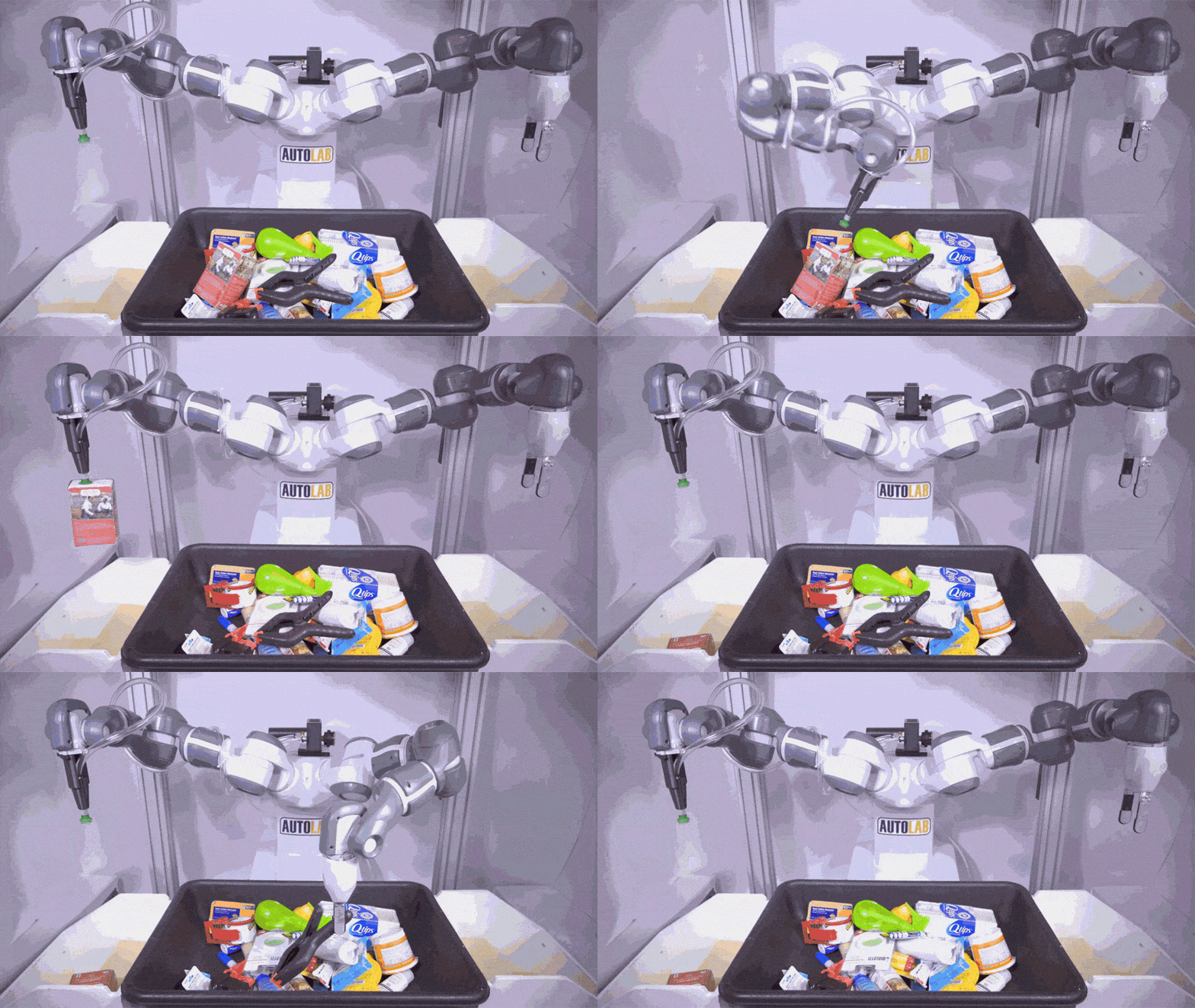
Pick up a glass of water, lift a fork: you automatically figure out the best way to grasp each object. Now researchers at UC Berkeley have developed a robot that makes similar calculation, choosing on the fly whether to grab an object with pincers or lift it with a suction cup. From a report: Berkeley's two-armed robot, seen in this video clip [GIF file], first considers the contents of a bin and calculates each arm's probability of picking up an object. Its suction cup is good at grabbing smooth, flat objects like boxes, but bad at porous surfaces like on a stuffed animal. The pincers, on the other hand, are best with small, odd-shaped items. The system learned its pick-up prowess not from actual practice, but from millions of simulated grasps on more than 1,600 3D objects. In every simulation, small details were randomized, which taught the robot to deal with real-world uncertainty. The bot can pick up objects 95% of the time, at about 300 successful pickups per hour, its creators write in a paper published this week in Science Robotics. Warehouse robots that can move around merchandise are highly sought after. Amazon is reportedly working on its own "picker" robots, as are several robotics companies. -
Bioacoustic Devices Could Help Save Rainforests (qz.com)
"Researchers writing in Science argue that networked audio recording devices mounted in trees could be used to monitor wildlife populations and better evaluate whether conservation projects are working or not," writes Slashdot reader Damien1972. From the report: Compared to ground surveys and camera traps, the technology provides cheap continuous, real-time biodiversity monitoring at the landscape scale. Thousands of hours of recordings can now be collected with long-lasting batteries and stored digitally. In sites with solar power and cellular signal, multi-year recordings have now been transmitted and saved to scientists' databases. That's possible thanks to the steep drop in the price of equipment that enables researchers to collect more than short, isolated sound snapshots.
The key, says co-authors Eddie Game of The Nature Conservancy and Zuzana Burivalova at Princeton University, is to build out enough data to understand how changing soundscapes reflect biodiversity on the ground. Game says he has found plenty of "high-conservation value" tropical forests that are devoid of key species. This is common in reserves set aside by owners of plantation crops such as palm oil. Algorithms can use these recording to learn the sound of healthy forests, and infer the composition of their species. In Papua New Guinea, for example, the researchers found soundscapes in fragmented forests were far quieter during the dawn and evening choruses, the short cacophonous periods during the changing of day and night. Once enough data has been collected [...] the technology can be applied to the zero deforestation commitments set by corporations. -
Saturn Put A Ring On It Relatively Recently, Study Says (npr.org)
Saturn is famous for its lovely rings, but a new study suggests the planet has spent most of its 4.5 billion years without them. From a report: That's because the rings are likely only 10 million to 100 million years old, according to a newly published report in the journal Science that's based on findings from NASA's Cassini probe. Cassini spent some 13 years orbiting Saturn before plunging down and slamming into its atmosphere. During its final orbits, the spacecraft dove between the planet and its rings. That let scientists measure the gravitational effect of the rings and get a good estimate of the ring material's mass.
What they found is that it's only about 40 percent of the mass of Saturn's moon Mimas, which is way smaller than Earth's moon. This small mass suggests that the rings are relatively young. That's because the rings seem to be made of extremely pure water ice, suggesting that the bright white rings have not existed long enough to be contaminated by the bombardment of messy, dirty comets that would be expected to occur over billions of years. Some scientists thought it was possible that darker debris from comets might lie beneath the bright ice, undetectable to their instruments, but this new study shows that isn't the case. -
Ocean Warming is Accelerating Faster Than Thought, New Research Finds (nytimes.com)
Scientists say the warming of the world's oceans is accelerating more quickly than previously thought, a finding with dire implications for climate change given that almost all of the heat trapped by greenhouse gases ends up stored there. From a report: A new analysis, published Thursday in the journal Science, found that the oceans are heating up 40 percent faster on average than a United Nations panel estimated five years ago. The researchers also concluded that ocean temperatures have broken records for several straight years. "2018 is going to be the warmest year on record for the Earth's oceans," said Zeke Hausfather, an energy systems analyst at the independent climate research group Berkeley Earth and an author of the study. "As 2017 was the warmest year, and 2016 was the warmest year." As the planet has warmed, the oceans have provided a critical buffer, slowing the effects of climate change by absorbing 93 percent of the heat trapped by human greenhouse gas emissions. But the escalating water temperatures are already killing off marine ecosystems, raising sea levels and making hurricanes more destructive. -
People Older Than 65 Share the Most Fake News, Study Finds (theverge.com)
An anonymous reader quotes a report from The Verge: Older Americans are disproportionately more likely to share fake news on Facebook, according to a new analysis by researchers at New York and Princeton Universities. Older users shared more fake news than younger ones regardless of education, sex, race, income, or how many links they shared. In fact, age predicted their behavior better than any other characteristic -- including party affiliation. Today's study, published in Science Advances, examined user behavior in the months before and after the 2016 U.S. presidential election. In early 2016, the academics started working with research firm YouGov to assemble a panel of 3,500 people, which included both Facebook users and non-users. On November 16th, just after the election, they asked Facebook users on the panel to install an application that allowed them to share data including public profile fields, religious and political views, posts to their own timelines, and the pages that they followed. Users could opt in or out of sharing individual categories of data, and researchers did not have access to the News Feeds or data about their friends.
About 49 percent of study participants who used Facebook agreed to share their profile data. Researchers then checked links posted to their timelines against a list of web domains that have historically shared fake news, as compiled by BuzzFeed reporter Craig Silverman. Later, they checked the links against four other lists of fake news stories and domains to see whether the results would be consistent. Across all age categories, sharing fake news was a relatively rare category. Only 8.5 percent of users in the study shared at least one link from a fake news site. Users who identified as conservative were more likely than users who identified as liberal to share fake news: 18 percent of Republicans shared links to fake news sites, compared to less than 4 percent of Democrats. The researchers attributed this finding largely to studies showing that in 2016, fake news overwhelmingly served to promote Trump's candidacy. But older users skewed the findings: 11 percent of users older than 65 shared a hoax, while just 3 percent of users 18 to 29 did. Facebook users ages 65 and older shared more than twice as many fake news articles than the next-oldest age group of 45 to 65, and nearly seven times as many fake news articles as the youngest age group (18 to 29). As for why, researchers believe older people lack the digital literacy skills of their younger counterparts. They also say that people experience cognitive decline as they age, making them likelier to fall for hoaxes. -
Deep Pacific Waters Are Cooling Down Due To Centuries-Ago Little Ice Age, New Study Suggests (inquisitr.com)
schwit1 quotes a report from The Inquisitr: Most of the world's waters may be warming as a result of climate change, but a new study shows that the deepest parts of the Pacific Ocean still appear to be cooling down hundreds of years after the period in history known as the "Little Ice Age." According to a report from Science Daily, a team of researchers from the Woods Hole Oceanographic Institute (WHOI) and Harvard University discovered that there has been a "lag" of a few centuries in terms of temperature change in the deep Pacific. This part of the ocean, the report stressed, is still seemingly cooling and adjusting to the temperature drops of the Little Ice Age while the rest of the Pacific gets warmer as a result of modern factors.
"These waters are so old and haven't been near the surface in so long, they still 'remember' what was going on hundreds of years ago when Europe experienced some of its coldest winters in history," commented WHOI physical oceanographer Jake Gebbie, lead author of the new study. As documented in a paper that was published Friday in the journal Science, the researchers created a model simulating how the deep Pacific's temperature might react to changes in climate on the surface, then compared the data from the model against two historical sources. These sources included ocean temperature data taken in the 1870s by scientists aboard the HMS Challenger and temperatures gathered over a century later, through the World Ocean Circulation Experiment in the 1990s. Based on how these comparisons aligned, the researchers found that warming was present in most parts of the world's oceans and consistent with the current trend of climate change. The only exception was the deep Pacific, where temperatures were cooling at around 1.25 miles (two kilometers) deep. This suggested that long-ago changes in surface climate, such as those that took place during the Little Ice Age, could still have an influence on the effect of climate change in modern times. -
Will the World Embrace Plan S, the Radical Proposal To Mandate Open Access To Science Papers? (sciencemag.org)
An anonymous reader quotes a report from Science Magazine: How far will Plan S spread? Since the September 2018 launch of the Europe-backed program to mandate immediate open access (OA) to scientific literature, 16 funders in 13 countries have signed on. That's still far shy of Plan S's ambition: to convince the world's major research funders to require immediate OA to all published papers stemming from their grants. Whether it will reach that goal depends in part on details that remain to be settled, including a cap on the author charges that funders will pay for OA publication. But the plan has gained momentum: In December 2018, China stunned many by expressing strong support for Plan S. This month, a national funding agency in Africa is expected to join, possibly followed by a second U.S. funder. Others around the world are considering whether to sign on. Plan S, scheduled to take effect on 1 January 2020, has drawn support from many scientists, who welcome a shake-up of a publishing system that can generate large profits while keeping taxpayer-funded research results behind paywalls. But publishers (including AAAS, which publishes Science) are concerned, and some scientists worry that Plan S could restrict their choices.
If Plan S fails to grow, it could remain a divisive mandate that applies to only a small percentage of the world's scientific papers. (Delta Think, a consulting company in Philadelphia, Pennsylvania, estimates that the first 15 funders to back Plan S accounted for 3.5% of the global research articles in 2017.) To transform publishing, the plan needs global buy-in. The more funders join, the more articles will be published in OA journals that comply with its requirements, pushing publishers to flip their journals from paywall-protected subscriptions to OA, says librarian Jeffrey MacKie-Mason, the chief digital scholarship officer at the University of California, Berkeley. North America isn't onboard. "The Bill & Melinda Gates Foundation was the first Plan S participant outside Europe, and another private funder may follow," the report says. "But U.S. federal agencies are sticking to policies developed after a 2013 White House order to make peer-reviewed papers on work they funded freely available within 12 months of publication."
Canada also isn't ready to change their joint 2015 OA policy. "Plan S is 'a bold and aggressive approach, which is why we want to make sure we've done our homework to ensure it would have the best effect on Canadian science," says Kevin Fitzgibbons, executive director of corporate planning and policy at Canada's Natural Sciences and Engineering Research Council in Ottawa.
Outside Europe and North America, funders gave Science mixed responses about Plan S. "India, the third biggest producer of scientific papers in the world, will 'very likely' join Plan S, says Krishnaswamy VijayRaghavan in New Delhi, principal scientific adviser to India's government," reports Science. "But the Russian Science Foundation is not planning to join. South Africa's National Research Foundation says it 'supports Plan S in principle,' but wants to consult stakeholders before signing on. Jun Adachi of the National Institute of Informatics in Tokyo, an adviser to the Japan Alliance of University Library Consortia for E-Resources, says that despite interest from funders and libraries, OA has yet to gain much traction in his country." -
Once Considered Outlandish, the Idea That Plants Help Their Relatives is Taking Root (sciencemag.org)
An anonymous reader shares a report: A Canadian biologist planted the seed of the idea more than a decade ago, but many plant biologists regarded it as heretical -- plants lack the nervous systems that enable animals to recognize kin, so how can they know their relatives? But with a series of recent findings, the notion that plants really do care for their most genetically close peers -- in a quiet, plant-y way -- is taking root. . Some species constrain how far their roots spread, others change how many flowers they produce, and a few tilt or shift their leaves to minimize shading of neighboring plants, favoring related individuals.
"We need to recognize that plants not only sense whether it's light or dark or if they've been touched, but also whom they are interacting with," says Susan Dudley, a plant evolutionary ecologist at McMaster University in Hamilton, Canada, whose early plant kin recognition studies sparked the interest of many scientists. Beyond broadening views of plant behavior, the new work may have a practical side. In September 2018, a team in China reported that rice planted with kin grows better, a finding that suggested family ties can be exploited to improve crop yields. "It seems anytime anyone looks for it, they find a kin effect," says Andre Kessler, a chemical ecologist at Cornell University. -
Scientists Have 'Hacked Photosynthesis' To Boost Crop Growth By 40 Percent (npr.org)
An anonymous reader quotes a report from NPR: There's a big molecule, a protein, inside the leaves of most plants. It's called Rubisco, which is short for an actual chemical name that's very long and hard to remember. Rubisco has one job. It picks up carbon dioxide from the air, and it uses the carbon to make sugar molecules. It gets the energy to do this from the sun. This is photosynthesis, the process by which plants use sunlight to make food, a foundation of life on Earth. "But it has what we like to call one fatal flaw," Amanda Cavanagh, a biologist and post-doctoral researcher at the University of Illinois, says. Unfortunately, Rubisco isn't picky enough about what it grabs from the air. It also picks up oxygen. "When it does that, it makes a toxic compound, so the plant has to detoxify it."
Plants have a whole complicated chemical assembly line to carry out this detoxification, and the process uses up a lot of energy. This means the plant has less energy for making leaves, or food for us. Cavanagh and her colleagues in a research program called Realizing Increased Photosynthetic Efficiency (RIPE), which is based at the University of Illinois, have spent the last five years trying to fix Rubisco's problem. "We're sort of hacking photosynthesis," she says. They experimented with tobacco plants, just because tobacco is easy to work with. They inserted some new genes into these plants, which shut down the existing detoxification assembly line and set up a new one that's way more efficient. And they created super tobacco plants. "They grew faster, and they grew up to 40 percent bigger" than normal tobacco plants, Cavanagh says. These measurements were done both in greenhouses and open-air field plots. The scientists are trying to apply this technique to other plants, like tomatoes, soybeans, and black-eyed peas, which are a staple food crop for a lot of farmers in sub-Saharan Africa. Cavanagh and her colleagues published their work this week in the journal Science. -
Breakthrough Ultrasound Treatment To Reverse Dementia Moves To Human Trials
An anonymous reader quotes a report from New Atlas: An extraordinarily promising new technique using ultrasound to clear the toxic protein clumps thought to cause dementia and Alzheimer's disease is moving to the first phase of human trials next year. The innovative treatment has proven successful across several animal tests and presents an exciting, drug-free way to potentially battle dementia. The ultrasound treatment was first developed back in 2015 at the University of Queensland. The initial research was working to find a way to use ultrasound to temporarily open the blood-brain barrier with the goal of helping dementia-battling antibodies better reach their target in the brain. However, early experiments with mice surprisingly revealed the targeted ultrasound waves worked to clear toxic amyloid protein plaques from the brain without any additional therapeutic drugs. The new announcement regarding the upcoming move to human trials is underpinned by a large funding injection from the Australian government helping accelerate the treatment's development. The first stage is a phase 1 safety trial, kicking off later in 2019, to explore the safety profile of the treatment in human subjects suffering from Alzheimer's disease. -
DeepMind Produces a General-Purpose Game-Playing System, Capable of Mastering Games Like Chess and Go Without Human Help (ieee.org)
DeepMind has created a system that can quickly master any game in the class that includes chess, Go, and Shogi, and do so without human guidance. "The system, called AlphaZero, began its life last year by beating a DeepMind system that had been specialized just for Go," reports IEEE Spectrum. "That earlier system had itself made history by beating one of the world's best Go players, but it needed human help to get through a months-long course of improvement. AlphaZero trained itself -- in just 3 days." From the report: The research, published today in the journal Science, was performed by a team led by DeepMind's David Silver. The paper was accompanied by a commentary by Murray Campbell, an AI researcher at the IBM Thomas J. Watson Research Center in Yorktown Heights, N.Y. AlphaZero can crack any game that provides all the information that's relevant to decision-making; the new generation of games to which Campbell alludes do not. Poker furnishes a good example of such games of "imperfect" information: Players can hold their cards close to their chests. Other examples include many multiplayer games, such as StarCraft II, Dota, and Minecraft. But they may not pose a worthy challenge for long.
DeepMind developed the self-training method, called deep reinforcement learning, specifically to attack Go. Today's announcement that they've generalized it to other games means they were able to find tricks to preserve its playing strength after giving up certain advantages peculiar to playing Go. The biggest such advantage was the symmetry of the Go board, which allowed the specialized machine to calculate more possibilities by treating many of them as mirror images. The researchers have so far unleashed their creation only on Go, chess and Shogi, a Japanese form of chess. Go and Shogi are astronomically complex, and that's why both games long resisted the "brute-force" algorithms that the IBM team used against Kasparov two decades ago. -
Astronomers Measure Total Starlight Emitted Over 13.7 Billion Years (theguardian.com)
Astronomers have measured all the light from all the stars that have ever existed. "In total, the astronomers estimate, stars have radiated 4x1084 photons (a photon being the smallest unit of light)," reports The Guardian. "Or put another way: 4,000,000,000,000,000,000,000,000,000,000,000,000,000,000,000,000,000,000,000,000,000,000,000,000,000,000,000,000 photons." From the report: The astronomers based their calculation on measurements of the extragalactic background light (EBL), a cosmic fog of radiation that has been accumulating since stars first illuminated the dark, vast expanse of space. More than 90% of starlight ends up surviving in this dim backdrop of radiation. The latest observations, collected over nine years by Nasa's Fermi space telescope, use the light from blazars -- super-massive black holes that emit powerful jets of gamma rays -- as beacons to illuminate the cosmic fog.
In total, the team captured signals from 739 blazars -- some relatively close and some extremely distant, whose light was emitted in the ancient universe and has taken billions of years to arrive at Earth. Gamma-ray photons travelling through a fog of starlight have a high chance of being absorbed. So by taking blazars at different distances from the Earth and working out how much of their radiation had been lost along the way, the total starlight at different time periods could be ascertained. The researchers used a computer model to factor in the cosmic fog, which "is simultaneously being diluted as the universe expands and space itself is stretched out," the report mentions. "The measurements suggest that star formation peaked about 11 billion years ago and has been on the wane ever since. About seven new stars are created in our Milky Way galaxy every year." -
A Massive Impact Crater Has Been Detected Beneath Greenland's Ice Sheet (gizmodo.com)
An anonymous reader quotes a report from Gizmodo: An unusually large asteroid crater measuring 19 miles wide has been discovered under a continental ice sheet in Greenland. Roughly the size of Paris, it's now among the 25 biggest asteroid craters on Earth. An iron-rich asteroid measuring nearly a kilometer wide (0.6 miles) struck Greenland's ice-covered surface at some point between 3 million and 12,000 years ago, according to a new study published today in Science Advances. The impact would've flung horrific amounts of water vapor and debris into the atmosphere, while sending torrents of meltwater into the North Atlantic -- events that likely triggered global cooling (a phenomenon sometimes referred to as a nuclear or volcanic winter). Over time, however, the gaping hole was obscured by a 1,000-meter-tall (3,200-foot) layer of ice, where it remained hidden for thousands of years. Remarkably, the crater was discovered quite by chance -- and it's now the first large crater to be discovered beneath a continental ice sheet. -
Large, Strangely Dim Galaxy Found Lurking On Far Side of Milky Way (sciencemag.org)
Iwastheone shares a reprot from Science Magazine: Circling our galaxy is a stealthy giant. Astronomers have discovered a dwarf galaxy, called Antlia 2, that is one-third the size of the Milky Way itself. As big as the Large Magellanic Cloud, the galaxy's largest companion, Antlia 2 eluded detection until now because it is 10,000 times fainter. Such a strange beast challenges models of galaxy formation and dark matter, the unseen stuff that helps pull galaxies together. The galaxy was discovered with data from the European Space Agency's Gaia satellite, a space telescope measuring the motions and properties of more than 1 billion stars in and around the Milky Way. Gabriel Torrealba, an astronomy postdoc at the Academia Sinica in Taipei, decided to sift the data for RR Lyrae stars. These old stars, often found in dwarf galaxies, shine with a throbbing blue light that pulses at a rate signaling their inherent brightness, allowing researchers to pin down their distance.
Gaia data helped the team see past the foreground stars. Objects in the Milky Way's disk are close enough for Gaia to measure their parallax: a shift in their apparent position as Earth moves around the sun. More distant stars appear fixed in one spot. After removing the parallax-bearing stars, the researchers homed in on more than 100 red giant stars moving together in the constellation Antlia, they report in a paper posted to the preprint server arXiv this week. The giants mark out a sprawling companion galaxy 100 times less massive than anything of similar size, with far fewer stars. -
Tantalizing But Preliminary Evidence of a 'Brain Microbiome' (sciencemag.org)
An anonymous reader quotes a report from Science Magazine: We know the menagerie of microbes in the gut has powerful effects on our health. Could some of these same bacteria be making a home in our brains? A poster presented here this week at the annual meeting of the Society for Neuroscience drew attention with high-resolution microscope images of bacteria apparently penetrating and inhabiting the cells of healthy human brains. The work is preliminary, and its authors are careful to note that their tissue samples, collected from cadavers, could have been contaminated. But to many passersby in the exhibit hall, the possibility that bacteria could directly influence processes in the brain -- including, perhaps, the course of neurological disease -- was exhilarating.
Talking hoarsely above the din of the exhibit hall on Tuesday evening, neuroanatomist Rosalinda Roberts of The University of Alabama in Birmingham (UAB), told attendees about a tentative finding that, if true, suggests an unexpectedly intimate relationship between microbes and the brain. Her lab looks for differences between healthy people and those with schizophrenia by examining slices of brain tissue preserved in the hours after death. About 5 years ago, neuroscientist Courtney Walker, then an undergraduate in Roberts's lab, became fascinated by unidentified rod-shaped objects that showed up in finely detailed images of these slices, captured with an electron microscope. Roberts had seen the shapes before. "But I just dismissed them, because I was looking for something else," she says. "I would say 'Oh, here are those things again.'" But Walker was persistent, and Roberts started to consult colleagues at UAB. This year, a bacteriologist gave her unexpected news: They were bacteria. Her team has now found bacteria somewhere in every brain they've checked -- 34 in all -- about half of them healthy, and half from people with schizophrenia. -
A New Method To Produce Steel Could Cut 5 Percent of CO2 Emissions (technologyreview.com)
An anonymous reader shares an excerpt from a report via MIT Technology Review: A lumpy disc of dark-gray steel covers a bench in the lab space of Boston Metal, an MIT spinout located a half-hour north of its namesake city. It's the company's first batch of the high-strength alloy, created using a novel approach to metal processing. Instead of the blast furnace employed in steelmaking for centuries, Boston Metal has developed something closer to a battery. Specifically, it's what's known as an electrolytic cell, which uses electricity -- rather than carbon -- to process raw iron ore.
If the technology works at scale as cheaply as the founders hope, it could offer a clear path to cutting greenhouse-gas emissions from one of the hardest-to-clean sectors of the global economy, and the single biggest industrial source of climate pollution. After working on the idea for the last six years, the nine-person company is shifting into its next phase. If it closes a pending funding round, the startup plans to build a large demonstration facility and develop an industrial-scale cell for steel production. The process to produce steel results in around 1.7 gigatons of carbon dioxide being pumped into the atmosphere annually, "adding up to around 5 percent of global carbon dioxide emissions, according to a recent paper in Science," MIT Technology Review reports.
The electrolytic cell that Boston Metal developed was realized after it was proposed to be used to extract oxygen from the moon's surface. "The by-product was molten metal," the report says. "But producing something like steel would require an anode made from cheap materials that wouldn't corrode under high temperatures or readily react with iron oxide. In 2013, [MIT chemist] Sadoway and MIT metallurgy researcher Antoine Allanore published a paper in Nature concluding that anodes made from chromium-based alloys might check all those boxes." -
How Llamas Could Help Us Fight the Flu (pbs.org)
An anonymous reader quotes a report from PBS: Researchers now think they're on the path to a new kind of flu protection -- one that might last longer and work against all types of influenza viruses. The source of their new defense: llamas. These furry South American mammals produce special antibodies -- molecules that mark foreign invaders in our bodies for destruction -- that can identify a huge range of elusive influenza viruses. A new study used these antibodies to target multiple strains of influenza at once, a technique that could lead to more effective flu prevention. These antibodies can survive without refrigeration for longer, which could reduce the cost and complexity of flu treatment.
The researchers behind Thursday's study fused four different single-domain antibodies into one larger molecule, held together with a human protein as a scaffold. When they injected this hybrid into mice, the antibodies kept the animals safe from a wide variety of influenza type A and type B viruses -- the two most common assailants in America's annual flu epidemic. This hybrid seemed to successfully target each of the five flu strains they tested. When the researchers injected mice with their hybrid antibody, it protected the mice from lethal doses of the flu. But the paper also explored another route of delivery: gene therapy. The researchers used a benign virus -- dubbed AAV -- to embed the genetic blueprint of the llama antibodies directly into mouse cells. This procedure allowed the mice to produce the antibodies on their own. -
Researchers Launch Plan To Sequence 66,000 Species In the UK (sciencemag.org)
An anonymous reader quotes a report from Science Magazine: In the first attempt of its kind, researchers plan to sequence all known species of eukaryotic life -- 66,000 species of animals, plants, fungi, and protozoa -- in a single country, the United Kingdom. The announcement was made here today at the official launch of an even grander $4.7 billion global effort, called the Earth BioGenome Project (EBP), to sequence the genomes of all of Earth's known 1.5 million species of eukaryotes within a decade.
The U.K. sequencing effort -- dubbed The Darwin Tree of Life project -- will now become part of the EBP mix. The Wellcome Sanger Institute in Hinxton, U.K., says it plans to sequence all known 66,000 species of eukaryotes found within the United Kingdom, except for its overseas territories. Collaborators will include the European Molecular Biology Laboratory in Hinxton, the Royal Botanic Gardens, Kew in the United Kingdom, and the Natural History Museum in London. Sanger will spend up to 50 million British pounds over 8 years, about 4% of its annual budget, on the first phase of the project, which will focus on developing the processes for sample collection, R&D on sequencing, and computational methods for assembling the genomes. Sanger director Mike Stratton said he expects another 100 million British pounds will be needed over the next 5 to 7 years for the bulk of sample collections and sequencing. -
Scientists Find Link Between Parkinson's Disease and the Appendix (gizmodo.com)
An anonymous reader quotes a report from Gizmodo: Scientists have found further evidence that the gut, or more specifically the appendix, might play a role in the development of Parkinson's disease. The international team of scientists reviewed two datasets, including a large registry from Sweden, and found that removal of the appendix was associated with a decreased risk of developing Parkinson's disease. They also found that the human appendix contains clumps of a protein called alpha-synuclein in a form associated with the disease. There's more work to be done, and the authors are not advocating that people preemptively remove their appendixes, but they hope that the research could provide a pathway towards treatment.
The study found that of the 1,144,745 Swedes who did not have appendectomies, 1,608 had Parkinson's, but of the 551,003 who had, only 644 had Parkinson's. This is amounts to a 16.9% decrease in the odds of acquiring the disease -- but in absolutes, that's the difference between an 0.14 percent chance of acquiring the disease for those who hadn't gotten their appendix removed versus an 0.11 percent chance for those who had. The effect was also stronger in those living in rural areas, according to the study published today in Science Translational Medicine. The researchers also found that for those who had appendectomies at least 30 years before developing Parkinson's, the procedure was associated with a 3.6-year delay in disease onset. The appendix samples contained alpha-synuclein proteins and shortened and mis-folded alpha-synucleins like the ones found in people with Parkinson's disease. Professor Viviane Labrie from the Cancer of Neurodegenerative Science at the Van Andel Research Institute in Michigan suggests that the alpha-synucleins "can travel up the nerve that connects the G.I. tract to the brain." She added: "If it were to enter the brain, it can seed and spread from there and have neurotoxic effects that could eventually lead to Parkinson's disease." -
Earth's Inner Core Is Solid, But Squishier Than Previously Thought (abc.net.au)
brindafella writes: Earthquakes are telling scientists more about the core of the Earth, specifically that it is squishier than previously thought (by about 2.5%.) Associate Professor Hrvoje Tkali & Thanh-Son Pham of the Australian National University have made sense of data collected by seismographs around the world to put new numbers on the density and pressure of the core. In Science magazine, they show that the pressure is 167.4 +/- 1.6 gigapascals (GPa) in Earth's center. For reference, standard atmospheric pressure is 101,325 pascals (Pa), so the center of the Earth is around 61 million times this pressure, but still 2.5% lower than expected. -
One of the World's Largest Organisms is Shrinking (sciencemag.org)
An anonymous reader shares a report: The Pando aspen grove, located in central Utah, is the largest organism on the planet by weight. From the surface, it may look like a forest that spans more than 100 U.S. football fields, but each tree shares the exact same DNA and is connected to its clonal brethren through an elaborate underground root system. Although not quite as large in terms of area as the massive Armillaria gallica fungus in Michigan, Pando is much heavier, weighing in at more than 6 million kilograms. Now, researchers say, the grove is in danger, being slowly eaten away by mule deer and other herbivores -- and putting the fate of its ecosystem in jeopardy. "This is a really unusual habitat type," says Luke Painter, an ecologist at Oregon State University in Corvallis who was not involved with the research. "A lot of animals depend on it."
[...] Scientists first noticed the Pando shrinking in the late '90s. They suspected elk, cattle, and most prominently deer were eating the new shoots, so in the new study Rogers and colleagues divided the forest into three experimental groups. One section was completely unfenced, allowing animals to forage freely on the baby aspen. A second section was fenced and left alone. And a third section was fenced and then treated in some places with strategies to spur aspen growth, such as shrub removal and controlled burning; in other places it was left untreated. The results were surprising: Simply keeping the deer out was enough to allow the grove to successfully recover, the team reports today in PLOS ONE. Even in the fenced-off plots where there was no burning or shrub removal, young trees were thriving. -
Scientists Are Getting Seriously Worried About Synthetic Smallpox (sciencealert.com)
An anonymous reader quotes ScienceAlert: Earlier this year, scientists published a paper describing how they pieced together segments of DNA in order to bring back a previously eradicated virus called horsepox. The paper, written by two University of Alberta researchers and the co-founder of a New York pharmaceutical company, was controversial because, as various experts told the magazine Science, someone could use a very similar process to bring back a related virus: smallpox. Smallpox, you'll recall, killed hundreds of millions of people before the World Health Organization declared it eradicated in 1980. That was the result of a long vaccination campaign — so the idea of piecing the virus back together from bits of DNA raises the specter of a horrifying pandemic.
Two journals rejected the paper before PLOS One, an open access peer-reviewed journal, published it. Critics argue that the paper not only demonstrates that you can synthesize a deadly pathogen for what Science reported was about US$100,000 in lab expenses, but even provides a slightly-too-detailed-for-comfort overview of how to do it. Some of the horsepox scientists' coworkers are still pretty upset about this. PLOS One's sister Journal, PLOS Pathogens, just published three opinion pieces about the whole flap, as well as a rebuttal by the Canadian professors. Overall, everyone's pretty polite. But you get the sense that microbiologists are really, really worried about someone reviving smallpox. MIT biochemist Kevin Esvelt, for instance, wrote on Thursday that the threat is so grim that we shouldn't even talk about it. -
How Genealogy Websites Make It Easier To Catch Killers (ieee.org)
An anonymous reader quotes a report from IEEE Spectrum: Over the past six months a small, publicly available genealogy database has become the go-to source for solving cold case crimes. The free online tool, called GEDmatch, is an ancestry service that allows people to submit their DNA data and search for relatives -- an open access version of AncestryDNA or 23andMe. Since April, investigators have used GEDmatch to identify victims, killers, and missing persons all over the U.S. in at least 19 cases, many of them decades old, according to authors of a report published today in Science. The authors predict that in the near future, as genetic genealogy reports gain in popularity, such tools could be used to find nearly any individual in the U.S. of European descent.
GEDmatch holds the genetic data of only about a million people. But cold case investigators have been exploiting the database using a genomic analysis technique called long-range familial search. The technique allows researchers to match an individual's DNA to distant relatives, such as third cousins. Chances are, one of those relatives will have used a genetic genealogy service. More than 17 million people have participated in these services -- a number that has grown rapidly over the last two years. AncestryDNA and 23andMe hold most of those customers. A genetic match to a distant relative can fairly quickly lead investigators to the person of interest. In a highly publicized case, GEDmatch was used earlier this year to identify the "Golden State Killer," a serial rapist and murderer who terrorized California in the 1970s and 1980s, but was never caught. In April, investigators were able to use a genealogy database to narrow down DNA data from crime scenes and identify the "Golden State Killer," a serial rapist and murderer who terrorized California in the 1970s and 1980s. -
US Military Program Could Be Seen As a Bioweapon, Scientists Warn (phys.org)
An anonymous reader quotes a report from Phys.Org: A research arm of the U.S. military is exploring the possibility of deploying insects to make plants more resilient by altering their genes. Some experts say the work may be seen as a potential biological weapon. In an opinion paper published Thursday in the journal Science, the authors say the U.S. needs to provide greater justification for the peace-time purpose of its Insect Allies project to avoid being perceived as hostile to other countries. Other experts expressed ethical and security concerns with the research, which seeks to transmit protective traits to crops already growing in the field. That would mark a departure from the current widely used procedure of genetically modifying seeds for crops such as corn and soy, before they grow into plants.
The military research agency says its goal is to protect the nation's food supply from threats like drought, crop disease and bioterrorism by using insects to infect plants with viruses that protect against such dangers. The State Department said the project is for peaceful purposes and does not violate the Biological Weapons Convention. The U.S. Department of Agriculture said its scientists are part of the research, which is being conducted in contained labs. The technology could work in different ways. In the first phase, aphids -- tiny bugs that feed by sucking sap from plants -- infected plants with a virus that temporarily brought about a trait. But researchers are also trying to see if viruses can alter the plant's genes themselves to be resistant to dangers throughout the plant's life. -
Evidence is Mounting That a World the Size of Neptune Could be Orbiting a Giant Planet Far, Far Away (nationalgeographic.com)
About 8,000 light-years away, a giant planet circles an aging star, marching once around its sun in a single Earth-year. But that planet, called Kepler 1625b, might not be traveling completely alone. From a report: Scientists now suspect the planet's skies are filled by an orbiting mega-moon, a stunningly large world the size of Neptune that may be the first moon spotted outside our solar system. Early hints of its existence surfaced in July 2017, when scientists tentatively announced that they'd found some evidence of an orbital companion for Kepler 1625b. But it wasn't until the Hubble Space Telescope aimed its eye at the faraway star a year ago that scientists were able to gather enough data to build the case for the so-called exomoon's presence. Now, the two scientists behind the discovery are hoping for independent confirmation of their finding to really shore up the extraordinary claim.
"I'm confident that we've done a thorough job vetting this thing, but I also anticipate there will be things other folks come up with that we might not have considered," says Columbia University's Alex Teachey, who reports the purported alien moon this week in the journal Science Advances. "Whether those other ideas are fatal to the moon hypothesis or not, that remains to be seen." For now, MIT's Sara Seager says she's reserving judgment. "Exomoons are one of the key items remaining on exoplanet researchers' wish list," Seager says. "It's exciting to see the hunt for the first exomoon continue ... and with what would be a shockingly large moon, about the size and mass of Neptune." -
Brain Scans Can Detect Who Has Better Skills, Research Says (wsj.com)
To gain new insight into how highly specialized workers learn skills or react to stressful situations, researchers are leveraging advanced scanning technologies to look at what's happening inside the brain. From a report: In the latest findings, a team of researchers studied surgeons as they performed surgical simulations and found they could identify novice from experienced surgeons by analyzing brain scans taken as the physicians worked [The story could be paywalled]. The researchers, who described their findings Wednesday in the journal Science Advances, said that the part of the brain involved in planning complex behaviors was more active in the novices. Skilled surgeons had more activity in the motor cortex, which is important for movement. The researchers, who developed a machine-learning system to analyze the scans, also showed that training resulted in a shift toward higher activity in the motor cortex. In total, the brains of roughly 30 surgeons and trainees were monitored while they performed pattern-cutting tasks that are part of professional tests for certifications. The brain-data metrics were more accurate than current professional tests used to assess the same manual skills, according to the study. -
New Spray-On Coating Can Make Buildings, Cars, and Even Spaceships Cooler (bgr.com)
Long-time Slashdot reader davidwr and Iwastheone both submitted this story about "a paint-like coating that facilitates what is known as 'passive daytime radiative cooling,' or PDRC for short...when a surface can efficiently radiate heat and reflect sunlight to a degree that it cools itself even if it's sitting in direct sunlight." BGR reports on research from the Columbia School of Engineering: Their newly-invented coating has "nano-to-microscale air voids that acts as a spontaneous air cooler," which is a very technical and fancy way of saying that the coating is great at keeping itself cool all on its own. "The air voids in the porous polymer scatter and reflect sunlight, due to the difference in the refractive index between the air voids and the surrounding polymer," Columbia writes in a post. "The polymer turns white and thus avoids solar heating, while its intrinsic emittance causes it to efficiently lose heat to the sky."
It sounds great, but the best news is that it can be applied to just about anything, from cars to spaceships and even entire buildings. The team believes their invention would be an invaluable resource for developing countries in sweltering climates where air conditioning is impractical or unavailable. -
Arrays of Atoms Emerge As Dark Horse Candidate To Power Quantum Computers (sciencemag.org)
Sophia Chen reporting for Science Magazine: In a small basement laboratory, Harry Levine, a Harvard University graduate student in physics, can assemble a rudimentary computer in a fraction of a second. There isn't a processor chip in sight; his computer is powered by 51 rubidium atoms that reside in a glass cell the size of a matchbox. To create his computer, he lines up the atoms in single file, using a laser split into 51 beams. More lasers -- six beams per atom -- slow the atoms until they are nearly motionless. Then, with yet another set of lasers, he coaxes the atoms to interact with each other, and, in principle, perform calculations.
It's a quantum computer, which manipulates "qubits" that can encode zeroes and ones simultaneously in what's called a superposition state. If scaled up, it might vastly outperform conventional computers at certain tasks. But in the world of quantum computing, Levine's device is somewhat unusual. In the race to build a practical quantum device, investment has largely gone to qubits that can be built on silicon, such as tiny circuits of superconducting wire and small semiconductors structures known as quantum dots. Now, two recent studies have demonstrated the promise of the qubits Levine works with: neutral atoms. In one study, a group including Levine showed a quantum logic gate made of two neutral atoms could work with far fewer errors than ever before. And in another, researchers built 3D structures of carefully arranged atoms, showing that more qubits can be packed into a small space by taking advantage of the third dimension. Chen goes on report on the startups -- ColdQuanta and Atom Computing -- that are working to build fully programmable quantum computers. ColdQuanta has received $6.75 million in venture funding while Atom Computer has raised $5 million.