Slashdot Mirror
Domain: templetons.com
Stories and comments across the archive that link to templetons.com.
Comments · 324
-
Re:Interesting
I believe that you should take a read here: http://www.templetons.com/brad/robocars/
-
Is green U.S. mass transit a big myth?
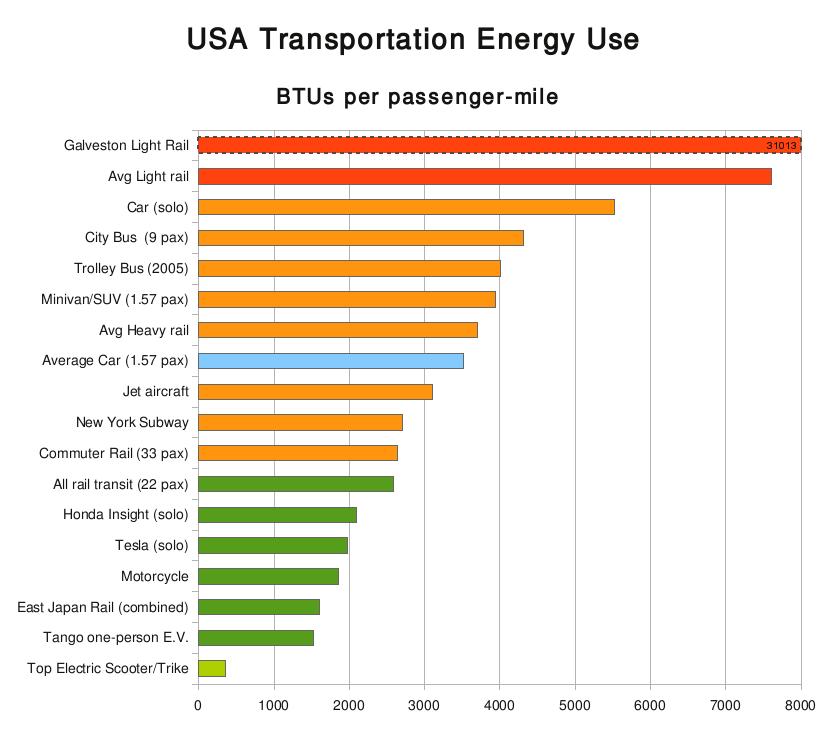
Brad Templeton looked into the subject of mass transit and wrote about it here. He has a fascinating graph there.
An excerpt from that page:
What I learned about public transit in the USA shocked me. I've been a fan of public transit, taking it where it's practical for me, and feeling green about it. That transit is a significantly greener way to get around than private car travel almost goes without saying in our thoughts and discussions. Disturbingly, this simply isn't true.
-
Is green U.S. mass transit a big myth?
Brad Templeton looked into the subject of mass transit and wrote about it here. He has a fascinating graph there.
An excerpt from that page:
What I learned about public transit in the USA shocked me. I've been a fan of public transit, taking it where it's practical for me, and feeling green about it. That transit is a significantly greener way to get around than private car travel almost goes without saying in our thoughts and discussions. Disturbingly, this simply isn't true.
-
Ask Brad Templeton, Chairman of EFF
Just ask Brad. He posted one of the best and most convincing arguements on driverless cars I've ever seen, and in so doing also facilitated one of the most interesting
I think NYC taxicabs would be a marvelous test case for driverless technology - it would solve a lot of issues. -
Info about Copyright as it applies to personal use
Get it into your thick skull already; copyright cannot stop you from using what you bought the way you want it. It only stops you from copying what you bought and giving it to others.
You are mistaken, and the above is incorrect.
When you "buy" a song, a photo, or software, what you are really doing is purchasing a license to use a copy of the item. The license almost always has restrictions. You can NOT do "anything you want" with your copy. For instance:
1) When you buy a song, you can't then play that song at your restaurant. This is a commercial airing of the song, and you have to pay royalties for this use. This is outside of the license you were granted for your personal use of the song. It doesn't matter how you purchased your copy - bought a CD or downloaded it from iTunes. Ditto for buying a DVD of a movie then showing the movie at your business.
2) When someone takes a photo of you at an event (e.g. sporting event, graduation, office xmas party) and you buy a print or a jpeg, you can't give your copy (no "copying" taking place) to someone else to use for commercial purposes. The photographer still owns the copyright on the image, and your copy is for your personal enjoyment only and is not licensed for commercial use. (Such commercial use usually involves making additional copies and the "copying" becomes the issue, but even if no additional copies are made, the commercial use is outside the license granted with the personal purchase of the photo.)
3) When you buy software, you can use it on one computer, and a backup computer. You can't install it on every computer in your home or office *unless* the seller explicitly gives you this right.
You do have the "right of first purchase" to use your copy for personal use or to sell it to someone else (as is the case with a music CD or video DVD). But your rights are limited, even for your own personal use.
Now, it is fair to argue that copyright laws have been extended (many times) in the past 100 years in ways that amount to a "taking" from the public domain, and that they are overdue for changes. As someone who benefits from copyright laws (I'm a photographer), I'm not in favor of their extended reach today, and back proposals to rein-in copyright. But until the laws are changed, this is the state of copyright law in the US today.
You may also find these cites helpful:
-
Info about Copyright as it applies to personal use
Get it into your thick skull already; copyright cannot stop you from using what you bought the way you want it. It only stops you from copying what you bought and giving it to others.
You are mistaken, and the above is incorrect.
When you "buy" a song, a photo, or software, what you are really doing is purchasing a license to use a copy of the item. The license almost always has restrictions. You can NOT do "anything you want" with your copy. For instance:
1) When you buy a song, you can't then play that song at your restaurant. This is a commercial airing of the song, and you have to pay royalties for this use. This is outside of the license you were granted for your personal use of the song. It doesn't matter how you purchased your copy - bought a CD or downloaded it from iTunes. Ditto for buying a DVD of a movie then showing the movie at your business.
2) When someone takes a photo of you at an event (e.g. sporting event, graduation, office xmas party) and you buy a print or a jpeg, you can't give your copy (no "copying" taking place) to someone else to use for commercial purposes. The photographer still owns the copyright on the image, and your copy is for your personal enjoyment only and is not licensed for commercial use. (Such commercial use usually involves making additional copies and the "copying" becomes the issue, but even if no additional copies are made, the commercial use is outside the license granted with the personal purchase of the photo.)
3) When you buy software, you can use it on one computer, and a backup computer. You can't install it on every computer in your home or office *unless* the seller explicitly gives you this right.
You do have the "right of first purchase" to use your copy for personal use or to sell it to someone else (as is the case with a music CD or video DVD). But your rights are limited, even for your own personal use.
Now, it is fair to argue that copyright laws have been extended (many times) in the past 100 years in ways that amount to a "taking" from the public domain, and that they are overdue for changes. As someone who benefits from copyright laws (I'm a photographer), I'm not in favor of their extended reach today, and back proposals to rein-in copyright. But until the laws are changed, this is the state of copyright law in the US today.
You may also find these cites helpful:
-
You might think so, but...
You have to account for a lot of other inefficiencies in a mass transit system, for instance
http://www.templetons.com/brad/transit-myth.html
This is certainly not the last word on the pluses and minuses of mass transit, but it certainly illustrates that mass transit systems are by NO MEANS de-facto more energy efficient than personal transportation.
-
Re:we will NOT have flying cars
Who knows what will happen, maybe we'll have something involving supraconductors, magnetohydrodynamic propulsion, some stuff we haven't discovered, and so on.Or maybe we'll run out of cheap oil, suburbia dies and except for the farmers the rest of us will be forced to adopt a low energy lifestyle, living in dense cities and traveling with electrified mass transit (think cramming like sardines aka the Tokyo subway).
As for automated cars, Brad Templeton (of EFF fame) has a site puffing them.
-
Re:Wrong Comparison
Especially if you take something fuel efficient to work, because riding a bicycle has about the same energy footprint as driving a small hybrid car or riding a small motorcycle. That is, unless you were going to exercise anyway and don't do your other exercise because you used your bike to get somewhere. Or if you subsist entirely off low energy food, like you only eat soy beans you buy in 50-lb bags from a local farmer. But if you eat like regular people, and you have to replace the calories you expend peddling a bike,
That's only true if you eat just enough to keep yourself alive. If you at as much as the average American, you could do with a bit of excercise. And your reduced weight will save fuel whenever you use motorised transport.
-
Re:Wrong Comparison
Raising the minimum legal mileage for new cars by one MPG would be a much, much bigger change than me riding a bike to work every day.
Especially if you take something fuel efficient to work, because riding a bicycle has about the same energy footprint as driving a small hybrid car or riding a small motorcycle. That is, unless you were going to exercise anyway and don't do your other exercise because you used your bike to get somewhere. Or if you subsist entirely off low energy food, like you only eat soy beans you buy in 50-lb bags from a local farmer. But if you eat like regular people, and you have to replace the calories you expend peddling a bike, then the very high energy cost of the food in a standard US (I know, I'm assumming you're an American, but it's not very different for most of the first world) diet adds up to about as much energy use (and green-house gas emissions) as just driving something with high fuel efficiency.
-
Keep building cars
Mass transit is neither cost-effective nor green. Per passenger-mile, it costs more to operate and generates more green-house gases than private automobiles. But don't believe me. Check out what the Federal Reserve Bank of St. Louis, The Atlantic, and others have to say about it.
http://www.stlouisfed.org/publications/re/2004/c/pages/light_rail.html
Based solely on dollar cost, the annual light-rail subsidies could instead be used to buy an environmentally friendly hybrid Toyota Prius every five years for each poor rider and even to pay annual maintenance costs of $6,000. Increases in pollution would be minimal with the hybrid vehicle, and 7,700 new vehicles on the roadway would result in only a 0.5 percent increase in traffic congestion.3 And there would still be funds left overâ"about $49 million per year. These funds could be given to all other MetroLink riders (amounting to roughly $1,045 per person per year) and be used for cab fare, bus fare, etc.
http://www.theatlantic.com/doc/197910/197910
The received wisdom on this topic is easily stated: 1. It is self-evident that public transportation is vastly more energy-efficient than automobiles; 2. It is self-evident that investing money to improve transit facilities will attract many more passengers. Therefore, the national energy policy ought to give major attention to building new transit systems and revitalizing old ones. Unfortunately, both of these "self-evident" premises turn out to be false.
http://www.templetons.com/brad/transit-myth.html
Particularly disturbing were the numbers for some of the worst transit systems, including the light rail in San Jose, which I sometimes ride. That system takes twice as much energy per passenger than private cars do. It's not even the worst -- that's Cleveland, which also is part of a grid more dependent on fossil fuels than San Jose.
http://www.gregburch.net/cars/plans.html
From a purely utilitarian point of view, it would be cheaper to simply buy compact cars for the poorest of the poor, or even subsidize some kind of taxi cab service for poor people. But that idea is too "way out there" - much stranger than ripping up our cities for years and years while the planners implement their expensive dreams.
-
Re:Mass mailing
Spam is:...Commercial email.
No, there is no need for something to be commercial to be spam. One of the first recorded spams was an anti-war message sent to all CTSS MAIL users about 1971. The first major USENET spam was in January 1994, telling us "Jesus is Coming Soon". (Well, apparently he wasn't. Whoops!)
The first documented use of the term "spam" that I've seen was in response to a USENET experiment called ARMM (Automated Retroactive Minimal Moderation) that went into sorcerer's apprentice mode and posted and posted and posted...
Spam is UBE - unsolicited bulk e-mail (or other electronic communication). This was spam. Suspension may be too harsh, though: I'd just put her in the stocks for a few hours and hand every recipient a rotten tomato.
-
Re:Might as well...
This article suggests a sane way to handle gTLDs and includes discussions of the various problems like the ones you mention (TLDs being meaningless and trademarks). Unfortunately, that does not appear to be what ICANN is actually doing. As usual it just appears that they are trying to encourage more domain registrations which earn them money without actually improving the usefulness of the DNS system.
-
Re:13 mil for a tld?
This article explains how properly done TLDs could actually be a good idea. Under his scheme, you could set your computer's DNS to by default append $YourFavoriteGTLD which agrees with you on that point and get just that. I recommend against setting that for
-
A reaction to an error
In the 80s, I was building a "syntax directed editor" system called Alice Pascal. There was also a Basic version. You can download it and its source at http://www.templetons.com/brad/alice.html if you like.
Anyway, as a program structure editor, it had the ability for you to select a block of code and "hide" it, which mean replacing it on the screen with "..." and a comment. You could expand and re-hide the tree. Nice way to see the full structure on screen at one time.
It also had an interpreter.
During development, we had a new build and the interpreter (run command) had checked out OK. However, when we tested the hide function, the program crashed. The error message was boring, it was my reaction to the error that makes the other programmer smile to this very day.
"Hmm. You can run, but you can't hide."
-
Re:1995 Called... San Diego Anyone?
I'm not impressed, but it's not because it was first done in 1995, but because this was actually first started in the late 50's. (I'm too lazy to find source, but tests dating back to 70's aren't hard to find)
Cars following magnets... not at all impressive (anymore). Show me an AI that can pass the school of fish test and then I'll be impressed. -
Re:Somebody's got to say it
I'm surprised no one seems to have linked to the source of that saying.
-
Re:Of course!
I agree.
What needs to be done is not to put even more distractions to the driver, but to substitute him.
-
Only in the US
While he does make this conclusion about U.S. data, he is fair and continues his search to other parts of the world like Europe and Asia. From this page:
Don't Europe and Asia do better?
Much better. This Australian Study cites figures saying that Western Europeans use only 76% of U.S. BTUs/pm in their private transport, and only 38% in their transit -- 2.5 times more efficient. Rich Asians do even better at transit -- they are almost 4 times as efficient in terms of energy/passenger-mile.
-
Re:Oh no...
This article, which I believe I found off a comment from the previous
Yeah, domains in the other order like on usenet would make more sense, but it is quite a few years too late for that.
-
Generic TLDs caused the problems
It's OK if the TLDs are brands (not generic like com, net or org) and there is some factor which limits them to resale use (otherwise we just punt the
The big mistake was having generics in the first place. Trademark law figured out hundreds of years ago you don't grant people monopoly ownership rights in generic terms. To get ownership rights in a term it must be non-generic, not have meaning other than the meaning you created in it. Thus nobody owns the word "Apple" with regards to fruits, but you can own it with regard to computers, or records. Even better are made-up terms like Xerox and Kodak.
Anyway, we goofed by selling things like drugstore.com. We should fix that where we can, and not make it worse. If names are for resale only (you can't have your own sites in a TLD you own except for nic.TLD) and the names can't have any meaning for you to get a monopoly, then it can work.
Things like
Full details are at http://www.templetons.com/brad/dns/
-
Re:Oh God, it's finally happened...Slashdot has become a dating service. Quick, someone tell Richard Stallman!
http://www.templetons.com/brad/spamreact.html#msg
(from http://it.slashdot.org/article.pl?sid=08/04/25/1421227 ) -
spam, not Spam
TFA is about the first unsolicited commercial email. That became the definition of email that came to be called "spam" well after the first reference to the Monty Python sketch, which was brought up to describe massively multiple posts of advertising to usenet. It says at http://www.templetons.com/brad/spamterm.html that Joel Furr was first to call it spam, but I seem to remember someone else stating that it reminded them of "a Monty Python sketch -- spam, spam, spam, spam."
BTW, the Hormel people never had a problem with the use of the term. In part because it was free PR, but also because they were gracious good humored about it. They went as far as to offer their own selected graphic of a spam can that could be used as a link to their pages. The idea as floated to them was to have their permission to produce a 2-link bar that said "This is Spam" [Hormel link] "and this is spam" [link to page with definition of problematic usenet and email traffic]. I can confidently state their being gracious and good natured because I was the one that suggested the links idea to them, requested the graphic of their choice, and talked with them about their reactions to use of the term. In this respect, the second of the "Cultural References" at http://en.wikipedia.org/wiki/Spam_(Monty_Python) is incorrect, though the History section of http://en.wikipedia.org/wiki/Spam_(electronic) gets it right.
They later reacted a little differently when people insisted on using the capitalized name in their own software and anti-spam sites (such as Spam Arrest) and couldn't see their way clear to use the more generic, lower case term. People criticized them for doing so without bothering to consider that they were forced by trademark law to protect their mark (the capitalized word) no matter how much they disliked doing so, lest they lose trademark status. Sadly, few seem to remember that Hormel asked nicely at first that the lower case be used unless referring to their product. The assertion by Spam Arrest that "No company can claim trademark rights on a generic term" is wrong: a term when trademarked before it comes into common use (trademark status being awarded 40 years prior to this "common use") remains a trademark as long as the owner acts to (at least attempt to) prevent its use as a generic term. Such action kept "xerox" and "kleenex" from becoming an accepted generic terms for photocopying and facial tissue, while failure to do so allowed "aspirin" and "heroin" to become generic terms despite starting as brand names, both originally owned by Bayer AG. As a German company it was unable to protect the marks against generic use in the US, particularly during WW II. Although Hormel lost the court cases that resulted, they acted with a "reasonable attempt" to protect the ownership of the mark, and so didn't lose it.
BTW, TFA is not a novel article. CNET published one on its 25th anniversary in 2003. In that respect, TFA is repeated public posting of commercial (or at least commercially supported) information. TFA fits the original definition of spam. In any case, New Scientist loses points for copying the idea for the article. -
Re:Can't say I mind...
Sounds like Brad Templeton's How to fix DNS idea. The idea has been around for a long time; other than economic blockading from the current financial stakeholders, I don't know why is hasn't had more consideration...
The rest of the essays in that collection are at http://www.templetons.com/brad/dns/ -
Re:Can't say I mind...
Sounds like Brad Templeton's How to fix DNS idea. The idea has been around for a long time; other than economic blockading from the current financial stakeholders, I don't know why is hasn't had more consideration...
The rest of the essays in that collection are at http://www.templetons.com/brad/dns/ -
Re:Well done!What are they being punished for? Using a photo that Chris Gregerson willfully posted on the web? So, um. Wait.
You're honestly saying... that... by posting this photo to the web... he gave up all copyright on it? That by allowing people to see a piece of art that he created, he somehow gave up all rights to it?
Think about what you're saying carefully, because if you honestly believe that, you are a complete and utter fool.
3) "If it's posted to Usenet it's in the public domain."
False. Nothing modern and creative is in the public domain anymore unless the owner explicitly puts it in the public domain(*). Explicitly, as in you have a note from the author/owner saying, "I grant this to the public domain." Those exact words or words very much like them.
Fool, educate thyself. -
Re:Where did it come from? - Definative mule
That would make sense, but it is wrong. It all started back in the days when we chiseled our bits into stone and sent them by mule train from village to village...
It was the MP skit, not the cultural feelings about SPAM that caused it. Later references were made back to the skit comparison, eventually it was one of those things that people were supposed to just *know* if they were cool.
-
Re:All content is copyrighted
Wrong. I am one of the (few) people who has made a living on my copyrighted material while the material remains free online. Yet... I support copyright.
By publishing books, I have managed to make a living from my Darwin Awards stories. The website makes no money, but increases my audience share. I keep my 700 stories available of my own volition. It is my decision to make, not yours to make on my behalf.
Too many times, I have spoken with people who feel they do not need to pay for any creative item. And the logic they use to justify their theft (of movies, etc.) is based merely on the fact that they can.
If copyright laws didn't exist, I could not maintain any control over the definition of a Darwin Award, and people would be able to corrupt it by, say, giving a Darwin Award to someone who had killed many other people while removing themselves from the gene pool. By limiting the recipients to (1) adults who (2) remove (3) themselves alone from the gene pool in a (4) monumentally stupid manner which is (5) verifiably true, I have managed to create a niche of humor that amuses many people.
If I had no such control, you would see people nominating events in which innocent bystanders were injured, or where the deceased was simply in the wrong place at the wrong time, or children who make mistakes...
Who would laugh at a Darwin Award if it involved a kid who accidentally started a fire in a school that killed hundreds of children? Only one sicko in a thousand, that's who.
Copyright is essential not only for me to make a living, but for me to create a humor genre that most people enjoy, rather than one that makes most people cringe.
The Internet has made possible the mass distribution of creative works. But it is up to the copyright holder to decide if free distribution works for their material. Just because you *can* steal a copyrighted work, doesn't mean you should.
Don't paint all copyright holders with the EVIL RIAA brush.
This is a hot button. -
The *original* source has a great history of spamThis article is a great short history on spam
The author's source material is a great short history of spam, too: I didn't read anything new on the early history of spam in the New Yorker because I'd already read it elsewhere. Yet the New Yorker author only obliquely referenced his source materials when he mentions Brad Templeton (EFF chairman, etc.) via a quote. If I was the editor for that article I'd have pushed for more research credit to be given.
Brad Templeton's collection of essays on spam includes:- The origin of the term spam to mean net abuse.
- The history of the first spam in his Reflections on the 25th Anniversary of Spam, which includes the actual first spam and reactions to it. Here's Slashdot's reaction to the 25th anniversary.
- Definitions of spam (unsolicited bulk email from strangers), summaries of current proposed solutions to it, thoughts on specific methods like C/R, and more.
- The origin of the term spam to mean net abuse.
-
The *original* source has a great history of spamThis article is a great short history on spam
The author's source material is a great short history of spam, too: I didn't read anything new on the early history of spam in the New Yorker because I'd already read it elsewhere. Yet the New Yorker author only obliquely referenced his source materials when he mentions Brad Templeton (EFF chairman, etc.) via a quote. If I was the editor for that article I'd have pushed for more research credit to be given.
Brad Templeton's collection of essays on spam includes:- The origin of the term spam to mean net abuse.
- The history of the first spam in his Reflections on the 25th Anniversary of Spam, which includes the actual first spam and reactions to it. Here's Slashdot's reaction to the 25th anniversary.
- Definitions of spam (unsolicited bulk email from strangers), summaries of current proposed solutions to it, thoughts on specific methods like C/R, and more.
- The origin of the term spam to mean net abuse.
-
The *original* source has a great history of spamThis article is a great short history on spam
The author's source material is a great short history of spam, too: I didn't read anything new on the early history of spam in the New Yorker because I'd already read it elsewhere. Yet the New Yorker author only obliquely referenced his source materials when he mentions Brad Templeton (EFF chairman, etc.) via a quote. If I was the editor for that article I'd have pushed for more research credit to be given.
Brad Templeton's collection of essays on spam includes:- The origin of the term spam to mean net abuse.
- The history of the first spam in his Reflections on the 25th Anniversary of Spam, which includes the actual first spam and reactions to it. Here's Slashdot's reaction to the 25th anniversary.
- Definitions of spam (unsolicited bulk email from strangers), summaries of current proposed solutions to it, thoughts on specific methods like C/R, and more.
- The origin of the term spam to mean net abuse.
-
The *original* source has a great history of spamThis article is a great short history on spam
The author's source material is a great short history of spam, too: I didn't read anything new on the early history of spam in the New Yorker because I'd already read it elsewhere. Yet the New Yorker author only obliquely referenced his source materials when he mentions Brad Templeton (EFF chairman, etc.) via a quote. If I was the editor for that article I'd have pushed for more research credit to be given.
Brad Templeton's collection of essays on spam includes:- The origin of the term spam to mean net abuse.
- The history of the first spam in his Reflections on the 25th Anniversary of Spam, which includes the actual first spam and reactions to it. Here's Slashdot's reaction to the 25th anniversary.
- Definitions of spam (unsolicited bulk email from strangers), summaries of current proposed solutions to it, thoughts on specific methods like C/R, and more.
- The origin of the term spam to mean net abuse.
-
The *original* source has a great history of spamThis article is a great short history on spam
The author's source material is a great short history of spam, too: I didn't read anything new on the early history of spam in the New Yorker because I'd already read it elsewhere. Yet the New Yorker author only obliquely referenced his source materials when he mentions Brad Templeton (EFF chairman, etc.) via a quote. If I was the editor for that article I'd have pushed for more research credit to be given.
Brad Templeton's collection of essays on spam includes:- The origin of the term spam to mean net abuse.
- The history of the first spam in his Reflections on the 25th Anniversary of Spam, which includes the actual first spam and reactions to it. Here's Slashdot's reaction to the 25th anniversary.
- Definitions of spam (unsolicited bulk email from strangers), summaries of current proposed solutions to it, thoughts on specific methods like C/R, and more.
- The origin of the term spam to mean net abuse.
-
Re:Woops...They must have gotten carried away. Quick guys, copyright your wedding videos and personal amateur porn before they do! To be fair, they're probably already copyrighted. That is, unless 1) you've explicitly released them into the public domain, or 2) created them before 1989. (And I'm not sure exactly what `created' means in this context. Perhaps you filmed it in 1945, but didn't upload it to youtube until 2006? (whoa!, that looks like those old photos of grandma! and what's that goat doing to her? ew!) The uploaded version would clearly be a derivitave work, but I'm guessing that putting it into another tangible form would mean it's automatically copyrighted right then even if it wasn't originally.)
Obviously Viacom merely made a mistake. Expect an apology soon. DMCA being abused? That's hardly news anymore -- it happens every day. This would appear to be one step below that -- a simple mistake. -
Re:No room left for legitimate marketing.
When the first spam messages went out back in the 90s...
Hold it right there. I believe that spam predates the modern internet in that it was present on Arpanet. Now, it might not have been as prevalent but it was there.
In my opinion, any unsolicited advertising I didn't ask for is treated the same way--as spam. It's ignored by me. And I would think that, given any past/present/future communication medium, spam will be there. Those flyers you get in the mail about crap you never asked for? Spam. Those phone calls from telemarketers? Spam. Those ads on TV & Radio for products you're not interested in? Spam. Those mails & whispers from gold sellers in Warcraft? Spam. The only reason e-mail spam is the most prevalent is that one person can produce near infinite amounts of it.
I don't care if it's a legitimate business trying to send me a flyer about a new sale. If I didn't sign up for the flyer, I DON'T WANT IT IN MY MAILBOX. It congests traffic & destroys the quality of my experience when using e-mail. If legitimate businesses are only sending mail to customers who declared they wanted it (not tricked by having a pre-selected radio button on the bottom of a checkout form, I mean legit), then they shouldn't be marked as spam.
My proposed solution to businesses that are legitimately sending out information and flyers is to only offer them to repeat customers. And, on top of that, require them to take the initiative to sign up for it. Don't include it in a checkout process--something else is going on there, that's not the place to advertise it. Have a small area of your home page with an icon linked to signing up for the mailer. And make it easy to remove one's self from this. That way, people will have to make an effort to get it and you won't be 'accidentally' flagged as spam! -
Re:Credit != permission
He did the work for free; he can't turn around and demand to get paid for it later.
What the hell are you talking about? I honestly don't see how anyone on Slashdot isn't familiar with basic copyright law. It doesn't matter if you upload your music for free; you still own the copyright. It's not much different from open-source code, except there isn't an explicit license here. Regardless, it is illegal to create derivative works without the copyright holder's permission. -
What are the actual damages?
Check out 10 Big Myths About Copyright, which has boiled down some of the finer points of copyright law.
It seems clear that Timbaland jacked the material in question. However, to my knowledge Tempest wasn't making any kind of money from 'Acid Jazzed Evening' and didn't have a registered his work (you don't have to register a work for it to be copyrighted, I believe it does affect your success in seeking damages). Furthermore, Tempest wasn't selling his music, and he never tried to seek an injunction or royalties from the demoscene author who made the c64 version. So it's not like Timbaland's offense hurt Tempest's income.
On the other hand, the fact that Nelly Furtado's 'Do It' is relatively popular indicates that the original track had 'Commercial Value', which is the money phrase that lawyers use in these rapper sampling lawsuits.
So, I'd say Tempest has a good case in seeking an injunction against the songs distribution, but his claim at damages is hurt by the fact that he was being kind of free-spirited about his song for six years, and has now started taking offense now that somebody is making money off of it. -
WE INVITE YOU TO COME SEE THE 2020
If everyone turned off images, html and anything else, we'd get text only spam instead.
The real problem is authentication in email. While mail servers accept email with any arbitrary 'from' address, this problem will persist. -
Re:Here's an idea.
Thanks for that. Knowing what it's called now, I found a good summary of the pros and cons here
http://www.templetons.com/brad/spam/challengerespo nse.html -
Re:The 5th...
Most copyright law is civil law. Google for "US copyright violation civil criminal" or such for info. here are some common copyright misconceptions.
The plaintiffs prefer civil law because the burden of proof is much lower. -
Re:If they give it away...
IANAL, but since you obviously didn't click "yes" on any of the record label's copyright or terms-of-use screens to get onto the P2P network, and since there's no way for them to make you view their copyright notice before you get your hands on the file, and since they are willfully giving it away for free themselves, do they own that clip anymore? Would the fact that they are deliberately giving out these clips negate any claim on enforcing the copyright of that material?
Yes, they do still own it; and no, giving things away doesn't do anything to negate your copyright claim on the material. Ask the FSF. Or read a copyright FAQ or two.
+5 insightful my ass. More like -5 totally wrong...
-
Re:I'm in the current situation.
Doing a bit of digging, I found that I was partially right. In 1994, A law firm was indeed among the first of the commercial spammers.
However, the first recorded spam (unless you want to count the ones listed during the age of the telegraph) was from a DEC marketing rep to every Arpanet address on the west coast in 1978. -
Re:I'm in the current situation.
Doing a bit of digging, I found that I was partially right. In 1994, A law firm was indeed among the first of the commercial spammers.
However, the first recorded spam (unless you want to count the ones listed during the age of the telegraph) was from a DEC marketing rep to every Arpanet address on the west coast in 1978. -
Re:The text comes from the Gutenberg Project"Project Gutenberg caused probably the first ever spam,"
Close but incorrect. I believe it was an add for some kind of seminar a guy was giving on the west coast. He was from the east coast and had no contacts to sell this product in the west so he manually typed in like hundreds of addresses. I dont know if i can find a link but i remember reading about it.
Ok aparently googling for "first spam ever" yields this article:"The sender is identified as Gary Thuerk, an aggressive DEC marketer who thought Arpanet users would find it cool that DEC had integrated Arpanet protocol support directly into the new DEC-20 and TOPS-20 OS. I spoke with him to get his reflections on the event.
DEC was mostly an east coast company, and he had lots of contacts on the east coast to push the new Dec-20 to customers there. But with less presence on the west coast, he wanted to hold some open houses and reach all the people there. In those days, there was a printed directory of all people on the Arpanet. Gary spoke to his technical associate, and arranged to have all the addresses in the directory on the west coast typed in, and then added some customer contacts in other locations, including people at ARPA headquarters who did not, according to Thuerk, complain.
The engineer, Carl Gartley, was an early employee at DEC who had been called in to help with promoting the new Decsystem-20. They worked on the message for a few days, going through a few rewrites. Finally, on May 3, Gartley logged on to Gary's account to send the mail. "
so there you go. First spam May 3, 1978. Theres a reply to it from RMS too (his inital reaction was pro spam heh). -
The inverse of Metcalfe's law
I got a chance to review this article before publication and in my commentary on the draft version I point out not only that Metcalfe's law is wrong, but that often any positive law is wrong, because in many cases, particularly mailing lists, the value of the network eventually starts dropping as the size increases, due to noise and excess signal.
That's why may people prefer smaller mailing lists to larger communities, and in fact some topics simply can't be handled properly in large groups, even with moderators. -
Re:Early adopters and FULL HD resolution
Film has far more resolution then you think, I imagine.
"The very short answer is that there are around 20 million "quality" pixels in a top-quality 35mm shot. That's a shot with a tripod, mirror-up, with a top-rate lens and the finest-grained film, in decent light. 12 million are more typical for "good" shots. There may be as few as 4 million "quality" pixels in a handheld shot with a point-and-shoot camera or camera with a poor lens. And of course if focus is poor, or light is poor, or the camera was not held steady, the number will drop down below the 1-2 million pixels of the modern consumer digicam." http://pic.templetons.com/brad/photo/pixels.html
1920 * 1080 = 2,073,600
Granted, thats still photography, but its mostly the same film. -
Re:Strange DecisionI would say "indefinately". Which really isn't that different to an NNTP server, which will (under it's normal operation) keep an archive of the article for an indefinate length of time.
I suspect a true test of copyright around this will dwell on the difference between ephemeral storage and long-term to permanent storage. It's one thing for a computer to cache that mp3 you just downloaded from a site. It's another for that computer to serve that mp3 up indefinitely or permanently. The former may be a necessity for distributing the item. The latter is not.
If NNTP servers were lucrative targets, copyright holders would be challenging the right of ISPs to keep articles on their servers indefinitely. However, it's the web rather than Usenet that has taken over the world, so copyright holders are more likely to go after web companies and web presentations of their works.
Well like it or not, ISPs run web caches and they make money out of it
I see your point, and I believe that caches get special treatment under copyright law, because they are ephemeral copies. In other words, if an ISP turned its cache into a browsable web site, they'd be in trouble.
If you have to _explicitly_ sign away rights rather than being allowed to _implicitly_ sign them away then the Internet is screwed anyway - you'd have to sign a licence with every usenet posting allowing all NNTP servers to archive your article for an arbitrary length of time for usenet to even work. Similarly you'd have to sign a licence allowing people to quote parts of your emails when they reply.
Sure, fair use exists. It's not a violation of my copyright when you quote me. But what we're talking about here isn't fair use. Google isn't presenting a small portion of the original work, in a way that does not take away from the marketability of the original. They are presenting the *entire* work.
Similarly, in the NNTP case, Joe may be fine with servers storing and forwarding articles as necessary to make Usenet run. BUt that does not mean he has signed away his copyright. Certainly, setting expiration times to "never" and opening up the server to the world equals what Google has done. But just because a Usenet admin can, techically, turn expiration off, does not mean he is allowed to do so under copyright.
Somewhere, in the eventual case that looks at this, a judge is going to say "well, expiration times less than n days are ephemeral, and more than that is right out." It hasn't happened yet, that I know, but it certainly will if someone chooses to test it in court.
Brad Templeton, a Usenet mover since the dawn of time, has this to say in his Copyright FAQ:
http://www.templetons.com/brad/copymyths.htmlMyth 3) "If it's posted to Usenet it's in the public domain."
False. Nothing modern and creative is in the public domain anymore unless the owner explicitly puts it in the public domain. Explicitly, as in you have a note from the author/owner saying, "I grant this to the public domain." Those exact words or words very much like them.
Some argue that posting to Usenet implicitly grants permission to everybody to copy the posting within fairly wide bounds, and others feel that Usenet is an automatic store and forward network where all the thousands of copies made are done at the command (rather than the consent) of the poster. This is a matter of some debate, but even if the former is true (and in this writer's opinion we should all pray it isn't true) it simply would suggest posters are implicitly granting permissions "for the sort of copying one might expect when one posts to Usenet" and in no case is this a placement of material into the public domain. It is important to remember that when it comes to the law, computers never make copies, only human beings make copies. Computers are given commands, not permission. Only people can be -
Re:Of course he's concerned with the *perception*.
Okay there, uninformed anonymous troll.
http://www.templetons.com/brad/copymyths.html
Read #3.
I'd search for more material but it's not really worth my time. Regardless, putting something on the net does not make it public domain, legally. I'm guessing you mean that, realistically speaking, anyone can copy anything on the net all they want. However, that's not whatsoever how things work in a legal sense. -
Re:I'm violationg my own copyright!
Copyrights are not automaticly assigned to works of art etc... you have to actually go through a process.
Actually, as of April of 1989, Copyright is automatic.
Read: 10 Big Myths about copyright explained
http://www.templetons.com/brad/copymyths.html
Have a great day! -
O RLY?
Non-commercial redistribution has always been permitted under fair use.
Sorry, that is incorrect (in the US).
Fair use covers copying for purposes of "criticism, comment, news reporting, teaching (including multiple copies for classroom use), scholarship, or research" and ONLY if certain use-tests are met (source: USC 17, 1 107).
Read the 10 Big Myths about copyright explained for more info.