Slashdot Mirror
Domain: ucla.edu
Stories and comments across the archive that link to ucla.edu.
Stories · 122
-
AI Will Wipe Out Half the Banking Jobs In a Decade, Experts Say
Experts in the industry say that current advances in artificial intelligence and automation could replace as many as half the nation's financial services workers over the next decade, though it will take a big investment to make that happen. The Mercury News reports: "Unless banks deal with the performance issues that AI will cause for ultra-large databases, they will not be able to take the money gained by eliminating positions and spend it on the new services and products they will need in order to stay competitive," James D'Arezzo, CEO of Glendale-based Condusiv Technologies, said. Intensive hardware upgrades are often cited as an answer to the problem, but D'Arezzo said that's prohibitively expensive.
Speaking to an audience last year in Frankfurt, Germany, Deutsche Bank CEO John Cryan predicted a "bonfire" of industry jobs as automation moves forward. "In our bank we have people doing work like robots," he said. "Tomorrow we will have robots behaving like people. It doesn't matter if we as a bank will participate in these changes or not, it is going to happen." Increased processing power, cloud storage and other developments are making many tasks possible that once were considered too complex for automation, according to Cryan. D'Arezzo, whose company works to improve existing software performance, said the financial industry is being swamped by "a tsunami of data," including new compliance requirements for customer privacy and constantly changing bank regulations. Bhagwan Chowdhry, a professor of finance and economics at the UCLA Anderson School of Management, offers a less bleak view of the future. "Technology will eliminate some jobs that are repetitive and require less human judgment," he said, "But I think they will get replaced by other jobs that humans are better at. Anything that requires judgment is something humans will continue to do. We are not good at multiplying 16-digit numbers, but we're good at judging people and detecting if someone is telling the truth." -
UCLA Creates Super-Strong, Super-Light Metal (ucla.edu)
An anonymous reader writes: Engineers working on planes, rockets, and other vehicles are always looking for new metals to make their creations lighter and stronger. A new invention from UCLA demonstrates "record levels of specific strength — how much weight a material can withstand before breaking — and specific modulus — the material's stiffness-to-weight ratio." The metal is mostly (86%) magnesium, but infused with an even dispersal of ceramic silicon carbide nanoparticles (abstract). A key part of their work was preventing the nanoparticles from clumping, since they attract each other if left alone. "To counteract this issue, researchers dispersed the particles into a molten magnesium zinc alloy. The newly discovered nanoparticle dispersion relies on the kinetic energy in the particles' movement. This stabilizes the particles' dispersion and prevents clumping." -
Astronomers Spot Most Distant Object In the Solar System (sciencemag.org)
sciencehabit writes: Astronomers have found the most distant known object in our solar system, three times farther away than Pluto. The dwarf planet, which has been designated v774104, is between 500 and 1000 kilometers across. It will take another year before scientists pin down its orbit, but it could end up joining an emerging class of extreme solar system objects whose strange orbits point to the hypothetical influence of rogue planets or nearby stars. In other planetary science news, UCLA professor Jean-Luc Margot has proposed a new definition of the term "planet" which would allow for the inclusion of exoplanets. His metric is laid out in an academic paper available at the arXiv. -
Completely Paralyzed Man Walks In Robotic Exoskeleton
Zothecula writes: Working with a team of UCLA scientists, a man with protracted and complete paralysis has recovered sufficient voluntary control to take charge of a bionic exoskeleton and take many thousands of steps. Using a non-invasive spinal stimulation system that requires no surgery, this is claimed (abstract) to be the first time that a person with such a comprehensive disability has been able to actively and voluntarily walk with such a device. -
LAUSD OKs Girls-Only STEM School, Plans Boys-Only English Language Arts School
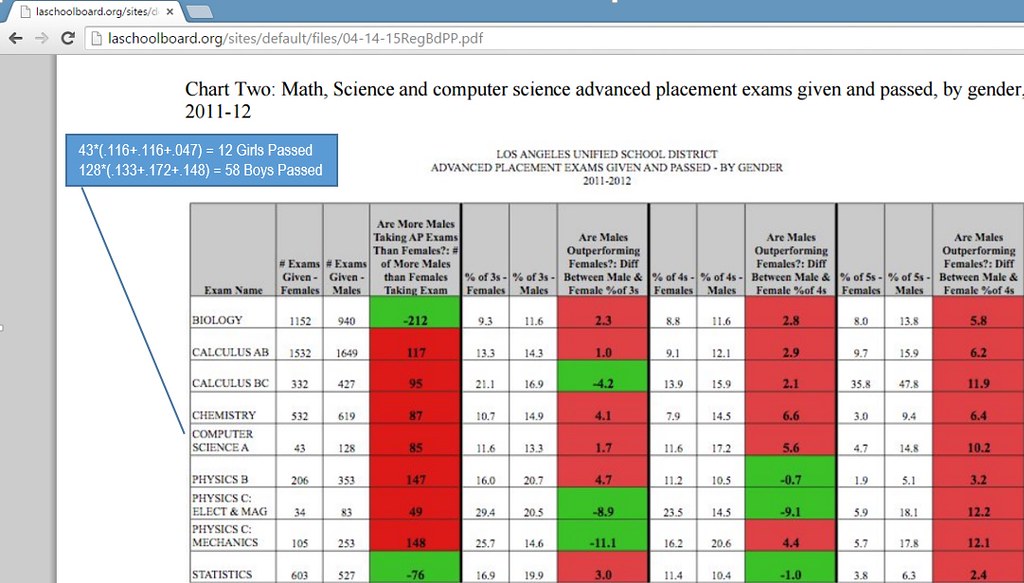
theodp writes: Citing statistics that showed a whopping 46 more boys than girls passed the AP Computer Science Exam in 2011-12, the 640,000+ student Los Angeles Unified School District (LAUSD) on Tuesday approved a waiver to enable the District to operate a single-gender, all-girls STEM School called the Girls Academic Leadership Academy (GALA). Students in GALA will follow a six year sequence of computer courses starting in middle school that will culminate in AP Computer Science Principles. "Fewer females take AP courses in math, science, or computer science, and they are not as successful as males in receiving passing scores of 3, 4 or 5," argued the General Waiver Request (PDF, 700+ pages). "An all girls environment is reasonably necessary for the school to improve the self-confidence of girls in their academic abilities, especially in STEM areas where an achievement gap currently exists. GALA's admissions shall also comply with AB 1266 to ensure male students who identify as female are admitted to the school." The school's CS-related Partners include the UCLA Exploring Computer Science Program, as well as Google-bankrolled Girls Who Code, Black Girls Code, and NCWIT. One of the reasons the all-girls STEM school reportedly got the green light is that its backers satisfied federal regulations requiring a "substantially equal school" for excluded male students by submitting a plan for a companion all-boys school that would emphasize English Language Arts, where they often fall short of girls' test scores, rather than GALA's focus on STEM. One suspects the no-fan-of-gender-restricted-public-schools ACLU may call BS on this maneuver. -
Deep-Sea Microorganism Hasn't Evolved For Over 2 Billion Years
sfcrazy writes: Evolution is a natural process — everything evolves over a period of time, depending on the environment. But now scientists have discovered an organism which hasn't evolved for over more than 2 billion years. That's almost the half of the life of the Earth. "The scientists examined sulfur bacteria (abstract), microorganisms that are too small to see with the unaided eye, that are 1.8 billion years old and were preserved in rocks from Western Australia’s coastal waters. Using cutting-edge technology, they found that the bacteria look the same as bacteria of the same region from 2.3 billion years ago — and that both sets of ancient bacteria are indistinguishable from modern sulfur bacteria found in mud off of the coast of Chile." Scientists say the extreme stability of the environment around the organisms made further adaptations unnecessary. -
Be True To Your CS School: LinkedIn Ranks US Schools For Job-Seeking Programmers
theodp writes "The Motley Fool reports that the Data Scientists at LinkedIn have been playing with their Big Data, ranking schools based on how successful recent grads have been at landing desirable software development jobs. Here's their Top 25: CMU, Caltech, Cornell, MIT, Princeton, Berkeley, Univ. of Washington, Duke, Michigan, Stanford, UCLA, Illinois, UT Austin, Brown, UCSD, Harvard, Rice, Penn, Univ. of Arizona, Harvey Mudd, UT Dallas, San Jose State, USC, Washington University, RIT. There's also a shorter list for the best schools for software developers at startups, which draws a dozen schools from the previously mentioned schools, and adds Columbia, Univ. of Virginia, and Univ. of Maryland College Park. If you're in a position to actually hire new graduates, how much do you care about applicants' alma maters? -
UCLA Biologists Delay the Aging Process In Fruit Flies
An anonymous reader writes:Life scientists at UCLA have located a gene in fruit flies which, when intentionally activated, increases lifespan by about 30%. The gene (called AMPK) is normal important as an energy sensor, usually triggered by cells with low energy levels. By triggering it at other times, the researchers slowed the fruit flies' aging process (PDF), even beyond the organ system in which the triggering occurred. "Walker said that the findings are important because extending the healthy life of humans would presumably require protecting many of the body's organ systems from the ravages of aging — but delivering anti-aging treatments to the brain or other key organs could prove technically difficult. The study suggests that activating AMPK in a more accessible organ such as the intestine, for example, could ultimately slow the aging process throughout the entire body, including the brain." -
High School Students Not Waiting For Schools To Go Online
lpress writes UCLA conducts an annual survey of first-time, full-time college freshman and this year they included questions about the use of online education sites like Coursera and The Khan Academy. It turns out that over 40 percent of the incoming freshmen were frequently or occasionally assigned to use an online instructional website during the past year and nearly 70 percent had used online sites on their own. Students enrolling in historically black colleges were much more likely than others to have used online teaching material. They also compile a "habits of mind" index, and conclude that "Students who chose to independently use online instructional websites are also more likely to exhibit behaviors and traits associated with academic success and lifelong learning." The survey covers many other characteristics of incoming freshmen — you can download the full report here -
Taking Great Ideas From the Lab To the Fab
aarondubrow (1866212) writes The "valley of death" is well-known to entrepreneurs — the lull between government funding for research and industry support for prototypes and products. To confront this problem, in 2013 the National Science Foundation created a new program called InTrans to extend the life of the most high-impact NSF-funded research and help great ideas transition from lab to practice. Today, in partnership with Intel, NSF announced the first InTrans award of $3 million to a team of researchers who are designing customizable, domain-specific computing technologies for use in healthcare. The work could lead to less exposure to dangerous radiation during x-rays by speeding up the computing side of medicine. It also could result in patient-specific cancer treatments. -
Court Victory Gives Blogger Same Speech Protections As Traditional Press
cold fjord writes "Reuters reports, 'A blogger is entitled to the same free speech protections as a traditional journalist and cannot be liable for defamation unless she acted negligently, a federal appeals court ruled on Friday. Crystal Cox lost a defamation trial in 2011 over a blog post she wrote accusing a bankruptcy trustee and Obsidian Finance Group of tax fraud. A lower court judge had found that Obsidian did not have to prove that Cox acted negligently because Cox failed to submit evidence of her status as a journalist. But in the ruling, the 9th U.S. Circuit Court of Appeals in San Francisco said Cox deserved a new trial, regardless of the fact that she is not a traditional reporter. "As the Supreme Court has accurately warned, a First Amendment distinction between the institutional press and other speakers is unworkable."... Eugene Volokh, [a] Law professor who represented Cox, said Obsidian would now have to show that Cox had actual knowledge that her post was false when she published it. ... "In this day and age, with so much important stuff produced by people who are not professionals, it's harder than ever to decide who is a member of the institutional press."' Further details are available at Courthouse News Service." -
Computer Scientists Develop 'Mathematical Jigsaw Puzzles' To Encrypt Software
another random user writes "The claim here is that the encrypted software can be executed, but not reverse-engineered. To quote from the article: 'UCLA computer science professor Amit Sahai and a team of researchers have designed a system to encrypt software so that it only allows someone to use a program as intended while preventing any deciphering of the code behind it. According to Sahai, previously developed techniques for obfuscation presented only a "speed bump," forcing an attacker to spend some effort, perhaps a few days, trying to reverse-engineer the software. The new system, he said, puts up an "iron wall," making it impossible for an adversary to reverse-engineer the software without solving mathematical problems that take hundreds of years to work out on today's computers — a game-change in the field of cryptography.'" -
Wrong Number: Why Phone Companies Overcharge For Data
MrSeb writes "A recent study (PDF) conducted by UCLA professor Chunyi Peng shows that carriers generally count data usage correctly, but those customers who commonly use their device in areas with weak signal strength or to stream audio or video are often overcharged. Peng and three other researchers used data gleaned from an app installed on Android smartphones on two different carriers. The issue appears to be in how the system is set up to count data usage. Under the current scenario, data is charged as it is sent from the carrier's network to the end user. What does not exist is a system to confirm whether the packets are received, and thus preventing charges for unreceived data. Peng demonstrated this in two extreme circumstances. In one case, 450 megabytes of data was charged to an account where not a single bit of it had been received. On the flipside, Peng's group was able to construct an app which disguised data transfers as DNS requests, which are not counted by the carriers as data usage. Here they were able to transfer 200 megabytes of data without being charged. Overall, the average overcharge is about 5-7% for most users. While that does not seem like much, with unlimited plans gone and data caps in style that could pose potential problems for some heavy data users. Could you be going over your data allotment based on data you never received? It's quite possible." -
UCLA Scientist Discovers Plate Tectonics On Mars
Reader SternisheFan links to a press release at UCLA, and excerpts from it another bit of Mars news: "For years, many scientists had thought that plate tectonics existed nowhere in our solar system but on Earth. Now, a UCLA scientist has discovered that the geological phenomenon, which involves the movement of huge crustal plates beneath a planet's surface, also exists on Mars. 'Mars is at a primitive stage of plate tectonics. It gives us a glimpse of how the early Earth may have looked and may help us understand how plate tectonics began on Earth,' said An Yin, a UCLA professor of Earth and space sciences and the sole author of the new research." -
UCLA Develops Transparent, Electricity-Generating, Solar Cell Windows
Elliot Chang writes "A team from UCLA has developed a new transparent solar cell that has the ability to generate electricity while still allowing people to see outside. In short, they've created a solar power-generating window! Described as 'a new kind of polymer solar cell (PSC)' that produces energy by absorbing mainly infrared light instead of traditional visible light, the photoactive plastic cell is nearly 70% transparent to the human eye — so you can look through it like a traditional window." -
Crowdsourcing Game Helps Diagnose Infectious Diseases
Lucas123 writes "Researchers at UCLA have created an online crowdsourcing game designed to let players help doctors in key areas of the world speed the lengthy process of distinguishing malaria-infected red blood cells from healthy ones. So far, those playing the game have collectively been able to accurately diagnose malaria-infected blood cells within 1.25% of the accuracy of a pathologist performing the same task (PDF). The researchers hope that users of the game can help eliminate the high cost and sometimes poor accuracy of diagnosis in areas like sub-Saharan Africa, where malaria accounts for some 20% of all childhood deaths." -
Crowdsourcing Game Helps Diagnose Infectious Diseases
Lucas123 writes "Researchers at UCLA have created an online crowdsourcing game designed to let players help doctors in key areas of the world speed the lengthy process of distinguishing malaria-infected red blood cells from healthy ones. So far, those playing the game have collectively been able to accurately diagnose malaria-infected blood cells within 1.25% of the accuracy of a pathologist performing the same task (PDF). The researchers hope that users of the game can help eliminate the high cost and sometimes poor accuracy of diagnosis in areas like sub-Saharan Africa, where malaria accounts for some 20% of all childhood deaths." -
Generating Alcohol Fuels From Electrical Current and CO2
New submitter AcMNPV writes "A news release from UCLA describes a new process for producing biofuels using microorganisms, electrical current and carbon dioxide (abstract). Quoting: 'Liao and his team genetically engineered a lithoautotrophic microorganism known as Ralstonia eutropha H16 to produce isobutanol and 3-methyl-1-butanol in an electro-bioreactor using carbon dioxide as the sole carbon source and electricity as the sole energy input. Photosynthesis is the process of converting light energy to chemical energy and storing it in the bonds of sugar. There are two parts to photosynthesis — a light reaction and a dark reaction. The light reaction converts light energy to chemical energy and must take place in the light. The dark reaction, which converts CO2 to sugar, doesn't directly need light to occur. "We've been able to separate the light reaction from the dark reaction and instead of using biological photosynthesis, we are using solar panels to convert the sunlight to electrical energy, then to a chemical intermediate, and using that to power carbon dioxide fixation to produce the fuel," Liao said.'" -
UCLA Engineers Create Energy-Generating LCD Screen
An anonymous reader writes "Engineers at UCLA have developed technology that allows gadgets like smartphones and laptops to convert sunlight, ambient light, and their own backlight into energy. Equipping LCD-enhanced devices with so-called polarizing organic photovoltaics will recoup battery loads of lost power, and enable smartphone users to scour Yelp, scan Twitter, and update their Facebook page without fear of draining the charge before a real communication crisis arises." -
Implant Restores Paralyzed Man's Leg Movement
cylonlover writes "In a move that gives cautious hope to the millions of people suffering some form of paralysis, a team of researchers from UCLA, Caltech and the University of Louisville has given a man rendered paralyzed from the chest down after a hit-and-run accident in 2006 the ability to stand and take his first tentative steps in four years. The team used a stimulating electrode array implanted into the man's body to provide continual direct electrical stimulation to the lower part of the spinal cord that controls movement of the hips, knees, ankles and toes, to mimic the signals the brain usually sends to initiate movement (abstract)." -
Global Warming's Silver Lining For the Arctic Rim
Pickens writes "According to Laurence C. Smith, an Arctic scientist who has consistently sounded alarms about the approach of global warming, within 40 years the Arctic rim may be transformed by climate change into a new economic powerhouse. As the Arctic ice recedes, ecosystems extend, and minerals and fossil fuels are discovered and exploited, the Arctic will become a place of 'great human activity, strategic value and economic importance.' Sparsely populated areas like Canada, Scandinavia, Russia and the northern United States — the northern rim countries, or NORCs — will become formidable economic powers and migration magnets. Predictions in Smith's new book The Earth in 2050 include the following: New shipping lanes will open during the summer in the Arctic, allowing Europe to realize its 500-year-old dream of direct trade between the Atlantic and the Far East, and resulting in new economic development in the north; NORCs will be among the few place on Earth where crop production will likely increase due to climate change; and NORCs will become the envy of the world for their reserves of fresh water, which may be sold and transported to other regions." -
UCLA Profs Banned From Posting Course Videos
I Don't Believe in Imaginary Property writes "As of Winter Quarter 2010, UCLA professors will no longer be able to post videos on their course websites. Although they've long relied upon fair use protections for educational use, the Association for Information Media and Equipment has made claims that they're copyright infringers, even though the videos are only available on campus and the students are allowed to watch the videos in the Instructional Media Lab. Even though they believe their use of the materials to be fair, the UCLA has decided to back down rather than face litigation. Many professors have commented that this will hurt students, because they now have to watch all videos at the IML, which isn't open on weekends, forcing students to try to fit assigned videos between classes." -
UCLA Profs Banned From Posting Course Videos
I Don't Believe in Imaginary Property writes "As of Winter Quarter 2010, UCLA professors will no longer be able to post videos on their course websites. Although they've long relied upon fair use protections for educational use, the Association for Information Media and Equipment has made claims that they're copyright infringers, even though the videos are only available on campus and the students are allowed to watch the videos in the Instructional Media Lab. Even though they believe their use of the materials to be fair, the UCLA has decided to back down rather than face litigation. Many professors have commented that this will hurt students, because they now have to watch all videos at the IML, which isn't open on weekends, forcing students to try to fit assigned videos between classes." -
Colliding Auroras Produce Explosions of Light
elyons writes "Another neat discovery has come from the lab of Larry Lyons at UCLA. As reported earlier on Slashdot, Lyons' group studies the dynamics of auroras. Their most recent discovery reveals for the first time the sequence of events leading to dramatic space-weather disturbances. Using a network of cameras deployed around the Arctic in support of NASA's THEMIS mission, they recorded over 200 instances of auroras colliding, causing brilliant displays of northern lights (see time 8:22 for such an example)." -
Surprise Discovery In Earth's Upper Atmosphere
elyons sends word out of UCLA of a completely unexpected discovery in the physics of the Sun-Earth interaction — a previously unknown basic mode of energy transfer from the solar wind to the Earth's magnetosphere. "'It's like something else is heating the atmosphere besides the sun. This discovery is like finding it got hotter when the sun went down,' said Larry Lyons, UCLA professor of atmospheric and oceanic sciences. 'We all have thought for our entire careers — I learned it as a graduate student — that this energy transfer rate is primarily controlled by the direction of the interplanetary magnetic field. The closer to southward-pointing the magnetic field is, the stronger the energy transfer rate is, and the stronger the magnetic field is in that direction. [It turns out that] if it is both southward and big, the energy transfer rate is even bigger.'" The researchers have two papers on the discovery coming out in the Journal of Geophysical Research. -
Educause Announces Plans To Sign .edu TLD With DNSSEC
jhutkd writes "Educause (who run the .edu gTLD) announced today that they will deploy DNSSEC and sign the .edu zone by the end of March 2010. This will enable all educational institutions to benefit from deploying DNSSEC via the secure delegation hierarchy starting with IANA's ITAR (a temporary surrogate for the root zone signing), going through .edu, down to schools, and potentially leading all the way down to individual departments. Unlike larger gTLDs like .org, the churn of adding new and deleting old zones in .edu is much lower (due to the fact that there are tight controls on who may register for a delegation). Thus, many of the hassles of adding new DS records and maintenance procedures might be more manageable and help speed DNSSEC's rollout in this branch of the DNS hierarchy." -
ICANN and NIST Announce Plans To Sign the DNS Root
jhutkd writes "On June 3rd, 2009, ICANN and NIST announced formal plans to use DNSSEC to sign the DNS root zone by the end of 2009. This is a huge step forward for the deployment of DNSSEC." -
Google Privacy Counsel Facing Criminal Charges
ProfJonathan writes "According to a story in the IAPP's Privacy Advisor, Google's Paris-based global privacy counsel, Peter Fleischer, is facing criminal charges in Italy for defamation based upon a user's posting of a video to Google Video. Mr. Fleischer was on his way to the University of Milan for a speaking engagement when he was met by Italian law enforcement officials. As with the 1997 case of Compuserve's Felix Somm and the 2006 arrest in Texas of BetOnSportsUK's CEO during a layover on a trip to Costa Rica, this case once again highlights the risks faced by executives and employees of online companies whose activities may be legal and protected in their own countries, but illegal elsewhere in the world. Troubling, and worth watching." -
Brains Work Best At Age of 39
Scientists at the University of California Los Angeles are reporting that while some people may think "life begins at 40," all it seems to do is slow down. According to recent research, at age 39 our brain reaches its peak speed, and it's all downhill after that. "The loss of a fatty skin that coats the nerve cells, called neurons, during middle age causes the slowdown, experts say. The coating acts as insulation, similar to the plastic covering on an electrical cable, and allows for fast bursts of signals around the body and brain. When the sheath deteriorates, signals passing along the neurons in the brain slow down. This means reaction times in the body are slower too." -
AMD Graphics Chips Could Last 10X To 100X Longer
An anonymous reader writes "According to a research report out of UCLA, released this morning, NVidia's high-lead bump packaging could last anywhere from 1/10th to 1/100th as long as AMD's advanced eutectic bump approach. (TG Daily has picked up the claim.) NVidia is currently in the midst of a $200M recall of bad GPUs, and the report suggests that the issue could be much deeper than NVidia's PR department would have us believe." The report lends credence to the strident claims of the Inquirer's Charlie Demerjian, which we discussed a month back. -
Scientists Restore Walking After Spinal Cord Injury
Spinal cord damage blocks the routes that the brain uses to send messages to the nerve cells that control walking. Until now, doctors believed that the only way for injured patients to walk again was to re-grow the long nerve highways that link the brain and base of the spinal cord. For the first time, a UCLA study shows that the central nervous system can reorganize itself and follow new pathways to restore the cellular communication required for movement. The lead researcher said, "This pessimistic view [that severe injury to the spinal cord means permanent paralysis] has changed over my lifetime, and our findings add to a growing body of research showing that the nervous system can reorganize after injury." -
Thailand Bans Teen Info On the Net
Reservoir Hill writes "Internet providers in Thailand have been prohibited from disclosing personal data about anyone under the age of 18 in a way that would allow others to gain access to them — including disclosure of their age, gender, phone number, email address, chat logon name, photo, or name of their school. Violators will face six months in jail of and a fine of $1,900. Web sites have been given one month to come into compliance." The article isn't clear on whether or not the prohibition applies to foreign sites that carry information about Thai kids. -
Carbon Nanotube-Based NVRAM In 2-3 Years?
According to NanoWerk, UC Riverside researchers have come up with a memory device based on telescoping multi-walled carbon nanotubes. According to one of the researchers, 'This finding leads to a promising potential to build ultrafast high-density nonvolatile memory, up to 100 gigahertz or into the terahertz range" and a prototype could be demonstrated "in the next two to three years.' Similar devices from UCLA and Caltech based on bistable rotaxanes are farther along in being integrated into actual memory circuits, but tend to break after a fairly small number of position changes. Carbon nanotubes may promise more durable switches. -
World's Smallest Robotic Hand
BuzzSkyline writes "The world's smallest robotic hand has been built by Yen-Wen Lu and Chang-Jin "CJ" Kim at UCLA's Mechanical and Aerospace Engineering Department. The microhand can make a fist that can grasp objects smaller than a millimeter across. Check out the freaky video on the researchers' website of the microhand grabbing a blob that looks like a fish egg. The tiny hand is made of inert materials, making it ideal for handling gooey biological samples. Lu and Kim describe their microhand in a paper published October 16 in the journal Applied Physics Letters." -
3D Microscopy of Fossils Embedded in Solid Rock
whitehatlurker writes "UCLA is reporting that a process involving Raman spectroscopy and confocal laser scanning microscopy has enabled researchers to take three dimensional images of fossils that have been embedded in solid stone for over 650 million years. It also permits characterization of the chemical structures of the fossil. As the process is non-destructive and can image microscopic fossils (such as bacteria) with (formerly) soft tissues, there is speculation that this could be used on a mission to Mars to examine sediments there for evidence of life." -
Researchers Say Human Brain is Still Evolving
Oleg Alexandrov writes "Two genes involved in determining the size of the human brain have undergone substantial evolution in the last 60,000 years, researchers say, suggesting that the brain is still undergoing rapid evolution. The discovery adds further weight to the view that human evolution is still a work in progress, since previous instances of recent genetic change have come to light in genes that defend against disease and confer the ability to digest milk in adulthood." -
Video Reactions to Apple's Intel Switch
Drew Mylrea writes "Here is a video of the reaction to the switch from Mac users at WWDC (small version). Has a somewhat revealing interview with Apple VP Phil Schiller regarding PC users putting OS X on generic PCs, and sums up the overall reaction to the news.(Requires QT 7.)" -
Video Reactions to Apple's Intel Switch
Drew Mylrea writes "Here is a video of the reaction to the switch from Mac users at WWDC (small version). Has a somewhat revealing interview with Apple VP Phil Schiller regarding PC users putting OS X on generic PCs, and sums up the overall reaction to the news.(Requires QT 7.)" -
Video Reactions to Apple's Intel Switch
Drew Mylrea writes "Here is a video of the reaction to the switch from Mac users at WWDC (small version). Has a somewhat revealing interview with Apple VP Phil Schiller regarding PC users putting OS X on generic PCs, and sums up the overall reaction to the news.(Requires QT 7.)" -
Sensor Webs Unwire Ecology
jonbrewer writes "Pioneered by CENS, Sensor Networks are rapidly becoming a mainstream environmental monitoring tool. The NY Times has an article today with a quick tech overview and info on RiverNet, EarthScope, NEON, and Neptune. The Times reports 'scientists want to deploy millions of these kinds of devices over large tracts for long periods, opening new windows on nature.'" -
Nuclear Fusion Discovered
prostoalex writes "Both USA Today and The New York Times are reporting on research group from UCLA led by Seth J. Putterman which has discovered a form of nuclear fusion. The impact of the discovery? 'While the device is probably too inefficient to produce electricity or other forms of energy, the scientists say, egg-size fusion generators could someday find uses in spacecraft thrusters, medical treatments and scanners that search for bombs.' The findings are published in Nature magazine." -
Room-Temperature, Small-Scale Fusion at UCLA
gnuman99 writes "A UCLA collaboration (Seth Putterman, Brian Naranjo and Jim Gimzewski) appear to have developed a fusion device powered by a pyroelectric crystal, a type of crystal used in cell phones to filter signals. When heated, such a crystal produces a large electric charge on its surface. The UCLA researchers placed a lithium tantalate (LiTaO3) pyroelectric crystal so that one side touches a copper disc. A tiny tungsten probe is then placed at the center of the copper disc. When the crystal is subsequently heated, a very large large electric field is produced at the end of the tugsten tip, ~25 billion volts per meter. This field gradient is so high that it strips the electrons from nearby deuterium atoms. The ionized deuterium atoms then accelerated by this field towards a solid target of erbium deuteride (ErD2). They collide with it at such high energies that some fuse with the target. A measurement of almost 900 neutrons per second was observed. This is 400 times the background! Although the amount of energy produced in this initial experiment was miniscule (~1E-8 jules), this technology could be used for things like microthrusters. There are pictures and movies on the UCLA's physics site." Reader richmlpdx adds a link to coverage at MSNBC. -
Scientific Appeal to Community
dshatto writes "Help! This posting is to everyone who supports open source science: The California Institute for Regenerative Medicine (CIRM) will start taking shape in the next few months. This is the organization that will be spending $3 billion on stem cell and related research over the next 10 years. California has a chance to set a new model for scientific research. Models to consider for its intellectual property (IP) include open source models. I'm announcing a project that hopefully will:" Read more below... "-
1) Demonstrate the power, speed, and effectiveness that open source principles and distributed collaboration offer.
2) Produce a temporary community of advocates for open source science that links supporters together in a self-organized network aspiring to the common good.
3) Develop information resources that the Committee setting up the CIRM can use in its consideration of open source models for intellectual property.
Please go here for details:
http://www.bol.ucla.edu/~dshatto/PROSODICOL.htmlSlashdot gets the scoop on this - I won't post it anywhere else until I gauge your response. Why? Because, well, I think it's cool, and I think it's the right community to get this project going.
I believe that together we can make a lasting impact on science.
David" -
1) Demonstrate the power, speed, and effectiveness that open source principles and distributed collaboration offer.
-
Toyota to Employ Advanced Robots
olegalexandrov writes "Toyota Motor will introduce robots which can work as well or better than humans at all 12 of its factories in Japan to cut costs and deal with a looming labor shortage. The robots would be able to carry out multiple tasks simultaneously with their two arms, achieving efficiency unseen in human workers and matching the cheap wages of Chinese laborers, a report said on Thursday." The Motley Fool has a humorous take, and Toyota emphasizes that goodlife, err, humans will continue to have a place in Toyota factories. -
Earth Tides Trigger Earthquakes
Dirak writes "UCLA scientists confirmed that Earth tides, produced by the gravitational pull of the moon and the sun on the Earth, causing the ocean's waters to slosh, can trigger earthquakes. There are many mysteries about how earthquakes occur, but now it is clear that it takes about the force arising from changing the sea level by a couple of meters of water to noticeably affect the rate of earthquakes." -
Quantum Computing Using Traditional Transistors
Ocean Consulting writes "UCLA is reporting progress on the quantum computing front by announcing success in controlling the spin of a single electron using an ordinary transistor." It's been a long road for the researchers involved, and even the project lead, Hong Wen Jiang admits, "...our initial theoretical calculations were very favorable, and gave us confidence to persevere." -
Japan Considers Taxing of WiFi
DoktorTomoe writes "According to an article at Asia Pacific Media Network, Japan plans to introduce a fee for using WLan. The changes necessary for such taxation could be made as early as 2005. " -
Bar Coding The World Away
778790 writes "The Bar Code, long used for inventory classification and sometimes feared as a tool of social engineering, has been regulated in the name of globalization, and the globe has defeated the United States. Bar Codes in America will now have more digits, to match the global bar code standard: the European Article Numbering Code." -
China Plans Surveillance System for Internet Cafes
nasty writes "According to Interfax China, China will install a special surveillance system in order to prevent 'unhealthy information and websites'. All internet cafes in China will have installed the new system by the end of 2004. This according to China's Ministry of Culture (MOC). The system requires the customers personal information, such as name, age, and their national citizen identification number, before they are allowed to log onto the Internet." Reader Dr.Hair submits another blurb about the system. -
MPAA Infiltrating Campus Nets with Software
unassimilatible writes "CNet is reporting that the MPAA is starting to infiltrate college campuses with automated anti-piracy software. Known as the Automated Copyright Notice System (ACNS), the technology promises to make copyright enforcement easier on peer-to-peer networks, saving schools and Internet service providers (ISPs) time and money. ACNS allows them to automatically restrict or cut off Internet access for alleged infringers on notice from a record label or movie studio. Though not specifically ACNS, a similar system is set to go live Monday at the University of California at Los Angeles, one of the nation's largest universities with 37,500 students. UCLA's Copyright Policy page makes no reference of this system being implemented."