Slashdot Mirror
Domain: usb.org
Stories and comments across the archive that link to usb.org.
Comments · 233
-
Technical details
Here's a press release with some technical info. It says that the full details are in a "USB Power Delivery 3.0" (a new revision) and "USB Type-C Bridging" (a new specification).
-
USB Power Delivery
I'm not sure what you mean here. Do you mean that an adapter meeting the Battery Charging spec or its successor the Power Delivery spec is not a "USB charger"? Or do you just mean that the vast majority of power adapters on the market with a USB A or C receptacle materially fail to meet the spec?
-
USB Power Delivery
I'm not sure what you mean here. Do you mean that an adapter meeting the Battery Charging spec or its successor the Power Delivery spec is not a "USB charger"? Or do you just mean that the vast majority of power adapters on the market with a USB A or C receptacle materially fail to meet the spec?
-
Re: Yes, about power connectors
Maybe the 5V on the USB isn't enough soon and we'll see higher voltages. 12V next?
We've had that for years on popular mid to high end phones with Qualcomm quick charge: https://en.wikipedia.org/wiki/...
And now there is an official standard USB Power Delivery.
http://www.usb.org/developers/...A move to wireless charging would be a big backward step in the drive to improved efficiency.
I do miss the days of external contact pads, so I could just drop my phone in a cradle to charge. The Nexus-7 tablet was the last place I saw those, but I don't think it was used much.
-
Re:But y tho?
Last I remember, technology is a competitive business, not a hippie co-op.
Many of the connectivity interfaces Apple eschews are developed by partnerships between major technology players. It literally is a co-op.
Once you're dependent on someone else's products they suck the life out of you like the mafia.
They all contribute their own know-how to the standards and they all benefit without having to seek out licensing agreements with other companies directly to adopt a specific feature, because it becomes part of the standard. For an example of companies not following this logic, look to the cell phones that use USB-C but only support fast-charging via Qualcomm's proprietary "Quick Charge" feature, and not USB-PD.
Apple is even on the USB-IF group. If they felt the design of it was somehow lacking in what that wanted, they were in a position to make their voice heard. Instead they started a whole separate interface with it's own set of issues and fragmented the market for mobile accessories in the process. The reason ultimately seems be to start the "Certified for iPhone" program and becomes a tollbooth for people making those accessories, a decision that does not have the customer's best interests at heart.
-
Re:Ye$, it certainly i$, i$n't it?
if apple or microsoft are doing something, it's ALWAYS because they see a profit behind it.
Translation: I've decided that any and all things Microsoft et al do are bad, even when it's something I've praised another group for doing
I've heard Microsoft employees breathe, maybe you should stop doing it since it is therefore evil and/or solely for profit.and they'll of course own the patents/rights to the particular device, but more-importantly it gives them a biiig 'in' to the insurance-/medicaid-/medicare-billing industry if such a device is eventually termed a 'necessary device'.
Except TFA isn't about a device, it's about a standard. One given to the non-profit USB-IF, who among others, has Red Hat as a member.
I would love if one time Slashdot posted an article like this, didn't show the company's name at first, and we saw the comments before/after it was revealed -
Re:Who Cares About Adapters?
The USB audio spec was first published in 1995, around 23 years ago: http://www.usb.org/developers/...
Android users have been enjoying USB digital audio since the very early days. Standard audiophile set-up is a USB DAC attached to the phone with a rubber band, and the "strapped to the back of a phone" form factor is fairly common these days.
-
Re:The nice thing about standards...
It is absolutely proprietary. USB is not open and free.
Actually it is open, you can download the spec from here. Also it is free of charge, you can pay for a VID ($5000USD) and you can pay to license the logo ($3500USD) but you can also do as many do and if you need a VID use 0xF055.
-
Re:USB-A did not "just work" at outset either.
According to the alternate mode specification the 3 modes for USB-C include USB, DP, and power delivery; there is no HDMI support in the USB-C spec.
Look again at the PDF you linked to, HDMI is listed on the second page, left hand column, first paragraph.
since the HDMI mode is part of the TB3 spec
HDMI is not part of the Thunderbolt spec. I found this presentation on the HDMI alternate mode for USB-C and there is no mention of Thunderbolt that I could see.
http://www.usb.org/developers/...The way HDMI works, using all four data lanes in the spec, makes me wonder if a USB-C port could support both Thnuderbolt and HDMI at the same time like Thunderbolt and DisplayPort can share data lines. I assume switching between HDMI and Thunderbolt on the same USB-C port is possible with the right cable for each, the right alternate mode being selected by the device or cable connected. It was my understanding that Apple supported HDMI on USB-C and the adapters they offer for HDMI are passive, but I may be mistaken. Apple does not go into such detail on their product descriptions and they bury the technical specifications well on their website.
As long as you choose Intel (as they won't license Thunderbolt to other x86 chipmakers), that is.
Intel does license Thunderbolt to others, AMD included. Why AMD does not take advantage of this is anyone's guess.
https://www.engadget.com/2017/...But that's not a problem, according to you.
I'm not saying it's not a problem, only that it's not something I'm going to be terribly concerned about now that I know some more about the issues.
I agree that it sucks that there will be continued confusion on what any given USB-C port or cable is capable of doing for the user. That's been a problem with USB almost from the beginning with three different speeds and not every cable supporting them all. The USB group made it worse with the 15 different power levels, 5 different data rates (or is it 7?), and it's 4 (or 3 or 5) alternate modes. What they did do though is retire the mini and micro ports and leave us (effectively at least) with just 3, the micro ports might live on for a bit longer but few new products will have them. There's no more On-The-Go connectors and cables. What still remains is the silliness on figuring out what speed any given cable or device supports, which is not unique to USB either. The other problems are pretty minor considering that a "fully functional" USB-C cable would likely cost $100 but a "crippled" cable costs only $30. I'll put up with the minor inconvenience of having to sort through those cables since it means I can hook up three things at the same time for the price of one. This is from someone that bought one of those $30 cables to find out it didn't do what I wanted. I tossed it in a box, as I'm sure I'll need it later, and ordered a different $30 cable.
The lack of widely supported host-to-host connectivity still bothers me a bit. That seems like something that would be easy to do if only someone cared enough to implement it. I might play with the Linux USB slave device software I discovered to see if I can't make that work on one of my computers.
If someone gets bit by buying the wrong cable or device (like I did) then that's just someone not doing their homework. It sucks and I do think that Intel, Apple, and others, could fix a lot of this by being more open on what protocols their USB-C ports and cables support. Most devices that I've seen make it pretty clear on what protocols are supported, so no real complaints from me on that.
Maybe I'll change my mind on this again as I accumulate more USB-C stuff.
-
Re:USB-A did not "just work" at outset either.
You might want to pick that mic back up.
nope
What difference does it make if its the cable or the port doing the compliance with the spec still part of the standard.
But you are talking about angels dancing on the head of a pin here; the fact is the average user can pick up a USB cable and there is literally no way to know if it will provide power or not, support high speed at a properly or not... or even work or not even if the plugs fit. Just like USB-C.
The fact is I am right, and you are wrong. It's that simple and I refuse to waste more of my time as you argue semantics while I repeat the brutal truth of reality to you over and over again.
So you can have the last word after this but I have illustrated beyond any doubt there is no functional difference between USB-A and USB-C issues for users of devices and cables. You are focused only on the immediate present and for some reason cannot see the future, which has a similar arc as did USB-A, nor the past in which you had to pay careful attention indeed to both the computer you had and the device you were buying even if you were connecting via the "standard" USB-A connector. Why can you not see that? A mystery.
If the USB-C standard required that all specified protocols be supported, that would solve...
Again going back to power did everyone wait for that USB charging standard or did companies and devices just plow ahead first with a bunch of different schemes to do fast charging over USB-A before there was any spec??? The history of USB-A is a prefect fractal example, over any period or any aspect of the spec you find endless layers of nonconformance and stepping outside the standard in ways that meant devices would not always work with everything you could connect via the cable.
-
USB PD 2.0
Any charging brick that supports the USB PD 2.0 usb power delivery standard will charge a MacBook, new MacBook Pro, or iPhone 8. You don't need to buy a brick from Apple for this.
The only detail to consider is the maximum wattage the brick can put out. That's why Apple sells a larger brick for the MacBook Pro.
Any brick - from any vendor - that can fast-charge a MacBook will fast-charge the iPhone 8 as well. The one I use is the Anker PowerPort+, but there are a number of others.
-
It's there.
My new laptop at work (ZBook 15 G3) has USB-C. It's everything USB should have been since the beginning.
Reversible, Just Works(Tm). It'll drive 2 4k external TVs.
Laptop itself has Ethernet, VGA, 3xUSB3.0 and 2xUSB-C ports. Holds 64GB of RAM, 2xM.2 NVMe drives and 1x 2.5" drive.
The dock could still use some work. You shouldn't have to issue a white paper on how to hook up monitors (Which is still wrong, the HDMI port drives 4k just fine.).
If I *need* to do some GPU work I can plug in an external GPU. Or gigabit ethernet or any other PCIe device.
Microsoft screwed up on this one. They're releasing old hardware. I bet they could have easily charged a surface on over USB Power Delivery. It's taken us a while but USB-C is pretty damn good as far as a physical connection. And Thunderbolt 3 is equally as good of a protocol.
For most people if the 'desktop is dead' it's because USB-C/TB killed it. I just want to plug my laptop into cluster of CPUs when I'm at my desk.
-
Re:Not MS target demographic
So what device class do you use for an EPROM programmer then?
One of the classes 0xEF, 0xFE or 0xFF, of course. http://www.usb.org/developers/defined_class
Then just add libusb in any of its incarnations?Or does your prommer speak serial or parallel port?
-
Re:One single question
Aren't you describing On-the-Go (OTG) specs ?
-
This the stupidest things I have read today!
Intel has shared a similar desire, citing "industry singling a strong desire to move from analog to digital."
And by "industry" they mean "intel". I think most makers of headphones or things using headphones would very much prefer to keep their existing processes rather than retool, especially as this likely won't go down well with their customers.
Intel believes USB-C is the future audio jack.
Of course they do because they make and sell (and license?) USB3 chipsets.
They believe USB-C has more potential than the 3.5mm audio jack as it allows users to add additional smart features to headphones in the future.
You can already buy USB headphones and they work perfectly with any computer if you want "smart features". I in fact have precisely one pair: a USB headset with a mic. It has some "smart features" I never use. Mostly I have it because my old headset was dual jack, not 4 pole and I got the USB one for free. There's no advantage of the "smart" one over the old analog one.
For instance, a future pair of headphones could monitor one's pulse or inner-ear temperature for fitness tracking,
That is literally the most pointless thing I have ever heard.
something that could only be possible if the headphones were connected to a smartphone via a USB-C cable.
That's great, but if you instead connected the headphones to a 13A plug (and used ethernet-over-mains to transfer the audio) they could also double as a hairdrier!
What's also worth mentioning [quoted from 9to5Mac]: USB-C already supports analog audio transfer through sideband pins simplifying the engineering steps necessary to swap 3.5mm with USB-C in device designs.
Um that's nice, and kinda strange. So now we'll have perfectly good analog headphones able to work with a cheap adapter, but we'll also have to use up one of the precious and relatively fragile USB-C ports instead of using the dedicated, robust audio one.
In the second quarter, Intel should have a finalized USB-C standard for digital audio transfer.
Well it was nice of them to unfinalize it in the first place given that we've only had an audio over USB spec for nearly two decades.
http://www.usb.org/developers/...
I can buy any random audio device, jack it into my old and busted USB1, 2 or 3 (and presumably type C) port and it will work with no drivers. So what the hell is this new spec meant to be? Do they actually include an inner ear temperature monitor in the spec? What about an atmospheric pressure and humidity monitor? And maybe a seismograph? What about something to measure the level of crap on my desk when I put my headphones down?
Intel does note that the transition from analog to digital will be expensive as the headphones have to include amplifiers and DACs, but scale will offset the early costs over time.
It won't be an expensive transition it will stay expensive since every pair of new headphones will need the digital stuff. They will always be mroe expensive to make than analog headphones because they are identical plus extra crap. Extra crap always costs more.
-
Re:You had me until "USB Type-C cables"
My joke could had been fun if I had made it correctly, one article had a lot of cables but I didn't knew whatever all was standard USB ports or not so I googled it and just took one but that one didn't even have the type C port so
So you've got A, B in normal and mini and micro versions:
https://upload.wikimedia.org/w...
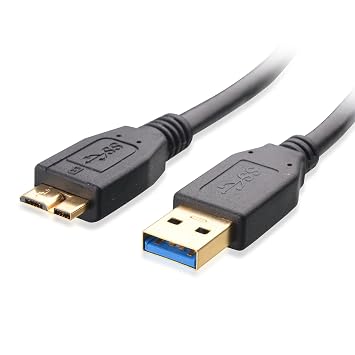
And then you've got SuperSpeed A, B and micro-B:
https://en.wikipedia.org/wiki/...
http://www.usb.org/press/cespr...
http://ecx.images-amazon.com/i...
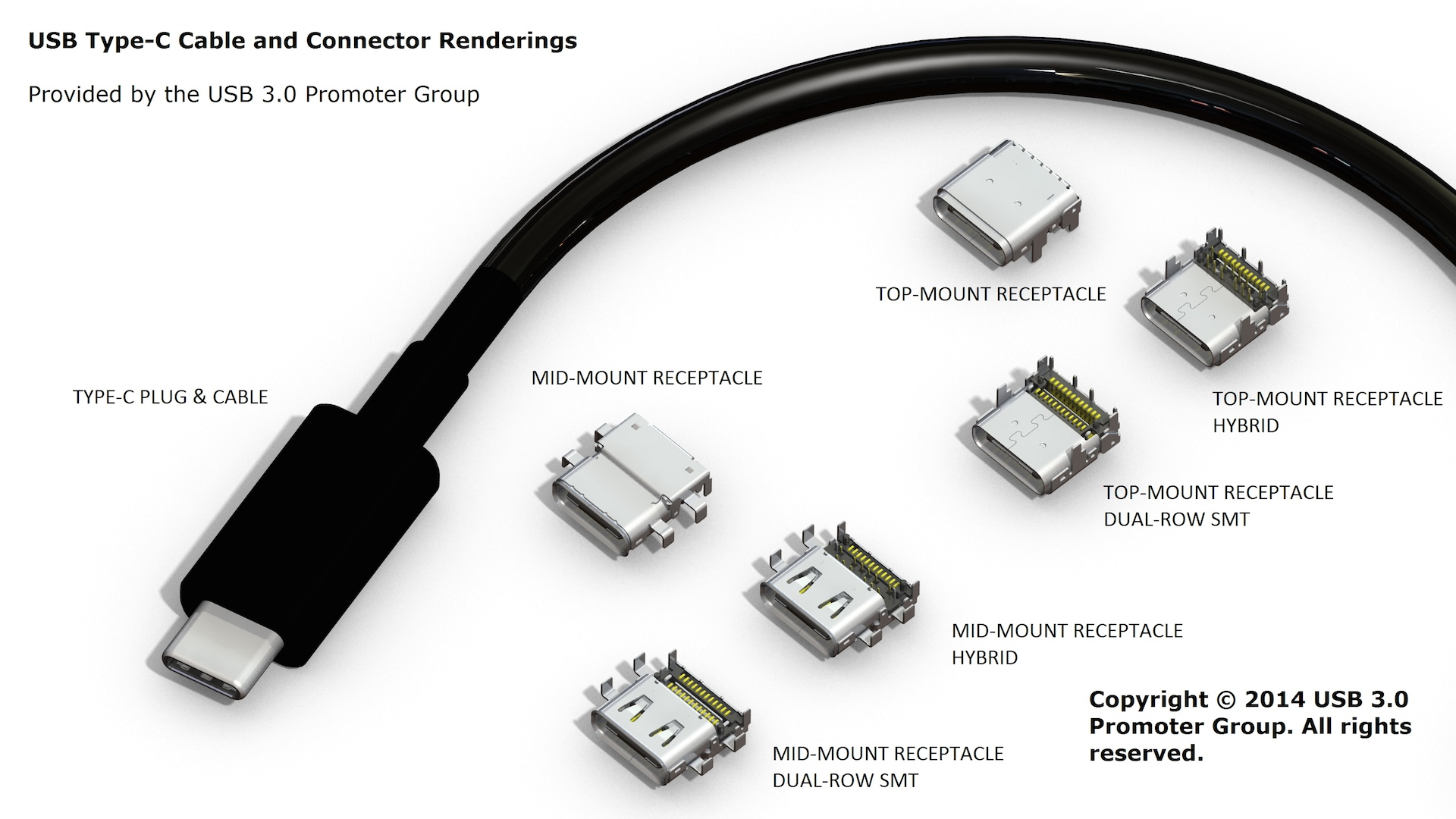
And USB type C:
http://cdn.arstechnica.net/wp-...For at-least 10 different connectors for USB cables =P
-
Re:Essentially a dupe from 3 months ago
There is an organization that certifies USB stuff. If a cable has a little sticker with that certification logo, it's probably good.
Not sure how much they do to prevent unauthorized use though. -
Oh, stop spreading Apple's FUD, what a pile of BS
...plugging in cables without doing the twist-around dance is a good thing. Rumor has it Apple actually gave that design to the USB forum because well...
Because, well, it's so "damn hard" to design one, eh? Get real FFS...
devices that draw 2A have been known to explode/set on fire cheap chargers.
Oh yeah. Cause, you know, it's so damn hard thing / engineers outside Apple are such idiots that design phones that you must "hold right" to not lose signal... Oh wait...
USB-100mA
USB by default will deliver 100mA of current (it is 500mW power because we know it is 5v, right?) to a device. This is the most you can pull from a USB hub that does not have its own power supply, as they never offer more than 4 ports and keep a greedy 100mA for themselves.Some computers that are cheaply built will use an bus-powered hub(all of your USB connections share the same 500mA source and the electronics acting as a hub use that source also) internally to increase the number of USB ports and to save a small amount of money. This can be frustrating, but you can always be guaranteed 100mA.
USB-500mA
When a device is connected it goes through enumeration. This is not a trivial process and can be seen in detail on Jan Axelson's site.Coming up (up to 100w):
http://www.usb.org/developers/... -
Re:NXP is a huge secure element provider.
you, sir, are wrong. That's what BadUSB is, reprogramming a device to behave as another device. Nothing more. Does it enable a variety of attack vectors that were previously impractical? Yes. But it doesn't do so entirely silently. I suggest you familiarize yourself with the USB spec to further your understanding on this matter.
I see where the problem is, BadUSB isn't at all what you think it is. Your hubris is poking you in the eye again. From the Wired story:
That’s the takeaway from findings security researchers Karsten Nohl and Jakob Lell plan to present next week, demonstrating a collection of proof-of-concept malicious software that highlights how the security of USB devices has long been fundamentally broken. The malware they created, called BadUSB, can be installed on a USB device to completely take over a PC, invisibly alter files installed from the memory stick, or even redirect the user’s internet traffic.
It is a demonstration "malware" created by Nohl and Lell to demonstrate the entire collection of attacks I've been discussing, in the original quote way back
Then there's the USB security issues. I love the fact that you can take over a computer by plugging in a storage device, or is it?
which sparked this whole conversation on security. A valid side issue you brought up, DMA, has its admitted security issues. It could be argued that they are quite less severe than these since the DMA memory has been virtualized in recent hardware/OS systems and there is no persistence nor propagation of the threat once the bad hardware has been removed, unlike with the USB issue nor does DMA allow for BIOS/EFI corruption. So the USB issues are worse than I thought while DMA has had additional risk mitigation with recent systems.
-
Re:NXP is a huge secure element provider.
in fact, several attack vectors occur before the OS is even in play
In fact, only one theoretical attack, based on a host controller violating the USB spec, occurs before the OS is in play (for purpose of a USB keyboard, the BIOS or EFI is the OS). This was discussed earlier in this very post and it is not BadUSB.
Finally, most systems will enable the keyboard USB device, so any claims of the original device not being supported are moot, since it can spoof itself as anything at any time, including the keyboard.
Wow! Now that is BadUSB! And if it spoofs a keyboard, it can do anything a keyboard can do. Nothing more. You can do some pretty awful things with a keyboard (as you've shown), but nothing on the level you're freaking out about. Spoofing a network adapter and sniffing and logging network traffic (think 3TB external drive with a reprogrammed controller, plenty of potential storage space) is a much more effective means of attack, also possible via BadUSB. But, again, it requires cooperation from the host and the network interface would be a listed device. You could sniff bus traffic, as well, I suppose, but at that point, why not just spoof a device whose driver implements DMA and rifle through RAM looking for the data you're after?
So I say that your claim,
A USB device without a driver does nothing. Period.
is wholly incorrect in context of BadUSB.
Actually, it's wholly incorrect in the context of reprogramming a host controller that violates the USB spec, or a device that sniffs bus traffic between insertion and timeout. It's spot on in the context of BadUSB.
I suggest you shed some of that hubris you're carrying around, apparently it is interfering with your reading comprehension.
Unless I'm misinterpreting this:
Their central finding is that USB firmware, which exists in varying forms in all USB devices, can be reprogrammed to hide attack code.
you, sir, are wrong. That's what BadUSB is, reprogramming a device to behave as another device. Nothing more. Does it enable a variety of attack vectors that were previously impractical? Yes. But it doesn't do so entirely silently. I suggest you familiarize yourself with the USB spec to further your understanding on this matter.
-
Re:What is the interaction with the OS?
-
Re:Oh think of the fun when drivers update firmwar
http://www.usb.org/developers/... has been around for a decade and a half. I'm sitting in front of a USB mouse that gets firmware updates. I've flashed USB keys with new firmware. USB devices can and do contain nonvolatile firmware not just flash drives and not just what is general accessed by the OS.
-
Re:So in other words, it will be just like Firewir
USB3 does not use polling. It is asynchronous.
Taken from the PDF standards here: http://www.usb.org/developers/...
USB 2.0 transmits SOF/uSOF at fixed 1 ms/125 s intervals. A device driver may change
the interval with small finite adjustments depending on the implementation of host and
system software. USB 3.0 adds mechanism for devices to send a Bus Interval Adjustment
Message that is used by the host to adjust its 125 s bus interval up to +/-13.333 s.
In addition, the host may send an Isochronous Timestamp Packet (ITP) within a relaxed
timing window from a bus interval boundary. -
Re:I have a really hard time caring...
They thought of this already
http://www.usb.org/developers/...
To negotiate higher voltage you require a special cable.Target Requirements
Minimize issues with non-compliant cabling, e.g. limit higher voltage use to known cables -
Re:3D Doodler - it's been done before.
http://www.usb.org/developers/... I see your 3d dooddler and raise you the actual specs for USB 3. Yes it can receive the power it needs to do what it claims it can do.
-
Re:Standardised DC, eh?
As noted by others, USB 3 supports up to 100 watts. It's reasonable to expect lightweight devices to charge at less than 100 watts, especially if you're willing to charge longer.
-
Re:Pardon my ignorance but...
I assume that the Linux VID is based on publicly known VIDs(so, mostly ones that show up in reasonably cheap hardware, or reasonably expensive hardware run by linux geeks).
The USB-IF purports to have a list (the link under 'Company list', saves as a
Is there a public registry of VIDs somewhere, or do VIDs only become 'published' when somebody buys the product (or grabs the driver) and tells the world? I think that the risk of collision with a legitimate VID was the reason to go for a VID that was known to have been assigned; but to a dead entity, rather than just choosing a 'random' VID that might have an obscure-but-functioning entity behind it. The USB-IF says, for instance, that these are obsolete. -
Re:Pardon my ignorance but...
I assume that the Linux VID is based on publicly known VIDs(so, mostly ones that show up in reasonably cheap hardware, or reasonably expensive hardware run by linux geeks).
The USB-IF purports to have a list (the link under 'Company list', saves as a
Is there a public registry of VIDs somewhere, or do VIDs only become 'published' when somebody buys the product (or grabs the driver) and tells the world? I think that the risk of collision with a legitimate VID was the reason to go for a VID that was known to have been assigned; but to a dead entity, rather than just choosing a 'random' VID that might have an obscure-but-functioning entity behind it. The USB-IF says, for instance, that these are obsolete. -
Re:Or missing the point entirely.
-
Re:Pardon my ignorance but...
Replying to myself, in case someone else is interested, it's just about the logo:
Download the USB-IF Trademark License Agreement and Usage Guidelines for the USB-IF Logo. The license agreement must be signed to access Logo artwork and obtain the right to use the Logo with products that pass USB-IF compliance testing.
The agreement necessary for gaining access to the graphics approved for linking to the usb.org web site are also available.
-
Re:Backwards compatibility is not a right
"But it won't work with my ten-year-old $thing!" is the reason so many new products get bogged down before launch.
It isn't really Sony's problem to chase down every last bug with every last shit headset on the market; but implementing not-totally-fucked support for the USB Audio Device Class is one of those things that an OS not mired in the stone age is sort of expected to be able to handle.
Similarly, implementing support for Bluetooth 1.0/1.1 headset/handsfree profile and newer Bluetooth A2DP headsets is not exactly rocket surgery by the standards of shipping an operating system.
Again, supporting every last device means running up against some seriously fucked up firmware; but not even supporting your own-branded devices? Pure laziness. -
Re:Sure.
No evidence of what? If the phone is drawing more than 1.5 A through a micro USB port, it is in violation of the USB charging spec, and therefore not a USB compliant device. That's a simple fact.
If it draws more than 1.8 A, it's drawing more than the design spec for a micro USB connector. If it overheated and caused a fire, the manufacturer would have significant liability.
You can go read the specs, the USB-IF makes them publicly available. -
Re:Oh, I totally agree...
A future-proof data signal (e.g. Thunderbolt, which can carry a signal fast enough that it won't be obsolete within a couple of years of release), that doesn't need to be supported by endpoints but can be detected and used if it is.
Micro-USB has the USB 3 signals. If you plug a Micro-USB 2 cable into a Micro-USB 3 receptacle, it will work at USB 2 speeds.
A widely-supported legacy signal (e.g. USB) so that it works everywhere
A Micro-USB cable will work literally on every cell phone not made by Apple nowadays. On other kinds of hardware, like tablets and cameras, custom connectors are still found, but even there Micro-USB is still the most common connector.
A lightweight mechanism for negotiating power demands and capabilities between supply and device.
There's the USB 2.0 battery charging standard: http://www.usb.org/developers/devclass_docs/batt_charging_1_1.zip
A physically sturdy connector, with a reference design of a socket that will stand at least 1,000 insertions and ideally 10,000 in normal use.
Compliant MicroUSB connectors are required to withstand 10,000 insertion/extraction cycles.
A connector that either has an orientation so obvious that no one could possibly plug it in the wrong way, or one that works in either orientation.
Here Micro-USB fails. It's even harder to figure out the correct orientation than it was for Mini-USB connectors. And that's a feat.
Any patents that cover the design must be licensed royalty free, so third parties can interface with it cheaply and easily.
That would be great, but seeing how cheap USB peripherals are nowadays, I doubt that USB royalties are the biggest concern of anybody entering the market of hardware manufacturing.
-
Re:*yawn* these have around for years?
Actually there is a standard, laid out in the USB Battery Charging Specification. It clearly states that a dumb charger should short D+ and D- directly to indicate that it can supply up to 1.5A.
The only company that uses resistors is Apple. The USB spec was released in 2007 so maybe their early devices pre-dated that. In any case, any properly designed USB device from the past 5 years should fast charge from a dumb charger simply by having the D+ and D- lines shorted.
-
Re:not surprising, since there are few docs
-
Re:They don't use proprietary chargers.
why does Apple like to use proprietary chargers/connectors
They don't use proprietary chargers.
The chargers do have a special ability to deliver more power to an iOS device, but that's only because the charger is built to recognize when an iOS device is attached that can handle a larger power flow.
Nice doublethink there. We have a standard (go to the "Battery Charging" heading) way of supplying higher current, so if you use something else instead, that's damn well proprietary.
Yes, the USB-BC standard was released after millions of USB-charging iPhones were already out, so I've cut Apple a lot of slack for choosing to maintain compatibility (both ways: old iPod with new dock/charger, or new iPod/iPhone/iPad with old dock/charger) rather than getting with the standard. But now that they've switched to a new, inherently compatibility-breaking connector, there's no excuse for not simultaneously switching to the current USB Battery Charging specification.
-
Re:Smart move
Standardized USB charging doesn't really exist, though.
Apart from this standard, that is.
... that is only a few months old, with no working hardware expected until next year.
-
Re:Smart move
Standardized USB charging doesn't really exist, though.
Apart from this standard, that is.
-
Re:Unloved Thunderbolt
USB is expected to match current Thunderbolt speeds later this year. Sluggishness updating the USB standard meant Apple got a short period where Thunderbolt was so much faster than anything else around that it enabled some new applications. But currently available 5Gbps USB 3.0 has already closed the important part of that gap, eliminating most of the "couldn't possibly be connected on USB" gap. High resolution outboard video is the only thing really left in that category.
The chunk of the market that needs 4K video processing will still need Thunderbolt speeds, but not other application does. I can't imagine any music software that needs more than 5Gbps, which means the idea of artists and producers walking into a studio can easily happen on USB3 instead. When Apple introduced Thunderbolt, musicians had outgrown USB2, but they're unlikely to ever outgrow USB3. Why would manufacturers of music hardware build anything on Thunderbolt when they can make a cheaper product based on USB3 and sell it into Mac and PC markets?
-
Re:Smart move
"The Apple charger has a standard USB power port."
Wrong.
http://www.usb.org/developers/devclass_docs
Read the v1.2 specification.
Then check the voltages/resistances between D+ and D- of an Apple "dumb charger" for compliance to that specification.
Or take my word for it: It will fail. Floating one pin at 2.0 volts and one at 2.8 with resistive voltage dividers is NOT compliant with that specification.
-
Re:or firewire?
Firewire goes to 30GB/s and 45 watts (30v @ 1.5 amps) and you can daisy chain it. Seems like a better idea than inventing a non-backward compatible serial port and pretending it is somehow related to USBs of yore.
Do you have a source on the non-backwards compatibility thing? Because the USB spec release[PDF warning] for the new USB SuperSpeed states it will be.
I should add that the newest FireWire specs only go up to 800mb/s, so also a source on that would be nice.
-
Re:Hyperbolie much?
Try reading the USB charging specification 1.2. A dedicated charging port is allowed to supply 5A. No negotiation required. http://www.usb.org/developers/devclass_docs/BCv1.2_011912.zip
-
Accessories are irrelevant to the agreement
If you read the linked-to page about the agreement, you'll see that the title is "One charger for all - Frequently asked questions", emphasis mine. The first FAQ, "What's the issue?", says:
Incompatibility of chargers for mobile phones is a major environmental problem and an inconvenience for users across the European Union. Currently, specific chargers are sold together with specific mobile phones. A user who wants to change his/her mobile phone usually acquires a new charger and disposes of the current one, even if it is in perfect condition. This unnecessarily generates considerable amounts of electronic waste.
and the second FAQ, "What is the solution envisaged?", says:
Harmonising mobile phone chargers will bring significant economic and environmental benefits. Following a request from the European Commission and in close co-operation with the Commission services, major producers of mobile phones have agreed in a Memorandum of Understanding (“MoU”) to harmonise chargers for data-enabled mobile phones sold in the EU. The industry commits to the provision of compatible chargers on the basis of the Micro-USB connector. Once the commitment becomes effective, it will be possible to charge compatible data-enabled mobile phones from any common charger.
The astute reader will note that a certain word that begins with "c" and ends with "harger" appears quite frequently in those items. This was not about "mobile phone accessories" in general, it was about a particular accessory, namely the charger, so "they have junked earlier iPhone accessories, forced a new industry in Apple-only accessories to arise" is 100% irrelevant to the MoU.
As for the charging part - the only part relevant to the "promise to the EC" - TFMoU explicitly says that "[making] available an Adaptor from the Micro-USB connector of a Common EPS to a specific non-Micro-USB socket in the Mobile Phone" is sufficient to ensure compliance. Perhaps Apple phones sold within the EU should ship with that adaptor, rather than selling it as an add-on, but that's another matter.
Now, TFMoU also says that the Signatories:
4.3 Undertake, subject to the satisfactory completion of the work described in article 4.1, to ensure that each EPS equipped with a Micro-USB connector placed by them on the market for use with Mobile Phones is a Common EPS.
where an "EPS" is an external power supply and
2.4 A ‘Common EPS’ is an EPS which meets the requirements of the specifications and standards which will be developed under article 4.1 and as may be revised under article 4.5.
The specifications are expected to include:2.4.1 A Micro-USB B-Plug attached via a cable which delivers power to the device being charged.
so if, for example, the Apple USB Power Adapter sold in one EU country doesn't provide "a Micro-USB B-Plug attached via a cable which delivers power to the device being charged", then they're not conforming to that part of TFMoU. At least from the picture, it offers what appears to be a USB 2.0 Group 7 - Standard “A” Receptacle, rather than a "USB 2.0 Group 7 – Micro-USB B-Plug", so, unless it includes a cable that plugs into the Standard A-Receptacle and has a Micro-USB B-Plug, they aren't complying - and the Apple page says they include an "Apple Dock Connector to USB Cable", which plugs into the Standard A-Receptacle but has an Old Fashioned 30-Pin Apple Dock Connector, so no go.
So maybe the title should be changed to "Apple USB Power Adapter Scorns Standard Promise To European Commission", as the iPhone 5 does something that TFMoU considers OK.
-
Re:Let the lawsuits begin..
As long as, when connected to another USB device, it's speaking USB, the spec is not being violated. I think you might want to read up a bit.
-
Re:Just use micro USB already!
Nowhere in the USB specification that if you connect your player to a car stereo which format the data should be in. Please cite anywhere in USB specification this information.
Try here, but it's only been around since 1998 so I guess you haven't had time to find it yet.
-
Re:Just use micro USB already!
If only there was some sort of standards organization, perhaps some sort of "Implementers Forum", that could standardize different "device classes" for this hypothetical "universal service bus" that we're discussing. Why, I'll bet you that this "audio device class" would be one of the first ones they'd specify, it would probably have code 0x01 or something.
-
Re:Let the lawsuits begin..
No need for annecdotes. The spec says that the micro USB connector must be rated for at least 10,000 insertion/removal cycles.
You can buy the connectors for pennies. There is more chance of the soldering or glue holding the copper layer of the PCB failing than the connector breaking. Similarly the cable will probably fray before the connector gets damaged.
-
Re:Standard connectors? LOL you wish!
According to the USB Battery Charging Specification 1.2 (the latest one) part 1.4.7, "A DCP [Dedicated Charging Port] shall short the D+ line to the D- line." No resistor trick involved. Recent Apple devices are not compatible with USB standard Dedicated Charging Ports.
-
Re:Standard connectors? LOL you wish!
I don't have the original 2007 spec (v1.1), but the current 2010 version of the spec (v1.2) is available here:
http://www.usb.org/developers/devclass_docs/BCv1.2_011912.zip
I'm not an electrical engineer, and most articles claiming Apple devices don't adhere to the spec either provide no sources are use the same ladyada.com article as a source. That said, it would appear that I was wrong.
-
Re:Cables double as space heater
I think you are worrying uncessacerally. The spec is freely downloadable at http://www.usb.org/developers/docs/usb_30_spec_071012.zip (USB_PD_V1_0-20120705-final.pdf within the zip). The A ends of the cables indicate thier type passively (micro connectors use an ID resistor while full-size connectors use mechanical differences).