Slashdot Mirror
Domain: usgs.gov
Stories and comments across the archive that link to usgs.gov.
Comments · 1,416
-
Re: Slashvertisement
It could just as well be proof of their stupidity.
Hold on there, now you're saying they're stupid, instead of saying they're scammers. Is it possible that you simply don't like the concept and are making up reasons that support your feeling?
To directly address your concerns, I'm reading through the extended FAQs.[1]
First off, I have to admit that what I thought I read was Cryonics Institute being based where they are due to low geological risk. However, it seems I read that about Alcor Life Extension Foundation, which is the other non-profit Cryonics preservation service in the US. They detailed their location decision here: [2]
Summarizing, it's because of very low risk of natural disaster, availability of major airport facilities, favorable weather (no winter blockages), and low crime. See the link for extended information.Doing some quick research, it seems that in terms of seismic activity, Michigan is even safer than Arizona.[3,4] You mention geological stability is your territory, so I'll defer to your opinion on that.
Why not the North of Canada or the center of Australia?
I would think the main reasons are: The North of Canada is hard to get to, and frequently inaccessible, which is a problem when time is of the essence. Australia is not populated enough: People from the USA would find it hard to get to, and there may not be enough people in Australia to warrant a Cryonics center there. Australia's laws might also create a hurdle, although I'm not too familiar with that.
As a final note, I'd suggest interested people have a look around through the public information. All financials are public,[5] the cryopreservation methods used are well detailed,[6] and for every person cryopreserved there is a case report available, detailing both the things that went well and the things that need improvement.[7]
Cryonics is a thing. The people involved are intelligent, and are working to give the preserved patients the best chance they can at a future. Cryopreservation seems odd at first glance, raising a lot of concerns that need to be addressed. Luckily, these have indeed been addressed. Have a google through the information available, and perhaps you'll find your view shifting!
[1]
Cryonics: A basic introduction
Cryonics: A basic introduction (Continued)
Cryonics: A basic introduction (Continued 2)
Cryonics: Why don't we?
Cryonics Frequently Asked Questions (FAQ)[2] Why Scottsdale?
[3] Arizona Seismic Hazard Map
[4] Michigan Seismic Hazard Map
[5] Cryonics Institute Financial Statements
[6] Outline of CI Cryopreservation procedures
[7] The Cryonic Institute's 110th Patient -
Re: Slashvertisement
It could just as well be proof of their stupidity.
Hold on there, now you're saying they're stupid, instead of saying they're scammers. Is it possible that you simply don't like the concept and are making up reasons that support your feeling?
To directly address your concerns, I'm reading through the extended FAQs.[1]
First off, I have to admit that what I thought I read was Cryonics Institute being based where they are due to low geological risk. However, it seems I read that about Alcor Life Extension Foundation, which is the other non-profit Cryonics preservation service in the US. They detailed their location decision here: [2]
Summarizing, it's because of very low risk of natural disaster, availability of major airport facilities, favorable weather (no winter blockages), and low crime. See the link for extended information.Doing some quick research, it seems that in terms of seismic activity, Michigan is even safer than Arizona.[3,4] You mention geological stability is your territory, so I'll defer to your opinion on that.
Why not the North of Canada or the center of Australia?
I would think the main reasons are: The North of Canada is hard to get to, and frequently inaccessible, which is a problem when time is of the essence. Australia is not populated enough: People from the USA would find it hard to get to, and there may not be enough people in Australia to warrant a Cryonics center there. Australia's laws might also create a hurdle, although I'm not too familiar with that.
As a final note, I'd suggest interested people have a look around through the public information. All financials are public,[5] the cryopreservation methods used are well detailed,[6] and for every person cryopreserved there is a case report available, detailing both the things that went well and the things that need improvement.[7]
Cryonics is a thing. The people involved are intelligent, and are working to give the preserved patients the best chance they can at a future. Cryopreservation seems odd at first glance, raising a lot of concerns that need to be addressed. Luckily, these have indeed been addressed. Have a google through the information available, and perhaps you'll find your view shifting!
[1]
Cryonics: A basic introduction
Cryonics: A basic introduction (Continued)
Cryonics: A basic introduction (Continued 2)
Cryonics: Why don't we?
Cryonics Frequently Asked Questions (FAQ)[2] Why Scottsdale?
[3] Arizona Seismic Hazard Map
[4] Michigan Seismic Hazard Map
[5] Cryonics Institute Financial Statements
[6] Outline of CI Cryopreservation procedures
[7] The Cryonic Institute's 110th Patient -
Re:This is an apex predator
And that's a juvenile orca skull (image at bottom of page). Googling "killer whale skull" leads to a lot of results showing very large skulls, and it's unclear whether they're prehistoric. This was clearly labeled in that link so I linked to it.
Secondly, there are different types of killer whales, ocean-going ("transients") and near-coastline ("resident") types. The ocean-going ones are the classical wolves of the sea, highly intelligent pack hunters devouring whales and other marine mammals, while the near-coastline ones typically dine on mostly fish.
-
This is an apex predator
1) Killer whale teeth.
2) Killer whale skull.The killer whale can weigh up to 22,000 lbs for males and 16,000 lbs for females, and be up to 32 feet and 28 feet long respectively. A great white shark can reach up to 5,000 lbs and 20 feet long.
I saw a PBS video showing great whites feeding on seals at a beach. Suddenly the great whites fled and shortly thereafter, orcas showed up to begin feeding. The narrator noted that orcas can kill great whites.
The male killer whales at Seaworld weigh 5-6 tons. It's quite remarkable that these orcas have not killed more trainers.
-
Re:Yeah, It Seemed Like An Infinite Resource
2.5% of the water on earth is freshwater.
Of that, 1.5% is in liquid surface water (30.1% of that 2.5% is groundwater).
So... 0.0325% of earth's water is easily human usable, and another 0.775% is usable with some effort (drilling).
Not as much as people think.
-
Re:This is more sensationalism than any real threahttp://pubs.usgs.gov/circ/1344/pdf/c1344.pdf
Total water withdrawals in the United States for 2005 were estimated for eight categories of use: public supply, domestic, irrigation, livestock, aquaculture, industrial, mining, and thermoelectric-power generation (fig. 1). Thermoelectric power was the largest category of water use, followed by irrigation and public supply
Page 5 has pictures and data, you might like that.
-
Some math about water usage by power plant?
The study referenced in article says, "And in Texas, regulators denied developers of a proposed 1,320-megawatt coal plant a permit to with draw 8.3 billion gallons". Since USA has about 1100 GW of installed capacity (including hydro), this approximately translates into 7.5 trillion gallons or about 20 billion gallons a day. According to ucsusa, the total withdrawal by power plants is 200 billion gallons a day. So it looks like the old power plants are the main culprits.
-
Re:Something wrong with this picture!
-
Silly author
From "Energy Production Causes Big US Earthquakes" to "Most of these quakes have been small, but some have exceeded magnitude 5.0."
From the USGS website, there are an estimated 1,444,469 earthquakes per year (based on records since 1990). There are 1,319 earthquakes per year which measure form 5.0 to 5.9 on the Richter scale. The article cites one instance of an earthquake which the scientists guess is because of fracking. Nature, you are not exactly knocking my socks off here.
-
Re: But ... But ... But ...
Show me where the plates are causing earthquakes in Oklahoma. Here's a map that shows the plates and up to 30 days worth of earthquakes. Go one, find the plates in OK.
-
Re:is this really a bad thing?from the USGS Earthquake Fact & Fiction page:
------
You can prevent large earthquakes by making lots of small ones, or by "lubricating" the fault with water.
FICTION: Seismologists have observed that for every magnitude 6 earthquake there are about 10 of magnitude 5, 100 of magnitude 4, 1,000 of magnitude 3, and so forth as the events get smaller and smaller. This sounds like a lot of small earthquakes, but there are never enough small ones to eliminate the occasional large event. It would take 32 magnitude 5's, 1000 magnitude 4's, OR 32,000 magnitude 3's to equal the energy of one magnitude 6 event. So, even though we always record many more small events than large ones, there are far too few to eliminate the need for the occasional large earthquake. As for "lubricating" faults with water or some other substance, if anything, this would have the opposite effect. Injecting high- pressure fluids deep into the ground is known to be able to trigger earthquakes—to cause them to occur sooner than would have been the case without the injection. This would be a dangerous pursuit in any populated area, as one might trigger a damaging earthquake. -
Re:wrong
Mt. St. Helens did not affect weather because the blast was horizontal, if you remember the news there was a hole in the side of the volcano and later the whole north side colapsed. Also there was less sulphur dioxide expelled (1.5 million tons) versus 25 million tons of Pinatubo. (see below)
Now, Pinatubo did have a global effect. PBS writes: In 1991, Mount Pinatubo in the Philippines produced ten times as much ash as Mount St. Helens and released more than 25 million tons of sulfur dioxide into the stratosphere. The resulting cloud - which formed a wide band around the planet within about a month - resulted in an overall cooling of the global surface temperature by about 1 degree Fahrenheit.
As you point out, Toba did have a greater global effect, but because it coincided with other fenomena, such as a solar minimum and several previous volcanic eruptions not by sheer magnitude alone.
Now, let's try exploding several nuclear bombs in different parts of the world and see what the effects are... If taking some classes in physics was enough for us to accurately predict the effects, we would be Lords of the Universe and not meek, tree-climbing monkeys. So I vote we dismantle the damn things and to hell with experimenting...
-
I wasn't talking about volcano emissions.
Five minutes of reading about volcanic gas emisions and sun spots should convince you that your claims are false....
Except I wasn't talking about gas emissions from volcanoes.
I was talking about the basic frequency of volcanic and geologic activity. Let's just say "Earthquakes" so we can stay clear of preconceptions.
Earthquake frequency is steadily rising, and this, among the other non-emission related items indicated, are tightly linked to the climate change events we are experiencing today.
People are clinging to the belief that climate change MUST be our fault, and therefore is also within our power to fix.
It isn't.
As for reading about sun spots. . , I suggest you do some.
-
Re:For example, picking up a feather
Pick up a feather.
You don't even need to pick it up: It is a "strict-liability" law, meaning that there is no requirement for law enforcement agencies to prove "intent" to violate the law. That is, if you are found in possession of a protected species or its parts or products, you are automatically in violation of the law.
-
Re:Levels were 16-18 times higher in the past
So-called experts like Hansen very much talk about "extinction level events" and Venus-like conditions. They are either lying or incompetent.
Extinction level event !=instant global explosion. Someone has been watching too many movies. The problem is that climate change is occurring faster the ecosystems can adapt. This is the extinction that is being described. Even then it is not the extinction of all life. It is the extinction of life as we know it as the animals and plants we depend upon go extinct. It may be our extinction.
If it's not harmful, what's the problem?
Um, what? These are five effects of climate change on the ocean alone. Or are you going to argue that a rise in temperature has no effect on any ecosystem? Please prove that.
There is absolutely no data to support those statements. Nobody knows how fast climate change or CO2 level increases have occurred in the past, and nobody knows how fast ecosystems can adapt.
No data?. A simple google search is all you need.
That is pure guesswork as well. It is just as reasonable to believe that rising temperatures will lead to a rapid expansion of arable lands, since temperature is one of the major limiting factors.
What? If it gets hotter in the Midwest US alone, there will be more droughts. This isn't rocket science. And that is one area of the world. And again you completely missed the point: Do you expect all species to suddenly migrate to other areas of the world when it gets warmer? Some species like birds that are very mobile can do this. Normally in nature, change occurs slowly and species adapt but these changes occur over geologic time scales.
Sea levels have been rising steadily for the past 100 years. Has that forced us to "relocate" major population centers? Have New York City, Tokyo, or Los Angeles disappeared under the waves?
So you admit global warming is happening? I guess your argument is indicative of the deniers and their flawed logic. What you say is factually true but ignores the numbers that sea level is rising at an unprecedented rate. From wikipedia:
Between 1870 and 2004, global average sea levels rose 195 mm (7.7 in).
Also from wikipedia
Conference delegates stated “Research presented today at the International Scientific Congress on Climate Change in Copenhagen shows that the upper range of sea level rise by 2100 could be in the range of about one meter, or possibly more
Please look at all the cities that will be under water if projections are correct.
And projecting into the future, theory suggests they can't rise much faster no matter how much we emit, and in practice, they show no signs of accelerating or following CO2 emission patterns. In addition, many coastal areas have been gaining land area, not losing, due to river sediment, and will continue to do so for a long time.
Please support this with a citation. Most of the science I've seen shows the opposite.
-
Re:Amazing
This is no different than people who sell parcels of land on the Moon or Mars, or name stars with a "Star Registry registered with the U.S. Copyright Office" (aka they put the book together and "registered" a "copyright" on the list of names with the Library of Congress... something that costs about $50 and doesn't mean a damn thing other than you can't publish those names elsewhere without permission).
I should note there are geographical naming boards like the IAU who work with terrestrial landmarks as well. For the most part, you really can't "name" random mountain peaks or even one inch squares in your back yard without quite a bit of legal hassle and in most cases going through either a legislative body of some sort (like the U.S. Congress, a state legislature, or even a municipal council) or somebody appointed by those legislative bodies to act in their behalf to administer such geographical names.
For the USA, the current agency to decide the name of geographic features is the U.S. Board on Geographic Names. This agency also coordinates its activities with other similar agencies operated by other members of the United Nations, and it should be pointed out that money being paid is not a consideration for if the name sticks or not. There are even then some restrictions, such as you can't give names to things in wilderness areas, and generally names must be of good taste as well (as determined by the board).
-
Phone Video Up on Youtube Already
It was detected by seismic networks. Note that the most common reason for "earthquakes" at zero depth is a quarry explosion, so that's how they initially labeled it. They've since changed it to read simply "Explosion". Click the "did you feel it link" and you can see that some people felt it as if it were an earthquake. Strangely, they are north of the event. Either the waves propogated that way, or people south of the event saw the cloud and realized it was an explosion not a quake.
Here is how it looked dangerously close (warning, the people taking this video were way too close so if you can't stomach listening to young girl in complete fear, don't watch that video all the way through) I'm guessing and hoping those people are okay being that the video is on YouTube.
-
Detected by seismic network
It was detected by seismic networks. Note that the most common reason for "earthquakes" at zero depth is a quarry explosion, so that's how they initially labeled it. They've since changed it to read simply "Explosion". Click the "did you feel it link" and you can see that some people felt it as if it were an earthquake. Strangely, they are north of the event. Either the waves propogated that way, or people south of the event saw the cloud and realized it was an explosion not a quake.
-
Re:Evolution
A modern society would have plenty of warning if a supereruption were to happen again on that scale [...]
That is not necessarily the case... Regarding Yellowstone (VEI-8, the same explosiveness class as Toba), the USGS states, in part, the following:
"Massive caldera-forming eruptions, though the most potentially devastating of Yellowstone’s hazards, are extremely rare—only three have occurred in the past several million years. U.S. Geological Survey, University of Utah, and National Park Service scientists with the Yellowstone Volcano Observatory (YVO) see no evidence that another such cataclysmic eruption will occur at Yellowstone in the foreseeable future. Recurrence intervals of these events are neither regular nor predictable." [Source. Emphasis mine.]
-
Earth as Art
-
Re:Aquafilter pumping
There's definitely a connection, no doubt about it. The USGS has been watching this stuff happen for decades -- no sinkholes elsewhere, but for example the land in Las Vegas used to be several dozen feet higher than it was before they pumped all the water out of the aquifer.
-
Mapping software
Ever since TopoZone was purchased by Trails.com there hasn't been a good way to view USGS topo quads. Take all the 7.5' pdfs and assemble them so they can be used as a single contiguous map and add in the National Elevation Dataset. Add measuring tools for distance and area. Allow users to create waypoints and routes for upload to GPS units.
-
Re:Welp
There's not an oil well or refinery within a thousand miles from me.
Somehow I doubt that. Where do you live?
Not that it matters. For the US, water usage is over twenty thousand times greater than oil usage. Oil, not gasoline, which accounts for only a fraction of oil usage. That ratio is probably higher for areas that use less gasoline per capita (which is nearly everywhere outside the US).
Do you think there would be plenty of gasoline if everyone used even a hundred times more, let alone twenty thousand times more? Could you imagine the infrastructure that would be required? Do you honestly think that there are enough sources of fresh water to import from, assuming you had all the infrastructure and all the energy you needed to distribute it?
Do you know what the term "false equivalence" means?
=Smidge= -
Re:Rare earth metals
It's funny you should mention that. I think that fundamentally the US mining laws being what they are and after all the fun there was after WWII with Uranium mining in the Southwest US, there is a more conservative view on some of these deposits. We have quite a bit here in the US according to this.
There was also a recent announcement of a large find in Nebraska as well so I don't really believe there will be a rare earth mineral shortage anytime soon. I think Helium will probably be depleted long before the rare earth minerals run out.
-
Re:Well that proves it
The USGS agrees: Human activities, responsible for a projected 35 billion metric tons (gigatons) of CO2 emissions in 2010, release an amount of CO2 that dwarfs the annual CO2 emissions of all the world’s degassing subaerial and submarine volcanoes.
Allard, P., 1992, Global emissions of helium-3 by subaerial volcanism: Geophysical Research Letters, v. 19, n. 14, p. 1479-1481.
Friedlingstein, P., Houghton, R. A., Marland, G., Hackler, J., Boden, T. A., Conway, T. J., Canadell, J. G., Raupach, M. R., Ciais, P., and Le Quéré, C., 2010, Update on CO2 emissions, Nat. Geosci., v. 3, n. 12, p. 811–812, doi:10.1038/ngeo1022.
Gerlach, T.M., 2011, Volcanic versus anthropogenic carbon dioxide: Eos Trans. AGU, v. 92, n. 24, p. 201-202.
Gerlach, T.M., 1991, Present-day CO2 emissions from volcanoes: Eos Trans. AGU, v. 72, n. 23, p. 249 and 254-255.
Gerlach, T.M., McGee, K.A., Elias, T., Sutton, A.J., and Doukas, M.P., 2002, Carbon dioxide emission rate of Klauea Volcano: Implications for primary magma and the summit reservoir: Journal of Geophysical Research, v. 107, n. B9, p. ECV3-1 – ECV3-15, 2189, doi: 10.1029/2001JB000407.
Marty, B., and I.N. Tolstikhin, 1998, CO2 fluxes from mid-ocean ridges, arcs and plumes: Chemical Geology, v. 145, p. 233-248.
Sano, Y. and Williams, S.N., 1996, Fluxes of mantle and subducted carbon along convergent plate boundaries: Geophysical Research Letters, v. 23, n. 20, p. 2749-2752.
Varekamp, J.C.R., Kreulen, R., Poorter, R.P.E., and Van Bergen, M.J., 1992, Carbon sources and arc volcanism, with implications for the carbon cycle: Terra Nova, v. 4, p. 363-373.
-
What about mining your own stuff ?
The US has sufficient resources.
see:
http://minerals.usgs.gov/minerals/pubs/commodity/rare_earths/mcs-2012-raree.pdfPolitical interest actually is about getting _cheap_ access to china's resources.
-
Re:And the trumpeting doesn't help
Reality?
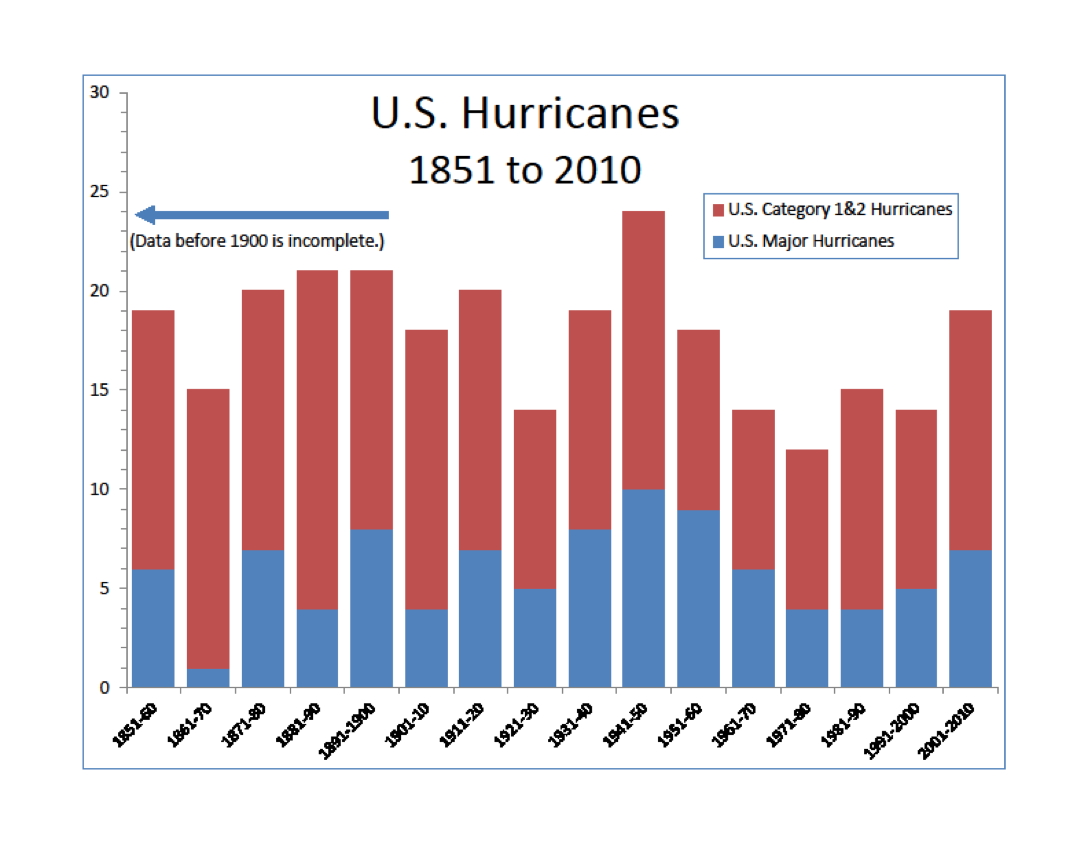
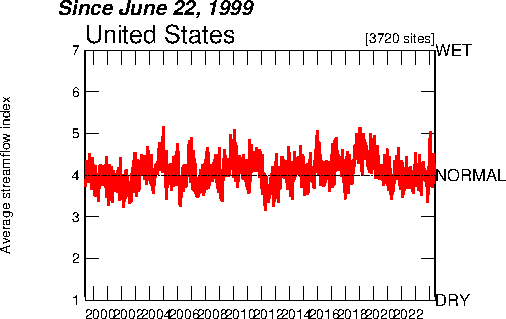
There's no data pointing to today's weather being any different than the weather we've always had. If you believe differently, please point to such a data set.
Here's some to get your started:
http://policlimate.com/tropical/global_running_ace.png
http://policlimate.com/tropical/frequency_12months.png
http://policlimate.com/tropical/global_major_freq.png
http://www1.ncdc.noaa.gov/pub/data/cmb/images/cei/step6.ytd.gif
http://www.aoml.noaa.gov/hrd/Landsea/gw_hurricanes/fig33.jpg
http://www.ncdc.noaa.gov/oa/climate/severeweather/tornadoes.html
http://www.epa.gov/climatechange/images/indicator_figures/precipitation-figure2.gif
http://waterwatch.usgs.gov/new/regplots/real/real_us_2.gif -
Re:Melting Antartica
" I do not know if it includes water thermal dilatation, but I hope it does."
I'm not sure, but if you add all the rest of the ice that could melt, apparently it's 80 meters.
http://pubs.usgs.gov/fs/fs2-00/
I live far inland and a couple of hundred meters above sea level, so I figure I'm safe in any case. But the lake I can see from my house is only 70 meters above sea level. The land of the fjords is going to get a lot more fjords, I think.
-
Re:Why not?
...it'll never flood due to rising sea levels...
Never never never?
-
Re:child volcano?
Or, the Mann Act if you transported the virgin child from another state (although I think Mann only applies to transport for immoral purposes)?
Under any reasonable standard "to throw the child into a volcano" is an immoral purpose. So, while I think you are correct about the limitation, I don't think it makes the Mann Act inapplicable.
Maybe that's what you were thinking about.. the only active volcanoes in the US are in Hawaii, and in Volcanoes National Park
"Active" volcano has a lot of different definitions, but by any of the usual ones that's not true. See, e.g., this page on USGS volcano monitoring priorities.
-
Re:MOD PARENT UP!!!
I found this – which I think is fun:
http://www.numbersleuth.org/worlds-gold/o.k. – we are talking about 2 different things. I am talking about the total supply of gold above ground. That is pretty constant. (but with a recent growth rate of above 1% a year – that surprised me)
Your chart shows a dip in gold after 1960 – that is the supply of gold is decreasing. It’s not because that would mean the supply of gold is evaporating into thin air.
You are talking about the amount of gold held by central banks. Before 1860 most money circulated either as gold coins or as paper money backed by a private bank that held gold reserves. After 1860 the governments got more active in issuing paper money backed by gold. As the economy grew the demand for money increased – for every new bill put in circulations gold had to be added to the reserve – hence the big increase. Then, after the 1960s, governments went off the gold supply. Why burry a bunch of metal in a vault to sit? So they dumped it.
Maybe you are trying to argue that bullion gold gets converted to industrial or jewelry. Well, if gold is currency then it does not matter what form it is in – gold is money. Also, little goes into industry. And I would argue that jewelry is a soft argument. A lot of people use gold jewelry as an alternative to a savings account.
Currently there is 165,000 metric tons above ground. Or 24 grams per person.
2,400 metric tons where mined on average for the past 5 years.
This increased total world supply by 1.4%. (Which, I admit, is higher than I though.) I would assert that production is higher than average because high gold prices have stimulated demand.
http://minerals.usgs.gov/ds/2005/140/ds140-gold.pdfOn the other hand, the world economy has been growing around 2% a year for the past 5 years. I would assert that was below average – year world recession.
http://en.wikipedia.org/wiki/Gross_world_productI would argue from a historical standpoint that a spread of 1% between GDP growth and gold is low –but let’s go with that. If currency had to be backed by gold, holding everything else equal, we would have a 1% deflation rate.
-
Re:Here's a better idea.
WTF? WHOOSH much?
Fukishima was not "just fine"
It was "just as fine" as other for-profit nuclear power plants run around the world. You came sooooo close to cigar of the real problem with nuclear power: the profit motive. As long as there is a buck to be made, corners will be cut, especially when you put the industry in charge of it's own oversight....like what's happened in the U.S. and Japan.
nor was it hit by a once-in-a-thousand-years disaster.
It's been around a thousand years since an earthquake of that magnitude hit that area. Is our children learning?
It was a poorly maintained plant, with a history of safety issues.
Which is no different from plants in the U.S. that have cut earthquake sensors and drills to save that buck. The difference between those plants and Fukishima? The American plants weren't hit with a once-in-a-thousand-years disaster.
Oh yeah, and if there are 7.0+ earthquakes or tsunami-type flooding in Minnesota or Indiana, we have much more serious concerns than a nuclear meltdown, as apparently the Apocalypse has occurred.
There was a 5.0 earthquake in Minnesota in 1975. There were four earthquakes above 7.0 across Arkansas and Missouri in 1812. That's within the last 200 years...what about a once-in-a-thousand-years earthquake or storm?
-
Re:All power comes at a price
Birds are not so much the concern these days, its migratory bats. Bats that move across the southern border are keystone species for pollination of many different plants, including agave, which is obviously the cornerstone of the tequila market. more windfarms == less tequila. Also, the way the bats are killed is pretty gruesome. They dont get chopped up, rather the rapid air pressure change from outside a windfarm to within it causes their fragile lungs to explode. http://www.fort.usgs.gov/Products/Publications/pub_abstract.asp?PubID=22795
-
Volcanoes aren't a major contributor to CO2
it is incredibly foolish to believe that humans are responsible for the melting of the polar icecaps. one volcano eruption puts off more CO2 than all of the emmissions that humans have put out since there were humans.
That statement is factually incorrect. Volcanos do not emit more CO2 than humans-- they emit less, by orders of magnitude.
http://www.agu.org/news/press/pr_archives/2011/2011-22.shtml
http://hvo.wr.usgs.gov/volcanowatch/archive/2007/07_02_15.html
http://www.agu.org/pubs/pdf/2011EO240001.pdf
http://www.skepticalscience.com/volcanoes-and-global-warming.htm
http://www.newscientist.com/article/dn11638-climate-myths-human-co2-emissions-are-too-tiny-to-matter.htmlFrom http://news.sciencemag.org/sciencenow/2011/06/scienceshot-volcano-co2-emission.html :
"A popular myth among climate change skeptics is that volcanic emissions of carbon dioxide dwarf those generated by humans. But a new report in today's issue of Eos reveals precisely the opposite: In a mere 2 to 5 days, smokestacks, tailpipes, and other human sources of CO2 spew a year's worth of volcanic emissions of that greenhouse gas. According to the paper, five recent studies suggest that volcanoes worldwide (such as Alaska's Shishaldin, shown) emit, on average, between 130 million and 440 million metric tons of CO2 each year. But in 2010, anthropogenic emissions of the planet-warming gas were estimated to be a whopping 35 billion metric tons. Individual events—such as Mount Pinatubo, whose major eruption in 1991 lasted about 9 hours—can produce CO 2 at the same rate that humans do, but they do so only for short periods of time. It would take more than 700 Mount Pinatubo-sized eruptions over the course of a year to emit as much carbon dioxide as people do, the study notes."Let me note that it is misinformed statements like this that tend to make real scientists dismiss global-warming deniers as crackpots. If you really want skepticism of anthropogenic global warming to be taken seriously, you need to have a basic understanding of the real world.
-
Re:Age of Earth is Mystery, assumptions are used
.....true age of Earth is honestly a mystery.
Not really, you would need to explain why so many other observations are wrong too. The orbits of the the planets strongly imply that they formed at the same time as the sun. The age of the Sun can be estimated by several different techniques.
The radiometric data agrees with the current estimate.
I suppose you can argue about exactly when you call a lump af accreting material a planet, or hypothesise about the whole thing being spat out of a 'special' tea pot, but I think it's pretty much cased closed for science. -
Re:Nations? What nations?
I learned new concepts today regarding the Global Warming.
- An anoxic event, which is related to the sea temperature, could potentially lead to increased hydrogen sulfide emissions, which can poison the atmosphere.
- Vast areas of Earth can be rendered uninhabitable because of the "sudden" rise in the wet-bulb temperature. No time to adapt.
- Evapotranspiration may already be severely disrupted. The consequence may be a feedback loop to a drying Earth.
- Clathrate gun hypotesis - the rising temperatures lead to a feedback loop of ever increasing methane
It's worrisome that currently everything is pointing to an increased possibility of aforementioned things happening. All of this while the humanity itself is releasing as much CO2 into the atmosphere per year as an extinction level super volcano.
I'm not sure what to think of this. I feel like we already all past the point of no return. The forced reduction of the human activity because of the change in the external conditions can be considered as a natural negative feedback cycle.
-
Re:No, headline is right.
Even after a major eruption event? I know these don't happen very often, but I have a hard time believing that we output more CO2 than a volcano can potentially output.
Yes, even after a major eruption event. For example when Pinatubo blew in 1991, it released about as much CO2 as 10 days of human activity.
The published estimates of the global CO2 emission rate for all degassing subaerial (on land) and submarine volcanoes lie in a range from 0.13 gigaton to 0.44 gigaton per year (Gerlach, 1991; Varekamp et al., 1992; Allard, 1992; Sano and Williams, 1996; Marty and Tolstikhin, 1998). The preferred global estimates of the authors of these studies range from about 0.15 to 0.26 gigaton per year. The 35-gigaton projected anthropogenic CO2 emission for 2010 is about 80 to 270 times larger than the respective maximum and minimum annual global volcanic CO2 emission estimates. It is 135 times larger than the highest preferred global volcanic CO2 estimate of 0.26 gigaton per year (Marty and Tolstikhin, 1998).
Is that really surprising? Think about how many billions of cars, homes, offices and factories there are, spread across the whole world, all directly or indirectly burning fossil fuel and releasing CO2.
-
Re:But, But....what about all those in the 1950's
You want hard numbers? Humans are putting about 29,000 billion tons of CO2 into the air each year.
You talk about hard numbers, but yours is way off. It's ~35billion tons. Compared to 5,000,000 billion, it is actually surprising that it would be significant. And yet it seems to be.
-
Re:Usually caused by adding waterAnother thing I noticed: The article claims [no citation given] that the water table has dropped 250m in the past 50 years, but according to the USGS the quake epicenter was 1km below the surface. So unless the region started off with a water table below 750m (very doubtful), the epicenter was still below the water table.
Also according to the same USGS page, the root cause was (no surprise) plate tectonics:The southeastern Spain earthquake of 11 May, 2011, occurred within the plate boundary region that separates the Eurasia and Africa (Nubia) plates. At the longitude of the earthquake, the Africa plate moves NW with respect to the Eurasia plate with a velocity of 6 mm/yr.
-
Re:Further, I'd suggest...
I always thought it was the other way round. The great ring of fire (Pacific ocean area) was where the chunk of Earth which was blown into space and became the Moon.
Though I found this link (depth of Earth's crust) http://earthquake.usgs.gov/research/structure/crust/index.php, and do wonder whether the Earth could have
expanded due to nuclear fission.Always wondered how the rock and mountains in Afghanistan are over 70 miles deep.
-
Re:Turning food into electricity...
Lithium is used for several drugs, and by removing the demand for lithium, those drugs may drop in price to the point they'll be more accessible to people in poorer countries.
I don't know for certain but I'd say the reasons which keep Depakote and other lithium mood stabilizers expensive have little to do with the supply of lithium.
Inflation adjusted prices of lithium have been stable since the seventies at just over 40$ per pound in 1998 prices, in 1998. I'd say the prices have to do with patents.
I believe the maker of depakote actually just paid around two billion dollars. It works wonders for many and its properties were discovered by noting that at a certain sanatarium, patients with unstable moods were calmer, the water was tested and found to have high Li levels. -
Re:Done 40 years ago
Let's think about this another way.
Let's say right now, that a hard disk costs $300 for a 3TB drive. And helium tech allows the same drive to be made, almost free, for a capacity of 4TB. That's probably $100 aditional value seen by the consumer.
Right now if we say that the hard disk, with a good estimate, has about 10 cubic inches of 40 cubic inches of helium in the drive, and leaks 2 cubic inches per year.
At current helium prices, the price for a cubic foot of helium as far as I know is about $5. So you're paying $5 for 144 cubic inches of helium. So you're drive costs $5/77 or 10 cents a year to sustain. Let's say the hard drive has an average service life of 10 years.
That's about a dollar over the lifetime of the hard disk.
Now, if helium provides proportional gains over the conceivable lifetime of the hard disk technology, helium could go up 50x in price (pushing out MRI, welding, etc...) and STILL provide a massive economic advantage.
I'd also like to point out that if the average drive leaks 2 cubic inches per year, and 500 million drives are in service, they will consume 0.02% of the world wide helium consumption of 85 million cubic meters per year.
http://minerals.usgs.gov/minerals/pubs/commodity/helium/heliumcs06.pdf
Feel free to check/refute my numbers.
-
Decide for yourself...
Feature is at Lat 3518'53.39"N and Lon 8458'57.22"W
Geology/bedrock info can be found at http://mrdata.usgs.gov/geology/state/state.php?state=TN
The bedrock at that spot is a dolostone, i.e. a carbonate rock that does dissolves and form karst features (like caves, sinkholes, etc.). Description is at http://mrdata.usgs.gov/geology/state/sgmc-unit.php?unit=TNOCAk;10
There are plenty of ponds and closed depressions in the same area if you surf around on Google Earth. My guess is it is not an impact crater.
How to explain the metal, "impacted rock", etc.? People are always burning stuff so it is probably melted metal and slag. Some historical research might be helpful--I can imagine people have been dumping junk and trash there for a long time. What else do you do with a hole in the ground... -
Decide for yourself...
Feature is at Lat 3518'53.39"N and Lon 8458'57.22"W
Geology/bedrock info can be found at http://mrdata.usgs.gov/geology/state/state.php?state=TN
The bedrock at that spot is a dolostone, i.e. a carbonate rock that does dissolves and form karst features (like caves, sinkholes, etc.). Description is at http://mrdata.usgs.gov/geology/state/sgmc-unit.php?unit=TNOCAk;10
There are plenty of ponds and closed depressions in the same area if you surf around on Google Earth. My guess is it is not an impact crater.
How to explain the metal, "impacted rock", etc.? People are always burning stuff so it is probably melted metal and slag. Some historical research might be helpful--I can imagine people have been dumping junk and trash there for a long time. What else do you do with a hole in the ground... -
Re:Don't panic!
So, once a 9.0 happens, a 7.0 is not counted any more? Or a 5.0?
Do you even know how earthquakes work? Look up "aftershock".
-
Re:$25 a ton
Not sure where you got that price from.
USGS Minerals Industry Summary - Pumice. That's the bulk price.
There are "Trash Hunter boats that could pick up pumice, but they're not intended for remote open-ocean operations. To collect this stuff, it would take booms and ocean-going tugs or fishing boats to concentrate the floating pumice, a collection vessel to pull it out of the water and screen it, and a bulk freighter to haul it to some customer. It's like cleaning up an oil spill, except that it's a solid. It might be desirable to do this if the mess drifts to a populated area.
Over time, wave action breaks the stuff up, opens the gas pockets that make it float, and it sinks. This takes about a year, so it's not a long term problem. It happens now and then. Known events off Tonga in 1964 and 2002 have been studied. Long-term impact is low; it's hard to tell, a few years later, that it ever happened.
-
Re:Risk compared to what?
West coast has earthquakes. Midwest has tornadoes. Northeast has blizzards and nor'easters.
I too live in VA... and we have earthquakes and tornadoes and hurricanes.
-
Re:Not entirely.
Our increase of CO2 is still far below any volcano
Not surprised you cower behind anonymity when spouting utterly wrong claptrap like that. Hint: try actually finding things out before demonstrating your ignorance in public.
According to the USGS, man-made CO2 emissions are 35 billion tons per year, total volcanic output (from land and under the seas) ranges from 0.13 to 0.44 billion tons per year. Even in a year of abnormally great volcanic activity, volcanic output is tiny in comparison to that of human activity. There are only a few Mount St. Helens scale eruptions per year, but it would take 3500 of them every year to equal current man-made CO2 emissions.
From the same USGS page, in 1900, the annual anthropogenic CO2 output was about 18 times that of volcanism. In 2010 it had increased to about 135 times the annual volcanic output. These ratios are based on the maximum estimate of volcanic CO2 output. So the increase in annual anthropogenic CO2 output dwarfs the annual volcanic CO2 output.
-
Desert world
We call Earth a water planet. It seems preposterous that a bunch of rocks could bring in enough water to fill Earth’s lakes, rivers and oceans.
Yet Earth, in terms of its overall mass, is 0.06% water. With about 70% of its surface covered in water, Earth is considerably drier than it appears. -
Re:RTFS - 14-32cm only for thermal expansion
Water has no thermal expansion? Really? Basic physics huh?
http://en.wikipedia.org/wiki/Properties_of_water#Density_of_water_and_ice
http://hypertextbook.com/facts/2007/AllenMa.shtml
http://www.youtube.com/watch?v=_Ww6BIy3nc0And water is actually slightly compressible:
http://ga.water.usgs.gov/edu/compressibility.html