Slashdot Mirror
Domain: wikimedia.org
Stories and comments across the archive that link to wikimedia.org.
Comments · 6,832
-
Re:Ugh...
Just for starters, when nutritionists talk about calories, they're not really talking about calories like a physicist would. They're really talking about "food calories," which I believe are equivalent to kilocalories. This may be a minor point, but it serves to illustrate that if you think nutrition science maps directly onto physics, you are wrong.
There is no difference in calories...we call them calories because if your cereal said it had 100 kilocalories per bowl people wouldn't know what that means. This is fitting since it is the Thanksgiving season in the US... http://www.npr.org/templates/story/story.php?storyId=1133564, and as evident by that story, it maps perfectly to physics. The thing is this, ever think how many C-C bonds or C-H or C-N bonds are in your 6oz of corn flakes? Sufficient to say, not enough to be counted by "calories" and certainly 100,000 calorie breakfast would turn some heads. Lets not even mention that measuring in calories is like measuring in drams, or a pound...the world has long since moved on to the joule, for energy, in science anyway.
Nutritionist, in the ICU for example, use the Harris-Benedict equations for determining caloric needs for patients in various stages of hurt.
The original equations from Harris and Benedict here and here. There are modifications to this formula for burns, surgery, inactivity etc...Second, and more importantly, any good college chemistry instructor will tell you that the body does not "release energy" from the chemical bonds in food
Again, not to pick here, but that good college professor would be 100% incorrect. Your body, thankfully does release energy from chemical bonds, particularly oxidative phosphorylation. This, aside from generating a bulk of our ATP (energy) allows us to maintain a 37.3C body temperature within a wide range of environmental conditions.
In short...to simplify, digestion isa complex process, not all food is equal, but not in the way you think (Carbohydrate 4 kcal/gram,Protein:4 kcal/gram,Fat 9 kcal/gram, Alcohol 7 kcal/gram) and you can measure the "calories" in a food as if you had a gas gauge, for all intents and purposes. I mean this in the general sense of "if I continue to the level of activity, but halve my food intake, you will lose weight. Will it all be fat? No, if you ran and consumed and extra 3500kcal, would you lose exactly 1 pound? Not exactly, but enough to get close.
Some good source reading: -
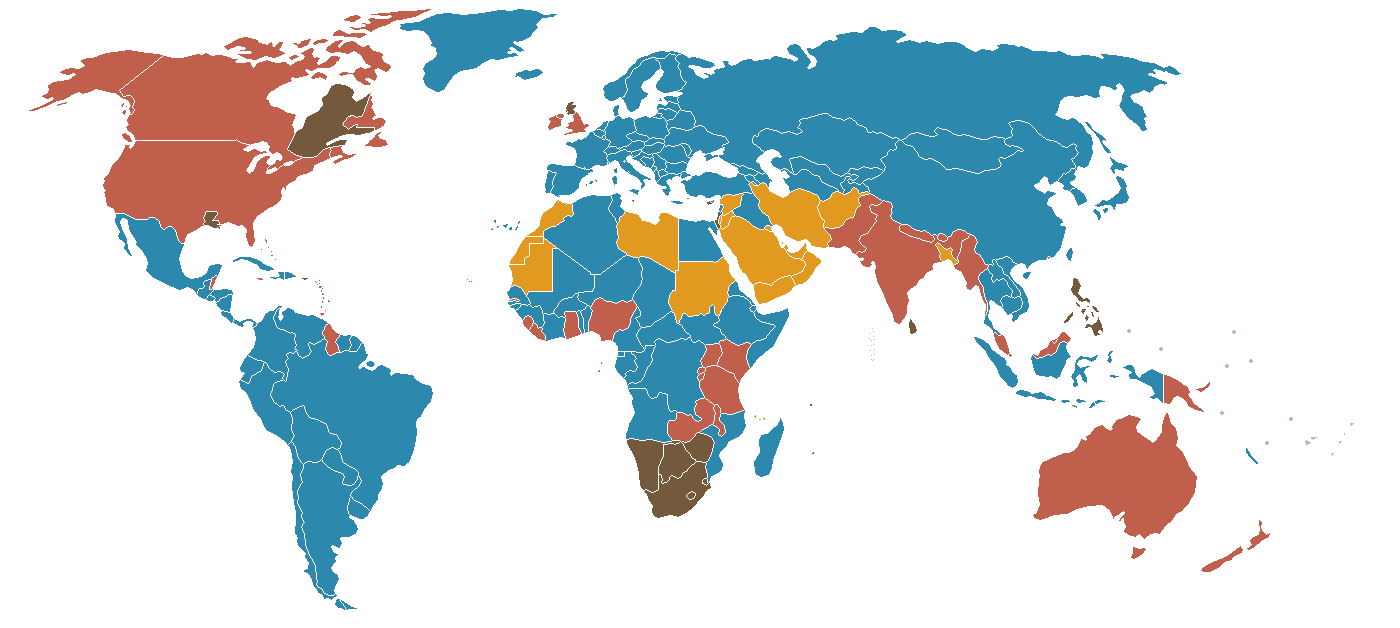
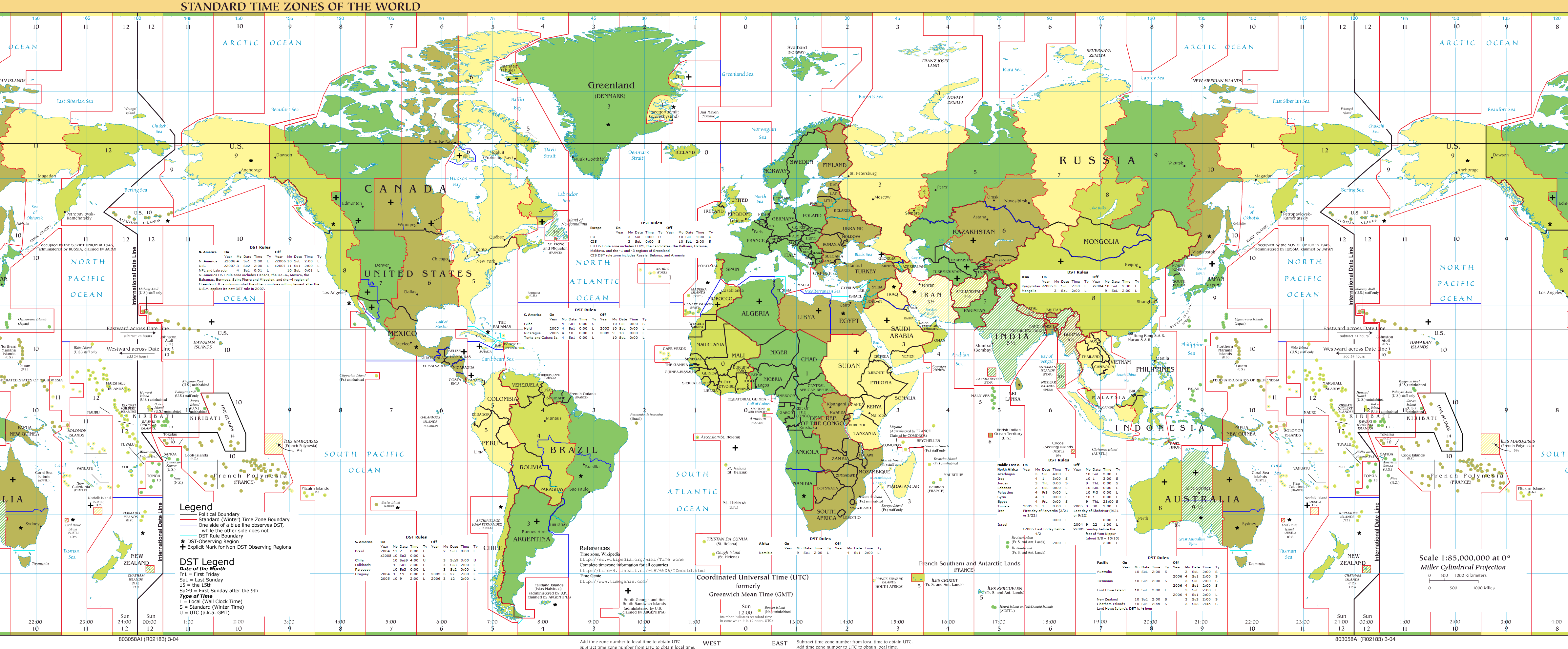
Time zones are political for a long time now...
Astronomical time is used as a guidline only.
Check the coast of Canada (Newfoundland) or the situation around Indonesia. Uuuuuhhh mama...
http://upload.wikimedia.org/wikipedia/commons/3/3d/Timezones_optimized.png -
Re:What about other nationalities
Seriously, the difference between "races" is hardly so vast that the algorithms will have to be rewritten from scratch. In fact, they probably won't have to be rewritten at all. Are there really any facial feature that are unique to geographic regions?
First of all, are you really so PC that you need to put "races" in quotes, as if you doubt the fact that different races even exist?
Second, while it may not be politically correct to say, it's pretty obvious that there are visual differences between races. Most of these differences we can all agree on - Caucasians generally have lighter skin than those of African descent, Asians have a different eye shape (and really a different eyelid structure), as well as thinner eyebrows. Other differences are more subtle, but they still exist - I think it's pretty much conventional wisdom that Asians also "look younger" at any given age than whites. I put that in quotes because nobody can ever seem to pinpoint why, but different types of skin do have different properties and it could partially be a relative lack of wrinkles until reaching a more advanced age. Asian skin is different than Caucasian or other races' skin. Different races have evolved in different climates.
One example - how old is this girl?
Another shot of the same girl.
What would you guess? 15? 16 at most?
She's 23. And she's even half-Caucasian.
How about these girls?
Most people here seem to think they're still teenagers. But as of this magazine cover, one was 33 and the other was 32.
This is not uncommon - in fact I'd say it's more common than not. My wife is also from Japan - she's 35, and most people here think she's at least 10 years younger. (Of course, in Japan, people think she's 35.)
So any age recognition software is definitely going to have to take that into account. The Japanese know it too; it's not just us, they think we look old as hell at any given age. (That's probably closer to the truth - we look old, they look normal. Some of it is probably based on our unhealthy diets.)
I don't see how this machine could work reliably in the first place, but it would definitely need to be re-tuned for any use in the west, if it's even going to have a chance. -
Re:Fearless Mice..
Oh, if only we had invested equal resources in building better cats!
A little patience, please. I'm working on it. - Erwin -
Re:Just for laughs
This is a much better picture of the USS Enterprise.
-
Gooch Approach
I don't know why this keeps escaping comment. It's obviously relevant.
-
Re:I predict a poop upon this article
Actually, are you familiar with the Gooch strategy?
-
Wikimedia Commons Link....
-
I think this image is more relevant....
I think that this image probably works better.
-
Re:First Post!
Sorry for replying to the first post, but I found this image which I think is extremely relevant to the Java/Iphone port. link here
-
Re:Speed
Check out http://en.wikipedia.org/wiki/Lagrange_point. 1.5 million kilometers is the distance to the L2 Lagrange point (scroll down until you see the boldface title "L2", or just download the drawing http://upload.wikimedia.org/wikipedia/commons/thumb/1/1c/L2_rendering.jpg/300px-L2_rendering.jpg.
So yeah, 1.5 million kilometers is probably a pretty useful distance, and it should also answer a lot of the questions above regarding aiming at a moving target, since Lagrange points are somewhat like geostationary orbits (that is, it is an orbit that is in a fixed position relative to the earth). As I understand, what with not being a rocket scientist and all, rotation of the earth will still cause an object in orbit at a Lagrange point to traverse the sky, but the object won't be orbiting the earth as well, which should simplify the math somewhat. -
Re:Wonder and amazement
which just cries out for a visual, so here ya go:
http://upload.wikimedia.org/wikipedia/en/0/04/Le_Voyage_dans_la_lune.jpg -
WikiMedia Foundation chairwoman Florence Devouard
WikiMedia Foundation chairwoman Florence Devouard says at http://lists.wikimedia.org/pipermail/foundation-l/2007-November/034529.html "An injunction was sought against WMF to force it to remove content from
the french wikipedia, that the plaintiffs deemed defamatory and
infringing on their privacy. The plaintiffs also sought 63,000 Euros in
damages, and requested from the WMF to provide contact information of
the anonymous editor responsible for the edit.
The court stated that the Foundation is a hosting provider in the sense
of article 6 of the LCEN ("Loi pour la confiance dans l'économie
numérique") and as such has no obligation to keep watch on the content
that it hosts and can not be held accountable for the content added by
contributors to the encyclopedia.
The same law states that hosting providers must remove illegal content
when notified it exists. In this case, the dispute centred largely
around when the Foundation was notified. The plaintiffs believed they
had notified the Foundation via e-mail, although the Foundation has no
record of the e-mails having been received. The court did not consider
e-mails sufficient notification.
Also, the court stated that when a hosting provider is notified about
libelous content, it only has to remove content that is obviously libelous.
In this case, the lawsuit was filed before the Foundation was officially
alerted. As soon as the Foundation received official notification, it
immediately removed the content in question.
The court also stated that once the Foundation was notified of the
problem, it acted swiftly and removed the content. As a result, WMF won
the lawsuit and will not have to pay for any damages. The request to
provide the contact information of the editor responsible for the edit
was also dismissed.
--------
This is very good news for the Foundation. We maintain that WMF is not
the publisher, owner or monitor on any of the Wikipedia projects (and
obviously not the WP FR). We are pleased to have our position upheld and
supported in a court of law.
In general, it is extremely important that we get used to quickly remove
any defamatory content, or privacy-invasive content, as soon as it is
brought to our attention. "We", in this case, mean "all of us". Editors
of Wikipedia, volunteers on OTRS, staff members. The more we care about
people requests of this type, the more we will be recognized as a
community caring about the truth and caring about the individual. Whilst
we must not fall into easy censorship and let ourselves be pressured to
remove information which should be available to humanship just because
it does not please a couple of people, it is also important to remember
that we are a top 10 website, widely read everywhere and that any
erroneous information on people may have huge consequences in their
private and professional lives.
Being available to answer readers concerns *is* important. There is no
gain for anyone to get in a court to solve such issues (except for
lawyers in fact). Most conflicts of that sort could be solved through
communication.
Whilst the current case was not strictly speaking a biography page, it
involved living people. So, my email is also a reminder that policies
such as the "biographies of living people" in the english wikipedia are
very helpful to both protect our projects and help making sure our
content is as reliable as possible.
Let us seek to avoid violence when violence can be avoided
I suggest that every project get a look at
http://en.wikipedia.org/wiki/Wikipedia:Biographies_of_living_persons
And consider building such policies in the near future.
A few links for more information
* -
Re:On the Contrary ...
In 1990 I had a 20GB HDD, and I partitioned it in two. Liar. You people are all completely insane. Never mind that in 1990, unless you were using a high end unix workstation (which would make two partitions idiocy) you would have been running an operating system with a 2.1GB partition size limit, as FAT16 file systems only came around 3 years earlier (1987). Perhaps you meant a 2 GB drive, though in 1990 that too would be extraordinarily large. In 1998 I bought a computer with a 10GB hard drive, and it was considered to be gigantic at the time. I would direct you to this graph of computer drive size (max) scaled by year. Note that drive sizes did not pass 10GB until well after 1995. http://upload.wikimedia.org/wikipedia/commons/a/a1/Hard_drive_capacity_over_time.png Perhaps this is why people don't find it disgraceful to make a linux operating system that has a 1.2GHz CPU as a minimum requirement, you're all crazy and can't remember how long ago these things were made. These wal-mart computer would have been monster stations just 5-6 years ago (remember back in 99-00 when the big 1GHZ limit was broken? Yeah, I didn't think so.) and now you're all talking about how nice it is that it can almost run linux well... I have linux running on a 250Mhz PDA, what the hell is wrong with people that they would use a product that barely runs on these?
-
Re:Going full circle
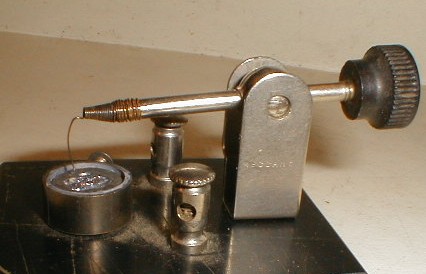
the catwhisker part comes from the pre-diode designs, like this. the catwhisker is the wire that connects to the detector crystal, which did form a diode
i actually have such a thing at home that i made when i was 10, using a piece of iron pyrite as the detector. -
Re:Admins to blame?It's predominantly admins that are running amok through the articles and setting them up for deletion. If it's not Dragonfiend purging comics articles, it's Improv deleting all the articles on brand names. Dragonfiend is not an admin, and has never deleted a page. Improv last deleted an article in 2006. yet 12 year olds are free to get themselves voted into the clique by ingratiating themselves with other admins and doing nothing but minor edits. If they actually knew the effort needed to research, source, verify and compose an article, perhaps they'd be less eager to delete it.
All admins are elected by the Wikipedia users. Any user (not just admins) can support or oppose the candidacy. One of the most important questions in a Request for Adminship is "What are your best contributions to Wikipedia, and why?" Several users get oppose votes if they've no articles to their credit. All the admins I know have made major mainspace contributions to Wikipedia. Even the non-admin user you talk of has created a substantial number of articles. In short, it's ignorant of you to believe that everybody who deletes an article, or votes delete in a discussion, has never made any significant contributions to Wikipedia.
And when they run rampages on Wikipedia, abusing their position either to delete or force particular content into an article, they usually get away scot-free. If they're admonished, they're usually free to leave and come back under another name. Nobody knows who they really are. The people who do the same thing without becoming admins first are labeled "vandals" and indefinitely banned.Abusive admins don't go scot-free. If your article gets speedy deleted for non-notability or lack of references, drop a note on the admin's talk page. Ask him/her to restore the article to your userspace -- you can add references to it and move it back to mainspace later. If an admin blocks you unfairly, contact unblock-en-l. If an admin tries to use administrator privileges, file an RfC.
As for coming back "under another name", even non-admins can do that -- "nobody knows who they really are". I don't see your point there.
Of course, I'm not saying that there are no rogue admins. But, it's silly to blame everything on administrators. There are a 1,368 administrators on Wikipedia, and you can easily find one willing to help you out. However, If your article gets deleted after a discussion (AfD) and deletion review, there is nothing an admin can do about it. The "notability" guidelines are not decided by the admins.
-
Notability and sources
As a Wikimedian from 2003, I may say that notability on Wikipedia is a bullshit and that it is regularly used for removing content which is not according to the cultural/ideological/... values of some group of Wikipedians. It is not even so much related to admins of Wikipedia because there is a regular procedure for voting for deletion.
However, Wikipedia is an encyclopedia and encyclopedia is not a place for original research. This means that there shouldn't be only an event for making article about that event. Also, there should be at least a couple of partial description of such event somewhere else to make description of the event relevant enough.
In general, if "event" fulfilled the next two rules there are no reasons for deleting it: (1) Three independent sources about event existence. (2) Three different informations about the event.
Here is the example related to software: Software may be hosted at SourceForge and described at Freshmeat. However, both of sources are not independent because both description are made by author him/herself. Software may be partially described at some site which is dedicated to type of the software. This is the first independent source. Software may be included into Debian and Ubuntu. This is the second independent source because Ubuntu usually mirrors Debian packages. And software should have one more partial description to be added into one encyclopedia.
The main problem in understanding encyclopedia is that it is not dealing with primary sources. Encyclopedia may not write an article about Orwell's 1984 based only on Orwell's book. Encyclopedia may write an article about a book only via secondary source proxy. Description of what something means in the book is not a job of encyclopedist, their job is just to retell what someone else described.
Classic encyclopedias are not following strictly this rule because they are made by academics and they are able to say that their article is "amalgam of secondary source and encyclopedic article", even it is not consistent in the spirit of encyclopedistics.
I described here an ideal. However, I am sure that there are a lot of things around. Maybe some/the most/.. of webcomics really don't have enough of relevant enough mentioning out of their sites. Also, to be honest, if descried rules would be applied to English Wikipedia, at least 1/3 of articles would be deleted because there are a lot of original research. An article about some television series episode has much more original research then encyclopedic content. Etc. etc. But, it is a much better starting position then arbitrary decisions of members of Wikipedian community.
And at the end: According to my experience, the most of objections to Wikipedia are related to lack of knowledge how to write articles. Please, RTFM first. And if you read it and you still think that you are right, please write your objection to the list. There are a lot of people who would support you if you are right.
-
Re:Myth debunkery debunked
Citizendium claims 3300 articles. After a year, only 39 of these are "approved" articles
After one year, Wikipedia - which did not have the distinct advantage of being able to lift content wholescale from, err, wikipedia, had 21,000 articles.
Again, despite it's touted experticity, it still has barking mad articles such as Jake the Explainer, that looks like little more than a homespun essay; Cows in popular culture, deleted from Wikipedia for being just too barking mad, massively incomplete in Citizendium; Common student exercises in computer science - random drivel. I could go on: Joan of Arc, memory of (WTF), Choosing a dog - decent enough article but encyclopaedic? And their Catalog of Cajun and Creole cuisine - one of a number of similar catalogues
Even with the very best will in the world, it is difficult to see Citizendium progressing in any meaningful way before its funding expires. -
Re:It happened before
"I do understand the difference
Glad someone does:
http://upload.wikimedia.org/wikipedia/en/5/59/Fergie-LondonBridge.JPG -
Re:Wha?
It is possible on Wikipedia with a slash (although %20 is needed rather than space because space is an invalid character in URLs): http://en.wikipedia.org/wiki/Special:Search/Search%20terms Unfortunately, Special:Search didn't even exist until April 2004, so this feature can't possibly be prior art as it can't have existed in this form before Special:Search.
-
Re:I can think of some problems
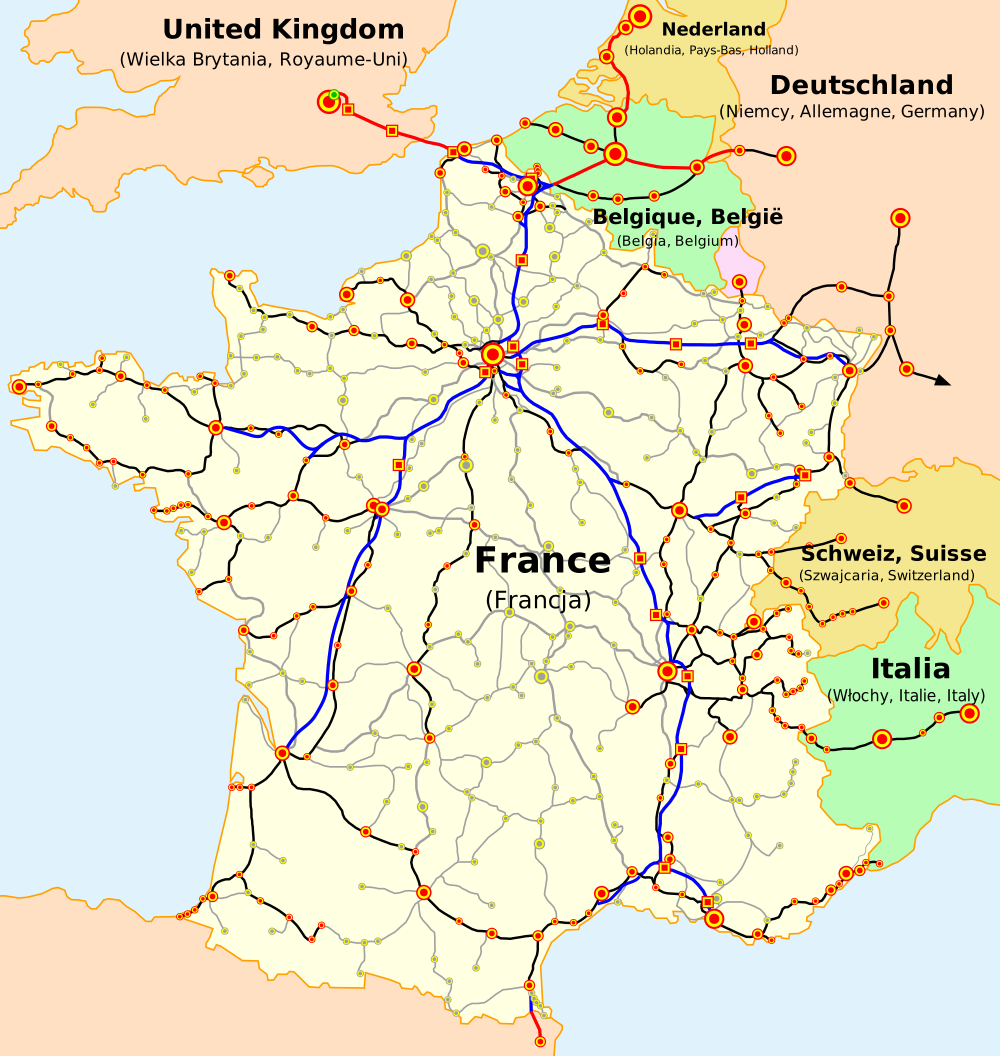
Mmm, doubt it. Notice that there's still only one TGV line even in France. That suggests it's more of a showpiece than a paying proposition, even in Europe where population densities are so dense
I think you're wrong there, I'm no train buff, but there's substantially more than one TGV line (LGV) in France (see here). According to the accompanying article, there are eight, with 5 more under construction and 9 more planned. With 1700 km of track, it would appear that the TGV moves a lot of people around the country and has done so for many years
-
Re:The Space Shuttle is GREAT
The Polyus was launched before the Buran and was, more or less, a collection of repurposed parts and technology. It could have flown on top, but I guess they didn't have the spare parts and the equipment for that.
No, it wasn't flown on top because Energia wasn't built to carry loads on top - it's not the early designs that matter, it's the hardware that's built.
The Energia design also calls for re-usable boosters and main engines (eliminating the need for SSME-like engines on the orbiter itself). I am not sure how they would do that and, in fact, I don't think they were either - they never did it.
There seems to be a lot of things you don't know about Energia. Try taking a look at the boosters on the side - see the squarish bulges just below the nose? Those would have been parachute containers for the boosters, the Soviets know damm well how thet were going to do it, but they never did because they went broke. (There never was any intent to re-use the main boosters in the Energia itself - though they would have been in the proposed Energia II.)
Side-mounted passive loads are rare for a reason - it's harder to design a vehicle for that kind of use.
Actually across the history of rocketry they have been fairly common - if you are familiar with the history of rocketry. (Which you patently are not.)
Oh-for-Three. Care to try again?
The Shuttle goes up side-mounted not because it's a clever design, but because it has its own engines that are needed for the lift.
Duh. I supposed that Captain Obvious will tell me the sun rises in the East next? -
Re:WMD
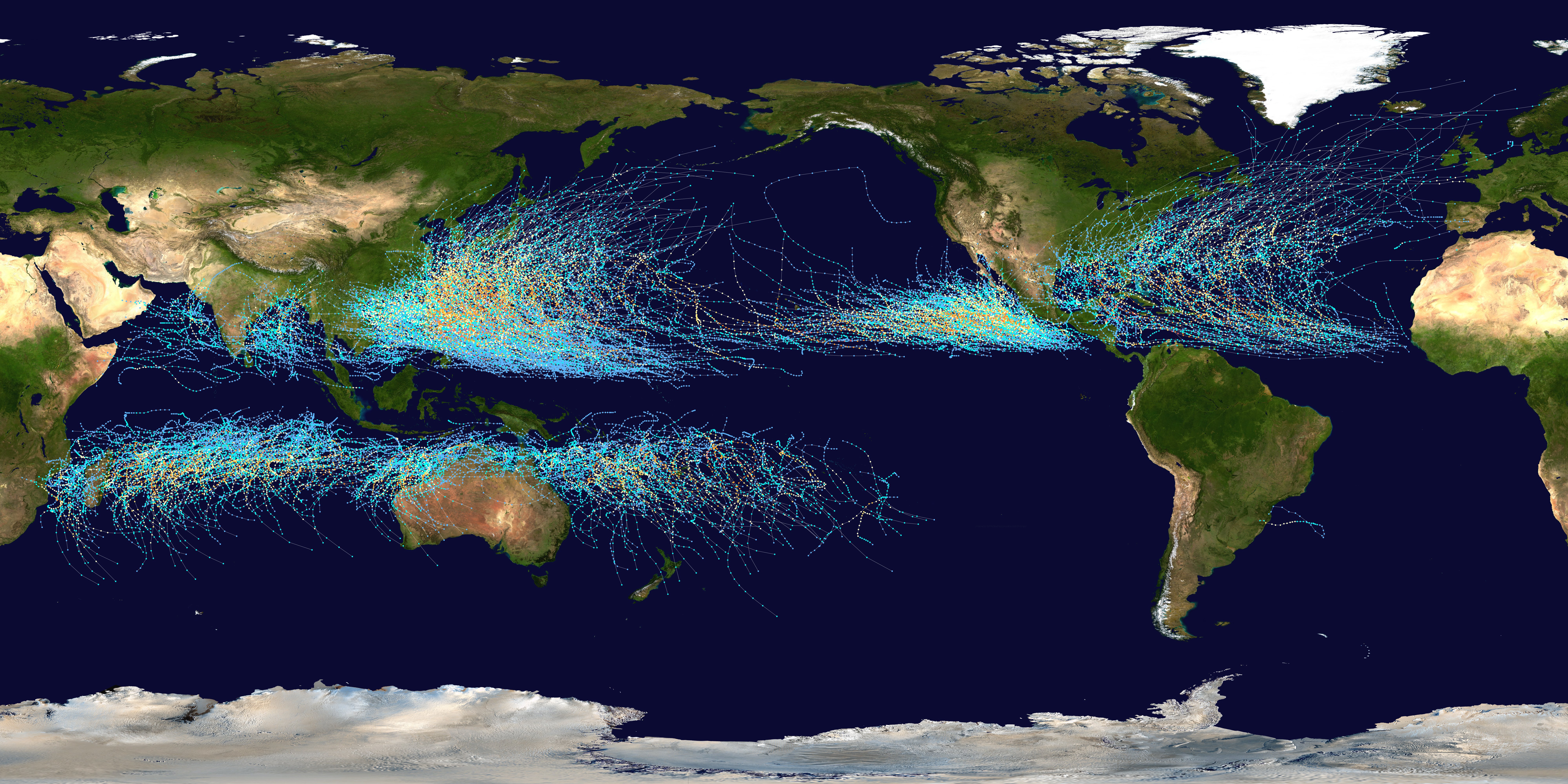
Well, maybe if you're in central asia, south america, or central north america, you're fairly safe. Other than that, pretty much any coastal area is fair game
-
Re:and now THINK for a second.
Remember, if it is a small amount of data you can get it out easily, memorize it. But if you are talking industrial espionage you are talking blueprint, documents, databases.
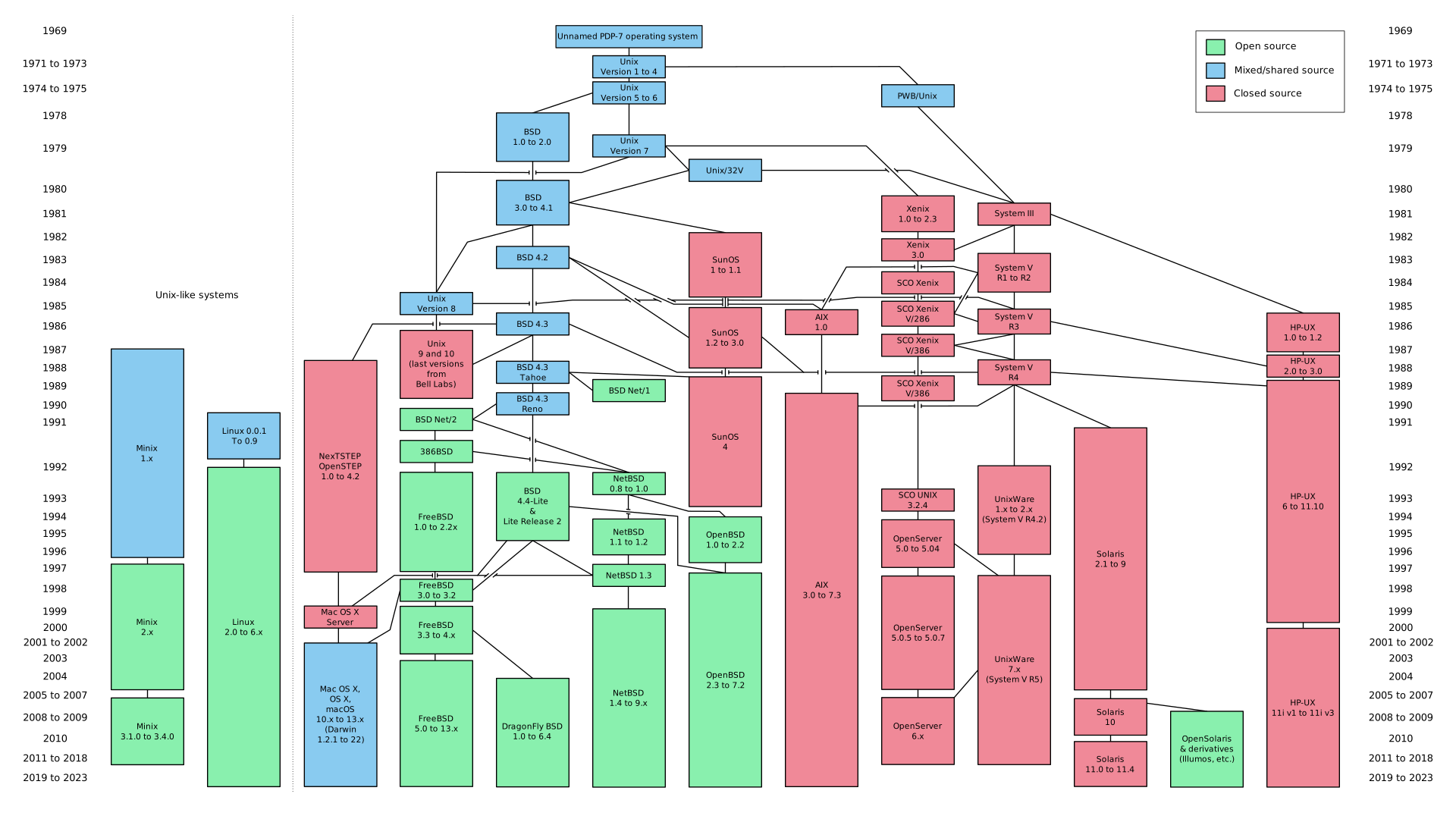
I think you underestimate just how useful even as little as 100KB of space can be. For instance, a blueprint doesn't need to be a 100MB rasterized image but can instead be in a vector format like this one Unix_history-simple.svg. That's about 96KB of plaintext (when compressed it's only about 16KB). Same goes for documents - as plaintext a LOT of information fits into 100KB.
Image sizes. Very few people get suspicious if a JPG-file is 200KB and has a resolution of 1024x768, yet the same image could often be as small as 100KB easy depending on what software you use to write it. Try saving a JPG in Photoshop, for example, and you'll notice that the JPG isn't always that small, then try saving the same image in Gimp and the result will usually be a lot smaller because Gimp doesn't waste as much space for metadata (color info and such). To a lot of people those few KB's wont raise any red flags and yet you can store a lot of useful info as long as you use an efficient format. -
Re:The real problem=Monopoly
Are you really naive enough to think that current crop plants are "natural" in any way?
Hint: they aren't.
"Natural" corn (maize).
"Natural" cabbage (also "natural" cauliflower, mustard, turnip, broccoli, Brussels sprouts, and canola. Yes, these were all essentially the same thing at one time -- they all came from a group of closely-related species).
"Natural" carrot.
"Natural" apple.
"Natural" wheat looks like a lawn that's gone to seed. "Natural" squash, pumpkins, and melons are egg-sized or smaller.
Oh, and your "natural" olive oil? Did it come from olives the size of a pea? And how about that "natural" butter? Did it come from cows that this or ones that looked like this?
We've been Frankensteining food for millenia, my friend.
Ever notice how the "natural food" freaks are invariably brutally ignorant of the fundamentals of biology and the history of agriculture? In fact, I'd bet money that you've rarely been off pavement in your life. -
Too complex and conspicuous for the bad guys
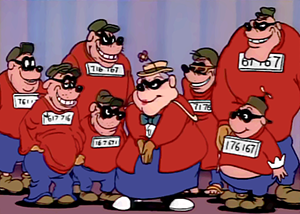
Yeah... because as we all know that bad guys are concentrated on sacks of money with dollar signs printed on the sides.
And that they all wear black eye-masks, green hats, red shirts and blue pants.
http://upload.wikimedia.org/wikipedia/en/d/d1/Beaglefamily.png -
Re:NiceI'd like to see an example of them without antialiasing. I wouldn't, if I were you -- might damage your eyes permanently. But if you insist...
Consolas with no antialiasing
Painful, isn't it? All the new fonts are apparently designed and specially hinted to make use of Cleartype (Microsoft's antialiasing & subpixel rendering algorithm). So they look beautiful with Cleartype on, alright with non-cleartype greyscale antialiasing (example), and "Aah! My eyes! The googles, they do nothing!" with no antiaiasing. -
Re:NiceI'd like to see an example of them without antialiasing. I wouldn't, if I were you -- might damage your eyes permanently. But if you insist...
Consolas with no antialiasing
Painful, isn't it? All the new fonts are apparently designed and specially hinted to make use of Cleartype (Microsoft's antialiasing & subpixel rendering algorithm). So they look beautiful with Cleartype on, alright with non-cleartype greyscale antialiasing (example), and "Aah! My eyes! The googles, they do nothing!" with no antiaiasing. -
Re:It's a Man Baby
I think what he really wants is to see the Mona Lisa with her tits out.
Here you go, this is the Mona Vanna,, painted by one of Leonardo's students. -
Also, a large detail of the eyes
Also, a large detail of the eyes is provided by Wikipedia:
http://upload.wikimedia.org/wikipedia/commons/2/2e/Mona_Lisa_detail_eyes.jpg -
Re:At what point do these posters become registereActually the GP is correct, this is a misuse of the checkuser access according to the usage policy - quoted in full below (emphasis my own):
The tool is to be used to fight vandalism, to check for sockpuppet abuse, and to limit disruption of the project. It must be used only to prevent damage to any of Wikimedia projects.
The tool should not be used for political control; to apply pressure on editors; or as a threat against another editor in a content dispute. There must be a valid reason to check a user. Note that alternative accounts are not forbidden, so long as they are not used in violation of the policies (for example, to double-vote or to increase the apparent support for any given position).
Notification to the account that is checked is permitted but is not mandatory. Similarly, notification of the check to the community is not mandatory, but may be done subject to the provisions of the privacy policy.
Some wikis allow an editor's IPs to be checked upon his or her request if, for example, there is a need to provide evidence of innocence against a sockpuppet allegation; note, however, that requesting a checkuser in these circumstances is sometimes part of the attempt to disrupt.
At which point does it suggest that it's a freely available resource to promote yourself on
-
Not news
Unlike what some users may tell you, many anonymous users contribute content and not vandalize. The quality of the edits per se is all over the place, but this is to be expected, as there is no way a new contributor can know all the nuances of the in-house referencing system, or the indications made by the Manual of Style. But they do try.
~~~~ -
The real crime here
-
Oh great
This graph, so often waved in people's faces by individuals convinced of the dangerous crisis of global warming (http://upload.wikimedia.org/wikipedia/en/f/f4/Instrumental_Temperature_Record.png correlates directly to this graph (http://upload.wikimedia.org/wikipedia/en/thumb/5/5c/Carbon14_with_activity_labels.svg/800px-Carbon14_with_activity_labels.svg.png) which shows solar activity. (note reversed timescales)
So what's going to happen is that over the next 50 years solar activity is going to drop, global temps are going to drop, and the eco-marxists are all going to then claim that An Inconvenient Truth, Kyoto, and the global warming hysteria all caused people to change ENOUGH to avert the otherwise-certain global warming disaster.
Al Gore will be canonized in 2060. -
Oh great
This graph, so often waved in people's faces by individuals convinced of the dangerous crisis of global warming (http://upload.wikimedia.org/wikipedia/en/f/f4/Instrumental_Temperature_Record.png correlates directly to this graph (http://upload.wikimedia.org/wikipedia/en/thumb/5/5c/Carbon14_with_activity_labels.svg/800px-Carbon14_with_activity_labels.svg.png) which shows solar activity. (note reversed timescales)
So what's going to happen is that over the next 50 years solar activity is going to drop, global temps are going to drop, and the eco-marxists are all going to then claim that An Inconvenient Truth, Kyoto, and the global warming hysteria all caused people to change ENOUGH to avert the otherwise-certain global warming disaster.
Al Gore will be canonized in 2060. -
Re:ESA
Yes, but you'll note that esa use lower case in their logo, whilst NASA go for caps.
-
Re:ESA
Yes, but you'll note that esa use lower case in their logo, whilst NASA go for caps.
-
Re:Explanations from a hardcore Wikipedian
Well, as another Wikipedia administrator( http://en.wikipedia.org/wiki/User:JoshuaZ ) I'm going to have to disagree at least in part with Raul's analysis. As Dragons flight (the editor who made the graphs, not Dragonfly) pointed out recently (see http://en.wikipedia.org/wiki/User_talk:Raul654#Slashdot_Post ) even at the worst times we didn't have to deal with dozens of large sock farms a day so the throttling of registration is at best only a partial explanation of the drop in new registration. There is however another possible explanation for the drop in new registration which is connected with the flattening in new article creation. After the Siegenthaler incident and similar problems, the software was set so that only registered accounts could create new articles. I suspect that many accounts register solely to be able to create a new article or set of articles. If so, the lack of low hanging fruit would give fewer people an incentive to register accounts. However, if this explanation has any validity, one would expect to see a bump up in registration of accounts after the policy that only registered accounts can create new articles was instituted. That policy was instituted in December of 2005, and I don't see any corresponding bump http://stats.wikimedia.org/EN/ChartsWikipediaZZ.htm .
-
Re:My rant on the downfall of WikipediaWhat's wrong with having something around that only a few thousand people are interested in?
Quoting (not necessarily agreeing with all of) the Deletionism page:- Some articles complicate indexing. For example, having articles on the many unnoteworthy individuals named John Anderson makes it difficult for readers to find the article about the relatively famous US presidential candidate with that name.
- Similarly, the presence of obscure subjects in lists and timelines makes it more difficult for readers to find key people and events.
- Some articles cover topics too obscure for the wiki process to work. For example, a topic where only a few dozen people have firsthand knowledge (or any knowledge at all) is unlikely to see expansion or error correction by anyone but the original author.
- Deletionists may believe that the presence of uninformative articles damage the project's usefulness and credibility, particularly when casual visitors encounter them through internet search engines or Wikipedia's "random page" or "recent changes."
- Some deletionists argue that allowing small, uninformative articles to remain promotes poorly-written "drive-by" articles, and that by deleting them writers will be more likely to make informative, well-written articles for their first edit.
- Articles on obscure topics, even if they are in principle verifiable, tend to be very difficult to verify. Usually, the more obscure, the harder to verify. Actually verifying such articles, or sorting out verifiable facts from exaggeration and fiction, takes a great deal of time. Not verifying them opens the door to fiction and advertising. This also leads to a de facto collapse of the "no original research policy", which is one of the fundamental Wikipedia policies.
- Some articles complicate indexing. For example, having articles on the many unnoteworthy individuals named John Anderson makes it difficult for readers to find the article about the relatively famous US presidential candidate with that name.
-
The biggest step of all is...
...write genetic code that doesn't result in an abomination, like the Brundlefly.
-
Re:No more HOV
That lane between the HOV and general traffic in Connecticut is for David Letterman
There. Fixed that for me. -
Re:Monument to Its EnvironmentDoes it predate the dinosaurs? Parts of it do. During the Cretaceous, however, it was part of the seabed and coastal plain (depending on the water level, which varied throughout the era): http://en.wikipedia.org/wiki/Grand_Staircase
This wasn't desert back then, though. The Cretaceous coastal plain was scrubland with scattered forest. Flowering plants and grasses were replacing older conifers and other more primitive fauna. Hadrosaurs are known to have eaten pine branches from stomach remains. They didn't live in a desert, although some dinosaurs did, like some found in Asia.
Here's a map: http://upload.wikimedia.org/wikipedia/en/6/66/EscalanteMap90MYA.jpg
It was active volcanically as the Rockies were pushing up. In fact, the Grand Staircase itself has evidence of volcanic activity. But eruptions are rare, and are overdone in media.
-
Re:Seems Like a Cool Idea
But can't we just view how much light there is in space from satellite photos and guess what the light pollution would be (like in http://upload.wikimedia.org/wikipedia/commons/archive/8/86/20040921144929!Usa_night.gif
Pfffft! That's not a map, THIS is a map!
Notable sights to observe:
The first and foremost site to see is the Nile river (solid white line in the dark desert of top-right Africa)
Trans-Siberian railway (connecting Eastern Europe to the Pacific)
The ~4000 year old Silk Road trade route (arch from the Mediterranean to China, below Trans-Siberian railway and above India)
North Korea (black hole above) South Korea (white box left of Japan)
The all-roads-lead-to-rome effect web centered on Moscow (Moscow being the bright central white dot east of Europe)
The (in my opinion amusing) almost perfect square grid tiny dots of apparently pre-planned development in the very center of America
And of course the game counting how many blobs you can pin down as specific named cities.
- -
Re:Seems Like a Cool Idea
But can't we just view how much light there is in space from satellite photos and guess what the light pollution would be (like in http://upload.wikimedia.org/wikipedia/commons/archive/8/86/20040921144929!Usa_night.gif)?
We can. In fact, it's been done. This isn't the real goal of the project, though:"This Windows to the Universe Citizen Science Event is designed to encourage learning in astronomy!"
They're trying to increase awareness of astronomy and the detrimental effects of light pollution. If it just gets people aware it's worth it. I might just do it myself so I have a measure of how much light pollution there really is in my backyard. -
Seems Like a Cool Idea
But can't we just view how much light there is in space from satellite photos and guess what the light pollution would be (like in http://upload.wikimedia.org/wikipedia/commons/archive/8/86/20040921144929!Usa_night.gif)?
A few 1000 observers will offer very little resolution, considering the fact that light pollution is very localized. I live in the middle of an urban area, but can drive a few miles to see 10x as many stars. -
Re:Theo is not a lawyer
True. Most of the world use Civil Law, while US, UK and a few former colonies use Common Law. And Civil Law is quite different in different parts of the world. In other words: GP:s statement IS true.
For instance, according to the french and the scandinavian copyright traditions (which is a slightly more complicated topic, since it is not divided only into common and civil law, but instead into english, american, french and scandinavian law - however, the two common law countries have similar ideas to each other, and so does the two civil law countries), it is not possible to sign away your copyright at all, since it's not considered to be an economical thing (Victor Hugo created the french version, primary about the moral right to be honored and paid for your work, and the scandinavian version is based of old Westrogothic law, that said something to the effect of "honor he who should be honored", which doesn't even mention money, but only honor), unlike the tradition in US and UK. It is possible to sign away economical rights, but not the whole thing. This has some important effects: one thing is that it makes it impossible for RIAA/MPAA to go after people in this part of the world - they only represent the companies, whose contracts with the employees are illegal over here, and they therefore have no copyright to enforce.
Finally, a pretty map to show what legal systems exists where: http://upload.wikimedia.org/wikipedia/commons/2/21/LegalSystemsOfTheWorldMap.png -
Re:And this took how long?
Laffer curve is an idealistic approximation which may well cover the extreme cases, but has almost no predictive capacity in the range of tax rate differences we're discussing here. It's actually mentioned in the wikipedia article you're quoting (see neo-Laffer curve).
Anyhow, there are enough economic theories out there to justify any particular action. The point is that the aforementioned tax cuts were a political ploy aimed at appeasing the population, whereas instead they predictably helped increase economic disparity and placed more strain on the majority of the population. -
Re:Let me be the first to say...
Well here's a fan comparison.
Furries: http://www.virginmedia.com/microsites/games/slideshow/game-geeks/img_3.jpg
Trekkies: http://upload.wikimedia.org/wikipedia/commons/thumb/3/3f/Trekkies_at_baycon_2003.jpg/800px-Trekkies_at_baycon_2003.jpg
Star Wars: http://www.virginmedia.com/microsites/games/slideshow/game-geeks/img_2.jpg -
Re:Is that even legal?
I don't really "hate" Java, I just said that I find the Java icon incredibly irritating - because most of the time when I see it, its sitting in the system tray on my computer (often multiple times) telling me that it wants me to upgrade my installed version of Java (when it really means that it wants to install a new version along side the three that are already there).
What does your bank do for people who don't have cell phones, or people who use the pre-paid phones? I know of a few banks who offer something like that as an option, but the ones that I know of don't give out a Java program, they give out a physical token http://commons.wikimedia.org/wiki/Image:RSA-SecurID-Tokens.jpg. I can't imagine there are many banks here that would require their customers to have a cell phone at all, much less a certain kind.
As far as "running small programs on a mission critical device"- the last time I had a need to run something on my cell phone that wasn't pre-installed, it was a PalmOS device (this was three phones ago), and there was no shortage of software available at the time. For better or worse, Palm OS seems to have been mostly replaced by Windows Mobile (or whatever they call it these days) which seems to be pretty popular among everyone I know who wants their phone to do anything more than make phone calls and send text messages.
I honestly couldn't tell you how many phones sold in the US do or do not support Java, because I have never bothered to look. It's just not a selling feature to anyone that I know. Maybe outside the US having Java on your phone is actually useful for something. Here, as far as I can tell, it's just yet another way for your service provider to charge you more money for extra sh*t that you don't need, because there's generally no way to get any software onto your phone other than buying it through them at ridiculous prices. And if you do have a way to get programs onto your phone other then through your phone provider, then you probably have a windows or palm based phone anyway, so you don't care so much about Java. -
Re:An interesting experiment
I would be very surprised (and a little annoyed) if they don't use this as the basic mechanism behind their validation scheme. This preserves the freedom of editing, and greatly decreases the probability that somebody reading Wikipedia will see a vandalized/substandard version of an article. Rather than merging changes from one branch to the other, like in software development, however, I think WP would be better off tagging a version of an article as stable, and keeping the latest version as unstable.
The main problem is who decides when an article or section should go stable? This is where the complicated algorithms come in. One of the most important principles of wikipedia is that authority counts for absolutely nothing. People complain that wikipedia makes no use of experts, but that's not true. It simply will not view additions by experts just because they are experts. Everybody is equal. This should be reflected in the validation scheme. So many proposals have teams of fact checkers and domain experts, which is very much unlike Wikipedia. An automated trust network (like the one described in the article) should be used to assign contributors a trust rating, and then let people vote on the validity of an article or section.
I should also point out that none of this is new. Most of these ideas have been in the pipeline for years. Check out http://meta.wikimedia.org/wiki/Article_validation_proposals#Automated_Trust_Networks for a list of proposed validation schemes.





%2C_ENT1231.jpg)








)