Slashdot Mirror
Domain: wikimedia.org
Stories and comments across the archive that link to wikimedia.org.
Comments · 6,832
-
Re:Isn't this thing already deployed?
-
Re:Everything you need to know about GNOME 3
There are two screenshots that will show you everything you need to know about GNOME 3 and the disaster that it has been.
The first screenshot shows Gedit, a simple graphical text editor for the GNOME environment. This is what it looked like prior to the GNOME 3.
The second screenshot also shows Gedit, but as part of GNOME 3.
Yes, that's right. GNOME 3 somehow managed to completely fuck up the UI of something as basic as a simple graphical text editor. It took a program that was usable, and turned it into a monstrosity. It took a desktop environment that was usable, and turned it into a monstrosity.
Exactly. Gnome sucks. Even Linus Torvalds said so.
http://www.zdnet.com/article/linus-torvalds-finds-gnome-3-4-to-be-a-total-user-experience-design-failure/
Then he was nice (I guess?) "use extensions it's OK"
http://www.zdnet.com/article/linus-torvalds-switches-back-to-gnome-3-x-desktop/
It still sucks. There is no harm in installing Gnome (too) [and the others] then choosing which you like. You can install them all at the same time, it's not an issue. KDE just rocks now. It's especially awesome in openSUSE and also PC-BSD. It's my fave desktop environment so far... going back to before Atari and SpartaDOS lol. I never liked Gnome. I still don't. I've used -->all-- the DE's and WM's available on each platform.. the lightweight ones as well. I always figured it would be KDE that people would prefer. I prefer it over Mac OS X by farrrrrrrrrrrrrr.
Stumbled on this when grabbing the above stories.
http://www.itworld.com/article/2873200/operating-systems/11-technologies-that-tick-off-linus-torvalds.htmlI agree, except Gnome is written in C and KDE is written in C++/QT. Linus is said to have disliked C++ in that article. KDE is cooler than Gnome though. I always thought GCC was cool too. I wouldn't argue with Linus' reasoning about it though. He surely has valid reasons.
systemd needs to die before it fully mestasizes though. There should be 1 distro with systemd if at all. Call it Linux Monolith. It sucks.
-
Re:Everything you need to know about GNOME 3
There are two screenshots that will show you everything you need to know about GNOME 3 and the disaster that it has been.
The first screenshot shows Gedit, a simple graphical text editor for the GNOME environment. This is what it looked like prior to the GNOME 3.
The second screenshot also shows Gedit, but as part of GNOME 3.
Yes, that's right. GNOME 3 somehow managed to completely fuck up the UI of something as basic as a simple graphical text editor. It took a program that was usable, and turned it into a monstrosity. It took a desktop environment that was usable, and turned it into a monstrosity.
Exactly. Gnome sucks. Even Linus Torvalds said so.
http://www.zdnet.com/article/linus-torvalds-finds-gnome-3-4-to-be-a-total-user-experience-design-failure/
Then he was nice (I guess?) "use extensions it's OK"
http://www.zdnet.com/article/linus-torvalds-switches-back-to-gnome-3-x-desktop/
It still sucks. There is no harm in installing Gnome (too) [and the others] then choosing which you like. You can install them all at the same time, it's not an issue. KDE just rocks now. It's especially awesome in openSUSE and also PC-BSD. It's my fave desktop environment so far... going back to before Atari and SpartaDOS lol. I never liked Gnome. I still don't. I've used -->all-- the DE's and WM's available on each platform.. the lightweight ones as well. I always figured it would be KDE that people would prefer. I prefer it over Mac OS X by farrrrrrrrrrrrrr.
Stumbled on this when grabbing the above stories.
http://www.itworld.com/article/2873200/operating-systems/11-technologies-that-tick-off-linus-torvalds.htmlI agree, except Gnome is written in C and KDE is written in C++/QT. Linus is said to have disliked C++ in that article. KDE is cooler than Gnome though. I always thought GCC was cool too. I wouldn't argue with Linus' reasoning about it though. He surely has valid reasons.
systemd needs to die before it fully mestasizes though. There should be 1 distro with systemd if at all. Call it Linux Monolith. It sucks.
-
Everything you need to know about GNOME 3
There are two screenshots that will show you everything you need to know about GNOME 3 and the disaster that it has been.
The first screenshot shows Gedit, a simple graphical text editor for the GNOME environment. This is what it looked like prior to the GNOME 3.
The second screenshot also shows Gedit, but as part of GNOME 3.
Yes, that's right. GNOME 3 somehow managed to completely fuck up the UI of something as basic as a simple graphical text editor. It took a program that was usable, and turned it into a monstrosity. It took a desktop environment that was usable, and turned it into a monstrosity.
-
Everything you need to know about GNOME 3
There are two screenshots that will show you everything you need to know about GNOME 3 and the disaster that it has been.
The first screenshot shows Gedit, a simple graphical text editor for the GNOME environment. This is what it looked like prior to the GNOME 3.
The second screenshot also shows Gedit, but as part of GNOME 3.
Yes, that's right. GNOME 3 somehow managed to completely fuck up the UI of something as basic as a simple graphical text editor. It took a program that was usable, and turned it into a monstrosity. It took a desktop environment that was usable, and turned it into a monstrosity.
-
Always 20 years out
This comes up now and again here on Slashdot. Maybe we should have a wiki or something "Frequently Asked Questions" or something
Fusion is always 20 years out, and there's a reason for it. this image sums it up nicely.
Essentially, we could have fusion power in about 20 years if we had the political will to think 20 years into the future and fund it.
Since fusion research won't yield results before the next election cycle, no congresscritters will vote for it.
-
Re:"...need to be prepared..."
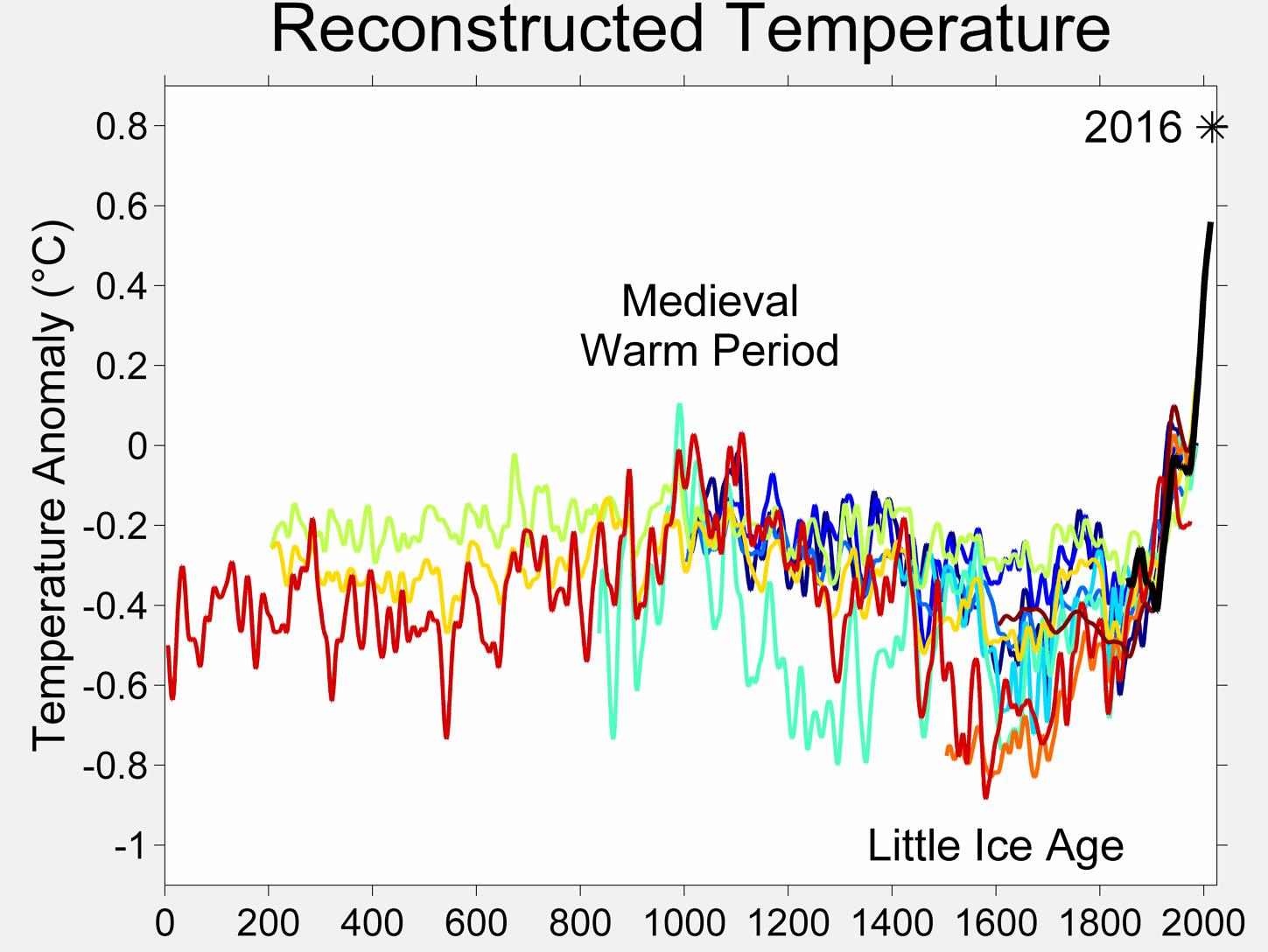
Hmm, from a few pixels on the last graph.
Yet other data sources simply don't support this.
http://1.bp.blogspot.com/_nB6y... http://www.giss.nasa.gov/resea... http://www.giss.nasa.gov/resea...
https://upload.wikimedia.org/w... http://www.forbes.com/sites/er... -
Re:Wind energy is such shit
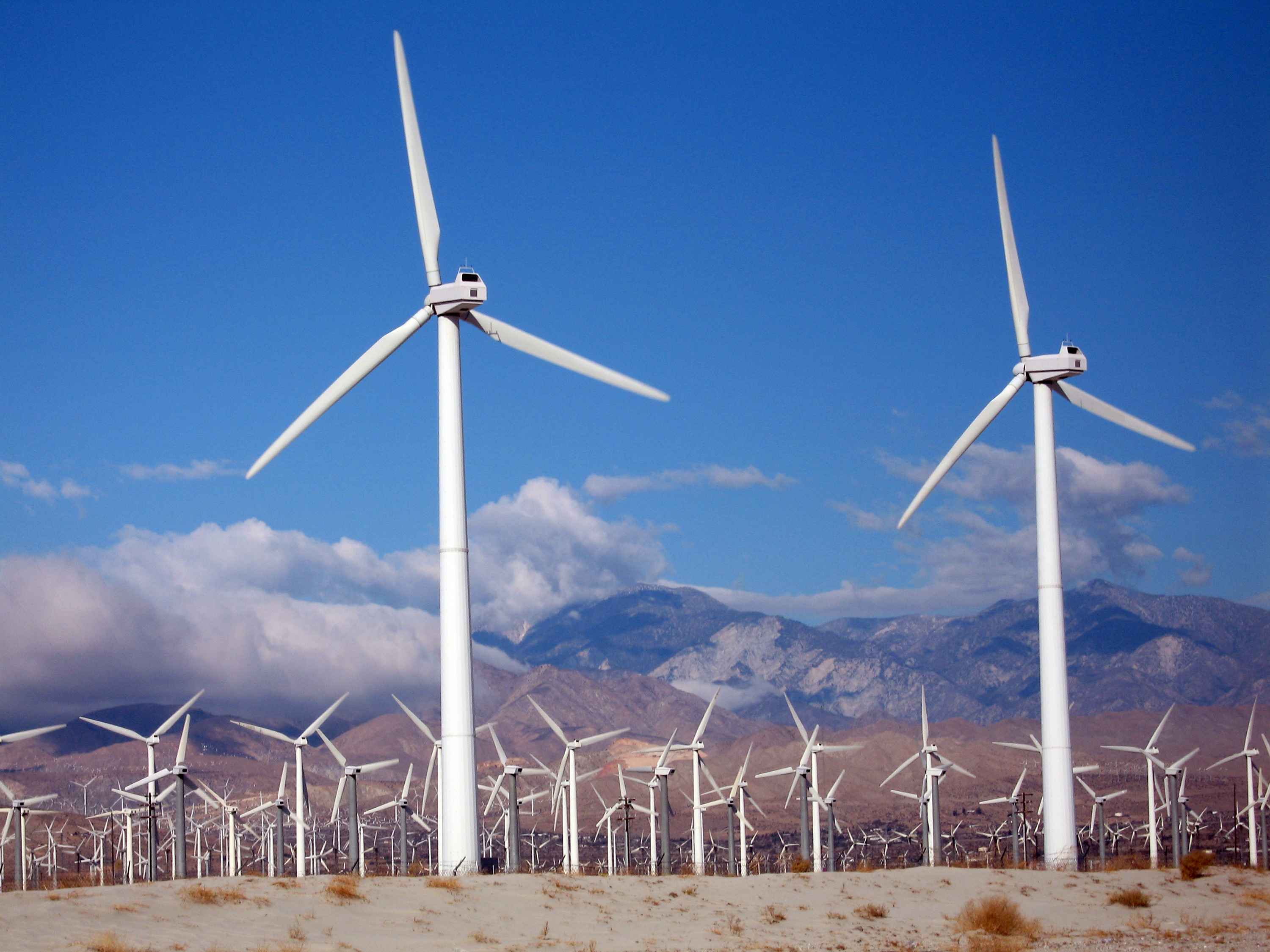
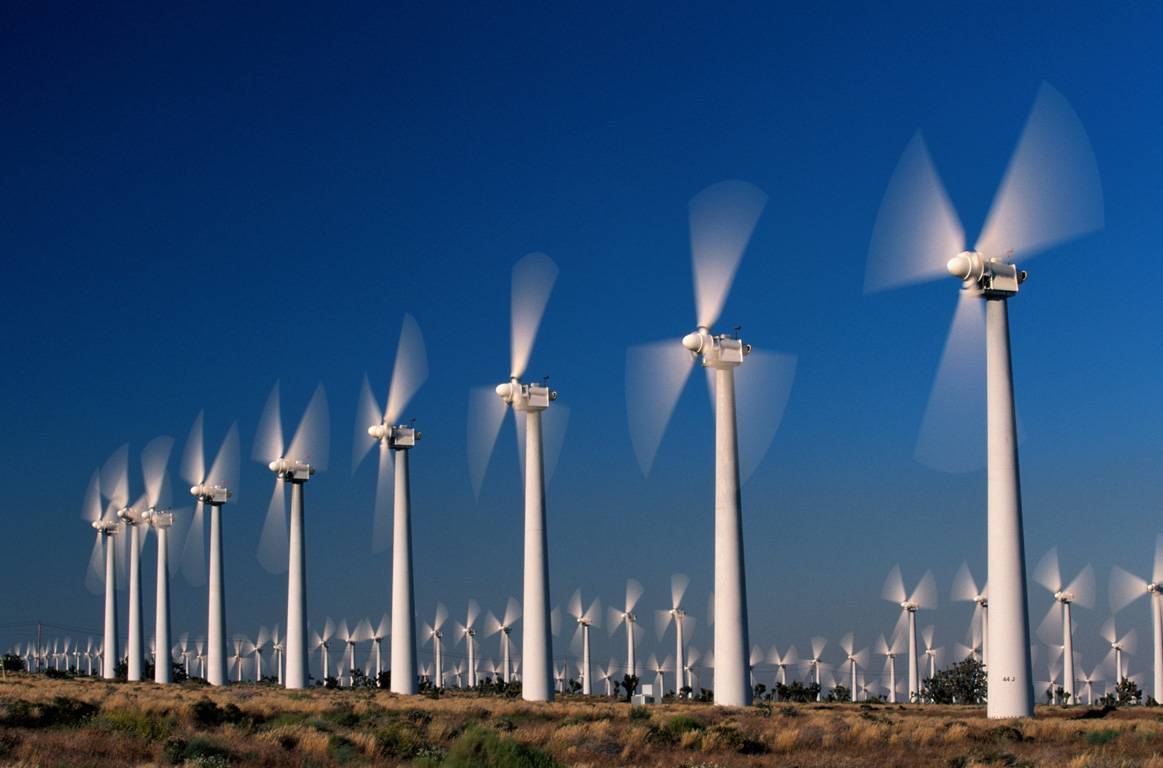
This really looks like a farm.
The only actual farmland I've seen with wind turbines eschew dense packing for broad spread, making wind power not only opportunistic, but low-density. Not inefficient, but ineffective: generating a megawatt here or there is different than generating hundreds of megawatts.
In other words: faced with dedicating a square of land to a wind farm or dedicating a square of land to solar, a dedicated solar array will produce 8 times as much output. Faced with not dedicating a square of land, you can usually get better output from a PV cell--farmland being an exception, since the PV produces more shade; wind turbines of practical size placed on street lighting would not generate nearly as much power as PV panels of the same space usage on the same street lighting.
I could theoretically generate 800W of wind power at my house, or 7,000W of solar using just my roof space. That's an 800W output residential turbine that might run at 34% of its output (in my case, it'd actually be 8%; Texas gets 34% in well-placed installations), producing an actual 2380kWh (in my case specifically, about 561kWh); the 7kW PV array (theoretical 24 hour max output: 61000kWh) will generate, in practice, 9850kWh on average. Were my lot vacant, it may fit two wind turbines (4700kWh); it would take four at the high-capacity output of a Texas wind farm to meet what my solar panels do in just my roof space--which is 900 square feet on a 4500 square foot lot (capable of generating 49,250kWh of output if it were blanketed in solar panels, instead of 4,700kWh blanketed in wind turbines; and my panels aren't two-axis tracking, but fixed axis monocrystaline at 15.7% efficiency, at a sub-optimal azimuth).
Farms with turbines are like slapping a wind turbine in my back yard and producing that projected 2,400kWh per year. They spread their turbines more widely than my back yard, but also use bigger turbines. Even a dense, dedicated wind farm is blown out of the water by a dense, dedicated solar farm.
-
Re:At pools
anyone old enough to remember the iOpener? (I have one still in a box, anyone want it? it has been modded to run linux; 2.0 iirc).
https://commons.wikimedia.org/...
keyboard had a pizza key on it. not much else memorable about that failed marketing experiment.
(and that's a $100 that I'll never see again. oh well. it was a different world back then)
-
Re:Programming?
You've never seen a tomato flower? https://upload.wikimedia.org/wikipedia/commons/0/04/Solanum_lycopersicum_-_Tomato_flower_(aka).jpg
-
Thought this title was a joke
Wondering if I'm the only one that was thinking it was some sort of prank, that somehow we could see, say, these guys from space?
-
Re:Silly
Think again. Silver use in solar panels is on the rise. Seems a bad thing to base such an important invention on, right? (Presumably, it could be replaced in that application, but there isn't much reason for that, since today's silver, from what I understand, is largely a by-product of copper mining, so the supply is much stiffer.)
Also, "materials that we've passed peak production on"? Silver is still on the rise, and so is copper.
-
Re:Silly
Think again. Silver use in solar panels is on the rise. Seems a bad thing to base such an important invention on, right? (Presumably, it could be replaced in that application, but there isn't much reason for that, since today's silver, from what I understand, is largely a by-product of copper mining, so the supply is much stiffer.)
Also, "materials that we've passed peak production on"? Silver is still on the rise, and so is copper.
-
Just look at GNOME 3, Firefox 4+, Windows 8.
All we need to do is look at GNOME 3, Firefox 4+ and Windows 8 to see what happens when "artistic" types get involved with software development.
The end result is always a huge fucking disaster!
The old UIs, developed mainly by programmers, may have been deemed "ugly", but they were consistent and highly usable. You could use them to get real work done quickly and efficiently.
The new UIs, developed mainly by "UI designers" and "UX artisans" may be deemed pretty by such people, but they are really goddamn inconsistent and fucking unusable. You can't get work done with these, because you'll waste all of your time trying to figure out how the fuck to use the software.
Gedit is an obvious example of how these "artistic designers" completely fuck up perfectly good software UIs. Gedit used to look like this, where it had a traditional, consistent, and highly usable UI. Newer versions of Gedit look like this disaster. Yes, it's true, the GNOME 3 developers somehow managed to fuck up the user interface of a simple text editor!
We need to go back to "ugly" UIs developed by real programmers, not today's "pretty" UIs developed by terrible "designers" and "artists".
-
Just look at GNOME 3, Firefox 4+, Windows 8.
All we need to do is look at GNOME 3, Firefox 4+ and Windows 8 to see what happens when "artistic" types get involved with software development.
The end result is always a huge fucking disaster!
The old UIs, developed mainly by programmers, may have been deemed "ugly", but they were consistent and highly usable. You could use them to get real work done quickly and efficiently.
The new UIs, developed mainly by "UI designers" and "UX artisans" may be deemed pretty by such people, but they are really goddamn inconsistent and fucking unusable. You can't get work done with these, because you'll waste all of your time trying to figure out how the fuck to use the software.
Gedit is an obvious example of how these "artistic designers" completely fuck up perfectly good software UIs. Gedit used to look like this, where it had a traditional, consistent, and highly usable UI. Newer versions of Gedit look like this disaster. Yes, it's true, the GNOME 3 developers somehow managed to fuck up the user interface of a simple text editor!
We need to go back to "ugly" UIs developed by real programmers, not today's "pretty" UIs developed by terrible "designers" and "artists".
-
Re: Freitas soap
Is it? He looks like that retarded kid from The Sixth Sense.
-
Re:Heh
You're probably going to get downmodded, but you're absolutely right. Everything that Hipsters touch gets royally fucked up.
You mention Mozilla and Firefox, but that's just the tip of the iceberg. Hipsters have also destroyed web design in general, they've destroyed GNOME 3, they've destroyed Windows 8, and they're in the process of destroying Linux using crap like systemd and Wayland.
Hipsters care about one thing: appearance. They don't care at all about usability. In fact, to them usability is a liability! Usability is, to them, just something that gets in the way of them pushing their ever-changing idea of "pretty".
Gedit is one of the best examples of how Hipsters fucking ruin everything they touch. That goddamn monstrosity is actually a text editor, if you can believe it! The saddest part is that it Gedit used to have a good-looking, usable UI, before Hipsters ruined it.
You're absolutely right. The faster that these monsters are out of the industry and the craft, the better off we all are. All they've managed to do is ruin one functional, well-established software product after another. Their very mindset and philosophy is completely incompatible with the creation of good software. They're inherently unable to do things properly. You can't change them; you need to eject them from the organizations and projects they're screwing up.
-
Re:Heh
You're probably going to get downmodded, but you're absolutely right. Everything that Hipsters touch gets royally fucked up.
You mention Mozilla and Firefox, but that's just the tip of the iceberg. Hipsters have also destroyed web design in general, they've destroyed GNOME 3, they've destroyed Windows 8, and they're in the process of destroying Linux using crap like systemd and Wayland.
Hipsters care about one thing: appearance. They don't care at all about usability. In fact, to them usability is a liability! Usability is, to them, just something that gets in the way of them pushing their ever-changing idea of "pretty".
Gedit is one of the best examples of how Hipsters fucking ruin everything they touch. That goddamn monstrosity is actually a text editor, if you can believe it! The saddest part is that it Gedit used to have a good-looking, usable UI, before Hipsters ruined it.
You're absolutely right. The faster that these monsters are out of the industry and the craft, the better off we all are. All they've managed to do is ruin one functional, well-established software product after another. Their very mindset and philosophy is completely incompatible with the creation of good software. They're inherently unable to do things properly. You can't change them; you need to eject them from the organizations and projects they're screwing up.
-
Gedit: NEVER FORGET!
We should never, ever forget what the GNOME 3 developers did to Gedit's user interface. For those who are unfamiliar with it, Gedit is a rather simple text editor, much like Windows' Notepad, for the GNOME desktop environment.
This is how Gedit used to look, several years ago. As we can see, it has a very usable UI. It has a traditional menu bar with clearly-labelled menus, it has a traditional toolbar with clearly-labelled buttons, it has the main tabbed text editing area, and a small status bar at the bottom. All in all, this UI was extremely intuitive, and very easy and convenient to use.
Then the GNOME 3 tragedy happened. This is how newer versions of Gedit look. Before you claim otherwise, yes, that is a text editor! It's like they specifically designed it to embody every poor design choice possible. The intuitive menus and toolbar are gone, replaced with a mishmash of buttons and dropdowns with obscure icons and almost no useful labels. The tabs are now unnecessarily large. The scrollbar button is unnecessarily small. Everything about this new UI is absolutely horrific.
That screenshot of modern Gedit is typical of how goddamn awful GNOME 3 is. It's truly unbelievable that a once-excellent software user interface could become so fucked up.
-
Gedit: NEVER FORGET!
We should never, ever forget what the GNOME 3 developers did to Gedit's user interface. For those who are unfamiliar with it, Gedit is a rather simple text editor, much like Windows' Notepad, for the GNOME desktop environment.
This is how Gedit used to look, several years ago. As we can see, it has a very usable UI. It has a traditional menu bar with clearly-labelled menus, it has a traditional toolbar with clearly-labelled buttons, it has the main tabbed text editing area, and a small status bar at the bottom. All in all, this UI was extremely intuitive, and very easy and convenient to use.
Then the GNOME 3 tragedy happened. This is how newer versions of Gedit look. Before you claim otherwise, yes, that is a text editor! It's like they specifically designed it to embody every poor design choice possible. The intuitive menus and toolbar are gone, replaced with a mishmash of buttons and dropdowns with obscure icons and almost no useful labels. The tabs are now unnecessarily large. The scrollbar button is unnecessarily small. Everything about this new UI is absolutely horrific.
That screenshot of modern Gedit is typical of how goddamn awful GNOME 3 is. It's truly unbelievable that a once-excellent software user interface could become so fucked up.
-
Re:Talk about reinventing the wheel...
Public transport in the US is a sad, sorry state, but blaming people who drive is stupid.
- The busses in pretty much any US city don't exist, run up to an hour late, are filthy, require up to an hour waiting just to be sure you can catch the bus, and/or are insufficient in number.
- Regulatory capture keeps the rail industry barely alive with passenger lines several hundred miles apart in many, many places. Hell, if it weren't for war hawks supporting infrastructure in the cold war the US passenger rail system probably wouldn't even exist.
- US cities are far apart relative to European countries. Therefore the economics are completely different. In particular it makes a lot more sense in the US to run four airplanes and a few hundred cars between two cities on a regular basis than to pay for the upkeep of such a long railroad.
- Car ownership is a rite of passage in the US. Getting a license is one's first taste of freedom. In Japan you step outside, wait 5 minutes, a taxi will pass. In the US you have to call one and wait, and it's even more expensive. In the UK you walk two blocks to your train station. In the US? That's a laugh. In India and China cheap labor provides bicycle cabs. My point is, culturally in the US a car is just how people get around and that's okay!
To change from a car culture in the US to use of public transportation would cost many billions of dollars, a major shift in values, and reducing or eliminating the influence of lobbyists. So sure, blame me as a driver. Because it's my fault that driving my 20 year old car costs half what I would pay for taxi's. Because I don't want to sit on someone's wank stain. Because taking a bus would require walking 8 blocks each way and waiting an hour and a half each time. Because the nearest railroad is on the other side of my city. Because the grocery store within walking distance costs three times as much for the same basket of goods. Yup, I don't care about any of that. The real reason I drive a car is that I want things a little warmer.
-
But Unicode doesn't standardize the actual glyphs
What would the point of this be? In general, Unicode standardizes codepoints and other abstract properties of characters, but it doesn't standardize how the character looks. U+0067 is "g", the "LATIN SMALL LETTER G", but exactly how that looks depends on which font you're using. Or more relevant, many emoji are very different between Android and iOS. I'd think that symbols for food allergies need to look the same everywhere if the point is for them to be used as warnings on food packaging, menus, etc.
-
No demand
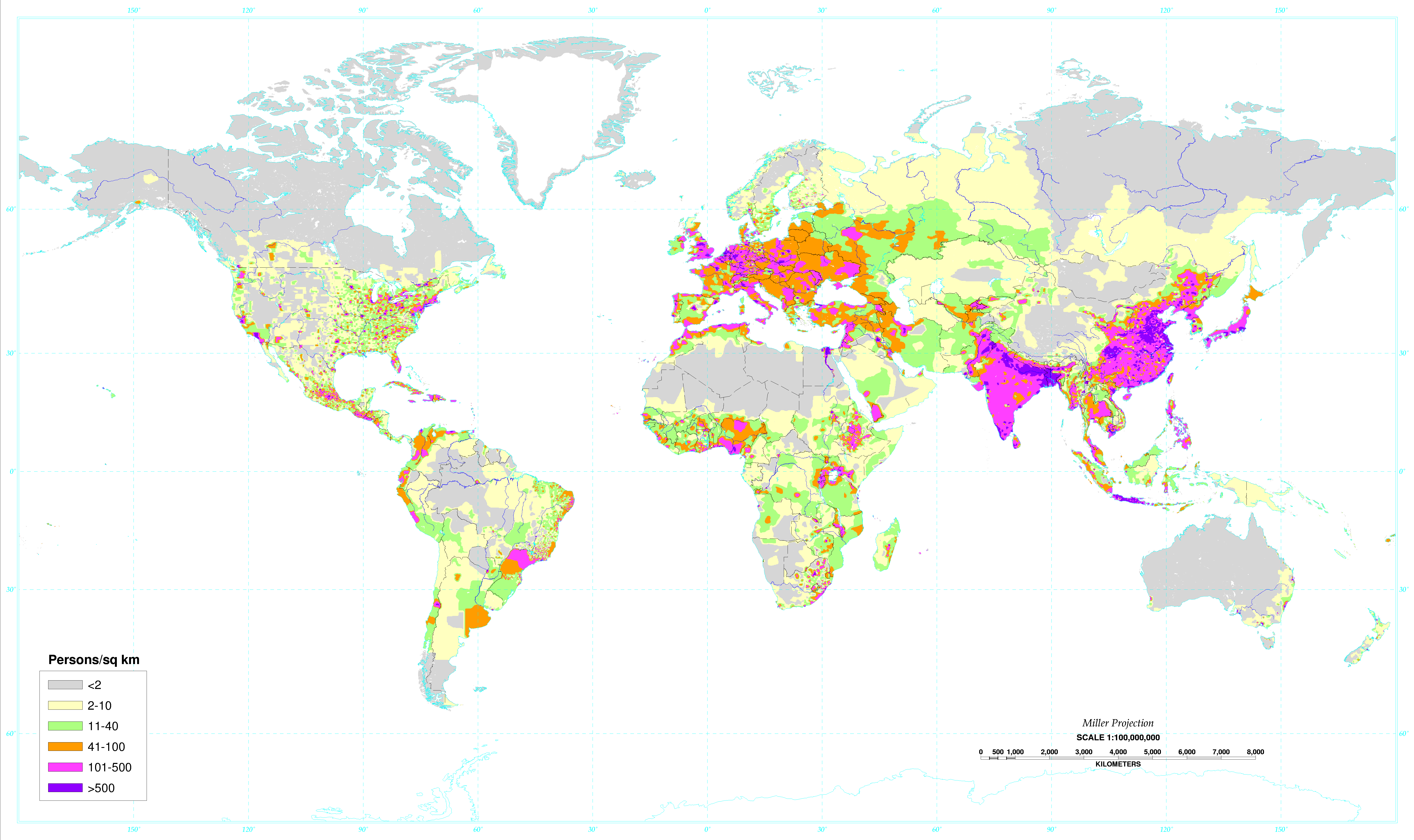
You are connecting a very, very remote area of Russia with a very, very remote area of the US. Take a look at a population density map, there's no cities whatsoever nearby. And long distance shipping will either go by sea (cheaper) or plane (faster), just the maintenance on thousands of miles of rail would kill it. This is as likely as the head of NASA suggesting a manned mission to Mars, it's his idea to make lofty ideas but the people with the money will never fund it.
-
Re:Major change? No.
https://upload.wikimedia.org/w...
It's actually the Win NT 3.1 desktop, but it looks the same as the Win 3.1 desktop.
-
Re:The UK has lighted signs
-
Re:How soon until x86 is dropped?
I'm thinking of ARM as a classic disruptive technology: https://upload.wikimedia.org/w...
i) ARM comes in first and takes customers who have requirements that x86 couldn't possibly satisfy: done
ii) ARM takes those customers who could be on x86 but gain tremendously from ARM: done
iii) ARM takes the least profitable least demanding customers from x86: happening with Chrome books -- in progress
iv) ARM takes over people core to x86 (laptops): not happening yet
v) ARM takes over more demanding users x86 desktop, server... : not close
-- this results in x86 becoming a niche product for the most demanding users
vi) ARM takes over the most demanding users extincting x86: not closeI'm saying I can see step iii becoming step iv. Of course ARM this year is not ready for step (v). But that's different than what the situation might look like 10 or 15 years out. If neither Windows nor Linux were tuned for x86 as the primary platform its dominance in server would be in more danger. If ARM vendors were moving $100b+ / yr in CPUs (double Intel's entire revenue) the server would be in more danger....
-
Re:Why?
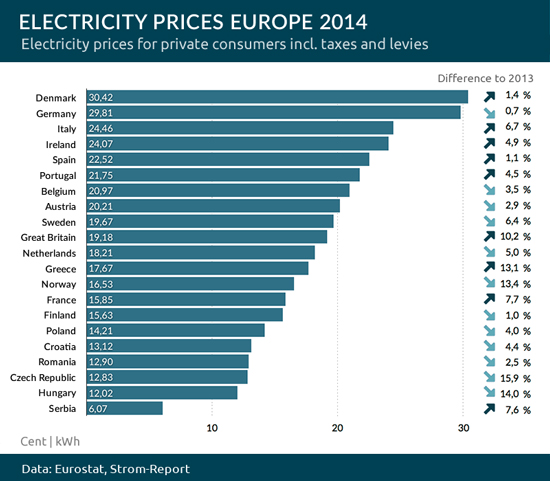
Then why does France have some of the lowest energy prices in the developed EU and why are they exporting energy to Britain?
because they haven't yet paid for the eventual disposal of the waste
It's underway though I don't know how much a full solution would affect cost. And realistically I think we overemphasize Nuclear waste because it's Nuclear, we generate lots of nasty industrial waste that we don't treat with the same paranoia.
-
Re:Why?
Then why does France have some of the lowest energy prices in the developed EU and why are they exporting energy to Britain?
because they haven't yet paid for the eventual disposal of the waste
-
Re:Why?
The main reason is cost. Nuclear power can't compete on price with neither fossil fuels nor renewable energy like solar or wind. So basically every french nuclear power station is a hole into which the consumers are shoveling money into.
You simply can't build or operate a nuclear reactor power station anywhere in the world that can compete on market prices.
For France, the ever more connected EU electricity grid means an ever increasing pressure on the energy sector to be able to compete on EU electricity prices. The long term prospects for nuclear energy to ever be able to compete on prices looks bleak, even if fossil fuel prices rises significantly.
In the meantime much more nimble energy technologies like solar and wind continues to make significant progress in cost and efficiency. And unlike nuclear power plants, they can quickly deploy the newest technology in the field.
So it really makes a lot of sense for France to lower its reliance on nuclear power and start to invest more in renewable energy resources.
Then why does France have some of the lowest energy prices in the developed EU and why are they exporting energy to Britain?
I mean it's not proof that France's electricity generation is fundamentally cheaper, or that Nuclear power has anything to do with it, but I can't find any evidence to back up your claims.
-
Hipster "designers" are the reason.
The answer is simple: hipsters don't design car user interfaces, but they do "design" software user interfaces.
It may be difficult to believe these days, but for quite some time, from the mid-1980s to the mid-2000s, software UIs were quite consistent on each major platform. Almost all Windows apps looked the same on any given version of Windows. Almost all Mac apps looked the same on any given version of Mac OS. Even on X, where there was no standard toolkit, at least a Motif-like theme was offered by most toolkits. There was even superficial similarity across these very different platforms, where the UIs consisted of very similar components, even if the appearance differed.
The important thing to remember is that all of that software predated the influx of hipsters into the computing industry. The hipsters flooded in starting around 2005, which corresponds exactly to the decline in user interface consistency. After a few years of work, these hipsters left us with UI disasters like all of modern web design (especially Slashdot Beta), Chrome, Firefox 4 and later, GNOME 3, and Windows 8.
Hipsters care only about the appearance of the UI. The usability of the software is not a concern to them. The appearance is what they deem to look "good", of course. So if, as a user, you find that the software looks bad and is difficult to use, then the hipsters insist that you are wrong and they are right.
Gedit is the best example I've seen of how the hipster approach to "design" can totally destroy a software user interface. Gedit, which is nothing more than a simple Notepad-like text editor, went from having consistent, usable interface to having this terrible farce of a user interface. That's right, they managed to fuck up the user interface of a text editor that badly!
At least the auto industry, in general, has kept these hipsters away from the physical dashboard. Yes, they have screwed up some of the software for in-car screens, but at least that functionality is non-critical.
-
Hipster "designers" are the reason.
The answer is simple: hipsters don't design car user interfaces, but they do "design" software user interfaces.
It may be difficult to believe these days, but for quite some time, from the mid-1980s to the mid-2000s, software UIs were quite consistent on each major platform. Almost all Windows apps looked the same on any given version of Windows. Almost all Mac apps looked the same on any given version of Mac OS. Even on X, where there was no standard toolkit, at least a Motif-like theme was offered by most toolkits. There was even superficial similarity across these very different platforms, where the UIs consisted of very similar components, even if the appearance differed.
The important thing to remember is that all of that software predated the influx of hipsters into the computing industry. The hipsters flooded in starting around 2005, which corresponds exactly to the decline in user interface consistency. After a few years of work, these hipsters left us with UI disasters like all of modern web design (especially Slashdot Beta), Chrome, Firefox 4 and later, GNOME 3, and Windows 8.
Hipsters care only about the appearance of the UI. The usability of the software is not a concern to them. The appearance is what they deem to look "good", of course. So if, as a user, you find that the software looks bad and is difficult to use, then the hipsters insist that you are wrong and they are right.
Gedit is the best example I've seen of how the hipster approach to "design" can totally destroy a software user interface. Gedit, which is nothing more than a simple Notepad-like text editor, went from having consistent, usable interface to having this terrible farce of a user interface. That's right, they managed to fuck up the user interface of a text editor that badly!
At least the auto industry, in general, has kept these hipsters away from the physical dashboard. Yes, they have screwed up some of the software for in-car screens, but at least that functionality is non-critical.
-
Re:Heart Oblique Impact?
It seems more complicated than that (even ignoring that impacts don't generally make heart shapes). For example, have you seen the carbon monoxide data? It's all clustered in that area. Why would an asteroid make carbon monoxide cluster there?
There's some really interesting things going on. Take a look at this picture and think of what it looks like to you:
Link.
Doesn't it look like... well... a shoreline?
Now take a look at those fractures in Sputnik Planum - notice how they have a curious inner ridge:
Where else have we seen that before? Oh right, Europa:
It's the shape of a liquid welling up through a crack and freezing due to a drop in pressure.
To me, this shows all the signs of a cryosea underneath an ice cap. Which leads to the question: can that occur on Pluto? And the answer is, "probably". With N2, CO, and CH4, you can get eutectics with triple points as low as 51K (a naive solar equilibrium-temperature calculation for pluto's surface, without any other sources of heat, reaches up to 55K). Add neon into the mix and it gets down to 24,6K. The key is, these liquids can't exist on the surface - they require pressure to exist. Which means that they can only exist as aquifers and subglacial lakes/seas. Pure nitrogen requires about 18 meters of pure nitrogen ice (more because it'd have pore space and be mixed with lower density ices). Pure neon would require about 3x as much.
The flat areas in Tombaugh Regio have two radically different appearances. One is the aforementioned area that looks like sea ice with frozen cracks (Sputnik Planum). The other is what's being called a "pitted" terrain. The latter touches the "shore" of the regio, while the former is deep in the middle (at least, from the pictures revealed so far). If one wanted to step even further out onto the limb here, they could posit that the "pitted" terrain involves these ices sitting directly on "bedrock" (which in a pluto context here is water ice), while the terrain that looks like sea ice would have liquid dozens of meters or more down.
But this is all just along one line of thinking. There's just so many possibilities right now. One notices, for example, similarities with various pluto features and frost-heaving earth features like pingos and ice wedges. But it could be something completely new entirely. This isn't water we're dealing with.
A real crazy thing is to think about how there might be vertitable explosive processes on Pluto. Solid nitrogen that forms due to decompression undergoes an energetic glass to crystalline transition. And overall does really weird stuff when freezing (start about a minute in).
Also note that there is nitrogen being lost from Pluto. Lots - 500 tonnes an hour. Over geological timeperiods, that's a massive, massive amount. Pluto loses its atmosphere 2 1/2 orders of magnitude faster than Mars. And yet it's still there. So where's it coming from? The team already pointed out that there doesn't seem to be a planetwide layer of deep nitrogen ice. To me that only seems to leave the possibility that it comes from deeper within the planet. But for it to move from deeper within to the top means a fluid (an aquifer), not an ice (either that or serious tectonics dragging up 500 tonnes an hour!). And given that Pluto's crust provides pre
-
Re:Well understood phenomena works as predicted
Agreed.
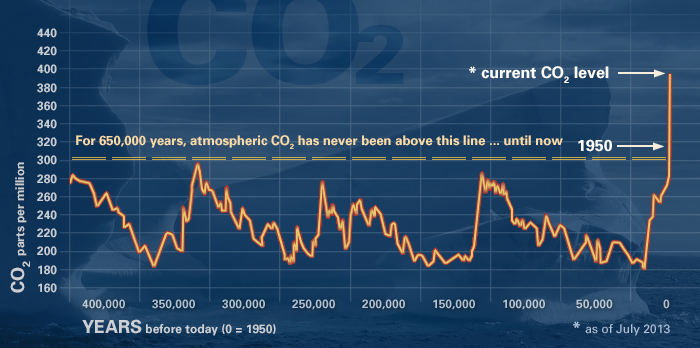
It's too bad I have no way to put those charts right next to each other. It's not like we can't predict what happens when infrared light streams through CO2-laden air. And there's no denying that we're the ones filling the atmosphere with it. They're both such easily verifiable claims. It's high-school level science. But when you suggest that our CO2 is causing the world to heat, somehow there's this mental disconnect.
-
Re:Well understood phenomena works as predicted
Agreed.
It's too bad I have no way to put those charts right next to each other. It's not like we can't predict what happens when infrared light streams through CO2-laden air. And there's no denying that we're the ones filling the atmosphere with it. They're both such easily verifiable claims. It's high-school level science. But when you suggest that our CO2 is causing the world to heat, somehow there's this mental disconnect.
-
Re:Guilt by association!
This reminds me that I need to post a new selfie to Facebook and update my location since I recently moved to Donetsk.
-
Re:Planet Earth Failure Modes
My impression is this would be a world wide event.
It was mostly a northern hemisphere thing, but yeah.
Kansas and other areas would be similarly bad off, its just they didn't have good information about what was going on there in 1815.
The main thing to note from this graph is that in the worst areas, the temperature dropped 3.5 degrees C. In some parts of Vermont, that could mean freezing in June, but in Kansas it would just delay the growing season a bit.
Also, I wouldn't want to depend too much on 'sharing'.
We already do, and it works really well. In centuries past, the drought in California would have caused mass emigration, if not famine. Now, it's a minor annoyance increasing food prices somewhat, and causing farmers to call their crop insurance providers.
-
Re:the real admission is peak driving.
Because it's a small state that contains Baltimore and a bunch of the DC population. Outside of those areas it has much lower density. Perhaps "overall" wasn't the best choice of words, but averaging the density of a whole state with dense cities gives the impression of overall high density while it is actually very heterogeneous.
-
Re:And where does the nitrogen come from?
https://upload.wikimedia.org/w...
http://blogs.publico.es/stramb...
http://tvoyavorkuta.ru/uploads...Were you BORN that DUMB? Or did you have to sit an exam?
-
From Unmannedspaceflight.com
Steve5304: Rumors that Contact with new horizons has been lost again or was never regained. Unconfirmed
Alan Stern: Such rumors are untrue. The bird is communicating nominally.
Alan Stern is the director of the New Horizons mission. So no worries.
This was a really minor glitch and will have no impact on the mission as a whole. There weren't even any significant observations planned for today.
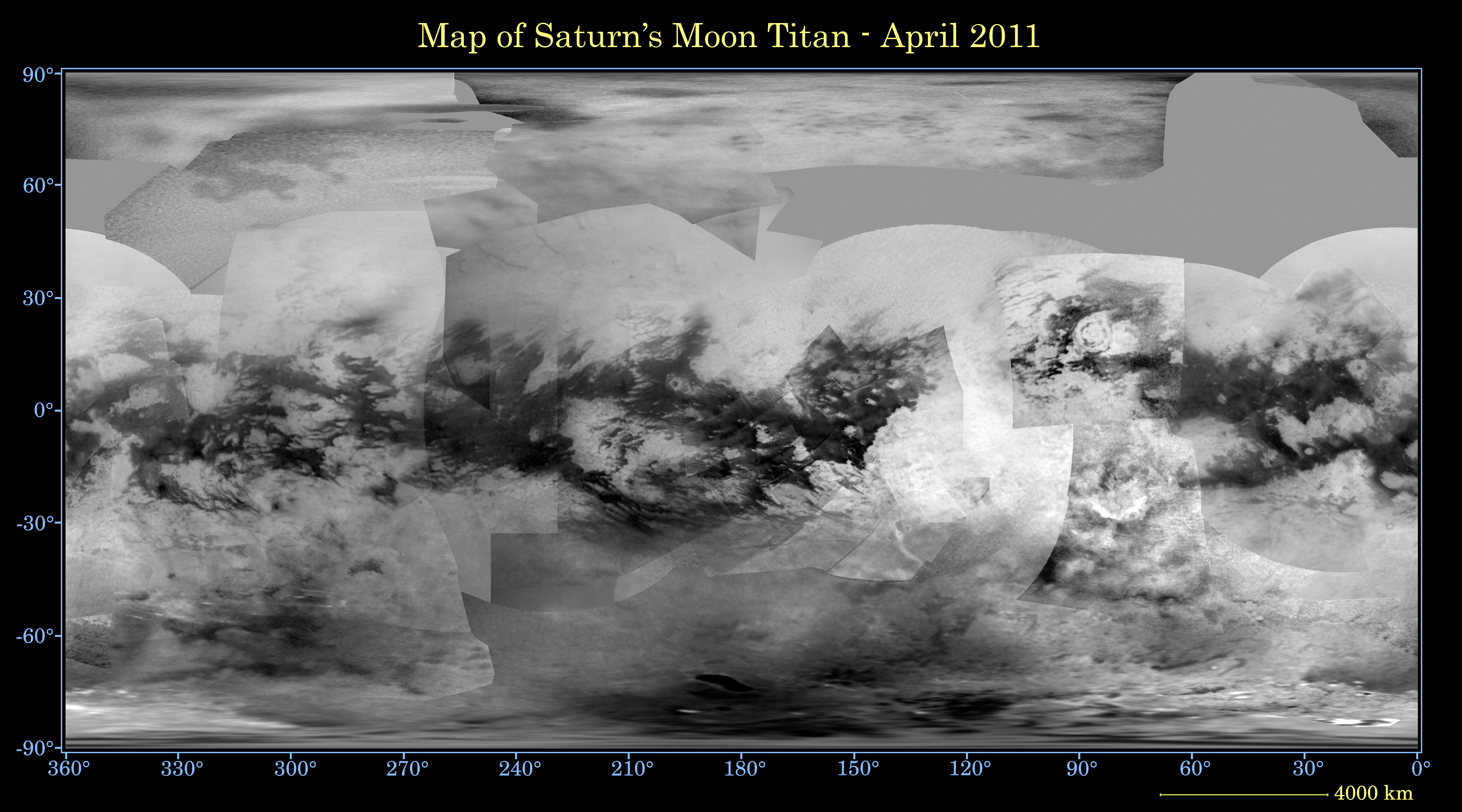
(As a side note, the closer we get to Pluto and the more we see of it (dark band at the bottom is around the equator), the more it's starting to remind me of an airless Titan
-
Re: Coral dies all the time
comparing at equal pressures gives more of an apples to apples comparison. Since you can clearly see how radically the temperatures fluctuate based on pressure.
Um, well yeah. The temperatures on different planets are very different, even at the same pressure - as you'd expect, given all the other differences, like distance from the Sun, cloud cover, chemical composition and who knows what else. I'm really not sure where you're going with all this. It certainly doesn't show that "the chemistry of the atmosphere makes almost no difference." It just shows that there are a lot of factors that determine temperature. The pressure may be "apples to apples" but nothing else is.
And of course the temperature goes up & down with the pressure at different altitudes; that's the Pressure-Temperature law I linked to earlier. Perhaps I'm missing something, but I don't see what any of this has to do with the Greenhouse Gas effect.
As to trapping heat... CO2 is hardly unique in this feature nor do I see why it plays a special role in the Earth atmosphere.
What's different about CO2 compared to the other, stronger greenhouse gases like water vapour and methane is that it accumulates over a long time.
Water vapour is a stable quantity in the atmosphere (for a given temperature). Any excess simply precipitates out as rain. It doesn't increase, at least not until you start warming the air up.
Methane does accumulate, for a while - but it is broken down by UV light over a period of years, so it has only a short term effect as well. It can still be a problem (e.g. if melting permafrost like the Siberian Traps releases significant methane into the atmosphere, which is a real concern and could trigger other warming feedbacks), but it doesn't build up over a long time, so any direct effects of a methane pulse are short-lived.
CO2 takes centuries to be removed from the atmosphere. This is done by vegetation, to a small extent, but the vast majority of CO2 uptake is done by the ocean. Even so, this is a slow process. CO2 has been building up rapidly in our atmosphere, and even if we stopped emitting ALL anthropogenic CO2 tomorrow, it would still take centuries to return to pre-industrial levels. Worse, much of that CO2 being absorbed by the oceans is being converted to carbonic acid, which is resulting in ocean acidification - a decreasing pH that we've been observing for some time, and is already having measurable results on sensitive ocean ecosystems.
I had a hard time finding a graph for CO2 ironically... maybe you can help me out there.
I did find this which should serve: https://commons.wikimedia.org/...
Yep, that looks like a useful graph. It's certainly clear that water vapour has a bigger effect - but the primary point here is that CO2 also blocks outgoing energy. It's in addition to the effect of water vapour. Water doesn't "black out" the effect of CO2, it adds to it, trapping more energy.
While the water vapour effect is bigger, the CO2 effect is added to this - and that is steadily increasing, as the CO2 in our atmosphere increases. This is enough extra trapped energy to change the temperature equilibrium of our planet; we've done the maths. See e.g. Myhre '98 for how this is forcing value is derived, while Puckrin '04 compares our radiative flux models for a variety of greenhouse gas mixes with atmospheric observations, and finds them to agree well.
Have a look here for a comparison of the radiative forcing values of the significant greenhouse gases, particularly the Greenhouse Gases section and
-
Re:Environmentalists will cause the next nuclear a
Every time nuclear power comes up someone blames environmentalists for the industry's problems -- in this case before the problems have manifested. It's an article of faith.
So far as I can see there's only ever been one plant in the US that's ever been cancelled for environmental concerns is the proposed plant at Bodega Harbor, which as you can see on the map would have been right on top of the San Andreas fault. In every other case projects have been shut down after serious miscalculations in the industry's economic forecasting (e.g. lower energy prices in the 80s than anticipated in the 70s), often exacerbated by poor project management performance. In those cases environmentalists were just a convenient scapegoat for management screw-ups.
You can see that because after the very largest anti-nuclear protests in history -- against Seabrook in NH and Diablo Canyon -- the plants were built and put into operation anyway. If a company had a plant under construction that it could make money operating, that plant would get built, even if thirty thousand people turned out to protest.
-
Re:Virtulize it
They have. You can see it here:
-
Re:Antiviral License
Yes, but that is only a requirement on what is honestly a derived work (changes made to that BSD-licensed code), as opposed to a requirement that all of the source code in the entire project be licensed under the BSD license.
It's a requirement that applies to works derived from BSD-licensed code, as GPL requirements apply to works derived from GPL-licensed code. It's up to the courts to decide what counts as derived works. e.g. If the courts decide that copying APIs is not fair use, then technically programs linked against BSD-licensed libraries must adhere to BSD terms (although they may also impose additional terms, as this isn't disallowed). On the other hand, if the courts decide copying APIs is fair use then the GPL doesn't apply to programs linked against GPL-licensed libraries (even if it would like to).
GPL 3.0 section 5 part C:
You must license the entire work, as a whole, under this License to anyone who comes into possession of a copy. This License will therefore apply, along with any applicable section 7 additional terms, to the whole of the work, and all its parts, regardless of how they are packaged.This viral component is what the Antiviral License doesn't allow.
Okay, I see what you're saying, but AFAIK, this actually means a whole lot less than you think.
Re "You must license the entire work, as a whole, under this License":
From a legal perspective, the adapter can only licence their modifications; unmodified parts of the work remain under the initial licence. Without a legal solution offered by the licence, the adapter cannot really "re-licence" the work as a whole.
Open Content - A Practical Guide to Using Creative Commons Licences/The Creative Commons licencing schemeIf I take a large BSD-licensed work, and a large GPL3-licensed work (3 because I think 2 might actually be incompatible), and combine them with a little glue, then I must license my "new work" under the GPL3, but the license I am offering really only applies to that little bit of glue, and nothing else. Moreover, there's nothing stopping me from dual-licensing that little bit of glue under a BSD license too, in which case authors of further derived works can choose whether to use my little bit of glue under the GPL3 or the BSD.
None of this makes too much practical difference, because in any case, both the BSD requirements and the GPL requirements apply to the new work, since it contains both BSD and GPL code. The difference is essentially cosmetic. It means I must write that my "new work" is licensed under the GPL, regardless of how little that may mean.
This suggests to users that the work may be used without any conditions that aren't listed in the GPL, which I am required to ensure is true, but for a different reason. What actually requires me to ensure that no further conditions apply besides those listed in the GPL is the explicit requirement that I do precisely that--"You may not impose any further restrictions...". The only way I can do this is by checking that conditions of other licenses I use are also conditions of the GPL.
Re "This License will therefore apply, along with any applicable section 7 additional terms, to the whole of the work, and all its parts, regardless of how they are packaged.", (my emphasis)
I think perhaps the point here is supposed to be that, for instance, a Java program could be distributed in a single
-
Re:What plan?
We send spacecraft on comparable missions all the time. And it doesn't really take a spectacularly large payload to destroy (yes, destroy) an asteroid a few hundred meters in diameter. 1/2-kilometer-wide Itokawa could be blown into tiny bits which would not recoalesce, via a 0,5-1,0 megatonne nuclear warhead, a typical size in modern nuclear arsenals (in addition, the little pieces would be pushed out of their current orbit).
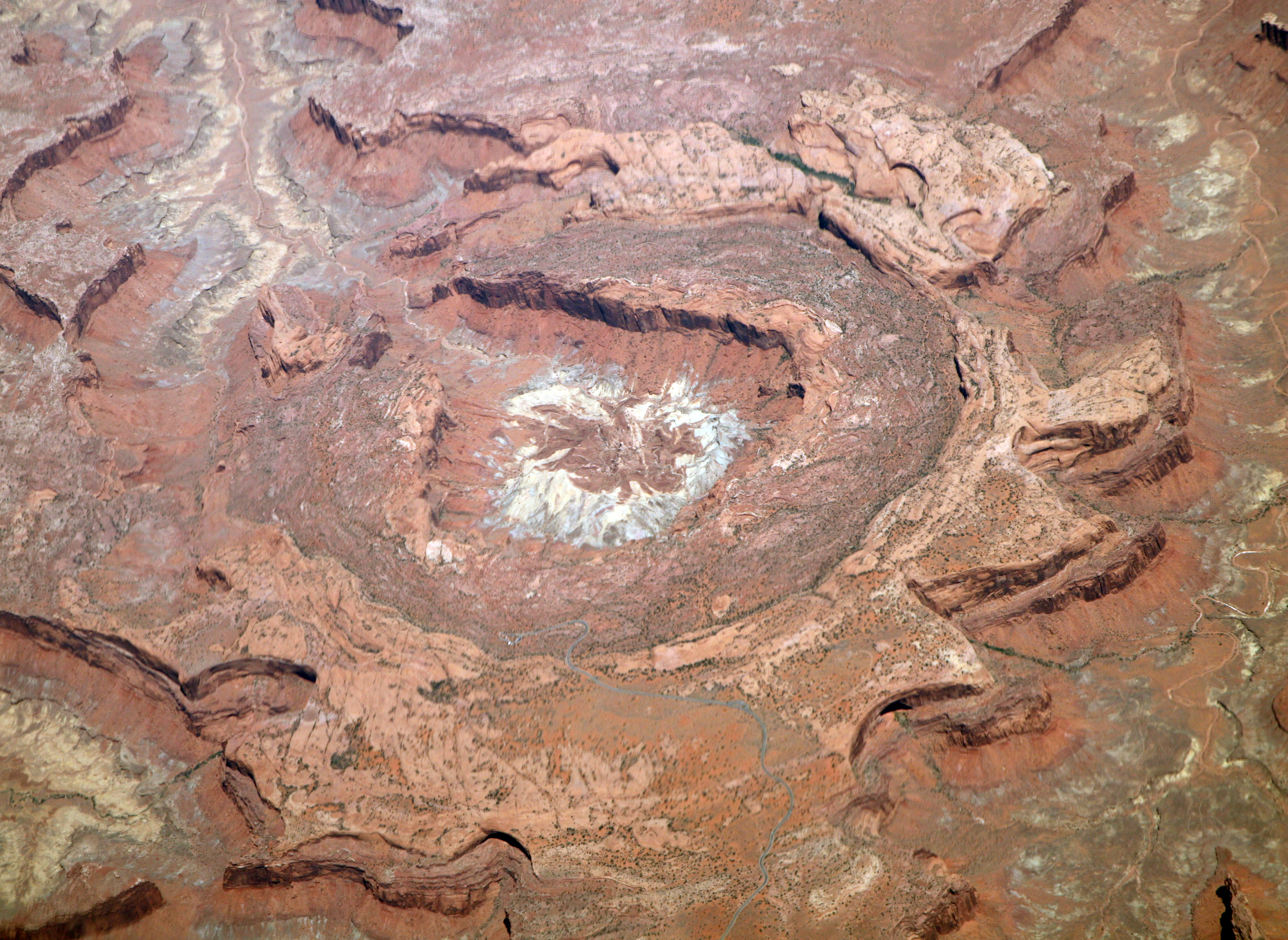
I know it's a common misconception that "nuking" an asteroid would simply create a few large fragments that would hit Earth with even more devastation, but that's not backed by simulation data. And anyway, even if it didn't blow the asteroid to tiny bits (which simulations say it would) and even if it didn't push the remaining pieces off trajectory (which they say it does), anything that spreads an Earth impact out over a larger period of time is a good thing - it means the higher percentage of the energy that's absorbed high in the atmosphere rather than reaching the surface (less ejecta, lower ocean waves, a broader (weaker) distribution of the heat pulse, etc), the weaker the shockwaves, the weaker the total heat at any given point in time, and the more time for Earth to radiate away any imparted energy or precipitate out any ejecta cloud. If the choice is between 15 Chelyabink-sized impactor (most of which will strike places where they won't even be witnessed) or one Meteor Crater-sized impactor (same total mass), pick the Chelyabinsk ones. 50 10-megatonne meteor crater impactors or one 500-megatonne Upheaval Dome impactor? Pick the former. The asteroid impacts calculator shows the former generating a negligible fireball and 270mph wind burst at 2km distance, while the latter creates the same winds 25km away (156 times the area) and a fireball that even 25km away is 50 times brighter than the sun, hot enough to instantly set most materials on fire.
But that's all irrelevant because, quite simply, simulations show that nuclear weapons do work against asteroids.
What we need is enough detection lead time to be able to launch a nuclear strike a few months before the impact date (to give time for the debris to disperse). There is no need to "land" or "drill" for the warhead. There is no pressure wave; instead, an immense burst of X-rays is absorbed through the outer skin of the asteroid on the side of the explosion, causing it to vaporize (unevenly) from within, especially near the ground zero point, and creating powerful shockwaves throughout its body. In addition to ripping it apart, the vaporized material and higher energy ejecta flies off, predominantly on the side where the explosion was detonated, acting a broad planar thruster.
-
Re:Carl Sagan thought Titan was more important
apart from most of the mission itinerary? Oh, not much...
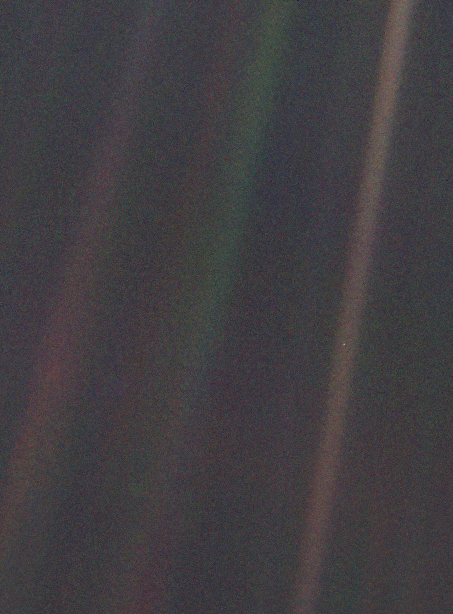
And you can thank him for the "Pale Blue Dot" mosaic, which in my very humble opinion is one of the most beautiful images ever taken by a manmade probe.
https://upload.wikimedia.org/w... (halfway down the brown band on the right of the image, that half a pixel of blueish white.
From this distant vantage point, the Earth might not seem of any particular interest. But for us, it's different. Consider again that dot. That's here. That's home. That's us. On it everyone you love, everyone you know, everyone you ever heard of, every human being who ever was, lived out their lives. The aggregate of our joy and suffering, thousands of confident religions, ideologies, and economic doctrines, every hunter and forager, every hero and coward, every creator and destroyer of civilization, every king and peasant, every young couple in love, every mother and father, hopeful child, inventor and explorer, every teacher of morals, every corrupt politician, every "superstar," every "supreme leader," every saint and sinner in the history of our species lived there – on a mote of dust suspended in a sunbeam.
The Earth is a very small stage in a vast cosmic arena. Think of the rivers of blood spilled by all those generals and emperors so that in glory and triumph they could become the momentary masters of a fraction of a dot. Think of the endless cruelties visited by the inhabitants of one corner of this pixel on the scarcely distinguishable inhabitants of some other corner. How frequent their misunderstandings, how eager they are to kill one another, how fervent their hatreds. Our posturings, our imagined self-importance, the delusion that we have some privileged position in the universe, are challenged by this point of pale light. Our planet is a lonely speck in the great enveloping cosmic dark. In our obscurity – in all this vastness – there is no hint that help will come from elsewhere to save us from ourselves.
The Earth is the only world known, so far, to harbor life. There is nowhere else, at least in the near future, to which our species could migrate. Visit, yes. Settle, not yet. Like it or not, for the moment, the Earth is where we make our stand. It has been said that astronomy is a humbling and character-building experience. There is perhaps no better demonstration of the folly of human conceits than this distant image of our tiny world. To me, it underscores our responsibility to deal more kindly with one another and to preserve and cherish the pale blue dot, the only home we've ever known.
—Carl Sagan, Pale Blue Dot: A Vision of the Human Future in Space, 1997 reprint, pp. xv–xvi
-
Re:helocopters
Shut up.
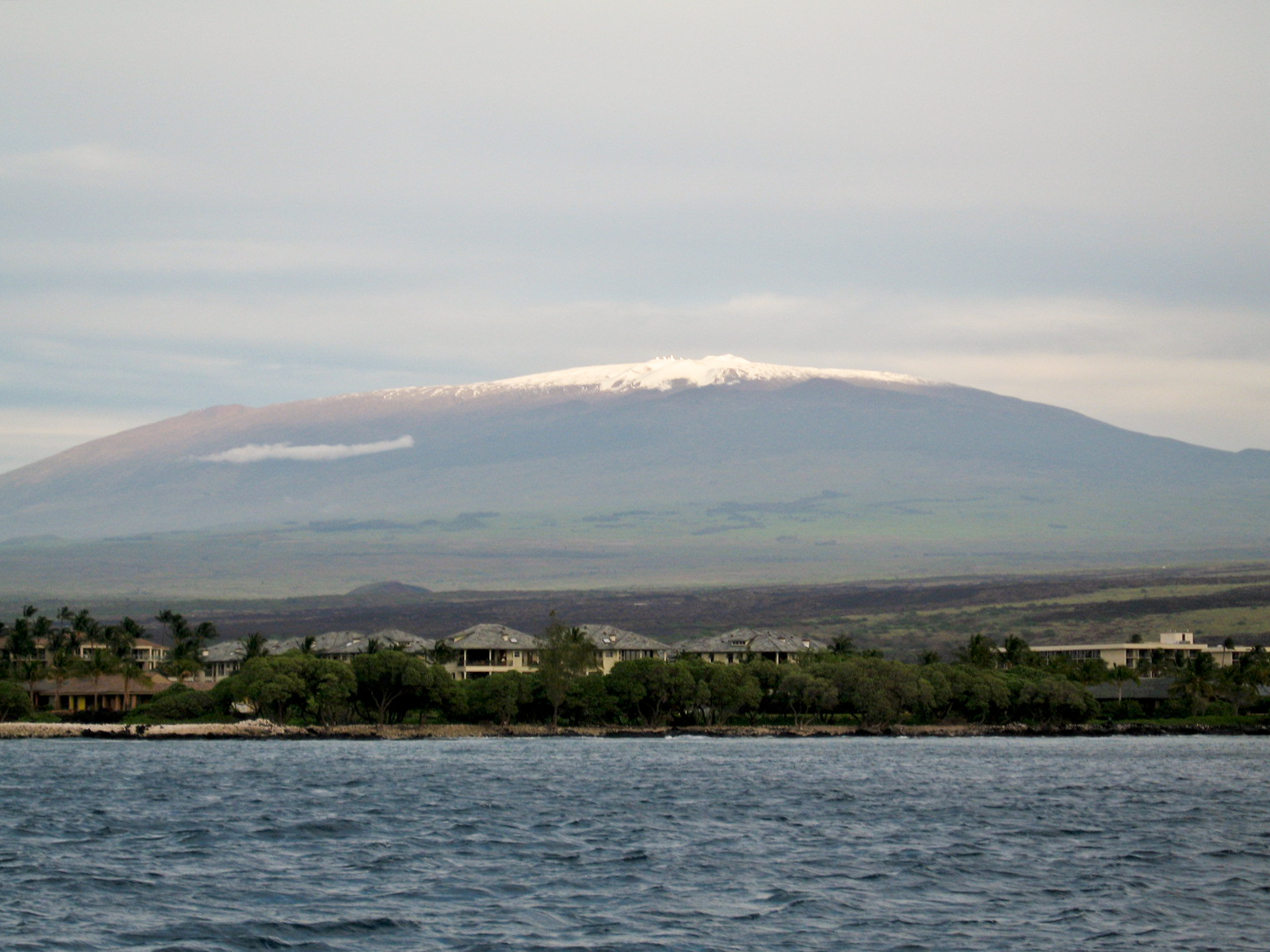
This is what the telescopes look like:
https://upload.wikimedia.org/w...You can't even see them unless you squint and they blend in with the snow mostly. So I don't know what you're talking about.
They only become obvious when you're getting close to them. And there's no reason to do that in Hawaii. The islands are f'ing paradise. Why would anyone want to climb the frozen lava rock that is so high the oxygen gets low? What exactly is the point?
I can understand the astronomers going up there. I do not understand why anyone else is going up there. Possibly some crazy people that want to ski? I don't know. That's about it. Its ugly up there... because its just bare lava rock and snow. That's it.
Seriously... why do you think the telescopes are bad. I mean... actually? Did an astronomer fuck your sister? Because it can't possibly be what you said.
Look at that picture I posted. That is what the telescopes look like from off the mountain. You can't even see them really. And they don't look bad even when you do. Your comment makes zero sense.
Unless you give me a more concrete reason... I am assuming there was a dramatic love affair between one of your relatives and an astronomer and you have some misplaced aggression on the issue. That's all I've got unless you want to tell me why you ACTUALLY don't like the telescopes.
-
Re:Countries don't have friends. They have interes
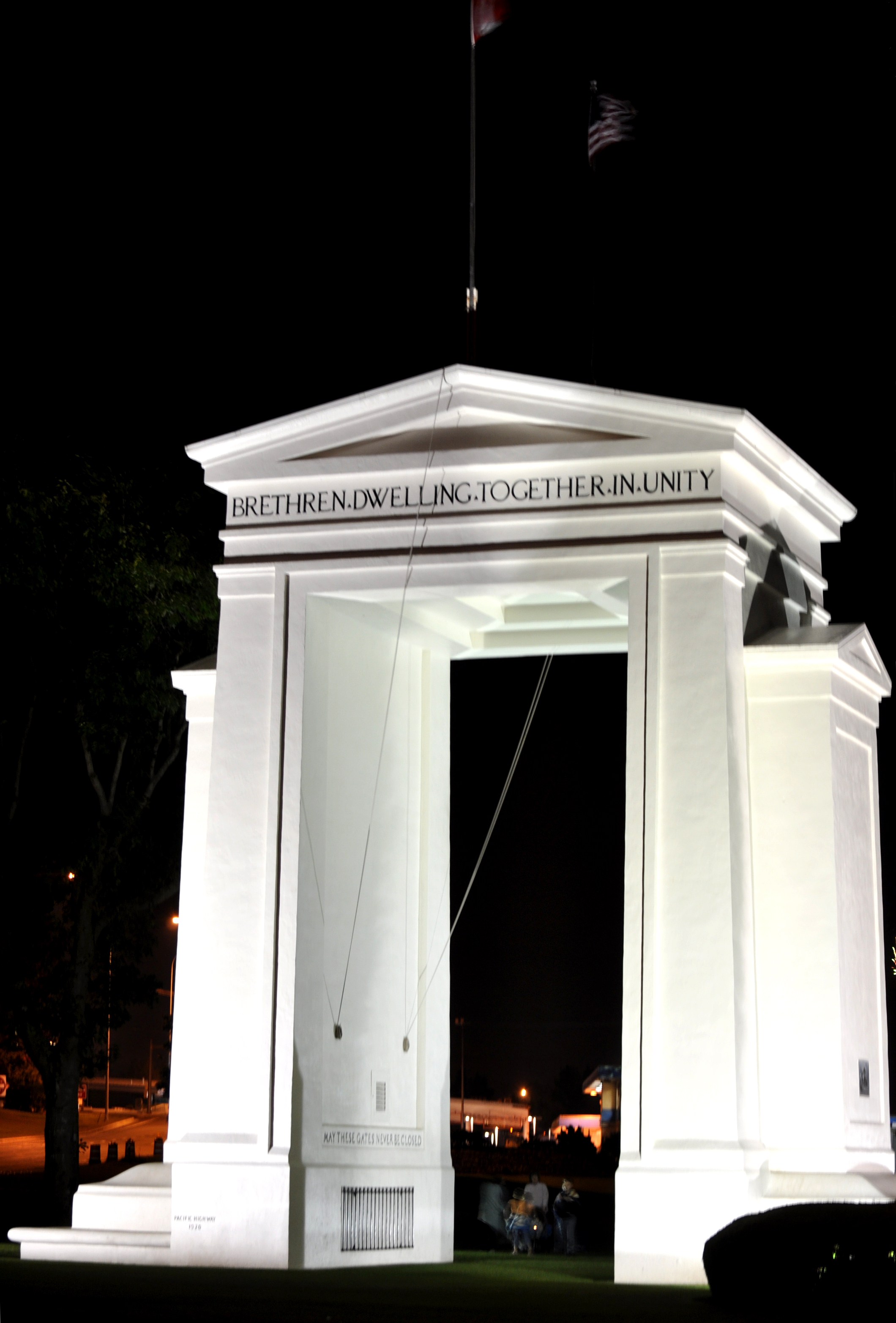
Read what is written on the inside.
PictureThis is a national monument called the "Peace Arch", sitting on a border crossing. We will not be adversaries tomorrow. Granted, we might have some difference in specific interests, but our nations will not be adversaries tomorrow. We're friends.
-
Re:But Nazi, Communist, ISIS flags are OK?
I'm not sure what a "Communist" flag is. I never knew Communism was a country.
Any flag that has a hammer and sickle featured in it? https://commons.wikimedia.org/...
-
Re:"Clean Energy Candidate"
Of course China is going to go along with this hair-brained idea, right?
China, as you may know, has immense and shockingly bad pollution problems. That's not a result of the Chinese leadership's shrewd thinking, it's the result of government and industry collusion and corruption. In China industry sets industrial and energy policy. The most powerful companies are state or military affiliated, but they act no differently than any other company that has succeeded at regulatory capture.
And we in the West have been down this dirty road too, but if you're under 50 "smog" is just word to you unless you live in LA. Here's what smog looked like in Manhattan in 1973. Note that this is in May, not in the summer when smog is at it's worst; nor is this an unusually bad example. Compare this to a recent shot of the same area taken in July. It shows a pretty bad pollution bad by modern standards but a very good day by 1970s standards.
Or you may have heard of London's famous "fog", but London is NOT a foggy place. The "fog" was pollution. In 1952 they had the "Great Smog", a four day event that, it is now estimated, killed twelve thousand people. Here is a picture of the Great Smog; note carefully: this is a daytime photo.
So, by all means lets talk China. The problem with China's air isn't economic progress; the problem with China's air is that China isn't a democracy. If it were then the people would force the government to do what governments in advanced democracies everywhere have been forced to do: regulate sources of pollution.
-
Re:"Clean Energy Candidate"
Of course China is going to go along with this hair-brained idea, right?
China, as you may know, has immense and shockingly bad pollution problems. That's not a result of the Chinese leadership's shrewd thinking, it's the result of government and industry collusion and corruption. In China industry sets industrial and energy policy. The most powerful companies are state or military affiliated, but they act no differently than any other company that has succeeded at regulatory capture.
And we in the West have been down this dirty road too, but if you're under 50 "smog" is just word to you unless you live in LA. Here's what smog looked like in Manhattan in 1973. Note that this is in May, not in the summer when smog is at it's worst; nor is this an unusually bad example. Compare this to a recent shot of the same area taken in July. It shows a pretty bad pollution bad by modern standards but a very good day by 1970s standards.
Or you may have heard of London's famous "fog", but London is NOT a foggy place. The "fog" was pollution. In 1952 they had the "Great Smog", a four day event that, it is now estimated, killed twelve thousand people. Here is a picture of the Great Smog; note carefully: this is a daytime photo.
So, by all means lets talk China. The problem with China's air isn't economic progress; the problem with China's air is that China isn't a democracy. If it were then the people would force the government to do what governments in advanced democracies everywhere have been forced to do: regulate sources of pollution.
_male.jpg)






.jpg)


.jpg)