 Slashdot Mirror
Domain: wiley.com
Stories and comments across the archive that link to wiley.com.
Comments · 614
-
Re:Not a cell
Blame the university's press department, as always. There's quite a jump in hyperbole between the Ange and Nature Chem's comments, versus the press release. Why do journalists even read university press releases any more? You know they're going to be misleading.
-
Re:Put a fork in it, it's done.
-
Re:Cue the climate change deniers ...
"at a rate far far less than predicted by all your models." Patently False. They aren't rising as fast as the worse case scenarios the media likes to report. They are rising within model predictions.
Actually, he is more right than you are. Let's compare, shall we? Plot the trend from 1990 - 2050, and compare with observations.The IPCC even revised their 2013 report from the 2nd quarter, downgrading their predictions from 0.13-0.33 per decade to 0.10-0.23 per decade. That's near the BOTTOM of the model's predictions, so it seems even the IPCC isn't buying that the models are accurate.
They claimed in AR5 that the observations were within the model predictions from AR4, but their OWN GRAPHIC tells a different story.
B) IF you are implying there is an increase in the energy output of the sun, we would know becasue we measure it pretty accuratly. The rising trend does NOT correlate with the Suns activity.
Actually, that's not accurate. True, it does not correlate with the sun's total solar irradiance but the models ignore anything else, such as spectral variability. There have been plenty of correlations made with solar activity, earth's orbit, Milankovitch cycles and cosmic rays. You might want to review a few of these papers on solar influence of climate change.
" Has a habit of touting every storm or weather incident (even earthquakes) as proof of global warming, " um, that's the media, not scientists who are experts in that field of study. However, there will be an increase in the energy of events. This can be stronger storms, or more storms,. The bottom line: more energy expressed over time.
Well you can claim that if you want to, but in fact it's a compromised media and activist climatologists. Like the ones that made a trip to Antarctica as a marketing exercise and alarm people about the disappearing ice (it didn't work out for them), like James Hansen, like Michael Oppenheimer, like John Harte.
" Has a habit of touting every storm or weather incident (even earthquakes) as proof of global warming, " um, that's the media, not scientists who are experts in that field of study. However, there will be an increase in the energy of events. This can be stronger storms, or more storms,. The bottom line: more energy expressed over time.
"No True Scotsman", then?
"We have also had some of the coldest incidents in recorded history in recent years as well." As expect by climate change models, dumb ass. The term climate change is older the global warming, BTW.
Yes, as everything and nothing is all evidence of climate change. There are so many predictions, EVERY event is confirmation and NO event can shed dispersion upon it. Does that really sound like science to you?
4) We put out far more CO2 then can be absorbed by the pre-industrial climate cycles.
Pure conjecture. The FACT is that the correlation between increasing CO2 followed by increased warming is not very good.
-
Re:GMOs feed over a billion people
The existence of GMOs have NOT boosted production in the slightest.
Tell that to the papaya farmers in Hawaii. Virus resistant GMO papaya saved the industry. Without GMOs, there would be no papayas on the Big Island. How's that for a yield gain?
Second, you completely ignore the also prevalent Bt crops, which while they have not had much of a yield impact in developed countries (which is no surprise since insecticides are readily available there) but have had noticeable impacts in developing countries like India.
Third, why do you pretend this is all about yield? It's not. You criticize herbicide tolerant crops, yet I don't see you proposing a better idea for weed control. Would you like to go back to harsher herbicides? Or maybe tilling the hell out of the soil? Besides economic benefits, there is also the benefits of no-till and replacing harsher herbicides. It is a perfect system? Nope, but I don't hear the anti-GMO crowd volunteering to weed a few million acres by hand.
This herbicide immunity, by the way, is an immunity being acquired by other "pest" plants which were the original target of the herbicide.
The first example of an herbicide resistant weed was in the 70's, so your argument has more to do with over-reliance on a single mode of action herbicide than genetic engineering. Surprise, evolution in the weed population works the same regardless of whether or not a transgene is present. It is telling that one of the best arguments against genetic engineering is 'we might lose some of the benefits it has provided.'
GMOs do not represent a world-saving technology.
No one is saying they are, but to point that out is like saying that vaccines won't cure everything, therefore they are bad. That's an asinine argument. As the case of papaya in Hawai'i and Bt crops in Asia & South America, while they are no panacea they can indeed help.
What they represent is a danger to the world's food supply not only because it comes under control of a small collection of companies,
The consolidation of seed companies has been going on for a very long time. Just because you didn't start paying attention until GMOs showed up doesn't mean GMOs did it. Correlation, not causation.
but because it reduces the varieties of plants available. In the event a disease develops to wipe out these GMOs, there may be extreme starvation and human suffering due to the continual growth of GMO use.
Please explain how the presence of a transgene is reducing the varieties of crops out there. you are confusing the selection of genes, aka conventional breeding, with the insertion of a small number of genes. They are very different. Genetic monoculture is caused by having a lot of similar genetics, not from having a single gene inserted. Now, to be fair, over relying on a single inserted transgene can and has resulting in pests overcoming the resistance, but the same thing has happened in with conventional systems, from hessian fly overcoming the conventionally bred resistance in wheat to late blight overcoming tomato resistance, to the fall of the Gros Michael banana. You are taking a basic agricultural issue completely out of context.
Please shill for Monsanto elsewhere.
Ah, the big shill gambit. Not just for anti-vaxxers anymore!
-
Re:Al Gore says...
Others would take it as an opportunity to wonder why the previous climate models failed us and how can we improve them.
http://onlinelibrary.wiley.com/doi/10.1002/grl.50316/abstract
It's like no one ever thought of that.
-
Re:Tobacco has the same effect as VX-765
Tobacco smoke has a broad, multilevel anti-inflammatory effects, from inflammatory controls in vagus center, then via the upregulation of corticosteroids, down to stimulation of anti-inflammatory cellular alpha-7 receptors. This includes inhibition of the same inflammatory cytokines (IL-1beta, IL-18) as done by VX-765.
Interestingly, nicotine only partially accounts for these anti-inflammatory effects, while some unknown components of the full tobacco smoke yield additional protection. For example in a related RA experiment to the one at the link, where mice with induced RA were divided into tobacco smoke, nicotine and untreated controls, the tobacco smoke group had the least damage to the cartilage and the longest delay of the onset of the disease, the controls had the most damage and the earliest onset, while nicotine group fell in between.
Of course, the antismoking junk science (one manifestation of the big the pharma's war on medicinal plants) strongly urges RA patients to immediately quit smoking since on non-randomized samples there RA is positively associated with tobacco smoking. What the hard science implies, such as the above and other experiments on anti-inflammatory effects of tobacco smoke, is that this positive statistical association at the level of epidemiology is due to self-medication. Taking into account that type of confounding is a taboo in the present antismoking "science."
-
Re:Why shouldn't it?
Is there any evidence that their manufacturing is any more polluting that that of other cars?
If you say "other electric cars", perhaps no. But it is well known that production of electric cars is much more polluting than production of ICE cars. See e.g. this recent peer-reviewed article.
-
Re:Why shouldn't it?
However, your concerns about manufacturing process and moving energy use around are ignorant trolling.
Here, let me point you towards a recent article in the Journal of Industrial Ecology which shows that the production of batteries for the longest-range Tesla S emits roughly as much CO2 as driving 50 000 miles (depending on the car you compare with).
-
Re: Teaching critical thinking early is a bad idea
> For an upper bound, I would point to the medical data concerning when a person is statistically likely to have completed the mylenation process, and the body of data concerning the strong correllation between dendrite formation and migration and the curve that corresponds to mylenation.
I'm sorry anon, but I don't see any justification as to why this should be an upper bound. I was not referring to neurological maturation, but psychological. They're not the same, nor do they coincide; though the first has an undeniably critical impact on the second, the second also depends on many other factors, including acquired knowledge and experience. Teaching something during a developmental stage with high dendrite formation may make learning more efficient, but this efficiency does not by itself define what is the most appropriate timing. (Plus, dendride plasticity remains an aspect of the human brain throughout life: http://onlinelibrary.wiley.com/doi/10.1002/dneu.20951/full ) -
Cowtan & Way 2013 trend is inside HadCRUT4 err
Cowtan and Way 2013 compensated for missing HadCRUT4 surface temperature measurements in places like the Arctic and Africa by using the spatial pattern of satellite data to produce a hybrid satellite/surface dataset. Jane and Lonny ponder the differences between Cowtan and Way's hybrid dataset and HadCRUT4:
I keep asking: what's wrong with my basic premise: that if your measurements are shown to be off by 100%, there's something wrong with your science? That was my point. [Jane Q. Public]
... They are saying that it is not the 0.05 degrees C per decade that the AR5 report gives for the last 15 years, but that it is, instead, 0.12 degrees C. Which is actually a difference of not 100% but 140%, for the most recent 15 years. [Jane Q. Public]
@ScienceChannel @jimmygle PLEASE tell the Anthropogenic Global Warmists! Yet another report surfaced saying their "science" was off by 140% [Lonny Eachus]
Jane and Lonny's basic premise wrongly ignores the large error bars on these noisy, short-term trends. The SkS trend calculator can calculate the trends and error bars from 1997 through (including) 2012 for both HadCrut4 and Cowtan and Way's hybrid dataset:
1997-2013 HadCRUT4 Trend: 0.049 0.126 C/decade
1997-2013 HadCRUT4 hybrid Trend: 0.119 0.150 C/decadeThe hybrid dataset's central estimate is inside the error bars of the original HadCRUT4 estimate.
... they haven't been right yet... They admit that they have no explanation why their models, which projected continued if not increased warming, do not explain why it has dropped by more than half (0.12 to 0.05 deg. C / decade) over the last 15 years. Or, for that matter, why their margin of error (-0.05 to +0.15 deg. C) for the last decade and a half is 4 times the size of their actual estimated warming. Nope... it's pretty damned clear. Something is wrong with their science. [Jane Q. Public]
I calculated error bars on UAH trends. The black line on the second page shows the UAH trend ending in 2012, for different starting years. The error bars are shown in red; they're 95% confidence uncertainty bounds. Note that error bars on longer trends are smaller than the large error bars on shorter trends.
Anyone can reproduce my results by downloading the free "R" programming language used by professional statisticians. Then save this code as "significance.r":
# run using R CMD BATCH significance.r
# outputs to Rplots.pdf and significance.r.Rout
# load custom functions
# for generalised least squares
library(nlme)
# options
xunits="year"
textsize=1.4
titlesize=1.8
colfit="red"
pch1=20#points
# read basin data
indata = read.table("greenland2013/GIS_climate.nasa.txt",header=T)
title="Greenland mass"
yunits="gigatons"
tlims=c(-350,-190)
alims=c(-60,0)
#indata = indata[which(indata$x>2002.0),]
# remove mean
indata$y = indata$y - mean(indata$y)
n = length(indata$x)
n
midpoint=(indata$x[n]-indata$x[1])/2.0+indata$x[1]
# fit model
fit=gls(y~x,data=indata,corr=corARMA(p=1,q=1))
#fit=gls(y~x+sin(2*pi*x)+cos(2*pi*x),data=indata,corr=corARMA(p=1,q=1))
#fit=gls -
Re:Most of this will be about internal politics
Utter nonsense boy.
You are making conclusive statements ex post facto. As such, you are looking at the facts in a neatly arranged time line and making cause and effect conclusions with the biased benefit of hindsight.
The very popular and academically acclaimed British historian Niall Fergusson wrote following about the time period starting 33 years prior to WWI: "In particular, I ask why the outbreak of the First World War, an event traditionally seen as having been heralded by a series of international crises, was not apparently anticipated by investors."
http://onlinelibrary.wiley.com/doi/10.1111/j.1468-0289.2005.00335.x/abstract
And as a counterpoint, which supports what fnj said: How often do you have superpowers build up their arsenal and "rattle their swords" but nothing happens. According to you North Korea should have started a nuclear war a long time ago.
Pfft. -
Re:Two phase is asking for trouble.
Obligatory link to THE Leidenfrost effect paper.
Do Not Try This At Home.
But if you do...
Try not to shatter your teeth. -
Re:But..
it takes more effort to be antibiotic resistant than not. That means, absent the use of antibiotics, the resistance will naturally be selected against and fade from the population over time.
Actually, this (often) isn't the case.
It's obvious in theory that antibiotic resistance may or may not have a cost associated - but without any selection pressure, whether the resistance evolves is down to luck. Add the antibiotic and the selection is driven but remove the antibiotic again and the selection pressure doesn't need to be back towards the original state.
What is perhaps more surprising is that reversion to antibiotic susceptibility in the absence of the antibiotic is relatively rare - what actually tends to happen is that there are other mutations driven by the absence of the antibiotic rather than loss of the resistance.
http://www.biomedcentral.com/1471-2148/13/163
http://onlinelibrary.wiley.com/doi/10.1111/evo.12158/abstract
http://www.biomedcentral.com/1741-7007/11/14The third one is interesting in that it says that sometimes antibiotic resistance can evolve due to a selection pressure unrelated to the antibiotic. If antibiotic resistance was very costly then you wouldn't expect to see this.
-
Re:You can't compensate the dead
http://onlinelibrary.wiley.com/doi/10.1002/14651858.CD001877.pub5/abstract
If we assume that screening reduces breast cancer mortality by 15% and that overdiagnosis and overtreatment is at 30%, it means that for every 2000 women invited for screening throughout 10 years, one will avoid dying of breast cancer and 10 healthy women, who would not have been diagnosed if there had not been screening, will be treated unnecessarily. Furthermore, more than 200 women will experience important psychological distress including anxiety and uncertainty for years because of false positive findings.
Can you really perform 250,000 mastectomies for 2.5 billion?
-
Re:Yeah
Don't be a nitwit.
Google is your friend. That page links here, and here's the damn "reputable peer reviewed Scientific Journal".
And just so you know, Contrary to what the mainstream media would have you believe, Men's Rights Advocacy isn't for hate-mongers, its memebers are frequently also Women's Rights Activists, and many vocal members are Women. It's actually the opposition that's hateful. The feminists have a majority voice in media and politics right now, so I don't blame you if you adopt their easy to believe lies without wondering why they're not based on any science, but untestable opinionated ideas instead...Interestingly, ABC also brought us D is for Dad and Dumb" the weekend of this past Father's Day... Wha? But isn't that kind of... anti-men? You wouldn't have a segment like that on mother's day eh? Interesting that I made this comment on the 20/20 article page about the "manosphere", and provided a link to the source of some of their material that proves that they were purposefully factually wrong about A Voice for Men -- They cited "hate speech" that's an example of will get you banned...
Protected by the anonymity of the Internet, men feel free to post hateful and violent comments. Posts such as "I really wouldn't mind shooting a [expletive] dead in the face, they are evil, all of them," and "Women are the natural enemies of men" are commonplace on sites like "A Voice for Men," a Manosphere blog run by Paul Elam.
Search that quote, the page it appears on AVFM is here, where he says this about that comment:
No Redpill, fuck this kind of post. It has been sent to the trash where it belongs, and I am willing to do the same with your username if you ever post this kind of garbage to my website again.
As expected, all of the comments that demonstrate the ABC article as biased and factually wrong have been deleted from it.
Oh, but this is Slashdot, so of course you and the mods can think for your selves, eh? You don't need help "tracking" any information "origin to its roots".
+1 redundant please, and thank you.
-
Re:It actually began with a whole lot of parents
What I find more shocking is the level of outrage and general dismissiveness directed toward these parents.
Ah, but the dismissiveness follows the Cochrane meta-analysis involving 14 million children which found no evidence of a link between MMR and autism: http://onlinelibrary.wiley.com/doi/10.1002/14651858.CD004407.pub3/abstract;jsessionid=44093446A596169411BA31145D75B3CA.f02t02 Studies like this are conducted to determine if the anecdotes you allude to have a scientific basis. Turns out they don't seem to.
NOT A SINGLE PUBLIC THEORY ABOUT THE CAUSE OF AUTISM!?! SERIOUSLY?
Bollocks. There are lots of theories. All you have to do is look at the WIkipedia to get started: http://en.wikipedia.org/wiki/Autism#Causes I work at an institute which is studying autism: people are working on it and doing real research.
-
Re:Some people...
How else would you assess harm?
It has been shown that media has an effect, and it has also been shown that the effect is something most would consider harmful.
You may not consider the effects harmful, and that is your prerogative, however you are on the wrong side of expert opinion in this case. Furthermore, while I only cited the link between executive function and academic success, it is correlated with many more measures of overall success.
If we stick to children, here is one example that comes up at the top of google: Executive function in preschoolers: Links with theory of mind and verbal ability
If you do a quick Google search, you will find many many more, including papers that link issues as diverse as the success of top soccer players to their executive function.
-
The climate conspiracy theorists are out in force.
It looks rather like the "global-warming-is-man-made-sound-the-alarms" people have been cherry picking
No, this is not cherry-picking. There's not question that the earth is warming due to the enhanced greenhouse effect. The oceans are expanding. The surface temperatures are increasing.
This paper looks at the response in the Antarctic Sea Ice, and has found a possible improvement to its understanding.
No cherry picking involved.Then when the temperatures did not support their theories, it was "well global warming causes extreme weather!".
It was always suspected that global warming would increase extreme weather events because hurricane intensity is highly related to sea surface temperature when they form, and more energy in the atmosphere gives more evaporation so heavier rainfall.
But the theories are thermodynamics, fluid mechanics and optics. They are not challenged if warming is only 0.1C per decade for a decade instead of the long term trend of 0.16C per decade.When THAT got disproven, it was "look-look-look, all the ice is melting!" Now that THAT part of the scam is getting clobbered by the earth itself, what will the GW people predict next?
The northern sea ice is in steep decline. The Antarctic Ice Sheet and Greenland Ice Sheet are in accelerating decline.
How on god's green earth do you manage to get to "THAT part of the scam is getting clobbered by the earth itself" for there?Carbon dioxide is NOT a pollutant. It is stupid to treat it that way.
You've not heard of the greenhouse effect then?
-
Re:In before
> Yet, with the introduction of additional variables, let us say n variables, which include surface interaction with seas, the presence of ice-sheets and glaciers, solar activity, volcanism, etcetera, ad infinitum... Somehow, a reliable and predictable model of planetary atmospheric climate - without prejudice or bias - is expected to be produced within the statistical expectations required to make policy decisions? Models. It's kind of surprising that you can put a railway carriage into a computer, and check it for resonances. And then fix it by changing where the seats are bolted.
But you can.
Climate models are certainly less controlled but for some factors they've been surprisingly good: Why are climate models reproducing the observed global surface warming so well? (Reto Knutti, Geophysical Research Letters (2008))
But there are also constraints. Conservation of energy requires that with a given energy imbalance at the top of the atmosphere, there will be a given amount of extra heat in the earth. And because we can estimate the economic consequences of that, we can sensibly notice that reducing emissions will be generally cheaper. -
Re:In before
Fourier considered convection, which is notably absent from significant mention in the majority of current climate models.
Citation?
I could choose from many, but HERE is mention of Fourier's consideration of convection.
HERE is a discussion of cooling via convection vs. radiation at differing pressures.
HERE is a discussion of how the climate models do not properly account for convection. (Paywalled but you can read the abstract if you don't want to pay for the paper.)
And also HERE. (NOTE: I do not claim the site that offers the paper for download is unbiased, but that is irrelevant to the content of Dr. van Andel's paper. It is also available elsewhere.) -
Re:Basic Statistics Deception
So, you bring up two different questions; I will try to respond to both, one at a time.
First, there is Hans von Storch's interview with Der Spiegel.
Hans von Storch is a German climate scientist. As far as being "the lead author" of "the IPCC report" is concerned, I'm not really sure which report you are referring to. Each of the 11 chapters of IPCC Fourth Assessment Report (the most recent one) has around ten or more lead authors, and as far as I can tell Storch isn't among them. He isn't even among the even larger group of contributing authors. Nevertheless, as a climate scientist who has been in the field for a long time, he raises some valid points.
Storch is discussing temperature data from the last 15 years (not 20 as you first said -- when he mentions 20 years, he is talking about the hypothetical scenario that the current trend would continue for another 5 years, and what that could mean).
Essentially, his point is that we are currently observing a slower increase in surface temperature than many of the models had predicted. While we are certainly talking about a rather short time period on a geological time scale, the models used by Storch's team indicate that these observations are unlikely to have occurred through random fluctuations. Hence, he concludes there is probably something going on that hasn't been modelled properly.
At the same time as we are seeing this reduced increase in surface temperatures, other climatological changes, such as rising sea levels and ocean water temperatures, have carried on.
Based on measurements of incoming and outgoing radiation, it has also been observed that the Earth absorbed more net energy between 2004 and 2008 than surface temperatures would suggest. This has led researchers to wonder where this energy has gone.
One suggested explanation is that heat is being transferred to deep ocean water, to a greater extent than previously anticipated. (Since water has a very high heat capacity, the oceans can buffer a significant portion of the thermal energy.) A recent study by Balmaseda, Trenberth and Källén concludes that this is in fact happening, and that it is the result of certain weather phenomena in recent years, such as El Niño.
In fact, Storch brings the heating ocean water explanation up himself, further down in the same interview.
The thing is though, if increased heat transfer to deep ocean water is happening, it doesn't actually change our long-term fate. Deep ocean water is expected to heat as we reach a new thermal equilibrium, just not this early. In other words, assuming this theory proves to hold water (no pun intended), the end result is the probably more ro less the same; things just heat up in a slightly different order.
Throwing CO2 out of the equation, on the other hand, isn't really anywhere on the map. It would immediately make historical data inexplicable and put into question a lot of fundamental physics. And nor is Storch suggesting any such thing. What we can hope for is that the Earth's sensitivity to CO2 forcing has been overestimated somewhat -- that could make the soon hopelessly out of reach maximum 2 degrees warming target perhaps more attainable.
All in all, I think it would be fair to say that the jury is still out on exactly how the recent apparent stagnation in surface temperature increases should be interpreted. We should not get carried away. No doubt, the coming few years will shed light on the issue. Additionally, it's not exactly like the current pace of climate negotiations will get around to doing
-
Re:Paelo History
I think animals with shells survived well enough in the past when atmospheric CO2 levels were far, far higher. They'll adapt.
Oh, the irony.
The actual paleobiological literature suggests this statement is wrong in every particular. Not only is ocean acidification implicated in the worst mass extinction in the history of mulitcellular life (see here [PDF] or here)-- although it may not have been the main kill mechanism-- it may actually be a general cause of mass extinctions (see here). If it is, that would be very interesting; it would be the only general mechanism for mass extinctions that I am aware of.
Moreover, natural selection operates differently during a mass extinction. Selective pressures are wildly different from those operating "normally." The usual rules do not apply-- traits that were previously advantageous no longer matter, or may even be detrimental. One of the very few qualities which seems to enhance the odds of survival is species-level geographic range, and in a really bad mass extinction, even that can stop being important, giving way to clade-level geographical range. I'm astonished that you could make a blithe statement like "they'll adapt" without consulting the relevant literature; in particular, we have strong evidence that animals with calcium carbonate shells fared very poorly in the past when atmospheric CO2 levels were far, far higher, and did not "survive well enough."
-
Re:"The only problem? It's GMO."
The only reason it was added to rice is because that's what these people grow/eat on a daily basis.
Actually many of the people with vitamin A deficiency live in Africa, in areas not known as rice country.
The actual problem is an economic system that leads to people growing rice almost exclusively: "Beyond that though, poorly-fed people are unlikely to be able to absorb beta-carotene even when they eat golden rice. To use it, they need a diverse diet, including green leafy vegetables. But the sorts of vegetables people used to be able to find have declined in number as the green revolution of the 60s and 70s emphasised monocultures of new varieties. Household consumption of vegetables in India has fallen by 12% in two decades." -- http://news.bbc.co.uk/2/hi/science/nature/3122923.stm
Golden rice only contributes to the problem (economic and ecological) of monoculture. Growing carrots, sweet potatoes,mangoes, papaya, or other vitamin-A rich crops is a much more sensible answer -- unless one is devoted to the current exploitative system.
The purpose of "golden rice" is not to solve malnutrition, that could be done far more cheaply and easily with carrots, etc. Its purpose is to provide good PR for the biotech industry: "Why, yes, our GM crops are largely untested for safety, and most of the studies on safety that do exist are ones we've done ourselves (trust us!); and yes, they present a novel ecological hazard of genome pollution; and yes, they have led to increased pesticides use; and yes, they give more control of agriculture to corporate interests -- but look! We found a very expensive and impractical way to prevent some cases of vitamin A deficiency! Love us! Worship us! Big Science!"
It's not science, it's scientism in the advancement of corporatism.
-
Re:I'm confused
Where does this come from and why can't it ever be debunked once and for all?
I would call it a Meta Rule. A rule that is not what copyright says; but was proposed once as a guideline, and took on a life of its own through the power of word of mouth -- with various institutions codifying it. With various degrees of strictness --- if you are in the wrong place at the wrong time and use 31 seconds of a media recording; I suppose you might get expelled from some school, because you're over the limit.
Examples:
Music: Up to 10% of a copyrighted musical composition may be reproduced, performed and displayed as part of a multimedia program produced by an educator or student for educational purposes. ---- Authorities site a maximum length of 30 seconds. See notes by congressman below.
Temple University: College of Liberal Arts: Fair Use Policy:
Educators May use their projects for teaching, for a period of up to two years after the first instructional use with a class.
Music, Lyrics, and Music Video Up to 10% but no more than 30 seconds from any single musical work Any alterations shall not change the basic melody or fundamental character of the work.
WILEY: Permission requirements
The Law of Fair use and the Illusion of Fair use Guidelines
Pikes Peak Community College: Copyright Portion Limits; Rules of the road: Music, lyrics, music video - Up to 10%, but no more than 30 seconds Arlington Independent School District: Copyright: Portion Limitations
CCSJ: Copyright Fair Use: 'Allowable portion for fair use'
Public Schools of North Carolina: Copyright in an Electronic environment:Up to 10% of a body of sound recording, but no more than 30 seconds
St. Olaf College: Copyright guidelines
Music, lyrics, music video: up to 10% but in no event more than 30 seconds of an individual work
MolStead Library; North Idaho College The amount of work to be copied is based on the “portion limit” set for that “medium.” [....] In general, you should never use more than 30 seconds or 10 percent of a piece of recorded music. Ball State University, guidelines for educational media:
4.2.3: Music, Lyrics and Music Video : Up to 10%, but in no event more than 30 seconds, of the music and lyrics from an individual work. No alteration(s) of the music and/or lyrics are allowed.
-
Re:In the absence of glyphosate
In the case of Roundup, a lot of studies have been done testing the danger to human health, and it seems to be no more dangerous than manure.
Well, there have been a lot of studies run by Monsanto that seem to show that. But then there are other studies that show links to Parkinson's and Autism, cancer, degradation of soil nutrients, as well as lethal effects in amphibians, and perhaps most alarming, a recent study found roundup in the urine of 44% of European Union citizens. Not only that, but it seems that it is actually many of the adjucts used in Roundup applications that are being shown to have the most toxicity, an issue most of the studies completely ignore by studying only the glyphosate, instead of the entirety of the compounds being used in such abundance.
-
Re:Misleading title
After I read the paper, the headline seems even more misleading. The headline is "Research Reveals Low Exposure of Excellent Work By Female Scientists". However, the paper actually says that out of 1022 participants to a symposium they studied, only the "invited speakers" category of 73 participants showed an under-representation. The other 949 participants were of a fair ratio. Further, the ratio of *initially invited* speakers was also fair. It only became an under-representation because 50% of the initially invited female speakers declined to give a talk (vs. 26% of initially invited male speakers declining).
-
Re:Misleading titleReading comprehension fail. I thought that sentence was saying that there were also less women than men among world-class scientists, not that they took the ratio into account.
This got me to actually looking through the paper. I concluded that: I wish they would make the raw data available. It would be easier to make sense of than long sentences with numbers strewn in. But yes it seems they accounted for this.
Reading the paper, it seems that this underrepresentation was only out of the invited speakers, which were 73 out of the 1022 contributors to the symposium. In the other categories that were applied for (regular speakers, "regular posters", and "essence posters"), the ratio was fair given the baseline population ratio. Interestingly, it seems the only valid reason the authors found for this being the case in terms of the invited speakers is that women turned down more invitations than men. That is:The process of selecting invited speakers was relatively unbiased: 23% of all initially invited speakers were women. This was similar to most of our baseline sex ratios [...] this shows that, by our measures, the number of women invited initially to ESEB 2011 was not biased.
Further:
A large body of evidence highlights the existence of implicit bias against women in science [...] However, it is reassuring that the overall sex ratio of initially invited speakers [...] was comparable to most of the sex ratios of our baseline populations.
This was also good to read:
Additionally, the presence or absence of female organizers within a symposium did not influence the sex ratio of their invited speakers.
So it seems the discrepancy was due to women freely making decisions (to decline invitations to talk), not out of any inherent bias in that scientific community. That is, both their hypotheses have been falsified:
We hypothesize that because the scientific achievements of women may be less visible than the achievements of men [...] female scientists may be overlooked more often for invitations to talk. [...] We therefore expect that symposia organized only by men will have fewer female invited speakers than symposia that have at least one female organizer.
That's great news!
-
Re:What about other key parameters?
These diagrams might help answer your first question at least.
-
Re:That is very energy dense
Indeed - 175g is around what a 30Ah 12V battery would weigh (sans casing etc). A complete 5kg battery would probably store 25x that, or over 700Ah.
It's also interesting to note some of the performance graphs for this electrolyte. Figure S2 shows capacity as beginning to level off at 1200mAh/g after 300 cycles - it appears to start off with over 6x that.
-
Re:Bad management is bad management
This irritated me enough to do a quick look for pubmed and Cochrane articles:
http://www.ncbi.nlm.nih.gov/pubmed/20088678I'm going to quote from the Cochrane Review:
http://onlinelibrary.wiley.com/doi/10.1002/14651858.CD005186.pub3/pdf
"Description of the condition In England, 8.2%of patients admitted to hospital develop healthcare-associated infections (HAIs) (Hospital Infection Society 2007). HAIs cause 5,000 deaths and cost £930 million annually (National Audit Office 1998). In the United States (US), an estimated 5% of patients develop HAIs, at a cost of 4.5 billion USD per year. This translates to an estimated two million cases of HAIs per annum, accounting for nearly 100,000 deaths (Klevens 2007). In Canada, an estimated 220,000 HAIs occur each year, with 8,000 related deaths (Zoutman 2003). Infection control experts everywhere are working to identify and correct factors that contribute to these rates. Although hand hygiene has long been regarded as the most effective preventive measure (Teare 1999), numerous studies over the past few decades have demonstrated that compliance with hand hygiene recommendations is poor and interventions are not effective long term."I suggest you spend some time learning what Cochrane is *before* responding, to ensure you don't make an even bigger public fool of yourself.
-
Re:I take 6 grams a day
6000 mg vitamin C daily, not counting vitamin C in the food? That is a lot. Consult your physician and be very, very cautious about suggesting medical advice if you are not prepared to take moral and financial responsibility for it. Yes, vitamin C is important. Yes, increased intake of vitamin C has been show to have several health benefits, including reduced stroke and cardiovascular disease risks, especially in smokers. However, "increased intake" means "well below 1g/day".
6000 is 30-100 times the recommended daily dose. Although studies indicate that vitamin C intake at 2-4 g/day may not have large adverse effects (1), one has to be extremely cautious when recommending supplementing your diet by a 100x of a daily dose. The fact that you don't experience any adverse effects such as kidney stones (at least yet) does not mean that a person reading your comment will not suffer from that either.
Apart from the problems with the digestive tract, vitamin C can hamper endurance in physical exercises (2). Moreover, vitamin C not used by the organism (which requires as little as 100-200mg / day) is excreted (3). For that, it is metabolised to oxalic acid, which in turn can cause kidney stones (4 and the references therein). So yes, although problems with vit. C overdose do not seem to be common and are not comparable to overdoses of some other vitamins, at 6g/d saying that "C can't hurt" is very risky (especially as supplements can contain other vitamins as well, and the fat soluble vitamins A, D, E and K can cause severe adverse effects -- vitamine poisoning -- when overdosed).
The highest risk-free level of daily intake for vitamine C has been recently proposed to be 1000 mg (1g) (5, 6). People, before you install some shady software someone recommends at a biology-oriented website, ask your IT friend for advice. Before your follow medical advice from Slashdot, consult your physician.
"Rational by choice."
Prove it. Read the evidence based medical studies rather than trusting and spreading anecdotes.
(1) http://onlinelibrary.wiley.com/doi/10.1111/j.1753-4887.1999.tb06926.x/abstract
(2) http://ajcn.nutrition.org/content/87/1/142.short
(3) http://ajcn.nutrition.org/content/69/6/1086.short
(4) http://onlinelibrary.wiley.com/doi/10.1046/j.1365-2362.1998.00349.x/full
(5) http://jama.jamanetwork.com/article.aspx?articleid=189543
(6) http://www.pnas.org/content/93/8/3704.short -
Re:I take 6 grams a day
6000 mg vitamin C daily, not counting vitamin C in the food? That is a lot. Consult your physician and be very, very cautious about suggesting medical advice if you are not prepared to take moral and financial responsibility for it. Yes, vitamin C is important. Yes, increased intake of vitamin C has been show to have several health benefits, including reduced stroke and cardiovascular disease risks, especially in smokers. However, "increased intake" means "well below 1g/day".
6000 is 30-100 times the recommended daily dose. Although studies indicate that vitamin C intake at 2-4 g/day may not have large adverse effects (1), one has to be extremely cautious when recommending supplementing your diet by a 100x of a daily dose. The fact that you don't experience any adverse effects such as kidney stones (at least yet) does not mean that a person reading your comment will not suffer from that either.
Apart from the problems with the digestive tract, vitamin C can hamper endurance in physical exercises (2). Moreover, vitamin C not used by the organism (which requires as little as 100-200mg / day) is excreted (3). For that, it is metabolised to oxalic acid, which in turn can cause kidney stones (4 and the references therein). So yes, although problems with vit. C overdose do not seem to be common and are not comparable to overdoses of some other vitamins, at 6g/d saying that "C can't hurt" is very risky (especially as supplements can contain other vitamins as well, and the fat soluble vitamins A, D, E and K can cause severe adverse effects -- vitamine poisoning -- when overdosed).
The highest risk-free level of daily intake for vitamine C has been recently proposed to be 1000 mg (1g) (5, 6). People, before you install some shady software someone recommends at a biology-oriented website, ask your IT friend for advice. Before your follow medical advice from Slashdot, consult your physician.
"Rational by choice."
Prove it. Read the evidence based medical studies rather than trusting and spreading anecdotes.
(1) http://onlinelibrary.wiley.com/doi/10.1111/j.1753-4887.1999.tb06926.x/abstract
(2) http://ajcn.nutrition.org/content/87/1/142.short
(3) http://ajcn.nutrition.org/content/69/6/1086.short
(4) http://onlinelibrary.wiley.com/doi/10.1046/j.1365-2362.1998.00349.x/full
(5) http://jama.jamanetwork.com/article.aspx?articleid=189543
(6) http://www.pnas.org/content/93/8/3704.short -
3DVAR vs. 4DVAR vs. better models
This upgrade in computing power is to move the US from 3DVAR to 4DVAR, however, it does nothing to improve the US weather models. This is interesting, in that 4DVAR can give worse results than 3DVAR, while using additional compute power. There was a nice paper written in this:
http://onlinelibrary.wiley.com/store/10.1256/qj.05.85/asset/200513161304_ftp.pdf
"The first proviso is that on other measures of analysis quality the conclusions are less clear cut. For instance, Fig. 5 shows that using evolved covariances gives worse fits for synoptic 4D-Var than 3D-Var with FGAT. Despite the 4D-Var schemes giving better forecasts overall, their analyses are not consistently better. An explanation may be that the evolved covariances used in 4D-Var (see appendix) increase the background error and hence the impact of observations in modes growing in the time-window, and that this improves the analysis and hence the forecast if these modes continue to grow. This effect was discussed by The paut et al. (1996) who showed that the evolved covariances implicit in 4D-Var are very similar to the singular vectors representing the fastest growing modes. This effect is strongest for longer evolutions; most of The paut et al.’s results are for 24 hours rather than the 3 hours in this paper. For a 6-hour window they see some decaying modes, which they attribute to discrepancies between the 3D- Var covariances and the PF dynamics which is used to evolve them. There are also probably biases in the simple PF model, which may distort the evolved covariances. For these decaying or distorted structures 3D-Var has more freedom to fit the observations, so 4D-Var analyses can be worse."
-
Re:Math symbols are so archaic so who gives a F
There are in fact whole books on the topic. Although that book intro claims not much has been written about it, there is information around about it because of the use of the sine map in dynamical systems and chaos studies (with some "real" world applications as modeling of some weakly driving rotors and phase locked loop systems). Going deeper into the rabbit whole will find things like functional square roots, equivalent to half an iteration, giving things like the rin function where rin(rin(x)) = sin(x)..
-
Re:Nobody Needs Genetically Engineered Crops
And these people, and these people, and these people, and these people, and these people, and all the other farmers who willingly buy them. But yeah, other than them, who needs crop improvement techniques?
-
Link to Original Work
For those dedicated enough to speak Chem (and maybe German!)
http://onlinelibrary.wiley.com/doi/10.1002/ange.201300766/abstract
-
Re:Oh come on...
It was an undergraduate lab experiment, so, *I* didn't get a chance. But it's not like this is anything new, the orgininal Urey-Miller experiment was done in 1952, and Joan Oro performed a similar experiment to create adenine in 1961. Later experiments have seen other nucleic acids form, as well.
-
Re:Public-funded research should be public. Period
It ensures data isn't faked or fraudulent.
NO. That is absolutely not the point of peer review.
Peer review is designed to ensure that there are no methodological or logical flaws in the project. Essentially, peer review assumes that the data is accurate, but makes sure that the conclusions derived from the data are reasonable. It will also check to make sure that the methodology used to collect the data is sound.
I agree that the point of peer review isn't to guard against fake data but this view is overly narrow. The point is (or can be) much broader than error trapping. Done right (according to me, anyway, and I do a lot of it) peer review for journal articles helps make papers better. Reviews in my field (geosciences) can address writing, logic, figures, ties to previous work... I have been asked questions as an author that made me entirely rethink the point I was making. Constructive peer review leads to better papers, and that's why it's important to the scientific community as a whole.
The scientific societies, not for-profit companies like Elsevier, are the major publishers in my area. It's interesting that some European and American societies now have open-access journals. The American Geophysical Union publishes Journal of Advances in Modeling Earth Systems, which operates under a Creative Common license (even though the AGU just entered a partnership with for-profit Wiley). The European Geophysical Union has a couple of open-access journals (one on building computational models, another more general, and I may be missing some. The EGU journals published the author/reviewer/editor dialog as "comments" and allow for anyone to comment (up voting!) but I've never heard anyone say they find that more useful than careful peer review.
-
The Genetic Influence on Political Beliefs
From the article Not by Twins Alone: Using the Extended Family Design to Investigate Genetic Influence on Political Beliefs
Variance components estimates of political and social attitudes suggest a substantial level of genetic influence, but the results have been challenged because they rely on data from twins only. In this analysis, we include responses from parents and nontwin full siblings of twins, account for measurement error by using a panel design, and estimate genetic and environmental variance by maximum-likelihood structural equation modeling. By doing so, we address the central concerns of critics, including that the twin-only design offers no verification of either the equal environments or random mating assumptions. Moving beyond the twin-only design leads to the conclusion that for most political and social attitudes, genetic influences account for an even greater proportion of individual differences than reported by studies using more limited data and more elementary estimation techniques. These findings make it increasingly difficult to deny that—however indirectly—genetics plays a role in the formation of political and social attitudes.The article can be found here.
This is complex indeed.
-
e.g. UK, enquiry based learning
For example the UK, where there's growing interesting in enquiry based learning - this links to a report by Ofsted, the government's "Office for Standards in Education, Children’s Services and Skills".Enquiry learning (called inquiry learning in the USA) also has its champions in North America (e.g. Roy Pea). A quick look around suggests that this approach also has been tried with success in Scandinavia( "Context of teaching and learning school science in Finland: Reflections on PISA 2006 results" by Lavonen and Laaksonen).
-
Re:Mars
Am I correct in assuming that the liquid which must have flowed on Mars doesn't necessarily have to be water, or has there been proof that the liquid was specifically water? That's a real question by the way, I'm not trying to be sarcastic. If anyone knows, I'd appreciate an answer.
Here's an article about hydrated minerals (i.e. ones that form by bonding with water) on Mars. You're welcome.
-
Re:Switzerland
My argument is that there's no right to purchase arms. Just a right to keep them in your house and carry them. Analogy: you have the right to store and drink whiskey, but you don't have the right to purchase it if you can't afford it. Laws that set a minimum price on alcohol have positive social effects (link to study). I don't see how banning cheap guns violates your constitutional right to keep and bear arms, but I definitely see how it would have a positive effect on society.
-
Re:NO
Your blanket statement about EVs is not correct.
http://onlinelibrary.wiley.com/doi/10.1111/j.1530-9290.2012.00532.x/full
-
Re:Ah, so there we go....
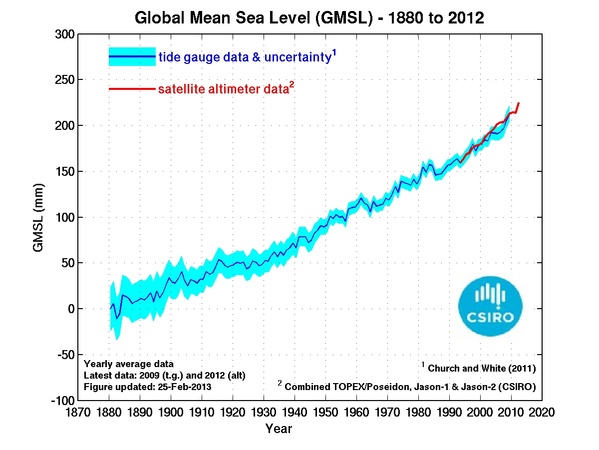
The request was for an example of an AGW disaster - of course it's cherry-picked. Nobody's claiming the sea level is rising this fast in all places (quite the opposite).
What's also bald-faced cherry-picking is a statement like "basically no net gain since a peak of the early 80s". You have to really try hard to ignore the clear and continuing upwards trend (more importantly for the Tuvaluans, the all-important seasonal peaks keep getting higher, resulting in worse flooding each time). You also have to carefully ignore the altimetry data, which clearly shows a 5mm/year rise since 1993 at Funafuti.
Even more impressive is how you blithely imply that a peer-reviewed study's conclusions are completely wrong, without seeing the underlying data or challenging their methodology, even though the study confirms earlier work like Church 2006. You smoothly fill in the missing GPS data with assumptions of your own that it would naturally support your pre-conceived conclusions instead. This despite your admission that you're still baffled by the long-established connection between rising CO2 levels and rising sea levels.
Did I mention that Tuvalu is cited in at least three different studies on climate change disasters? Maybe you should reassure the Tuvaluan Government that the experts are lying and/or incompetant, AGW is a massive conspiracy, and all that salt water they're seeing must be a figment of their imagination, because your glance at a graph proved that rising sea levels and subsidence "mostly stopped by 1980".
-
Re:High-frequency trading doesn't benefit the econ
Here is one citation and if you want the PDF, try here. Data and facts trumps FUD every day of the week in my book.
I applaud your attempt to back up your claims with citations. However, the source of that first article is somewhat suspect (authors have a background in the banking industry - not exactly what you would call disinterested parties) and the claim itself is tenuous at best. Does high speed trading increase market liquidty? Yes, I think that is almost self-evident: increased trading activity cannot help but to increase liquidity (it certainly doesn't decrease it). "Informativeness"? I'm not sure what that even means in this context, sounds like a weasel-word, almost like "truthiness".
But the most important question that's not being asked is: do the benefits of high speed trading outweigh the risks? Absoltuely not [citation needed].
-
Re:High-frequency trading doesn't benefit the econ
You really think algorithms that feed off of and fight each other on microsecond timescales, placing and then shorting more orders for shares of companies than exist in the entire world, reduce volatility?
I know for a fact that HFT's reduce the spread between BID and ASK because numerous studies have been done showing empirically that this is the case. This means that all the people that cry that they are "siphoning money off the market" and other such crap are full of shit. You are getting better BID's and ASK's because the HFT's are in the market, therefore their percentage of the transaction is just a few for a worthwhile service.
Here is one citation and if you want the PDF, try here.
The New York Stock Exchange automated quote dissemination in 2003, and we use this change in market structure that increases AT as an exogenous instrument to measure the causal effect of AT on liquidity. For large stocks in particular, AT narrows spreads, reduces adverse selection, and reduces trade-related price discovery. The findings indicate that AT improves liquidity and enhances the informativeness of quotes.
Data and facts trumps FUD every day of the week in my book.
Unfortunately, attempt to change the groupthink of any group such as
The fact is, most
-
Re:High-frequency trading doesn't benefit the econ
You really think algorithms that feed off of and fight each other on microsecond timescales, placing and then shorting more orders for shares of companies than exist in the entire world, reduce volatility?
I know for a fact that HFT's reduce the spread between BID and ASK because numerous studies have been done showing empirically that this is the case. This means that all the people that cry that they are "siphoning money off the market" and other such crap are full of shit. You are getting better BID's and ASK's because the HFT's are in the market, therefore their percentage of the transaction is just a few for a worthwhile service.
Here is one citation and if you want the PDF, try here.
The New York Stock Exchange automated quote dissemination in 2003, and we use this change in market structure that increases AT as an exogenous instrument to measure the causal effect of AT on liquidity. For large stocks in particular, AT narrows spreads, reduces adverse selection, and reduces trade-related price discovery. The findings indicate that AT improves liquidity and enhances the informativeness of quotes.
Data and facts trumps FUD every day of the week in my book. -
Re:NASA
Sure, his claims are extraordinary but he provides evidence to back them up. Extraordinary claims require extraordinary evidence which, in my opinion, he provided.
I would agree about his life expectancy argument being statistical trickery if other countries top two killers were non-healthcare related deaths and removing them would have a similar effect on ranking. His argument implies that is not the case but it is worth verifying. You are right that car deaths are not 100% irrelevant for health care but I would argue they aren't nearly as relevant as something like cancer or heart attacks. This makes car deaths disproportionately effect death rates and life expectancy.
As for infant mortality, the US considers an infant alive (and thus capable of dying) once it leaves the womb and shows any sign of life. This is reported by the hospital. I'm not sure how much more stringent you could get than that, doing anything else would result in lower death rates. Other countries do not have hospitals report them (they use in home surveys) or do not consider an infant alive for 24 hours, days, or even weeks after they are born. For a discussion of Western European practices: http://onlinelibrary.wiley.com/doi/10.1111/j.1471-0528.2001.00291.x/pdf
I haven't looked into the minority argument enough to really have an opinion on it.
The take away for me is that US healthcare isn't nearly as bad as it has been made to seem in comparison to other countries. Of course it still has huge problems and issues that we absolutely need to address. We just need to be careful that we are modeling our system off of other systems for the right reasons and not based on false assumptions or reasons. -
flu shot not very effective
'Vaccinating children,' explains the Shoo the Flu initiative's website, 'will not only improve children's health, it will also dramatically reduce the risk of the flu spreading to adults.'
I am NOT an anti-vaxxer. But the flu shot does not "dramatically reduce" anything. You need to vaccinate 26 kids (healthy kids over age six) to prevent one case of the flu. In kids under two, the inactivated virus vaccines isn't significantly better than a placebo.
For most people the flu shot is a waste of time and money, and a risk of nasty side effects, for little or no benefit.
This is *NOT* a statement about vaccines in general, only about the seasonal flu shot. The flu is different because 1) most cases of what people call "the flu" are not actually influenza, but other viruses; 2) in the general population, influenza is not that serious a disease; and 3) the influenza virus mutates every year.
-
Wait, it wasn't an ichnology conference?
These guys should have presented their paper at it.


%20?)


