Slashdot Mirror
Domain: amnh.org
Stories and comments across the archive that link to amnh.org.
Comments · 109
-
Re:0.00000333%
Pretty significant
About half of the world's population lives within 60 km of the shore.
If that shoreline rises just a few dozen feet, then you will see a huge movement of people and loss of wealth while warm-weather diseases like malaria spread north and south out of the tropics.
Of course, if all of Antarctica melts, the sea level rise will be about 70 meters, or 230 feet and you will see mass migrations of people across ownership and national lines. Kiss New York goodbye, same with all of the coastal cities to the east, south and west.
But, hey it was all molten lava at some time in the last few billion years, so who cares. Let's get some more money out of fossil fuels while we can.
-
Re:Misleading Article Title: FTFY
Your erroneous assumption is that the polar caps median or average temperature is -4C. This is not the case. TLDR summary: Arctic temperature range is -58C to 30C depending on the time of year and time of day. Interpolating 5C into observed sea level rise is something like 2.5 inches of sea level rise. Not exactly something that you would even notice in 99.9% of the planet. The other 0.1% may have to adapt or move, but such is life. (It takes 26,300 cubic miles of water to raise the sea level by 1".)
You are assuming that runaway greenhouse effect is likely, and using as an example a completely different planet, 30% closer to the sun with a 98% CO2 atmosphere (vs our 0.04% atmospheric CO2)?!?! My argument is that all the CO2 we are releasing was once living matter on the planet and we know past CO2 levels were higher during very lush planetary times and we did not have runaway greenhouse effects and got from prehistoric times to now without global flooding. My argument is both more similar (same planet, same orbit, same atmosphere) and more reasonable (we have a historical record supporting my assertion, there is no historical record that elevated CO2 levels ever lead in the past to greenhouse runaway.)
Excerpt from my response to another post above:
First off, if all the ice on the planet melted, sea levels would rise 230ft. I live 15miles from the coast and my current elevation is 775 feet, so yeah, not really worried on that one. (Further, these figures do not account for the exponential increase in dissolved water in the atmosphere with increased temperatures, so the actual rise is somewhat lower).
http://www.amnh.org/ology/feat... [amnh.org]
Beyond that, NO ONE thinks that all the ice would melt. (If someone tells you that they are full of shit.) The Arctic temperature range is -58C to 30C depending on the time of year and time of day, Antarctic is a bit higher. Changing those temperatures to -53C to 35C is not going to change the fact that for most of the time, most water that hits the polar caps is frozen and will stay frozen. Experts still hotly debate whether or not the elevated temperatures which cause more moisture in the atmosphere would significantly increase the annual snowfall rate on the polar caps, actually significantly increasing the rate of ice accumulation. Sea levels have risen 2.9mm per year since 1993, even with the slight 0.6C warming we have seen since then. From 1870 to 2004 sea levels rose an average of 3mm per year or about 7.7inches over 134 years. Not even a blip of increase or anywhere near a cataclysmic rise or a cataclysmic increase in sea levels like you are asserting. Anyone who tells you that sea level rise is a foregone conclusion with global warming is lying to you.
https://en.wikipedia.org/wiki/... [wikipedia.org]
https://en.wikipedia.org/wiki/... [wikipedia.org]
http://www.drroyspencer.com/wp... [drroyspencer.com] -
Re:Misleading Article Title: FTFY
First off, if all the ice on the planet melted, sea levels would rise 230ft. I live 15miles from the coast and my current elevation is 775 feet, so yeah, not really worried on that one. (Further, these figures do not account for the exponential increase in dissolved water in the atmosphere with increased temperatures, so the actual rise is somewhat lower). (strike one)
http://www.amnh.org/ology/feat...
Beyond that, NO ONE thinks that all the ice would melt. (If someone tells you that they are full of shit.) The Arctic temperature range is -58C to 30C depending on the time of year and time of day, Antarctic is a bit higher. Changing those temperatures to -53C to 35C is not going to change the fact that for most of the time, most water that hits the polar caps is frozen and will stay frozen. Experts still hotly debate whether or not the elevated temperatures which cause more moisture in the atmosphere would significantly increase the annual snowfall rate on the polar caps, actually significantly increasing the rate of ice accumulation. Sea levels have risen 2.9mm per year since 1993, even with the slight 0.6C warming we have seen since then. From 1870 to 2004 sea levels rose an average of 3mm per year or about 7.7inches over 134 years. Not even a blip of increase or anywhere near a cataclysmic rise or a cataclysmic increase in sea levels like you are asserting. Anyone who tells you that sea level rise is a foregone conclusion with global warming is lying to you. (strike two)
https://en.wikipedia.org/wiki/...
https://en.wikipedia.org/wiki/...
http://www.drroyspencer.com/wp...Taking scientific advice from a (even popular) web comic strip written by an ex-software engineer completely lacking in the hard sciences (he even insists on disclaimers as a non-expert on his work because of this) is not helping your cause. He is just regurgitating the erroneous assumptions of the so called "climate scientists" who are as much scientists as my local sanitation engineer is an engineer. (See that last link above, that graph shows just how wildly off these "scientists" were with their models vs reality.) They can barely predict the weather 3 days from now and you blindly trust their models of 100 years from now when they have been consistently wrong for the last 15 years? Sorry, no thanks. (strike three)
You can educate yourself or continue in self righteous PC ignorance, up to you. As you can see here, though, you are hardly batting 1000...
-
Congratulations
Congratulations to my college classmate, Rebecca Oppenheimer, co-author of the paper, and researcher at the American Museum of Natural History. Here's the AMNH announcement:
http://www.amnh.org/explore/ne... -
Big Dinos Probably all had Scales
What's their definition of "most dinosaurs"? Maybe most as in, there was this one tiny feathered dinosaur that bred like rabbits and was everywhere? And do they mean "had feathers" as in had 3 tiny feathers on the top of a big lizardy dino head? Big dinos almost always had scales from what I've read. And perhaps size is part of is as is seen in recent animals and animals today... larger mammals have far far less fur except during the times of ice ages.
I found a couple of links that show scales, no feathers, of big dinosaurs. All this feather business is just hype.
http://blogs.discovermagazine....
The scale-like structures you see on dinosaur skin are known as called tubercles, and resemble the polygonal desiccation cracks that you might see on a dried up mud flat (because we all investigate sedimentary structures
http://www.amnh.org/exhibition...
Very little dinosaur skin fossilized, so what we know about sauropod skin comes from impressions made when it pressed into mud or sand that then hardened and turned to stone. These impressions show that sauropod skin had small bumps and scales that didn't overlap. Some sauropods had bony growths in the skin called osteoderms. But no sauropods had hair or feathers.
-
Re:unnamed? Won't that be hard?
http://www.amnh.org/explore/science-topics/birds-are-dinosaurs
Now your turn, that is one hell of a claim to make.
-
Re:Prior art...
Here's the links to what you're looking for:
http://www.amnh.org/news/2011/08/valuable-lesson-about-variables/
http://www.amnh.org/nationalcenter/youngnaturalistawards/2011/aidan.htmlAnd here's another link about the MIT solar panels:
http://news.cnet.com/8301-11386_3-57404585-76/accordion-shaped-solar-tower-captures-more-light/?tag=mncol;inside -
Re:Prior art...
Here's the links to what you're looking for:
http://www.amnh.org/news/2011/08/valuable-lesson-about-variables/
http://www.amnh.org/nationalcenter/youngnaturalistawards/2011/aidan.htmlAnd here's another link about the MIT solar panels:
http://news.cnet.com/8301-11386_3-57404585-76/accordion-shaped-solar-tower-captures-more-light/?tag=mncol;inside -
Re:Renewable or infinite?
The argument being made is that expensive and potentially hazardous materials are required to make wind turbines and solar panels.
Yes, I got that from the article too, that using current technologies for renewable energy we will be using, potentially, a lot of non-renewable resources. The whole fallacious article is about how current technologies, unimproved over years of research and development YET TO COME, will do these horrible awful things. Indeed they will, if newer and more efficient ways of providing two megawatts of wind power aren't found, or better than 30% efficiency from solar panels and internal combustion engines, or maybe even less expensive ways to get power from rivers and the ocean than big dams. So, yeah, if nothing advances and no further research is funded then this guy's fantasy world of doom will come to pass. Let's hope others aren't as narrow minded as the author seems to be and that we will have some tremendous breakthroughs in renewable energy technologies with continued funding.
-
Re:Mars? Maybe?
it is
-
Re:Non-Bird Reptile?
Actually, in classical taxonomy Mammals are a class that originates from the clade Amniotes, as are birds and reptiles. That method of classification was recently abandoned because it was too complex. Especially for this topic: the term "reptile" never had a sound definition (it used to be "all amniotes that are not birds or mammals"). Phylogeny attempts to be the less ambiguous replacement.
See also the lower right corner here. As for Wikipedia, I prefer to use this one.
-
A picture may help
See (for instance):
http://www.amnh.org/exhibitions/hall_tour/spectrum/non_flash_index.htmlThis isn't about an imposed classification, it is about a family tree. Crocodiles are more closely related to birds than either are to snakes. Snakes are more closely related to birds than either are to turtles.
That is, these guys:
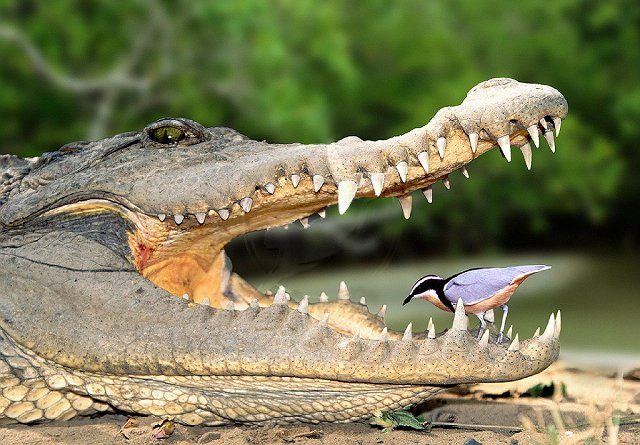
http://www.wolaver.org/animals/crocodile-plover.jpgshare a *much* more recent common ancestor than these two:
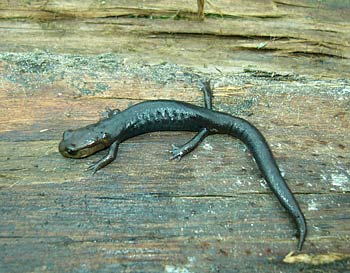
http://berkeley.edu/news/media/releases/2009/02/images/salamander-pgoebeil.jpg
and:
http://images3.wikia.nocookie.net/__cb20090630160120/uncyclopedia/images/2/2f/Geico-gecko.jpgYou are more closely related to a goldfish than the goldfish is to a shark:
http://rlv.zcache.com/goldfish_bowl_tshirt-p23514656184174989535jn_400.jpg -
Re:What if the flat panel spins?
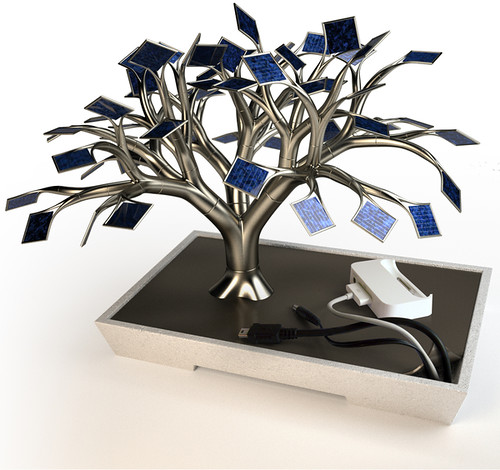
You're also more likely to be able to integrate "tree like" photo-voltaics into public spaces than you would flat-panel eye-sores.
-
Who did this experiment?
Something's wrong with the graphs. Here's the 13 yr old's graphs here and here.
Typical, hand-drawn 13 yr old stuff. So who did this and this and this?
And don't tell me he could not make a bar graph on a PC but that is a "Diagram of tree model that Aidan made with his computer."
He also made the computer generated voltage diagrams but a simple Excel pie chart for the number of hours was too difficult?
He even made the common bar graph mistake (more) of not starting the scale from zero, instead starting from 4v, which makes the 4.1-4.4v flat solar panel appear as if it puts out less than half of the 5.25 volt from the solar tree.
Who really did this experiment? -
Who did this experiment?
Something's wrong with the graphs. Here's the 13 yr old's graphs here and here.
Typical, hand-drawn 13 yr old stuff. So who did this and this and this?
And don't tell me he could not make a bar graph on a PC but that is a "Diagram of tree model that Aidan made with his computer."
He also made the computer generated voltage diagrams but a simple Excel pie chart for the number of hours was too difficult?
He even made the common bar graph mistake (more) of not starting the scale from zero, instead starting from 4v, which makes the 4.1-4.4v flat solar panel appear as if it puts out less than half of the 5.25 volt from the solar tree.
Who really did this experiment? -
Who did this experiment?
Something's wrong with the graphs. Here's the 13 yr old's graphs here and here.
Typical, hand-drawn 13 yr old stuff. So who did this and this and this?
And don't tell me he could not make a bar graph on a PC but that is a "Diagram of tree model that Aidan made with his computer."
He also made the computer generated voltage diagrams but a simple Excel pie chart for the number of hours was too difficult?
He even made the common bar graph mistake (more) of not starting the scale from zero, instead starting from 4v, which makes the 4.1-4.4v flat solar panel appear as if it puts out less than half of the 5.25 volt from the solar tree.
Who really did this experiment? -
Who did this experiment?
Something's wrong with the graphs. Here's the 13 yr old's graphs here and here.
Typical, hand-drawn 13 yr old stuff. So who did this and this and this?
And don't tell me he could not make a bar graph on a PC but that is a "Diagram of tree model that Aidan made with his computer."
He also made the computer generated voltage diagrams but a simple Excel pie chart for the number of hours was too difficult?
He even made the common bar graph mistake (more) of not starting the scale from zero, instead starting from 4v, which makes the 4.1-4.4v flat solar panel appear as if it puts out less than half of the 5.25 volt from the solar tree.
Who really did this experiment? -
Who did this experiment?
Something's wrong with the graphs. Here's the 13 yr old's graphs here and here.
Typical, hand-drawn 13 yr old stuff. So who did this and this and this?
And don't tell me he could not make a bar graph on a PC but that is a "Diagram of tree model that Aidan made with his computer."
He also made the computer generated voltage diagrams but a simple Excel pie chart for the number of hours was too difficult?
He even made the common bar graph mistake (more) of not starting the scale from zero, instead starting from 4v, which makes the 4.1-4.4v flat solar panel appear as if it puts out less than half of the 5.25 volt from the solar tree.
Who really did this experiment? -
Who did this experiment?
Something's wrong with the graphs. Here's the 13 yr old's graphs here and here.
Typical, hand-drawn 13 yr old stuff. So who did this and this and this?
And don't tell me he could not make a bar graph on a PC but that is a "Diagram of tree model that Aidan made with his computer."
He also made the computer generated voltage diagrams but a simple Excel pie chart for the number of hours was too difficult?
He even made the common bar graph mistake (more) of not starting the scale from zero, instead starting from 4v, which makes the 4.1-4.4v flat solar panel appear as if it puts out less than half of the 5.25 volt from the solar tree.
Who really did this experiment? -
Who did this experiment?
Something's wrong with the graphs. Here's the 13 yr old's graphs here and here.
Typical, hand-drawn 13 yr old stuff. So who did this and this and this?
And don't tell me he could not make a bar graph on a PC but that is a "Diagram of tree model that Aidan made with his computer."
He also made the computer generated voltage diagrams but a simple Excel pie chart for the number of hours was too difficult?
He even made the common bar graph mistake (more) of not starting the scale from zero, instead starting from 4v, which makes the 4.1-4.4v flat solar panel appear as if it puts out less than half of the 5.25 volt from the solar tree.
Who really did this experiment? -
Who did this experiment?
Something's wrong with the graphs. Here's the 13 yr old's graphs here and here.
Typical, hand-drawn 13 yr old stuff. So who did this and this and this?
And don't tell me he could not make a bar graph on a PC but that is a "Diagram of tree model that Aidan made with his computer."
He also made the computer generated voltage diagrams but a simple Excel pie chart for the number of hours was too difficult?
He even made the common bar graph mistake (more) of not starting the scale from zero, instead starting from 4v, which makes the 4.1-4.4v flat solar panel appear as if it puts out less than half of the 5.25 volt from the solar tree.
Who really did this experiment? -
Re:Can we stop praising bad science?
sorry I'm all out of mod points, maybe someone else will give you a +1, Insightful
And yes, he definitely put more panels on the tree. This photo shows the wiring coming out of the back of the flat panel with no wiring in the front (duh, it would partially block the panels) and the same wiring is visible here while it's suppose to be tested so there is no back panel, the flat panel has 10 solar panels and the tree has 17+.
Also the flat panel never surpasses 4 volts while the tree often reached 5 volts. Even if the tree's average efficient is higher, the flat panel should peak higher than the tree at some point, especially when all panels are getting hit by full sunlight compared to the tree panels that never get above partial charging since there is no time when every "leaf" is fully exposed to sunlight.
Even if there is a back panel to the flat panel that's still wrong, you don't put half of your solar panels at a 45 angle to a wall because they would never charge, so just going by the photos alone the experiment is flawed.
I don't blame the kid, it's an experiment and he messed it up, he's 13 that's what you're suppose to do in 7th grade, but the adults advising him on this should have realized the mistake and told him what he did wrong so he could learn from it rather than make him famous and ultimately embarrassed when the truth comes out.
Everyone should email them and ask about the discrepancies, maybe they'll offer a explanation or redact the article. -
Re:Can we stop praising bad science?
sorry I'm all out of mod points, maybe someone else will give you a +1, Insightful
And yes, he definitely put more panels on the tree. This photo shows the wiring coming out of the back of the flat panel with no wiring in the front (duh, it would partially block the panels) and the same wiring is visible here while it's suppose to be tested so there is no back panel, the flat panel has 10 solar panels and the tree has 17+.
Also the flat panel never surpasses 4 volts while the tree often reached 5 volts. Even if the tree's average efficient is higher, the flat panel should peak higher than the tree at some point, especially when all panels are getting hit by full sunlight compared to the tree panels that never get above partial charging since there is no time when every "leaf" is fully exposed to sunlight.
Even if there is a back panel to the flat panel that's still wrong, you don't put half of your solar panels at a 45 angle to a wall because they would never charge, so just going by the photos alone the experiment is flawed.
I don't blame the kid, it's an experiment and he messed it up, he's 13 that's what you're suppose to do in 7th grade, but the adults advising him on this should have realized the mistake and told him what he did wrong so he could learn from it rather than make him famous and ultimately embarrassed when the truth comes out.
Everyone should email them and ask about the discrepancies, maybe they'll offer a explanation or redact the article. -
Re:Can we stop praising bad science?
sorry I'm all out of mod points, maybe someone else will give you a +1, Insightful
And yes, he definitely put more panels on the tree. This photo shows the wiring coming out of the back of the flat panel with no wiring in the front (duh, it would partially block the panels) and the same wiring is visible here while it's suppose to be tested so there is no back panel, the flat panel has 10 solar panels and the tree has 17+.
Also the flat panel never surpasses 4 volts while the tree often reached 5 volts. Even if the tree's average efficient is higher, the flat panel should peak higher than the tree at some point, especially when all panels are getting hit by full sunlight compared to the tree panels that never get above partial charging since there is no time when every "leaf" is fully exposed to sunlight.
Even if there is a back panel to the flat panel that's still wrong, you don't put half of your solar panels at a 45 angle to a wall because they would never charge, so just going by the photos alone the experiment is flawed.
I don't blame the kid, it's an experiment and he messed it up, he's 13 that's what you're suppose to do in 7th grade, but the adults advising him on this should have realized the mistake and told him what he did wrong so he could learn from it rather than make him famous and ultimately embarrassed when the truth comes out.
Everyone should email them and ask about the discrepancies, maybe they'll offer a explanation or redact the article. -
Re:Can we stop praising bad science?
sorry I'm all out of mod points, maybe someone else will give you a +1, Insightful
And yes, he definitely put more panels on the tree. This photo shows the wiring coming out of the back of the flat panel with no wiring in the front (duh, it would partially block the panels) and the same wiring is visible here while it's suppose to be tested so there is no back panel, the flat panel has 10 solar panels and the tree has 17+.
Also the flat panel never surpasses 4 volts while the tree often reached 5 volts. Even if the tree's average efficient is higher, the flat panel should peak higher than the tree at some point, especially when all panels are getting hit by full sunlight compared to the tree panels that never get above partial charging since there is no time when every "leaf" is fully exposed to sunlight.
Even if there is a back panel to the flat panel that's still wrong, you don't put half of your solar panels at a 45 angle to a wall because they would never charge, so just going by the photos alone the experiment is flawed.
I don't blame the kid, it's an experiment and he messed it up, he's 13 that's what you're suppose to do in 7th grade, but the adults advising him on this should have realized the mistake and told him what he did wrong so he could learn from it rather than make him famous and ultimately embarrassed when the truth comes out.
Everyone should email them and ask about the discrepancies, maybe they'll offer a explanation or redact the article. -
Re:Can we stop praising bad science?
sorry I'm all out of mod points, maybe someone else will give you a +1, Insightful
And yes, he definitely put more panels on the tree. This photo shows the wiring coming out of the back of the flat panel with no wiring in the front (duh, it would partially block the panels) and the same wiring is visible here while it's suppose to be tested so there is no back panel, the flat panel has 10 solar panels and the tree has 17+.
Also the flat panel never surpasses 4 volts while the tree often reached 5 volts. Even if the tree's average efficient is higher, the flat panel should peak higher than the tree at some point, especially when all panels are getting hit by full sunlight compared to the tree panels that never get above partial charging since there is no time when every "leaf" is fully exposed to sunlight.
Even if there is a back panel to the flat panel that's still wrong, you don't put half of your solar panels at a 45 angle to a wall because they would never charge, so just going by the photos alone the experiment is flawed.
I don't blame the kid, it's an experiment and he messed it up, he's 13 that's what you're suppose to do in 7th grade, but the adults advising him on this should have realized the mistake and told him what he did wrong so he could learn from it rather than make him famous and ultimately embarrassed when the truth comes out.
Everyone should email them and ask about the discrepancies, maybe they'll offer a explanation or redact the article. -
Re:He just used more solar cells
You can't see the back side of the flat array.
Actually you can. In this photo you can see the wires coming out of the back of the flat panel array. You can see the same wires when the flat panel is setup next to the tree. Unless he has another flat panel array hidden somewhere that he didn't take any photos of I'd say this experiment is a bust since he used nearly double the solar panels on the "tree" than he did with the flat panel.
But he's 13, and 13 yr olds make mistakes. Maybe he didn't realize that using 18 panels in the tree and only 10 on the flat panel would result in a much better efficiency for the solar tree. -
Re:He just used more solar cells
You can't see the back side of the flat array.
Actually you can. In this photo you can see the wires coming out of the back of the flat panel array. You can see the same wires when the flat panel is setup next to the tree. Unless he has another flat panel array hidden somewhere that he didn't take any photos of I'd say this experiment is a bust since he used nearly double the solar panels on the "tree" than he did with the flat panel.
But he's 13, and 13 yr olds make mistakes. Maybe he didn't realize that using 18 panels in the tree and only 10 on the flat panel would result in a much better efficiency for the solar tree. -
Re:He just used more solar cells
I think you're right, notice the tree reaches 5 volts daily while the standard solar panel rarely goes above 4.
Even if the tree is more efficient most of the time you would think the standard solar panel, with 10 panels all pointing in the same direction, would far surpass the tree voltage at some point. -
Re:He just used more solar cells
I think you're right, notice the tree reaches 5 volts daily while the standard solar panel rarely goes above 4.
Even if the tree is more efficient most of the time you would think the standard solar panel, with 10 panels all pointing in the same direction, would far surpass the tree voltage at some point. -
More direct sources
Nephila has been used to make cloth:
http://www.amnh.org/exhibitions/spidersilk/Here is the original article:
http://www.plosone.org/article/info%3Adoi%2F10.1371%2Fjournal.pone.0021833 -
Re:Or fission
A reactor leaking a little bit on the bottom of the ocean is a lot less of an environmental problem than a reactor exploding a few miles up and having its fuel scattered over a wide area.
Oh, sure, you say that now.
Wait 'til it lands by a black smoker and we get a Godzilla-sized tube worm or one of these the size of an air-craft carrier. Then you'll change your tune!
And, yes, of course I'm joking.
-
Re:Or fission
A reactor leaking a little bit on the bottom of the ocean is a lot less of an environmental problem than a reactor exploding a few miles up and having its fuel scattered over a wide area.
Oh, sure, you say that now.
Wait 'til it lands by a black smoker and we get a Godzilla-sized tube worm or one of these the size of an air-craft carrier. Then you'll change your tune!
And, yes, of course I'm joking.
-
Re:do it the right way
I wonder how they explain finds such as the "fighting dinosaurs"? I guess the Velociraptor was just just hugging that Protoceratops. And bite marks preserved on bones with signs of re-healing (i.e. a bite while the animal was alive) must be
-
Re:Why profitable?
It's self-funded, so yes, it IS supposed to break even. And the rates have always been quite a lot lower than private services, so I'd say it has always been worth it so far.
I assume you expect museums to support themselves only on $16 "suggested admission" fees? Just because an organization collects money from patrons to help support itself doesn't make that funding exclusive. Even for-profit corporations can rely on other sources of revenue like subsidies.
And your suggestion that it's necessary to have "individual billing" is wrong, because plenty types of billings are not done on individual basis. Garbage collection, for example, is done per. ton(ne) and is charged indirectly through the municipality. You could have private paramilitary organizations perform services for the government on a per-service basis. It's just an idea we're not comfortable with.
-
Not true - Both pelvii are fairly similar
The Neanderthal pelvis had the acetabulum (hip socket) about 4 inches anterior(in front) to the sacrum (where spine connects to pelvis), and this is roughly the same for modern humans. The Neanderthal did have , what appears to be a broader and deeper pelvis than ours.
Check this site out for a nice comparison http://www.amnh.org/exhibitions/permanent/humanorigins/meettherelatives/w5i6.html
-
Re:AMNH & Mutter
My two favorites are the American Museum of Natural History in NYC and the Mutter Museum in Philadelphia.
The AMNH is enormous; you could easily spend an entire day there, and you'd be hard-pressed to see everything in detail. It has the best dinosaur and primate sections I've ever seen.
The Mutter is just plain cool: a museum devoted to medical oddities, like the skeleton(s) of Cheng & Eng, the 'Siamese twins'. As a PhD-wielding developmental biologist and geneticist I was happy to see some medical information on the various diseases or developmental problems that are on display. Sadly, you cannot take photos; they prefer you purchase their (expensive) photo book.
Don't forget the planetarium attached to the AMNH and the Queens Hall of Science (think Men In Black spaceships). There are dozens more all over the city. If you like locks there is an entire museum just dedicated to Locks in midtown. Try this for a listing of the museums we have in town: http://officialsite.com/index.asp?regionid=30&categoryid=12 W
-
Rose Center for Earth and Space
The Rose Center for Earth and Space (attached to the Natural History museum) has an awesome collection of photos and a really great "Scales of the Universe" exhibit. It starts with subatomic particles and, 400 feet later, jumping an order of magnitude every 10 or so feet, ends with the size of the known universe. It uses the sphere of the planetarium itself as a reference point, Check it out: http://www.amnh.org/rose/scales-moreinfo.html
-
AMNH & Mutter
My two favorites are the American Museum of Natural History in NYC and the Mutter Museum in Philadelphia.
The AMNH is enormous; you could easily spend an entire day there, and you'd be hard-pressed to see everything in detail. It has the best dinosaur and primate sections I've ever seen.
The Mutter is just plain cool: a museum devoted to medical oddities, like the skeleton(s) of Cheng & Eng, the 'Siamese twins'. As a PhD-wielding developmental biologist and geneticist I was happy to see some medical information on the various diseases or developmental problems that are on display. Sadly, you cannot take photos; they prefer you purchase their (expensive) photo book.
-
Re:I got 10 bucks here ...
Lucy and the Piltdown man were allegedly impossible to fake as well...
I'm sorry, are you claiming that Lucy is a fake? Is the American Museum of Natural History displaying a hoax? Do you have a reference for that?
-
How to store data for the ages
Back in 1999, the New York Times conducted a competition to design a time capsule that would last 1,000 years. The winning design, by Santiago Calatrava, used a technology called HD-Rosetta. Links to relevant articles are here: http://www.amnh.org/exhibitions/timescapsule/ and here: http://www.norsam.com/hdrosetta.htm
-
Wrong pic
The stock frog picture in the article isn't even an African Clawed Frog. They look more like this: http://www.amnh.org/exhibitions/frogs/gallery/featured.php?image=6&page=featured/index
And live underwater. -
Re:Tyson is not a scientist
Will this do? Hell, I all I had to do was type '"Neil DeGrasse Tyson" papers' into Google. So, are you dumb, or just lazy?
-
Re:Slightly misunderstanding the story
Well, Ben, there's nothing that rises to the level of courtroom proof in the way of evidence excavated yet no, but the concept is not exactly new.
Basically, the Haida band, who are the indigenous First Nation of Haida Gwaii (the archipelago which you non-PC foreigners are probably more familar with as "the Queen Charlotte Islands") display such a number of cultural similarities to the Norsemen that many reasonable people find it less of a stretch to presume that there was contact between them than to assume a remarkable cascade of coincidences. Let us take an example, boat design.
""Yakutat," or "Northern-style" canoes include a variety of design forms, including a characteristic curve and swelling near the bow. The prow of the canoe gracefully curves up from the water and can be adorned by elaborate carvings."
http://www.amnh.org/exhibitions/expeditions/treasure_fossil/Treasures/Haida_Canoe/canoe.gif
Now, contrary to the learned discourse above, these are not actually characteristic of Haida design. There is one other culture that designed its ocean-going vessels with those same "characteristic" traits. Care to guess what that culture was?
http://www.geocities.com/dragar.geo/WSP/Pix/longship.gif
Those are just the first two images Google search came up with for each; if you look into it further, you'll find that the similarities are more striking than those two make apparent. Striking enough that when Haida/Tlingit take their canoes on cultural exchanges to Europe, they constantly get questions along the lines of "why did you make a longship out of a single tree trunk and paint it funny?", as Europeans just assume that the design is a conscious imitation of the Norse, not their own.
Also, the Haida are physiologically distinct, rather dramatically so in fact, from every other American aboriginal culture; they are taller, whiter, grow facial hair, and produce significant quantities of brunettes and redheads.
"Marchand also described the Haidas of Queen Charlotte Islands whom he visited in 1791. He found them not differing materially in stature from Europeans, better proportioned and better formed than the Sitkans and without the gloomy and wild look of the latter. Their color he found did not differ from that of Frenchmen, and several were less swarthy "than the inhabitants of our country places' (Edward L. Keithahn, MONUMENTS IN CEDAR: The Authentic Story of the Totem Pole, Bonanza books, New York 1971:19-23, emphases supplied)."
This is not consistent with Haida mixing with Asian genetic pools, or any other Western North American genetic pool, or hell any other race bordering the entire Pacific for that matter. On the other hand, this is remarkably suggestive of significant admixture with a Scandinavian genetic pool, yes?
Anyhoo, if you'd like to look further into the theory that the "Vinland" of the sagas is actually British Columbia, specifically the Cowichan Valley of Vancouver Island, here's a page for you:
http://www.spirasolaris.ca/sbb4g1ev.html
Actually living in British Columbia, I can attest to the plausibility of all the little details. The one that really struck me was his identification of the Oregon grape with the always-problematic 'grapes' of the sagas. As pointed out on this page, the presentation in the sagas does seem facially invalid:
"As for the grapes in the Sagas, James Robert Enterline wrote in VIKING AMERICA (1972):
In the Saga of Eirik the Red, after Thorhall the Hunter went off by himself, some writers have inferred that he found grapes and ate of them, becoming intoxicated, for he was discovered on a steep crag where:" he lay gazing up into the air with wide-open mouth and nostrils, scratching and pincing himself and muttering something
The corresp -
Re:You don't seem to understand how it worksThis is impressive but not exactly what I meant.
Besides, only 64 of them really stick to the wall:first-generation horse-takhi hybrid is bred with a horse, the second-generation offspring have only 64 chromosomes and bear little resemblance to the takhi ancestor.
-
Re:I'm sure a lot more things rely on quantum effe
Seriously, everything else in the universe I'll believe there to be an explanation for but consciousness is the one thing I can't comprehend.
That you can't comprehend it or in general that we humans can't comprehend it right now isn't exactly a good argument.Instead of going into the flaws of such thinking, I'll point you to a great article by Neil deGrasse Tyson: The perimeter of ignorance. You'll see that you are not the first to invoke the "I don't understand it, so it must be special." plea.
Consciousness is one of the popular unnecessarily mystified topics. In reality, put bluntly, I can beat your consciousness with simple anesthesia. It's an emergent property of a set of biochemical reactions. It's one of many functions in the brain. Awareness is a complex feed-back loop. Advanced? Sure. Magic? No.
-
The Diamond Age
(Apologies to Neal Stephenson)
Thanks for the pointer, ElectricRook. I read all about Kimberlite Pipes and now I'm excited by the prospect of "unearthing" a motherlode of diamonds on the sea floor! Perhaps these scientists have embarked, or disembarked, on that rare beast -- science with an immenent financial payoff.
The Diamond Rush of 2010... -
Re: What happend? Religion happend.
Short answer? Religion happened.
http://en.wikipedia.org/wiki/History_of_science_in _the_Islamic_World#Decay_of_Islamic_science
Long answer (do you have two hours?):
http://beyondbelief2006.org/Watch/watch.php?Video= Session%202
http://research.amnh.org/~tyson/PerimeterOfIgnoran ce.php -
Re:Is it chaotic?
First, show me that you can predict climate, then I might pay attention to what your prediction is. I won't lie awake waiting.
No need to lie awake, here's a climate prediction that was proven out by observation.Evolution planted cause-and-effect determinism deep and strong in the human psyche and it's hard to let go. We once had the same problem with Heisenberg.
Maybe you should read up on quantum electrodynamics--it's the most tested and accurate physical theory we have. In other words the famous Heisenberg Uncertainty Principle does not imply that highly accurate predictions of any kind are impossible. -
Re:Top Of the Food Chain, Ma!
very few of the extinctions throughout history were caused by humans.
Yeah, it's not like we've killed off so many species that scientists refer to the modern era as the Holocene Extinction Event, or the Sixth Extinction; or are claiming that this is the fastest mass extinction in Earth's history, giant meteors included. No, there's hardly any extinction going on.
Please perform at least a cursory Google search before making broad scientific claims.