Slashdot Mirror
Domain: anandtech.com
Stories and comments across the archive that link to anandtech.com.
Comments · 3,318
-
Re:I routinely get new 550MB/s 120GB SSDs for $60
-
Re:NVidia's sin
You're partially correct. AMD cards tend to draw more power and run hotter. You're wrong in thinking AMD cards are slower though.
The R9 280x is comparable in performance to a GTX 770, but the 770 costs as much as an R9 290.
The R9 290 is up to 40% faster than a GTX 770 but they cost the same.
The R9 290 is also slightly faster than a GTX 780, but the 290 is $100-150 cheaper.Basically Nvidia cards are overpriced and need to come down to match the price/performance of AMD cards.
-
Re:NVidia's sin
You're partially correct. AMD cards tend to draw more power and run hotter. You're wrong in thinking AMD cards are slower though.
The R9 280x is comparable in performance to a GTX 770, but the 770 costs as much as an R9 290.
The R9 290 is up to 40% faster than a GTX 770 but they cost the same.
The R9 290 is also slightly faster than a GTX 780, but the 290 is $100-150 cheaper.Basically Nvidia cards are overpriced and need to come down to match the price/performance of AMD cards.
-
Re:NVidia's sin
You're partially correct. AMD cards tend to draw more power and run hotter. You're wrong in thinking AMD cards are slower though.
The R9 280x is comparable in performance to a GTX 770, but the 770 costs as much as an R9 290.
The R9 290 is up to 40% faster than a GTX 770 but they cost the same.
The R9 290 is also slightly faster than a GTX 780, but the 290 is $100-150 cheaper.Basically Nvidia cards are overpriced and need to come down to match the price/performance of AMD cards.
-
Re:No bluetooth?
Considering how modern processors save power-- turning off cores, reducing frequency, a performance benchmark is an unrealistic workload when measuring battery life-- most battery benchmarks loop video, or test web browsing.
Here's a review of the nexus 7 Note that the battery life under GLBenchmark is dramatically less than the benchmark under "web browsing."
The display brightness for the tablets was set to 200 nits, which is is probably not enough to use outdoors.
[The 2013'sNexus 7] is also incredibly bright. I typically view 500 nits as the threshold for outdoor usability, and the new Nexus 7 definitely exceeds that threshold. The tablet will drink away all of your battery life if you leave it at this brightness setting indefinitely, but if you need to actually use your tablet outdoors for a while the Nexus 7 works.
Those two usage profiles do overlap, though. If you need it to work outside, ready access to an outlet is probably not in the cards.
-
Re:4k at viewing distance isn't that special
At recommended viewing distances, 4K resolution is difficult for most of the population to detect a difference in.
Um... just no... that is completely and totally false, I wish people would stop repeating that nonsense... Maybe YOUR eyes suck and you can't see a difference, but put them side-by-side, sitting 6 to 10 feet away, the difference is clear and obvious to most people...
I speak from experience...
The problem with 4k monitors is that they have slow refresh rates (30hz?), slow response time, and all the usual non-IPS problems like poor viewing angle and color. None of which matters terribly for programming (save response time which might make scrolling a bit blurry.)
More wrong information. 60hz 4k panels are out now, and they don't have poor viewing angle or color. You simply need DisplayPort to get 60hz (which anyone buying such a monitor today should have).
http://www.anandtech.com/show/...
http://www.tomshardware.com/re...
60hz, IPS viewing angels, just crazy expensive at $3,500 (actually below $3K now, give it a few years to get cheap).
-
Samsung also releasing one
-
PS3 and 360 held back PC games' LOD
on the one hand yes, it means there is probably a 'weaker' PC hooked up to the TV then the latest and greatest; on the other hand today's weaker PC is no longer gaming obsolete.
Seventh generation AAA The Xbox 360 and PlayStation 3 GPUs held back graphical detail in multiplatform games over the last generation. This was long enough for even Intel IGPs to catch up. Eighth generation AAA But once most console games target Xbox One and PlayStation 4, new AAA PC games are probably going to start requiring GPUs comparable to those of the newer consoles. I'm told the only reason Titanfall works on a 360 is because they dropped a lot of the textures down to N64-class detail. In any case, the Intel IGP that runs XBMC smoothly is unlikely to cut it for a PC game with PS4-class detail. Indie Of course, indie games will likely have lower detail due to budgets being a generation or three back. But the commercial failure of OUYA showed that not enough people will buy into a platform just for indie games. This is why a successful video gaming platform needs AAA support. -
Not Optimizaton Issues
There is a huge gulf between the quality of PC games and tablet games due to the massive performance/storage differences, even in the realm of integrated graphics.
That said, most modern PC games can be played on HD 4000 at 720p low/med settings. I know this because I play them on my HTPC with frame rates are at around the 30-50 fps mark. They play even better on AMD Trinity/Richland/Kaveri.
The problem with Kabini et-al is they castrated the GPU to just 128 shaders and 8 texels per-clock, compared to 384/512 shaders and 24/32 texels/clock for the bigger boys. They also castrated performance with a single memory channel. This results in performance comparable to HD 3000 on the desktop, but Beema has even lower performance thanks to the thermal constraints. HD 3000 was entry-level 3.5 years back when it was first released, but games have moved-on since then, and that level of performance is no-longer enough.
AMD decided they did not want this part to compete with their other offerings, and that's why the memory bandwidth and GPU power are castrated. And that's the reason this product's target is unclear - it's overpowered for your average tablet game, and not beefy enough for real PC games. And again, the power consumption is a concern.
-
Re:ARM is the new Intel
I thought Windows 8.1 was the defecto standard.
Never have I seen a more apt typo - funny thing is, I saw a commercial last night for one of those PC repair/registry/whatever apps that practically shouted about how "Microsoft is using fear to make you buy Windows 8" (as opposed to your beloved XP box, natch.)
It all ties back to why Intel is now (should say, now more than ever) casting about, looking for new markets for their chips... PCs ain't selling, server lifecycles are getting longer (VMWare pretty much helped stretch that out), and there's not much outside of those two which would encourage PC sales.
(I wonder if Intel will ever stop navel-gazing at tablets and fire up their now-dead Digital Home Group again; they had a fairly decent idea with the chip-in-a-TV thing. Fun group of guys to work with as well...)
-
Re:"There's zero benefit a consumer gets from that
"I know there's a lot of noise because Apple did [64-bit] on their A7. I think they are doing a marketing gimmick. There's zero benefit a consumer gets from that," -Anand Chandrasekher, former Qualcomm CMO
According to Anandtech ( http://www.anandtech.com/show/... )
"Integer performance: The AES and SHA1 gains are a direct result of the new cryptographic instructions that are a part of ARMv8. The AES test in particular shows nearly an order of magnitude performance improvement. This is similar to what we saw in the PC space with the introduction of Intel's AES-NI support in Westmere. The Dijkstra workload is the only real regression. That test in particular appears to be very pointer heavy, and the increase in pointer size from 32 to 64-bit increases cache pressure and causes the reduction in performance. The rest of the gains are much smaller, but still fairly significant if you take into account the fact that we're just looking at what you get from a recompile. Add these gains to the ones you're about to see over Apple's A6 SoC and A7 is looking really good from a performance standpoint.
If the integer results looked good, the FP results are even better: The DGEMM operations aren't vectorized under ARMv7, but they are under ARMv8 thanks to DP SIMD support so you get huge speedups there from the recompile. The SFFT workload benefits handsomely from the increased register space, significantly reducing the number of loads and stores (there's something like a 30% reduction in instructions for the A64 codepath compared to the A32 codepath here).
The conclusion? There are definitely reasons outside of needing more memory to go 64-bit."
-
Re:Hey you, early USB plug apologist
My, aren't you special.
Snark aside - no, no I'm not. Certainly no more special than anybody claiming they always need to try it 3 ways
I've used more than one computer where they're on the back and the wrong way up (most go with the 'trident' logo on top). I have a phone and a tablet that are the same plug but the opposite way up and it's small and recessed too.
In which case for the first time around, you didn't look (perhaps you couldn't, because, well, back side of the computer and all) and for the second+ time around, you completely forgot about the first time around.
If it was properly designed, you shouldn't have to look, and if your eyesight's not brilliant that might not help anyway. As to remembering, great if you only have one machine. Not so much when you have four at home, and use many different ones at work or college.
Which just brings us back to people taking a flattened plug horizontally to a port that's oriented vertically even if the port have a 180Â symmetry.
Without seeing the back side of the computer...
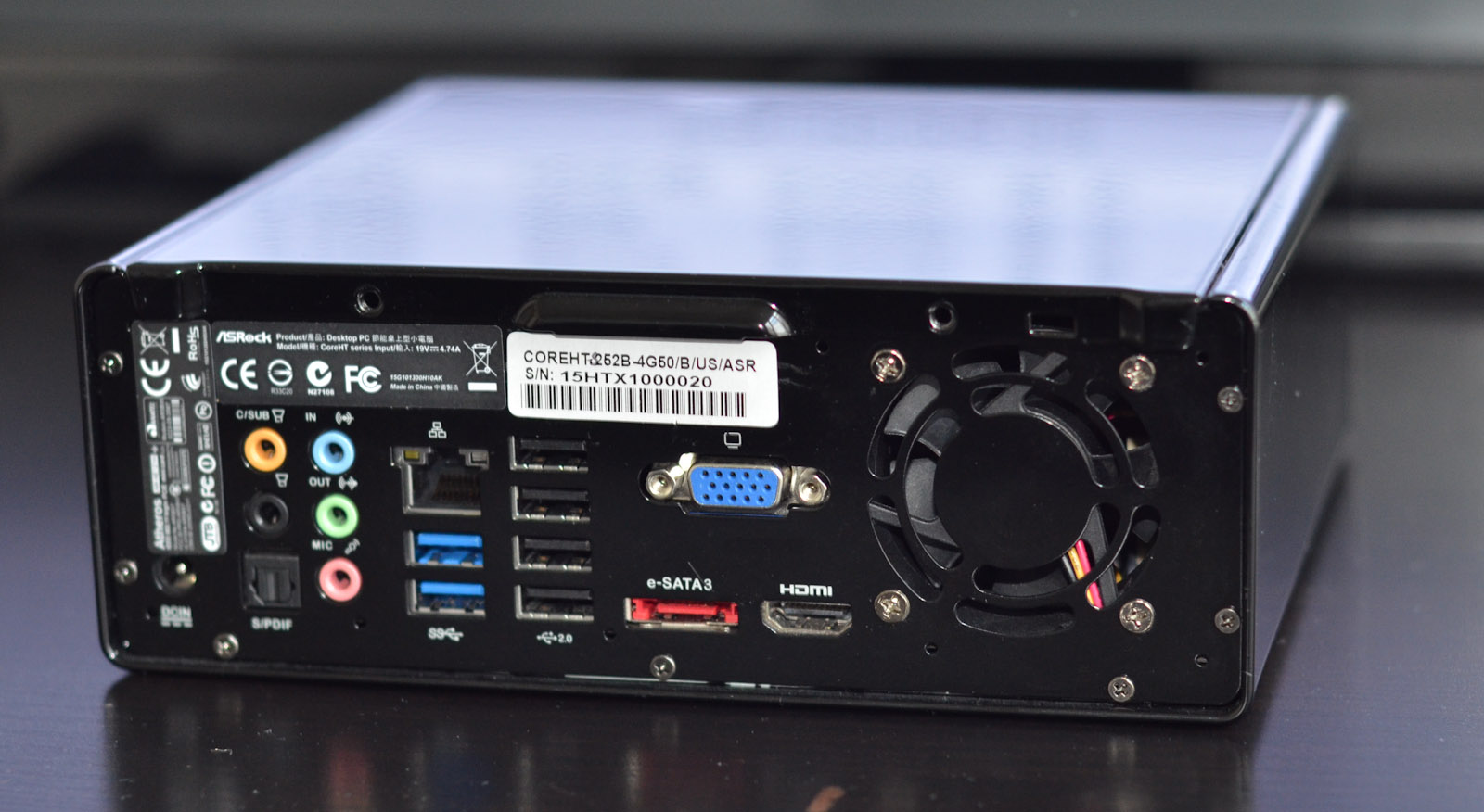
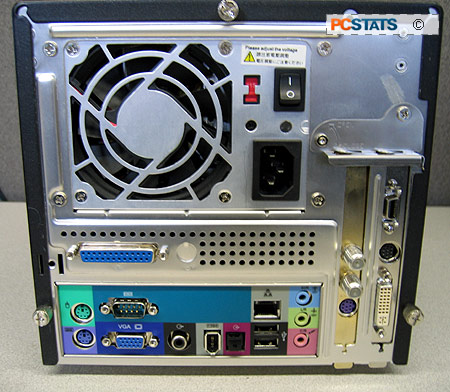
Are they vertical?
http://www.computershopper.com...Or are they horizontal?
http://images.anandtech.com/do...I guess you could think that it's always parallel to the longest side, but then what orientation does it have when there is no longest side?
http://www.pcstats.com/article...I guess some people would just have to try it 4 ways around.
Note that I'm in no way saying that I think the USB plugs/sockets were a great design in terms of user-experience. At the time they were certainly better than most anything out there with multiple pins. Plugging in a PS/2 plug when you couldn't see the port, now that was torture. I certainly applaud the new design (for the most part).
Ultimately though, there's always going to be people who have trouble plugging devices in - for whatever reason. Some people have trouble just plugging headsets into their phones (judging by the plethora of scratches surrounding the headphone jacks). Thankfully for them, more and more peripherals are available in wireless form.
( Well, except for the power cables. Ever try to plug a U.S. plug in the wrong way around? Easy to do if you don't check which of the pins is the broader one. The C7P (device-end) is even worse. )
-
Re:Best MAME motherboard ever?
Trust me
You'd better be certain that you actually need all that power before you go and pay a little less than half as much for a Beaglebone black; but ~$100 is actually pretty much the going rate for a 'dev board' style arrangement with properly punchy ARM application processor, and those tend to have extra happy-fun-dicking-around-with-the-worst-graphics-driver-on-god's-black-earth, as opposed to 'Install Debian, have Intel's nonthrilling-but-endurable and in-kernel driver just work'.
The Intel Galileo seems like a product in pathetic search for purpose (can't bitbang even as well as a 16MHz AVR, rather more expensive than an arduino, weird and limited enough that the slightly less costly BB black or rPi is a better move, etc.); but this Minnowboard revision is markedly more compelling.
If you don't actually need that much power, you can get weaker-and-still-runs-full-linux ARM boards for about half that; but if you want a devboard (as opposed to hacking up some tightly integrated AllWinner SomethingSomething from ebay that may not even have serial debug headers), with a high end ARM application processor, you are looking at about $100 and not wildly dissimilar energy consumption.
If anything, the main competition (outside of space-constrained scenarios), is probably the (surprisingly aggressively priced) full bay trail motherboards (some other vendors as well). That will be a bit bigger, and you'll need a 24-pin PSU of some kind; but no need for expansion boards just to get PCIe/miniPCIe sockets, more I/O, and enough change to buy a low end arduino to substitute for the low-speed expansion.
I don't know if ARM scared intel good and hard, or if this is some price-dumping long game; but they appear to be practically giving 'Bay Trail' dice away. -
Re:Best MAME motherboard ever?
Trust me
You'd better be certain that you actually need all that power before you go and pay a little less than half as much for a Beaglebone black; but ~$100 is actually pretty much the going rate for a 'dev board' style arrangement with properly punchy ARM application processor, and those tend to have extra happy-fun-dicking-around-with-the-worst-graphics-driver-on-god's-black-earth, as opposed to 'Install Debian, have Intel's nonthrilling-but-endurable and in-kernel driver just work'.
The Intel Galileo seems like a product in pathetic search for purpose (can't bitbang even as well as a 16MHz AVR, rather more expensive than an arduino, weird and limited enough that the slightly less costly BB black or rPi is a better move, etc.); but this Minnowboard revision is markedly more compelling.
If you don't actually need that much power, you can get weaker-and-still-runs-full-linux ARM boards for about half that; but if you want a devboard (as opposed to hacking up some tightly integrated AllWinner SomethingSomething from ebay that may not even have serial debug headers), with a high end ARM application processor, you are looking at about $100 and not wildly dissimilar energy consumption.
If anything, the main competition (outside of space-constrained scenarios), is probably the (surprisingly aggressively priced) full bay trail motherboards (some other vendors as well). That will be a bit bigger, and you'll need a 24-pin PSU of some kind; but no need for expansion boards just to get PCIe/miniPCIe sockets, more I/O, and enough change to buy a low end arduino to substitute for the low-speed expansion.
I don't know if ARM scared intel good and hard, or if this is some price-dumping long game; but they appear to be practically giving 'Bay Trail' dice away. -
Re:Such price, much sense
You're obviously not using float64 (or even need it.)
FP64 Titan Z: 1/3 FP32
FP64 GTX 780: 1/24 FP32For gaming, yes 780 SLI is cheaper and better ROI.
For gpgpu computing and you _require_ 64-bit float precision, the TITAN or TITAN Z, is far faster.Reference:
-
Re:Yeah I can see that happen
You have obviously never worked closely with software written by Samsung before.
You know, the company that shipped millions of chips that would be damaged permanently if you send them a secure erase command. (Remember http://www.anandtech.com/show/... - What they don't tell you in that article is that Samsung shipped eMMC chips with the SAME EXACT BUG in every single international Galaxy S2 and Galaxy Note sold for many months.)
This is also the company that had a device file that was chmodded 666 or 777 that allowed you read/write access to the entirety of system memory. (Google exynos-abuse)
-
Re:Intel
For example it claims the FX-8350 has much better single thread performance (1,512) vs (1,217) which is not supported by any serious review I can find.
Its supported by the one you linked to, whose results you either clearly misunderstood or completely misrepresented on purpose.
You claimed that the Intel won 9 benchmarks while the AMD only won 4, but in actuality when someone carefully looks at the results its the Intel that only won a single benchmark, not the 9 you claimed, while the AMD won the other 12. Note where it says "lower is better" and "higher is better" you are supposed to use your brain in order to interpret the results rather than misrepresent them.
So you are either a complete fool that nobody should pay attention to, or a liar that nobody should pay attention to.
I tried to give you a pass on it. You didn't want that... so now here is my wrath you ignorant lying fuck. For all the other people reading, here is the benchmark this dumb fuck linked to and then immediately lied about.
This lying fuck claimed that the Intel won 9 of the 13 benchmarks in the link, but the Intel actually only won 1 of the 13. Right there in plain site, from the ignorant lying fuck Intel fanboy. -
Re:Intel
For $120, your options are:
Intel: i3 3240 or i3 4130
AMD: FX 6300 or A10 5800As you can see, the slower intel is faster than the AMD in both cases:
http://anandtech.com/bench/pro...
http://anandtech.com/bench/pro...For what it's worth, it also uses 2/3 the power.
-
Re:Intel
For $120, your options are:
Intel: i3 3240 or i3 4130
AMD: FX 6300 or A10 5800As you can see, the slower intel is faster than the AMD in both cases:
http://anandtech.com/bench/pro...
http://anandtech.com/bench/pro...For what it's worth, it also uses 2/3 the power.
-
Re:Intel
If my options are to spend $500 every 6 years on an Intel CPU+MB, or $150 every other year on an AMD CPU+MB, then I'll take the latter. I'll actually spend less money, and for most of the time I'll have a better system. Sure, the Intel system will outperform the AMD system in years 1-2, but the AMD system will outperform in years 3-6, and by a huge margin in the last two years. A CPU is a rapidly-depreciating asset
Not really. I'm still using an i7-860 from 2009, if you compare them to an FX-8350 they're trading blows, the Intel wins 9 of these benchmarks and AMD 4. Granted the FX-8350 was released in 2012, but AMD doesn't have anything newer while Intel does. In terms of "what would be an upgrade for me?" it's not even close, I was considering the i7-4770K but while clearly superior to my processor it's still not compelling enough. Personally I'm looking at possibly buying a Haswell-E/X99 combo, because despite the huge initial cost the general advance is so slow that I think an 8 core extreme processor will still kick a "mainstream" processor's ass in 5 years, maybe even 10 years. It's clearly that we're hitting the limits of performance/watt and so a 130W enthusiast processor has a significant advantage.
-
Re:First hand knowledge
http://www.anandtech.com/show/...
Written by men much smarter than I -
Re:How about 2 fast cores instead of 8 slow ones?
You asked for it, you got it! Though the downside is these two fast cores don't include AVX, AVX2, or a few other instruction sets.
-
Re:Awesome!
No, you cannot. From Anandtech
The internal EFI doesn't support booting to Windows, so anyone looking to turn this into a cheap Windows box is likely out of luck. The Windows lockout is likely Google's doing as the company is specifically looking to replace low end Windows PCs.
So it's Linux only. No Windows.
-
Re:seperate mobile GPU's is declining market
I would imagine Nvidia are very uncomfortable with the way their market has been contracting over the last couple of years.
At some point enough x86/x64 patents will expire that Nvidia will be able license the remaining ones and so an x64 chip of their own.
Or alternatively they could sell Arm+GPU SOCs instead - arguably Arm+GPU is a better bet than x64+GPU because the sales of phones and tablets will exceed the sales of x64 PCs. Of course the margins are likely to be thinner because there's a lot of competition in the Arm SOC market - Apple and Samsung have their own in house designs and outside that it looks like Qualcomm have most of the rest of the market.
Still it's not like AMD is doing very well competing with Intel. And the reason Qualcomm do so well is because they design their own Arm microarchitectures - Scorpion and Krait were both designed in house and were higher performance than the best Arm designed microarchitecture. So I guess NVidia could be aimed to compete with Qualcomm since Denver is in house too.
Actually Apple A6 and A7 chips are like this too. Apple have an Arm license but the chips are designed in house. So it seems like of the Arm SOCs that actually sell well only Samsung is using Arm's designs and only in some markets
E.g.
http://en.wikipedia.org/wiki/S...
Galaxy S4 models use of one of two processors, depending on the region and network compatibility. The S4 version for North America, most of Europe, parts of Asia, and other countries contains Qualcomm's Snapdragon 600 system-on-chip, containing a quad-core 1.9 GHz Krait 300 CPU and an Adreno 320 GPU. The chip also contains a modem which supports LTE. Other models include Samsung's Exynos 5 Octa system-on-chip with a heterogeneous CPU. The octa-core CPU comprises a 1.6 GHz quad-core Cortex-A15 cluster and a 1.2 GHz quad-core Cortex-A7 cluster. The chip can dynamically switch between the two clusters of cores based on CPU usage; the chip switches to the A15 cores when more processing power is needed, and stays on the A7 cores to conserve energy on lighter loads
So there are two versions. A Qualcomm Snapdragon one for the US and Europe and an Exynos one for Asia. The Exynos one uses Cortex-A15 and Cortex-A7 in a BIG.little configuration.
Unfortunately they fucked up the big.LITTLE configuration
http://www.anandtech.com/show/...
The Exynos 5410 saw limited use, appearing in some international versions of the Galaxy S 4 and nothing else. Part of the problem with the design was a broken implementation of the CCI-400 coherent bus interface that connect the two CPU islands to the rest of the SoC. In the case of the 5410, the bus was functional but coherency was broken and manually disabled on the Galaxy S 4. The implications are serious from a power consumption (and performance) standpoint. With all caches being flushed out to main memory upon a switch between CPU islands. Neither ARM nor Samsung LSI will talk about the bug publicly, and Samsung didn't fess up to the problem at first either - leaving end users to discover it on their own.
You can see the results here
http://www.gsmarena.com/samsun...
The Qualcomm one has much better talk time - almost twice as much.
You have to wonder what the hell has happened to Arm to be honest. It seems like Apple (A6, A7) and Qualcomm (Scorpion, Krait) do a much better job at Arm core design than Arm/Samsung.
It'll be interesting to see battery life tests on the Snapdragon 801 and Exynos 5422 versions of the S5 to see if Samsung have got big.LITTLE working like it is supposed to. Actually I wonder whether big.LITTLE is even necessary - it seems like it would be much easier to just
-
Re:Hard drives have no future.
Yes they are going away.
Enterprise SSD's are here. Just a few years ago yes a mechanical disk was faster than an SSD for sequential writes and reads for most work and hell of a lot more reliable than an ssd. But that is not true anymore. Newer drives have 5 year warranties and up to 80 gig endurance a day for 5 years now!
Performance wise the newer Sans disk and Samsungs get up to +500 megs a second per drive! FYI a 4 raid with mechanical drives gets just 120 megs a second. A raid +5 can reach close to 2 TB a dang second. Plus vastly superior IOS. The new SSDs have raid inside the disks internally which is how they are getting faster and faster with each revision between the ram chips.
So it makes no sense to invest in mechanical disks. It is like saying inventing better vacuum tubes or punch card reading technology.
Yes a few slashdotters who have not switched to SSD yet modded you insightful but I see it dying in the decade as OEM's start using it.
-
New standard: SATA express
There is a new standard which will increase SATA speed ( http://en.wikipedia.org/wiki/S... )
Currently, Apple computers use PCIe SSD disks, which increases their performance:
http://www.anandtech.com/show/...
"I'm very pleased with Apple's PCIe SSD, at least based on Samsung's new PCIe controller. Sequential performance is up considerably over last year's 6Gbps SATA drive. Go back any further and the difference will be like night and day, especially if you were one of the unfortunate few with an older Toshiba drive. Internal transfers are quicker, but to actually use the new SSD to its potential you'll really need a very fast external Thunderbolt array - even USB 3.0 can't completely tax it. There's still a lot more investigating that I want to do on Samsung's new controller, but my early results look very promising. It's sort of crazy that Apple now ships a mainstream consumer notebook with a PCIe SSD capable of almost 800MB/s. Now that Apple is off SATA, scaling storage performance should be much easier to do going forward. "
-
Performance consistency versus peaks
For many (but certainly not all) applications, especially when it comes to UI, what matters is 95% worst performance, not peak throughput. From the Anandtech review, that's where this drive really shines.
Different tradeoffs have to be made for different workloads -- it can't be boiled down to a single (or even a set of) number(s). Some applications are far more tolerant of worst-case performance than others.
-
Re:Heat and noise....
They are at Anandtech. They do noise/temps/power at idle, in a game, or under full synthetic load. They even do an overclock and then re-compare game/synth numbers.
-
Re:Meh. fud spam.
Since when is exceeding specifications by a factor of two and still going strong considered a horrifying result? TLC (a.k.a. 3-bit MLC) is supposed to get about 1,000 cycles per sector, which would suggest the 250GB drive should completely fail after a few hundred TB worth of cycles (i.e. that you'd need to cycle the whole drive hundreds of times; more on that in the next paragraph). The 840 Series drive being tested at your link is already about 2x beyond that, still working, and yet has only accumulated sector failures equivalent to a 1% loss in capacity, which the user wouldn't even see since the drives are overprovisioned for exactly this reason. Again, since when is that a horrifying result?
Even if we assumed that it had dropped dead after the expected number of cycles, a typical consumer would still be able to use the drive for a couple of decades without problem. And what study after study shows is that these drives are capable of going well beyond their specifications, so that would suggest that even atypical users should be able to get quite a bit of use out of them.
Long story short, you're perfectly fine using the 840 Series (which has since been replaced by the 840 EVO) for home use. Also, it's worth noting that the 840 Pro is 2-bit MLC, so my comments are not related to it in any way.
-
Re:Of course, that would miss the point
Uh oh. Yet it is much cheaper than i5 (+ premium on mainboard), but does much better in games.
http://www.anandtech.com/show/7643/amds-kaveri-prelaunch-information -
Re:AMD could do a 24 core desktop chip right now
They don't care because a desktop with a 24 core AMD CPU is likely to be slower than a 4 core Intel CPU for most popular _desktop_ tasks which are mostly single threaded. They're already having problems competing with 8 core CPUs, adding more cores would either make their chips too expensive (too big) or too slow (dumber small cores).
Sad truth is for those who don't need the speed a cheap AMD is enough - they don't need the expensive ones. Those who want the speed pay more for Intel's faster stuff. The 8350 is about AMD's fastest desktop CPU for people who'd rather not use 220W TDP CPUs, and it already struggles to be ahead of Intel's mid range for desktop tasks: http://www.anandtech.com/bench/product/697?vs=702
A few of us might regularly compress/encode video or use 7zip to compress lots of stuff. But video compression can often be accelerated by GPUs (and Intel has QuickSync but quality might be an issue depending on implementation). The rest of the desktop stuff that people care about spending $$$ to make faster would be faster on an Intel CPU.
A server with 24 cores will be a better investment than a desktop with 24 cores.
-
A Better Explaination At Anandtech
Anandtech's writeup (which Hothardware seems to be ripping off) has a much better explanation of what's going on and why it matters.
Let me be very clear here: there's no chance that the recently launched Kaveri will be capable of GDDR5 or 4 x 64-bit memory operation (Socket-FM2+ pin-out alone would be an obvious limitation), but it's very possible that there were plans for one (or both) of those things in an AMD APU. Memory bandwidth can be a huge limit to scaling processor graphics performance, especially since the GPU has to share its limited bandwidth to main memory with a handful of CPU cores. Intel's workaround with Haswell was to pair it with 128MB of on-package eDRAM. AMD has typically shied away from more exotic solutions, leaving the launched Kaveri looking pretty normal on the memory bandwidth front.
It's also worth noting that the Anandtech article implies that AMD is still on the fence on Kaveri APUs with more memory bandwidth, and that it may be something they do if there's enough interest/feedback about it.
-
Re:Still 3K$ for a monitor
It appears that DisplayPort 1.2 supports 4K at 60Hz, the new Mac Pro supports it (source).
-
Would Dell be ok?
http://www.engadget.com/2013/12/02/dell-ultrasharp-4k-monitors/
3,840 x 2,160 resolution, HDMI, DisplayPort, USB 3.0, US$1,399 for the UltraSharp 24?
http://www.anandtech.com/show/7563/dell-24-uhd-up2414q-gets-a-price-28-uhd-4k-3840x2160-announced -
Re: sata is slower than thunderblot 2
Yup, Anand made the observation here that 4k @ 60Hz = over 14 Gbps of bandwidth. Since Thunderbolt 2 is not actually any faster than version 1, (just allows channel bonding), 20Gbps is a real limit! And you only get three of those.
So if you want to run 4K you have a measly 400MB/s available on a channel, which means you will need to dedicate 1 of the three per-display. And the HDMI port is attached to the third channel, which means you'll have almost nothing left when running triple display!
Apple's insistence on combining DisplayPort with Thunderbolt has come back to bite them in the ass. The very REASON the industry developed DisplayPort 1.2 (and soon 2.0) is because they need MORE BANDWIDTH! And on any other SANE architecture, the display outputs are all provided by the graphics card, instead of wasting bandwidth being shuttled across the PCIe bus to fight for bandwidth with what should have been a dedicated storage bus!
.
-
Re:sata is free with chipset TB2 uses up pci-e lan
Yes, anandtech has a block diagram in their review here: http://www.anandtech.com/show/7603/mac-pro-review-late-2013/8
-
Re:Hard to believe
The problem is, your 6 core AMD FX 6300 is slower than a 2 core/4 thread i3 from intel http://anandtech.com/bench/product/699?vs=677, and hell, that's even a previous generation i3.
Compared to a 12 core/24 thread current gen intel, your AMD chip is completely and utterly demolished.
-
Re: Video editing...
THe claims about Mac's supposedly superior power consumption are hillarious. Ive seen like 3 or 4 people post here about how awesome the new Mac Pro's 44W power usage metric are.
NEWS FLASH: All Haswell-based platforms are going to have incredible power consumption:
http://www.anandtech.com/show/7003/the-haswell-review-intel-core-i74770k-i54560k-tested/2 -
Re: Video editing...
THeres also an efficiency curve; powersupplies tend to be the most efficient somewhere around 1/2 of their rated power. Drop too low (using 50W on a 1000W PSU) and the efficiency plummets. Go too close to the limit and it can also drop. See here for an example:
http://www.anandtech.com/show/2624/3
On that 900W PSU, peak efficiency was hit with consumption between 450 and 750W, with a modest drop around 800W and a nosedive below 200W. -
Re:Laptops?
It's taken nearly a decade, but high-density displays are finally beginning to appear. Witness the soon-to-be-released Dell UP2414Q, a 24" 3840x2160 screen currently squarely aimed at the professional market but with a rather luscious >180ppi pixel density. The price will probably start at about $1500 each but that's comparable to an ancient s/h and much less flexible T221.
http://www.anandtech.com/show/7556/dell-leaks-details-of-a-24-uhd-4k-3840x2160-monitor-the-up2414q
Personally I'm looking forward to getting a couple for video/photo work. Sadly, it looks like computer monitor technology is now forever intertwined with whatever the TV industry is doing (since they're basically the same industry now), so I suspect that anything non-16:9 will be either ludicrously expensive (as in more so than they are already) or completely absent in the very near future, and I also suspect that any resolutions above 3840x2160 will be a *very* long time coming.
(Posting anon since I've already moderated in this thread)
-
Re:64-bit computation vs. 64-bit storage
Take a look at the image at the following link
http://www.anandtech.com/show/6355/intels-haswell-architecture/8
That's the backend of the Haswell microarchitecture. Note that 4 of the 8 execution ports have integer ALUs on them, allowing for up to 4 scalar integer operations to begin execution every cycle (including multiplication). Two of these are on the same port as vector integer unit, which can be exploited for an obnoxious amount of integer math to be performed at once. There are only two scalar FP units, one for multiplication on port-0 and one for addition on port-1.
The same FP hardware is used to perform scalar, vector, and fused FP operations, but taking advantage of this requires a compiler that is smart enough to exploit those instructions in the presence of a Haswell microprocessor only and fast enough to do it quickly. Exploiting multiple identical execution units in a dynamically scheduled machine requires no extra effort on behalf of the compiler.
Microprocessors used in PCs have always been very integer heavy for practical reasons (they're just not needed for most applications), and mobile devices are even more integer heavy for power consumption reasons.
Using FP64 for all data types is obnoxiously lazy and it makes me want to strangle front end developers.
-
Re:PS3-class and indie gaming on Intel
Alright, I did some research:
The monitor I had was a Philips 109B20 19" CRT Monitor that did 2048 x 1536 maximum resolution at 60 Hz. I've found an old forum threads somebody talking about getting it for $220 in July 2001, which sounds about right. (At the time, I was playing the original Half-Life, not Quake 3).
As for "who am I trying to impress," my only aim was to point out that 720p, which somebody thought was a decent resolution, has been pitiful for quite some time now.
-
Re:PS3-class and indie gaming on Intel
An Anandtech review points out that the integrated GPU in Ivy Bridge (previous generation Intel Core) runs Skyrim playably: 46 fps at 720p.
Even 10 years ago 1280x720 would be pathetic... and you're telling me it doesn't even hit 60 fps?
-
PS3-class and indie gaming on Intel
and Intel's hardware just isn't sufficient for gaming
An Anandtech review points out that the integrated GPU in Ivy Bridge (previous generation Intel Core) runs Skyrim playably: 46 fps at 720p. From what I've read about the PS3 port of Skyrim, the PS3 doesn't do much better. And because indie PC games tend to be lower budget, they also tend to be lower detail, which means they just might work on Intel.
-
Re:Before increasing capacity, what about encrypti
SSDs are still very fast, even with compressed data (see here). Still many times faster than spinning media. And one pass across the drive to encrypt it is totally inconsequential as far as drive endurance.
-
Re:Every year
Oh, no doubt. It's just that Nehalem was a bit too soon (and I was more broke then) and afterwards it just didn't seem that exciting - I thought I'd do it with Haswell, what with the TSX, AVX2 and what not, but then the -K series got crippled for differentiation reasons, and the heat issues, and overall focus on energy over performance and just... meh.
And while I'm sure the processor is limiting the graphics card somewhat, as far as I could tell, it's not that much.
Let's say my overclocked Q6600 is roughly as fast as the AMD A10-5800K (good job, AMD!):
http://anandtech.com/bench/product/675?vs=53
The A10, while being the slowest of the bunch, delivers just 10 fewer fps in Crysis than the 4770K:
http://techreport.com/review/24879/intel-core-i7-4770k-and-4950hq-haswell-processors-reviewed/9
yeah it's worse in the worst case but again, just meh.But I am going to do it next year for sure, so I hope Nvidia is working hard on Maxwell as well!
-
Article is crap and misses biggest feature!
This is the chip that unites the CPU and GPU into one programing model with unified memory addressing. Heterogeneous System Architecture(HSA) and Heterogeneous Uniform Memory Access(HUMA) are the nice buzzword acronyms that AMD came up with but it basically removes the latency from accessing GPU resources and makes memory sharing between the CPU cores and GPU cores copy free. You can now dispatch instructions to the GPU cores almost as easily and as quickly as you do to the basic ALU/FPU/SSE units of the CPU.
Will software be written to take advantage of this though?
Will Intel eventually support it on their stuff?
-
Re:Intel
I think you haven't been paying attention.
Take a look at this AnandTech review for one example.
Intel has been making great strides in GPU performance, especially for notebooks. This is probably primarily driven by Apple, but if you ignore the 4x MSAA problems, it's quite competitive with an nVidia 650m. And I've heard they're working on some pretty big improvements in Skylake.
Technologies like Crystalwell, and the amount of die space Intel is committing to this these days, make Intel a much more credible competitor for AMD and nVidia. Intel isn't going to unseat nVidia and AMD's dedicated graphics from the high-end gaming throne any time soon, but they're clearly angling for the mid-range market now whereas before, they were only after the lower end market. And given their significant power and thermal advantages, they've already got a pretty compelling offering.
-
Re:Just went over this in the Texas anti-evolution
-
Ivy Bridge equals the last-gen; SteamOS streaming
people don't and won't read system requirements
That's why Google Play Store hides the Buy button for games that don't meet a device's requirements. Valve could implement something similar.
They'll purchase a game on Steambox, and if they bought the super cheap one with Intel graphics and have it run as crap
A well-behaved PC game is supposed to degrade gracefully to previous-gen graphics. Ivy Bridge could already run a PS3-class game (Skyrim) playably according to this Anandtech review, and Haswell is already out. Besides, even if your SteamOS device is cheap or a game hasn't yet been ported to Linux, the game will still run as long as there's an available PC on the LAN. It's like how PS4 games play on a PlayStation Vita.
I'm certain that would do wonders for PC gaming where everyone downvotes games
Reviews on Google Play Store are tied to a device. Valve could implement something similar.