Slashdot Mirror
Domain: cnet.com
Stories and comments across the archive that link to cnet.com.
Stories · 2,482
-
The Art of Apple, In Pictures
Hugh Pickens DOT Com writes "CNN reports that self-professed Apple fanatic Jonathan Zufi has published a book of photography profiling 500 of Apple's products through the years, because unlike other companies Apple has unapologetically focused on design says Zufi and he wants to celebrate that with his images. 'Other companies came up with the guts for a machine and then the engineers would find a way to stuff them into a box,' says Zufi. 'Steve Jobs started with the box and said, "You need to find a way to get the guts in."' It's an unlikely project for a software engineer with no formal photography training. Zufi bought new equipment and consulted with a professional as he began the project, which was four years in the making. 'I had a sudden memory of an old game I used to play in high school called Robot War,' says Zufi. 'I hopped on eBay to look for the game and an old Apple II to play it on, and that's how I ended up looking through old Apple products.' Zufi says that he approached each shot by looking for an image that would 'create that same emotional connection to that product, but maybe doesn't look like something you've seen before,' and says that his mission is to showcase the entire spectrum of products that Apple have sold to the public since 1976 – every desktop, every laptop, every notebook, monitor, iPod, iPad, iPhone, mouse, keyboard, modem, cable, port, adapter, docking station, memory expansion card — and that's just their hardware." -
Startup Touts All-in-One Digital Credit Card
First time accepted submitter NoImNotNineVolt writes "Coin, a Y Combinator-backed startup, has started accepting pre-orders for a device as slim as a standard piece of payment plastic that can hold eight credit, debit, and gift cards in its dynamic magnetic stripe. Paired with the Coin smartphone app via Bluetooth low energy, card details can easily be swapped in and out of the device. A minimalist user interface on the device itself allows the owner to toggle between the loaded cards and then swipe just as they would their ordinary card. All card details are encrypted (both on the device and in the smartphone app), and the device's on-board battery is expected to last for two years of typical usage. No support for chip&pin (EMV) yet, so this may have limited utility outside of the USA. They expect to start shipping in summer of 2014." -
Dart 1.0 Released
stoolpigeon writes "Yesterday marked the release of Dart SDK 1.0, a cross-browser, open source toolkit for structured web applications. The Dart SDK 1.0 includes everything you need to write structured web applications: a simple yet powerful programming language, robust tools, and comprehensive core libraries. The language has been somewhat controversial, but Google continues to move it forward." Reader slack_justyb adds some more detail: "The new release brings a much tighter dart2js compiler reducing overall JavaScript output up to 40%; Dartium — a version of Google Chrome that has the DartVM in addition to the JavaScript VM as native to the browser; PUB, a package manager for Dart add-ons; and several favorite 3rd party plug-ins that now come out-of-box, in addition to a lot of work for Dart server-side tools that can work to automate server side tasks and help in the construction of web pages. However Dart has many critics not only from the IE and Apple camps, as one would guess, but from the Firefox and Opera camps as well. In addition to the low adoption of Dart from third parties there are some asking where does Dart go from here? Especially considering that Google is one of the strongest pushers for EcmaScript 6." -
How Blockbuster Could Have Owned Netflix
schnell writes "Your age probably determines whether you think of Blockbuster Video as a fond memory or a dinosaur predestined for extinction. While the last Blockbuster rental at the last remaining Blockbuster video store took place last week, Variety retells a now-classic story of how Blockbuster could have bought Netflix for a song, but didn't because it failed to take the new DVD-by-mail and video streaming markets seriously. Who is next to join Blockbuster, Polaroid, Borders and Best Buy on the ash heap of superseded retail business models?" -
Man In Tesla Model S Fire Explains What Happened
An anonymous reader writes "The three recent Tesla fires have raised concerns with a lot of people. One person who isn't concerned, however, is Juris Shibayama, the man whose model S burned in Tennessee. He says: 'I would buy another one in a heartbeat.' From the article: 'Shibayama said that he struck a three-pronged trailer hitch in the middle lane of the interstate. He continued: "About 30-45 seconds later, there was a warning on the dashboard display saying, 'Car needs service. Car may not restart.' I continued to drive, hoping to get home. About one minute later, the message on the dashboard display read, 'Please pull over safely. Car is shutting down.'" He said he had time to remove his possessions, even though, he said: "About 5-10 seconds after getting out of the car, smoke started to come from the front underbody of the car."'" -
Is Google Building a Floating Data Center In San Francisco Bay?
snydeq writes "CNET's Daniel Terdiman investigates an oversize secret project Google is constructing on San Francisco's Treasure Island, which according to one expert may be a sea-faring data center. 'Something big and mysterious is rising from a floating barge at the end of Treasure Island, a former Navy base in the middle of San Francisco Bay. And Google's fingerprints are all over it,' Terdiman writes. 'Whether the structure is in fact a floating data center is hard to say for sure, of course, since Google's not talking. But Google, understandably, has a history of putting data centers in places with cheap cooling, as well as undertaking odd and unexpected projects like trying to bring Internet access to developing nations via balloons and blimps.'" -
What Employee Lock-In Means At Facebook
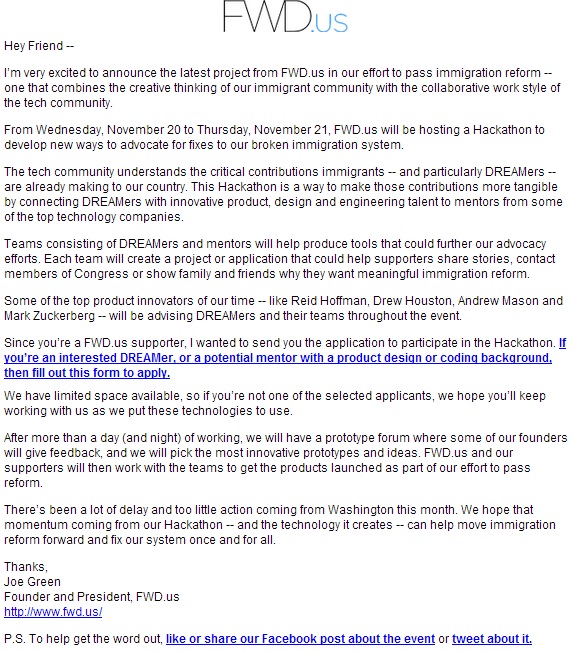
theodp writes "In the early days of Facebook, the company would go into what CEO Mark Zuckerberg called lockdown, where no one is supposed to leave until the task at hand is done. Speaking on Saturday at Startup School 2013, CNET reports, Mark Zuckerberg remarked that the practice persists to this day. Facebook doesn't lock people in the office, but it comes "as close to that as we can legally get," Zuckerberg said to an eruption from the crowd. The lockdown isn't the first at-home-in-a-Bangladesh-garment-factory management technique Zuck's touted at Startup School. Back in 2007, Zuckerberg drew fire for advising company founders "you should only hire young people with technical expertise" if they want to be successful. And while there are no reports of Facebook hiring 9-year-old bosses yet, the LA Times reports that only young undocumented immigrants are welcome at the hackathon hosted by Zuckerberg's FWD.us next month where "tech CEO's like Mark Zuckerberg, Reid Hoffman, Drew Houston and Andrew Mason will be sitting side-by-side with undocumented youth [with technical expertise] creating tech products to help the immigration reform movement" (invitation to 'day (and night) of working')." -
Building an Opt-In Society
An anonymous reader writes "In a talk at Y Combinator's startup school event, Stanford lecturer Balaji Srinivasan explained his vision for governing systems of the future. The idea is to find space to set up a new 'opt-in' society outside existing governments, and design it to take full advantage of technology to keep people in control of their own lives. That means embracing tech that subverts existing industries and rejecting regulation on new ways of doing things. '[N]ew industries are simultaneously disrupting existing ones while also exiting the system entirely, he says. With 3D printing, regulation is being turned into DRM. With quantified self, medicine is going mobile. With Bitcoin, capital control becomes packet filtering. All of these examples, Srinivasan says, are ways in which technology is allowing people to exit current systems like physical product production and distribution; personal health; and finance in favor of spaces of their own creation.' Srinivasan's ideas are a natural extension of a few proposals already in the works — Peter Thiel has been trying to build a small tech incubator city that floats in international waters, outside of government control. Elon Musk wants to have a Mars colony, and Larry Page has wished for a tech-centric Burning man that's free from government regulation. 'The best part is this,' Srinivasan said. 'The people who think this is weird, the people who sneer at the frontier, who hate technology, won't follow you there.'" -
Building an Opt-In Society
An anonymous reader writes "In a talk at Y Combinator's startup school event, Stanford lecturer Balaji Srinivasan explained his vision for governing systems of the future. The idea is to find space to set up a new 'opt-in' society outside existing governments, and design it to take full advantage of technology to keep people in control of their own lives. That means embracing tech that subverts existing industries and rejecting regulation on new ways of doing things. '[N]ew industries are simultaneously disrupting existing ones while also exiting the system entirely, he says. With 3D printing, regulation is being turned into DRM. With quantified self, medicine is going mobile. With Bitcoin, capital control becomes packet filtering. All of these examples, Srinivasan says, are ways in which technology is allowing people to exit current systems like physical product production and distribution; personal health; and finance in favor of spaces of their own creation.' Srinivasan's ideas are a natural extension of a few proposals already in the works — Peter Thiel has been trying to build a small tech incubator city that floats in international waters, outside of government control. Elon Musk wants to have a Mars colony, and Larry Page has wished for a tech-centric Burning man that's free from government regulation. 'The best part is this,' Srinivasan said. 'The people who think this is weird, the people who sneer at the frontier, who hate technology, won't follow you there.'" -
Building an Opt-In Society
An anonymous reader writes "In a talk at Y Combinator's startup school event, Stanford lecturer Balaji Srinivasan explained his vision for governing systems of the future. The idea is to find space to set up a new 'opt-in' society outside existing governments, and design it to take full advantage of technology to keep people in control of their own lives. That means embracing tech that subverts existing industries and rejecting regulation on new ways of doing things. '[N]ew industries are simultaneously disrupting existing ones while also exiting the system entirely, he says. With 3D printing, regulation is being turned into DRM. With quantified self, medicine is going mobile. With Bitcoin, capital control becomes packet filtering. All of these examples, Srinivasan says, are ways in which technology is allowing people to exit current systems like physical product production and distribution; personal health; and finance in favor of spaces of their own creation.' Srinivasan's ideas are a natural extension of a few proposals already in the works — Peter Thiel has been trying to build a small tech incubator city that floats in international waters, outside of government control. Elon Musk wants to have a Mars colony, and Larry Page has wished for a tech-centric Burning man that's free from government regulation. 'The best part is this,' Srinivasan said. 'The people who think this is weird, the people who sneer at the frontier, who hate technology, won't follow you there.'" -
Building an Opt-In Society
An anonymous reader writes "In a talk at Y Combinator's startup school event, Stanford lecturer Balaji Srinivasan explained his vision for governing systems of the future. The idea is to find space to set up a new 'opt-in' society outside existing governments, and design it to take full advantage of technology to keep people in control of their own lives. That means embracing tech that subverts existing industries and rejecting regulation on new ways of doing things. '[N]ew industries are simultaneously disrupting existing ones while also exiting the system entirely, he says. With 3D printing, regulation is being turned into DRM. With quantified self, medicine is going mobile. With Bitcoin, capital control becomes packet filtering. All of these examples, Srinivasan says, are ways in which technology is allowing people to exit current systems like physical product production and distribution; personal health; and finance in favor of spaces of their own creation.' Srinivasan's ideas are a natural extension of a few proposals already in the works — Peter Thiel has been trying to build a small tech incubator city that floats in international waters, outside of government control. Elon Musk wants to have a Mars colony, and Larry Page has wished for a tech-centric Burning man that's free from government regulation. 'The best part is this,' Srinivasan said. 'The people who think this is weird, the people who sneer at the frontier, who hate technology, won't follow you there.'" -
Carbon-Negative Energy Machines Catching On
An anonymous reader writes "All Power Labs in Berkeley, California has produced and sold over 500 machines that take in dense biomass and put out energy. What makes the machines special is that instead of releasing carbon back into the atmosphere, it's concentrated into a lump charcoal that makes excellent fertilizer. The energy is produced cheaply, too; many of the machines went to poor nations who normally pay much more per kilowatt. '[T]he PowerPallets are still relatively simple, at least as far as their users are concerned. For one, thing Price explained, much of the machine is made with plumbing fixtures that are the same everywhere in the world. That means they're easy to repair. At the same time, while researchers at the 50 or so institutions that have bought the machines are excited by opening up the computer control system and poking around inside, a guy running a corn mill in Uganda with a PowerPallet "will never need to open that door and never will," Price said.'" -
A Peek At Apple's Planned $5B HQ
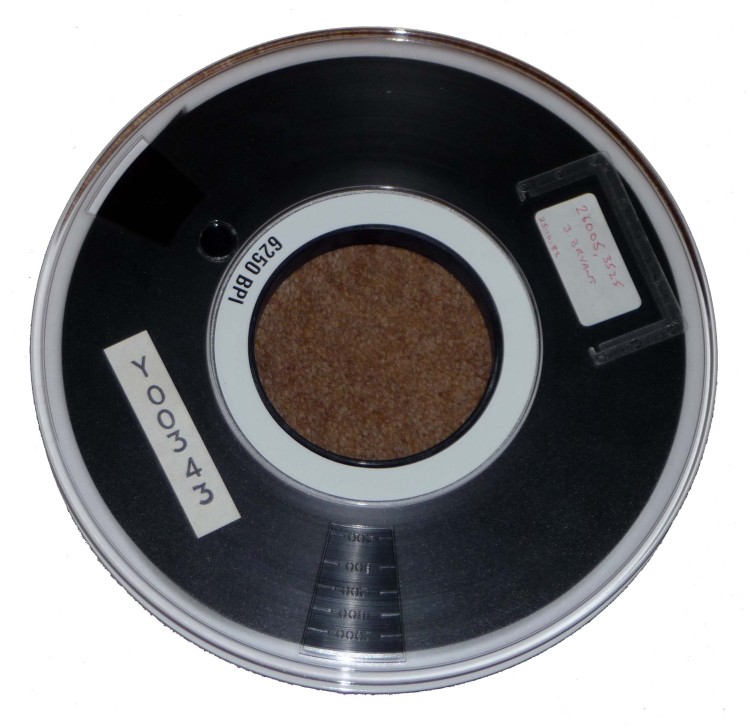
theodp writes "The Mercury News has an exclusive sneak peek of Apple's planned headquarters in Cupertino, which Steve Jobs personally sought approval for in 2011. 'We found that rectangles or squares or long buildings or buildings with more than four stories would inhibit collaboration,' Apple CFO Peter Oppenheimer said, explaining the motivation behind the so-called Apple Ring. Nice, but if you wanted to hurt the feelings of the Design Gods at Apple, you could point out that, for all its $5 billion glory, what Apple calls 'the best office building ever' doesn't look all that different from an old-school $3.95 6250 BPI magnetic tape reel (still available on eBay, kids!)." -
GTA Online Runs Into an Online Roadblock
Hugh Pickens DOT Com writes "CNET reports that Grand Theft Auto Online, the biggest entertainment release of the year with more than $1 billion in annual sales, is having some trouble getting the gamers online. The title, which launched on game consoles Tuesday morning, is experiencing server issues that have locked out some gamers and made it difficult for those who have gotten in to play the game. Fifteen million people purchased the game when it was released last week — and any number of them could play online when that 'perk' becomes available on October 1. 'At a conservative estimate I would expect about two million players to log on to GTA Online within the first 24 hours,' says Keza MacDonald, UK games editor for IGN.com, the video game and entertainment site. 'Rockstar has never done an online game of this scale before, so they are totally unproven in terms of their network infrastructure.' Rockstar, the game's creator, said that it was doing all it could to buy and access servers to accommodate what was expected to be massive demand for its online title. Meanwhile Twitter is abuzz with complaints from gamers who say they can't get into the service." -
Popular Science Is Getting Rid of Comments
Daniel_Stuckey writes "From an article announcing the sites' decision to do away with comments: 'It wasn't a decision we made lightly. As the news arm of a 141-year-old science and technology magazine, we are as committed to fostering lively, intellectual debate as we are to spreading the word of science far and wide. The problem is when trolls and spambots overwhelm the former, diminishing our ability to do the latter. ... even a fractious minority wields enough power to skew a reader's perception of a story, recent research suggests. ... A politically motivated, decades-long war on expertise has eroded the popular consensus on a wide variety of scientifically validated topics. Everything, from evolution to the origins of climate change, is mistakenly up for grabs again. Scientific certainty is just another thing for two people to "debate" on television. And because comments sections tend to be a grotesque reflection of the media culture surrounding them, the cynical work of undermining bedrock scientific doctrine is now being done beneath our own stories, within a website devoted to championing science.'" This comes alongside news that Google is trying to clean up YouTube comments by adding integration with Google+. "You’ll see posts at the top of the list from the video’s creator, popular personalities, engaged discussions about the video, and people in your Google+ Circles." -
IBM VP Talks About Another $1 Billion for Linux Development (Video)
Brad McCredie is an IBM VP, and head of IBM's Power Systems development. (He's also one of the mere few hundred IBM Fellows that have been named in the past 50 years.) He pointed out in his keynote at this year's LinuxCon gathering that IBM has been adopting and supporting Linux (and associated software, like Apache) in various ways for the past decade and a half. Famously, the company promised to support Linux to the tune of a billion dollars in 2001, and McCredie renewed the promise on Tuesday. I sat down to talk with him about just how they'll go about spending the next billion dollars on Linux development; when a company has more than $200 billion in market capitalization, there are lots of ways to spread it around. Spending on hardware is one way, and McCredie also talked about the recently announced OpenPower consortium, which ties directly into the ongoing Linux push. -
Did Apple Make a Mistake By Releasing Two New iPhones?
Nerval's Lobster writes "As noted by CNET, Apple hasn't released data on the number of iPhone 5C units it presold in the device's first 24 hours of availability—a first for the iPhone since 2009. Why is that? Reporter Josh Lowensohn speculates that iPhone 5C sales 'may not be as impressive when stacked up against tallies from previous years,' with one outside analyst suggesting that Apple racked up 1 million iPhone 5C preorders last Friday, or roughly half the 2 million presales scored by the iPhone 5 on its first day of ordering availability last year. However well the iPhone 5C ends up performing on the open market, Apple's decision to launch two iPhones this year—rather than a single 'hero' device—could result in self-cannibalism, as users who would've bought the iPhone 5S instead gravitate toward the cheaper option. Cannibalism is a topic that Apple knows well, as it's been dealing with the iPhone cannibalizing the iPod for the past several years; but a new iPhone eating away at another new iPhone is fresh territory for the company. During earnings calls, Apple CEO Tim Cook likes to argue that cannibalization—whether iPhones feeding off the iPod, or the iPad taking the place of MacBooks—is a good thing, so long as it's Apple products eating other Apple products. But it's far more questionable whether he would welcome the iPhone 5C—almost certainly a low-margin device, despite its current-generation components and plastic body—taking a bite out of the more expensive, and presumably higher-margin iPhone 5S. Margin erosion remains a prime concern of investors and Apple watchers; anything that contributes to that erosion is bound to be viewed unfavorably." -
Why Steve Albini Still Prefers Analog Tape
CNET's Steve Guttenberg ("The Audiophiliac") profiles prolific audio engineer and general music industry do-it-all Steve Albini; Albini (who's worked on literally thousands of albums with musicians across a wide range of genres) has interesting things to say about compression, the rise of home-recording ("The majority of recordings will be crappy, low-quality recordings, but there will always be work for engineers who can do a good job, because there will always be people who appreciate good sound."), and why he still prefers to record to analog tape. (Note: Albini is justly famous not just for his production work, but in particular for his essay "The Problem with Music.") -
Can Even Apple Make a Watch Insanely Smart?
theodp writes "Throwing some cold water on the buzz surrounding the Galaxy Gear Smartwatch launch, The New Yorker's Matt Buchanan questions how smart a watch can really be. Calling offerings like the Galaxy Gear useful but not the stuff of dreams and revolutions, Buchanan writes, 'So there remains a strange undercurrent of hope that somebody-Apple-will figure out, soon, some grander vision for wearable technology, transforming it from something that people have vaguely imagined into something people intensely desire. It did it for smartphones, once, and again, for tablets. The question that Apple has been charged with, since nobody has definitively answered it yet, is whether the lack of an invention that truly carries us beyond the last five hundred years of wrist-mounted technology is the result of a failure of imagination or simply a fact of nature-that a watch will always just be a watch, no matter how smart it might think it is.' So, will you be an early adopter and drink Samsung's or Sony's smartwatch Kool-Aid, wait to see what Apple comes up with, or hold out for a Windows Forearm Pad 8?" -
Jury Finds Google Guilty of Standards-Essential Patents Abuse Against MS
recoiledsnake writes "A federal jury in Seattle ordered Google to pay Microsoft $14.5 million in damages for breach of contract for failing to license at reasonable terms standard essential patents covering wireless and video technology used in the Xbox game console. Motorola had demanded Microsoft pay annual royalties of up to $4 billion for use of patents that are part of the H.264 video and 802.11 wireless standards, which are baked into Windows and the Xbox video game console. Microsoft said it was willing to pay royalties but not at the 2.25 percent of the product price that Motorola sought. We previously covered Motorola's exorbitant demands." -
Samsung Unveils Galaxy Gear Smartwatch
MojoKid writes "The smartwatch race heated up today, as Samsung showed its Galaxy Gear smartwatch at the Samsung Unpacked event in Berlin. Samsung's take on such a device has been eagerly anticipated. Samsung announced the Galaxy Gear as a companion to the new Galaxy Note 3 (or any Galaxy device). The Gear lets users make and receive calls hands-free with the built-in speaker, and it notifies you of any incoming texts, emails, and alerts and gives you a preview of whatever is coming through. A Smart Relay feature will display the full content on your Galaxy device. The Galaxy Gear sports an 800MHz processor and 1.63-inch display (320x320) AMOLED display with 512MB of RAM, 4GB of internal storage, a speaker, and two microphones with noise cancellation. There's a 1.9MP camera with a BSI sensor and autofocus, and it connects via Bluetooth 4.0 + BLE. Sensors include an accelerometer and a gyroscope. Samsung plans to launch the smartwatch in October for $300." -
New Keyboard Accessory Shocks Users When They Try To Go On Facebook
cartechboy writes "Two Ph.D. students from MIT have created a keyboard accessory, the Pavlov Poke, that shocks you every time you go onto Facebook. The project comes as a result of the students finding the waste over 50 hours a week combined on the social network (instead of working on their dissertations) So the pair created an Arduino-based keyboard hand-rest that shocks computer users who spend too much time checking the social network. The hack is 'intended to generate discussion' — not actually turn into a business." Inventor Robert Morris describes it as "something of a joke," but I'm sure there's a market out there. -
Windows 8.1 RTM Trickling Out, With Start Menu and Boot-to-Desktop
poofmeisterp writes "It's about time. Windows 8.1 will be released to end users in October, and RTM is being released now: 'Windows 8.1, codenamed "Blue," is introducing a number of changes designed to make the new operating system more palatable to current Windows users. Windows 8.1 is adding a Start Button, a boot-straight-to-desktop option; the ability to unpin all Metro apps; built-in tutorials; an improved Windows Store and a host of other consumer- and business-focused features. Microsoft launched its one and only Windows 8.1 consumer preview test build in late June.'" -
Nvidia CEO: We Are Working On Next Generation Surface
UnknowingFool writes "CEO Jen-Hsun Huang has told CNET that Nvidia is working with Microsoft on the next generation of Surface tablets. While sales of the first generation have been poor, Huang believes the second generation will be more successful with the inclusion of Outlook." -
Silent Circle Follows Lavabit By Closing Encrypted E-mail Service
Okian Warrior writes "Silent Circle shuttered its encrypted e-mail service on Thursday, in an apparent attempt to avoid government scrutiny that may threaten its customers' privacy. The company announced that it could 'see the writing on the wall' and decided it would be best to shut down its Silent Mail feature. 'We’ve been debating this for weeks, and had changes planned starting next Monday. We’d considered phasing the service out, continuing service for existing customers, and a variety of other things up until today. It is always better to be safe than sorry, and with your safety we decided that the worst decision is always no decision.' The company said it was inspired by the closure earlier Thursday of Lavabit, another encrypted e-mail service provider that alluded to a possible national security investigation." Does anyone have replacement recommendations for people who used these services? -
Extraneous Network Services Leave Home Routers Unsecure
An anonymous reader writes "Today's home routers include a multitude of extra functionality, such as the ability to act as a file and print server. An article from CNET shows how an attacker can use vulnerabilities in these services, such as buffer overflows, directory traversal, race conditions, command injections, and bad permissions to take over the router from the local network without knowing the administrative password. Some of the worst vulnerabilities were in undocumented, proprietary services that users cannot disable and allowed an attacker to achieve a root shell. The researchers who discovered the vulnerabilities will be demonstrating them at the Wall of Sheep and Wireless Village at DEF CON." -
FBI Pressures Internet Providers To Install Surveillance Software
An anonymous reader sends this quote from an article at CNet: "The U.S. government is quietly pressuring telecommunications providers to install eavesdropping technology deep inside companies' internal networks to facilitate surveillance efforts. FBI officials have been sparring with carriers, a process that has on occasion included threats of contempt of court, in a bid to deploy government-provided software capable of intercepting and analyzing entire communications streams. The FBI's legal position during these discussions is that the software's real-time interception of metadata is authorized under the Patriot Act. Attempts by the FBI to install what it internally refers to as 'port reader' software, which have not been previously disclosed, were described to CNET in interviews over the last few weeks. One former government official said the software used to be known internally as the 'harvesting program.'" -
Sprint May Have Unlimited Data Plans, But Not Unlimited Customers
mitcheli writes "Sprint announced a Q2 loss of $1.6B as 2 million subscribers left their service. While Sprint remains one of very few carriers to continue to allow unlimited data on their networks, the failure to reconcile two competing network technologies (iDEN Nextel and CDMA Sprint) combined with the lack of upgrades to their network and degrading service prompted a mass exodus of subscribers from their network. Of course the fact that during the iPhone 5 release, Sprint openly advertised that their iPhone would not be carrier locked, only to turn around and push out an OTA two months later that locked them probably didn't help much either." -
Google Chromecast Reviewed; Google Nixes Netflix Discount
adeelarshad82 writes "While it's more limited than the Roku 3 and by no means Google's answer to Airplay, Chromecast sets itself apart from other similar products simply based on its price and potential of bringing Internet HDTV streaming to many more people than before. Priced at only $35, it's a direct stick that plugs into your HDTV's HDMI port and lets you stream media from Netflix, YouTube, and Google Play through your smartphone, tablet, or notebook. Unlike the Roku Stick, it uses a separate micro-USB port instead of MHL to power it. This on one hand means you need to run a cable from the stick to a USB port, making it much less neat than it would seem. On the other hand, it means the stick works with any HDTV, whether it has an MHL-capable HDMI port or not. Once connected, the setup itself is fairly simple and entirely app-controlled. Past the setup, your streaming content choices are currently limited, though Google released an API for the Chromecast, so more apps could support it in the future. For now Android users can stream media from Google Play Movies and Music, as well as Netflix and YouTube whereas iOS users can watch Netflix and YouTube via the Chromecast. From a computer, users can stream media from Netflix, YouTube, Google Play, and Chrome. Unlike Apple TV and AirPlay, Chromecast doesn't let you stream your locally stored media. In fact Google Play Music gives an error message when you try to play music you loaded on your device yourself and not through the Google Play store. All in all, at $35 it's the most affordable way to access online media services on your HDTV." El Reg also got their hands on one. Alas, one perk of grabbing the Chromecast is gone: Google ended the free three month Netflix bundle that was worth almost as much as the cost of the Chromecast itself after sales were much higher than expected (so high it looks like they ran out of them after only a day). Update: 07/26 21:20 GMT by U L : iFixIt posted a teardown of the Chromecast. -
Feds Allegedly Demanding User Passwords From Services
An anonymous reader writes "Following the /. story on the Feds demanding SSL keys, now comes news that the feds are demanding user passwords, and in some cases, the encryption algorithm and salt used. From the article: 'A second person who has worked at a large Silicon Valley company confirmed that it received legal requests from the federal government for stored passwords. Companies "really heavily scrutinize" these requests, the person said. "There's a lot of 'over my dead body.'" ... Some of the government orders demand not only a user's password but also the encryption algorithm and the so-called salt, according to a person familiar with the requests. ... Other orders demand the secret question codes often associated with user accounts.' I'm next expecting to see the regulation or law demanding that all users use plain text for all web transactions, to catch terrorists and for the children." -
After a User Dies, Apple Warns Against Counterfeit Chargers
After a Chinese woman was earlier this month evidently electrocuted while talking on her iPhone while it was plugged in to charge, Apple is warning users to avoid counterfeit chargers. From CNet: "Last week, reports surfaced in China that suggested the woman, Ma Ailun, might have been using a third-party charger designed to look like the real thing. Although third-party chargers are not uncommon, they vary widely in terms of safety and quality. Earlier this year, safety consulting and certification company UL issued a warning that counterfeit Apple USB chargers were making the rounds and that consumers should be on the lookout for them due to their lower quality and possibly dangerous defects. The company posted the guidance on its site after a woman was allegedly electrocuted while answering a call on her iPhone." -
After a User Dies, Apple Warns Against Counterfeit Chargers
After a Chinese woman was earlier this month evidently electrocuted while talking on her iPhone while it was plugged in to charge, Apple is warning users to avoid counterfeit chargers. From CNet: "Last week, reports surfaced in China that suggested the woman, Ma Ailun, might have been using a third-party charger designed to look like the real thing. Although third-party chargers are not uncommon, they vary widely in terms of safety and quality. Earlier this year, safety consulting and certification company UL issued a warning that counterfeit Apple USB chargers were making the rounds and that consumers should be on the lookout for them due to their lower quality and possibly dangerous defects. The company posted the guidance on its site after a woman was allegedly electrocuted while answering a call on her iPhone." -
CNET: Feds Put Heat On Web Firms For Master Encryption Keys
First time accepted submitter fsagx writes "The U.S. government has attempted to obtain the master encryption keys that Internet companies use to shield millions of users' private Web communications from eavesdropping. These demands for master encryption keys, which have not been disclosed previously, represent a technological escalation in the clandestine methods that the FBI and the National Security Agency employ when conducting electronic surveillance against Internet users." -
Anonymous Source Claims Feds Demand Private SSL Keys From Web Services
Lauren Weinstein writes "With further confirmation of the longstanding rumor that the U.S. government (and, we can safely assume, other governments around the world) have been pressuring major Internet firms to provide their 'master' SSL keys for government surveillance purposes, we are rapidly approaching a critical technological crossroad. It is now abundantly clear — as many of us have suspected all along — that governments and surveillance agencies of all stripes — Western, Eastern, democratic, and authoritarian, will pour essentially unlimited funds into efforts to monitor Internet communications." If this is true it means that SSL/TLS to any Internet service could be useless — the authorities could simply man-in-the-middle anyone. Without knowing who has given keys over, or if anyone has given keys over... The NSA does claim encryption poses a problem for them, but honesty isn't their best attribute. The source claims that major providers at least have resisted (assuming it is happening), but that smaller companies may have folded to the pressure. -
Google Announces Android 4.3, Netflix, New Nexus 7, and Q Successor Chromecast
At a press conference dubbed "Breakfast With Sundar," Google announced two new pieces of hardware and a minor revision to Android. Complete stories and commentary are still coming in, but in the mean time you can skim a liveblog or two First is the new Nexus 7. The hardware is slightly improved (full HD screen, better graphics, etc.). The specs managed to "leak" hours before the event through Best Buy opening preordering too early. On the software side, they've announced a minor revision to Android, 4.3. It features improved Bluetooth support (including Bluetooth 4.0), OpenGL ES 3.0, enhanced internationalization, enhanced DRM, and multi-user support. The multi-user support looks most exciting: now you can share a tablet with more than one person. One of the features Google focused on was restricted profiles: a device owner can create accounts that e.g. cannot make in-app purchases (Junior won't rack up a $3000 bill again). Bad news: Google is implementing stricter DRM for books and video, locking down the entire video stack. The consolation prize is that Netflix will work on more devices and at 1080p. Also demoed were a new version of Chrome that brings the tablet experience closer to the desktop, improved hangouts, and improved maps. Google also appears to be making a push into gaming, emphasizing tablet-only games that integrate into Google+. In addition to gaming, they have secured deals with five major textbook publishers to sell students presumably DRMed electronic textbooks that can be purchased or rented, enhanced with better search and highlighting (because PDF readers don't support those features already). As usual lately, all of the really nice additions to Android are proprietary and tied to Google services, further eroding the open nature of Android. Finally, they announced a tiny $35 dongle named Chromecast that appears to be the successor of the Nexus Q. Running Chrome OS, it connects to any HDMI port, finds your Wi-Fi network, and Just Works (tm) for online video. The online and mobile Youtube and Netflix interfaces will allow you to hit a single button and forward the video to your television as well. Google Music streaming to the television is also supported. The Chromecast looks like a handy little device, hopefully it is turns out it can be reflashed. Of course, when using your browser as a remote, all of the commands go through The Cloud. An SDK and more details on the software side of things are slated for release later today, although conspiciously absent on their supported platforms list is GNU/Linux, listing only Chrome OS and Android. Update: 07/24 18:01 GMT by U L : The Chromecast SDK is out, but with an awfully restrictive license that requires written permission from Google to distribute any cast enabled applications, which appears to make it completely incompatible with Free/Open Source software. -
Google Announces Android 4.3, Netflix, New Nexus 7, and Q Successor Chromecast
At a press conference dubbed "Breakfast With Sundar," Google announced two new pieces of hardware and a minor revision to Android. Complete stories and commentary are still coming in, but in the mean time you can skim a liveblog or two First is the new Nexus 7. The hardware is slightly improved (full HD screen, better graphics, etc.). The specs managed to "leak" hours before the event through Best Buy opening preordering too early. On the software side, they've announced a minor revision to Android, 4.3. It features improved Bluetooth support (including Bluetooth 4.0), OpenGL ES 3.0, enhanced internationalization, enhanced DRM, and multi-user support. The multi-user support looks most exciting: now you can share a tablet with more than one person. One of the features Google focused on was restricted profiles: a device owner can create accounts that e.g. cannot make in-app purchases (Junior won't rack up a $3000 bill again). Bad news: Google is implementing stricter DRM for books and video, locking down the entire video stack. The consolation prize is that Netflix will work on more devices and at 1080p. Also demoed were a new version of Chrome that brings the tablet experience closer to the desktop, improved hangouts, and improved maps. Google also appears to be making a push into gaming, emphasizing tablet-only games that integrate into Google+. In addition to gaming, they have secured deals with five major textbook publishers to sell students presumably DRMed electronic textbooks that can be purchased or rented, enhanced with better search and highlighting (because PDF readers don't support those features already). As usual lately, all of the really nice additions to Android are proprietary and tied to Google services, further eroding the open nature of Android. Finally, they announced a tiny $35 dongle named Chromecast that appears to be the successor of the Nexus Q. Running Chrome OS, it connects to any HDMI port, finds your Wi-Fi network, and Just Works (tm) for online video. The online and mobile Youtube and Netflix interfaces will allow you to hit a single button and forward the video to your television as well. Google Music streaming to the television is also supported. The Chromecast looks like a handy little device, hopefully it is turns out it can be reflashed. Of course, when using your browser as a remote, all of the commands go through The Cloud. An SDK and more details on the software side of things are slated for release later today, although conspiciously absent on their supported platforms list is GNU/Linux, listing only Chrome OS and Android. Update: 07/24 18:01 GMT by U L : The Chromecast SDK is out, but with an awfully restrictive license that requires written permission from Google to distribute any cast enabled applications, which appears to make it completely incompatible with Free/Open Source software. -
Apple: Developer Site Targeted In Security Attack, Still Down
An anonymous reader writes "Apple has informed developers that an intruder gained access to its developer site database. Quoted email from Apple: 'Last Thursday, an intruder attempted to secure personal information of our registered developers from our developer website. Sensitive personal information was encrypted and cannot be accessed, however, we have not been able to rule out the possibility that some developers' names, mailing addresses, and/or email addresses may have been accessed. In the spirit of transparency, we want to inform you of the issue. We took the site down immediately on Thursday and have been working around the clock since then. In order to prevent a security threat like this from happening again, we're completely overhauling our developer systems, updating our server software, and rebuilding our entire database. We apologize for the significant inconvenience that our downtime has caused you and we expect to have the developer website up again soon.'" -
C|Net Reporter Declan McCullagh Talks About Privacy (Video)
Declan Mccullagh, C|net's Chief political correspondent, has covered politics since the late 1990s for a variety of publications. He is a strong libertarian, privacy advocate, and long time Slashdot reader who is not happy about how the NSA and other government bodies are sticking their noses into our personal business. He and I originally talked about doing an interview based on a story he wrote for C|net on July 12 titled How the U.S. forces Net firms to cooperate on surveillance. Scheduling problems put the interview off for a bit, but here we are. Note that Declan has written millions of pixels worth of material about privacy, NSA spying, and related matters. With new revelations about unsavory government activities coming to light seemingly every day the interview delay is no big deal. And this question still remains: Can we repeal the Patriot Act? New Jersey Congressman Rush Holt wants to. What about your representatives? Are they willing to join Rep. Holt? Do you think they might if a bunch of people -- perhaps starting with you -- asked them to? -
C|Net Reporter Declan McCullagh Talks About Privacy (Video)
Declan Mccullagh, C|net's Chief political correspondent, has covered politics since the late 1990s for a variety of publications. He is a strong libertarian, privacy advocate, and long time Slashdot reader who is not happy about how the NSA and other government bodies are sticking their noses into our personal business. He and I originally talked about doing an interview based on a story he wrote for C|net on July 12 titled How the U.S. forces Net firms to cooperate on surveillance. Scheduling problems put the interview off for a bit, but here we are. Note that Declan has written millions of pixels worth of material about privacy, NSA spying, and related matters. With new revelations about unsavory government activities coming to light seemingly every day the interview delay is no big deal. And this question still remains: Can we repeal the Patriot Act? New Jersey Congressman Rush Holt wants to. What about your representatives? Are they willing to join Rep. Holt? Do you think they might if a bunch of people -- perhaps starting with you -- asked them to? -
Can Ride-Sharing Startup Lyft Survive the SoCal Heat?
First time accepted submitter Kyle Jacoby writes "The app-powered on-demand ride-sharing startup, Lyft, has brought its trademark pink mustaches to San Diego. After a successful venture in San Francisco about a year ago, Lyft has since expanded to offer their services to other congested cities, like Boston, Los Angeles, Seattle, and Chicago. Despite the utility of the service, Lyft (and related services Sidecar and Uber) has recently come under fire from the city of Los Angeles, whose department of transportation issued cease-and-desist letters to the startup. It seems that the service has the taxi community in an uproar, who believe that Lyft ride-share drivers should be required to obtain the permits similar to those required of taxi drivers." Nothing like some regulatory capture for Independence Day. Amid the ongoing strike of BART workers in the Bay Area, I bet some people are using on-line organization tools for ride-sharing with a similar upshot. -
Ouya Android Game Console Launches, Quickly Sells Out
Ouya, the Android-based game console that arose out of a wildly successful Kickstarter campaign, officially launched today. The $99 device quickly sold out at a number of retailers, including Amazon and GameStop. "According to Ouya, the console currently has more than 170 downloadable games, as well as a built-in software development kit that enables people to create and test titles right from the hardware." Many reviews of the console suggest the controllers are not very good, and there are reports that the Wi-Fi connectivity can be flaky. There's also a lot of commentary about Ouya that clearly came from unrealistic expectations of what a $99 device can provide. Most of the backers from the Kickstarter campaign have received their consoles, but some are still waiting as Ouya tries to sort out shipping problems with DHL. -
Patent Infringement Suit Includes Linking URLs In an Email
An anonymous reader points out a report at Groklaw about another new lawsuit from patent firm Intellectual Ventures against Motorola Mobility (they have an earlier patent suit against Motorola underway already). The suit seeks damages from alleged infringement of seven patents, most of which involve wireless communications and Motorola's use of Android. One of the patents, US5790793, is "A method and system for sending and receiving Uniform Resource Locators (URLs) in electronic mail over the Internet." Intellectual Ventures' complaint (PDF) says Motorola product that implement MMS violate this patent. PJ at Groklaw thinks this is another patent attack on Android: "And guess where IV got these patents? Not directly from the USPTO. I'll give you a big hint. Some of them, from what I'm seeing, are from working companies. Don't they call that privateering, when active companies outsource their patents to trolls to do their dirty work? Why yes. Yes, they do. Can you guess one company in this picture? Someone helping Microsoft in its anti-competitive attack on Android and Linux, you say? Yes, one of the companies that seems to have transferred two patents to IV for its holy quest is Nokia, Microsoft's 'partner in crime', as I like to think of them. I know. You are shocked, shocked to know that patents are being used anti-competitively in a court of law." -
Apple Details US Requests For Customer Data
An anonymous reader writes "Not to be left out Apple has released details about government requests for customer data. The company said it received between 4,000-5,000 government requests, affecting as many as 10,000 accounts or devices. From the article: 'The iPad maker said that it received between 4,000 and 5,000 requests from U.S. law enforcement agencies for customer data from December 1, 2012 to May 31, 2013, and that 9,000 to 10,000 accounts or devices were specified in the requests. Apple did not state how many of the requests were from the National Security Agency or how many affected accounts or devices may have been tied to any NSA requests.' Facebook and Microsoft released their numbers this weekend." -
Officials Say NSA Probed Fewer Than 300 Numbers - Broke Plots In 20 Nations
cold fjord writes "Yet more details about the controversy engulfing the NSA. From CNET: 'Rep. Mike Rogers (R-Mich.), chairman of the House Intelligence Committee, explained how the program worked without violating individuals' civil rights. "We take the business records by a court order, and it's just phone numbers — no names, no addresses — put it in a lock box," Rogers told CBS News' "Face The Nation." "And if they get a foreign terrorist overseas that's dialing in to the United Sates, they take that phone number... they plug it into this big pile, if you will, of just phone numbers — it's like a phonebook without any names and any addresses with it — to see if there's a connection, a foreign terrorist connection to the United States." "When a number comes out of that lock box, it's just a phone number — no names, no addresses," he said. "If they think that's relevant to their counterterrorism investigation, they give that to the FBI. Then upon the FBI has to go out and meet all the legal standards to even get whose phone number that is."' From the AP: ' ... programs run by the National Security Agency thwarted potential terrorist plots in the U.S. and more than 20 other countries — and that gathered data is destroyed every five years. Last year, fewer than 300 phone numbers were checked against the database of millions of U.S. phone records ... the intelligence officials said in arguing that the programs are far less sweeping than their detractors allege.... both NSA programs are reviewed every 90 days by the secret court authorized by the Foreign Intelligence Surveillance Act. Under the program, the records, showing things like time and length of call, can only be examined for suspected connections to terrorism, they said. The ... program helped the NSA stop a 2009 al-Qaida plot to blow up New York City subways.'" -
Snowden NSA Claims Partially Confirmed, Says Rep. Jerrold Nadler
bill_mcgonigle writes with this news from from CNET: "Rep. Jerrold Nadler (D NY) disclosed that NSA analysts eavesdrop on Americans' domestic telephone calls without court orders during a House Judiciary hearing. After clearing with FBI director Robert Mueller that the information was not classified, Nadler revealed that during a closed-door briefing to Congress, the Legislature was informed that the spying organization had implemented and uses this capability. This appears to confirm Edward Snowden's claim that he could, in his position at the NSA, 'wiretap anyone from you or your accountant to a federal judge to even the president.' Declan McCullagh writes, 'Because the same legal standards that apply to phone calls also apply to e-mail messages, text messages, and instant messages, Nadler's disclosure indicates the NSA analysts could also access the contents of Internet communications without going before a court and seeking approval.' The executive branch has defended its general warrants, claiming that 'the president had the constitutional authority, no matter what the law actually says, to order domestic spying without [constitutional] warrants,' while Kurt Opsahl, senior staff attorney at EFF claims such government activity 'epitomizes the problem of secret laws.'" Note that "listening in" versus "collecting metadata" is a distinction that defenders of government phone spying have been emphasizing. Tracking whom you called and when, goes the story, doesn't impinge on expectations of privacy. Speaking of the metadata collection, though, reader Bruce66423 writes "According to the Washington Post, the Bush administration took 'bulk metadata' from the phone companies under voluntary agreements for more than four years after 9/11 until a court agreed they could have it compulsorily." Related: First time accepted submitter fsagx writes that Brewster Kahle of the Internet Archive has calculated the cost to store every phone call made in the U.S. over the course of a year: "It's surprisingly inexpensive. It puts the recent NSA stories (and reports from the Boston bombings about the FBI's ability to listen to past phone conversions) into perspective." -
Microsoft Office Finally Gets iOS App
An anonymous reader writes "After years of rumors and months of bickering with Apple over revenue splits, Microsoft has finally released an official iOS app for Office 365 subscribers, allowing people to use Word, Excel and PowerPoint on their iPhones and iPads. According to a hands-on report with the software, the Office app has basic functionality, but is missing some key productivity features. 'These include: font options, text alignment, bulleted lists and, again, more color choices, all of which you can find in, say, the Google Drive app.' They say it's a fairly useful addition for current subscribers, but certainly not enough to make it worth the Office 365 subscription fee on its own. 'We can't tell if Microsoft deliberately handicapped Office Mobile for iPhone, or if it's simply saving some features for a later update. (A company rep declined to comment on what we can expect from future versions.) We're willing to believe Microsoft still has some unfinished items on its to-do list, but even so, it's a shame that iPhone users waited this long for an Office app, only to get something with such a minimal feature set. All told, Office Mobile represents a good enough start for Microsoft, and in some ways it's better than Google Drive, particularly where spreadsheets are concerned. Still, it's miles behind other office apps for iOS, including Apple iWork.'" -
Ask Personal Audio's James Logan About Patents, Playlists, and Podcasts
James Logan founded MicroTouch Systems in the 80s and served on the on the Board of Directors of Andover.net, the company that acquired Slashdot back in 1999, but it is the company he founded in 1996, Personal Audio, that has garnered him much attention recently. Personal Audio sued Apple in 2009 for $84 million, claiming infringement on patents for downloadable playlists. Apple eventually lost the case and a jury ordered them to pay $8 million in damages. More recently, Personal Audio has filed suit against several prominent podcasters claiming that “Personal Audio is the owner of a fundamental patent involving the distribution of podcasts.” The EFF challenged the patents calling the company a patent troll saying, "Patent trolls have been wreaking havoc on innovative companies for some time now." The vice president of licensing for the Texas company counters that the EFF is working for "large companies against a small business and a couple of inventors," adding "Every defendant calls every plaintiff a patent troll. I've heard IBM called a patent troll. It's one of those terms everyone defines differently." Mr. Logan has agreed to answer your questions about his company and his patents. As usual, ask as many as you'd like, but please, one question per post. -
U.S. District Judge: Forced Decryption of Hard Drives Violates Fifth Amendment
hansamurai writes with an update to a story we've been following for a while. Jeffrey Feldman is at the center of an ongoing case about whether or not crime suspects can be forced to decrypt their own hard drives. (Feldman is accused of having child pornography on his hard drives.) After initially having a federal judge say Feldman was protected by the Fifth Amendment, law enforcement officials were able to break the encyption on one of his many seized storage devices. The decrypted contents contained child pornography, so a different judge said the direct evidence of criminal activity meant Feldman was not protected anymore by the Fifth Amendment. Now, a third judge has granted the defense attorney's emergency motion to rescind that decision, saying Feldman is once again (still?) protected by the Fifth Amendment. Feldman's lawyer said, "I will move heaven and earth to make sure that the war on the infinitesimal amount of child pornography that recirculates on the Internet does not eradicate the Fifth Amendment the way the war on drugs has eviscerated the Fourth Amendment. This case is going to go many rounds. Regardless of who wins the next round, the other side will appeal, invariably landing in the lap of the Seventh Circuit Court of Appeals and quite possibly the U.S. Supreme Court. The grim reality facing our country today is one where we currently have a percentage of our population behind bars that surpasses even the heights of the gulags in Stalinist Russia. On too many days criminal lawyers lose all rounds. But for today: The Shellow Group: 1, Government: 0." -
Oculus VR Co-founder Andrew Reisse Killed In Auto Collision
ccguy writes with this excerpt from a sad report on CNET: "Oculus Rift co-founder and lead engineer Andrew Reisse was hit in Santa Ana, where he was a resident, by a speeding car being pursued by police." Reisse was killed, says the report, when the car "slammed into two vehicles during the pursuit before hitting Reisse at Flower Street and MacArthur Boulevard." -
Judge Orders Google To Comply With FBI's Warrantless NSL Requests
An anonymous reader writes "CNet reports that a U.S. District Court Judge has rejected Google's attempt to fight 19 National Security Letters, which are used by the FBI to gather information on users without a warrant. Quoting: 'The litigation taking place behind closed doors in Illston's courtroom — a closed-to-the-public hearing was held on May 10 — could set new ground rules curbing the FBI's warrantless access to information that Internet and other companies hold on behalf of their users. The FBI issued 192,499 of the demands from 2003 to 2006, and 97 percent of NSLs include a mandatory gag order. It wasn't a complete win for the Justice Department, however: Illston all but invited Google to try again, stressing that the company has only raised broad arguments, not ones "specific to the 19 NSLs at issue." She also reserved judgment on two of the 19 NSLs, saying she wanted the government to "provide further information" prior to making a decision.' This does not affect the Electronic Frontier Foundation's challenge to the constitutionality of the letters in the Ninth Circuit Court of Appeals."