Slashdot Mirror
Domain: columbia.edu
Stories and comments across the archive that link to columbia.edu.
Comments · 1,401
-
Re:Yet another 3rd world reaction
Sorry, but Sagan turned out to be, well, wrong:
Pope John Paul II - "Faith can never conflict with reason"
an interview with the gent who runs the Vatican Observatory
Why Catholics Like Einstein
A small peek into the whole controversy
a bit of insightEveryone points at Galileo (quite a few centuries back) and screams, but turns a blind eye towards everything else that's been going on ever since.
-
Re:Isn't that anti-science?First let's compare your demand(!) for citations from me with your own utter lack of any any kind of scinetific refernce whatsoever.
Apparently I'm to be held to one standard and your're to be held to another.
`1, 2, 3, 4, 5 of the most debunked denier talking points all just trotted out in a few sentences.
Here's the thing- I don't care what you think or what any denier thinks. The rebutals to yoru non-scientific "points" which you scraped off of some denier's web site have been available to you for years now. The fact that you're still reciting them- Mann's hockey stick, little ice age, medeval warming period all this shit just means that you fail to look for AT ALL for disconfirmatory evidence. You're a true denier.
But it's important to rebut this crap if it comes up 10 times a hundred times or a thousand times, which i have done by now I think, because while there's always another denier who's not worth talkign to, there could be another reader for whom this is the first time they've heard these points.
Yeah you rolled those out bappity bappity bap with such authority! Damn you MUST know what you're talking about. Of course, like any good narcissist, seeming to know what yu're talking about is your first priority while doing the work to really understand what you're talking about is irrelevant.
First the 98%:
Yes, it's 97.4% of climatologists who are active publishers on climate change- the people for whom this is their life's work.
From EOS Vol 20, Number 3 Jan 2009:
http://tigger.uic.edu/~pdoran/012009_Doran_final.pdf
Most striking is the divide between expert climate scientists (97.4%) and the general public (58%). The paper concludes:
"It seems that the debate on the authenticity of global warming and the role played by human activity is largely nonexistent among those who understand the nuances and scientific basis of long-term climate processes. The challenge, rather, appears to be how to effectively communicate this fact to policy makers and to a public that continues to mistakenly perceive debate among scientists."
Now on to the denier talking points
1) MWP and Little Ice Age:
Yeah well it's sufficient to eliminate the denier hypothesis that thee reason temps are rising is we're coming out of the Little Ice Age (LIA) and MWP , which is done handily here:
http://iri.columbia.edu/~goddard/EESC_W4400/CC/jones_mann_2004.pdf
Comparison of empirical evidence with proxy-based reconstructions demonstrates that natural factors appear to explain relatively well the major surface temperature changes of the past millennium through the 19th century (including hemispheric means and some spatial patterns). Only anthropogenic forcing of climate, however, can explain the recent anomalous warming in the late 20th century.
and here http://iri.columbia.edu/~goddard/EESC_W4400/CC/jones_mann_2004.pdf
Considered alongside the empirical evidence, model predictions and a century of scientific research into the climate, recovery from the LIA is not a plausible theory to explain the observed evidence and rate of global climate change.
2) Hockey Stick:
Nope not broken in any significant way at all, says yet another investigation which yet agains clears him entirely, this time by the National Science Foundation (NSF):
From http://www.nsf.gov/oig/search/A09120086.pdf
Recent Studies Vindicating the Hockey Stick:
Temperatures of North Atlantic âoeare unprecedented over the past 2000 years and are presumably linked to the Arctic amplification of global warmingâ â" Science (20
-
Re:Isn't that anti-science?First let's compare your demand(!) for citations from me with your own utter lack of any any kind of scinetific refernce whatsoever.
Apparently I'm to be held to one standard and your're to be held to another.
`1, 2, 3, 4, 5 of the most debunked denier talking points all just trotted out in a few sentences.
Here's the thing- I don't care what you think or what any denier thinks. The rebutals to yoru non-scientific "points" which you scraped off of some denier's web site have been available to you for years now. The fact that you're still reciting them- Mann's hockey stick, little ice age, medeval warming period all this shit just means that you fail to look for AT ALL for disconfirmatory evidence. You're a true denier.
But it's important to rebut this crap if it comes up 10 times a hundred times or a thousand times, which i have done by now I think, because while there's always another denier who's not worth talkign to, there could be another reader for whom this is the first time they've heard these points.
Yeah you rolled those out bappity bappity bap with such authority! Damn you MUST know what you're talking about. Of course, like any good narcissist, seeming to know what yu're talking about is your first priority while doing the work to really understand what you're talking about is irrelevant.
First the 98%:
Yes, it's 97.4% of climatologists who are active publishers on climate change- the people for whom this is their life's work.
From EOS Vol 20, Number 3 Jan 2009:
http://tigger.uic.edu/~pdoran/012009_Doran_final.pdf
Most striking is the divide between expert climate scientists (97.4%) and the general public (58%). The paper concludes:
"It seems that the debate on the authenticity of global warming and the role played by human activity is largely nonexistent among those who understand the nuances and scientific basis of long-term climate processes. The challenge, rather, appears to be how to effectively communicate this fact to policy makers and to a public that continues to mistakenly perceive debate among scientists."
Now on to the denier talking points
1) MWP and Little Ice Age:
Yeah well it's sufficient to eliminate the denier hypothesis that thee reason temps are rising is we're coming out of the Little Ice Age (LIA) and MWP , which is done handily here:
http://iri.columbia.edu/~goddard/EESC_W4400/CC/jones_mann_2004.pdf
Comparison of empirical evidence with proxy-based reconstructions demonstrates that natural factors appear to explain relatively well the major surface temperature changes of the past millennium through the 19th century (including hemispheric means and some spatial patterns). Only anthropogenic forcing of climate, however, can explain the recent anomalous warming in the late 20th century.
and here http://iri.columbia.edu/~goddard/EESC_W4400/CC/jones_mann_2004.pdf
Considered alongside the empirical evidence, model predictions and a century of scientific research into the climate, recovery from the LIA is not a plausible theory to explain the observed evidence and rate of global climate change.
2) Hockey Stick:
Nope not broken in any significant way at all, says yet another investigation which yet agains clears him entirely, this time by the National Science Foundation (NSF):
From http://www.nsf.gov/oig/search/A09120086.pdf
Recent Studies Vindicating the Hockey Stick:
Temperatures of North Atlantic âoeare unprecedented over the past 2000 years and are presumably linked to the Arctic amplification of global warmingâ â" Science (20
-
Re:Historical Computer simulations..The Eniac had 3 portable function tables, each with 1200 switches! Here's info on programming it:
-
education
Have you looked at some MS programs that help with transition?
Some of the major issues you will encounter are:
communication with the Business (they will have language barier)
selling technology to business
Budgets
Politics
Managing teamsThere are great programs that will help. For example in NY you can attend:
http://ce.columbia.edu/Technology-Management
http://www.stevens.edu/sit/development/schools/Howe-School-of-Technology-Management.cfm
http://www.poly.edu/amot -
Re:So fail them
The problem is that in the social 'sciences', this is often treated as a 'everybody is right' instead of the approach of the physical sciences: "I'm right, and if you don't believe me, go do the experiment yourself".
That's a monumental difference that a lot of people just fail to grasp, even in serious fields of study. Just read this essay by Richard Feynman where he explains what it means to be properly scientific.
Nonetheless, students questioning their professors is not seen as a problem even in the physical sciences. For example, I had a very vocal disagreement with one of my Physics professors once. I simply refused to believe that what he was saying was possible. He was so impressed that he offered me a research position based on that one interaction.
Of course, this comes with a huge caveat -- I didn't 'just' disagree.
What had happened was that we were studying solid-state lasers, like the type you get in your DVD player or a laser pointer. They are made from crystals of semiconductors, like silicon, germanium, arsenic, etc... He was specifically discussing silicon lasers emitting light at about 650nm. I sat straight up and thought that's crazy -- I've held pure silicon in my hand before, and it looks like metal. Sure, it's a bit dark, but I just couldn't imagine how light that's "just barely infra-red" could go straight through the thing with nearly 0% loss, which is what a laser requires to operate. I argued with him -- surely it's very heavily doped and it's actually a compound of silicon that transmits the light? No. Maybe it's just a very thin surface layer, like transparent gold leaf? No.
The day after that, I was in the lab, and there was a piece of silicon there -- scrap from the chip lab. I took an incandescent lamp that I knew put out most of it's heat energy in the right infra-red range, put my hand in front of it, and then I waved the silicon wafer back and forth between my hand and the light. It's like it wasn't even there -- it blocked none of the IR light. There was no visible light going through, but I could feel the heat on my hand. I compared it to glass and various thicknesses of paper and plastic sheets. Only silicon transmitted all of the IR heat energy. It was like it was made of smoke. Sure, it was a primitive experiment, but very convincing in a I-can-feel-it-with-my-own-hands kind of way.
The next day, we were back in the lecture hall, continuing the topic of silicon lasers, and the lecturer jokingly asked me if I still had problems believing that silicon was transparent to infra-red light. I said no, I tried passing IR light through a piece of silicon in the lab. It doesn't look like it should, but it does.
That change in my position is the very essence of science -- not that disagreeing is bad, but there ought to be a method by which we can all become convinced of the truth and agree on it.
Sadly, the scientific method is not followed rigorously in many fields. Psychology and some areas of medicine come to mind. Just read: Why Most Published Research Findings Are False for an idea of just how far it's possible to stray from the truth because of only small errors in the application of the scientific method.
-
Attribution
What is new is attribution of severe weather events to human activity. http://www.columbia.edu/~jeh1/mailings/2011/20111110_NewClimateDice.pdf
When heatwave deaths are your fault, it is time to take corrective action.
Also, you are incorrect that trying to keep things steady is the way to extinction. This is some Frank Herbert meme but it has no basis. Beavers keep pond water levels constant and do just fine. -
Re:it has changed it indeed
This is related to the study done a little while ago out of Columbia University . The basic idea is we tend to forget things we know we can find quickly through a search.
-
Re:Union Featherbedding, Meh
It will be interesting if universities with real brands will ever allow master or doctorates to be via online study.
The Teachers College of Columbia University (there's a brand for you) offers an online master in in computing in education.
-
Re:Yes, of course
Actually, as the earth heats, we can expect to find more arable land.
Yup. Great news for those parts of Canada that are currently uninhabited. Bad for the USA and South America. See figure 3 in the following link for a projection of where we can expect increased drought this century: http://www.columbia.edu/~jeh1/mailings/2011/20110928_Butterfly.pdf
Here is a wry post on the current drought conditions in Texas. This may be a hint of what is to come: http://blog.chron.com/climateabyss/2011/09/texas-drought-good-news-and-bad-news/
First the really good news: according to the latest US Drought Monitor, only 0.83% of Texas is in moderate drought.
Next the moderately good news: only 2.42% of Texas is in severe drought.
Not so good news: 8.88% of Texas is in extreme drought.
Bad news: that leaves fully 87.83% of Texas in exceptional drought, the worst drought category.
-
Re:Its the phone company that caused the problem
Well, I did a bunch of searching in the Google Patent Search tool, but couldn't find a patent for it. I'm sure there is one, but there are so many others I just did not notice it. Hopefully someone can dig up a patent for this, as it might give a reason for why they arranged it that way.
Don't believe it was patented, and if so, certainly not by AT&T.
That keyboard arrangement appeared in 1946, way before push button phones,
on the 026 keypunch from IBM. http://www.columbia.edu/cu/computinghistory/026.htmlSo if anything, AT&T was paying IBM royalties.
-
Re:Don't you have anything better to do?
LOL, The last person I heard complaining about this issue was a 029 keypunch operator.
-
Re:Lessor of two evils...
Don't worry. Solar power is going to save us all, provided they get $0.30/kWh subsidies.
China: Villagers protest at Zhejiang solar panel plant
http://www.bbc.co.uk/news/world-asia-pacific-14963354Oh wait, wind will save us all, provided it doesn't get too hot or cold or windy or calm. That gets wind power 30% efficiency.
OK, hydroelectric will save us all. OK, that's maxed out already.
And while we protest, record number of coal and natural gas power plants are getting built. Fraking and ground water pollution is the reality while the "environmentalists" bitch and moan over nuclear. Nuclear, a power source that is not 100% clean. That is not 100% safe. But its the only power source where we require the industry to manage its entire waste. Nuclear gives us the lowest impact on environment from any power sources.
Heck, in avoidable incidents like Fukushima or even Chernobyl, we, the people, suffer almost entire impact of these events. While some are scared shitless of the word "radiation" and most try to avoid any contaminated areas, nature does not have these inhibitions and goes on. Almost any amount of radiation is vastly preferred by nature to birth control pills or plastics. Why? Because radiation is an equal -opportunity stressor.
http://jscms.jrn.columbia.edu/cns/2008-02-19/cupido-birthcontrol.html
http://en.wikipedia.org/wiki/Great_Pacific_Garbage_Patch
The "environmentalists" can't understand basic physics or biology. They don't get it. Natural world "re-routes" around low environmental stresses, like radiation. Provided an organism can reproduce, it will adapt. It is only people that can't really adapt because we do not want to pay the price of mutation/natural selection.
The bottom line is, "environmentalists" are trying to protect people from minimal risks at a cost of the natural world, and hence eventually at the cost of future generations. Quite sad actually.
-
Re:Did we not already go through this?
It's a waste of money. ipads are a luxury** device. I'm sorry to tell all you hipsters this but these are not mainstream computing devices in the hands of most working class people.
Yes, today tablets are a luxury device. That may even continue to be the case for as long as the next five years or so. But touch-based computing is going to be as ubiquitous as the keyboard and mouse is today. Kids who become comfortable with it an early age will have an advantage when that time comes. Now, it may not be an insurmountable advantage, and it's hard to quantify, but I'm betting that it will be there.
My parents worked for a university, so we were lucky enough to get a Decwriter II in our house when I was six years old, long before most people had computers in their house. Today I have a PhD in Computer Science.
** Insofar as any highly functional computing that costs only $500 can be considered a "luxury" device. Sheesh, we've become spoiled.
-
I don't always read posts bashing SUSY...
... but when I do, I head over to http://www.math.columbia.edu/~woit/wordpress/ (Not Even Wrong).
-
Re:Yay
Do you gargle with Glen Beck's bath water, too?
> For this administration to build it,
Hey! Funding an agency belongs to the legislative branch. It was even on Schoolhouse Rock.> it will need to be called something like "Global Warming Explorer",
> "Rich People Killer", or "Bush's Fault"Do you even investigate your opinions? You sound "tased and confused". Obama has funnelled more public funds into RICH, private pockets than Bush could have ever achieved.
Just one REGULATORY - not statutory - example:
The largest transfer of wealth from the public to private sector is about to begin. The federal government will be bulk-selling the massive portfolio of foreclosed homes now owned by HUD, Fannie Mae and Freddie Mac to private investors -- vulture funds.
These homes, which are now the property of the U.S. government, the U.S. taxpayer, U.S. citizens collectively, are going to be sold to private investor conglomerates at extraordinarily large discounts to real value.
http://www.thestreet.com/story/11224917/1/a-huge-housing-bargain--but-not-for-you.html
So, while Bushie turned these INTO US Government assets, via TARP and other 2008 bailouts, Bamie will now sacrifice those already dubious "investments," to make more geld for Goldmann.
I have to say. If you liked Bush, then it follows that Obama ought to be making you fill your trousers with white, gooey geysers.
Richard Nixonâ(TM)s White House Counsel John Dean, while Bush was president, predicted that Bushâ(TM)s successor would be one of two things, either the best or the worst president in history. He, or she, would either undo the damage and prosecute the crimes, or protect the criminals and continue the abuses. Obama has protected the criminals, continued many of the abuses, more firmly established the power to commit those abuses, and expanded abusive powers beyond what Bush ever attempted. Iâ(TM)m not trying to quantify and determine whether Obama has grabbed âoemoreâ new abusive powers than Bush did. Iâ(TM)m simply pointing out that, as with previous presidents, Obama has retained the powers bequeathed him and added some.
http://my.firedoglake.com/davidswanson/2011/03/15/is-obama-even-worse-than-bush/
Although policies being implemented under Obama's leadership exhibit the continuation of Bush's tyrannical agenda, his stunning betrayal of populist and Constitutional principles in support of these actions makes him the ultimate hypocrite. Additionally, because Obama is a much more influential orator than Bush, his service to the puppet masters is far more dangerous to the American people he's supposed to serve.
http://www.activistpost.com/2011/04/10-reasons-obama-is-just-as-bad-or.html
Next yearâ(TM)s presidential campaign is predicted to cost a billion dollars, which Obama has already started raising from the financial industry and other interest groups. He faces no progressive or moderate opposition at all, with the only question to be resolved that of exactly how extreme his Republican opponent will be.
-
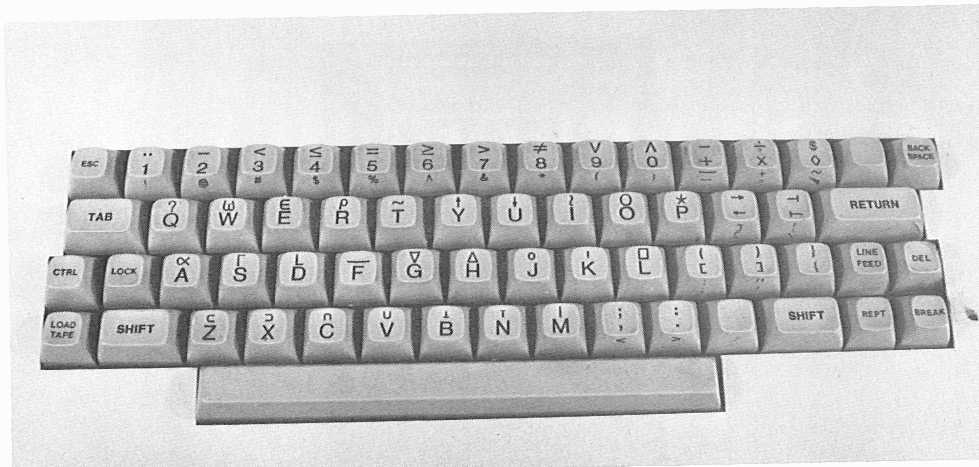
Re:Hey, now, I like my bizarre IBM-age keyboard.
That was for programming in APL. I saw an APL keyword once. It was like a Commodore 64 or ZX Spectrum on Steroids. There were more hieroglyphics on that keyboard than an SG-1 stargate. APL keyboard.
-
Re:My predictionActually, most statistical analysis of cop behavior show that cops still harass minorities more than you'd statistically expect from their greater chance to commit crime:
"In the period for which we have data, 1 in 7.9 whites stopped were arrested, compared with approximately 1 in 8.8 Hispanics and 1 in 9.5 blacks. These data are consistent with our general conclusion that the police are disproportionately stopping minorities; the stops of whites are more “efcient” and are more likely to lead to arrests"
http://www.stat.columbia.edu/~gelman/research/published/frisk9.pdf
-
Re:As an American
This isn't Twitter, you could post the full URL.
To answer your actually point, I could suggest this site:
http://blogs.ei.columbia.edu/2010/10/29/who-said-what-answering-ross-mckitrick%E2%80%99s-%E2%80%9Cresponse-to-misinformation-from-deutsche-bank%E2%80%9D-part-ii/
which answers the first of the emails listed in that article, but you clearly stopped paying attention a few months ago, so I won't waste any of my time answering the other points. -
Re:Inaudible to people, perhaps..
With directional elements, the wave-front is no longer spherical - assuming a beam (plane-wave front), the exponential attenuation (due to absorption) holds.
With a best-case cylindrical waveform, the rule of thumb slides to 3dB per doubling of distance.
And so what? Phones aren't made with directional elements. They don't emit cylindrical waveforms. There's one or more little electret mics, and an earspeaker that each operate through a small hole. These arrangements are not things that are known for their superb directionality, but rather the opposite.
Often, there's also a small loudspeaker (used for speakerphone, ringer, etc) which is also not designed to be directional (so you can, you know, hear it ring).
And it doesn't matter. I'll repeat it again: TFA is about hardware that exists today. And today's hardware doesn't work in the way that you're going on about.
If we're going to go about changing the hardware to fit, then the concept described in TFA loses its merit over other technologies.
The human ear is able to pick up to 20 kHz, and people over 40 are able to hear at most 16-18 kHz (if ever). This is why 22 kHz is meant to be the absolute upper frequency to digitally encode on an Audio CD and thus 44 kHz the maximum sampling rate required for "absolute audiophile perfection".
Let us not muddy the waters with a discussion of "audiophile perfection." You'll bring out the trolls, many of whom would tell you everything there is that is wrong with recordings at 44.1KHz.
And you're wrong about why 44.1kHz was selected, but that's OK -- lots of folks are wrong about it. 44.1kHz was chosen as a sampling rate both because it was greater than ~20kHz*2, and it fit neatly into the digital recorders of the time (which generally consisted of a U-matic video deck with a PCM adapter, the Sony PCM-1600 being the first of such beasts available).
In other words, 44.1kHz was convenient, and was in keeping with KISS. A Nyquist limit of 22.5kHz merely is a product of the implementation, not a design goal to allow audiophilic nirvana. (Reference with maths).
All the above as an estimation for what frequency a ADC/DAC in a smart phone can be capable of: my guess - an upper limit of 30-36 kHz. Given the amount of information that a NFP requires (hundreds of bytes, including an encryption key), the fact that tone encoding is not sensitive to amplitude/power variations, the fact that directionality of sound is easier to implement than in RF, the band between 20 to 30 kHz may be just enough to implement the NFP with a better protection for eavesdropping than using radio.
No. The band from 20 to 30kHz doesn't work. The maximum sampling rate that can be reasonably expected to be supported by a reasonably modern, existing (remember the context) phone is 48kHz, which means that frequencies above 24kHz cannot be handled at all. Remember, this is supposed to work with existing devices.
Furthermore, I would be absolutely shocked if any of the speakers or microphones (along with the associated filters, amplifiers, and other analog componentry) on a handset were useful at all above 15kHz in any reliable fashion across different devices. Remember, this is supposed to work with existing devices, wherein the primary design consideration is voice audio over the telephone network (which tops out at 4KHz, anyway), with a small side of watching stupid videos on Youtube. KISS, etc.
Now, given the wavelengths involved, it might actually be easier to design a small directional loudspeaker fo
-
Re:The data shows...
If you want to look at a trend look at the red or blue lines:
http://www.columbia.edu/~mhs119/Temperature/dTs_60+132mons.gif
1998 was a rare outlier event. If you want to argue trends, don't focus on the noise.
-
Re:Well damn...
Same-sex marriage is a battle that's essentially won in the west. Sure, some countries with a strong religious conservative population aren't -entirely- there yet, but you only have to plot the percentage of people who support it over time to see clear as day that it's just a matter of time.
Look at this for example: http://www.stat.columbia.edu/~cook/movabletype/archives/2009/06/future_trends_f_1.html
Will some of the young people become more conservative as they mature ? Yes, certainly. But will more than half of the people in the 18-29 age-group change their mind by the time they're 60, to become as conservative as todays 60-year-olds ? No way !
Offcourse this trend parallells diminishing influence from religion, there's a pretty clear correlation between high support of same-sex marriage, and low importance placed on religion.
-
Not the Higgs
Sorry, the summary and title is just plain incorrect. This announcement has nothing to do with the Higgs.
A few months ago, CDF claimed that they detected a new particle which could not be the higgs, but was speculated to be a new particle. As explained here, it wasn't possible for the new particle to be the Higgs.
Today DZERO announced that they did not see any signal where CDF claimed to see one. So one of the two projects has an error in their analysis.
More info orig, new announcement, DZERO refutes, another source, even another source
-
of course you can, but not as nuclear lemmings
As a german, i am really astonished, how the nuclear engergy industry has turned most posters into "nuclear lemmings". Where is the "yes we can" nation ? Where is the nation with the engineers that can do the job ?
The US have better preconditions than germany in using sun und wind energy (see e.g. http://www.clca.columbia.edu/papers/sun&wind-1.pdf). You just have to move your butt and do something instead of just sitting dumb parroting "nuclear engery is fine". Build solar power, build windparks, build DC transmission lines, build power storages (e.g. compressing air,
There are many reasons to abandon nuclear energy, the most important for me:
1) The waste: Hopefully, thousands of generations will follow us. Every single generation will have to deal (e.g. evade polluting ground water,move it from one hole to another, etc) with the waste we produced in just 3-6 generations
2) The need for "heros": In case the of the "maximum credible accident" as in Fukushima, you have to send in real people to work in 4Sievert/h environments. In the soviet union, they just ordered them to do so, in Fukushima the typical japanese"mindsetting" ensures enough people are there to handle the job. But what do you do in a democracy in this case ? Call for "heros" ? It's unethical to rely on a technology that can enforce a situation where you have to accept to badly damage the worker's health.
3) The limited resources: The nuclear resources are very limited. They will be gone in 2-3 generations at its best. The wars for the last resources will start ealier, I think no one can tell exactly, when. Again hopefullye thousands of generations will follow us. It's unethical to use up the resources in just a few generations when there is no need to do it.
For germany, it is fine that we are the first. We move our butt. We can continue to grow in these markets and technology. All other nations must follow (it's just when, not if).
-
Re:In b4 losers asking why he didn't kill himself
The unreasonable part is that some moron can block my consent to such experiments. When did we redefine freedom as "what lawmakers decide".
I think there is overlap with the ethics of selling human organs:
Organ sales: Compromising ethics
What proponents of the selling of organs for transplant call a 'choice,' I call the right to be cruelly exploited. Democratic societies have always limited our ability to harm ourselves, hence, workplace safety, child labor, or minimum wage laws that forbid a 5-year-old to 'choose' to take a dangerous, low-paying job. (Even when someone faces dire poverty, we do not permit him to sell himself into slavery.) Similarly, the laws barring organ sales are intended to protect those who, out of economic desperation, would be harmed by those with more money.
What's more, it is a highly dubious proposition that selling an organ offers even the very poor meaningful recourse. A few years after taking such a perilous step, the seller is apt to find himself in unchanged economic circumstances, albeit with one fewer kidney and the attendant health risks. There are better ways to respond to the problems of poverty than by expanding the opportunity for the rich to harvest the organs of the poor. And there are better ways to reduce the waiting list for kidney transplants: I particularly admired FL Delmonico's noting what preventive medicine can achieve.
It is true that we need to expand the pool of organs available for transplant, but there are ways to do that without endangering the most vulnerable members of society. One plan would make the use of cadaveric organs routine, switching from the current opt-in system to allowing those folks with, for example, religious objections, to opt out. It is curious that those who resist such an approach show more concern for the sentiments of the dead than the health of the living.
I assume you see nothing wrong with this, nobody in need of help? Three men charged in 'dungeon' castration
Laws establish limits, its been that way since before recorded history.
-
back up your statement
U.S. nuclear workers have LOWER than average incidence of cancer deaths and heart deaths, please provide the sources for your imagining that it is higher for them. It's called the "healthy worker effect", and having worked in nuclear plants they take safety much more seriously than other industrial plants.
http://www.columbia.edu/cu/news/04/11/nuclear_power.html -
Re:Browser based?
Also, Kermit is a terminal emulator. Pick a different name.
They just have to hold their breath for eight more weeks.
-
Re:UK Government Hinders WiFi
There's no correlation. The sun has been getting weaker since the 1980's, while global temperature has gone up.
Compare black line here:
http://upload.wikimedia.org/wikipedia/commons/thumb/2/28/Sunspot_Numbers.png/800px-Sunspot_Numbers.pngWith this: http://www.columbia.edu/~mhs119/Temperature/dTs_60+132mons.gif
-
Re:Near the end of the hype?
Try it if you doubt, ask a True Believer masquarading as a scientist what test could falsify their theory.
Simple, a long term global temperature trend that doesn't go up despite predictions would falsify the theory.
But it doesn't look like there's much chance of that:
http://www.columbia.edu/~mhs119/Temperature/dTs_60+132mons.gif -
I question Dr. Taylor's credentials...
Checking Columbia's website the first Mark C Taylor I find is chair of the Dept of Religion. It also says his PhD is in religion. I suspect he might not have much first-hand experience with scientific graduate programs, to know how cross-disciplinary they are. For that matter, the general push for NIH and NSF research funding has been for cross-disciplinary collaborative research.
Not to say that our system is perfect - it most certainly is not - I'm just not sure he's the right guy to evaluate it. -
Mark Taylor
Mark C. Taylor's PhD is in religion. What was that about providing clean water to a growing population?
-
Re:What could be Kermit's most interesting legacy
So conceivably an open source Kermit-95 with just the SSH ripped out (if really necessary) could be made avaiable, if that would be all...
Alternativelly a legitimate message could be: C-Kermit is better and allready BSD so it's better in the long run even if Kermit-95 has some adventage in dying old machines
From the Kermit-95 project page:
On or before June 30th, Kermit 95 source code will be released with the Open Source Simplified BSD License, except for a few modules containing code that is proprietary to other companies.
-
Re:What could be Kermit's most interesting legacyIn case it's not clear from what Jeff said, Kermit 95 binaries that contain code that does strong encryption (and Kermit 95, thanks to Jeff, contains quite a bit of it!) can not be made publicly available on the Internet because US export law does not allow that it finds its way to certain countries. It might be possible to build a version of K95 that lacks encryption and to make it available for public download but without an SSH client it wouldn't be very useful, and anyway it's not my decision.
The source code for the Kerberos, SSL/TLS, and SRP security in Kermit 95 is already publicly available, and has been since 1997, since it is shared with C-Kermit. There is no restriction of publishing security source code, only binaries. When binaries are sold, that gives the required degree of accountability as to where they are going.
Kermit 95's SSH code will be published; it is "merely" an adaptation of OpenSSH. The parts that will not be published, as stated on the website, are parts that Columbia does not hold the rights to. The main piece that falls into this category is the XYZMODEM code, which was licensed from a company in Finland. Other pieces include some obscure networking methods like "SuperLAT". Also the graphical Dialer... I suppose the code for that can be released, but the software that "compiles" the code no longer exists; the company that made it disappeared.
As for the Kermit 95 manual, I received permission a few days ago to release it to the public and it is now available in the Kermit website. In the time I have left, I'll do my best to get a reasonable K95 source package together. I also have to release a major new C-Kermit version (no small task). Meanhwile, I have just released Embedded Kermit with an Open Source license.
It's nice to see all the reminiscing about Commodore 64s and 300-baud modems and BBSs and such, and it appears that many Slashdot readers are surprised to find the the Kermit Project still exists after all these years if all Kermit software does is transfer files VERY SLOWLY over 300-baud modems and emulate a VT52, but the Kermit Project website is where it has always been and you could spend several weeks reading it to find out what you missed since 1983. A good place to find an overview is here:
http://kermit.columbia.edu/kermit.html
The transition plan is here:
http://kermit.columbia.edu/transition.html
and progress is reported here:
http://kermit.columbia.edu/whatsnew.html
Like all of you, I wish Kermit software could have been "Free in the sense of Freedom" all these years, but once Kermit had fulfilled the original purpose for which it was created at Columbia, the only way Columbia was going to allow us to continue working on it was if we raised the money ourselves. And doing so, we provided good jobs for a fair number of people for about 20 years each, on average, and I like to think we made a difference.
Frank da Cruz
Founder, Director, and sole surviving member,
The Kermit Project, Columbia University, 1981-2011. -
Re:What could be Kermit's most interesting legacyIn case it's not clear from what Jeff said, Kermit 95 binaries that contain code that does strong encryption (and Kermit 95, thanks to Jeff, contains quite a bit of it!) can not be made publicly available on the Internet because US export law does not allow that it finds its way to certain countries. It might be possible to build a version of K95 that lacks encryption and to make it available for public download but without an SSH client it wouldn't be very useful, and anyway it's not my decision.
The source code for the Kerberos, SSL/TLS, and SRP security in Kermit 95 is already publicly available, and has been since 1997, since it is shared with C-Kermit. There is no restriction of publishing security source code, only binaries. When binaries are sold, that gives the required degree of accountability as to where they are going.
Kermit 95's SSH code will be published; it is "merely" an adaptation of OpenSSH. The parts that will not be published, as stated on the website, are parts that Columbia does not hold the rights to. The main piece that falls into this category is the XYZMODEM code, which was licensed from a company in Finland. Other pieces include some obscure networking methods like "SuperLAT". Also the graphical Dialer... I suppose the code for that can be released, but the software that "compiles" the code no longer exists; the company that made it disappeared.
As for the Kermit 95 manual, I received permission a few days ago to release it to the public and it is now available in the Kermit website. In the time I have left, I'll do my best to get a reasonable K95 source package together. I also have to release a major new C-Kermit version (no small task). Meanhwile, I have just released Embedded Kermit with an Open Source license.
It's nice to see all the reminiscing about Commodore 64s and 300-baud modems and BBSs and such, and it appears that many Slashdot readers are surprised to find the the Kermit Project still exists after all these years if all Kermit software does is transfer files VERY SLOWLY over 300-baud modems and emulate a VT52, but the Kermit Project website is where it has always been and you could spend several weeks reading it to find out what you missed since 1983. A good place to find an overview is here:
http://kermit.columbia.edu/kermit.html
The transition plan is here:
http://kermit.columbia.edu/transition.html
and progress is reported here:
http://kermit.columbia.edu/whatsnew.html
Like all of you, I wish Kermit software could have been "Free in the sense of Freedom" all these years, but once Kermit had fulfilled the original purpose for which it was created at Columbia, the only way Columbia was going to allow us to continue working on it was if we raised the money ourselves. And doing so, we provided good jobs for a fair number of people for about 20 years each, on average, and I like to think we made a difference.
Frank da Cruz
Founder, Director, and sole surviving member,
The Kermit Project, Columbia University, 1981-2011. -
Re:What could be Kermit's most interesting legacyIn case it's not clear from what Jeff said, Kermit 95 binaries that contain code that does strong encryption (and Kermit 95, thanks to Jeff, contains quite a bit of it!) can not be made publicly available on the Internet because US export law does not allow that it finds its way to certain countries. It might be possible to build a version of K95 that lacks encryption and to make it available for public download but without an SSH client it wouldn't be very useful, and anyway it's not my decision.
The source code for the Kerberos, SSL/TLS, and SRP security in Kermit 95 is already publicly available, and has been since 1997, since it is shared with C-Kermit. There is no restriction of publishing security source code, only binaries. When binaries are sold, that gives the required degree of accountability as to where they are going.
Kermit 95's SSH code will be published; it is "merely" an adaptation of OpenSSH. The parts that will not be published, as stated on the website, are parts that Columbia does not hold the rights to. The main piece that falls into this category is the XYZMODEM code, which was licensed from a company in Finland. Other pieces include some obscure networking methods like "SuperLAT". Also the graphical Dialer... I suppose the code for that can be released, but the software that "compiles" the code no longer exists; the company that made it disappeared.
As for the Kermit 95 manual, I received permission a few days ago to release it to the public and it is now available in the Kermit website. In the time I have left, I'll do my best to get a reasonable K95 source package together. I also have to release a major new C-Kermit version (no small task). Meanhwile, I have just released Embedded Kermit with an Open Source license.
It's nice to see all the reminiscing about Commodore 64s and 300-baud modems and BBSs and such, and it appears that many Slashdot readers are surprised to find the the Kermit Project still exists after all these years if all Kermit software does is transfer files VERY SLOWLY over 300-baud modems and emulate a VT52, but the Kermit Project website is where it has always been and you could spend several weeks reading it to find out what you missed since 1983. A good place to find an overview is here:
http://kermit.columbia.edu/kermit.html
The transition plan is here:
http://kermit.columbia.edu/transition.html
and progress is reported here:
http://kermit.columbia.edu/whatsnew.html
Like all of you, I wish Kermit software could have been "Free in the sense of Freedom" all these years, but once Kermit had fulfilled the original purpose for which it was created at Columbia, the only way Columbia was going to allow us to continue working on it was if we raised the money ourselves. And doing so, we provided good jobs for a fair number of people for about 20 years each, on average, and I like to think we made a difference.
Frank da Cruz
Founder, Director, and sole surviving member,
The Kermit Project, Columbia University, 1981-2011. -
Logan's Run!
http://www.columbia.edu/kermit/home.html
Kermit Project Canceled Effective 1 July 2011
As of 29 April 2011 the Kermit Project is 30 years old
So, it reaches 30 years old and they immediately kill it. I'm sure I've heard of something like that somewhere before...
-
Re:Port Royal Jamaica Analogs?
"The reason I'm asking is, has the land that is flooded in Japan actually subsided to below sea level due to the earthquake, or is it simply still flooded?"
In general, it's flooded temporarily. The very wide tsunami wave comes up, WAY up, stays up for 15-30 minutes, starts flowing back out again. Draining could take a while, but it will happen. There weren't particularly major changes of land elevation in association with this earthquake, although they might be significant in some areas (see below). Even small changes are measurable (GPS measurements are very precise and the arrays in Japan are very extensive), but we're probably talking no more than a metre, and usually a lot less. Big changes in elevation (several metres, like you describe in Jamaica) tend to happen closer to the area where the fault plane shifts, and in this case most of the displacement on the fault occurred quite some distance offshore, so the land elevation changes are comparatively small.
There's a nice map of the horizontal and vertical displacements (measured and modeled) at this Caltech site. From my quick look it appears all the vertical displacements are indeed less than a metre. If I'm reading the plot right (I'm assuming "down" on the plot is "down" in the real world), on land they are mostly down, which isn't so good. You might be right about the possibility of some permanent flooding, but we're still talking small changes in places already within a metre of sea level, not "sink the city" scale.
The slip map on that same page is a little harder to explain and requires some understanding of the fault geometry, but basically it shows the amount of displacement that occurred across the fault plane and the direction it moved. The fault has a thrust geometry in this case, which is typical where you have lateral compression, such as where you have the Pacific Plate converging with the Eurasian Plate along the subduction zone that runs in the oceanic trench beside Japan. With the fault plane likely dipping down towards the northwest (NW), it means the NW side of the fault (the hanging wall) moved up, whereas the SW side (the footwall) moved down. In the horizontal plane, where most of the motion appears to have been, that also means the NW side (Japan) moved towards the ESE (i.e. towards the Pacific). Other data (earthquake focal mechanisms) provide information about the geometry of the fault (it's probably a very low-angle thrust), and further details will emerge with more analysis.
-
Re:For what reason?
I know that's not your point, but bullfighting is not widely accepted in Spain. It is in fact subject of crude debates. 70% of Spaniards said they have no interest whatsoever on bullfighting, which is nonexistent (or in some cases banned) in 22 out of 50 provinces. There are currently about 50 towns which declared themselves to be "anti-bulfighting", and only 7% of the population consider themselves "aficcionados". Also, It was also banned from the public television many years ago.
sources:
www.bullfightingfreeeurope.org
http://www.columbia.edu/itc/spanish/cultura/texts/Gallup_CorridasToros_0702.htm -
Re:Help me out here
Access to fresh water will decrease because people currently live in areas where the melting snow provides water in the summer. Warmer weather means the snow will melt faster and the water will run out faster. Controlled experiments on plants do not show increased food production with increased carbon dioxide. You'll have to provide reasoning for your claim that the poorest countries will suffer the most. You seem to be making baseless assertions that agree with the conclusions you've already drawn, rather than looking at all the available evidence. This is called confirmation bias.
-
Re:Help me out here
Is there enough statistically significant clear, objective data that is available to be verified that indicates anything with any amount of confidence?
Yes. Anyone honestly interested in understanding this or any other scientific finding can start their education here:
http://en.wikipedia.org/wiki/Confidence_intervalAnd once you understand the principles of statistical confidence, you can get some data and run the numbers:
http://rainbow.ldeo.columbia.edu/datasources.htmlOr you could just trust in the scientific community that does this kind of research for a living to not be part some some enormous, X-files worthy conspiracy.
Sorry if this all sounds patronizing, but it really pains me when I see people trusting politicians more than scientists.
-
Star Trek and artificial scarcity?
Some of these seem like mostly trumped-up plot devices to make stories to appeal to 20th century audiences, but I'd agree others may always be with us as possible conflicts.
* "rare natural resources" -- to the best of our knowledge, nothing is that rare in the universe that we need to support an unimaginable number of living beings in the galaxy and beyond (as in, millions of quadrillions of people and their biospheres). We have stars for power, we have lots of mass orbiting around to build space habitats, and with artifical retinas like in this story, there will be endless robotic labot to turn matter using solar energy into whatever humanity wants. Star Trek invented stuff that could not be replicated like "latinum", but in practice, who really needs it?
* "control of habitable planets (and the power they bring)" -- in the future, few in their right minds in an advanced space faring society would want to live on a planet, given so many ecological/political restrictions, so little energy flux, being so far from happening city habitats, being stuck at the bottom of a gravity well, beign so corwded, being so dirty, being so poor, being so full of strange diseases, being full of uneducated people who coudl not get into space, being so culturally backwards, and so on. See: http://space.mike-combs.com/ I'm not saying some tiny percent of the quadrillions of people (and other sentients/AIs) living in the solar system in advanced space habitats someday might not want to visit Earth on a pilgrimage, in the same way some very few people from the USA may go on a trip for a week or two to Africa to get a feel for where humanity is from and then go back home glad they don't live there, feeling sorry of the inhabitants, and sponsoring villages there. Actually, places in Africa may be way more advanced culturally than the USA in a lot of ways, so this analogy doesn't quite hold.
* "culture and politics" -- yes, I agree people will continue to have conflicts over these, which boil down to things like issues of status, impressing the opposite sex, aesthetics, and managing mental illness like a desire for "financial obesity".
* "Sometimes one race just hates another, and wants to fight over it" -- there are less reasons for hatred if there is less conflict over resources. I think some of this is just trumped up plot devices, especially given advanced social technology for mediation. One group related to conflict resolution:
http://www.tc.columbia.edu/icccr/index.asp?Id=About+the+ICCCR&Info=Founder%3A+Morton+Deutsch* "The Vulcans and Romulans are in conflict due to their historic dispute" -- yes, essentially, a war over philosophy/religion. I agree this may always be an issue, coming down to aesthetics and identity.
* "the Klingon culture is heavily militaristic and demands war as the only route to honor" -- yes, this may always be an issue, and it connects with trying to impress potential mates, too. See James P. Hogan's Voyage from Yesteryear for at least one alternative.
However, while I disputed planets having much value above, I could believe there might be broader conflicts about star systems, in the same way some Europeans committed genocide against the Native Americans to get the land they were living on and from. We could potentially see arguments over what aesthetic philosophy or genetic paradigm controlled a solar system, true, even if the planets themselves might not be of much interest (other than maybe as sources of raw materials).
So, a more believable Star Trek might have cultures fighting over control of a star's Oort cloud material a light year away from the star for use in building space habitats? But, such fights would also
-
Singularities considered harmful? In == out?
"I suggest you don't approach singularities."
Probably good advice in general. But, for good or bad, a combination of competition, greed, evolution, curiousity, promises about longevity, pleasure traps, capitalistic short-term profit motive, and other things seem to be driving us towards one or more of them.
Which one of those allegedly "killed the cat" again?
http://en.wikipedia.org/wiki/Curiosity_killed_the_catApparently though, according to the above link, the original useage was more "worries, cares, and sorrows killed the cat..."
My guess is that how we come out of any singularity may have something to do with the path we take going into one... Do we go into a singularity having alleviated global sorrows with a basic income, a gift economy, demosratic resource-based palnning, and local self-reliance/subsistence through shared open source advanced technology like RepRap 3D printing, organic gardens with heirloom seeds, and even solar panels/cold fusion, or do we go into a singularity with a world at military and economic war with itself using the tools of abundance as weapons to create artificial scarcity?
"Shared joy is doubled joy, shared sorrow is halved sorrow" from an old proverb.
So, if we are falling into a singularity, at least we can give some thought to whether we should be holding each other's hands rather than holding each other's throats as we fall into it... Related:
http://www.alfiekohn.org/books/nc.htm
http://www.tc.columbia.edu/icccr/index.asp?Id=About+the+ICCCR&Info=Founder%3A+Morton+Deutsch -
Re:Albedo change?
Volcanic ash changing the albedo of Greenland's ice might explain ice melting in Greenland. But the melting of ice in Greenland is part of a larger picture of ice all around the world melting. For example, ice is also melting in Antarctica. The melting has been worldwide and has been occurring for decades. A small volcanic eruption will cause no more than a temporary, insignificant blip against this long-term, global phenomenon.
-
The meaning of exponential
When people move, often they vacate a house that someone else moves into. They aren't just fleeing disaster. The exchange of housing doesn't destroy value, disaster does. How bad could it be? Hansen and Sato have a draft paper out talking about exponentially growing mass loss from ice sheets. They are talking about several meters of sea level rise this century. http://www.columbia.edu/~jeh1/mailings/2011/20110118_MilankovicPaper.pdf
-
My favorite paper on "proofs"
Social Processes and Proofs of Theorems and Programs by DeMillo, Lipton, and Perlis. Let the social process begin.
-
Re:Passionate scepticism
Still not seeing any citations, but perhaps you should be reviewing your own examples. The hockey stick has been confirmed by multiple independent lines of evidence:
McIntyre 2004 claimed that the Mann 1999's hockey-stick graph shape was a result of the analysis method used (principal components analysis), and was not statistically significant. However, the National Center for Atmospheric Research reconstructed (Wahl 2007) the graph using a variety of techniques (with and without principal components analysis), and with some slightly different temperatures in the 15th century, confirmed the hockey stick. Furthermore, independent measurements from boreholes (Huang 2000"), stalagmites (Smith 2006) and glaciers (Oerlemans 2005) all confirm the same dramatic recent temperature rises. Mann 2008 combines these with ice cores, coral and lake sediments to confirm the same hockey stick shape over the last 1300 years, without requiring the disputed tree-ring data.
If you're referring to Steig 2009, perhaps you can point us to evidence that discredits this? You'll have to forgive us for not taking your claims that it is "unmitigated bollocks" at face value. Rather, measurements from the GRACE satellite (Velicogna 2009) show very clearly that the Antarctic land ice sheet has lost around 900 gigatonnes in the last 7 years, and this loss rate is accelerating, even in the previously-thought-stable East Antarctica (Chen 2009). The Antarctic sea ice sheet is actually increasing, however, for numerous possible reasons, but at a lower rate than the land ice loss.
-
Re:Don't get into the science pool if you can't flThat doesn't seem to have slowed String Theory down
- Observe (the universe)
- Question (Where is the missing mass? Why is there more matter than anti-matter?)
- Hypothesize (X particles)
- Predict (X particles will do this thing which we have not yet observed)
- Test/experiment (Do they?)
- Analysis/Conclusion
At the moment, they are at #3. Unless they can get to both #4 and #5 then the 'theory' is and will remain idle speculation, suitable only for prompting bad jokes in
-
Re:!Encryption
True enough, but encryption works as a digital signature
No, it doesn't. Encryption without authentication is always subject to terrible attacks. Always include an authenticator in an encrypted message. An attacker not being able to decrypt a message is no barrier to his being able to manipulate it for profit.
-
People confessing to stuff they did not do?
A book that discusses how police get people to do that: http://www.mistakesweremadebutnotbyme.com/
Among other things...
So yes, it is possible a lot of these "confessions" were false, with students just playing it safe.
That book indirectly helps explain why school cling to grades and homework when it has been shown they don't work very well.
http://www.alfiekohn.org/teaching/fdtd-g.htm
http://www.thecaseagainsthomework.com/
http://www.alfiekohn.org/books/pbr.htmAnd it helps explain why competition is still so celebrated in schools when there are better ways of helping people learn together:
http://www.tc.columbia.edu/icccr/index.asp?Id=About+the+ICCCR&Info=Founder%3A+Morton+Deutsch
http://www.tc.columbia.edu/i/a/document/9448_AFrameworkforTeachingConflictResolutionintheSchools1987.pdf
http://www.alfiekohn.org/books/nc.htm -
People confessing to stuff they did not do?
A book that discusses how police get people to do that: http://www.mistakesweremadebutnotbyme.com/
Among other things...
So yes, it is possible a lot of these "confessions" were false, with students just playing it safe.
That book indirectly helps explain why school cling to grades and homework when it has been shown they don't work very well.
http://www.alfiekohn.org/teaching/fdtd-g.htm
http://www.thecaseagainsthomework.com/
http://www.alfiekohn.org/books/pbr.htmAnd it helps explain why competition is still so celebrated in schools when there are better ways of helping people learn together:
http://www.tc.columbia.edu/icccr/index.asp?Id=About+the+ICCCR&Info=Founder%3A+Morton+Deutsch
http://www.tc.columbia.edu/i/a/document/9448_AFrameworkforTeachingConflictResolutionintheSchools1987.pdf
http://www.alfiekohn.org/books/nc.htm