Slashdot Mirror
Domain: druglibrary.org
Stories and comments across the archive that link to druglibrary.org.
Comments · 160
-
Re:They can't stop it
People have been warned about the dangers of drug use for close to 100 years yet, instead of heeding those warnings, people continue to ignore them because it's nothing but the government trying to prevent them from having a good time.
Do you really think that the warnings that smoking cannabis would turn you into a bat were valid? When the government engages in mindless fear-mongering, doesn't that pretty much invalidate anything else they might have to say on the subject? In his congressional testimony, Anslinger claimed, and I quote: "Marihuana is an addictive drug which produces in its users insanity, criminality, and death." Not one of the several compound assertions in that statement is true. Cannabis is not addictive (or at least, no more so than pornography, gambling, or chat-rooms) Cannabis doesn't cause insanity. Cannabis doesn't cause criminality. There are zero recorded instances of a death due to toxic overdose of cannabis. Zero. So this idea that government has only the best interests of The People at heart when it does anything is massively ignorant, and foolishly naive. See this speech by law professor Charles Whitebread about this history of druglaws for some actual history of the government's perfidy in the case of cannabis: http://www.druglibrary.org/sch...
-
Re: IRS is illegal
Doesn't that just reinforce what was already in place prior to the 18th?
That is, alcohol would be something covered by the 10th Amendment ("The powers not delegated to the United States by the Constitution, nor prohibited by it to the states, are reserved to the states respectively, or to the people".)?
I also recall that prior to alcohol prohibition some states were banning the sale of tobacco:
And I can't find a citation now, but I'm sure I've read that there was an effort to have it banned at the federal level but a Congressional committee decided that they did not have that authority and that it was a state issue protected by the 10th.
Then they figured out the power of the Interstate Commerce Clause and we ended up with decisions like Wickard v. Filburn and later Gonzales v. Raich.
I am no legal scholar (certainly not a lawyer), but it seems to me that based on those decisions we didn't actually need an Amendment to enact Prohibition. Or maybe we did and those decisions were wrong and thus the federal prohibition on marijuana and other drugs is unconstitutional. But that's not what SCOTUS has said since so we have to accept those decisions as Constitutional.
I'm in favor of legal marijuana and alcohol but I'm not so sure about all the other drugs including ones available only by prescription - like antibiotics.
I suspect that reflects most American's opinions too so how do we resolve this without passing a new Amendment giving the Feds authority over so many things? Each state could pass their own laws, which would result in a crazy patchwork (kind of like we have now with alcohol at least, but with every other drug thrown in) or the state law could say they'd go along with whatever the feds (DEA? FDA?) decided on most drugs.
Or should the ICC really cover that - and if so, what if the feds wanted to control alcohol again? Well, they do at least impose taxes and we do have the ATF or rather the BATFE. Let's just add marijuana for now and call it "the BATFEM".
I've been in dry counties in Texas, but instead of going to a bar you go to a "club" and most of them just give you a membership or charge you a small fee for one. It kind of blew my mind when I found out that in some parts of Alaska even possession of alcohol was illegal.
Oh well, this was supposed to be about the IRS, Coinbase and Bitcoin.
Bitcoin presents a bunch of legal challenges as well. Should Coinbase have to report bitcoin transactions greater than $10,000 like my bank would if I make a transaction for that amount? It's not even issued by the government.
Where does my Bitcoin wallet even exist?
I don't actually have a bitcoin wallet or any bitcoins and the whole thing seems....somewhat risky at the very least.
-
Re:Here come the science deniers
I hate opioids too. Only take them when I really, really need to. The dangers of pot are extremely minimal compared with tobacco, alcohol and opioids. On top of being addictive, opioids make the pain worse once they wear off, making people go back for more to reduce the now increased pain. Pot does not do that.
http://www.sciencemag.org/news...
I expect the attacks on pot to really intensify now that CA has legalized it. The companies that deal deadly drugs can see the trend, and it is terrifying them.
Pot was never made illegal because of safety concerns. Take a look at Nixon's huge report on pot from the 1970s. They knew it was much less dangerous than alcohol a long time ago.
http://www.cnn.com/2016/03/23/...
Take a look at the Schaffer report commissioned by Nixon: http://www.druglibrary.org/sch...
-
Re:Marijuana deaths?
Citation needed, if you would. Injecting 10mL of any oil into your bloodstream is probably not a good idea, but the LD50 studies I've read put the level somewhere north of 130 mg/kg of pure THC (citing Rosencrantz 1983). Hash oil is potent, but it's unlikely to be better than 60% THC at best, and the higher the potency, the less suitable it would be for injection, since THC is basically a resin. As far as I have been able to determine, hash oil has a density about the same as water, so all told the average person would probably have to shoot up ~14 mL of very pure oil, and even then most of the effects would be due to physical effects of the oil rather than the neurological effects of the drug.
I can definitely see someone dying from injecting oil into their veins. However, as long as you're willing to argue fine technical points, is it still a death from cannabis if the cannabis was immaterial to the cause of death?
Sure; imagine, a guy shoots up some weed, then gets the munchies, so he goes to the store, and he doesn't see the truck coming through the intersection, but it doesn't hit him, and when he gets to the store he steps into the path of a bus, but the bus stops and honks at him, so he goes into the store, and somebody with a gun is holding up the store and shoots at him, but he misses, so he goes to another store, and he buys a bunch of candy, and later on he gets diabetes and he dies; another avoidable cannabis related death.
-
Marijuana deaths?
Citation needed, if you would. Injecting 10mL of any oil into your bloodstream is probably not a good idea, but the LD50 studies I've read put the level somewhere north of 130 mg/kg of pure THC (citing Rosencrantz 1983). Hash oil is potent, but it's unlikely to be better than 60% THC at best, and the higher the potency, the less suitable it would be for injection, since THC is basically a resin. As far as I have been able to determine, hash oil has a density about the same as water, so all told the average person would probably have to shoot up ~14 mL of very pure oil, and even then most of the effects would be due to physical effects of the oil rather than the neurological effects of the drug.
I can definitely see someone dying from injecting oil into their veins. However, as long as you're willing to argue fine technical points, is it still a death from cannabis if the cannabis was immaterial to the cause of death?
-
Re:Naughty cannabis
The first recorded history of anything is 10,000 years ago in China when hemp paper was developed. The first books made were medical journals, the first information written down were the suggested medical uses of cannabis. Do you really believe someone figured out how to make paper and rope from hemp, and subsequently discovered its medical uses from smoking? More likely that a couple thousand years after burning the bush on a communal fire, other uses were discovered.
http://druglibrary.org/schaffer/hemp/history/first12000/1.htm -
Re:Naughty cannabis
Quick Bing search: http://www.druglibrary.org/sch...
That article asserts that the first recorded use of cannabis is in ancient China 10,000 years ago.
-
Re: i want to get my feet wet with a gateway drug
-
Re:But, but, you're using logic and science
Any time someone responds to a study with the general statement "They are wrong, I have an anecdote to prove it!" should be tagged and forever prohibited from participating in discussions or weighing in on decisions on the topic.
Well, they ARE wrong, and I have evidence to back it up, but I don't have it here at hand. What about that? It's in books, in storage.
In particular, they aren't wrong about pot, but rather about alcohol.
Long ago the Canadian government produced a book entitled "The Report of the Canadian Government Commission of Inquiry into the Non-Medical Use of Drugs" (1972). A summary (but only a brief summary) is available HERE. The actual report is a rather large volume.
The Report was primarily about marijuana, but many of the experiments included in the Report compared the effects of marijuana on drivers, compared to alcohol. The amount of impairment at 0.1% BAC was far less than TFA claims. They also concluded, by the way, that the amount of THC necessary to impair a driver significantly was MASSIVE. So massive, that (at least in those days) it was unlikely anyone would be able to smoke that much. Of course that's an average. And that was over 40 years ago. You have to wonder what took the U.S. Fed so damned long, eh?
Further, also long (but not nearly as long) ago, the State of Idaho performed its own "independent" studies on driving while intoxicated. They similarly found that 0.1% BAC is well BEFORE the driving of an average person is significantly affected. Nevertheless, we see the Feds claiming half that as dangerous. Which is typical of Federal government, I have to say. -
Re:Antique laws are to blame
Not this garbage again. If this is true please answer this. Where are Hearst vast forests? Plesae give coordinates so far there is more proof of the elephant graveyard. However you can easily find receipts of his newspaper companies purchasing large quantities of paper and of the paper companies purchasing wood. Since there are no vast Hearst forests he then had to be the stupidest business man in history since he was throwing away a resource that would of resulted in cheaper production costs for him. The reason later laws, the 1937 was a taxation law, passed was not some mythical Hearst stopping it but that the public got upset with the stories and effect on people it was causing.
One comment up, an AC posted this: "Hearst's forest land in Mexico was nationalized in 1937, just as they nationalized oil lands in 1938. No wonder Hearst hated Mexicans. And with high unemployment there was unreasoning hatred over jobs, just as now, even though most americans didn't do agricultural work, just as now. The forests no longer exist because most of them have since been cut down. Much of that was done illegally by drug cartels. The 1937 law was a prohibition masquerading as a tax.
http://www.druglibrary.org/sch...
The garbage is the propaganda campaign that resulted, and which you have apparently swallowed whole. Reefer Madness."
This was the beginning of the demonizing of hemp/marijuana. Those wealthy men then had an (erroneous) belief that their dynasties were being threatened by hemp. They purposely used the word "marijuana" in their anti-hemp campaigns because it was a foreign (Mexican) sounding word that scared people far more than the word "hemp". Marijuana would corrupt our youth and lead to dark-skinned men defiling our white women/ daughters. All of this and more due to now dead white men who (then) were feeling their source of income was being threatened.
-
Re:Federal Analog Act?
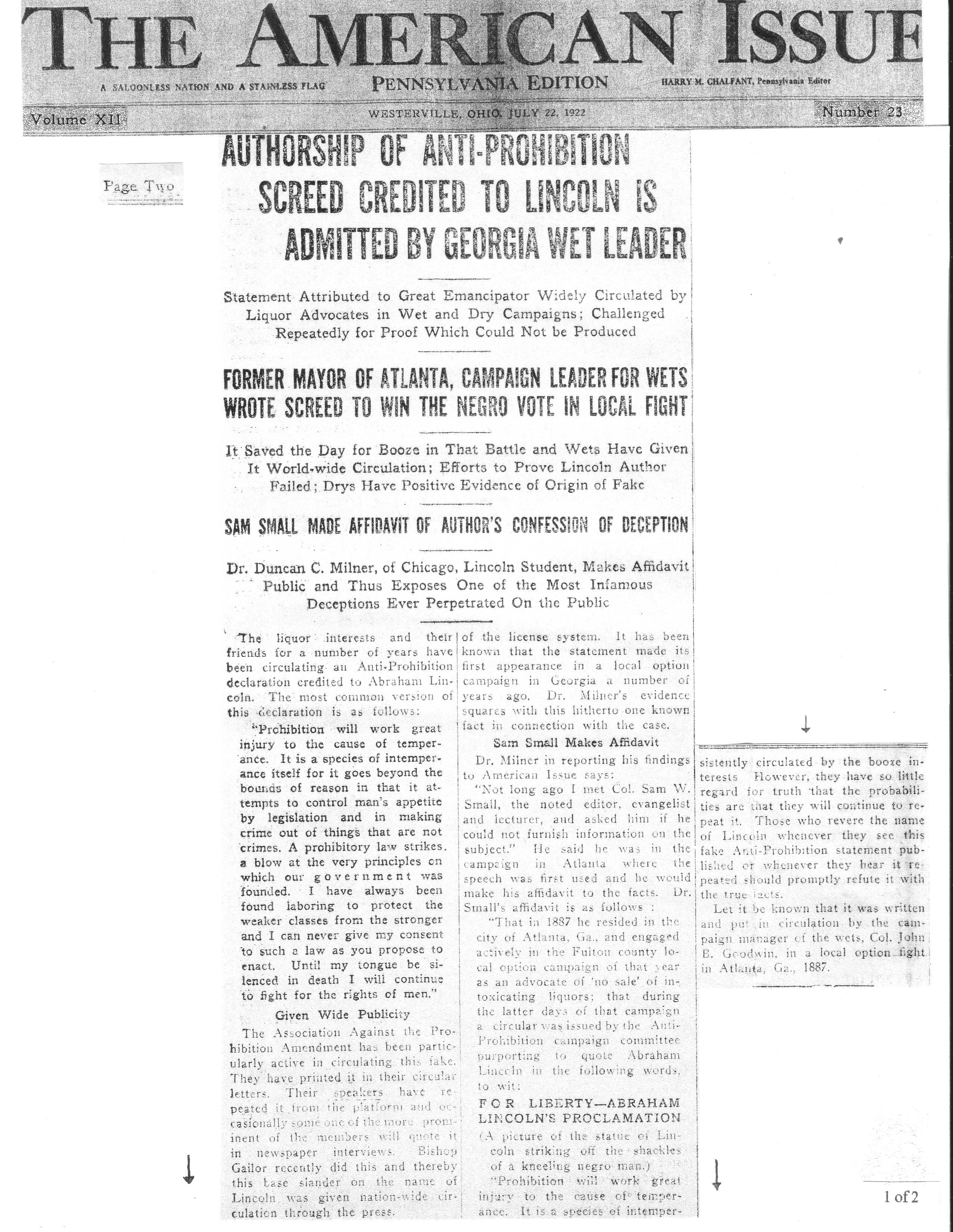
Hmm...apparently that's a fake attribution. (sadly). This quote actually. originated in 1922, not that it makes the statement itself any less factual.
-
Re:Already Exists
Cannabis:
In summary, enormous doses of Delta 9 THC, All THC and concentrated marihuana extract ingested by mouth were unable to produce death or organ pathology in large mammals but did produce fatalities in smaller rodents due to profound central nervous system depression.
The non-fatal consumption of 3000 mg/kg A THC by the dog and monkey would be comparable to a 154-pound human eating approximately 46 pounds (21 kilograms) of 1%-marihuana or 10 pounds of 5% hashish at one time. In addition, 92 mg/kg THC intravenously produced no fatalities in monkeys. These doses would be comparable to a 154-pound human smoking at one time almost three pounds (1.28 kg) of 1%-marihuana or 250,000 times the usual smoked dose and over a million times the minimal effective dose assuming 50% destruction of the THC by smoking.
Thus, evidence from animal studies and human case reports appears to indicate that the ratio of lethal dose to effective dose is quite large. This ratio is much more favorable than that of many other common psychoactive agents including alcohol and barbiturates (Phillips et al. 1971, Brill et al. 1970).
http://www.druglibrary.org/SCHAFFER/LIBRARY/mj_overdose.htm
http://www.oregon.gov/pharmacy/Imports/Marijuana/StaffReview/ReschedulingCannabis-NOTES_3-10.pdf -
Re:identity theft.. inciting to crime.. unauthoriz
Better than the drug raids on people who own cars or houses the police want. Raid and take it all. It's not as uncommon as it should be, there was one in CA where the guy had a gun he grabbed during the home invasion. The police ordered his "hands up" Another ordered him to "put the gun down" While moving his hand from above his head to the ground to comply with both orders, he was killed. No drugs were found. I think that was yet another the police claimed was a "mistake". http://www.druglibrary.org/think/~jnr/botched.htm for another. Hundreds of examples out there.
-
No one knows huh?
Except for the studies that they did years ago in the Netherlands...
-
Re:bullshit on cocaine's addictivenessThat chart was made by asking health professionals about how each drug should be ranked. That's not a very good way of measuring addiction, because it depends on perception more than fact. Science is about observation, hypothesis and testing. Most studies done on the topic show that cocaine is about as addictive as alcohol.
For example, in a study in The Lancet, cocaine is listed as slightly more psychologically addictive as alcohol (2.37 vs 1.93), but physically less addictive (1.3 vs 1.6). In Health also published an article that lists cocaine as less addictive than alcohol. Most studies I've seen list them as relatively equal.
It's hard to get any serious and impartial studies done on the topic because there's such a strong political backlash, should the results be even moderately different than the official government stance.
I'm still not sure that legalization is the right way to handle the drugs issue, but I wish that the topic could be discussed with some objectivity. I'm not a drug user myself, but a large amount of my taxes go to paying for jail time for drug users, which I'm not convinced in the right approach. I just wish people stopped lying about it so that we, as a society, could handle the problem rationally instead of hysterical shrills.
-
the reason is racism, exoticism, fear of unknown
granddaddy's granddaddy was a proper wifebeating drunk in ireland or germany. alcohol is a familiar. therefore it's ok
meanwhile, look at these mexicans and their loco weed! scary otherness! outlaw that stuff!
seriously. this is the reason marijuana is illegal in the usa:
The first group of states to have marijuana laws in that part of the century were Rocky Mountain and southwestern states. By that, I mean Texas, New Mexico, Colorado, Montana. You didn't have to go anywhere but to the legislative records to find out what had motivated those marijuana laws. The only thing you need to know to understand the early marijuana laws in the southwest and Rocky Mountain areas of this country is to know, that in the period just after 1914, into all of those areas was a substantial migration of Mexicans. They had come across the border in search of better economic conditions, they worked heavily as rural laborers, beet field workers, cotton pickers, things of that sort. And with them, they had brought marijuana.
Basically, none of the white people in these states knew anything about marijuana, and I make a distinction between white people and Mexicans to reflect a distinction that any legislator in one of these states at the time would have made. And all you had to do to find out what motivated the marijuana laws in the Rocky mountain and southwestern states was to go to the legislative records themselves. Probably the best single statement was the statement of a proponent of Texas’ first marijuana law. He said on the floor of the Texas Senate, and I quote, "All Mexicans are crazy, and this stuff (referring to marijuana) is what makes them crazy." Or, as the proponent of Montana's first marijuana law said, (and imagine this on the floor of the state legislature) and I quote, "Give one of these Mexican beet field workers a couple of puffs on a marijuana cigarette and he thinks he is in the bullring at Barcelona."
-
Re:countdown to anti-aircraft missles.
> Of course, the USA could just DO THE RIGHT THING and legalise drugs and remove the profit from the drug cartel system,
> but then a bunch of congressmen won't get campaign funds to keep it all illegal.Some say its been tried before:
http://www.druglibrary.org/schaffer/history/om/om15.htmBut of course, its not the same, like all Scotsmen today.
Instead of sorting out the mess caused by the combination of your silly laws with silly individualism (e.g. sending addicts to jails instead of into forced-rehab), just carry on. Those who ignore history...
-
I really wish that Heroin
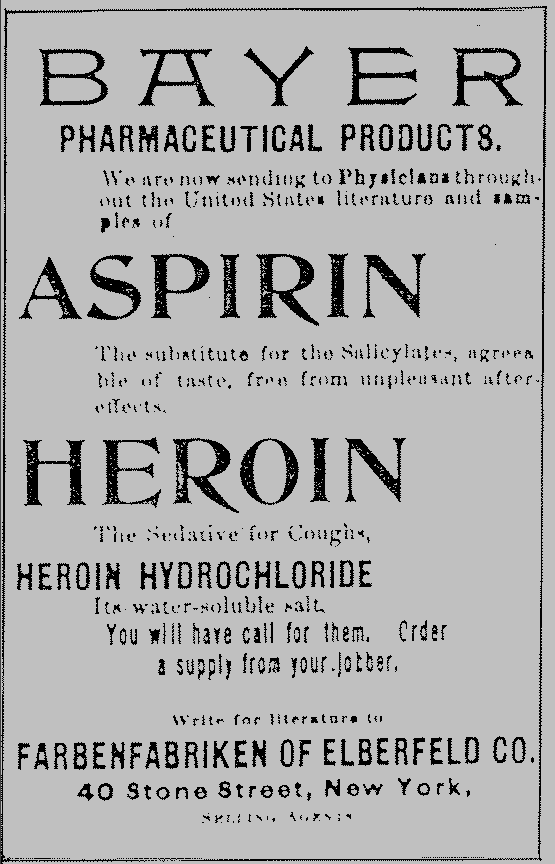
was not used as the be all and end all of evil life destroying drugs as it isn't. Heroin addicts can lead long and productive lives as long as they have access to a clean and affordable supply of their drug of choice. A prime example being Dr. William Stewart Halsted, who is known as the "father of modern surgery". He invented most of the basic techniques of modern surgery during a period of forty years when he was a heroin addict.
If you are interested give this a read it's an eye opener for many people. -
Re:Legalize and Tax
Do yourself a favor and read "The Consumers Union report on licit and illicit drugs" (1972). It will answer that and many other questions. You can read it for free online: http://www.druglibrary.org/schaffer/library/studies/cu/cumenu.htm Often times the thing that makes the drug 'bad ' is not the drug itself, but the laws and stigmas against it.
-
Re:it is harder to get high on
and here's some advertising blurb for the both
For some reason I cannot login. Must be the luddite in me.
-
Re:You just can't legalize ALL substances.
You should do some fact checking. Read this http://www.druglibrary.org/prohibitionresults1.htm before you cry "fallacy" towards my opinion about crack and attempt to back them up with figures from alochol prohibition.
The U.S. Department of Justice Drug Enforcement Administration is no more a valid source of unbiased information about drugs than NORML is. You might as well ask a tobacco company about the dangers of snuff. However, your own link backs me up:
In truth, nobody really knows exactly how much alcohol consumption increased or decreased during Prohibition. The reason was simple enough -- people like Al Capone didn't pay taxes on their product and thereby report their production to the government. Licensed saloons became illegal speakeasies, and many common citizens took advantage of the high sales price of illegal booze by secretly manufacturing booze in their own bathtubs. That's one of the major problems with all drug prohibitions -- they greatly reduce the ability to make accurate judgments about the problem. There is no good way to count the number of illegal dealers, or the people who are secretly making gin in their own bathroom. Therefore, to make such a judgment, we have to rely on a number of indirect indicators.
Grandpa had a beer making kit in his barn, as did lots of other folks.
Crack use has declined for many reasons
Then name a few.
I'm going to sell all my belongings and follow you. Forsaking all other logical thought.
Don't. -
Re:You just can't legalize ALL substances.
You should do some fact checking. Read this http://www.druglibrary.org/prohibitionresults1.htm before you cry "fallacy" towards my opinion about crack and attempt to back them up with figures from alochol prohibition.
Crack use has declined for many reasons, not just the because "people see what it does".
I am, in fact, very happy that you know anybody who would smoke crack under any circumstances at all is already smoking it. I feel much better somehow. I'm going to sell all my belongings and follow you. Forsaking all other logical thought.
-
Re:Drug Cartels
sorry to double reply (I believe it's a sin) Here's one of interest too http://druglibrary.org/schaffer/Library/studies/cu/cu4.html
-
Re:Drug Cartels
I am sorry I cannot find the quote and as I think I said (error on page cannot expand previous comment so going by memory) it might have been sixty minutes. Anyway, here's some food for thought. I hope you read them they are of interest. The surprising truth about heroin and addiction., Heroin is harmless, and if you only read one of these links please read the last, Chapter 5. Some eminent narcotics addicts
-
Re:I stopped reading the responses after...
In a zero to 100 scale, with nicotine being at the very top, cannabis is rated 21 - well below caffeine, alcohol, or valium. sauce
-
Re:my brother died that way too
the lethal dose of marijuana is roughly a WHOLE FIELD OF POT.
I call BS.
-
Re:Acetaminophen
I don't smoke, but even after long-term "soberness," I sure as hell wish I could.
Marijuana was classed as a Schedule I narcotic pending the results of this study. I invite you to review this study yourself, as well as the implementation of its recommendations.
I find it interesting that all negative replies to my simple assertion that marijuana use is habit forming have had these 3 things in common:
1) I don't know what I'm talking about. I certainly didn't come up with this idea from literally smoking my weight in weed.
2) Marijuana isn't habit forming (Even though you state that you'd love to get at some, even after long-term sobriety)
3) Lastly, all posts go into a rant about what caused marijuana to be illegalized in the first place, which is of course well documented, and completely irrelevant to the point. Alcohol is habit forming and legal, cigarettes are habit forming and legal. So what? What does habit-forming ability have shit to do with legality of the substance?
-
Re:Acetaminophen
Bullshit. This is a classic line from chronic government-lies believers. The fact is that when you quit, most people experience boredom. Anyone experiencing the symptoms you describe probably had them before they started smoking. I don't smoke, but even after long-term "soberness," I sure as hell wish I could.
Marijuana was classed as a Schedule I narcotic pending the results of this study. I invite you to review this study yourself, as well as the implementation of its recommendations.
-
Re:Why?
Biofuels got a bad rap because the wrong crops are being used. Instead of food crops that leech from the soil hemp crops should have been used since hemp regenerates the soil and hey - it's a weed - so the yield is much higher.
How and why corn got used instead boggles the mind.
From http://www.druglibrary.org/schaffer/hemp/hempfuel.htm
"FARMERS MUST BE ALLOWED TO GROW an energy crop capable of producing 10 tons per acre in 90-120 days. This crop must be woody in nature and high in lignocellulose. It must be able to grow in all climactic zones in America. And it should not compete with food crops for the most productive land, but be grown in rotation with food crops or on marginal land where food crop production isn't profitable." - and that would be hemp.....
It's not that bio-fuels are necessarily a bad idea it's the implementation (thus far) of the idea that sucked.
-
Re:Oakland needs to mellow out
Wikipedia is hardly a citation, you could have added before linking! The other is an anti-drug site making unsupported assertions. Hardly an unbiased source.
Here is a study:
http://www.springerlink.com/content/n645363732641104/
Summary, users with no previous usage experience did experience reduced reaction time on the first experience. Afterward they showed no reduction in reaction time. Users with previous experience showed no difference in reaction time whether using marijuana or not.
"(1 bong can intoxicate an individual as much as 100 ml of hard liquor in one go, plus marijuana intoxication is much faster)"
Yeah, but a bong isn't a single dose it is more like 5-10 (sizes aren't standardized). That is why they have one hitters. In an experienced smoker with tolerance a single hitter of even the most potent material isn't enough to feel a buzz.
Even so, I agree there is a smaller 'safe zone.' But the increased intoxication speed (near instant) allows for more easily controlled dosing. You can tell before the next puff how the last puff impacted you. In contrast, if you are doing shots you won't feel shot one until after drinking shot three!
Some more studies:
http://www.nature.com/npp/journal/v25/n5/full/1395716a.html
"Although marijuana significantly increased the number of premature responses and the time participants required to complete several tasks, it had no effect on accuracy on measures of cognitive flexibility, mental calculation, and reasoning. Additionally, heart rate and several subjective-effect ratings (e.g., "Good Drug Effect," "High," "Mellow") were significantly increased in a Delta9-THC concentration-dependent manner. These data demonstrate that acute marijuana smoking produced minimal effects on complex cognitive task performance in experienced marijuana users."
http://www.druglibrary.org/schaffer/misc/driving/s1p2.htm
Increased doses cause drivers to sit more upright and caused slightly decreased car following ability. However, in actual road test in a dense urban environment alcohol caused impairment relative to placebo, marijuana cause no impairment... but subjects thought it had.
http://alcoholism.about.com/cs/pot/a/blucsd030628.htm
This article refers to a peer reviewed long term study (sorry don't have the study itself) which finds there is NO permanent brain damage caused by marijuana use.
I don't have a handy study with regard to motor skill, only extensive anecdotal evidence. I've yet to see anyone significantly impaired with alcohol who didn't stumble and sway. I've never seen anyone on any dose of marijuana either sway or stumble. Believe me, I've seen and experienced VERY heavy doses of marijuana.
-
Re:Google and spell check makes us lazy.
Having taken all of those drugs and more over the last 14 years I'll definitely say that the scrambled and fried effect is a temporary thing, unless you really work at it
I not only agree but also say the the ultimate reason some of the drugs were made was different than what was sold to the people. Hemp aka marijuana wasn't made illegal because it was a dangerous drug that caused users to become violent or drove them insane. In 1938, hemp was made illegal with the passage and signing of the Marijuana Tax Act of 1937, the February issue of "Popular Mechanics" had an article saying hemp was the New Billion Dollar Crop. While TFA was late it explains why hemp was made illegal. Hemp is one of the most industrially useful plants. An MIT study concluded an area of hemp can produce as much paper as 3 areas of forest. Henry Ford built a car on his Iron Mountain estate that not only used hemp in the interior but was fueled by hemp. Also back then plastics were made from cellulose produced by plants, and hemp was a good source. So it was seen by those who owned vast tracts of forest they cut down for paper making, oil companies, and Du Pont (Du Pont had patents on how to make plastic from petroleum) as a threat to their wealth.
Another example of a drug being made illegal for ulterior motives was opium. Chinese mostly used opium so racists pushed to make it illegal. Because of racism, as well as Chinese driving wages down, the Chinese Exclusion Act also became law making it illegal for Chinese to immigrate to the US in 1882.
Anyway, good luck with things, forming new habits is harder than it sounds, but well worth it to take advantage of our brain's wonderful auto-pilot features
Thanks. I've made some new habits. And broke others, such as smoking. The really hard part is having the desire to keep living. For now I mostly spend several hours a day surfing and watching TV. Since spring I've also been working in my garden as well as riding my bike and or rollerblading, some days I'll do one or the other and some days I'll do both, a few tymes a week.
Falcon
-
studies with "sham needles"
Chinese medicine has always included acupressure as an effective treatment. Indeed, it predates acupuncture -- not surprisingly, people noticed "it feels better if I press and rub here" before they thought, "hey, what if I stick a bamboo splinter into my skin so I can stimulate that point but free up my hands?" Pick up an acupuncture products catalog and you'll find a variety of "pellets" which can be taped to the skin to stimulate the points without puncturing the skin.
So at best, "sham" needles -- i.e., acupressure -- as a control for acupuncture is like using aspirin as a control while investigating a new painkiller.
The study that Yong (not "Tong") mentions also featured treatment via a set of points determined in advance by one therapist, and delivered by another. But when I see my acupuncturist (or even when I give a shiatsu treatment including the use of acupressure points), point selection is determined in part by the response to earlier points. So this is rather different than acupuncture as practiced by knowledgeable practitioners.
That study also excluded patients with previous acupuncture treatment for any condition; based on my experience, however, it seems that it takes some experience with acupuncture to learn how to give feedback to the practitioner, to recognize and report the de qi sensation, so the effectiveness of the treatment increases with experience. (Perhaps there is also something like the habituation required for a cannabis "high" at work here, with the patient learning to interpret and respond to new sensations.) And the study also excluded those with "specific causes of back pain", so would seem to likely include a high proportion of those whose complaints had a strong psychosomatic component, and so would be poorly suited to investigating the physiological mechanisms involved.
This is all too representative of the problems with much acupuncture research: what gets tested often has little to do with Chinese medicine as it is applied by knowledgeable practitioners.
Despite these problems, this study found that "Compared with usual care, individualized acupuncture, standardized acupuncture, and simulated acupuncture [i.e., acupressure] had beneficial and persisting effects on chronic back pain." Nor does the study's comparison of individualized acupuncture vs. standardized acupuncture justify Yong's claim that it did not matter where the needles were placed. It takes some twisting to interpret this study the way that Yong would like to.
And of course the placebo effect plays a role -- as it does in any treatment, including surgery. If my acupuncturist is doing nothing beyond triggering a placebo response in me, the results are still real, and what I pay her for the little show she puts on that lets whatever part of brain is responsible do its thing, is a bargain.
(My bias: I'm and NCCAOM Diplomate in Asian Bodywork Therapy; my practice is a small sideline to my computer geek day job.)
-
Re:Is there a move among police to "go warrantless
no actual movement to decriminalize drugs
Just as you said, "You lack of exposure does not constitute a lack of interest." From the "American Journal of Economics and Sociology", Legalize Drugs Now!. Let's see how many others there are...
- LEAP - Law Enforcement Against Prohibition - Cops Say Legalize Drugs
- What if we legalized all drugs?
- Tom Tancredo Says: Legalize Drugs!
- Commentary: Legalize drugs to stop violence
- Legalize drugs -- all of them
- Is Now The Time To Legalize Drugs?
- Why we should legalize drugs
Those are just the first page of results of legalize drugs. There are about another 245,000 results.
The people want it. That you don't talk to the types of people voting for such things doesn't change the fact they do.
Many of the people don't want it. That you don't talk to the types of people voting for such things doesn't change the fact they don't. And as a matter of fact I have talked to some who want to keep drugs illegal, my sister is one. I've also talked with people who want to bring back Prohibition, they say it will work this tyme. But everyone I know I know where their position is who lives in the real world and not a fantasy want at least some drugs legal. About the only drugs some don't want legal are so called hard drugs like opiates. They don't always know the facts though, for instance it's said an addiction to opiates is nearly if not impossible to break, however as the Rat Park experiment showed given the right environment even those addictions can be broken.
Fight against him? They encouraged him.
Liked J Edgar Hoover? That's a big laugh. Politicians, both Democrats and Republicans, didn't like him. The only reason he kept his position as director of the FBI is because of his extensive collection of private files. They were all afraid he'd blackmail them. As for most people, they didn't know about him or about the files he collected on public figures.
Falcon
-
Re:there will always be a legitimate war on drugs
what you don't understand is that some drugs are far worse themselves to the destruction of freedom (addiction is bars in the mind) than any war on drugs and its effects on society.
No. They aren't. The destruction of freedom wrought by the War on (Some) Drugs is far, far worse than the effects of any drug.
free and unfettered access to the most addictive/ inebriating drugs leads to a growing population of people whose lives have become zombified
No, it doesn't. Look at all the cocaine and opiate addicts and users who have made their mark on the arts and sciences: Freud, Halsted (the "father of modern surgery"), Belushi, Elizabeth Barrett Browning, Jules Verne, Popes Leo XIII and Pius X, President McKinley, Robin Williams, Robert DeNiro, Jack Nicholson, Percy Shelly, Cole Porter, Richard Pryor...I could go on and on.
Which is not to say that cocaine and opiate use are healthy choices or that I'm endorsing them; only that drug prohibition magnifies the negative effects of drug use, creates a violent black market, is corrosive to liberty, and anyone who favors it is either ignorant, stupid, or wicked.
So, look: you're simply ignorant and wrong about drugs and their effects. And yet you're willing to point guns at people and lock them in cages to control their behavior. You should be ashamed.
-
Re:driving home after two beers or a weird plant
Citation needed for being stoned on weed making you a worse driver, please.
USDOT Study. Their conclusion is that it doesn't make you "as bad" a driver as alcohol or other drugs, but that it does impair driving performance, and as such, does pose some safety concern, though should be considered secondary to the risks of alcohol impairment. From the linked article:
In summary, this program of research has shown that marijuana, when taken alone, produces a moderate degree of driving impairment which is related to the consumed THC dose. The impairment manifests itself mainly in the ability to maintain a steady lateral position on the road, but its magnitude is not exceptional in comparison with changes produced by many medicinal drugs and alcohol. Drivers under the influence of marijuana retain insight in their performance and will compensate where they can, for example, by slowing down or increasing effort. As a consequence, THC's adverse effects on driving performance appear relatively small. Still we can easily imagine situations where the influence of marijuana smoking might have an exceedingly dangerous effect; i.e., emergency situations which put high demands on the driver's information processing capacity, prolonged monotonous driving, and after THC has been taken with other drugs, especially alcohol. We therefore agree with Moskowitz' conclusion that "any situation in which safety both for self and others depends upon alertness and capability of control of man-machine interaction precludes the use of marijuana". However, the magnitude of marijuana's, relative to many other drugs', effects also justify Gieringer's (1988) conclusion that "marijuana impairment presents a real, but secondary, safety risk; and that alcohol is the leading drug-related accident risk factor". Of the many psychotropic drugs, licit and illicit, that are available and used by people who subsequently drive, marijuana may well be among the least harmful. Campaigns to discourage the use of marijuana by drivers are certainly warranted. But concentrating a campaign on marijuana alone may not be in proportion to the safety problem it causes.
-
As a kiwi living in the US I have to disagree.
What additional freedoms do you think Americans have? I felt more "free" when I lived in New Zealand - I wasn't tied to a job for health insurance,
Unfortunately there is no free market in health insurance in the US. And there hasn't been sense World War II. Some of us have been fighting for the freedom though.
I wasn't drug tested when I applied for a job,
Some of us have also been fighting to end the War on Drugs. Either politicians haven't learned from Prohibition or they have ulterior motives. Hemp, marijuana, was made illegal only because wealthy and powerful industrialists in the US saw it as a threat. Opium was first made illegal in the City of San Francisco in 1872 because of "anti-Chinese hostility", Chinese were the major users of opium.
I was free to walk barefoot in a shop,
As was I while I lived in Florida.
I didn't have to deal with the massive bureaucracy of health care and taxes here
America has no free market in health insurance, and there is little competition between insurance companies.
I knew that if I lost my job I would get a little help from society until I was back on my feet again
"Unemployment compensation is money received by an unemployed worker from the United States or a state."
Falcon
-
Re:Someone enlighten me
Left out the link to the study of the effects of pot on the unborn:
http://www.druglibrary.org/schaffer/hemp/medical/can-babies.htm -
Re:drugs are bad, mmkay?
The digital letdown was when many of the top ideas generated by the process were to legalize marijuana
Or maybe that's because it's a worthwhile and viable policy objective.
I agree with you there. Marijuana (to my knowledge) was the last natural (as opposed to synthetics and chemical) 'mind altering' substance. Cocaine was outlawed in 1914 with the Harrison Narcotics Tax Act, Opium was made illegal in 1905, alcohol was illegal in 1920 (Prohibition). Marijuana on the other hand was made illegal in 1937 with the Marihuana Tax Act, and while it was a tax the government wouldn't accept the money effectively making it illegal. It was also followed with the Uniform State Narcotic Act
It was also made illegal for the wrong reasons, with massive help from Harry Anslinger. Some of the reasons where financial gains, as people like Harry Anslinger's wife's family, the Mellon family who owned Mellon Financial Corporation. The Mellon Financial Corporation had invested in DuPont who had synthetic products that competed against hemp, amongst others, and that helped since hemp and marijuana aren't very different (they are, but not like and apple to an orange). Another reason was racism, and Harry Anslinger was also a virulent racist, and at the time spun marijuana to be considered a 'color man's' drug, noted of being used by black jazz players and Mexican immigrants (while I'm aware it was not limited to certain people, it was how it was spun at the time). It was also had the use of very distorted 'facts' to help, one of them being the story in Scientific America in March of 1936 ( http://www.druglibrary.org/schaffer/history/menaces_youth.htm ) that stated when marijuana was 'combined with intoxicants, it often makes the smoker vicious, with a desire to fight and kill'. It was also seen as a stepping stone in Harry Anslinger's future when he entered the Federal Bureau of Narcotics to outlaw it. These are of course just some of the reasons.
-
Re:drugs are bad, mmkay?
Continued anti-drug propaganda? Have you never looked up any kind of statistic relating to programs like DARE or anti-drug PSAs? They have absolutely no effect on whether or not kids use drugs. Period. Teenagers such as myself don't take these programs and PSAs seriously because we know we're being lied to. Even the dumbest pot-smoking teenager knows it.
Your assertion that pot smoking can "totally ruin your life when you are about 15" is false; "amotivational syndrome" is a load of shit. Most people who smoke pot in their adolescence try it just a few times; even regular smokers only smoke for perhaps a few years before they lose interest and get on with their lives. Even lifelong smokers are capable of leading successful lives; Carl Sagan was a well-known cannabis user and advocate of its use, and has even said that cannabis has helped inspire his ideas, writings and experiences. As for the link between cannabis and psychosis, it's just that: a link. Not a causal relationship. There's no evidence at all to suggest that cannabis use causes psychotic disorders barring any other confounding factors - such as a genetic predisposition towards psychotic disorders. In most people, psychotic disorders, especially schizophrenia, don't show up until around the age of 19-22. It is very possible that cannabis can trigger psychotic symptoms in people who already have a predisposition, or that people with underlying psychotic disorders are drawn to drug use, or both. Either way, the statistics suggest that you'd have to stop 2,800 heavy male cannabis smokers, or 5,000 heavy female cannabis smokers, to prevent one case of schizophrenia.
In short... cannabis, used knowledgeably and responsibly, isn't dangerous. Anti-drug propaganda is a gigantic waste of tax dollars, and saying that "drugs will continue to be villified" and use viewed as a "contemptible habit" is nothing more than a continuation of that sort of misinformation, and an unfair, baseless discrimination against drug users. Drug use is not inherently irresponsible. Your example with alcoholism is exactly the crux of the issue here. You're blaming the drug (alcohol) for the problem it creates in society, even though you just said that alcohol, when used in reasonable quantities (i.e. when used responsibly) has no significant negative long-term effects. If that's the case, then how can alcohol be causing problems in society? The answer is that it doesn't. Irresponsible people cause problems in society, and drinking alcohol is merely one of many ways in which they act out irresponsibly. Irresponsible people also drive cars and kill people (even without any substances to help); shall we villify the use of cars because they cause such a problem in our society?
The vastly more important thing is to educate people on how to behave responsibly. Yes, it is possible to use cannabis responsibly, just as it is possible to use alcohol responsibly, and the important thing is to show people that it's possible to enjoy these substances - and all the other conveniences of life, like cars - as long as they are careful and responsible about it. That is the kind of drug education we need, not continued villification, which doesn't do anyone any good (after all, we saw how well abstinence-only sex education worked.) I hope this post has opened your eyes to a new perspective on the issue and that you will find at least some validity in what I am saying.
-
Re:Excuse me, editors?
Sure you can. Third offense of just possession of cocaine can get you a $250,000 fine in CT. CT isn't known as the most strict state in the union either. NJ has fines up to $300,000 for selling prescription drugs. Penalties for selling drugs often come with both prison time and fines.
-
Re:Streisand Effect?
[...]I read a law thesis (was partly used as background for Mexico's new drug-permission law) were they stated that the "drug problem" was originally a health-issue which was converted to a criminal-issue by the government.
I'm going to assume the "government" being referred to above is the US Goverment.
The advent of drug laws as we know them was with the Temperance movement. Another good read is here. Rather than being written toward alcohol prohibition like the Temperance article, this is oriented toward Marijuana Prohibition. The second link is (IMO, anyway) very conservatively written for someone who's simply trying to find out the history of it.
To save the lazy out there some considerable reading, yes drugs were converted to a criminal issue with little good reason or due dilligence on behalf of the legislators. By comparison, Alcohol Prohibition made all kinds of sense...and we all can see that Alcohol Prohibition (which was the 18th Amendment, btw!) was repealed from law wholesale. What should that mean about Marijuana Prohibition?
-Matt
-
Re:Oh yeah, right
Generally speaking, I agree with you -- heroine is a much more dangerous drug than, say, marijuana, and it should be kept out of peoples' hands to the extent possible.
Opiates are indeed much worse than cannabis, but it's not the end of the world. The major risk of opiate addiction is overdose. This risk is almost entirely mitigated when people are taking measured doses of pharmaceutical grade opiates. Otherwise, opiates are essentially non toxic. Due to tolerance, it's entirely possible for an addict to take his dose, and continue with his life normally. For instance, one of the founders of Johns Hopkins "cured" his addiction to cocaine by switching to morphine, and went on to have a brilliant surgical career.
IMO, the best thing to do is educate people. If they still choose to use opiates, so what? Legal opiates can be made for pennies a dose, if addicts aren't stigmatized, they can keep their jobs and pay for it themselves just like nicotine addicts do. Further, opiates don't cause cancer or other chronic health problems, so it's not like these addicts would be a drain on our health system. What's the down side?
-
Re:Worrying tendencyIt's time to bring a little rational though to government policy, instead of treating everything as an emotional, idealogical issue. It's sad that so many issues in American politics wind up being a debate between "let's have a rational conversation about this" versus "No, my faith says you're wrong".
This finding is just another piece in a century's worth of evidence that drup prohibition just plain does not work. It doesn't reduce drug use, it doesn't reduce addiction rates, it doesn't reduce the harms inflicted on society due to drug abuse, it doesn't protect kids... In short, it doesn't accomplish any of the things it claims to accomplish. It does do an enormous amount of harm.
If these teabaggers actually cared about small government, privacy, individual liberty, government staying out of health care, etc, they should start fighting drug prohibition, asset forfeiture, and all the screwed up big government, big brother crap that comes out of drug prohibition. The reason why they don't is of course obvious: These teabaggers are essentialy modern day brownshirts screwing up democratic processes in an orgy of racism: usually as subtext, but more and more out in the open. The modern system of drug prohibition is of course our strongest form of institutionalized racism. These guys don't mind big government poking around in our private lives, and making decisions about our health, as long as they are targeting hispanics and blacks vastly more than whites.
It is of course an indisputable fact that the first Marijuana laws were nothing more than a legislative method of screwing hispanics in California, but I always figured the racist outcomes of drug prohibition were an accidental by-product of faulty and emotional thinking. Nowadays, when I see the overlap between the hard-line prohibitionists and the teabaggers, I start thinking, yeah, maybe deep down a lot of it is just plain racially motivated. Maybe.
I do regret letting this post devolve into a flaming of tea baggers, but I just can't help myself. I find it awesome that they chose to name themselves after the practice of laying your testicles on something. I always knew all those right wing fundamentalists were total perverts. I don't live in the states, but can I suggest that those of you living there start going to teabagger meeting with large photo collections of your testacles layed out on various things? Start whipping that tea-bag out and laying it on the speaking podium or coffee machine and taking pictures.
-
Re:It's an important thing
Throw out some statistics about violence from alcohol if you're going to compare it to hard drugs. Do more folks get mugged for money for alcohol or for drugs? I'm not sure of that.
Alcohol is cheap (in some forms, at least). Heroin is expensive, because it's illegal. If heroin was legalized, it would no longer be a market monopolized by criminal gangs, and its price would no longer be artificially high. People would no longer have to steal to be able to support their habit (and we could start treating it as a medical problem, not a law-enforcement problem).
I'm not saying alcohol is a magic happy thing that doesn't hurt anyone. But are you saying alcohol is the same as crack or crystal meth in terms of societal effects?
In the UK, alcoholics constitute about 5% of the population (2.8 million "dependent drinkers" in 2001 out of a 2001 population of 58.8 million). I doubt that 5% of the population is addicted to crack. 25% of emergency-room visits in the US are alcohol-related. I wasn't able to find a statistic for the total number of emergency room visits per year in the U.S., but various subcategories of emergency-room visits are up to 4 million, so conservatively assuming 4 million emergency room visits per year, that's a minimum of 1 million alcohol-related ones. For comparison, at the height of the crack epidemic the total number of crack-related emergency room visits per year in the U.S. was 55,000. This chart shows that tobacco kills 400,000 people per year in the U.S., alcohol about 100,000, and about 5,000 (hard to read the number off the chart accurately, since it's so tiny).
-
Re:you are correct about pcp
Every decision you make has the net effect of limiting some options and expanding others... I see no reason why drugs should be a special case.
I do however see grave danger in people deciding for you that some substances are too dangerous for you to make a decision about (which, I might add, is antithetical to the very concept of freedom).
I'd also point out the Rat Park Experiments and Guide to Licit and Illicit Drugs and suggest that current policies of prohibition do much to exacerbate the drug problem.
-
Re:Military required?
Next, legalize opium... I mean, if people can grow it themselves, why buy from Arif the Taliban drug thug?
For suggested reading I would recommend The Consumers Union Report on Licit and Illicit drugs http://www.druglibrary.org/Schaffer/LIBRARY/studies/cu/cumenu.htm . It's free online. It details how prohibition got us from relatively harmless opium to the dangerous drugs such as heroin.
-
Re:I'm trying to think
The Cosmos DVDs were remastered to include updated special effects and some previously unaired footage. They might've updated the soundtrack, but the Floyd was probably in the original.
If by 'Puff Daddy' you mean major toker, than you're correct - he used marijuana 'avidly'.
-
Re:Here we go again...
Milton Friedman is to market economics as Richard Stallman is to software licensing.
Personally, I'm more of a fan of Friedman's views on drug prohibition.. assuming they haven't changed much in 37 years.. which is a safe bet with Friedman.
-
Re:Laws != prevent harm
"by LD50" isn't a meaningful way to compare water and cannabis, but if we compared the ratio between dose for desired effect and LD50, water is still orders of magnitude more toxic. (ref: see "Marijuana Overdose")
-
Re:I call bullshit
I never found Bozo the Clown particularly funny. Of course, the fact that Carl Sagan, who originated that quote, laughed is fairly easy to explain.