Slashdot Mirror
Domain: lse.ac.uk
Stories and comments across the archive that link to lse.ac.uk.
Comments · 82
-
The British government is VERY poorly managed.
The British government is VERY poorly managed.
Britain is exiting the European Union: Brexit. The idea was presented in a dishonest manner to get people to approve: Brexit is not the will of the British people -- it never has been.
(There are many ways in which the U.S. government is poorly managed, also.) -
Re:Speed cameras
You mean like this study which says they reduce accidents and fatalities? http://www.lse.ac.uk/News/Late...
Or maybe the one that specifically looked at Arizona and found no difference in number of collisions (though didn't look at injuries) and certainly didn't find a negative impact? https://www.ncbi.nlm.nih.gov/p...
Maybe you want a wide spread study of some 550 speed cameras which showed a reduction in accidents and fatalities and at the same time directly looked at the very speed cameras that the Daily Mail and some other worthless rags claimed (incorrectly) increased accidents? https://www.theguardian.com/uk...
Or this one from America that said also accidents are reduced and overall driver behaviour in the area improves: https://www.dailysignal.com/20...
I would give you result number 5 from my Google search but it's the same study as result number 2 and I don't want to waste your time.
-
Re:So what.
Like Rosie O'Donnell, Michael Moore?
Regardless, most Democrats think they're overweight because of genetics, while Republicans tend to think it's because of personal behavior. Gee, what a surprise.
http://blogs.lse.ac.uk/usappbl... -
The parents are the drivers of this
As a teacher, I can tell that the main reason for relaxing the cell phone bans is the parents demanding it. the research is in, cell phones detract from learning.
The following is part of a letter I sent to my building administrator on this topic. The first point, that is cut out, but mentioned, had to do with my student to robot ratio.
The second is more generalized, yet it remains a problem. It is the cell phones in the school.
The research done by the London School of Economics showed that the benefit to a cell phone ban was the equivalent to an extra week of instruction. However, even more relevant to our district, is that the gain was driven by low income students. they showed an improvement equal to receiving three extra weeks of instruction per year.
Simply telling the students to put the phones is not enough. A study by the University of Chicago determined that the negative effects of the cell phone are present when the phone is in close proximity, such as in a backpack. When in close proximity, the addictive nature of the phone continues to interfere with the cognitive process.
Based on research, a simple ban of cell phones could improve the students education. In cases where the parent believes that their child needs a phone, and will not be swayed by research, a area of small lock boxes in the office would allow the students to secure their phones at the beginning of the day.
These are two proposals that would increase student engagement and learning.
Here I include summaries and abstracts from recent cell phone research:
a couple of studies that have been completed in an attempt to assess the impact the impact of having cell-phones in school on education.The first is a study completed by the London School of Economics. Here is the abstract:
This paper investigates the impact of schools banning mobile phones on student test scores. By surveying schools in four English cities regarding their mobile phone policies and combining it with administrative data, we find that student performance in high stakes exams significantly increases post ban. We use a difference in differences (DID) strategy, exploiting variations in schools’ autonomous decisions to ban these devices, conditioning on a range of student characteristics and prior achievement. Our results indicate that these increases in performance are driven by the lowest achieving students. This suggests that restricting mobile phone use can be a low-cost policy to reduce educational inequalities.
Source: http://cep.lse.ac.uk/pubs/down...A more readable summary is provided by CNN:
The authors looked at how phone policies at 91 schools in England have changed since 2001, and compared that data with results achieved in national exams taken at the age of 16. The study covered 130,000 pupils.
It found that following a ban on phone use, the schools' test scores improved by 6.4%. The impact on underachieving students was much more significant -- their average test scores rose by 14%.
Source: http://money.cnn.com/2015/05/1...This study was supported by a recent study conducted by the University of Chicago. Further, they determined that the negative effect of the cell-phone were present even if the cell-phone is put away, such as in a backpack. From the Abstract:
Results from two experiments indicate that even when people are successful at maintaining sustained attention—as when avoiding the temptation to check their phones—the mere presence of these devices reduces available cognitive capacity.
Source: http://www.journals.uchicago.e... -
Re:If you believe in lies, then you become extremi
Haha, very good.
This is not an academic paper of course, just my opinion. But since you asked.... Yes, do. Just a couple of links I found pretty easily while in the train:
-
Re:Totally meaningless
Calling europe corrupt while discussing law that has been passed down that actually benefits citizens and means huge investments and work for all businesses in and acting in europe.
Well I don't think this law does benefit citizens. It certainly doesn't mean 'huge investments' - in fact the most it could do is to convince Facebook and WhatsApp to close their EU offices. And even if a particular law did benefit citizens, that wouldn't change the fact that EU institutions are less accountable than the national institutions in EU countries.
You seem to gloss over the fact that proposals are still requested, debated and ultimately accepted or declined by the european parliament, which is democratically chosen.
Where, on multiple occasions your country is outvoted. And the UK is most often in the minority.
https://www.theguardian.com/wo...
However the problem is more fundamental than that. There is no European demos
http://www.lse.ac.uk/europeanI...
In which case why have votes on internal matters taken at the European level? I can see that trade between countries - the European equivalent of US 'interstate commerce' needs to have rules. However EU rules go much further than that. The larger the superstate, the more risk your views will be in the minority.
You can see these problems in the US, except that in the US Federal politicians are elected. So in principle they can be removed by the electorate even if in practice gerrymandering makes this unlikely.
The EU isn't particularly popular in opinion polls in any European country but it could be argued the UK is more Eurosceptic than for example France and Germany. France and Germany seeing merging into a superstate as the way to stop fighting each other. The UK doesn't see things this way.
European commisionars can actually be removed by the european parliament.
The European Commission can be removed. Not individual commissioners. And that has happened once. Due to corruption.
https://en.wikipedia.org/wiki/...
There's no way to get rid of individual commissioners by voting for someone else.
If you're so afraid of lobbying power, why single out the european commission? Look at the executive branch in nearly any country.
My point is that EU structures are designed to be less accountable than national structures. An individual commissioner voting for an unpopular law in return for a payoff is very unlikely to face any sanction. And turnout for EU Parliament election is low and no one really cares about the result compared to national elections. So MEPs are unlikely to face any sanction either.
You can make a case for UK or US national structures needing to be reformed to make politicians more accountable but the EU is designed to be step in the exact opposite direction. An individual good law or two doesn't change that.
-
Re:The case for BREXIT
World Bank report here
http://documents.worldbank.org...
This paper analyzes the short-term fallout of trade in goods from Brexit, through potential changes in the trade policies of its main trading partners. We construct the Overall Trade Restrictiveness Index (OTRI) of the UKÃs major trading partners.2 Our analysis shows that in the absence of any trade agreement between the UK and the EU post-Brexit, facing the EU's Most Favored Nation (MFN) tariffs could cause the UK's export of goods to the EU to drop by 2 percent. The impact is not larger because the higher tariffs are placed on the less elastic products that the UK exports, while the lower tariffs are placed on the more elastic products that the UK exports
See also Ruth Lea on the likelihood of a deal and the fact that trading under WTO rules isn't all that bad in the absence of one
http://blogs.lse.ac.uk/brexit/...
The prospects for a bespoke deal are, therefore, reasonably positive. But, if there is no bespoke agreement, then the default position would be that the UK, a member of the World Trade Organisation (WTO), would trade under WTO rules. The UK would, for example, face the EU Common External Tariff as EU exporters would face the tariffs adopted by the UK. There is, however, convincing evidence that trade can thrive under this regime, given favourable commercial circumstances. Preferential trade deals may oil the wheels of international commerce, but their importance should be kept in perspective. If the commercial circumstances are adverse, trade will not thrive, irrespective of special trade agreements.
...
In the absence of any agreement with the EU, imports from the EU will raise £12.9bn for the Treasury in duties, whilst UK exporters will face £5.2bn in total in tariffs on their exports to the EU.
WTO rules on subsidies provide sufficient flexibility for the Government to implement "horizontal" programmes to mitigate the impact of tariffs. Such programmes are economy-wide measures which are not specific to any identifiable industry, and are not tied in principle or in practice to compensating for the exact cost of tariffs on exports.I.e. as much as you wish for the UK to be devastated because Brits had the temerity to want to have self government, it's very unlikely to happen.
I.e. it turns out independence isn't as expensive as people like you claimed it would be. Make no mistake though, even if it were I'd still support it.
-
Re:Surprised?
UK university principals and vice-principals earn megabucks just like drug cartels (around £260,000/year). Prime minister earns around £150K
Starting salaries for higher education (HE) lecturers range from around £33,943 to £41,709.
At senior lecturer level, you'll typically earn between £41,709 and £55,998. Head of department earns £70K
Stipends for a PhD are around £14K/year. TA duties are £5/hour. It was more cost effective Amazon Turking since the minute you do part-time work, you are liable for council tax.http://www.bbc.co.uk/news/educ...
http://blogs.lse.ac.uk/impacto...Plumbers earn up to £50/hour or £100K/year.
http://www.telegraph.co.uk/new... -
Re:I 3 Global Warming
More accurately, CO2 is plant junk food. Higher CO2 levels produce less nutritious crops
Not sure why you provided a paywalled link when there are alternatives like this one.
You might read the actual study if you haven't -- the details suggest a lot less of a clear-cut situation even for the single variable the authors are trying to isolate. The generally single-digit decreases in zinc and iron varied widely per cultivar of a given crop, and some cultivars had little decrease or even had an increase in nutrient content when grown under elevated CO2.
So stack up a negligible decrease in certain nutrients, most of which likely could be avoided via cultivar selection and breeding, against likely double-digit increases in both gross yield and yield per unit of water.
Would that we had more "junk food" like that.
-
Re:Even more fake news
And, as expected, almost entirely bullshit: http://www.lse.ac.uk/GranthamI...
-
Re:That's not going to work
Yep, you're right. I also agree with you that people need to be educated in ways of maintaining democracy, but I think college is too late - and too important for your financial prospects to waste it on liberal arts as you pointed out. It has to be done in middle school + high school. But it's quite difficult to push through any political establishment an education in navigating the lies, propaganda, corruption, appeals to our baser instincts, emotional blackmail and empty promises of said political establishment
OT: Anyway, I don't think that "fake news" is really an issue. It's been here for ages and it's being targeted by your media now just so that the political elites and their allied MSM who have lost an election (to a candidate considered a joke) don't have to face the fact that they are completely disconnected from the people they are supposed to represent. The same happened in my country earlier this year, when people disenchanted with our political elites voted an ultra-nationalist party into our parliament. Just so you see the similarity with Trump/Clinton - before the elections here, our prime minister said about the leader of the ultra-nationalists that "only a bag of potatoes could loose against him". And just as in your elections, the ultra-nationalists have been severely underestimated in the pre-election polls. The difference is, nobody tried to blame "fake news" for their own shortcomings. We prefer to blame the MSM instead, and our prime minister actually used the term "dirty, anti-slovak prostitutes"
Final OT: Voting for anti-establishment parties is a common popular reaction to economic troubles (see http://www.lse.ac.uk/economicH...) and I'm tempted to think that someone in GOP showed a real genius by allowing Trump, widely seen as anti-establishment, to win the primaries. While for us educated liberals it looked like Trump is the only candidate who could loose against the reviled, corrupt, crony and hawkish Clinton, in fact it was quite the opposite - Trump was the ideal candidate, vulgar enough and hated by the political elites, to win the election for GOP. -
Re:A statement of intent is not an actual plan
US is just serving their own interests, just like Russia is, I wouldnt expect either of them to do otherwise
I'm from Sweden.
http://www.viewsoftheworld.net...
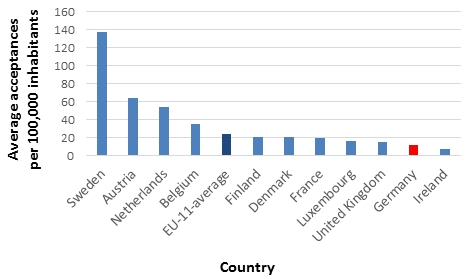
http://www.viewsoftheworld.net...2005-2013: http://blogs.lse.ac.uk/europpb... 2013: https://warewhulf.files.wordpr...
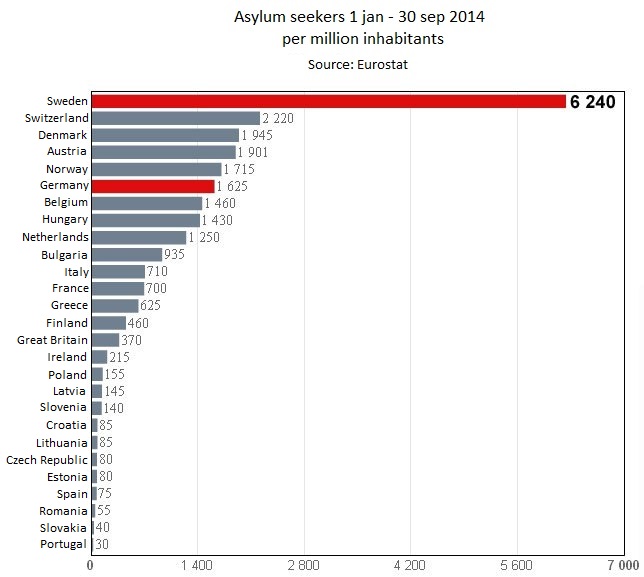
Beginning of 2014: http://gatesofvienna.net/wp-co...
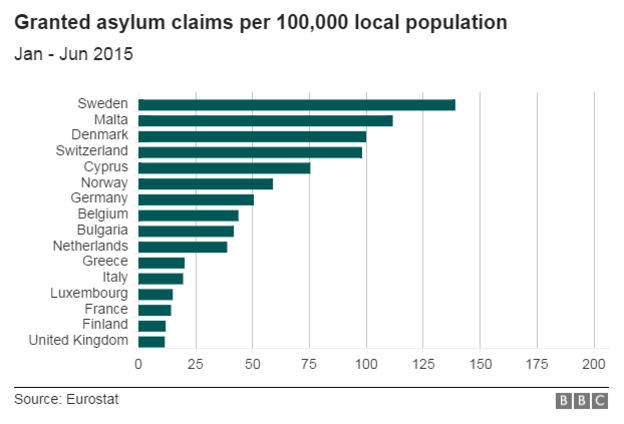
Beginning of 2015: http://ichef.bbci.co.uk/news/6...Can't find a similar image for 2015 (that's what I'm googling for but yeah.. it didn't become prettier.)
Our "elected" "leaders" and "representatives" of "the people" and the "nation" currently focus mostly on trying to get Sweden into the UN security council or whatever it is and then I guess they focus on trying to make it into EU or UN politics. Fuck the Swedes for all they care, it's all about what they can force the Swedes to do for the citizens of any other country.
-
Sonia Livingstone replies with sense
LSE prof Sonia Livingstone, who runs the Parenting.Digital blog as part of her research in this area, sprayed some sense on this story: http://blogs.lse.ac.uk/parenti...
wg
-
Re:Why does Peer Review cost that much?
The cost comment was in reference to the complaint that OPEN journals cost upwards of 3000 dollars to get a single paper published.
That number is highly variable. There are plenty of open-access journals that cost only a few hundred dollars per article for publication, not several thousand. See here, for example. As that article notes, quite a few big open-access publishers admit that their internal costs for publishing are around a few hundred dollars per article.
As to the notion that the scientists are not being paid to audit the papers, then why do the paid journals only have a profit margin of 38 percent?
If I'm getting the papers for free, people are auditing the papers for free, my cost structure is a website, and people are paying me 20k for a subscription to access the journals... then why is my profit margin so low?
I think you are significantly underestimating the amount of administrative work that goes on in sustaining a publishing operation, even an online one. See the first big chart in the link above, which breaks down costs percentage-wise in publication, and see the amount needed for "administering peer review; editing; proofreading; typesetting; graphics; quality assurance... covers; indexes and editorial; rights management; sales and payments; printing and delivery; online user management; marketing and communications; helpdesk; online hosting... " etc.
There's a lot of random overhead required.
The profit margin if what you're saying is true should be closer to 97~99 percent basically meaning the journal has a small staff that matches X scientists with Y papers... and then whatever the web hosting costs which in any of these businesses is basically nothing.
Um... yeah... again, see above.
That said, it's clear that something fishy is going on with commercial publishers. As this article notes, the for-profit publishers seem to charge 2-3 times as much as non-profits, so it seems like they should be making more than 38% profit. I don't know what the explanation is there, other than that I imagine for-profit companies pay upper-level administrators more.
Anyhow, wherever that excess money is going, your weird conspiracy theory that there's some sort of "kickback" scheme to scientists or reviewers or universities just isn't happening.
-
Re:I've said it before
Maybe it is. I do not know. They did indeed measure the wages and workloads across industries. TFA says Germany, Denmark and Italy was under investigation. There are many sources most of them paid but it seems to me that at least some [careful: German] point to the following - those in lower half of earners do earn now less than they did in 2000 and those in higher half more. This is not a steady development and is limited to Germany and to last 15y. If this is taken as a basis then the study in TFA still holds - as it says in principle that better earners earn more and lower earners less. This fits nicely to developments observed over the ages - redistribution of wealth to the top followed by riots, uprisings. wars and revolutions where it equalizes and process starts anew. How TFA fist with general perception of declining industrialization across Western societies I am not sure. Certainly Germany is not a good example for that - how many Germany like societies do we have in the West tho?
The article comes from robohub so it is biased obviously. If one read the actual work the perception changes slightly (From the neutral estimates we get "some of the estimates are negative and close to significant"). Still I consider this work as a proposal rather than the actual reality. Not decided (yet). -
Re:That is not necessarily true
http://www.theguardian.com/com...
http://www.nature.com/news/why...
http://www.cnn.com/2015/03/18/...
http://www.mirror.co.uk/news/a...
http://www.businessinsider.com...
http://www.mysterypollster.com...
http://www.examiner.com/articl...
http://blogs.lse.ac.uk/general...
http://www.outsidethebeltway.c...
http://nautil.us/blog/why-were...
http://www.nytimes.com/2014/07...
http://articles.economictimes....
First few links from the search engine typing in "why are election polls often wrong"...
http://www.bbc.com/news/uk-pol...
http://time.com/3558932/pollin...
http://www.huffingtonpost.co.u...
http://www.cnn.com/2015/05/08/...
http://www.kansas.com/news/loc...
Shut up. Just close your stupid mouth. Sit down. And don't speak again until addressed. You're an idiot. It has been officially noticed.
-
Re:Manage Outsourcing
The issue is that business people are still "the enemy" in Spain. See Start a business in Spain: mission impossible?. There is the difficulty of legally starting a company, employment regulations (25% night pay, 22 weeks paid vacation, weird "labor contract" rules, 3 weeks severance pay for someone even if you lay them off after one year), high business taxes. Then there is the difficulty of getting any credit, and it takes nearly two years to enforce a contract through the courts.
On the other hand, there are new labor reforms going into place in Spain that may reduce the burden on employers, good info here on entrepreneurism in Spain.
-
Re:And we wonder why music is such crap these days
There is plenty of evidence to support BOTH sides of this argument but there is documentation that indicates piracy doesn't harm the music industry as much as they say it does and in some cases may increase sales:
CBCNews
Case for Promoting Online Sharing -
Re:Bullshit
I'm not sure you have your facts right. According to this report, they removed the comments as soon as they were notified by the victim of those comments. They didn't wait for a court order, but the victim wanted money given to him. The website refused, the court said to pay.
I don't know where you are, but in the US, the court case Zeran v. America Online provides that websites are not responsible for comments, even if they are notified of defamatory material and neglect to remove it. You can read the relevant law here. -
Re:Tailgating
I'd read that the roads really aren't what they used to be. Germany has been great at limiting spending and running a surplus, but it's really starting to bite now, with German infrastructure looking frankly British
-
Re:that's because
Sorry that life doesn't imitate your nationalist stereotypes.
http://blogs.lse.ac.uk/europpb... "French workers are
http://www.cbsnews.com/news/us...
Only part of the U.S. productivity growth, which has outpaced that of many other developed economies, can be explained by the longer hours Americans are putting in, the ILO said.
The U.S., according to the report, also beats all 27 nations in the European Union, Japan and Switzerland in the amount of wealth created per hour of work - a second key measure of productivity.
Norway, which is not an EU member, generates the most output per working hour, $37.99, a figure inflated by the country's billions of dollars in oil exports and high prices for goods at home. The U.S. is second at $35.63, about a half-dollar ahead of third-placed France.
Yep, that is why we have higher productivity per worker, both per hour, and per year. We get more done per hour, and also work more hours. I'm assuming these "Americans" "fucking off" for 6 hrs on the computer... you saw them on the TV, right? Get back to work!!!
-
Re:Just like bacteria or virii
It's in a book on his experiments...
http://eprints.lse.ac.uk/22514...
Page 4.
4
Fig 1. John B. Calhoun in rodent Universe 133and page 18.
Calhounâ(TM)s rodent experiments (note that "universe 133" was actually a mouse experiment, but it is as ever with reference to rats that the work is recalled)
And I hate the lack of ability to edit combined with Slashdot's poor treatment of unicode quote marks!
-
Re:Won't happen
Generally, the smarter a person gets, the more republican they tend to lean in ideology even if they insist on remaining democrats or liberals.
There's at best no evidence for that assertion. And there's also serious counterarguments.
What is definitely true is that the richer a person gets, the more conservative they tend to lean, because of simple self-interest. People who are poorer tend to lean liberal for the same reason. This can appear like a person gaining wisdom with age and success, because your average newly minted young adult has approximately $0 in assets (-$25,000 or so if they have a college degree) while middle-aged and older people have had the time to accumulate assets and demand higher salaries for their work, but it is actually simply a matter of flipped social and financial position. Conservative values like deference to elders also are a lot more popular among 65-year-olds than 25-year-olds.
-
Re:"Slowdown" = Stop
The "recent slowdown recent slowdown in the pace of warming" is more accurately written as "the cessation of global warming since 1998." When AGW proponents make accurate but misleading claims, it's not a surprise when the rest of us look on in doubt.
That's funny, people kept telling me warming stopped in 1995. Why the change to 1998?
In fact it just keeps "stopping".
-
It may be "legal" under UK law
Full credit to this article at the London School of Economics and Politic Science .
It is clear that FISA allows the US to target ‘persons reasonably believed to be located outside the United States to acquire foreign intelligence information’. Arguably, when intelligence already in the hands of an agency such as the NSA is handed over to the GCHQ, there is little, if any, legal regulation or oversight in that situation as the RIPA applies only when the GCHQ gathers the data itself. If the data is simply provided to the GCHQ by the NSA pursuant to The Security Service Act 1989 and the Intelligence Services Act 1994 there is no legal requirement for a UK court warrant.
Also RIPA does not apply where the information on UK residents is harvested outside of the UK (e.g. harvested from Google servers based in the US).
-
Re:Shorter answer
-
Sorry, this is not a good thing
Unfortunately this is more of a case of the government facilitating matters for the publishers. It is frustrating to see well-intentioned people (with sufficient knowledge ONLY to see that something called "Open Access" would be a good idea) rejoicing over this. The Finch report has completely discounted the Green OA strategy in favour of Gold OA. Rather than allowing publishers to adjust to modern reality by reducing their role in the dissemination of research, they are instead going to be paid big stacks of public money to carry on with their exorbitantly-priced open access options .
Finch's open-access cure may be 'worse than the disease' - Times Higher Education http://www.timeshighereducation.co.uk/story.asp?sectioncode=26&storycode=420392&c=1
Why the UK Should Not Heed the Finch Report - Stevan Harnad http://blogs.lse.ac.uk/impactofsocialsciences/2012/07/04/why-the-uk-should-not-heed-the-finch-report/ -
Re:Whats the problem
The other is that men attribute intelligence to pretty women.
Since when?
I've never actually met a guy who thinks pretty women are intelligent.
Of course, I've never actually met a guy who would NOTICE that a pretty woman was intelligent....
-
Domestic Markets
If import taxes is enough to encourage Foxconn to move plants to Brazil, then all the excuses made by Apple executives about China's construction advantages is meaningless.
No, like most people reading the article I quoted you seem to dismiss the third element mentioned. Even if the US created the supply chain, infrastructure and provided [adequate]low-cost factory workers, the US still would not be able to provide the huge number of engineers needed.
The US education system is not able to create the correct amount or type of workers. Never mind that this industry demands greater flexibility than most Western employees would accept. I don't know what the situation is in Brazil, I assume they are able to supply the factories. I believe they are going to offer training.
Even if you could somehow make Apple and everyone else produce in the US, it would hurt the corporations greatly because of the lost ability to move fast, keep low inventory and rapidly source from other suppliers. That could potentially destroy their current position(s) in the market.
China's own government is trying to develop domestic consumption, and rising wages is a part of that plan.
That domestic demand doesn't need any development any longer. It's much stronger in all areas, from cars to luxury items. The monied class in China is filled with countless billionaries (in US Dollars).
As it is, there's a shortage of labor in China...
The shortage is geographically limited to the coastal region where most production happens today. Why do you think Foxconn just created their massive super factories further inland? This is just the natural next move.
...and unions are growing stronger
That's hardly an accurate description from what I read, the Chinese unions strength is miniscule as they're limited and/or controlled by Beijing. They seem to be changing, not so much "growing". It has had an effect in companies from Honda to Foxconn, but it is not similar to how Western or American unions function, this short article is enlightening:
http://cep.lse.ac.uk/pubs/download/CP204.pdf
Foxconn is moving to countries like Vietnam and Indonesia
Yes, they are also moving to more expensive Asian countries such as Malaysia because they foresee rising wages in China.
The Chinese factories are already being refocused to supply the domestic market, while other Asian factories will supply the world market. The Chinese domestic market is growing much faster and unlike the West has stable, high growth.
http://www.businessweek.com/magazine/content/10_21/b4179011091633.htm
-
Re:No
Increases in the minimum wage increase unemployment,
This may be your belief, but the evidence does not really support it.
The evidence in regards to the UK, where the minimum wage was introduced in 1999 at a significantly higher level than the Federal minimum wage in the US is that there was no significant effect on employment, e.g.:
http://cep.lse.ac.uk/pubs/download/dp0781.pdfThe Conservatives (UK right wing party) who were in opposition at the time opposed it, as did the main employers' organization, predicting large unemployment increases. Both have since dropped that opposition due to the lack of evidence of negative effects (and also it being popular) and now both support the retention of the minimum wage in its current form.
-
Re:Walk away
What about this interesting suggestion to eliminate suicide attacks: the initiator is motivated by immediate entry into paradise. Word on the ground in Afghanistan is that when the remains are gathered and buried, inclusion of just a small piece of pigmeat with the remains will prevent Allah from seeing the martyr, thus, no paradise, thus, not motivation to die.
You don't think a terrorist imam wouldn't tell a prospective bomber that Allah would give him a pass on that bit of pig meat? Especially if he dies in action against the Great Satan, and even more especially considering this transparent attempt by the same Great Satan to cheat the bomber of his well-deserved martyrdom through the sacrilege and desecration of his corpse? Can't fool Allah that easily. These guys aren't idiots, you know.
Besides, religion is just a garnish, not the actual motivation. I have heard of several more likely ones.
Some suicide bombers are willing to be suicide bombers because they have no chance of getting laid on this earth, and are generally pissed off about it. Point them at someone to focus their pissed-off-ness on, fan it to a flame, and there you go.
Others are — surprise — suicidal. This may or may not be related to not getting laid.
And then there are the ones motivated by revenge.
And a very few are probably intelligent yet naive enough to do this on ideological or rational grounds.
And finally, I figure some suicide bombers have probably succumbed to heavy peer pressure/indoctrination/brain-washing of the sort applied by armies, gangs, abusive spouses, and interrogators.
-
Re:Whitelisting, not blacklisting damnit...
If you read the report on this page "Risks and safety on the internet: The perspective of European children. Full Findings" you'll see that some children were negatively affected by what they saw on the internet -- mostly ones that saw violent pornography.
I think there's little reason to block things if a teenager is actively searching for them, but there are good reasons to prevent a nine year old child seeing something unpleasant, for example children can have difficulty separating fantasy from reality. For the same reason, advertisers here aren't allowed to advertise a violent horror film during a programme children are likely to see.
The blocking software/services are managed by parents, and I don't see any difference in principle between blocking web content and hiding your 18+ films in the back of a cupboard.
-
Re:The people lose again
While tuition-less college might mean that it's easier go from poor to middle class, the taxation levels also mean that it's more difficult going from middle class to rich. It's also frequently claimed (at least by Norberg, et al) that the US has a higher social mobility than Sweden, meaning that while it's certainly possible to go from working class to rich, it happens less frequently than it does in the US.
Actually, the most recent research I have heard of in the subjects says the opposite. The countries with best social mobility are Norway, Denmark, Sweden, Finland and Canada. With the US and UK not doing that well. Social mobility low in Britain and falling It's from 2005 so not that fresh maybe. The most recent one I have read is in Swedish and in dead tree format so I have trouble linking to it.
Do you really believe that the best are studying at Uppsala or Lund, and not at Harvard and Oxford? What I mean to say is, the best can usually get a scholarship. If your objective is to maximize human capital, my guess the US is doing a better job of it.
Maybe I should have said "the best in Sweden"? But I would say that considering our size we have lots of talented people. We are not a big country, just a bit more people than New York city. It's not really surprising that USA can have more and better universities. But I can't help wondering how much of that superiority is due to a larger pool of people to draw from. If we somewhat simplified use the numbers that 2% of every population are highly intelligent then that would mean that there are around 190 000 in Sweden and around 6 136 420 in the USA.
-
Re:Just Words
I would bet big money this is just another iteration of the Knowledge Scam. Read this: http://personal.lse.ac.uk/angell/papers/knowledge%20management/km.htm
-
Wrong assumption
I must laugh at the prevalent assumption that the UK ID Card scheme was established to actually do something useful.
Right at proposal stage the thing was taken to pieces by the London School of Economics, yet the whole party on the taxpayer's money went ahead unchanged. And herein lies the truth IMHO: it has handed a few people an awful lot of money, something that appears to be somewhat symptomatic of IT projects under the current government.
Not that their National Audit Office would trouble itself with REALLY investigating: their audits exist of sending some fresh-out-of-school consultants to talk to people whose job depends on keeping their mouth shut. It's the equivalent of sending a kid with a calculator to sign off Enron's accounts. It's not that the NAO would really bite anyone anyway - check out who runs it, and check their track record.
PS: you can't lock them up. Prisons are full..
-
Re:Standards of education falling in UK?
There's an interesting research paper on this exact subject published by the London School of Economics in January 2008. Conclusion:
"Independent school teachers work with fewer pupils and enjoy longer holidays
and, in the case of women, shorter weekly hours. The level of job satisfaction over
hours and the work itself was higher in private schools in the early to mid 1990s, but
there is evidence of some convergence in job satisfaction since then. Among women,
pay is lower in the private sector, which we interpret as a compensating differential.
For men, there is no significant inter-sectoral difference in pay. However, for both
men and women there is evidence of a substantial pay premium for independent-
school teachers trained in shortage subjects" -
Re:Hope
Age and intelligence are linked..
I don't think the cultural stagnation would be too bad if they really stayed forever young, like early twenty's. The mind starts to harden as you age and seems to get set in place. If that never happened than you might not get the cultural stagnation. I know I'd only want to live forever if they had mind enhancing ability's.
The part that scares me is the ownership. If people didn't die then Ramses would rule the planet as a god-king. everything would be owned by a Pious few. Rockefeller and Carnegie would be truly like new gods. It also brings up the motivation factor, what reason do I have to rush through college in 4 years? I'll just take a easy 20 year program and pay it off over the next century. -
Re:Tax ownership
http://www.lse.ac.uk/collections/pressAndInformationOffice/newsAndEvents/archives/2005/LSE_SuttonTrust_report.htm
And more generally, how many peasants' children in the developing world do you think really have any sort of chance of earning £200k pa as a consultant?
As for your anecdote, I'll counter it with mine: I work for a well-known top-flight management consultancy. My colleagues almost universally went to private school for an expensive education -- as did I. Wealth begets opportunity.
Another poster has dealt with the spectacular economic idiocy that is a flat or consumption tax. But perhaps you'd like to share how you think it's morally justifiable to take the same 15% of a person's earnings whether they're earning £20k a year or £200k. As you damn well know, someone on £20k can ill afford to lose £3k in tax, whereas someone on £200k will barely notice losing £30k. You just want to be richer, that's all, and you're gussying it up with other motives. -
Re:it's only a paradox if you're an idiotThe fact that heirarchies of accomplishment are more evident in the United States than elsewhere is no proof that the mass of people are being held down. It may well be evidence that in the United States the best are better able to rise to the top, to find their natural level of achievement, whereas in other places considerations of social class, restrictive groupthink education, or cultural barriers to personal ambition and radical innovation tend to keep the best from ever showing their stuff and emerging above the sea of average folk. Oh really? So check out these findings on the latest study on social mobility:
http://www.lse.ac.uk/collections/pressAndInformationOffice/newsAndEvents/archives/2005/LSE_SuttonTrust_report.htm
http://www.eurekalert.org/pub_releases/2007-10/ksu-mou100107.php
http://www.economicmobility.org/assets/pdfs/EMP%20American%20Dream%20Report.pdf
Turns out the US is now on the bottom list of social mobility (in developed countries). Good luck keeping those highly talented immigrants in, you'll need them badly as China rises to the top. -
Re:Assumptions are bad, uncheckable assumptions wo
It's by now pretty clear that you've never written a paper...
Lots of people do put their papers on one or another free electronic resource (arxiv, homepage, whatever) as well as submitting to a journal. So, you can avoid most of your precious 'economic problems' that way, and if you ever bother to be minimally polite you can probably find some friendly university professor to give you access to his library anyway.
It's a nice idea that a scientist could just add a few hyperlinks and magically his paper would become intelligible to everyone, but it's just not true. I, for example, work in combinatorics, which is a fairly basic area of mathematics, where you don't really need to know too much to get started.
Here's a paper of mine:
http://www.cdam.lse.ac.uk/Reports/Files/cdam-2006-10.pdf
which in turn is a very simple paper; it doesn't reference all that much because it doesn't need to, and those things it does reference are mainly just to mention people who've done similar things. I'd guess that if you spent enough time you probably could understand that: but you'd need to start by understanding what I mean by a graph and getting a bit of basic graph theory. Now, I could've provided a hyperlink to Diestel's book (which is available online for free) to explain that - but then I'd have to keep updating it whenever the link changed, et cetera. And when I write a more complicated paper, I do not want to write an undergraduate course to go with it - so I am not going to try to explain all the stuff that everyone in the field already knows. If I mention the blow-up lemma in passing, and you want to know about it, read the paper describing it. When you discover you need to read a bunch of other papers to understand, go read those. Since they won't be all that helpful, you'll probably need to find a book on probabilistic graph theory. Which you can probably get hold of for free if you want to: but it will take you a few months to understand enough to know what the blow-up lemma is. That's nothing to do with economics, it's to do with how fast you can absorb information.
Put it another way: if you really want a helpful link to let anyone understand a scientific paper, then probably the most helpful one is a link to a nearby university's lecture list. They don't generally check that the people in the audience are registered students. And yes, it will take you a few years. -
Re:Socialised Healthcare is the future for the US
The UK General Medical Council hasn't been calling for a private system (it'd be plain silly, I think) but they have been calling for less government interference in how hospitals are run. Also they've been complaining that the targets-based system that Blair introduced to increase NHS accountability has diminished the care given to patients (here's a discussion of this). Oh, and more favorable contracts too (of course!).
I believe the new PM, Brown, has promised a fresh look at how the NHS is governed and making it independent (like the BBC) if need be. -
Re:No defense of selfishness
Taxes--we all pay our part. I'm not quite an insane libertarian, but the roadbuilders are not volunteering their time for me. Teachers are not selflessly volunteering to teach me. Doctors, private industry, etc are DEFINITELY not leaping at the chance to volunteer for me.
My point is only that even if you pay taxes and so on, there was a lot of capital, public and private, around before you started working, which was built up by earlier generations. You're benefiting from their efforts, both through the public sector and the private sector. The welfare state is just one of many ways of doing this.
The Nordic states are a good bit different in part because of their small populations and enormous wealth through oil--if anyone is the model for a succesful social state, it's them, though from reading a large number of blogs, it seems to me as if recent immigrant surges have shown some cracks in the social welfare state.
That isn't quite right. Norway's oil wealth is very high, but this is not the norm in the Nordic countries. Denmark's has some small oil reserves, but there is essentually no oil in Sweden, and Sweden is largest of the Nordic countries.
You're right that some immigrant groups are putting pressure on the welfare states. This is to me an argument against allowing immigration from these countries, not an argument against the welfare state.
Data on this? I can't say for sure about social mobility in the Nordic states--which as I mentioned earlier due to small populations, largely homogenous popluations, and great oil wealth are largely unique beasts--but I've always read that when comparing France, Germany, UK, etc thatn social mobility is far higher in the US. I would be glad to look at any studies though.
One study I've read was done by researchers at the London School of Economics. It suggests that social mobility is far higher in the Nordic countries and Canada than in the USA or the UK, and that mobility in the UK has declined in recent decades, although it is still not quite as low as in the USA. (West) Germany was also included, with a level of mobility higher than the USA or UK, but not as high as in the Nordic countries or Canada. However, the German sample size was too small to draw conclusions.
A major reason for the differences in mobility seems to be education. In the USA and UK, educational opportunities are linked to the wealth of parents, and so those from poor backgrounds are less able to make use of their full potential. I don't know how the education system in Canada works, but the Nordic model includes both free education and subsidies to students, and not just poor students, to cover the cost of living. This means anyone can be educated to the limits of their ability.
I would argue that the less the government drags you down and punishes success, the greater the motivation and the greater the chance for ability to shine through. There's a reason for startups being so huge here! My grandparents were factory workers their entire lives. My dad--somehow without going begging to the government--was able to get ahead--and now look at me, here on slashdot.
I think you can separate the welfare state from state attempts to regulate and manage the economy. An analysis by the World Bank lists the top 30 countries for doing business, and all the Nordic countries are in the top 15. Norway is number 5, Denmark 8, Iceland 12, Finland 13 and Sweden 14. This isn't as high as the USA, number 3, but it's higher than most countries in Europe. The UK was number 9, Germany number 19 and neither France nor Italy was in the top 30.
If you look at unemployment, it's 2.7% in Norway, 3.9% in Denmark and 4.6% in Sweden. Taxes in Sweden and Denmark are the hig
-
Re:Better link
I don't have the energy to refute all of the points in Tony Blair's response, but here are a couple of quick comments.
it is clear that if we want to travel abroad, we will soon have no choice but to have a biometric passport.
This is a red herring that is repeated with annoying frequency. ICAO requirements state that the only required biometric is a digitised photo, which new UK passports already contain. There's no need for fingerprints, retinal scans, etc.
Secure identities will also help us counter the fast-growing problem of identity fraud. This already costs £1.7 billion annually.
The majority of fraud reported as "identity fraud" is credit card fraud. ID cards will be no use at stopping this, unless you require people to show their ID when buying anything. In particular, the "£1.7 billion" figure is nonsense.
I also believe that the National Identity Register will help police bring those guilty of serious crimes to justice. They will be able, for example, to compare the fingerprints found at the scene of some 900,000 unsolved crimes against the information held on the register. Another benefit from biometric technology will be to improve the flow of information between countries on the identity of offenders.
Nice to know that the Government has already gone back on its assurance in 2005 that the ID register wouldn't be used for "fishing expeditions" - also nice to know that our details will be shared with some unspecified other countries.
The additional cost of the ID cards is expected to be less than £30 or £3 a year for their 10-year lifespan.
Not according to an independent report. -
Re:Uhhh....
America is probably not a good example to use. Estimates of autism have shot up in recent years, it is now classed as the second-worst contry in the Western world for children, education standards have fallen, creationists have become a major political force, obesity is sky-high and rising, something caused Britney Spears' hair to fall out, and 90% of all recent US news stories on legal and/or political issues can be best explained by some form of brain damage.I don't know where you're from, but let's pick another Western nation - oh, say, Britain - and see if they have any of these problems, shall we?
Edu cation, obesity, autism, and creationism. Hmm. (And these were just top picks from Google searches.) Maybe America's problems are just more widely known than those of other nations?
-
Re:Perception of opportunityHe didn't say that the US has greater mobility than most developed nations, and he was wise not to since it's not true, e.g. http://cep.lse.ac.uk/about/news/Intergenerational
M obility.pdfThus the picture that emerges is that Northern Europe and Canada are particularly mobile and that Britain and the US have the lowest intergenerational mobility across the European and North American countries studied here. The USA is seen by some as a place with particularly high social mobility. In part this is a consequence of using measures of class to estimate mobility (these will be affected by changes in the class structure over time). However, the idea of the US as 'the land of opportunity' persists; and clearly seems misplaced.
-
Re:Let's reinvent the wheel, not help the poor.
India has one of the world's largest gaps between the richest and the poor.
So does America. In fact, the USA's Gini coefficient is almost exactly the same as India's at around 38%.
Doesn't stop America launching space missions.
-
Marriage decreases testosterone!
Actually- Testosterone declines with marriage. One of the more interesting researchers
out there has written several papers on why scientific productivity declines
with age. One of the hypotheses which is looking pretty good is that with
marriage there is a decline in testosterone, and in keeping with Geoffrey Miller's
"The Mating Mind" ideas that testosterone leads to various displays such
as technical virtuosity- there is then a corresponding decrease in scientific
production (at the topmost levels). This raises another question- isn't marraige
becoming less common?
http://www.lse.ac.uk/collections/methodologyInstit ute/pdf/SKanazawa/EHB2000b.pdf
http://www.lse.ac.uk/collections/methodologyInstit ute/pdf/SKanazawa/JRP2003.pdf
Some of his other publications-
http://www.lse.ac.uk/collections/methodologyInstit ute/whosWho/profiles/s.kanazawa@lse.ac.uk.htm
Wiki
http://en.wikipedia.org/wiki/Satoshi_Kanazawa -
Marriage decreases testosterone!
Actually- Testosterone declines with marriage. One of the more interesting researchers
out there has written several papers on why scientific productivity declines
with age. One of the hypotheses which is looking pretty good is that with
marriage there is a decline in testosterone, and in keeping with Geoffrey Miller's
"The Mating Mind" ideas that testosterone leads to various displays such
as technical virtuosity- there is then a corresponding decrease in scientific
production (at the topmost levels). This raises another question- isn't marraige
becoming less common?
http://www.lse.ac.uk/collections/methodologyInstit ute/pdf/SKanazawa/EHB2000b.pdf
http://www.lse.ac.uk/collections/methodologyInstit ute/pdf/SKanazawa/JRP2003.pdf
Some of his other publications-
http://www.lse.ac.uk/collections/methodologyInstit ute/whosWho/profiles/s.kanazawa@lse.ac.uk.htm
Wiki
http://en.wikipedia.org/wiki/Satoshi_Kanazawa -
Marriage decreases testosterone!
Actually- Testosterone declines with marriage. One of the more interesting researchers
out there has written several papers on why scientific productivity declines
with age. One of the hypotheses which is looking pretty good is that with
marriage there is a decline in testosterone, and in keeping with Geoffrey Miller's
"The Mating Mind" ideas that testosterone leads to various displays such
as technical virtuosity- there is then a corresponding decrease in scientific
production (at the topmost levels). This raises another question- isn't marraige
becoming less common?
http://www.lse.ac.uk/collections/methodologyInstit ute/pdf/SKanazawa/EHB2000b.pdf
http://www.lse.ac.uk/collections/methodologyInstit ute/pdf/SKanazawa/JRP2003.pdf
Some of his other publications-
http://www.lse.ac.uk/collections/methodologyInstit ute/whosWho/profiles/s.kanazawa@lse.ac.uk.htm
Wiki
http://en.wikipedia.org/wiki/Satoshi_Kanazawa -
Re:Stereotypical Predictions from Dr. Curry ...
Well, Dr. Curry is an unusual sort of evolutionary theorist. He received his PhD in 2005 from the Government Department of the London School of Economics, writing a thesis on "Morality as natural history." He currently teaches Political Theory at New York University in London.
Thesis: http://eprints.lse.ac.uk/archive/00000441/
I'm not entirely sure that a strict biological interpretation of his work is appropriate. It seems more appropriate for sociological philosophers (sociologists who failed Statistics).