Slashdot Mirror
Domain: mercola.com
Stories and comments across the archive that link to mercola.com.
Comments · 217
-
Re:except your products are killing children
From http://nyagv.org/wp-content/up..., which is one of the first links that comes up:
Deaths: From 2005-2010, almost 3,800 people in the U.S. died from unintentional shootings.ii More than a third of the victims were under 25 years of age.
That's less than 800/yr total, and less than 260 are under 25, meaning that accidental shooting deaths are one of the least common causes of death in the US, especially for kids.
Conversely, preventable medical errors kill over 200,000 Americans every single year, and in fact is the third leading cause of death in this country, dwarfing gun deaths and car deaths combined.
That said, after you start advocating for stricter control over doctors, drugs, and hospital procedures, I might consider listening to you make crap up about too many gun deaths.
PS: This is what a source citation looks like. A smart-ass link to Let Me Google That For You? Not so much.
-
See also: Coley's Cancer-Killing Concoction
http://soylentnews.org/comment...
http://en.wikipedia.org/wiki/C...
http://www.damninteresting.com...
"Furthermore, both radiotherapy and chemotherapy have an immune-suppressing side-effect. Since both treatments kill the rapidly dividing cells of the immune system along with the rapidly dividing cancer cells, both can be used together if care is taken. But immune-stimulating Coley's Toxins work entirely differently, and their effect would be cancelled out if used at the same time as high-dose immunosuppressant chemo- or radiotherapy. It became an either/or situation-- and in the end, the fashionable new treatments won out over Coleyâ(TM)s fiddly reworking of an ancient 'natural' remedy. "Some other suggestions by me here (primarily nutritional, but also on fasting helping with chemotherapy):
http://slashdot.org/comments.p...More on mushrooms and preventing cancer as also mentioned:
http://articles.mercola.com/si...It is hard to know who to trust in the cancer industry to find, as you suggest, the best individualized treatment. It's certainly true that people selling alternative products and books (including Furhman, mentioned in my other post) have a conflict of interest. In general, the entire field of oncology is also sadly full of conflict of interest because oncologists make so much money by doing treatments.
https://www.burtongoldberg.com...
"Here is a shocking fact you most likely did not know: Unlike other kinds of doctors, cancer doctors (oncologists) are allowed to profit from the sale of chemotherapy drugs. In fact, most of the annual income oncologists earn comes from the profit that they make from selling these highly toxic drugs to their patients."And:
http://www.kevinmd.com/blog/20...
"And that is where oncologic decision making gets really messy. Because in the United States, at least, many oncologists make a good deal of their income selling drugs to their patients.Integrative alternatives:
http://www.drweil.com/drw/u/PA...Regardless of the future, I wish you the best in making the most of each day like this celebrity with cancer:
http://www.reuters.com/article...
http://www.people.com/people/a...
"Resolved to face her last days with courage and humor, "I don't think of dying," says the actress, 73, who previously battled lung cancer in 2009. "I think of being here now.""Good luck!
-
Re:Screw other people
You should have stopped one paragraph sooner - I can't count the logical fallacies in that last one. Reductio ad absurdum, non sequitur, false equivalence, strawman argument... the list goes on and on.
Reductio ad absurdum isn't a fallacy - it is a form of argument, analogous to proof by contradiction, not that I'm claiming that any argument like this is equivalent to the precision of a mathematical proof.
I'll agree that it isn't a perfect analogy, but I don't think it is far off.
It's a terrible analogy, namely because "machete which additionally comes with legal immunity" refers to a legal concept and not an actual, physical feature of the device. It would only be relevant if we were talking about an automated car with legal immunity, which we are not.
If you really have such a problem with other people having the freedom to choose to put their own livelihood above that of others, I recommend moving to some other country, one that does not have a constitution wholly based on the concept of individual freedom. England would be a good first choice, one would think
Are you referring to that "constitution wholly based on the concept of individual freedom" that explicitly gives the government the right to punish people for treason? What an infringement of the right of individuals to take up arms with the enemy! Next thing you know they'll amend the constitution to permit the collection of taxes - then you can go to the great walled institutions of personal liberty when you exercise your right to refuse to pay!
Sure, one might think that's what I meant, if they failed to read the last sentence of the previous paragraph for context: "See, the way I was taught about the American system of governance, individual liberty takes top priority, outside the obvious that one does not have the liberty to intentionally and directly deny liberty to others."
You're bordering dangerously close to jackass territory at this point. Stop now before you destroy any credibility you might still have.
The very nature of government involves the restriction of individual liberty for the sake of collective security. As you point out there are already regulations regarding "protocols for non-occupant safety measures" so these laws would be just one more.
"Just one more law?" Pretty sure that's how the National Socialists went from taking power to exterminating Jews. No, that's not a Godwin.
Is that a bit hyperbolic? Yes. Is it true, though? The answer is, "also yes." Now granted, I'm not equating traffic safety laws to genocide, but rather pointing out that "just one more law" tends to have farther reaching consequences than what you're considering, especially in this age of overcriminalization.
I guess the elimination of the 35k people killed every year due to auto accidents will just be something we have to endure when we finally get rid of manually-driven cars.
Yup; society considers those acceptable losses, since nobody ever thought to actually educate people before handing them a license to pilot heavy machinery at high rates of speed. But hey, look at the bright side: you're actually safer driving than going to the doctor. If you're so adamant about preserving life, why are you here, bothering me about cars, when you should be riding the AMA's ass for killing a quarter-million people every year?
-
Re:Bloody Idiot
it is treading into the realm where the risk of bad outcome from the disease is about the same as the risk of bad outcome from the cure.
I was listening to an interview with Andrew Wakefield about his discredited study, and he referenced other studies that replicated his research that came to the same conclusion. I set out to find them, but only found studies such as this and this that found no direct causal links between the MMR vaccine and mental illness nor, as a population study, evidence that there was an increase in autism diagonosis after the introduction of the MMR vaccine to the general population in 1971 or an increase of diagonosis after 18 months of age, when the vaccine is administered. I then found a website that cites 28 studies that defend Wakefield's research. However, each one only talks about the underdevelopment of immune systems in children with down syndrome and the dangers of this preexisting condition.
As it turns out, Wakefield was offered a chance to reconduct his research, but he denied it. Every dead end I've reached leads me to believe he made this up. And it's sad the influence that this type of fraud has on people. I understand that you're suspicious; if I were an adult before this study was discredited I would be too. But the burden of proof is on anti-vaxxers and they have none besides residual suspicion from this discredited study.
Vaccines make it so that having the measles is no longer a rite of passage. That alone outweighs the "bad outcome" of unfounded suspicion. -
Re: Jenny McCarthy
I think we're just about agreed. I couldn't say as to the actual concrete numbers at play here, but no doubt the per-individual numbers are very small assuming we're already well above the herd-immunity threshold. The example of the Texan with measles raises an interesting point regarding 'clusters of non-immunity', though.
I'm not convinced that there are significant risks associated with the 'standard issue' vaccinations. Regarding measles, for instance, this article is a far cry from a solid medical paper.
-
Re:Education
And being able to actually debunk the people in universities( as opposed to just railroading them) that are coming up with study results that actually show the vaccine industry is not to be trusted would help as well. http://articles.mercola.com/si...
-
VItamin D deficiency and iodine deficiency...
... also contribute to the burden by making it harder to excrete heavy metals and things like bromine and fluoride. So, with people in the USA spending more time indoors and eating bread with brominated dough conditioners instead of iodine ones (a change from the 1970s).
From: http://www.environmentalhealth...
"Vitamin D performs a number of biological functions that are important for neurodevelopment, including promoting cell division and protecting against neurotoxins."And: http://articles.mercola.com/si...
"When you ingest or absorb bromine, it displaces iodine, and this iodine deficiency leads to an increased risk for cancer of the breast, thyroid gland, ovary and prostate -- cancers that we see at alarmingly high rates today. This phenomenon is significant enough to have been given its own name -- the Bromide Dominance Theory. Aside from its effects on your endocrine glands, bromine is toxic in and of itself. Bromide builds up in your central nervous system and results in many problems. It is a central nervous system depressant and can trigger a number of psychological symptoms such as acute paranoia and other psychotic symptoms.See also: http://drsircus.com/medicine/i...
So combine higher levels of toxins with a reduction in what the body needs to defend against them and you have a recipe for a health disaster.
-
Re:Sample Texts
I know google is a tough one to use, but searching around will yield stuff like this: http://articles.mercola.com/si...
I know it's difficult to actually take the time to think about what you're replying to, but I'd like to see some _objective_ _research_ backing this theory, please. See? Two things you didn't consider: objective & research. mercola.com hardly qualifies as an objective research organization, in fact, I'm pretty sure they're only interested in selling stuff.
-
Re:Sample Texts
I know google is a tough one to use, but searching around will yield stuff like this: http://articles.mercola.com/si...
Note, research have shown that insulin levels are unaffected by aspertame.
Personal experience, I used to drink a lot of sugary soda, was overweight, but nothing compared to when I switched to artificial sweeteners; also I find it much harder to keep a diet if I drink any form of "diet" soda.
-
Re:Fuck these government pricks
...and, unfortunately, you are likely to die by it too.
-
Re:Fuck these government pricks
A good general rule before issuing a tirade is to ask who benefits or in other words FOLLOW THE MONEY.
I followed your advice and came to a different conclusion. Apparently FDA approval means your product will cost at least 10 times as much.
Are we to assume that the FDA has no interest in protecting the corporations that provide their funding?
-
Head of CDC admits vaccines can trigger autism
http://articles.mercola.com/sites/articles/archive/2008/04/22/head-of-cdc-admits-on-cnn-that-vaccines-can-trigger-autism.aspx
"Recently Julie Gerberding, the head of the U.S. Centers for Disease Control and Prevention (CDC), appeared on Dr. Sanjay Gupta's show House Call and explained that vaccines can trigger autism in a vulnerable subset of children. This is the claim that many parents have been making since at least the 1980s, and they have been dismissed and even mocked for making it."At three minutes in, specifically, she suggests a stress could trigger autism, and such a stress could be a fever resulting from a vaccination injection, the result of which in children who are predisposed by a mitochondrial disorder could thus set off the symptoms of autism...
See also though, along the lines you suggest, for other more likely and more frequent causes of autism though, such as vitamin D deficiency and food additives and so on:
http://www.vitamindcouncil.org/health-conditions/autism/
http://www.huffingtonpost.com/dr-mark-hyman/autism-research-discovery_b_794967.htmlDr. Julie Gerberding has since left her position as head of the CDC and is now the president of Merck's Vaccine division. As you point out, people against vaccines also may have financial interests at stake (book sales, medical practices, product sales, etc.). Whatever one can say about vaccines, certainly understanding the conflicts of interest and weasel words pervading the whole field seems like a huge job...
http://en.wikipedia.org/wiki/Julie_GerberdingTo build on some other suggestions in comments to this article, since getting enough vitamin D, eating more vegetables, avoiding dairy, getting exercise, nursing children past age two, and so on have been proven to often improve health and increase disease resistance in humans, it seems like any family which is not doing all of those things is putting the community at risk. So, the question is, should we legally enforce "BlueZones" and "Nutritarianism" on the world in order to protect those with compromised immune systems because they avoid sunlight, eat poorly, don't exercise, were bottle-fed, and so on?
http://www.bluezones.com/
http://www.drfuhrman.com/children/default.aspxMaybe we should start by cracking down on luncheonmeat consumers?
http://www.ehow.com/info_8360513_luncheon-meat-dangers.html
http://institutefornaturalhealing.com/2012/04/processed-meats-declared-too-dangerous-for-human-consumption/At the very least, as a deterrent to creating health hazards for themselves and others, perhaps people who admit to having eaten processed meats (or who otherwise can be identified by credit card purchase records) probably should not have any possibly related medical conditions covered by insurance?
The medical literature is very messy, for lots of reasons, such as expressed in quotes I've collected here:
http://www.pdfernhout.net/to-james-randi-on-skepticism-about-mainstream-science.html#Some_quotes_on_social_problems_in_scienceIt would help to have better tools to use to wade through all the muck (including for detecting statistical fallacies as the grandparent post by "Todd Knarr" points out). Some suggestion
-
Re:Orange juice sucks anyway
http://articles.mercola.com/sites/articles/archive/2011/08/16/dirty-little-secret-orange-juice-is-artificially-flavored-to-taste-like-oranges.aspx
http://science.discovery.com/tv-shows/how-do-they-do-it/videos/how-do-they-do-it-how-is-orange-juice-made.htm
http://www.foodrenegade.com/secret-ingredient-your-orange-juice/
http://organicplanet.blogspot.com/2011/08/citricy-secrets-truth-about-orange.html
http://gizmodo.com/5981057/the-secret-algorithm-that-controls-everything-about-orange-juice -
Dealing with cancer recovery
If you are dealing with cancer recovery, some ideas:
"Ketogenic Diet May Be Key to Cancer Recovery"
http://articles.mercola.com/sites/articles/archive/2013/03/10/ketogenic-diet.aspx
"The premise is that since cancer cells need glucose to thrive, and carbohydrates turn into glucose in your body, then cutting out carbs literally starves the cancer cells."People who live in traditional societies eating a traditional vegetable heavy diet and getting lots of sunlight and exercise also seem to have less lung cancer even when they smoke.
"Eat For Health - The Anti-Cancer Diet"
http://www.drfuhrman.com/library/article24.aspxAlso look into vitamin D:
http://www.naturalnews.com/036597_vitamin_D_anti-cancer_drug.html
http://www.grassrootshealth.net/And iodine:
http://theiodineproject.webs.com/cancerandiodine.htmMaking these sorts of changes is not quite the same as an Android body btw, mentioned in Star Trek episode "I, Mudd" as something Uhura wants), but at least it might help get to the point where you could have one if you wanted -- related to out other conversation:
http://slashdot.org/comments.pl?sid=3892785&threshold=0&commentsort=0&mode=thread&cid=44082521I can see you project an optimistic sense of humor about it all, which can be a healthful thing:
http://www.humorproject.com/bookstore/
http://www.ncbi.nlm.nih.gov/pubmed/10116744
"Laughter has many clinical benefits, promoting beneficial physiological changes and an overall sense of well-being. Humor even has long-term effects that strengthen the effectiveness of the immune system."So, laughing is probably better healthwise than a buzz from a "droud"?
http://laughteryoga.org/
http://www.youtube.com/watch?v=yXEfjVnYkqMFor nerve damage, vitamin B12 and omegas 3s. See also my comments here on mercury and herbs:
http://aaronwinborn.com/blogs/aaron/monday-was-my-46th-birthday-and-likely-my-last-anything-awesome-i-should-try-after-i-dieYeah, stairs can be a real life-saver for many -- to get some regular exercise, which moves the lymph around, which boosts the immune system and the body's natural self-cleaning mechanisms. Walking outside in the sunshine helps, too (although of course how you need to manage your DVT and clot risks however competent doctors recommend):
http://www.bluezones.com/For some inspiration, a movie that is up for free on YouTube for a while for the two year anniversary (again, adjusted for DVT):
http://www.fatsickandnearlydead.com/
http://www.rebootwithjoe.com/And also, here is a movie (and book) on how clogged arteries can limit blood flow to the body's cells, creating a huge variety of health issues from that common cause (perhaps the root cause of most chronic illnesses in the US today as "diseases of affluence" such as you may be experiencing):
http://www.ravediet.com/Also ask, "What Color is Your Diet?"
http://www.amazon.com/W -
Brass handles...
I thought silver was also a thing, but it looks like you're right.
I wouldn't be surprised if that doesn't eventually generate tests for copper infused working surfaces.
One interesting thing was that wood handles can harbor bacteria in any grooving, but I also remember studies about wood vs plastic for cutting boards saying that while wood will harbor bacteria more than plastic, unlike plastic the bacteria tend to stick to the wood better - meaning it gets onto your food less.
-
Re:I do believe it because it based on sound scien
Actually it does. That's how science works, general consensus based on peer review of the evidence.
Man-made Global Warming is more scientifically valid than the use of Aspirin to prevent a heart attack and save your life.
-
Re:Monsanto takes ..
So I'd be interested if you have a concrete example.
Since you can't use a search engine or look in other posts in this thread.. here is a cut and paste for you:
http://articles.mercola.com/sites/articles/archive/2011/12/25/percy-schmeiser-farmer-who-beat-monsanto.aspx
It's been years and years since I first saw a documentary about the criminal Monsanto which numerous examples, interviews, etc. This isn't news and I find it amazing that you are actually trying to dispute Monsantos criminal activity. -
Re:Monsanto takes ..
there have been instances of Monsanto claiming that farmers who simply have their seeds in their field, even through natural spreading, owe them a fee.
Citation
Sure. Let me google that for you:
http://articles.mercola.com/sites/articles/archive/2011/12/25/percy-schmeiser-farmer-who-beat-monsanto.aspx -
Re:Australia
Hey take it easy, Coke is changing. They want what's best for you.
-
Cod liver oil can be problematical these days
Watch out for too much vitamin A from cod liver oil...
http://articles.mercola.com/sites/articles/archive/2008/12/23/important-cod-liver-oil-update.aspxBest to get vitamin A from vegetables like carrots or carrot juice.
See also: http://www.drfuhrman.com/library/natural_depression.aspx
-
USDA?
Given all the attention recently put on beef, I expect McDonalds to be truthful on their page talking about their meats:
Do you use American meat?
We do. All of our chicken comes from our trusted USDA-inspected suppliers in the U.S., like Tyson Foods and Keystone Foods. Our beef and pork products also come from trusted USDA-inspected suppliers, such as Lopez Foods. In order to keep up with demand, a small percentage of our 100% pure beef is imported from USDA-inspected suppliers in Australia and New Zealand
The term USDA-inspected doesn't carry nearly the same power as it did 20 years ago. From allowing meat grinders to create and monitor their own safety plan with no followup corpwatch.org, to allowing chicken farms to do the same foodsafetynews.com, to criminally lax contamination guidelines on pork mercola.com
Big Food will keep telling us our food is safe while pumping us full of the steroid-ridden anemic flesh that so many love.
-
Re:Sounds to me that he found "paycheck"
First off, crop growth is not the issue causing most people to starve. Geo-politics is. This is why freight cars of food rots while people starve in 3rd world countries.
GMOs are also failing as insects are adapting quickly.
http://kojoreport.com/gmos-bt-corn-dangerous-failure-to-our-environment-and-health/
Futhermore, the issue of "ownership" prevents a lot of independent testing because companies like Mosanto "own" their seeds. And even Scientific American questioned whether this was being used to prevent the publication of studies unflattering to GMOs.
It's a very bad implementation...
-
Re:Real bread goes stale after 1 day
Well, everything we put into our bodies is a chemical, even O2 and H2O.
The question is, how harmful are these chemicals? The flour is actually probably the most harmful ingredient in the bread. Our digestive tract isn't really equipped to process any kind of wheat unlike most herbivores (which we are NOT, in spite of what vegetarians/vegans/peta tells you) and it does have a substance that is rather toxic to our intestines - gluten (which by the way, they almost always list as a separate ingredient, even though it is part of the flour.)
Though probably worse than flour is bleached flour, which happens to have most of the nourishment removed from it, so you mostly just end up with the bad stuff.
Soy is also bad for you, pretty much on par with flour if not worse, and bread often includes it. Yeah, I know, the Chinese lived off of it for some long assed time, and so did blah blah other culture. These guys lived off of it because they literally had nothing else to eat, so either eat soy or starve. The Irish lived off of eating grass for a while as well, but I don't see anybody eating that, primarily because it mostly just goes right through you. Unlike say cows, we only have a single chamber stomach, and it pretty much doesn't do shit to break down the grass into anything that our intestines can absorb. The hippies had it wrong, stay away from soy.
http://www.utne.com/2007-07-01/Science-Technology/The-Dark-Side-of-Soy.aspx?page=3
Your homemade bread might include soy as well, namely from the oil you put in the pan to keep the dough from sticking to it, and most vegetable oils include soy as an ingredient (especially the cheap ones.)
To be honest, it's best to avoid bread entirely. Beef for protein and salad are generally the best things you can eat, dress it with extra virgin olive oil and vinegar.
Better than that, replace the beef with ostrich meat if it is available where you live, tastes much better, more nutritious, and is very lean. Plus if you're an eco geek, ostriches require less resources to raise than cows. If nobody sells it locally, you'll pay a lot for it unfortunately.
-
Re:What was the dose?
Welp, I couldn't find too much on wikipedia on accumulation of triclosan itself, just the intermediates,
but random-ass site w/ no citation for the fact says that.
"Triclosan is lipophilic, which means it can bioaccumulate in your fat for long, periods of time"
http://articles.mercola.com/sites/articles/archive/2011/07/27/how-washing-your-hands-and-germophobia-can-damage-your-brain.aspxIt also linked to articles mentioning presence in milk/blood/urine, but those articles didn't mention bioaccumulation.
-
Re:I don't understand
"I'd disagree with sugar being addictive. Desired, yes, addictive, not so much"
That is what all addicts say and literally everyone is a sugar addict. Sugar is arguably the most addictive substance known and refined sugar is far more addictive than cocaine. The difference between a 'desired' chemical and addictive one is only availability. Since pretty much everyone is addicted to sugar and generally can't see themselves giving sexual favors in an alley for it or stealing from family or in any of the negative addiction center funded special scenerios they draw a distinction. That distinction is imaginary. First addiction isn't what it is made out to be. Most people wouldn't do those horrible things to feed a habit. Those who would do them, would do them for sugar given an equally scarce and expensive supply.
-
wisdom of the unwashed
One has to take into account the human momeostatic preference. Inflate like a blimp after a decade or so, or wander around in a low blood sugar haze all the damn time.
Hall's model actually demonstrates how consistently most people maintain their long term calorie intake. In the model, my extra 20 pounds correspond to a long term dietary excess of about 10% In many contexts, regulation within 10% is pretty good.
The problem with dietary controls is decision fatigue.
Do You Suffer From Decision Fatigue?You can expend a lot of will power depriving yourself of a little craving hundreds of times per day. That will show up in making poorer decisions elsewhere, unless you alleviate your decision fatigue with a dose of sugar.
In the food studies, when you put a person on a restriction diet, there seems to be a large osmotic term over and above what the subjects report. It doesn't take many weak moments to rupture the envelop in a ten percent caloric restriction. One tablespoon of olive oil has 120 calories. I get that much extra oil just licking the spoons if I whip up my Caesar salad dressing with too much gusto.
In the appetite system, fructose is particularly problematic. HFCS used in soda pop has about the same amount of fructose as table sugar (sucrose breaks down to glucose and fructose extremely promptly after ingestion).
Dr. Lustig's excellent presentation
Dr Mercola is a strange man. I think he would sign up to live in the Matrix with that tube coming out of the back of his scull if he was promised that it was a feeding tube, and that all the nutrients were purified by reverse osmosis to ten nines purity level. A bit like the space engineer in Contact: Why eat good and wholesome food when you can double the purity for ten times the price? His OCD purity compulsion notwithstanding, many of his links are highly informative.
A while back I also watched an excellent video by Dr Brian Wansink about the psychology of portion size. There was another good resource from his food lab at Cornell IIRC. Wansink won an ignoble for his bottomless soup bowl.
Here's another of his tricks: Gluttony even when the food tastes lousy.
Another odd duck is Gary Taubes. He's not all wrong, and he's not all right.
Science of Weightloss and Fat Accumulation
The obesity epidemic and metabolic syndrome are harder to unwind than 90% of the people here thinking they are posting wisdom for the unwashed.
-
Re:Not for this type of geek
There's lots of knee-jerk all around when it comes to this topic, I've found. I think there are definitely different "nutritional types" of people, who flourish with different ratios of protein/fat/carbs. However, it still seems obvious from what has happened to our society the past few decades that low-fat, high-sugar, high-carb processed food is the bomb (in your gut). The more refined and processed, the worse.
I think a somewhat balanced approach to this is Dr. Mercola's nutritional typing concept.
I found that I am definitely someone who benefits from removing grains and starches from my diet. It didn't matter if it was the most healthy of whole-grain diets--it just didn't work for me. Cholesterol bad, gut fat increasing. Getting rid of 90% of the grains, 95% of the sugar, and increasing my fat intake, as well as my fresh vegetable intake actually resulted in much better cholesterol and almost 40lbs of weight loss.
-
Re:BS
46 years old here, and the past couple years I had that feeling you're describing. Felt like I was falling apart physically, bored with life, overstressed, working too many hours. Spent a day with atrial fibrillation and then they put me on beta blockers for a few months, which just made me feel more depressed. Cholesterol was high even though I was eating right (according to the conventional wisdom of piling on the whole grains and avoiding fats).
Fact is, I wasn't exercising. I was just fooling myself that a bit of gardening and a couple sets of pushups once or twice a month was enough to stay fit. Also, I was eating way too many processed carbohydrates. Feeling frustrated with my waning strength, I started reading up on diet/nutrition, concepts like glycemic index and came across the concept of the Paleolithic (or Primal) diet, as well as some of the ideas of the high-protein diets as recommended by Gary Taubes. It all boils down to basically a more thoughtful take on the old Atkins diet. Worked magic on me. I know it is being dismissed as a fad by industry-paid scientists and nutritionists, but it plain and simple works. Empirical evidence over specious logic. I cut out at least 95% of the bread, pasta, chips, rice and cereal I had been eating, and almost all sugar and anything with high fructose corn syrup (not that I was eating much sugar anyway). I mostly cut out milk, although ate plenty of cheese and yogurt (full-fat Greek yogurt makes a nice replacement for sour cream), and tried to focus on eating the freshest vegetables (ideally organic locally-farmed, or from my own garden), lots of meat (especially fresh fish, grass-fed beef, and fresh pastured poultry). Also, plenty of quality fats and oils. I now cook almost exclusively with coconut oil or butter, and I even include a little coconut oil in my salads or other foods.
In other words, I worked at getting as far from the industrial food supply as possible. It is easier than it sounds. Every city has local farmers' markets and organic food exchanges, and anyone can grow a vegetable garden.
Then I started exercising. Going off of the grain and sugar insulin roller-coaster suddenly made me energetic I HAD to exercise. I don't go crazy, but I get at least a good solid 20 minutes of exercise a day, and I'm not talking about a leisurely jog. I push myself, with some version of interval training, peak 8 or just a good dumbbell routine. Within 6 months I had gone from a flabby fooling-myself 220 to a fairly muscular 190lb. I have added at least 10lb of muscle so that's 40lbs of fat gone, and I was someone who people didn't even consider overweight. (6'2" hides a lot of flab). The fact is, most middle-age people who haven't kept up a serious exercise routine have spent the past 20 years losing a pound of muscle a year, so even if you have the same BMI, your fat ratio is horribly skewed.
Your body needs to move. It needs to jump and lift things and sprint and climb. That is our optimal state of fitness. Also, your body needs a nutrient-dense diet, which cannot be gotten from a box. I don't care how much they irradiate the food to give it Vitamin [alphabet[x]]. Our bodies either evolved or were designed for an active outdoor hunter-gatherer life, and for eating real food, and if you don't use it you lose it. Modern medicine can keep us alive longer, but if you just take the pill-popping routine, you will spend the 2nd half of your life dying slowly.
Read up on the life of guys like Jack LaLanne. The man was testament to the efficacy of these things. He eschewed food-in-a-box his whole life, did a 2-hour workout every day of his life, and was still performing feats of strength in his 80s and 90s. At 54 he beat a young Arnold Schwarzenegger at a bodybuilding competition. A modern example of this is Art Devany and his wife--both in their 70s and fitter than your average 30-year-old.
It ain't over 'til it's over. I intend to push myself right up until my last year alive. Why go out any other way?
One of my favorite sites on modern health concepts is mercola.com. Eye-opening ideas there.
-
Re:Culmination of a dream
You're right... this isn't just leftist hippie drivel. It's a fight for freedom vs. fascism disguised as free industry. I am a 46-year-old, extremely free-market libertarian guy who has begun to experiment with small-scale farming, and the things I come across are downright scary.
Recently a friend who is a gardening/farming geek unparalleled, working on his Master Gardener certification, lost the greater part of his organic garden due to aminopyralid damage in the soil. His mistake was to bring several barrels of cow manure from a conventional cattle farm to mix with his soil. It turns out that Dow Chemical has produced an additive to livestock feed that renders the manure unsuitable for soil for up to 2 years. (This affects horse manure also, BTW). His expensive collection of blackberries, blueberries, fruit trees, and tomatoes: gone overnight. If a guy who reads up on all the science and technology of farming the way a Linux contributor reads Unix programming books can't prevent such disaster, what hope is there for the typical local farmer? One simple mistake of involving your food supply *in any way* with the world of corporate farming can wipe you out. And there are so many ways.
And if you think this problem is bad in the USA, it is even worse in India. Literally a quarter million small-scale farmers have committed suicide over the last couple decades because of international food corporations and genetically modified plants.
Between the heads of international food corporations and the international banking elite, I'm not sure which group should become the more hated, but they are both doing their level best to turn the rest of us into serfs. I don't see how it can end well. I am starting to believe there will be a major upheaval in the world in my children's generation.
-
Re:Cool ...
And that's precisely why every single time you take your kids to the doctors for ear infections they prescribe Amoxicillin, which is a penicillin derivative.
The suggestion that there is no danger from eating food with genetic modifications is mostly untested, but is quickly being proved flat wrong -
Re:Wait!
Ugh, this is the wrong poster that I am replying too. Chrome crashed and I lost the intended one, so I picked this one.
Link that I am referencing: http://articles.mercola.com/sites/articles/archive/2012/01/31/monsanto-worst-company-of-2011.aspx?e_cid=20120205_WNL_art_4
-
Mansanto labled the most evil corporation of 2011
Here's an article from Mercola that explains a lot of things that Mansanto does. It is truely a very evil company. Worst company of 2011
-
Terry Wahls, MD, defeated her MS with nutrition
http://www.terrywahls.com/
"In 2003 Terry Wahls, M.D., was diagnosed with secondary progressive multiple sclerosis and soon became dependent upon a tilt-recline wheelchair. After developing and using the Wahls Protocol, she is now able to walk through the hospital and commute to work by bicycle. She now uses intensive directed nutrition in her primary care and traumatic brain injury clinics. Dr. Wahls is the lead scientist in a clinical trial testing her protocol in others with progressive MS. "Her work was done In Iowa, so maybe a little better then Transylvania?
See also my other comment to this article mentioning Dr. Joel Fuhrman and Dr. John Cannell; with links here:
http://www.changemakers.com/discussions/discussion-493#comment-38823Perhaps there is some nutrients and vitamin D and such in the blood of young creatures? But you can get it from vegetables, sunlight, and other things instead of blood...
From Dr. Wahls' site:
========
I am a clinical professor of medicine at the University of Iowa Carver College of Medicine in Iowa City, Iowa, U.S.A., where I teach internal medicine residents in their primary care clinics. I also do clinical research and have published over 60 peer-reviewed scientific abstracts, posters and papers.In addition to being a doctor, I am also a patient with a chronic, progressive disease. I was diagnosed with relapsing remitting multiple sclerosis in 2000, just as I began working for the University. By 2003 I had transitioned to secondary progressive multiple sclerosis. I underwent chemotherapy in an attempt to slow the disease and began using a tilt-recline wheelchair because of weakness in my back muscles. It was clear: eventually I would become bedridden by my disease. I wanted to forestall that fate asmy long as possible.
Because of my academic medical training, I know that research in animal models of disease is often 20 or 30 years ahead of clinical practice. Hoping to find something to arrest my descent into becoming bedridden, I used PubMed.gov to begin searching the scientific articles about the latest multiple sclerosis research. Night after night, I relearned biochemistry, cellular physiology, and neuroimmunology to understand the articles. Unfortunately, most of the studies were testing drugs that were years away from FDA approval. Then it occurred to me to search for vitamins and supplements that helped any kind of progressive brain disorder. Slowly I created a list of nutrients important to brain health and began taking them as supplements. The steepness of my decline slowed, for which I was grateful, but I still was declining.
In the fall of 2007, I had an important epiphany. What if I redesigned my diet so that I was getting those important brain nutrients not from supplements but from the foods I ate? It took more time to create this new diet, intensive directed nutrition, which I designed to provide optimal nutrition for my brain. At that time, I also learned about neuromuscular electrical stimulation and convinced my physical therapist to give me a test session. It hurt, a lot, but I also felt euphoric when it was finished, likely because of the endorphins my body released in response to the electrical stimulation. In December 2007, I began my intensive directed nutrition along with a program of progressive exercise, electrical stimulation, and daily meditation. The results stunned my physician, my family and me: within a year, I was able to walk through the hospital without a cane and even complete an 18-mile bicycle tour.
In 2007 I was losing my phone and keys and was afraid my chief of staff would soon be calling me
-
Doctor Reverses MS in 9 Months Eating These Foods
"Knowing people with multiple sclerosis, I can say it is a horrid disease, you gradually lose your functions over time. I believe there is some links to aspartame intake."
I would mod you back up, but then I could not reply. Hope this can help the people you know:
"Doctor Reverses MS in 9 Months by Eating These Foods "
http://articles.mercola.com/sites/articles/archive/2011/12/23/overcoming-multiple-sclerosis-through-diet.aspxThere is a mention of avoiding aspartame there (I don't know how big a part of that it is), but there is also getting enough vitamin D, getting Omega 3s, getting enough iodine, eating lots of fruits and vegetables, and more... Those for sure could make a difference for many people eating the Standard American Diet and avoiding the sun.
The website of that doctor in the video who cured herself by eating better:
http://www.terrywahls.com/More health links by me:
http://www.changemakers.com/discussions/discussion-493#comment-38823Much chronic disease in the USA will yield to dietary interventions and vitamin D (see Dr. Joel Fuhrman's website, too, and Dr. John Cannell's).
Hope those people you know can benefit from this.
-
Re:Let me guess...
Holy shit Mercola is a quack! Learn How Homeopathy Cured a Boy of Autism
Listen to this guy at your own risk.
-
Let me guess...
This new study was paid by Monsanto?
Here are all the studies proving otherwise: http://search.mercola.com/search/Pages/results.aspx?k=safety%20of%20gm%20foods
Counterfeit foods, like anything counterfeit, is, by definition, inferior to the original. -
Re:Seems fair...
You would also be risking their lives vaccinating them. There _are_ risks involved.
Great! More ammo for syphilitic brains to justify risking their children to medieval health risks!!!
-
Re:Seems fair...
You would also be risking their lives vaccinating them. There _are_ risks involved.
-
Fillings way worse than any vaccine issues.
A mercury ban can't happen soon enough. Amalgam fillings are way worse than any vaccine mercury issues (which as others have pointed out are being phased out). Mercury Does Leak Out of Your Fillings
-
Re:Cautious optimism!
Not at all baseless! There is the excellent Journal of Vertebral Subluxation Research, Dr. Mercola, NaturalNews.com to start.
Not to mentioned countless excellent Chiropractic videos on YouTube. Some have dozens of thumbs up from other Chiros: peer review in action. -
Re:Without "bed" there is no funding
Even the researchers don't think the main frequency (900 Mhz, 2.4 Ghz, 5 Ghz, etc) is the problem. The problem is that they stupidly designed the protocol so that it uses pulses transmitted at ELF to actually modulate data, and ELF is well known to cause harm:
http://emf.mercola.com/sites/emf/archive/2009/07/31/cell-phones-emit-more-harmful-radiation-than-fm-radios.aspx -
Re:Some perspective
More accurately, it's about $750,000 per tax-payer in the USA. And ridiculously more when you break down the people who only pay a small percentage of the taxes.
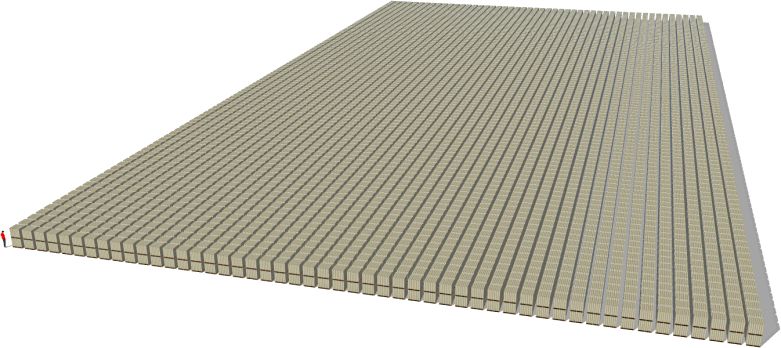
A bundle of $100 bills totaling 75 trillion bucks would weigh 10,000 tons (20 million pounds). It would be what you see in the linked photo below (notice the human for size comparison, in the very left bottom corner) . . . MULTIPLIED BY 75 MORE PILES HIGH.
http://media.mercola.com/imageserver/public/2009/March/pallet_x_10000.jpg
-
Vitamin D & iodine deficiency kill children, t
http://www.vitamindcouncil.org/health/autism/autism-information.shtml
http://www.vitamindcouncil.org/cancerMain.shtml
http://articles.mercola.com/sites/articles/archive/2010/07/22/pregnant-women-advised-to-get-more-vitamin-d.aspx
http://www.iodine4health.com/Both are involved with immune function in different ways. Adequate vitamin D is needed to make the brain's master antioxidant, glutathione. Adequate iodine helps excrete heavy metals. Both are involved with zapping cancer cells (it's said the average adult gets one cancer cell a day, but a good immune system deals with it). Vitamin D is essential to preventing pregnancy complications, including C-sections.
The US RDA for iodine may be way too low, especially considering how much bromine and fluorine kids are exposed to. The vitamin D RDA is also too low, even with being recently revised upward.
Eating fruits and vegetables also helps preventing lots of disease and is essential to good health.
http://www.drfuhrman.com/library/foodpyramid.aspx
http://www.diseaseproof.com/archives/diet-myths-the-food-pyramid-of-the-insane.htmlOne can tease out a lot of the individual nutritional and environmental causes in some cases of autism:
"Autism Research: Breakthrough Discovery on the Causes of Autism"
http://www.huffingtonpost.com/dr-mark-hyman/autism-research-discovery_b_794967.htmlLet's get that all right before arguing too much over other stuff and what the true risk/reward assessment is for otherwise healthy kids and vaccines. A focus on magic bullets may be leading us to miss the big picture here about optimal health, which is earned by eating right and a lot of good lifestyle choices.
If pediatricians educated parents more about nutrition, we'd probably have a lot healthier population, even without vaccines.
"Disease-Proof Your Child: Feeding Kids Right"
http://www.amazon.com/Disease-Proof-Your-Child-Feeding-Right/dp/0312338058
"A groundbreaking book that explains the connection between nutrition and disease prevention-showing parents how to keep their children healthy by feeding them right. Bombarded by the media with stories about childhood obesity and dangerous hormones, pesticides and additives in foods, and told that allergies, asthma, and ear infections are on the rise, parents have never been more concerned about what to feed children. In this invaluable resource, featuring easy-to prepare, tasty recipes, Dr. Joel Fuhrman explains how cutting edge nutritional science can be brought to the family table with amazing results. "See also for how to break out of the junk food pleasure trap:
http://drfuhrman.com/library/article16.aspx -
We may need a new rating
Unfortunately, I have read that the SAR rating indeed can be quite misleading. Maybe we need a new rating.
-
Re:what's the problem?
ScienceBlogs is supposed to be a place for creative, and sometimes controversial, opinions. My favorite ones are Respectful Insolence and Tomorrow's Table, and all the time, you read things there that plenty of people would get all in a huff about. Does anyone think the Pepsi blog would do that? Do you think they would ever once mention the insanity of the anti-vax movement, or the senselessness of the 9/11 truthers, or call alternative medicine purveyors out on their incoherent conspiracies? Think they'd ever mention politics or evolution or anything else that might upset a customer? No, because this blog was not written by an individual, it was by a company, for a company. And besides, plenty of clueless conspiracy minded nutters would point to this as the link between a scienceblogger, and therefore believe them to be discredited, since no small amount of people already believe scientists to be in on the Big Pharma/Monsanto/Illuminati/New World Order genocide conspiracy, so this would kinda make ScienceBlogs as a whole look a little less independent and reputable if they're willing to put corporate interests there for money.
-
Re:GM
Interesting how the farmers are not the ones against Monsanto.
Except there are many farmers who oppose Monsanto, or visa versa.
- Monsanto versus Farmers.
- Monsanto's Harvest of Fear
- Haitian Farmers Fight Back Against Monsanto
- Nelson Farm - A Fight Against A Giant -- Monsanto Sues North Dakota Farmer Over Biotech Crop Dispute
- Goliath and David: Monsanto's Legal Battles against Farmers
- Monsanto vs. US Farmers [pdf]
- Oregon farmers caught up in Monsanto suit over engineered alfalfa
- Agricultural Giant Battles Small Farmers
- Could Monsanto Be Responsible for One Indian Farmer's Death Every Thirty Minutes?
- Monsanto watch: Targeting American farmers with lawyers, fear and money
- Falcon
-
Re:B-b-b-but I thought Apple was a marketing compa
People love to whine about all the Apple stories. I would defy any of them to submit their own stories about all the other computer companies that are breaking new ground with this type of research.
Eh? This is hardly breaking new ground. IBM achieved a "retina display" 10 years ago. Kudos to Apple for identifying a supplier who could provide something similar but smaller for a device held closer to your eyes. But unlike Apple, IBM actually did the R&D themselves, doubling the state of the art at the time before bringing it to market.
Apple has become like the Microsoft of old. Repackaging old things and presenting them to an enamored audience of fanbois who oooh and aaah at all the wonderful things Apple/Microsoft "invented". I still meet people who think Microsoft invented the Internet just because they're ignorant of the rest of the tech market and were only exposed to Microsoft products. I'm starting to see the same thing happen with people who shroud themselves entirely within Jobs' reality distortion field. -
Wish more people would google on nutrition etc....
"The Food Pyramid of the Insane"
http://www.diseaseproof.com/archives/debunking-diet-myths-the-food-pyramid-of-the-insane.htmlNot that these doctors all agree, but there is a lot of overlap and they cover the essentials (typically lots of organic veggies, fruits, beans, nuts, seeds, maybe fish, vitamin D, and very little processed foods or factory farmed meats):
http://www.drfuhrman.com/
http://www.drmcdougall.com/
http://www.drweil.com/
http://www.mercola.com/
http://www.vitamindcouncil.org/treatment.shtmlOccasional fasting may help some conditions, too:
http://www.healthpromoting.com/Articles/articles/PleasureTrap.htmThis is a good video about the future of medicine based on nutrition, including teaching people how to shop at the grocery store, how to cook at home, and how to order in restaurants to stay healthy:
http://www.drmcdougall.com/health_10_day_program_video.htmlAnother video on curing disease by better nutrition:
"Eat For Health - Joel Fuhrman, M.D."
http://www.youtube.com/watch?v=wPiR9VcuVWwSomeone (not a doctor) who puts a lot of these ideas together into cooking advice:
http://www.andreabeaman.com/
"Read Andrea's inspiring story, The Whole Truth - How I Naturally Reclaimed My Health, and You Can Too! A story you can relate to as you make diet and lifestyle changes in your own life. Learn how to make health-promoting food taste absolutely scrumptious with the Eating and Recipe Guide. Infused with humor, in depth knowledge about food, and over 120 easy recipes, this is a wise tool to have in your kitchen."A group helping communities be healthier by changing their public infrastructure:
http://www.bluezones.com/makeover-aboutAnyway, most disease in the USA could be prevented by better nutrition, moderate exercise, less stress (like through meditation), good sleep, adequate vitamin D from sunlight, more and better community interactions, more positive thinking, and a few other similar basic things.
-
Dear WD, Could You Help Us End an EMF Debate?
and (my personal favorite) the warning about how the strong magnet inside the system could fritz your pacemaker.
So you have a large number of workers exposed to this machine that (I presume) creates massive electromagnetic fields? And they are exposed to it for lengthy amounts of time in proximity to it? And you have other workers in the same area/facility that are not exposed to it?
I tire of the ongoing debate that electromagnetic fields are hazardous to your health. Since you provide these people ongoing health care, perhaps you could release anonymized data so we could either confirm or deny this? If anything it would help clear things up in -- not only the power lines debate -- but also maybe cellphones if the EMFs are in anyway similar.
Just a thought -
See citations at the Vitamin D Council website
I agree that the OP point on sunlight not being good enough is fishy, although on a practical basis you are just not going to get enough vitamin D from sunlight living the typical mostly indoor life in the Western world. But, the OP does indirectly bring up a cutting edge area of research about what is normal vitamin D levels and how have humans evolved in different settings to process different levels of vitamin D (like in the plains, the forest, the seashore, and the frozen icy wastes of the ice ages, and with different skin pigmentation in each setting). So, there remain a lot of unknowns.
But, the rest of it as far as recommendations is legitimate according to the emerging science, even if there are, as you suggest, caveats that for some few people with rare diseases issue that may be made worse by supplementing.
You can find a vast amount of scientific papers at this site:
http://www.vitamindcouncil.org/Here is one 2009 study that is there:
"Vitamin D for Cancer Prevention: Global Perspective"
http://www.oncologystat.com/journals/review_articles/AEP/Vitamin_D_for_Cancer_Prevention_Global_Perspective.html
"RESULTS/CONCLUSIONS: It is projected that raising the minimum year- round serum 25(OH)D level to 40 to 60 ng/mL (100–150 nmol/L) would prevent approximately 58,000 new cases of breast cancer and 49,000 new cases of colorectal cancer each year, and three fourths of deaths from these diseases in the United States and Canada, based on observational studies combined with a randomized trial. Such intakes also are expected to reduce case-fatality rates of patients who have breast, colorectal, or prostate cancer by half. There are no unreasonable risks from intake of 2000 IU per day of vitamin D3, or from a population serum 25(OH)D level of 40 to 60 ng/mL. The time has arrived for nationally coordinated action to substantially increase intake of vitamin D and calcium."For most people in industrialized countries who spend most of their time indoors, to get that level, you have to supplement in the range the OP mentioned. However, as Dr. Cannell of the Vitamin D Council suggests,
http://www.vitamindcouncil.org/treatment.shtml
you need periodic blood testing to be sure you are getting the right amount. Here is another blog entry from the blog the OP mentioned on this too;
http://heartscanblog.blogspot.com/2009/01/why-rda-for-vitamin-d.htmlAnother resource:
"A Consortium of Scientists, Institutions and Individuals Committed to Solving the Worldwide Vitamin D Deficiency Epidemic"
http://www.grassrootshealth.net/
They have been coordinating blood test results with supplementation levels.Experts still disagree about the best level for vitamin D in the blood, but in general, it is way higher than what most people have. Here are Dr. Mercola's suggestions, which are close to Dr. Cannell's , but higher than the Grass Roots Health groups:
http://articles.mercola.com/sites/articles/archive/2002/02/23/vitamin-d-deficiency-part-one.aspx
Dr. Mercola suggests sunlight is the best source.An audio interview with Dr. Cannell on some of these issues:
http://www.vitamindcouncil.org/audio/dr-cannell-one-radio-network-interview-11-12-09.mp3Like everything, there are probably limits to this advice. In that radio interview Dr. Cannell mentions one person (Trevor Marshall) who disagrees. Here