Slashdot Mirror
Domain: motherearthnews.com
Stories and comments across the archive that link to motherearthnews.com.
Comments · 83
-
Re:Sounds like anti-vaxxers
There's two types of GMO foods: natural ones that humans have been doing for millenniums and Monsanto laboratory mutants that would never have occurred in nature.
Correction one type. Ones that would never have occurred in nature
-
Re:Sounds like anti-vaxxers
There's two types of GMO foods: natural ones that humans have been doing for millenniums and Monsanto laboratory mutants that would never have occurred in nature.
-
Re:Or bash it with actual proof...
Try to do that with natural cultivation.
Most people aren't against natural GMO that can happen without a laboratory, they're against Monsanto Frankenstein-style GMO.
-
Re: FUD
So butteflys didn't actually die fro BT crops? Bees are not sick?
In case you haven't noticed, organic farmers spray their crops with Bt. In fact, here's a nice unscientific Food Religion site for you that shows how to properly use Bt on organic plants in your "locally fresh" garden:
http://www.motherearthnews.com...
BT is considered copletely natural, and is as close to a godsend as you can get. What is tremendous is that it is very specific in what it kills. Mosquitos, fungus gnats, Gypsy moths. Completely harmless to those canary in a coal mine animals, the amphibians.
What is interesting is that there are a few new varieties that will take out the Emerald Ash Borer. http://www.gardensalive.com/pr...
They make a hellava mess. Probably introduced from Asia accidentally, the caterpillars disrupt the flow of water in trees affected.
The one known as BT-G takes out their caterpillars, But like other BT's they are pretty specific, and considered organic.
-
Re: FUD
So butteflys didn't actually die fro BT crops? Bees are not sick?
In case you haven't noticed, organic farmers spray their crops with Bt. In fact, here's a nice unscientific Food Religion site for you that shows how to properly use Bt on organic plants in your "locally fresh" garden:
http://www.motherearthnews.com...
The roundup resistant crops are not causing other crops to die in Argentina?
That sounds like a geographical issue with Argentina, which their government should regulate as they see fit. Meanwhile we'll continue using it where this isn't relevant.
-
The wrong focus...
Cows are not the problem and lettuce is not the fix.
The confusion is from focusing on animal and vegetable foods when the problem is the way they are produced and brought to market. The industrial food system is extremely fuel intensive and uses the worst possible methods for raising both vegetables and animals.
Cows and lettuce are not the issue.
Eliminating industrial mega-growers and replacing them with SMALLER, educated local growers would be a great solution. ADM, Monsanto, Cargill, et al just need to be OK with profiting somewhere else.
Therein lies our real problem. The mega farms will figure out a way to pump methane from a feed lot before they do away with the problem - the feed lot system itself. They'll figure out a way for lettuce to withstand even more toxic chemical inputs before they do away with destructive growing practices that mandate those inputs.
The biggest thing anyone can do to change the world (even if you only consider fuel use) is to grow one's own food - at home. Whether it's animal or vegetable. Even if you can only grow one thing.
-
Re:Well..
See the studies on this page for measured differences between the types of eggs.
http://www.motherearthnews.com...
What a spammy, biased site. First of all, just about everything on that site falls afoul of this: https://en.wikipedia.org/wiki/...
Second of all, they don't have any kind of whitepaper or anything, just some unsubstantiated claims. Show me some peer reviewed evidence, with a clearly drawn cause and effect. Third of all, I've seen sites like this all the time, e.g. naturalnews.com, mercola.com, etc. They make these stupid wild claims with no scientific evidence and use "because it's natural" as their proof. (They also seem to attract a lot of conspiracy theorist types, electromagnetic hypersensitivity believers, anti-vaxers, etc, but that's another topic.)
The risk of organic spinich is about the same as conventional spinach
"But Francisco Diez-Gonzalez, a professor of food safety microbiology at the University of Minnesota's department of food science and nutrition, disagrees. In 2006, he published a study comparing E. coli contamination in organic and conventional produce. He concluded that the presence of E. coli seemed to depend more on the type of produce than whether it had been grown conventionally or organically.
"At this timeâ¦there is no sufficient evidence either epidemiological or scientific, to support the idea that organic produce is most likely to carry foodborne pathogenic bacteria," wrote Diez-Gonzalez in an email.
Oh look, another spammy "natural is better" site! You pulled this straight from organicconsumers.org, no way that's biased! At least we have some scientific investigation going this time, which is an improvement over your previous "becuz mother earth sez!" article.
Well guess what, here's a less biased site, and it sheds a better light on the issue, specifically mentioning Professor Francisco Diez-Gonzalez:
A new study on food safety reveals that organic produce may contain a significantly higher risk of fecal contamination than conventionally grown produce.
A recent comparative analysis of organic produce versus conventional produce from the University of Minnesota shows that the organically grown produce had 9.7 percent positive samples for the presence of generic E. coli bacteria versus only 1.6 percent for conventional produce on farms in Minnesota.
The study, which was published in May in the Journal of Food Protection, concluded, "the observation that the prevalence of E. coli was significantly higher in organic produce supports the idea that organic produce is more susceptible to fecal contamination."
In addition, the study found the food-borne disease pathogen salmonella only on the organic produce samples. There was no evidence found of the deadly strain of bacteria, E. coli O157:H7, in either type of produce tested. The study looked at fruits and vegetables at the "preharvest" stage, not at the retail store level.
The principle investigator of the University of Minnesota study, Francisco Diez-Gonzalez, told CNSNews.com that "organic agriculture was more susceptible to carry fecal indicators."
"In many ways it is confirming what is believed, indeed, if you are using animal manure for fertilizer, the chances that you are going to get fecal bacteria on the product are greater," Diez-Gonzalez said.
Now granted, he goes on later to contradict himself somewhat, but if you read further on, a few more experts chime in and confirm everything mentioned above.
Alex Avery, director of research and education at the free-market Hudson Institute's Center for Global Food Issues, says the latest scientific study confirms years of research that organic produce may pose a higher risk for food-borne i
-
Re:Well..
See the studies on this page for measured differences between the types of eggs.
http://www.motherearthnews.com...
The risk of organic spinich is about the same as conventional spinach
"But Francisco Diez-Gonzalez, a professor of food safety microbiology at the University of Minnesota's department of food science and nutrition, disagrees. In 2006, he published a study comparing E. coli contamination in organic and conventional produce. He concluded that the presence of E. coli seemed to depend more on the type of produce than whether it had been grown conventionally or organically.
"At this timeâ¦there is no sufficient evidence either epidemiological or scientific, to support the idea that organic produce is most likely to carry foodborne pathogenic bacteria," wrote Diez-Gonzalez in an email. "Despite the apparently logical expectation that if manure is used as one of the predominant fertilizers for organic crops they might be riskier, some factors such as the diversity of manure types, the use of composted manure and the fact that even conventional growers also use manure seem to have an impact on finding any differences."
The takeaway: Since organic produce isn't any more or less likely than conventional to carry a scary disease, and since even organic fruits and veggies might contain traces of pesticides on their skins, always wash it, just like you would any other produce. Of course, rinsing your food won't always remove every single pathogen, Lunder notes, but it's better than nothing. Since running some water over my blueberries will require approximately 15 seconds of my day, I think I can handle it."
The specific studies you posted are interesting and may be valid. However, you have to be careful of any iinformation associated with the Center for Global Food Issues. It's funded by Monsanto, ConAgra, and DuPont. Enough of articles I dug into turned out to have funding ties to big agra that I've become skeptical of anti-organic science.
The big food processors spend 20 million a year to produce anti-organic propaganda and have bought up most of the mid sized organic food producers. It's a bad situation where real organic food is hard to find and it's hard to find certifying agencies you can trust because certification agencies are targeted by the big food processors and they have a lot of money to throw around. USDA organic and free range certification is almost useless at this point.
Interesting point on the marigolds, but so far I've seen no scandal of producers specifically feeding marigolds to chickens to color the eggs. But I imagine that's next. They'd rather dye the yolks than actually follow real free range and organic processes.
-
Lies, I say ,,, won't win in the end
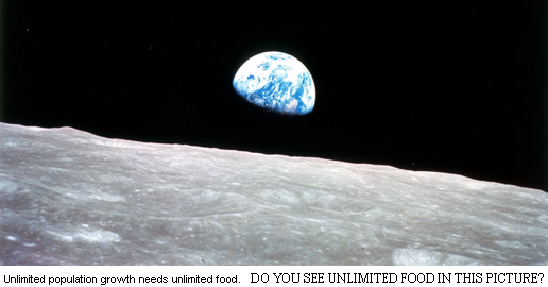
There are a lot of lies spouted during the Overall Abortion Debate. For example, it is a lie to claim that "intrinsic value" exists. It is a lie to claim that an unborn human is not alive. It is a lie to claim that human life matters, in the Grand Scheme of Things. It is a lie to claim that an unborn human is equal to a "baby" or "child" (both of which normally don't have an attached placenta as a vital organ). It is a lie to claim that an unborn human is more than just a mere-animal organism. It is a lie to claim that "human" is always equal to "person" (see all the human life, cuticle cells, getting killed during manicures and pedicures; cuticle cells have the full set of human DNA and modern cloning/stem-cell research shows that any such cell has the potential to act like a zygote --also see "hydatidiform moles" and "brain-dead adults on full life-support" as other examples where "human" does not equal "person"). It is a lie to equate "potential" with "actual" (do you, a potential corpse, want to be buried 6 feet under today?). It is a lie to claim that the finite Earth has endless food-resources for an ever-growing population. It is a lie to claim that fossil fuels will last indefinitely. It is a lie to claim the Earth is not currently overpopulated, when we have such problems as Global Warming, Deforestation, Overfishing, Aquifer Depletion, Farmland Encroachment by Cities, Topsoil Losses, Algae Blooms, and vast amounts of Toxic Waste being dumped into the environment as a side-effect of Mass Production. It is a lie to claim that humanity is immune to a "Malthusian Catastrophe". It is a lie to claim that unborn human animal organisms are "innocent", when they actually act worse than parasites (without actually being parasites). It is even a lie to claim God opposes abortion (see Exodus 20:21, in which causing a miscarriage can be associated with the arbitrary penalty of ZERO). When all the lies are finally extirpated from the Overall Abortion Debate, there will be no valid rationale for illegalizing abortion in this day-and-age.
-
Re:Why not just kill them all?
Ok. I go with the one I know / could think of first hand:
http://www.mosquitoreviews.com...I guess another obvious one is as bird feed. Another less obvious one as wasp feed.
http://www.wbrcouncil.org/Depa...
http://www.motherearthnews.com... -
Re:Space for solar hasn't been much of a concern
Unlike the GP (who appears to live in some kind of horrible McMansion), your 100+ year old house was designed. In fact, it's perfectly livable without air conditioning at all, proven by the fact that people actually lived in it for decades before air conditioning existed! You just need to go re-learn how to operate it properly.
-
Re:Space for solar hasn't been much of a concern
I live in Georgia; I'm well aware of the fact that desert architecture doesn't work in hot-humid climates like (eastern) Texas.
However, the fact that your house was built stupidly doesn't mean that we should throw up our hands and ignore the problem. There are new houses being built every day, and those should be designed smarter (and in the our case I don't mean with qanats; I mean things like verandas, lots of attic ventilation, and choosing not to cut down the surrounding trees). In the South you may not actually be able to eliminate AC entirely, but you can get pretty close.
By the way: clay soil is not why houses in your area don't have basements. I'm guessing you're on the coastal plain, with a high water table and without hills, and that's why. In the Piedmont, where I live, we have clay soil and basements.
-
Re:Better revolution in beekeeping
Would be breeding a better bee. One that is more resistant to mites, insecticides, wax moths, etc., and that isn't so susceptible to CCD.
Lots of people are working on this. One example is the Minnesota Hygienic Bee.
Ironically, one such effort might be responsible for the introduction of the Varroa destructor mite to the West. Brother Adam was a very famous beekeeper living in England who tried to breed an improved bee--the so-called Buckfast bee--by crossing many types of honeybees that were imported from around the world--Italians, Germans, Asian bees, and even some African species. His goals were to breed a better bee after the Isle of Wight disease pretty much destroyed all native English bees.
The ironic part is that the Varroa destructor mite (of Asian origin) was first discovered in England not far from Buckfast abbey, and it's believed that it was probably brought to England as part of one of Brother Adam's shipments.
-
Re:What is it?
chickens are omnivores. they eat everything, grass, bugs, other chickens if they get bloodlust... they will even eat dirt and fecal material... my uncle raises his own chickens and feeds them with some feed and garden greens...
there is also a neat organic chicken method where they are in a moveable, large area cage, which forces them to eat grass and dirt, which they usually avoid as they seek bugs as primary food... it takes grass 7 days to recover from this organic feeding method so you don't need a huge area to do it in. the reason old farms had no problem with bugs was by making the chickens free range in farmland and they would seek shelter (hen house) and without fences you just need a dog or two to keep the chickens on your land... true factory farms produce eggs faster but it is more resource heavy than local farming practices. which we know are sustainable because we have old villages where at one point people were subsistence farming.
they claim you don't need dogs, but dogs also deter chicken raiding foxes or wolves.
-
Square foot gardening is the rebuttal
Other styles of farming whether square foot gardening or indoor hydroponics can be much more productive per acre than big field farming with tractors, but they are *labor* and *knowledge* intensive. Robotics (or other automation) make greater yields per square foot much more achievable more cheaply. That also makes vertical farming in cities more feasible.
http://en.wikipedia.org/wiki/S...
http://www.motherearthnews.com...
http://www.verticalfarm.com/
http://en.wikipedia.org/wiki/I...See especially:
http://en.wikipedia.org/wiki/B...
"A 2010 study published in the journal Renewable Agriculture and Food Systems showed that biointensive methods resulted in significantly increased production and a reduction of energy use when compared with conventional agriculture (Moore, S.R., 2010, Energy efficiency in smallâscale biointensive organic onion production in Pennsylvania, USA, Renewable Agriculture and Food Systems, 25:3, pp. 181â188). This study states that "Current mechanized agriculture has an energy efficiency ratio of 0.9The fact that many people have inefficient backyard gardens does not mean that people could not have very productive gardens if they knew more and had more time for them. Biosphere II was a good example of intensive food production in a small space.
See also books on "Survival Gardening".
http://theprepperproject.com/s...The best one I've seen (by that name, by John Freeman) is not mentioned there though:
http://www.amazon.com/Survival...Don't know about this new one by someone else:
http://www.amazon.com/Survival...Granted, that is mostly about organic vegetables and beans. Grains may be a somewhat different issue, but they are already heavily automated in many ways. But as Dr. Fuhrman suggests, eating more fruits and vegetables is healthier than eating more grains (especially refined grains).
You should not discount that gardening in the sunshine can be good health-promoting exercise. It saves money indirectly by displacing other less healthy recreational activities like shopping for the next unneeded consumer item.
BTW, we can grind up rock to get good fertilizer for relatively cheap, especially if powered by excess renewable energy:
http://remineralize.org/By this estimate by economist Julian Simon, there is plenty of opportunities for growing lots more food if we want to:
http://www.juliansimon.com/wri...General purpose agricultural robotics makes intensive gardening so much more feasible to do on a small local scale... Still, highly-automated indoor agriculture powered by cheap energy is probably more the future of food production because it is so much more predictable.
-
Re:Lots of people criticize this for its obviousne
If he's never seen one before, it's ingenious. I've seen one (years ago) so it seems obvious to me. *shrug*
-
Re:No GM
If the plant produces it because OMG! GMO! it's evil and wrong. However, if you spray it all over the plants then it's ORGANIC!
-
Re:2 Words
According to this article, using the heater in cold weather is more of a drain than 5%, so I want to see metrics on this to believe it.
Electric car battery range and performance isn’t the only issue in cold weather: Electric cars don’t have alternators to generate electricity. That means that the heater is a direct drain on the batteries — almost as dramatic as the drive motor itself. According to Williams, the Leaf’s heater can draw 1.5 to 3 kilowatt-hours (kwh) of electricity in an hour of use, and that’s a big dent when the battery stores only 24 kwh.
-
Re:what cost
And that's the tradeoff. You either need to have an incredibly tiny and power efficient house, or you need to have a backup system. Even the most ardent off the grid supporters accept that.
-
Re: This is disgusting!!
-
Re:Um...
I do not have large batteries that will need to be recycled or tossed into a landfill next year.
This idea that hybrid batteries need to be replaced every year is a thoroughly debunked urban legend. I drove to the office this morning in a Ford Escape Hybrid that has 70,000 miles and is 5 years overdue for a battery replacement, by your count.
And out of curiosity, what's wrong with recycling a battery?
-
Re:Sounds to me that he found "paycheck"
First off, RoundUp is the most talked about, but far from the only pesticide used
Second, the whole big thing with pesticide resistant crops is that it allows you to use more of the pesticide on your farm. This is leading to increased pesticides in soil.
Manufacturers have a history of toxic pesticides being used than proven dangerous decades later only to be replaced by new products.
We are now getting reports that manure compost is testing at times with high enough levels of herbicides to post a problem.
http://www.reuters.com/article/2012/10/02/us-usa-study-pesticides-idUSBRE89100X20121002
http://www.motherjones.com/tom-philpott/2012/10/how-gmos-ramped-us-pesticide-use
http://www.huffingtonpost.com/2012/10/02/genetically-modified-crops-pesticides_n_1931020.html
http://www.huffingtonpost.com/2012/10/04/pesticides-gmo-monsanto-roundup-resistance_n_1936598.html
http://www.sciencedaily.com/releases/2009/08/090817143610.htm
http://news.bbc.co.uk/2/hi/europe/8308903.stm
http://www.motherearthnews.com/killer-compost-herbicide-contamination-zl0z1211zkin.aspx
http://en.wikipedia.org/wiki/Glyphosate#Human
GMOs infected non GMO products. Yes, we were originally told this wasn't a risk.
The SCIENCE is there...you just want to be ignorant.
http://www.npr.org/templates/story/story.php?storyId=129010499 -
Re:I praise Satan everyday for power tools.
Well now I'm curious. It turns out whenever the word 'cost' appears in a Google search the results tend to point to online shops. But here's what I found: http://www.vincelewis.net/vikingsword.html
http://www.motherearthnews.com/Sustainable-Farming/Small-Breed-Milk-Cows.aspxSo a good Viking sword was worth 12 milk cows, and each milk cow is apparently worth about $2500 so $30000. Well that's assuming the value of a milk cow is constant throughout history. Not quite a Lexus, maybe an Acura.
-
Re:Buy local
Many have studied this:
http://www.motherearthnews.com/eggs.aspx -
Re:The most efficient car is a city
I'm guessing reading comprehension isn't your strong suit. Either that, or you own a Prius and I touched a nerve.
What, you mean that Japanese piece of ass-backwards engineering? No thanks, I'd rather build my own hybrid that works right, like the 75-mpg Opel GT built back in 1979, than drive one of those gas-engine-supplemented-by-electric-power abominations that manufacturers are pushing on the public.
You are an idiot. You may believe you are an expert, but you are not, or you would've easily spotted the obvious problems with these wildly high MPG claims in an extremely uncritical nontechnical article, and never would've come to believe they prove all the engineering Toyota did on its hybrid drivetrain was foolish and incompetent.
The power sources for dude's homebuilt conversion were a single 5 hp lawnmower engine and four conventional 12V lead-acid automotive batteries, and he used a jet engine starter motor as his drive motor / regenerative brake generator. This is chewing gum and baling wire stuff.
Note that the claimed top speed while operating purely off lawnmower-engine power (i.e. not draining the batteries) was reported to be just 50mph. (Which was probably very optimistic, since 5hp is not a lot of power to overcome wind and rolling resistance after you account for conversion inefficiency. I expect the real figure was much lower.) Since the vehicle can't even travel at highway speed limits without draining the battery, it's a good bet his normal operating mode was to use both battery and gas tank as energy sources, and he relied mostly on recharging the battery from grid power. In other words, it was a plug-in hybrid. Want to take any bets on whether he accounted for energy supplied by the grid while calculating those "miles per gallon" figures?
The other reason your slam fails hard is that the Prius contains essentially all the same major components as dude's junkyard conversion, just coupled in a different way which is more appropriate (and more efficient) for a vehicle designed to rely exclusively on gas for energy input. Both have a gas engine, a largish battery (larger and heavier in dude's conversion), two electric motor/generators, a mechanical transmission, and are capable of regenerative braking. The big difference is that the Prius routes all the power sources and sinks through a single planetary-gear electronically controlled continuously variable transmission, which they use to pull off some really cool tricks.
For example, a gas-as-primary-power-source hybrid frequently needs to have the gas engine simultaneously power the road wheels and recharge the battery. The Prius transmission can split the gas engine's torque output, meaning the two power paths are:
Gas engine -> transmission -> motor/generator -> batteries
Gas engine -> transmission -> wheelsIf you were to build a powertrain like dude's Opel conversion but with a bigger gas engine so it could avoid reliance on grid power, the power paths would be:
Gas engine -> generator -> batteries
Gas engine -> generator -> drive motor -> transmission -> wheelsNote that the Prius has just one conversion between the gas engine and wheels, compared to two for the Opel. This is a big deal when your engine is going to be providing primary power to the wheels during cruising. What's more, the Prius transmission is very efficient compared to traditional auto transmissions, and there's a bunch more stuff which I didn't show which allows the transmission to optimize gas engine RPMs for the efficiency sweet spot in almost all operating conditions. There is some really cool engineering there, but you've made yourself blind to it.
FYI (I thought about putting this in my last post, obviously should have), you aren't the one I was referring to as an obnox
-
Re:The most efficient car is a city
I'm guessing reading comprehension isn't your strong suit. Either that, or you own a Prius and I touched a nerve.
What, you mean that Japanese piece of ass-backwards engineering? No thanks, I'd rather build my own hybrid that works right, like the 75-mpg Opel GT built back in 1979, than drive one of those gas-engine-supplemented-by-electric-power abominations that manufacturers are pushing on the public.
In either case, what I was *trying* to say is that there are already vehicles that come close to that mandate, but they all involve some pretty significant trade-offs. As you so eloquently pointed out, a bike isn't suitable 365 days a year for everyone (however, you incorrectly assumed that I was one of the people for whom it *does* work -- nice try, but no. 61 degrees 15' N, do the math). For those who opt for a more fuel-efficient vehicle, the jury is still out on the eco-friendliness of them, and from what I can tell by frequently being stuck behind them in traffic, their performance sucks. In either case, mandating that Detroit raise the bar to 54.5 MPG isn't likely to improve either of those cases much, IMHO.
Boy, that sure is a lot of words for "thanks for agreeing with me."
FYI (I thought about putting this in my last post, obviously should have), you aren't the one I was referring to as an obnoxious prick - that is reserved for the anti-automobile eco-Nazis. -
Re:Not even close
Consider looking at population through the prism of a world without fossil fuels and other natural resources.
They look a lot healthier.
These fossil fuels pretty much make modern agriculture what it is today.
Yes, toxic and destructive.
It is hard for us to picture a world in which human beings become less capable and have less technology because it is not something we have observed in our lifetimes.
No, it is not difficult. All we have to do to picture such a world is look at history.
However, it can happen, and currently we have no mitigating plan to deal with the dwindling availability of fossil fuels.
You are either a liar or grossly underinformed. We have numerous plans to deal with this situation, all of which have less environmental impact than using fossil fuels.
Once fossil fuels become too expensive for agriculture, we could all be in big trouble.
We could be, if we were very very stupid. As long as you avoid monocultures which are only necessary to enable machine cultivation, you can produce more food per acre using sustainable agricultual techniques such as actual organic farming, which doesn't just mean you use what's on the USDA Organic permitted list. It means (among other things) that agriculture is treated as the cyclical thing that it needs to be for sustainability. Currently the food is turned into fertilizer in our guts, and then we flush that down the toilet and to a "waste treatment plant" where feces is wasted. We don't even need to give up flush toilets, only sewage treatment plants as they are currently implemented.
As well, we have long since developed the technologies for sustainable biofuels to replace our transportation fuels, including biodiesel which could cost-effectively be made from algae today and butanol which BP and DuPont have been suppressing through their shell company Butamax, though they do not even own the complete technology (and though the technologies involved were developed at a public university, and partly funded with tax money.)
Further, we have long been able to produce viable solar panels. Taking PV solar alone, the panels can easily repay the energy cost of their production in just a couple years now, but even back in the seventies a crystalline panel that lasts 20-30 years could repay its energy cost in just seven years. That means that if we had built even PV-solar farms (let alone theoretically more efficient thermal plants) back when we first gained the technology to create them, they would have produced net power for at least 13 years, and maybe 23. And here I'm not even getting into hybrid solar panels which are both PV and water heaters, which not only convert substantially more solar energy into a useful form, but which also operate more efficiently and even have a longer life due to being cooled.
Solar power is not the only bulk generation technology available to us, either. The romans were using windmills to pump water into aqueducts using an Archimedes' screw and there's no reason we can't be using them today to produce far more of our power than they produce today. Indeed, we can combine them with elements of the petroleum technology that you love so well, and use the structures we normally use to site oil wells to place windmills offshore where they produce the most constant power. And then there's nuclear, which we could wrin
-
Re:Interesting idea...I won't claim to have a good working design for this application, but pressure cooking is claimed to reduce cooking time by 70% and energy use by 50%, which sounds good when cooking with solar energy in the dark!
Perhaps you could heat up a thermal store in the day, put it into a pressure cooker and add water to efficiently carry the heat from the slug to the food. Apparently pressure cookers can be made quite cheaply. Hmm, according to the customer reviews on that link pressure cooking is traditional in India, I didn't know that.
-
Re:Inefficient
Replacing... mm perhaps not. But I think that relegating it to backup-status for now will be common... If it is only needed to provide electricity, you can tune it much better than when it needs to provide power to the wheels.
Very true.
Now, if only someone could figure out a way to build such a system inexpensively... oh wait, someone did - 32 years ago. -
Re:Redundent..
What you want to do to sequester CO2 is to make Terra Perta by using the wood as a carbon source for low temperature pyrolysis called Biochar.
-
Re:dandelions?
http://www.motherearthnews.com/Real-Food/1970-09-01/Dandelion-Wine.aspx
yours is a good plan tho. -
Re:alcohol in engines
Ethanol needs 20%-30% MORE fuel to extract the same energy out of it.
I already answered that. While corn based ethanol barely produces more energy than what it takes to make, using sugarcane as their feedstock Brazil has an Energy Returned On Energy Invested (EROEI) of from 8:1 (8 to 1) to 10:1 (10 to 1).
Of course the EROEI of all ethanol sources is currently beaten by petroleum's EROEI from 16:1 to 20:1. But as petroleum sources shift to heavy oil and tar sands that ratio will drop.
Falcon
-
Energy return on energy invested
And the other problem is it takes two barrels of crude equivalent to manufacture one ethanol equivalent of a barrel of oil.
Citation, citation, citation, or its Bullshit! Here are som eof my own citations, which only took a couple of minutes to get and type up: Brazil has an energy returned on energy invested of between 8:1 and 10:1 for ethanol. In the US corn based ethanol may have an EROEI of about 1.1:1, just barely positive. While the EROEI for petroleum currently ranges between 16:1 and 20:1 ethanol does have a positive EROEI in the single digits.
Falcon
-
Re:It's In the Air
It wasn't "the Baby Boomers"...we inherited a hydrocarbon-dependent world, and there were powerful forces at work to ensure that we remained dependent. Big Oil and the Republicans, for instance, who blocked all conservation and alternative energy measures that were attempted after the the birth of OPEC sent energy shocks hammering our economy...instead, we were handed voodoo economics by Reagan and others like him, who were hardly "Baby Boomers".
We did, however, invent the Green Movement, the demand for alternative energy, alternative lifestyles, etc., etc., etc. You should go read the back issues of The Mother Earth News...the attempt to save this planet from the greed of a few has been a way of life for many "Boomers" for a very long time.
By the way: I hope you didn't ask your "Baby Boomer" parents for a car when you turned 16... -
Re:How much?
and always warmed it up before screeching off down the street?
Modern ICE-based cars with electronic fuel injection don't require much warm up time. Unnecessary idling of a cold engine does not improve performance; instead it wastes gas, releases more hydrocarbons and may even do harm to the catalytic converter if practiced over long term. See Ask Our Experts: Car Engine Warm-Up
-
Re:Late to the party?
Read the article I posted. The point of the article was that they can intensively graze (meaning "force the cattle to graze the way bison do") and use the same amount of land that is used for raising corn for cattle. From the article:
"Churchill says that on properly recovered land, he can finish about two steers per acre. That is almost precisely the acreage it takes to grow the grain to finish those same steers in a feedlot. This whole system makes economic sense, acre by acre. More than half of our total grain crop goes to feed livestock, so it follows that we can convert half of the 150 million acres used to grow corn and soy to permanent pasture and lose not one ounce of meat production."
So, in fact, it does NOT take more land to raise grass-fed beef.
Next point: yes, they move around a lot. That's what builds the muscle that is the meat we eat. And the fact that they're moving around and eating more or less what they want is part of what makes the meat taste better.
Third point: The land the people in the article are using is former farmland that is no longer commercially viable. It's too exhausted from continuous high-fertilizer high-pesticide farming to support soy or corn anymore. But, with a few years of rest, it will support prairie grasses just fine, which is what the cattle eat. So no land is being used up that wouldn't otherwise be used. And as for transport costs... how do you think the corn that was raised on those farms before got to the meat factories? It was carried there on trucks. And seed, pesticide, and fertilizer were carried to those farms, and the meat was carried from the feed-lots to the packing plants and then to grocery stores on trucks. This doesn't reduce the amount of travel the meat has to do, but it cuts out everything involved in growing and moving the grain they were fed on. That, in itself, is a huge savings.
As an added bonus, the land he is using is being returned, as closely as he can manage, to the prairie ecology that was there before it was turned into corn and soy farms. Like I said... read the article. While their conclusions are, perhaps, somewhat overoptimistic, this isn't all pipe-dreams: they're doing it now, and making a living at it.
-
Re:Late to the party?
When the cost of fertilizer, pesticide, and transport of fodder is taken into account, along with the expense of antibiotics and growth hormones for animals, I suspect you're right on all counts.
When the beef is produced organically in free range pasture, I'm not so convinced. Grass-fed beef requires less medication, and the fodder doesn't have to be shipped anywhere. They (grass-fed cows) also produce less methane, assuming they're not from one of the breeds that have been bred to feed primarily on corn. The meat still needs to be moved, so it's certainly not a cure-all, and it might not be as efficient as growing vegetables, but then again, it requires fewer toxins, so maybe it's better.
Check out this article for some details. Some of it, as with everything in that magazine, is pie-in-the-sky dreaming, but some of it (the greenhouse gas issues, for instance) I was able to find confirmation of other places.
And free-range poultry can improve the soil, at least to a limited extent, while they graze, and produce just as many eggs, which are much healthier than those from factory-raised hens. The problem there is land... you need a lot more land for free range chickens than for factory farmed, and there's more human effort involved, so that's not quite so simple a trade as grass fed beef.
-
Re:Late to the party?
When the cost of fertilizer, pesticide, and transport of fodder is taken into account, along with the expense of antibiotics and growth hormones for animals, I suspect you're right on all counts.
When the beef is produced organically in free range pasture, I'm not so convinced. Grass-fed beef requires less medication, and the fodder doesn't have to be shipped anywhere. They (grass-fed cows) also produce less methane, assuming they're not from one of the breeds that have been bred to feed primarily on corn. The meat still needs to be moved, so it's certainly not a cure-all, and it might not be as efficient as growing vegetables, but then again, it requires fewer toxins, so maybe it's better.
Check out this article for some details. Some of it, as with everything in that magazine, is pie-in-the-sky dreaming, but some of it (the greenhouse gas issues, for instance) I was able to find confirmation of other places.
And free-range poultry can improve the soil, at least to a limited extent, while they graze, and produce just as many eggs, which are much healthier than those from factory-raised hens. The problem there is land... you need a lot more land for free range chickens than for factory farmed, and there's more human effort involved, so that's not quite so simple a trade as grass fed beef.
-
Re:Are Americans really this lazy?
In modern cars, I keep hearing that warming up your car isn't needed, and can actually be bad for it. Note it still recommends 30-60s to let the fluids warm up, which makes sense.
-
Re:Nonpolluting straw burning?
"Nonpolluting straw-burning furnaces"? Given that wood-burning has a pollution profile as bad as coal burning (the exact amount of different pollutants in each case varying depending on pollution controls), I seriously doubt straw burning is all that clean.
You don't have to interpret this as "straw-burning furnaces, which by nature of burning straw, are clean...". What you could just as easily interpret is "straw-burning furances, which have been modified to burn cleanly..".
Wood can burn horribly, generating thick black plumes of carcinogenic smoke, for example, when it's too wet. However, under controlled environments, wood can burn *very* cleanly. Take a look at a pellet stove - basically a wood burning stove, with the wood pellets providing a much more optimal burning profile that produces dramatically fewer pollutants.
On the flip side, you can purposefully create smoke, and use it as fuel in an internal combustion engine. This is called "wood gassification" and it's being used right now to drive a truck across the country. The Mother Earth News (magazine) built one more than 25 years ago back when the memory of the 70's oil embargo was still fresh and painful.
-
Re:That's bright!First I heard about hybrid cars was Mother Earth News which published plans for converting a small car to hybrid power in the 70s. (Yes, I am an old hippie.)
http://www.motherearthnews.com/Green-Transportation/1979-07-01/Electric-Car-Conversion.aspx
-
Forgetting feedlots?
High methane from cows is a symptom of the problem, which is that most beef is from feedlots. Not only is the huge amount of waste produced by the feedlots a large methane source, but also the fields that are used to grow the feed (mostly corn). This article (print version: http://www.motherearthnews.com/print-article.aspx?id=150244) explains that conventional feedlot agriculture emits carbon dioxide and methane both on the fields and the feedlots, while rotational intensive grazing sequesters carbon and emits much less methane.
-
It exists already
A truck has been made that runs completely on wood gas: http://www.motherearthnews.com/Green-Transportation/1981-05-01/Woodburning-Truck.aspx
-
Re:steps
This isn't energy you can run your TV on, but in this Mother Earth News article they describe how one acre worth of poplar trees can produce enough wood to be "firewoodselfsufficient." (See "Wood?Lots!") Obviously, the entire world population can't do this, but I thought it was an interesting and semi-relevant article.
Hybrid Poplar Tree Projects -
Mother Earth News - Easy DIY Solar Lighting
Mother Earth News mag ran a feature last year on exactly this topic:
Easy DIY Solar Lighting
http://www.motherearthnews.com/Do-It-Yourself/2007-04-01/Easy-DIY-Solar-Lighting.aspxFrom the intro:
"Many people dream of solar-electric power for their homes, but can't afford whole-house systems. Here's an affordable, entry-level system with which you can have fun and get to know the basics of solar power. This setup, built with a small photovoltaic (PV) panel, one battery and low-power direct current (DC) lighting fixtures, can bring solar lighting into your home or remote locations. If you can turn a screwdriver, you can install it yourself."Really does read like "Solar Power for Dummies", though the info seems US-centric.
Disclaimer: I haven't built any solar power systems yet.
-
These guys have been doing this forever
Mother earth news covers stuff like this all the time. https://www.motherearthnews.com/ Wanna get off the grid, they can show you how.
-
Re:Alternatives?
I don't shop for food at Walmart because frankly their produce just doesn't look as good as what I get at Publix.
Yes, but the produce I throw in the garbage disposal looks better than Walmart's stuff. My God, I can't believe the shit I see on the shelves there. Disgusting.
Also, *do not* buy their beef; it is up to 12% water. If you try to brown some of their sirloin (for example), all of the water comes out as it heats up, resulting in gray boiled beef (at $3.99/lb). The Kroger and Meijer stores here seem to do a lot better job with perishables, but I try to stick to locally grown veggies, eggs and meat when at all possible.I know, I know, I'm off-topic. Sorry.
-
Water injection. Crower's engine not new.
This article dates back to 1979 and is one of the first google results for "water injection" http://www.motherearthnews.com/Green-Home-Building/1979-09-01/Water-Injection-Wizardry.aspx "During the second World War, fighter pilots could push a button and inject a stream of water into the turbochargers of their monstrous powerplants . . . to get extra thrust on takeoff." Similarly, Crower's engine "harnesses normally-wasted heat energy by creating steam inside the combustion chamber, and using it to boost the engine's power output and also to control its temperature" This Crower guy must have a lot of nerve to claim as his own an invention that has been around for more than half a century. He may know how to build engines, but apparently he does not know how to search the internet
-
Those are great inventions?
The bookbinding machine? That was mentioned on Slashdot previously. It's not that novel. Many of the bigger copiers/printers have a binder option. Larger Kinkos outlets can crank out perfect-bound books. The price and cost figures are vaporware; the bookbinding machine isn't actually in production. The Internet Archive has a printing and binding operation in a van (the "Internet Bookmobile"), and has for years. Uses a semi-auto binder.
The programmable water display is one of those cute one-off things. I've seen some similar gadgets, including a projection screen made of mist. That showed up at a venture capital conference in Silicon Valley a few months ago. Modulated water displays were done in Japan in the 1980s, and they've been tried in some US retail locations.
The "air car" has some grand claims. "For various reasons, one of which is industrial secrecy, we havent published all technical details on this site." Right. The thing is actually supposed to be a gasoline-powered hybrid - "The Series 34 CATs engines can be equipped with and run on dual energies - fossil fuels and compressed air". Plus, there's an electric motor and battery in there. "Parking manoeuvres are powered by the electric motor." It's not clear why they need both electrical and compressed air energy storage. The actual range they've achieved running on compressed air is only 7.2Km. All they actually have on the road is one prototype car made of welded tubes, with steel compressed air tanks driving an ordinary reciprocating compressor as an air motor. None of their claimed technology (the carbon fibre tanks, the wierd crankshaft linkage, the low-friction seals) is in use. They have a good Monster Garage project, but not a major invention.
The "40% more efficient gasoline engine" thing isn't new. See this 1979 article in Mother Earth News. Wikipedia has a good article on water injection, and there's a link to Crowder's engine. The general consensus today seems to be that turbos and intercoolers have made water injection obsolete. If you use water injection, you have to carry either a water tank about as big as the gas tank, or a condenser and oil/water separation system.
I'm not impressed with Time's selections. There must have been some better work this year, or we're in real trouble in technology.
-
Ignore the iPhone
If you ignore the over-hyped (and still pretty damned cool) iPhone as 1st place, this list is pretty amazing. The water-injected engine at first glance sounds alot like the water-injection that was hyped back in the 1970s, but it's not. A little bit of digging (thanks, Google!) reveals that it's actually a 6-stroke engine that uses the heat that would normally be radiated away. If done right, there's no need for a radiator or other cooling system!
My first thought is about what this could mean for General Aviation - having the fuel burn rate cut by 40% WITHOUT needing any cooling gear (think: reduced weight) could be a real boon... already there are diesel aviation engines already that are significantly more efficient ( but need radiators, and already have a high compression ratio) this could help out even more - imagine a diesel engine that reduces fuel consumption by 60%, maybe even 70%?!?!?
Pipe dream? Yes. But I sure do hope. And it would likely happen in cars before airplanes, thanks to the glacial pace of technology advancement in aviation. Everybody's so terrified of risk that innovation is radically reduced. The reality is simply that (Private Airplanes) == (Money) == (Lawyer Bait) == (an industry that is forever on the edge of shutdown).
If you want to see the crippling effect that excessive lawyering can cause to industry, you need look no further than private aviation.
-Ben