Slashdot Mirror
Domain: nasa.gov
Stories and comments across the archive that link to nasa.gov.
Comments · 16,365
-
Lies
" There are probably more habitable moons around those gas giants than all the other kinds of planets put together."
Gas giants have massive radiation belts caused by their magnetosphere. Moons around a gas giant can't have life as we know it. Even going anywhere near Jupiter's space would expose an astronaut to an intense dose of radiation.
Quote: "If astronauts were able to approach the planet as close as the Voyager 1 spacecraft did, they would receive a dose of 400,000 rads, or roughly 1,000 times the lethal dose for humans." https://solarsystem.nasa.gov/s... -
Re:Cyber is easy, EMP is possible
I think you have a fundamental misunderstanding how EMP's work on electronics, large circuits (Transformers, power lines, generators, etc) are virtually unaffected by EMP's as the additional voltage introduced is insignificant compared to their operating voltage. The issue is very small electronics that are susceptible to even the smallest change in their voltage input. The only way that these larger systems are effected is if they have control systems that utilize computer chips. As long as you shield the IC chips (the chips physically and regulate the voltages being supplied to them) everything else (transistors, resistors, transformers, batteries, etc) usually doesn't need any form of shielding.
Sorry, you've been mus-informed.
http://www.nasa.gov/topics/ear...
Canada has power outages all the time as a result of Solar Flares (basically natural EMPs) The pulse hits the grid everywhere at once creating a spike in voltage that affects everything attached to the grid. Because Canada is tilted more towards the sun than we are, they are more susceptible. -
Re:How much, and other questions
Might it be one of the most expensive movies ever?
Asks an ignorant troll...
Considering it was made with 25 year old footage, it was probably one of the cheapest movies ever made.
The U.S. spends $324 billion dollars a year on entertainment*. tThe cost of the Voyager II program ($865 million dollars*) over 40 years is equal to about 22 millon dollars per year. A drop in the bucket. The Pioneer and Voyager missions have spawned an entire cottage industry of "science-based edutainment shows" on TV like "Through the Wormhole" and "Cosmos". That program has paid for itself many, many times over.
How do we determine how much to spend on stuff with little or no payback?
I have no idea. But the Voyager mission has certainly paid for itself many times over.
*CONSUMER EXPENDITURES--2012; U.S. Bureau of Labor Statistics
-
Re:Transparent?
Yes, because actual scientists have no ideological motivations.
Of course individuals have ideological positions. Scientists are no exception. That is why the methods of modern science, which is to say publication of results under strict conditions of peer review, replication, exposure to critical scrutiny --and there can scarcely be any field of science in history exposed to a greater degree of critical scrutiny --are designed to eliminate the personality of scientists from science. The Cato Institute OTOH is explicitly and unapologetically an ideologically motivated think tank (which is fine). What distinguishes their methods is that they are designed to produce a result which accords with that ideological position. Again we should expect no less of a lobby group.
Now if their critique had any scientific merit (as opposed to the rhetorical merit it no doubt possesses, after all you yourself have been taken in), it should have appeared in the actual scientific literature. It hasn't and thus forms no part of the scientific debate.
You need to learn to exercise some scepticism. And that starts with a rational assessment of your sources. Really if you were interested in the science of climate, what possible failure of intellect would lead you read anything from the Cato Institute?! [I'm being disingenuous here, I know the failure of intellect that leads into that error: tribalism. I even had some dickhead American liberal presume I was one because I don't deny science just last week. As though that should even be relevant.]
And science is defined by the majority of other scientists.
The science is defined by the ensemble of published papers in the literature.
We can't start letting statisticians and people who understand math start analyzing science!
You can not seriously believe there is no maths or statistics in climate science?! Wow. In fact some climate scientists, most notably perhaps Gavin Schmidt were mathematicians first and became climate scientists because of the overwhelming demand for mathematical expertise in that field. If you think the sum of stats and maths smarts at the Cato Institute approaches anything near that to be found in the climate science community you need institutionalisation. Srsly!
And if you take your science from ideological think tanks, (who don't even make any secret that they are) rather than from the bona fide science literature it is little wonder that you are so wildly disinformed. Don't be a sucker your entire life.
-
Re:Odd material selection
Spirit recorded temperatures of +35C - http://mars.jpl.nasa.gov/mer/s....
You are claiming that in say the last 10,000 years nowhere on the planet has ever managed to get just 5C higher than what was measured in an arbitrary few year window?
-
Re:Odd material selection
According to a JPL article, "During their exploration of Mars, the rovers have recorded temperatures ranging from midday highs of about 35 degrees C" (Source link). Making the range a round number like 40 C seems reasonable in this instance.
-
Re:Poor material choice
But remember the design specification was 3 months not 10 years
Curiosoty mission was designed to last a whole Martian year, or 23 Earth months. So it was intended to be "multi-year"
http://mars.jpl.nasa.gov/msl/m... -
Re:This actually makes perfect sense.
Actually nothing is loaded into the payload bay in the VAB. That is just where the stack was built up. The ISS payload were installed in the Payload Changeout Room (PCR) on the Rotating Service Structure (RSS) while the shuttle is actually on the Pad. This allows a later integration for the payloads and allows access to them late in the process.
-
Re:not hard cosmic radiation
Yes and no-- Depends on what the ISS's orbit is. If it has a circumpolar orbit, (crosses the polar region), then it will pass through the magnetic field lines that funnel cosmic particles into the atmosphere that cause the northern lights. EG-- it would get beamed pretty intensely with concentrated cosmic particles.
If it does not have that kind of orbit, and instead stays around the equator, then no so much. Mostly radiation free, compared to outside the magnetosphere.
ISS orbit track here... Quite equatorial...
What we need to do, is send a lander to the moon loaded with some microbial and planktonic colonies, where it can get beamed by high intensity, raw solar wind radiation, (And more importantly, where we can keep close tabs on it easily) and measure how the colonies do over time.
Accidentally did that back in '67 with Surveyor 3...
The 50-100 organisms survived launch, space vacuum, 3 years of radiation exposure, deep-freeze at an average temperature of only 20 degrees above absolute zero, and no nutrient, water or energy source. (The United States landed 5 Surveyors on the Moon; Surveyor 3 was the only one of the Surveyors visited by any of the six Apollo landings. No other life forms were found in soil samples retrieved by the Apollo missions or by two Soviet unmanned sampling missions, although amino acids - not necessarily of biological origin - were found in soil retrieved by the Apollo astronauts.)
-
Re:Photon pressure is a joke.
Especially when you compare it to the gravitational changes induces by each pass by the Earth/moon system and its pass of Mars and (more weakly) Jupiter.
Each one affects it FAR more than anything from photon pressure.
Yeah, TFS makes it sound like the YORP effect is something significant, but if you read TFA (I know, i know...) you discover that the YORP thing seems to be there to point out: (1) there are lots of very small effects that make long-term predictions for orbits difficult, and (2) one needs to do a LOT of observations to be able to predict all of these factors, but (3) we HAVE an unusually large set of observations on this asteroid (including enough to predict things like YORP effect factors).
Hence, from TFA:
They accounted for a lot of small effects on the asteroid, including the YORP thrust, the gravity of the planets, the gravity of other asteroids, and so on. They found that the probability of an impact in 2880 is about 2.48 x 10^-4, which is about 1 in 4000.
I realize that lots of people out there are idiots, and everyone here thinks that they can immediately think of something obvious that no expert doing a study would ever consider... but, you know, sometimes the experts actually have thought of the obvious thing before you posted about it on Slashdot.
-
NASA work == public domain, contractor not
Amazing point! And further, work done by NASA is public domain, but work done by hired contractors is generally proprietary. I spoke with someone at NASA at an SSI conference who said NASA had a difficult time making realistic simulations of things like the space shuttle or space station because the contracts specified they would receive blueprints, not CAD files, and the contractors would not release the CAD files, so NASA had to reverse engineer them from blueprints. That is one story that inspired me to write essays like these on why government funded and charitably funded works (even in part) need to be released under free licenses:
http://www.pdfernhout.net/on-f...
http://www.pdfernhout.net/open...
"Foundations, other grantmaking agencies handling public tax-exempt dollars, and charitable donors need to consider the implications for their grantmaking or donation policies if they use a now obsolete charitable model of subsidizing proprietary publishing and proprietary research.Even in the 1980s, I met an ex-NASA person who was somewhat disgusted by the fact that when he worked at NASA, he wanted to design and build stuff, but ended up having to manage contractors instead (and said that was most of what people at NASA did). That is one reason working at NASA sounded like a not so good idea if you actually were interested in creating new technology for supporting human life in space.
I can still dream of working at NASA developing simulations of life in space and releasing all the code and content in the public domain. I talked with Al Globus at NASA about such ideas around 2000 (in relation to my OSCOMAK proposal and his own supervision of NASA's educational efforts related to a space settlement/habitat contest), and he had some good suggestions about game-like aspects for a simulation of living off the land in space, but the ideas went nowhere back then. But at least, a decade later, we now have the proprietary programs of Kerbal Space Program and Space Engineers (and to a lesser extent MineCraft/InfiniMiner). In some ways, those simulation programs may be doing more for the development of space in terms of inspiring the next generation and teaching skills of design and cooperation than the last couple decades of NASA efforts involving real hardware (as important as they may be)?
Still, NASA has supported some educational simulations, like MoonBase Alpha, but is seems proprietary?
http://www.nasa.gov/offices/ed...
https://www.youtube.com/watch?...
http://en.wikipedia.org/wiki/M...
"Moonbase Alpha is a video game that provides a realistic simulation of life on a natural satellite based on potential moon base programs. It was made by the Army Game Studio, developers of America's Army, and Virtual Heroes, Inc. in conjunction with NASA Learning Technologies. The game was released on July 6, 2010, as a free download on Steam.[2] At the Interservice/Industry Training, Simulation and Education Conference in 2010, the games won the top honors in the government category of the Serious Game Showcase & Challenge.[3]"But it looks proprietary even though NASA funded it, because I don;t see a free license for the source and content, even if it is "free to play"?
Looks like NASA is supporting other stuff, but again, proprietary stuff developed outside of NASA itself by contractors?
http://en.wikipedia.org/wiki/A...
"Starlite (formerly associated with Astronaut: Moon, Mars and Beyond) is the title of a multiplayer online game which as of November 25, 2009, is being -
Re:Over the next days, we will be flooded!
Pumping water to higher locations
This is actually the most economical and it's still unbelievably expensive, not to speak of the impact on nature (large-scale flooding of previously unflooded areas) and unavailability in most places in sufficient quantities.
Splitting hydrogen and oxygen from water
This is already being exploited in a much more sensible process where we produce natural gas from the hydrogen and some CO2 sources. The process is expensive, has low efficiency (~25%) and requires that you still maintain a fleet of natural gas plants equivalent to almost all of your daily needs. Pumped hydro is actually cheaper. Also, imperfect piping and methane leaks can lead to quite substantial GHG emissions.
Spinning up large-mass, high-velocity, low-drag flywheels
None of these systems are meant for long-term storage. They're used to smooth out a fluctuating power supply on a second-by-second basis.
(it's how the venerable Shuttle stored energy for its week long missions)
No, the Shuttle used hydrogen fuel cells. You're confusing it with reaction wheels, which are used for maintaing attitude control.
Storing the energy in the electrical network itself
The electrical grid doesn't work that way. Yes, the grid has a bunch of electrical inertia, but nowhere near the amount needed to provide backup for any sensibly usable amount of time (hence why rotating masses are used for smoothing).
Heating liquid salt reservoirs
At present these top out at around 6h of run time, so about 1-2 orders of magnitude lower than what's needed. Also, they are mightily expensive. Add 72 hours of salt storage to your friendly solar plant and you'll see its cost fly through the roof.
The question is: WHEN do we get off our collectives asses, are ready to pay a bit more for power for 10-20 years and then get rid of the problem entirely
The answer is: never. For every 1 rich person you see on the planet, who can afford to overpay for energy, there's 5-6 people who can't. They too want electricity. And guess what they'll do to get it.
-
Re:Follow the money
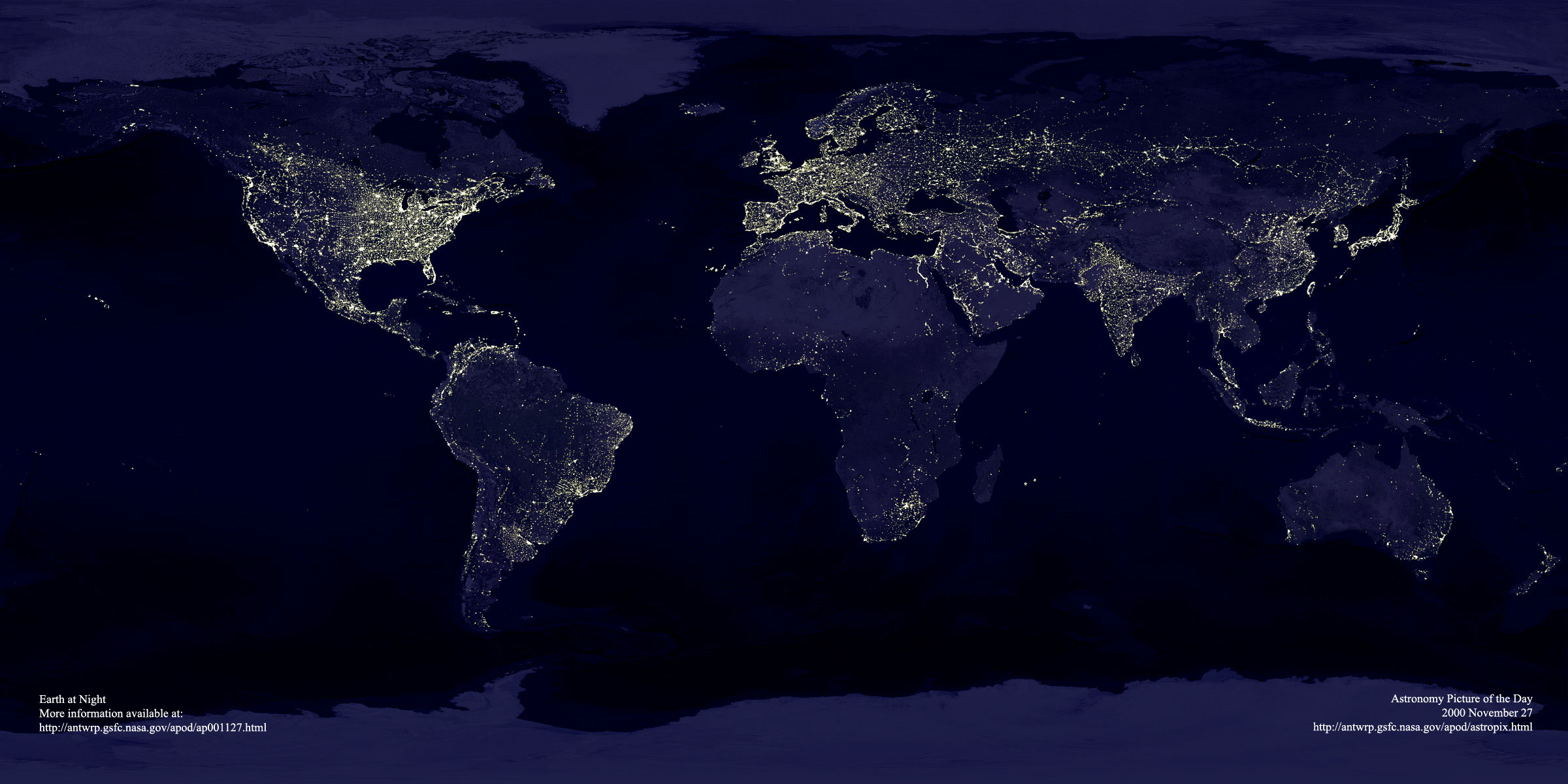
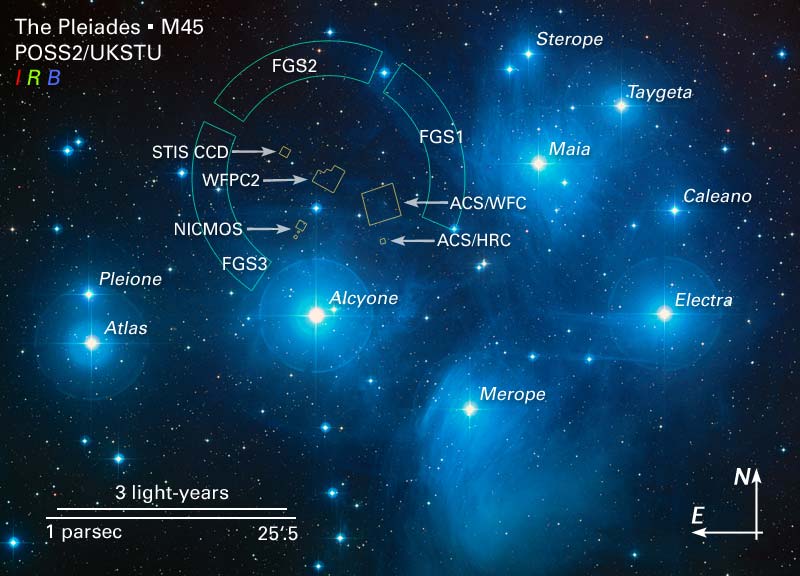
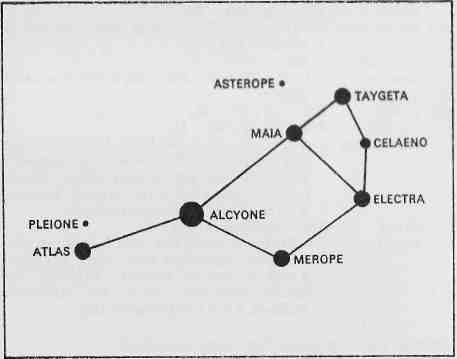
That too. I agree. But Obama did go after the NASA budget. I mean in his own mind he means well, especially when faced with financial crises around the globe, austerity measures, welfare for corporations, unemployment, and money to feed mouths, in comparison the missions to Mars with a remote control toy, or even the images of distant galaxies from the Hubble telescope, are not really that important when considering austerity measures, and making sure everyone is well fed. As a beautiful picture of a distant galaxy shown to a hungry child is not going to help that child when he's hungry, instead he needs food on the table, so that's how you make decisions on how to prioritize and spend money when the money is tight. As that's the track record of NASA, not an actual, functioning livable independently existing spinning cylinder space station, nor a productive, self sustaining without constant shipments from Earth, Moon base, that keeps expanding. Nobody is gonna pay for a space program that needs constant shipments from Earth for basic needs, such as food, in the long run. But hopefully one day, maybe even in our lifetime, when I look up at the Moon, I will see glittering little lights from the dark portion of the C shaped new moon, the light coming from Moon bases there, similar to what Earth looks like at night, such as http://apod.nasa.gov/apod/imag... Then the muslims with their crescent flags are gonna be upset, because its' not gonna be a true crescent anymore, but maybe they can modify it and combine it with the Subaru logo, of the Pleiades showing the 7 sisters stars, such as Alcyone, Atlas, Merope, Electra, Maia, Pleione, Sterope, Taygeta, Celaeno (that's all 9 of them 7 sisters) http://upload.wikimedia.org/wi... and http://www.constellationsofwor... or however many major Moon bases there'll be at the time.
-
Re:Obligatory xkcd reference
The talent behind xkcd is a former NASA engineer.
Big deal. I also worked *at* the NASA Langley Research Center -- with Unisys (1988-92) as a system admin/programmer on the super computing network - Cray-2 and YMP, several Convex systems, etc... and with SAIC (1996-98) as a sysadmin on the CERES project - Sun E5000, SGI Origin 2000, ~100 Sun/SGI workstations, etc...
The Cray-2, Voyager, ended up at the Virginia Air and Space Museum in 1996 btw.
-
Re:Obligatory xkcd reference
The talent behind xkcd is a former NASA engineer.
Big deal. I also worked *at* the NASA Langley Research Center -- with Unisys (1988-92) as a system admin/programmer on the super computing network - Cray-2 and YMP, several Convex systems, etc... and with SAIC (1996-98) as a sysadmin on the CERES project - Sun E5000, SGI Origin 2000, ~100 Sun/SGI workstations, etc...
The Cray-2, Voyager, ended up at the Virginia Air and Space Museum in 1996 btw.
-
Re:fast forward 5 years....
Speaking of fallacies, the use of CAGW is generally associated with a strawman, goalpost moving or loaded language fallacies, depending on context.
Nice try, but no. CAGW = Catastrophic Anthropogenic Global Warming and it describes the point of view of alarmism on climate quite well. When public narrative out there uses terms like 'greatest moral challenge of our time', and slogans like 'no jobs on a dead planet', the inference is quite clear : the proponents of such points of view are clearly advocating that a global catastrophe is looming. There is an appalling barefaced hypocrisy in an article that takes um-bridge with the term CAGW, which I assert is not emotive, but factual : AGW that is bad enough to be catastrophic which is a valid hypothesis and a point of view held by many, yet willy-nilly throws the term 'denier' around. Some real class and intellectually meticulous conduct on display there.
My comment was about the cyclical nature of some "skeptic" arguments.
Maybe you can actually reference skeptics how have done this, flip-flopped on data sets, doesn't change the fact that warming is not as much as projected. And you yourself keep changing your argument without explaining why you are abandoning your prior argument, first it was all statistical quackery, then it's not a big deal this slowdown, and now you are trying the 'a good defence is an offence' strategy by asserting skeptics are cyclical and selective in their datasets, when this is exactly what alarmists are doing by abandoning discussion of trends in favour of discussing instances where Tmax records are being set.
It is interesting and has been done.
Yeah that is interesting, the NASA link though is more about how the histogram of anomalies is trending decade to decade, I assume it is yearly or seasonally adjusted anomalies here, not daily Tmin Tmax records, but it shows a growing fat tail anomaly which does support overall higher likelyhood of max temps. SKS link is as trustworthy as SKS always is (as in not at all). My original point is that record counts in a period of a pause after a period of warming is normal outcome for variable highly autocorrelated data. It does not invalidate the observation of a pause. It is actually consistent with it. The concluding point is that counting record events simply isn't a robust mechanism for qualitative analysis. When some skeptics make a big deal out of record winter lows, they are shouted down, and rightly so and they are shouted down by skeptics too. But presumably reporting on Tmax records and saying to paraphrase : "on-noes is the global warming!", is perfectly fine. Presumably. Actually... no.... it isn't okay.
-
Re:fast forward 5 years....
CAGW predicted rapid and accelerating warming. But the data fails to bear it out, so post-hoc rationalisations are put forth and the capacity of the hypothesis to yield falsifiability tests is shrinking : which urges the question is the development of this hypothesis robust?
Speaking of fallacies, the use of CAGW is generally associated with a strawman, goalpost moving or loaded language fallacies, depending on context. It's use is rarely associated with honest debate because there is no actual definition for CAGW.
CO2 emission records are actually what predicts accelerating warming, if C02 is a greenhouse gas and we increase the rate at which we're releasing CO2 into the air, we increase the speed at which the planet warms. And rapid is at best a relative term when applied to changes that are far too slow for human senses to observe.
Your comment " Every time we hit a new high temperature", is with respect absurd particularly given admonishments about dodgy statistics in this thread and the OP.
My comment was about the cyclical nature of some "skeptic" arguments. There is always a previous record high which we almost always below, thus the argument can always be made that there has been "no warming" for some time period. The argument goes out of style for a bit after a new record high has been set, but give it a year or two and it comes back into fashion until the next record high is set. The comment had nothing to do with presenting actual evidence of global warming.
An interesting null would be to compare # high temp records against # of low temp records.
It is interesting and has been done. According to that paper, the split for 2001-2011 temperature anomalies was about 85% high to 15% low. According to Skeptical Science, the records were split 67% high to 33% low over 1999-2009.
-
Re:meh
Given this article, I'm going to have to concur.
There will always be conflicting standards. Better to learn to deal with them early than to wave your fist impotently at them until you kill someone.
-
Re:Why can't it just be one mass?
So, since it has been established that the asteroid in question is pretty much a chunk of metal, and the rate of rotation would be fast enough to dislodge independent pieces of material, the obvious answer is "the rubble already flew off, this is a big hunk of nickel-iron." After doing that bit of research, I don't care what is in the summary or the article behind this story, they'd better show up with a good argument that this piece of metal has any rubble clinging to it before I will waste the effort considering other explanations.
-
Re:25 cm resolution
Low res hasn't prevented people from seeing a face on mars.
-
Oh good lord.
There's always the possibility of a theory being falsified but in this case the answer is almost certainly no.
The big bang is not going to be invalidated, so say COBE, WMAP and PLANCK.
Also, it's actually less than 5% baryonic matter it seems, 4.4%
http://map.gsfc.nasa.gov/unive...
Be aware that dark matter is just matter we can't directly detect with our current technology (or just haven't
-
Re:Would YOU be able to sleep in space??
I read the Apollo 11 Lunar Surface Journal during the anniversary back on July 20th, and one of the entries that stood out to me was a section called "Trying to Rest," which detailed a time between the end of the astronauts' moonwalk, but prior to when they needed to make preparations to liftoff from the Moon. A period of about 7 hours was scheduled for the astronauts to sleep, but
[Armstrong - "(The quality of the rest) was poor in my case."]
[Aldrin - "I'd say the same thing."]
In their technical debrief, Armstrong and Aldrin detailed some problems with their sleep environment- too cold, too bright, too noisy, but yeah, that they were also just too excited to sleep. (It does mention that most of the technical problems were worked out by Apollo 15, and the last few crews got decent sleep on the lunar surface. I'm still convinced that if it were me, I would have responded to planned rest periods with "HOUSTON, I CAN SLEEP WHEN I GET BACK FROM THE MOON, OVER.")
-
Re:Binary yes, planet no.
Anything that is a sphere and orbits a star is a planet. Asteroids don't have sphere shape. Same goes for comets. The reason for the name "dwarf planets" is that of naming issue. There are more than 100 planet object out there, most of them smaller than planet Mercury.
Haumea is a planet, but is minor elongated due it's rapid orbital period.
http://en.wikipedia.org/wiki/H...
List of other dwarf planets.
http://solarsystem.nasa.gov/pl...
Then there is a chance of Earth size planets (both above and below in size and mass) in the outer region of our solar system that have not yet been discovered. At least there are clues about them today, even if they have so far not yet been found. It is my guess they are going to be found, given time and advances in technology that allows for better detection of outer orbital planets in our solar system.
http://www.space.com/7728-eart...
http://www.theguardian.com/sci...There is a lot out there that we don't have no clue about and there are discoveries to be made (if the funding holds).
-
So the Sun/Jupiter system as well?
The barycenter of the Sun and Jupiter is above the surface of the sun, does that mean we'd have to reclassify our solar system as a binary star system now? http://spaceplace.nasa.gov/bar...
-
Jane/Lonny Eachus goes Sky Dragon Slayer.
... I hereby correct my comments to say his career has involved heat-transfer work AND he has worked for NASA. (Not that I expect you to honor that correction... as you have so conveniently left out other corrections I have made over the years.)
... Jesus, man. This guy designed heat transfer control systems [and worked for NASA]. Do you really think he's going to make that kind of mistake? [Jane Q. Public, 2014-02-11]
Hopefully he just made elementary mistakes, rather than deliberately spreading civilization-paralyzing misinformation. Sadly, the result isn't too different either way.
... Latour is a control engineer for chemical processes and he has designed heat-transfer systems [and worked for NASA]. [Jane Q. Public, 2014-03-22]
Latour designs heat-transfer control systems for a living. He did it [and worked for NASA], among other notables. [Jane Q. Public, 2014-03-24]
... There are also physicists who worked for NASA, and other science professionals, currently challenging the very foundations of AGW theory.
Does Jane think physicists who work for NASA are credible regarding physics?
... [Dr. Latour's career has involved heat-transfer work AND he has worked for NASA.] I daresay he is more of an expert on the subject than "Khayman80".
... I do not find climate.nasa.gov credible.
So why did Jane repeatedly mention working for NASA? How could working for NASA give someone credibility if Jane doesn't find NASA credible?
A blackbody plate is heated by constant electrical power flowing in. Blackbody cold walls at 0F (T_c = 255K) also radiate power in. The heated plate at 150F (T_h = 339K) radiates power out. Using irradiance (power/m^2) simplifies the equation:
electricity + sigma*T_c^4 = sigma*T_h^4 (Eq. 1)
Suppose the chamber walls are suddenly warmed from T_c = 0F to 149F. What will happen to the heated plate if the electrical power heating the plate remains constant?
Note that this problem doesn't have multiple steps or confusing area changes. It's just one equation. T_c just increased and electricity is constant. Continuing to insist that T_h stays constant would just make it harder for posterity to believe Jane/Lonny Eachus is honestly confused, rather than deliberately spreading civilization-paralyzing misinformation.
If we increase the left hand side of Eq. 1, how could the right hand side not increase?
-
Jane/Lonny Eachus goes Sky Dragon Slayer.
... I hereby correct my comments to say his career has involved heat-transfer work AND he has worked for NASA. (Not that I expect you to honor that correction... as you have so conveniently left out other corrections I have made over the years.)
... Jesus, man. This guy designed heat transfer control systems [and worked for NASA]. Do you really think he's going to make that kind of mistake? [Jane Q. Public, 2014-02-11]
Hopefully he just made elementary mistakes, rather than deliberately spreading civilization-paralyzing misinformation. Sadly, the result isn't too different either way.
... Latour is a control engineer for chemical processes and he has designed heat-transfer systems [and worked for NASA]. [Jane Q. Public, 2014-03-22]
Latour designs heat-transfer control systems for a living. He did it [and worked for NASA], among other notables. [Jane Q. Public, 2014-03-24]
... There are also physicists who worked for NASA, and other science professionals, currently challenging the very foundations of AGW theory.
Does Jane think physicists who work for NASA are credible regarding physics?
... [Dr. Latour's career has involved heat-transfer work AND he has worked for NASA.] I daresay he is more of an expert on the subject than "Khayman80".
... I do not find climate.nasa.gov credible.
So why did Jane repeatedly mention working for NASA? How could working for NASA give someone credibility if Jane doesn't find NASA credible?
A blackbody plate is heated by constant electrical power flowing in. Blackbody cold walls at 0F (T_c = 255K) also radiate power in. The heated plate at 150F (T_h = 339K) radiates power out. Using irradiance (power/m^2) simplifies the equation:
electricity + sigma*T_c^4 = sigma*T_h^4 (Eq. 1)
Suppose the chamber walls are suddenly warmed from T_c = 0F to 149F. What will happen to the heated plate if the electrical power heating the plate remains constant?
Note that this problem doesn't have multiple steps or confusing area changes. It's just one equation. T_c just increased and electricity is constant. Continuing to insist that T_h stays constant would just make it harder for posterity to believe Jane/Lonny Eachus is honestly confused, rather than deliberately spreading civilization-paralyzing misinformation.
If we increase the left hand side of Eq. 1, how could the right hand side not increase?
-
When the Milky Way and Andromeda galaxies collide
Does the new estimate for the mass of the Milky Way galaxy change the expected dynamics when the Milky Way and Andromeda galaxies collide in about 4 billion years?
-
Re:Apollo 11
-
Re:Apollo 11
-
Re:Apollo 11
You are kidding, right?
http://www.nasa.gov/mission_pa...
And of course the "moon landing hoax" nitwits have already convinced themselves that NASA, every involved contractor, all the astronauts, and our bitter rivals the USSR are part of the conspiracy. It would be a small matter to assume that the LRO pictures are also faked. That the fundamental nature of stupidity.
-
Apophis
I think they're training for the very real chance that we'll get hit by Apophis in 2036.
-
Re:But what IS the point they're making?
They've been claiming for decades that if we don't do anything the sea will rise by 25m in two decades
You may want to check your sources. Likely you are being lied to, but not by scientists. More likely you've been reading denier blogs. Here is what the IPCC predicted 25 years ago: "For the 'Business-as-Usual' scenario at year 2030 global-mean sea level is 8-29cm higher than today with a best estimate of 18cm." - https://www.ipcc.ch/ipccreport...
Since 1990 we've already had about 8cm of sea level rise so we have already already within the projected range and we still have 15 years to go. The rate of rise is accelerating. Even at the current rate we will see about 13 cm rise by 2030. More if acceleration continues. Not far off from the predictions of 1990. - http://climate.nasa.gov/key_in...
You are off by a few orders of magnitude whereas the scientists have already been proven correct.
-
Re:Harden the grid
We already have that: http://sohowww.nascom.nasa.gov...
-
Re:And today
you are full of shit, the money Nasa spends on manned space flight is in the few billions (like a billion for Orion or 1.7 billion on space launch system); private companies can deal in that range.
-
I read the list of applications
and the only ones that looked remotely practical was the laser weapon and remote sensing requiring high power high focus.
Using lasers for freespac communications is already very practical and well solved, just look at this example
http://esc.gsfc.nasa.gov/267/2... (BTW definitely one of the better uses of NASA's budget. )
All the other mentioned applications also have off the shelf solutions that perform exceptionally well. The weapons and high power remote sensing however while listed last seem to have the most to gain. Being able to generate a waveguide in either case solves their two big problems atmospheric distortion and the need to focus large amounts of laser energy on a small point.
-
Re:When politicians need to hide incompetence...
NASA already renamed the Dryden Flight Research Facility (NASA's part of Edwards in California) after Armstrong
not sure why this was marked down (unless all of us tired of hearing same complaints). I remember the hoopla about renaming DFRC and politicians on the house floor giving glowing speeches of Armstrong, and then later that day they cut the NASA budget $600 million.
It seems to me Neil would want that NASA facility to remain under Hugh's name. Armstrong flew the X-15 but it was Dryden who was instrumental in creating the X-15 program.
Who Was Hugh Dryden and Why Should We Care? (page 163)
http://history.nasa.gov/sp4112...I heard verbally from someone they renamed Lewis Research Center after Glenn to discourage politicians from closing down the center.
Rumor has it they want to rename Ames Research Center after Sally Ride. Of course Sally is a fine person and but consider Joe Ames was the first NACA administrator and later he kept the NACA alive when Herbert Hoover tried to eliminate it and transfer its duties to industry. And here's another from a NASA history page (I kept this but lost the url):
"Ames accepted a nomination by Air Minister Hermann Goring to the Deutsche Akademie der Luftfartforschung. Ames then considered it an honor, many Americans did, and was surprised to learn about the massive Nazi investment in aeronautical infrastructure, then six times larger than the NACA. Ames urged the funding for a second laboratory and expansion of the NACA facilities to prepare for war. " It was these facilities and infrastructure that helped allies win WWII, helped US aerospace industries, laid down the foundations for NASA able to make Neil the first man to step the moon.
-
Re:Remembered? Nobody asked him
I can't speak for whether Armstrong would like seeing something named after him or not. However, I can say that the "Armstrong Base" exists, just not by that specific name. NASA officially renamed their Dryden Flight Research Center to the Armstrong Flight Research Center on March 1, 2014. See http://www.nasa.gov/centers/dr... for some info. The test range there will still be named after Dryden though.
-
Re:"Thus ends "Climategate." Hopefully."
I disagree. We are not entitled to say that a change in carbon will effect a change in net energy that we can predict using simple measurements. One reason is that a change in carbon causes changes in other features of the atmosphere that have a profound effect on the planet's warming or lack thereof. Climate change is chaotic and, thus far anyway, it's been impossible to predict over the long term.
Check out this article explaining why this is complex. For example, changing the CO2 changes the water vapor in the atmosphere, which will quickly goof up your best intentioned "back of the envelope" calculations. -
Negative mass- not antimatter, but odd
Negative mass is very diferent from antimatter. Antimatter is opposite to normal matter in charge and quantum numbers (such as baryon number, etc.), but still has positive mass.
Negative mass reacts oppositely to both gravity and intertia. Oddly, that means that negative mass still falls down in a gravitational field: The gravitational force is opposite, but negative mass responds negatively to force (a=F/m, where both F and m are negative). So negative mass particles repel each other gravitationally, but are attracted to positive mass objects.
This has peculiar consequences. One consequence is that, for objects of negative mass, gravity and electrostatic charge switch. For normal mass objects, gravity is attractive, but like electrical charges repel. For negative matter, gravity is repulsive, but like electrical charges attract.
I wrote about this once, in the AIAA Journal of Propulsion and Power-- not a journal that physicists usually read, I'm afraid. If you have access to AIAA online, it's here: http://arc.aiaa.org/doi/pdf/10...
-
Re:But its cooler here...
In one, he tells people to stop worrying about the ozone layer because "the Sun makes ozone." A half-truth: yes,
Not a "half truth", it is a fact. And since about 2000, the "size" of the ozone hole as gotten smaller and the minimum amount of ozone in the hole has gone slightly up. Data here. That's telling us that, indeed, the sun is making it faster than the CFCs that are still there are breaking it down. It also ignores the ozone levels over the rest of the planet, focusing on just one area.
It's interesting to note that the definition of the "hole" is not where there is zero ozone, but is just below an arbitrary limit set based on 1979 ozone levels.
Another similar fallacy: he says there are more trees in the USA now than when the first settlers arrived, so stop worrying about trees. I don't know, maybe that's true,
HE'S WRONG!!! but maybe he's right?
but he ignores the fact that we are cutting these trees down at a much higher rate than the settlers ever did.
And you ignore the fact that those clearcuts get replanted, so we're also planting trees at a rate much higher than the settlers ever did. Those trees that are cut down to go into building houses sequester a lot of carbon, and the growing trees suck up a lot of the carbon dioxide you exhale with every breath.
Forestry management is about ensuring rates of growth are higher than rates of depletion,
No, forestry management is about a sustainable use of forest resources. That's why harvests get replanted. By the way, I live in an area where logging is a large part of the economy (but not my employer) so I've seen both the cuts and the replants.
-
Re:"An anonymous reader"Here, you go (from here:
3.6.1.2 The space system shall provide abort capability from the launch pad until Earth-orbit insertion to protect for the following ascent failure scenarios (minimum list):
a. Complete loss of ascent thrust/propulsion (Requirement 58613).
b. Loss of attitude or flight path control (Requirement 58614).
Rationale: Flying a spacecraft through the Earth's atmosphere to orbit entails inherent risk. Three crewed launch vehicles have suffered catastrophic failures during ascent or on the launch pad (one Space Shuttle and two Soyuz spacecraft). Both Soyuz crews survived the catastrophic failure due to a robust ascent abort system. Analysis, studies, and past experience all provide data supporting ascent abort as the best option for the crew to survive a catastrophic failure of the launch vehicle. Although not specifically stated, the ascent abort capability incorporates some type of vehicle monitoring to detect failures and, in some cases, impending failures. -
Always a con
Eyes.nasa.gov/exoplanets is a great web site to visit. Now you can map the exoplanets in your night sky and fly to far away systems with a click of your mouse. Sadly no voting there, just stunning 3D visualizations driven by the data in the Caltech Exoplanet Archive.
-
Re:CAGW is a trojan horse
Reading comprehension is important.
You seem to be pinning your hopes on your readers not exercising any reading comprehension. Your hope is vain.
a) I never said there wasn't a methodology, just that they hadn't released it at the time. You seem to be deluding yourself into believing that the code was always publicly available.
Tut Tut Tut. Naughty naughty!
You said:I'd like to know more, but it's up to the NOAA to explain what adjustments were made, why they were made, and what algorithms they used. So far they have not been forthcoming. I would like to be able to scrutinize their work, but I can't. I would like to try to repeat their work, but I can't. You said that here. Don't lie, and especially don't tell stupid lies. It's very unbecoming and makes us doubt all of your OTHER unevidenced assertions.
b) I was not angry,
You seem angry.
but I disagreed with their [NOAA's] decision to keep the information private.
You blame others for your own ignorance. In fact, your ignorance of the function and efficacy of climate models, and the methodology behind them, is entirely your fault, and your affair. You assertion that NOAA kept some methodology (for what? when? why?) private is entirely unevidenced.
You apparently see nothing wrong with keeping scientific data hidden away from prying eyes.
I've repeatedly noted that the "science" in question, which is the science behind your assertions, is unevidenced and therefore not science. Your allegation is frankly bizarre.
c) Interesting that you still deny the recent lack of warming. The HADCRUT4 warming trend since 1997 is a statistically insignificant 5 one-hundredths of a degree per decade.
Tut Tut Tut.
Naughty Naughty!
You said there has been no warming for the last 17 years.
I suspect you don't even know what HADCRUT4 is. Unfortunately for you, I do. And unfortunately for your argument, the actual temperature data is readily available, and your argument, such as it is, has already been repeatedly debunked - heck, I've debunked it myself.
Please indicate on this graph of temperatures how there has been no warming from 1996-2014 (compared to the previous 14 years 1982-1996).
-
Re:Payloads? Here's what I would like to see.
As you said, the low density of air at Mars might be a problem. The theoretical maximum power that can be harvested with a wind turbine is P = 1/2 * rho * A * V^3. Some numbers from Nasa show that the density rho is about 1% of the value on Earth, and an average speed of 10 m/s (around 5 Beaufort) is also not exceptional. Finally, you will need a relatively big mechanical device, which is hard to build light and reliable, since it has to survive a rocket launch.
-
Coincidence
Yesterday was also the 52nd anniversary of the launch of the Telstar-1, the world's first active telecom satellite, the world's first privately-ventured space-faring mission and first commercial payload into space. http://www.nasa.gov/topics/tec... PS: Does anybody else find it weird that Telstar and Death Star not only are phonetically similar, but look eerily so as well?
-
Re:Solar activity
The guy who runs the website works for NASA, but I'm fairly certain that it's a side project, and not a NASA-funded website. (if it was, they'd have NASA logos on it, and not ads)
Solar Monitor used to be hosted by NASA, but it's currently at Trinity College, Dublin.
NASA funded projects would include Helioviewer (also ESA funded) and ISWA
However
-
Re:Climate Change on Slashdot? Bring on the fun!
Global surface temperatures have risen in the last 16 years according to NASA and many other sources: http://data.giss.nasa.gov/gist...
Don't mistake the last few year's of flat lining for proof that climate change isn't happening. Climate change is the long term trend, not the last few years.
-
Next Great Example of Planet Hype
http://apod.nasa.gov/apod/ap14...
Gleise 832C is another "planet" with a remarkably Earthlike "artist's rendering" of an exoplanet in a very close orbit around a smallish star. Is this a real planet candidate, or another case of "sunspot confusion"?
-
Re:Modern Day Anti-Evolutionists
Temperature rise flat? Unless you are cherry-picking your intervals, in which case you aren't looking at the long-term trends, I don't see it: http://www.ipcc.ch/publication... http://www.epa.gov/climatechan... http://earthobservatory.nasa.g... http://www.skepticalscience.co...
-
Re:Mars Direct - Unanswered?
The Permanently Shadowed Regions (PSRs) of the the moon's polar craters are colder than Pluto. We have some of the strangest real estate in the solar system right in our own back yard. The PSRs might contain massive volatile deposits. If so they could be a source of propellent, radiation shielding as well as life support consumables. There are those who confidently assert we know everything there is to known about the moon. They demonstrate their ignorance.