Slashdot Mirror
Domain: nature.com
Stories and comments across the archive that link to nature.com.
Stories · 1,757
-
Microbiome Changes Drive the Dieting Yo-Yo Effect, Study Finds (smh.com.au)
wheelbarrio writes: We've known for a long time that diet-induced weight loss is rarely permanent but until now what has been a frustration for dieters has also been largely a mystery to scientists. A paper published today in the prestigious journal Nature presents good evidence that your gut microbiome may be to blame. Studying mice fed cycles of high-fat and normal diets, the authors found that the particular bacterial population that thrives in the high-fat regime persists in the gut even once the mice have returned to normal weight and normal metabolic function after a dieting cycle. This leaves them more susceptible to weight gain than control mice who were never overweight, when both populations are exposed to a cycle of high-fat diet. The details are fascinating, including the suggestion that dietary flavonoid supplementation might mitigate the effect. My guess is that this may end up being one of the most cited papers of the year, if not the decade. -
Pluto's 'Icy Heart' May Have Tilted the Dwarf Planet Over (theverge.com)
An anonymous reader quotes a report from The Verge: Pluto's most iconic feature -- its "icy heart" -- may have been responsible for tipping the dwarf planet over. Scientists believe the 600-mile-wide region of frozen plains known as Sputnik Planitia gained enough mass over the years, causing Pluto to tilt to its current orientation. And that could mean there's a subsurface ocean lurking underneath the dwarf planet. The cracks and faults on Pluto's surface tell the story of its rollover, according to two new studies published today in Nature. Researchers used computer models to simulate Pluto's reorientation, which would have put a lot of stress on the crust and created these cracks. Those models match up pretty well with the patterns of canyons and mountains that NASA's New Horizons spacecraft saw when it flew by Pluto last year. As for how the flip occurred, the two Nature studies offer complementary arguments. Isamu Matsuyama's study says that the low-lying Sputnik Planitia filled up with a bunch of nitrogen ice, gaining mass that pushed Pluto over. But the second study says the nitrogen ice wasn't enough to completely change Pluto's orientation. Even more weight was needed, and a dense ocean lurking just underneath Sputnik Planitia would have been enough to do the trick. Nimmo's study is just further evidence that liquid may be teaming underneath Pluto, making this dwarf planet one of a growing group of objects in our Solar System that harbor oceans. Sputnik Planitia is located in a very special place on Pluto, right next to something called a tidal axis -- the imaginary line that connects Pluto and its largest moon Charon. This axis dictates how Pluto moves if its mass changes. If you were to add extra weight to a certain point on Pluto, the entire dwarf planet would reorient itself so that the weighted point would end up next to this axis. -
Pluto's 'Icy Heart' May Have Tilted the Dwarf Planet Over (theverge.com)
An anonymous reader quotes a report from The Verge: Pluto's most iconic feature -- its "icy heart" -- may have been responsible for tipping the dwarf planet over. Scientists believe the 600-mile-wide region of frozen plains known as Sputnik Planitia gained enough mass over the years, causing Pluto to tilt to its current orientation. And that could mean there's a subsurface ocean lurking underneath the dwarf planet. The cracks and faults on Pluto's surface tell the story of its rollover, according to two new studies published today in Nature. Researchers used computer models to simulate Pluto's reorientation, which would have put a lot of stress on the crust and created these cracks. Those models match up pretty well with the patterns of canyons and mountains that NASA's New Horizons spacecraft saw when it flew by Pluto last year. As for how the flip occurred, the two Nature studies offer complementary arguments. Isamu Matsuyama's study says that the low-lying Sputnik Planitia filled up with a bunch of nitrogen ice, gaining mass that pushed Pluto over. But the second study says the nitrogen ice wasn't enough to completely change Pluto's orientation. Even more weight was needed, and a dense ocean lurking just underneath Sputnik Planitia would have been enough to do the trick. Nimmo's study is just further evidence that liquid may be teaming underneath Pluto, making this dwarf planet one of a growing group of objects in our Solar System that harbor oceans. Sputnik Planitia is located in a very special place on Pluto, right next to something called a tidal axis -- the imaginary line that connects Pluto and its largest moon Charon. This axis dictates how Pluto moves if its mass changes. If you were to add extra weight to a certain point on Pluto, the entire dwarf planet would reorient itself so that the weighted point would end up next to this axis. -
Chinese Scientists Become First To Use CRISPR Gene-Editing On Humans (popularmechanics.com)
An anonymous reader quotes a report from Popular Mechanics: A team of Chinese scientists from Sichuan University in Chengdu have become the first to inject a person with cells modified with the gene-editing tool CRISPR-Cas9. The trial involved modifying a patient's own immune system cells to make them more effective at combating cancer cells and then injecting them back into the patient. The Chinese trial was approved back in July, and United States medical scientists also plan to use CRISPR as an experimental treatment for cancer patients in early 2017. The CRISPR-Cas9 "tool" is a DNA construct that can be injected into any organism -- in this case, human immune system T cells -- to modify the genome of that organism. It works in three steps: an RNA sequence guides the CRISPR construct to the correct part of the organism's DNA, the Cas9 enzyme "cuts out" that segment of DNA, and then, as an optional third step, a new DNA sequence can be inserted to replace the deleted segment of the genome. In the case of the Chinese trial, conducted October 28 at the West China Hospital in Chengdu, only the first two steps of the CRISPR-Cas9 process were carried out. Immune system cells were extracted from a patient with metastatic lung cancer, and then the gene code that produces a protein called PD-1 was deleted by the Cas9 enzyme. PD-1 instructs T cells to stop or slow an immune system response, and cancer cells can take advantage of this protein to trick the body into responding to the ailment with less than full force. Once the PD-1 protein was removed with CRISPR, the edited cells were cultivated to increase their numbers and then injected back into the patient. This is the first of two injections for the patient, and an additional nine patients in the trial will receive between two and four injections of edited cells, depending on their individual conditions. Carl June, scientific advisor for the planned U.S. trial, told Nature: "I think this is going to trigger 'Sputnik 2.0,' a biomedical duel in progress between China and the United States, which is important since competition usually improves the end product." -
Earth's Plants Are Countering Some of the Effects of Climate Change (economist.com)
A new study published in Nature Communications has found that Earth's plant life between 2002 and 2014 has absorbed so much carbon dioxide that the buildup of CO2 in the atmosphere has slowed down, despite humans pumping out more CO2 than ever before. The study also found that between 1982 and 2009, "about 18m square kilometers of new vegetation had sprouted on Earth's surface, an area roughly twice the size of the United States." The Economist reports: In 2014 humans pumped about 35.7 billion tons of carbon dioxide into the air. That figure has been climbing sharply since the middle of the 20th century, when only about 6 billion tons a year were emitted. As a consequence, the concentration of CO2 in the atmosphere has been rising too, from about 311 parts per million (ppm) in 1950 to just over 400 in 2015. Yet the rate at which it is rising seems to have slowed since the turn of the century. According to Dr Keenan, between 1959 and 1989 the rate at which CO2 levels were growing rose from 0.75ppm per year to 1.86. Since 2002, though, it has barely budged. In other words, although humans are pumping out more CO2 than ever, less of it than you might expect is lingering in the air. Filling the atmosphere with CO2 is a bit like filling a bath without a plug: the level will rise only if more water is coming out of the taps than is escaping down the drain. Climate scientists call the processes which remove CO2 from the air "sinks." The oceans are one such sink. Photosynthesis by plants is another: carbon dioxide is converted, with the help of water and light energy from the sun, into sugars, which are used to make more plant matter, locking the carbon away in wood and leaves. Towards the end of the 20th century around 50% of the CO2 emitted by humans each year was removed from the atmosphere this way. Now that number seems closer to 60%. Earth's carbon sinks seem to have become more effective, but the precise details are still unclear. Using a mix of ground and atmospheric observations, satellite measurements and computer modeling, Dr Keenan and his colleagues have concluded that faster-growing land plants are the chief reason. That makes sense: as CO2 concentrations rise, photosynthesis speeds up. Studies conducted in greenhouses have found that plants can photosynthesis up to 40% faster when concentrations of CO2 are between 475 and 600ppm. -
Brain Implants Allow Paralyzed Monkeys To Walk (nature.com)
An anonymous reader quotes a report from Nature: For more than a decade, neuroscientist Gregoire Courtine has been flying every few months from his lab at the Swiss Federal Institute of Technology in Lausanne to another lab in Beijing, China, where he conducts research on monkeys with the aim of treating spinal-cord injuries. The commute is exhausting -- on occasion he has even flown to Beijing, done experiments, and returned the same night. But it is worth it, says Courtine, because working with monkeys in China is less burdened by regulation than it is in Europe and the United States. And this week, he and his team report the results of experiments in Beijing, in which a wireless brain implant -- that stimulates electrodes in the leg by recreating signals recorded from the brain -- has enabled monkeys with spinal-cord injuries to walk. The treatment is a potential boon for immobile patients: Courtine has already started a trial in Switzerland, using a pared-down version of the technology in two people with spinal-cord injury. The team first mapped how electric signals are sent from the brain to leg muscles in healthy monkeys, walking on a treadmill. They also examined the lower spine, where electric signals from the brain arrive before being transmitted to muscles in the legs. Then they recreated those signals in monkeys with severed spinal cords, focusing on particular key points in the lower part of the spine. Microelectrode arrays implanted in the brain of the paralyzed monkeys picked up and decoded the signals that had earlier been associated with leg movement. Those signals were sent wirelessly to devices that generate electric pulses in the lower spine, which triggered muscles in the monkeys' legs into motion. -
Brain Implants Allow Paralyzed Monkeys To Walk (nature.com)
An anonymous reader quotes a report from Nature: For more than a decade, neuroscientist Gregoire Courtine has been flying every few months from his lab at the Swiss Federal Institute of Technology in Lausanne to another lab in Beijing, China, where he conducts research on monkeys with the aim of treating spinal-cord injuries. The commute is exhausting -- on occasion he has even flown to Beijing, done experiments, and returned the same night. But it is worth it, says Courtine, because working with monkeys in China is less burdened by regulation than it is in Europe and the United States. And this week, he and his team report the results of experiments in Beijing, in which a wireless brain implant -- that stimulates electrodes in the leg by recreating signals recorded from the brain -- has enabled monkeys with spinal-cord injuries to walk. The treatment is a potential boon for immobile patients: Courtine has already started a trial in Switzerland, using a pared-down version of the technology in two people with spinal-cord injury. The team first mapped how electric signals are sent from the brain to leg muscles in healthy monkeys, walking on a treadmill. They also examined the lower spine, where electric signals from the brain arrive before being transmitted to muscles in the legs. Then they recreated those signals in monkeys with severed spinal cords, focusing on particular key points in the lower part of the spine. Microelectrode arrays implanted in the brain of the paralyzed monkeys picked up and decoded the signals that had earlier been associated with leg movement. Those signals were sent wirelessly to devices that generate electric pulses in the lower spine, which triggered muscles in the monkeys' legs into motion. -
Brain Implants Allow Paralyzed Monkeys To Walk (nature.com)
An anonymous reader quotes a report from Nature: For more than a decade, neuroscientist Gregoire Courtine has been flying every few months from his lab at the Swiss Federal Institute of Technology in Lausanne to another lab in Beijing, China, where he conducts research on monkeys with the aim of treating spinal-cord injuries. The commute is exhausting -- on occasion he has even flown to Beijing, done experiments, and returned the same night. But it is worth it, says Courtine, because working with monkeys in China is less burdened by regulation than it is in Europe and the United States. And this week, he and his team report the results of experiments in Beijing, in which a wireless brain implant -- that stimulates electrodes in the leg by recreating signals recorded from the brain -- has enabled monkeys with spinal-cord injuries to walk. The treatment is a potential boon for immobile patients: Courtine has already started a trial in Switzerland, using a pared-down version of the technology in two people with spinal-cord injury. The team first mapped how electric signals are sent from the brain to leg muscles in healthy monkeys, walking on a treadmill. They also examined the lower spine, where electric signals from the brain arrive before being transmitted to muscles in the legs. Then they recreated those signals in monkeys with severed spinal cords, focusing on particular key points in the lower part of the spine. Microelectrode arrays implanted in the brain of the paralyzed monkeys picked up and decoded the signals that had earlier been associated with leg movement. Those signals were sent wirelessly to devices that generate electric pulses in the lower spine, which triggered muscles in the monkeys' legs into motion. -
Face Electrodes Let You Taste and Chew In Virtual Reality (newscientist.com)
walterbyrd quotes a report from New Scientist: Experiments with "virtual food" use electronics to emulate the taste and feel of the real thing, even when there's nothing in your mouth. This tech could add new sensory inputs to virtual reality or augment real-world dining experiences, especially for people with restricted diets or health issues that affect their ability to eat. Several projects have succeeded in tricking us into tasting things that aren't there. Nimesha Ranasinghe at the National University of Singapore has already experimented with a "digital lollipop" to emulate different tastes, and a spoon embedded with electrodes that amplify the salty, sour, or bitter flavor of the real food eaten off it. However, his experiments with electrical stimulation had less success simulating sweetness compared to the other tastes. But digitizing this taste could be particularly useful in, for example, helping people cut back on sugary food or drinks. So Ranasinghe and his colleague Ellen Yi-Luen Do started experimenting with thermal stimulation instead. Their new project, presented at the 2016 ACM User Interface Software and Technology Symposium (UIST) in Tokyo, uses changes in temperature to mimic the sensation of sweetness on the tongue. The user places the tip of their tongue on a square of thermoelectric elements that are rapidly heated or cooled, hijacking thermally sensitive neurons that normally contribute to the sensory code for taste. In an initial trial, it worked for about half of participants. Some also reported a sensation of spiciness when the device was warmer (around 35 degrees Celsius) and a minty taste when it was cooler (18 degrees Celsius). Ranasinghe and Do envisage such a system embedded in a glass or mug to make low-sugar drinks taste sweeter. -
Bad Code May Have Crashed Schiaparelli Mars Lander (nature.com)
cadogan west writes "In the accordance with the longstanding tradition of bad software wrecking space probes (See Mariner 1), it appears a coding bug crashed the ESA's latest attempt to land on Mars." Nature reports: Thrusters, designed to decelerate the craft for 30 seconds until it was metres off the ground, engaged for only around 3 seconds before they were commanded to switch off, because the lander's computer thought it was on the ground. The lander even switched on its suite of instruments, ready to record Mars's weather and electrical field, although they did not collect data...
The most likely culprit is a flaw in the craft's software or a problem in merging the data coming from different sensors, which may have led the craft to believe it was lower in altitude than it really was, says Andrea Accomazzo, ESA's head of solar and planetary missions. Accomazzo says that this is a hunch; he is reluctant to diagnose the fault before a full post-mortem has been carried out... But software glitches should be easier to fix than a fundamental problem with the landing hardware, which ESA scientists say seems to have passed its test with flying colours. -
Let Researchers Try New Paths (nature.com)
Writing for Nature journal, scientists and professors Tolu Oni, Fabio Sciarrino, Gerardo Adesso, and Rob Knight, discuss an issue researchers have been facing a lot lately. The scientific enterprise is stuck in a catch-22, they say. Researchers are charged with advancing promising new questions, but receive support and credit only for revisiting their past work. They say that often times while examining one thing researchers are able to uncover several other important things, but deviating from the path is something frowned upon for various reasons among the industry. From the article (condensed): Most striking are the barriers to achieving impact. Our research often led us to questions that had greater potential than our original focus, typically because these new directions encompassed the complexities of society. We realized that changing tack could lead to more important work, but the policies of research funders and institutions consistently discourage such pivots. When reviewers assess grants or academic performance, they focus largely on track records in a particular field. Young scientists, who must focus on developing their careers, are thus discouraged from exploration. Our own experiences provide a glimpse of the well-intentioned forces that can keep researchers from trying other paths. This challenge is not new. Physicist-turned-structural biologist Venkatraman Ramakrishnan, who is president of the Royal Society, worked for several years in a job with funding that was contingent on a steady stream of publications. This forced him to ask safe but incremental questions. To pursue what became his Nobel-prizewinning work (on the structure of the ribosome), he moved to another institution where he could ask the questions that interested him, irrespective of the chances for publication. As he describes in his Nobel biography, the decision required an international move and a large pay cut. -
New Study Shows HIV Epidemic Started Spreading In New York In 1970, Clears the Name of 'Patient Zero' (nbcnews.com)
An anonymous reader quotes a report from NBC News: A new genetic study confirms theories that the global epidemic of HIV and AIDS started in New York around 1970, and it also clears the name of a gay flight attendant long vilified as being "Patient Zero." Researchers got hold of frozen samples of blood taken from patients years before the human immunodeficiency virus (HIV) that causes AIDS was ever recognized, and teased out genetic material from the virus from that blood. They use it to show that HIV was circulating widely during the 1970s, and certainly before people began noticing a "gay plague" in New York in the early 1980s. "We can date the jump into the U.S. in about 1970 and 1971," Michael Worobey, an expert on the evolution of viruses at the University of Arizona, told reporters in a telephone briefing. Their findings also suggest HIV moved from New York to San Francisco in about 1976, they report in the journal Nature. Their findings confirm widespread theories that HIV first leapt from apes to humans in Africa around the beginning of the 20th century and circulated in central Africa before hitting the Caribbean in the 1960s. The genetic evidence supports the theory that the virus came from the Caribbean, perhaps Haiti, to New York in 1970. From there it spread explosively before being exported to Europe, Australia and Asia. The Worobey team also sequenced samples of virus taken from Gaetan Dugas, a Canadian flight attendant named as "Patient Zero." Dugas died in 1984 and stunned researchers when he told them he'd had about 250 sexual partners a year between 1979 and 1981, although it later became clear that was not uncommon. The sequences make it clear he was a victim of an epidemic that had already been raging, and not its originator, Worobey said. "It's shocking how this man's name has been sullied and destroyed by this incorrect history," said Peter Staley, a former Wall Street bond trader who became an AIDS activist in New York in the 1980s. "He was not Patient Zero and this study confirms it through genetic analysis," Staley told NBC News. "No one should be blamed for the spread of viruses," Worobey said. -
Harvard Researchers Print World's First Heart-On-A-Chip (gizmodo.com)
Harvard University researchers have successfully 3D printed the first heart-on-a-chip with integrated sensors that are capable of measuring the beating of the heart. Gizmodo reports: The printed organ is made of synthetic material designed to mimic the structure and function of native tissue. It is not designed to replace failing human organs, but it can be used for scientific studies, something that is expected to rapidly increase research on new medicine. The medical breakthrough may also allow scientists to rapidly design organs-on-chips to match specific disease properties or even a patient's cells. Organs-on-chips, also known by the more technical name microphysiological systems, replicate the structure and function of living human organs. Each is made of a translucent, flexible polymer that lets scientists replicate biological environments of living organs. The chips are also clear so that the scientists can see an inner-working into how the organs work. A large part of the breakthrough was actually developing six different printable inks capable of integrating sensors within the tissue being printed. In one continuous printing process, the team 3D printed materials into a heart-on-a-chip with integrated sensors. The sensors were capable of measuring the beating of the heart. The new study has been published today in Nature Materials. -
Study Finds Little Lies Lead To Bigger Ones (go.com)
An anonymous reader quotes a report from ABC News: Telling little fibs leads down a slippery slope to bigger lies -- and our brains adapt to escalating dishonesty, which makes deceit easier, a new study shows. Neuroscientists at the University College London's Affective Brain Lab put 80 people in scenarios where they could repeatedly lie and get paid more based on the magnitude of their lies. They said they were the first to demonstrate empirically that people's lies grow bolder the more they fib. The researchers then used brain scans to show that our mind's emotional hot spot -- the amygdala -- becomes desensitized or used to the growing dishonesty, according to a study published online Monday in the journal Nature Neuroscience. And during this lying, brain scans that show blood supply and activity at the amygdala decrease with increasing lies, said study co-author and lab director Tali Sharot. "The more we lie, the less likely we are to have an emotional response" -- say, shame or guilt -- "that accompanies it," Sharot said. Garrett said he suspects similar escalation factors happen in the "real world," which would include politics, infidelity and cheating, but he cautioned that this study was done in a controlled lab setting so more research would be needed to apply it to other situations. The study found that there is a segment of people who don't lie and don't escalate lies, but Sharot and Garrett weren't able to determine how rare those honest people are. It also found that people lie more when it benefits both them and someone else than when they just profit alone. -
Google Creates AI Program That Uses Reasoning To Navigate the London Tube (theguardian.com)
An anonymous reader quotes a report from The Guardian: Google scientists have created a computer program that uses basic reasoning to learn to navigate the London Underground system by itself. Deep learning has recently stormed ahead of other computing strategies in tasks like language translation, image and speech recognition and even enabled a computer to beat top-ranked player, Lee Sedol, at Go. However, until now the technique has generally performed poorly on any task where an overarching strategy is needed, such as navigation or extracting the actual meaning from a text. The latest program achieved this by adding an external memory, designed to temporarily store important pieces of information and fish them out when needed. The human equivalent of this is working memory, a short-term repository in the brain that allows us to stay on task when doing something that involves several steps, like following a recipe. In the study, published in the journal Nature, the program was able to find the quickest route between underground stops and work out where it would end up if it traveled, say, two stops north from Victoria station. It was also given story snippets, such as "John is in the playground. John picked up the football." followed by the question "Where is the football?" and was able to answer correctly, hinting that in future assistants such Apple's Siri may be replaced by something more sophisticated. Alex Graves, the research scientist at Google DeepMind in London who led the work, said that while the story tasks "look so trivial to a human that they don't seem like questions at all," existing computer programs "do really badly on this." The program he developed got questions like this right 96% of the time. -
'Space Brain': Mars Explorers May Risk Neural Damage, Study Finds (nbcnews.com)
An anonymous reader quotes a report from NBC News: Astronauts making a years-long voyage to Mars may get bombarded with enough cosmic radiation to seriously damage their brains, researchers reported Monday. The damage might be bad enough to affect memory and, worse, might heighten anxiety, the team at the University of California Irvine said. It's the second study the team has done to show that cosmic radiation causes permanent, and likely untreatable, brain damage. While their experiments involve mice, the brain structures that are damaged are similar, they write in the Nature journal Scientific Reports. NASA knows that astronauts risk physical damage from the radiation encountered in space. Earth is enveloped in a large, protective sheath called the magnetosphere, which deflects a lot of the ionizing radioactive particles that speed through space. Teams aboard the International Space Station are inside that envelope. But moon travelers were not, and this summer a study showed the cosmic radiation may have damaged the hearts of many of the Apollo program astronauts. A trip to Mars would expose astronauts to even more radiation -- enough to cause cancer, for sure, and now this research suggests brain damage, as well. They bombarded mice with the same type of radiation that would be encountered in space, and then looked at what happened to their brains. It did not look good. The changes were seen in the connections between brain cells and in the cells, as well. "Exposure to these particles can lead to a range of potential central nervous system complications that can occur during and persist long after actual space travel -- such as various performance decrements, memory deficits, anxiety, depression and impaired decision-making. Many of these adverse consequences to cognition may continue and progress throughout life." -
New Study Suggests There's a Limit To How Long People Can Live (go.com)
Life expectancies have risen in many countries around the world thanks to breakthroughs in medical treatment and sanitation in the last century. The maximum age of death has also increased. But as these numbers continue to rise, it raises the question as to how long can people live? ABC News reports: The record for the world's oldest person is 122 years and the odds of shattering that record are slim, according to an analysis published Wednesday in the journal Nature. In the new study, researchers [at the Albert Einstein College of Medicine in New York] analyzed mortality data from a global database. They found that while there have been strides in reducing deaths among certain groups -- children, women during childbirth and the elderly -- the rate of improvement was slower for the very old, those over 100 years old. Next they examined how old centenarians were when they died. The record holder is Jeanne Calment, of France, who lived until 122 years old. Since her death in 1997, no one has broken her record. The researchers calculated the odds of someone reaching 125 years in a given year are less than 1 in 10,000. They think the human life span more likely maxes out at 115 years. Some aging specialists said the study doesn't take into account advances that have been made in extending the life span -- and health -- of certain laboratory animals including mice, worms and flies through genetic manipulation and other techniques. The goal is to eventually find treatments that might slow the aging process in humans and keep them healthier longer. -
Study: Earth Is At Its Warmest In 120,000 Years (washingtonpost.com)
An anonymous reader quotes a report from Washington Post: As part of her doctoral dissertation at Stanford University, Carolyn Snyder, now a climate policy official at the U.S. Environmental Protection Agency, created a continuous 2 million year temperature record, much longer than a previous 22,000 year record. Snyder's temperature reconstruction, published Monday in the journal Nature, doesn't estimate temperature for a single year, but averages 5,000-year time periods going back a couple million years. Snyder based her reconstruction on 61 different sea surface temperature proxies from across the globe, such as ratios between magnesium and calcium, species makeup and acidity. But the further the study goes back in time, especially after half a million years, the fewer of those proxies are available, making the estimates less certain, she said. These are rough estimates with large margins of errors, she said. But she also found that the temperature changes correlated well to carbon dioxide levels. Temperatures averaged out over the most recent 5,000 years -- which includes the last 125 years or so of industrial emissions of heat-trapping gases -- are generally warmer than they have been since about 120,000 years ago or so, Snyder found. And two interglacial time periods, the one 120,000 years ago and another just about 2 million years ago, were the warmest Snyder tracked. They were about 3.6 degrees (2 degrees Celsius) warmer than the current 5,000-year average. Snyder said if climate factors are the same as in the past -- and that's a big if -- Earth is already committed to another 7 degrees or so (about 4 degrees Celsius) of warming over the next few thousand years. "This is based on what happened in the past, Snyder noted. "In the past it wasn't humans messing with the atmosphere." -
Quantum Teleportation Achieved Over 7km of Cable (sciencealert.com)
An anonymous reader quotes a report from ScienceAlert: Quantum teleportation just moved out of the lab and into the real world, with two independent teams of scientists successfully sending quantum information across several kilometers of optical fiber networks in Calgary, Canada, and Hefei, China. Quantum teleportation relies on a strange phenomenon called quantum entanglement. Basically, quantum entanglement means that two particles are inextricably linked, so that measuring the state of one immediately affects the state of the other, no matter how far apart the two are -- which led Einstein to call entanglement "spooky action at a distance." In the latest experiments, both published in Nature Photonics (here and here), the teams had slightly different set-ups and results. But what they both had in common is the fact that they teleported their information across existing optical fiber networks -- which is important if we ever want to build useable quantum communication systems. To understand the experiments, Anil Ananthaswamy over at New Scientist nicely breaks it down like this: picture three people involved -- Alice, Bob, and Charlie. Alice and Bob want to share cryptographic keys, and to do that, they need Charlie's help. Alice sends a particle to Charlie, while Bob entangles two particles and sends just one of them to Charlie. Charlie then measures the two particles he's received from each of them, so that they can no longer be differentiated -- and that results in the quantum state of Alice's particle being transferred to Bob's entangled particle. So basically, the quantum state of Alice's particle eventually ends up in Bob's particle, via a way station in the form of Charlie. The Canadian experiment followed this same process, and was able to send quantum information over 6.2 km of Calgary's fiber optic network that's not regularly in use. -
Quantum Teleportation Achieved Over 7km of Cable (sciencealert.com)
An anonymous reader quotes a report from ScienceAlert: Quantum teleportation just moved out of the lab and into the real world, with two independent teams of scientists successfully sending quantum information across several kilometers of optical fiber networks in Calgary, Canada, and Hefei, China. Quantum teleportation relies on a strange phenomenon called quantum entanglement. Basically, quantum entanglement means that two particles are inextricably linked, so that measuring the state of one immediately affects the state of the other, no matter how far apart the two are -- which led Einstein to call entanglement "spooky action at a distance." In the latest experiments, both published in Nature Photonics (here and here), the teams had slightly different set-ups and results. But what they both had in common is the fact that they teleported their information across existing optical fiber networks -- which is important if we ever want to build useable quantum communication systems. To understand the experiments, Anil Ananthaswamy over at New Scientist nicely breaks it down like this: picture three people involved -- Alice, Bob, and Charlie. Alice and Bob want to share cryptographic keys, and to do that, they need Charlie's help. Alice sends a particle to Charlie, while Bob entangles two particles and sends just one of them to Charlie. Charlie then measures the two particles he's received from each of them, so that they can no longer be differentiated -- and that results in the quantum state of Alice's particle being transferred to Bob's entangled particle. So basically, the quantum state of Alice's particle eventually ends up in Bob's particle, via a way station in the form of Charlie. The Canadian experiment followed this same process, and was able to send quantum information over 6.2 km of Calgary's fiber optic network that's not regularly in use. -
The Moon's Gravitational Pull Can Trigger Major Earthquakes, Says Study (nature.com)
schwit1 writes: A careful statistical analysis of when major earthquakes occur has suggested they are more likely to be more powerful if they occur around the full and new moons when tidal forces are at their peak. Nature.com reports: "Satoshi Ide, a seismologist at the University of Tokyo, and his colleagues investigated three separate earthquake records covering Japan, California and the entire globe. For the 15 days leading up to each quake, the scientists assigned a number representing the relative tidal stress on that day, with 15 representing the highest. They found that large quakes such as those that hit Chile and Tohoku-Oki occurred near the time of maximum tidal strain -- or during new and full moons when the Sun, Moon and Earth align. For more than 10,000 earthquakes of around magnitude 5.5, the researchers found, an earthquake that began during a time of high tidal stress was more likely to grow to magnitude 8 or above." As these results are based entirely on statistical evidence, not on any direct link between tidal forces and actual quakes, they are quite uncertain and unproven. -
Toxic Air Pollution Particles Found In Human Brains (theguardian.com)
Damian Carrington, writing for The Guardian: Toxic nanoparticles from air pollution have been discovered in human brains in "abundant" quantities, a newly published study reveals. The detection of the particles, in brain tissue from 37 people, raises concerns because recent research has suggested links between these magnetite particles and Alzheimer's disease, while air pollution has been shown to significantly increase the risk of the disease. However, the new work is still a long way from proving that the air pollution particles cause or exacerbate Alzheimer's. "This is a discovery finding, and now what should start is a whole new examination of this as a potentially very important environmental risk factor for Alzheimer's disease," said Prof Barbara Maher, at Lancaster University, who led the new research. "Now there is a reason to go on and do the epidemiology and the toxicity testing, because these particles are so prolific and people are exposed to them." Air pollution is a global health crisis that kills more people than malaria and HIV/Aids combined and it has long been linked to lung and heart disease and strokes. But research is uncovering new impacts on health, including degenerative brain diseases such as Alzheimer's, mental illness and reduced intelligence. -
World's Oldest Fossils Found In Greenland (washingtonpost.com)
schwit1 quotes a report from Washington Post: Scientists probing a newly exposed, formerly snow-covered outcropping in Greenland claim they have discovered the oldest fossils ever seen, the remnants of microbial mats that lived 3.7 billion years ago. It's a stunning announcement in a scientific field that is always contentious. But if confirmed, this would push the established fossil record more than 200 million years deeper into the Earth's early history, and provide support for the view that life appeared very soon after the Earth formed and may be commonplace throughout the universe. A team of Australian geologists announced their discovery in a paper titled "Rapid emergence of life shown by discovery of 3,700-million-year-old microbial structures," published Wednesday in Nature. The report adds: "Subsequent laboratory analysis established that the formation is 3.7 billion years old, and turned up additional chemical signatures consistent with a biological origin for the conical structures, Allen Nutman, a University of Wollongong geologist, said. These scientists determined the age of the rocks through radiometric dating, measuring the abundance of elements created by the steady decay of uranium." -
Early Human Ancestor Lucy 'Died Falling Out of a Tree' (bbc.com)
An anonymous reader quotes a report from BBC: New evidence suggests that the famous fossilized human ancestor dubbed "Lucy" by scientists died falling from a great height -- probably out of a tree. CT scans have shown injuries to her bones similar to those suffered by modern humans in similar falls. The 3.2 million-year-old hominin was found on a treed flood plain, making a branch her most likely final perch. It bolsters the view that her species -- Australopithecus afarensis -- spent at least some of its life in the trees. Writing in the journal Nature, researchers from the U.S. and Ethiopia describe a "vertical deceleration event" which they argue caused Lucy's death. In particular they point to a crushed shoulder joint, of the sort seen when we humans reach out our arms to break a fall, as well as fractures of the ankle, leg bones, pelvis, ribs, vertebrae, arm, jaw and skull. Discovered in Ethiopia's Afar region in 1974, Lucy's 40%-complete skeleton is one of the world's best known fossils. She was around 1.1m (3ft 7in) tall and is thought to have been a young adult when she died. Her species, Australopithecus afarensis, shows signs of having walked upright on the ground and had lost her ancestors' ape-like, grasping feet -- but also had an upper body well-suited to climbing. The bones of this well-studied skeleton are in fact laced with fractures, like most fossils. By peering inside the bones in minute detail, the scanner showed that several of the fractures were "greenstick" breaks. The bone had bent and snapped like a twig: something that only happens to healthy, living bones. "The Ethiopian ministry has agreed to release 3D files of Lucy's right shoulder and her left knee. So anyone with an interest in this can print Lucy out and evaluate these fractures, and our hypothesis, for themsleves." You can find the files here. -
Floating Solar Device Boils Water Without Mirrors (arstechnica.com)
An anonymous reader quotes a report from Ars Technica: Researchers from MIT and the Masdar Institute of Science and Technology, led by George Ni, describe a prototype design that boils water under ambient sunlight. Central to their floating solar device is a "selective absorber" -- a material that both absorbs the solar portion of the electromagnetic spectrum well and emits little back as infrared heat energy. For this, the researchers turn to a blue-black commercial coating commonly used in solar photovoltaic panels. The rest of the puzzle involves further minimizing heat loss from that absorber, either through convection of the air above it or conduction of heat into the water below the floating prototype. The construction of the device is surprisingly simple. At the bottom, there is a thick, 10-centimeter-diameter puck of polystyrene foam. That insulates the heating action from the water and makes the whole thing float. A cotton wick occupies a hole drilled through the foam, which is splayed and pinned down by a square of thin fabric on the top side. This ensures that the collected solar heat is being focused into a minute volume of water. The selective absorber coats a disc of copper that sits on top of the fabric. Slots cut in the copper allow water vapor from the wick to pass through. And the crowning piece of this technological achievement? Bubble wrap. It insulates the top side of the absorber, with slots cut through the plastic to let the water vapor out. Tests in the lab and on the MIT roof showed that, under ambient sunlight, the absorber warmed up to 100 degrees Celsius in about five minutes and started making steam. That's a first. The study has been published in two separate Nature articles: "Steam by thermal concentration" and "Steam generation under one sun enabled by a floating structure with thermal concentration." -
Floating Solar Device Boils Water Without Mirrors (arstechnica.com)
An anonymous reader quotes a report from Ars Technica: Researchers from MIT and the Masdar Institute of Science and Technology, led by George Ni, describe a prototype design that boils water under ambient sunlight. Central to their floating solar device is a "selective absorber" -- a material that both absorbs the solar portion of the electromagnetic spectrum well and emits little back as infrared heat energy. For this, the researchers turn to a blue-black commercial coating commonly used in solar photovoltaic panels. The rest of the puzzle involves further minimizing heat loss from that absorber, either through convection of the air above it or conduction of heat into the water below the floating prototype. The construction of the device is surprisingly simple. At the bottom, there is a thick, 10-centimeter-diameter puck of polystyrene foam. That insulates the heating action from the water and makes the whole thing float. A cotton wick occupies a hole drilled through the foam, which is splayed and pinned down by a square of thin fabric on the top side. This ensures that the collected solar heat is being focused into a minute volume of water. The selective absorber coats a disc of copper that sits on top of the fabric. Slots cut in the copper allow water vapor from the wick to pass through. And the crowning piece of this technological achievement? Bubble wrap. It insulates the top side of the absorber, with slots cut through the plastic to let the water vapor out. Tests in the lab and on the MIT roof showed that, under ambient sunlight, the absorber warmed up to 100 degrees Celsius in about five minutes and started making steam. That's a first. The study has been published in two separate Nature articles: "Steam by thermal concentration" and "Steam generation under one sun enabled by a floating structure with thermal concentration." -
Global Warming Started 180 Years Ago Near Beginning of Industrial Revolution, Says Study (smh.com.au)
New research led by scientists at the Australian National University's Research School of Earth suggests that humans first started to significantly change the climate in the 1830s, near the beginning of the Industrial Revolution. The findings have been published in the journal Nature, and "were based on natural records of climate variation in the world's oceans and continents, including those found in corals, ice cores, tree rings and the changing chemistry of stalagmites in caves." Sydney Morning Herald reports: "Nerilie Abram, another of the lead authors and an associate professor at the Australian National University's Research School of Earth Sciences, said greenhouse gas levels rose from about 280 parts per million in the 1830s to about 295 ppm by the end of that century. They now exceed 400 ppm. Understanding how humans were already altering the composition of the atmosphere through the 19th century means the warming is closer to the 1.5 to 2 degrees target agreed at last year's Paris climate summit than most people realize." "It was one of those moments where science really surprised us," says Abram. "But the results were clear. The climate warming we are witnessing today started about 180 years ago." -
'Octobot' Is The World's First Soft-Bodied Robot (sciencemag.org)
sciencehabit quotes a report from Science Magazine: Researchers have created the first completely soft-bodied robot, dubbed the 'octobot.' The palm-sized machine's exterior is made of silicone. And whereas other soft robots have had at least a few hard parts, such as batteries or wires, the octobot uses a small reservoir of hydrogen peroxide as fuel. The basic design can be scaled up or down, increasing or decreasing fuel capacity depending on the robot's job. As the field of soft robotics advances, the scientists envision these robots being used for marine search and rescue, oceanic temperature sensing, and military surveillance. The report adds: "When the hydrogen peroxide washes over flecks of platinum embedded within the octobot, the resulting chemical reaction produces gas that inflates and flexes the robot's arms. As described online today in Nature, the gas flows through a series of 3D-printed pneumatic chambers that link the octobot's eight arms; their flexing propels it through water." -
Earth-Like Planet, With Ambitious Life Possibility, Found Orbiting the Star Next Door (nature.com)
There's another Earth out there. For real, this time. Astronomers announced on Wednesday that they had detected a planet orbiting Proxima Centauri, the closest neighbor to our solar system. Intriguingly, the planet is in the star's "Goldilocks zone," they said, a place that hints that it may not be too hot nor too cold. Which in turn means that liquid water could exist at the surface, and by extension, it raises the possibility of life. Nature reports:"The search for life starts now," says Guillem Anglada-Escude, an astronomer at Queen Mary University of London and leader of the team that made the discovery. Humanity's first chance to explore this nearby world may come from the recently announced Breakthrough Starshot initiative, which plans to build fleets of tiny laser-propelled interstellar probes in the coming decades. Travelling at 20% of the speed of light, they would take about 20 years to cover the 1.3 parsecs from Earth to Proxima Centauri. Proxima's planet is at least 1.3 times the mass of Earth. The planet orbits its red-dwarf star -- much smaller and dimmer than the Sun -- every 11.2 days. "If you tried to pick the type of planet you'd most want around the type of star you'd most want, it would be this," says David Kipping, an astronomer at Columbia University in New York City. "It's thrilling."Much about the planet is still unknown. Astronomers have some ideas about its size and distance from its parent star. Scientists say they are working off computer models that offer mere hints of what's possible. Also, there's no picture available for this planet as of yet. -
Electric Vehicles Can Meet Drivers' Needs Enough To Replace 90 Percent of Vehicles Now On The Road (phys.org)
An anonymous reader writes from a report via Phys.Org: Researchers at MIT have just completed the most comprehensive study yet to address whether or not existing electric vehicles could bring about a meaningful reduction in the greenhouse-gas emissions that are causing global climate change. Yes, they can. The study was published today in the journal Nature Energy. Phys.Org reports: "'Roughly 90 percent of the personal vehicles on the road daily could be replaced by a low-cost electric vehicle available on the market today, even if the cars can only charge overnight,' Trancik says, 'which would more than meet near-term U.S. climate targets for personal vehicle travel.' Overall, when accounting for the emissions today from the power plants that provide the electricity, this would lead to an approximately 30 percent reduction in emissions from transportation. The team spent four years on the project, which included developing a way of integrating two huge datasets: one highly detailed set of second-by-second driving behavior based on GPS data, and another broader, more comprehensive set of national data based on travel surveys. Together, the two datasets encompass millions of trips made by drivers all around the country. By working out formulas to integrate the different sets of information and thereby track one-second-resolution drive cycles, the MIT researchers were able to demonstrate that the daily energy requirements of some 90 percent of personal cars on the road in the U.S. could be met by today's EVs, with their current ranges, at an overall cost to their owners -- including both purchase and operating costs -- that would be no greater than that of conventional internal-combustion vehicles." -
8 Paralyzed Patients Learn To Walk Again Using Virtual Reality (gizmodo.com)
An anonymous reader quotes a report from Gizmodo: In a new study published in Scientific Reports, eight patients paralyzed with spinal cord injuries exhibited partial restoration of muscle control and sensations in their lower limbs following an extensive training regimen with non-invasive brain-controlled robotics and a virtual reality system. Developed by Duke University neuroscience Miguel Nicolelis and colleagues, the system tapped into the patients' own brain activity to simulate full control of their legs, causing the injured parts of their spinal cord to re-engage. Brain-machine interfaces (BMIs) work by establishing direct communication between the brain and a computer, which then allows patients to control external devices with their thoughts, including prosthetic limbs or exoskeletons. Earlier this year, Nicolelis showed that it was possible for a monkey to control a wheelchair with its mind, though with an implanted brain chip. In the new experiment, the system non-invasively recorded hundreds of brain patterns emitted by the brain, collecting these motor commands from those signals, and then translating them into movements. During the year long experiment, Nicolelis and his team investigated the ways in which BMI-based training could influence the ability of paraplegics to walk using a brain-controlled exoskeleton. To augment this process, they turned to virtual reality, which assisted with visualization and mind-body awareness. While in a virtual reality environment, and when hooked up to the exoskeletons, the patients could see virtual representations of the own bodies, and even receive tactile feedback. -
X-Rays Reveal Hidden Portrait Under Painting By Edgar Degas (npr.org)
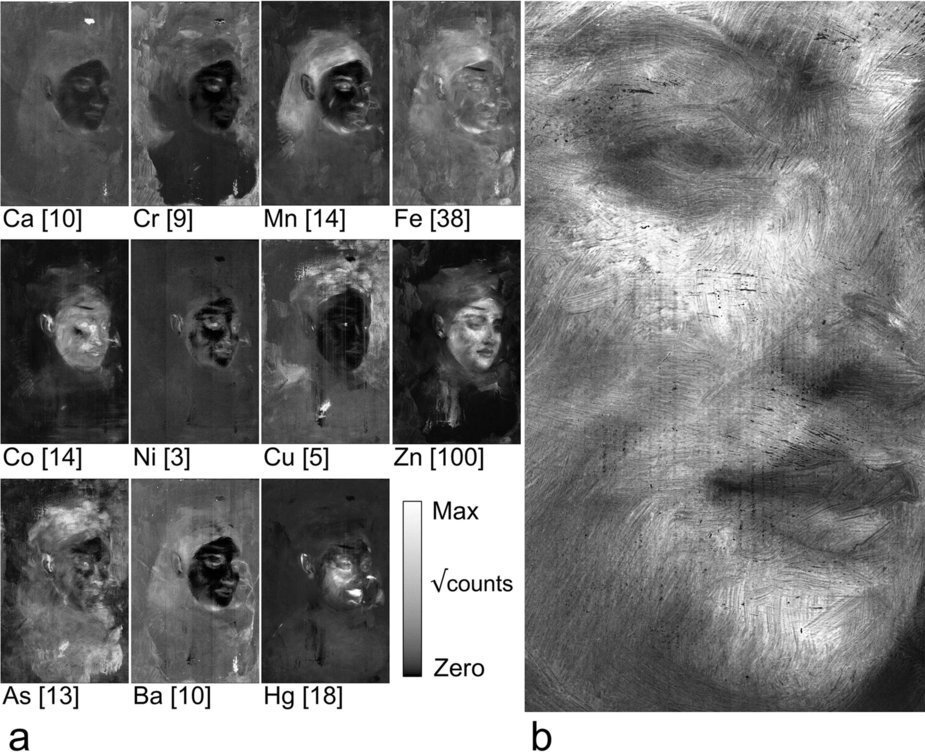
An anonymous reader quotes a report from NPR: Using specialized X-ray imaging, a team of researchers in Australia has revealed a striking painting of a woman's face hidden under French Impressionist Edgar Degas' Portrait of a Woman. The researchers believe the auburn-haired woman in the hidden work -- which they also attribute to Degas -- is Emma Dobigny, who was reportedly one of Degas' favorite subjects and modeled for him in 1869 and 1870. "Degas painted directly on the underlying portrait with no intermediate ground paint layer using exceptionally thin paint layers, thus little pigment is present to provide hiding power," the researchers explained in the journal Nature. "The hiding power of paint layers often decreases as oil paintings age." Even as the traces of a ghostly form emerged over the course of decades, conventional imaging technology could only provide hints of what the hidden portrait looked like. Now, an enhanced process known as X-ray fluorescence elemental mapping gives a far better picture. The technique allowed the researchers to scan for the individual elements -- such as iron, zinc and copper -- found in different colors of paint. The team said the maps "can be used to deduce pigment use based on the elements observed within the context of the painting." For example, "Fe and Mn are co-located in the hidden sitter's hair [...] strongly suggesting the use of the brown pigment umber." The researchers detected cobalt in the face, and deduced that it is "probably present as a blue pigment, which is useful in defining flesh tones." This chart shows maps of elements the researchers tested in an effort to create a representation of the hidden work. -
IBM Creates World's First Artificial Phase-Change Neurons (arstechnica.com)
An anonymous reader writes from a report via Ars Technica: IBM has created the world's first artificial nanoscale stochastic phase-change neurons and has already created and used a population of 500 of them to process a signal in a similar manner as the brain. Ars Technica reports: "Like a biological neuron, IBM's artificial neuron has inputs (dendrites), a neuronal membrane (lipid bilayer) around the spike generator (soma, nucleus), and an output (axon). There's also a back-propagation link from the spike generator back to the inputs, to reinforce the strength of some input spikes. The key difference is in the neuronal membrane. In IBM's neuron, the membrane is replaced with a small square of germanium-antimony-tellurium (GeSbTe or GST). GST, which happens to be the main active ingredient in rewritable optical discs, is a phase-change material. This means it can happily exist in two different phases (in this case crystalline and amorphous), and easily switch between the two, usually by applying heat (by way of laser or electricity). A phase-change material has very different physical properties depending on which phase it's in: in the case of GST, its amorphous phase is an electrical insulator, while the crystalline phase conducts. With the artificial neurons, the square of GST begins life in its amorphous phase. Then, as spikes arrive from the inputs, the GST slowly begins to crystallize. Eventually, the GST crystallizes enough that it becomes conductive -- and voila, electricity flows across the membrane and creates a spike. After an arbitrary refractory period (a resting period where something isn't responsive to stimuli), the GST is reset back to its amorphous phase and the process begins again." The research has been published via the journal Nature. -
Class of Large But Very Dim Galaxies Discovered (nature.com)
schwit1 writes from a report via Nature: Astronomers have now detected and measured a new class of large but very dim galaxy that previously was not expected to exist. Nature reports: "'[Ultradiffuse]' galaxies came to attention only last year, after Pieter van Dokkum of Yale University in New Haven, Connecticut, and Roberto Abraham of the University of Toronto in Canada built an array of sensitive telephoto lenses named Dragonfly. The astronomers and their colleagues observed the Coma galaxy cluster 101 megaparsecs (330 million light years) away and detected 47 faint smudges. 'They can't be real,' van Dokkum recalls thinking when he first saw the galaxies on his laptop computer. But their distribution in space matched that of the cluster's other galaxies, indicating that they were true members. Since then, hundreds more of these galaxies have turned up in the Coma cluster and elsewhere. Ultradiffuse galaxies are large like the Milky Way -- which is much bigger than most -- but they glow as dimly as mere dwarf galaxies. It's as though a city as big as London emitted as little light as Kalamazoo, Michigan." More significantly, they have now found that these dim galaxies can be as big and as massive as the biggest bright galaxies, suggesting that there are a lot more stars and mass hidden out there and unseen than anyone had previously predicted. -
Study: Astronauts Who Reach Deep Space 'Far More Likely To Die From Heart Disease' (independent.co.uk)
An anonymous reader quotes a report from The Independent: Astronauts who venture into deep space appear to be much more likely to die from heart disease, according to a new study. In another sign that leaving planet Earth is fraught with danger and a potential blow to hopes of establishing a colony on Mars, researchers discovered deep space radiation appears to damage the body's cardiovascular system. They reported that three out of the seven dead Apollo astronauts died as a result of a cardiovascular disease, such as a heart attack or stroke. Although the numbers are small, that rate of 43 percent is four to five times higher than found among astronauts who flew in low Earth orbit or who did not actually go into space, according to a paper in the journal Scientific Reports. In an attempt to test whether the higher numbers of cardiovascular deaths were simply a statistical blip or a genuine sign of the effect of traveling into deep space, the scientists exposed mice to the same type of radiation that the astronauts would have experienced. After six months, which is the equivalent of 20 human years, the mice showed damage to arteries that is known to lead to the development of cardiovascular disease in humans. -
ALS Ice Bucket Challenge Funding Leads To New Genetic Findings (yahoo.com)
An anonymous reader writes: Researchers are crediting the ALS Ice Bucket Challenge, a fundraiser for amyotrophic lateral sclerosis that went viral in 2014, for funding a new study that has possibly identified a common gene that contributes to the nervous system disease. Yahoo reports via Good Morning America: "In a study published in The Nature Genetics Journal, researchers from various institutions, including the University of Massachusetts Medical School and the University Medical Center Utrecht, identified the gene NEK1 as a common gene that could have an impact on who develops the disease. Variants of the gene appear to lead to increased risk of developing ALS, according to preliminary findings. Researchers in 11 countries studied 1,000 families in which a family member developed ALS and conducted a genome-wide search for any signs that a gene could be leading to increased ALS risk. After identifying the NEK1 gene, they also analyzed 13,000 individuals who had developed ALS despite no family history and found they had variants in that same gene, again linking that gene with increased ALS risk. Starting in the summer of 2014, the ALS Ice Bucket Challenge led to 17 million videos made and $220 million raised, according to the ALS Association -- $115 million of which went to the association." -
'Sister Clones' Of Dolly The Sheep Have Aged Like Any Other Sheep, Study Says (npr.org)
An anonymous reader quotes a report from NPR: About four years ago, Kevin Sinclair inherited an army of clones. "Daisy, Debbie, Denise and Diana," says Sinclair, a developmental biologist at the University of Nottingham in England. "'Sister clones' probably best describes them," Sinclair says. "They actually come from the exactly the same batch of cells that Dolly came from." In an article out Tuesday in the journal Nature Communications, Sinclair and his colleagues write that the ewes' age, along with their strapping health, might be a reason for people to start feeling more optimistic about what cloning can do. Dolly's life did not turn out as scientists in the cloning field hoped it would. She died young -- 6 1/2 -- with a nasty lung virus. "That was really just bad luck," Sinclair says, and had "nothing to do" with the fact that Dolly was a clone. It was a daunting concept for those in the cloning field, because, says Sinclair, "If you're going to create these animals, they should be normal in every respect. They should be just as healthy as any other animal that's conceived naturally. If that is not the case, then it raises serious ethical and welfare concerns about creating these animals in the first place." But, the good health of the 13 clones in the Nottingham herd suggest better prospects for the procedure. Sinclair and his colleagues evaluated the animals' blood pressure, metabolism, heart function, muscles and joints, looking for signs of premature aging. They even fattened them up (since obesity is a risk factor for metabolic problems including diabetes) and gave them the standard tests to gauge how their bodies would handle glucose and insulin. The results? Normal, normal, normal. "There is nothing to suggest that these animals were anything other than perfectly normal," says Sinclair. They had slight signs of arthritis (Debbie in particular), but not enough to cause problems. "If I put them in with a bunch of other sheep, you would never be able to identify them," he says. -
CRISPR: Chinese Scientists To Pioneer Gene-Editing Trial On Humans (theguardian.com)
An anonymous reader quotes a report from The Guardian: A team of Chinese scientists will be the first in the world to apply the revolutionary gene-editing technique known as CRISPR on human subjects. Led by Lu You, an oncologist at Sichuan University's West China hospital in Chengdu, China, the team plan to start testing cells modified with CRISPR on patients with lung cancer in August, according to the journal Nature. CRISPR is a game-changer in bioscience; a groundbreaking technique which can find, cut out and replace specific parts of DNA using a specially programmed enzyme named Cas9. Its ramifications are next to endless, from changing the color of mouse fur to designing malaria-free mosquitoes and pest-resistant crops to correcting a wide swath of genetic diseases like sickle-cell anaemia in humans. The Sichuan University trial, it is important to note, does not edit the germ-line; its effects will not be hereditary. What the researchers plan to do is enroll patients with metastatic non-small cell lung cancer, Nature reported, and for whom other treatment options -- including chemotherapy and radiotherapy -- have failed. They will then extract immune cells from the patients' blood and use CRISPR to add a new genetic sequence which will help the patient's immune system target and destroy the cancer. The cells will then be re-introduced into the patients' bloodstream. The Guardian does note that CRISPR was approved for human trials in the U.S., but if it begins on schedule in August the Sichuan University study will beat them to the punch of being the first of its kind. -
CRISPR: Chinese Scientists To Pioneer Gene-Editing Trial On Humans (theguardian.com)
An anonymous reader quotes a report from The Guardian: A team of Chinese scientists will be the first in the world to apply the revolutionary gene-editing technique known as CRISPR on human subjects. Led by Lu You, an oncologist at Sichuan University's West China hospital in Chengdu, China, the team plan to start testing cells modified with CRISPR on patients with lung cancer in August, according to the journal Nature. CRISPR is a game-changer in bioscience; a groundbreaking technique which can find, cut out and replace specific parts of DNA using a specially programmed enzyme named Cas9. Its ramifications are next to endless, from changing the color of mouse fur to designing malaria-free mosquitoes and pest-resistant crops to correcting a wide swath of genetic diseases like sickle-cell anaemia in humans. The Sichuan University trial, it is important to note, does not edit the germ-line; its effects will not be hereditary. What the researchers plan to do is enroll patients with metastatic non-small cell lung cancer, Nature reported, and for whom other treatment options -- including chemotherapy and radiotherapy -- have failed. They will then extract immune cells from the patients' blood and use CRISPR to add a new genetic sequence which will help the patient's immune system target and destroy the cancer. The cells will then be re-introduced into the patients' bloodstream. The Guardian does note that CRISPR was approved for human trials in the U.S., but if it begins on schedule in August the Sichuan University study will beat them to the punch of being the first of its kind. -
CRISPR: Chinese Scientists To Pioneer Gene-Editing Trial On Humans (theguardian.com)
An anonymous reader quotes a report from The Guardian: A team of Chinese scientists will be the first in the world to apply the revolutionary gene-editing technique known as CRISPR on human subjects. Led by Lu You, an oncologist at Sichuan University's West China hospital in Chengdu, China, the team plan to start testing cells modified with CRISPR on patients with lung cancer in August, according to the journal Nature. CRISPR is a game-changer in bioscience; a groundbreaking technique which can find, cut out and replace specific parts of DNA using a specially programmed enzyme named Cas9. Its ramifications are next to endless, from changing the color of mouse fur to designing malaria-free mosquitoes and pest-resistant crops to correcting a wide swath of genetic diseases like sickle-cell anaemia in humans. The Sichuan University trial, it is important to note, does not edit the germ-line; its effects will not be hereditary. What the researchers plan to do is enroll patients with metastatic non-small cell lung cancer, Nature reported, and for whom other treatment options -- including chemotherapy and radiotherapy -- have failed. They will then extract immune cells from the patients' blood and use CRISPR to add a new genetic sequence which will help the patient's immune system target and destroy the cancer. The cells will then be re-introduced into the patients' bloodstream. The Guardian does note that CRISPR was approved for human trials in the U.S., but if it begins on schedule in August the Sichuan University study will beat them to the punch of being the first of its kind. -
Researchers Develop Atomic-Scale Hard Drive That Writes Information Atom By Atom (techcrunch.com)
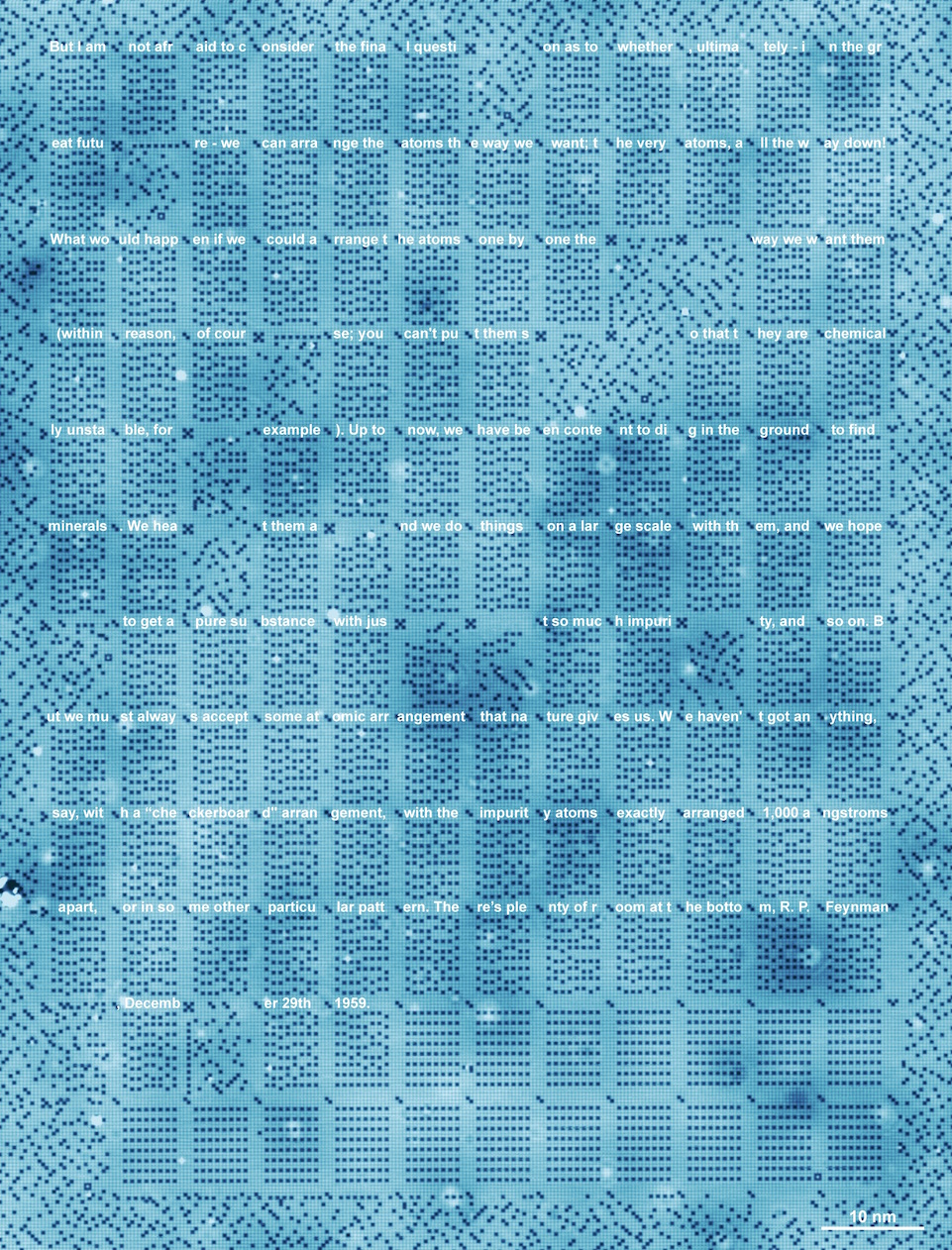
An anonymous reader quotes a report from TechCrunch: Researchers in the Netherlands have created a microscopic storage system that encodes every bit with a single atom -- allowing them to fit a kilobyte in a space under 100 nanometers across. That translates to a storage density of about 500 terabits per square inch. For comparison, those 4-terabyte hard drives you can buy today are about 1 terabit per square inch. That's because, unlike this new system, they use hundreds or thousands of atoms to store a single bit. "Every bit consists of two positions on a surface of copper atoms, and one chlorine atom that we can slide back and forth between these two positions," explained Sander Otte, lead scientist at Delft University of Technology, in a news release. Because chlorine on copper forms into a perfectly square grid, it's easy (relatively, anyway) to position and read them. If the chlorine atom is up top, that's a 1; if it's at the bottom, that's a 0. Put 8 chlorine atoms in a row and they form a byte. The data the researchers chose to demonstrate this was a fragment of a Feynman lecture, "There's plenty of room at the bottom" (PDF) -- fittingly, about storing data at extremely small scales. (You can see a high-resolution image of the array here.) The chlorine-copper array is only stable in a clean vacuum and at 77 kelvin -- about the temperature of liquid nitrogen. Anything past that and heat will disrupt the organization of the atoms. The research was published today in the journal Nature Nanotechnology. -
Micro-Camera Can Be Injected With A Syringe -- May Pose Surveillance Concerns (phys.org)
Taco Cowboy quotes a report from ABC Online: German engineers have created a camera no bigger than a grain of salt that could change the future of health imaging -- and clandestine surveillance. Using 3D printing, researchers from the University of Stuttgart built a three-lens camera, and fit it onto the end of an optical fiber the width of two hairs. Such technology could be used as minimally-intrusive endoscopes for exploring inside the human body, the engineers reported in the journal Nature Photonics. The compound lens of the camera is just 100 micrometers (0.1 millimeters) wide, and 120 micrometers with its casing. It could also be deployed in virtually invisible security monitors, or mini-robots with "autonomous vision." The compound lens can also be printed onto image sensor other than optical fibers, such as those used in digital cameras. The researchers said it only took a few hours to design, manufacture and test the camera, which yielded "high optical performances and tremendous compactness." They believe the 3D printing method -- used to create the camera -- may represent "a paradigm shift." -
Computer Simulations Point To the Source of Gravitational Waves (theverge.com)
An anonymous reader writes from a report via The Verge: On February 11th, scientists at the LIGO observatory made history when they announced the detection of the first gravitational waves. A new study says the gravitational waves likely came from two massive suns that formed about 12 billion years ago, or two billion years after the Big Bang. The researcher's calculations have been published today in the journal Nature, and were determined by running a complex simulation called the Synthetic Universe: a computer model that simulates how the Universe may have evolved since the start of the Big Bang. The simulation even includes a synthetic LIGO detector to determine the types of objects that the observatory would detect over time. The Synthetic Universe can also make predictions as it includes a mock-LIGO to chronologically sync when we detected the waves. If the model is correct, we should see LIGO pick up to 60 detections when it begins its next observation run this fall. It could hear up to 1,000 detections annually at its peak sensitivity. The lead study author Chris Belczynski speculates specifically the size of black hole mergers that the LIGO should be able to detect from gravitational waves, a combined mass between 20 and 80 times the mass of our sun, indicating that they're likely from soon after the Big Bang when stars had lower metal content and formed proportionately larger black holes. His model suggests that the ones that collided to make these gravitational waves were stars that formed 12 billion years ago, became black holes 5 million years later, and then merged 10.3 billion years after that. -
CO2 Levels Likely To Stay Above 400PPM For The Rest of Our Lives, Study Shows (inhabitat.com)
An anonymous reader writes: A new study from the UN's Intergovernmental Panel on Climate Change (IPCC) shows that carbon dioxide (CO2) concentrations in the atmosphere are likely to remain above 400 parts per million (ppm) for many years. Specifically, scientists forecasted that levels would not dip below 400pm in "our lifetimes." The CO2 concentrations of "about 450ppm or lower are likely to maintain warming below 2 degrees Celsius over the 21st century relative to pre-industrial levels." However, lead author on the paper Richard Betts said we could pass that number in 20 years or less. In an article on The Guardian, he said even if we reduce emissions immediately, we might be able to delay reaching 450ppm but "it is still looking like a challenge to stay below 450ppm." El Nino has played a significant role in climbing carbon dioxide levels, but it's likely we'll see higher CO2 levels than the last large El Nino storm during 1997 and 1998 because "manmade emissions" have risen by 25 percent since that storm, according to The Guardian. Met Office experts predicted in November 2015 that in May 2016 "mean concentrations of atmospheric CO2" would hit 407.57ppm -- the actual figure was 407.7ppm. The NOAA reported during 2015 that the "annual growth rate" of CO2 in the atmosphere rose by 3.05ppm. NOAA lead scientist Pieter Tans said, "Carbon dioxide levels are increasing faster than they have in hundreds of thousands of years. It's explosive compared to the natural processes." -
Scientists Amplify Light Using Sound On a Silicon Chip (phys.org)
An anonymous reader quotes a report from Phys.Org: Yale scientists have found a way to greatly boost the intensity of light waves on a silicon microchip using the power of sound. Writing in the journal Nature Photonics, a team led by Peter Rakich describes a new waveguide system that harnesses the ability to precisely control the interaction of light and sound waves. "Silicon is the basis for practically all microchip technologies," said Rakich, who is an assistant professor of applied physics and physics at Yale. "The ability to combine both light and sound in silicon permits us to control and process information in new ways that weren't otherwise possible." Rakich said combining the two capabilities "is like giving a UPS driver an amphibious vehicle -- you can find a much more efficient route for delivery when traveling by land or water." "Figuring out how to shape this interaction without losing amplification was the real challenge," said Eric Kittlaus, a graduate student in Rakich's lab and the study's first author. "With precise control over the light-sound interaction, we will be able to create devices with immediate practical uses, including new types of lasers." The researchers said there are commercial applications for the technology in a number of areas, including fiber-optic communications and signal processing. The system is part of a larger body of research the Rakich lab has conducted for the past five years, focused on designing new microchip technologies for light. -
Burning All Fossil Fuels Would Scorch Earth, Says Study (phys.org)
mspohr quotes a report from Phys.Org: A new study published in the Journal Nature Climate Change shows our precarious climate condition: "Using up all known fossil fuel reserves would render Earth even more unlivable than scientists had previously projected, researchers said on Monday. Average temperatures would climb by up to 9.5 degrees Celsius (17 degrees Fahrenheit) -- five times the cap on global warming set at climate talks in Paris in December, they reported. In the Arctic region -- already heating at more than double the global average -- the thermometer would rise an unimaginable 15 C to 20 C." This would make most of Earth uninhabitable to humans (although the dinosaurs seemed to do fine with it 65 million years ago). The report also stated that if fossil fuel trends go unchanged, ten times the 540 billion tons of carbon emitted since the start of industrialization would be reached near the end of the 22nd century. For comparison, "older models had projected that depleting fossil fuel reserves entirely would heat the planet by 4.3 C to 8.4 C. The new study revises this to between 6.4 C and 9.5 C," writes Phys.Org. -
Why Don't Scientists Kill The 'Demon In The Freezer'?
HughPickens.com writes: Smallpox was one of the most devastating diseases humanity has ever faced, killing more than 300 million people in the 20th century alone. But thanks to the most successful global vaccination campaign in history, the disease was completely eradicated by 1980. By surrounding the last places on earth where smallpox was still occurring -- small villages in Asia and Africa -- and inoculating everyone in a wide circle around them, D. A. Henderson and the World Health Organization were able to starve the virus of hosts. Smallpox is highly contagious, but it is not spread by insects or animals. When it is gone from the human population, it is gone for good. But Errol Moris writes in the NYT that Henderson didn't really eliminate smallpox. In a handful of laboratories around the world, there are still stocks of smallpox, tucked away in one freezer or another. In 2014 the CDC announced that vials containing the deadly virus had been discovered in a cardboard box in a refrigerator located on the National Institutes of Health (NIH) campus in Bethesda, Maryland. How can you say it's eliminated when it's still out there, somewhere? The demon in the freezer.
Some scientists say that these residual stocks of smallpox should not be destroyed because some ruthless super-criminal or rogue government might be working on a new smallpox, even more virulent than existing strains of the virus. We may need existing stocks to produce new vaccines to counteract the new viruses. Meanwhile, opponents of retention argue that there's neither need nor practical reason for keeping the virus around. In a letter to Science Magazine published in 1994, the Nobel laureate David Baltimore wrote, "I doubt that we so desperately need to study smallpox that it would be worth the risk inherent in the experimentation." It all comes down to the question of how best to protect ourselves against ourselves. Is the greater threat to humanity our propensity for error and stupidity, or for dastardly ingenuity? -
There Were Mega-Tsunamis On Mars (popularmechanics.com)
An anonymous reader quotes a report from Popular Mechanics: Today, a team of scientists has announced the first discovery of extraterrestrial tsunamis. A team of astronomers and geologists led by J. Alexis Rodriguez at the Planetary Science Institute in Tucson, Arizona has uncovered evidence of massive tsunamis on Mars billions of years ago. As Rodriguez reports, two separate mega-tsunamis tore across the red planet around 3.4 billion years ago, a time when Mars was a mere 1.1 billion years old and nearby Earth was just cradling its first microbial lifeforms. The two tsunamis created 150-foot-high shore-break waves on average, and some absolutely monster waves up to 400 feet tall. Rodriguez and his colleagues outline their tsunami findings today in the journal Scientific Reports. From the report: "Rodriquez and his colleagues stumbled across evidence of these tsunamis while scouring over images of Mars' relatively flat northern planes. Two regions called Chryse Planitia and Arabia Terra. Using detailed infrared maps rendered by the thermal camera on the 15-year-old Mars Odyssey orbiter, the scientists identified the high water marks of the tsunamis -- features that look a lot like ancient ocean coastlines." Within the last year alone, scientists have spotted the signs of flowing water on Mars, recently discovering how water flows on the red planet. NASA has detected atomic oxygen in the atmosphere of the planet, too. -
Scientists Found 74 Genetic Variants Linked To Education Level (theverge.com)
An anonymous reader shares a report on The Verge: Scientists have found 74 genetic variants that are associated with educational attainment. In short, that means some people have variants of genes in their DNA that are correlated with completing more schooling. But this finding, published today in Nature, should be taken with a grain of salt. Together, these variants explain less than half a percent of the differences in educational attainment seen in the population studied -- far less than the impact that a person's wealth and environment can have on the time they spend in school. The strongest association found for a single genetic variant explained only 0.035 of one percent of the variation in educational attainment. "Put another way, the difference between people with zero and two copies of this genetic variant predicts, on average, about nine extra weeks of schooling," says Dan Benjamin, a behavioral economist at the University of Southern California who worked on the study. These variants don't mean much when it comes to people's schooling, and factors like poverty, geography, and nutrition probably have a much bigger combined impact. The Guardian's take is worth a read as well. -
Scientists Grow Two-Week-Old Human Embryos In Lab For The First Time (reuters.com)
An anonymous reader writes: According to Reuters, "Using a culture method previously tested to grow mouse embryos outside of a mother, the teams were able to conduct almost hour by hour observations of human embryo development to see how they develop and organize themselves up to day 13."
Brave new world, here we come From the report: "The work, covered in two studies published on Wednesday in the journal Nature and Nature Cell Biology, showed how the cells that will eventually form the human body self-organize into the basic structure of a post-implantation human embryo. As well as advancing human biology expertise, the knowledge gained from studying these developments should help to improve in-vitro fertilization (IVF) treatments and further progress in the field of regenerative medicine, the researchers said. But the research also raises the issue of an international law banning scientists from developing human embryos beyond 14 days, and suggests this limit may have to be reviewed. 'Longer cultures could provide absolutely critical information for basic human biology,' said researcher Zernicka-Goetz. 'But this would of course raise the next question - of where we should put the next limit.'"