Slashdot Mirror
Domain: planetary.org
Stories and comments across the archive that link to planetary.org.
Stories · 129
-
Spectacular New Views of Saturn's Polar Vortex
sighted writes "Today the robotic spacecraft Cassini returned some jaw-dropping images of the odd hexagon in the planet's north polar region. The hexagon has been seen before, but the change of season has more fully revealed the feature in visible light. Cassini also zoomed in on the churning vortex at the north pole itself. The south pole features a similar maelstrom." -
The Most Detailed Images of Uranus' Atmosphere Ever
New submitter monkeyhybrid writes "The Planetary Society's Emily Lakdawalla reports on the most detailed images of Uranus ever taken. The infrared sensitivity of the ground based Keck II telescope's NIRC2 instrument enabled astronomers to see below the high level methane based atmosphere that has hampered previous observations, and with unprecedented clarity. If you ever thought Uranus was a dull blue looking sphere then look again; you could easily mistake these images for being of Jupiter!" -
The Most Detailed Images of Uranus' Atmosphere Ever
New submitter monkeyhybrid writes "The Planetary Society's Emily Lakdawalla reports on the most detailed images of Uranus ever taken. The infrared sensitivity of the ground based Keck II telescope's NIRC2 instrument enabled astronomers to see below the high level methane based atmosphere that has hampered previous observations, and with unprecedented clarity. If you ever thought Uranus was a dull blue looking sphere then look again; you could easily mistake these images for being of Jupiter!" -
Bill Nye 'the Science Guy' Urges Letters To Obama To Restore NASA Budget Cuts
MarkWhittington writes "Bill Nye, once known as 'The Science Guy' for his 1990s PBS educational television show, has cut a YouTube video in his current capacity of CEO of the Planetary Society urging people to write to President Obama to restore cuts to planetary science. The budget cuts were enacted by the president last February, causing consternation in the scientific community. Nye writes, 'If that proposal continues the steep decline in funding to NASA's planetary program it will gravely endanger the unique capabilities and outstanding people that have delivered U.S. leadership in space. We will lose a capability that took decades to develop and may never be replaced.'" -
Curiosity Starts Driving
littlesparkvt tips news that the Curiosity Mars rover began driving today at Bradbury Landing in Gale Crater. The rover rolled forward about 4.5 meters, then stopped, rotated 120 degrees, and rolled another 2.5 meters. The article has a picture of the rover's tracks in the Martian dust, and you can browse the image gallery or raw image feed for more. Matt Heverly, the rover's lead driver, confirmed that the mobility system is functioning perfectly in the lead-up to its first major land trek. "Curiosity will spend several more days of working beside Bradbury Landing, performing instrument checks and studying the surroundings, before embarking toward its first driving destination approximately 1,300 feet (400 meters) to the east-southeast." Reader redletterdave adds news that NASA has released an enhanced video of Curiosity's descent from space, which is pretty cool to watch. There was also some minor bad news yesterday; one of the wind speed sensors on the REMS weather instruments was permanently damaged during landing. Emily Lakdawalla explains,"The reason there were two is that it helped triangulate wind speed and also improve accuracy of wind speed measurements when one of the booms is aimed windward or leeward. So the quality of the wind speed data will be harmed, but there will still be wind speed data." -
Curiosity Starts Driving
littlesparkvt tips news that the Curiosity Mars rover began driving today at Bradbury Landing in Gale Crater. The rover rolled forward about 4.5 meters, then stopped, rotated 120 degrees, and rolled another 2.5 meters. The article has a picture of the rover's tracks in the Martian dust, and you can browse the image gallery or raw image feed for more. Matt Heverly, the rover's lead driver, confirmed that the mobility system is functioning perfectly in the lead-up to its first major land trek. "Curiosity will spend several more days of working beside Bradbury Landing, performing instrument checks and studying the surroundings, before embarking toward its first driving destination approximately 1,300 feet (400 meters) to the east-southeast." Reader redletterdave adds news that NASA has released an enhanced video of Curiosity's descent from space, which is pretty cool to watch. There was also some minor bad news yesterday; one of the wind speed sensors on the REMS weather instruments was permanently damaged during landing. Emily Lakdawalla explains,"The reason there were two is that it helped triangulate wind speed and also improve accuracy of wind speed measurements when one of the booms is aimed windward or leeward. So the quality of the wind speed data will be harmed, but there will still be wind speed data." -
Curiosity Lands On Mars
The Mars Science Laboratory, a.k.a. Curiosity, is now less than an hour from touchdown on Mars. It's scheduled to land at 1:31 AM EDT (0531 UTC). The landing will be monitored by the Odyssey orbiter, which will be the data relay between Curiosity and Earth. The Mars Reconnaissance Orbiter will be listening to Curiosity as well (yes — two of our probes orbiting another world will be watching a third). While Odyssey will be giving us close to real-time updates (as close as possible, given the 14-minute time delay), MRO's data will take a bit longer to be processed and evaluated. NASA is broadcasting from the JPL mission room right now. If you'd like to watch a pretty awesome graphical visualization of the mission, check out eyes.nasa.gov. If you'd like to play around with a Java app showing Mars-local times and seasons, check out Mars24. If you'd like to watch unofficial coverage, Bad Astronomer Phil Plait and a bunch of other astronomers are hosting a public Google Hangout. If you'd like to read a detailed explanation of the landing, checkout NASA's press kit (PDF), and there's also a post about what to expect when the rover starts sending pictures back to Earth, which will be about two hours after the rover lands. Good luck to everyone involved! We'll update this post when we get word on the landing.
Update: 08/06 05:33 GMT by S : Curiosity is on the ground! Everything looks nominal, and everybody at JPL is cheering. Congratulations, folks. They're continuing to receive telemetry from Odyssey, and the connection is strong. They've now received the first images back from Mars of Curiosity on the ground. A press briefing is scheduled in a little bit (2:15AM EDT, 0615 UTC), and several more throughout the day as more data comes back. -
Curiosity Lands On Mars
The Mars Science Laboratory, a.k.a. Curiosity, is now less than an hour from touchdown on Mars. It's scheduled to land at 1:31 AM EDT (0531 UTC). The landing will be monitored by the Odyssey orbiter, which will be the data relay between Curiosity and Earth. The Mars Reconnaissance Orbiter will be listening to Curiosity as well (yes — two of our probes orbiting another world will be watching a third). While Odyssey will be giving us close to real-time updates (as close as possible, given the 14-minute time delay), MRO's data will take a bit longer to be processed and evaluated. NASA is broadcasting from the JPL mission room right now. If you'd like to watch a pretty awesome graphical visualization of the mission, check out eyes.nasa.gov. If you'd like to play around with a Java app showing Mars-local times and seasons, check out Mars24. If you'd like to watch unofficial coverage, Bad Astronomer Phil Plait and a bunch of other astronomers are hosting a public Google Hangout. If you'd like to read a detailed explanation of the landing, checkout NASA's press kit (PDF), and there's also a post about what to expect when the rover starts sending pictures back to Earth, which will be about two hours after the rover lands. Good luck to everyone involved! We'll update this post when we get word on the landing.
Update: 08/06 05:33 GMT by S : Curiosity is on the ground! Everything looks nominal, and everybody at JPL is cheering. Congratulations, folks. They're continuing to receive telemetry from Odyssey, and the connection is strong. They've now received the first images back from Mars of Curiosity on the ground. A press briefing is scheduled in a little bit (2:15AM EDT, 0615 UTC), and several more throughout the day as more data comes back. -
Pioneer Anomaly Solved
First time accepted submitter gstrickler writes "After years of work recovering and analyzing old mission data and vehicle schematics, a just published analysis(Pdf) provides strong evidence for anisotropic thermal radiation being the source of the slowing of the Pioneer 10 and 11 spacecraft. The theory isn't new, but the recovered data and new analysis provide solid evidence that at least 80% of the deceleration is accounted for by anisotropic thermal radiation. Members of The Planetary Society were instrumental in recovering the data and helping fund the analysis. The lesson is, in space, it matters what direction your heat radiating surfaces point." -
Programming Error Doomed Russian Mars Probe
astroengine writes "So it turns out U.S. radars weren't to blame for the unfortunate demise of Russia's Phobos-Grunt Mars sample return mission — it was a computer programming error that doomed the probe, a government board investigating the accident has determined." According to the Planetary Society Blog's unofficial translation and paraphrasing of the incident report, "The spacecraft computer failed when two of the chips in the electronics suffered radiation damage. (The Russians say that radiation damage is the most likely cause, but the spacecraft was still in low Earth orbit beneath the radiation belts.) Whatever triggered the chip failure, the ultimate cause was the use of non-space-qualified electronic components. When the chips failed, the on-board computer program crashed." -
GRAIL-A Enters Lunar Orbit
NASA's twin-craft GRAIL mission, launched way back in September (more information here), has successfully reached its destination. Grail-A has now entered lunar orbit; GRAIL-B is expected to enter lunar orbit tomorrow. -
NASA Rover 'Curiosity' Set For Saturday Launch
arcite writes "The Mars Science Laboratory Rover 'Curiosity,' an SUV-sized rover packed to the gills with the latest scientific instruments and an innovative landing system, is set to launch tomorrow. As the heaviest and largest Mars rover to date, if it is successful in touching down on the red planet, it will be the best bet yet for NASA to find signs of life. Stuffed with turkey and burned out on holiday shopping, Geeks everywhere will be watching the skies above (or the livestream here) and wishing NASA's Curiosity godspeed!" -
Russians Can't Make Contact With Busted Space Probe
New submitter benfrog writes "Despite repeated attempts over the past few days, Russia is unable to make contact with Phobos-Grunt, the probe that was supposed to make it to Mars and never left Earth's atmosphere. Estimates now vary widely on the time left to contact the probe, but it is descending toward Earth and will likely turn into scrap before it can be reached." Official information is still hard to come by, but the Planetary Society Weblog has been keeping up with the story. -
Phobos-Grunt Launches To Retrieve a Sample of Phobos
An anonymous reader writes with news that Russia's Phobos-Grunt spacecraft has launched, taking the first step on its mission to travel to Phobos, the larger of Mars' two moons. When (and if — see below) it lands on Phobos, the probe will collect a soil sample and attempt to return it to Earth. "Russia’s Federal Space Agency said the craft separated successfully from the booster about 11 minutes later. ... The return vehicle is expected to carry up to 200 grams (7 ounces) of soil from Phobos back to Earth in August 2014. The $170 million endeavor would be Russia’s first interplanetary mission since Soviet times. A previous 1996 robotic mission to Mars ended in failure when the probe crashed in the Pacific following an engine failure." Unfortunately, there appears to have been a problem with the launch. Details are uncertain at this point, but the probe reportedly made it to orbit intact, and the mission is not necessarily ruined. -
Phobos-Grunt Launches To Retrieve a Sample of Phobos
An anonymous reader writes with news that Russia's Phobos-Grunt spacecraft has launched, taking the first step on its mission to travel to Phobos, the larger of Mars' two moons. When (and if — see below) it lands on Phobos, the probe will collect a soil sample and attempt to return it to Earth. "Russia’s Federal Space Agency said the craft separated successfully from the booster about 11 minutes later. ... The return vehicle is expected to carry up to 200 grams (7 ounces) of soil from Phobos back to Earth in August 2014. The $170 million endeavor would be Russia’s first interplanetary mission since Soviet times. A previous 1996 robotic mission to Mars ended in failure when the probe crashed in the Pacific following an engine failure." Unfortunately, there appears to have been a problem with the launch. Details are uncertain at this point, but the probe reportedly made it to orbit intact, and the mission is not necessarily ruined. -
Is the OMB Trying To End Planetary Exploration?
EccentricAnomaly writes "Lou Friedman (former head of the Planetary Society) has written a provocative article over at Space Policy Review where he accuses the Obama administration of working on plans to gut the robotic Mars program in order to pay for NASA's exciting new rocket. This is after NASA already killed the Europa mission that was to have been the next outer planet mission after Cassini." -
Mars Rover Opportunity Set To Roll Into Its Ultimate Crater
coondoggie writes "NASA's Mars rover Opportunity will likely peer over the rim of its ultimate destination this week, the huge Endeavour crater. According to a NASA post late last week, Opportunity was only about 120 meters from 'Spirit Point,' the first landfall on the rim of Endeavour crater." -
NASA's Next Mars Rover
An anonymous reader writes "In August 2012, the NASA rover Curiosity is scheduled to touch down on the surface of Mars. The size of a small car, it's four times as heavy as predecessors Spirit and Opportunity, and comes with a large robot arm, a laser that can vaporise rocks at seven meters, a percussive drill and a weather station. Oh, and 4.8kg of plutonium-238. Wired has some high-resolution photographs from lab that is putting the next rover together." Curiosity's destination on Mars has reportedly been chosen: Gale Crater. The 150-kilometer wide depression 'includes a tantalizing 5-kilometer-high mound of ancient sediments, [and] may have once been flooded by water.' The Planetary Society blog has a couple of additional pictures and a time-lapse video of the delicate, lengthy process of preparing the lander for transport. Curiosity will launch near the end of 2011. No cats were harmed during its construction. -
NASA's Next Mars Rover
An anonymous reader writes "In August 2012, the NASA rover Curiosity is scheduled to touch down on the surface of Mars. The size of a small car, it's four times as heavy as predecessors Spirit and Opportunity, and comes with a large robot arm, a laser that can vaporise rocks at seven meters, a percussive drill and a weather station. Oh, and 4.8kg of plutonium-238. Wired has some high-resolution photographs from lab that is putting the next rover together." Curiosity's destination on Mars has reportedly been chosen: Gale Crater. The 150-kilometer wide depression 'includes a tantalizing 5-kilometer-high mound of ancient sediments, [and] may have once been flooded by water.' The Planetary Society blog has a couple of additional pictures and a time-lapse video of the delicate, lengthy process of preparing the lander for transport. Curiosity will launch near the end of 2011. No cats were harmed during its construction. -
Saturn's Super Storm
An anonymous reader sends in a brief writeup about a massive storm that's been visible on Saturn's surface for a few months now. "As it rapidly expanded, the storm's core developed into a giant, powerful thunderstorm, producing a 3,000-mile-wide (5,000-kilometer-wide) dark vortex possibly similar to Jupiter's Great Red Spot." The storm has been photographed by the Cassini probe, Hubble and even amateur astronomers here on Earth. (The Planetary Society Weblog also posted an 8,000-pixel-wide panorama a while back.) "The violence of the storm — the strongest disturbances ever detected in Saturn's stratosphere — took researchers by surprise. What started as an ordinary disturbance deep in Saturn's atmosphere punched through the planet's serene cloud cover to roil the high layer known as the stratosphere." A study on the thermal structure of the storm (abstract) was just published in the journal Science. -
Saturn's Super Storm
An anonymous reader sends in a brief writeup about a massive storm that's been visible on Saturn's surface for a few months now. "As it rapidly expanded, the storm's core developed into a giant, powerful thunderstorm, producing a 3,000-mile-wide (5,000-kilometer-wide) dark vortex possibly similar to Jupiter's Great Red Spot." The storm has been photographed by the Cassini probe, Hubble and even amateur astronomers here on Earth. (The Planetary Society Weblog also posted an 8,000-pixel-wide panorama a while back.) "The violence of the storm — the strongest disturbances ever detected in Saturn's stratosphere — took researchers by surprise. What started as an ordinary disturbance deep in Saturn's atmosphere punched through the planet's serene cloud cover to roil the high layer known as the stratosphere." A study on the thermal structure of the storm (abstract) was just published in the journal Science. -
NASA's Stunning Close-Up Photos of Comet Hartley 2
Several readers have sent word that NASA's EPOXI spacecraft performed a close approach to comet Hartley 2 yesterday, taking pictures within roughly 700km of the nucleus. Bad Astronomer Phil Plait has a collection of some fantastic photographs, and you can check out a ton of other images on the mission website. The Planetary Society blog put together a neat animation of the flyby. NASA's mission fact sheet (PDF) explains EPOXI's background — it's the supplemental mission of the Deep Impact craft that smashed a small probe into a different comet back in 2005 — and why Hartley 2 was chosen for this flyby (they couldn't find their original target). -
China Successfully Launches Second Moon Probe
China launched its second unmanned Moon mission on Friday, sending the Chang'e II probe on a five-day journey to reach lunar orbit. "The probe plans to test technology in preparation for an unmanned moon landing in 2012, with a possible manned lunar mission to follow in 2017. China's other space plans include the launch of the first module of a future space station next year followed by the dispatch of manned spacecraft to dock with it. ... After its six-month mission, Chang'e II will either land on the moon as an experiment for future probes, fly further into outer space, or change its course and begin orbiting the Earth, Xinhua cited chief designer Huang Jiangchuan as saying." The Planetary Society blog has pictures and video of the launch. -
Saturn's Moon Prometheus Spawning Moonlets
astroengine writes "For the first time ever, astronomers have witnessed the formation of celestial objects... in Saturn's rings. As the Saturnian moon Prometheus dashes through the gas giant's rings, it leaves large formations of ice behind, some as large as 12 kilometers in diameter. When the small moon makes another pass, it is not known whether these giant 'snowballs' remain or get destroyed, but according to Linda Spilker, from NASA's Jet Propulsion Laboratory: 'You can think of Saturn's rings as miniature versions of the disks where planets form. The same physical processes are occurring.'" The Planetary Society blog has further explanation, as well as pictures and a movie of Prometheus' interaction with Saturn's rings. The Cassini team has released some fantastic images of the fans and clumps in the F ring, as well as a simulation showing how the ring's particles are affected by the moon's passing. -
LRO Photographs Soviet Lunar Landers From the '70s
braindrainbahrain writes "Photographs of the Sea of Crises on the Moon taken by the Lunar Reconnaissance Orbiter show the Soviet lunar landers Luna 20, Luna 23 and Luna 24, which landed on the Moon in the 1970s. In addition to the landers, it is possible to see the tracks made by the Lunokhod lunar rover! The Soviet Lunokhod lunar rover predates the first successful Mars Rover by some 30 years. (Note: Very cool old-style artists' drawings of the Soviet craft at the Wikipedia links above.)" -
Russia's Mars Mission Raising Concerns
eldavojohn writes "Space.com has a blog on Russia's Phobos-Grunt project designed to explore the planet further. He voices concerns about part of this exploration that is dubbed LIFE (Living Interplanetary Flight Experiment) and backed by The Planetary Society that involves sending several samples of Earth's hardiest microbes to see if they can survive the round trip voyage. Space.com's correspondent Leonard David did some legwork to ensure that The Outer Space Treaty of 1967 was being upheld as it prevents cross-contamination between planets and receives some interesting responses from experts on this mission. The Phobos-Grunt mission will also deploy a Chinese sub-satellite 'Firefly-1,' which will attempt to figure out how water on Mars disappeared. Unfortunately, The United States is not taking part in Phobos-Grunt." -
Mars Phoenix Lander's Ovens Were Destined To Fail
RobertB-DC writes "The Phoenix mission to Mars' frigid polar regions was going to be tricky from the start, with only a few weeks to perform as much science as possible. Success depended on everything working right. But one of the mission's most frustrating glitches — the stuck doors on the TEGA ovens — could have been prevented with basic quality control on Earth. Nature is reporting that bad brackets were replaced by the manufacturer ... with identically bad brackets. The Planetary Society blog sums it up succinctly: 'Ouch. Ouch ouch ouch.'" -
Ulysses Spacecraft Not Dead Yet
iminplaya sends in the good news that reports of the death of the Ulysses mission are premature. (We've discussed the impending shutdown of the 17-year-old mission a couple of times this year.) Ulysses is a joint NASA / ESA mission to study the sun from an orbit inclined almost 90 degrees from the ecliptic. From the Planetary Society blog post: "Ulysses is not dead yet. ESA issued a statement in February saying that, as Ulysses' radioisotope thermoelectric generators were running out of power, the spacecraft would likely die some time this year. The actual death blow to the spacecraft was likely to be the freezing of hydrazine fuel in a cold spot in a fuel line. Mission controllers found creative ways to prevent the freezing, but the solution was not a long-term one, and ESA had a ceremonial send-off and wrap-up of the mission in mid-June, announcing that the spacecraft would be shut down on July 1. However, it now appears that announcement was premature. ESA issued a statement on July 3 titled 'Ulysses hanging on valiantly.' And on Wednesday, the [Ulysses mission operations manager indicated] that Ulysses' voyage could actually continue for some time." -
Arecibo Observatory Facing Massive Budget Cuts
SirLurksAlot writes "Many supporters of the SETI@home project have recently received a message informing them of impending budget cuts for the Arecibo Observatory and asking them to show their support for the project by writing to Congress. The letter also informs supporters that there are currently two bills (Senate bill 2862 sponsored by Senator Hillary Clinton, and a similar House bill, H.R. 3737), which are intended to secure funding for the project. According to The Planetary Society, the current plan for the Arecibo Observatory involves cutting funding by more than 60% from $10.4 million to just $4 million by 2011." -
Asteroid Mission Competition Announces Winner
Riding with Robots writes "The Planetary Society invited participants to compete for $50,000 in prizes by designing a mission to rendezvous with and 'tag' a potentially dangerous near-Earth asteroid. The asteroid Apophis was used as the target for the mission design because it will come closer to Earth in 2029 than the orbit of geostationary satellites. The winning mission design is called Foresight, and calls for the use of off-the-shelf parts to undercut the price of other proposals. Here's a PDF of the winning proposal." -
NASA Vets & Administration Clash Over Moon Plans
mattnyc99 writes "There's a serious feud brewing this week over the Bush administration's plan for a manned mission to the Moon as an eventual stepping stone to Mars. The Planetary Society, a top group of former mission managers, space-based scientists and NASA astronauts argues, is set to rebuke the Moon plan at a conference next month in favor of hopskotching an asteroid on the way to the Red Planet. Agency chief Michael Griffin issued an abnormally strong response to the society, calling it an overly political criticism of Bush for a plan that he says was 'the best legislative guidance NASA has ever had.' Either way, it's clear that the stars are aligning for the whole space race to be reconsidered as a new administration steps into the White House. So far Clinton and Obama (who just added his) are the only contenders with space proposals." -
Cassini's Iapetus Flyby
cupofjoe writes "The Jet Propulsion Laboratory is reporting on the Cassini spacecraft's recent close flyby of the Saturnian moon Iapetus, highlighting images taken from distances 100 times closer than the Voyager 2 flyby in 1981. Near real-time images were shown to Cassini mission team members in a presentation at JPL yesterday, during which a pre-recorded message from Arthur C. Clarke was played to the audience. Clarke wished them luck on the flyby, reminding all present that he had included a pretty accurate description of Iapetus in the original 1968 text of "2001: A Space Odyssey", years before Voyager made its flyby." -
Send a Name to Mars for Christmas
space_elf writes "The Planetary Society has an interesting program just in time for Christmas, and just perfect for the persnickity someone in your life who seems to have everything. You can submit a name that will be written on a mini-disk and flown aboard the upcoming Phoenix mission to Mars. Included in the free (as in beer) service is a certificate to present to them as proof of their name going into space. " I know some of you haven't finished your shopping... last chance! -
Send a Name to Mars for Christmas
space_elf writes "The Planetary Society has an interesting program just in time for Christmas, and just perfect for the persnickity someone in your life who seems to have everything. You can submit a name that will be written on a mini-disk and flown aboard the upcoming Phoenix mission to Mars. Included in the free (as in beer) service is a certificate to present to them as proof of their name going into space. " I know some of you haven't finished your shopping... last chance! -
Here Come the Leonids 2006
yukk writes "The nights and early morning hours of November 17-19 mark the return of the Leonid meteor shower to the skies of Earth. Viewers along the northeastern coast of the United States and Canada, as well as people in Europe and western Africa might get to see a possible 'outburst' of as many as 100-600 meteors per hour. This spike in activity is predicted for 11:45 p.m. — 1:33 a.m. EST on November 18-19 (4:45 — 6:33 UT on November 19)." -
Solar Sail News and Upcoming JPL Missions
abkaiser writes "I had the opportunity to interview a supervisor at NASA's Jet Propulsion Laboratory. The JPL is putting together several missions utilizing solar sail technology. The interview and article detail where NASA and the JPL are in using solar sails for applications and research.You can read the article or skip ahead to the cool pictures of prototype and proposed solar sails. The article addresses NASA's JPL solar sail missions, but not other commercial or private projects like Cosmos 1." -
Help Solve the Mystery of the Pioneer Anomaly
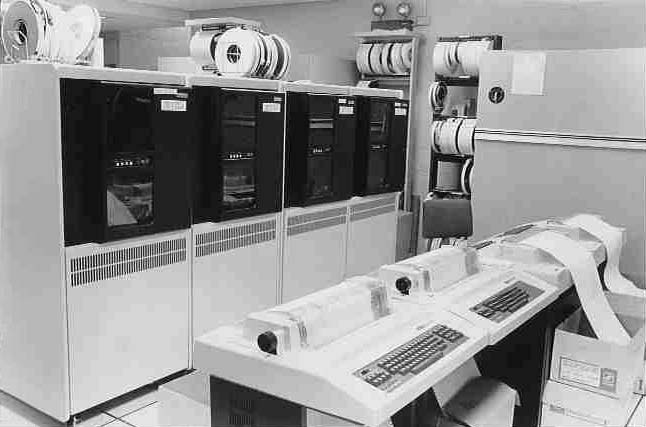
deglr6328 writes "Very soon, NASA will be dismantling and scrapping its only computer left which is able to access and process the data on its ancient 7- and 9-track magnetic tapes. "Who cares", you say? Well, the Planetary Society for one and they're hoping you might care as well. The data held on these (few hundred) tapes is no ordinary forgettable data, it is the complete archive of the first 15 years of all the data returned to Earth by the Pioneer spacecraft which were sent into interstellar space. This additional and thus far unexamined data (the data after 1988 is available and has already been examined) may hold the key to solving what is considered one of the top problems in physics today, the so called Pioneer anomaly, where the observed trajectory of these spacecraft (and a couple others) deviates noticeably from our very precise expectation. The reason for the anomaly may be as mundane as uneven radiation pressure or escaping thruster fuel or it may be as groundbreaking as a clue to completely new physics, perhaps related to dark matter or dark energy. The Planetary Society is planning on recovering this data and poring over it meticulously to look for something which may have been missed or hidden from current investigations into the phenomenon. They need money to do this, about $250,000, and are asking for donations to fund the project. You do not need to be a member to donate. There are no serious proposals to send any more spin-stabilized spacecraft on solar escape trajectories any time in the near future and this is probably the only tenable method we have to directly investigate this mystery in the interim." -
Help Solve the Mystery of the Pioneer Anomaly
deglr6328 writes "Very soon, NASA will be dismantling and scrapping its only computer left which is able to access and process the data on its ancient 7- and 9-track magnetic tapes. "Who cares", you say? Well, the Planetary Society for one and they're hoping you might care as well. The data held on these (few hundred) tapes is no ordinary forgettable data, it is the complete archive of the first 15 years of all the data returned to Earth by the Pioneer spacecraft which were sent into interstellar space. This additional and thus far unexamined data (the data after 1988 is available and has already been examined) may hold the key to solving what is considered one of the top problems in physics today, the so called Pioneer anomaly, where the observed trajectory of these spacecraft (and a couple others) deviates noticeably from our very precise expectation. The reason for the anomaly may be as mundane as uneven radiation pressure or escaping thruster fuel or it may be as groundbreaking as a clue to completely new physics, perhaps related to dark matter or dark energy. The Planetary Society is planning on recovering this data and poring over it meticulously to look for something which may have been missed or hidden from current investigations into the phenomenon. They need money to do this, about $250,000, and are asking for donations to fund the project. You do not need to be a member to donate. There are no serious proposals to send any more spin-stabilized spacecraft on solar escape trajectories any time in the near future and this is probably the only tenable method we have to directly investigate this mystery in the interim." -
Help Solve the Mystery of the Pioneer Anomaly
deglr6328 writes "Very soon, NASA will be dismantling and scrapping its only computer left which is able to access and process the data on its ancient 7- and 9-track magnetic tapes. "Who cares", you say? Well, the Planetary Society for one and they're hoping you might care as well. The data held on these (few hundred) tapes is no ordinary forgettable data, it is the complete archive of the first 15 years of all the data returned to Earth by the Pioneer spacecraft which were sent into interstellar space. This additional and thus far unexamined data (the data after 1988 is available and has already been examined) may hold the key to solving what is considered one of the top problems in physics today, the so called Pioneer anomaly, where the observed trajectory of these spacecraft (and a couple others) deviates noticeably from our very precise expectation. The reason for the anomaly may be as mundane as uneven radiation pressure or escaping thruster fuel or it may be as groundbreaking as a clue to completely new physics, perhaps related to dark matter or dark energy. The Planetary Society is planning on recovering this data and poring over it meticulously to look for something which may have been missed or hidden from current investigations into the phenomenon. They need money to do this, about $250,000, and are asking for donations to fund the project. You do not need to be a member to donate. There are no serious proposals to send any more spin-stabilized spacecraft on solar escape trajectories any time in the near future and this is probably the only tenable method we have to directly investigate this mystery in the interim." -
Help Solve the Mystery of the Pioneer Anomaly
deglr6328 writes "Very soon, NASA will be dismantling and scrapping its only computer left which is able to access and process the data on its ancient 7- and 9-track magnetic tapes. "Who cares", you say? Well, the Planetary Society for one and they're hoping you might care as well. The data held on these (few hundred) tapes is no ordinary forgettable data, it is the complete archive of the first 15 years of all the data returned to Earth by the Pioneer spacecraft which were sent into interstellar space. This additional and thus far unexamined data (the data after 1988 is available and has already been examined) may hold the key to solving what is considered one of the top problems in physics today, the so called Pioneer anomaly, where the observed trajectory of these spacecraft (and a couple others) deviates noticeably from our very precise expectation. The reason for the anomaly may be as mundane as uneven radiation pressure or escaping thruster fuel or it may be as groundbreaking as a clue to completely new physics, perhaps related to dark matter or dark energy. The Planetary Society is planning on recovering this data and poring over it meticulously to look for something which may have been missed or hidden from current investigations into the phenomenon. They need money to do this, about $250,000, and are asking for donations to fund the project. You do not need to be a member to donate. There are no serious proposals to send any more spin-stabilized spacecraft on solar escape trajectories any time in the near future and this is probably the only tenable method we have to directly investigate this mystery in the interim." -
Slashback: Justice, Settlement, Cosmos
Slashback tonight with updates on the Supreme Court's take on takings, money available for unlucky DeskStar disk drive owners, Parliament's Jedi, and more. Read on for the details."It is important, likewise, that the habits of thinking in a free country should inspire caution in those entrusted with its administration ..." zarathud writes "Logan Darrow Clements has begun the application process to build a hotel on land owned by Supreme Court Justice David H. Souter. This could be allowed under Eminent Domain after the controversial 5-4 Kelo vs. New London ruling which Souter voted for. Justice Souter's home currently occupies the land. The planned hotel, to be called 'The Lost Liberty Hotel,' will include a public exhibit on the loss of American Freedom. 'This is not a prank,' said Clements, 'The Towne of Weare has five people on the Board of Selectmen. If three of them vote to use the power of eminent domain to take this land from Mr. Souter we can begin our hotel development.'"
Call everyone Sir, just to be safe. Yesterday we posted an item about the first self-proclaimed Jedi in Parliament; here are two updates to the already-updated story. Americans (like me!) may still be baffled by the complications of the honorifics involved.
Stefan Magdalinski writes "If you want to link to the actual speech, then can I suggest you use our volunteer-run, open source, reimplementation of parliament's awful website?"
And reader Russell Dewhurst writes "All MPs (Members of Parliament) are called the Hon. Member for X... If the MP for Copeland were a Privy Councillor he would be the _Rt_ Hon (Right Honourable) Member for Copeland. So the original article was correct, and the correction was wrong, I'm afraid!"Thanks to everyone who's weighed in on this.
MozNews interviews Daniel Glazman, NVu Lead Dev bluephone writes "Now that NVu 1.0 has been officially released, we at MozillaNews asked Daniel Glazman to take some time to give us another interview to book-end our first interview with him, early in NVu's development. He was gracious as always, and fast! Read the interview for unavoidable laws, plans for the future of NVu and Daniel, and even news about his company's upcoming release."
Tom Clancy, eat my shorts. hydraa16 writes "The Cosmos 1 Solar Sail failed to reach orbit. This video shows its loading in a Russian Delta III Submarine, and its launch in the cold Barents Sea!"
If you accidentally blew up your DeskStar, the Empire will repay you. hardreset writes "Remember the day when the IBM 75GXP was the hot new drive? Then ... do you remember the day(s) it bit the dust? If you still have the serial number(s), you may be eligible for a $100/drive settlement from IBM. The settlement page is over here, claim form is here, and the Inquirer article is here. For those of you wearing tinfoil hats, you don't have to send in your drive. For those of you who work for IBM or live overseas, don't bother. If you're hoarding these drives, it might be a good payday!"
You'd have to pay me a lot to listen to the results. Kethinov writes "Because Trent Reznor's release of The Hand That Feeds was a spectacular success, he's decided to release more free musical source material for remixing and listening delight. The new release is another track off his new album With Teeth entitled Only. Interestingly, now he's offering multiple formats for the material instead of just Apple's Garageband format. So now non Apple users too can join the fun."
-
Slashback: Justice, Settlement, Cosmos
Slashback tonight with updates on the Supreme Court's take on takings, money available for unlucky DeskStar disk drive owners, Parliament's Jedi, and more. Read on for the details."It is important, likewise, that the habits of thinking in a free country should inspire caution in those entrusted with its administration ..." zarathud writes "Logan Darrow Clements has begun the application process to build a hotel on land owned by Supreme Court Justice David H. Souter. This could be allowed under Eminent Domain after the controversial 5-4 Kelo vs. New London ruling which Souter voted for. Justice Souter's home currently occupies the land. The planned hotel, to be called 'The Lost Liberty Hotel,' will include a public exhibit on the loss of American Freedom. 'This is not a prank,' said Clements, 'The Towne of Weare has five people on the Board of Selectmen. If three of them vote to use the power of eminent domain to take this land from Mr. Souter we can begin our hotel development.'"
Call everyone Sir, just to be safe. Yesterday we posted an item about the first self-proclaimed Jedi in Parliament; here are two updates to the already-updated story. Americans (like me!) may still be baffled by the complications of the honorifics involved.
Stefan Magdalinski writes "If you want to link to the actual speech, then can I suggest you use our volunteer-run, open source, reimplementation of parliament's awful website?"
And reader Russell Dewhurst writes "All MPs (Members of Parliament) are called the Hon. Member for X... If the MP for Copeland were a Privy Councillor he would be the _Rt_ Hon (Right Honourable) Member for Copeland. So the original article was correct, and the correction was wrong, I'm afraid!"Thanks to everyone who's weighed in on this.
MozNews interviews Daniel Glazman, NVu Lead Dev bluephone writes "Now that NVu 1.0 has been officially released, we at MozillaNews asked Daniel Glazman to take some time to give us another interview to book-end our first interview with him, early in NVu's development. He was gracious as always, and fast! Read the interview for unavoidable laws, plans for the future of NVu and Daniel, and even news about his company's upcoming release."
Tom Clancy, eat my shorts. hydraa16 writes "The Cosmos 1 Solar Sail failed to reach orbit. This video shows its loading in a Russian Delta III Submarine, and its launch in the cold Barents Sea!"
If you accidentally blew up your DeskStar, the Empire will repay you. hardreset writes "Remember the day when the IBM 75GXP was the hot new drive? Then ... do you remember the day(s) it bit the dust? If you still have the serial number(s), you may be eligible for a $100/drive settlement from IBM. The settlement page is over here, claim form is here, and the Inquirer article is here. For those of you wearing tinfoil hats, you don't have to send in your drive. For those of you who work for IBM or live overseas, don't bother. If you're hoarding these drives, it might be a good payday!"
You'd have to pay me a lot to listen to the results. Kethinov writes "Because Trent Reznor's release of The Hand That Feeds was a spectacular success, he's decided to release more free musical source material for remixing and listening delight. The new release is another track off his new album With Teeth entitled Only. Interestingly, now he's offering multiple formats for the material instead of just Apple's Garageband format. So now non Apple users too can join the fun."
-
Slashback: Summer, Sail, Sex Offenders
Slashback this evening brings you updates on recent and ongoing stories about the lost (or just possibly not lost) solar sail launched earlier this week, Website tagging (this time client-side), Google's Summer of Code, and more -- read on for the details.A new definition for optimism. Rei writes "According to a weblog entry from the Planetary Society, it appears that Cosmos 1 - the world's first controlled solar-sail spacecraft - has been found. The data is still tentative, but they have detected evidence of the spacecraft's signal in multiple tracking stations. There is a chance that it is in the wrong orbit, but it appears to be up there. This is after it was reported that the Volna rocket that launched it lost an engine after 83 seconds, and many had assumed that the craft was lost."
The power of the tag can only grow with time. An Anonymous reader writes "Saw your coverage of YubNub - I've been playing with a similar tool for a while that might interest your readers. It's called Ambedo and works in a way that you can tag search engines or bookmarks with a bookmarklet (you can also enter them manually if you want to). These are then added to you own tag directory. You then access these tags by typing them in a search box -- but all the matching is done client-side in javascript. It also has nice features like matching IP addresses, domain names, FedEx packages, calculator in the search box and so on."
If you like it so much, why don'tcha marry it? Mad Merlin writes "Groklaw has an interview with Chris DiBona of Google with regards to their Summer of Code program (as previously covered here). When asked why Google is doing the SoC program, Chris responds, 'It is simple: We love open source. A great number of Googlers have and are donating their 20% time to the open source efforts that we're doing.'"
Just kidding! scotty777 writes "Japan plans to give up its bid to have the world's first nuclear fusion reactor built in Aomori Prefecture. Japan Today reports the government decision, which means that the International Thermonuclear Experimental Reactor (ITER) site decision can be made. Japan Times reports that the government announced the decision by saying 'it plans to back down [from the Aomori site proposal] if the European Union stands firm on bringing the project to Cadarache, in southern France.'"
Surely this won't cause any controversy. davenaffis writes "Here's a little site I developed that uses Google Maps to map sex offenders. Only Washington, D.C. data is available right now, but I'll be adding more states soon."
-
Slashback: Summer, Sail, Sex Offenders
Slashback this evening brings you updates on recent and ongoing stories about the lost (or just possibly not lost) solar sail launched earlier this week, Website tagging (this time client-side), Google's Summer of Code, and more -- read on for the details.A new definition for optimism. Rei writes "According to a weblog entry from the Planetary Society, it appears that Cosmos 1 - the world's first controlled solar-sail spacecraft - has been found. The data is still tentative, but they have detected evidence of the spacecraft's signal in multiple tracking stations. There is a chance that it is in the wrong orbit, but it appears to be up there. This is after it was reported that the Volna rocket that launched it lost an engine after 83 seconds, and many had assumed that the craft was lost."
The power of the tag can only grow with time. An Anonymous reader writes "Saw your coverage of YubNub - I've been playing with a similar tool for a while that might interest your readers. It's called Ambedo and works in a way that you can tag search engines or bookmarks with a bookmarklet (you can also enter them manually if you want to). These are then added to you own tag directory. You then access these tags by typing them in a search box -- but all the matching is done client-side in javascript. It also has nice features like matching IP addresses, domain names, FedEx packages, calculator in the search box and so on."
If you like it so much, why don'tcha marry it? Mad Merlin writes "Groklaw has an interview with Chris DiBona of Google with regards to their Summer of Code program (as previously covered here). When asked why Google is doing the SoC program, Chris responds, 'It is simple: We love open source. A great number of Googlers have and are donating their 20% time to the open source efforts that we're doing.'"
Just kidding! scotty777 writes "Japan plans to give up its bid to have the world's first nuclear fusion reactor built in Aomori Prefecture. Japan Today reports the government decision, which means that the International Thermonuclear Experimental Reactor (ITER) site decision can be made. Japan Times reports that the government announced the decision by saying 'it plans to back down [from the Aomori site proposal] if the European Union stands firm on bringing the project to Cadarache, in southern France.'"
Surely this won't cause any controversy. davenaffis writes "Here's a little site I developed that uses Google Maps to map sex offenders. Only Washington, D.C. data is available right now, but I'll be adding more states soon."
-
First Controllable Solar Sail Launched Today
clustermonkey writes "The first controllable solar sail was launched earlier today from a Russian sub in the Barents Sea. The Planetary Society, founded by Carl Sagan, organized the project and were funded by Cosmos Studios, founded by Sagan's widow. There have been 2 other solar sail deployments by others, but this will be the first to attempt controlled flight. The sail is scheduled to deploy June 25." All may not be well, though: Snot Locker writes "The Cosmos 1 Weblog is showing that, although the launch initially looked successful, they can't seem to find it or hear it. Bummer. Previous Slashdot coverage on the Cosmos 1 Solar Sail mission can be found here." -
First Controllable Solar Sail Launched Today
clustermonkey writes "The first controllable solar sail was launched earlier today from a Russian sub in the Barents Sea. The Planetary Society, founded by Carl Sagan, organized the project and were funded by Cosmos Studios, founded by Sagan's widow. There have been 2 other solar sail deployments by others, but this will be the first to attempt controlled flight. The sail is scheduled to deploy June 25." All may not be well, though: Snot Locker writes "The Cosmos 1 Weblog is showing that, although the launch initially looked successful, they can't seem to find it or hear it. Bummer. Previous Slashdot coverage on the Cosmos 1 Solar Sail mission can be found here." -
First Controllable Solar Sail Launched Today
clustermonkey writes "The first controllable solar sail was launched earlier today from a Russian sub in the Barents Sea. The Planetary Society, founded by Carl Sagan, organized the project and were funded by Cosmos Studios, founded by Sagan's widow. There have been 2 other solar sail deployments by others, but this will be the first to attempt controlled flight. The sail is scheduled to deploy June 25." All may not be well, though: Snot Locker writes "The Cosmos 1 Weblog is showing that, although the launch initially looked successful, they can't seem to find it or hear it. Bummer. Previous Slashdot coverage on the Cosmos 1 Solar Sail mission can be found here." -
Solar Sails And Space Propulsion
Doomie writes "The Economist has an interesting article about solar sails. It talks about the Russian ICBM that will launch Cosmos 1 (mentioned previously on /.) 'The first craft powered by solar-sail technology to orbit the Earth', and the link between this technology and interplanetary travel. Cosmos 1 will orbit Earth starting on June 21st and could, in theory, reach '200,000kph after three years of acceleration' due to the fact that 'particles of light, or photons, that strike a surface give it a tiny push'. The official homepage of the project has more details." Update: 06/18 18:57 GMT by Z : While space trains would be cool, that wasn't the intent of the story. Changed rails to sails. -
The Flight of the Solar Sail
N3wsByt3 writes "After months of uncertainty, the final verdict has fallen: The Planetary Society has reveiled that it will launch its Cosmos 1 on June 21. Cosmos 1 will be the first non-governmental spaceship that makes use of solar sails as main propulsion mechanism - it is pushed along by light particles from the Sun, instead of bringing its fuel along for the ride - which makes this a unique experiment in more then one way." This was supposed to have happened already, so here's hoping things get off the ground this time. -
The Flight of the Solar Sail
N3wsByt3 writes "After months of uncertainty, the final verdict has fallen: The Planetary Society has reveiled that it will launch its Cosmos 1 on June 21. Cosmos 1 will be the first non-governmental spaceship that makes use of solar sails as main propulsion mechanism - it is pushed along by light particles from the Sun, instead of bringing its fuel along for the ride - which makes this a unique experiment in more then one way." This was supposed to have happened already, so here's hoping things get off the ground this time.