Slashdot Mirror
Domain: slashdot.org
Stories and comments across the archive that link to slashdot.org.
Stories · 37,380
-
Microsoft To End Nagging Windows 10 Upgrade Notifications In July (theverge.com)
An anonymous reader writes: Microsoft has officially announced today it will end the annoying "Get Windows 10" notifications in July, when they end the free Windows 10 upgrade offer. In a statement to WinBeta, Microsoft said in a comment: "Details are still being finalized, but on July 29th the Get Windows 10 app that facilitates the easy upgrade to Windows 10 will be disabled and eventually removed from PCs worldwide. Just as it took time to ramp up and roll out the Get Windows 10 app, it will take time to ramp it down." This is great news for users who have decided to not install Windows 10 for whatever reason. Earlier this week, it was reported that the Windows 10 update has been ruining pro-graming streams. In April, the Windows 10 upgrade screen interrupted a meteorologist's live forecast. -
Panama Papers Source Breaks Silence Over 'Scale Of Injustices' (theguardian.com)
An anonymous reader quotes a report from The Guardian: The whistleblower behind the Panama Papers broke their silence on Friday to explain in detail how the injustices of offshore tax havens drove them to the biggest data leak in history. The source, whose identity and gender remain a secret, denied being a spy. The whistleblower said the leak of 11.5m documents from the Panamanian law firm Mossack Fonseca had triggered a "new, encouraging global debate," thanks to the publication last month of stories by an international consortium of newspapers, including the Guardian. The source gave Suddeutsche Zeitung leaked documents from Mossack Fonseca's internal database in real time installments. The papers included details of the beneficial owners of offshore companies, passport copies, and emails. The source said they decided to act after understanding the "scale of the injustices" the documents described. Mossack Fonseca denies wrongdoing and says its operations in Panama and elsewhere are "beyond reproach." Intriguingly, the source said they originally offered the documents to "several major media outlets." Editors reviewed the Panama Papers but in the end "chose not to cover them," they alleged. It is unclear which media organizations declined the material. The anonymous whistleblower also approached WikiLeaks -- again without success. "Even WikiLeaks didn't answer its tip line repeatedly," the source complained, adding: "The media has failed." The source used the name "John Doe" when they approached Germany's Suddeutsche Zeitung newspaper. -
'Boaty McBoatface' Polar Ship Named After Attenborough Despite Less Votes (bbc.com)
The UK's 200 Million Euro polar research ship won't be called Boaty McBoatface. Instead, the new ship will be called RRS (Royal Research Ship) Sir David Attenborough. The Natural Environment Research Council (NERC) had originally planned to name the new ship via an online poll. In all fairness, RRS Sir David Attenborough did pick up a few votes, though in terms of popularity nothing came close to Boaty McBoatface (it earned over 124,000 votes). "We want a name that lasts longer than a social-media news cycle and reflects the serious nature of the science it will be doing," said Jo Johnson, the U.K. Science minister. BBC reports: While the polar ship itself will not be named Boaty McBoatface, one of its remotely operated sub-sea vehicles will be named Boaty in recognition of the vote. James Hand, who first suggested the flippant moniker, said he was pleased the name would "live on." -
The World Video Game Hall of Fame 2016 Inductess
Reader Dave Knott writes: The World Video Game Hall Of Fame has announced its inductees for the year 2016, the second group of games to be so honoured since the award's inception in 2015. The Hall Of Fame "recognizes individual electronic games of all types -- arcade, console, computer, handheld, and mobile -- that have enjoyed popularity over a sustained period and have exerted influence on the video game industry or on popular culture and society in general". This year's six inductees are: Grand Theft Auto III, The Legend of Zelda, The Oregon Trail, The Sims, Sonic the Hedgehog, and Space Invaders.The Sydney Morning Herald has more details. -
AG Scores Victory In Bid To Shut Down Indian Point (lohud.com)
mdsolar quotes a report from The Journal News: Federal safety regulators used the wrong data to analyze the potential economic impacts of a severe accident at the Indian Point nuclear power plant, a panel of commissioners for the Nuclear Regulatory Commission ruled Wednesday. The ruling, which reversed an earlier finding, will force the NRC to conduct a fresh analysis of the costs of a devastating accident and cleanup at the nuclear power plant in Buchanan, 24 miles north of New York City. The decision was hailed by New York Attorney General Eric T. Schneiderman, whose office is spearheading the state's challenge to Indian Point's efforts to renew federal licenses for its two reactors. Schneiderman estimates that some 1.5 million workers would be needed in to take part in decontamination efforts in the event of a nuclear mishap, with cleanup costs surging as high as $1 trillion. -
SpaceX Successfully Lands Its Rocket On A Floating Drone Ship Again (theverge.com)
Early Friday morning, SpaceX successfully landed its Falcon 9 rocket on a drone ship at sea for the second time. The company has recovered the post-launch vehicle a total of three times, two of which involved the rocket landing on a floating drone ship in the Atlantic Ocean. Before the launch, the landing was deemed unlikely as the rocket would be "subject to extreme velocities and re-entry heating" in its attempt to launch a Japanese communications satellite into a geostationary transfer orbit high above Earth. Elon Musk tweeted: "Rocket reentry is a lot faster and hotter than last time, so odds of making it are maybe even, but we should learn a lot either way." As a result of the successful mission, Musk followed up with, "May need to increase size of rocket storage hangar." The first successful launch was in December, when the rocket landed at a ground-based spaceport in Cape Canaveral, Florida. The second landing occurred in April on a floating drone ship in the Atlantic Ocean. -
SpaceX Successfully Lands Its Rocket On A Floating Drone Ship Again (theverge.com)
Early Friday morning, SpaceX successfully landed its Falcon 9 rocket on a drone ship at sea for the second time. The company has recovered the post-launch vehicle a total of three times, two of which involved the rocket landing on a floating drone ship in the Atlantic Ocean. Before the launch, the landing was deemed unlikely as the rocket would be "subject to extreme velocities and re-entry heating" in its attempt to launch a Japanese communications satellite into a geostationary transfer orbit high above Earth. Elon Musk tweeted: "Rocket reentry is a lot faster and hotter than last time, so odds of making it are maybe even, but we should learn a lot either way." As a result of the successful mission, Musk followed up with, "May need to increase size of rocket storage hangar." The first successful launch was in December, when the rocket landed at a ground-based spaceport in Cape Canaveral, Florida. The second landing occurred in April on a floating drone ship in the Atlantic Ocean. -
Meet The Company That Poached The FBI's Entire Silk Road Investigation Team (dailydot.com)
Patrick O'Neill quotes a report from The Daily Dot: The FBI team that brought down Silk Road has a new home. After headline-grabbing investigations, arrests, and prosecutions on some of America's highest-profile cybercriminals, five of U.S. law enforcement's most prized cybercrime aces have all left government service for greener pastures -- a titan consulting firm called Berkeley Research Group (BRG). BRG's newly hired gang of five includes former federal prosecutor Thomas Brown, as well as former FBI agents Christopher Tarbell, Thomas Kiernan, and Ilhwan Yum -- names that punctuated many of the biggest cybercrime stories of the last decade including Silk Road, LulzSec, Liberty Reserve, as well as the hacks of Citibank, PNC Bank, and the Rove Digital botnet; and the prosecution of Samarth Agrawal for stealing crucial code for high-frequency trading from the multinational, multibillion dollar bank Societe Generale. "Private industry provides a lot of opportunity," NYPD intelligence chief Thomas Galati told Congress earlier this year. "So I think the best people out there are working for private companies, and not for the government." -
Tesla Plans To Produce 500,000 Electric Cars In 2018, 1 Million In 2020 (reuters.com)
"Tesla Motors Inc said it was stepping up production plans for its upcoming Model 3 mass-market sedan and would build a total of 500,000 all-electric vehicles in 2018, two years ahead of schedule, but warned that spending will ramp up in tandem," reports Reuters. Tesla said capital spending would rise about 50% more than originally planned this year, to around $2.25 billion. Producing 500,000 vehicles in 2018 will be no easy task, especially considering the company is only on track to deliver between 80,000 and 90,000 electric vehicles this year. In addition to producing 500,000 electric vehicles in 2018, Elon Musk also said the company expects to produce nearly 1 million vehicles in 2020. These are certainly ambitious goals, even for a company that had the 'biggest one-week launch of any product ever.' -
LAPD Hacked An iPhone 5s Before The FBI Hacked San Bernardino Terrorist's iPhone 5c (latimes.com)
According to recently released court papers, Los Angeles police investigators found a way to break into a locked iPhone 5s belonging to April Jace, the slain wife of "The Shield" actor Michael Jace. The detectives were able to bypass the security at around the same time period the FBI was demanding Apple unlock the iPhone 5c belonging to San Bernardino terrorist Syed Rizwan Farook. LAPD detective Connie Zych wrote on March 18, the department found a "forensic cellphone expert" who could "override the locked iPhone function," according to the search warrant. There's no mention of how the LAPD broke into the iPhone or what OS the iPhone was running (Note: iOS 8, which features improved encryption and security features, came out months after the killing). The information stored on the iPhone should help in the criminal case against Jace's husband, who is charged with the May 19, 2014, killing. -
SAP Partners With Apple To Expand iOS In The Enterprise (techcrunch.com)
SAP has announced a partnership with Apple to bring iOS to SAP's enterprise customers. Steve Lucas, president for SAP's Digital Enterprise Platform, says SAP is firmly an enterprise company which has built a cloud platform to access all the software it has developed -- ERP product, SuccessFactors or Concur. With the new deal, Apple hopes to take a bite out of Microsoft's territory by selling hardware to companies who traditionally shop for PCs. In an effort to push iOS to its customers, SAP has announced a new set of apps for the iPhone and iPad that take advantage of data stored in SAP tools. They're providing an iOS SDK for its in-memory database product, SAP HANA, to allow organizations to build their own customized apps using the data stored in HANA. SAP is also offering SAP Academy for iOS as a way for SAP programmers to learn to use the HANA iOS SDK. The deal between Apple and SAP echoes the deal from a couple years ago between Apple and IBM. -
Cupertino's Mayor: Apple 'Abuses Us' By Not Paying Taxes (theguardian.com)
An anonymous reader shares a report on The Guardian: Apple pays a 2.3% effective tax rate on its $181bn in cash held offshore, according to Citizens for Tax Justice, a not-for-profit research group focusing on tax policy. Citizens for Tax Justice estimates that Apple would owe $59.2bn in U.S. taxes if the money weren't funneled into offshore shell accounts. Criticism over the company's offshore tax schemes has become more pointed in recent months, both locally in Cupertino and from Apple's own staff. At a recent Cupertino city council meeting, some residents protested about a lack of funding for public projects, Barry Chang, Mayor of Cupertino said: "They ball up the paper and throw it, and they say 'You're making all the wrong decisions'," Chang said. "In the meantime, Apple is not willing to pay a dime. They're making profit, and they should share the responsibility for our city, but they won't. They abuse us." -
Sci-Hub Faces Millions Of Dollars In Damages, Elsevier Complaint Shuts Down Domain (torrentfreak.com)
Reader Taco Cowboy writes: Sci-Hub is facing millions of dollars in damages in a lawsuit filed by Elsevier, one of the largest academic publishers. As a result of the legal battle the site just lost one of its latest domain names. However, the site has no intentions of backing down, and will continue its fight to keep access to scientific knowledge free and open. Several 'backup' domain names are still in play, including Sci-Hub.bz and Sci-Hub.cc. In addition to the alternative domain names users can access the site directly through the IP-address 31.184.194.81. Its TOR domain is also still working -- http://scihub22266oqcxt.onion/. Authorized or not, there is definitely plenty of interest in Sci-Hub's service. The site currently hosts more than 51 million academic papers and receives millions of visitors per month. Many visits come from countries where access to academic journals is limited, such as Iran, Russia or China. But even in countries where access is more common, many researchers visit the site, an analysis from Science magazine revealed last week. Late last month we learned that plenty of people were downloading academic papers from Sci-Hub. Over the 6 months leading up to March, Sci-Hub had served over 28 million documents, with Iran, China, India, Russia, and the United States being the leading requestors. -
Windows 10 Now Runs On 300M Active Devices; Upgrade To Cost $119 After July 29
On Thursday (May 5), Microsoft announced that Windows 10 is now running on 300 million active devices, up from 270 million monthly active devices as of March 30. The feat comes nine months after Microsoft released Windows 10, the latest version of its desktop operating system, after offering it for months to developers. The company also announced today that Windows 7 and Windows 8.1 (as well as Windows 8) users with a valid license wouldn't be eligible for the free upgrade starting July 29. After July 29th, Microsoft says, users will be able to continue to get Windows 10 on a new device, or purchase a full version of Windows 10 Home for $119.
Windows 10 offers a range of interesting features including virtual digital assistant Cortana. While these features and a substantial boost to performance and speeds could be a big reason for the fast adoption of Windows 10, it's also no secret that Microsoft continues to push Windows 10 update to computers ... sometimes even when users don't want that. -
Windows 10 Now Runs On 300M Active Devices; Upgrade To Cost $119 After July 29
On Thursday (May 5), Microsoft announced that Windows 10 is now running on 300 million active devices, up from 270 million monthly active devices as of March 30. The feat comes nine months after Microsoft released Windows 10, the latest version of its desktop operating system, after offering it for months to developers. The company also announced today that Windows 7 and Windows 8.1 (as well as Windows 8) users with a valid license wouldn't be eligible for the free upgrade starting July 29. After July 29th, Microsoft says, users will be able to continue to get Windows 10 on a new device, or purchase a full version of Windows 10 Home for $119.
Windows 10 offers a range of interesting features including virtual digital assistant Cortana. While these features and a substantial boost to performance and speeds could be a big reason for the fast adoption of Windows 10, it's also no secret that Microsoft continues to push Windows 10 update to computers ... sometimes even when users don't want that. -
Bitcoin 'Creator' Reneges On Promise To Provide More Proof, Says He's Sorry (bbc.com)
Craig Wright, the Australian computer scientist who claimed to be Satoshi Nakamoto -- the creator of bitcoin -- has backtracked on a pledge to provide more proof of his earlier claims. Wright says that he lacks the courage to face allegations. On May 1, Wright claimed that he was the creator of bitcoin, offering digital signature, signed using a private key that was thought to be held by Nakamoto. We later learned that the "proof" Wright offered was simply copied from an older transaction. At the time, Wright assured that he will be moving early bitcoins as "extraordinary evidence". On Thursday, Wright wrote in a blog post that he is "sorry," and that he cannot do this. He writes: I believed that I could do this. I believed that I could put the years of anonymity and hiding behind me. But, as the events of this week unfolded and I prepared to publish the proof of access to the earliest keys, I broke. I do not have the courage. I cannot. When the rumors began, my qualifications and character were attacked. When those allegations were proven false, new allegations have already begun. I know now that I am not strong enough for this. I know that this weakness will cause great damage to those that have supported me, and particularly to Jon Matonis and Gavin Andresen. I can only hope that their honour and credibility is not irreparably tainted by my actions. They were not deceived, but I know that the world will never believe that now. I can only say I'm sorry. -
Hacker Guccifer Claims He Easily and Repeatedly Broke Into Hillary Clinton's Email Server (foxnews.com)
An anonymous reader quotes a report from Fox News: The infamous Romanian hacker known as "Guccifer," speaking exclusively with Fox News, claimed he easily -- and repeatedly -- breached former Secretary of State Hillary Clinton's personal email server in early 2013. In the process of mining data from the Blumenthal account, Lazar said he came across evidence that others were on the Clinton server. "As far as I remember, yes, there were up to 10, like, IPs from other parts of the world," he said. From the report: "'For me, it was easy ... easy for me, for everybody,' Marcel Lehel Lazar, who goes by the moniker 'Guccifer,' told Fox News from a Virginia jail where he is being held. Fox News could not independently confirm Lazar's claims. The 44-year-old Lazar said he first compromised Clinton confidant Sidney Blumenthal's AOL account, in March 2013, and used that as a stepping stone to the Clinton server. He said he accessed Clintonâ(TM)s server 'like twice,' though he described the contents as 'not interest[ing]' to him at the time." Guccifer was sent to prison last month, which is when his potential role in the Clinton email investigation became apparent. -
DuckDuckGo Is Giving Away $225,000 To Support Open Source Projects (businessinsider.com)
An anonymous reader writes: Google Search competitor DuckDuckGo announced it will be giving away a total of $225,000 to support nine open source projects, each project will receive $25,000. DuckDuckGo said it performed 3 billion searches in 2015. It differs from many other search engines as it offers private, anonymous internet search. It doesn't gather information about you to sell ads to marketeers, like Google. Instead, it shows generic ads as it's part of the Microsoft/Bing/Yahoo ad network. It also has revenue-sharing agreements with certain companies in the Linux Open Source worlds, and makes money from select affiliate links. The $225,000 DuckDuckGo is giving away is chump change compared to the $100 million Google gives away in grants ever year. However, for the select projects, it should still be very beneficial. Last year, DuckDuckGo gave away a total of $125,000 to open source projects, so it's nice to see them donate an extra $100,000 to a good cause. -
Robot Stitches Tissue By Itself Without A Real Doctor Pulling The Strings (seattletimes.com)
An anonymous reader writes: Scientists have created a robotic system that is capable of stitching up tissue in living animals without a human doctor pulling the strings. Wednesday's research brings us one step closer toward autonomous surgical robots. While doctors did supervise the robot, the robot performed as well, and in some cases a bit better, as some competing surgeons in stitching together intestinal tissue of pigs used in the tests. Wednesday's project is "the first baby step toward true autonomy," said Dr. Umamaheswar Duvvuri of the University of Pittsburgh Medical Center. He cautioned others to not expect to see doctors leave entire operations in a robot's digital hands -- yet. The tissue-stitching robot is designed to do one specific tasks, similar to machines in other industries. For example, robot arms do the welding and painting in most U.S. car assembly lines. The Smart Tissue Autonomous Robot (STAR) system is equipped with suturing equipment plus smart imaging technologies to let it track moving tissue in 3D and with an equivalent of night vision. Sensors have been added to help guide each stitch and tell how tightly to pull. All the surgeons have to do is place fluorescent markers on the tissue that needs stitching, and the robot takes aim. Human studies should begin within the next few years. The STAR system is just one of many up and coming robots to put surgery into the hands of non-surgeons. -
Ted Cruz Drops Out Of The Republican Presidential Race (washingtonpost.com)
rmdingler writes: Ted Cruz drops out of the presidential race after losing in Indiana. Donald Trump has become the presumptive nominee before Hillary has locked things up versus Bernie. This is huge. Cruz's decision to drop out came after losing significantly to Trump in the Indiana primary. "I said I would continue on as long as there is a viable path to victory. Tonight I'm sorry to say, it appears that path has been foreclosed," Cruz told a small group of supporters Tuesday night. "Together we left it all on the field in Indiana. We gave it everything we got, but the voters chose another path." He said he would "continue to fight for liberty," but did not say whether or not he would support Trump as the nominee. The exit comes soon after he announced former Hewlett-Packard CEO Carly Fiorina as his running mate in a desperate move to keep his candidacy afloat. -
Apple Loses Exclusive Rights To 'iPhone' Trademark For Non-Smartphone Products In China (appleinsider.com)
An anonymous reader quotes a report from AppleInsider: Adding to the company's problems in the region, Apple has lost exclusivity on the use of the "iPhone" trademark in China, and must now share it with Beijing-based leather products maker Xintong Tiandi Technology, reports said on Tuesday. On March 31, the Beijing Municipal High People's Court rejected an Apple appeal of an earlier ruling, according to Quartz. Xintong Tiandi is already selling a number of "IPHONE" products, including purses, passport cases, and most notably phone cases. The company registered its trademark in China in 2007, the same year as the Apple iPhone launched in the United States. That was, however, still five years after Apple registered the iPhone name in China for computer products, something which formed the basis of a 2012 complaint to the country's trademark authorities. In 2013 the government ruled that because Apple couldn't prove the name "IPHONE" was well-known prior to Xintong Tiandi's registration, the public wouldn't link its use in a way that would harm Apple interests. In rejecting Apple's appeal, the High People's Court further noted that the company didn't sell the iPhone in mainland China until 2009. This comes after Apple reported its first earnings decline in more than a decade. -
Google, Fiat Chrysler Plan Partnership On Self-Driving Minivans (androidheadlines.com)
An anonymous reader writes: Google and Fiat Chrysler were in "late stage talks" last week about working out a partnership where the two could build some self-driving cars together. Google has the tech available -- it just needs to partner with a car manufacturer, as Google hasn't mass-produced a car before, and could use the experience. A report coming out of Bloomberg says the two companies could be putting Google's autonomous driving technology into some prototypes of the upcoming Pacifica minivan. The report says Fiat Chrysler is looking to equip their upcoming plug-in hybrid Pacifica with Google's autonomous technology. Google could still work out a deal with Ford, which was rumored a few months ago, and they have been reportedly in talks with General Motors, but the deal with Chrysler could be signed as soon as today. -
Ellen Pao Launches Advocacy Group To Improve Diversity In The Tech Industry (theverge.com)
An anonymous reader quotes a report from The Verge: Ellen Pao, a former Silicon Valley venture capitalist, today announced the launch of Project Include, an advocacy group aimed at improving diversity in the technology industry. The group was started by Pao and fellow female engineers and executives, including members of Slack, Pinterest, and other Bay Area VC firms. The initiative will focus on providing startups and established tech companies with information on making hiring more inclusive, improving retention, and examining bias in the workplace. Pao became embroiled in one of the most divisive debates in tech last year after suing her former employer, VC firm Kleiner Perkins Caufield and Byers, for gender discrimination. She lost at trial and, later, stepped down from her position as interim CEO of Reddit following a severe harassment campaign. Project Include is also accepting as many as 18 startups, who can apply to receive recommendations through a program called Start-Up Include. -
A Small Group of Journalists Control and Decide What Should Trend On Facebook (gizmodo.com)
An anonymous reader writes: According to five former members of Facebook's trending news team, "news curators" as they're known internally, Zuckerberg and company take a downright dim view of the media industry and its talent. In interviews with Gizmodo, these former curators described grueling work conditions, humiliating treatment, and a secretive, imperious culture in which they were treated as disposable outsiders. After doing a tour in Facebook's news trenches, almost all of them came to believe that they were there not to work, but to serve as training modules for Facebook's algorithm." "We choose what's trending," said one former news curator. From personal experience I can share a similar incident. An Indian outlet extensively wrote about flaws in Facebook's Free Basics. Few days later, "Ban [that outlet's name]" was trending on Facebook. Clicking on it, for the first few hours, literally didn't return any relevant result, as nobody was talking about it, and no media outlet had written about it. It was after more than a day or so after this fabricated item kept trending that some other outlets started to write about it. (That's common in the media industry: writing about trending topics.) In the past, we've also seen Facebook employees ask whether the company should do anything to stop Donald Trump from becoming the president. -
A Small Group of Journalists Control and Decide What Should Trend On Facebook (gizmodo.com)
An anonymous reader writes: According to five former members of Facebook's trending news team, "news curators" as they're known internally, Zuckerberg and company take a downright dim view of the media industry and its talent. In interviews with Gizmodo, these former curators described grueling work conditions, humiliating treatment, and a secretive, imperious culture in which they were treated as disposable outsiders. After doing a tour in Facebook's news trenches, almost all of them came to believe that they were there not to work, but to serve as training modules for Facebook's algorithm." "We choose what's trending," said one former news curator. From personal experience I can share a similar incident. An Indian outlet extensively wrote about flaws in Facebook's Free Basics. Few days later, "Ban [that outlet's name]" was trending on Facebook. Clicking on it, for the first few hours, literally didn't return any relevant result, as nobody was talking about it, and no media outlet had written about it. It was after more than a day or so after this fabricated item kept trending that some other outlets started to write about it. (That's common in the media industry: writing about trending topics.) In the past, we've also seen Facebook employees ask whether the company should do anything to stop Donald Trump from becoming the president. -
Tim Cook Defends Apple, Teases Exciting New Products In The Pipeline (bgr.com)
anderzole quotes a report from BGR: Apple's earnings report last week saw the company report a year over year decline in profits for the first time since 2003. The biggest contributing factor to the decline, not surprisingly, is that year over year iPhone sales dropped by 16%. Notably, Apple's most recent quarter represents the company's first iPhone sales decline in history. Consequently, the usual contingent of pundits and analysts have come out of the woodwork, all exclaiming that we've reached 'peak iPhone' and that Apple at this point has nowhere to go but down. In an effort to inject a bit of good news and all-around optimism to a particularly negative Apple news cycle, Tim Cook earlier today appeared on CNBC with Jim Cramer where the Apple CEO teased that Apple's still has a lot of innovation left to do and some interesting items in the product pipeline. "We've got great innovation in the pipeline," Cook said to Cramer. "New iPhones that will incentivize you and other people that have iPhones today to upgrade to new iPhones. We are going to give you things you can't live without that you just don't know you need today. That has always been the objective of Apple is to do things that really enrich people's lives. That you look back on and you wonder, how did I live without this." -
Researchers Solve One Of The Biggest Mysteries About How Water Flows On Mars (gizmodo.com)
An anonymous reader writes: Not only is water flowing on Mars, it's also boiling. This experiment published today in Nature Geoscience solves one of the major mysteries about the surface of the red planet. Gizmodo writes, "Researchers built a chamber simulating the conditions and atmosphere of Mars, then put ice in there to melt. The ice did melt and the water from it flowed -- but there was also a surprise. The surface of the water boiled as it flowed, and that boiling was strong enough to move not just the water but also dirt and debris surrounding the streams. Importantly, temperature was not the major factor in this boiling water, it was due to the pressure of the atmosphere." You may remember pictures of flowing water on Mars which surfaced last year. One would think the summer temperatures should be too cold for water to flow on Mars (as seen in the images), however, the water that flows on Mars is a salty-brine which lowers the freezing point of the water. So how does the water manage to carve out the landscape so quickly and visibly? Easy: the boiling water theory. Boiling water hits a boiling stage along its surface, where it kicks up dust and dirt and debris in the water's wake. The research team did see the boiling water move debris, but they also saw collapses along the sides of the flows. The boiling and disturbance it causes etches those lines on Mars clearly enough for satellites to notice them. -
UAE To Build Artificial Mountain To Improve Rainfall (engadget.com)
An anonymous reader writes: The United Arab Emirates is in the early stages of developing an artificial mountain that would force air upwards and create clouds that could produce additional rainfall. While the Middle East and Africa continues to get hotter, researchers are further motivated and more desperate for solutions to maximize rainfall. "Building a mountain is not a simple thing," said NCAR scientist and lead researcher Roelof Bruintjes. "We are still busy finalizing assimilation, so we are doing a spread of all kinds of heights, widths and locations [as we simultaneously] look at the local climatology." The specific location has yet to be decided on as the team is still testing out different sites across the UAE. "If [the project] is too expensive for [the government], logically the project won't go through, but this gives them an idea of what kind of alternatives there are for the long-term future." Bruintjes said. "If it goes through, the second phase would be to go to an engineering company and decide whether it is possible or not." -
Kim Jong-Un Bans All Weddings, Funerals And Freedom Of Movement In North Korea (independent.co.uk)
An anonymous reader quotes a report from The Independent: Weddings and funerals have been banned and Pyongyang is in lockdown as preparations for a once-in-a-generation party congress get underway in North Korea. The ruling Worker's Party of Korea, headed by the country's leader, Kim Jong-un, is due to stage the first gathering of its kind for 36 years on Friday. Free movement in and out of the capital has also been forbidden and there has been an increase in inspections and property searches, according to Daily NK, which claims to have sources in the country. The temporary measures are said to be an attempt to minimize the risk of "mishaps" at the event, according to Cheong Joon-hee, a spokesman at South Korea's Unification Ministry. Meanwhile, North Korea has been conducting missile tests left and right, many of which have failed miserably. -
Climate-Exodus Expected In The Middle East And North Africa (phys.org)
An anonymous reader quotes a report from Phys.Org: Researchers of the Max Planck Institute for Chemistry and the Cyprus Institute in Nicosia have calculated that the Middle East and North Africa could become so hot that human habitability is compromised. The goal of limiting global warming to less than two degrees Celsius, agreed at the recent UN climate summit in Paris, will not be sufficient to prevent this scenario. The result is deeply alarming: Even if Earth's temperature were to increase on average only by two degrees Celsius compared to pre-industrial times, the temperature in summer in these regions will increase more than twofold. This means that during hot days temperatures south of the Mediterranean will reach around 46 degrees Celsius (approximately 114 degrees Fahrenheit) by mid-century. Such extremely hot days will occur five times more often than was the case at the turn of the millennium. In combination with increasing air pollution by windblown desert dust, the environmental conditions could become intolerable and may force people to migrate. -
Samsung, Nvidia End Their Patent Lawsuits (cio.com)
Reader itwbennett writes: In September 2014, Nvidia sued both Samsung and Qualcomm, asking for shipments of Galaxy phones and tablets with graphics processors from Qualcomm, ARM and Imagination Technologies to be blocked. Samsung fired back, suing Nvidia for patent infringement, and for supposedly false claims by Nvidia that its Tegra K1 was the world's fastest mobile processor. Now, in an agreement announced today, Nvidia and Samsung have agreed to 'settle all outstanding IP litigation'. Under the agreement, the companies will license 'a small number' of patents to each other, though they said there's no broad cross-license agreement. There's also no financial payment. And no mention was made of Qualcomm. -
WhatsApp Blocked in Brazil for 72 Hours Over Data Dispute (techcrunch.com)
An anonymous reader cites an article on TechCrunch: WhatsApp, Facebook's messaging service that recently rolled out end-to-end encryption to its users, will be blocked in Brazil for 72 hours, starting this afternoon. A Brazilian judge ordered telecom providers in the country to block WhatsApp today in a dispute over access to encrypted data. Judge Marcel Montalvao has ordered WhatsApp to turn over chat records related to a drug investigation, but WhatsApp has argued that it cannot access the chats in an unencrypted form and therefore cannot provide the required records to the court. [...] This isn't Montalvao's first clash with WhatsApp, which boasts more than 100 million Brazilian users. The judge ordered the arrest of Facebook's vice president for Latin America, Diego Dzodan, in March. Facebook has said that WhatsApp operates with relative independence and that Dzodan has no control over WhatsApp data.American lawyer and journalist Glenn Greenwald said: "WhatsApp shut down again in Brazil as of 1 pm ET today: used by 100m people, 91% of those online: all from 1 judge." -
Chrome Overtakes Internet Explorer For Most Popular Desktop Browser (thurrott.com)
Google Chrome is now the most widely used desktop browser. According to the latest figures from marketing and research firm Net Applications (which looked into data from over 40,000 websites), in April, Chrome captured 41.66 percent of the market, surpassing Internet Explorer which now sits at 41.35 percent. Brad Sams writes:This growth by Chrome should not be too surprising as Microsoft has left Internet Explorer behind for Edge but unfortunately, the Edge browser available to the vast majority of Windows 10 users is a sub-par experience as it lacks basic features like extensions. This is a big milestone for Google as their browser faced and uphill battle against Internet Explorer when it was introduced back in 2008.Also read: Windows Desktop Market Share Drops Below 90% -
3 Years Ago, Microsoft Said Tech Should Fund K-12 CS Education. What Changed? (motherjones.com)
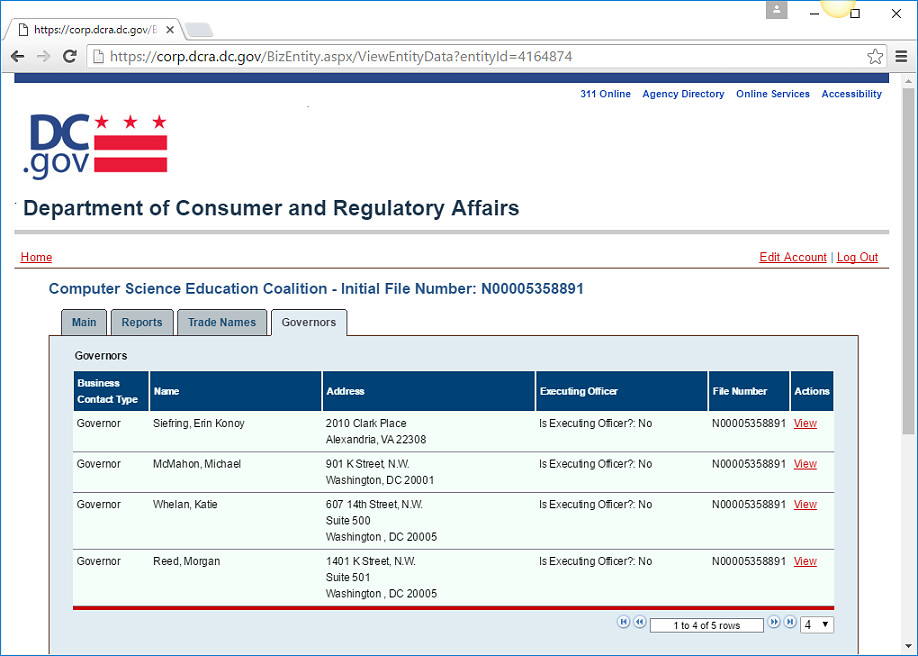
theodp writes: Last week, Microsoft and some of the biggest names in tech and corporate America threw their weight behind a Change.org petition that urged Congress to fund K-12 Computer Science education. The petition, started by the tech-backed CS Education Coalition (btw, 901 K Street NW is Microsoft's DC HQ) in partnership with tech-backed Code.org, now has 90,000+ supporters. But three years ago, Microsoft backed a very different Change.org petition that called for corporate America to foot the STEM education bill.
"While the need to expand high-skilled immigration is immediate," read the letter to Congress, "we also need to expand STEM opportunities in U.S. education. A positive proposal has emerged in Washington to create a national STEM education fund, paid for only by businesses using green cards and visas. This fund will help prepare Americans for 21st-century STEM jobs. The proposal is supported by a broad coalition [PDF] that includes Microsoft, GE, the National Council of La Raza, the National Association of Manufactures, and the National Science Teachers Association, to name a few."
The earlier petition, which wound up with 41,009 supporters, was started by Voices for Innovation, a self-described "Microsoft supported community" that says it's now "proud to support the Computer Science Education Coalition" as part of its efforts to "shape public policies for our 21st century digital economy and society." So, what changed? Well, Mother Jones did warn that what Microsoft promises and what it delivers for education isn't necessarily the same... -
Robots Battle In 25th Annual FIRST Competition (vice.com)
An anonymous reader quotes a report from Vice: Saturday marked the conclusion of the 2016 FIRST Robotics Competition, which saw over 20,000 high school students from around the world descend on St. Louis, Missouri... 900 teams pitted their robots against one another in various games... The ultimate robotics test occurred in the championship round, known as the FIRST Stronghold, which involves two alliances composed of three robots each. At each end of a pitch are two towers, representing each alliance's stronghold. The alliances must breach their opponent's stronghold by throwing boulders to goals on the tower to weaken it. There's some embedded videos from the event in Vice's article, which points out that it's the competition's 25th anniversary. (Here's Slashdot's post about the event from 2004). This year 40,000 people attended, including will.i.am and NASA Administrator Charles Bolden. -
Apple's Smartwatch Draws Competition And A Very Bad Review (businessinsider.com)
Apple's share of the smartwatch market actually started declining in 2016, dropping down to just 52.4% (down from 63%), according to Business Insider. And following up on Apple's first drop in earnings in over 10 years, Slashdot reader Zanadou shares a Gizmodo's latest story about the Apple Watch.
"I stopped wearing it two months ago, and I'm not sure if I'll ever wear it again. That's because it doesn't really do anything that anyone needs, and even when it does, it doesn't always work like it's supposed to. Here are some things I learned over the past year of strapping the screen vibrator to my wrist."
The article describes wanting to try a new form factor, but ending up confused by the watch's two-button interface (where the buttons perform multiple functions). Gizmodo's writer complains that "there's literally no comfortable way to actually use it," and while he did appreciate things like the time-of-sunrise feature and the ability to read text messages on your wrist, most Apple Watch apps "just end up being a shell of the iPhone app". And worst of all, it was difficult to use the watch to actually tell time, since "the screen doesn't always turn on when you raise your wrist like it's supposed to." -
Australia: VPN Users Aren't Breaching Copyright (abc.net.au)
Slashdot reader Zanadou writes: The Australian Government Productivity Commission in a draft report recommended that Australian consumers should be able to legally circumvent geoblocking restrictions that have prevented them from using foreign online streaming services like Netflix, and that the Australian Government needs to send a clear message that it is not an infringement of copyright for consumers to be able evade geoblocking technology. Karen Chester, a commissioner with the Productivity Commission, told the Australian Broadcasting Corporation that geoblocking restrictions have the opposite effect of encouraging internet piracy. "Making copyright material more accessible and more competitively priced online, and not geoblocking, is the best antidote to copyright infringement."
In probably related news, Australia topped the list of countries who illegally downloaded the Game Of Thrones season six premiere, this week.
In January Netflix's chief product officer admitted that the company has no magic solution to subscribers who use VPNs to circumvent geoblocking. -
Humble Bundle Announces 'Hacker' Pay-What-You-Want Sale (humblebundle.com)
An anonymous reader writes: Humble Bundle announced a special "pay what you want" sale for four ebooks from No Starch Press, with proceeds going to the Electronic Frontier Foundation (or to the charity of your choice). This "hacker edition" sale includes two relatively new titles from 2015 -- "Automate the Boring Stuff with Python" and Violet Blue's "Smart Girl's Guide to Privacy," as well as "Hacking the Xbox: An Introduction to Reverse Engineering" by Andrew "bunnie" Huang, and "The Linux Command Line".
Hackers who are willing to pay "more than the average" -- currently $14.87 -- can also unlock a set of five more books, which includes "The Maker's Guide to the Zombie Apocalypse: Defend Your Base with Simple Circuits, Arduino, and Raspberry Pi". (This level also includes "Bitcoin for the Befuddled" and "Designing BSD Rootkits: An Introduction to Kernel Hacking".) And at the $15 level -- just 13 cents more -- four additional books are unlocked. "Practical Malware Analysis: The Hands-On Guide to Dissecting Malicious Software" is available at this level, as well as "Hacking: The Art of Exploitation" and "Black Hat Python."
Nice to see they've already sold 28,506 bundles, which are DRM-free and available in PDF, EPUB, and MOBI format. (I still remember Slashdot's 2012 interview with Make magazine's Andrew "bunnie" Huang, who Samzenpus described as "one of the most famous hardware and software hackers in the world.") -
Yahoo's Marissa Mayer In Line For $55M Severance If Fired Within A Year Of Sale (nytimes.com)
whoever57 writes: A Securities and Exchange Commission (SEC) filing on Friday revealed that Yahoo's board has agreed to a $55 million severance package for Marissa Mayer if she loses her job within a year of a sale. That's a lot of money for a chief executive who hasn't been able to keep Yahoo's stock from falling. In 2015, the value of Yahoo's stock fell by 33%. Worth noting: most of the money from the severance package is composed of restricted stock units and options -- there's only $3 million in cold hard cash. Also, Yahoo revealed Mayer received a significant pay cut last year. Her "reported pay" was $36 million, but her "realized pay" is closer to $14 million. -
Devuan Releases Beta of Systemd-Free 'Debian Fork' Base System (devuan.org)
jaromil writes: Devuan beta is released today, following up the Debian fork declaration and progress made during the past two years. Devuan now provides an alternative upgrade path to Debian, and switching is easy from both Wheezy and Jessie. From The Register: "Devuan came into being after a rebellion by a self-described 'Veteran Unix Admin collective' argued that Debian had betrayed its roots and was becoming too desktop-oriented. The item to which they objected most vigorously was the inclusion of the systemd bootloader. The rebels therefore decided to fork Debian and 'preserve Init freedom.' The group renamed itself and its distribution 'Devuan' and got work, promising a fork that looked, felt, and quacked like Debian in all regards other than imposing systemd as the default Init option." -
Devuan Releases Beta of Systemd-Free 'Debian Fork' Base System (devuan.org)
jaromil writes: Devuan beta is released today, following up the Debian fork declaration and progress made during the past two years. Devuan now provides an alternative upgrade path to Debian, and switching is easy from both Wheezy and Jessie. From The Register: "Devuan came into being after a rebellion by a self-described 'Veteran Unix Admin collective' argued that Debian had betrayed its roots and was becoming too desktop-oriented. The item to which they objected most vigorously was the inclusion of the systemd bootloader. The rebels therefore decided to fork Debian and 'preserve Init freedom.' The group renamed itself and its distribution 'Devuan' and got work, promising a fork that looked, felt, and quacked like Debian in all regards other than imposing systemd as the default Init option." -
Billionaire Investor Carl Icahn Sells Entire Stake In Apple (theguardian.com)
An anonymous reader writes: Billionaire activist investor Carl Icahn said he has sold his entire stake in Apple, citing the risk of China's influence on the stock. The report comes after Apple announced its first earnings decline in more than a decade, where Apple's revenue is dropping 26% year-over-year. Icahn is concerned with the barriers to trade that China's authoritarian regime might put in place. Icahn said he wasn't concerned with interference so much with the country's "relationship" with Apple. "The thing that I'm worried about here in China doesn't affect the whole market. I'm not talking about China's economic status right now. I'm talking about, could the thing with Apple escalate a little bit? And if that does, what does that mean to Apple's profits during the interim?" Icahn acquired a stake in the company almost three years ago, calling the investment a "no brainer." What caused him to sell his 45.8 million Apple shares (priced at $240 a share) was China's economic slowdown and worries about how China could become more prohibitive in doing business. -
Google Files Patent For Injecting A Device Directly Into Your Eyeball (gizmodo.com)
An anonymous reader writes: It's no secret Google and their parent company Alphabet are interested in developing smart contact lenses for monitoring diabetes. Well, Google-parent Alphabet has filed a patent which takes their development to another level. The patent specifically covers a method for "injecting a fluid into a lens capsule of an eye, wherein a natural lens of the eye has been removed from the lens capsule." It's powered by "radio frequency energy" received by a small antenna inside. The gadget even has its own data storage. Forbes reports, it is designed to help the focusing of light onto the retina, resulting in the correction of poor vision. Samsung is one of the most recent companies to receive a patent for smart contact lenses. Their lenses are for experimenting with new methods of delivering augmented reality interfaces and data. -
Google Files Patent For Injecting A Device Directly Into Your Eyeball (gizmodo.com)
An anonymous reader writes: It's no secret Google and their parent company Alphabet are interested in developing smart contact lenses for monitoring diabetes. Well, Google-parent Alphabet has filed a patent which takes their development to another level. The patent specifically covers a method for "injecting a fluid into a lens capsule of an eye, wherein a natural lens of the eye has been removed from the lens capsule." It's powered by "radio frequency energy" received by a small antenna inside. The gadget even has its own data storage. Forbes reports, it is designed to help the focusing of light onto the retina, resulting in the correction of poor vision. Samsung is one of the most recent companies to receive a patent for smart contact lenses. Their lenses are for experimenting with new methods of delivering augmented reality interfaces and data. -
Cable Industry Threatens To Sue If FCC Tries To Bring Competition To Cable Set Top Boxes (techdirt.com)
An anonymous reader quotes a report from Techdirt: Back in February the FCC voted on a new plan to open up the traditional cable box to competition. According to a fact sheet being circulated by the agency (pdf), under the FCC's plan you'd still pay your cable company for the exact same content, cable operators would simply have to design systems -- using standards and copy protection of their choice -- that delivered this content to third-party hardware. The FCC's goal is cheaper, better hardware and a shift away from the insular gatekeeper model the cable box has long protected. Given this would obliterate a $21 billion captive market in set top box rental fees -- and likely direct consumers to more third-party streaming services -- the cable industry has been engaged in an utterly adorable new hissy fit. And now, the industry is also threatening a lawsuit. Former FCC boss turned top cable lobbyist Michael Powell is arguing that the FCC has once again overstepped its regulatory authority: "An agency of limited jurisdiction has to act properly within that jurisdiction," Powell said, making it abundantly clear the NCTA does not believe the FCC has not done so in this case. He said that the statute empowers the FCC to create competition in navigation devices, not new services. "Every problem does not empower an FCC-directed solution. The agency is not an agency with unbridled plenary power to roam around markets and decide to go fix inconveniences everywhere they find them irrespective of the bounds of their authority." -
Intel Cuts Atom Chips, Basically Giving Up On Smartphone and Tablet Market (pcworld.com)
Intel, the marquee PC chipmaker, has long struggled to get a foothold in the smartphone market. The company, which was late in joining the mobile platform, is still playing catchup with Qualcomm and MediaTek. And it appears it's finally giving up on this ambition. The company is "immediately canceling" Atom chips, code-named Sofia and Broxton, for mobile devices, reports PCWorld, citing a company's spokesperson. The publication reports:Intel's mobile chip roadmap now has a giant hole after the cancellation of the chips. Intel's existing smartphone and tablet-only chips are aging and due for upgrades, and no major replacements are in sight. Sofia is already shipping, and Broxton was due to ship this year but had been delayed. Intel is also discontinuing its Atom X5 line of tablet chips code-named Cherry Trail, which is being replaced by Pentium and Celeron chips code-named Apollo Lake, aimed more at hybrids than pure tablets. Many PC makers are already choosing Intel's Skylake Core M processors over Cherry Trail for hybrids and PC-like tablets.The announcement comes days after its CEO outlined the company's future vision, and a week after the chipmaker let go 12,000 people. -
Intel Cuts Atom Chips, Basically Giving Up On Smartphone and Tablet Market (pcworld.com)
Intel, the marquee PC chipmaker, has long struggled to get a foothold in the smartphone market. The company, which was late in joining the mobile platform, is still playing catchup with Qualcomm and MediaTek. And it appears it's finally giving up on this ambition. The company is "immediately canceling" Atom chips, code-named Sofia and Broxton, for mobile devices, reports PCWorld, citing a company's spokesperson. The publication reports:Intel's mobile chip roadmap now has a giant hole after the cancellation of the chips. Intel's existing smartphone and tablet-only chips are aging and due for upgrades, and no major replacements are in sight. Sofia is already shipping, and Broxton was due to ship this year but had been delayed. Intel is also discontinuing its Atom X5 line of tablet chips code-named Cherry Trail, which is being replaced by Pentium and Celeron chips code-named Apollo Lake, aimed more at hybrids than pure tablets. Many PC makers are already choosing Intel's Skylake Core M processors over Cherry Trail for hybrids and PC-like tablets.The announcement comes days after its CEO outlined the company's future vision, and a week after the chipmaker let go 12,000 people. -
Slashdot Asks: What's Your View On Benchmark Apps?
There's no doubt that benchmark apps help you evaluate different aspects of a product, but do they paint a complete picture? Should we utterly rely on benchmark apps to assess the performance and quality of a product or service? Vlad Savov of The Verge makes an interesting point. He notes that DxOMark (a hugely popular benchmark app for testing a camera) rating of HTC 10's camera sensor is equal to that of Samsung's Galaxy S7, however, in real life shooting, the Galaxy S7's shooter offers a far superior result. "I've used both extensively and I can tell you that's simply not the case -- the S7 is outstanding whereas the 10 is merely good." He offers another example: If a laptop or a phone does well in a web-browsing battery benchmark, that only gives an indication that it would probably fare decently when handling bigger workloads too. But not always. My good friend Anand Shimpi, formerly of AnandTech, once articulated this very well by pointing out how the MacBook Pro had better battery life than the MacBook Air -- which was hailed as the endurance champ -- when the use changed to consistently heavy workloads. The Pro was more efficient in that scenario, but most battery tests aren't sophisticated or dynamic enough to account for that nuance. It takes a person running multiple tests, analyzing the data, and adding context and understanding to achieve the highest degree of certainty. The problem is -- more often than not -- gadget reviewers treat these values as the most important signal when judging a product, which in turn, also influences several readers' opinion. What's your take on this? -
Slashdot Asks: What's Your View On Benchmark Apps?
There's no doubt that benchmark apps help you evaluate different aspects of a product, but do they paint a complete picture? Should we utterly rely on benchmark apps to assess the performance and quality of a product or service? Vlad Savov of The Verge makes an interesting point. He notes that DxOMark (a hugely popular benchmark app for testing a camera) rating of HTC 10's camera sensor is equal to that of Samsung's Galaxy S7, however, in real life shooting, the Galaxy S7's shooter offers a far superior result. "I've used both extensively and I can tell you that's simply not the case -- the S7 is outstanding whereas the 10 is merely good." He offers another example: If a laptop or a phone does well in a web-browsing battery benchmark, that only gives an indication that it would probably fare decently when handling bigger workloads too. But not always. My good friend Anand Shimpi, formerly of AnandTech, once articulated this very well by pointing out how the MacBook Pro had better battery life than the MacBook Air -- which was hailed as the endurance champ -- when the use changed to consistently heavy workloads. The Pro was more efficient in that scenario, but most battery tests aren't sophisticated or dynamic enough to account for that nuance. It takes a person running multiple tests, analyzing the data, and adding context and understanding to achieve the highest degree of certainty. The problem is -- more often than not -- gadget reviewers treat these values as the most important signal when judging a product, which in turn, also influences several readers' opinion. What's your take on this? -
Microsoft Flow -- An IFTTT Alternative -- Aims To Connect Your Online Apps (fortune.com)
An anonymous user writes: Microsoft has unveiled a new product called Microsoft Flow, which is designed to better connect diverse services so that you could, if you were so inclined, put all your tweets into a spreadsheet or get an SMS alert when you receive an email. That example may be a solution in search of a problem, but there are other more useful possibilities. Flow could be set up so that any email from your boss triggers an SMS notification to your phone, for example. Or you could make sure any updated work documents get deposited in your team's SharePoint. To be sure, Microsoft is not first to this app-integration party. Many people already use If This Then That (IFTTT) or Zapier, which claims more than 500 app integrations, to knit their services together.Some IFTTT users must be breathing a sigh of relief.