Slashdot Mirror
Domain: stanford.edu
Stories and comments across the archive that link to stanford.edu.
Comments · 4,853
-
Knuth's Literate Programming.
Before all else, learn Literature Programming, in the style invented by Don Knuth.
We use nuweb---it works with any language.
-
Discrete Math: Foundation of Computer ScienceThe best approach to learning information technology is to first learn the foundation of the technology. In other words, study the following.
1. Discrete Mathematics (recommended textbook: Discrete Mathematics by Kenneth A. Ross and Charles R. Wright)
2. Finite Automata and Computability (recommended textbook: Introduction to Automata Theory, Languages, and Computation by John E. Hopcroft, Rajeev Motwani and Jeffrey D. Ullman)Technologists who understand the fundamental theory can generally write more elegant, more efficient computer programs than pseudo-technologists who are ignorant of the science in computer science.
Once you have trained your mind on the fundamental theory, you will discover that most information technologies are quite simplistic.
Finally, one often overlooked subject is English. Learn to write and speak well in English. It is the fundamental mode of communication in the world of advanced science and technology. You may have great ideas, but if you cannot them to your English-speaking peers, then you are no better than a pseudo-technologist.
-
John McCarthy quote
"Examples of philosophical work relevant to AI (besides mathematical logic) include the work of Frege (sense and denotation), Gödel (modern mathematical Platonism), Tarski (theory of truth), Quine (ontology and bound variables), Putnam (natural kinds), Hintikka (formalization of facts about knowledge), Montague (paradoxes of intensionality), Kripke (semantics of modality), Gettier (examples on intensionality), Grice (conversational implicatures), and Searle (performatives)." John McCarthy
-
Re:bugs, so what?
The Computer Modern fonts (as used in TeX) are perfect! Or, at least, perfect enough that "These fonts are never going to change again". I think the same thing is also true of TeX itself, but I may be wrong.
-
Piled Higher and Deeper
For fans of PhD Comics, Mark Cutkosky was artist Jorge Cham's advisor.
-
This works even better than the article saysCutkowsky has had this technology working for several years now. It's not just for glass; it works on many other building surfaces, too, like concrete walls. It doesn't require a smooth surface. They've had robots climbing up buildings at Stanford for a while now.
Here's the web site for the project.
They have a new and powerful fabrication technique, too. They use a stereolithography machine to make their parts, but they use it in an unusual way. They use a machine that's intended to make multicolored objects from several different colored materials, and load it up with materials with different physical and electrical properties. So they can make a one-piece 3D part with soft parts and hard parts, or insulating parts and conductive parts. This is the beginning of a whole new kind of fabrication, which is what Cutkowsky is really into.
-
video url
the site's not loading for me in firefox (it says infinite redirect loop, though it works in *spit* MSIE)
here's the video URL:
http://bdml.stanford.edu/twiki/pub/Main/StickyBot/ Stickybot_040106.mov -
Re:Radioactive plumes
A properly operating power plant does not release any radioactive particles.
It does produce neutrinos, which should count as radioactive particles, despite very low interaction rates. These are remotely detectable. For example, the Kamland experiment measures neutrinos from multiple reactors across Japan and neighboring countries. -
Re:Battery life...
A camera that could Auto-focus without any moving, mechanical parts
I'm not sure if that would work.
Maybe not with this kind of technology, but it's already been done: Light Field Photography with a Hand-Held Plenoptic Camera. Check out the videos at the bottom of the page - digital refocusing of still images is just awesome.
-
Old School?
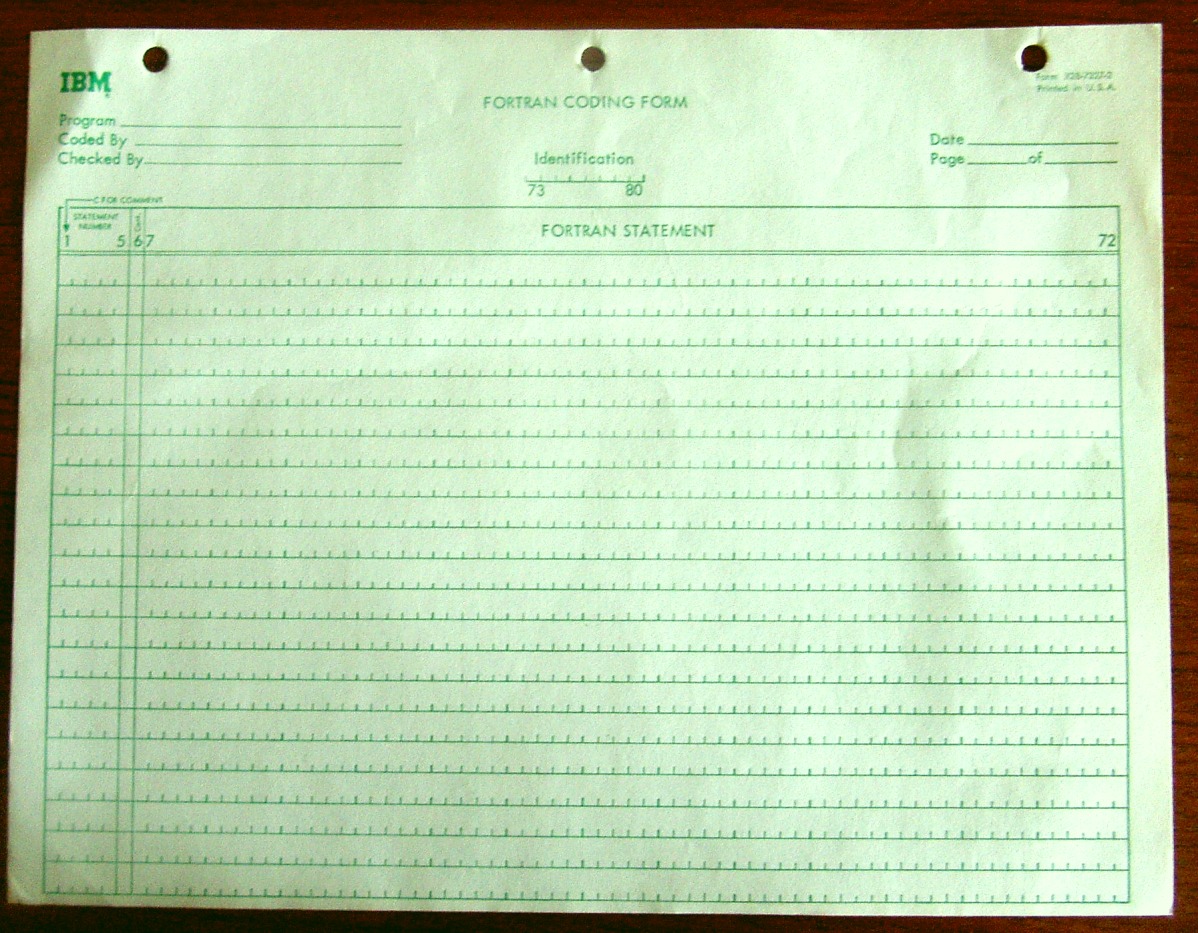
When I was your age, we didn't have no fancy IDEs. We used Coding Forms. And we LIKED it.
-
This is great news!!!
A true advance in science
I've always wanted to know what Snoopy's voice sounded like....you never hear him talk in the cartoons. Now thanks to this revolutionary skeletal analysis technique, hearing his voice is within our reach.
And after that, I'd like them to map out Morn from Deep Space Nine. He never spoke either.
Great mysteries are about to be solved.
However, when this work is complete, these guys can devote their spare cycles to folding protiens..another worthy cause. -
Re:protein modelling
Are you refering to this?
Folding at Home -
Re:Focus, DAMN IT!
Having that many extra pixels allows one to capture higher resolution light fields and thus allow for after-the-fact refocusing:
http://graphics.stanford.edu/papers/lfcamera/ -
Re:$ick $cience
-
While we're at it..
http://www.enterprisemission.com/
http://www.xenotechresearch.com/
http://www.coasttocoastam.com/
http://www.divinecosmos.com/
http://www.haarp.alaska.edu/
http://einstein.stanford.edu/
http://www.biocybernaut.com/
http://www.lod.org/
http://noosphere.princeton.edu/
http://www.sitchin.com/
http://www.lenr-canr.org/
http://www.zptech.net/
http://www.un.org/depts/dhl/dag/meditationroom.htm
http://www.starchildproject.com/
That should keep everybody busy -
Re:Cold Books vs. Cozy Booksdon't suffer from bugs or require updates
Aside from pointing out college texts that would like you to update every few years, many books do in fact contain "bugs", or factual errors, and do in fact have "updates", also known as "errata". In fact, I can link to an example, where the author has offered cash rewards for pointing out bugs, and the errata he has posted on the web since it is easier than distributing updates. Previously, a leaflet sometimes would be distributed with a book listing errors and corrections.
-
Re:RTFC
Actually some of the Google search algoritm is published, see: http://www.db.stanford.edu/~backrub/google.html (http://www.db.stanford.edu/~backrub/google.html)
-
Stanford game better than a scavenger hunt
This game, played at Stanford, is much cooler than a scavenger hunt.
-
Read the brief and the decisionYou can find the brief and a copy of the circuit court's decision . The brief argues (on page 31) "The trial court unconstitutionally punished McDanel for the content of his email and website. As the court applied 18 U.S.C. 1030 to McDanel, this verdict singles out the viewpoint McDanel expressed and the information he disclosed, that Tornado security is flawed, for criminal sanction. The First Amendment prohibits this conviction based on McDanel's speech."
Interestingly, the circuit court remanded the case back to district court with the order that the case be dismissed with prejudice for lack of evidence.
I would say that Ms. Granick is quite qualified to make the submissions which seem to be well thought out.
-
Read the brief and the decisionYou can find the brief and a copy of the circuit court's decision . The brief argues (on page 31) "The trial court unconstitutionally punished McDanel for the content of his email and website. As the court applied 18 U.S.C. 1030 to McDanel, this verdict singles out the viewpoint McDanel expressed and the information he disclosed, that Tornado security is flawed, for criminal sanction. The First Amendment prohibits this conviction based on McDanel's speech."
Interestingly, the circuit court remanded the case back to district court with the order that the case be dismissed with prejudice for lack of evidence.
I would say that Ms. Granick is quite qualified to make the submissions which seem to be well thought out.
-
Re:Polish politeness.
As a coder (you can't rule out C++ and lisp knowledge) and a mathematician (well, not really graduated, yet) I can say that programming and maths have a lot in common. In fact, math is harder, and after doing some higher maths, you will surely be a better coder. Maths expands your mind.
However, coding has (almost) nothing to do with what is normally seen as maths, it's not like algebra, it's not calculus, and is not linear algebra either (most of the time). In that sense you're totally right. The current emphasis in that math == calculus is, in my mind, just wrong, given current market trends.
I would like to see a more computer science oriented maths curriculum.
Maths are behind everything. Logic is a part of maths. The theory used to manage concurrent programming is, guess what? A mathematical model.
Regular grammars, and by extension, regular expressions are a part of mathematics. Don't tell me you don't use regular expressions in your code. At least, I do.
Most of the maths you need when coding are found in the book Concrete Mathematics by Knuth. And what is found in this book is also very different to what is normally teached as maths.
So, yes, if you know what maths really are (if math teachers knew about programming), coding has a lot to do with mathematics. -
Fair Use is subjective, not a broad brush
I don't know why I'm really bothering since you're so unable to express yourself you had to use "fuck" almost a half dozen times in one paragraph, but here goes.
Jeezus, umpty billion people in this thread have pointed out the concept of Fair Use (It's the same as you photocopying one page of a book at a uni library to use in a school assignment), and yet the Apple Fanbois, yes, including you, moron, continue to fucking bleat about how fair and innocent and morally fucking righteous Apple is.
Or I read Standford University's webpage on Fair Use. Emphasis added:
Fair use is a copyright principle based on the belief that the public is entitled to freely use portions of copyrighted materials forpurposes of commentary and criticism. For example, if you wish to criticize a novelist, you should have the freedom to quote a portion of the novelist's work without asking permission. Absent this freedom, copyright owners could stifle any negative comments about their work.
Unfortunately, if the copyright owner disagrees with your fair use interpretation, the dispute will have to be resolved by courts or arbitration. If it's not a fair use, then you are infringing upon the rights of the copyright owner and may be liable for damages.
The only guidance is provided by a set of fair use factors outlined in the copyright law. These factors are weighed in each case to determine whether a use qualifies as a fair use. For example, one important factor is whether your use will deprive the copyright owner of income. Unfortunately, weighing the fair use factors is often quite subjective. For this reason, the fair use road map is often tricky to navigate. -
In other words
In other words, your tax dollar at work via the US Navy and HAARP Project.
-
Re:Wake me up when...
So you want a completely detailed model of the world, down to bricks and individual grains of sand?
You want it all be simulated with physics so that you can interact with everything in a plausible way?
Well, I can tell you that any one of these things currently is a struggle to get to work at all,
even assuming you are willing to wait hours per frame. You want a pile of thousands of bricks
falling into a pile, with correct collision detection? This is an area of active research.
http://www.cs.cmu.edu/~djames/
You want the water on the beach to swirl and splash?
How about a piece of paper that you can burn?
Again, a challenging set of problems that we are just beginning to solve in a way that looks good.
http://graphics.stanford.edu/~fedkiw/
How about the snot you pull out of your nose?
You want to pick your nose and have the snot squish in a gooey fashion?
We can do it, but just barely, if you want to wait all week for a few seconds of animation.
http://www.cs.berkeley.edu/b-cam/Papers/Goktekin-2 004-AMF/index.html
Now, what you want is to combine all these simulations, plus many more.
Also you want it to run in real time on a desktop PC.
I predict we will have this in 50 years, and that is being extremely optimistic.
If Moore's law is really ending, then maybe much longer.
Hardware physics cards may be just the thing we need to make it possible one day. -
Link to an abstract of a seminar on the subject...
http://math.stanford.edu/~applmath/spring06/graem
e .htm
"The hope of using cloaking to see the interior of an object by making half of it invisible remains an intriguing possibility." -
Not just for 'looking-into-camera' POV!!There are a number seriously neat tricks you can do by distributing the sensing area across a large number of small imagers:
- approximate a conventional single center of projection video camera (the obvious application)
- change the properties of the output to achieve high performance in one or more conventional camera parameters, such as resolution, dynamic range, frame rate (by sampling from every other/every third/etc. camera with small time delays, at the expense of overall resolution), and/or large aperture.
- interpolate new virtual cameras (matrix-shot style) to pan around a moving subject (limited by the screen/camera array size)
- create shots with different camera setings (appropriate to the local conditions) in different parts of the frame - high frame rate where there's fast motion, varying brightness/contrast/dymanic range where detail would otherwise be lost in flares/shadow etc etc...
There's a research project here where they set up 100 cheap-o webcams in just such an array. (I assume Stanford can handle a light slashdotting...)
The video demonstrating its capabilities is quite something
Seriously you lot - take a look - as a long time lurker on
(umm.. *nervously looks around* -=FIRST POST w000t!=- *ducks behind monitor*) -
Not just for 'looking-into-camera' POV!!There are a number seriously neat tricks you can do by distributing the sensing area across a large number of small imagers:
- approximate a conventional single center of projection video camera (the obvious application)
- change the properties of the output to achieve high performance in one or more conventional camera parameters, such as resolution, dynamic range, frame rate (by sampling from every other/every third/etc. camera with small time delays, at the expense of overall resolution), and/or large aperture.
- interpolate new virtual cameras (matrix-shot style) to pan around a moving subject (limited by the screen/camera array size)
- create shots with different camera setings (appropriate to the local conditions) in different parts of the frame - high frame rate where there's fast motion, varying brightness/contrast/dymanic range where detail would otherwise be lost in flares/shadow etc etc...
There's a research project here where they set up 100 cheap-o webcams in just such an array. (I assume Stanford can handle a light slashdotting...)
The video demonstrating its capabilities is quite something
Seriously you lot - take a look - as a long time lurker on
(umm.. *nervously looks around* -=FIRST POST w000t!=- *ducks behind monitor*) -
Re:Bloodbank tech says: YEEEHAH!!!!!
And here is another way to stretch the blood supply Automated Blood Collection. So next time instead of giving whole blood, check out apheresis, and see your donation go to help more people, more often.
Boosting the parent visibility - this is a good idea.
-
Re:Bloodbank tech says: YEEEHAH!!!!!And here is another way to stretch the blood supply Automated Blood Collection.
So next time instead of giving whole blood, check out apheresis, and see your donation go to help more people, more often.
-
Re:How did it get there?
"The purpose of science should be to find the truth"
Ah, yes truth..... There is a difference between "supernatural" and unexplained but many people see them as the same thing.
"Until science _disproves_ something"
Science does not "disprove" anything, I mean how would you prove to me that pigs can't fly? -
Re:This is what I think about ARS
Both musical scores and performances can be copyrighted. So, for instance, although the works of Bach and Mozart are outside copyright, I can't sample the Boston Philharmonic's performances of said works. For a given song, you have the musical score, the lyrics, and the performance. Each of the three pieces can have separate copyrights associated with them. The musical score seems to be the most fragile though.
Although, the Beastie Boys recently pushed the boundaries apparently regarding three notes they sampled—perhaps the shortest sampling of a sequence of notes successfully defended under copyright law that still required deep litigation to settle. The narrow victory should give all artists pause.
--Joe
-
Re:Seti stats...
I'm doing Folding@Home, myself. I don't mind spare capacity being used, but I was thinking more selfishly, I'll have to admit
Flight simulation might be fun. Not just the graphics: air turbulance, AI for other aircraft, birds, etcetera... -
Does it really matter?I just watched the former Intel chief architect Bob Colwell's talk on architect. In it he raise a very good point-
Don't expect to sell your first generation of platform (or architect). It sucks. You know it, the customers know it. Instead use it as a phototype to get feedbacks from.
Maybe something that sounded like a good idea doesn't work in real life. Maybe something that was left out in the production is essential to the success. You wouldn't know unless you start selling your product.
Concentrate on making your second generation better.
-
Re:Too True
I remember reading a report on wind a few years back saying that if the entire land surface of the earth was evenly coated with windmills (0.5 Km separation) we would meet approximately 20% of of our total power needs.
I'm sorry, but you're talking out of your ass. I can counter your report with several more credible reports that say covering the Dakotas, Nebraska, and Kansas completely with windmills would meet 100% of the United States energy needs, and that total wind potential globally exceeds global energy demand (cites here and here).
Nuclear is the most environmentally friendly way to go.
No, it's not. I'll concede that the designs of modern nuclear reactors and advances in fuel recycling have significantly decreased the negative environmental effects of nuclear energy, but not enough to declare it "the most environmentally friendly" energy source.
Energy efficiency and conservation should be the top priority of any sane energy policy, beginning with improvements in generation efficiency and transmission. 67% of the energy output of power plants is lost in conversion to electricity, and another 9% is lost in transmission and distribution (graph). Eliminating even a fraction of that loss could eliminate the need for new power plants for decades. -
Great Words From Jobs
By your logic you should be looking for a minimum wage untrained labor job as those will be opening up fast if the feds continue to crack down. I would recommend reading Steve Jobs commencement speech given last year at Stanford if you are seriously considering computer science. I love it. I am a CS mater's candidate and the future looks very bright. But I love the feild and that makes all the difference. here's the link: http://news-service.stanford.edu/news/2005/june15
/ jobs-061505.html good luck in whatever you do. -
Re:We're saved!
For those of you who were born stupid, the emission of radiation by spark gaps was first discovered by Heinrich Rudolf Hertz - the same one that the Hertz in megahertz is named after - back in 1887. It was Wilhelm Conrad Roentgen who discovered that this phenomenon could be used to produce X-rays in 1895 Here is a paper on building an Xray tube USING SPARK PLUGS. http://scitation.aip.org/getabs/servlet/GetabsSer
v let?prog=normal&id=RSINAK000072000010003983000001& idtype=cvips&gifs=yes Here are several scientific papers on the production of X-rays by spark gaps in various gaseous media. http://www.slac.stanford.edu/pubs/icfa/fall97/pape r2/paper2.pdf http://www.webcom.com/sknkwrks/xray.htm http://www.electrotherapymuseum.com/_PatentLibrary /_FischerXRaySparkGap/index.htm Morons. -
Re:64bit ain't all it's cracked up to be..
It's because of the pagetables. AMD added another level to take the page tables to a 52bit physical address space. The page table entries are compatible with PAE, which most OS's already support. x86 is 3 level, x86-64 is 4 level.
There's space in the page table entries to handle 64 bits, but adding extra levels to the translation probably has a performance impact. There's still debate about the best way to do 64 bit address translation, and 52 bits is plenty for now. And when they change, it will only affect the bits of the OS that handle paging, user application and even device drives will always see a flat 64 bit virtual address space.
Like all of x86-64, it's a designed for a subtle mix of good performance in the short term and a painless upgrade path for current OS kernels, without really compromising anything in the long term. -
Speaking of Relativity
This isn't the only testing that NASA is doing of Einstein's theories. For those that are interested, there is also the Gravity Probe-B. Really interesting stuff!
-
We are no where near peak uranium.
-
This is a none issue
Even without running breeder reactors (which I suspect that a president will soon override the JC ban), we have plenty. When some places speak of running out, they are speaking of high-grade veins. There are loads of low-grade sites, and it is easy enough to take from the ocean.
Even disregarding all that, we can switch to other supplies such as thorium, which is even more abundant. Basically, nuke (fission today, fusion tomorrow) is the way to go combined with alternative. -
Re:WHHYHHYHY!
it was called the Darknet and the Future of Content Distribution
-
trapped in the linear politicization
It is of little import whether an increase in the mean global temperatures is caused by man made greenhouse gases, natural cyclical events, or a combination of the two. What matters is that the Earth is indeed warming up. Few still argue that it is not.
Within the variation of possible temperatures which could occur on Earth, there is a very small subset of temperature in which human life is possible, which is within a slightly larger subset of temperatures necessary for sustaining higher life forms. It is in the best interests of the future, if we take take the issue of climate change seriously, and there is little harm if we over compensate for the warming trend.
Often, the Contemporary Conservatives and their crony capitalist financial supporters, have attempted to portray greenies, environmental issues and solutions, as being anti-free market, and socialistic. If you believe that our current economic system is a free-market, you are being neoconnived. Corporations receive favorable legislation from the politicians whom they aided financially to get elected. This is quid quo pro protectionism, it is the rapine and defilement of Adam Smith. It is not a free and open process.
The fact that many of the previously proffered plans to mitigate greenhouse gases tilt leftwards in the political bipolarity is that the left-sided have been the ones to seek solutions, while libertarian and true free market conservative policy wonks have not directed their thoughts towards free market solutions.
Neither side of our binary challenged polity has honestly looked at what should have been a bright beacon leading the way: the example of BP, lead by their CEO, Sir John Browne.
"There are real environmental challenges, including climate change, which are unproven but where there is mounting evidence of serious problems.
Denial is the wrong response. But so too is despair, because there are many things we can do.
Technology is moving on, and so thanks to globalization is the spread of knowledge. There is no place better than Stanford to understand the potential of technical progress and the momentum for change which can be created when you link the drive of business with path-breaking scientific research.
That Ink has been at the heart of economic and social progress for the last three hundred years.
The continuing progress of technology and knowledge means that we don't have to accept a trade off between economic growth and a clean environment.
Denial and despair both represent a triumph of pessimism. The reality is that people want both growth and a clean environment -- and the challenge for governments and companies is to give them that choice.
And I believe we can. It is possible to reduce emissions, to change the fuel mix, to improve air quality. But it will only happen if we believe it is possible."
Sir John Browne-BP CEO, "Ernest C. Arbuckle Award Acceptance Speech", Stanford Graduate School of Business, March 6, 2001
In 1997, Browne stunned his alma mater, Stanford Graduate School of Business, when he stated that he was going to make BP green:
Browne established a goal of reducing British Petroleum's carbon dioxide output 10 percent by 2010, a reduction of 30 million tons per year. British Petroleum met this goal of 10 percent reduction in 2002. Browne committed British Petroleum to producing cleaner fuels and cleaning up its production waste. The company improved the efficiency of its turbines and cut down on the flaring of gas at its drilling sites. Browne said that British Petroleum should monitor its carbon dioxide emissions, expand solar energy activities, and support research into causes of global warming. British Petroleum spent $160 million building solar panel plants in California and Spain and $40 million on research into solar power. Browne began having British Petroleum plan
-
Re:Blowing Hot AirFor an interesting speech on global warming and a reasoned discussion from a scientist about the naysayers, you could do worse than listen to the 2004 speech by Robert Dunbar (Oceanographic Climatologist) to the Stanford School. It's available on iTunes at http://itunes.stanford.edu/ - when you get it open in iTunes, go to Faculty Lectures and then look for "Robert Dunbar" in the Artist field.
It's 59 minutes long, but he's clearly a reputable scientist who understands the issues and can debate them reasonably.
Although judging from some comments both here and on some global warming / it's all a myth websites, reasoned debate is the last thing most people who discuss this actually want, unless "reasoned" means "you're reasonable if you agree with everything I say".
-
Why write this in an Opinion Journal?OK, I took a very brief look at this guys paper he mentions in the article. In the abstract he says that he analyzed satellite data and found that higher ground temperatures coincide with a smaller area of sky covered by cirrus clouds. He does not seem to discuss wether or not these smaller areas vary in density and if that affects the ability of the cirrus clouds to deflect infrared light.
Then again, I just glanced at it.We are seeing some parts of the world heating up quite a bit and we are seeing much more extreme weather. We are also seeing a rise in frequency of these extreme weather events (floodings, storms, droughts...).
What I think is vital is to understand how the mechanisms leading to these x-weather events work. What I also think is important is that this collection of knowledge happens fast.
Oh yeah and that mr. Lindzen creates the impression that there is some big conspiracy of the UN and peer review publications to secure public funds for alarmist researchers does not make him look very sane. That and the "[how can] a 1-degree increase in the recorded global mean temperature since the late 19th century possibly gain public acceptance as the source of recent weather catastrophes"-BS.
And to all the "Less public funding"-ravers in this thread a quote from the article: M. Lindzen is Alfred P. Sloan Professor of Atmospheric Science... - This means he is payed by private funds, right?
To me, this should be a case for *more* publicly funded research -
Re:Huh?It's in Capitalism and Freedom by Milton Friedman:
From 1933 to the outbreak of World War II, [Winston] Churchill was not permitted to talk over the British radio, which was, of course, a government monopoly administered by the British Broadcasting Corporation. Here was a leading citizen of his country, a Member of Parliament, a former cabinet minister, a man who was desperately trying by every device possible to persuade his countrymen to take steps to ward off the menace of Hitler's Germany. He was not permitted to talk over the radio to the British people because the BBC was a government monopoly and his position was too "controversial."
That portion of the book is not online, but here's a PDF of On Progress by Thomas Gale Moore quoting that passage. -
Re:My goodness, where to begin...
Sounds to me like you're deliberately abusing the word faith. As I understand it (and as I hear people around me use it) "faith" means "absolute belief regardless of proof."
Nope. Most theologians correctly pair faith and reason together as inextricably tied. Faith is not "absolute belief regardless of proof". Blind faith is "absolute belief regardless of proof". This idea of blind faith was not introduced until well after the enlightenment period by Søren Kierkegaard which he termed a "leap of faith" against reason. This is what many people now equate with any kind of religious faith, or any kind of faith in general, but it is not the traditional western view of faith. Perhaps now the term is charged with that meaning and may be why this debate is a little unclear.
-
Definitions and self-limitations
They do not constitute what I anyway consider genuine artificial intelligence.
So how do you define AI and what is your basis for asserting that is the only acceptable definition?
According to John McCarthy at Computer Science Department of Stanford University http://www-formal.stanford.edu/jmc/whatisai/whatis ai.html/:
It is the science and engineering of making intelligent machines, especially intelligent computer programs. It is related to the similar task of using computers to understand human intelligence, but AI does not have to confine itself to methods that are biologically observable.
He later sates:
Intelligence involves mechanisms, and AI research has discovered how to make computers carry out some of them and not others. If doing a task requires only mechanisms that are well understood today, computer programs can give very impressive performances on these tasks. Such programs should be considered ``somewhat intelligent''.
I'll grant you most of the cutting edge research is not in chatterbots, but under this definition, could you not say that a well made bot chatterbot be "somewhat intelligent"? -
Re:No, no, no...
drats, the link went missing. Stanford as well, for your pleasure. Apologies for double posting.
-
Re:No, no, no...
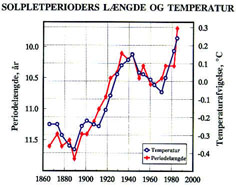
Oh, you mean >like this graph? It comes from Stanford University. Pretty reliable as a source, I'd say. And not too shabby on the correlation, either!
-
Re:No, no, no...
Oh, you mean >like this graph? It comes from Stanford University. Pretty reliable as a source, I'd say. And not too shabby on the correlation, either!