Slashdot Mirror
Domain: suse.de
Stories and comments across the archive that link to suse.de.
Comments · 225
-
"Complicated" ACLs also often supported on Linux
If you look into how modern distros control device permissions (e.g. on
Additionally, a number of Linux security modules (SELinux, Apparmor, TOMOYO) alloow the use of common apps under a MAC model. Fedora really does run out of the box under SELinux after all.
However, I feel that what is needed is the ability to disclaim privileges even when running as a normal user. There is experimental user namespace work on Linux that w allow unprivileged users to create namespaces which may in the future provide such an ability.
-
Re:Ubuntu
Linux also supports detailed ACLs: http://www.suse.de/~agruen/acl/linux-acls/online/
SELinux is more about limiting what applications, not users, are allowed to do. -
Re:Better late than never.Those are called access control lists. They have been around for a long time.
http://www.suse.de/~agruen/acl/linux-acls/online/
Note the date on the document.POSIX Access Control Lists on Linux
This document was generated using the LaTeX2HTML translator Version 2002-2-1 (1.70)
Copyright © 1993, 1994, 1995, 1996, Nikos Drakos, Computer Based Learning Unit, University of Leeds.
Copyright © 1997, 1998, 1999, Ross Moore, Mathematics Department, Macquarie University, Sydney. -
Re:For those who don't know netware ...
-
Re:Not good
-
Re:define very large
ext3 is limited, unless it has LFS (Large File System) support in it. Then, if you have 8k block size, you support much larger than the claimed 8 TB total, 4 Tb files. See http://www.suse.de/~aj/linux_lfs.html for the table at the end of the article, although I believe the table has errors (swaps). Then you also have to have 2.6 kernel, and CONFIG_LBD set.
-
Re:their loss
What about printers? Do the cheap color printers you can buy at any electronics store for windows machines work with Linux yet? How about scanners?
Yes, many printers and scanners work with Linux, including cheap ones.
I'm not saying it's the distros fault, but it is their problem.
It's not a problem; there is more than enough supported hardware available for Linux.
What the distros need to provide is compatibility lists; and, guess what, they do. -
Re:We need to get hardware going autmagically
While I agree for most people installing these drivers is easier under Windows, that is not because the install procedure is easier or faster, but simply because they are accostumed to doing things this way.
No, the install procedure on Windows really is easier and faster.
- go to ati.com or nvidia.com or whatever
- find and download the driver--usually an
- double-click the
- click 'next' a few times
- reboot
- pretty much always works
Compare that to pages like this and this.
And while it's true that very often we need to compile and/or load some modules in most linux distros for these to work, at least they will work.
Really? -
Yes, fix the bugs, BUT ...entire release cycle to fixing long standing bugs
Yes, it's a good idea.
But don't waste time on bugs that only affect legacy hardware.
It would also be a good idea for some effort to be spent on consolidating, corrrecting, and updating the various lists of "Hardware supported by Linux". There are lots of such lists on the web, for example:
- not to mention the distro-specific compatible hardware lists maintained for Redhat, Mandriva,Suse, and others.
We need one correct, maintained list, not dozens of nearly-correct, usually out-of-date lists. And it seems to me that the list should depend only on the kernel version, not on the distro.
-
Re:typing
An alternative input system for Linux is the canna server combined with kinput2. When LC_CTYPE is set to ja_JP.utf8 (on my box), Shift+Space puts me into Japanese input mode.
-
HELP! Japanese input in KDE - How is it possible?How does one setup KDE and X to have Japanese input and kana-to-kanji conversions? The only working method I have for typing kanji is by using the historic kterm and a really old version of a kanji conversion server (cannaserver) which are not very good. I want to be able to start using all the modern KDE applications in Japanese, but for some reason none of them work. Every time I type any romaji text and press the expected henkan keys, my romaji stubbornly remains as romaji and no kanji or kana conversions ever appear.
I have already followed all of Fabian's detailed instructions on how to setup X for Japanese input but it is still not working. Could some kind soul please post a link to a tarfile of all their setup files for KDE/X? e.g. tar zcf jfiles.tgz ~/.kde ~/.xim ~/.login ~/.bashrc And if your system has Japanese support, could you also please post the output of running
LC_CTYPE=ja_JP.UTF-8 locale charmap
and
LC_CTYPE=ja_JP.EUC locale charmap
which on my system both give the very unpromising ANSI_X3.4-1968, apparently meaning no locale support for Japanese, despite having installed the locales-jp packages and GNU locales.
-
Re:Original Test Was More Interesting
Hardware NX is no silver bullet
http://www.suse.de/~krahmer/no-nx.pdf -
Try SUSE, and a note about specsActually, you may be pleasantly surprised:
- I belive SUSE 10.0 supports the Nvidia 6100. Check for yourself here.
- The Eval version of SUSE is free (as in beer) and includes a JRE pre-installed. No hoops.
- When building a system, it pays (both meanings) to find out requirements before purchasing. If you knew ahead of time that Linux was an option, you could research any distro's supported hardware list and by that equipment.
-
Re:Hey, its better than Linux
-
Re:Are you on Drugs? Adios Mod Points...
"Linux" has rwx-rwx-rwx. That's it.
That's simply false, unless for some stupid reason you're using an antiquated filesystem. There is full support for file-system level ACLs in Linux. For example, XFS supports POSIX ACLs, and the SuSE folks include instructions on implementing POSIX ACLs in Linux (pdf) on a couple of different filesystems in their administration guide.
It's not like this is particularly new, either. It's just that you aren't forced to use ACLs, and by default they are configured to be overridden by the traditional mode bits (which, by the way, are surprisingly more powerful in the hands of an expert than many people realize).
Let's try to discuss actual shortfalls in Linux, rather than making them up out of ignorance, hm? -
Re:Are you on Drugs? Adios Mod Points...
In fact, Windows has a vastly, almost prohibitively more elegant security infrastructure than "Linux": File rights of "Full Control, Modify, Read & Execute, Read, Write," file attributes of "Read-Only, Archive, System, Hidden," very finely-grained ACL-based system security "Policies", a global Kerberos-based directory authentication scheme in Active Directory, etc etc etc.
Complexity does not equal elegance. If you find yourself uttering something as foolish as "prohibitively more elegant", you've stumbled into that territory.
"Linux" has rwx-rwx-rwx. That's it. [Now Linux combined with Novell Directory Services and a Novell File System would be an entirely different cup of tea, but that's a whole 'nother discussion. Although, I'd ask: Does Novell even have a "Policies" ACL-based security infrastructure for KDE or GNOME yet? Are they working on such a thing?]
Indeed. It would appear that the world has moved on since you last looked at "Linux" in the 90s. POSIX 1003.1e/1003.2c access control lists: http://www.suse.de/~agruen/acl/linux-acls/online/. -
another to tryI built a 1TB storage device(Software RAID5), using linux, a shuttle box and 5 usb enclosures (250G each)
Parts:- Your favorite linux distro. (I used RH EL4 since i just had finished RHTS class and had a licnese for support)
- an old PC with USB 2.0 , additional controller cards help. (I used a shuttle bare bones kit and extra card)
- some usb enclosure (Belkin makes awsome ones, with fan and built-in powersupply)
Attach your drives
mdadm and lvm2 get familiar with them, you will use the man pages and google.
The only quirky thing will be the scsi emulation for usb under linux will send a REPORT_LUN command, that causes some enclosures to puke. Google REPORT_LUN usb resets or check this link for the basics to disable lun checks scsi-scanning -
There is already an LDAP useradd, etc.
Thorsten Kukuk maintains a pwdutils package that includes LDAP-capable useradd, usermod, chage, etc. for SUSE.
People are begging Red Hat to integrate Thorsten's code into RH Enterprise Linux here. Join the throng and maybe Red Hat will get the thumb out.
You could also consider cpu which includes usermod/useradd functionality.
A lot of sites just use cgi-perl and Graham Barr's perl-LDAP to create a custom web app for this sort of thing. Once you've got an LDAP backend that seamlessly manages password transparency between apache, Active Directory, *nix, and Novell it becomes incredibly easy to set up secure web apps and push low-level system management functions down to people without advanced computer knowledge (like the HR department for example). -
Re:One day it'll be as good as MS Office!But, why the hell does OpenOffice launch so slowly? I mean, really. Gnumeric launches in two seconds. Abiword launches in 4 seconds. OpenOffice (writer or calc) launches in 25 seconds?? An app that starts piggy, feels piggy.
Because it's a large application (it includes lots of cross-platform portability toolkit functions), written in C++. This affects Mozilla and KDE too. More info here.
If you're not using a distro that includes prelinking, you should upgrade. If you are, you should make sure that the prelink process runs regularly.
-
Re:OK - That Does It...
Ok. Video card. You can use the ATI fglrx driver.
Here are the SuSE 9.2 install instructions. Sadly, its not as easy as an NVIDIA card. But you will get hardware 3d and TV out.
http://suse.cbn.net.id/i386/supplementary/X/ATI/su se92/i386/fglrx/8.8.25/
Video capture. Supposedly, you can use the 'Gatos' capture project. This is designed for 2d acceleration, video capture, and several other ATI features. I've never played with it myself, since I've only owned standard radeons, never a AIW.
The site is here:
http://gatos.sourceforge.net/overview.php
But i've been browsing their mailing list, and it doesn't seem like the 9600 is supported. There is a LOT of work being done on it, though, and there are several devel list entries from the beginning of the month.
Sound&Modem, as you already know, will be a breeze.
Your gigabit ethernet card has drivers avaliable from the manufacturers website. This is here: http://www.marvell.com/drivers/driverDisplay.do?dI d=107&pId=10
I'm assuming you meant Yukon, not ukon.
This page here suggests that it is avaliable in the lastest 2.6 kernels (This is Gentoo, not SuSE)
http://64.233.167.104/search?q=cache:3PYpQxdJcwoJ: linuxforums.org/forum/ntopic31345.html+Yukon+SuSE+ 9.2&hl=en&start=16&client=firefox-a
This seems to suggest its in the default install:
http://rpmfind.net/linux/RPM/suse/9.2/i386/lib_mod ules_2.6.8-24.10-bigsmp_kernel_drivers_net_sk98lin _Tree.html
I'm not really sure, as I have little experience with Gigabit ethernet.
The broadcom wireles will present a moderate amount of difficulty, but it can be made to work, and if you are willing to spend a little money, it can be made to work easily. There are no native linux drivers, so you can either use ndiswrapper http://ndiswrapper.sourceforge.net/, which is an opensource project that allows you to use the Windows drivers, or you can use linuxant's Driverloader, avaliable at http://linuxant.com/
The bcm4306 is confirmed supported under both, but I know from experience that driverloader is extremely easy to use, but ndiswrapper is slightly more challenging (still not impossible, but requires editing some configuration files by hand). SuSE has been working on integrating Driverloader into the distribution, but it hasn't happened yet.
Yeah, the floppy, the 7-in-1 usb reader, the DVD drives, etc, will all work without any difficultly. If you intend to use a USB dvd burner in SuSE, you will need to "sudo chmod +u
Here, http://lists.suse.com/archive/suse-amd64/2005-Jan/ 0019.html Someone refers to using your motherboard, and it seems to work properly.
BTW: I've been checking the SuSE hardware database, and it seems to have started working, but it is by no means comprehensive. http://hardwaredb.suse.de/index.php?LANG=en_UK Once again -
Re:The battle continues...
Here's where I step in with a favorite URL - http://kerneltrap.org/node/view/4126 - wherein Linus himself points out that GCC 3.x is a generally worse C compiler, with some advantages in C++ compiling being its only real saving throws.
So because Linus says so, it must be true?
Standard benchmarks, run with the same options, same machine, different GCC versions:
2.95, 3.0, 3.1.
Which has the fastest runtimes?
Now it's quite possible, or perhaps, even likely that the Linux kernel has/had a lot of GCC 2.95-specific optimizations. -
Re:The battle continues...
Here's where I step in with a favorite URL - http://kerneltrap.org/node/view/4126 - wherein Linus himself points out that GCC 3.x is a generally worse C compiler, with some advantages in C++ compiling being its only real saving throws.
So because Linus says so, it must be true?
Standard benchmarks, run with the same options, same machine, different GCC versions:
2.95, 3.0, 3.1.
Which has the fastest runtimes?
Now it's quite possible, or perhaps, even likely that the Linux kernel has/had a lot of GCC 2.95-specific optimizations. -
Re:The battle continues...
Here's where I step in with a favorite URL - http://kerneltrap.org/node/view/4126 - wherein Linus himself points out that GCC 3.x is a generally worse C compiler, with some advantages in C++ compiling being its only real saving throws.
So because Linus says so, it must be true?
Standard benchmarks, run with the same options, same machine, different GCC versions:
2.95, 3.0, 3.1.
Which has the fastest runtimes?
Now it's quite possible, or perhaps, even likely that the Linux kernel has/had a lot of GCC 2.95-specific optimizations. -
Re:Money in OSS?
Your assumption that there are plenty of other profitable open source companies is wrong.
Timesys. MontaVista Software. Trolltech. SuSE. IBM's Linux ventures.
My current employer uses and contributes to open source software, although we're a proprietary software company -- using OSS tools for infrastructure functions saves us money, and contributing back reduces our software maintenance costs. My last employer is a member of the above list. They survived the bust, and I've heard rumors that they've started turning a profit.
Coming from this background, I didn't find this article suprising at all. There's plenty of money in OSS, as long as you're smart about making it. -
No limit?
Of course there are limits on NTFS. Googling reveals the filesize limit to be a theoretical maximum of 16 exabytes.
Fine, fine, I suppose that's effectively unlimited, and I'm just a pedant. (There's a nifty page with a table about the maximum filesizes in Linux filesystems too.)
--grendel -
suse live cd/dvd images also on many http sites
just some examples:
http://ftp-stud.fht-esslingen.de/Mirrors/ftp.suse. com/pub/suse/i386/live-cd-9.2/
http://ftp.gwdg.de/pub/suse/i386/live-cd-9.2/
also check the general mirror list for the servers that serve bits with http.
http://www.suse.de/de/private/download/ftp/ausland
happy downloading -
Re:Screenshots tell you little: Here is the info.
Lets see here is a brief list of some of the main software that I saw on that page. You can find information on those peaces of software at these sites.
Enlightenment Project: http://enlightenment.org/pages/main.html
Evolution: http://www.gnome.org/projects/evolution/
Gnome 2.8:http://www.gnome.org/start/2.8/
KDE 3.3:http://www.kde.org/
Thunderbird 0.8:http://www.mozilla.org/products/thunderbird/re leases/
XPDE 5.1:http://www.xpde.com/
YaST:http://www.suse.de/en/private/products/suse_l inux/prof/yast.html -
Re:Obvious solutionNo it is not. There is no Microsoft Word for Linux, Open Office comes close and I love it to death but its just not ready yet. There is no god dammed Access...
There is. It's just that these apps still need to be licensed if you absolutely can't switch to OpenOffice or Sun's commercial StarOffice. Many distroes, such as SuSE Linux Desktop use Crossover Office and that will run Microsoft Office.
With Codeweaver's Crossover Office you get to run:
Microsoft Office XP, 2000 and 97
Microsoft Word
Microsoft Excel
Microsoft PowerPoint
Microsoft Outlook
Microsoft Internet Explorer
Microsoft Access
Microsoft Project
Adobe Photoshop
Microsoft Visio
Lotus Notes 5.0 and 6.5.1
Quicken
Various Web Browser Plugins
QuickTime
Shockwave Director
Windows Media Player 6.4 though it probably illustrates the power of the API emulation I can't see the value in MSIE and the windows media player.
I will however admit that Crossover Office / Wine will not run _every_ custom Visual Basic app on the planet... but if you don't have them then there is no technical reason you could not switch to Linux.
I'm not trolling, I like Linux I think it is great for the home and for a hobby but its just not ready for the mainstream. Perhaps in a few years, but not today. I'm not shilling for SuSE or Codeweavers but they do have great products fully capable of blowing Windows off the corporate (and home!) desktop. Btw, you can download a 30 day trial of Crossover Office here. While you're at it, see if it will run your custom VB app too -
In the meantime...
-
Outlook server?
Novell offers the Open-Xchange server for SuSE (and other Linux) as their groupware replacement for MS Exchange. But to connect to it with Outlook, you have to install their MAPI store, iSLOX, on the client machine. Yesterday, PalmOne announced they've licensed the Exchange server sync protocol, so they can offer Outlook-type clients, that connect to actual Exchange servers, without the (usually clueless) client user having to add any software at all. Sure, it's criminal for Microsoft to lock down their protocols, locking competitors out of the market they dominate. But at least they're licensing it to competitors now. Novell's got a lot of money; why don't they license it to include an "Exchange stub" in their O-X server?
-
Re:security fix? its so secure it cannot dl it.
Does accessing http://ftp.mozilla.org/ hang a very long time for you before showing anything? If so, you have IPv6 enabled in your distribution and have your firewall rules set to drop IPv6 connections. Disabling IPv6 in your distribution should fix the long wait when connecting. Here are SuSE's instructions to disabling IPv6 (hopefully they should work on other distributions also).
-
But...
Does it run Windows? I guess not, so maybe you'd have to run a real operating system on it.
-
Re:Their 'Software Partners?'
PeopleSoft , vmware, HP, Trustix , MySQL , SAFLINK , FTI , Constant Data , SurfControl , Software AG , Agnitum , Volante , JBoss , FalconStor , Intershop, Tarantella, Software AG and Bull ,
etc..., etc..., etc...
Google is your friend: 703,000 for novell software partner. (0.58 seconds) -
Re:BUT...Can't comment about RedHat, but as far as I know SuSE supports the last 5 releases for security updates. i.e. although 9.1 is out, 8.0 is still supported. (See http://www.suse.de/de/security/2004_23_libpng.htm
l for an example from this month [aug '04].)That's why we use SuSE... we can plan for a downtime upgrade for a given server around 2 to 3 years after initial setup to bring it up to "latest SusSE" and be confident that it'll be supported for another couple of years. (at which point we'll probably be thinking hardware replacement anyway!)
-
Re:very emotional GPL arguments
imo tbh you can't be GPL compliant, use and compile 3rd party GPL code, and charge people money for it without the expressed consent of the contributing authors.
Your opinion, if I understand this sentence, is incorrect. The only requirement the GPL makes is that you make the source available, with the same rights. Therefore, he can charge all he wants for binaries, as long as he releases the source he used to get them. See the GPL
Don't believe me (and are too lazy to read the GPL)? Here are some "intuitive" proofs:
- RedHat sells linux binaries, along with much much GPL software, without the express consent of every contributor.
- SuSE sells linux binaries, along with much much GPL software, without the express consent of every contributor.
- Transgaming sells specialized Wine binaries on a subscription basis, without the express consent of every contributor. This is perhaps the best example, as they also provide the source in a manner similar to what should (probably) be done with xchat.
In summary: to make the mess go away, Zed can probably just post the xchat windows source tree in CVS, caveat emptor. Won't stop someone else from compiling it, or even selling it, but then same deal with Transgaming, and they're doing pretty well. IANAL and all.
-
Re:Finally
i tried suse the other week. modem and wireless card don't work with linux. not buying new ones. back to windows for me.
Should have checked if your hardware works with the distro.
Reasons why linux is ready for desktop
Gnome: Makes it as easy as working on windows.
KDE: Eye candy that gnome might lack.
Kpackage: Makes installing and uninstalling as easy as clicking a pretty button, for atleast deb based distros.
Knoppix: Preconfigured debian.
Mandrake: One of the most user friendly distros out there.
Suse: This is another one of those.
Reasons why linux is not ready for desktop
* It needs to work for everything out of the box. This means no kernel recompilations. Users should be able to install any distro without having to check their hardware (although not a fault of developers. Hardware manufacturers need to support linux, but commen users dont understand that)
* People cant add and remove hardware from their desktops and laptops without any hassales.
* The major killer apps need to work seamlessly. Browsers and email are in pretty good shape. But DVD playback and high-performance games need to be worked on. Again like unsupported hardware
* Needs everything standarized instead of scattered around.
Overall, Linux is _not_ ready for desktop yet. There are still stuff that needs to be fixed and taken care of. Developers should rather concentrate more of fixing these issues before introducing new ones.
Disclaimer: I support linux all the way. I use gentoo as my main os, infact I boot to windows only for some casual gaming. Although I do acknowledge linux developers and what they do, I still think that there should be a general interest among them instead of everyone trying to reinvent the wheel. -
Re:Tiger says:
How can you not by a Mac to use Mac OS X? Any computer running Mac OS by definition is a Mac. Are Apple computers what you meant? Is this a prejudice against Apple?
And nothing prevents you from using SuSE on PowerMacs. -
Re:Why .NET and not Java?
...no distribution ships Sun's JVM...
WRONG! SuSE does. -
Re:Nice to see
Its nice to see that the ACLU has decided to protect my 5 year olds right to surf the net and enjoy the pron pop ups the these unethical perverts want to send.
It's nice to see that you prefer to let Witch-finder General Ashcroft into my computer and my bedroom rather than take responsibility to raise your own child.
Are you such a bad parent that you think a nanny-State can do a better job?
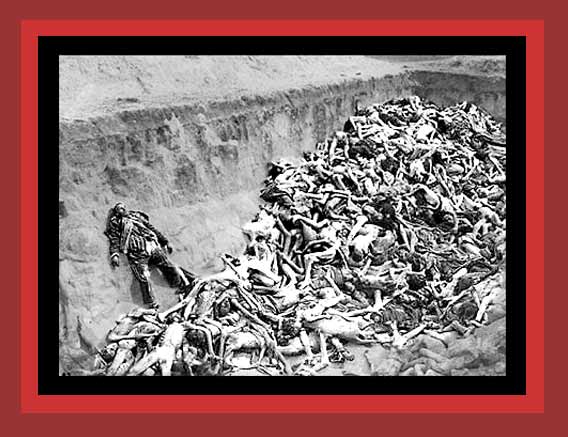
Your five year-old daughter might well be shocked by seeing porn on your computer; but I wager she'd be wakened by screaming nightmares for a month if she saw these pictures of the results of the Nazi Holocaust. (Note that two of the pictures, including the one of the emaciated children your daughter's age who were subjected to medical "experiments", are served up by a Florida public school system.)
Should we remove those pictures from the Internet to protect your daughter? Turn the Holocaust survivors' "never again" into "never again seen"?
What about pictures of Pol Pot's Killing Fields?
Will throwing those pictures down the memory hole make your job as parent any easier?
What about sanitizing inconvenient pictures of America's Iraq War?
Is you daughter too young for those pictures of her country's "accomplishments"? Shall we censor them too?
Or maybe it's a better idea you sit with your five-year old while she browses the internet? -
Re:GPL YaST
Why is this marked offtopic? I think it's pretty germane to the topic, myself. The whole point of these "you can get this free," "this has been open sourced" announcements from Novell is to generate buzz around the company by making them seem friendly to open source. I've heard a lot about them open sourcing YaST, though, and I can't find it anywhere. There's no obvious download on Novell's site. It's not on forge.novell.com, their open source site. It's not on Sourceforge. And the top Google search for YaST reveals this page, where the crux of the message seems to be "Only SUSE has YaST."
I keep hearing about open source YaST. So where is it already? And, more to the point, I'm kind of waiting for Novell's open source/Linux strategy to be more than just talk. Right now it seems to be business as usual at the OSS divisions, and business as usual at Novell. Are the two sides going to meet?
East your ChickieNobs! -
Re:Simple
Try this. YaST is dead simple.
Also, SuSE includes a feature, configured through YaST, that allows you to opt into automatic updating of software on your system (or will let you do it manually, if you prefer)
Switched from RedHat to SuSE when they recently got really greedy and found YaST vastly superior to anything RedHat offers for configuration. It works as a GUI and also works on the command line (like an old borland DOS application.)
If you like the command line rpm package tool and tweaking config files, you can still do that on SuSE without confusing YaST.
I suggest SuSE to anyone interested in trying Linux. -
Suse/Mandrake/Deb response to Forrester report
On that Micro$haft "facts" site, there's a Forrester report stating that Windows is more secure than Linux.
Suse, Debian
They appear to be quite angry about this , as their security teams provided data and research to Forrester in good faith , only to find out that their data was discounted, and the Forrester research was merely a front for Micro$hafting FUD.
Quote: " Finally, the claim that one software vendor had fixed 100% of their flaws during the period of the report should be incentive for a closer investigation of the conclusions the report presents" -
Re:platform DOES matteron my 64bit systems (alpha) running rh 7.1, this is not true. Upgrading is not really an option for me, and I consider them "remotely modern" because they are about 2.5 years old.
The person who submitted this Ask Slashdot question is considering buying a new AMD64 machine. Although I don't mean this in a harsh way, your own personal experience with a 2.5 year old linux distribution is not relevant to the submitter's situation, and you should not be using such experience as a basis for advice to someone in that situation.
If someone is purchasing new hardware today, it is pretty safe to say that the new hardware will be running a new operating system. To advise against the purchase based on your experiences with 2.5 year old versions of linux is, at best, not helpful.
Logical volumes can be created beyond 2Tb, but block devices cannot. There are many kernel posts about this and this kernel trap article about it.
Linking to a two year old kernel trap article is not very convincing, especially since the kernel trap article in question contains a fix for the very problem itself. I am quite sure the 2Tb limit for 64-bit platforms is fixed in Linux 2.6. The Linux LFS page dated 2004-04-21 claims that the 2Tb limit is only on 32-bit. However, I admit that I have not yet actually tried to create such a large block device.
platform does matter, how?
You take a look at this screenshot (again) and try to tell me that platform doesn't matter. The 32-bit platform on the left doesn't work, and the 64-bit platform on the right does work. That's pretty clear cut evidence to me.
-
platform DOES matterMost of this post is just pure misinformation. Some of it has already been corrected in the replies. I will focus on the bits that have not yet been corrected.
Just today I had a user mail me with an error with rcp because it could not transfer a file that was 2.1Gigs.
For example, cat over_2Gig_file >
I could see this as being true "6 or 7 years" ago, but any remotely modern linux distribution will NOT have a problem with this, even on 32-bit platforms. Here is a screenshot debunking your claims for both rcp and cat.
Perhaps your problem is that you're not compiling your applications using the large file support API, which all modern distributions do for you whenever possible.
You will find these limitations from time to time, and rarely does the platform matter.
You take a look at this screenshot and try to tell me that platform doesn't matter.
Also, Linux has other limitations like it cannot access a block device over 1 or 2 Tb (depending on the kernel version).
Ironically, the one limitation that you do state correctly is also one of the limitations that only applies to 32-bit systems. It sounds like you need a 64-bit system after all, preferably a modern distribution like Fedora 2 or SuSE 9.1 that doesn't have any of the weird userspace problems that you bring up.
-
Search the support databases of linux distributors
Maybe the support database of a linux company like SuSE may be helpful.
-
large file supportI'm rapidly approaching the point where I need support for file sizes greater than 2GB. Quite frankly, most of what I've found about file sizes and file systems is 2 to 4 years old... Everyone's too concerned with speed!
Here's some real world information on the state of large file support in 2004. Filesystem driver support is the least of your worries -- almost any linux filesystem you can think of (except for maybe umsdos) supports over 2GB files at the kernel level. The Linux LFS page, dated April 2004, contains reasonably updated information on large file support in linux.
The bigger problem is that many userspace applications cannot yet read or write to the large files. This failure arises from non-use of the LFS API combined with just plain unfortunate use of a signed 32-bit int in the wrong place. So for instance mkisofs will reject all input files larger than 2GB in size, and cdrdao will simply abort at 2GB if you try to rip a DVD larger than 2GB in size. In some extreme cases there are programs that can't even handle large files off of the disk; one example is
wget http://mirror.linux.duke.edu/pub/fedora/linux/cor
e which fails spectacularly on any x86 linux system (hint: the DVD is not really 84MB in size). In general, the "core" system utilities such as dd, cp, mv, cat are fully compatible with large files whereas third party applications are much more hit-or-miss.
Even today, by far the most practical solution to large file woes is to migrate to a 64-bit system, the most affordable of which is AMD64 by a long shot. I've been using an Athlon 64 system for the past few weeks and it has handled large files perfectly in all respects so far.
-
Re:It still sucks
Suse is really nice but its getting more proprietary every day
-
Die Versicherung -
Re:Huh...; Biased distribution selection?Don't forget, Fred Langa conveniently forgets to mention a lot of detail. "Two versions of SuSE" could mean about any version.
On the forum he even quotes another reader as stating that that reader had the exact same problems. After that statement from Fred it gets a bit fuzzy however: when trying to install Red Hat 7 a year ago the reader ran into problems with the Promise ATA/66 disk controller [Could it be set up as a RAID controller...?]. Only later in the letter is it mentioned that on a certain SuSE install the user had the same problem.
It seems to me that the whole article is a lot of trumpet blowing on a minor detail: unspecified versions didn't work on unspecified hardware. Fred mentions the Windows versions he used, I guess it was too much trouble to find out if he used Slackware 5 or Slackware 10...
-
Re:light on details> The screenshot is very nice, though.
Nah, the SUSE website has more and better screenshots.
-
Re:Great Friend...