Slashdot Mirror
Domain: ubc.ca
Stories and comments across the archive that link to ubc.ca.
Comments · 348
-
Re:Details?
I read TFA, and it made no mention of speed, distance or any other aspect of the contest. The driver lies down, but how? On the stomache, or the back (with a periscope?). Were they inside to avoid being blown about (aboot?) by the wind?
Try reading harder next time -- TFA contains a link to the official website for those ambitious clickers who want to find out more than just a summary. From the home page, you can click to read the official 2006 rules and also look to the right for a link to the team websites. The UBC site contains many pictures including a nice one of how the driver lies down and also tech specs on the vehicle.
Any other questions? -
Web site of the winning team
I was curious how the winning team won, so I went to their web site: http://www.mech.ubc.ca/~supermileage/.
From their FAQ:
Q: What changes did you make to the 2006 vehicle to yield such large increases to your mileage this year?
A: We keep our vehicle as spartan as possible, with only the bare essentials to keep the vehicle lightweight. Aerodynamics, rolling resistance, driving technique and engine performance are always being revisited and continuously improved.
This year's most significant advances were most likely made in the execution of the design that we had intended for last year's vehicle. Everything in the vehicle was tuned and design with fuel efficiency in mind.
Not much there. Digging some more, their tech specs say their engine displaced 54 cc. However, the original engine displaced 148 cc. (See the engine manual.) Obviously, they made some modifications.
-
Web site of the winning team
I was curious how the winning team won, so I went to their web site: http://www.mech.ubc.ca/~supermileage/.
From their FAQ:
Q: What changes did you make to the 2006 vehicle to yield such large increases to your mileage this year?
A: We keep our vehicle as spartan as possible, with only the bare essentials to keep the vehicle lightweight. Aerodynamics, rolling resistance, driving technique and engine performance are always being revisited and continuously improved.
This year's most significant advances were most likely made in the execution of the design that we had intended for last year's vehicle. Everything in the vehicle was tuned and design with fuel efficiency in mind.
Not much there. Digging some more, their tech specs say their engine displaced 54 cc. However, the original engine displaced 148 cc. (See the engine manual.) Obviously, they made some modifications.
-
UBC website
Apparently the driver lies on his back. The vehicle is version 4.0, so to speak. They built on past experiences and consistently improved their designs, year after year. That's key to winning IMO.
-Oliver / TreasureTunes.com
-
Re:Not the first time...
I'd have to agry with you, it does seem "gimmicky". I am curious about studies in human computer interaction a 3d interfaces. 3d allows for more realistic interface metaphors, but can significantly complicate an interface, plus we don't have any 3d hardware. A mouse moves in 2 dimimensions (x and y coordinates only, no z or orientation information). Something like the polehemus fastrak would give six degrees of freedom and would allow you to interact with a 3d environment. I first saw the fastrak in a paper about a virtual bodhran. The paper on the "vodhran" is avail here.
-
Re:Cross-country price comparison
mod parent up some more. the US dollar is very weak compared to sterling at the moment. see graph; http://fx.sauder.ubc.ca/cgi/fxplot?b=USD&c=GBP&rd
= 31&fd=1&fm=1&fy=2005&ld=31&lm=12&ly=2006&y=daily&q =volume&f=png&a=lin&m=30&x=&cu=on
[1]
come november when the markets sort themselves out, this $800 figure will have changed to like $600
[1] for historic purposes, today's value is 0.53, one month ago it was 0.56, in march it was around 0.6. April was a BIG slide -
Re:Old recipe for stopping diarrhea
This is similar to golden rice which is a vitamin A enriched form of rice intended for developing countries. Cheaper than supplements or "proper" sources of vitamin A.
-
Re:whoopie
A couple of students I know made a 21g plane similar to this a few years ago. http://www.physics.ubc.ca/~waltham/air/21g_index.
h tmlI don't see how anything like this could be used for search and rescue. If there was any wind at all, we couldn't go outside to fly it, or else it would uncontrollable, and would be blown away. Also the battery lasted only a short time, and the plane in the article includes more electronics than this one.
It is a cool idea, but I think its going to be a long time before these flyers are anything more than hobbies or science projects. -
Re:explanation about oscillation/mass relationship
One of my professors was part of the Sudbury Neutrino Observatory (http://www.sno.phy.queensu.ca/) and wrote a "Neutrino Oscillations for Dummies" (http://www.physics.ubc.ca/~waltham/sno_talks/dum
m y.htm) -
Re:Anonymous are all sick degenerate cowards.
I stand corrected on the word. Learn something every day.
I see you're still an aptly-named anonymous coward tho. Must suck to have to keep checking back to see if anyone paid any attention. Stand up for what you believe in. You know, the whole "I may not agree with what you say" thing.
A proper discussion of pornography is outside the scope of my time, but to use the best definition I can come up with:
"the sexually explicit depiction of persons, in words or images, created with the primary, proximate aim, and reasonable hope, of eliciting significant sexual arousal on the part of the consumer of such materials."
Wow, man (or woman, as it were). You were actually offended by the ol' "wardrobe malfunction". I would have to say that I found the "wardrobe malfunction" neither arousing, nor explicit. In fact I was quite disgusted by the whole publicity stunt. And therein lies the problem.
I submit again that you are probably an asexual party-pooper who was raised under extremely repressive rules. I'm guessing a Bible-belt female, never married. I am sorry that you will never be able to feel that you can fully express yourself sexually and lighten up about it all. -
Re:Tautology.
You said, "successfully treated." That's the rub, isn't it? Most sex offenders are not "successfully treated," although most go through a system of court-ordered treatment that ultimately fails.
When I first drafted my original post, I hadn't included the word "successfully." When I added it, I knew it would raise an eyebrow or two.What I mean by "successfully" is someone who completes the counselling, where "completed" is determined by both the psychologist and the patient. Anyone who is going simply because they are ordered by the court and has no remorse or desire to learn and understand and change will have a very hard time falling into the "successful" category. Not impossible, but certainly very difficult. However, the majority are quite willing to understand the pattern of relapse and deal with the issue. They simply want to get back on with life.
In fact, it seems that upwards of 50% of child rapists such as yourself (and remember, those are the ones who are actually caught and convicted--quite a minority among pedophiles) are not, in fact, "successfully treated," but are instead repeat sex offenders.
The figure of 50% is seriously significantly higher than all the research I have seen on this topic, and believe me, I have seen a lot of research.Figures vary based on studies, of course, but studies I have seen indicate that the number is more like 10-15% of offenders who are run through the system actually reoffend. And the number of offenders who are actually treated is lower still. This is, incidentally, lower than recidivism rates for non-sex offenders. There is a basic overview here whose numbers are more in line with the kind of research I've seen in the last decade.
You're certainly right that the majority of pedophiles who have committed a crime have not been caught. There is also a large number of those who have not committed crimes yet, but are so afraid to talk to somebody about the problem that instead they let it simmer inside them until they end up offending. Then there are those who have committed an offense, feel remorse and guilt about it, but are terrified to talk to a professional about it because any psychologist is legally bound to report even vague admissions to the authorities. I would expect this class of people is far more likely to reoffend, and that many would never get caught and/or get any help. But the truth is that researches know very little about the class of pedophiles (whether they have offended or not) who never get arrested. It's very difficult to make assumptions (or generalizations) about these people because there's simply not much data.
The general impression that sex offenders have extremely high rates of reoffense is perpetuated in part by the media. After all, you certainly don't hear about those who offend once and never again. You hear about those who reoffend, even though they are truly a minority.
-
Re:Future problems?
Three words: High Dynamic Range
No, I don't mean the lame simulated HDR in newer games. I mean the real thing.
IF this tech becomes big it'll a bigger jump in quality than standard def -> high def is.
For further reading see:
http://www.bit-tech.net/hardware/2005/10/04/bright side_hdr_edr/1.html
This is a review of the only HDR capable monitor in production.
http://www.cs.ubc.ca/~heidrich/Projects/HDRDisplay /
This discusses two methods for creating a HDR capable display and why you would want to. The display in the earlier link uses one of these methods. -
Re:I have an idea to appeal to college students
Um, at my school, at least for the students in computer science, most microsoft products are available for free.
-
Re:Nomenclature...
Most sources I can find seem to disagree with you.
-
What a bunch of FUDFrom TFA:
The common code path for new Object() in HotSpot 1.4.2 and later is approximately 10 machine instructions (data provided by Sun; see Resources), whereas the best performing malloc implementations in C require on average between 60 and 100 instructions per call (Detlefs, et. al.; see Resources).
Wow, that's really shocking. Until you actually look at the Detlef paper and realize that it was published in 1994, 11 years ago!! Who knows, maybe things have improved a bit in 11 years. The author certainly thinks Java is getting better; maybe it's possible that C/C++ compilers have improved as well.
-
Re:LispM had a superiour hardware model
Hindsight.
At the time, the obviousness of being able to target an industry-standard, pervasive platform, just wasn't obvious. There simply wasn't such a platform with many megabytes of memory, many gigabytes of disk, processors which could handle hundreds of millions of operations a second, and so forth.
There were interpreted Lisps on a variety of platforms that were in common use. There were a handful of compiled Lisps. Most notably, MacLisp in ITS (and later on other OSes on PDP-10s), which was so popular at MIT's AI lab that enough was developed in it that performance became a key issue.
At the time it made sense to investigate hand-building a machine that would be an optimal target for a compiled Lisp, especially in that it would make known optimization techniques easier, and would welcome rather than tolerate large garbage-collected heaps.
Nowadays, Scheme textbooks like the excellent SICP: Structure and Interpretation of Computer Programs (or, say, The Schematics of Computation) introduce compiler-writing and target an implementation of a virtual machine. These VMs are directly analogous to the actual CADR hardware. On modern fast computers, they run faster than the actual processor hardware in the physical CADR. Running a VM with performances down in the 1/double-digit or 1/triple-digit of physical processors would have been intolerable back then.
There were always people working on targetting mass-produced general-purpose hardware, it's just that there was a lot of learning to be done about how to optimize things.
Lots of that work was done in the context of the amazing T project. The T compiler was a massive watershed development for Lisp compilation, as it implemented or introduced such things as efficient lexical scoping; simplifying the code through transformation until you were left with operations on only as many variables as you have registers; lambda-lifting; CPS-transformation; dramatically improved copying garbage collection; "pseudo-hardware typing". A number of other innovations directly stem from these.
One look at this is Olin Shivers writing about his memories of the T project.
Nowadays, with these techniques, and others learned since, compiling Lisp to practically any modern processor is straightforward. Modern Lisp and Scheme compilers generate either efficient and fast native code, or portable C (to the extent that it should work on any 32 or 64 bit platform gcc supports).
There remain some implementations that target a tight purpose-written VM, like CLISP or Scheme48 does. There are some implementation that target other VMs, particularly the Java one, compiling into JVM bytecodes or Java as an intermediate language.
The cheapness and reasonable speed of VMs, the efficiencies of compilers targeting C, assembly, or native machine code, and the tightness of runtime environments supporting type-handling and garbage collection, are such that practically nobody would seriously think about building hardware dedicated to supporting Lisp like languages.
With the benefit of hindsight, you are completely right.
The two points you raise, prior to T, would have been thought of as somewhere between funny and insane.
T was ca. 1982.
The CADR Lisp Machine was started ca. 1975 and documented in AI memo 528 in 1979.
Lisplike-compiled-language-favourable hardware chugged along until the early 1990s, when they collectively could no longer compete with the performance (never mind the price) of implementations compiling for x86, SPARC, Alpha, and a few other popular workstation instruction sets. -
Siggraph 2004There was a paper presented in SIGGRAPH 2004 about two High Dynamic Range Display Systems (PDF*). One system was a projector shining into a LCD. It is theoretically possible to have a contrast ratio of c*d:1 where the projector has a ratio of c:1 and the LCD has a ratio of d:1. I have found a projector that has a ratio 7000:1 and a LCD television with a ratio of 900:1. Combining them could possibly give a contrast ratio of 6,300,000:1. I believe there is some merit in having c and d be close to each other, so this theoretical 6.3 million to one ratio should be taken with a mountain of salt.
It should be duely noted that the projector-LCD system presented in the link has a measured ratio of about 54,000:1 as opposed to the theoretical 200,000:1 ratio. However, I plan to build a $3000 display with a ratio of about 70,000:1. The projector-LCD systems have the advantage of being able to take high precision illumination values. You effectively double the amount of information that can be fed into the display by having two "screens" (the projector and the LCD). Perhaps those who want to experiment with HDR imaging and do not mind a bit of bluring should consider building one of these $1500-$5000 setups, as opposed to those 100,000:1 or 1,000,000:1 displays.
For those who have sunglasses, happy hacking.
*I would have given a HTML link if the Authors' links were functional.
-
But Sciences *ARE* ArtsIn the medieval university, everything we call 'sciences' today were simply the physical arts, as outlined in the trivium and quadrivium. That's why doctorates in science disciplines are called Ph.D.'s (Doctor of Philosophy).
Reuniting the arts & sciences is in vogue right now in academia, see the Barber School of Arts & Sciences at UBC http://www.publicaffairs.ubc.ca/ubcreports/2005/0
5 feb03/barber.html -
Automatic stitching of images
Autostitch/autopano/autopano-sift, along with Panorama Tools, PTAssembler, PTGui or Hugin (open source!) makes it possible to take a bunch of images, and automatically detect which sets of images can be merged into panoramas/photo-mosaics.
Using any of them on a set of partial scans can be used to regenerate the original page.
Terje -
Personality's Effect on Video Games' Risks
The controversy surrounding many of these video game sale regulation bills is whether video game (and other forms of entertainment) violence leads to actual violence. Apparently, this depends to a large extent on personality. That is, people with certain personality types (namely psychopathy) will be more likely to develop negative behaviors from negative entertainment than control populations. The Dark Triad Returns: Entertainment Preferences Among Narcissists, Machiavellians, and Psychopaths has some research on the matter.
-
Wait, wait...
-
MOST: Canada's First micro satellite
MOST (aka the Humble Space Telescope) is the space telescope Canada can affoard: a small one. MOST was Canada's first space telescope and the first micro satellite I've heard of.
We had a full size replica at a star party this summer and this thing is small considering what it does. Really impressive. Small means also very affoardable.
I hear that there will be a competition for time on the MOST so maybe someone will be the first amateur to make use of a micro-satellite. -
Re:You missed one
Thanks! Just fired up wget -m -np -r -k http://www.math.ubc.ca/~cass/graphics/manual/
-
Re:You missed one
for more info about PS, there is an great free book online
http://www.math.ubc.ca/~cass/graphics/manual/ -
Re:a small snag.
-
Found the paper
-
Bah, guitars. Robots play bagpipes.
-
Evolution of ethicsThe first time I encountered work like this was in A.K. Dewdney's column "Simulated Evolution" in Scientific American, May 1989. He presented the program "Palmiter's Protozoa", of which a nice implementation can be found here.
But this is all kid's stuff. Such experiments can be much more interesting nowadays, with the power of computers as we have now. A student of mine studied the evolution of morals in a similar society. His program isn't online yet (will be soon, I guess), but his thesis is.
-
Do I have to throw out my phone books now?
So Jeff Bezos just patented calling the recipient to ask his mailing address or looking it up in the phone book.
I can see the phishing scams now.
"LandShark.com wishes to arrange delivery of a candygram gift to you. Please provide full delivery address and a time when someone will be available to answer the door..."
Obscure SNL "Land Shark" reference explained here:
What is a LandShark?
Trick-or-Treating LandShark
Jaws II
Jaws III -
Change-blindness
Ah yes.
This study reminds me of change blindness experiments.
Weird, wacky stuff. -
Competition Specs
Actually, for the competition, We are only aiming for 1 m/s for 50m up a tether. Power will be supplied by a 1300W (or so) searchlight. Most groups will likely be using sattellite solar panels. In future competitions these are expected to be increased, and presumeably power will eventually be supplied using a laser. The winner will be determined by some combination of climbing speed and payload.
I expect that any groups that can meet the requirements specification (PDF) [http://www.elevator2010.org/site/documents/climb
e r_rulebook.current.pdf ] will be in a good position, regardless of speed or payload.BTW, I'm actually part of a UBC team building a climber, our website is here: http://www.physics.ubc.ca/~climber/index.html
-
Re:combating bioterrorism
The thing is, anything that helps us fight infectious disease in general may also help with "combating bioterrorism." And a good simulation of the response of bacterial populations, which often show emergent behavior, respond to biochemical stimuli may very well be helpful in coming up with new methods of diagnosis and treatment. (For an understanding of why this is so, check out work on swarming behavior, and the research interests page of Leah Edelstein-Keshet, one of the leading researchers in the field.) I'm not any happier than you are about how the bioterrorism card is played in every grant application, but it really is one of many valid applications here.
-
What's coming (a bit off-topic)
High Dynamic Range displays! These are pretty spectacular, combining LCD and LED.
-
OJS
While its not strictly a circulation managment system, Open Journal Systems (http://www.pkp.ubc.ca/ojs/) is about the most robust, open source journal managment system around -- including some functionality for subscription based journals.
Version 2 was released within the past few weeks, and may include some of the features you're looking for -- and if not, this is probably the most mature system of it's type if you're looking to add/contribute.
I'm guessing that printing mailing labels from a web interface will be a difficult feature to find in an existing project. -
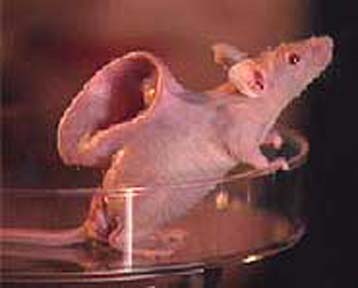
my favourite mouse
-
Re:Great...His name was David Hahn.
In terms of increasing amounts of information (least to greatest):
http://en.wikipedia.org/wiki/David_Hahn
http://www.dangerouslaboratories.org/radscout.html
http://laplace.physics.ubc.ca/Students/borthwic/rb
-
Re:Drake's equationThat's a valid point. But even in a classical universe with EM traveling at c we'd still have a 2.2 billion year delay.
Also, there are meaningful ways to talk about the same time at different locations, at least approximately. For example there is a natural inertial frame for points in the universe, the one in which the cosmic background radiation appears to be at rest. (See here.) It seems reasonable to base statements about when large scale events in the universe happened on this frame. In fact, this is what astronomers implicitly do all the time and few astronomers would hesitate to say that this recent burst happened 2.2 billion years ago, even though someone flying past us at high speed might suggest a different date.
-
Re:While it would be nice...
-
With tool support, AOP *is* structuredThe objection that AOP is unstructured becase it injects arbitrary code into your function is common, and it's absolutely correct if you consider editing code in a plain old text editor.
In reality, almost no one does this. Because of the nature of AOP, it requires IDE support--see the AJDT (http://www.eclipse.org/ajdt/) for one example of what this looks like.
With IDE support, you can see exactly where aspects might affect your code, and you can easily navigate to the definition of these aspects. Tool support essentially gives you the desired scoping back, even though it's missing in the language.
Gregor Kiczales and Mira Mezini have a nice paper on this (http://www.cs.ubc.ca/~gregor/papers/kiczales-ics
e 05-aopmr.pdf), and I've done some more theoretical work validating the claim that modular reasoning is possible in AOP, given the proper module system and tool support (http://www.cs.cmu.edu/~aldrich/papers/open-module s.pdf). -
Free Access / Open Source Journal Management
I've been involved with an undergraduate journal at California State University, Monterey Bay for the past couple of years. Just this year we opted to go with an open source journal management system developed and supported by the Public Knowledge Project Open Journal Systems at the University of British Columbia. We're quite happy with it, both from a technical standpoint and the mission of the project. ePrints is another project working on similar issues.
Hopefully we will see more open access (without requiring payment from authors OR readers!) as libraries and other institutions start to use these great open source tools. It makes management and online publication/archiving really painless. There's even a distributed backup system in place and a group running archiving standards.
As a member of the American Anthropological Association I understand that the journals they publish are supported through subscriber costs which far outweigh the cost of publication. The remaining profit goes to funding the annual conference, administration costs for the association, etc. They have recently made all of the American Anthropologist journals available to members online, a pretty massive project I'm sure. -
Free Access / Open Source Journal Management
I've been involved with an undergraduate journal at California State University, Monterey Bay for the past couple of years. Just this year we opted to go with an open source journal management system developed and supported by the Public Knowledge Project Open Journal Systems at the University of British Columbia. We're quite happy with it, both from a technical standpoint and the mission of the project. ePrints is another project working on similar issues.
Hopefully we will see more open access (without requiring payment from authors OR readers!) as libraries and other institutions start to use these great open source tools. It makes management and online publication/archiving really painless. There's even a distributed backup system in place and a group running archiving standards.
As a member of the American Anthropological Association I understand that the journals they publish are supported through subscriber costs which far outweigh the cost of publication. The remaining profit goes to funding the annual conference, administration costs for the association, etc. They have recently made all of the American Anthropologist journals available to members online, a pretty massive project I'm sure. -
Re:Whaaa?
I should probably mention that this is just the articles themselves. No talk pages, no administrative pages, etc. So maybe my compression is only about equivalent to yours anyway. But one nice thing is once you're done the search index is already most of the way built.
Anyway, see here and here for my inspiration. I had to adapt things somewhat, though.
The real fun is going to come when I try to compress the history database. My idea is in addition to the dictionary for the entire database, I'll have an additional dictionary per article (and compress the article dictionary itself using the master dictionary). Who knows if this will work or not, but I'm hoping to achieve results on the order of compressing each article separately but with the advantage of random access capability.
-
Re:Advantages?
http://netpub.cstudies.ubc.ca/oleary/images/pytho
n _java_comparison.gif may give you an idea. Quite simply it's easier to program in, and you're more productive using it. -
Re:Hmmm....
If you drop matter into a black hole, you can extract all of its mass-energy (eventually) from Hawking radiation, which is a thermal blackbody spectrum (mostly photons).
You can also extract energy from the rotational energy of a black hole via the Penrose process or its electromagnetic analogue of superradiance. -
Already Working
Several journals are already implementing Open Access with different levels of success. I develop and publish a relatively successful online Open Access journal, the Journal of Medical Internet Research (apologies for the plug), and we use the author-pays model based on a $750US fee to cover (most of) the costs. Often this amount can be written into or otherwise covered by a grant supporting the research in question.
We also have additional sources of revenue, including advertising (albeit very little), and one of the most promising areas is what would traditionally be called "value-added" content. While the full-text of all articles is freely available, "extra" things like PDF versions, on-demand printed versions, etc. are on a fee/membership basis. This seems to work quite well in covering costs while not restricting access. As well, other journals such as BMJ use time-delayed access (ie. articles older than 6 months become open), which is just another way of creating "premium" content. Another interesting publisher is PLoS, who have several resources on the costs of OA publishing.
As some have said in other threads, the main cost is in the actual process of reviewing/copyediting/proofing, not the actual hosting/bandwidth. Open Source journal publication software such as OJS is lessening this barrier, as are other tools. For example, we use OpenOffice to convert articles to the NLM XML schema, automating XML/layout editing and decreasing the cost. By finding alternative, "non-traditional" sources of revenue (like tiered access/content), and using Open Source tools to simplify and automate the publishing process, bringing the overall cost of online academic publishing down to a level where Open Access is cheap is already being realized. -
Re:Over in Canada...
Also at the University of British Columbia (which has a very traditional Engineering program) there is the Department of Chemical and Biological Engineering: http://www.chml.ubc.ca/
-
Re:Bill buys Apple?
At the end of the day Apple would act just like MS if it was in their position (and I'm not saying you would necessarily prefer Apple to be giving the 'DRM crap'). But all companies will be evil. Just the way of things.
One documentary went so far as to compare corporations to psychopaths. -
Re:Great idea
I used to imagine a telescope of a pan filled with mercury, spinning, and attached to the lens assembly via rods on top, and the whole device turning to create gravity for the mercury so it stays in the pan, while the whole telescope like a lighthouse scans the skies.
You mean something like this?
Sure, the LZT can only look straight up, but liquid mirror telescopes are being done, and done fairly well. -
libsift
Great, thanks for the pointer. But... aargh... it's a C# library. What on earth am I supposed to do with that as a researcher? Hmmm... but it did teach me something by pointing to David Lowe's Autostitch. That looks interesting for my other life in science outreach since we've got a backlog of panos from Argentina to process...
-
Re:Actually