Slashdot Mirror
Domain: wikimedia.org
Stories and comments across the archive that link to wikimedia.org.
Comments · 6,832
-
Re:top security
that's the 3.5
-
Re:Some facts
Productivity has about doubled since 1970. That's only 40 years ago. If you believe the trend is linear, it will double again in another 40 years, but if it is exponential, then it will quadrouple in another 40 years.
Nitpick: If it's exponential, it will double in another 40 years. If it's linear, productivity was 0 in 1930.
-
Some facts
So-called 'Universal Basic Income' will not scale up; everyone points to small EU countries who are only talking about it, haven't actually done it, who don't have trillions in National Debt to deal with. It won't work here in the U.S and in any number of first-world countries.
You UBI people also make another fatal assumption: That people, not having to work, will 'find their purpose in life'. They will not. Most people have no clue, their entire lives, what their 'purpose' is, and never find one; these people need to be given a purpose; it's called 'earning a living and surviving', AKA 'having a job'. Most people will sit around, eat, have sex, get fat, litter the planet with their directionless offspring, and otherwise get in trouble out of utter boredom and too-much-time-on-their-hands, all on the government dole.
Okay, calm down.
You are predicting that something won't work based on little more than your opinion. Let's throw some facts into the mix.
POINT 1
Taking the US as an example, since you mentioned it specifically, note that the GDP per capita in the US is a little over $53K per person. If the productivity output of the US were evenly distributed, that means that every man, woman, and child could spend $53,000 on goods and services this year, and next year they would have another $53 to spend.
Count only the working adults (about half the population) and that number doubles.
POINT 2
Productivity has about doubled since 1970. That's only 40 years ago. If you believe the trend is linear, it will double again in another 40 years, but if it is exponential, then it will quadrouple in another 40 years.
POINT 3
A hypothetical $1,000,000 invested in an index fund is expected to return around 7% interest over the long term. You need to take the long view on this rate, and not cherry-pick individual past decades - it's been consistent with the rise of productivity. See point 2 above.
Given 1% for management fees and 2% to account for inflation, that $1 million would pay out $40,000 per year in perpetuity.
The US could start a process of putting $1 million deposits aside and awarding the payouts to working class people on some schedule. A lottery, for example. If you want to work, you don't have to enter the lottery.
Note that the cost of the Iraq war was $1.7 trillion dollars, spent over a decade. That amount of money awarded to worker annuities could have reduced the workforce by 1.7 million workers, making the remaining jobs easier to find.
POINT 4
Note that we are rapidly developing self-driving vehicles. The first self-driving semi is on the road right now!
Even if the self-driving vehicle isn't useful 100% of the time (snow, limited visibility), by my calculations this will dump 2.5 million into the labor force almost instantly.
Note that Amazon is experimenting with delivery by drone. This could potentially drop another million into the workforce almost overnight. (If you include postal workers and some others not accounted for in the previous link.)
POINT 5
Regardless of whether you think it will work or not, something has to change.
You either make it work, or try to survive the burning destruction of the US, a modern recast of the French Revolution.
Do you have kids? You might consider what type of world you want them to live in.
-
Wasn't Apple that did in RIM
I know a lot of you think the iPhone's introduction was like the second coming of Christ, but RIM/Blackberry increased in market share from 2007 to 2009 immediately after the iPhone was released. RIM's decline actually correlates closer with Android's rise in popularity.
The big losers in the early smartphone days were Nokia (Symbian was dated and badly needed an overhaul, which never happened) and Microsoft (who started off with a good lead from Windows Mobile on PDAs, but squandered it).
As for privacy, Apple has shown they're more than happy to violate their users' privacy when it's in their self-interest. When Apple ditched Google Maps, they didn't have their own database of SSID locations, so they couldn't locate you if you had the GPS turned off. The first year they paid for a wifi database from Skyhook. The next year, they used their own database. How did they mysteriously generate this database without sending around Apple street view cars to record the SSID and location of every hotspot on Earth like Google did? By secretly logging iPhone owners' locations and nearby SSIDs, and having the phones send the info back to them. Essentially, Apple turned all iPhone owners into unpaid contractors who scoured the Earth recording the locations of every SSID, and used a chunk of their data plan to transmit this data back to themselves. -
Re:I hate bad journalism like this...
We should stop flying airplanes too! Considering how much fuel is burned by aircraft everyday, this cruise ship is pretty efficient for the amount of passengers carried and the distance travelled! But lets pretend airplanes don't burn fuel.
https://upload.wikimedia.org/w... -
Nuclear. So yes, inefficient
Well no shit, it's the biggest ship of the world. If you want to impress me, tell how how much fuel per passager it burn and compare it to others cruise ship.
Well, if you compare to other ship this is a *really inefficient* ship. And it's really weird, when you take just a couple of minute to think about it.
Don't forget that the world doesn't stop at cruise ships.When you look at other ships with similar order of magnitude of tonnage ("similar" as in "roughly the same number of zeroes in the 'tonnage' item"),
you find aircraft carriers, which are almost exclusively nuclear-powered and thus burn not a single drop of diesel and ridiculously small quantities of nuclear fuel - that's the whole point of nuclear energy, it consume amounts of fuel which are order of magnitudes smaller.
(Though, okay, the aircrafts themselves on the carrier do burn conventionnal fuels).
And we're speaking here about vessels whose tonnage is at most, approximately half of this monster (I might be wrong, I'm not very fluent in the various maritime units).Even *civilian* nuclear powered vessels do exist (though most seem to come out of Russia - back when it was URSS) - and we're speaking here of smaller ship, around an order smaller than this behemot.
All these ship consume not a single drop of diesel.
So, why the hell those this monster to burn that much fuel ?!? -
ah scramjets
remember when NASA actually had a budget to make cool things too?
-
Bird strike?
I wouldn't know if there is life, but it sure looks like it hit something pretty big... I doubt it's alive now
-
His Post
-
Re:Reminds me of Joe Biden talking
If you didn't know the names or government positions of anyone in this picture and I were to ask you who is in charge, how would you answer? This is the single most revealing picture of the entire Obama (the guy who showed up late to meeting he wasn't invited to) presidency.
-
One inaccuracy
One thing he got wrong, the tank crewman at 7:14 isn't the driver, its somebody starting the engine. Engines of the period had crank-starts. I don't know why British WW1 tanks had the crank handles on the inside, but I'd guess it was because the engines constantly broke down and had to be restarted, and you'd get shot if you had to go outside to do that.
In this picture https://upload.wikimedia.org/w... - you can just about see the crank handle, on the left of the window.
This is what the actual driving position of one of the things looks like.
-
One inaccuracy
One thing he got wrong, the tank crewman at 7:14 isn't the driver, its somebody starting the engine. Engines of the period had crank-starts. I don't know why British WW1 tanks had the crank handles on the inside, but I'd guess it was because the engines constantly broke down and had to be restarted, and you'd get shot if you had to go outside to do that.
In this picture https://upload.wikimedia.org/w... - you can just about see the crank handle, on the left of the window.
This is what the actual driving position of one of the things looks like.
-
Re:Eeh
Actually, prostitution was often legal throughout history, even in societies where it was reviled. In 19th century, it was frequently regulated, with prostitutes required to register and have a license, for which they had to undergo medical checks. For example, here is such a license (which also doubles as health exam log book) for a Russian prostitute, issued in 1904.
-
they colonize the life of the individual
Yeah, France would know about colonizing people.
To get around such restrictions, they simply extend the work day and create a more "flexible" environment. Problem solved.
-
Re:Thats really cheap
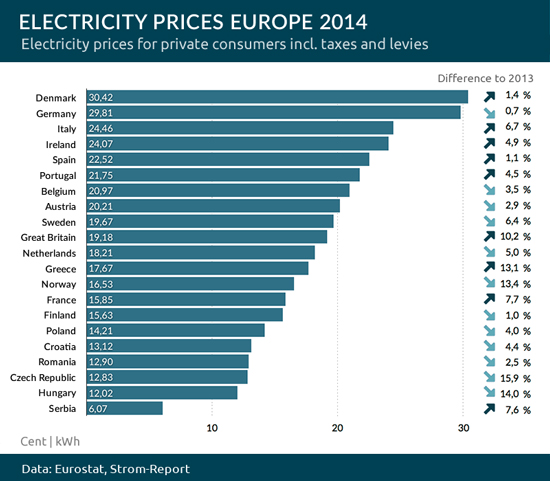
To understand Germany's energy use, just look at this graph. 75% of it is fossil fuel based. The idea that it had so much renewable it had to pay people to use it is ridiculous and simply a function of the bureaucracy, not the reality.
You might find this interesting; On Jan 1, 2016 at 10:00 am Total German Wind Output was at 0.49 GW, only about 1% of demand at that time. There are many other times like this during the year. (and solar was only at 0.14GW, so it didn't help much)
https://www.energy-charts.de/p... -
Re:I live in Germany...
-
Re:Thats really cheap
To understand Germany's energy use, just look at this graph. 75% of it is fossil fuel based. The idea that it had so much renewable it had to pay people to use it is ridiculous and simply a function of the bureaucracy, not the reality.
-
Re:For-profit prison system
It's really only 10% or so of inmates that serve in a for-profit prison though. The rest is federal. I would like to see that number go to zero, but let's not hyperbolize.
The overwhelming majority of US inmates are in state prisons or local jails, with only a small number in any sort of federal prison (~9%), private or otherwise. There aren't many privately run facilities, though. At least according to whatever definition the BJS uses.
-
Re:Shes real?
Didn't you know? She is real as is the blood in the shooter games. It is the human blood the third world has to send to us to appease our fire demons. Otherwise we command the demons to burn their huts! That's what the world bank is really for. Its the world human blood bank. There is no hunger deaths in Africa. Africa is rich in resources, nobody starves there. Hunger only serves as cover story for the giant conspiracy that happens here. There is starving yes, but that affects only a dozen people or so, they are shown in the media whenever the third world has to hand over its next shipment. The blood goes to the shooters, the organs immortalize the inhabitants of an utopic moon colony, the people who really rule this world!
Quoting the whole comment... because reasons. I see somebody else potentially gets it, the full scope of the system of control here. Or perhaps you're just regurgitating David Icke, who, as far as I can tell, is a lizard person operative, a part of the real system of control meant to shut us down, at a subconscious level, when we get close to understanding what's really happening in the world. After all, I mean, lizard people from outer space! ROFL amirite? Moon matrix lol! Must be loony tunes!
When I was in high school, an English teacher who unfortunately held quite a number of disgustingly misandrist and transphobic views, asked us to read Chinua Achebe's Things Fall Apart. I was fascinated by the depictions of traditional Igbo culture, over in present-day Nigeria. I wanted to know more, but I didn't understand why. I also didn't understand why Okonkwo kills himself in the end.
Always remember that there is no such thing as an "African-American." The "African-American" is a lizard person invention to deeply entrench racism in our minds. Among peoples we are supposed to believe are all one cohesive people, one will find more genetic variation than among paler humans. Yet, it's the pale-skinned ones who get to be "Germans" and "French" and "Danes" and "Russians." I understand that my own woman suit is part German, part Dutch. I suppose there are also "Japanese" and "Koreans" and "Chinese" out there, too. Yet, it's a testament to the first phase of the lizard peoples' plans that when it comes to other peoples, we only have "Mexicans" (Latinos/Hispanics/Moors at best), "Muslims," and "African-Americans." Now, hear me out because what I'm saying is dangerously close (in the minds of cattle) to the racist theories of National Socialism, another tool of the lizard people to shut us down at a subconscious level when we get close to the real system of control.
After all, we should experience revulsion when we contemplate the acts of Nazi Germany. That's a normal, healthy, human thing to experience when presented with those atrocities. Of course the Jews who suffered and died during the holocaust were not actually lizard people. They're not the ones responsible for convincing us all to mutilate infants' genitals.
Did some peoples in Africa practice genital mutilation and various other things I find strange to do to one's own body? Yeah, they did. Check out one of Levar Burton's characters, Kunta Kinte. While parts of Roots may not be completely accurate, I can accept that a people in Gambia used male genital mutilation as a rite of passage. There's one crucial difference. Since I am an expert on cocks (known to suck a few in my time), let me inform you that a penis (aka oversized clitoris) takes somewhere around 18 months after birth to fully develop. Plus, a man undergoing a rite of passage, consents to that rite of passage. It may not necessarily be a completely ethical and voluntary consent, but it's a form of consent nonetheless. When we tie defenseless infant males to th
-
Re:It's all relative
Consider that their parents were probably doing well in the 80s when they were kids. House prices were booming, the move towards taking on massive debts to buy stuff was in full swing
Holy crap. Were you even around in the 1980s? Interest rates were around 20%. Home prices were stagnant from about 1979 til the late 1990s. We took on massive debts to buy stuff because it was the only way you could afford to own a house. Taking out loans to buy a huge house (or second home) to turn it into a giant credit card from appreciating real estate prices didn't become a thing until the 2000s.
If that's the rose-colored glasses through which Millennials view the past, no wonder they're dissatisfied. They're comparing their current reality to a past nirvana which never existed.
If you ask me, capitalism works better than any other system I've seen tried, with a few exceptions. One of those exceptions is that certain goods remain scarce regardless of how much demand there is for it. A good example is housing (or at least housing in locations where people want to live). With the shift from single-income households in the 1950s to two-income households in the 1980s, you would've expected a smaller share of total household income to go to housing, with a greater share left over to be spent on quality of life things like entertainment. Instead what happened is that housing in desirable locations remained scarce (there is only so much real estate). So competing dual-income households bid up home prices, and the second income went almost entirely into paying for the higher home price.The education that their parents got for free or at low cost is now going to put them in massive, long term debt.
The cost of higher education has gone through the roof because of a toxic combination of (1) socialists' desire to subsidize it to make it more affordable, and (2) capitalists' desire to leave it regulated by market forces. The compromise they came up with was the subsidized student loan. You still had to pay for the school, but you could do so by borrowing money at below normal interest rates.
Unfortunately, college tuitions are one of these goods that remained scarce. Lots of people want to send their kids to an Ivy League school, but those schools only admit a certain number of students each year. So supply was more or less fixed. Consequently, allowing kids to shift their future earnings into the present via loans just increased demand (more of them could afford college). And what happened is what naturally happens any time you have fixed supply and increased demand - people bid up the cost of tuition.
At this point, it's too far gone for a simple fix. But what needs to happen is:- Get rid of all student loans. Make it illegal to time-shift money from the future into the present to pay for education. If you can't afford to send your kids to a prestigious private school with the money you have today, tough.
- Use the subsidy money instead to expand quality public universities. Basically inject the money into the supply side instead of on the demand side like with loans. Cap their tuition at a certain % of the median household income. Prevent them from shifting their cost burden over to the demand side.
- Continue to allocate a portion of that subsidy money to scholarships for low-income and economically distressed students. No reason to deny a smart kid an education just because his/her parents can't afford it. But don't go crazy with it because this too is equivalent to increasing demand. Most of the money should instead be spent on the previous bullet point, which increases supply - that's what keeps prices low, not subsidies.
That'l
-
Re:30 years eh?
I don't expect those who didn't live through it to understand - your perception of the times is entirely skewed by people with an agenda twisting historical events to fit their political beliefs. So let me give you an apolitical history.
The 1970s were most shaped by the 1973 Arab oil embargo. The sudden rise in oil prices sent a financial shock which sent our economy reeling almost into depression. This combined with Nixon's wage and price controls in 1971 led to stagflation - a combination of a stagnant economy and inflation. Normally, inflation picks up when the economy is vibrant, and decreases (is actually in danger of crossing over into deflation) when the economy is bad. But in the 1970s we suffered a bad economy with high inflation. According to Keynesian economic theory, that shouldn't be possible. But it was real, and those of us alive at the time had to deal with it.
Fed chair Paul Vocker (Carter appointee, who impressed Reagan enough he kept him on) had a theory that stagflation could be fought with high interest rates, which is exactly what he did. Under his policies, The U.S. Prime Rate peaked at 21.5% in Dec 1980 . Look through that history and you'll see two peaks. The 1974 peak where interest rates were trying to keep pace with inflation, and Paul Volcker's peak in the 1980s to try to deal with stagflation. Interest rates didn't return to "normal" (around 5%-7%) until the 2000s.
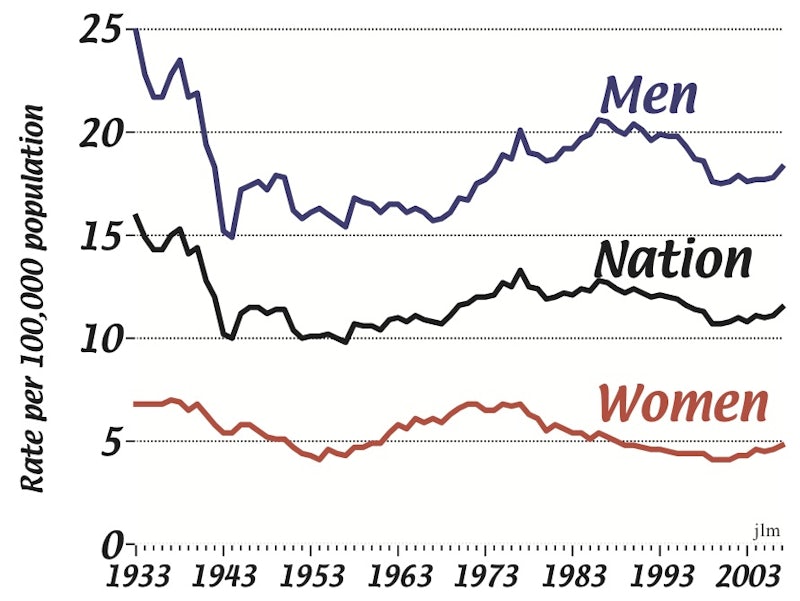
Whether his theory worked or stagflation disappeared on its own is irrelevant. What's important is that we eventually escaped stagflation. Inflation came down and the economy began picking up again. But it was a miserable time for us all to be living in. High unemployment, high inflation, high interest rates. You can see the U.S. suicide rate spiking immediately after the Arab oil embargo, then staying high for a sustained period through the 1980s due to the high inflation and high interest rates (basically meant trying to save money was a lost cause).
That's why the suicide rate back then was so high. Wasn't the Democrats or the Republicans or Carter or Reagan who was at fault. It was the stupid oil embargo and the weird economic corner case we somehow found ourselves in. (TFA is also sensationalist. Suicide rate was at an all-time low around 2000. So it's not that suicide rates are "surging", they're just returning to normal levels. If you're going to study an anomalous suicide rate, study why the suicide rate hit that all-time low. Don't try to characterize what's happening now as some unexpected spike.) -
Re:so there is a God?
No, take a look at the Shield of the Trinity. Deus est filius ("God is the Son"). This Trinitarianism predates Mormonism.
-
And still ...
-
Re:Maybe they'll start teaching her now too
Personally, I hope they use her Civil War woodcut portrait, which shows her holding a rifle.
I'd never seen that before - it's great!
-
Maybe they'll start teaching her now too
Tubman was born a slave and went on to become an anti-slavery crusader
This is about the most boring summary of her life possible.
Try this:
Short version - She was America's Joan of Arc.
Long version - She was beaten nearly to death as a teenage slave, and heard voices the rest of her life, which she believed to be God. Often did what God (the voice) told her to. Listening to God she
- Escaped slavery (no mean feat for anyone)
- Went back to the south at least 13 times, helping about 80 more escape. She reported avoiding slave catchers multiple times by listening to her voice of God and following his instructions. She was never once captured
- Helped out with the recruiting for John Brown's raid on Harper's Ferry. It failed miserably, but likely helped bring on the war that destroyed slavery. The Battle Hymn of the Republic was originally an ode to John Brown.
- Conducted multiple "scouting" (spy) missions into Confederate territory during the Civil War
- Led a military assault on several plantations during the war, liberating about 750 slaves (most of the men of which promptly joined the Union army)
Personally, I hope they use her Civil War woodcut portrait, which shows her holding a rifle.
-
Re:Google has a browser?
Nope. After IE hit about 90% market share, Microsoft figured they'd conquered the market and killed off all competitors. So they decided they'd earned a well-deserved rest and did... nothing. They stopped all development work on IE. For about 13 months they didn't add any new features to IE - the only updates were security updates (this was around 2001-2002 if I remember). This was an eternity in web browser development at the time. When Netscape and IE were competing, they were rolling out new features semi-annually or even quarterly.
That window was what allowed Firefox to take hold. Can you imagine browsing without tabs? Firefox introduced tabs, and that feature alone made it immensely popular. FF made IE look so much like a lump of coal that FF quickly jumped to about 25% market share. By the time the EU browser choice requirement was implemented (Dec 2009), FF was already over 30% market share. Google's Chrome browser had already been steadily growing in popularity for most of that year, and FF actually decreased in market share after the EU-mandated browser choice.
So it'd be more accurate to say Microsoft blew it big time by choosing to stand still because they had a monopoly, but that only cost them about a third of their monopoly. It took another quasi-monopoly (Google search + apps) to break Microsoft's OS-browser monopoly for good. I'm not sure the EU browser choice window had any effect. IE was already on the way down at the end of 2009 when the EU mandate was implemented. And the rate at which IE declined in market share didn't change appreciably from before 1Q 2010 to after.
(That's not to say I disagree with the EU mandate. I was actually more anti-Microsoft back in those days and felt they should've been broken up into an OS company and an apps company. But the problem with government regulation in software is that it just takes too damn long, and by the time it's finally implemented the entire software landscape has already changed for other reasons.) -
Sic semper tyrannis
I certainly hope things turn out for the best because a government unaccountable to the people ends poorly.
-
Re: Semantics
I don't like super averages of huge data sets. It requires that everything being averaged together be "like" elements. Going through every one of those stations and auditing the information individually is not something I think anyone does when they build these tables. They maybe discard outliers.
So, you're saying that huge datasets aren't trustworthy on account of their hugeness. And that smaller datasets are better. You're basically just speculating idly about possible sources of error, claiming with no evidence whatsoever that all temp data, period, is inadmissable to the discussion. Cherry picking fallacy and baseless speculation here. And really, even if we go along with your claims, the strongest thing you can say based on the Dutch data is that it shows a sea level rise, but doesn't correlate directly with CO2 increase. Well, check it out: Models don't predict a direct relationship between CO2 levels and sea level rise, and particularly not in the short term.
As to terms you won't debate... I won't debate terms that you won't debate. You either debate or you don't.
I'm happy to debate it. Just refute (or respond in some way) to the simple explanation of blackbody radiation and absorption spectra that makes CO2 a greenhouse gas. Oh, and just to be clear, what you're really debating is the definition of a greenhouse gas, with a cursory google search I've found two different dictionary definitions that agree with me:
greenhouse gas
noun
a gas that contributes to the greenhouse effect by absorbing infrared radiation, e.g., carbon dioxide and chlorofluorocarbons.As to your assertion that science is in fact a democracy [...] Thus it is a fallacy to say that because the consensus says X that X must be true.
Lots and lots of strawmen here. I never said that consensus proves truth. Or that science is a democracy. I'm not saying you can't debate AGW, or that you aren't allowed to disagree, or that you are provably incorrect (almost nothing in science can be "proved", at any rate). I merely said that, if you are going against the consensus of the experts, and are not yourself an expert, you are likely to be wrong. And if you are rational you should accept the fact that your opinion is most likely wrong. It is indeed a bet, and the odds are against you.
Who you are, who I am, who the consensus is, who the skeptics are... irrelevant.
Not true. Because some sources are more trustworthy than others, and we live in a world with finite time. In such a situation, we must choose to accept many facts on authority and so who is telling us something is tremendously relevant (even if that isn't irrefutable proof). I'm guessing you accept the fact that the sun is powered by fusion. And accept the fact that the earth is round. And trust that your grocery store is actually selling you pork and not diced up human flesh. Since it is a reality of human existence that you can't be an expert on everything, and can't verify every claim singlehandedly, the issue becomes which authorities we should trust. When I look at the debate around anthropogenic global warming, I see scientists and experts aligning themselves overwhelmingly on one side (as demonstrated by the IPCC, among others) and on the other side I see mainly conservative politicians and people associated with industries that have a financial incentive to keep pumping out CO2 with no repercussions. So, for people like you and I who do not have PhDs in climate science and have to accept some things on authority, what is the rational response to this situation?
-
Re:On What Spectrum?
Let's ask Nyquist. Nyquist tells us that you have to have at least Fs/2 bandwidth, so if you want to provide 1Gbps download bandwidth per customer, you have Fs = 1Gbps, and you need 500MHz per customer. If you want symmetric 1Gbps up/down, then you need 1GHz per customer. Based on that, you obviously need something higher than UHF (see Frequency Band Comparison).
The entire IEEE S-band (2-4 GHz) would only allow two simultaneous customers at 1Gbps up/down, and it's already super-congested, so I'm guessing that Alphabet would probably end up having to use line-of-sight transmission in the 100 GHz to 1THz range (Note: IR is 300 GHz to 20 THz) to pull this off as a viable replacement for cable / fiber.
-
Re:Could be even more descriptive
-
Re:Because...
The rod “ something in appearance like a cross between the flame of a welding torch and the arc of a static electricity charge crackled from the end of the rod even as it burst from the end of the rod the discharge from Galyan’s rod met the discharge from Slothiel’s head on, and the two lines of white fire splashed harmlessly into an aurora of sparks"
-
Re:Homeless, and a dozen other names
You said the economy is failing more and more people. I decided that I'd be less lazy for a minute and get you a graph.
https://upload.wikimedia.org/w...
It's an interesting metric and I understand the number has been going down since the plateau but not significantly so. That's poverty, not unemployment, thus a more meaningful statistic and nobody likes any of the BLS numbers. You might also want to look at this one:
http://dmc122011.delmar.edu/so...
That's actually quite an improvement on the 50 years prior but I can't find a nice pretty graph inside of a minute that I dedicated to the task. So, that's what you get. You can look for more. You might want to look at the numbers yourself some time and remember the prevalence of media and people with an agenda. Err... If you happen to be one of those folks with an agenda then I'm sorry, let me get out of your way and you can get back to whatever it is you were doing. But, if you want some actual facts and numbers, they're actually out there for people who are looking.
-
Re:Why Better than Parachute?
The atmosphere on Mars is roughly 100 times thinner than on Earth so you can use a parachute to slow you down but only to a limited extent. The largest supersonic parachute ever used was foe the Curiosity rover mission. Good video here. Not practical for a manned mission due to the snap of the parachute opening at that speed(9 Gs) would break necks. It only slowed the rover to 320 kph and needed a rocket to land.
-
Re:It means she’s awesomer than you.
skin color
I'm sorry, what color are we talking about exactly? This is what she looks like: https://upload.wikimedia.org/wikipedia/commons/9/93/Katherine-johnson.jpg.
Also your rambling about men at NASA doesn't make sense: most people with job title "computer" at NASA were women, it was a female-dominated field.
-
I heard they had color printers in 2009
I head that the Obama girls had color printing devices when they moved in back in 2009.
-
Re:If it's anything like fusion...
The primary reason that fusion has stayed far away has been a demonstrated lack of funding. See https://upload.wikimedia.org/wikipedia/commons/a/ab/U.S._historical_fusion_budget_vs._1976_ERDA_plan.png. Even given that, there's been by pretty much all major metrics steady improvement in fusion. See e.g. https://www.euronuclear.org/e-news/e-news-15/listening.htm.
-
Re:Will be?
No, you liar, the words are still right up there. You're saying that the sea ice "continues to set records on the low side now and then."
That is complete intentional horseshit.
From the link you found, but didn't even read:
https://upload.wikimedia.org/w...The variation doesn't even bring it back to what was a record ten years ago; that is how far the changes have gone.
Don't be a fucking tool. You linked to something that totally refuted what you said, because you didn't even read it and check what it says.
-
Re:This was already killed off by the US airlines
The "U.S. killed Concorde by prohibiting it from flying over land" theory is cute. But there were plenty of over-land routes in Europe and Asia that Concorde could've been flying even towards the end if it had in fact been economically viable.
The 1973 Arab oil embargo and subsequent spike in fuel prices is what really killed Concorde. Fuel prices climbing to 2.5x higher than when you began designing the plane, and 5x higher than design price within 4 years of first flight will do that to a fuel-guzzling plane. -
No.
No.
Ethernet is a successful standard.
Don't change it. Don't.I like the design of the old slim but fragile XJACK ethernet receptacles : https://upload.wikimedia.org/w...
-
Re:Why conceal it?
This cartoon tells why we shouldn't mandate labeling of them.
*No* dangers have been found. None. And these foods (well, the GMO plants that went into them) are among the most heavily tested on the planet.
Even the nutritional characteristics are the same -- and if they weren't, the FDA would require labeling, because then it would actually be different.
This labeling makes even *less* sense than the Prop 65 warnings in California -- at least there, the chemicals in question really have been found to cause cancer (though in things bearing that ubiquitous warning label usually have the chemicals in question in utterly minuscule amounts that are many orders of magnitude lower than what's been found to cause even the smallest problems, or they're in things that aren't consumed by humans at all. (You wouldn't eat a Disneyland, would you? (Note that I didn't say "eat at Disneyland", but instead "eat Disneyland itself".)
-
Re:So defective carsSo, one article I found said 68 people died because of Toyota unintended acceleration.
On the other hand, from here we see estimates that Standards 203&204 saved 21,600 people from death or injury in 1978 alone. From the article:
"In 1978, when nearly 90 percent of the passenger car fleet had complied with Standards 203 and 204, 41,400 drivers of passenger cars were killed or hospitalized as a result of contact with the steering assembly during the crash. This number would have increased to 63,000 if the steering assembly improvements required by Standards 203 and 204 had not been made"
Later it says "if all passenger cars had complied with Standards 203 and 204 in 1978, there would have been 1300 fewer driver fatalities than if none of the cars had complied".
Wow. In fairness, the study says that these were implemented by 1968, so if we had been discussing 1960s cars this would be relevant, but since we're discussing 1970s cars, it isn't really. I just thought you would find it very interesting. These standards concern collapsing steering wheels and not having the steering wheel displace into the driver's space (crushing him). Surprisingly, it said that in about 50% of the accidents the steering column energy absorbing devices didn't work.... so I'm left wondering how many more lives would have been saved if a 100% effective design had been implemented! By the way, it mentions that the estimated cost per vehicle of implementing these changes were $10.46 (in 1978 dollars).
Turns out seat belts were also required to be fitted, but it wasn't until much later that most states required them to be used (I remember as a kid we always used them because my Dad worked for the phone company and they stressed the use of seat belts, but many many people back then didn't use them).
It wasn't until 1979 that NHTSA started crash testing cars.
Besides seat belts, steering columns, and air bags, the biggest "modern" safety feature I usually think of is the crumple zone. When I was a kid in the 60's & 70's most cars were built rigidly. You could crash into stuff and the car would look fine (but the people inside would be dead). The development of the side crumple zone didn't happen until the early 1990s...
Here's a graph of annual deaths per billion miles traveled: here (chart by Dennis Bratland found in Wikipedia).
-
Re:Why wait over a year?
Because...well, because it's the DC Metro and it's run by horrible people.
The only thing they seem to actually care about is how much money they can make, while pushing things to the absolute limit in terms of customer service and equipment.
I spent 6 years using the system to get back and forth from NoVA to downtown DC every day for work....and if I had to move back there now, I would be driving and paying for parking, absolutely no hesitation, even though it'd probably be at least twice the cost.
See https://twitter.com/unsuckdcme... for many, many examples.
DC's metro system isn't that bad. You should try coming to Perth, Western Australia where not only does Transperth take 3 times as long as driving but they also claim that weather shut down one of their lines on a perfectly clear spring day... That is if you're lucky enough to be in an area serviced by Transperth.
After a month or two on Perth's public transport system you'll go back singing the praises of the DC Metro.
Also come to England and experience the wide open spaces of London's tube stations. -
Re:What is it per person?
Just one year of not building new bombers, submarines, aircraft carriers, and other stuff we don't need could fund an infrastructure rebuilding across the nation that would repair neglected bridges and roads
While I understand your point, and it is a fair one to make... There is something to consider that perhaps you haven't thought about.
The skilled workers and tooling required to make the machines of war is hard to make and setup and is lost quickly if you don't use it. We are still building aircraft carriers and submarines for this very reason. We don't really NEED more, the new ones don't do all that much new stuff. (they do, but it is evolutionary in nature) Instead the primary purpose is to keep the ability to do it alive.
Newport News Shipbuilding is the only place in the world that can build a nuclear carrier. There is exactly one dry dock that can do it at Hampton Roads. If you wanted to increase production, it would actually take quite a few years to get anything up to speed.
Now imagine that we say we have enough carriers and we'll take 5 years off from building them, skip the next one and save $10+ billion dollars.
Is Newport News supposed to maintain Hampton Roads for 5 years without work? What about all the people working there with critical skills? You'll never get them all back.
If in 5 years, we say "ok, lets build some new carriers now", you'll spend more money than you saved in getting back up to speed. It doesn't actually save anything.
The same thing is true with tanks and a whole lot of other military stuff. When the decision to shut down C-17 production and F-22 production, I thought that was sad, because it means we will never get another of either. The cost to spin production back up is simply absurd, you're almost better off just designing a new airplane.
https://upload.wikimedia.org/w...
If you look at that, you'll see a smaller British JumpJet carrier next to a US Nimitz supercarrier... there is only one place in the world that can build that larger ship, if they don't always have a ship to build, you'll lose that ability and it will take a lot of money and time to get back there.
Back to tanks, there is exactly one plant in the US that can build tanks. It is in Lima, OH:
http://www.foxnews.com/politic...
Yes, to some extent, it is a jobs program, but if you shut that place down, it will be rather expensive to build any new tanks in the future, and you might end up having to design a brand new tank from scratch if you do shut it down.
Quote:
"Congressional backers of the Abrams upgrades view the vast network of companies, many of them small businesses, that manufacture the tanks' materials and parts as a critical asset that has to be preserved. The money, they say, is a modest investment that will keep important tooling and manufacturing skills from being lost if the Abrams line were to be shut down."
There is some truth to that...
-
Re:What is it per person?
So my question for wind is - why is a tower and some blades and some brakes and what should be a trivially simple control system so expensive compared to a combustion machine?
It isn't, for one of them.
Have you done the math for how much power an average coal plant puts out, how much land it uses, vs. the same amount of power from wind, and how much land it uses and how many you need?
In Texas for example, an average coal plant might put out 1,500 MW of power. Compare that to an average wind farm that may put out 500 MW of power. To make that power requires about 300 wind turbines.
https://upload.wikimedia.org/w...
^ Example of such a turbine.
Now find land for 300 of those, wire them up, install and maintain them, and there you go.
The actual cost of fuel for a coal plant is not really that big of a deal. It isn't free, but it isn't massive either.
https://www.eia.gov/tools/faqs...
It takes about 1 pound of coal to make 1 KWh.
http://www.eia.gov/Energyexpla...
Coal costs about $45 per ton delivered to a power plant, or about 2.25 cents per pound, or about 2.2 cents per KWh for the fuel.
Once you have built the plant, selling the power for 3.5 cents per KWh wholesale can work, if you control your costs. It doesn't make building new coal plants very exciting for investors, which is why new coal isn't being built much, but existing coal, with existing plants, makes a lot of economic sense.
-
New Artwork Request
-
New Artwork Request
-
Re:not supprising
Here is an article from the EFF about it:
https://www.eff.org/deeplinks/...
Second, Canonical is not “required” to enforce its mark in every instance or risk losing it. The circumstances under which a company could actually lose a trademark—such as abandonment and genericide—are quite limited. Genericide occurs when a trademark becomes the standard term for a type of good (‘zipper’ and ‘escalator’ being two famous examples). This is very rare and would not be a problem for Canonical unless people start saying “Ubuntu” simply to mean “operating system.” Courts also set a very high bar to show abandonment (usually years of total non-use). Importantly, failure to enforce a mark against every potential infringer does not show abandonment. As one court explained:
The owner of a mark is not required to constantly monitor every nook and cranny of the entire nation and to fire both barrels of his shotgun instantly upon spotting a possible infringer.
Quite simply, the view that a trademark holder must trawl the internet and respond to every unauthorized use (or even every infringing use) is a myth
You are just flat-out wrong here.
Konami is not "required" to shut down the Shadow Moses fan project or somehow risk losing their MSG trademark. That's just ridiculous.
In fact, I don't even see how Shadow Moses was using the Metal Gear Solid TRADEMARK in the first place. A trademark is a very specific thing (the stylized MGS logo in this case), not "anything related to the IP".
-
Re:Weird decision
Please note that this is just a brief summary by comparison to actual rulings in case law, and that this is limited to just photographs, only one subject of Copyright Law. But yes, there is very much a distinction on context.
-
Re:She lived longer than most poor voters...
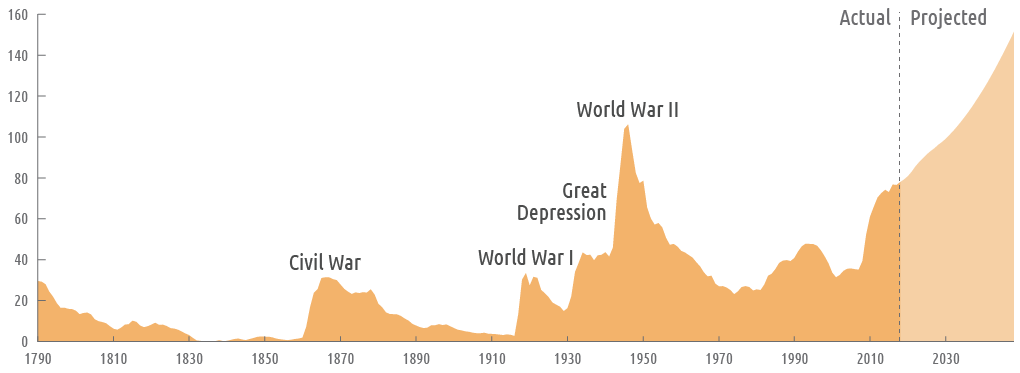
1. What BS. The us has been a creditor for a long time. In 1835 the full dept was payed off (only time ever). It lasted until 1836. If you care to see reality try this..
https://upload.wikimedia.org/w...2. At least this one has some truth to it. He did increase the deficit in real terms.The rest of it is just religious blather. Half of people believe in personal responsibility. Half of the people believe in collectivist responsibility. Sign-up for your camp, I have yet to see conclusive evidence for either side.
3. Given that more than a quarter of chronic homeless are mentally ill I would say it is probably more the fault of getting rid of institutionalization. The push to get rid of institutionalization was from many places (of which Reagan was one). See this for real information
https://en.wikipedia.org/wiki/...4. Hmmm, looks like your conspiracy nut hat is showing. I would stick to policy and stop jumping at shadows if I was you. Oh, oh, I said shadows isn't that some code word for something else... I must be a racist...
4 (the second one).Hmmm, in a world without the US would the USSR have fallen as quickly... Probably not (they were doing well at the expand to acquire capacity plan for a while). In a world where Reagan wasn't pushing so hard would the USSR have fallen over as quickly... Probably not (It was probably military spending that helped push them over). Would they have fallen eventually? Yes, everything dies eventually.
As to how much money there was I find it hard to care that much. There is probably some waste that needs to be dealt with. That being said Defense spending as percent of GDP continues to go down. It looks like success to me.
http://www.usgovernmentspendin... -
Re:Gold is the only real money
Weak I have a few Z$100,000,000,000,000 notes.











.png)







.svg/2000px-Browser_Wars_(en).svg.png)


.png)