Slashdot Mirror
Domain: world-nuclear.org
Stories and comments across the archive that link to world-nuclear.org.
Comments · 354
-
Re:So Germany is not a state?
Thirdly, the 'idea' that coal emits noticeable radioactivity is a myth from the 1960s/1970s.
Really? Skip down to table 2 - German coal may not contain a large amount of Uranium, but it does have Radon, Thorium, and Potassium. Please read this post that I wrote using the data from table 2 for US coal.
I seriously doubt there's no U-238 in German coal if there is Ra-226 since they're related via the decay chain, and Table 3 disputes the lack of U in German coal - the ash and slag contain up to 411 Bq/kg of Uranium that has to exist in the unburnt coal.
Even if we ignore the Uranium and go with just the average levels of Th and K, we get a total activity of 435 Bq/kg, which is ~3.5x the lowest US value detailed in my other post. That means 1 kg of average unburnt German coal contains 29 BEDs. When burnt in a 'new' plant (assuming the 1% up-the-flue rule) each burnt 3.45 kg of German coal results in 1 BED (banana equivalent dose, 15 Bq) out the stack. I don't have figures for German coal consumption/year, but that's still quite a lot of fissionable material going up the stack. The US alone emits a minimum of 11 tonnes of U and 2.7 tonnes of Th - that's 70.25 billion (10^9) BEDs best case and 7.025 trillion (10^12) BEDs worst case.
Mass-for-mass, average unburnt German coal is 4.35 times as radioactive as your average banana.
Is it noticeable? Certainly. Is it dangerous? Probably somewhat. Is it worth "The sky is falling" hysteria? No.
-
Re:Full benefits & Full responsibility
God, was I stupid - here's the citation you require. Table 2 and the other statements that I quoted are in this document.
-
Re:Carbon Neutral?
Solar and wind use far more natural resources. Steel, concrete, and even rare metals like neodymium and silver are used in huge quantities. Furthermore, coal is required for the production of concrete and steel.
Way to cherry pick the most energy inefficient and obsolete uranium separation process. "The gaseous diffusion process consumes about 2500 kWh (9000 MJ) per SWU, while modern gas centrifuge plants require only about 50 kWh (180 MJ) per SWU." So, a factor of 50 more energy intensive, to say nothing of upcoming laser enrichment.
Next generation reactors like the LFTR won't even require enrichment, nor any extra mining at all. Thorium is a free by-product of rare-earth mining.
-
will they claim carbon credits
for the billions needed to decommissionn nuclear plants "Japan's Tokai 1 reactor, a 160 MWe UK Magnox design, is being decommissioned after 32 years service to 1998. After 10 years storage, in Phase 2 (to 2011) the steam generators and turbines were removed, and in Phase 3 (to 2018) the reactor will be dismantled, the buildings demolished and the site left ready for re-use. The total cost will be JPY 93 billion (USD 1.04 billion) – 35 billion for dismantling and 58 billion for waste treatment which will include the graphite moderator" + "San Onofre 1, which closed in 1992, was put into Safestor until licences for Units 2 and 3 expired in 2022-23. However, after NRC changes, dismantling was brought forward to 1999, so it became an active Decon project which was largely completed in 2008. A small amount of work remains to be completed with eventual dismantling of units 2 & 3 on the site, which were shut down in May 2013. The cost of fully decommissioning them is estimated at $4 billion." source: http://www.world-nuclear.org/i...
-
Re:Pointing out the stark, bleeding obvious...
Imagine for a minute what it would take to make a world wide commitment to shut down 100% of all fossil fuel power within 30 years. A few small measures aren't going to do it, it will have to become priority one, and not just in the US or Europe, but worldwide.
That's how you know there isn't really a problem. In all the political solutions offered to date, not one of them has actually created a task force devoted specifically to developing technology to make that possible. Instead, they go with the concept of distribution of wealth under the guise that someone will eventually get upset with paying more and eventually find something cleaner and more viable than existing technology. Hell, Kyoto was that way, of the 157 or so countries that signed it (not necessarily ratifying it), only 37 had limits the had to reduce to (the developed world), 14 of the annex 1 countries were considered economies in transition and got future limits along with commitments of aid in monetary and technological support from the developed countries. The annex 2 countries had no limits but agreed to think about it. The benefit for them was that the first world countries would invest in them by off shoring their production needs which is why China for instance, has seen a 10 fold increase in carbon emissions per capita and India has seen similar rises. Most of Europe only met or came close to meeting their commitments due this this increased importation of goods and a global recession. Germany, the darling of the green movement got great benefits from the reunification of East Germany and they could get rid of redundant system while replacing them with more efficient systems but now they seem to be increasing their Carbon output instead of further decreasing. Back in the late 1980s and 1990s there was a political movement to forgive the third world debt incurred by the oil embargo of the 1970s and one of their goals was to either erase the debt completely or extend development and trade into these countries making it easier for them to repay it. This disappeared with the Kyoto accords. One of them I remember was Jubilee2000 and they specifically tied environmental issues into their campaigns and pushed for ratification of the Kyoto protocols before they split into different groups and almost disappeared.
Climate change is real, it might be a problem, but it doesn't appear like anyone wanting to do something about it thinks so more than lip service in order to get their other goals implanted. Look at the space race, we didn't leave it up to the private sector to put a man on the moon even though it was more or less showcasing out technological superiority. We wanted something done, we got something done. Now, do we want something done with global warming? If we did, there would be an international organization or at least a government organizations, devoted to developing technology that could be cost competitive, clean, reliable, and safe to phase out carbon emissions and it would offer this technology to anyone wanting to use it. In 2005, the world IEA member countries spent 9586 million dollars in developing energy. That's over 9.5 trillion dollars in one year. For renewables, they spent 1113 million or 1.1 trillion dollars in one year. How much money would it take to have a lab with a couple dozen or more scientists working to find clean, safe, reliable and cost effective ways- strategies- to meet those needs and tackle the problem of climate change they claim is there?
I'm sorry, but nobody seems serious enough to care about it and we shouldn't either. At least not until the solutions become about finding ways to mitigate it, about finding ways to make this cost effective and possible including sequestration as well as other sources of energy instead of being about ways to tax more and spend more and control over people's lives.
-
Smaller reactors are better.
I looked at all the comments. There don't seem to be any that mention the underlying issue. Areva makes HUGE reactors. Management of large constructions causes expensive problems. Dealing with a disaster in a huge reactor is also far more difficult.
Quote: "Generally, modern small reactors for power generation are expected to have greater simplicity of design, economy of mass production, and reduced siting costs. Most are also designed for a high level of passive or inherent safety in the event of malfunction."
The Areva design does not have "passive or inherent safety". -
Port Hope-CANDU-Westinghouse-Eldorado
I grew up in Port Hope, Canada, where Eldorado Mining and Refining was located on Lake Ontario... http://en.wikipedia.org/wiki/E... http://www.toxipedia.org/displ... In 1969 worked for one year at a factory in town called Westinghouse Atomics that made the fuel rods for CANDU reactors... https://books.google.co.uk/boo... http://www.world-nuclear.org/i... Eldorado used to dump truckloads of refined uranium on the loading dock of Westinghouse, which I could watch from my work station, which was then scooped up and eventually turned into round ceramic-like pellets 1cm x 2cm. These were inserted into 2 foot long zirconium tubes. Bundles of the tubes were made to insert into the 50 foot long zirconium calandria tubes in the reactor core. http://en.wikipedia.org/wiki/C... I thought I was quite clever when I snuck one of the pellets out. We all had radiation badges, but no one actually checked them. Everyone that I knew who worked there for a long time eventually died young of some type of cancer. I only worked directly with uranium for 6 months, but in my late 50s I developed rheumatoid arthritis, which apparently is rather unusual. They used to dump waste sludge behind our high school, where we all went to smoke dope after class. Subsequently there was a massive cleanup in many areas of the town. http://bmjopen.bmj.com/content... https://books.google.co.uk/boo... http://www.world-nuclear.org/i... How does all this relate to the original topic? Well, at the time, everyone thought it was harmless, like the toy. Everyone I worked with at the time could be called a chav or a redneck or a good old boy - some of them were really good people, some not so. But Hey, it took me 6 effin months of handling uranium pellets to finally realize that this might not be the best way to spend my life making money, so I quit. The rest of them believed the company line that everything was safe. https://www.google.co.uk/url?s... cheers
-
Port Hope-CANDU-Westinghouse-Eldorado
I grew up in Port Hope, Canada, where Eldorado Mining and Refining was located on Lake Ontario... http://en.wikipedia.org/wiki/E... http://www.toxipedia.org/displ... In 1969 worked for one year at a factory in town called Westinghouse Atomics that made the fuel rods for CANDU reactors... https://books.google.co.uk/boo... http://www.world-nuclear.org/i... Eldorado used to dump truckloads of refined uranium on the loading dock of Westinghouse, which I could watch from my work station, which was then scooped up and eventually turned into round ceramic-like pellets 1cm x 2cm. These were inserted into 2 foot long zirconium tubes. Bundles of the tubes were made to insert into the 50 foot long zirconium calandria tubes in the reactor core. http://en.wikipedia.org/wiki/C... I thought I was quite clever when I snuck one of the pellets out. We all had radiation badges, but no one actually checked them. Everyone that I knew who worked there for a long time eventually died young of some type of cancer. I only worked directly with uranium for 6 months, but in my late 50s I developed rheumatoid arthritis, which apparently is rather unusual. They used to dump waste sludge behind our high school, where we all went to smoke dope after class. Subsequently there was a massive cleanup in many areas of the town. http://bmjopen.bmj.com/content... https://books.google.co.uk/boo... http://www.world-nuclear.org/i... How does all this relate to the original topic? Well, at the time, everyone thought it was harmless, like the toy. Everyone I worked with at the time could be called a chav or a redneck or a good old boy - some of them were really good people, some not so. But Hey, it took me 6 effin months of handling uranium pellets to finally realize that this might not be the best way to spend my life making money, so I quit. The rest of them believed the company line that everything was safe. https://www.google.co.uk/url?s... cheers
-
Re:So which kind of solar is it?
But a NEW thermal plant is cheaper than a NEW nuclear one.
Number of nuclear plants under construction around the world: More than 60
Number of large solar thermal plants under construction around the world: 0If solar thermal was actually cheaper, these numbers would be reversed.
Nukes can produce wholesale electricity for about $0.10 / kwHr.
Solar is currently about twice that. -
Re:Nuclear fission has higher carbon than measured
so if your heart is set on nuclear, maybe fusion will pencil out.
If your heart is set on nuclear, fission is panning out now.
Asia is building reactors fast. Very fast. Fukushima caused some investigation and siting changes, but the plants are still going up in China, India and S. Korea. Thirty three new reactors will enter commercial operation in those countries in the next three years by my count; see www.world-nuclear.org. The drought has even ended here in the last few years; there are now five new reactors under construction in the US with more applications in the works.
Not bad for a "non-starter."
-
Re:They should all be fired!
Well, if the terrorists were also able to obtain an equal amount of antimatter, they could liberate about the same amount of energy as you would get from burning 4 gallons of gasoline. You'd also have to worry about 6360 decays per second, which is about as much radiation as you emit. Pu-239 emits quite a bit of radiation per decay, a total of 207.1 MeV of various neutrons, gamma rays, and fission fragments, which is about
The big question though would be, if you made a miniature fission bomb out of it, what would the yield be? Sorry to disappoint, folks, but this is probably not possible. "A spherical untampered critical mass is about 11 kg (24.2 lbs), 10.2 cm (4") in diameter". Calculating the compression required to make the sample mass critical would be nontrivial, but it's well into the "diamond anvil" range, and far beyond what is possible with explosives. Plutonium compresses relatively well, for a metal, but not that well.
So, in order to avoid the biggest health risks associated with this sample, I recommend that you not eat it.
-
Re: the best use
Please provide sources. There are no plant build subsidies, only government loans (admittedly with low interest) that are paid back. I don't know what you mean by plant operating subsidies but the power produced is very scarcely subsidized, according the the Wall Street Journal, nuclear is subsidized at about $1.59 per megawatt hour, whereas solar and wind are given roughly $24 each per MWh. A research study on the externalities of energy found that nuclear externalized 0.2-0.7 cents per kWh depending on the country, while solar externalized 0.6 cents and wind externalized 0.2. For comparison, coal and oil were at around 10 cents per kWh. Plant waste is not subsidized, the cost of disposing/storing nuclear waste is added to the price of the electricity (source). I was unable to find any information on subsidizing retirements for nuclear workers, and I have no idea what you mean by money spent on nuclear education.
I am not "forgetting the other 6 decades", they were taken into account in the $73 billion.
-
Re: the best use
To you and the AC above claiming that many trillions have been spent on nuclear energy: are you insane? Seriously, where in the world are you coming up with these figures? At it's peak development in the 1980's the US government was spending $2.4 billion per year on nuclear energy R&D and it's been steadily declining ever since (source). In total, nuclear has received $50 billion in R&D and more in various subsidies that total to $73 billion (source). The Manhattan Project cost the US $20 billion (adjusted for inflation), not the trillions that you somehow came up with. On the other hand, non-hydro renewables have received $74 billion in subsidies. Yes, nuclear plants cost money, but the government does not own any commercial nuclear plants. These are paid for by private companies and the cost is recouped through the energy that they sell, just like any other energy production. The assertion that we would have no national debt if not for nuclear energy is frankly absurd.
-
Re:Deliberate
China has 21 nuclear power plants. There are 28 additional plants under construction. Because of lower construction costs and faster time to market, the cost of building THE SAME nuclear plants in China is about 1/3 the cost in America. (They are building modern plants like the AP1000, which is also being considered in the US.)
http://en.wikipedia.org/wiki/N...
http://www.world-nuclear.org/i...
Then you have India which is investing in the thorium fuel cycle.
Conclusion: In countries where there is less regulation, or equivalently the government is fully behind the project, nuclear is flowering and provides low cost baseline electricity.
-
Re:Riiiiiight, because that's what this issue...
Sadly, we likely lost the war on Global Warming back in the 70-80's when China industrialized. Oil was too cheap to force innovation in renewable power.
Oil is not the big CO2 source of China - coal is. China would love to get rid of all coal and move to nuclear, and they plan to have 150 GWe of nuclear by 2030. Unfortunately, today they have 707 GWe of coal.
-
Re:Indeed...
Your post would be considerably more persuasive if you showed the price of uranium at which it became "unsustainable", and if you didn't throw out a random "well over 100x current cost" figure when your linked source only documented a 10-20 times cost using older technologies now being superseded described in the article. (Your provide no analysis to show that the even the 2007 price spike made nuclear power "unsustainable" - proof by unsupported assertion does not work)
At $130/kg the cost of uranium mining comprises a cost of 0.32 cents per kwh. So at $1000/kg this cost rises to 2.5 cents per kwh. The additional 2.2 cents is less than the estimated cost difference between advanced nuclear and more expensive future solar PV power, which I suspect you believe to be viable (I do). So the fearsome $1000/kg price still leaves nuclear power cheaper than solar. If more advanced technologies cut the cost (the normal pattern of things), and the topic of the Technology Review, this differential gets cut as well. A better article on seawater uranium extraction indicates that technologies under development should cost $300/kg, a price that drops the differential to only 0.42 cents per kwh, and making it a very minor component of nuclear power cost
-
Re:Indeed...
operating costs for 61 nuclear sites in 2012. The average came to $44/MWh
Add to that construction costs, decommissioning costs and nuclear fuel reprocessing / storage costs and you've got one very expensive method of producing electricity.
http://www.world-nuclear.org/i...
Why aren't there more nuclear fuel reprocessing plants? Because it's horrendously expensive.
http://belfercenter.ksg.harvar...Cost of building maintaining, removing new Wind farms?
Less than $36.5 per MWh
Wind Technologies Market ReportWith the numerous ways of matching and storing wind energy,nuclear can not compete
Wind power is continuously getting cheaper, solar power is continuously getting cheaper and there is good reason for that to continue. Storage technologies are also getting cheaper. Solar is set to become the 2nd cheapest form of energy, after Wind.
http://cleantechnica.com/2014/... -
Load following Nuclear Plants
Because I try not to respond to ACs, I'll stick it in here.
As you pointed out, Nuclear ships DO NOT run their plants at 'full power all the time'.
But even HUGE nuclear plants can be built to be capable of 'load following', going from 100% down to 50% and below on a consistent basis. France has a number of them.
Part of the problem with using reactors for load-following is that all the reactors in the USA are very old Gen-II designs, you need to be at least 'newer' Gen-II to do a lot of load following, and we don't have enough nuclear for them to NEED to load-follow, leaving them as the cheapest margin for on-demand power.
If we went from our current mix of about 20% nuclear, 40% coal, to a carbon-neutral mix of 40% nuclear, 20% solar, 20% wind, and 20% 'other, including hydro', you'd have most of your peaking power in 'other', but nuclear power would still have to adjust for peaking.
-
Re:When arguing solar vs. nuclear...
It is more cute that you don't kniw the difference between waste and spend fuel.
Reprocessing spend fuel produces more waste than not reprocessing, hint: for fuck sake read about the topic instead of making cute comments that in hint seight only show you are a dump ass, and not a smart ass.It's also cute when someone who can't spell attempts to "correct" a theoretical physicist on a physics topic, and their correction is wrong:
http://www.world-nuclear.org/i...
http://en.wikipedia.org/wiki/N... -
Re:So.. what?
Nuclear is dying? Is that why dozens of new reactors are under construction worldwide and many existing power plants have been upgraded to produce more power?
http://www.world-nuclear.org/info/current-and-future-generation/plans-for-new-reactors-worldwide/
It may not be the glamorous renewable energy source, or even the go to source of base power generation, but it still has a solid role in worldwide energy production.
-
Re:Baby with bathwater
France electricity prices do not reflect the actual cost. This is not a free market situation.
Most electrical systems are not "free market" systems, as rates are heavily regulated by rate commissions and production is tightly controlled by government planning and approval. In any case, can you demonstrate that France's electricity price is not real? I'm pretty sure rate payers there don't see more than the billed amount get debited each month from their accounts. From a taxation perspective France is also lower than Denmark, so what's your point again?
Even for existing technology nuclear is not really competive, actual 3rd generation projects see immensive cost explosion
There's a couple of reasons for this:
- We haven't been building them, so building few units at a time is expensive. Curiously though constructing over 50 units over 15 years didn't bankrupt France in the 1970s and 1980s.
- China is actually building them on time and on budget thanks to volume purchasing, high levels of standardization and coordination.
- Environmentalists' pushback is creating a bit of a self-fulfilling prophecy in that they delay construction projects, these then escalate in cost and the same environmental groups subsequently complain about delays and budget overruns.
So it can and has been done, all it takes is determination and united will.
thorium is currently just vapourware
Complete and utter vaporware, just like the other vaporware that was actually ready for deployment in 1994, but was killed by political action (although the concept having survived in Russia). As for LFTR, you are right, there are currently no ready and licensed designs, but that doesn't mean that we can't pursue them. The physics is clear, as is most of the chemistry. What needs to be really worked out are the operating principles and doing all of the detailed work to actually get a permitted design off the ground. If we'd spent a small fraction of the money sunk into renewables into these nuclear projects we could have had a design ready to roll a decade ago (we had the IFR, as I said before, but that was killed for political reasons).
-
Re:Water Reactors are Teh Suck
" All the reactors we have now were designed in the '50s. "
And why's that? Because the ecology-fanatics brought a complete halt to civil nuclear development.
Those eco-fanatics" actually haven't: http://www.world-nuclear.org/i...
The real answer: Three Mile Island and Chernobyl.
And who is telling us we need to get rid of coal now?
That one is incredibly easy: the people that want to save this species form fucking over the environment so much that everyone dies, although why they'd want to save your stupid fucking ass is beyond me.
-
Re:Keystone XL
and reduced by a factor of 2 by switching to breeder reactors and improving efficiency
The non-fissile U-238 that's converted and used in a breeder reactor is 138 times as common as the U-235 that's used in conventional reactors. Why are you assuming only a factor of 2?
Refining U-235 is quite expensive
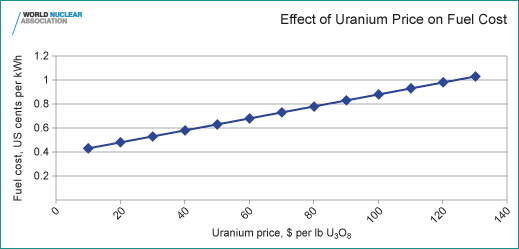
It's *very* expensive per kg - but it doesn't take much uranium to run a reactor. What counts is the cost per kilowatt-hour. From here, it looks like it's 0.66 c/kWh. For comparison, I'm paying 22.0 c/kWh for power. In other words, the cost of the uranium is a tiny fraction (~3%) of the cost of power - most of it goes into building and running the plant. So the price of uranium could double, and it would hardly have any effect on the cost of nuclear power.
-
its not hacking.
this is industrial espionage, which can sometimes include the act of hacking however is not necessarily hacking in and of itself.
competent is an understatement when referring to a country thats manufactured twenty power plants and is in the process of creating another twenty eight. To think they would express any interest in reactor technology from a country that hasnt built a single reactor in more than 30 years is rather suspect. on the other hand, is entirely reasonable to suggest America is punishing china for failing to source their reactors and plants from say, General Electric. As exposed in cablegate, the US routinely becomes very litigious when faced with reluctant or recalcitrant markets that enjoy domestic manufacture of their heavy industry goods and services, especially in the case nuclear independence. -
Nuclear desalination plants
"In Japan, some ten desalination facilities linked to pressurised water reactors operating for electricity production yield some 14,000 m/day of potable water, and over 100 reactor-years of experience have accrued." -- http://www.world-nuclear.org/i...
-
France is 75% nuclear
He also promotes using nuclear energy as part of the solution.
Well, France demonstrates he is correct. They get 75% of their electricity from nuclear and have very inexpensive electricity.
"France derives over 75% of its electricity from nuclear energy. This is due to a long-standing policy based on energy security.
France is the world's largest net exporter of electricity due to its very low cost of generation, and gains over EUR 3 billion per year from this.
France has been very active in developing nuclear technology. Reactors and fuel products and services are a major export.
It is building its first Generation III reactor.
About 17% of France's electricity is from recycled nuclear fuel."
http://www.world-nuclear.org/i... -
France: 75% of electricity from nuclear ...
Nuclear power has always been a pipe dream of some sort.
Not in France.
"France derives over 75% of its electricity from nuclear energy. This is due to a long-standing policy based on energy security.
France is the world's largest net exporter of electricity due to its very low cost of generation, and gains over EUR 3 billion per year from this.
France has been very active in developing nuclear technology. Reactors and fuel products and services are a major export.
It is building its first Generation III reactor.
About 17% of France's electricity is from recycled nuclear fuel."
http://www.world-nuclear.org/i... -
Nucular power
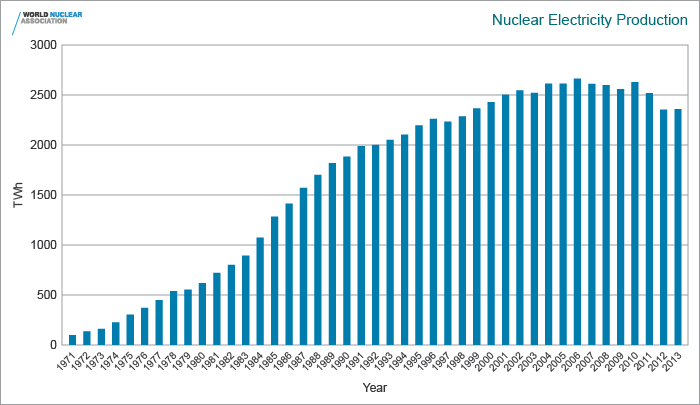
Take a look at this graph: Nuclear Electricity Production. It's quite easy to spot 1986 on this graph (Chernobyl). That's where the trend of acceleration in nuclear power growth has reversed into deceleration. No such reversal has occured in demand for electric power, of course. The shortfall has been largely picked up by coal.
The number of people that have been killed by air pollution from coal as an indirect result of the nuclear stagnation after the Chernobyl accident is well into the millions.
-
Re:Celebrity Death Match
Radioactive fallout doesn't obey political boundary's.
It's not the N-weapons themselves, (couple of thousand megatons worth, on each side, yield split between fission(%50), fusion(50% relatively clean)), which will make real mess. But the 400+ Nuclear power plants around the globe melting down and/or being destroyed as a result.
Each nuclear power plant has several hundred megatons worth of highly radioactive fission byproducts stored inside the reactor and next to them in spent fuel rods. As demonstrated in Fukushima, all it takes is an extended loss of electricity to start the melt down process.
A megaton's worth of fission byproducts is created for every ~0.4TWh of electricity produced. Production of electricity via nuclear power worldwide is currently in the range of ~2200TWh. Thus ~5500 Megatons of potential fission fallout per year is added to an pre-existing inventory of ~150,000 Megatons, awaiting to deal humanity a coup de grÃce.
-
Re:Dwarfed? yeah right
Then you can focus on numbers other than $Deaths, like:
Some 160,000 people were evacuated as a precautionary measure, and prolonging the evacuation resulted in the deaths of about 1100 of them due to stress, and some due to disruption of medical and social welfare facilities.
http://www.world-nuclear.org/i...
Or perhaps look at a chart showing the magnitude of radiation around Fukushima with respect to time:
http://upload.wikimedia.org/wikipedia/commons/2/2f/Fukushima7.png
There is always radiation around us from natural sources (cosmic, ground, foods), so when the background radiation of the surrounding area is at a normal level, then why are people concerned? The numbers don't add up, but the perception of fear continues.
Or you can use this number instead of deaths: (emphasis added)
...40 children newly diagnosed with thyroid cancer and other cancers in Fukushima prefecture 18 of which were diagnosed with thyroid cancer, but these cancers are not attributed to radiation from Fukushima, as similar patterns occurred before the accident in 2006 in Japan, with 1 in 100,000 children per year developing thyroid cancer in that year, that is, this is not higher than the pre-accident rate.
-
Re:Riiiight
You do understand that Ukraine has enough expertize and know-how to make nukes within a few months? You do realize that Ukraine power supply is 50% nuclear?
There are nations in this world that can build nuclear weapons within months, if they wanted to. They simply choose not to. I would name Ukraine as one of these nations.
-
Re:No, because they are not compatible
According to the wiki on Pumped-storage hydroelectricity (PSH), 'PSH accounts for more than 99% of bulk storage capacity worldwide: around 127,000MW, according to the Electric Power Research Institute (EPRI), the research arm of America's power utilities.' Since in pumping the size of the reservoir is not the limiting factor, but rather the throughput of the pumps, this means that PSH can be used to store the daily output of 127GW worth of power plants. Britain's consumption is 35.8GW on average, and 57.490GW at peak (http://en.wikipedia.org/wiki/Energy_in_the_United_Kingdom), so the global installed PSH's could easily absorb the UK's production.
In the UK, however, there seems to be only one plant (http://en.wikipedia.org/wiki/Dinorwig_Power_Station), costing 425M GBP in 1974 capable of absorbing around 1GW worth of power, so nowhere near 50% of base load, so it seems that PSH costs around 425M/1G = 0.5 pounds per watt capacity. Apparently, a new nuclear plant costs about US$ 5,339/kW., or 4 pounds per watt capacity, while windmills cost around 1-2 pounds per watt. So, assuming enough sites for PSH can be found, the costs for power storage capacity seems to be 5-25% of the cost for generation capacity.
According to the wiki, "The stalling of the UK nuclear power programme in the late 1980s and the coincident "dash for gas" increased the network's ability to respond to changes in demand, making the use of pumped storage for day/night load balancing less attractive. As a result, a similar facility planned for Exmoor was never built.[2]"; so it seems that at the time the demand is what limited PSH construction, not cost or environmental factors.
http://www.world-nuclear.org/i...
http://www.windustry.org/resou... -
Re:And it will continue until ALL nations work on
The parent post is correct, but Greenpeace does not dictate government policy in Australia.
Australia has 31% of the world's uranium reservers (the world's largest) and has in recent years declined production slightly (probably due to Germany's and Japan's 'efforts' that increase greenhouse gas emissions across Europe and Japan). Australia does not use nuclear power for energy generation or for military use or for icebreakers or any use other than ANSTO (small research lab that produces radioisotopes for medical use).
Australia could have gone nuclear ages ago, but didn't. Similarly to how it cut space research and plans to build rocket launch platforms, it is a country of little physics achievements that haven't been done by overseas people. The problem is that is also a county full of coal, and with other countries running out of coal, it might well be the place for coal globally over the next 50 years if policy doesn't change domestically.
Already the highest greehouse gas emitting OECD country in the world in the future if the coal extractions can be seen large from space (like tar pits in Canada) then it might become the biggest contributing country to global warming on a global scale indirectly (due to use of its coal and nonuse of uranium, not to mention thorium).
-
Re:Consumers don't see these fluctuations
This is blatantly wrong. About half of the reactors in Germany have been permently shutdown, but the schedule has some reactors running until 2022. In 2013, about 90 TWH of electrical power in Germany was produced by nuclear, about 16% of their total power. They are going to eventually shut them all down according to current plans, but in the mean time, they will still be generating electrical power for the grid for several years.
-
Re:five million gallons later, who'da thunk it
Nope, its 45MWe. As for the scaling, I live in Alaska where we have a coal cogeneration plant - I think it'd be nice and pollution limiting if it was nuclear, or at least nuclear supplemented.
Right you are, 160MW thermal 45MW electric, I'm getting too hasty on fact-checking. Still on the small side but perfect for Alaska, especially if your city or town is already piped for steam heating.
NuScale is projecting less than $5,000 cost per KW for these which is comparable to a recent utility sized 2010 capital cost estimate of $5,339/KW. In 2008 Moody's had really spoiled the mood by projecting $7,000/KW as the cost of new nuclear power and warning investors away.
So why is the capital cost of nuclear some 4-5 times the cost of a combined cycle natural gas plant (~$1,400/KW)? Aside from the obvious reasons like being dangerous and Atomic.
In 1970-71 Consolidated Edison built the Dresden plant for $146/kW
What the hell is going on?
I found no easy answers, but plenty to ponder in Chapter 9 ("Costs of nuclear power plants -- what went wrong?") of The Nuclear Energy Option, a great little book by Bernard Cohen [full text online]. This work is dated [1990] and quaint -- he is bemoaning a plant that cost $3,326/kW in 1986 -- the whiner! But he does a good job describing the NRC practice of "regulatory ratcheting", where standard numeric metrics of safety have been codified, all the tough work is over, and every succeeding generation of regulators gains a round of applause and gets to wear festive party hats if they just plug in new (always higher: click) numbers.
This is an example of what I call "No one ever lost their job" syndrome, a creeping cancer of our society on many fronts. It is a malady that especially affects safety cultures. No one ever lost their job by announcing that things are not quite as safe as they could be, or regulation is strangling essential industries. The NRC has created plug-in metrics like requiring more concrete, more frequent inspections, margins and limits, time-tables and reporting requirements. And heavier fines (announcing a hike in fines works even when there are no infractions or violations, the public imagines this is being done to punish evil corporations who are foaming at the mouth and straining on their leashes this very moment).
Then there is outright abuse and intimidation. The recent yarn, Uneven Enforcement Suspected At [US] Nuclear Power Plants which made my eyeballs pop out on springs when I read it. It seems to say that the NRC is concerned that regulation (by the NRC) might be lacking in some (un-visited) regions for unknown reasons and the NRC is
But no one will lose their job, even when they susp
-
Re:Higher prices = 80 years
Any argument that...
Please stop. I've now cited an official government source, and a reputable international source. Both of these analysis were done by a team of economists, nuclear engineers, and accounted for as many factors as reasonably can be taken into consideration. You have cited... absolutely nothing.
That the oceans contain enough uranium for 10,000 years of once-through energy production is well known and easily confirmed. The IEEE Spectrum article cites current research results that indicate the cost of seawater extraction can be performed at a cost of about $300/kg, a price point that the uranium spot market has already broken in the past, and the additional cost added to electricity by paying $300/kg vs current prices of around $100/kg is only about 0.6 cents per kwh still quite competitive with coal, gas and renewable energy sources.
Economists making government resource projections aren't permitted to consider emerging (aka unproven) technologies. Up until now there has been little incentive to try to develop seawater extraction (more expensive admittedly) as long as conventional mines were cranking out adequate supplies at low prices. This will change, and new technologies developed and exploited.
Just look at fracking. No production to speak of 10 years ago, now production is climbing steadily, soon to create a large gas surplus. Or renewable energy, with double digit increases in wind and solar power year after year. New technology and production processes with lower costs aren't limited to gas, solar and wind - uranium extraction benefits also. New processes often do not get perfected until there is economic demand for them.
-
Re:Higher prices = 80 years
Any argument that...
Please stop. I've now cited an official government source, and a reputable international source. Both of these analysis were done by a team of economists, nuclear engineers, and accounted for as many factors as reasonably can be taken into consideration. You have cited... absolutely nothing.
That the oceans contain enough uranium for 10,000 years of once-through energy production is well known and easily confirmed. The IEEE Spectrum article cites current research results that indicate the cost of seawater extraction can be performed at a cost of about $300/kg, a price point that the uranium spot market has already broken in the past, and the additional cost added to electricity by paying $300/kg vs current prices of around $100/kg is only about 0.6 cents per kwh still quite competitive with coal, gas and renewable energy sources.
Economists making government resource projections aren't permitted to consider emerging (aka unproven) technologies. Up until now there has been little incentive to try to develop seawater extraction (more expensive admittedly) as long as conventional mines were cranking out adequate supplies at low prices. This will change, and new technologies developed and exploited.
Just look at fracking. No production to speak of 10 years ago, now production is climbing steadily, soon to create a large gas surplus. Or renewable energy, with double digit increases in wind and solar power year after year. New technology and production processes with lower costs aren't limited to gas, solar and wind - uranium extraction benefits also. New processes often do not get perfected until there is economic demand for them.
-
Re:Primary goal was disposal, not energy
I like your post, but it propagates a myth due to severe omission. I'd like to correct it. The big problem is, you're off by a factor of 100.
False. "Uranium reserves available at up to $100 per pound of U3O8 represented approximately 23 years worth of demand, while uranium reserves at up to $50 per pound of U3O8 represented about 10 years worth of demand. Domestic U.S. uranium production, however, supplies only about 10 percent, on average, of U.S. requirements for nuclear fuel"
Source. Domestic US production gives us 23 years of demand at 100% capacity. It is currently at 10% capacity. Conclusion: About 230 years.A second estimate looking at global supply had this to say: "Thus the world's present measured resources of uranium (5.3 Mt) in the cost category around present spot prices and used only in conventional reactors, are enough to last for about 80 years. This represents a higher level of assured resources than is normal for most minerals. Further exploration and higher prices will certainly, on the basis of present geological knowledge, yield further resources as present ones are used up." It goes on to state "This is in fact suggested in the IAEA-NEA figures if those covering estimates of all conventional resources (U as main product or major by-product) are considered - another 7.6 million tonnes (beyond the 5.3 Mt known economic resources), which takes us to 190 years' supply at today's rate of consumption."
200 years is an accurate assessment given available data. Your assessment is based on non-existant technology and substantial change in current industry practices. Mine is based on today's technology, and no change.
-
Re:Nuclear: only interim solution, permanent waste
I think there are a bunch of links in this Slashdot discussion claiming otherwise. On the surface, it makes sense: shut down nuclear plants, and what else are you going to do? Solar just can't produce that amount of power (yet).
To confirm this, I just did a quick Google search for "Germany Coal Nuclear Solar":
https://www.google.com/search?q=germany+coal+nuclear+solar&ie=utf-8&oe=utf-8&aq=t&rls=org.mozilla:en-US:official&client=firefox-a
which seems to confirm the increase in coal burning, although the Poland connection seems to be false.http://www.world-nuclear.org/info/Country-Profiles/Countries-G-N/Germany/
"More than half of Germany’s electricity was generated from coal in the first half of 2013, compared with 43% in 2010." but it says nothing about the shutdown of nuclear reactors.http://cleantechnica.com/2013/02/05/debunking-common-myths-about-nuclear-coal-power-in-germany-this-time-repeated-by-the-guardian/
"coal (including lignite) is up around 5%...have nothing to do with nuclear in Germany."http://www.csmonitor.com/Environment/Energy-Voices/2013/0716/The-dirty-coal-behind-Germany-s-clean-energy
This sites the 5% figure but doesn't mention why. "Germany has managed to be praised by environmentalists more than any other developed nation and yet is building more coal plants than more or less any other developed country" but it has no specifics.http://www.dissentmagazine.org/article/green-energy-bust-in-germany
This one claims the same thing.
"Germany is indeed avoiding blackouts—by opening new coal- and gas-fired plants. Renewable electricity is proving so unreliable and chaotic..."http://canadafreepress.com/index.php/article/57035
"they are now building coal-fired electricity generation and shuttering nuclear power plants..."I don't know what to believe now. Ultimately, we would need to see the energy mix numbers from the German power companies/government to know for sure. Just pointing out that new coal plants are being built doesn't mean much. They might be replacing existing ones, or making cleaner/smaller ones.
-
Re:I am not convinced
If load following nuclear is such a success, why does every country around France get free power at night from them?
Sorry, misread your message.
But it's wrong - every country around France doesn't get "free" power - they pay a shitload for the power they get from France. Like I said, it's Frances #4 export.
Anyway, if you want to know about French load ballancing nuclear go look at
http://www.world-nuclear.org/info/Country-Profiles/Countries-A-F/France/
All France's nuclear capacity is from PWR units. There are two ways of varying the power output from a PWR: control rods, and boron addition to the primary cooling water. Using normal control rods to reduce power means that there is a portion of the core where neutrons are being absorbed rather than creating fission, and if this is maintained it creates an imbalance in the fuel, with the lower part of the fuel assemblies being more reactive that the upper parts. Adding boron to the water diminishes the reactivity uniformly, but to reverse the effect the water has to be treated to remove the boron, which is slow and costly, and it creates a radioactive waste.
So to minimise these impacts for the last 25 years EdF has used in each PWR reactor some less absorptive "grey" control rods which weigh less from a neutronic point of view than ordinary control rods and they allow sustained variation in power output. This means that RTE can depend on flexible load following from the nuclear fleet to contribute to regulation in these three respects:
Primary power regulation for system stability (when frequency varies, power must be automatically adjusted by the turbine).
Secondary power regulation related to trading contracts.
Adjusting power in response to demand (decrease from 100% during the day, down to 50% or less during the night, etc.)PWR plants are very flexible at the beginning of their cycle, with fresh fuel and high reserve reactivity. But when the fuel cycle is around 65% through these reactors are less flexible, and they take a rapidly diminishing part in the third, load-following, aspect above. When they are 90% through the fuel cycle, they only take part in frequency regulation, and essentially no power variation is allowed (unless necessary for safety). So at the very end of the cycle, they are run at steady power output and do not regulate or load-follow until the next refueling outage. RTE has continuous oversight of all French plants and determines which plants adjust output in relation to the three considerations above, and by how much.
-
Re:Nuclear: only interim solution, permanent waste
Your articles don't argue your point. The first one says we would have to double the current number of reactors to meet 2054 target of growth or 208 reactors. Not the 12844 (35*52*7+104) that you suggest. The second article dances on non prolif concerns and makes no calculations. Where did you get your numbers? As a rough exercise, Currently 104 reactors service 19% of the US power demand. http://www.world-nuclear.org/info/Country-Profiles/Countries-T-Z/USA--Nuclear-Power/. That means 548 reactors to replace it all and an extra 104(using your first article) to meet growth for 2054. Assuming average generating capacity blah blah blah. That would be a reactor every 5 weeks for the next 50 years. And that would be all nuclear so it would be slightly less since renewable energy would still be used.
-
Re:Picking winners and losers
Really? Because the story more or less proves (inspite of its hate mongering) that Viable wind and viable Solar can spring up with out Government picking winners.
There are at least 12 companies working on Micro and Mini Nuclear plants, some of which can be trucked to a city, set into semi-buried location and trucked out again when their fuel or life is exhausted.
The clowns in Congress can't even keep the streets paved. Don't look to them for a solution to energy. The best you can hope for is that they do nothing and let industry develop viable solutions.
Alright up to the last sentence. The effectiveness of an unfettered "free market" is a myth. Get that part right, at least. The mess that is the current nuclear power industry world-wide is the result of that "industry developing viable solutions". Yes, I said mess. Far from the cost-effective solution it is always billed as, and beset with fundamental safety issues stemming directly from the profit-driven desire to circumvent "expensive regulation". Not saying that nuclear doesn't have it's place, but it damn sure will never be what it needs to be if left to the vagaries of the mythical free market.
-
Re:Picking winners and losers
Really?
Because the story more or less proves (inspite of its hate mongering) that Viable wind and viable Solar can spring up with out Government picking winners.There are at least 12 companies working on Micro and Mini Nuclear plants, some of which can be trucked to a city, set into semi-buried location and trucked out again when their fuel or life is exhausted.
The clowns in Congress can't even keep the streets paved. Don't look to them for a solution to energy. The best you can hope for is that they do nothing and let industry develop viable solutions.
-
Way to twist things...
But something funny has happened to renewables that major power companies and their Republican allies didn't see coming. Over the past two years, the solar industry has skyrocketed, with one new solar unit installed every four minutes in the US, according to the renewable energy research group Greentech Media. The price of photovoltaic panels has fallen 62 percent since January 2011.
Why is this story so full of anti-republican spin, when the facts so exactly vindicate the conservative and republican view?
The huge government subsidies proved to be a total flop.
Private industry found the best solar and best wind solutions and put them into production.The Conservatives were right all along. After the government plans collapse, with 500 million dollar loses, the hands off approach delivers a workable solution.
Several companies are also working full steam (pun intended) ahead on Mini and Micro-Nuclear that can be build for 100 million (less than a small shopping mall).
It appears this whole story is somehow about spewing hate more than shedding any light on the sustainable power developments.
-
Re:Assumptions
Even if your electric bill covers all the costs of construction, refinement, and ongoing safety and maintenance issues, which is doubtful, it does not cover the storage of waste for thousands of years.
Well, they are (construction I think is about 70% of the cost, but I forget at the moment... I work on a different energy source), but feel free to make shit up, again.
Here, go read something about the actual costs.
The construction costs are huge, but assuming that you plan on using electricity a few decades from now still, it averages out to be a pretty good deal.
And what's the weather like in your part of France? Do you have a couple months of subzero temperatures every winter, like the northern parts of the United States, and I don't just mean Alaska?
Well it's quite a bit warmer than Russia, where a good friend works has worked as a nuclear engineer for a decade....
-
Re:News just in
I'll grant you this: that figure is from a single source. It's never good to place too much trust on a single source of information.
Here's another reference. According to this, costs for reactors have only gone up 4-fold, not 10-fold. It doesn't get as specific as the other reference, but it appears to confirm (or at least not contradict) that the chief cost drivers are regulatory and lawsuit delays.
http://www.world-nuclear.org/info/Economic-Aspects/Economics-of-Nuclear-Power
See in particular the part about AP1000 plants likely costing 3-times as much to build in the US as in China, and the speculation as to why. Higher wages for construction labor is the least of it.
There, that's two references I have supplied, which is two more than you. Can you provide ANY references that support your theory that "horse judges" have been corruptly siphoning money away and thus making nuclear power plants cost more by lining their companies' pockets?
-
Re:News just in
I didn't explain myself, but I was trying to illustrate that the capital cost of the solar plant was in line with the costs of other modern power plants, and not the ludicrously expensive boondoggle some others were suggesting.
Source of my figures:
http://www.world-nuclear.org/info/Economic-Aspects/Economics-of-Nuclear-Power/
By way of contrast, China has stated that it expects its costs for plants under construction to come in at less than $2000/kW and that subsequent units should be in the range of $1600/kW. This estimate is for the AP1000 design, the same as used by EIA for the USA. This would mean that an AP1000 in the USA would cost about three times as much as the same plant built in China. Different labour rates in the two countries are only part of the explanation. Standardised design, numerous units being built, and increased localisation are all significant factors in China.
-
Re:Where are the people really serious about CO2?
only in stupid places. smarter countries are ramping up their nuclear programs and even more planning too in the near future.
http://www.world-nuclear.org/info/Country-Profiles/Others/Emerging-Nuclear-Energy-Countries/ -
Re:I'll start taking AGW seriously
absurdly biased statistics, that smarter countries aren't believing. http://www.world-nuclear.org/info/Country-Profiles/Others/Emerging-Nuclear-Energy-Countries/
-
Re:This subject is shill ridden
Isn't Karma a renewable resource?
Oh.. If you replace Nuclear power with (X) whatever X is that's quite a chunk of power to replace. In 2011, according to this Nuclear power in this country produced over 821 billion kWh of power. If you replace that with X, we need to know what that replacement cost should be, right?
How many wind Turbines that kill about 600,000 birds / year including Eagles/Hawks/Owls.
We're not building any more large Hydro projects, and we have drought in most of the country presumably because of global warming.
Large Scale Solar Projects are hit / miss (30 to 40% success range) but they're getting better. So how many square miles of solar panels would we need and where would we put them? I have Solar at my house an 8kW system but it has degradation problems with US built panels. I'm already fighting to get those replaced but if we buy more Photo-Voltaic based Solar, that means we'll pad the pockets of the Chinese, increasing an already voluminous trade deficit.
Coal is an option but we'll never get to 0% CO2 with Coal, are we willing to build more Coal mainline plants to make up for the capacity?
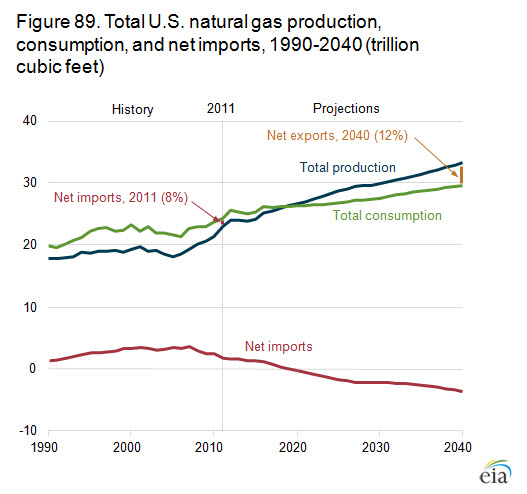
Natural Gas seems to be attractive and the Natural Gas folks think substantially along the lines that most of the new energy in this country over the upcoming decades will by CNG capacity, not Nuclear, not Coal. Natural Gas produces less CO2, but it's not-renewable and it pollutes both on the supply side (fracking etc)
and in the processing. So, there's trade-offs there and costs.On the Photo-Voltaic side of things, right now current panels are anywhere from 100 to 200 watts per square meter. My panels for example were rated to average 180.. I get a lot of sun where I am but let's just work this out and figure out with COTS technology what it would take.
Figure 150 watts / square meter.
Let's assume it's sunny every day where you put these and you get 6 hours at that production rate (early morning/late afternoon, lets power, sometimes clouds) shorter days/longer days etc. Anyway that's 900 W and with extra time, let's say another 40% for morning/evening etc. 1260 W/day/meter or approximately 1.3 kWh/square meter. That 821 BkWh figure is 24/7/365 but let's assume 60% of that was peak daytime capacity for 1/3 (8 hr/day) and the remaining 40% was for non-peak. I'm just pulling some numbers out here, so you plug in your own. 60% of that 821 BkWh figure comes out to 492.6 BKwh that you'd need during daylight hours. At 1.3 KWh/sq meter/day that's 492,600 square km. or 190,194 square miles. of COTS Photo-Voltaic or an area larger than California. But wait, an area that large is going to have clouds, storms overhead etc. So let's say that it's only on average 70% efficient, that means you'll need another 30% in additional area plus that would include Winter when the days are shorter. Anyway, this could all be put into a spreadsheet but who in California is willing to live in Shade the rest of their lives to supply us with 60% or so of the replacement of our Nuclear Main Line generating capacity? That other 40% of that that generating capacity that can't be by Solar would need to be replaced by Natural Gas, Coal or Wind. Let's say NG is the way you want to go. You'd need 328.4 BkWh in capacity and a typical NG Power Station about 500kWh (Largest in US has about 545 megawatts/day capacity) so 545 MW/day = 545,000 kWh/day(sorry for the crude scientific notation)
328.4 x 10^9 / 545 X 10^6 = 602 plant operating days. From this. Using Natural Gas, for a kWh takes the burning of